Category: Anti Civil Rights ideas & “Friends”
Kyle Rittenhouse Violated the Safari Principle
A good article outlining why Kyle Rittenhouse was considered a specifically purposeful target for the regime is written at Powerline Blog by Paul Mirengoff [SEE HERE].
What the author essentially describes is something CTH readers have witnessed for over a decade, we called it “The Safari Principle” narrative; and it surfaced in its most modern form during the George Zimmerman case.
In essence, the underlying elements of the Safari Principle narrative begin with a pretense that victims of the mob, any mob or individual predator, have no one except themselves to blame because they did not follow the rules of the safari. When in the proximity of any person, event or situation that is engaged in an unlawful act supported by the political left, you are not permitted to exit your vehicle or engage in activity that will lead to your targeting.
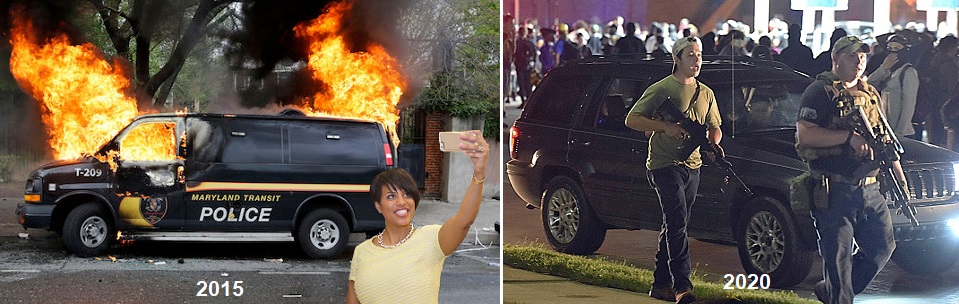
If you enter their “space to destroy“, you are to blame for your own outcome. The safari narrative includes catch phrases like “he should not have gotten out of the car,” and “he shouldn’t have traveled to Kenosha,” all based on the same principle.
(Powerline) […] The Rittenhouse prosecution and the demonization of him by the left (including the left-wing media) stems from a simple premise. Leftists, including Antifa and BLM, have the right to take to the street causing chaos and property damage, and when they do, those who disagree with them must stand aside while leftists run riot. If they don’t stand aside, they have no right to defend themselves against members of the mob who come after them — even if someone points a gun at them (as Grosskreutz did). (read more)
The first advocacy for the modern “Safari Principle” surfaced prior to the George Zimmerman trial, in the summer of 2012, when the professionally aggrieved first began the narrative: “He shouldn’t have gotten out of his car”.
Historically, we used to blame the victim by saying he/she was in the wrong place at the wrong time. However, politically it became too difficult to define where the wrong places were, and simultaneously legislators continued to struggle defining the right vs. wrong times law abiding people were allowed to be in these places.
Historically, the political media were skilled at excusing transparently guilty. However, in the aftermath of the Obama paradigm shift, where the media began accusing the transparently innocent, a more specific rule was needed.
After various opinions were considered, eventually the advocates settled upon The Safari Principle – A selected narrative used throughout 2012/2013 as a point of advocacy driving home the belief that George Zimmerman had no right to follow, then exit his vehicle when he saw a suspicious Trayvon Martin peering through windows and casing houses.
The “Safari Principle” evolved to further claim, ‘if you do get out of your car, you deserve what you get’ with the implication by the leftist narrative engineers that essentially young black males cannot control their behavior.
Shortly after the grievance advocates of Ben Crump, Natalie Jackson, Daryl Parks and the congressional black caucus announced their own support for the Safari Principle – another incident surfaced in Virginia when two reporters for the Virginia Pilot stopped and exited their vehicle after their car was hit by bricks.
The couple was attacked by a mob of somewhere between 30 to 100 young black males while shouting “justice for Trayvon”. After the reporters left the hospital, the Virginia Pilot editorial team quickly apologized for not following the Safari Park rules, accepted the beating of their reporters was the fault of the couple who stopped their vehicle, and the newspaper promised they would join the advocacy movement.
 Fast forward through several more examples to August of 2014, when Ferguson Police Officer Darren Wilson exited his vehicle after Mike Brown punched him in the head and tried to gain his service revolver. The meme of The Safari Principle was quick to surface again, LOUDLY.
Officer Darren Wilson had no right to get out of his car after the attack.
By exiting his SUV, Wilson was to blame for Mike Brown charging him in the street. Again reaffirming the leftist worldview that young black males cannot control their behavior.
Subsequently, the grievance advocates pointed out Officer Wilson was ultimately to blame for shooting Mike Brown. If Wilson had followed the Safari Principle, Mike Brown would still be alive today.
After Mike Brown was killed by police officer Darren Wilson, the Safari Principle advocates applied the same theme to explain how Zemir Begic was guilty of his own murder, again in Saint Louis.
Zemir Begic exited his vehicle in the vicinity of three young black males who beat him to death with hammers. Begic would be alive today if he had only followed The Safari Principle rules.
A year later, 2015 in Baltimore, Maryland, Mayor Stephanie Rawlings-Blake then became a public advocate for the safari rules when she proclaimed her decision to let the riots, looting and arson continue, as it was intended specifically to give the mob “space to destroy.” Despite the dozens of property owners who saw their shops, stores and livelihoods go up in smoke, the rules of the safari took precedent.
Again, in the aftermath of George Floyd’s death in Minnesota, the rules of the safari became evident when looting, arson and riots were defined as “expressions of speech.” All violence supported by the political left is considered speech, while speech opposed by the left is defined as violence.
Because the visible chaos did not align with the gentle media descriptions of “protests“, the corporate media decision was to modify the language used to describe the arson and riots by using the term “mostly peaceful protests,” that term has stuck within the visible chaos over the past few years in various forms.
Obviously the word “mostly” is a relative term , and that provides the flexibility needed to convince viewers the violence they are witnessing isn’t really the violence they are witnessing.
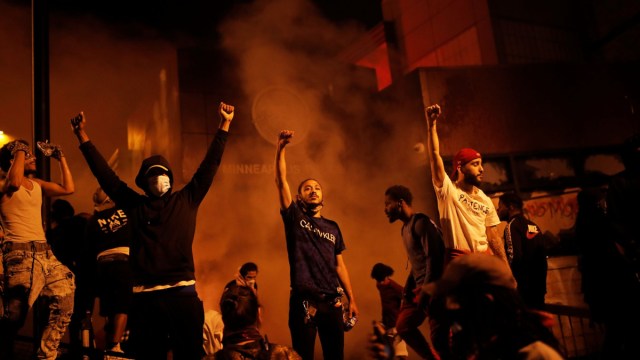
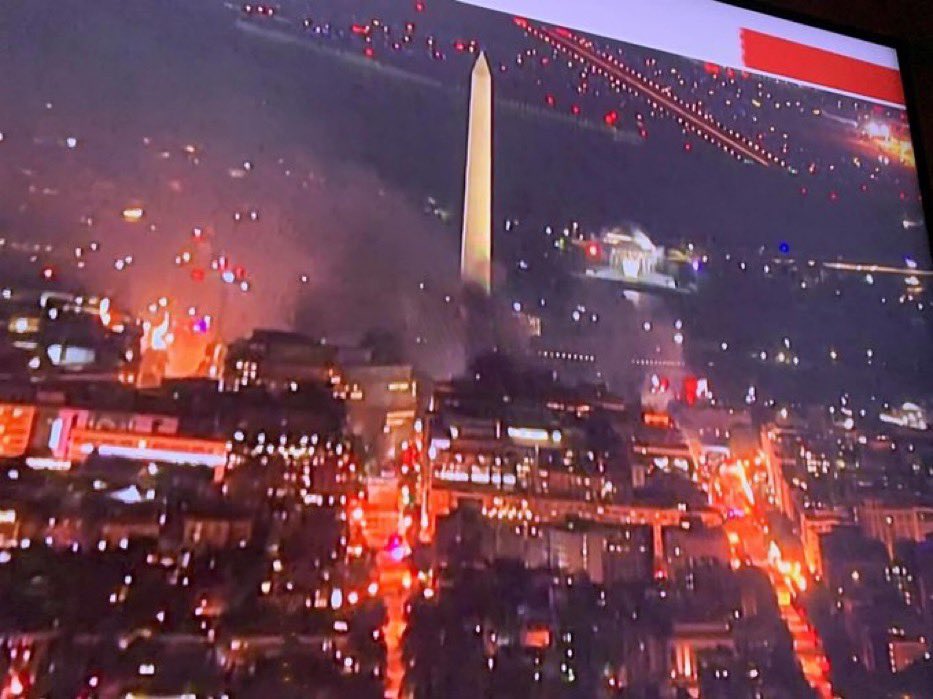
.
Kyle Rittenhouse made the mistake of trying to impede violence, arson and rioting supported by the political left and their media allies. Rittenhouse paid a heavy price for not following the rules of the safari, and that is why they are so determined to make an example of him.
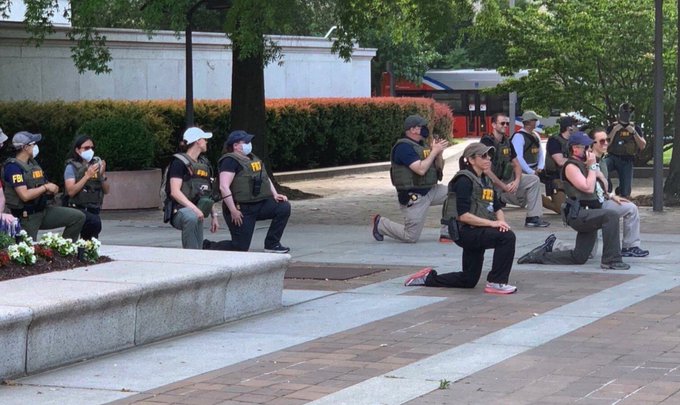
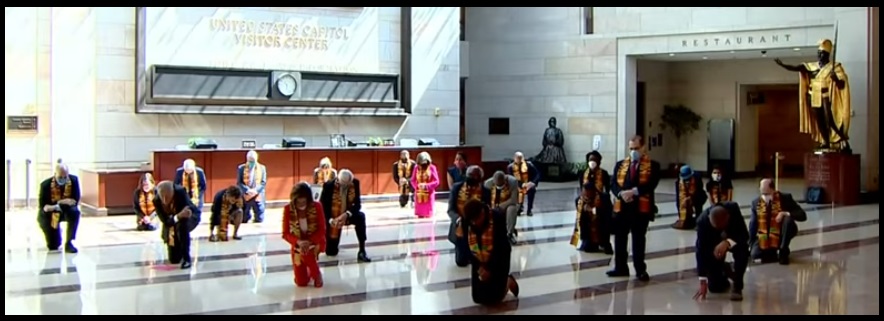
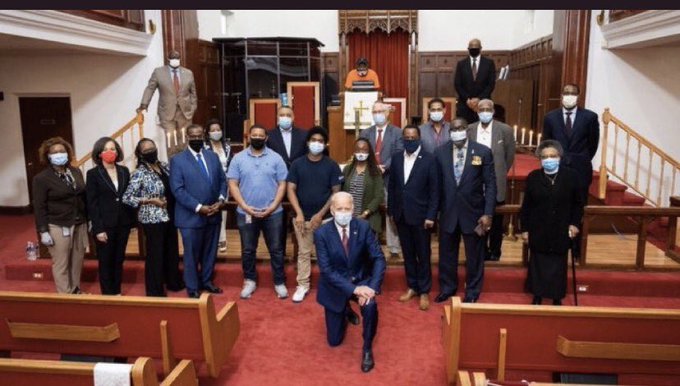
In 2020 the FBI, the political left who need/support the violence, and the current occupant of the White House did not make the same mistake as Rittenhouse. Instead the FBI, Democrats and Joe Biden adhered to the safari rules and took the approved approach as demanded by the mob:
Categories
Durbin

“Let me explain yet again the source for all of the platitudinous virtue signalling. The truly privileged elites know that deep down they are frauds. They suffer from existential guilt.
Hence, one of the ways by which they assuage the guilt albatross around their necks is to demonstrate to the world that they are truly compassionate, truly loving, truly caring, truly profound. Hence, they love all “undocumented” immigrants.
They love Mother Earth. They love the ozone layer. They love BLM. They love socialism. They love inner cities. They hate the gentrification of neighbourhoods. They love mentors of color. They cherish diversity. They love LGBTQ movies. They adore queer architecture. They are better than you. More caring, more cultured, more empathetic. This permits them to sleep better at night.
See, I’m not a fraud. I may be a gargantuan parasitic hedge fund bullshitter but I really care. I may be an overpaid BS actor but I fight for solar panels. Those fly over rubes deserve their lot in life.
They are racists who bed their siblings. We are science supporters who fight against Mother Earth rapists whilst flying in our private jets. It is a classic ego defensive strategy that permits the ruling class to exist within their fractured selves


By Thomas E. Gift, MD. January 25, 2021
Article Source
A recent report looks to see if laws restricting the right to keep and bear arms might have effects on homicides and suicides not caused by guns. They found no increase or decrease in non-gun homicides associated with changes in gun related homicides, and the data regarding suicides were too sparse to be useful. Their report was based on examining a series of earlier studies.
To the authors’ credit, they noted that some experts describe a substitution effect, that is, a person not killed by a firearm may instead be killed by some other form of violence. They cite several previous studies finding that those not suiciding by shooting are likely to do so by other means, and that homicides not committed by shooting will probably occur by other means.
There are however a number of problems with the publication. The authors seem to see all homicides as bad, and never mention justifiable homicides. These often involve self-defense, or appropriate actions by police or bystanders to protect the innocent. The researchers seem to assume that any reduction in homicides is desirable, ignoring the injuries, arsons and assaults prevented by the appropriate use of force.
A recent DRGO contributor noted the existence of many dozens of peer-reviewed academic studies conducted by a wide range of authors suggesting that widespread gun ownership deters crime. He pointed as well to a specific instance in which children died needlessly because security officers were unarmed. In this school shooting, in which many children lost their lives, the justifiable homicide of the shooter would have avoided heartbreak for families and prevented the school career of many teenagers from ending in a mournful trip to a cemetery.
Academics have found evidence that Right-to-Carry laws deter violent crime, including rapes and murders, and also lower burglary rates, while restrictions on concealed carry laws may increase the number of people who are murdered. Having a firearm is especially important for women, who are typically smaller and not as strong as those who attack them—being armed can compensate for this difference. Reports of homeowners using guns to defend against intruders are reported daily. Since intruders are often young men, it’s common that the occupant of a household are less physically powerful, and thus a justifiable homicide by a firearm prevents death or injury at the hands of a criminal.
In evaluating the studies they cite, the authors don’t acknowledge that many people without access to a gun who kill themselves by other means are misunderstood as having died accidently. Examples include drug overdoses, single car “accidents” and walking into traffic. Drug overdoses in particular can appear accidental when in fact they are really suicides; motor vehicle accidents involving only one driver are often really suicides.
Failure to recognize these suicides for what they are masks the fact that those who don’t use a gun to kill themselves do so using other methods. This minimizes the impact of reductions in suicides by gun increasing suicides by other means, and erroneously inflates the percentage of suicides involving a firearm. Difficulties distinguishing suicides from other forms of violent death, such as accident or murder, have been described in a number of publications. Interestingly, a recent research endeavor using complex statistical techniques to examine risks for suicide identified problems with depression as the primary predictor, with no mention of access to firearms.
The takeaway message is that relationships between homicide, justifiable homicide, suicide and firearm availability are complex. But the intent of murderers and suicide victims are almost always discernible. It is elementary foolishness to blame inanimate objects for how people choose to act.
ATF Raids Lake of the Ozarks Gun Store Confiscates All Firearms

Photo by Thomas Def on Unsplash
Agents from the Bureau of Alcohol, Tobacco and Firearms, ATF, raided the Skelton Tactical gun shop, in Osage Beach, at approximately 8:30 a.m. on Tuesday, Nov. 9.
According to the gun shop owner Jim Skelton, approximately fifteen agents entered the shop, seven deep, in full riot gear, bearing automatic weapons.
“They questioned me as to how I had been selling firearms.”
Jim said the ATF alleges:
• An undercover agent purchased one of his personal firearms, out of his truck without background check.
• He sold an 1898 black powder 30-40 firearm over the counter, without a background check. According to Skelton, the sale of an 1898 30-40 does not require a background check.
• He sold a firearm to an undercover agent, without a background check.
“Two undercover agents, a woman and a man came into my shop to purchase a firearm. The woman filled out the proper background paperwork and purchased the gun. The ATF alleges the male agent purchased the gun. “How was I supposed to know she was buying it for him?” Skelton said. “If she would have told me she was not the purchaser, I would not have sold it to her.”
Skelton’s brother, Ike Skelton a witness at gun shop during the raid said, “When I started to record them, they took my cell phone and told me to stop. They then frisked me and took my gun and all the guns in both businesses, Skelton Key and Lock and Skelton Tactical, claiming it was for their safety.”
The ATF was still at Skelton Tactical at the time of this writing, at 3:00 p.m. on Tuesday.
According to John E. Ham, Public Information Officer for the ATF Kansas City Field Division, “A federal search warrant was issued as part of an ongoing criminal investigation into violations of federal firearm laws.”
Ham said he could not give further details, because it was an ongoing investigation.
Ham said there were no arrests, no one is in federal custody, and there were no plans to arrest anyone even at the conclusion of Tuesday’s search warrant.
“The next step usually, in several days, through the federal judiciary, the warrant will be unsealed by the court. Then we will have more specific information on the criminal investigation and the reason we applied for, and obtained, the warrant from a federal judge,” Ham said.
Additional information will be released to the public at that time.
“According to the Second Amendment of the United States Constitution, it is the right of the people to keep and bear arms,” Ike said. “This right should not be infringed upon,” Ike said. “Each and everyone of these agents swear to uphold the constitution against all foreign and domestic threats, and they are infringing on our right to bear arms. The ATF should not even exist.”
The ATF took Jim’s license to sell firearms. “I will appeal and fight this with everything I have,” Jim said.
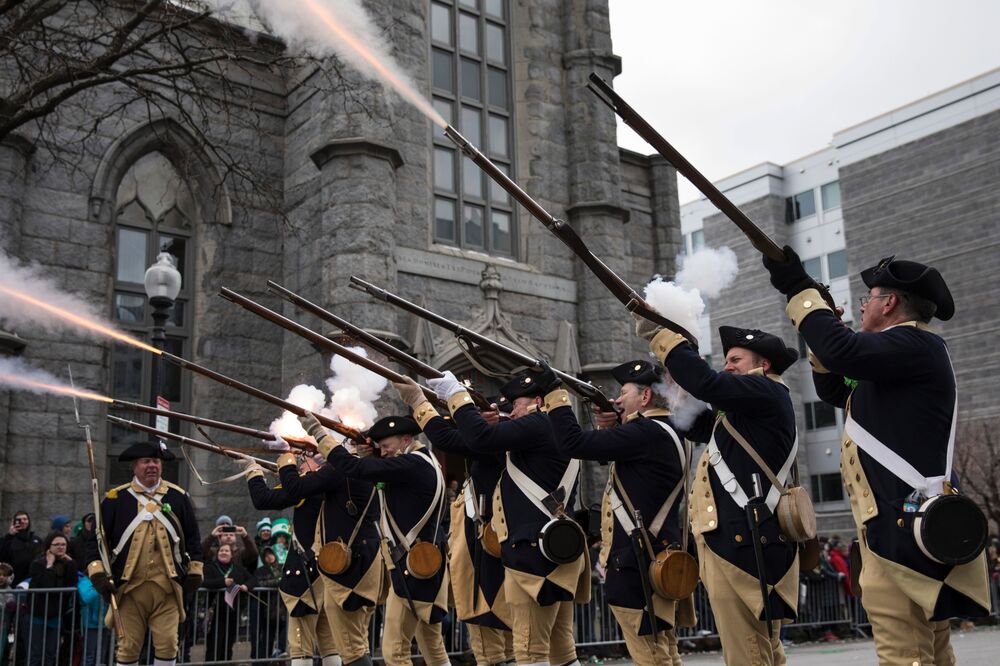
They’re history. Photographer: Dominick Reuter/AFP/Getty Images
The world applauds the scientists who have created vaccines to deliver humanity from Covid-19. One certainty about our future: There will be no funding shortfall for medical research into pandemics.
Now, notice a contradiction. War is also a curse, responsible for untold deaths. Humans should do everything possible to mitigate it. And even if scientists cannot promise a vaccine, the obvious place to start working against future conflicts is by researching the causes and courses of past ones.
Yet in centers of learning across North America, the study of the past in general, and of wars in particular, is in spectacular eclipse. History now accounts for a smaller share of undergraduate degrees than at any time since 1950. Whereas in 1970, 6% of American male and 5% of female students were history majors, the respective percentages are now less than 2% and less than 1%, respectively.
Fredrik Logevall, a distinguished Harvard historian and author of seminal works on Vietnam, along with a new biography of John F. Kennedy, remarked to me on the strangeness of this, given that the U.S. is overwhelmingly the most powerful, biggest-spending military nation on earth. “How this came to be and what it has meant for America and the world is surely of surpassing historical importance,” he said. “Yet it’s not at the forefront of research among academic historians in this country.”
The revulsion from war history may derive not so much from students’ unwillingness to explore the violent past, but from academics’ reluctance to teach, or even allow their universities to host, such courses. Some dub the subject “warnography,” and the aversion can extend to the study of international relations. Less than half of all history departments now employ a diplomatic historian, against 85% in 1975. As for war, as elderly scholars retire from posts in which they have studied it, many are not replaced: the roles are redefined.
An eminent historian recently told me of a young man majoring in science at Harvard who wanted to take humanities on history, including the U.S. Civil War. He was offered only one course — which addressed the history of humans and their pets.
Paul Kennedy of Yale, author of one of the best-selling history books of all time, “The Rise and Fall of The Great Powers,” is among many historians who deplore what is, or rather is not, going on. He observed to me that while some public universities, such as Ohio State and Kansas State, have strong program in the history of war, “It’s in the elite universities that the subject has gone.”
“Can you imagine Chicago, or Berkeley, or Princeton having War Studies departments?” he asked. “Military history is the most noxious of the ‘dead white male’ subjects, and there’s also a great falling away in the teaching of diplomatic, colonial and European political history.”
Kennedy notes that war studies are highly popular with students, alumni and donors, “but the sticking point is with the faculty — where perhaps only a small group are openly hostile, but a larger group don’t think the area is important enough.”
Harvard offers few history courses that principally address the great wars of modern times. Many faculties are prioritizing such subjects as culture, race and ethnicity. Margaret MacMillan, of the University of Toronto and Oxford, observes that war is one of the great cataclysmic events, alongside revolution, famine and financial collapse, that can change history.
As the author of the bestseller “Peacemakers,” an epochal study of the 1919 Versailles conference, she has written about the decline in university courses on conflict: “Our horror at the phenomenon itself has affected the willingness to treat it as a serious subject for scholarship. An interest in war is somehow conflated with approval for it.”
Mindless mudslingers have attacked her as a war-lover for making the observation — commonplace among scholars of the subject — that conflicts can bring scientific or social benefits to mankind.
Tami Davis Biddle, a professor at the U.S. Army War College, has written, “Unfortunately, many in the academic community assume that military history is simply about powerful men — mainly white men —fighting each other and/or oppressing vulnerable groups.”
Universities excuse themselves for shunning history by citing the need to address contemporary subjects such as as emotions, food and climate change. Some also urge that students believe they can better serve their own interests — and justify tuition costs — by choosing vocational majors that will enhance their employability. Yet Logevall’s Vietnam is one of the most popular history courses at Harvard.
History sells prodigiously in the world’s bookstores. I have produced a dozen works about conflict, and my harshest critic would struggle to claim that these reflect an enthusiasm for it. I often quote a Norwegian World War II Resistance hero, who wrote in 1948, “Although wars bring adventures that stir the heart, the true nature of war is composed of innumerable personal tragedies and sacrifices, wholly evil and not redeemed by glory.”
Those words do not represent an argument for pacifism. Our societies must be willing, when necessary, to defend themselves in arms. But our respective presidents and prime ministers might less readily adopt kinetic solutions — start shooting — if they possessed a better understanding of the implications.
Before resorting to force, governments, as well as military commanders, should always ask: “What are our objectives? And are they attainable?” Again and again — in recent memory, in Vietnam, Iraq, Afghanistan, Libya — those questions were neither properly asked nor answered, with consequences we know. Governments succumb to what I call gesture strategy.
Part of the trouble lies with the military, sometimes over-eager to demonstrate “the utility of force,” or rather, to justify their stupendous budgets. More often, however, blame lies with politicians ignorant of the difficulties of leveraging F-35s, cruise missiles, drone aircraft and combat infantry to produce a desired political outcome.
It is extraordinary that so many major U.S. universities renounce, for instance, study of the Indochina experience, which might assist a new generation not to do it again. Marine General Walt Boomer, a distinguished Vietnam vet, said to me five years ago, when I was researching that war: “It bothers me that we didn’t learn a lot. If we had, we wouldn’t have invaded Iraq.”
Biddle has written: “The U.S. military does not send itself to war. Choices about war and peace are made by civilians — civilians who, increasingly, have no historical or analytical frameworks to guide them. They know little or nothing about the requirements of the Just War tradition … the logistical, geographical and physical demands of modern military operations.”
Former British Prime Minister David Cameron is not a stupid man. But he might have made less of a mess of U.K. foreign policy had he accepted the advice of some people who understood both war and the Muslim world better than his ill-informed Downing Street clique.
In 2011, the chief of the British defense staff, General Sir David Richards, begged Cameron not to drag the North Atlantic Treaty Organization into Libya. But the prime minister, in the spirit of a boy scout, wished to do a good deed in a wicked world by promoting the overthrow of President Moammar Al Qaddafi. The rest — the Western intervention and the murderous chaos that has persisted ever since — are, alas, matters of record.
It would be absurd to pretend that study of the past is a guarantee against repeating its mistakes. But the world has cause to be grateful that in 1962, JFK read Barbara Tuchman’s “The Guns of August,” about the outbreak of World War I. Kennedy thus went into the Cuban Missile Crisis conscious of the peril that a local flare-up — as in the Balkans in 1914 — could precipitate a global catastrophe.
The Oxford professor Sir Michael Howard, who died in 2019, was my close friend and mentor over 50 years, the wisest human being I have ever known. In the 1950s, he created the Department of War Studies at King’s College, London, which prospers to this day.
Even more important, he was among the founders in 1958 of the International Institute of Strategic Studies. The IISS came about because some brilliant intellectuals, on both sides of the Atlantic, were fearful of the peril of war. They dismissed the feasibility or even desirability of unilateral abandonment of nuclear weapons.
Rather, they sought to promote understanding, among NATO and Warsaw Pact members alike, that nuclear conflict must be ruled out, because its consequences could not conceivably advantage even a supposed victor.
Howard describes in his memoirs his own first visit to the U.S. in the spring of 1960, “as a missionary on behalf of the Institute.” He found Washington “a military capital” with “almost more uniforms on the street than I remembered in wartime London”:
There was an electric excitement in the air that I found terrifying. This, I thought, was what Europe must have been like before 1914 … This seemed a people who, in spite of the Second World War and Korea, had not really experienced war, and who found the prospect an invigorating challenge. It was in just such an atmosphere, I thought, that wars began.”
Howard became even more alarmed after attending a lecture on nuclear warfighting given by Herman Kahn at the RAND Corporation in Santa Monica, California. Some RANDSmen whom he met were debating how long it might take Los Angeles to get back to “normal” after a nuclear attack.
It was in this climate that Howard and like-minded academics promoted debate, in Europe and America, about responsible strategy and defense. Today, almost everyone who knows Cold War history recognizes that all the talking — international conferences, seminars, formal dialogues — played a significant role in averting a nuclear showdown. Not for nothing is the IISS Journal, then as now, entitled Survival.
To those who knew Michael Howard or read his writing, it would be fantastic to suggest that because he devoted his life to the study of conflict and international relations, he thus spread the pollution of war, or advanced a doctrine of force. By implication, however, such is now the conviction of many great North American institutions of learning.
A few years ago, a history department in the Canadian Maritime provinces was offered a fully funded chair in naval history — and rejected it. Paul Kennedy told me recently that he is amazed by the lack of interest in naval affairs at U.S. universities, “since we are by far the greatest naval power in the world, and the global naval scene is heating up enormously.”
Many, indeed most, academic institutions across the continent are infected with an intellectual virus that causes them to reject study of subjects that seem to some faculty members distasteful. This represents a betrayal of the principles of curiosity, rigor and courage that must underpin all worthwhile scholarship.
MacMillan demands: “Do we really want citizens who have no knowledge of how our values, political and economic structures came into being? Do we ever want another president at the head of the most powerful country in the world, such as Donald Trump, who asserted that the Soviet Union invaded Afghanistan in response to terrorist attacks, and was right to be there?”
In Britain, by comparison, history continues to thrive. About the same number of students embark on first degrees in the subject as take law. Post-graduate studies are especially popular. Some 30 institutions offer War Studies programs. On the European continent, those at Stockholm and Leiden Universities are particularly respected. The problem — we might even call it the repugnance — appears an explicitly North American phenomenon.
North America’s great universities should be ashamed of their pusillanimity. War is no more likely to quit our planet than are pandemics. The academics who spurn its study are playing ostriches. Their heads look no more elegant, buried in the sand.