Category: Anti Civil Rights ideas & “Friends”


By Larry Keane
Connecticut’s Democratic Gov. Ned Lamont doesn’t have the celebrity status of some of his gun control colleagues like New York’s Democratic Gov. Kathy Hochul, New Jersey’s Democratic Gov. Phil Murphy or California’s Democratic Gov. Gavin Newsom. His recent gun control proposal arguably outdoes them all, though.
Connecticut’s governor ripped a page from the Biden administration playbook and attempted to divert attention from failures to address rising crime by calling for increased gun control. Gov. Lamont said in a press conference announcement, “You’re not tough on crime if you’re weak on guns. We’re going to continue to stay tough on guns.”
That’s obfuscation. Gov. Lamont is miring two unrelated issues to confuse voters in a re-election year. He’s running again to keep his job and instead of admitting he’s done nothing to address criminal activity in the state, he’s proposing policy changes that would crush firearm retailers and individual gun rights of law-abiding citizens.
Read that again. Gov. Lamont isn’t proposing to target criminals, but those who abide by the law.
Layered Bureaucracy
Gov. Lamont explained he was proud that Connecticut already had among the nation’s strictest gun laws. “But that’s not good enough. I’ve just been shocked by what I’ve seen over the past couple of years,” he added.
What he saw in his state are sky high legal firearm sales, the most in five years. That’s occurring in the middle of “defund the police” schemes embraced by Hartford, New Haven and Bridgeport, and rising crime in those cities. Gov. Lamont’s proposals would do little to hold criminals to account.
Chief among Gov. Lamont’s gun control wish list is the creation of a state-level firearm licensing agency to track and enforce Connecticut’s strict laws.
“The lack of state licensing for gun dealers makes it difficult for the Connecticut Department of Emergency Services and Public Protection to enforce the laws,” the governor said.
The governor is ignoring, of course, that every firearm retailer in Connecticut is already required to be licensed and regulated by the federal government through the Bureau of Alcohol, Tobacco, Firearms and Explosives (ATF).
Another state-level licensing agency is more than just layered bureaucracy. It’s a tool to grind local gun shops into oblivion.
Gov. Lamont’s administration has a track record of dismissing and outright ignoring gun owner and firearm retailer rights and concerns. Just last year officials from the Lamont administration ignored retailer requests for robust guidance and assistance during his poorly-managed transition of the state’s background check system. Now, Gov. Lamont’s office wants to expand their grip on power and licensing authority with little to no desire to dedicate resources to support the proposals.
That won’t stop criminals from illegally-selling guns on the black market or stealing them. The only people impacted by this legislation will be those trying to follow the laws in the first place. Gov. Lamont’s goal is to use the new laws as a bludgeon against the lawful industry ensuring law-abiding Connecticut residents can exercise their Second Amendment rights.
Blue State Red Tape
Gov. Lamont’s proposals include mandatory registration of so-called “ghost guns” manufactured prior to the state’s already existing 2019 ban, expanding a ban on so-called “assault weapons” purchased prior to a 1993 state law requiring registration, expanding firearm storage laws even though Connecticut already has mandatory storage laws and enactment of a “stop and frisk” policy for police to check carry permits for those who are openly carrying firearms.
Second Amendment supporters are howling. Connecticut’s highest-ranking Republicans on the state’s House Judiciary and Public Safety Committee criticized the governor.
“While lawful Connecticut citizens are, on an almost daily basis, being victimized by brazen criminals with little fear of punishment, the governor has chosen an aged election-year tactic of attacking law-abiding gun owners in an effort to distract from his administration’s utter failure to address criminal justice policies,” Reps. Craig Fishbein and Greg Howard said.
Other Second Amendment and Constitutional rights groups, including the non-partisan Connecticut Citizens Defense League, (CCDL) denounced the proposals. CCDL stated parts of Gov. Lamont’s gun control package, “is out of touch with the people of Connecticut as thousands of residents have become new permit holders within the last year.”
Connecticut is witnessing the same bait-and-switch that President Joe Biden attempted in New York City. He traveled there to address crime, only to pitch a series of gun control proposals. The president didn’t offer any plan to get serious about tackling crime. The same thing is coming out of Hartford. Unfortunately for Connecticut, the governor is just as unserious about locking up criminals as he is serious about locking down gun stores.
Larry Keane is Senior Vice President of Government and Public Affairs and General Counsel for the National Shooting Sports Foundation, the firearms industry trade association.
Last Monday, President Biden told a meeting of the National Governors Association that his administration was working hard to figure out why a flood of illegal aliens is coming to America.
He said, “I think one of the fundamental things we’ve got to do in addition to some of the changes we’ll make, which we won’t get into it today, is that if we figure out why they’re leaving in the first place.” It apparently never occurs to him (or his handlers) that he created the border crisis by opening our southern border and stopping construction of former President Trump’s border fence.
On Thursday, Biden met with New York’s new mayor, Eric Adams, and spoke about the ways to get the huge surge in crime around the nation under control. Biden spoke a lot of nonsense about background checks for gun purchases and such, which we’ll get to in a minute.
What Biden ignored is far more important than what he prescribed for controlling crime. He totally ignored the fact that the rise in violent crime in the United States is entirely due to the fact that liberal policies — gleefully administered by liberal governors and mayors — is the reason crime is skyrocketing in America.
Biden’s prescriptions for reducing crime are the same gun control nonsense that liberals have pushed for decades.
He should have listened to Dominique Luzuriaga before he spoke.
Ms. Luzuriaga is the widow of New York policeman Jason Rivera who, with his partner, Wilbert Mora, was murdered while answering a domestic disturbance call on January 21 by a career criminal using a Glock handgun. Ms. Luzuriaga spoke at Rivera’s funeral. What she said was the bitter truth that liberals refuse to face. She spoke to and on behalf of her husband when she said, “The system continues to fail us. We are not safe anymore. Not even the members of the service…. I know you were tired of these laws, especially the ones from the new DA. I hope he’s watching you speak through me right now. I’m sure all of our blue family is tired too. But I promise, we promise, that your death won’t be in vain.”
The point she made is simple and compelling. If the cops aren’t safe, neither is anyone else, and the cause is the way liberal prosecutors are failing to do their jobs. Alvin Bragg, New York’s new DA, was in the audience when she spoke.
According to the Council on Criminal Justice (CCJ), murder rates increased by 5 percent in 2021 over 2020 and by 44 percent over 2019. The number of cops on the street is less relevant to that increase than the liberal/progressive policies that are turning arrested criminals loose rather than keeping them in jail.
The CCJ study found an increase of, on average, 218 murders in twenty-two major cities including Atlanta, Detroit, Baltimore, Chicago, Denver, Memphis, San Francisco, Washington, D.C., and Philadelphia. Twelve cities recorded their highest-ever number of murders.
Murder rates had been dropping in those cities since the 1990s. What happened to cause the sudden increase?
What happened was that major cities, such as New York, have instituted cashless bail which has resulted in more criminals — including violent criminals — being put back on the streets instead of keeping them in jail. In some cities, thieves looting stores are not even arrested. Attacks on citizens and police officers are a real pandemic.
Liberal prosecutors have been reducing or dismissing charges that should be brought to trial. Some cities and states have cut appropriations for their police forces. Former New York mayor Bill de Blasio cut about $6 billion from the NYPD budget and disbanded a special anti-crime unit.
Across the country, defunding the police has been accompanied by liberal prosecutors refusing to charge criminals at all or reducing their charges to be more lenient. Again, this results in more criminals being on the street. Philadelphia’s DA, Larry Krasner, does this regularly. So do San Francisco’s Chesa Boudin, Los Angeles’s George Gascon, and Manhattan’s Alvin Bragg.
Biden is making matters worse by preventing the deportation of violent criminals unless they have been convicted of the most serious crimes.
Biden’s prescriptions for reducing crime are the same gun control nonsense that liberals have pushed for decades.
Biden called for “universal” background checks, a crackdown on “ghost guns,” and repeal of gun manufacturers’ immunity from product liability lawsuits.
Background checks — those that prevent the sale of guns to criminals — are already almost “universal” because every licensed gun dealer has to do those checks before making a sale. There are no background checks on the inheritance or gift of guns.
The fact remains that most guns used in crimes are either stolen or sold illegally. The Glock .45 used by Lashawn McNeil to murder NYPD officers Jason Rivera and Wilbert Mora was reportedly stolen in Baltimore two years ago.
“Ghost guns” are bought in parts, at least some of which require skilled machining before they are usable in a functioning firearm. Such machining is beyond the skill of most criminals.
Those guns lack federally required serial numbers because individual parts, sometimes sold in kits, are not serial number-stamped by manufacturers. Los Angeles, San Francisco, and San Diego have made them illegal. An NBC Bay Area News report said that 24,000 non-serialized firearms were recovered by law enforcement from “potential crime scenes” from 2016 to 2020.
Any 7-Eleven, liquor store, or private home is a potential crime scene, not an actual crime scene until a crime is committed. The report is nonsensical and so is Biden’s call for a crackdown on “ghost guns,” which is already being done by federal, state, and local law enforcement.
So is Biden’s call for repeal of the gun industry’s immunity from product liability lawsuits. He said they are the only industry that has such immunity, conveniently forgetting others such as the manufacturers — Pfizer, Moderna, and others — of COVID vaccines.
If the gun industry were liable for misuse of their products, there would be thousands of lawsuits by states, cities, and victims of crimes. Trials would produce billions in liability for the manufacturers which would, quickly, result in the end of gun manufacturing in the United States. That would suit liberals just fine.
Biden also called for a ban on “assault weapons,” and large magazines such as the forty-round magazine used in a Glock pistol to kill the two New York cops. He had helped shepherd the original 1994 ban through the Senate (which expired in 2004) and strongly advocates its renewal.
The original “assault weapons” ban prohibited the manufacture and sale of various guns based on their configuration (vertical pistol grips, bayonet mounts, etc.), similarly-styled pistols, and that of high-capacity magazines defined as those which can hold more than ten cartridges.
There is no real evidence that the “assault weapons” ban had any effect on mass murders (which are variously defined as ones which kill three or four or more people). A 2004 Justice Department report found that the ban’s “effects on gun violence are likely to be small at best and perhaps too small for reliable measurement.”
The AR-15 style rifle is the most popular rifle sold in America. There are at least twenty million in the hands of American hunters and target shooters. High-capacity magazines in Americans’ hands number about 130 million.
Another ban on “assault weapons” and high-capacity magazines wouldn’t prevent crimes with that many already in Americans’ hands. The only alternative would be a ban that not only banned their sale but also banned their possession and included a confiscation of “assault weapons” and high-capacity magazines.
The three-decade old California ban on the sale of “assault weapons” was held unconstitutional by a federal judge in June 2021 and is on appeal through the Ninth Circus, which will probably rule that it is constitutional, destining the case for Supreme Court decision. Any confiscation law — federal or state — would obviously violate the Second Amendment.
Biden may be thinking about confiscation of “assault weapons” and high-capacity magazines. One government agency is collecting data to support such a move.
According to various reports, the Bureau of Alcohol, Tobacco and Firearms (ATF) has compiled nearly one billion records of gun sales to Americans in its “Out of Business” records center. That obviously includes firearm sales that are not included in the various definitions of “assault weapons” that Biden wants to ban again.
The government requires that licensed gun dealers keep records of their sales for twenty years, but the government is prohibited by law from keeping and compiling such records in “any central repository.” But that’s exactly what ATF is doing.
Speaking of the Second Amendment, Biden claimed that no one’s Second Amendment rights would be affected by what he proposed, adding that “there’s no amendment that’s absolute.” In other words, Biden was saying that he is willing to violate the Second Amendment in any way he can get away with.
Nothing Biden proposes will reduce violent crime in any way. What is needed is for liberal prosecutors to stop reducing or dismissing charges against criminals who perpetrate gun crimes and to keep those perps in jail where they belong.
A bill moving through the Georgia Senate would eliminate licenses to carry guns in public—whether they’re concealed or not.
Right now, people in Georgia are required to have a license in order to carry a loaded handgun outside their homes, businesses or cars. But that could change with the new constitutional carry bill.
“This, to me as an instructor, is scary,” said longtime gun class instructor Tyler Wildman, Founder and CEO of Tactical Concealed Carry. Wildman says the bill would be a double-edged sword.
“The argument is that we don’t need really need the government’s permission to exercise a constitutional right, so therefore we don’t need a license to allow us to do it. I get it – I do like the fact that Florida does have a license requirement so that a person can have at least some minimal training,” he explained.
Across the border, people in Florida must take a class and many steps to get their carry permit.
“I’ve trained over 10,000 people and I can assure you: people desperately need real training,” Wildman said.
Right now, Florida and Georgia honor each other’s licenses. But if the bill were to pass, Wildman says things could get dicey.
“Most states like Florida would not allow somebody who was not licensed to carry in their state,” he said.
No matter what happens in the legislature, Wildman will always advocate for gun training.
Now, the bill is headed to the Senate Rules Committee. Then it’ll go to the Senate Floor for a full vote. A co-sponsor of the bill says people would still have to go through background checks to buy a gun. It would still be illegal for convicted felons to carry such weapons.

The Tennessee Firearms Association announced its opposition to a pending bill under General Assembly consideration that lowers the handgun carry age from 21 to 18.
State Rep. Chris Todd (R-Madison) filed HB1735 last month. House Majority Leader William Lamberth is a co-sponsor. Senator Mike Bell (R-Riceville) filed the companion bill, SB2291, on Wednesday.
A statement provided by Tennessee Firearms Association Executive Director John Harris to The Tennessee Star said:
Tennessee Firearms Association has considered House Bill 1735 (Senate Bill 2291) and does not support the bill as filed. Current Tennessee law allows only those individuals who are 18-20 years old and who have military service to obtain an enhanced handgun permit while denying other 18-20 year olds who lack military service the capacity to obtain an enhanced handgun permit. This legislation would eliminate the clear equal protection problem of existing Tennessee law and would treat all 18-20 year old citizens the same with respect to the capacity to obtain a handgun permit.
However, the proposed legislation itself incorporates additional language which seeks to impose criminal prohibitions concerning the places where 18-20 year olds who have an enhanced permit but do who do not military service can possess a handgun which prohibitions do not apply to 18-20 year olds who have military service. Since the United States Supreme Court declared in Heller that the rights protected by the Second Amendment constitute a fundamental human right, it is inappropriate to treat some 18-20 year olds differently from others as this legislation proposes and as current law already does. It is this feature of this legislation which Tennessee Firearms Association believes should not be added to Tennessee law.
Under current law, individuals who are at least 18 years old in Tennessee and in many other states are able to purchase, own and possess handguns. Even ATF’s own website makes clear that 18-20 years olds can legally purchase handguns under federal law so long as they do not make such purchase from a federally licensed dealer. Tennessee Firearms Association supports the efforts in 2022 to change state law so that anyone who can legally possess a handgun has the capacity without the necessity of a state issued permit or reliance on a statutory defense to carry that firearm for lawful purposes, including personal protection.
The bill caption states:
Firearms and Ammunition – As introduced, lowers the age requirement to obtain an enhanced or concealed handgun carry permit or lawfully carry a handgun in public from 21 to 18 years of age; states that the statutory authorization to transport or store a firearm or firearm ammunition in a motor vehicle under certain circumstances does not apply to a person under 21 years of age in a parking area that is owned, operated, or while in use by any school, unless the person is at least 18 years of age and meets certain military qualifications. – Amends TCA Title 39.
The Star previously reported that HB1735 does not allow for an individual under 21 years and older to store or transport a firearm on a school campus unless that individual is 18 years of age and is:
(A) Is an honorably discharged or retired veteran of the United States armed forces; (B) Is an honorably discharged member of the army national guard, the army reserve, the navy reserve, the marine corps reserve, the air national guard, the air force reserve, or the coast guard reserve, who has successfully completed a basic training program; or (C) Is a member of the United States armed forces on active duty status or is a current member of the army national guard, the army reserve, the navy reserve, the marine corps reserve, the air national guard, the air force reserve, or the coast guard reserve, who has successfully completed a basic training program.
It is currently unclear what effect the Tennessee Firearms Association’s opposition to the legislation will have.
– – –
Aaron Gulbransen is a reporter at The Tennessee Star and The Star News Network. Email tips to agulbransen@gmail.com.
The Tennessee Firearms Association announced its opposition to a pending bill under General Assembly consideration that lowers the handgun carry age from 21 to 18.
State Rep. Chris Todd (R-Madison) filed HB1735 last month. House Majority Leader William Lamberth is a co-sponsor. Senator Mike Bell (R-Riceville) filed the companion bill, SB2291, on Wednesday.
A statement provided by Tennessee Firearms Association Executive Director John Harris to The Tennessee Star said:
Tennessee Firearms Association has considered House Bill 1735 (Senate Bill 2291) and does not support the bill as filed. Current Tennessee law allows only those individuals who are 18-20 years old and who have military service to obtain an enhanced handgun permit while denying other 18-20 year olds who lack military service the capacity to obtain an enhanced handgun permit. This legislation would eliminate the clear equal protection problem of existing Tennessee law and would treat all 18-20 year old citizens the same with respect to the capacity to obtain a handgun permit.
However, the proposed legislation itself incorporates additional language which seeks to impose criminal prohibitions concerning the places where 18-20 year olds who have an enhanced permit but do who do not military service can possess a handgun which prohibitions do not apply to 18-20 year olds who have military service. Since the United States Supreme Court declared in Heller that the rights protected by the Second Amendment constitute a fundamental human right, it is inappropriate to treat some 18-20 year olds differently from others as this legislation proposes and as current law already does. It is this feature of this legislation which Tennessee Firearms Association believes should not be added to Tennessee law.
Under current law, individuals who are at least 18 years old in Tennessee and in many other states are able to purchase, own and possess handguns. Even ATF’s own website makes clear that 18-20 years olds can legally purchase handguns under federal law so long as they do not make such purchase from a federally licensed dealer. Tennessee Firearms Association supports the efforts in 2022 to change state law so that anyone who can legally possess a handgun has the capacity without the necessity of a state issued permit or reliance on a statutory defense to carry that firearm for lawful purposes, including personal protection.
The bill caption states:
Firearms and Ammunition – As introduced, lowers the age requirement to obtain an enhanced or concealed handgun carry permit or lawfully carry a handgun in public from 21 to 18 years of age; states that the statutory authorization to transport or store a firearm or firearm ammunition in a motor vehicle under certain circumstances does not apply to a person under 21 years of age in a parking area that is owned, operated, or while in use by any school, unless the person is at least 18 years of age and meets certain military qualifications. – Amends TCA Title 39.
The Star previously reported that HB1735 does not allow for an individual under 21 years and older to store or transport a firearm on a school campus unless that individual is 18 years of age and is:
(A) Is an honorably discharged or retired veteran of the United States armed forces; (B) Is an honorably discharged member of the army national guard, the army reserve, the navy reserve, the marine corps reserve, the air national guard, the air force reserve, or the coast guard reserve, who has successfully completed a basic training program; or (C) Is a member of the United States armed forces on active duty status or is a current member of the army national guard, the army reserve, the navy reserve, the marine corps reserve, the air national guard, the air force reserve, or the coast guard reserve, who has successfully completed a basic training program.
It is currently unclear what effect the Tennessee Firearms Association’s opposition to the legislation will have.
– – –
Aaron Gulbransen is a reporter at The Tennessee Star and The Star News Network. Email tips to agulbransen@gmail.com.
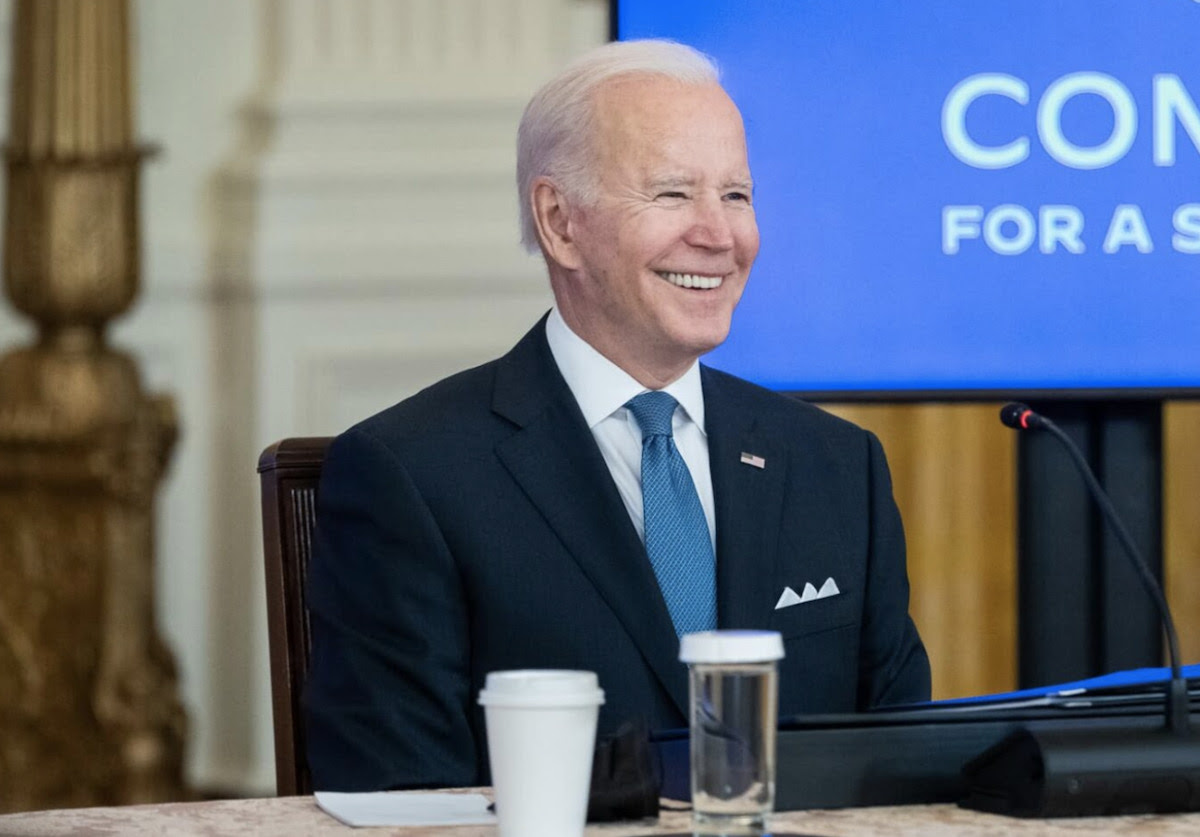
President Joe Biden and Attorney General Merrick Garland announced today the creation of a “National Ghost Gun Enforcement Initiative” designed to crack down on homemade guns, sometimes referred to as “ghost guns.”
The announcement comes as Biden travels to New York City to meet with Mayor Eric Adams, who recently announced his own “Blueprint to End Gun Violence.”
“Today, the Department is announcing the launch of a national ghost gun enforcement initiative designed to prevent these unserialized firearms from being used to commit crimes, including by prioritizing bringing federal charges against criminal use of these weapons,” the DOJ explained in a statement.
As part of this new initiative, the DOJ will “train a national cadre of prosecutors on enforcement issues specific to the use of ghost guns in crimes.” These prosecutors will be available to “every district across the country.”
The DOJ will also send out a “set of materials” to assist investigators and prosecutors in bringing cases against those who use homemade firearms in crimes, and designate a “ghost gun coordinator” in each ATF field division.
The statement’s focus on crimes and criminals is doubtless intended to reassure law-abiding gun owners that the DOJ won’t come after them. But “ghost gun” owners may not be considered “law-abiding” for long.
At the behest of the Biden administration, the Bureau of Alcohol, Tobacco, Firearms, and Explosives (ATF) proposed a new rule that would redefine what constitutes a “firearm frame or receiver.”
As part of this new rule, the ATF will ban “weapons parts kits” by redefining the term “firearm” to include “a weapon parts kit that is designed to or may readily be assembled, completed, converted, or restored to expel a projectile by the action of an explosive.”
This new definition requires companies that manufacture weapons parts kits to serialize unfinished receivers and conduct a background check on all customers prior to purchase.
The ATF assures gun owners that “nothing in this rule would restrict persons not otherwise prohibited from possessing firearms from making their own firearms at home without markings solely for personal use.”
However, the DOJ’s laser focus on “ghost gun” prosecution casts doubt on how gun owners who currently own non-serialized weapons parts kits will be treated. As GunsAmerica has covered previously, the ATF has banned a product, secured customer lists from gun companies, and used those lists to prosecute search warrants.
In the case of one firefighter from California, state agents discovered illegal firearms while assisting the ATF on its raid, and the state tried to prosecute him.
Considering this history, the DOJ’s assurance that its new task force will only target criminal ghost gun owners is small comfort.
 |
| Yesterday, the California State Legislature saw the introduction of two more anti-gun bills that continue the assault on lawful gun ownership in the Golden State. On the heels of passing legislation to violate gun owner privacy during the 2021 legislative session, for which the NRA has already filed a lawsuit, legislators have now introduced Senate Bill 906, to require disclosure of firearm ownership and storage methods for parents of school-age children. This is one more attack on the privacy of lawful gun owners in this state. NRA will fight this legislation during the session and will be prepared to pursue litigation in the event it receives the Governor’s signature. Additionally, Assembly Bill 1769 was introduced prohibiting the sale of firearms, ammunition, and firearm parts at gun shows in the 31st Agricultural District. Both SB 906 and AB 1769 are still awaiting committee assignments and policy hearings. Your NRA will continue to keep you updated as these bills are scheduled.
Senate Bill 906, introduced by Senator Anthony Portantino (D-25), makes it mandatory that parents of students disclose firearm ownership status to the schools their children attend, including how they are stored. It requires that these questions be placed on the forms used to register or enroll students, and these forms may be made available to law-enforcement under certain conditions. Assembly Bill 1769, introduced by Assembly Member Steve Bennett (D-37), prohibits officers, employees, operators, lessees, or licensees of the 31st District Agricultural Association from entering into any agreement to allow for the sale of any firearm, firearm parts, or ammunition on property or buildings that comprise the Ventura County Fair and Event Center or properties in Ventura County and the City of Ventura that are owned, leased, operated, or occupied by the District. This imposes a one-size-fits-all restriction to prevent officials from deciding how to use venues. |
Adam Kredo • January 31, 2022 1:10 pm
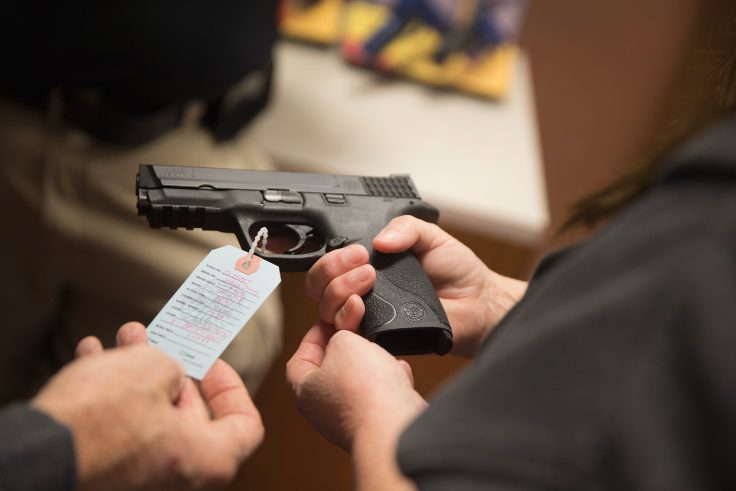
The ATF disclosed to lawmakers that it manages a database of 920,664,765 firearm purchase records, including both digital and hard copy versions of these transactions. When a licensed gun store goes out of business, its private records detailing gun transactions become ATF property and are stored at a federal site in West Virginia. The practice has contributed to the fears of gun advocacy groups and Second Amendment champions in Congress that the federal government is creating a national database of gun owners, which violates longstanding federal statutes.
Rep. Michael Cloud (R., Texas), who led an investigation into the ATF database following a November Free Beacon report that the Biden administration had stockpiled records of more than 54 million gun transactions in 2021, expressed shock at the number of gun records being kept by the federal government. Cloud maintains that the ATF’s database could be exploited by the Biden administration to surveil American gun owners as it pursues new restrictions on firearms.
“A federal firearm registry is explicitly banned by law. Yet, the Biden administration is again circumventing Congress and enabling the notably corrupt ATF to manage a database of nearly a billion gun transfer records,” Cloud told the Free Beacon. “Under the president’s watch, the ATF has increased surveillance on American gun owners at an abhorrent level. The Biden administration continues to empower criminals and foreign nationals while threatening the rights of law-abiding Americans. It’s shameful and this administration should reconsider its continued attacks on American gun owners.”
While the ATF denies that these records are used to track gun owners, it transfers hard copies of the information into a searchable digital database that it says is used to trace firearms tied to crimes. The ATF reported that 865,787,086 of the records are already in a digital format.
As the ATF stockpiles gun records, the Biden administration is seeking to alter a federal law that allows gun stores to destroy their records after 20 years, preventing the federal government from getting them. The Biden administration wants gun stores to maintain their records in perpetuity, meaning that when a store closes, the ATF receives all of its records. The ATF’s gun records database has long been a flashpoint between Second Amendment advocates and the federal government, with the latter claiming the ATF is exploiting legal loopholes to expand the database. The Biden administration’s push to ensure that all out-of-business records ultimately make their way to the ATF has sparked fierce pushback from 52 Republicans in Congress.
The proposed change, Cloud and his colleagues wrote to the ATF in a November letter, “means that 100 percent of all lawful commercial firearm transfers would eventually end up in an ATF computer system, thereby creating a permanent database”—in violation of the law.
The ATF maintained in its response to the 2021 investigation that the “sole purpose” of its database and ongoing efforts to digitize out-of-business records “is to trace firearms used in crimes.”
More than half-a-million traces were performed in 2021, according to the ATF, and just under half a million in 2020. The ATF, however, says it does not have the ability to determine if the database actually helps solve crimes. The ATF’s National Tracing Center “has no ability to determine the successful prosecution of hundreds of thousands of crime gun traces it completes annually, nor does it have any way to link a trace for a specific prosecution for a particular year,” the agency informed Congress.
Aidan Johnston, director of federal affairs for Gun Owners of America, an advocacy group that has closely tracked the ATF’s database, told the Free Beacon that it is becoming clear the Biden administration is on its way to creating a national gun registry.
“Make no mistake—this is clear evidence that a partial national gun registry exists,” Johnston said. “If the American people don’t stand up for their rights now, Biden’s anti-gun ATF will be able to track gun owners, infringe on our rights, and potentially even confiscate our firearms.”