Category: Ammo
Categories
7mm-08: Ten Reasons Why It’s So Dang Popular
Categories
How Dangerous Is A Squib ???
First, if you’d like to read the prior and follow-on segments of this three-part series, visit 10 Steps to Rifle Prep for Hunting Dangerous Game and Handloading and Other Tips for Hunting Dangerous Game. It is fairly common for someone planning a hunt in Alaska or Africa to research the cartridges used by guides and professional hunters for backup and then assume they should make the same choice.
This is fine for those capable of handling the recoil of the .375 H&H Magnum, .416 Rigby, .458 Winchester Magnum, and other extremely powerful cartridges. But for various reasons—including physical limitations—many hunters cannot tolerate those levels of recoil. For the most part, this is okay because rifles carried by guides and PHs serve an entirely different role from those used by most hunters.
The professional hunter often will be shooting at a moving target, sometimes through heavy brush, making precise shot placement difficult if not impossible. In contrast to his PH, the hunter most often takes his first shot at an undisturbed animal and wisely holds fire until exact bullet placement into a vital area is certain. First-shot bullet placement is all important, and if in doubt, holding fire until it can be accomplished is the responsibility of the hunter. Anything less is irresponsible. Better to allow the animal to move off without being shot and hope for a second try than for it to receive that first bullet in the wrong place. Because the animal is relaxed and unaware of danger, the hunter who is a good shot can get by with a cartridge of milder recoil. That rule remains the same regardless of where the hunt takes place in Africa, Alaska, Australia, or anywhere else in the world.
Prior to making the final decision on a cartridge, discuss the options with your outfitter, guide, or professional hunter.
Brown Bear Medicine
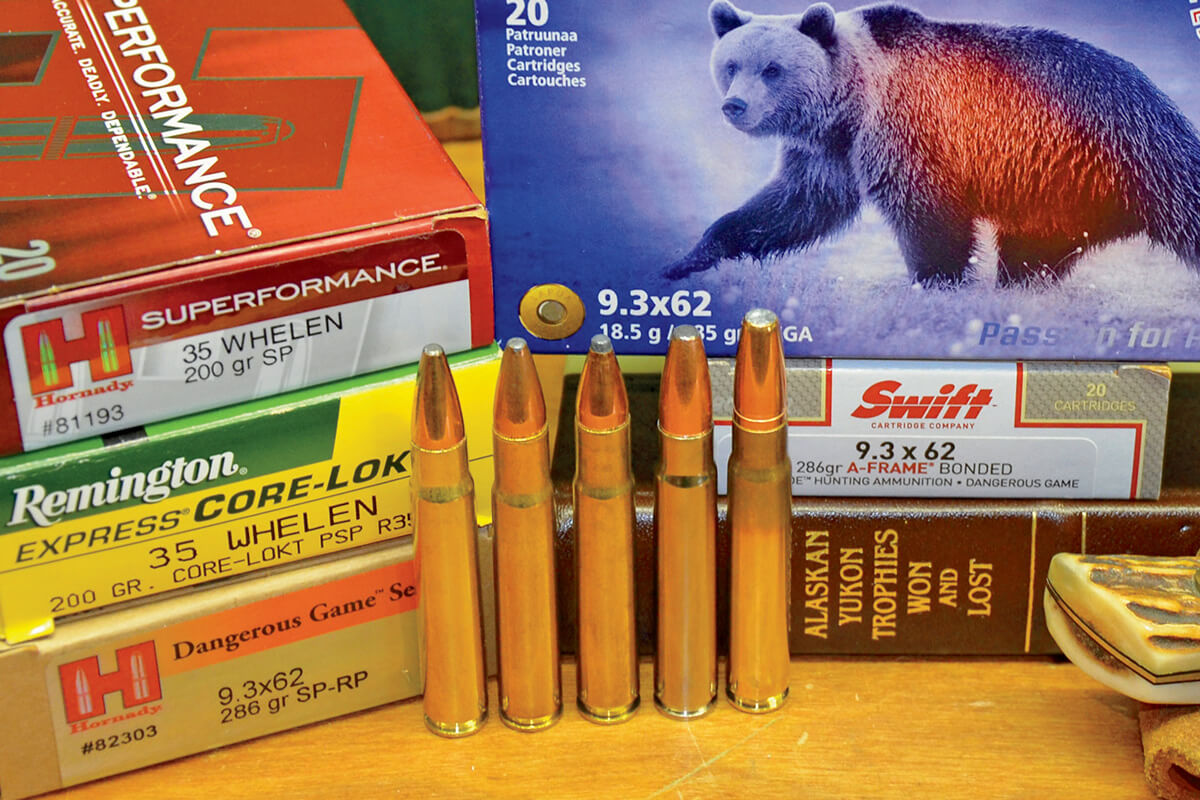
Through the decades, the .30-06, loaded with stout 200- and 220-grain bullets, has accounted for thousands of brown bears, and the Alaska Department of Fish and Game still recommends it for those who cannot shoot more powerful cartridges accurately. Outfitters are happy to see a hunter show up in brown bear camp with a .375 or a .338, and that’s exactly what hunters who are capable of handling them should use. But if given a choice between a hunter who is deadly accurate with his faithful old .30-06 and one who cannot shoot a hard-kicking magnum accurately, any sensible brown bear outfitter or guide will likely choose the .30-06 guy every time.
As other options for brown bear go, the various .300 Magnums loaded with the right bullets are a step up in performance over the .30-06, and many hunters shoot them quite well. Loaded with heavy, controlled-expansion bullets, the .35 Whelen and 9.3x62mm Mauser drive deeply and plow a large wound channel, without taking recoil to the magnum level. The Mauser cartridge has a proven track record on game as large as African buffalo.
I have been fortunate to take the big bears of Alaska with rifles in 7mm STW, .300 RUM, and .358 STA. All were first-shot kills with a premium-grade bullet through the lungs. Within reason, bullet weight and construction along with proper placement of the first bullet are more important than the cartridge used.
Cartridges for African Cats
When choosing a cartridge for Africa, keep in mind that restrictions vary considerably among the various countries. Some laws are specific on rifle caliber while others specify minimum bullet energy. The .375 H&H Magnum is usually allowed for any animal on license, and in some countries the 9.3x62mm Mauser is also accepted. Other countries classify lion and leopard as being the same as various antelope, and the 7mm and .300 Magnums loaded with suitable bullets can be used. This is something that should be determined when booking a hunt.
From a commonsense point of view, animal size should determine cartridge suitability as well as the type of bullets that will be used. In some cases, smaller cartridges are the right choice because most hunters shoot them more accurately than big cartridges, and they are quite suitable for the job. With weights ranging from a bit less than 100 pounds to seldom more than 200 pounds, the leopard is smallest in body size but ranks high in the number of PHs and hunters it has injured. The beautiful cat is sometimes taken by chance and by tracking, but more often, an impala or other small animal is shot and hung high in a carefully chosen tree and a ground blind is built 50 to 75 yards away.
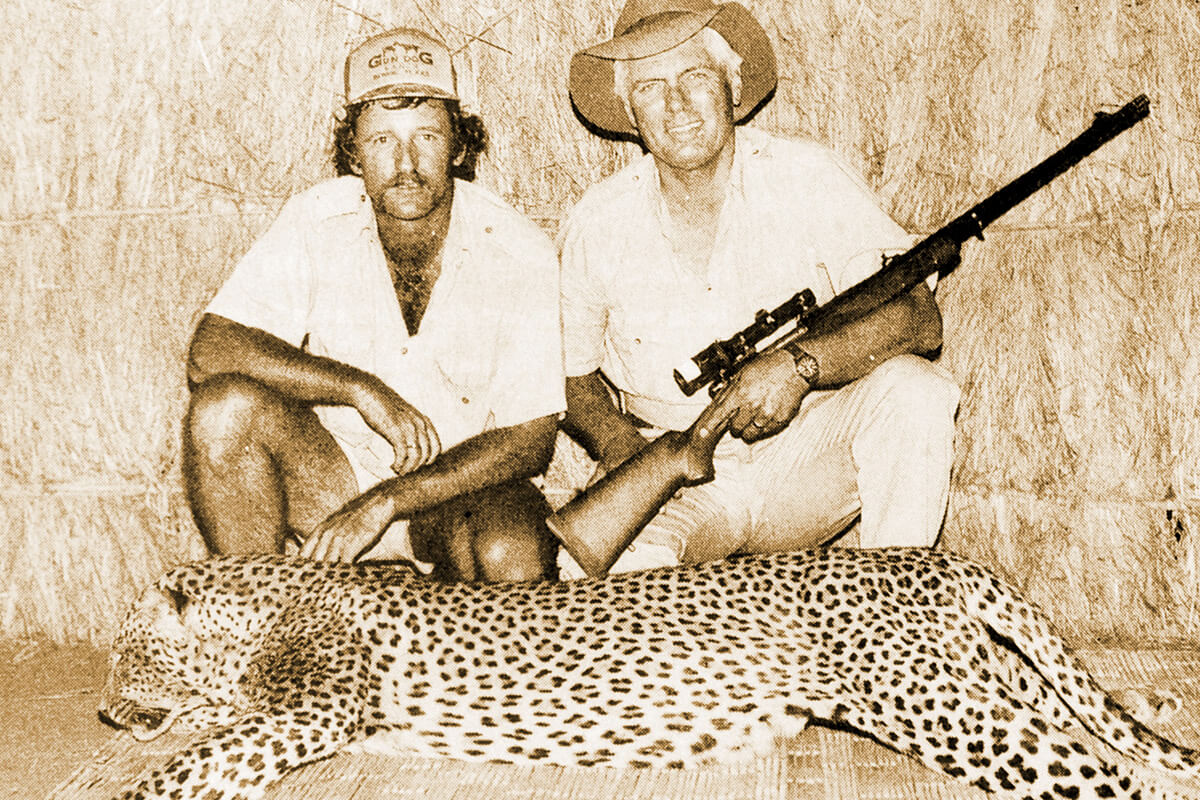
During various culling operations, John Kingsley-Heath, who was one of the all-time great African professional hunters, shot dozens of leopards with a Winchester Model 70 in .243 Winchester wearing a Kollmorgen 6X scope. Upon his recommendation, his clients used that rifle to take dozens more. The vital area of a leopard is quite small, and in addition to being accurate, the .243 Win. is easy to shoot accurately. Quick-expanding, 100-grain deer bullets are used.
While the .243 Win. has proven to be enough for leopard, larger calibers deliver more punch. In my experience, you cannot kill a leopard too quickly or too dead. Moving up a bit in bullet diameter also makes a rifle more flexible and more suitable for use on antelope, such as sable, greater kudu, and roan.
For a two-rifle safari, with the other rifle in a caliber suitable for larger game, the .270 Winchester is an excellent minimum for most of the antelope while not being excessively damaging to the beautiful hide of a leopard. Also, ground blinds can be short on space, so a fairly short rifle is nice to have. One shot at a leopard is all you will get, and it had better be instant lights out. You will be sitting in a chair, preferably with your forward hand holding the fore-end of the rifle and the other arm on a padded rest. The barrel, protruding through a small hole in the wall of the blind, is wrapped in cloth in a color that blends with the material the blind is made of. I have spent many long hours in leopard blinds, and my favorite is a Ruger No. 1A with a 22-inch barrel chambered for 7x57mm Mauser.
Moving to a bigger cat, a mature male African lion can weigh as much as 500 pounds. How it will be hunted determines the suitability of various cartridges. Tracking the animal for hours and often days is absolutely the most exciting, and chances are good the trail will end with a lightning-fast charge from nearby heavy brush. With a bolt-action rifle, there will seldom be time for more than one hastily aimed shot, and the animal absolutely has to be stopped in its tracks.
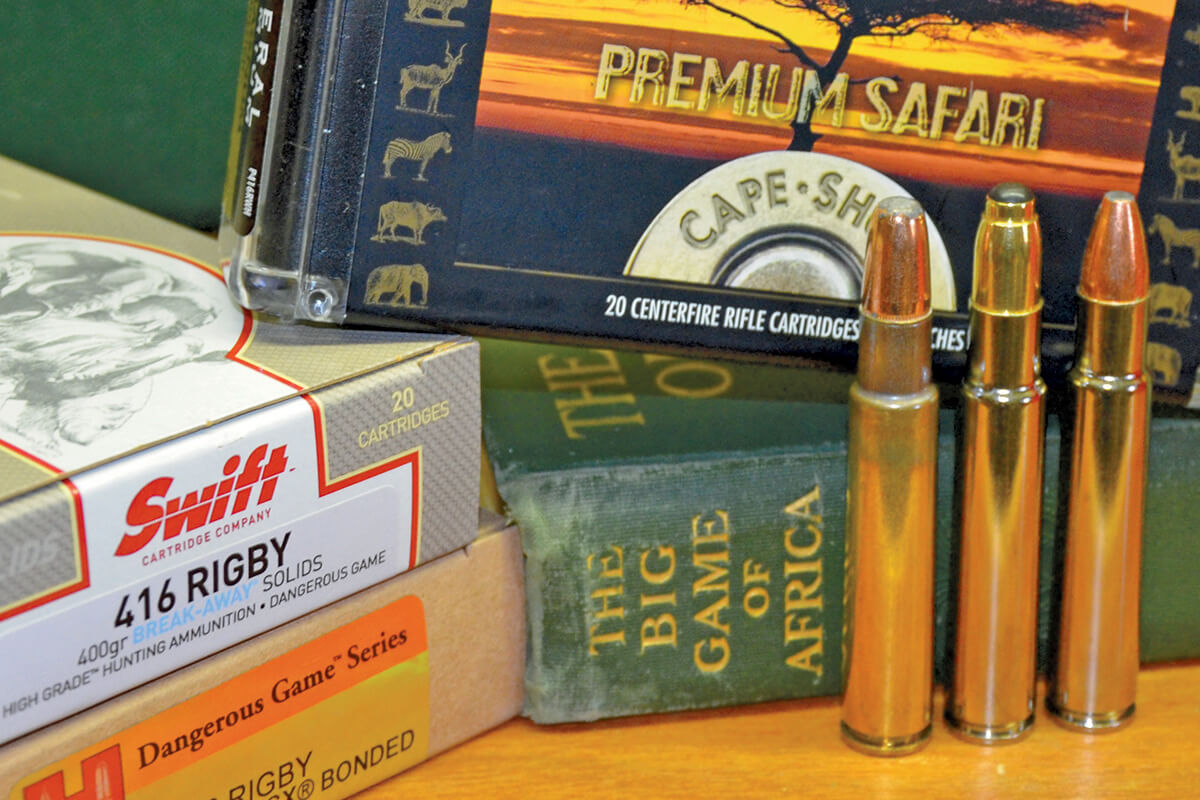
For this reason, the .416 Rigby or one of the other .416s should be considered the absolute minimum. And since a frontal shot through the extremely heavy muscle structure of the chest is often taken, an expanding bullet like the Swift 400-grain A-Frame or the 400-grain Trophy Bonded Bear Claw should be used. When faced with the challenge of stopping a lion charge, some PHs prefer the quick, two-shot capability of a double-barrel rifle chambered for the .470 Nitro Express or another equally powerful cartridge.
Lions are more often taken by hanging half a hippo or other tasty bait just high enough off the ground to be reached, and the shot is taken from a ground blind located about 50 yards away. When a ground blind doesn’t work, a machan built about 12 feet up in a tree is sometimes used, and a shot from one of those is how I took my first lion. In the old days, lions were often taken from a hide with the .30-06 and magnum cartridges of its caliber, but many of today’s professional hunters believe nothing smaller than the .375 H&H Magnum should be used. Some also recommend the 9.3x62mm Mauser.
Like the leopard, the lion is highly sensitive to hydrostatic shock, so plain-vanilla bullets of fairly light construction are better choices for a side-on shot than today’s super-bullets. For the .375s, they would include the Hornady 270-grain InterLock and the Speer softnose of the same weight. If a more strongly constructed bullet is used and it is available in more than one weight, choose the lightest loaded to higher velocity. A PH with whom I have hunted a couple of times likes to see his lion hunters use Remington .375 H&H ammo loaded with the 270-grain Core-Lokt.
Buffalo Cartridges
When I’m asked about my favorite animal to hunt, the buffalo of Africa has long occupied the No. 1 spot, with its slightly larger Asiatic cousin of Australia’s Northern Territories in a distant second. To me, nothing compares to the heart-pounding excitement of getting really close to a big bull in dense cover. The initial shot seldom exceeds 100 yards, and in thick stuff it can be inside 25 yards.
I bagged my first buffalo in Rhodesia during the 1970s and used a Browning Safari Grade rifle in .375 H&H Magnum. Far better bullets now available make the .375 H&H a better buffalo cartridge today than back then, and if it is the most powerful cartridge a hunter can shoot accurately, it is what should be used. In rifles of the same weight, the 9.3x62mm Mauser generates less recoil. Where legal, and with the blessings of my professional hunter, I would not hesitate to use it on buffalo.
Since that first hunt in Rhodesia, I have collected a number of buffalo with calibers larger than the .375 H&H, and the difference in their effectiveness is quite evident. The various .416s loaded with 400-grain bullets are noticeably quicker at putting on the brakes of a bull, but not all hunters can handle their recoil well enough to shoot them accurately. The .458 Winchester Magnum loaded with a 500-grain bullet at an honest 2,100 fps is even more effective, as are the .450 Watts and .458 Lott at about the same velocity. After taking two buffalo with the .470 Nitro Express, I know why it is so popular among professional hunters who use a double for backup.
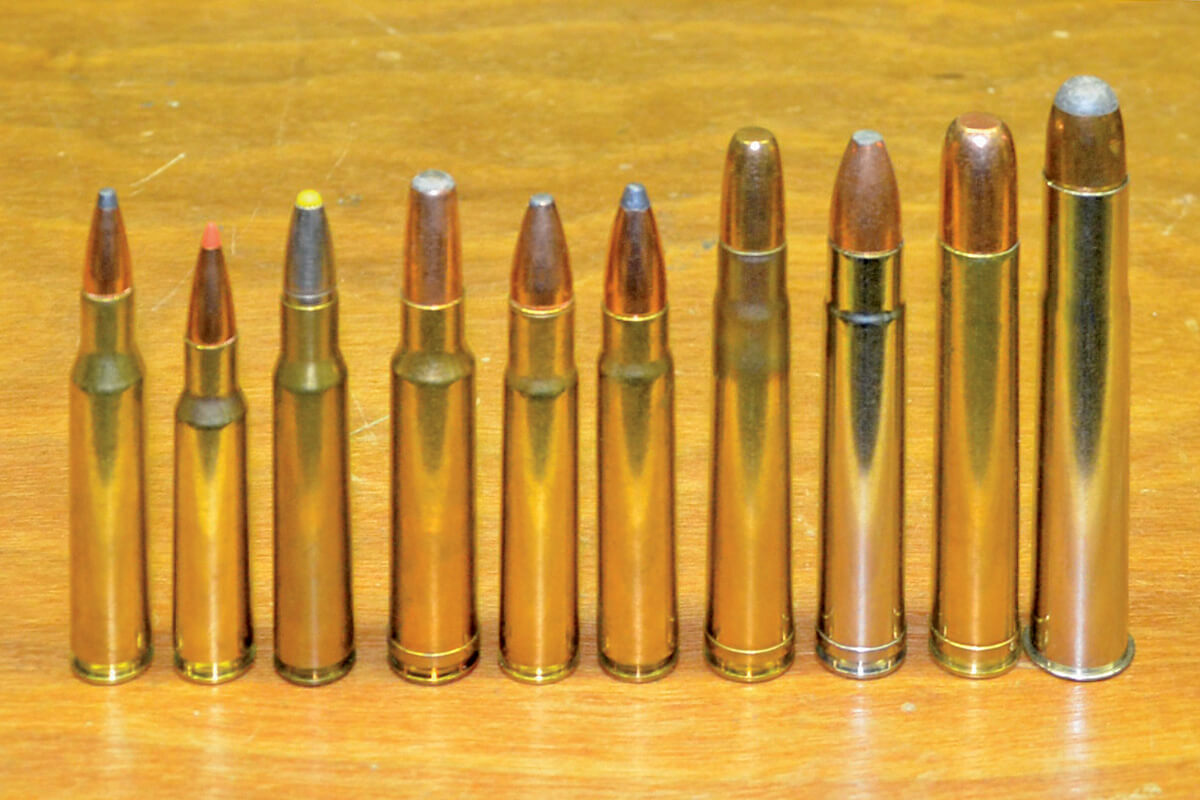
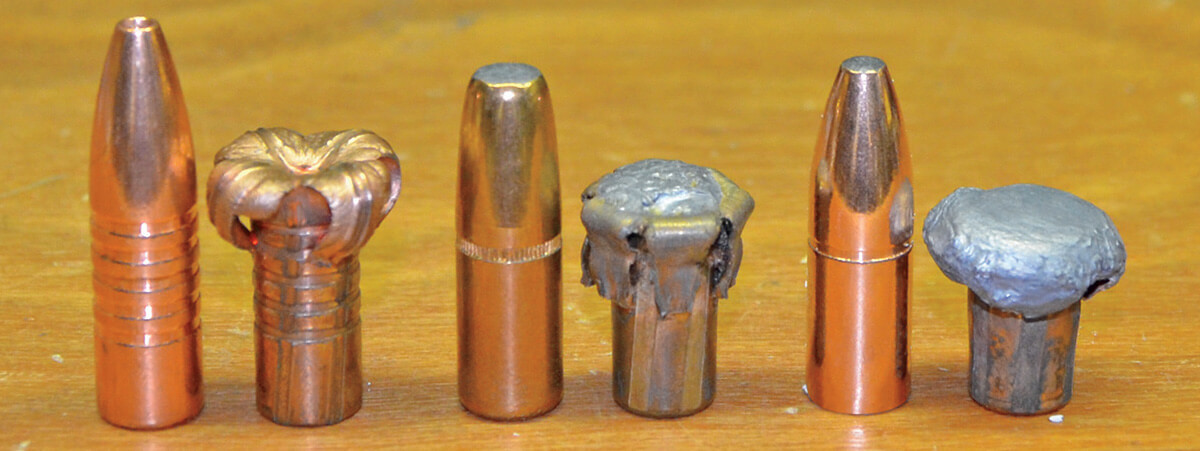
Regardless of the caliber in hand, I prefer to start the show with an expanding bullet through the lungs. Following shots are often at a bull traveling away from the gun, and while the greater penetration of solids is sometimes needed, keep in mind the risk of a bullet zipping through its intended target and wounding another buffalo in a herd. I have not tried the cup-nose solids from Swift, North Fork Bullets, and Woodleigh, but they should offer more penetration than expanding bullets while penetrating a bit less than solids with round and flat-nose profiles.
Cartridges for Elephants & Hippos
Through the decades I have had several opportunities to purchase licenses for elephant and have been quite close to very good bulls when hunting other game. I have also accompanied other hunters and their PHs while tracking elephant for days on end. My closest calls in Africa have been compliments of elephants, mostly cows with calves and young bulls, yet I have never had any desire whatsoever to shoot one of the magnificent beasts. But I have seen enough of them shot by others to know that while the .375 H&H will work, the .416s are a more sensible minimum, and the .458s are none too big. Elephant are often inside 25 yards when shot, which is good because on a frontal shot to the brain, bullet placement has to be in a spot not much bigger than a grapefruit. A side-on shot to the brain is an even smaller target. Due to a much larger target, most hunters are probably better off taking a side-on shot through the heart and lungs. Regardless of which shot is taken, such a huge animal requires penetration that only solid bullets are capable of delivering.
The hippo of Africa is not as large as the elephant, but a battle-scarred old bull can weigh upwards of 8,000 pounds. I have taken several. Hippos commonly spend their daylight hours in rivers and lakes where most are taken. A bull has to surface every five to six minutes to breath, and while just the top of the head is briefly exposed, a shot to the brain is taken from dry land. You will have mere seconds to take the shot, but don’t rush because six minutes later the animal will reappear. An accurate rifle chambered for the 7x57mm Mauser on up works fine. During the night, hippos leave the water to graze on grass, and while catching one on dry land during the day is not exactly common, it does happen, and that’s when I have taken all but one of mine with the .416 Rigby, .416 Rem. Mag., .458 Win. Mag., and .470 Nitro Express. As with the elephant, solids are required.
My idea of the best cartridge for me in my advanced years? Well here you go! Grumpy 
Categories
How Effective Is 5.7x28mm?




Categories
The 9×57 Mauser

Laying prone at the Crusader Range at the SAAM Shooting School on the FTW Ranch in Barksdale, Texas, I was presented with the challenge of making two consecutive shots: the first at 325 yards, and the second at 500 yards, with only 10 seconds between the two. Upon report of the first, the countdown began.
While the first was steep downhill to my left, the second was much flatter, but almost 90 degrees to my right. It would require setting up for the first shot, and making not only a scope adjustment to compensate for the difference in trajectory, but completely realign my shooting position to punch the steel plate.
All this to simulate a game animal moving at varying distances, and to teach the skills needed to make the shot—or sometimes to teach you what shots are beyond the shooter’s capability.
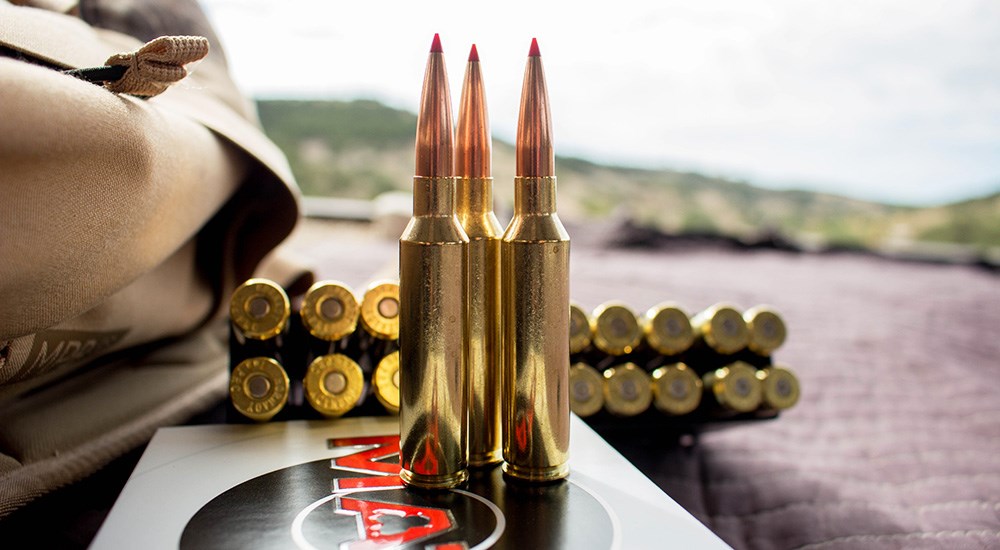
Having been to this facility several times, and being familiar with the ever-changing winds which flow through those canyons, I’ve found that a flat-shooting cartridge with a decent velocity and a high ballistic coefficient (BC) can make your life much easier. This particular day I was shooting the classic Remington Model 700 rifle, chambered for the brand-new Hornady 7mm PRC; this new design certainly got the job done.
Hornady has made waves with their 6.5 PRC (Precision Rifle Cartridge), which was based on the now-obscure .300 Ruger Compact Magnum, as well as the .300 PRC, based on the .375 Ruger; both parent cases were designed by Hornady in conjunction with Ruger.
While the .300 PRC has a maximum cartridge overall length of 3.700 inches and requires a magnum action for best performance, the 6.5 PRC has a 2.955-inch overall length and can fit in a short-action receiver, the new 7mm PRC sits right in the middle—clearly designed for the long-action receiver, and putting the cartridge smack in the middle of the previous two releases.
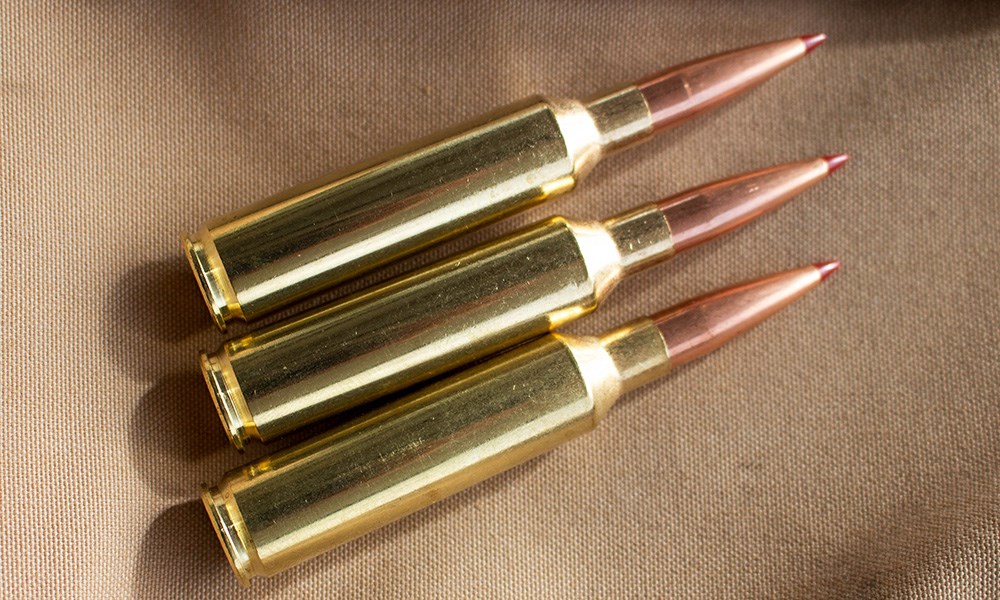
The 7mm PRC maintains the same 0.532-inch rim and base diameter as its older siblings; you cartridge hounds may recognize that number as the H&H Belted Magnum rim and belt diameter, but the PRC family and many other Hornady designs use that for the body diameter. Being a rimless design, the 7mm PRC will headspace off the shoulder, and it keeps the same 30-degree shoulder angle as its relatives. The 7mm PRC’s case length comes in at 2.280 inches, with a maximum cartridge overall length of 3.340 inches, the same as the .30-06 Springfield.
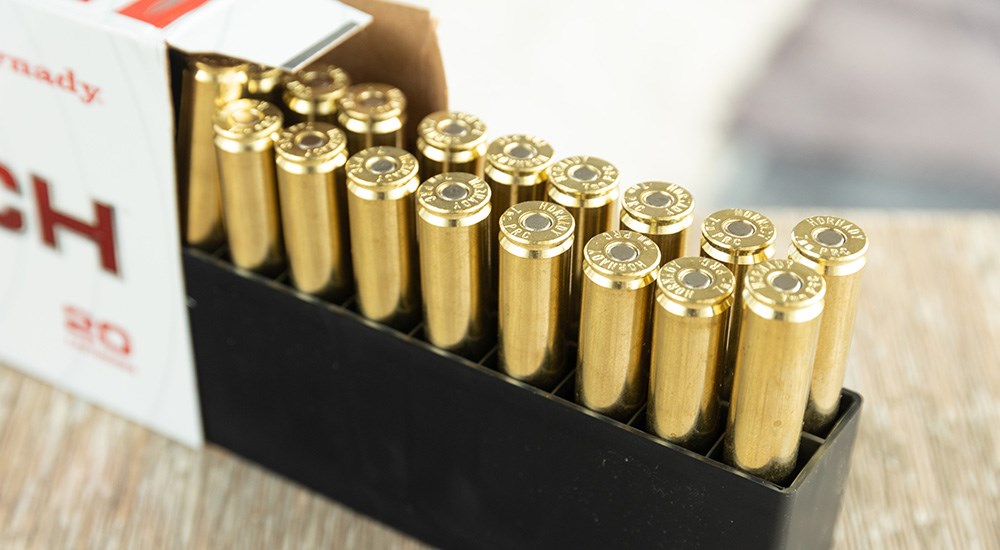
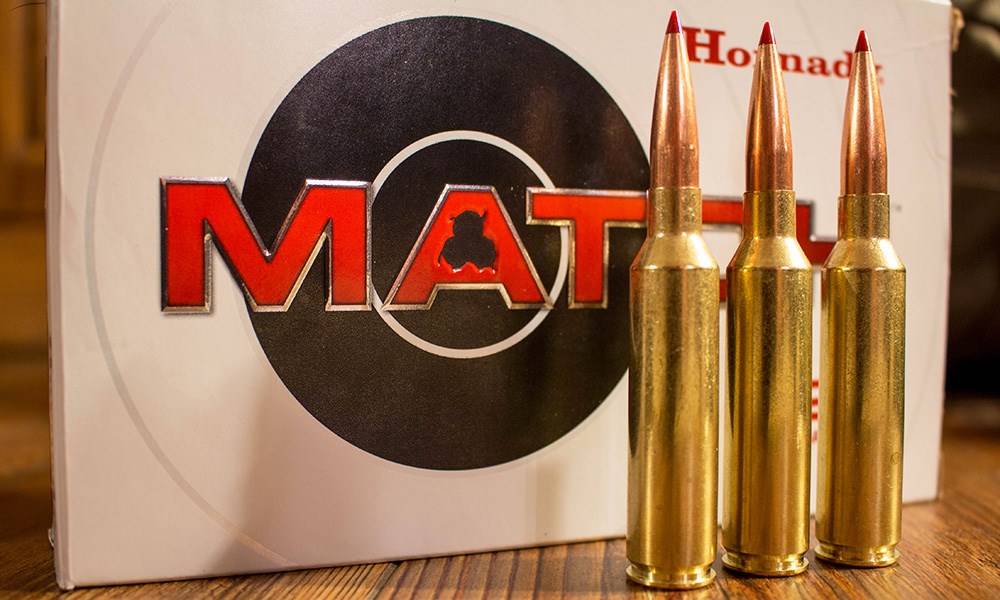
There are currently three loads available, but at the time of this writing, the only one I could get my mitts on for testing was the 180-grain ELD Match, cruising along at a muzzle velocity of 2975 fps. The also a 175-grain ELD-X Precision Hunter softpoint running at 3000 fps, and a 160-grain CX Outfitter at a muzzle velocity of 3000 fps.
Measuring the factory cartridges, I observed an average overall length of 3.2910 inches, which means there might be a bit of room to seat that long, sleek bullet out even further, but based upon the way it shot, I see no reason to do so. That long sleek bullet has a G1 BC value of 0.796, and the folks at FTW clocked it at 2955 fps—certainly in step with advertised velocities. And for starters, the 100-yard accuracy was certainly sub-MOA, with some groups running as tight as ½-MOA during our range sessions to zero the rifle.
As per the usual FTW routine, targets are engaged at all sorts of distances, from sane hunting scenarios to next-zip-code shots, and the 7mm PRC handled them all well. Our rifles were topped with Swarovski Z8i 3.5-28x50mm scopes, with the BRX-1 reticle; while larger in both magnification and objective lens size than I would normally choose on a hunting rifle, these were good choices for reaching out past 1,200 yards. While the scope’s elevation turret was marked in mils (with a series of raised yardage markers, which I felt were absolutely perfect for hunting), I will describe the trajectory in inches of drop, just to illustrate the point.
With a 200-yard zero, the 7mm PRC will rise 1.4 inches at the 100-yard mark, dropping 6 inches at 300 yards, 17.1 inches at 400 yards and 33.7 at 500 yards. Being completely honest, with a cartridge of this velocity and trajectory I’d prefer to use a 250-yard zero. Doing that will see a rise of 2.50 inches at 150 yards, but a 2-inch drop at 300 yards, and a 6-inch drop at 350, giving me a dead-hold on a deer’s heart to roughly 325 yards. If simplicity appeals to you, a trajectory like this will cover the vast majority of you hunting shots. With this zero, 400-yard shots will drop 13 inches, and 500-yard shots drop 27 inches.
While I personally have no business shooting at unwounded big game past 500 yards (a self-imposed limit, based on my real-world experiences), we did have fun stretching the 7mm PRC’s legs on steel targets, taking it all the way out to 1,500 yards confidently, and making several hits just past the one-mile mark. Bottom line? The 7mm PRC has the goods to make long range shots confidently, and as this is American Hunter, our concerns are targets much closer than that of the true long-range competition shooter.
Recoil? I found the 7mm PRC to be totally manageable, though some folks who don’t regularly shoot magnum cartridges proclaimed it to be a bit stiff. I have had some 7mm Remington Magnum rifles beat me up much, much worse than did the Model 700 in 7mm PRC, and putting 60 to 75 shots per day from the prone position didn’t crush my shoulder. In a hunting situation, where you’d spend a bit of time zeroing the rifle, and then firing a few shots at game, I can honestly say that you wouldn’t feel the recoil at all.
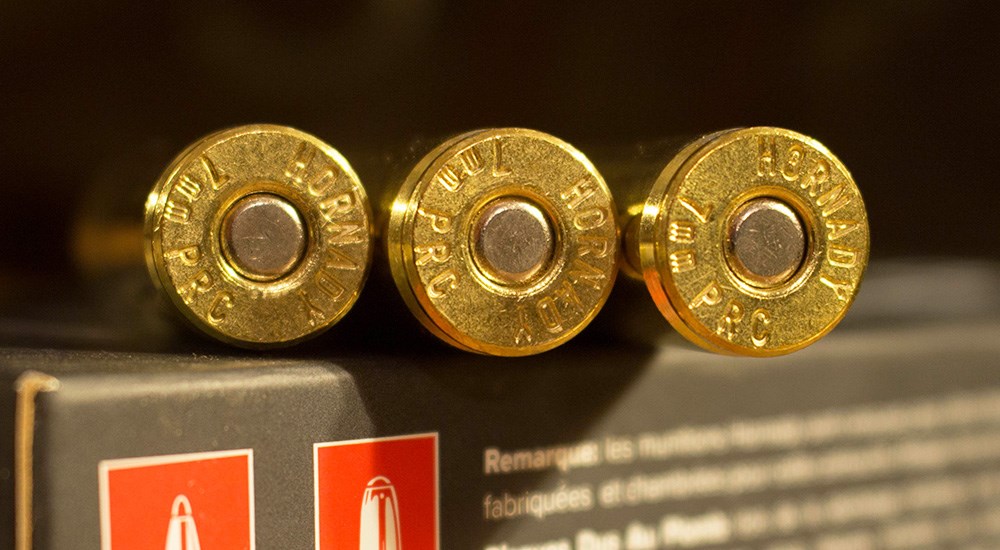
Does the hunting and shooting world need a 7mm PRC? Well, I think the answer to that question is yes. Yes, the .300 PRC offers heavier bullet weights, yet it requires a longer action and comes at the price of much stiffer recoil. The 6.5 PRC is a great cartridge, but with bullet weights south of 145 grains, I feel it is limited in the game species for which it is applicable.
A 175-grain lead-core hunting bullet, or perhaps a 160-grain monometal, will allow the 7mm PRC to join the “all-around” club, being able to take all North American game shy of the huge coastal grizzlies, and the majority of African species with the exception of the true heavyweights. All this in a beltless case which won’t have any of the stretching issues that the belted cases have, which offers great concentricity and excellent accuracy; I can’t see any reason not to choose the 7mm PRC.