


Before the call that changed Sergeant Timothy Gramins’ life forever, he typically carried 47 rounds of handgun ammunition on his person while on duty
Feb 21, 2020
Before the call that changed Timothy Gramins’ life forever, he typically carried 47 rounds of handgun ammunition on his person while on duty.
Now, he carries 145, “every day, without fail.”
Gramins detailed the gunfight that caused the difference in a gripping presentation at the annual conference of the Assn. of SWAT Personnel-Wisconsin in 2012.

At the core of his desperate firefight was a murderous attacker who simply would not go down, even though he was shot 14 times with .45-cal. ammunition – six of those hits in supposedly fatal locations.
The most threatening encounter in Gramins’ nearly two-decade career with the Skokie (Illinois) Police Department north of Chicago came on a lazy August afternoon in 2008 prior to his promotion to sergeant, on his first day back from a family vacation. He was about to take a quick break from his patrol circuit to buy a Star Wars game at a shopping center for his son’s eighth birthday.
An alert flashed out that a male black driving a two-door white car had robbed a bank at gunpoint in another suburb 11 miles north and had fled in an unknown direction. Gramins was only six blocks from a major expressway that was the most logical escape route into the city.
Unknown at the time, the suspect, a 37-year-old alleged Gangster Disciple, had vowed he would kill a police officer if he got stopped.
“I’ve got a horseshoe up my ass when it comes to catching suspects,” Gramins laughs. He radioed that he was joining other officers on the busy expressway lanes to scout traffic.
He was scarcely up to highway speed when he spotted a lone male black driver in a white Pontiac Bonneville and pulled alongside him. “He gave me ‘the Look,’ that oh-crap-there’s-the-police look, and I knew he was the guy,” Gramins said.
Gramins dropped behind him. Then in a sudden, last-minute move the suspect accelerated sharply and swerved across three lanes of traffic to roar up an exit ramp. “I’ve got one running!” Gramins radioed.
The next thing he knew, bullets were flying. “That was four years ago,” Gramins said. “Yet it could be 10 seconds ago.”
With Gramins following close behind, siren blaring and lights flashing, the Bonneville zigzagged through traffic and around corners into a quiet pocket of single-family homes a few blocks from the exit. Then a few yards from where a 10-year-old boy was skateboarding on a driveway, the suspect abruptly squealed to a stop.
“He bailed out and ran headlong at me with a 9 mm Smith in his hand while I was still in my car,” Gramins said.
The gunman sank four rounds into the Crown Vic’s hood while Gramins was drawing his .45-cal. Glock 21.
“I didn’t have time to think of backing up or even ramming him,” Gramins said. “I see the gun and I engage.”
Gramins fired back through his windshield, sending a total of 13 rounds tearing through just three holes.

A master firearms instructor and a sniper on his department’s Tactical Intervention Unit, “I was confident at least some of them were hitting him, but he wasn’t even close to slowing down,” Gramins said.
The gunman shot his pistol dry trying to hit Gramins with rounds through his driver-side window, but except for spraying the officer’s face with glass, he narrowly missed and headed back to his car.
Gramins, also empty, escaped his squad – “a coffin,” he calls it – and reloaded on his run to cover behind the passenger-side rear of the Bonneville.
Now the robber, a lanky six-footer, was back in the fight with a .380 Bersa pistol he’d grabbed off his front seat. Rounds flew between the two as the gunman dashed toward the squad car.
Again, Gamins shot dry and reloaded.
“I thought I was hitting him, but with shots going through his clothing it was hard to tell for sure. This much was certain: he kept moving and kept shooting, trying his damnedest to kill me.”
In this free-for-all, the assailant had, in fact, been struck 14 times. Any one of six of these wounds – in the heart, right lung, left lung, liver, diaphragm, and right kidney – could have produced fatal consequences, “in time,” Gramins emphasizes.
But time for Gramins, like the stack of bullets in his third magazine, was fast running out.
In his trunk was an AR-15; in an overhead rack inside the squad, a Remington 870.
But reaching either was impractical. Gramins did manage to get himself to a grassy spot near a tree on the curbside of his vehicle where he could prone out for a solid shooting platform.
The suspect was in the street on the other side of the car. “I could see him by looking under the chassis,” Gramins recalls. “I tried a couple of ricochet rounds that didn’t connect. Then I told myself, ‘Hey, I need to slow down and aim better.’”
When the suspect bent down to peer under the car, Gramins carefully established a sight picture and squeezed off three controlled bursts in rapid succession.
Each round slammed into the suspect’s head – one through each side of his mouth and one through the top of his skull into his brain. At long last, the would-be cop-killer crumpled to the pavement.
The whole shootout had lasted 56 seconds, Gramins said. The assailant had fired 21 rounds from his two handguns. Inexplicably – but fortunately – he had not attempted to employ an SKS semi-automatic rifle that was lying on his front seat ready to go.
Gramins had discharged 33 rounds. Four remained in his magazine.
Two houses and a parked Mercedes in the vicinity had been struck by bullets, but with no casualties. The young skateboarder had run inside yelling at his dad to call 911 as soon as the battle started and also escaped injury. Despite the fusillade of lead sent his way, Gramins’ only damage besides glass cuts was a wound to his left shin. His dominant emotion throughout his brush with death, he recalls, was “feeling very alone, with no one to help me but myself.”
Remarkably, the gunman was still showing vital signs when EMS arrived. Sheer determination, it seemed, kept him going, for no evidence of drugs or alcohol was found in his system.
He was transported to a trauma center where Gramins also was taken. They shared an ER bay with only a curtain between them as medical personnel fought unsuccessfully to save the robber’s life.
At one point Gramins heard a doctor exclaim, “We may as well stop. Every bag of blood we give him ends up on the floor. This guy’s like Swiss cheese. Why’d that cop have to shoot him so many times!”
Gramins thought, “He just tried to kill me! Where’s that part of it?”
When Gramins was released from the hospital, “I walked out of there a different person,” he said.
“Being in a shooting changes you. Killing someone changes you even more.” As a devout Catholic, some of his changes involved a deepening spirituality and philosophical reflections, he said without elaborating.
At least one alteration was emphatically practical.
Before the shooting, Gramins routinely carried 47 rounds of handgun ammo on his person, including two extra magazines for his Glock 21 and 10 rounds loaded in a backup gun attached to his vest, a 9 mm Glock 26.
Now unfailingly he goes to work carrying 145 handgun rounds, all 9 mm. These include three extra 17-round magazines for his primary sidearm (currently a Glock 17), plus two 33-round mags tucked in his vest, as well as the backup gun. Besides all that, he’s got 90 rounds for the AR-15 that now rides in a rack up front.
Paranoia?
Gramins shook his head and said “Preparation.”
Now a police commander at Skokie PD, Gramins recently shared these additional pointers with Police1 for officers involved in a shooting:
“After you are involved in a shooting, every thought you are having is completely normal. Seek out and talk to officers who have been involved in shootings and they will affirm this. Your survival started with the shooting. How you survive after the shooting is the continuation of your strength and perseverance.
You are not alone in this part of your survival. There are so many professionals who are there to assist you and make sure you have the right tools along the way. Go visit the store and get the tools and necessities you need for the survival trip.
The sooner your post-shooting perspective turns to, ‘How can I help my fellow officers?’ the sooner you will understand how much your incident has made you a much better-equipped officer for your job. Share your lessons learned, both good and bad when able.
Always go to the hospital and get checked out post-shooting!
Always have a lawyer with you for every part of the investigation process!
For officers not involved in the shooting, phone calls and texts are nice, but writing a short note or sending a card to the involved officer will be remembered.
Along those lines, officers involved in a shooting will not remember to do basic things due to the trauma, adrenaline and anxiety. Write down simple instructions like wake up, eat breakfast, etc.
Finally, we need to let our egos go and simply help each other and support each other!”
Listen to Tim Gramins describe the gunfight on the Modern Samurai Project podcast:
This article, originally published 04/17/2013, has been updated.

I’m a big fan of the .32-20 Winchester Center Fire cartridge, introduced in 1882 as a small bore offering for the successful Winchester Model of 1873.
It soon became one of Winchester’s third most popular cartridge, and like it’s siblings in the WCF family, it was then chambered in numerous pistol designs, such as the Colt’s Model P (otherwise known as the Single Action Army) and later the Colt’s Police Positive Special, Colt’s Army Special, early S&W K-Frame, and probably several others.
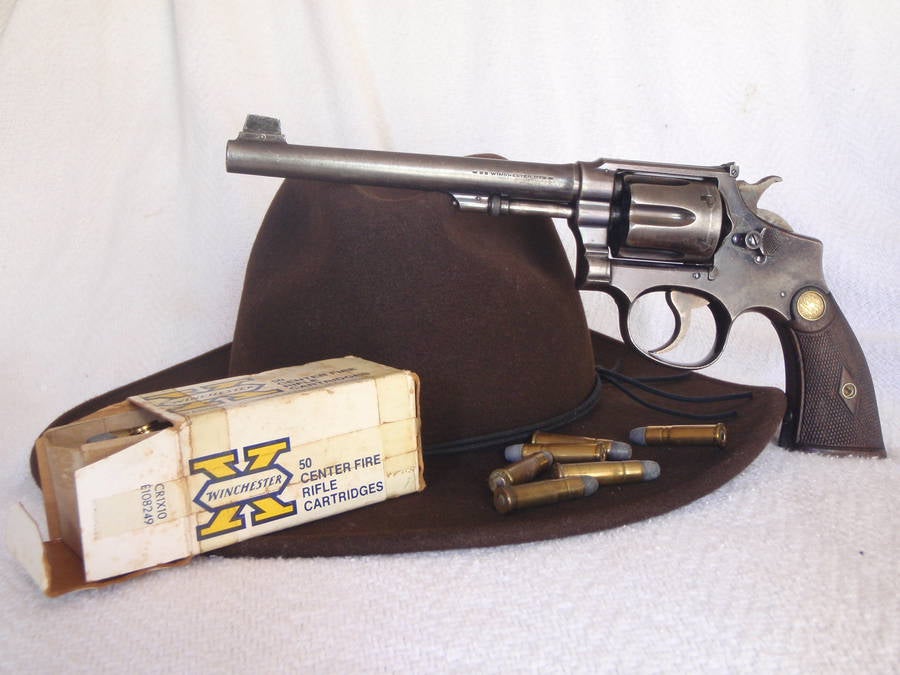
.32-20 WCF is a pretty neat little round, and it’s been the inspiration and platform for numerous other successful, and non-successful cartridges alike.
Some spinoffs based directly on the .32-20’s case are the .25-20 and the .218 Bee, and attempts to make a semi-automatic version for the Winchester Model 1905 rifle resulted in the .32 Winchester Self-Loading, which was the inspiration for the much more successful .30 Carbine round used in the US M1 Carbine.
A lot of people will insist that the .32-20 and some of its offspring are far too powerful for small game, and far too underpowered for medium sized game, with a bullet that’s too small for self defense. Eau Contraire, mon frère. It’s all in how you load it.
Back in the day, thirty caliber pistol cartridges were considered more than adequate for self-defense and even military service by a great many.
Witness the use of the .32 ACP by the French in WWI and then replacing it with the 7.65mm MAS just in time for WWII. The .30 Luger (7.65x21mm) was adopted by the Swiss, Brazilian, Bulgarian, Finish, and Portuguese armies.
The Russian’s used the 7.62 Nagant Revolver, and replaced it with another .30 caliber, the 7.62 Tokarev. Some of these countries did a lot of fighting and killing, and sometimes, they even used thirty caliber pistol rounds, and the .32-20 was more powerful than any of those.
“Oh, bull!” says you “Nobody considered those calibers to be serious rounds. They were badges of honor for officers”.
Well, maybe that’s true, but consider this: before the advent of cartridges like the .38 Special, .45 ACP, and 9mm, rounds like the .32 S&W Long and the .32 Colt were considered adequate self-defense cartridges, because then as now, very few people elected to carry a full sized pistol everyday.
When a smaller gun was more concealable, and thus, more practical. .32’s remained popular as pocket guns until the introduction of the .38 Special J-Frame S&W in 1959.
It begs the question of why no one made a ‘magnumized’ version of the .32 S&W Long until 1983 when H&R came out with the .32 H&R Magnum, and until the 2008 introduction of the Federal .327 Magnum, there wasn’t a .32 caliber, magnum length cartridge.
No wait, there was. It was called “.32-20 WCF” and people knew it was perfectly adequate for self-defense. Blues guitarist Robert Johnson even wrote a song about the .32-20 (and a cheatin’ woman):
“She got a thirty-eight special, but I believe it’s most too light… I got a 32-20, got to make the caps alright. Her .38 special, boys, it do very well. I got a 32-20 now, and it’s a burnin’!”
Something tells me that when Johnson wrote that song, he wasn’t referencing a cartridge that many of his contemporaries would have considered underpowered, or one they had never heard of.
He calls the .38 Special “much too light”, which I interpret as being “underpowered”. He wrote that song in 1936, after the introduction of the .357 Magnum.
If he wanted to brag, he could have bragged about the .357, he could have said he had a .44 Special, or a .44-40, or a .45 Colt, even a 1911 in .45ACP or .38 Super, but instead, he choose to write about a gun he probably actually owned, a gun he knew his audience would know and respect, and that gun was a .32-20.
John Taffin, in his article on the .32-20 wrote: “Elmer Keith related how, as a teenager, he broke broncs to get enough money to buy his first centerfire Colt Single Action, a seven and one-half inch .32-20.
Thirty years later, Skeeter Skelton, freshly mustered out of the service at the end of WWII, stopped in Chicago long enough to purchase, yep, you guessed it, a seven and one-half inch Colt Single Action .32-20.
When two gentlemen of such sixgunnin’ stature as these two start with the .32-20, one has to take notice.”
Both of these men were pioneers in the field of magnum pistol cartridges, credited as being the co-creators of the .44 Magnum and .357 Magnum respectively, and one has to wonder where they developed their ideas about loading rounds much, much hotter than they came from the factory.
One reason you can do that very well with the .32-20 is when you have a gun designed for a rather large cartridge like the .45 Colt or the .44-40 WCF, and then you stick a tiny, narrow-hipped little number in there, you have more metal and can load to considerably higher pressures than you can with the larger bores, which come from the factory pretty close to their safe maximum for their intended designs.
Even though the .44-40 and .45 Colt were more powerful than the .32-20 in factory form, they limited you to a large frame revolver, and they could not be hot loaded without endangering the gun and the shooter!
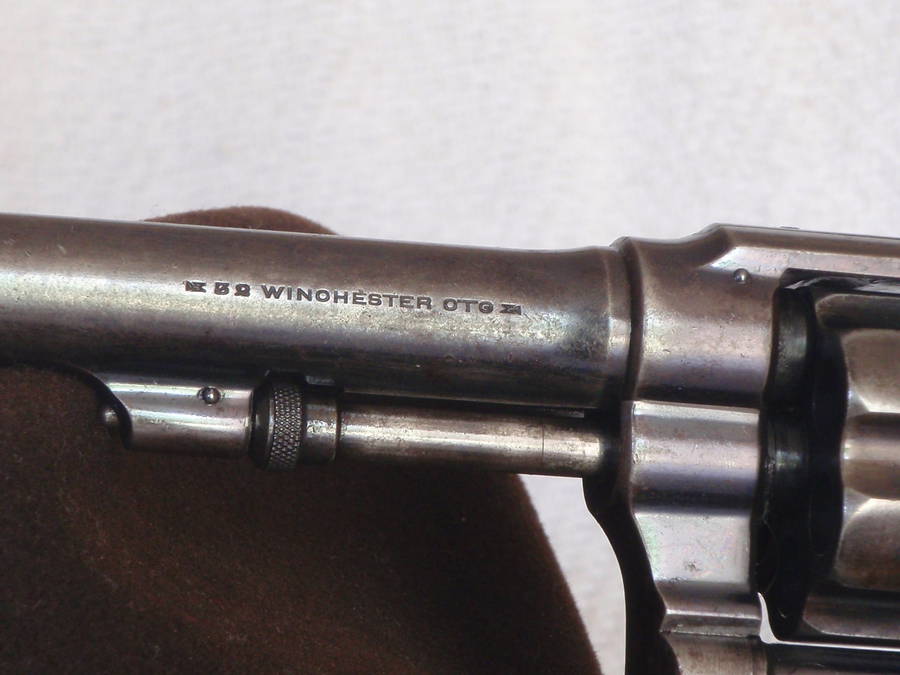
This is because of smaller rounds usually have smaller base diameters, which means if you compared the .32-20 to a .38 Special in the same sized gun, you could load the .32-20 hotter by virtue of the fact that it has a smaller base diameter (.353” vs. .379”) translating to an extra .013” of metal between the chambers, regardless of the gun they were used in.
“Okay. SO?” Well, consider this: according to Glen Fryxell of Handloads.com and http://www.lasc.us/Fryxell_Book_Contents.htm, an expert on the history of cast bullets, writes “The first bullet that we might call a SWC that had a separate beveled groove specifically for crimping the case mouth into was the 311316, the GC-SWC for high-velocity loads in the .32-20 rifle.”
That came out in 1906, a similar design didn’t come out for the .38 Special until Elmer Keith designed one in 1928.
You need a crimp groove to keep hot loads from pulling the bullet out, and unless you were carrying a large frame revolver chambered in .44-40 or .38-40, your only option for this a mold with this feature before 1928 was the .32-20.
You simply couldn’t load a .38 as hot as a .32-20 without the risk of jamming your piece!
Suitable hollow point bullet molds were available for the WCF family as early as the 1890’s (31133 for .32-20). Also note that when you wrote to a company back then you could request that your bullet mold be made as a hollow point.
Think about that: In 1906, you could have a target sighted, double action, swing out cylinder, medium framed revolver that fired a high velocity cartridge loaded with Unique or Bullseye powder, firing a 115 grain, gas-checked, SWC-HP bullet at over 1200 fps, generating over 400 ft/lbs of muzzle energy.
That’s [Skeeter’s load](http://www.darkcanyon.net/What’s The Best Trail Gun For You.htm) from an article he wrote in 1977, which you can assume wasn’t nearly the maximum he tried in these old guns.
That load would be considered dangerous in those old guns today (and rightly so!) and it only achieves numbers that would be comparable to a .38 Special +P, but keep in mind that such an animal didn’t exist back then.

If you fired your hot .32-20 loads out of a SAA or other heavy framed revolver, you could easily match the ballistics of a .45 Colt! Elmer said that you could get 1500fps in a large frame, SAA.
When the Luger was new, rare, and expensive, when the most powerful automatics looked like the Mauser C96, before the .44 Special or the Model 1911 even existed, there was the powerful, accurate, flat shooting, light recoiling .32-20 WCF.
Do I recommend you load your antique, S&W .32-20 Hand Ejector to 1200 FPS? No! Of course not! Not even the later K-Frames with heat treated cylinders.
Quickload estimates that that load would produce around 26.5kPSI of pressure which those old timers might be able to handle, but why risk it?
Nowadays, we have hundreds of calibers and thousands of models which can deliver better performance, but in 1906, 1200 FPS was really something.
If you must shoot a .32-20 to the maximum of it’s potential, do it in a Thompson Contender, or some other modern design. That way, if you blow it up, at least you don’t destroy an irreplaceable piece of our firearms heritage!
So, why doesn’t the .32-20 get the respect it deserves today? Well, frankly, it has been technologically out classed several times since the early 20th century.
Perhaps all the fellas who knew died in the Great War, or in the Great Influenza (which killed far more Americans than WWI did) who knows?
Then again, maybe all the guys who were in on the secret and willing to experiment blew up their own guns and bought something else!
But it’s my opinion that before WWII, the .32-20 was a round to be respected.
Now that is what I call a Brave man to shot this rifle. Now while it is not the biggest caliber that Ruger makes. But the 45-70 can still pack a great punch especially when one handloads the round up to its full potential! Grumpy
