Category: Ammo
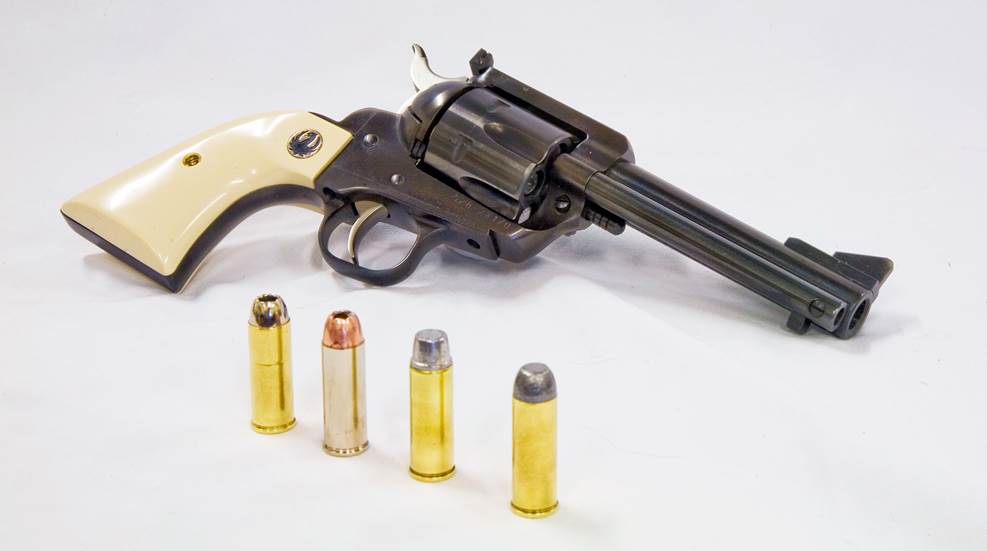
To understand firearm development, it is necessary to have some knowledge of the economy during their progress. The Civil War brought about a great increase in economic opportunities—hence industrialization—to the Union. Manufacturing business grew at a phenomenal rate. The war created a huge market for firearms and fueled the development of their technology. While the waging of war created the demand, it was the Reconstruction period after the war that brought about a maturation of that booming economy. The U.S. military—primarily the army at that time—needed better firearms with which to serve the country.
Single-shot and repeating rifles fed by cartridges that were ignited with a primer pressed into the center of the rear of the case replaced cap-and-ball muzzleloaders and rimfire-primed cartridges. Revolvers—which had progressed nicely into the cap-and-ball technology—began seeing their own cartridge development to centerfire-primed rounds. They were very popular with the cavalry because they could be operated with one hand and offered as many as six shots before requiring a reload.
Colt rather quickly came out with a Benet-primed .44 Colt cartridge for its Richards-Mason conversion of the 1860 Army. The actual diameter of the heeled, outside-lubricated bullet was .451″to .454″, and it featured a 225-gr., conical lead bullet in front of 23 grains of FFg blackpowder for a velocity of 640 f.p.s. and 207 ft.-lbs. of energy. Charles B. Richards, an engineer at Colt, and William Mason, a gunsmith who came to Colt from Remington in 1866, worked together on the .44 Colt cartridge, which was introduced in 1871.
The Richards-Mason conversion was a stopgap measure as the company retooled and set up to manufacture what would become the Colt Model 1871-72 Open Top revolver. This revolver was chambered in the more powerful .44 Henry Rimfire cartridge, a major step up in power from the .44 Colt. It was capable of kicking a 200-gr. conical ball bullet out at 1,125 f.p.s. with 568 ft.-lbs. of energy, though these numbers are probably from a rifle.
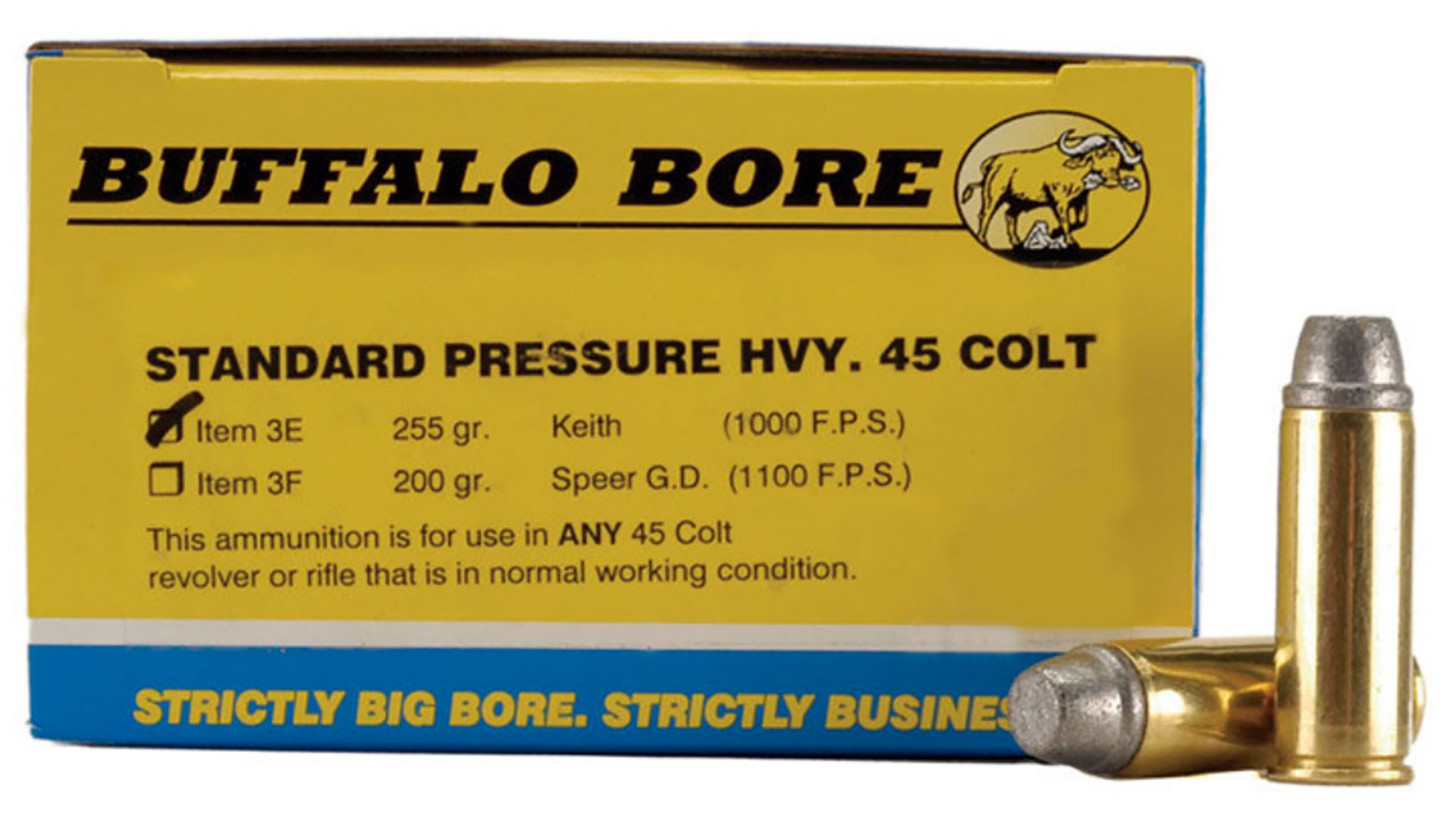 Buffalo Bore .45 Colt available today loaded with a 255 gr. lead bullet.
Nonetheless, the army bought several thousand of them for its cavalrymen during the revolver’s two-year production run. Three things became very clear. The army wanted a more powerful revolver. It did not want outside-lubricated bullets that pick up dirt and grit from the field. And a revolver tough enough to stand up to these rigors must have an enclosed window for the cylinder, what we now refer to as a solid frame.
Richards and Mason began developing a new revolver and teamed up with ammunition engineers at Remington to manufacture the cartridges. Both the revolver—the 1873 Colt Single Action Army(SAA)—and its cartridge, the .45 Colt, would become iconic in the annals of firearm development. The .45 Colt retains the bullet diameter of its .44 Colt predecessor at .452″ – .454″ but kicks the weight of the bullet up to 255 grains.
After playing with loads with bullets as light as 225 grains and powder weights from 28 to 40 grains, they settled on the 255-gr. bullet in front of 40 grains of FFg blackpowder for 840 f.p.s. with about 400-ft.-lbs. of wallop out of a revolver. Production of ammo and revolver began in 1873. The army quickly saw the improvement of both revolver and load, as did civilians, and the Colt .45, as it became commonly called, generated a great reputation as a man-stopper.
All of the preceding did not occur in a vacuum. Smith & Wesson had been hard at work on its No. 3 revolver in .45 caliber. In fact, the army adopted the No. 3 in 1870 chambered in .44 Smith & Wesson American. But the brass wanted more power. Major George W. Schofield had an engineering improvement to the Model 3. Instead of mounting the spring-loaded barrel latch on the barrel, he reversed it and mounted the latch on the frame.
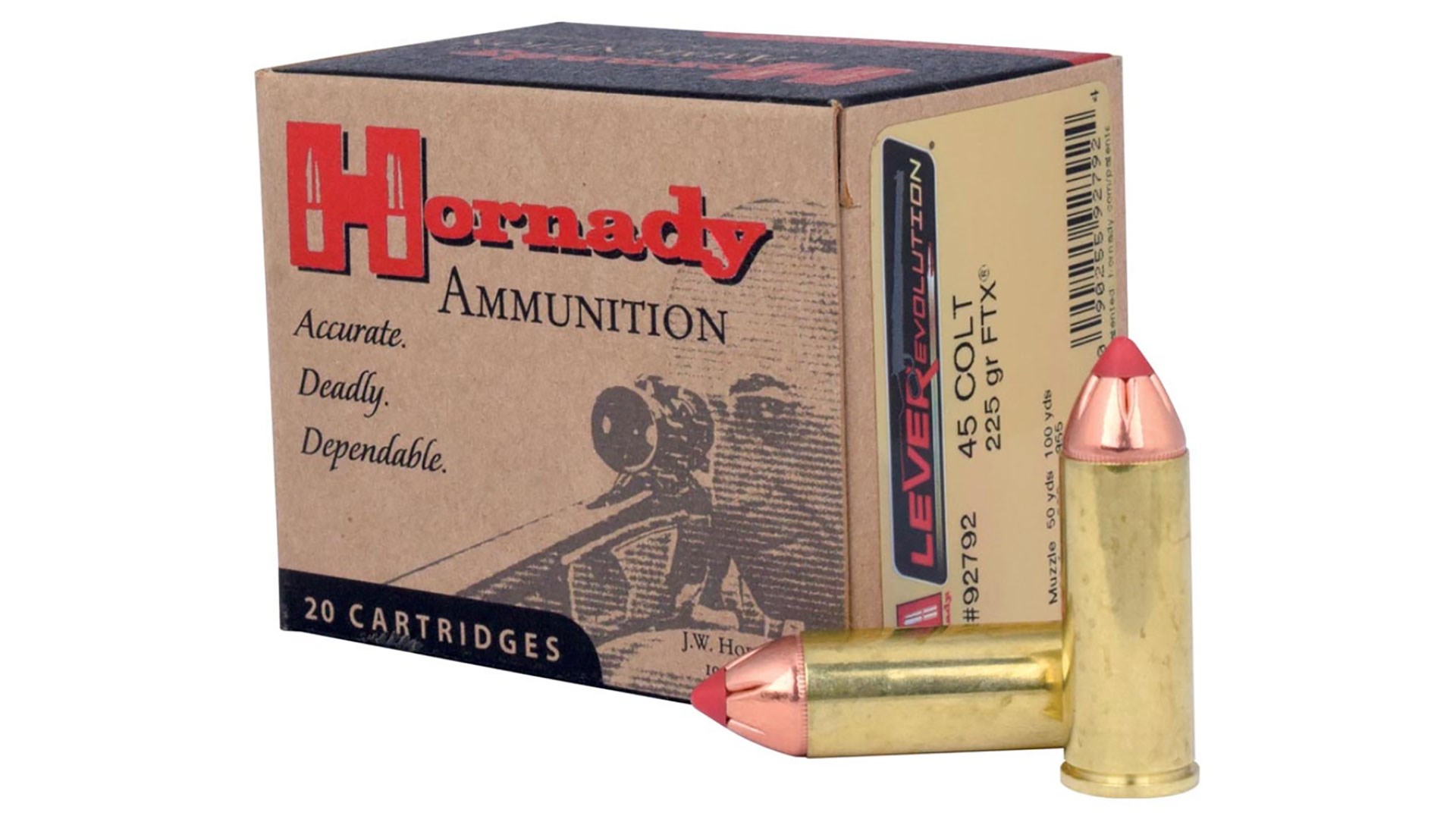 Hornady .45 Colt cartridges loaded with a .255 gr. FTX bullet.
The army specified that the revolver would chamber the .45 Colt cartridge, but the Smith & Wesson revolver’s cylinder was too short do it was chambered in a shorter .45 Smith & Wesson—often referred to as the .45 Schofield, adopted in 1875. The Smith & Wesson cartridge would function in the Colt SAA but not vice-versa. Army quartermasters had headaches trying to sort out ammo for each revolver. Frankfort Arsenal, which supplied nearly all the ammo for the Army, simply ceased loading the .45 Colt and supplied the troops with .45 S&W cartridges.
Somewhere in all of this the .45 Colt nomenclature was colloquially changed to “.45 Long Colt” to differentiate it from the shorter S&W cartridge. From bank heists to battlefields, train robbers to shopkeepers, the .45 Colt and the SAA was king. Sure, there were plenty of those finely made Smith & Wessons, but out on the frontier far from gunsmiths, people counted on the robustness of the SAA and its man-or-beast-busting .45-cal. cartridge.
They must have done something right because, 147 years later, the cartridge continues to be loaded. Other than in wartime, there hasn’t been a hitch in production of the .45 Colt cartridge. The military could not leave well enough alone. Some 21 years after the introduction of the Colt SAA and its .45-caliber round, the military adopted the Model 1892 Colt double-action revolver chambered in a .38 Long Colt cartridge developed in 1875, featuring a 150-gr. lead, round-nose bullet launched by blackpowder at 708 f.p.s. with a measly 157 ft.-lbs. of energy out of a 6″ barreled revolver.
Sometime later, a smokeless powder load sent a 148-gr. bullet downrange at 750 f.p.s. and 185 ft.-lbs. of energy. Some bad experiences in the Philippines during the Philippine–American War of 1899–1902 against Moro juramentados tribesmen had the army scrambling for anything that could fire .45 Colt cartridges. This led to Colt developing the M1909 round , identical in load to the original .45 Colt round but with a larger rim to accommodate the star-like extractor/ejector of the New Service double-action revolver.
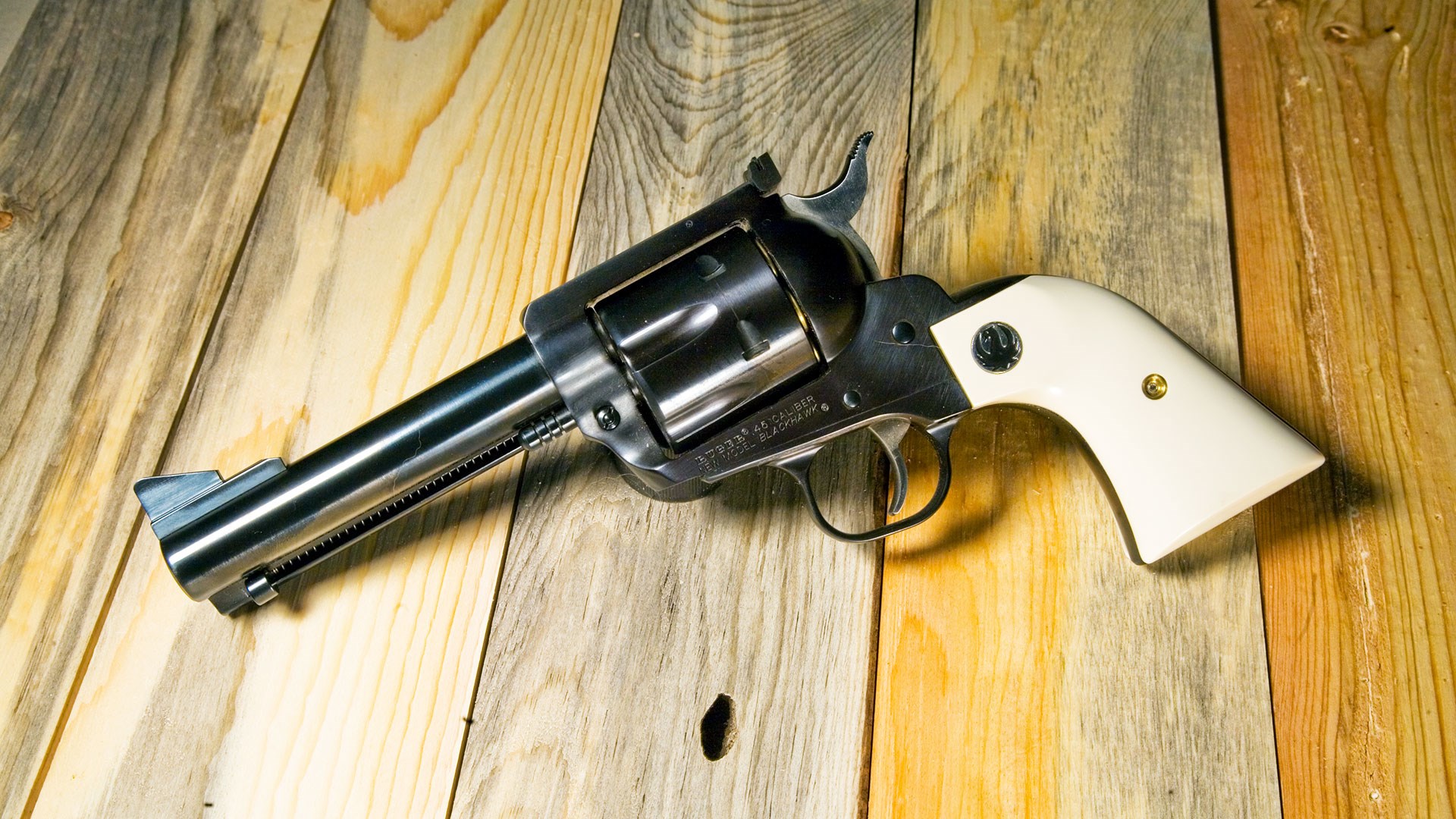 The author’s Ruger Blackhawk chambered for .45 Colt.
M1909 ammunition will not work in single-action revolvers chambered in .45 Colt because the rim diameter interferes with adjoining cartridges. Even as semi-auto pistols began emerging, the .45 Colt has remained a steady-selling cartridge. Two reasons for that is the reliability and longevity of the SAA revolver and the fact is that it plain works.
Whether dealing with desperados, deer or even black bears, in the hands of a decent shot, a man armed with a .45 Colt will go home to his family or bring home the game. In the mid-1950s, a Utah-based gunsmith and experimenter named Dick Casull began exploring the limits of what a .45-cal. handgun could produce. He started with blackpowder-framed Colt SAAs, re-heat treating the frames and converting them to five-shot cylinders.
In 1959 he introduced the .454 Casull cartridge featuring a case 1.383″ long—some .098″ longer than a .45 Colt case—and a thicker web in the head of the case that Casull claimed to get more than 1,900 f.p.s. with a 250-gr. bullet. The power guys went nuts over this, but it would take almost 25 more years before this cartridge would be commercially loaded and have a factory manufacture a revolver that could handle it. In the meantime, Ruger chambered its tough Blackhawk revolver in .45 Colt, as did Thompson/Center in its equally solid Contender single-shot pistol.
Power guys ignored the loading manuals of the day and began dropping huge charges of slow-burning powders into .45 Colt cases to see what they could get away with. Now called T-Rex loads by the brethren, many loading manuals gave loads for these guns expressly and specifically. As for me, if I want an extremely powerful revolver—which I do not anymore—I would choose a cartridge expressly made for those tasks. I like the .45 Colt for what it is: a moderately powerful handgun cartridge that does anything I might ask from a handgun.
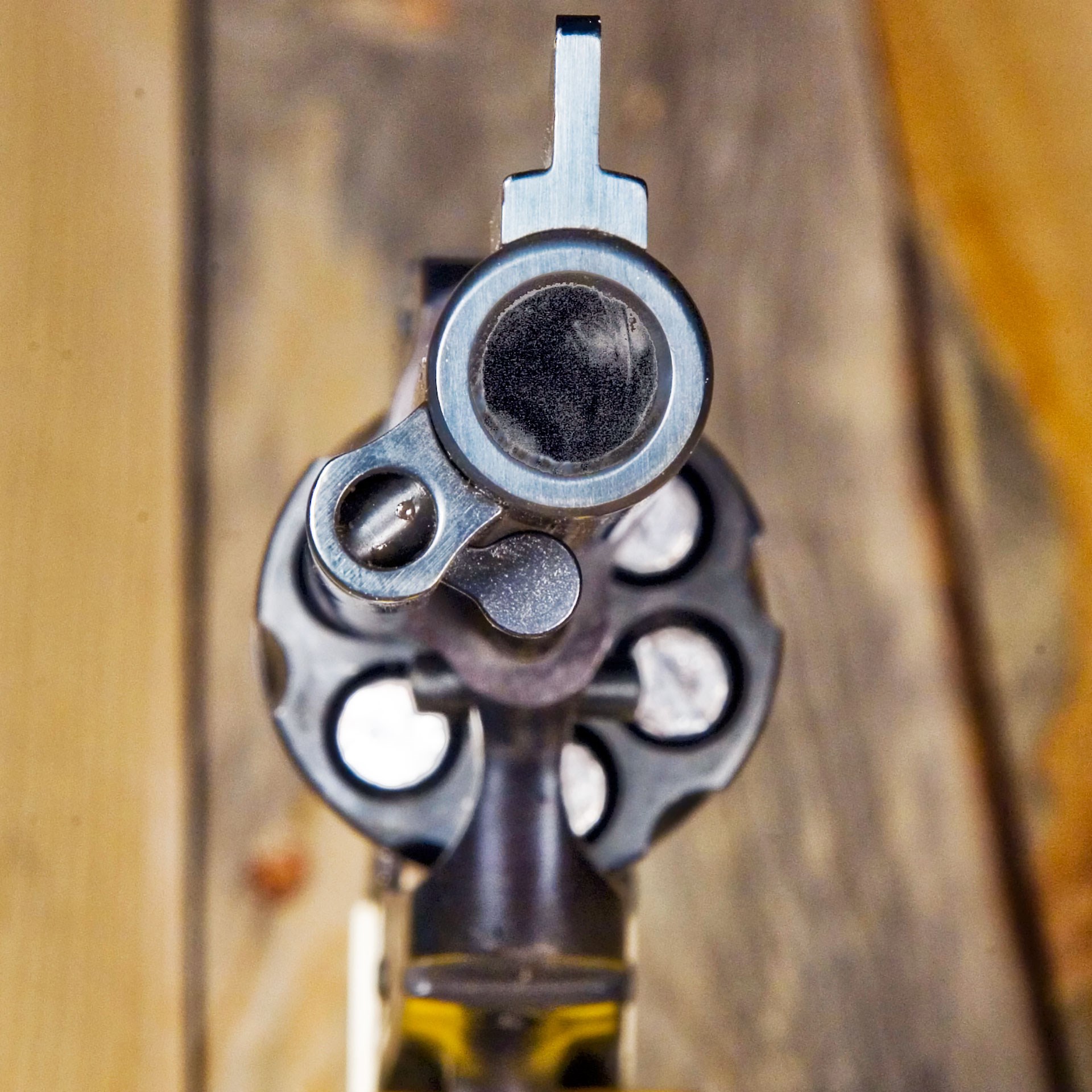 A view from the muzzle end of the author’s Ruger Blackhawk chambered for .45 Colt.
As with all my revolvers, save my J-frame Smiths, I prefer to cast hard semi-wadcutters at some 258 grains in my .45-cal. with 9.0 grains of Alliant Unique powder. In my 4 5/8″ Ruger, it gives me about 912 f.p.s. with 476 ft.-lbs. of muzzle thump. If I need more thump, I’ll choose a rifle—too many years of shooting those big bruisers has left me with some arthritis in my hands.
All the major factories load the .45 Colt cartridge today; one of the smaller manufacturers—Garrett, in Texas, loads +P .45 Colt rounds that are expressly for the Rugers. But there are plenty of JHP and SP loads available—outside of the pandemic-induced ammo shortage. There are even relatively soft-recoiling loads for cowboy action shooters. It is the cowboy action shooters that brought another firearm into the .45 Colt fold—rifles.
When the cartridge was introduced, the small diameter and thin rim of the .45 Colt cartridge, along with the straight-walled case, would not feed or extract reliably in the lever-action rifles of the day. Too, it was fueled with blackpowder, which leaves a rather heavy residue. A straight-walled case would often hang up because of that following, especially if the residue was exposed to dampness.
Today, however, Winchester, Uberti, Henry and Cimarron have produced replica lever actions chambered in the big 45. Smokeless powders, some engineering tweaks and the clientele who keep their competition guns clean has largely neutered the old attitude toward .45 Colt lever actions. Continuously produced for nearly 150 years, both in ammo and guns, the .45 Colt remains a capable cartridge for field use or even self-defense. I know several fellows who regularly have a single-action revolver on their belt on a daily basis, and that revolver is a .45 Colt.

In my last article, I discussed why I don’t think it’s necessary to use specialized hog hunting ammunition when pursuing wild boar. Here are a few alternative ammunition choices to use instead next time you’re out in the woods after hogs.
Keep in mind that this is not an all-inclusive list. After all, hunters have been killing hogs for years with run-of-the-mill deer hunting ammunition, so there are literally dozens of different bullets out there that are capable of ethically killing a hog with proper shot placement.
It’s not essential to use premium ammunition, but it can be really helpful, especially if you encounter a really big hog or if you’re using a small caliber rifle. That being said, if you want to give yourself every advantage possible when hog hunting, then keep reading to learn some recommendations for good quality ammo for hog hunting.
Keep in mind that this is not an all-inclusive list. After all, hunters have been killing hogs for years with run-of-the-mill deer hunting ammunition, so there are literally dozens of different bullets out there that are capable of ethically killing a hog with proper shot placement.
It’s not essential to use premium ammunition, but it can be really helpful, especially if you encounter a really big hog or if you’re using a small caliber rifle. That being said, if you want to give yourself every advantage possible when hog hunting, then keep reading to learn some recommendations for good quality ammo for hog hunting.
Barnes TTSX
Available in multiple bullet weights in just about every caliber from .223 all the way up to .458, the Barnes TTSX has a reputation for good accuracy, high weight retention, reliable expansion and deep penetration. These attributes make it an excellent choice for hunting a wide variety of big game, including feral hogs.
The Barnes TTSX is also lead-free, which makes it ideal for hunters in states like California, who are not allowed to hunt big game with bullets containing lead.
Nosler Partition
It’s not new or sexy, but the venerable Nosler Partition is still trucking along as one of the world’s premier big-game hunting bullets because it works so well. It does not have a bonded core, and Partition bullets normally only retain approximately 60-80 percent of their weight, but these traits in and of themselves do not necessarily mean a bullet is “good” or “bad.”
With two lead cores separated by a jacket shaped like the letter “H” (a “partition,” if you will), the bullet is designed to rapidly expand up to a certain point, but still penetrate deep enough to reach the vitals of even the largest animals. Hunters quickly discovered how well the bullet works on big, tough animals, and it is still a great choice hunters chasing hogs.
So, if you’re a “meat and potatoes” kind of guy, then by all means find a Nosler Partition load that shoots accurately in your chosen rifle and hit the woods.
Federal Fusion MSR
Do you like to hunt hogs with an AR-style rifle? Well, the Federal Fusion MSR line of ammunition is optimized for use in modern sporting rifles like the AR platform that have free floating firing pins and 16-to-20-inch barrels.
The Fusion MSR features a jacket that’s molecularly fused to the bullet core in order to minimize the chances of the core separating from the jacket and to ensure reliable penetration. At the same time, it’s designed to expand even at reduced velocities.
Available in .223 Remington, 6.5 Grendel, 6.8 SPC, .300 Blackout and .308 Winchester, it’s a pretty darn good bullet to use in your favorite MSR when hog hunting.
Keep in mind that that certain rifles will perform better with some bullets than with others. Before you take any new type of ammunition out on a hunt, make sure you test it out at the range first. If you can’t find a particular load for a given type of bullet that works well in your rifle, consider moving onto a different bullet.
Like I said earlier, this is not an all-inclusive list, but each of these bullets is a proven performer on feral hogs. If you place your shots correctly, no hog will run far after taking a hit from one of them.

Revolvers soldier on as defensive weapons because they perform certain tasks very well. As deep cover carry guns, small revolvers are arguably superior to semiautos. The revolver’s lack of sharp angles lends itself to concealment and minimizes printing.
Small revolvers tend to function more reliably than small autos when used within grappling distance—e specially when fired one handed with a less than perfect grip. It’s hard to beat a five-shot .38 like a J Frame Smith or Ruger LCR for this application. Selecting the right carry ammo to find the balance between effectiveness and user friendliness takes some thought.
Even with the advancements made with modern ammunition, it’s a challenge to make hollow points expand reliably in a short barreled .38 Special. There’s no JHP out there that will consistently perform “as advertised” from a two-inch barrel in the real world. Low velocities, intermediate barriers, and even some clothing fabrics can take the magic out of bullets designed to expand. Plus P offerings bring more pressure, blast and recoil, but cannot guarantee results.
The humble wadcutter is worth a look for this application. It won’t expand, but it will poke a clean .35 caliber hole and leave a large permanent wound channel. The sharp shoulder delivers deep penetration and is less likely to be deflected by bone than a round nose. The flat nose produces more shock and creates more trauma by crushing tissue.
Round nose or non-expanded hollow point bullets pass through tissue leaving permanent channels that are less than bullet diameter; tissue stretches to allow the bullet to pass but then shrinks back. Even at the modest velocities of factory loads (650-700 fps depending on manufacturer), wadcutters exit short barrels penetrate impressively in ballistic gel—around 16 inches. Wadcutters do this with low recoil and blast.
The fixed sights on most .38’s are regulated for standard velocity 158-grain bullets. Wadcutters thankfully hit to the same point of aim.
There are a few companies out there that recognize the value of this concept and load wadcutters for defensive purposes. Buffalo Bore offers a 150-grain hard cast wadcutter loaded to “heavy standard pressure”. They use powders with flash suppressants to minimize flash while firing.
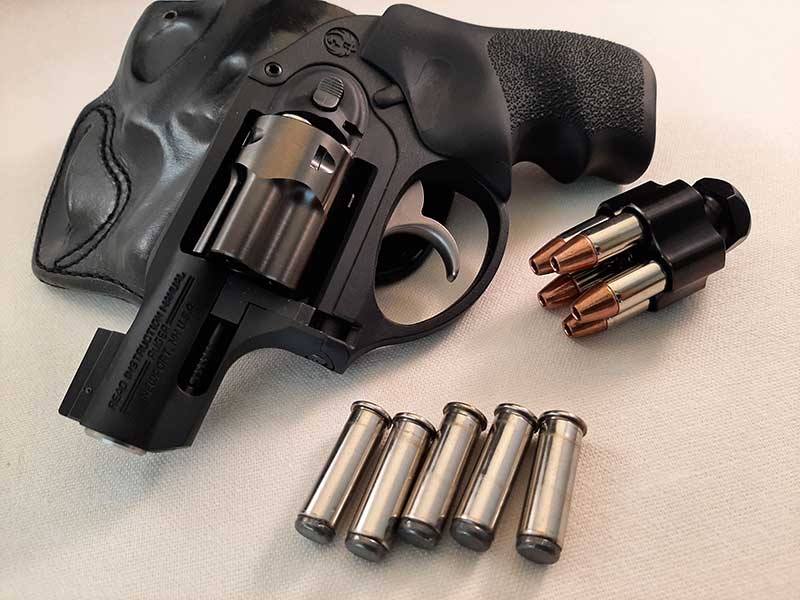
Small .38’s like this Ruger LCR make great deep cover guns. Wadcutters might be a better balance in this 13.5-ounce gun than +P JHP’s.
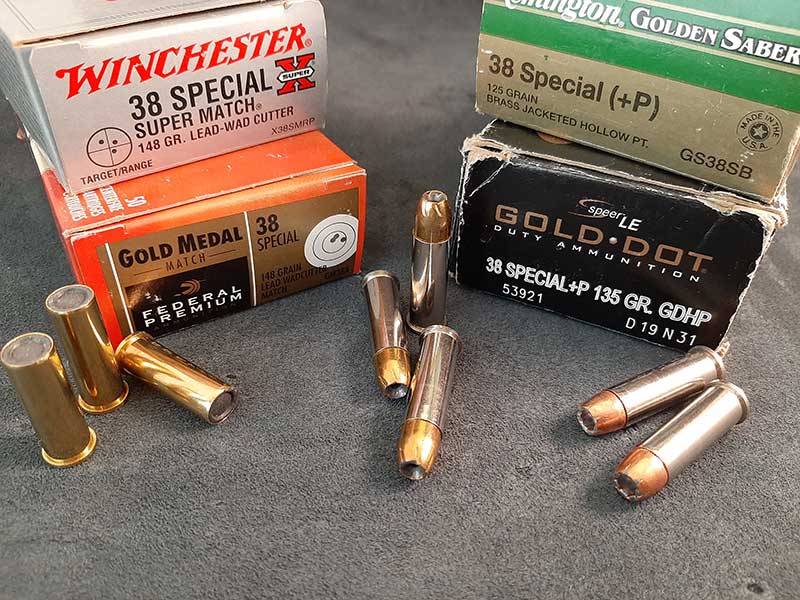
It’s hard to make even modern quality hollow points expand consistently from a two-inch barrel. Wadcutters penetrate well and produce more shock than round nose bullets with minimal blast and recoil.
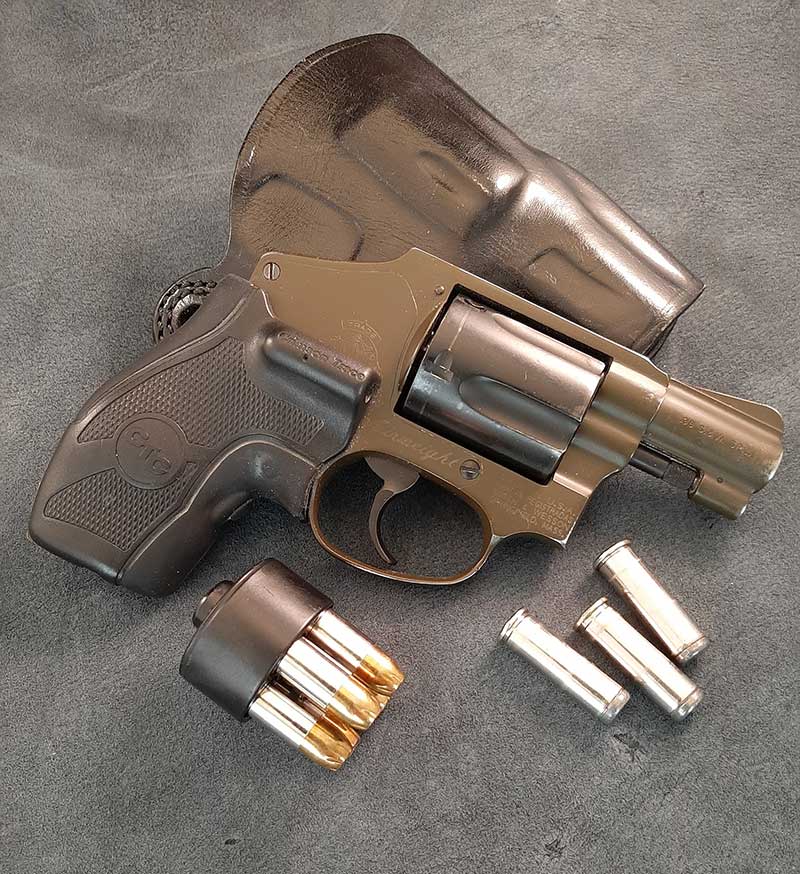
Wadcutters in the gun with round nosed projectiles in the speedloader for an emergency reload.
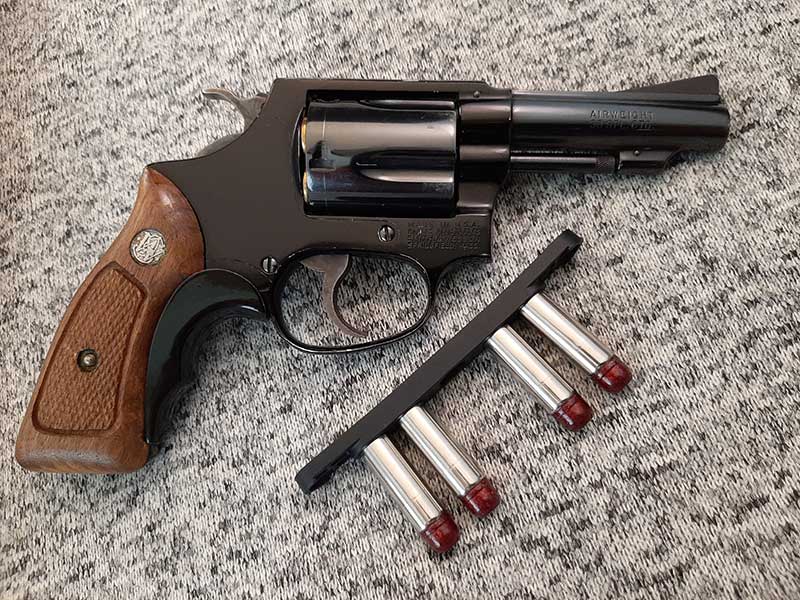
This old J frame Airweight Model 37 loaded with factory wadcutters would make a nice companion for an evening walk in most neighborhoods.
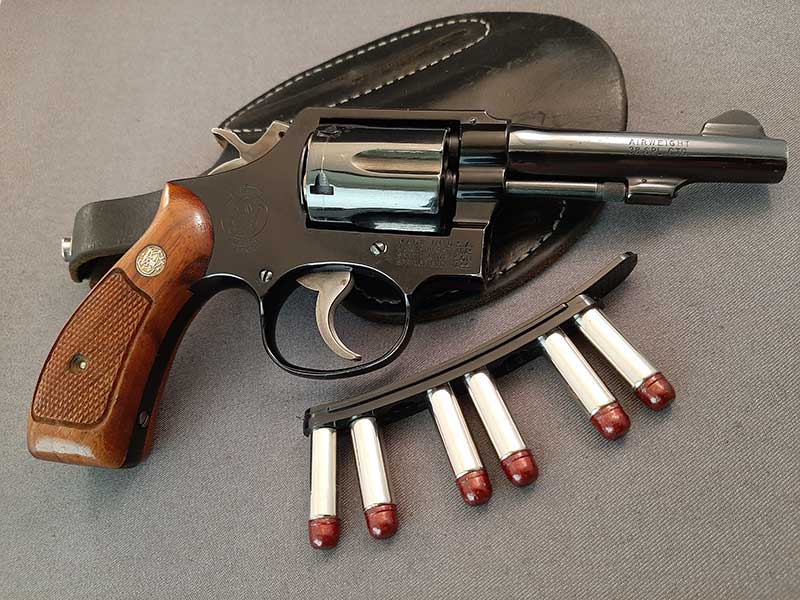
This Model 12 was never rated for +P ammo. Wadcutters hit to the sights and would be a good choice in this old light weight.
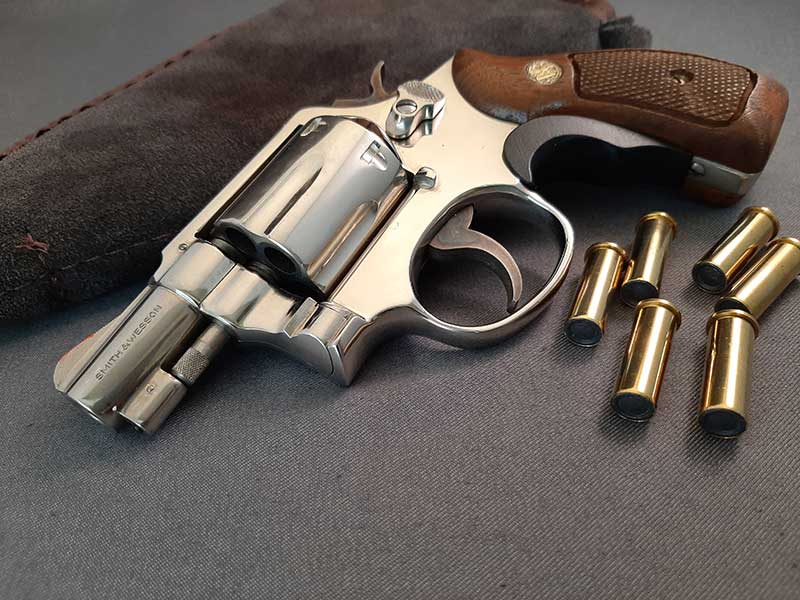
Wadcutters won’t beat up this classic two-inch Nickel Model 12—or the person shooting it.
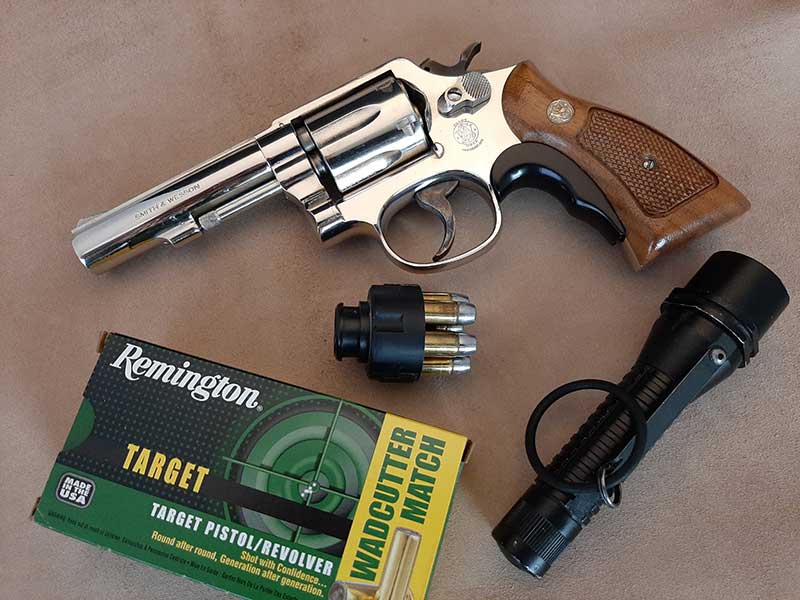
You can bet this old Model 10 will work after being stashed in a drawer for years. The wadcutters would make it easier to deliver good hits than +P JHP’s. Round nose cartridges in the speedloader if a reload is needed.
Buffalo Bore publishes velocities from actual firearms (not vented test barrels) that I have always found to be honest and accurate. BB’s wadcutter averages 868 fps from a two-inch Model 60, 961 fps from a three-inch Ruger SP101, and 1,005 fps from a four-inch S&W.
Underwood Ammunition sells a similar 150-grain hard cast wadcutter in a standard pressure loading. They use a bullet with “Hi-Tek” coating and nickel-plated cases. The polymer coating covers exposed lead with a slick finish, nickel cases stand up to corrosion better than plain brass. The velocity is listed at 1,000 fps. It’s safe to assume that speed will be close to Buffalo Bore’s from a two-inch barrel.
If you train with your five-shot lightweight .38, the benefit of standard pressure ammunition is hard to overstate. The guns may be +P rated, but shooting +P soon pegs your fun meter and moves into “this really sucks” territory for most people.
With wadcutters, you can practice with your carry ammo without getting beat up. This makes most of us much more likely to train with the little guns. Wadcutters are a great option for older guns that were never rated for +P ammo. They enhance the viability of carrying S&W Airweights like the K frame Model 12 and the J frame Model 37.
There are a few negatives with cast wadcutters, both of which can be mitigated. They will foul your gun faster than shooting a diet of solely jacketed bullets. A little more diligence is required during maintenance to keep the revolver functionally clean.
The shape of wadcutters don’t lend themselves to rapid reloads, especially while under stress. It’s a wise practice to carry rounds with a more forgiving profile in speedloaders and/or strips. If you must perform an emergency reload, a bullet with a rounded ogive makes this task much easier.
Another task revolvers perform well is as a home defense handgun that may be used by family members that are less familiar or skilled.
A four-inch Model 10 loaded with wadcutters is a gun that most people can learn to shoot well with minimal training. It can sit it a drawer fully loaded indefinitely with the expectation that it will function reliably if ever called upon.
It’s a good bet that wadcutters will work equally well if that day comes.
Categories
375 Winchester Bullet Performance
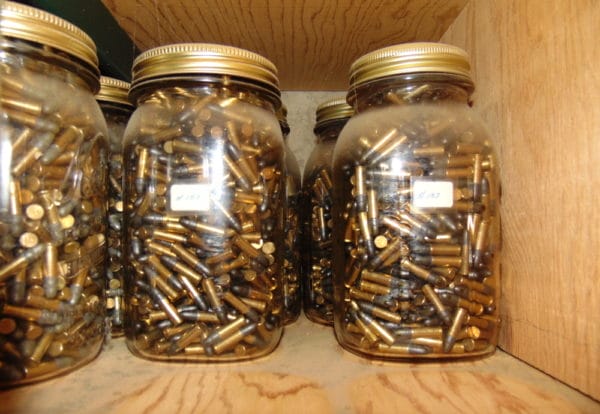
U.S.A. –-(AmmoLand.com)- How long can ammunition be stored before it degrades? Much depends on the storage conditions. With reasonable care, ammunition has a shelf life of many decades, as verified by tests done with military centerfire cartridges.
But how long does .22 rimfire last before it starts to degrade? There has not been much systematic long-term storage testing of .22 rimfire. It tends to be used as an expendable item. Some people have found an old box or two of ammunition and checked it for viability.
This correspondent was able to obtain a large cache of 65+-year-old .22 rimfire ammunition with a good pedigree. The bulk of the ammunition was Remington Standard Velocity .22 Long Rifle ammunition made before 1956.
I met the owner at the University of Wisconsin in 1970. We started a friendship that lasted 48 years, to his death in 2018. The friend was Don Cowling from Middleton, Wisconsin. He is the world record rat hunter who this correspondent wrote about in 2016, when I became aware of the provenance and extent of the ammunition cache.
From that article:
The .22 ammunition has been in the jars for over 60 years. He allowed me to crack the seal on a mason jar that had been filled before I entered first grade. I anticipated an odor of acetone, as you often find in old smokeless powder. I could not detect any, nor could my friend. There was a faint hint of old wax, barely noticeable.
My friend gave me an even two dozen rounds to test to see if it had been degraded. I shot the ammunition out of a Mossberg target rifle of similar age. I fired the rounds at my brothers long established range behind the garage on family land in Northern Wisconsin. Every round fired as though it were new. I fired four five-shot groups at 50 feet from a rest. The first was the largest at .56 inches, center to center. The rest were .32, .31 and .31 inches. Not enough to win matches, perhaps, but perfectly good for hunting. My brother fired the last four shots offhand.
Don treasured his privacy, so his name was not mentioned in the 2016 article. The ammunition was mentioned, with a picture. Don knew I would reveal his name after he died, and did not object.
Don was a star handgun competitor at the University of Wisconsin. A top handgun competitor can easily run through 50,000 to 100,000 rounds a year. Don told me the ammunition was put in the quart jars before or during 1956. Don was on the University of Wisconsin Varsity ROTC pistol team when they won the regional championships in 1955. Don always paid for things in cash, or in trade or barter. I suspect the ammo was obtained in a special deal.
Placing the ammunition in quart jars sealed it from the atmosphere. It likely helped keep the bullet lubrication from oxidizing.
Ammunition obtained later was so noted in his records. His records showed the pre-1956 ammunition to be Remington Standard Velocity. His records match the ammunition headstamps.
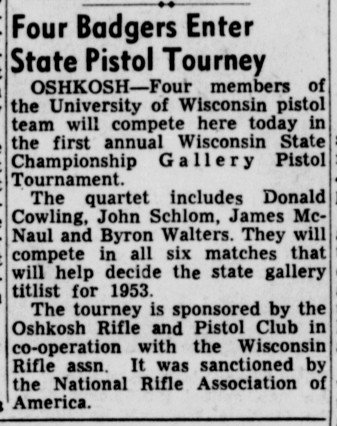
Don kept meticulous records. After he died in 2018, this correspondent had access to his lifelong records and journals.
I was able to purchase his .22 ammunition cache of tens of thousands of rounds of ammunition from his estate. Over 20 thousand rounds of the cache was Remington standard velocity ammunition obtained in or prior to 1956, transferred to quart jars from boxes by 1956. It was stored for 15-17 years in an attic in Madison, Wisconsin, then underground from 1970-72 to 2018 in a basement in Middleton, Wisconsin. After the ammunition was purchased from the estate, it was moved across the country, then stored in a secure underground location.
The ammunition was purchased to conduct rigorous long-term storage testing of .22 rimfire ammunition. If there are other caches containing significant amounts of 65+-year-old .22 rimfire ammunition, they are unknown to this author.
The initial test procedure used a control of 500 rounds of CCI Standard Velocity 22LR Ammunition, lot H05S, manufactured on August, 5th 2012. The ammunition was tested in a Mossberg 702 semi-automatic Rifle with factory 10 round magazines. The rifle is expected to be used throughout the long-term test. The rifle was purchased new in anticipation of the ammunition test.
A few hundred rounds were expended through the rifle before the test, from various manufacturers. The same rifle was used with the old Remington ammunition, to limit test variables. Accuracy testing was done at 25 yards. Velocity testing was done with a Caldwell Chronograph G2 eight feet from the muzzle.
10 fouling shots were fired, followed by 5 five-shot groups from a rest at 25 yards. The rifle was equipped with an inexpensive Simmons 4×32 .22 Mag scope.
After accuracy testing, 50 shots were fired to register on the chronograph to obtain average velocity, standard deviation, and extreme spread.
The rest of the 500 rounds was fired for reliability. The manufacturer recommends the rifle be cleaned after firing 200 rounds. The rifle was cleaned at the beginning of the test, and every 250 rounds after that, so test conditions would be the same for both sources of ammunition. Most shots were fired with a few seconds between shots. Nearly all shots were fired from magazines loaded with 10 rounds.
The test is for the ammunition, not the rifle. A semi-automatic rifle was used for uniformity of action. A semi-automatic is considered a bit more ammunition sensitive than single-shot rifles or manual repeaters. If the ammunition will cycle a semi-automatic action, it should work in manually operated repeaters or single-shot firearms.
The same procedure was used to test 500 rounds of the 65+-year-old Remington Standard Velocity ammunition.
65 Year Old .22 Rimfire Ammunition Test Results:
Accuracy, an average of 5 five-shot groups at 25 yards, measured center to center:
- CCI Standard Velocity: .502 inches
- Old Remington Standard Velocity .565 inches
Velocity measurements for 50 rounds, average velocity, Standard Deviation, extreme spread in feet per second (fps).
- CCI Standard Velocity: Average 1072.3 fps, SD 17.5, extreme spread 84 fps, 1035 to 1119.
- Old Remington Standard Velocity: Average 1098.9 fps, SD 19.8, Extreme spread 101 fps, 1041 to 1142.
Reliability for 500 rounds fired:
- CCI Standard Velocity: 1 failure to fire, round 102, strong firing pin strike, rotated the round, it fired on the second strike.
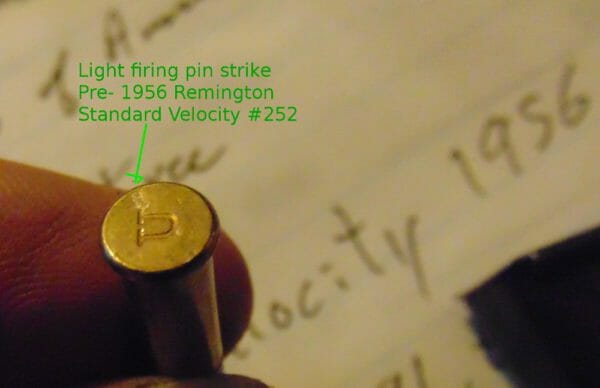
- Old Remington Standard Velocity: 1 failure to fire, round 252, second round after cleaning. Very light primer strike (probably a mechanical rather than ammunition failure). The round was rotated. It fired normally with a second strike.
For practical uses of .22 rimfire ammunition, there is no significant difference between the nine-year-old CCI ammunition and the 65+-year-old Remington ammunition.
This correspondent intends to make this testing a regular event. Data will be collected about the storage life of .22 ammunition, to the point of finding significant degradation, or of running out of ammunition.
There is enough ammunition to extend the test to over 100 years of storage if 500 rounds are fired each year. Alternatively, 500 rounds could be tested every two years, or five years, extending the test even longer!?
Enormous quantities of .22 rimfire ammunition have been purchased in the last two years. Much of it has been stored. If stored at reasonable temperatures in airtight containers, it should be useful for at least 65+ years. As no degradation has been detected in the stored Remington ammunition, the upper limit of storage life is unknown.
The author expects the test project to extend beyond his lifetime. The intention is to find viable candidates to continue testing to at least 2056.
About Dean Weingarten:
Dean Weingarten has been a peace officer, a military officer, was on the University of Wisconsin Pistol Team for four years, and was first certified to teach firearms safety in 1973. He taught the Arizona concealed carry course for fifteen years until the goal of Constitutional Carry was attained. He has degrees in meteorology and mining engineering, and retired from the Department of Defense after a 30 year career in Army Research, Development, Testing, and Evaluation.
“>
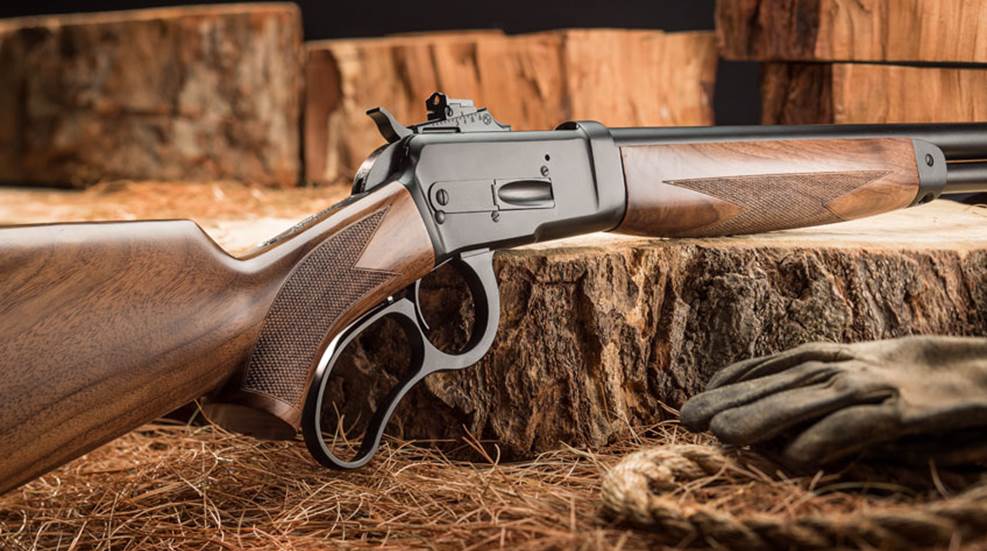
The lever-action rifle stands tall within America’s gun culture. Much of this esteem stems from the days of westward expansion, when the lever-action repeater was the gun of choice. Even long after the frontiers were conquered, the appeal of the slim, tube-magazine repeaters from Marlin and Winchester remained strong.
Of all the various models of that late-19th-century era, none are better remembered than the Winchesters, whose origins can be traced back to the fertile imagination of John Browning. While the later Models 94 and 95 were highly regarded for their marriage of smokeless powder and traditional operation, the earlier Winchester lever guns were appreciated for their smooth operation.
Browning’s first Winchester repeater was the 1886, built for the longer blackpowder cartridges of the day, and six years later he scaled and shortened the Model 86 to produce the Model 92 for short blackpowder cartridges. Both guns were successful in their day and have been replicated in modern times.

In those days, the variety of cartridges available was not as broad as it is now. At present, we have an amazing array of cartridges, a few of which are intended for revolvers. Some are powerful enough to require special long-cylinder wheelguns—such as the .500 and .460 S&W magnums. Both of those cartridges are rimmed and would be right at home in a lever-action rifle. And while the Browning-designed Winchester Models 86 and 92 would seem to be interesting mates for such cartridges, their actions are not of appropriate length, the slick little 92 being too short and the 86 being too long.
Enter a completely new version of a timeless design, made by a new firm in Cody, Wyo., Big Horn Armory, and called the Model 89—which denotes the mathematical difference between 86 and 92. The BHA 89’s action is intermediate in size, although it retains all the same contours, manner of operation and locking system of its predecessors. Big Horn Armory makes the gun in its Wyoming plant using modern CNC-machining techniques.
There are no cast or forged parts in the gun, and, except for the black walnut buttstock and fore-end, BHA rifles and carbine components are cut from stainless steel bar stock. The test sample, an 89 Carbine, was finished in the company’s Hunter Black, appropriately matte and non-reflective for hard use afield.

An open-top design, the Model 89 has a bolt that reciprocates on rails machined into the inner walls of the receiver.
In addition to the physical resemblance of the BHA 89 to the Winchester 86 and 92, the operating system is also essentially the same. This is a manually operated rifle that cycles by the shooter’s operation of a lever that also serves as the trigger guard. An open-top design that ejects fired cartridges straight up, the BHA 89 has a bolt that reciprocates on rails machined into the inner walls of the receiver.
When the action is closed, locking blocks at both sides of the receiver engage mortise cuts in the bolt as well as matching recesses in the receiver walls. In this system, the blocks serve to lock the bolt firmly in place against the rearward thrust of a fired cartridge. When the shooter strokes the lever downward and forward, the first bit of motion pulls those blocks downward and out of contact with the bolt.
Further movement of the lever retracts the bolt to the rear to extract the fired case from the chamber and eject it out the top of the gun. At this point, a fresh round feeds rearward from the tube magazine under the barrel and onto the cartridge carrier. When the shooter strokes the lever back and up, the carrier moves the cartridge up into the path of the bolt.
When the bolt closes, the round feeds into the chamber and the locking blocks slide into place. The BHA rendering of this classic design seemed initially a bit stiff, but smoothed out with firing and handling—which is exactly how original 86s and 92s behaved.
Our test gun was an 18″-barreled carbine with a pistol grip buttstock and a full magazine tube. There are no traditional carbine barrel bands, which never did anything worthwhile for the accuracy of the original carbines anyway. Instead, the magazine tube is attached to the underside of the barrel by means of a dovetailed lug.

In essence, the gun is a marriage of traditional rifle and carbine features. Since it is a modern sporting firearm, there are several points on the gun that reflect a respect for the traditional, but not at the expense of practicality. The sights, for example, combine a front unit of modern green fiber-optic material on a ramped post with a rear comprised of a large aperture on a period-correct angled ramp, and both are shaped to resist snags on kit or brush. An optional forward rail for the mounting of a scout scope is also available. Traditional stock design would not well serve a little brush buster like this, so the stock is a bit thicker in the butt and fuller in the fore-end. Checkering on the sample was well-executed 20 l.p.i., and there is a thick Pachmayr recoil pad to help with the .500 S&W Mag.’s substantial recoil.
The BHA 89 is intended for taking large animals at close range. The .500 S&W Mag. is a rimmed revolver cartridge powerful enough that many shooters could not tolerate it in the revolvers for which it was designed, but it adapts well to this longer and heavier firearm. Available in several options, all made of stainless steel, the BHA 89 Carbine has an offspring in the BHA 90. It’s the same gun in Smith & Wesson’s other long magnum cartridge, the .460 S&W Mag.
Everywhere you look on BHA’s products, you see strong, heavy, well-made and carefully fitted components. Big Horn Armory may be a relatively new gunmaker, but it builds for rough use—with an obvious respect for tradition.

Categories
The Swede
Longtime Readers will all know of my fondness for the venerable 6.5x55mm Swede (SE), and I happened on an article which gives chapter and verse to this wonderful cartridge.
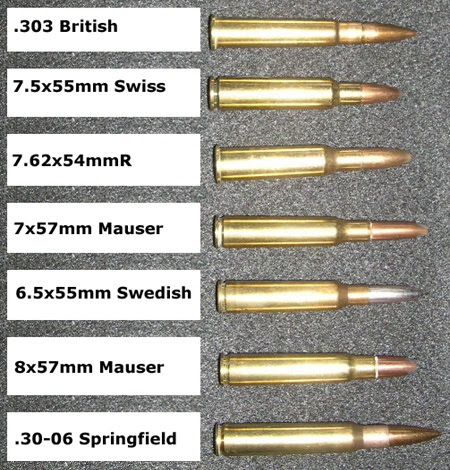
With all due respect to its larger 7mm / .30 siblings, I stand firm in my belief that the Swede is quite possibly the perfect medium-game cartridge, the excellence of the .308 Win, .30-06 Springfield and so on notwithstanding. When you take all the factors of shooting into account: bullet velocity, flatness of trajectory, penetration, and most especially recoil, the sum of the Swede’s parts of this equation are probably higher than the bigger cartridges. Here’s a pic I’ve posted before, comparing the Swede to its contemporaries:
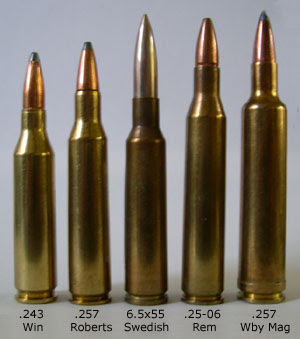
Here it us with some other “quarter-inchers”:
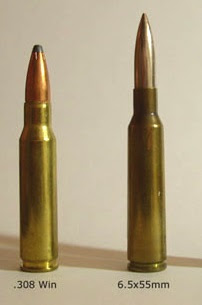
And finally, vs. the .308 Win (my “1.a” choice for a do-it-all cartridge):
I will say unreservedly that if I were limited to only one cartridge for “ordinary” (i.e. excluding African large game) hunting whether human or animal, the Swede would get my vote ahead of every other cartridge I’ve ever fired.
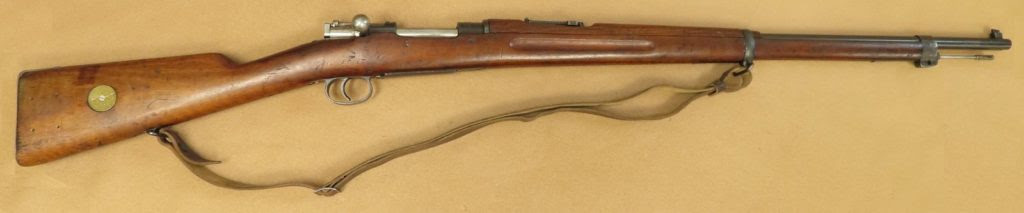
The only caveat I have is that the Swede doesn’t seem to do as well in shorter-barreled rifles. I think that in standard loadings — and certainly with the Hirtenberg mil-surp stuff — the bullet needs a longer barrel to get that bullet spinning towards its performance apex. And the ultimate expression of that is in the wonderful Mauser Mod 96 with its 29″ barrel, as never used (in combat) by the Swedish Army:
In my earlier post on Great War Rifles, I said:
But of all the rifles issued to soldiers of that era, the one I’d have chosen to go to war with would have been the Swedish Model 1896 Mauser. It has moderate recoil, yet the bullet travels flat and hits hard. The rifle is also fantastically accurate: consistently-placed head shots at 400 meters and torso shots at 600 meters are quite possible even for an average shot like myself.
I haven’t changed my mind since.
That said, I have old eyes and the iron sights would be problematic — but mounting a scope on the old M96 can be tricky, with that 90-degree-lift straight bolt. So I’d have to take instead my current love, the CZ 550 with its 24″ barrel:
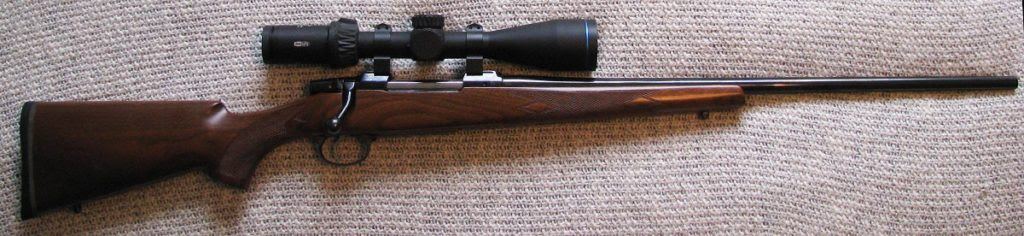
Compromises… we all have to make them.
On Mon, Feb 8, 2021 at 10:44 AM David Lawson <catsup118@gmail.com> wrote: