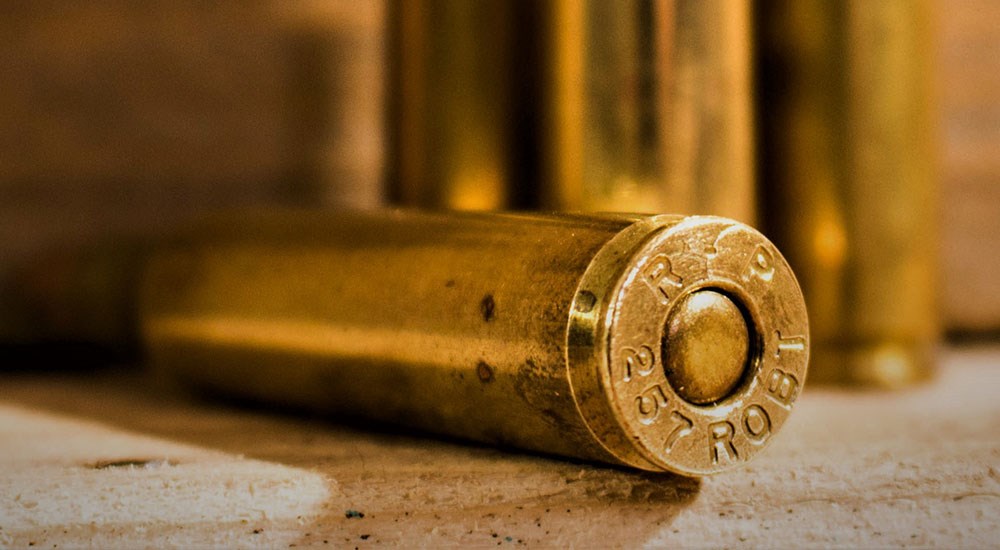
The .264 Winchester Magnum is a 6.5mm cartridge that was ahead of its time when created in 1958. It slipped into a coma in the mid-1960s and has been at death’s door ever since. But it could revive, perhaps even thrive because it produces better ballistics than all but one or two of the current crop of 6.5mms.
Given today’s mania over all things 6.5mm, the .264 Winchester Magnum should be a top performer in these long-reach hunting rifles everyone seems to covet. This belted magnum cartridge bests the 6.5 Creedmoor by about 400 fps. That’s like stepping from a .308 Winchester to a .300 Winchester Magnum in performance improvement. If you want a 6.5mm with flat trajectory, maximum power, and minimum wind deflection, you want a closer look at the .264 Win. Mag.
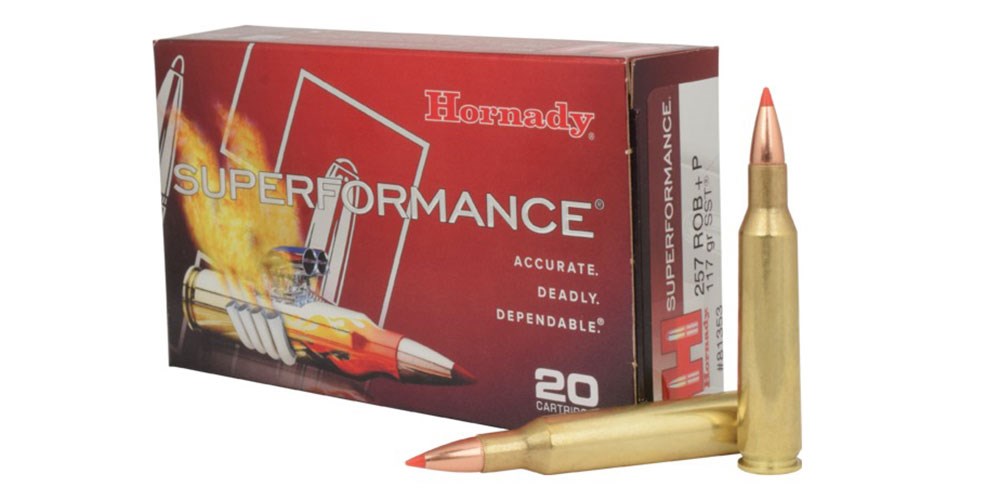
Despite its 21st century ballistic performance, the .264 Win. Mag. is old. Many would say doddering. They’d be wrong. With today’s powders and bullets, it could finally realize its rich potential. Before that can happen, however, more shooters need to understand the cartridge. And more ammunition manufacturers need to begin loading to reach that potential. Currently, Winchester doesn’t even come close, limiting its .264 Win. Mag. to just one load, a 140-grain Power Point (B.C. .384) at 3,030 fps. Nosler does a much better job with a variety of great loads featuring bullets from 100 to 140 grains. Hornady has one load pushing a 140-grain InterLock with a B.C. of .465. This is an adequate start, but a good handloader will get the most from the .264 Win. Mag. because, ballistically, anything the 6.5 Creedmoor can do, the .264 Winchester Magnum can blow out of the water.

See the family resemblance? The .264 Winchester Magnum may have been cut and squeezed to shape from a .300 H&H or .375 H&H, but it hardly matters. The belted head diameter is its foundation.
The quickest route to appreciating the .264 Winchester Magnum is through the 7mm Remington Magnum. Both cartridges were formed from the belted .375 H&H Magnum case. You can nitpick and say it was the .300 H&H Magnum case, but that was itself squeezed down from the .375 case. What matters is the head diameter, that belt around it, and the basic body diameter. You can easily reshape the length, neck diameter, shoulder angle, and taper of a case, but not its head diameter.
The belted .532-inch head of Holland & Holland’s .375 of 1912 is considerably wider than the .473-inch head of the .30-06 Springfield, which is what the 6.5 Creedmoor stands on. The .264 Win. Mag. case is .58-inch longer than the Creedmoor, too. It fits the same actions as the .270 Win. and .30-06. Bigger case, more powder . . . Boom. There you go.
Roy Weatherby mined this volume beginning with his .270 Wby. Mag. in 1943. Winchester came to the .375 belted magnum party in 1956 with the release of its .458 Win. Mag. They straightened the .375’s walls and cut its length to two and a half inches for an easy fit into Model 70 magazines. In 1958, they necked this big case down to create the .338 Win. Mag. and then necked it even smaller to make the .264 Win. Mag. Few hit the streets until 1959, but then . . .

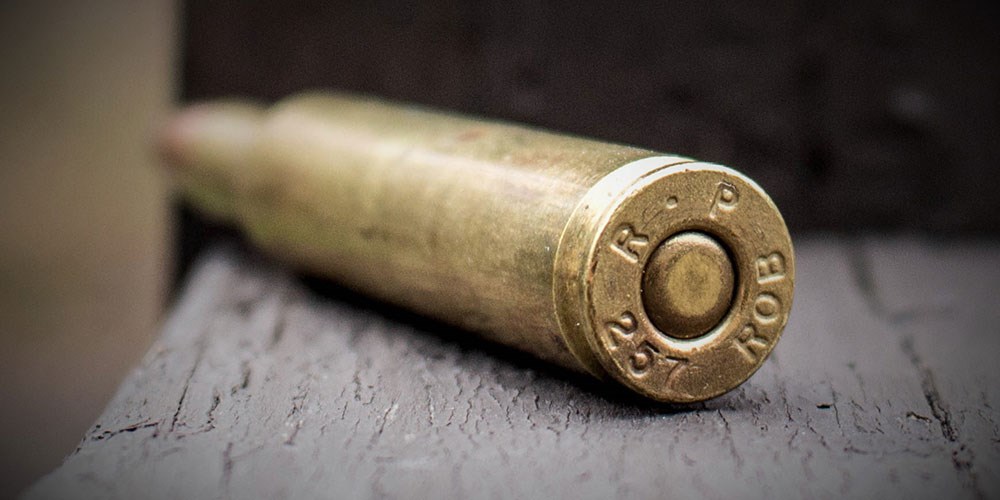
When the .264 Winchester Magnum first appeared, Winchester’s ammo boxes looked something like this. Yeah, it’s an old cartridge.
Right away, this “overbore” belted magnum created a stir. It came in a M70 Westerner rifle with a 26-inch barrel. Winchester advertised muzzle velocity at 3,200 fps with a 140-grain, .264-inch-diameter bullet. SAAMI specifications for the cartridge allowed it a maximum pressure of 64,000 psi—same as the .300 Win. Mag., which came later.
With these numbers, the .264 Winchester Magnum was the immediate long-range, high-velocity, flat-trajectory answer to the western hunter’s prayers. And it came in affordable M70 rifles. The cartridge and rifle enjoyed immediate success and everyone was happy until . . .
. . . Remington unleashed its 7mm Rem. Mag. It was 1962, the same year the first Walmart opened, John Glenn first orbited the Earth, Marylin Monroe died, and Decca Records turned down the Beatles. Nobody appeared to turn down the 7mm Rem. Mag., though. Here was the same belted magnum case, same length, and same shoulder slope as the .264 Winchester Magnum. Just a slightly wider neck, one that would hold a .284-inch bullet. Subtract .264 from .284 and you enjoy a mere .020-inch-diameter advantage with 7mm Rem. Mag. bullets. Doesn’t seem like much, but Remington wisely offered its new 7mm magnum with bullets as heavy as 175 grains. To hunters familiar with 150- to 180-grain bullets in .270 Winchesters and .30-06 Springfields, that sounded like serious elk, moose, and bear medicine.
Winchester’s heaviest (140-grain) .264 bullet didn’t quite match up. It probably didn’t help that Remington was chambering its new 7mm in its equally new M700 rifle, advertised as “the world’s strongest” (three rings of steel surrounded the cartridge head). If you didn’t mind a push-feed bolt action, the 7mm Rem. Mag. was an easy pick. Throw in the more convenient 24-inch barrel of the 7mm and it was no contest.

Winchester is again chambering its controlled-round-feed, sporter M70 in .264 Winchester Magnum.
At about this same time, so many bullets had already scorched down the barrels of .264 Winchester Magnums that shooters began to notice early accuracy declines. Many were shooting the rifles fast and furiously at various rodents. After all, the .264 Win. Mag. could fire 85-grain hollow points 3,700 fps and 100-grain projectiles 3,600 fps. With such light bullets, recoil wasn’t bad in an eight-pound rifle—just 15.4 f-p of free recoil energy compared to the 20 f-p of punch with a 140-grain bullet. There’s nothing like blasting big doses of hot powder down a narrow bore in rapid succession to encourage throat erosion. The .264 Winchester Magnum got branded a barrel burner and was soon placed on life support.
But that was then, and this is now. The incredible popularity of the 6.5 Creedmoor has inspired interest in any and all cartridges that spit a .264-inch bullet. Today, we have the 26 Nosler and 6.5-300 Wby. Mag. Both of these burn much more powder in much larger cases than does the .264 Win. Mag. This gives them roughly a 100- to 150-fps muzzle velocity advantage over the .264 Win. Mag. But they also raise an important question: If the .264 Winchester Magnum is a “barrel burner,” what should we call these larger cartridges? Barrel vaporizers?
While we are questioning speed, powder consumption, and barrel life, let’s address this issue with the .264 Winchester Magnum versus the 6.5 Creedmoor. One of the major selling points of the Creedmoor is its conservative consumption of powder and concomitant light touch on bores. On average, 6.5 Creedmoor barrels are supposed to maintain stellar accuracy through 2,000 to 3,000 shots, depending on the barrel steel and how “hot” the barrel was shot. In comparison, some .308 Win. barrels have been reported to remain acceptably accurate for 5,000 shots, some .243 Winchesters just 2,000 shots, .25-06 Rems. 1,500 to 2,500 shots. I’ve heard claims of 600 to 1,000 shots for the 26 Nosler, 1,000 to as many as 2,500 for .264 Win. Mags. This all varies depending on the barrel, whether it was cryo-treated, and how quickly subsequent shots were sent down the tube. The hotter you shoot them, the faster they deteriorate.

Some of today’s 6.5s: 6.5 Grendel, 6.5 Creedmoor, .260 Rem., 6.5×55 Swede, .248 Norma, 6.5-280 Imp., 6.5 Rem. Mag., .264 Win. Mag., and 26 Nosler.
Obviously, shooters must ask themselves what they value most in a rifle. If you want to shoot 20 rounds in a minute and 200 rounds in a day, you don’t want a fire-breathing magnum. If you want the flattest trajectory, least wind deflection, and most downrange energy for terminating bucks and bulls, you do want the larger-powder-capacity magnum. One to three shots at game every few weeks each fall aren’t going to destroy rifle accuracy until you’ve put a decade or more of hunting behind you, and you should have saved up enough money by then for a replacement barrel. (They make them by the thousands.) Someone once compared throttling back bullet speed to driving your truck 20 mph so the tires would last longer.
Another consideration is how far you wish to target game and whether or not you use a laser rangefinder. Our ability to precisely measure distance-to-target contributes more to the success of long-range shooting than the fastest magnum and highest-B.C bullets. What do we care if we dial an extra few MOA or select sub-reticle six instead of four to score on a long poke?
Now, if you’re old school and like to hunt with MPBR, the flattest-shooting magnum can make a big difference. With a 6.5 Creedmoor sending a B.C. .529 bullet at 2,700 fps, you can aim dead-center on a ten-inch target and hit it clear out to 334 yards. Send that same bullet 3,021 fps from a .264 Win. Mag. and you stay on target all the way to 372 yards.

If you need to dial long distance, why not hire a service that will carry your call? .264 Win. Mag.
By the way, all these 6.5mm cartridges shoot the same (.264-inch) bullets. The only differences among all them are powder capacity, head and body size, overall cartridge length, and cost. Go with the short ones if you find benefit in a short bolt throw and lighter, more compact rifle at a lower cost per loaded box. Go with the long ones if you want maximum ballistic performance and hang the cost. Go small and short if you want long barrel life, big and long if you want—you guessed it—maximum ballistic performance.
Stated another way, when shopping for ballistic performance in a 6.5mm hunting cartridge, the main thing to compare are average muzzle velocities with any bullet weight. Today’s fashion is to fling the longest projectile with the highest B.C., so let’s compare some muzzle velocities using a reasonably high-B.C. Nosler Custom Competition 140-grain match bullet. There are some hunting bullets out there that are two to seven grains heavier, but this is close enough for consistent comparisons.
We will take this opportunity to gently chide our bullet makers to raise the weight limit on high-B.C. .264-caliber bullets so we can enjoy the long-range possibilities with our higher-velocity 6.5mms. If they can stretch .284 (7mm) bullets to 180 grains, surely they can get .264s to 160 grains. In conformations like Berger VLDs, Hornady ELDs, or Nosler AccuBond Long Ranges, B.C.s might approach an incredible .700. But I’m a hunter, not a metallurgist/bullet maker. Perhaps they can’t draw jackets long enough for that.
Longer bullets will require faster-twist barrels, too. You might want to order your .264 Win. Mag. with a 1:8 or even 1:7 twist barrel. Sierra recently announced an exciting new 150-grain Hollow Point Boat Tail MatchKing. It needs a 1:7½ twist or faster. Matrix Ballistics recommends 1:8 twist for both its VLD 150-grain Match bullet and its 160-grain hunting bullet. Wait a minute! 160-grain? They can build one! And it’s rated B.C. .685. That would be one to try on a .264 Win. Mag. Serious elk, moose, kudu hammer.
Do be aware that some magnum 6.5 shooters are reporting extreme copper fouling with some bullets. They’re also seeing disintegration of light, thin-jacketed bullets at extreme velocities. When you start playing the extreme-velocity game, you can find yourself skating on thin ice.
For comparison purposes, here are some popular 6.5 cartridges showing muzzle velocities with 140-grain bullets (B.C. 529) taken from Nosler Reloading Guide 7. Barrel lengths vary. All zeroed at 250 yards. 500-yard ballistic performance data includes ten-mph right-angle wind. Other reloading guides may list different top-end velocities. Recoil energies are calculated in an eight-pound rifle. Shooters should realize that these top muzzle velocities can vary as much as 100 fps from barrel to barrel, rifle to rifle, but this should provide a good basis for comparison.

As always, burning ever more powder behind any bullet increases costs in ammo, recoil, noise, and barrel life. But it also maximizes ballistic performance. It’s up to each individual shooter to determine what works for him or her.
From where I sit, the old .264 Win. Mag. is starting to look like a pretty reasonable, middle-of-the-road cartridge in the 6.5mm cartridge lineup. If you’re not fixated on extreme barrel life, short-action rifles, or joining the 6.5 Creedmoor flock, the underappreciated .264 Win. Mag. might be your baby. Just don’t expect to find rifles or ammo on every corner or at discount prices. Check premium brands and semi-custom rifles like Fierce, Bergara, Rifles, Inc., Cooper, Hill Country Rifles, Bansner, etc.
The .264 Winchester Magnum is a cartridge for serious riflemen/women who appreciate its power and reach in the pursuit of big game. I wouldn’t call it a good option for plinking or high-volume target shooting, but if I found a used rifle in good condition at a good price and it was chambered in .264 Win. Mag., I’d probably buy it. Especially if it was a pre-’64 Winchester M70.


.png)