Categories
All About Guns Ammo

9mm vs 45 ACP–A Different Kind of Comparison by RICHARD MANN

Yes, we went there. But, this is a different take on the most common and irritating debate among gun enthusiasts, and you will learn something new regardless of which side you end up on.

9mm vs. 45 ACP

The 9mm vs 45 ACP argument has been going on for more than a century. Many believed the two World Wars answered this question after Americans used their .45s to beat the Germans and their 9mms— twice. But in 1967, the Illinois State Police adopted the Smith & Wesson Model 39 pistol in 9mm, and in 1985 the U.S. Military transitioned from their war-winner to the Beretta M9. A year later, the supposed failure of a 9mm during the FBI’s notorious Miami shootout had all the .45 lovers screaming, “We told you so!” and we ended up with the .40 S&W. But today, the 9 mm is our most prevalent self-defense cartridge.

Why? Basically, for the following three reasons:

The best 9mm loads deliver terminal performance similar to many 45 ACP loads.

Pistols in 9mm hold between 20 and 30 percent more ammo than .45 pistols.

Felt recoil of 9mm handguns is about half as much as pistols chambered in 45 ACP.

This is why the FBI and many other law enforcement agencies have transitioned back to the 9mm. Few will argue these three facts, but are the advantages offered by the nine substantial enough to make it the better choice?

It’s true that the best 9mm loads are equal in performance to many 45 ACP loads. However, if recovered-bullet diameter and penetration mean what we think they do, the best 9mm loads are not the equal of the best 45 ACP loads. Regarding capacity, a first-grader can see a 9mm pistol holds more ammo, but most civilian self-defense shootings are resolved with between one and eight shots. So, capacity might not be all that important after all. But what about shootability? Are 9mm pistols that much easier to shoot more accurately and faster? To find that out, I conducted a test to get to the bottom of the 9mm vs 45 ACP debate.

Testing 9mm vs 45 ACP

I selected three drills I thought represented varied self-defense shooting situations. To eliminate as much human error as possible, there was no drawing from the holster or reloads; all the drills were started at the low ready and required less than seven shots. The first drill was my standard defensive-handgun-test drill, which I call the Forty-Five Drill. It requires placing five shots inside a 5-inch circle at 5 yards in less than 5 seconds. It would specifically highlight recoil control during rapid, sustained fire at a relatively small target.

The next drill was a modified version of Jeff Cooper’s famous El Presidente Drill. In this variation, you engage three steel, torso-size targets at 10 yards, spaced 10 feet apart. All that’s required are two hits anywhere on each target. This drill highlights recoil control and target transition, with minimal emphasis on shot placement.
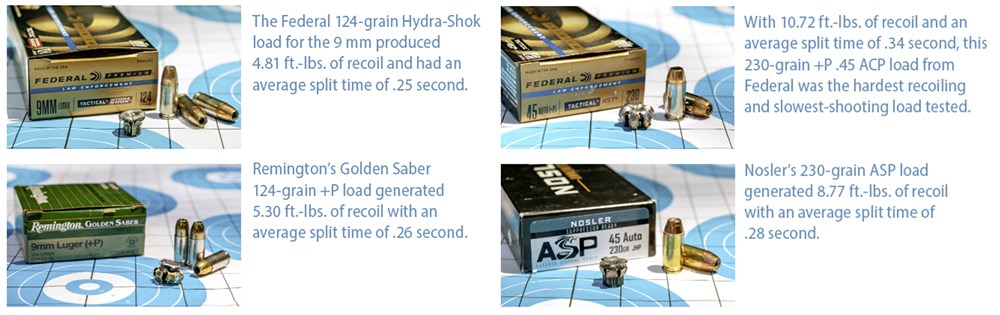
ammo tested

The final drill was a variation of another Cooper drill known as the Mozambique or Failure Drill. It would be performed at 5 yards, without taking the time to evaluate the effects of the first two shots before firing the head shot. Using an Action Target PT Hostage Target, two shots are fired center mass and then a shot on the swinging head plate is attempted as fast as possible. With this drill, we could evaluate recoil control during fast application on a close-in target, with a transition to a single, precision shot.

I recruited a SWAT officer to help me with this test, and each drill was conducted three times by each shooter, with each handgun and with each test load. The guns used for the test were two identical, lightweight Tisas 1911 Bantam Carry handguns—one in 9mm and one in 45 ACP. Also, standard-pressure and +P loads for both cartridges were used during the test.
drill tables

The Results

We did not score this like a shooting match, and we only counted attempts at each drill that were miss free; three clean runs were required with each pistol, with each load, on each drill. The goal was not to see how fast we could miss, it was to see how quickly we could get hits with. Using a shot timer, we recorded the total time it took to complete each drill and the split times between every shot fired. Splits, with a transition between targets, were recorded as “transition” times.

Given the identical pistols, aside from capacity and terminal performance, recoil is the only real difference between 9mm vs 45 ACP. What the results give us is a look at how recoil limits a shooter’s ability to fire multiple shots fast and accurately. There are several practical ways to look at the data.
shooting at the range

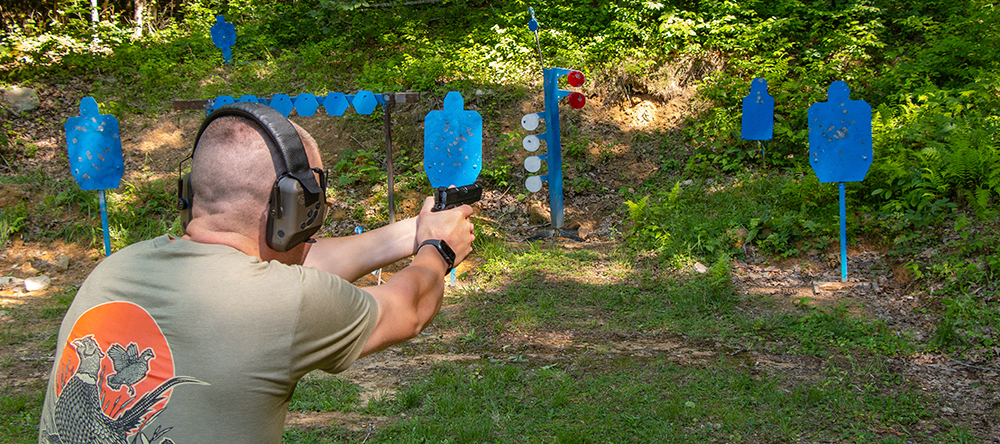
Both the 9 mm and .45 ACP pistols were put through several drills with various loads in order to evaluate shooting speed and accuracy.


Overall

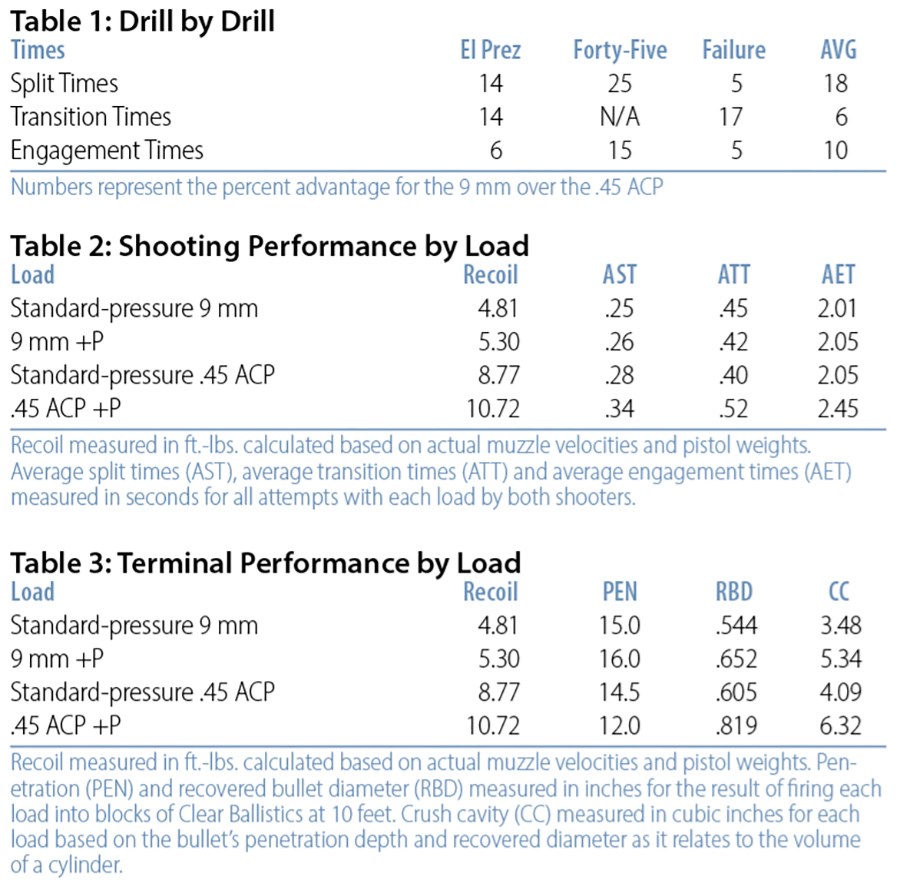
With all the data averaged, split times were 18 percent faster with the 9mm. This essentially means we could accurately fire five to six 9mm rounds as fast as we could accurately fire four 45 ACP rounds. Transition times—the time it took to switch targets—were very close, but the 9mm did have a six-percent advantage. Regarding the time it took to complete each engagement, the 9mm was faster by 10 percent. Keep in mind, these numbers represent the results obtained by both shooters and all four test loads.
testing 9 mm vs. .45 ACP

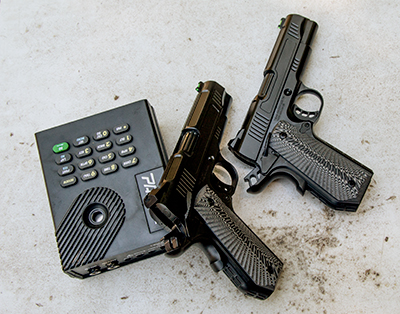
By using identical (apart from the chambering) pistols, the author was able to remove much of the “gun variable” from testing 9 mm vs. .45 ACP.

Drill by Drill

Another way to look at the results of that 9mm vs 45 ACP test is by the individual drills. Two things stand out here. The first is that when precision was required, such as repeatedly hitting a 5-inch target in the Forty-Five Drill, the 9mm had a substantial advantage. In the El Prez Drill, where precision shot placement was not as critical, the nine’s advantage was less obvious. And finally, with the Failure Drill, you can see that when hammering a target up close, the difference was not that much. However, when slowing down to make the precision shot, it took longer to transition/recover from recoil with the 45 ACP.

By Load

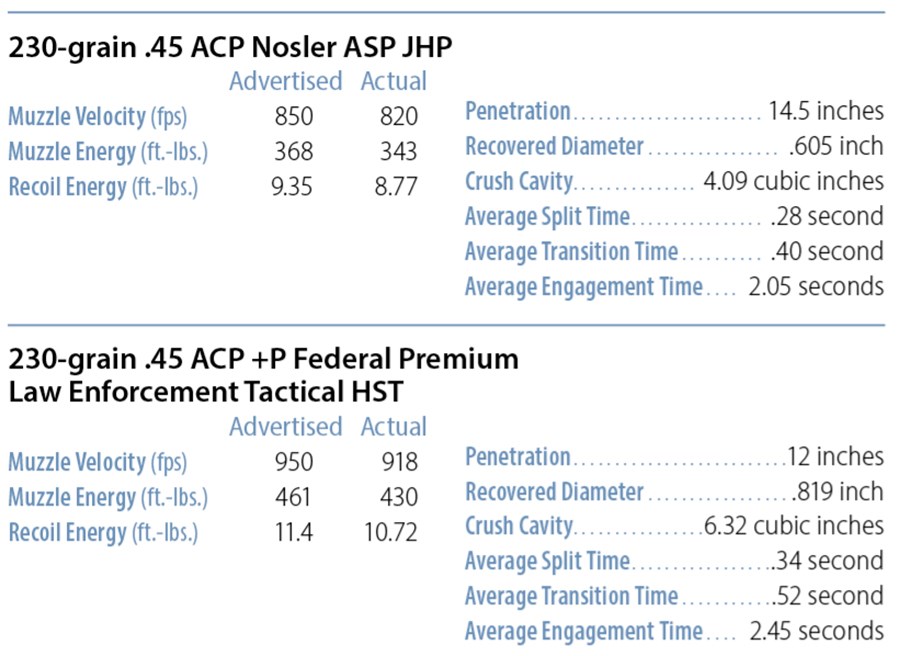
What we’re learning in this 9mm vs 45 ACP test is not earth-shattering; pistols with more recoil are harder to shoot fast and accurately. It’s not like we didn’t know that. However, I think the most interesting thing this data shows is how different 9mm and 45 ACP loads performed. As you can see, the standard-pressure 45 ACP load with 8.77 ft.-lbs. of recoil performed very similarly to the +P 9 mm load with only 5.3 ft.-lbs. of recoil. You may be able to perform just as well with a little more recoil, but at some point, the recoil of the .45 will begin to negatively impact on-target performance.
Tisas Bantam Carry 1911

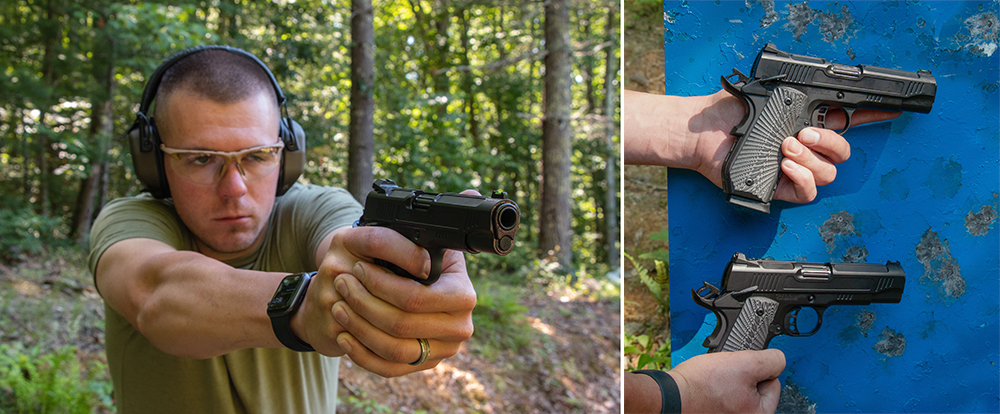
(l.) The Tisas Bantam Carry 1911 served as the test platform, since it can be had in 9 mm or .45 ACP. (r.) Weight difference between the .45 ACP and 9 mm Tisas 1911s was only .7 ounce (empty), and each pistol functioned with the utmost reliability throughout testing.

For us, this was painfully obvious with the 10.72 ft.-lbs of recoil delivered by the 230-grain +P 45 ACP load. Compared with the 124-grain +P 9mm load, our times increased across-the-board by about 20 percent. What this data fails to effectively convey is how hard 10.72 ft.-lbs. of recoil is out of a 27-ounce handgun—it is not enjoyable.

testing 9 mm and .45 ACP ammunition

To collect the test data, over the course of several days hundreds of rounds of 9 mm and .45 ACP ammunition were fired, and the shot times for every round fired were recorded.

Terminally Speaking
This was a lot of shooting to prove a known fact, but it does provide an idea of exactly how much recoil can negatively impact shooting performance. What you might be wondering is exactly what you’re paying for with more recoil? If we’re going to reduce our ability to shoot fast, what type of terminal performance will we get in return? To enhance the shooting data, we also fired each of the four test loads into Clear Ballistics gelatin.

The 6.32-cubic-inch crush cavity delivered by the Federal 230-grain +P HST load is impressive, but it comes with a cost, and that cost is an uncomfortable shooting experience and an increase in the time it takes to fire multiple shots. Measuring recoil can be subjective, but more never helps you shoot better. Everyone will have different limits, but at some point, you must decide if the terminal performance you gain is worth the reduction in shootability that comes with it.

What the information from this test—and the massive spreadsheet created to digest it—might do best is to explain why most law enforcement agencies have gone back to the 9mm. With the best 9mm loads, you get terminal performance similar to standard 45 ACP loads out of a gun that holds more ammunition and is easier to shoot fast and accurately. But, what this also shows is that with a 45 ACP, you can select a lesser-recoiling load and shoot nearly as fast and accurately as you can with a 9mm pistol, while delivering similar terminal performance. If you do that, the only thing you’re giving up with the .45 is capacity.

No one ever said the choice is easy, and the right answer will not be the same for everyone. Above all, the most important takeaway might be that, while picking the right cartridge is important, it may not be as important as selecting the right load for it.


9mm vs 45 ACP Cartridge/Ammunition Synopsis

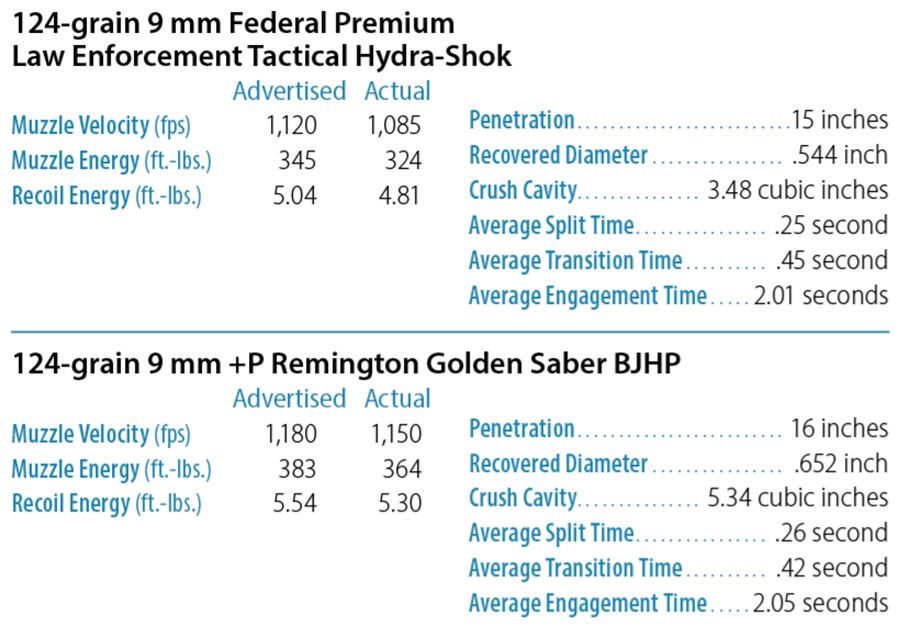
Comparing the 9mm vs 45 ACP cartridges by themselves is simply not enough; ammunition must be taken into consideration. The following information offers a comprehensive look at the ammunition used in the test. There are better and worse loads for both cartridges out there, but here you can look at two loads that deliver average performance, and two loads that represent the best performance available from each cartridge.
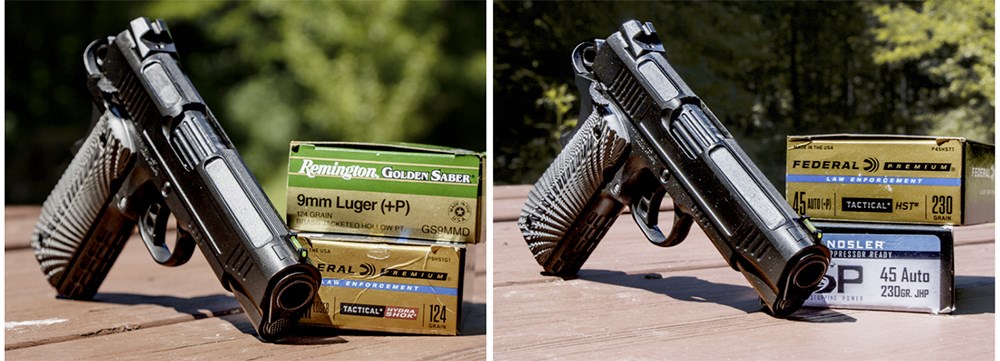
.45 and 9mm pistols

table
table

Categories
All About Guns Ammo

Testing Norma tac-22 in my US Property Winchester 52C and unertl 12x ultra varmint Geco match

Categories
Ammo

Reloading – Reloading 10 Gauge Brass Shotgun Shells Presented by Larry Potterfield of MidwayUSA

Categories
All About Guns Ammo

300win mag, 3 shots, 2285 yards

Categories
Ammo

A Sellier & Bellot 9mm Ammo Review

https://youtu.be/fnofn81qRsM
Now this stuff is not as Hot as some of the European WWII stuff back in the  1980’s.
(Which you had to be careful of , because of the corrosive primers. Or as dirty as the old stuff was, but that is another story for another day)
Which I use to shoot a lot. Seeing as that imported 9mm was running for about 5 shots to the penny. No that was not a spelling /grammar mistake, It was that cheap folks!
But never the less this stuff is pretty decent. In that you will not have to spend a couple of hours cleaning your gun after using this ammo. Plus that at least all of my 9mm’s like this brand a lot.
But as we all know or should know. Every gun is different and has its own particular brand or ammo that it likes.
Some even have their own favorite batch of ammo, they are so fussy come ammo usage!
Think that I am pulling your leg?  Then just go & ask the hand loaders & see what they say about this opinion of mine!
Grumpy

Categories
All About Guns Ammo

My Back hurts from just looking at this! A 45-70 Shiloh Sharps vs. Milk Jugs


As you can guess by the comments above. I have owned & shot a few of these serious rifles.
Especially when you can load this round up to 458 Winchester Magnum levels. Because with one of those rounds in the chamber of your rifle.
A Good rifleman can put down almost any huge game out there. Granted that they get close enough and have a proper placement of the round. Grumpy

Categories
All About Guns Ammo

When the T Rex shows up from the Lab down the street

Categories
Ammo

.40-Caliber Cartridges: Marvelously In The Middle Big Bores By Philip Massaro

40 Caliber Cartridges 7

For the lovers of truly big bores, .40-caliber cartridges can provide the perfect balance.

What Are The .40-Caliber Rifle Cartridges:

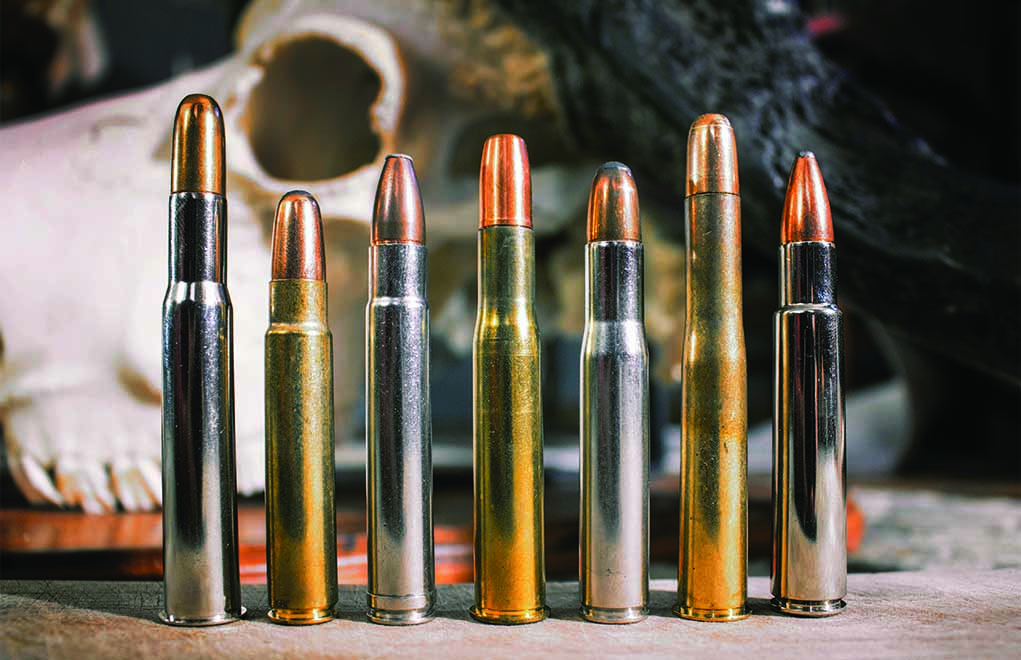
.405 Winchester
.450-400 3-Inch Nitro Express
.400 H&H Magnum
.416 Rigby
.416 Remington Magnum
.416 Weatherby Magnum
.416 Ruger
.416 Taylor
.500-416 Nitro Express
.404 Jeffery
.425 Westley Richards

Hunting dangerous game requires a cartridge of substantial size, one powerful enough to handle those species that have the potential to turn the tables. There are those who find the lighter cartridges—the 9.3mms and .375s—to be the pinnacle of versatility, because they offer trajectories similar to some of the popular deer cartridges, such as the .308 and .30-06, yet carry enough horsepower to handle even the largest game.

And then there are those who feel that anything smaller than the .500 Jeffery or .500 Nitro Express is a waste of time, because no smaller cartridge could possibly stop a charge. I feel that somewhere in the middle lies the best balance of trajectory, striking power and ease of shooting—those lower .40-caliber cartridges.

Yes, the .various .450s , .470s, .475 and their clones work great. After all, the .450 Nitro Express set the benchmark for dangerous-game cartridges—but their trajectories give up a considerable amount to those lower .40s. And, in comparison to the .375s and 9.3mms, the bullet weight (along with correlative energy) of these lower .40s makes a definite difference when it comes to penetration.

Am I suggesting that cartridges such as the revered .375 H&H Magnum aren’t sufficient for dangerous-game hunting? No sane gun writer would ever put those words in print, and I’m a longtime proponent of the .375. But even with the 350-grain Woodleigh Weldcores, the .375 H&H doesn’t quite hit as hard as the .40s do.

Here’s the crop of the lower .40-caliber cartridges, including their strengths and weaknesses.

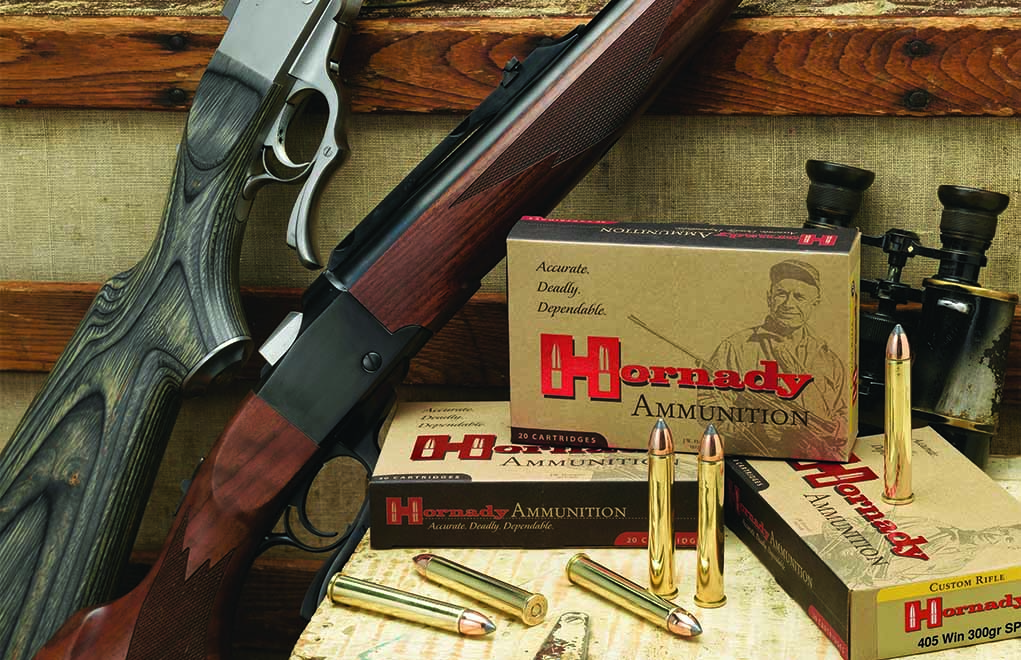
.405 Winchester

Starting with the least potent of the lot, the .405 Winchester is a straight-walled cartridge released in the Model 1895 Winchester lever-action rifle. It was a particular favorite of Theodore Roosevelt, who dubbed it his “medicine gun” for lions.

Theodore Roosevelt’s “medicine gun”—the .405 Winchester.

Launching a 300-grain, .411-inch-diameter bullet at 2,200 fps for slightly more than 3,200 ft-lb of muzzle energy, the .405 Winchester is definitely light, especially in comparison to the .375 H&H with heavy bullets. Roosevelt used this .40-caliber on lions and other game on his 1909–1910 safari and obviously lived to tell the tale, but I’m of the opinion that there are much better choices.

.450-400 3-Inch Nitro Express

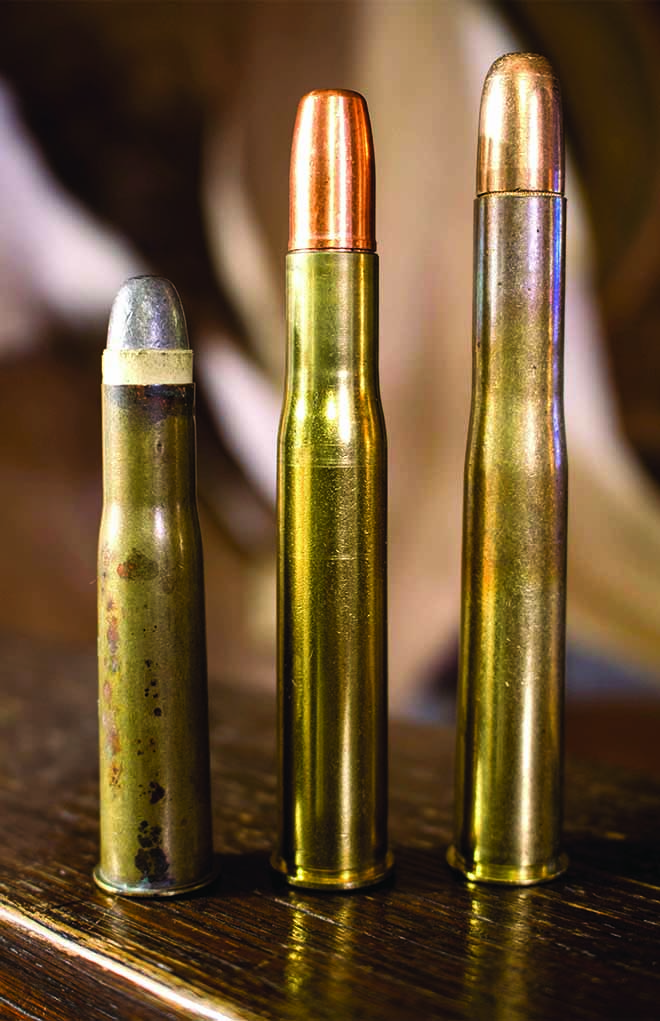
Three variations of the .450-400 theme: the 2 3/8-inch; the 3-inch NE; and the 3¼-inch NE.

The .450-400 (the British naming system uses the parent cartridge first) has gone through several iterations, at various lengths (2 3/8 inch, 3 inch and 3¼ inch) and has been fueled by black powder and smokeless alike. The 3-inch variant has been the most popular with many new double rifles, as well as the Ruger No. 1 single-shot, with ammunition produced by Hornady.

Using a .410-inch bullet, the classic .450-400 3-inch load consisted of a 400-grain bullet at 2,050 fps for 3,732 ft-lb of energy. While its paper ballistics indicate that the .375 H&H 300-grain load has more energy (4,263 ft-lb. vs. 3,732 ft-lb), the heavier bullet weight of the .450-400 gives it an advantage in the field.

The old .40-caliber cartridge (released in 1902) was used by Jim Corbett for tiger and leopards in India, as did John “Pondoro” Taylor in Africa. I used this excellent cartridge for a handsome Cape buffalo in Mozambique. It remains a great choice for a light-recoiling double-rifle cartridge capable of handling all game, including elephant. The .450-400 3-inch is also known as the .400 Jeffery.

.400 H&H Magnum

An obscure offering from Holland & Holland, this .40-caliber is usually revered by its users. Based on the belted .375 H&H case, using an 8-degree shoulder and the .411-inch-diameter bullets of the .450-400, the .400 H&H hasn’t really caught on. Yet, pushing a 400-grain bullet to 2,375 fps is a recipe that’ll most certainly have great success in the field. While I think the ship has sailed, there’s nothing wrong with using a .400 H&H for all dangerous-game hunting.

.416 Rigby

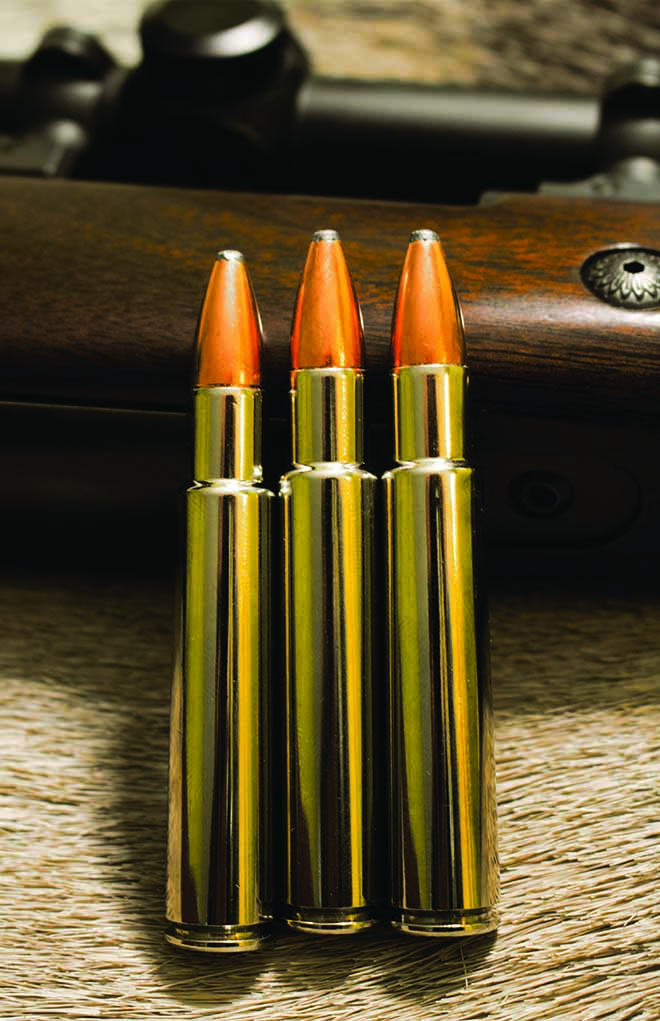
With its voluminous case and a 45-degree shoulder, the .416 Rigby is an absolute classic in .40-caliber.
With its voluminous case and a 45-degree shoulder, the .416 Rigby is an absolute classic.

An undeniable classic, the .416 Rigby was released in 1911. Although fewer than 200 rifles were made up until World War II, the writings of Robert Ruark and John Taylor immortalized the cartridge. Simply put: The 410-grain bullet of nominal diameter at 2,370 fps (modern loads use a 400-grain bullet at 2,350 or 2,400 fps) offered more than 5,000 ft-lb of muzzle energy—and virtually unequaled penetration—due to the high sectional density.

Kenyan professional hunter Harry Selby procured a Rigby rifle in .416 Rigby when his .470 double was accidentally run over, and Robert Ruark’s Horn of the Hunter made both the man and cartridge famous. The .416 Rigby is a huge rimless case with a 45-degree shoulder. The case volume is a direct result of the volatility of cordite in the African and Indian heat in order to keep pressures low.

Its recoil, while higher than that of the .375 H&H, is manageable in a well-fitting rifle. And although the volume of the .40-caliber’s case is more than is probably needed with our modern powders, the pressures are low—and that isn’t a bad thing. The .416 Rigby is a flat-shooter, yet it hits like a freight train. To fit properly, a magnum-length receiver should be employed.

Rigby has recently announced the release of the .416 Rigby No. 2, a rimmed version of the classic .416 Rigby that’s built for double-rifles. It shares the same geometry (except for the rim), and its ballistics are nearly identical.

.416 Remington Magnum

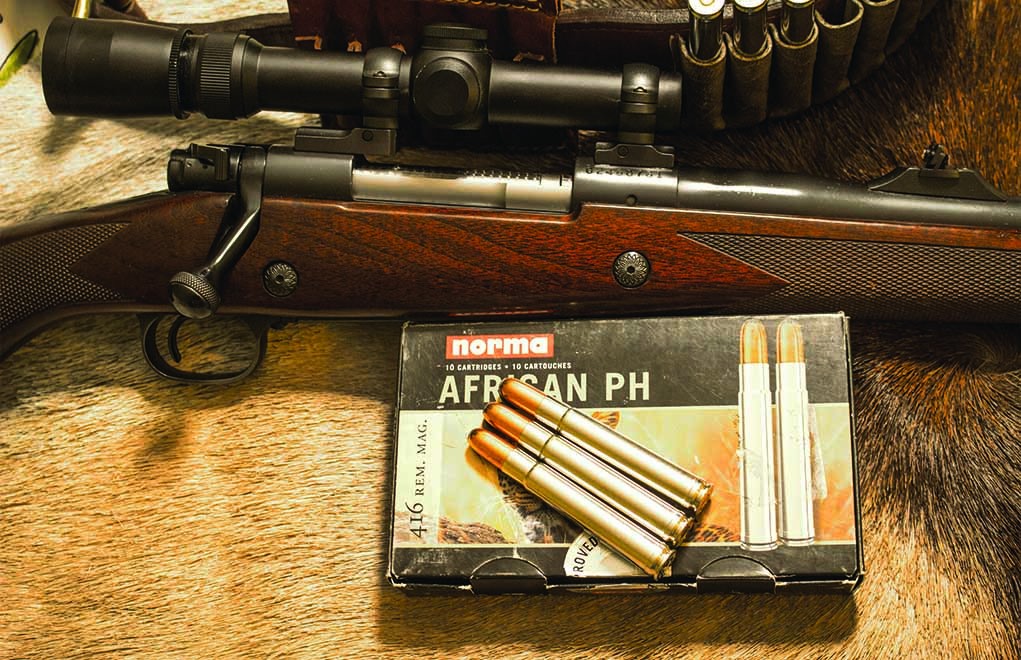
The 1980s saw a revival of the .416-inch-bore diameter: Federal brought back the .416 Rigby, and Remington introduced its .416 Remington Magnum, which is officially based on its 8mm Remington Magnum case (but the .40-caliber more than resembles the wildcat .416 Hoffman). Using the belted .375 H&H case as a platform, the .416 Remington Mag duplicates the ballistics of the .416 Rigby, but in a smaller diameter case and at a higher pressure.

The .416 Remington Magnum duplicates the performance of the .416 Rigby—albeit at a higher pressure ... but in a smaller case.
The .416 Remington Magnum duplicates the performance of the .416 Rigby—albeit at a higher pressure … but in a smaller case.

The cartridge received some negative press early on, but in a high-quality, controlled-round-feed action, this cartridge is nothing shy of amazing. With the exception of those who’ve handloaded the Rigby case to the red zone, the Remington variant will match the performance of the older cartridge. Yes, its belt is unnecessary; and yes, the pressure is higher than some shooters like, but in the field, I doubt any animal could ever tell the difference between a Rigby and Remington. It shares the same case length as the .375 H&H and fits perfectly in a magnum-length action.


.416 Weatherby Magnum

It was 1989 when Weatherby adapted its big, double-radius case to the .416-inch bore, with the signature increase in velocity in tow. Weatherby’s .416 will push a 400-grain bullet to 2,700 fps, with a correlative recoil level. Of the .416s, I’d say the Weatherby is the least popular, although as with many of its other cartridges, its fans are fervent. With premium bullets, the .416 Weatherby will certainly handle any game that walks the Earth.

.416 Ruger

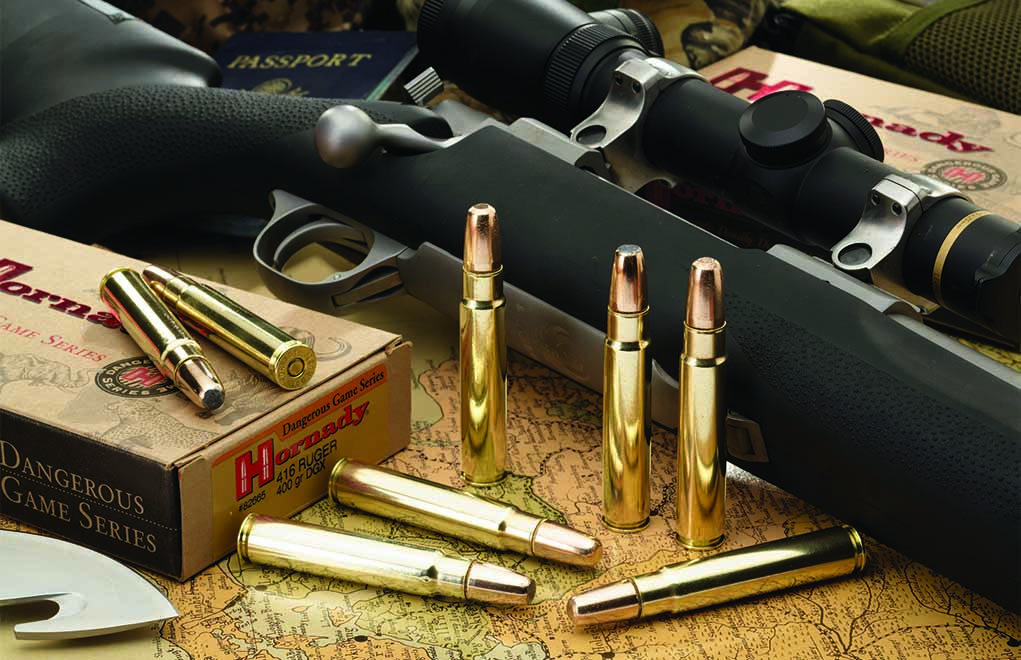
In 2008, the joint effort between Hornady and Ruger was expanded to include the .416 Ruger—a beltless case designed to fit in a long-action receiver, matching the velocity of the Rigby and Remington cases. Chambered in the Ruger Hawkeye African rifle, the .416 Ruger is affordable, effective and, for reasons I can’t quite explain, remains an unpopular choice.

Affordable and effective, the .416 Ruger will cleanly take any and all game animals. Definitely a dandy .40-caliber.
Affordable and effective, the .416 Ruger will cleanly take any and all game animals.

The design is certainly sound: In both factory ammunition and handloaded stuff, I’ve seen nothing but good results from the .416 Ruger. Even so, perhaps it’s the fact that only Hornady provides ammunition; or perhaps the .40-caliber lacks the “look” of power. Nevertheless, rest assured that the .416 Ruger brings the goods.

.416 Taylor

A wildcat based on the .458 Winchester Magnum and necked down to hold .416-inch bullets, the .416 Taylor is a solid design. DoubleTap has offered factory ammo for it in the past, but it remains a handloaded proposition. However, the .416 Taylor (developed in the 1970s by Bob Chatfield-Taylor) will come close to the Rigby benchmark, driving a 400-grain bullet to 2,350 fps. Donor brass is readily available; and, with a good set of dies, you end up with a belted case that fits perfectly in a long-action receiver.

.500-416 Nitro Express

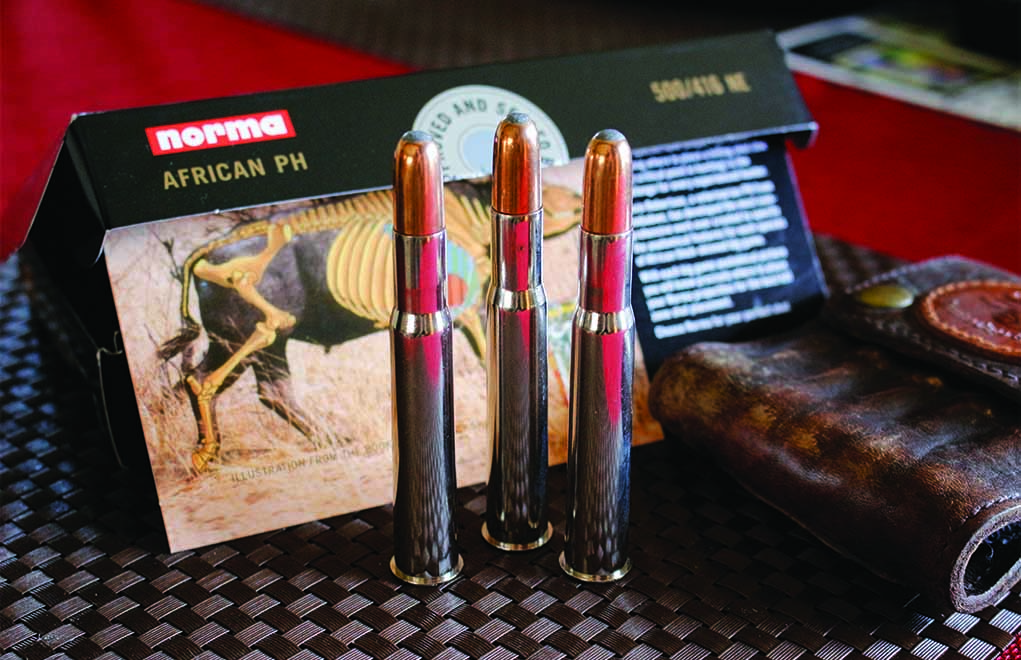
The .500-416 NE is a rimmed cartridge perfectly suited to double-rifles.

This modern rimmed case from Krieghoff uses a 3¼-inch case to push a 400-grain, .416-inch bullet to 2,300 fps and makes a solid choice for a hunter who wants a double-rifle in .40-caliber. Compared to the venerable .450-400 3-inch NE, it has a definite advantage in terminal ballistics and an increase in recoil. Popular in the Krieghoff doubles, the .500-416’s popularity has waned as of late; and, with the introduction of the .416 Rigby No. 2, I expect that trend to continue.

.404 Jeffery

.40-caliber comparison: The slender shoulder of the .404 Jeffery allows for a very smooth -feeding rifle. Loaded with premium 400- or 450-grain bullets, the Jeffery can nearly equal the ballistics of the .416 Rigby and Remington.
The slender shoulder of the .404 Jeffery allows for a very smooth -feeding rifle. Loaded with premium 400- or 450-grain bullets, the Jeffery can nearly equal the ballistics of the .416 Rigby and Remington.

This has become my personal favorite of the lot. According to the best evidence available, it was released in 1905, and although the .416 got the glory, the .404 did the work. The .404 Jeffery uses a 400-grain bullet of .423-inch diameter, with the original load leaving the muzzle at 2,150 fps and modern loads ramping up that figure to 2,350 fps. This puts it in the same league as the .416 Rigby, Remington and Ruger.

Modern bullets have made this .40-caliber even better. If I were forced to pick a single cartridge-and-bullet combination for all my dangerous-game work, it’d be my .404 Jeffery, loaded with 400-grain Woodleigh Hydrostatically Stabilized Solids to 2,280 fps. This combination has accounted for elephant, buffalo and all sorts of plains game animals at ranges from 16 to 225 yards.

.425 Westley Richards

The .425 Westley Richards came onto the scene in 1909, using a .435-inch-diameter, 410-grain bullet at 2,350 fps for slightly more than 5,000 ft-lb of muzzle energy. The design used a severely rebated rim in order to use the standard .473-inch bolt face of the 98 Mauser, as well as the stripper clips to facilitate fast reloading.

The issue posed by the rebated rim was the tendency for the bolt face to ride over the rim and onto the case body, causing a feeding malfunction. While it’s a unique cartridge, the .425 isn’t incredibly popular, and Kynoch is the only ammunition provider … when this ammo is available.

Compare and Contrast

Looking at the performance level among the .375s, lower .40s and the .45s, using 300-, 400- and 500-grain bullets, respectively, you’ll see the trajectories of the .40-calibers staying very close to that of the .375s, where the .45s drop off quite a bit more.

Yes, the .45s have more weight and a greater frontal diameter, but the energy figures between the lower .40s and the .45s aren’t radically different: They both have roughly 1,000 more ft-lb at the muzzle than do the .375s. And, I’ve found there’s a definite ramp-up in recoil when you go to the 500-grain, .45-caliber cartridges, which run at 2,150 fps and upward.

The beauty of the .375s is found in the wide selection of bullet weights (235 to 350 grains). However, the .40s aren’t exactly married to the 400-grain bullet—although it’s the most popular. There are bullets for these cartridges ranging from 300 to 450 grains.

Sectional Density

The classic cartridges—those that made their reputations before World War II during the “golden age of the safari”—all used a bullet with a sectional density greater than 0.300. While our modern bullet construction has lessened that requirement, the premium bullets of traditional weight extend the performance of these cartridges.

The 400-grain bullet for the .450-400 3-inch—the smallest diameter of the lot—has a sectional density of .340. The 410-grain .425 Westley Richards bullet—the largest—has an SD of .310. All have the desired length for a proper dangerous-game cartridge.

Choosing Yours

The choice of one of these .40-caliber cartridges is as subjective as choosing a deer cartridge. Of the cartridges listed, each has their merits. The .416 Rigby and .416 Remington are the most popular, followed by the .404 Jeffery. In spite of its lower velocity, the .450-400 3-inch remains the most popular of the rimmed cartridges—although I predict the .416 Rigby No. 2 will gain ground over the next decade.

If it’s affordability and availability that concerns you, the .416 Remington might be the best value. However, I’ve become enamored of the .404 Jeffery. But with the exception of that .405 Winchester, any of these cartridges will make you a happy hunter.

Categories
All About Guns Ammo

BIG-BORE CARBINES POWDER-COATED POWERHOUSES WRITTEN BY JEFF “TANK” HOOVER

Here’s the “hole” story on the “Fearsome Foursome.” Big bores mean
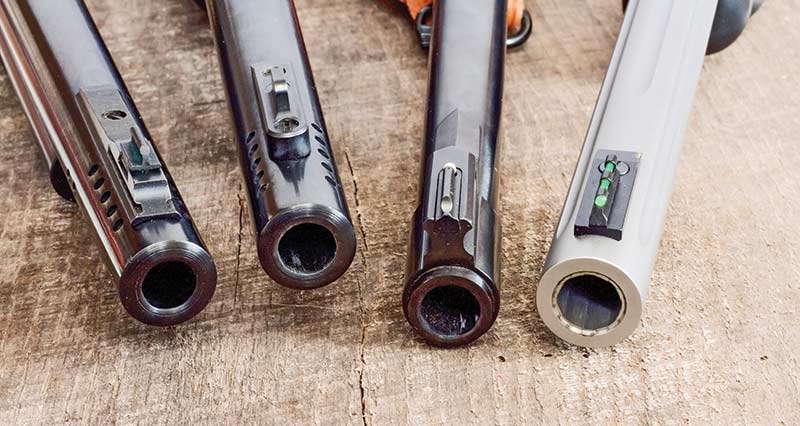
big bullets! Left to right: The .444 Marlin Outfitter, .45-70 Marlin Guide Gun,
Ruger .475 Linebaugh #1 and lastly, a T/C Encore with .500 S&W Katahdin carbine barrel.


I like big holes, especially at the end of my barrel! Big holes mean big bullets. Big bullets make big holes in things, so there’s no need to rely on expansion to get the results we want. Big holes make things bleed faster and deflate lungs quicker, too. Two holes are better than one at incapacitating the creature we’ve perforated with a sucking chest wound.

Big, heavy, cast bullets have been doing these things for years … just ask any buffalo (actually American Bison). The bullets have a tendency to plow long, deep and straight due to something called momentum. It’s this simple concept that was so effective on Bison with such a


Big Bore, Heavyweight Blunt


Sounds like a motor cop, right? But these are traits we want for our hunk of lead, to be just as, or more effective than the latest controlled expansion, jacketed-bonded wonder bullet. There’s no question these bullets are good, but what fun is it buying them when we can make our own?


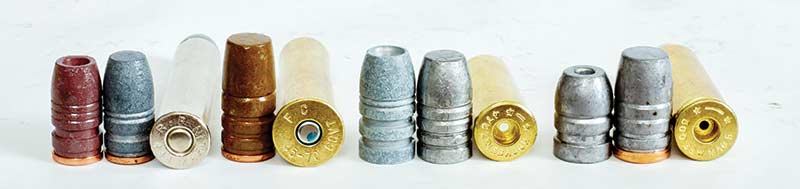
Powder-coated cast bullets next to their respective cartridge cases.
As crude as chucking a big hunk of lead is, it’s still very effective.
Big bullets make big holes.

Powder Coat Isn’t Powder Puff


Powder Coating is simply putting a polymer coating on our bare bullets instead of the “greasy kid stuff” we call bullet lube. By simply tumbling your bullets until covered with powder coat powder, you shake off the excess powder and bake your bullets. What you get is a coating sealing the lead projectile in polymer as it scoots down the barrel. I believe Powder Coating to be the best innovation since the humble gas check.


Cast Of Characters


I’m going to define Big Bore as anything over .40 caliber. My cast of characters are a Marlin .444 Marlin Outfitter, Marlin .45-70 Guide Gun, Ruger #1 .475 Linebaugh and lastly, a T/C Encore with a .500 S&W Katahdin carbine barrel. For simplicity and space sake, I’m going to cut to the chase and just list my pet loads I’ve used for years in some of these guns. So sit back, relax and take in the hole story of Big Bore carbines.


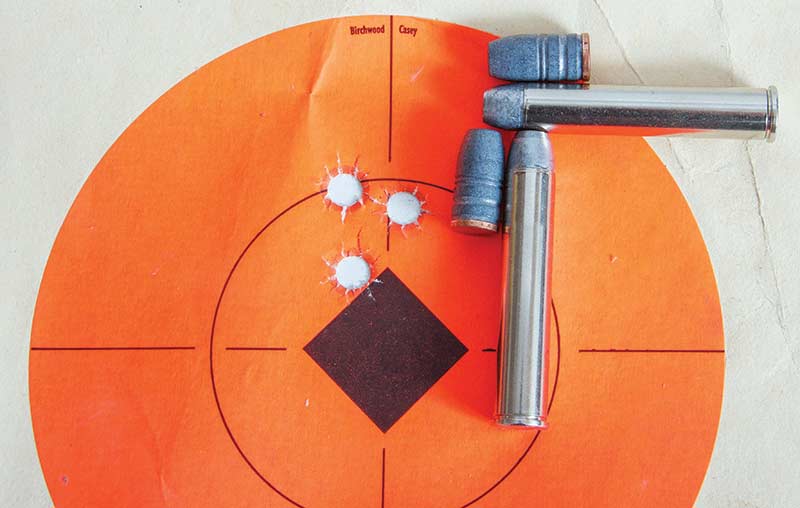
Typical group of Tank’s .444 Marlin at 100 yards.

.444 Outfitter


I started shooting the .444 Marlin about 25 years ago. Basically, it’s just a stretched out .44 magnum. What’s not to like? My favorite bullet is of LBT design and is listed as a 330-grain LFNDCGC design. Let me ’splain. LBT stands for Lead Bullet Technology, the LFN means long, flat nose, DC is dual crimp and GC is gas check. Piece of cake, eh?

These bullets are capable of shooting 0.75″ groups of 3 at 100 yards and I’ve done it regularly with many different Marlins in this caliber. For some reason, .444 Marlins are intrinsically accurate. When 330 grains of lead exits at 2,200 FPS, with this kind of accuracy, things drop when hit. Several deer have been pole-axed when hit by this combo. The 56 grains of Hodgdon H335 is my pet load.


.45-70 Marlin Guide Gun


When it comes to lever guns, the old war-horse .45-70 is one of my favorites. Draped in history, modern loadings give the .45 Government a whole new dimension. Pushing 400+ grain cast slugs over 2,100 FPS is pretty impressive for such an ancient cartridge. My favorite cast bullet is dropped from a cherished Rob Applegate brass mold throwing a 425-grain LWFNGC, or Long Wide Flat Nose Gas Check design.

The meplat is between an LFN and WFN. It is accurate and punches 0.460″ holes with each shot. The 50 grains of Alliant Reloder 7 is my pet load. Its 3-shot groups average around 1.5″ at 100 yards.


Ruger #1 .475 Linebaugh


The .475 Linebaugh gained legitimacy a few years back when factory ammo companies like Buffalo Bore and Hornady started loading for it. Lipsey’s, a large Ruger distributor, had a limited run of these rifles built.

Nothing’s better than carrying a classic single-shot rifle in the woods, the mere act makes a bold statement. It speaks of confidence and the ability to get it done with one shot, as it should be …

My favorite load consists of a 400-grain, powder-coated bullet dropped from a Lee 2 cavity mold retailing for under $20. How’s that for a bargain? I stuff the case with 24 grains of H110 sparked with a Large Rifle primer. From the Ruger, I get just under 1,500 FPS with all the accuracy I could wish for.


T/C Encore Katahdin .500 S&W


While the Ruger #1 is a classic beauty, the T/C Encore is beautiful in its own utilitarian way. The 20″ barrel break-open single-shot makes for a handy package perfect for thick woods hunting. Issued with a dandy peep sight and fiber optic front sight, the T/C Encore is fast pointing and accurate.

My favorite load consisted of a powder-coated, gas-checked cast bullet dropped from a Lee 2 cavity mold. Loaded over 37 grains of Hodgdon H110, velocity was around 1,700 FPS. The 5-shot groups at 50 yards with the factory peeps were around 1″.


‘Holesome’ And Handy


I enjoy shooting and hunting with this “Holesome” bunch of carbines. It’s fun shooting and I like not needing a spotting scope to see where your bullet impacts. There’s also a feeling of satisfaction shooting bullets you’ve cast, powder-coated and loaded yourself.

Your chest will swell and you’ll have to knock the smug look off your face with a grinder after shooting your own big-bore carbines with ammunition of your own making.

Categories
Ammo

Top 5 Underrated Rifle Cartridges by PHILIP MASSARO

top5ammo.jpg

We all have our darlings. You know, those cartridges that our fathers, uncles, grandfathers and heroes have used, and have been written about for decades. But what about some of the former greats that seem to have been forgotten? Someone must champion the unsung heroes. I volunteer to be that someone.

While the .30-’06, .270 Win. and .375 H&H Mag. are favorites, I have a flair for the obscure or obsolete—those cartridges that perform well but are becoming increasingly rare. Here’s my list of the top five most underratedcartridges.

.30/40 Krag
America’s love affair with .30-caliber cartridges started right here, with the Krag. Until the Aught-Six tackled the shooting world, the Krag wore the .30-caliber crown. What few shooters realize is the Krag still makes for a great hunting rifle. Its performance falls smack in the middle of the 30/30 Win. and the .30-’06, and that’s not a bad place to be. It makes a great choice as an all-around North American rifle cartridge and is perfect for African plains game. Plus, it comes in the uber-cool Winchester 1895 lever-action and Ruger No. 3 falling-block, so you can be doubly stylish.

.257 Roberts
Necking the 7x57mm Mauser down to hold .257-inch-diameter bullets was a fine idea, and it produced one of the most useable quarter-bore rifles around. Velocities are better than the .250-3000Savage, yet not quite as hot as the .25-06 Remington or .257Weatherby, giving shooters a cartridge that will perform well with standard cup-and-core bullets but still deliver the flat trajectories we like. The “Bob,” as its aficionados refer to it, is a light-recoiling option that is just about perfect for deer and antelope anywhere. The fact that the Winchester Model 70 and Ruger Model 77 both have models chambered for it is just a bonus.

6.5x55mm Swedish Mauser
To me, there is something magical about 6.5mm bullets. Long and lean, with a high ballistic coefficient that rivals a .30-caliber bullet’s wind-bucking ability, they are the stuff of legend. From Scandinavia to South Africa, many hunters have relied on the 6.5s. The Swede dates back to the late 19th century, and the moderate velocity of that time period is part of the successful equation. I like the 160-grain round-nose bullets at around 2,400 fps (an almost magical velocity when it comes to bullet performance), as they will handle both deer and black bear here in my native New York quite well. Look long and hard at the Norma Oryx 156-grain load at 2,560 fps, which will handle everything up to moose and elk.

9.3x62mm Mauser
Metric cartridges have long perplexed American shooters, but this one needs to be considered. The 9.3s shoot .366-inch-diameter bullets, and shoot them well. The 9.3×62 has a case based on the .30-’06, and it is to the .366 bore what the .35 Whelen is to the .35 bore. But, unlike the Whelen, the 9.3×62 shoots 286- and 300-grain bullets to speeds adequate for all game, save Cape buffalo and elephant, and in some African countries it is legal for those as well. The lighter 250-grain bullets make a superb choice for elk and moose, as well as bears and hogs. Oh, and all this performance comes in a standard long-action rifle.

.218 Bee
Finishing up with the smallest of the lot, the .218 Bee is a rimmed varmint cartridge that was originally chambered in the Winchester Model 65 lever gun and suffered from a lack of accuracy in that rifle. That accuracy problem didn’t show itself in the Ruger No. 1 that I carried for a couple of years as 3/4-inch groups at 100 yards weren’t a problem, recoil was nearly nonexistent, and the report was a pleasure compared to my .22-250. The Bee will push 45-grain pills to 2,700 fps, and that makes it a perfect varmint rifle out to 250 yards. The Bee runs on very little powder and does the job well, though the coyotes weren’t big fans!

If you’re after something a bit different, that will still be totally useful, give these cartridges a look, and have some fun!