Category: All About Guns
Categories
Artillery Lugar
Categories
Remington-Lee Model 1885
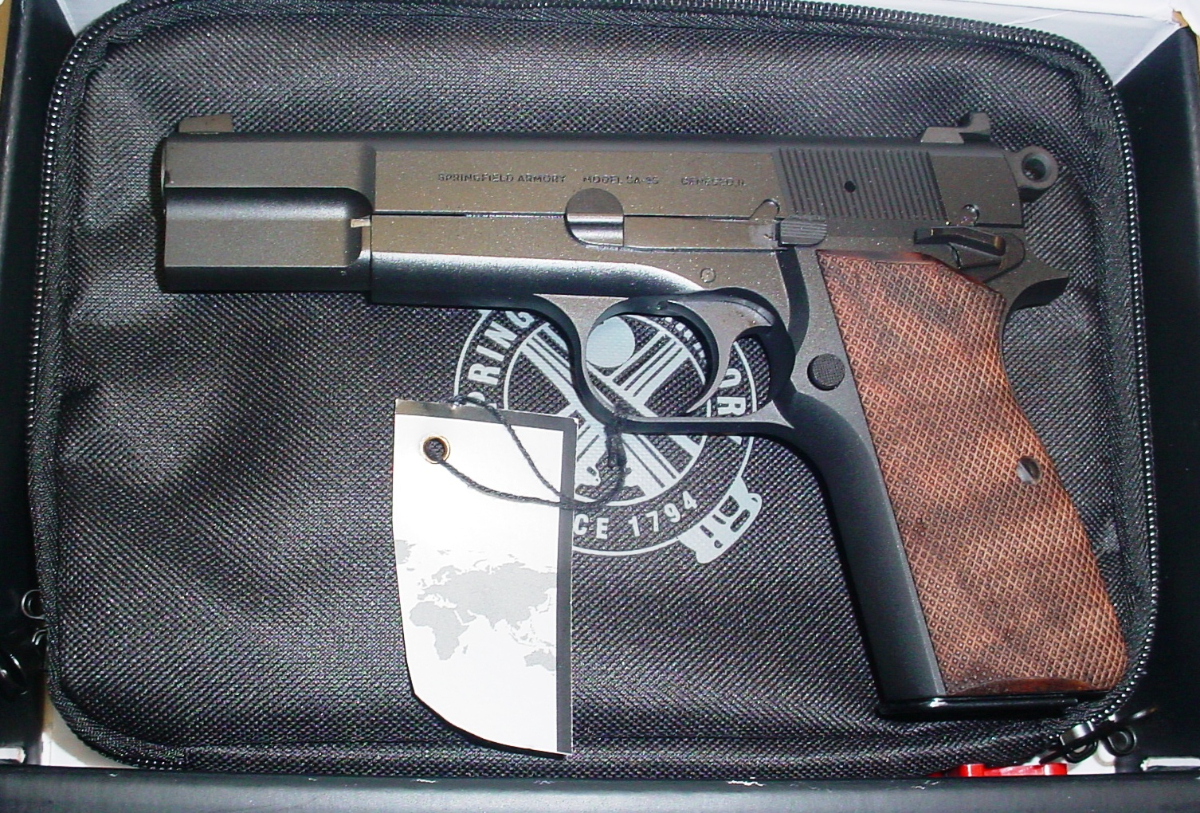
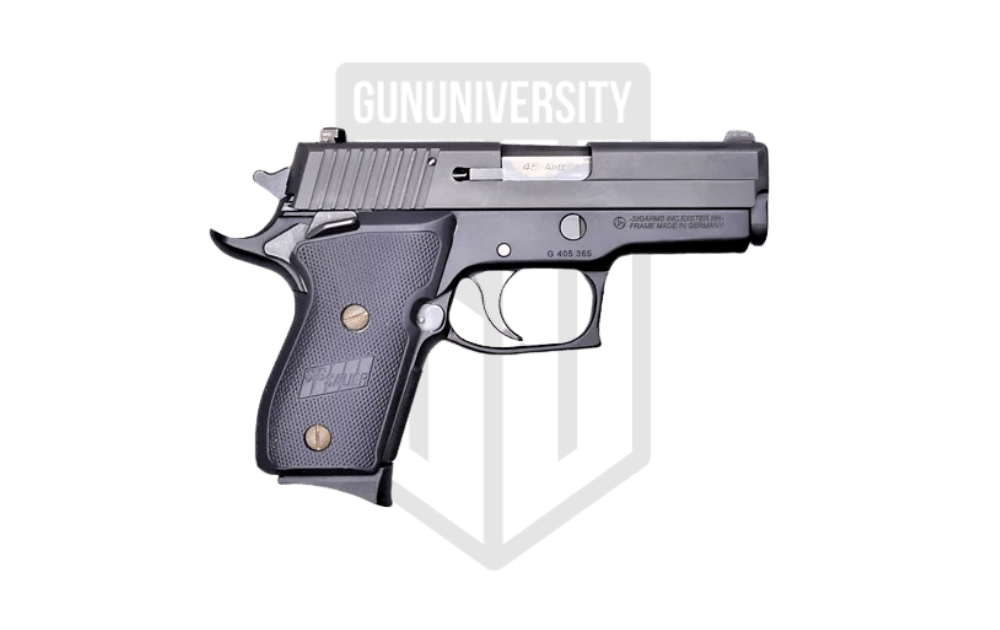
When you wanna go big, and I mean big, the P220 is here for you. This big, beastly, 45 ACP pistol comes from a Swiss-German conglomerate, and today we are reviewing the old-school cool pistol straight out of West Germany.
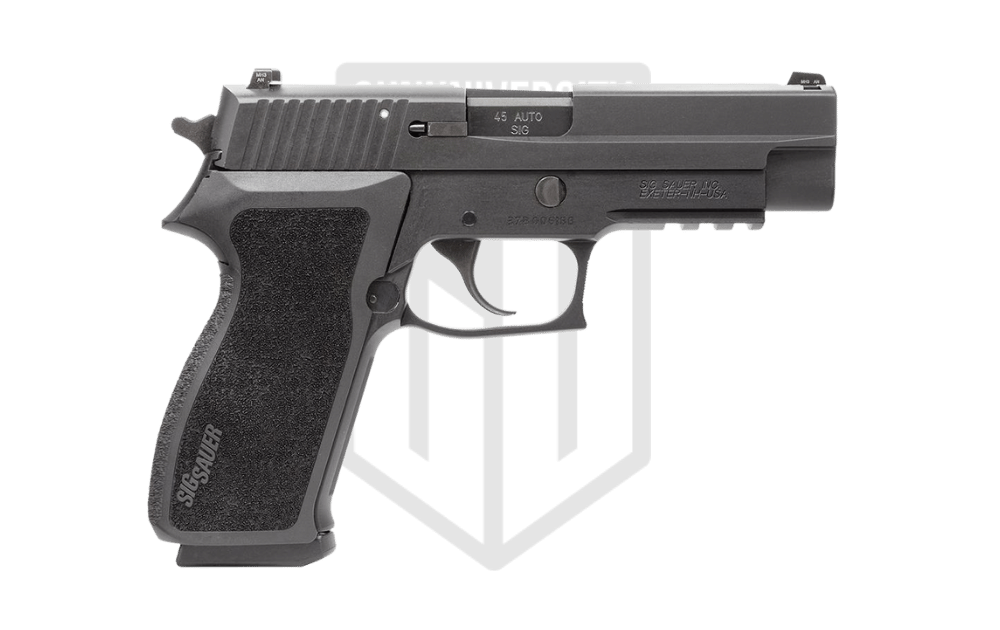
SIG P220 SPECS
- Caliber45 Auto
- Overall Length7.7 in
- Height5.5 in
- Barrel Length4.4 in
- Weight30.4 oz
The Swiss P220
SIG designed the P220, but the German firm J.P. Sauer and Son would produce and distribute the pistol. This started the famed SIG Sauer brand we all know and love. The original idea was to develop a service pistol to replace the SIG P210, a pistol that had been serving since 1949. By 1975, Switzerland’s 9mm variant of the SIG P220 saw adoption.
While the P220 is mostly known as the 45 ACP SIG, it’s been produced in a ton of different calibers, including 9mm, 7.65x21mm Parabellum, .38 Super, and of course, 10mm. The P220 would replace the single action only P210 with a double-action / single-action design that featured a decocker.
The P220 went on to be sold as the Browning BDA in the United States but eventually was sold under its proper name, the P220. Over a short period of time, the P220 went from a heel magazine release to a standard button magazine release. The design change was a welcome one by American shooters who were never partial to heel-type magazine releases.
As double-stack 9mms took over, the P220 became increasingly known as a 45 ACP firearm. SIG’s own P226 offered a double-stack 9mm option, and the P220 kept up with the most popular 45 ACP pistols in its single-stack configuration. Plus, America still really loved the 45 ACP round, and the SIG offered an M1911 alternative. Thus, the P220 became the 45 ACP pistol we all know and love.
Sig P220 Features
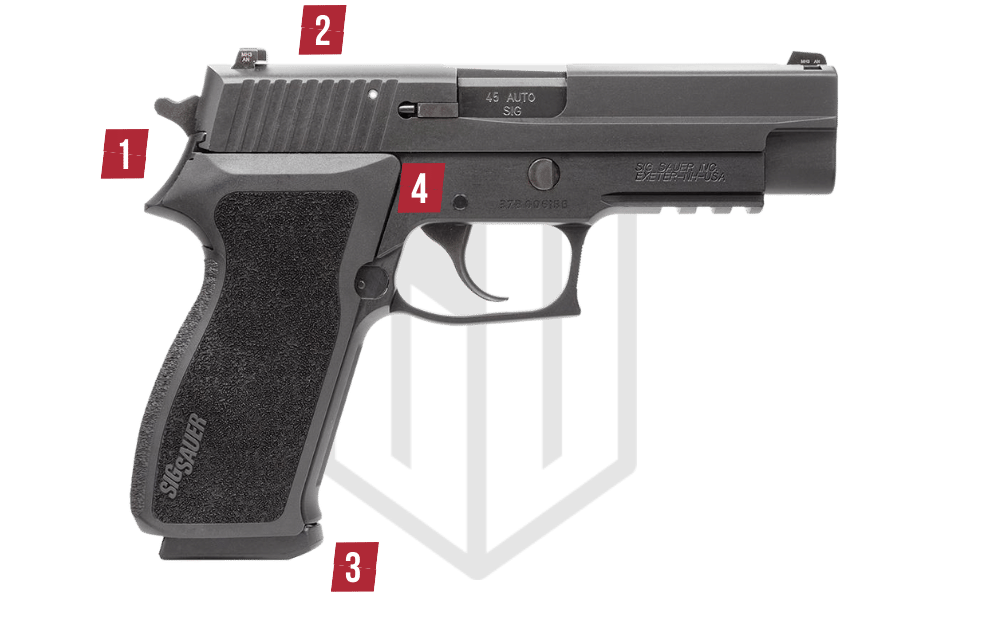
1DA/SA TRIGGER SYSTEM
2THREE DOT SIGHTS
3SINGLE STACK MAGAZINE
4ALUMINUM FRAME
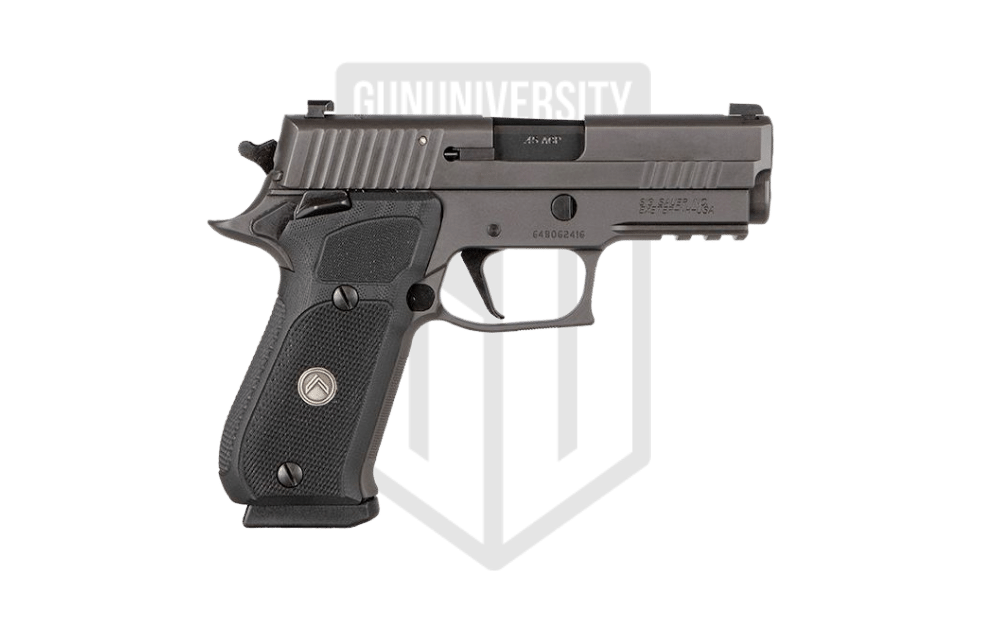
SIG P220 GUN MODELS
THE P220 IN ACTION – OUR TAKE
Let’s start with what I think is obvious. The P220 is far from modern, it feels and is dated, but it’s still a bit pricey. Most SIG all-metal pistols aren’t well known for their budget-friendly price point. They can be quite pricey. A single stack 45 ACP is a tough sell in a world where the Glock 21 and P320 in 45 ACP both exist.
It’s a weapon for collectors and enthusiasts of SIG pistols. The P220 can be a tough sell outside of that environment. My particular model is an older model with the West German stamp, and the rough finish and old design helped me acquire a P220 on the cheap. Classifying the P220 as a budget or value-filled firearm is tough to do.
Dropping Rounds
The P220 might not be the best value, but it’s still a damn fine pistol. The P220 is quite accurate. Impressively so. Even my old P220 prints tight groups and makes headshots at 25 yards completely possible.
Heck, Ernest Langdon used a P220ST to win the CDP title at the 2003 IDPA National Championship, and he won it so hard the organizers introduced a new weight rule to prohibit the use of the P22ST. Keep in mind this division was ruled by 1911s, and the SIG beat ‘em.
Blasting away with the big fat 45 ACP rounds is a ton of fun. Hitting a variety of gongs in various sizes was super easy. Like any DA/SA gun, the longer double-action trigger pull can affect accuracy, but the P220s are ultra-smooth and quite crisp. After that initial long trigger pull, the single-action kicks in, and you get a delightfully short trigger pull that’s super crisp with a short reset.
The big, thick grip offers you a nice comfy grip for dealing with recoil. I feel less recoil with the P220 than a 1911. I think the larger grip spreads the recoil out a bit more and creates a more comfortable gun. That big thick grip will be a turn-off for those without the hands of a Swiss lumberjack, but for me, it’s outstanding.
A big heavy all-metal frame and a thick grip make the P220 quite shootable. Controlling the weapon’s muzzle rise and recoil isn’t tough to do. You can drive the gun between targets and fire the weapon rapidly without losing control.
Simple And Easy
Ergonomically the thick grip isn’t for everyone. Combine the thick grip with the long reach to the double-action trigger, and some with small hands will feel challenged. I have huge hands, and it fits me just right.
What doesn’t fit me just right is the slide lock. Big hands mean I have big thumbs, and those thumbs pin down the slide lock. This renders it a pain in the bum when the slide fails to lock to the rear after the last round is fired.
Where SIG has always shined is in the placement of their decocker. It’s right where the thumb of a right-handed shooter sits. To decock the gun, it’s pressed downwards with your thumb in a very simple and natural motion. Spinning up a reload isn’t tough, with the placement of the magazine release being just right for thumb access.
The gun chugs along with whatever 45 ACP I toss in it. This is one of the few 45 ACP guns I currently own and probably the one I enjoy shooting most. I’ve shot standard 230-grain FMJ loads, 180-grain JHPs, steel-cased ammo, and more without a single problem. My P220 is ancient and seemingly beat up but still goes bang whenever I squeeze that trigger.
SIG P220 Pros And Cons
- Accurate
- Easy to Control
- Awesome DA/SA trigger
- Reliable
- Heavy
- Expensive
REPORT CARD |
||
SHOOTABILITY |
That thick grip soaks up recoil and makes it very easy to shoot. The gun bucks a bit, but not too much, and shooting fast and straight make it an awesome option for practical shooting. |
A |
RELIABILITY |
The P220 is a big, hard-hitting, and extremely reliable weapon. It’s a heavy hitter, and it always goes bang. |
A |
ERGONOMICS |
The ergonomics are fairly solid. Some may be turned off by the thick grip, and I don’t care for the slide lock’s placement. Overall, it’s plenty easy to use. |
B |
ACCURACY |
It’s a tack driver of a gun. It’s so much fun ringing tiny gongs consistently with a handgun. |
A |
VALUE |
A single stack, 45 ACP gun that costs upwards of a grand and isn’t a custom piece can be a tough sell. From a practical standpoint, it’s a tough sell when compared to other modern 45 ACPs on the market. |
C |
Opinion

Our alert last week described a recent NBC News article on rising gun ownership in America, which cited national polling numbers showing that “[m]ore than half of American voters – 52% – say they or someone in their household owns a gun.” This represents “the highest share of voters who say that they or someone in their household owns a gun in the history of the NBC News poll, on a question dating back to 1999.” The actual gun owner numbers are likely to be still higher, given that most people are unwilling to discuss their personal details with complete strangers.
Another sign that the American public is still keen on guns is sales data. This year’s Black Friday smashed the previous Black Friday record, with firearm background checks “up over 11,000, or 5.5%, from the previous record set in 2017.” The most recent Federal Bureau of Investigation (FBI) statistics on the “top ten highest days” for National Instant Criminal Background Check System (NICS) gun-related background checks has this year’s Black Friday as the highest “Black Friday” on record, and at third place overall.
The Crime Prevention Research Center (CPRC) has just published its latest annual study on concealed carry permits. Concealed Carry Permit Holders Across the United States: 2023 (Nov. 30, 2023), authored by Dr. John Lott, Carlisle E. Moody and Rujun Wang, examines trends regarding concealed carry permits.
There’s good news here, as well.
Earlier, the CPRC’s 2022 study concluded that an estimated 22.01 million individuals in America had been issued a concealed handgun permit, a 2.3% increase over 2021. This was “the slowest percent and absolute increase that we have seen since we started collecting this data in 2011,” and the study attributed it, in part, to the 24 states at that time that had a permitless carry law in effect. The “number of permits declin[ed] in the Constitutional Carry states even though it is clear that more people are legally carrying.”
The CPRC’s newest study notes that, for the first year since its reporting began, the number of permits declined, albeit by a fraction of less than one percent (down 0.5% from 2022 figures). To put this in context, the number of permits overall has grown from 2.7 million in 1999 to “at least 21.8 million” as of the latest count.
Far from being an indicator of lessening interest in lawful concealed carrying, the dip is due to a change in applicable state laws, which allow qualified individuals to carry without application forms, fees, wait times, and other bureaucratic hoops. “A major cause of the marginal decline is that 27 states now have Constitutional Carry laws,” with Alabama, Florida and Nebraska most recently joining the states that allow permitless concealed carry. Significantly, the study notes that the 27 states with constitutional carry represent “65% of the land in the country and 44% of the population in 2022.”
With more than half of all states having embraced constitutional carry, “the concealed carry permits number does not paint a full picture of how many people are legally carrying across the nation … while permits are increasing in the non-Constitutional Carry states (317,185), permits fell even more in the Constitutional Carry ones even though more people are clearly carrying in those states (485,013).”
For this reason and others, the study cautions that the numbers cited are an underestimate, and that “the scale of that underestimation is increasing over time” due to old or missing data on permit issuance in some jurisdictions, and the continued spread of constitutional carry laws.
The CPRC study provides valuable data on permit holders by state, ranks states by the percentage of permit-holders in each state (with Alabama, Indiana, Colorado, Pennsylvania and Georgia as the top five), and lists the 2023 costs, by state, of getting a permit.
The study also breaks down data on permittees by race and gender for the jurisdictions that make that information available. “Seven states had data from 2012 to 2022/2023, and permit numbers grew 110.7% faster for women than for men.” As has been the trend in previous years, the concealed carry community remains increasingly diverse. “When permit data is broken down by race and gender, we find that black females have had the fast growth, especially during the pandemic. The rates of permit holding among American Indian, Asian, Black, and White females all grew much faster than the rates for males in those racial groups.”
The study points out that “there was a noticeable drop in the percent of permits issued [to] women and blacks after Constitutional Carry was adopted. It appears that both groups were relatively sensitive to the cost of permits.” Even in “shall issue” states, the application, training and other fees required to obtain a permit apparently present a real barrier to the exercise of Second Amendment rights, in many cases for the very people who are most vulnerable to crime and violence.
Another crucially important finding in the CPRC’s study is the relationship between crime and lawful carrying. Concealed handgun permit holders themselves “are extremely law-abiding,” and, [a]t the same time that there has been an exponential growth in permits, there has been a general linear decline in rates of homicide and violent crime offenses.
Except the extraordinary high rates of homicide offenses since the first year of the pandemic in 2020, the rate has dropped around 11% for the past two decades. Violent crime fell from 5.23 per 10 million people in 1999 to 3.81 per 10 million people in 2022, a 27% drop. Meanwhile, the percentage of adults with permits soared by five-fold. Such simple evidence by itself isn’t meant to show that concealed handgun permits reduce violent crime rates, as many factors account for changes in crime rates, but only that there doesn’t seem to be any obvious positive relationship between permits and crime.
In the meantime, the constitutional carry juggernaut presses on. The twenty-eighth state to go permitless is likely to be Louisiana. Republican Jeff Landry, Louisiana’s former Attorney General and new Governor, has made a commitment to secure the enactment of constitutional carry legislation in 2024.
In contrast, President Joe Biden – who has spent a significant part of his term down the gun-control rabbit hole – is running on a reelection platform of even more gun control. (The details are TBA as the “Joe’s Vision” tab, /joebiden.com/joes-vision/, at the official Biden/Harris 2024 website currently features a “Dark Brandon” error message and a graphic of a grinning Biden with two red blotches for eyes.)
Biden’s campaign is circulating a memo (“Trump’s America in 2025: More Guns, More Shootings, More Deaths”) that appears to build on the deceptive message that increased gun ownership means increased violence and crime. “More guns, not less. That’s Donald Trump’s plan to make us safe,” reads a statement from a Biden-Harris 2024 spokesperson.
For those looking for reasons to disagree with the “more guns, less safety” narrative, look to the millions of responsible gun owners across America who know better.
About NRA-ILA:
Established in 1975, the Institute for Legislative Action (ILA) is the “lobbying” arm of the National Rifle Association of America. ILA is responsible for preserving the right of all law-abiding individuals in the legislative, political, and legal arenas, to purchase, possess, and use firearms for legitimate purposes as guaranteed by the Second Amendment to the U.S. Constitution
Categories
Savage Model 24 Review
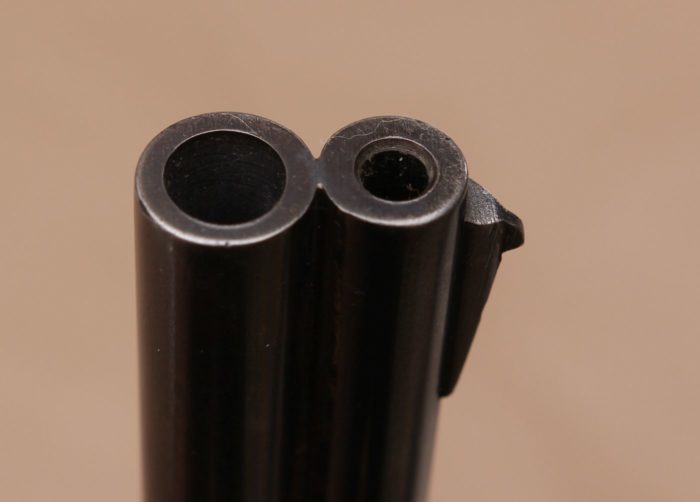
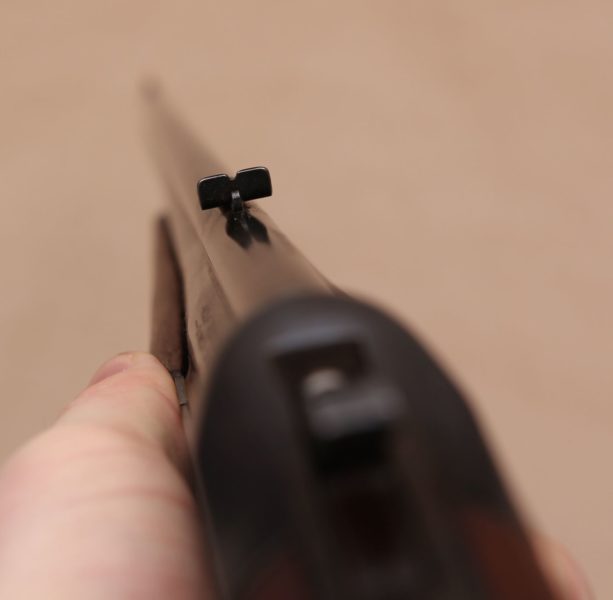
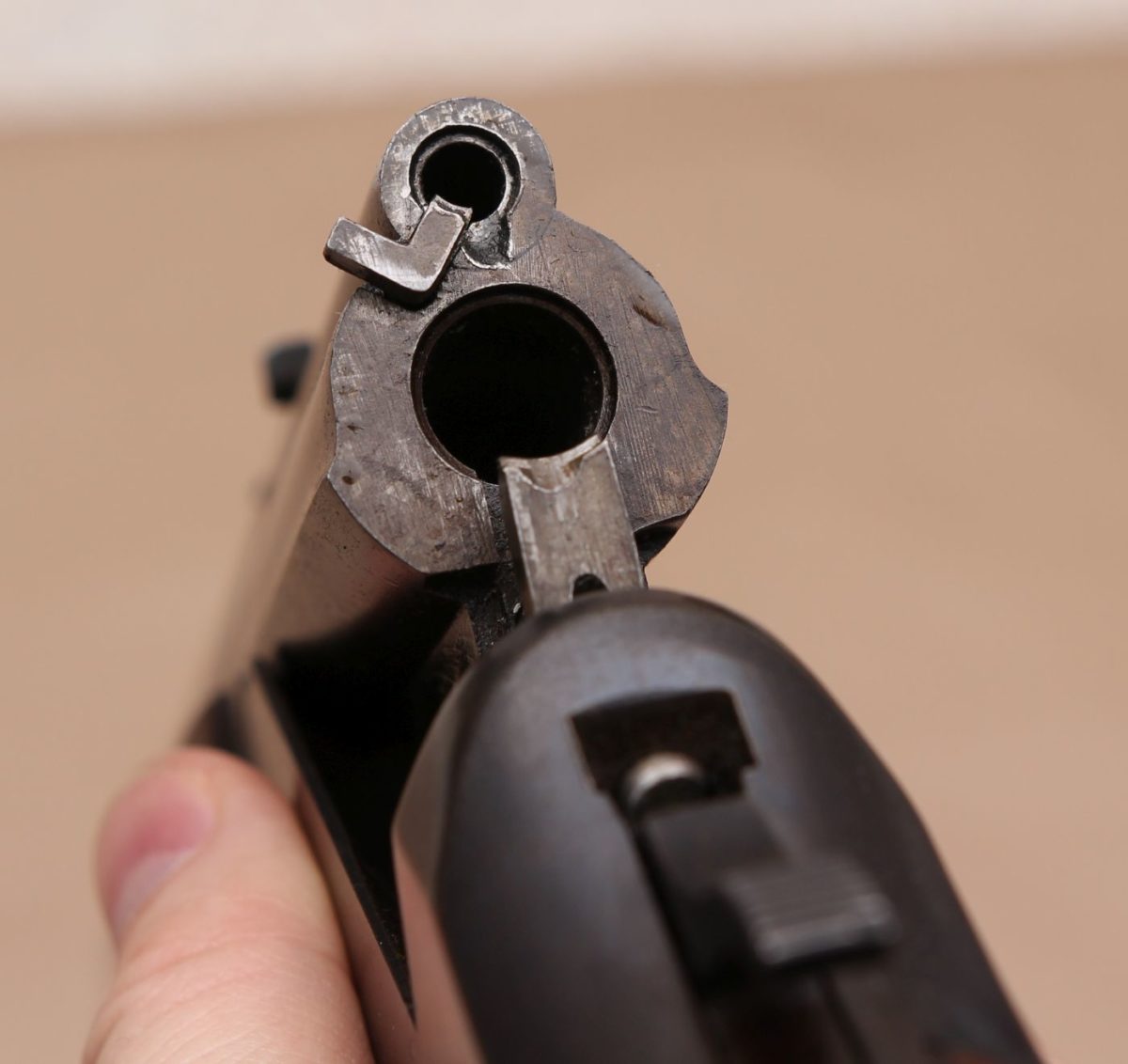 The Savage Model 24 is an over/under combo gun. It’s a 22LR rifle barrel overtop a 410 shotgun barrel, though some other similar variants like the 24V were available in heavier-duty centerfire rifle and larger shotgun gauges. They stopped making them in 2010, but released the Model 42 as its successor with polymer stocks. They’re setup as a small game getter: go 22LR to the head for maximum meat or 410 for fast takedowns of small game animals on the move (or on the wing)
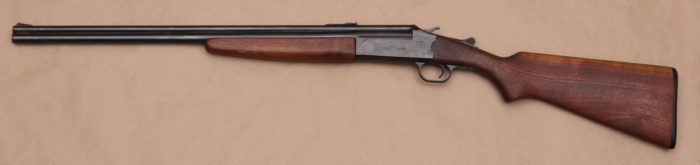
Savage Model 24 Specifications
- This one is 22LR over 3″ .410. Early models were a fixed full choke. Some others came in 20 gauge and 30-30 and other combos
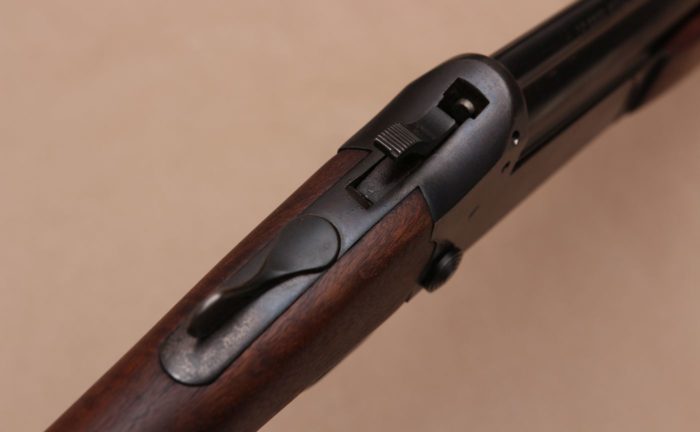
- Break-open action with manual hammer and barrel selector
- Extractors (no auto-ejectors)
- 7lbs
- Basic post & notch iron sights
There’s not really much to say about using the Savage Model 24. Pop a round of 22LR and 410 in it, walk around until you find a game animal. Cock the hammer and select a barrel.
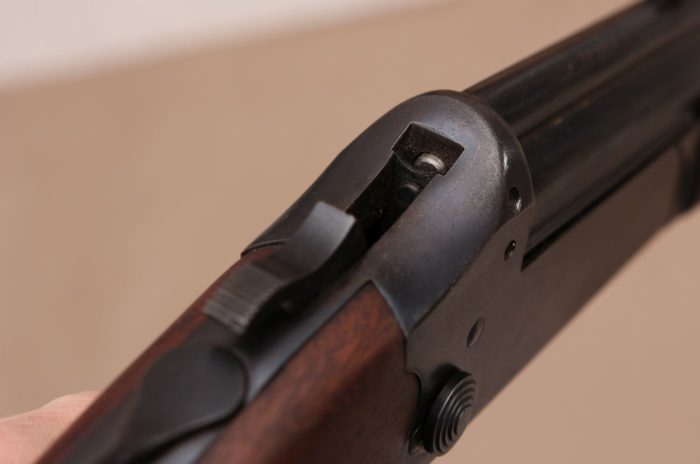
The rebounding hammer means it’s safe to carry around with the hammer down. I suppose you could carry it broken open over your arm if you prefer.
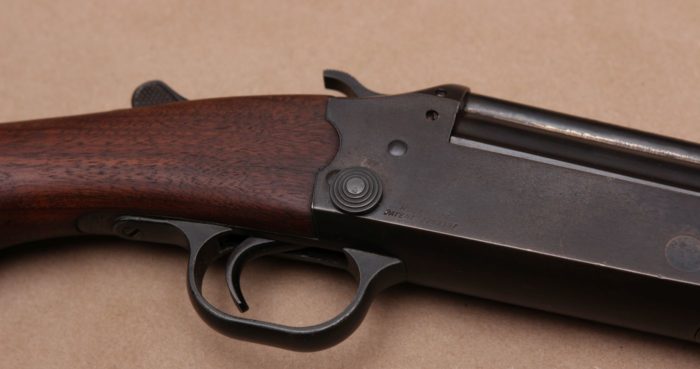
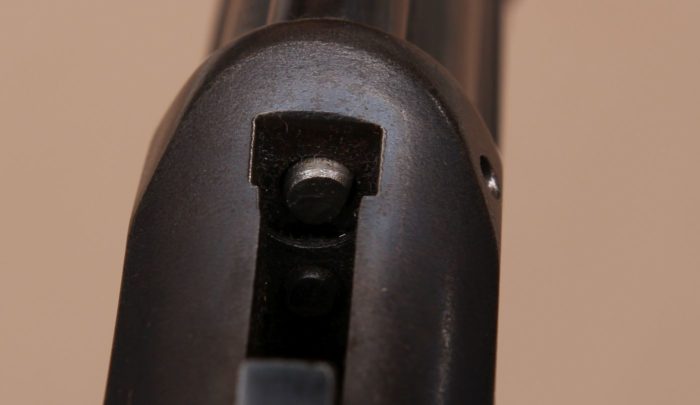
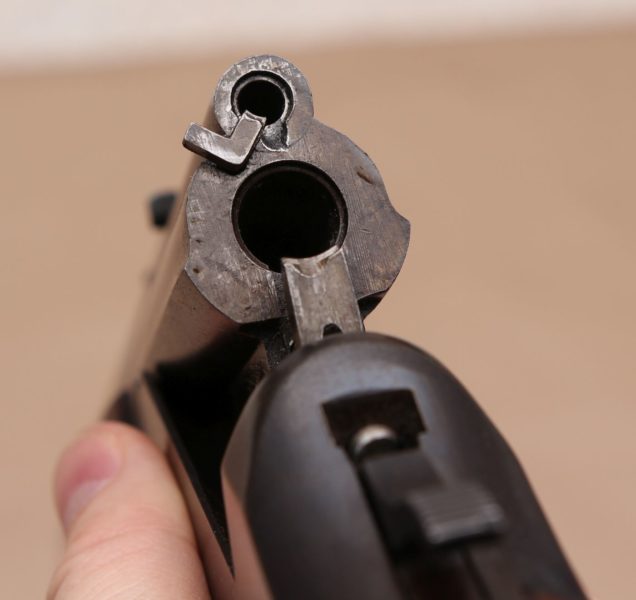
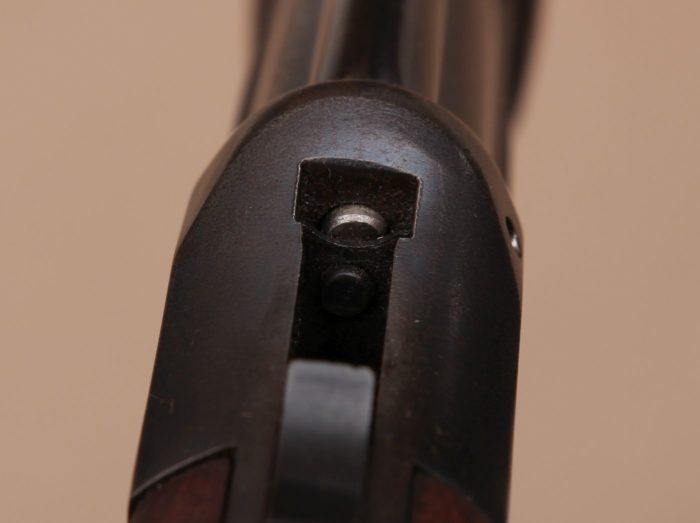
The small round disc on the right side of the receiver is the barrel selector. Some later versions used a selector on the hammer. It moves a transfer bar over the corresponding firing pin so that 1 hammer and trigger mechanism can work for both barrels. Some other versions of the 24 have a side lever where the disc would go, but that’s to open the action, not to select barrel.
Shooting the Savage 24
The trigger on this model 24 is pretty gritty but I’m pretty spoiled by fancy modern triggers.
This is the kind of gun where you load up your pocket with a few .410 and a fistful of 22LR and go out into the bush looking for rabbits, grouse, squirrel: any small game animals in season. Have the selector on the 410 and your thumb on the hammer so you can quickly cock and shoot anything on the move, but swap it up to the 22LR and go for a headshot if you can to save some meat. You always have that shotshell as backup if you miss.
Loading up one at a time, you’ll aim carefully anyways. Between the older Model 24 and the newer 42, I prefer the 24. The 42 is kinda ugly, where the 24 looks like a standard older rifle.