Categories
All About Guns Anti Civil Rights ideas & "Friends"

Gun Control Groups look to Dry up Legal Talent for Gun Industry

By Larry Keane. May 23, 2023

‘Gun control’ groups are foisting ‘gun control’ on the American public by taking to university campuses to convince law students to pledge to never represent the firearm industry, or its interests, in court.

‘Gun control’ groups are big Shakespeare fans, apparently. They’re taking a page from the famed Elizabethan-era bard’s Henry VI as the next play on foisting ‘gun control’ on the American public.

“The first thing we do, let’s kill all the lawyers,” Shakespeare wrote in the play.

Two ‘gun control’ groups are putting a 21st Century twist on the line and taking to university campuses to convince law students to pledge to never represent the firearm industry, or its interests, in court.

Call it the long game. ‘gun control’ isn’t satisfied with attacking Second Amendment rights, or even First Amendment rights. Now, they’re targeting Sixth Amendment rights too. That’s the amendment that guarantees the right to be represented by legal counsel.

Giffords Courage to Fight Gun Violence and March for Our Lives, ‘gun control’ groups headed by former U.S. Rep. Gabby Giffords and antigun billionaire Michael Bloomberg, respectively, are canvassing campuses to convince law students to sign a pledge they won’t represent the firearm industry or firearm owners when it comes to protecting and preserving Second Amendment rights. The ‘gun control’ groups’ pledge peddles verifiably false claims to convince the aspiring lawyers that the firearm industry is responsible for violent crime in America.

Not criminals. Not gang violence. Not the illicit drug trade. They’re blaming the industry for crimes committed by violent offenders and ignoring basic legal foundations to sway law students to deny legal services to companies and individuals that follow the law.

Do You Swear?

David Pucino, Giffords’ deputy chief counsel, makes some dubious claims to convince law students that after they earn their juris doctorate, they should sign the ‘gun control’ group’s nonbinding pledge to never represent the legal interests of a Constitutionally-protected industry. First among these misleading claims is that firearms are the leading cause of death for American children.

This is a favorite false talking point among ‘gun control’ groups and antigun politicians, including President Joe Biden. The problem is that it is demonstrably false. The University of Michigan manipulated data sets to include 18 and 19-year-old adults as “children” to boost the figure of childhood deaths to surpass those caused by motor vehicle accidents. When 18 and 19-year-olds are backed out because they’re not children, but in fact adults, that claim falls apart. NSSF demonstrated that here.

Giffords’ pledge website also claims the firearm industry actively opposes “any effort to pass gun safety laws.” Again, this is demonstrably false. NSSF backed the FIX NICS Act, named for the firearm industry’s FixNICS® initiative to get all states to submit disqualifying records into the FBI’s National Instant Criminal Background Check System (NICS). NSSF changed the laws in 16 states and in Congress to get the background check system to work as intended. In fact, NSSF helped create the instant point-of-sale background check system that would instantly inform a firearm retailer if a customer is prohibited from purchasing a firearm.

Pucino urges law student to never work for firms that represent the firearm industry because, in his estimation, the firearm industry “represent some really reprehensible companies that have done some horrible things.”

Never mind that the firearm industry administers the Real Solutions. Safer Communities® campaign that includes FixNICS and Project ChildSafe®, which partners with over 15,000 law enforcement agencies in all 50 states and five U.S. territories to distribute over 40 million free firearm safety kits including locking devices. Real Solutions also includes the partner programs with the Bureau of Alcohol, Tobacco, Firearms and Explosives (ATF) to prevent illegal “straw” purchases of firearms through Don’t Lie for the Other Guy™ and Operation Secure Store® to help firearm retailers voluntarily increase security to deter and prevent firearm burglaries and robberies. The firearm industry also partnered with the American Foundation for Suicide Prevention (AFSP) to provide firearm retailers and ranges kits to encourage a “brave conversation” to prevent suicide tragedies.

Persona Non Grata

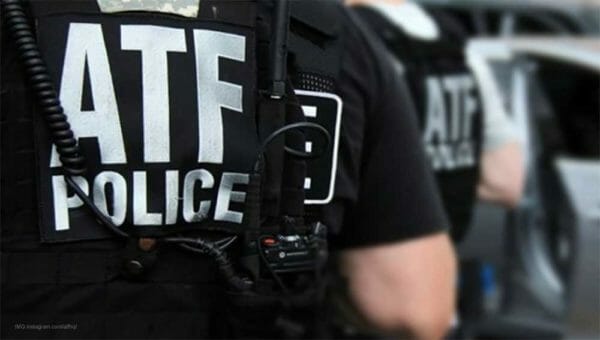
Giffords and March for Our Lives think these programs are “reprehensible” enough to demand the ATF not work with the firearm industry on these campaigns that have been proven to save lives. Giffords was among 43 other ‘gun control’ groups that demanded the ATF stop working with the industry it regulates.

“Stop funding, partnering, or co-branding programs with the National Sports Shooting Foundation via the Department of Justice and other Federal Agencies,” the letter said, according to The Reload. “No longer should the ATF hold private briefing and training sessions at NSSF’s annual SHOT SHOW without making their remarks available to the public online.”

NSSF pointed out how “unserious” ‘gun control’ groups are with their demands then. They continue to prove that unseriousness now. These ‘gun control’ groups put special-interest political agendas ahead of real answers to keep the public safe. Their answer isn’t to “do something” as they demand. It is to “do something” to ban guns. And now, apparently, it is also to ban legal representation.

Giffords and March for Our Lives rolled out their “pledge” drive at the University of California – Berkeley School of Law, Cardozo School of Law, City University of New York (CUNY) School of Law, Vanderbilt Law School and Yale Law School. Pucino said the drive isn’t limited to those schools. Plans are to make it “broad and national.”

The goal is to encourage the aspiring lawyers to flex their legal muscle, putting pressure on law firms that they’ll miss out on talent because these law school graduates will refuse to assist in any cases defending the firearm industry or Second Amendment rights. It’s a tall order.

“There’s certainly the case that the legal system allows for and encourages for everyone to have representation, of course,” Pucino conceded in an interview with The American Independent.

These ‘gun control’ groups might want to read Shakespeare’s Hamlet and flip forward to the line that reads, “The lady doth protest too much, methinks.”

Categories
All About Guns

The DWM Gewehr Model 1898 – The Greatest Bolt-Action Rifle Of All Time?

Categories
All About Guns

Ask Ian: Donating Gun Collections to Museums

Categories
All About Guns

Shooting the M-14: Full Auto Really Uncontrollable?

Shooting the M 14: Full Auto Really Uncontrollable?


This M14 is being sold by Morphys on October 30, 2018.
Today we are out shooting the H&R M14 “Guerrilla Gun” prototype, but fitted with a standard M14 stock and barrel. With these parts, it handles and fires exactly like a standard M14 – so I can answer the most pertinent question:
Is the M14 really so uncontrollable in full auto?
Categories
All About Guns Born again Cynic! The Green Machine

A Disarmed Army? A panel of “experts” wants to take Second Amendment rights from the very people who fight for our freedom. by SUSANNE EDWARD

Army troops silhouette
zabelin/iStock

With a bias that conveniently removes the culpability and failures of the federal bureaucracy to help our soldiers and veterans, an “expert” panel recently wrote a report for the Department of Defense (DoD) entitled “Preventing Suicide in the U.S. Military: Recommendations from the Suicide Prevention and Response Independent Review Committee.” The report recommends that the federal government put in place various gun-control measures for our armed forces under the guise of suicide prevention.

The 115-page report recommends everything from weakening shower rods to ensuring people get enough sleep to reduce the number of suicides, and perhaps some, or even many, of those suggestions are worth exploring, but it also lists a series of restrictions on the right to keep and bear arms of service members and DoD contractors that have been proven to be ineffective, or even counterproductive, and that would put an emphasis on reducing freedom, not finding and helping those in need.

These gun-control proposals would, in fact, almost completely strip away our troops’ rights—the very rights they are fighting to preserve. The DoD panel’s proposals include implementing a seven-day waiting period for any firearm purchased on DoD property; raising the minimum age for buying guns and ammunition to 25; developing a national database for recording firearm serial numbers; prohibiting the possession of privately owned firearms not related to the performance of official duties on DoD property by anyone who does not live on DoD property; requiring anyone living on DoD property in military housing to register all privately owned firearms with a base authority; and restricting the possession and storage of privately owned firearms in military barracks and dormitories.

And that is just the beginning of this gun-control slippery slope. The authors of the report also seek changes that would enable the Pentagon to gather information on soldiers’ private firearms, which have nothing to do with their job in the United States Armed Forces or as DoD contractors.

An obvious criticism of this series of proposals is that it is contradictory, wrong and problematic to train individuals to defend our country and to, at the same time, deprive those very individuals of the constitutional liberty to safeguard themselves and their families when they are off-duty.

Blaming guns for mental-health issues is, to be blunt, a convenient dodge for a bureaucracy that many feel has failed to satisfactorily help our soldiers and veterans as they serve and, later, as they readjust to civilian life. Officials can simply claim it’s not their fault, it’s the existence of guns. After all, this is how gun-control activists talk about crime; they pretend that guns—and they make no distinction between those that are legally owned and carried and those that are illegally obtained and carried—somehow cause crimes, not the unlawful individuals who commit the crimes.

This excuse for bans and further restrictions on soldiers’ Second Amendment rights has received a lot of criticism.

“Limiting access to weapons and ammo for 18 to 25 year olds who make up 90% of the infantry ranks, and whose very raison d’être is to engage in close-range combat with guns to destroy enemy ground forces, will not stop suicides,” said Dan O’Shea, a retired Navy SEAL. “The DoD should address the root causes of suicides, not send a contradictory message to the troops that we don’t trust you to own, operate and keep safe the very tools of your trade.”

Indeed, veterans primarily contend that restricting access to firearms outside of work does little to achieve the goal of reducing suicides and runs a high risk of worsening the problem, as it could convince troubled persons not to seek help, since they won’t want their rights permanently taken away just because they sought professional assistance.

“The government will always start where they can assert dominion and control. But this sort of gun control will not stop people from taking their lives with firearms. It could stop people from seeking the help they need and this could ultimately increase the number of suicides,” said Boone Cutler, a former U.S. soldier and founder of the anti-suicide mission known as The Spartan Pledge. “These ‘recommendations’ would take away constitutional rights without the adjudication of a court. They would be counter-
productive all the way around.”

Data Shows This Gun Control Wouldn’t Work
The gun-control argument that dramatically limiting gun access leads to an abrupt drop in suicides falls apart when you examine countries that have some of the most-stringent laws on the planet.

Take Japan, for example. The country’s suicide rate peaked at about 25 per 100,000 people in 2000. In 2021, it was still 16.8 per 100,000 people, according to Japan’s Ministry of Health, Labor, and Welfare. This is higher than the U.S., which in 2021 was estimated to be 14.1 per 100,000, according to The Centers for Disease Control and Prevention. Most firearms are illegal in Japan, and few citizens own guns, yet it has one of the highest suicide rates globally. 

South Korea tells a similar story to Japan’s. In South Korea, the low amount of hunters’ firearms that are in circulation must be stored at local police stations; however, data from the World Health Organization (WHO) shows that South Korea has the highest suicide rate of all developed countries. In South Korea, the number of suicides was 26 per 100,000 in 2021, according to data compiled by Statistics Korea. Suicides in South Korea are typically carried out via drowning, hanging, ingesting poisons or jumping from tall structures. Furthermore, WHO statistics highlight that Austria, Belgium, France, Hungary and Poland all have higher suicide rates than the U.S. even though they have more-stringent gun-control laws than the U.S.

Thus, the DoD’s premise of slashing access to firearms doesn’t hold up to even a basic analysis. It is simply not proven that gun control will significantly reduce suicide rates.

“A gun is just a tool like any other tool. A hammer is great, but I can also kill someone or myself with a hammer. I can jump off a building if I want to jump off a building. I can overdose on heroin or go skydiving and not pull,” said Stokes. “There are so many ways to kill yourself, so targeting firearms is just stripping service members of their rights.”

Marine Corps Maj. Eric Antonelli, soldiers

U.S. Marine Corps Maj. Eric Antonelli (right), helps soldiers complete an advanced marksmanship training course at Camp Pendleton, Calif. Just above are soldiers serving in Iraq.


Real Causes Need to Be Addressed
Many also argue that this taxpayer-funded diatribe about gun control only distracts from the root problem: actually preventing suicides. A gun is merely one of many instruments used by troubled people; it is not the cause. Rather, the seed of suicidal tendencies is complex and manifold, ranging from depression, trauma and isolation to relationship/family troubles, employment and financial pressures. If someone is truly suicidal, removing their gun hardly solves the problem.

“I was badly injured while fighting in Afghanistan,” says Greg Stube, who served in the Green Berets and is the author of Conquer Anything. “While recovering in a hospital, and during many surgeries from injuries from being horribly burned and gutted by shrapnel, like many, I became addicted to pain medication and spent years overcoming that addiction and healing from my massive injuries. So I know physically and psychologically what soldiers can go through. My strong foundation in faith, my family and the brothers I served with all helped me through those horrific times, so I never considered suicide.

But I do understand how low a soldier can sink. And I have counseled a lot of veterans and have given many speeches to veteran groups on these issues and I can tell you that guns are not why some give up. If someone is determined to kill themselves, they’ll find a way. What too often occurs is the bureaucracy misses the signs and isn’t nimble and human enough to really be there and to stay there for these individuals. This is complicated stuff, and it drives me crazy that some want to use this as an excuse to take freedom, as in Second Amendment rights, away from soldiers.”

Many agree with Stube.

“It is stupid, contradictory and insulting to issue young men and women weapons and a chance to die for their country while restricting their ability to buy guns and ammo for their personal use,” said James Williamson, a retired U.S. Special Forces soldier.

“I have counseled a lot of veterans and have given many speeches to veteran groups on these issues and I can tell you that guns are not why some give up.”–Greg Stube, Green Beret (ret.)From his experience, what would be much more beneficial would be to emphasize suicide prevention at the officer level and to de-stigmatize the idea that soldiers sometimes must seek help.

“We also need to educate soldiers to use the buddy system and to look out for each other and recognize any signs of distress; we need to encourage them to report and take intervention action themselves,” said Williamson. “Restricting firearms is a cheap cop-out and a non-starter to a much-greater, and complex, set of problems.”

In fact, according to Matt Tipton, a physician and former U.S. Army Ranger, soldiers are incredibly resourceful, noting “We were trained to be mission-oriented. Once suicide becomes the mission, they will likely be successful. I think, typically, when a soldier or veteran decides to ‘do it,’ it’s well thought out, and they will make it happen.

If I were in charge of suicide reduction, my priority would be better mental-health screening before entry into service. A big problem is that today’s youth often have less coping and social IQ than ever. And we need to destigmatize mental-health service utilization while in the service.

The short answer is that gun control won’t solve veteran suicide, but it could enable a future tyrannical government—having the men and women most able to defend us from tyranny disarmed is pretty bad. Think the Holocaust and the Cambodian killing fields—every genocide in history started with unarmed people.”

From the lens of Del Wilber, a former police officer, U.S. Army soldier and intelligence officer, the problem of suicide in the military often comes down to poor leadership.

“Soldiers will follow a true leader through the gates of hell, but on the opposite side, with poor leaders, there will be discipline problems, substance abuse and ultimately some suicides,” said Wilber. “Will they restrict access to ropes so people can’t hang themselves? This is typical of gun-control advocates, always looking for what to them is the easiest solution, instead of putting forth the hard effort to find proper solutions.”

O’Shea also took aim at the DoD leadership by suggesting a good and hard look at the top-brass could go a long way in improving the motivation and mental health of at-risk military personnel.

“The war on masculinity, which de-arming our soldiers is a byproduct of, has done more damage to the young American military male psyche than more gun-control laws will solve,” O’Shea said. “A feeling of a lack of purpose, meaning and self-worth in one’s day to day is at the root cause of most suicides.”

Other veterans stressed the importance of transforming protocols to enable service members to seek mental-health support without first consulting their chain of command—or worrying that seeking such help could result in a loss of their rights.

President Joe Biden (D) campaigned on the premise of enacting legislation to ban “assault weapons,” including mandatory “buyback” programs and providing “technical and financial assistance to state and local governments to establish effective relinquishment processes on their own.” Moreover, Biden even said he wanted all firearms sold in America to be so-called “smart guns” that theoretically can recognize an approved user—and that, according to the dystopian dream of gun-control activists, could be shut off by the authorities.

“If the U.S. government can restrict access to firearms by a key segment of the U.S. population, besides law enforcement, that relies on guns to do their jobs, then nothing will stop this train wreck of woke ideology from spreading like a virus,” said O’Shea.

Many former service members contacted for this article commented that suicide is a very real and alarming reality within the military and society in general. It is a crisis that requires serious and practical solutions, not merely political punditry and cheerleading from anti-gun activists. Imposing gun control to stop suicide is no different than banning cars to prevent drunk driving; it is a dubious and downright precarious faux answer to make a handful of elites feel good.

“How dare military bureaucrats even consider restricting gun ownership of service members?” said Wilber. “But sadly, this has become a typical military knee-jerk response. If those [recommendations] go ahead, it will not affect suicides, but it will impact already suffering recruitment numbers. What will then become of our national security?”

Categories
All About Guns

Pre ’64 Winchester Mod 70

Categories
All About Guns

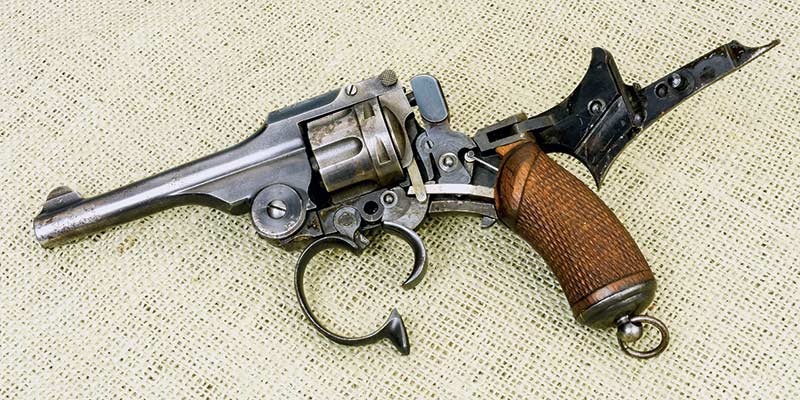
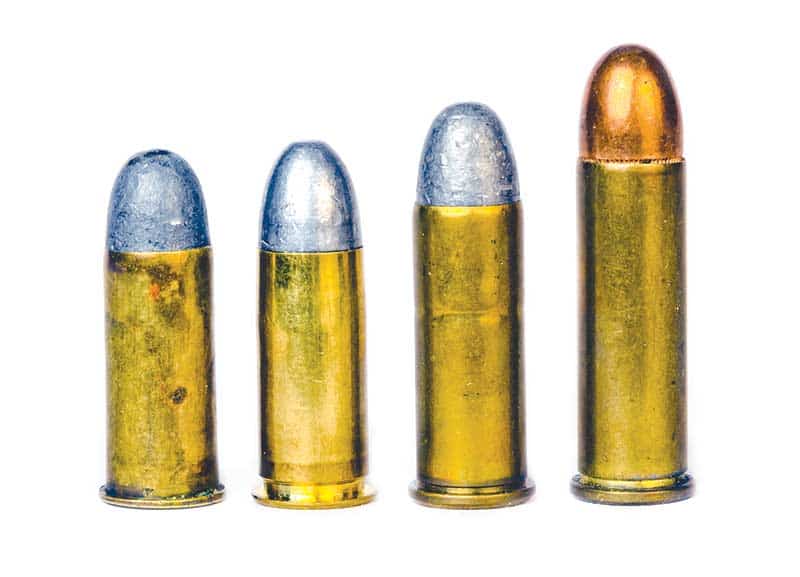
A Smith and Wesson Number 1 seven shot revolver

Categories
All About Guns Cops

19 shot, 10 fatally, at car rally less than 100 miles from Mexico-US border By Bill Hutchinson (I thought having a gun there is a huge faux pas!?!)

19 shot, 10 fatally, at car rally less than 100 miles from Mexico-US border
Security-tight at the scene of a shootout where at least 10 people were killed and nine injured in northern Mexico’s Baja California on May 20, 2023.
ABCNews

At least 10 people were killed and nine were wounded when an apparent team of gunmen ambushed a car rally in Baja California, Mexico, about 73 miles from the U.S. border, authorities said.

The horrific attack unfolded just after 2 p.m. on Saturday in San Vicente, near Ensenada, on the Pacific coast of the Baja California Peninsula, the Reuters news agency reported.

The violence erupted during the last day of a two-day all-terrain car rally, local officials said. Video purportedly of the shooting was posted on social media, showing off-road vehicles lined up along a road and capturing the sounds of screams and numerous rounds of gunfire.

Several people who appeared to have been shot were seen in the online footage lying on the ground.

Multiple shooters wielding rifles emerged from at least two gray vans at a gas station and opened fire on participants of the car rally gathered there, according to Reuters, citing 911 calls.

Following the volley of gunshots, the perpetrators got back in the vans and fled the scene, which is about 86 miles from San Diego, California, according to Reuters.

There were no reports of any arrests being made.

Ensenada Mayor Armando Ayala Robles said state Attorney General Ricardo Ivan Carpio Sanchez commissioned a special group to investigate the massacre.

The car rally was organized by the group calling itself Cachanillazo, which posted a message to Instagram expressing sympathy to those affected by the tragedy, adding that “unfortunately, what happened during the tour was not in our hands.”

Categories
All About Guns

Desert Eagle 50 AE Pistol

Categories
All About Guns Fieldcraft

The Curious Origins of the Ghillie Suit by WILL DABBS

This scumbag guy becomes eligible for release from prison in 2038.

In May of 2017, a father of three named Troy Johnson donned a ghillie suit and stalked a 12-year-old girl as she was heading to school in New South Wales, Australia. The 31-year-old abducted, subdued, gagged, and raped the child. Police searched his home and seized several items of evidence that supported the resulting charges. There were allegations of other assaults and attempted assaults as well. This freaking loser supposedly suffered some kind of medical episode after his arrest and was subsequently hospitalized. He appeared in the Wyong Local Court after his discharge and was ultimately sentenced to 28 years in prison.

Behold the face of the monster.

I struggle to comprehend what could drive a person to do something like that. Not meaning to sound uncharitable, but whatever his “medical episode” was, I can only hope it was something fairly agonizing. Most anything involving a power drill, a propane torch, or an intractable intestinal blockage would be OK with me. What makes this whole sordid tale pertinent to today’s discussion, however, was his attire. The ghillie suit has a long and fascinating military history.

Origin Story

The Gille Gubh was some sort of primitive Scottish forest spirit.

Gille is a Scots Gaelic term that describes a young man who works outdoors. Gille Dubh translates to “Black-Haired Youth” or “Dark-Haired Lad.” The Gille Gubh is some kind of bizarre earth spirit adorned in moss and leaves that figures prominently in Scottish mythology. The general understanding is that ghillie is a poorly-translated version of this term.

The yowie is the Australian version of our own Sasquatch. I find this image surprisingly disquieting.

Our Australian comrades call their ghillies “yowie suits.” This is a reference to the yowie, a mythical aboriginal creature akin to the Sasquatch. While there are a dozen or more local names for this thing, they all describe a hairy ape-like hominid that stands and walks upright. I rather suspect the yowie accounts for more than a little lost sleep among Australian children.

Factory-made ghillie suits will reliably transform a human being into a big pile of sphagnum moss. This one sells on Amazon.

The ghillie suit is simply a camouflage outfit designed to meld a sniper into the background vegetation and leave him essentially invisible on the battlefield. In years past, ghillie suits were handmade as part of sniper training. Traditionally, this involved sewing strips of burlap of various colors onto an old camouflage uniform until the end result was adequately leafy and bulky.

The original Lovat Scouts were formed from a cadre of skilled woodsmen.

The first recorded use of the ghillie suit in combat was by the Lovat Scouts during the Second Boer War. This Scottish Highland Regiment was mustered by Simon Fraser, the 14th Lord Lovat. The first batch of troops for this motley band was drawn from gamekeepers, professional stalkers, and similar men of the earth who toiled on Scottish estates.

The Lovat Scouts established a well-deserved reputation for effectiveness in combat.

The Lovat Scouts were initially commanded by the Honorable Andrew David Murray with Lord Lovat as 2IC. After 17 months in action, Murray was killed and Lord Lovat took command at age 29. He served until the end of the war in 1902.

Changes to warfare at the dawn of the 20th century were fairly transformational. These 1900-era Lovat Scouts look like a fairly manly group of guys.

At the dawn of the 20th century military tacticians were still trying to define themselves in the age of long-range repeating rifles, high explosives, smokeless powder, and belt-fed machineguns. In the Lovat Scouts we find soldiers well informed in fieldcraft and marksmanship. When combined with some innovative leadership these rugged men ultimately changed the way wars were fought.

The Black Watch was a legendary Scottish combat unit.

The Lovat Scouts were attached for a time to the Black Watch, but that relationship ended in the summer of 1901. A year later the Lovat Scouts returned to England and were disbanded. With chaos on the horizon in Europe, the Lovat Scouts were reformed in 1903 as two regiments. From these troops were drawn a group of dedicated sharpshooters that became the British Army’s first operational battlefield sniper unit. The unit was dissolved and reconstituted another time or two before finally finding itself deployed as two separate regiments in September of 1915 to Gallipoli.

The First War to End All Wars

These WW1-era Commonwealth snipers were armed with a variety of precision rifles, most of which sported offset optics.

The WW1-era Lovat Scouts Sharpshooters were formed into ten platoons. Each platoon was led by a commissioned platoon leader and consisted of 21 soldiers and NCOs. That first sniper unit totaled 220 specially-trained men. In a fairly prescient bit if tactical acumen, each platoon was subsequently attached to a particular Army Corps to be tasked out to subordinate units as needed.

The Lovat Sharpshooters were skilled at collecting tactical intelligence.

These sharpshooters were indeed renowned for their facility behind a rifle. Their weapons were typically variations of the standard-issue Short Magazine Lee Enfield (SMLE) that equipped most of the British Army. The SMLE was itself exceptionally capable for its day. However, it wasn’t necessarily their facility as snipers that so endeared the Lovat sharpshooters to their supported units.

Early ghillie suits were improvised affairs.

These early snipers were highly esteemed for their covert intelligence-gathering skills. On a battlefield bereft of drones and spy satellites, the accurate establishment of enemy locations and dispositions made the difference between success and failure. While using little more than 20-power spotting scopes these skilled warriors could offer great detail on enemy movements within ten miles and still offer reliable insights out to twenty. Major Vernon Hesketh Prichard, a legendary soldier and adventurer whose story we will no doubt explore eventually in this venue, was quoted as having said of the Lovat sharpshooters, “Keener men never lived…if they reported a thing, the thing was as they reported it.”

The Guns

The SMLE is a capable bolt-action infantry rifle. The addition of a low power optical sight optimized the long-range effectiveness of these weapons.

When faced with the prospects of protracted trench warfare, the British set out to equip their sharpshooters with precision rifles worthy of their mission. At first, these dedicated marksmen were equipped with a motley array of repurposed scoped hunting weapons. However, by 1915 the British government began mounting 3x and 4x scopes atop SMLE and P14 Enfield rifles. During the course of the war roughly 10,000 rifles were thusly converted. The optics on these weapons were not standardized until 1918.

These awkward offset scope mounts were designed to allow access to the stripper clip guide. This optic is built by the Periscopic Prism Company.

Though the SMLE fed from a detachable 10-round box magazine, most loading was still undertaken by stripper clips from the top. As a result, early scopes featured offset mounts to allow access to the rifle’s action from above. Later versions were center-mounted to facilitate a more effective cheek weld. These weapons had to be either loaded from the bottom using magazines or loaded from the top one round at a time. A skilled rifleman was expected to fire between 20 and 30 aimed shots per minute.

The SMLE was a popular British infantry rifle.

The Short Magazine Lee-Enfield Mk I was first introduced in January of 1904. The SMLE’s 25.2-inch barrel represented the sweet spot halfway between that of the original Lee-Enfield rifle and the carbine version. The SMLE was distinguishable at a glance by the stubby little bayonet boss protruding just below the muzzle. The subsequent WW2-era Mk IV sported a small length of barrel at the nose. The definitive WW1 version of the rifle was the slightly-modified Mk III introduced in 1907. British Tommies affectionately referred to the SMLE as the “Smelly.”

The Suit

It is amazing how the guys in these staged wartime photos always look so happy. They seem to be saying, “Hot dog! Another fetid miserable day of crawling around in filth trying not to get our heads blown off.” These are WW2-era snipers armed with Lee-Enfield No4 Mk I (T) rifles.

The basic ghillie suit changed very little for nearly a century. If properly executed such a contrivance was almost unnaturally effective. However, those traditional burlap ghillies had their downsides.

A traditional ghillie suit burns easily. Apparently, this one also attracts snakes.

Frayed burlap is notoriously flammable. On a battlefield contaminated with such vile stuff as white phosphorus, incendiary rounds, smoke grenades, and similar pyrotechnics the ghillie suit can be a simply epic fire hazard. Two snipers assigned to the 11th ACR burned to death during combat operations in Iraq when their ghillie suits were set ablaze. Additionally, burlap soaks up moisture like a sponge. Once a burlap ghillie suit gets wet it becomes unnaturally heavy. Wet burlap close to the skin for long periods in cool climes can precipitate hypothermia as well.

Thermal imagers cut through battlefield concealment day or night.

Modern sensors rely upon thermal detectors and IR imagers that can significantly degrade the effectiveness of traditional visual camouflage. While a generation ago such gear had to be mounted in the nose of an attack helicopter and cost as much as my hometown, nowadays thermal sights of surprising effectiveness are within financial reach of your typical middle-class pig hunter. As regards thermal technology, with each passing year the prices go down and the capabilities go up. Traditional ghillie suits don’t do much to conceal a person’s thermal signature.

A ghillie suit collects sticks and battlefield debris like lawyers attract money.

While this might not seem like a big deal, a ghillie suit also attracts burrs and twigs like some kind of magnet. Once you’ve rolled around in the brush in one of these things for a while it becomes a gigantic mass of prickly crap. Most normal people wouldn’t care, but it’s impossible to keep a field-worn ghillie suit tidy.

The Next Generation

The latest US Army ghillie suit is safer and more effective than previous versions.

We Americans have a well-earned reputation for smothering our problems in science and technology. In 2007 the US Army Soldier Systems Center undertook a program to develop an enhanced ghillie suit material. Where burlap or jute had all those detriments described earlier, this new stuff was purportedly water-repellent and fire-resistant. After extensive field testing at the Sniper School at Fort Benning, this new material was incorporated into the FRGS (Flame Resistant Ghillie System). Testing began in 2018 on the IGS (Improved Ghillie System), a modular design intended to be even safer, more comfortable, and more effective.

The ghillie suit is a critical component of modern sniper operations.

Though they have really changed very little over the past century, the ghillie suit remains an integral part of the modern sniper’s kit. Wherever men institutionally kill each other there will be precision marksmen decked out in fluffy earth tones creeping about in the brush visiting death upon their enemies. Born in South Africa in the late 19th century, the ghillie suit remains a timeless sniper tool even today.