Categories
Category: All About Guns
Categories
A ONE-OF-A-KIND FIND…
ISAAC NEWTON’S AMAZING SINGER PISTOL
WRITTEN BY WILL DABBS, MD
Will has trekked all over the planet looking for cool writing grist.
This extraordinary Singer M1911A1 pistol was quite literally right down the road.
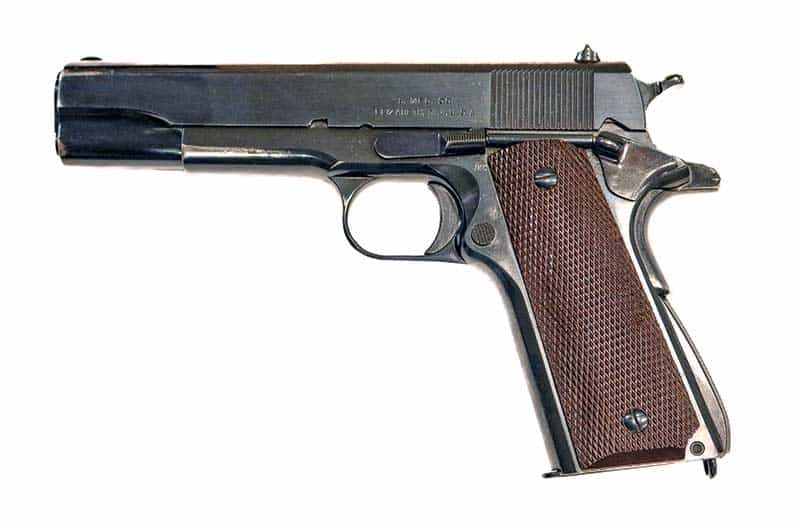
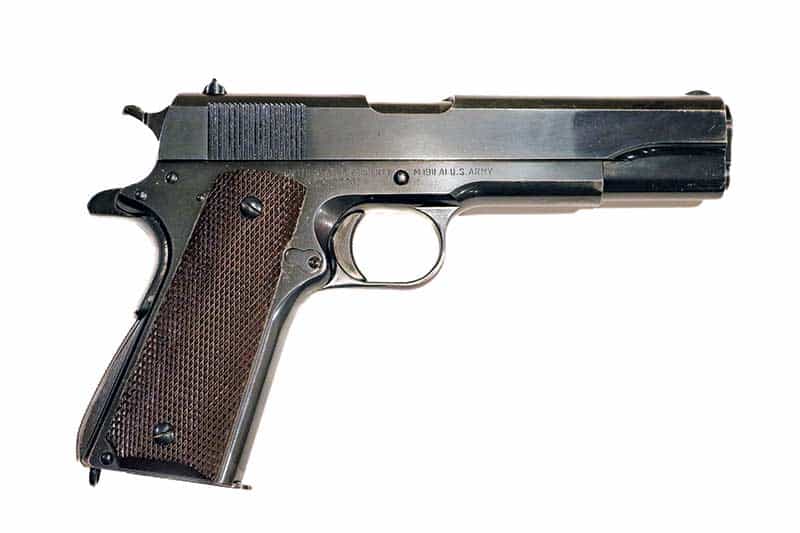
It’s not just every day you get to paw over a quarter-million dollar handgun.
This one also came with an exceptionally cool story.
It began with a text message from a great friend that read, “I’ve got somebody you need to meet.”
I’ve traveled all over the world to find cool stuff about which to write. This was literally a quarter mile from where I grew up. Sometimes the most amazing things are right in your own backyard.
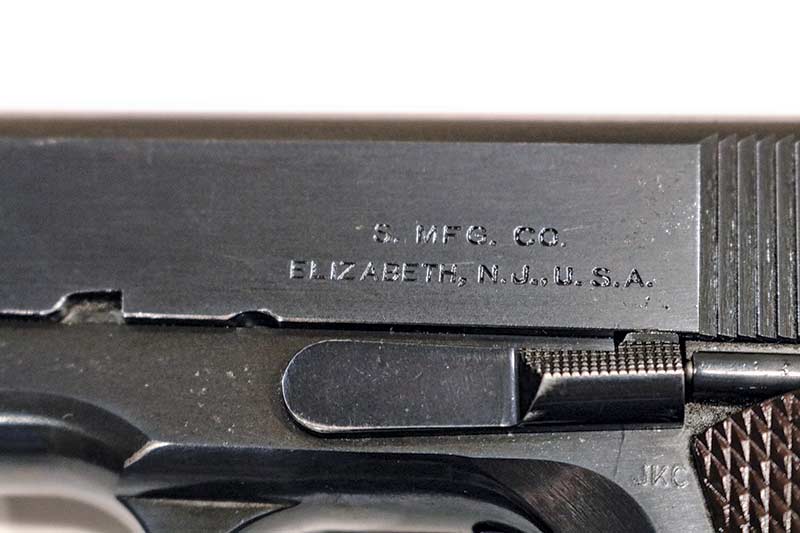
The slide markings are deceptively simple on these old Singer pistols.
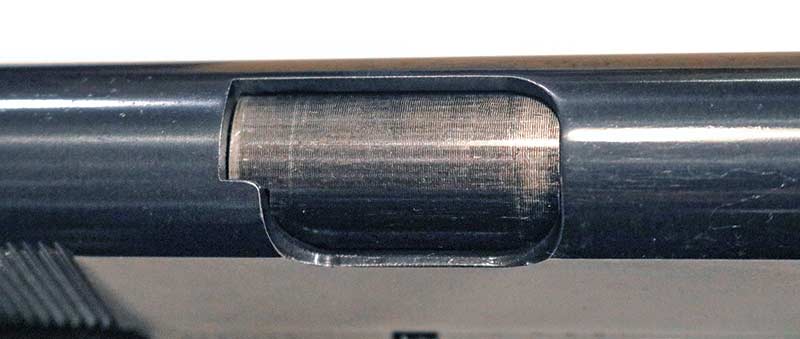
The action has been cycled, but I’m not sure the gun has been fired.
The pictures really don’t do it justice.
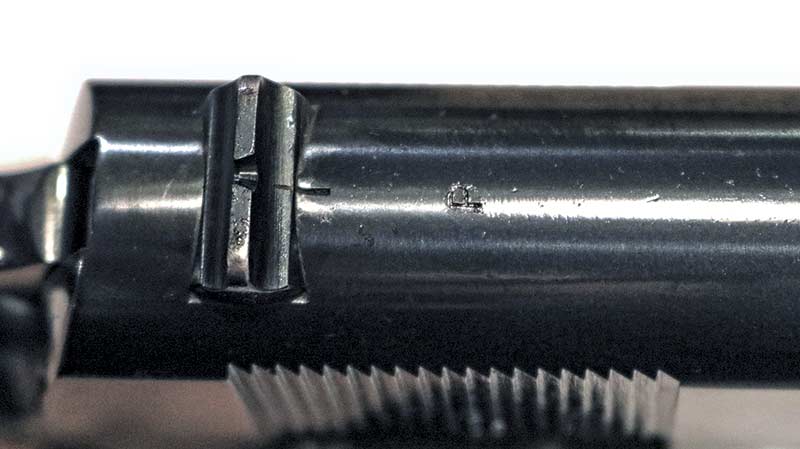
That little “P” means a lot to some people.
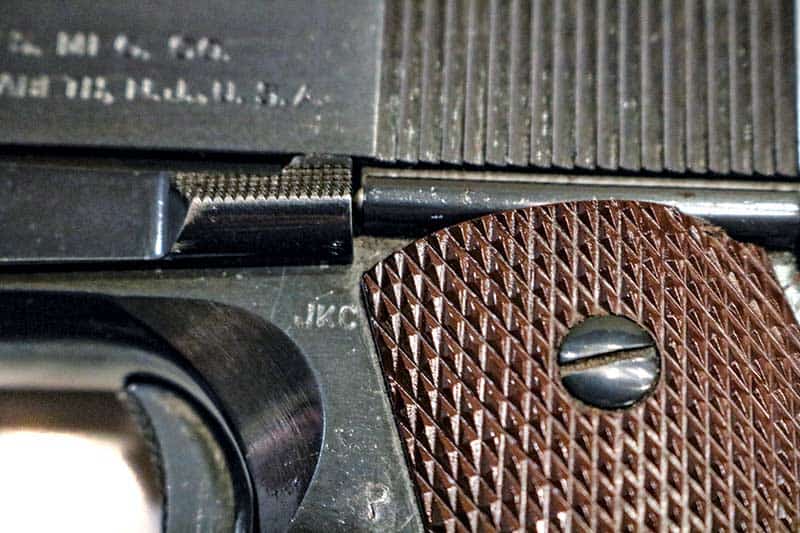
Colonel Clement’s initials are perched on the frame right where he left them.
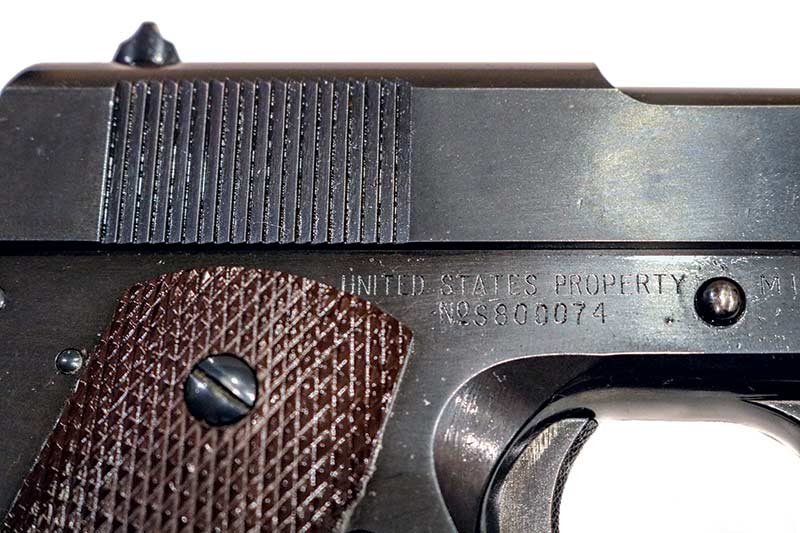
All Singer M1911A1 pistols have low serial numbers, but Isaac Newton’s is lower than most.
The Gun
The Singer Manufacturing Company opened for business in the winter of 1863 during the American Civil War. Their forte was sewing machines. By WWII, they supported 7,500 retail outlets around the world.
World War II was the embodiment of chaos. This was global war on an industrial scale, and it was without precedent. With national survival hanging in the balance, governments threw everything into the war effort.
In April of 1940, the U.S. government contracted with the Singer Manufacturing Company to produce the jigs, gauges, fixtures and sundry kit necessary to manufacture M1911A1 .45 ACP pistols for the military. Singer was also to build 500 pistols as a proof of concept. Should things go as hoped, Uncle Sam promised a follow-up deal for 15,000 guns. That first contract was for $278,875.67, or roughly $558 per weapon. That would be about $11,829 apiece today, but that number included all of the tooling as well.
Colonel John K. Clement oversaw the contract. His initials, JKC, were stamped on the frames. Unlike other GI M1911A1 handguns, these were perfectly executed, beautifully blued and gorgeous. They were, after all, made by a sewing machine company.
As the war heated up, it became obvious Singer’s talents might be better used elsewhere. In March of 1941, Singer devoted its efforts to producing M5 Artillery Fire Control Directors. These mechanical computers helped manage the countless thousands of artillery pieces U.S. Army dogfaces used to spank the Axis. Those 500 Singer test pistols were just dumped into the general pool of weapons destined for the front.
American industry ultimately produced 4,294,345 M1911 pistols via eight major manufacturers. Collectors of military M1911 handguns approach their particularly quirky hobby with near-religious zeal. Singer examples in any condition are the most coveted of the lot. In 2017, serial number 221 brought a cool $414,000 when it was sold through Rock Island Auctions. Now hold that thought.
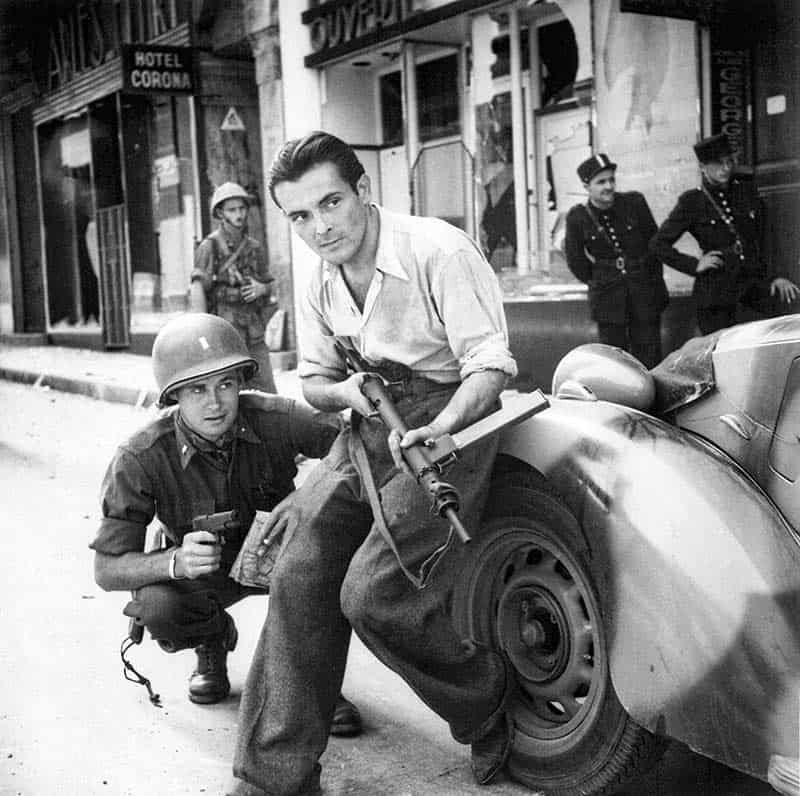
Image: Public Domain
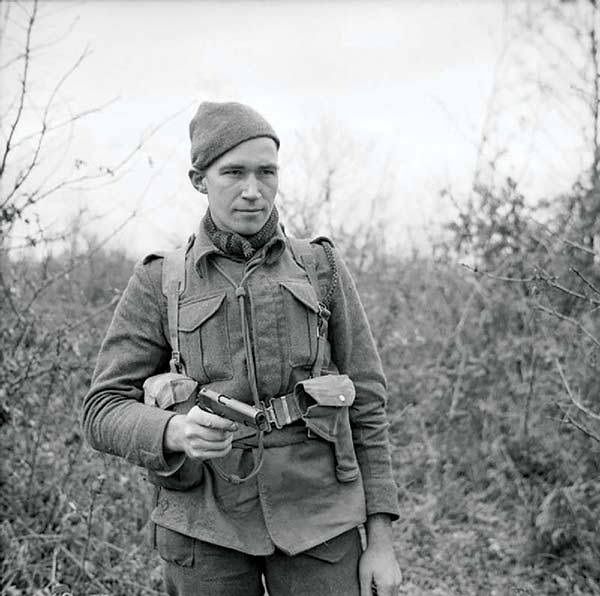
John Moses Browning’s M1911 pistol helped the Allies win World War II.
Image: Public Domain
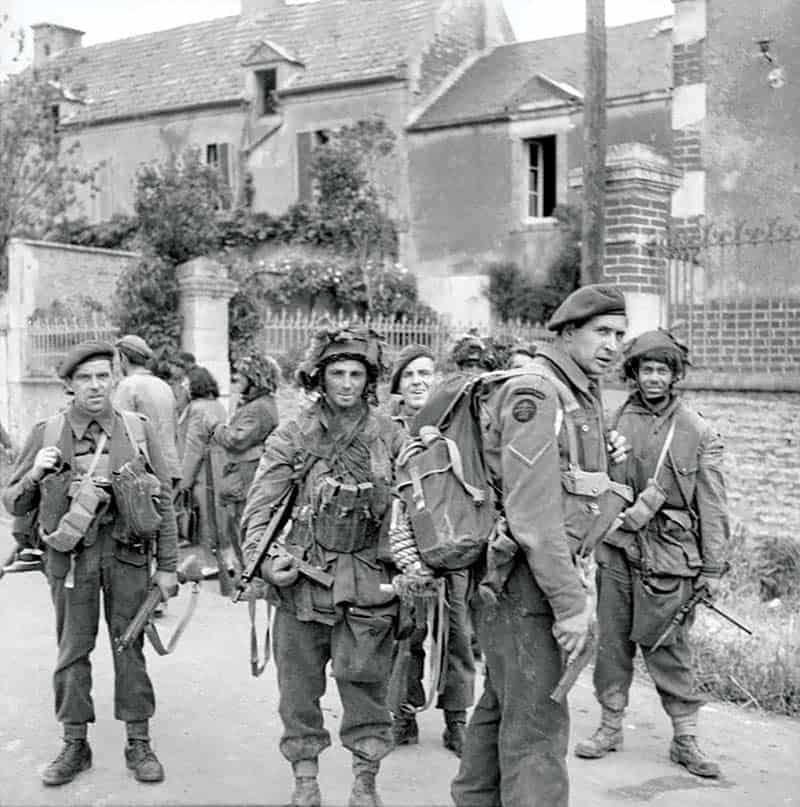
Image: Public Domain
The Guy
Isaac Alton Newton was born in 1932. He was the ninth cousin once removed of THE Sir Isaac Newton, whose work in calculus, optics and physics earned him a tomb in Westminster Abbey. Isaac Alton Newton’s family knew him as Big Ike.
Like his well-known forebear, Big Ike was a pretty quick kid. He graduated High School at 16 and subsequently earned his college degree three years later. From there, he went to medical school. He was residency trained in Cardiology, Internal Medicine, and Gastroenterology. As a physician myself, I simply cannot imagine.
Dr. Newton served as a military physician in the U.S. Air Force. He had one uncle who flew P-51 Mustangs during World War II and was shot down twice. Another uncle served as a spy with the OSS and was buried at Arlington. Those Newton boys were indeed some great Americans. Throughout it all, Big Ike was also an inveterate gun nerd.
Dr. Newton lived during the Golden Age of gun collecting in America. Sixteen million young Americans served in WWII and many of them brought home captured or pilfered weapons. There were not so many rules back then. Once the luster wore off, many of these great old guys sold their combat trinkets to get money for diapers and rent. A physician with the gun nerd gene and a little folding cash could score some serious deals back then.
Big Ike eventually ended up with 2,200 firearms. According to his son, the man really didn’t much like to shoot. He just liked guns and was ever on the prowl for good deals or cherry examples. His forte was most things Colt — Single Action Army revolvers and 1911s.
Dr. Newton played his gun addiction fairly close to the vest and didn’t discuss many of the details of his remarkable collection with his kids until later in life. However, one Saturday, many decades ago, he was walking through the parking lot of a regional gun show when he bumped into some nameless vet with a pistol he wanted to sell. As is so often the case, these two men cranked up a friendly conversation and struck a deal before they got to the building. Big Ike left with Singer M1911A1, serial number 74, for $2,500. That was a whole lot of money back then. However, it turned out to be a pretty decent investment.
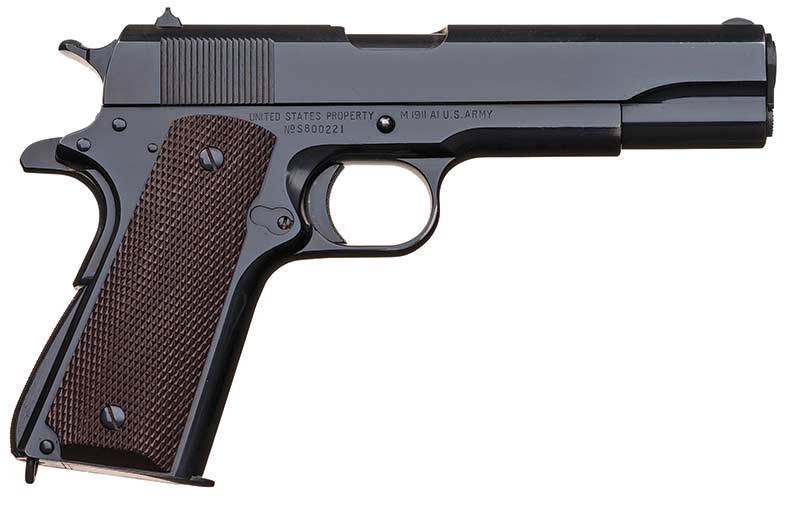
This cherry Singer M1911A1 pistol sold for a whopping $414,000
through the Rock Island Auction Company in 2017.
Photos courtesy Rock Island Auction Company.
The Present Day
The gun originally came with a letter that outlined its military service. However, that document has been tragically lost. The pistol is almost perfect. There is the tiniest loss of blue on a couple of highlights where it rode in a holster during the war, but it looks otherwise unfired. It made me kind of queasy touching it.
I beg your forgiveness for the pictures. This is obviously not the gun you borrow to bring home for some proper photography. I improvised an ad hoc studio on the current owner’s kitchen counter. We all held our breath when we leaned it up for pictures. I really, really didn’t want it to fall over and get scratched.
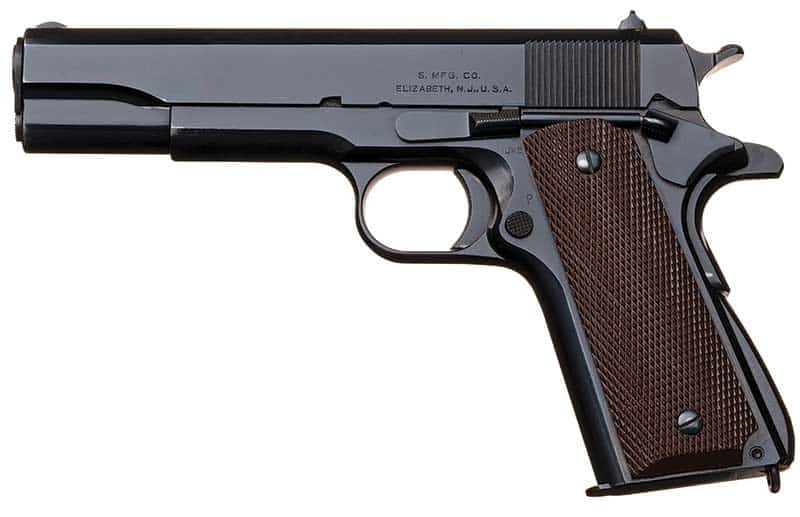
The blue is indeed beautiful, and the workmanship flawless. There is an inverted P on the top of the slide and old Colonel Clement’s initials behind the trigger, right where they should be. The left side of the slide is marked, “S. MFG. CO., ELIZABETH, N.J., U.S.A.” The right side of the frame reads, “UNITED STATES PROPERTY M1911A1 U.S. ARMY, No S800074.” The milled trigger is nicely checkered and the Keyes Fiber Company stocks lack the strengthening ribs as expected. Singer made every piece of their guns save the stocks.
If you’re not really a 1911 guy, at this point, you’re starting to look lustfully at Mas Ayoob’s magnificent bimonthly gunfight column. However, if you do attend the John Moses Browning High Exalted Church of M1911 Pistol Collecting, you appreciate the significance of this piece. Among martial pistol collectors of the 1911 denomination, this really is the Holy Grail.
These 500 guns were documented in the Ordnance Department procurement records in December of 1941. Most of them ended up being issued to the U.S. Army Air Corps. A handful actually went to the aircrew at Hickam Field in Hawaii on December 5, 1941, two days before the Pearl Harbor attack. The extraordinary example sold by Rock Island Auctions was recovered from the wreck of a B-24 Liberator that crashed in Iceland in 1943. The Newton gun is perhaps a bit nicer.
That the gun was in Isaac Newton’s collection makes it all the more fascinating. We never really own stuff like this. We are just custodians for a time who eventually pass such remarkable artifacts on to others. However, it’s not every day you can hold the Holy Grail in the palm of your hand.
If you’ve never had the pleasure, I would encourage you to surf on over to RockIslandAuction.com. It’s the place where dreams are born.
Categories
Tales of the Gun – M1911
Categories
A “WALTHER” PP in caliber .380 ACP