Category: You have to be kidding, right!?!
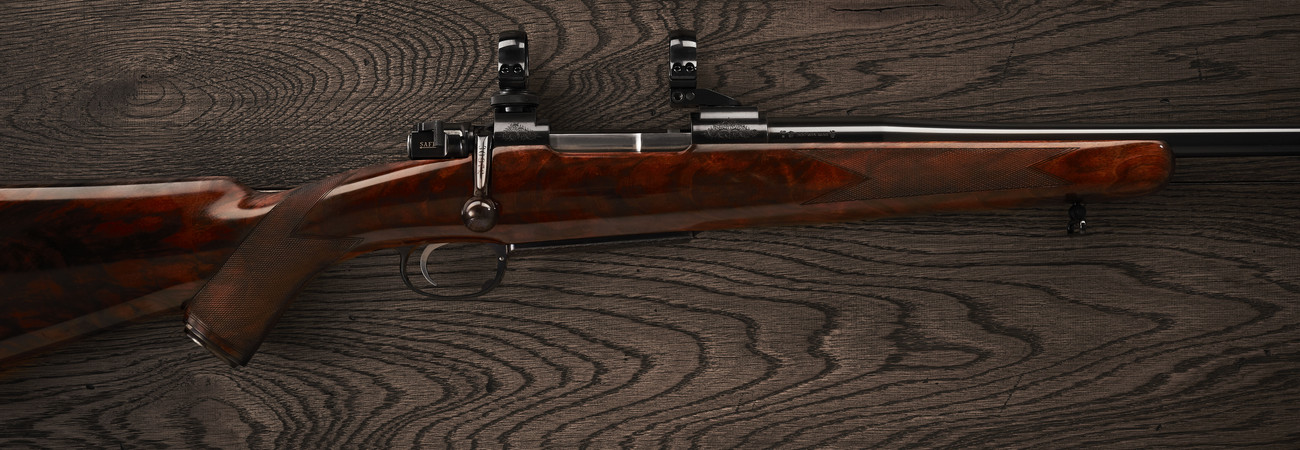
James Purdy & Sons’ latest bolt-action rifle combines classic good looks and world-class craftsmanship with astonishing performance.
Iwill admit from the outset that I have always been a bit of a traditionalist when it comes to hunting rifles – I just don’t think you can beat the look and feel of a classic controlled-feed bolt-action with an oiled walnut stock. In fact, my three all-time favourite rifles have all been pre-64 Model 70 Winchesters in 30-06, .375 H&H and .458 Win. You get the picture.
But when it comes to choosing a hunting rifle, accuracy should be the single most important criterion; the quick and clean dispatch of one’s quarry should be every ethical hunter’s highest priority. Aesthetics should be a secondary consideration, by some margin.
Which is precisely why modern synthetic stocks, made from carbon fibre and other composite materials, have become increasingly popular with hunters in recent years. They are durable, can be more precisely engineered than traditional wooden stocks, they do not expand and contract in the way that wood does, and they are more rigid which means that there is very little movement in the fore-end when a shot is fired.
“When you look at why traditional handcrafted bolt rifles aren’t consistently accurate, it basically comes down to the movement of wood,” explains James Horne, chairman of James Purdey & Sons. “The action moves within the stock on recoil which in turn changes the point of impact from shot to shot. The other problem with wood is how it is affected by temperature and moisture variations – the pressure points in the fore-end change as the atmospheric conditions do, resulting in erratic groups.”
So, in a nutshell, if you want a consistently accurate rifle and efficient and reliable hunting tool, you should avoid wood and opt for a good quality carbon fibre or composite stock.
Not so fast.
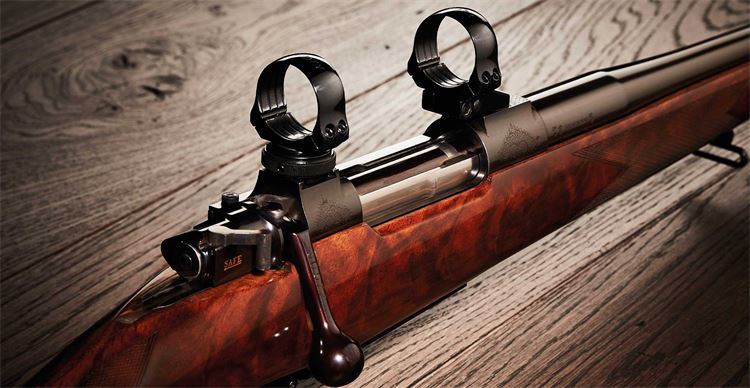
I was recently invited by Jonathan Irby from James Purdey & Sons to test their latest bolt-action rifle in .300 Win Mag at various ranges at Bisley and, if the truth be told, I didn’t have particularly high expectations. Of course, I knew that it would be beautiful, well balanced and pleasurable to shoot – and it was – but I assumed that when it came to accuracy it wouldn’t be able to compete with some of the more modern rifles on the market.
I couldn’t have been more wrong.
Even the two range officials at Bisley who accompanied me raised an eyebrow when this very traditional-looking rifle, without a sound moderator and shooting Hornady Superformance factory ammunition (180gr SSTs), produced a 3″ group at 600 yards in fairly blustery conditions. Earlier, it had printed a ¼” group at 100 yards and a 1½” group at 300. Simply put, that is match-grade accuracy from a London-made hunting rifle – an astonishing achievement in anyone’s book.
So, how did the very clever rifle makers at James Purdey & Sons do it?
There are a number of things that you have to get right to achieve sub-MOA accuracy in a rifle, but the primary difference between this rifle and every other rifle I have ever shot is in the stock itself.
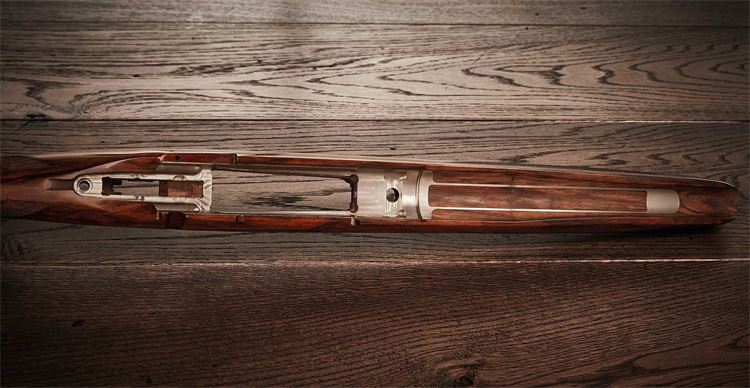
THE PURDEY CHASSIS SYSTEM
Embedded in the rifle’s handmade walnut stock is a CAD-engineered and CNC-machined titanium chassis that runs all the way from the pistol grip through to the front of the fore-end. This very clever bit of engineering negates all of the challenges posed by traditional walnut stocks by providing an exceptionally stable bedding platform into which the action is built.
This major advance has also allowed Purdey to incorporate a true free-floating barrel into the design, allowing consistent barrel harmonics which, as any rifle or barrel maker will tell you, is another key prerequisite to rifle accuracy.
INNOVATION MEETS TRADITION
“We set our sights on creating a bolt-action rifle that overcomes the problems posed by traditional wooden stocks, but still looks and feels like a traditional Purdey rifle,” explains James Horne.
“We decided to start with a clean sheet and to focus on accuracy in isolation,” adds Jonathan Irby. “We found that most high-performance target rifles on the market – such as those made by Accuracy International – have actions that are built into a metal chassis, and they have completely free-floating barrels. The next challenge, of course, was to achieve that within a traditional wooden stock.
“So, we came up with the idea of embedding a metal chassis into the walnut, something that, as far as we know, had never been done before. We knew that if we wanted to maintain the classic lines of a Best London rifle, the chassis would need to be slim; titanium offered the best options as it is stiffer, stronger and lighter than aluminium. We could have used steel but it would have added too much weight.”
From the point of concept to having a chassis that they could test took about nine months. The development of the chassis was done on a CAD system – rather than doing it manually by hand – so they were able to model the chassis very precisely.
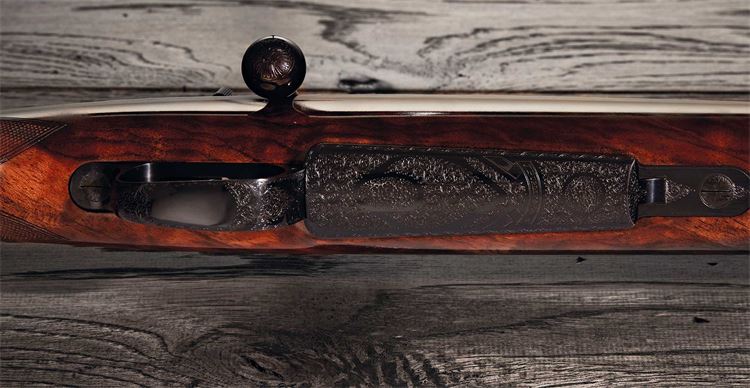
Because the Purdey Chassis System is embedded in the stock, it is hidden from view when the rifle is assembled, so, aesthetically, it remains a very traditional-looking product with London blueing on the action and barrel, along with the walnut stock and subtle fine rose and scroll engraving on the trigger guard, magazine floor-plate, bolt handle and receiver.
AN ALL-BRITISH PRODUCT
Historically, Best Quality London rifles were all built around old Mauser actions using German barrels. The new Purdey Bolt-Action Rifle is an all-British product. The double square-bridge M98-style controlled-feed action and barrel (the latter made by Border Barrels in Birmingham) are both precision engineered in the UK and the rifles are made and finished by Purdey craftsmen in their London workshop.
The rifle is delivered complete with swing-off mounts and scope rings and is threaded for a moderator if the customer wishes, complete with an invisible thread protector. The trigger, which is set from the factory at 2½lb, is adjustable and delivers a crisp break with no creep.
The only criticism I had of the rifle I tested (a prototype) was the fullness of the pistol grip – it felt cumbersome and uncomfortable to me and made reaching for the trigger awkward – but I have been assured that this has subsequently been addressed. Apart from that, I really can’t fault this rifle.
Admittedly, the price point (£25,000 + VAT) will put this rifle out of the reach of the vast majority of hunters and deer stalkers, but there is no denying that it is worth every penny. It really does offer the best of both worlds – the classic aesthetics and quality of craftsmanship that is synonymous with one of the world’s most iconic gun and rifle making firms, and exceptional accuracy achieved through truly innovative engineering. What’s not to like about that?
Yes, this really is a genuine game-changer.
AVAILABLE CALIBRES
The Purdey Bolt-Action Rifle is available in short, standard and magnum actions and can be built for all standard and most wildcat chamberings. Purdey has over 200 reamers available to meet the demands of the modern bolt-action rifle market.
The Purdey Bolt-Action Rifle is available now, with prices starting from £25,000 + VAT. The lead time on the standard specification is approximately six months from order.
Categories
Weird

A murdered Ecuadorian cartel boss known as “El Fatal” was buried with hundreds of pistols, shotguns and rifles in his coffin so he could be “armed to the teeth in the afterlife.” I am sure that God is not afraid of this thug. Grumpy
 and for some of the more problematic issues out there. then there is this for mymy answer.

(SO AREN’T YOU GLAD THAT I AM NOT IN CHARGE?)
GRUMPY
US labels satirical RT video a national security threat
Categories
Help!?!
My Dear Readers,
No I am not asking for money or your sisters phone number! Okay?
But what I am asking for is your advice about my Blog. In that what can I do to improve upon besides all of it? Also what should I get rid of? Or is there something I have missed?
Well you know what I mean. So to those of you that can help this old fart out, I would be most grateful!
Grumpy

I have been to the Syrian border in the Golan Heights. It was peaceful when I was there. However, that was an exception. Men have fought over that forlorn piece of dirt since the very dawn of time. Little has changed today.
I have a couple of buddies who did combat tours in Syria in recent years. Like much of that part of the world, they tell me it is a ghastly place. These guys came back with little interest in ever returning. Many of the people who live there seem to be crazy. Perhaps it is something in the water.
I am not really qualified to articulate a clear description of the political situation in that part of the world circa 2018, but I’ll nonetheless give it a whirl. The Russians were aligned with Bashar al-Assad’s Syrian government forces. We were part of a coalition of nations supporting the SDF. The SDF (Syrian Democratic Forces) is a loose confederation of ethnic militias comprised of Arab, Kurdish, and Assyrian/Syriac peoples along with a few others. They are the Good Guys to us, though the Turks rather strongly disagree. Mixed in among all that was ISIS.

The State of Things There
ISIS is short for Islamic State. They are also known as the Islamic State of Iraq and the Levant, Daesh, and Daish, depending upon who you ask. These are some bloodthirsty scum. ISIS is the only mob in the world vile enough to get all those disparate guys listed in the previous paragraph focused on a common goal. Every sensible person on the planet believes ISIS needs to die. In nearly a decade of active combat, it is estimated that coalition forces have killed more than 100,000 of these jerks.
This particular war has been going on for quite some time, and ISIS is still losing. However, everybody over there has guns, and everybody has a specific agenda. The Americans stand for truth, justice, and the American way. The Russians want to keep Assad in power as he is their boy bought and paid for. The Iranians want to sow their own unique brand of chaos, and ISIS just wants to watch the world burn. That makes Syria one of the most dangerous places in the world.
Merc Life

When I was young, mercenaries got a pretty bad rap. They were lumped in alongside prostitutes and politicians as generally seedy disreputable sorts. Then something changed. In the modern era, mercs are called Private Military Contractors (PMCs), and theirs is now a fairly respectable profession. I have several friends who have drunk that Kool-Aid. I considered it briefly myself.
On our side of the pond, there was Blackwater, Triple Canopy, Academi, G4S, and MVM, Inc. For the Russians, though many aspire to greatness, there is really only one show in town. That is Wagner.
What Is Wagner
Also known as Wagner PMC, this paramilitary organization has evolved into a de facto private army for Russian President Vladimir Putin. Wagner does not espouse any particular formal ideology, and fighting for money is technically illegal in the Russian Federation. However, these guys nonetheless offer a deniable military presence that is readily deployable and, to be frank, expendable.
There are credible allegations that Wagner is infiltrated with neo-Nazis and similar ilk. They have a reputation for war crimes and brutality wherever they serve. Rape and robbery are common, and Wagner has indeed recruited from within Russian prisons to support the recent invasion of Ukraine.

Dmitriy Valerevich Utkin purportedly birthed Wagner in 2014 to support operations in the Luhansk region of Ukraine. Utkin supposedly has SS collar tabs tattooed onto his neck. He hasn’t been seen in public since 2016. Yevgeny Prigozhin is alleged to be the real money behind the mob. Prigozhin is known as “Putin’s Chef” because of his earlier business as a caterer that hosted state dinners in Moscow. He’s obviously come a long way since then.
The Setting of Khasham
In early February 2018, US Special Operations Forces were deployed to Syria as part of Operation Inherent Resolve. This joint counterterrorist mission had the mandate to wipe ISIS off of the face of the earth, and they were doing a mighty fine job of it. In keeping with their mission, US Special Forces operators were embedded with SDF forces assisting with the ongoing operations deconstructing ISIS. Though there were relatively few American boots on the ground, those troops that were had superb radios. On the other end of those radios there stood waiting a great deal of on-call pain.

So much testosterone packed into such a small geographic area is the chemical formula for inadvertent tragedy. In an effort at de-conflicting operations, there was a geographic demarcation agreed upon by both US and Russian forces to keep each side’s troops out of the other’s business. For the area in question that was the Euphrates River. The Syrians and Iranians were not signatories to these documents, but they, in general, had sense enough to stay out of the way. There was also an emergency telephone linking the two respective headquarters. This communications link was maintained to help ensure that nothing got out of hand.
SDF troops were oriented to the east of the Euphrates. The American Green Berets were physically collocated with them. The American government later claimed that Syrian pro-government forces began massing for an attack on a known SDF headquarters.
How It Went Down
The facility in question was eight clicks inside the safe zone. Keep in mind that everybody hates everybody over there. Though destroying ISIS was the published goal, the SDF and Syrian government forces would each be thrilled to obliterate the other while they were at it. The Iranians also had their grubby fingers in everything.

At around 2200 hours on 7 February 2018, a mixed force of roughly 500 pro-government Syrian forces supported by Russian PMCs launched a weird night attack on the SDF headquarters near Khasham. They led with rockets, mortars, and conventional tube artillery. The infantry attack was directly supported by T-55 and T-72 tanks. The operation was purportedly fairly well-coordinated. Somewhere between 20 and 30 artillery rounds landed within 500 meters of the SDF facility. Did I mention there were American Special Operations troops present there as well?

Throughout it all, American commanders were supposedly on the horn with their Russian counterparts who denied all involvement. Once the Syrian government forces began firing artillery, Uncle Sam unlimbered his big stick. Before the night was out there had been strikes from MQ-9 Reaper drones, AH-64 Apache attack helicopters, AC-130 gunships, F-15E Strike Eagles, F-22 Raptors, and B-52 heavy bombers. US Army artillery did their part with M142 HIMARS precision-guided rockets. In the world of modern war, there really is no such thing as overkill.
The fight lasted about four hours. One allied SDF fighter was wounded. No US troops were hurt. The butcher’s bill on the receiving end of all that pain has since been vigorously disputed.
Truth And Lies
Forgive my sweeping generalities, but the Russians lie about everything. The Russian government lies when telling the truth would be easier. The following week a Wagner leader named Andrey Troshev admitted that fourteen Russian “volunteers” had been killed in the battle. Russian journalists later reported that between 20 and 30 Wagner PMCs had perished. Three other Wagner commanders later capped that number at fifteen. Viktor Alksnis, a Russian hardliner known as “The Black Colonel,” later claimed there had been 334 Russian dead.
The UK-based Syrian Observatory for Human Rights put the number of Russian dead at fifteen but claimed that they had been killed in the explosion of an arms depot some distance from the fighting. A subsequent investigation by the German magazine Der Spiegel placed the number of dead Russians at around twenty. The Syrian government admitted to 55 dead Syrian soldiers and ten Russian PMCs.

The American report claimed the enemy dead to be around 100. The official narrative acknowledged the presence of Wagner PMCs but never admitted to any Russian casualties. The following year outgoing CIA Director Mike Pompeo stated during a Senate hearing that, “A couple hundred Russians were killed.” He was the head of the CIA. I should think he would know.
Fallout
Russia, Syria, and Iran all launched official objections. The Russians claimed we attacked because we wanted to annex Syrian oil fields. The Syrians labeled US actions a war crime. An Iranian spokesman said, “Today, the U.S. government is the cruelest and most merciless system in the world, which is even worse than the savage ISIS members.” Whatever.
We cannot manage our own southern border. The very last thing the US wants is to try to exploit some forgotten piece of dirt in Syria. As regards the Syrian accusations, I would assert that dropping barrel bombs out of helicopters onto defenseless civilians comes a bit closer to the definition of a war crime. The Syrian government has purportedly deployed some 82,000 of those horrible things over the course of nine years of unfettered civil war. For the Iranians, well, just consider the source. I wouldn’t pee on those losers if they were on fire.

Russian reports later claimed that Su-57 Felon stealth fighters had subsequently attacked rebel positions and killed ten American SF troops. Some Russian online venues claimed these attacks were in retaliation for Khasham. Pravda’s military correspondent Viktor Baranets stated, “According to his information the Su-57s had ‘excellently’ carried out their mission in Eastern Ghouta.” There were no US Special Operations forces reported lost during this time.

Conclusion
The war in Ukraine rages on as I type these words. I have a couple of friends who are fighting over there. I struggle to comprehend what possesses Putin and his people to do what they do. My gut feeling is that they have simply painted themselves into a corner and are too dim to get themselves out. The argument could be made, however, that in the context of Khasham they really should have seen this coming.
ADDENDUM:
Much has changed since I wrote this piece. Yevgeny Prigozhin grew weary of having his men ground into hamburger in Ukraine and staged a brief insurrection that was fabulously successful. However, he subsequently had a change of heart and relocated to Belarus. People who formally oppose Putin have a nasty habit of dying, often by falling out of windows.
In Prigozhin’s case, his Embraer Legacy 600 jet broke up in flight between Moscow and St Petersburg on 23 August 23, killing all onboard. There were rumors of a missile attack or a bomb. Nobody knows, and nobody is terribly interested in digging too deeply. Prigozhin and his Nazi pal Dmitriy Utkin both purportedly perished in the crash.
Though Utkin’s demise seems reliable, there are rumors that Prigozhin faked his death and is now chilling on his own private island someplace. We will likely never know the truth. Regardless, they are both reliably out of play. In short, life goes on as normal in the utopia that is Putin’s Russian Federation.