Although the scientist who requested the air strike thought it was a success, others weren’t so sure.
One of the U.S. Air Force’s oddest missions was against perhaps its most formidable adversary ever: Mother Nature.
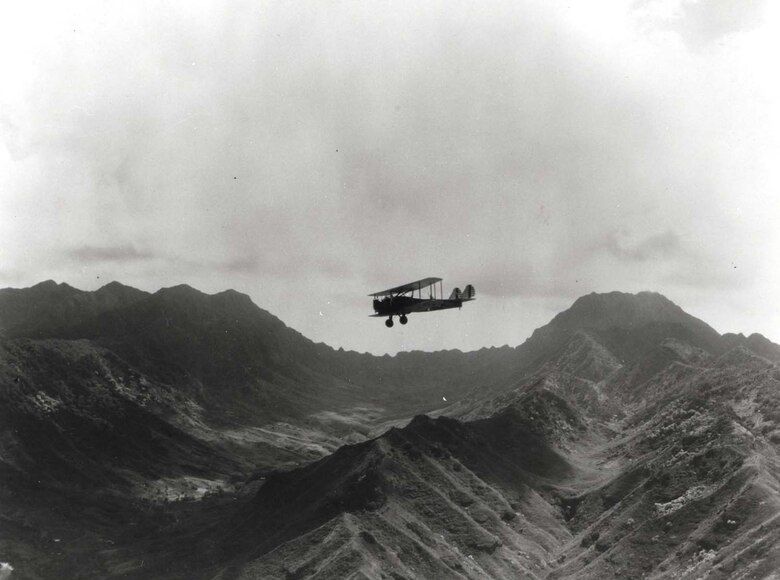
In 1935, lava from the Mauna Loa volcano threatened the nearby seaside town of Hilo, Hawaii. So U.S. bombers, commanded by none other than future Gen. George S. Patton, bombed the lava flow in an attempt to save the town.
Experts were divided on how useful the air strikes ultimately were, but the bombs weren’t the last ones dropped to prevent natural disasters.
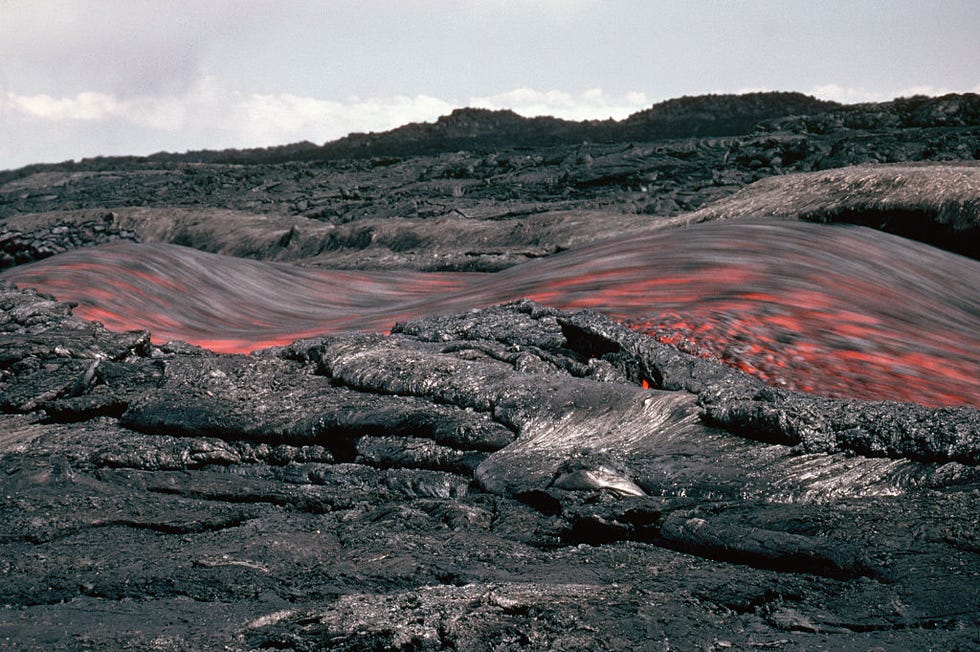
A channel of fast-flowing lava moves through a cooled section of a lava flow. Hawaii, 1984.
Historical//Getty Images
The Hawaiian islands are well known for volcanic activity; the islands themselves were formed by volcanic action over the course of millions of years. The “Big Island” of Hawaii is the home of Mauna Loa, one of the most active volcanoes in the world. It has erupted 33 times since 1843, often adding new territory to America’s 50th state. Indeed, Hawaii is probably the only state in the union that is continuously growing, thanks to volcanoes.
Mauna Loa’s lava flows are closely monitored, but typically harmless. One exception, however, was the 1935 eruption, which unexpectedly flowed north. The eruption started on November 21 and oozed at a rate of a mile a day toward the headwaters of the Wailuku River—the water supply for the town of Hilo. If the volcano cut the supply of fresh water to the town of approximately 20,000 people, the result could be catastrophic.
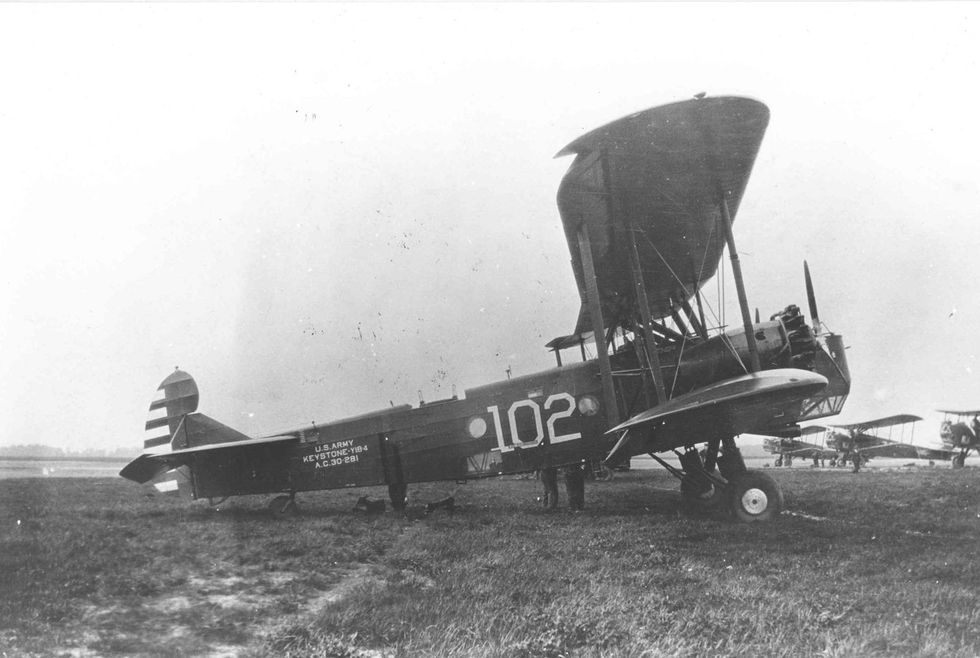
Keystone Y1B-4 bomber.
Wikimedia Commons
Thomas Jagger, the founder of the Hawaiian Volcano Observatory, appealed to the U.S. Army for help. Jagger wanted the Army Air Service, forerunner of the wartime Army Air Corps and later the U.S. Air Force, to bomb the lava tubes and channels that fed lava in the direction of the river. Nobody thought American bombers could destroy the lava, but they hoped the bombing would divert the flow to another, non-threatening direction.
The mission was assigned to Army Air Service planes based on the island of Oahu and planned by Patton. The commander of the First Provisional Tank Brigade in World War I would of course later go on to command the Third Army in Europe during World War II.
On December 27, 1935, ten Keystone B-3 and B-4 bombers from Luke Field on Ford Island in the middle of Pearl Harbor flew the 200-odd miles to bomb the Humu‘ula lava flow. The bombers dropped 40 bombs, half were high explosive and the rest were WP smoke bombs to mark the impact points. Of the twenty high explosive bombs dropped, sixteen hit the target area and twelve hit the lava tunnel in question.
Here’s video of the planes involved in the air strike:
Jagger observed the air strike from a telescope at the base of Hawaii’s other volcano, Mauna Kea. “The experiment could not have been more successful; the results were exactly as anticipated,” he later told the New York Times. The lava slowed from covering more than 5,000 feet a day to 1,000 feet after the bombing, and the flow stopped entirely on January 2, 1936.
Not everyone shared Jagger’s optimism. Harold Stearns, a U.S. Geologic Survey who flew on the mission, believed the slowing and stopping of the flow was a coincidence. Jagger’s boss, the head of Hawaii National Park, told the Army the day after the attack, “Though we are as yet unable to determine what effect the airplane bombardment achieved … I feel very doubtful that it will succeed in diverting the flow.”
The U.S. Geologic Survey, writing about the incident more than 80 years later, says, “Modern thinking mostly supports Stearns’ conclusion.”
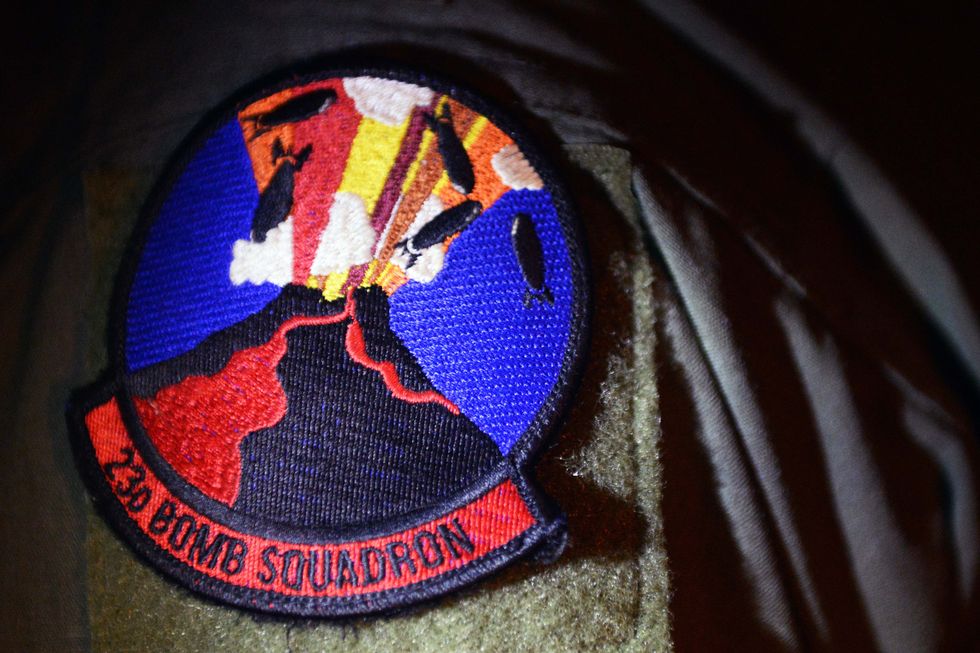
In 2015, the 23rd Bomb Squadron, the unit that flew the mission against Mauna Loa’s lava flow, returned to Hawaii to commemorate the 80th anniversary of the mission. A B-52 bomber assigned to the 23rd Expeditionary Bomb Squadron flew from its temporary base on the island of Guam to Hawaii, a 12-hour mission. The squadron insignia, this Air Force Global Strike Command article notes, still depicts bombs tumbling down onto a volcano.
23rd Bomb Squadron shoulder patch, 2015.
36TH WING PUBLIC AFFAIRS
The 1935 volcano air strike wasn’t the last time mankind trained its weapons of war on nature. Today, Russia and China occasionally send their air forces to bomb frozen rivers, typically to remove dangerously high levels of ice buildup or to allow nearby communities to reconnect with the outside world. And in July 2018, the Swedish Air Force bombed a wildfire on a military training ground, snuffing it out and preventing it from detonating unexploded munitions.
———————————————————————————– I for one did not know this. That and the man did get around did’nt he? All in all I have to say that the US Taxpayer got themselves a real bargain when they commissioned him into the Army.
In June 1859, while attempting to climb a sloping bare rock in southwest Texas, one of the Army’s camels lost its footing and fell, smashing one of the precious water barrels it was carrying. An officer accompanying the expedition quickly cut the lines ensnaring the camel, preventing a bad situation from becoming worse. (Camels in Texas, by Thomas Lovell, courtesy of the Abell-Hanger Foundation and the Permian Basin Petroleum Museum, Library and Hall of Fame of Midland, Texas, where the painting is on permanent display.)
In the 1830s America’s westward expansion was being severely curtailed by the inhospitable terrain and climate faced by pioneers and settlers. This was particularly the case in the southwest, where arid deserts, mountain peaks and impassable rivers were proving to be an almost insurmountable obstacle to men and animals alike. In 1836, U.S. Army LT George H. Crosman hit upon an unusual idea to deal with the situation. With the able assistance of a friend, E. H. Miller, Crosman made a study of the problem and sent a report on their findings to Washington suggesting that:
“For strength in carrying burdens, for patient endurance of labor, and privation of food, water & rest, and in some respects speed also, the camel and dromedary (as the Arabian camel is called) are unrivaled among animals. The ordinary loads for camels are from seven to nine hundred pounds each, and with these they can travel from thirty to forty miles a day, for many days in succession. They will go without water, and with but little food, for six or eight days, or it is said even longer. Their feet are alike well suited for traversing grassy or sandy plains, or rough, rocky hills and paths, and they require no shoeing… “
Their report was disregarded by the War Department. It was with this rather simple suggestion, however, that Crosman first introduced the concept for what would later become the most unique experiment in U.S. Army history.
MAJ Henry C. Wayne, an officer in the Quartermaster Department, was one of the early advocates for the Army’s use of camels. He resigned from the Army on 31 December 1860 and was later commissioned a brigadier general in the Confederate Army. (Library of Congress)
The idea lay dormant for several years until 1847 when Crosman, now a major, met MAJ Henry C. Wayne of the Quartermaster Department, another camel enthusiast, who would take up the idea. MAJ Wayne submitted a report to the War Department and Congress recommending the U.S. government’s importation of camels. In so doing, he caught the attention of Senator Jefferson Davis of Mississippi, who thought Wayne’s suggestions both practical and worthy of attention. Davis, as chairman of the Senate Committee on Military Affairs, tried for several years to acquire approval and funding for the project, but to no avail. It was not until 1853, when Davis was appointed Secretary of War, that he was able to present the idea of importing camels to both President Franklin Pierce and a still skeptical Congress.
In his annual report in 1854, Davis informed Congress that, in the “…. Department of the Pacific the means of transportation have, in some instances, been improved, and it is hoped further developments and improvements will still diminish this large item of our army expenditure. In this connexion, … I again invite attention to the advantages to be anticipated from the use of camels and dromedaries for military and other purposes, and for reasons set forth in my last annual report, recommend that an appropriation be made to introduce a small number of the several varieties of this animal, to test their adaptation to our country…”
On 3 March 1855, Congress agreed and passed the Shield amendment to the appropriation bill, resolving: “And be it further enacted, that the sum of $30,000 be, and the same is hereby appropriated under the direction of the War Department in the purchase and importation of camels and dromedaries to be employed for military purposes.” Secretary Davis would finally get his camels.
Davis lost no time in getting the experiment underway. In May 1855, he appointed Wayne to head the expedition to acquire the camels. The Navy store ship USS Supply, was provided by the Navy to transport the camels to the United States. The Supply was under the command of LT David Dixon Porter, who, on being informed of the mission and its cargo, saw to it that she was outfitted with special hatches, stable areas, a “camel car,” and hoists and slings to load and transport the animals in relative comfort and safety during their long voyage.
Sailors and an Arab camel herder load a Bactrian camel aboard the USS Supply during one of the two expeditions to procure camels. (National Archives)
When Wayne inspected the Supply, he was both amazed and greatly impressed with Porter’s meticulous and thorough preparations. It was decided that while Wayne went to London and Paris to visit the zoos and interview military men and scientists with first-hand knowledge and experience in camel handling, Porter would sail the Supply to the Mediterranean and deliver supplies to the U.S. naval squadron based there. On 24 July, Wayne joined Porter in Spezzia (La Spezia), Italy and from there they sailed to the Levant, arriving at Goletta (La Goulette) in the Gulf of Tunis on 4 August.
In Goletta, the expedition purchased their first three camels, two of which they later discovered were infected with the “itch,” a form of mange. Arriving in Tunis they were joined by Mr. Gwynne Harris Heap, a brother-in-law of Porter’s, whose father had been U.S. Consul at Tunis. Heap was familiar with eastern languages and customs and his extensive knowledge of camels proved an invaluable asset to the expedition. During the next five months the expedition sailed across the Mediterranean, stopping at Malta, Greece, Turkey, and Egypt. Wayne, Porter, and Heap also made a separate voyage on their own to the Crimea to speak with British officers about their use of camels during the Crimean War. A similar side trip was made to Cairo while the Supply was docked at Alexandria.
Jefferson Davis first encouraged the Army’s use of camels while serving in the U.S. Senate. In 1855, Secretary of War Davis persuaded a skeptical Congress to appropriate $30,000 for the purchase and importation of camels for the Army. (Jefferson Davis, by Daniel Huntington, Army Art Collection)
After numerous difficulties involving a lack of suitable animals and obtaining export permits, the expedition finally acquired through purchase and as gifts a sufficient number of camels. In all, they obtained thirty-three animals: nineteen females and fourteen males. The thirty-three specimens included two Bactrian (two-humped), nineteen dromedaries (one-humped), nineteen Arabian, one Tunis burden, one Arabian calf, and one Tuili or booghdee camels. The Arabian dromedaries are renowned for their swiftness and the Bactrians for their strength and burden carrying abilities. Thanks to Heap’s knowledge of camels and his negotiating skills, the cost averaged around $250 per animal, and most were in good condition. The expedition also hired five natives–Arabs and Turks–to help care for the animals during the voyage and act as drovers when they reached America. On 15 February 1856, with the animals safely loaded aboard, the expedition began its voyage home.
The expedition, slowed by storms and heavy gales, lasted nearly three months. It was Porter’s foresight and diligence in caring for the animals that enabled them to survive the horrendous weather conditions. The Supply finally unloaded its cargo on 14 May at Indianola, Texas. During the voyage one male camel had died, but six calves were born, of which two had survived the trip. The expedition therefore landed with a total of thirty-four camels, all of whom were in better health than when they left their native soil.
On 4 June, after allowing the camels some needed rest and a chance to acclimatize themselves, Wayne marched the herd 120 miles to San Antonio, arriving on 18 June. Wayne planned to establish a ranch and provide facilities for breeding the camels, but Secretary Davis had other ideas, stating, “the establishment of a breeding farm did not enter into the plans of the department. The object at present is to ascertain whether the animal is adapted to military service, and can be economically and usefully employed therein.” Despite his objections, Davis did see the advantages in sending Porter on a second trip to secure more camels. There was over half of the appropriation money remaining and the Supply was still on loan from the Navy. On Davis’ instructions, Porter once again left for Egypt. On 26-27 August, Wayne moved the herd some sixty miles northwest to Camp Verde, a more suitable location for his caravansary. He constructed a camel corral (khan) exactly like those found in Egypt and Turkey. Camp Verde would be the “corps” home for many years.
To satisfy Davis’ concerns about the military usefulness of the camels, Wayne devised a small field test. He sent three wagons, each with a six-mule team, and six camels to San Antonio for a supply of oats. The mule drawn wagons, each carrying 1,800 pounds of oats, took nearly five days to make the return trip to camp. The six camels carried 3,648 pounds of oats and made the trip in two days, clearly demonstrating both their carrying ability and their speed. Several other tests served to confirm the transporting abilities of the camels and their superiority over horses and mules. Davis was much pleased with the results and stated in his annual report for 1857, “These tests fully realize the anticipation entertained of their usefulness in the transportation of military supplies…. Thus far the result is as favorable as the most sanguine could have hoped.”
During surveying expeditions of the late 1850s that took place in the harsh climate of the Southwest, camels proved their worth by carrying large amounts of cargo and requiring little water in comparison to horses and mules. (The Search for Water, by Ernest Etienne de Franchville Narjot, The Stephen Decatur House Museum)
Over the next several months, Wayne worked with the civilian drovers and soldiers to accustom them to the camels and vice versa. They learned how to care for and feed the animals, manage the cumbersome camel saddles, properly pack the animals and, most importantly, how to deal with the camel’s mannerisms and temperament. By nature the camel is a docile animal, but can demonstrate a violent, aggressive temper when abused or mistreated, literally kicking, biting or stomping an antagonist to death. Camels, like cows, chew a type of cud and when annoyed would often spit a large, gelatinous, foul smelling mass of cud at its detractor. The most difficult aspect for the men to get used to was the camel’s somewhat pungent smell. Although camels really do not smell any worse than horses, mules or unwashed men, their smell was different and had a tendency to frighten horses unfamiliar with the odor.
On 30 January 1857, Porter returned to the U.S. with an additional forty-one camels. Since by this time five of the original heard had died from disease, the new arrivals brought the total number of camels to seventy. The animals were landed at Indianola on 10 February and then moved to Camp Verde.
In March 1857, James Buchanan became president and several changes were made which directly affected the camel experiment. John B. Floyd replaced Davis as Secretary of War and MAJ Wayne was transferred back to the Quartermaster Department in Washington, DC, thus removing in one blow two of the camel experiment’s main supporters. Nevertheless, Secretary Floyd decided to continue his predecessor’s experiment.
In response to a petition made by some 60,000 citizens for a permanent roadway which would help link the eastern territories with those of the far west, Congress authorized a contract to survey and build a wagon road along the thirty-fifth parallel from Fort Defiance, New Mexico Territory, to the Colorado River on the California/Arizona border. The contract was won by Mr. Edward Fitzgerald Beale, a former Superintendent of Indian Affairs for California and Nevada who held the rank of brigadier general in the California militia. Beale was a good choice for the survey, having traveled parts of this region during the Mexican War and while surveying a route for a transcontinental railway.
It was only after Beale accepted the contract that he learned of the Secretary of War’s special conditions. Floyd ordered Beale to take twenty-five of the camels with him on the surveying expedition. Beale protested vehemently at being encumbered with the camels, but Floyd was adamant. Since Wayne had left Camp Verde, the camels had been unused. The government had gone to some time and expense to test the camels in just this kind of situation and Floyd was determined to see if they would justify the money being spent on them. Although strongly opposed to the idea, Beale finally consented.
On 25 June 1857, the surveying expedition departed for Fort Defiance. The party consisted of twenty-five camels, two drovers, forty-four soldiers, twelve wagons, and some ninety-five dogs, horses and mules. At first, the performance of the camels convinced Beale that his original protests were well founded, as the animals moved slower than the horses and mules and were usually hours late reaching camp. On the second week of the journey, however, Beale changed his tune and noted that the camels were “walking up better.” He later attributed the camel’s slow start to their months of idleness and ease at Camp Verde. It was not long after that the camel’s settled to their task and began outdistancing both horses and mules, packing a 700 pound load at a steady speed and traversing ground that caused the other animals to balk. By the time the expedition arrive at Fort Defiance in early August, Beale was convinced of the camel’s abilities. On 24 July he wrote to Floyd, “It gives me great pleasure to report the entire success of the expedition with the camels so far as I have tried it. Laboring under all the disadvantages ….we have arrived here without an accident and although we have used the camels every day with heavy packs, have fewer sore backs and disabled ones by far than would have been the case travelling with pack mules. On starting I packed nearly seven hundred pounds on each camel, which I fear was too heavy a burden for the commencement of so long a journey; they, however, packed it daily until that weight was reduced by our diurnal use of it as forage for our mules.”
Upon finding water, horses on a surveying expedition eagerly quench their thirst while the accompanying camels show little interest. The Army’s camels proved they could withstand the oppressive climate of the American Southwest and other hardships that could send horses and mules into a panic. (Horses Quenching Their Thirst, Camels Disdaining, by Ernest Etienne de Franchville Narjot, The Stephen Decatur House Museum)
At the end of August the expedition left the fort on their survey. Beale was concerned about the dangers inherent in such a journey over such treacherous terrain, but these concerns proved unfounded in regard to the camels. “Sometimes we forget they are with us. Certainly there never was anything so patient or enduring and so little troublesome as this noble animal. They pack their heavy load of corn, of which they never taste a grain; put up with any food offered them without complaint, and are always up with the wagons, and, withal, so perfectly docile and quiet that they are the admiration of the whole camp. ….(A)t this time there is not a man in camp who is not delighted with them. They are better today than when we left Camp Verde with them; especially since our men have learned, by experience, the best mode of packing them.”
The camels ate little of the forage, content instead to eat the scrub and prickly plants found along the trail. They could travel thirty to forty miles a day, go for eight to ten days without water and seemed not the slightest bit bothered by the oppressive climate. At one point the expedition became lost and was mistakenly led into an impassable canyon. The ensuing lack of grass and water for over thirty-six hours made the mules frantic. A small scouting party mounted on camels was sent out to find a trail. They found a river some twenty miles distant and led the expedition to it, literally saving the lives of both men and beasts. From then on, the camels were used to find all watering holes.
The expedition reached the Colorado River on 17 October, the last obstacle in their journey. While preparing to cross the river, Beale wrote to Floyd on the 18 October, “An important part of all of our operations has been acted by the camels. Without the aid of this noble and useful brute, many hardships which we have been spared would have fallen to our lot; and our admiration for them has increased day by day, as some new hardship, endured patiently, more fully developed their entire adaptation and usefulness in the exploration of the wilderness. At times I have thought it impossible they could stand the test to which they have been put, but they seem to have risen equal to every trial and to have come off of every exploration with as much strength as before starting…. I have subjected them to trials which no other animal could possibly have endured; and yet I have arrived here not only without the loss of a camel, but they are admitted by those who saw them in Texas to be in as good a condition as when we left San Antonio…. I believe at this time I may speak for every man in our party, when I say that there is not one of them who would not prefer the most indifferent of our camels to four of our best mules.”
On 19 October, as the expedition began to cross the Colorado, Beale was concerned about the camels getting across as he had been told they couldn’t swim. He was pleasantly surprised when the largest camel was led to the river, plunged right in fully loaded and swam across with no difficulty. The remaining camels also crossed without incident, but two horses and ten mules drowned in the attempt. Their surveying mission completed, Beale led the expedition to Fort Tejon, about 100 miles north of Los Angeles, to rest and re-provision. The expedition had lasted nearly four months and covered over twelve hundred miles.
Floyd was extremely pleased with the results. He ordered Beale to bring the camels back to Camp Verde, but Beale demurred, giving the excuse that if the troops in California became involved in the “Mormon War,” the camels would prove invaluable carrying supplies. Instead, Beale moved the camels to the ranch of his business partner, Samuel A. Bishop, in the lower San Joaquin Valley. Bishop used the camels in his personal business, hauling freight to his ranch and the new town arising near Fort Tejon. During one such venture, Bishop and his men were threatened with attack by a large band of Mohave Indians. Bishop mounted his men on the camels and charged, routing the Indians. It was the only combat action using the camels and it was performed not by the U.S. Army, but by civilians.
In April 1858, Beale was ordered to survey a second route along the thirty-fifth parallel from Fort Smith, Arkansas to the Colorado River for use as a wagon road and stage line He was given the use of another twenty-five camels from Camp Verde for this expedition. It took Beale nearly a year to complete this mission and his report to Floyd again extolled the exemplary performance of the camels.
In his annual report to Congress in December 1858, Floyd enthusiastically stated, “The entire adaptation of camels to military operations on the plains may now be taken as demonstrated.” He further declared that the camel had proven its “great usefulness and superiority over the horse for all movements upon the plains or deserts” and recommended that Congress “authorize the purchase of 1,000 camels.” Congress, however, was not convinced and authorized no further funding. Undeterred, Floyd pleaded his case again in his annual report in 1859, “The experiments thus far made – and they are pretty full – demonstrate that camels constitute a most useful and economic means of transportation for men and supplies through the great desert and barren portions of our interior… An abundant supply of these animals would enable our Army to give greater and prompter protection to our frontiers and to all our interoceanic routes than three times their cost expended in another way. As a measure of economy I can not too strongly recommend the purchase of a full supply to the consideration of Congress.” Despite the abundant evidence and sound arguments Congress wouldn’t budge. Floyd tried again in 1860, but by then the clouds of civil war had Congress’ undivided attention and the idea of purchasing camels was far from their minds.
In November 1859, the Army took charge of the twenty-eight camels on Bishop’s farm and moved them to Fort Tejon. Although the animals were in rather poor physical shape, there were now three more than Beale had originally left on the ranch, demonstrating MAJ Wayne’s theory that the camels – if given the opportunity – could breed on their own. This herd remained at Fort Tejon until March 1860, when they were relocated to a rented grazing area some twelve miles from the fort. In September several camels were sent to Los Angeles to take part in the Army’s first official test of camels in California.
The test, under the command of the Assistant Quartermaster, CPT Winfield Scott Hancock, was to see if the camels could effectively be used as an express service. The camels were tested against the existing service, a two-mule buckboard, in carrying messages some three hundred miles from Camp Fitzgerald to Camp Mohave on the Colorado River. Two test runs were made and, in both, the camels died from exhaustion, leading the Army to realize what other tests had already shown, that camels were not bred for speed but for transport. Although the test proved that the “camel express” was significantly cheaper, it was no faster than the mule and buckboard service and was much harder on the camels. This was the only test they had ever failed.
A second Army experiment was run in early 1861 when four camels were assigned to accompany the Boundary Commission on their surveying expedition of the California-Nevada boundary. The expedition, hopelessly disorganized from the start, was a complete failure and nearly ended in disaster. The expedition got lost and wandered into the merciless Mojave Desert. After losing several mules and abandoning most of their equipment, it was the steadfast camels that saved the day and led the survivors to safety.
The advent of the Civil War effectively halted the camel experiment. Rebel troops occupied Camp Verde on 28 February 1861 and captured several of the remaining camels, using them to transport salt and carry mail around San Antonio. The camels suffered greatly at the hands of their captors, who had an intense dislike for the animals. They were badly mistreated, abused and a few of them were deliberately killed.
The herd near Fort Tejon, numbering thirty-one camels, was transferred to the Los Angeles Quartermaster Depot on 17 June 1861. During the next three years the camels were kept well fed and continued to breed, frequently being transferred from post to post as no one knew what else to do with them. Several recommendations to use them for mail service were proposed, but never adopted. The expense of feeding and caring for the unused animals finally became too much and, on the recommendation of the Department of the Pacific, Secretary of War Edwin M. Stanton ordered them to be sold at public auction. Apparently unaware of the numerous successful tests performed with the camels, Stanton stated, “I cannot ascertain that these have ever been so employed as to be of any advantage to the Military Service, and I do not think that it will be practical to make them useful.”
On 26 February 1864, the thirty-seven camels from California were sold for $1,945, or $52.56 per camel. The surviving forty-four camels from Camp Verde were finally recovered at the end of the war. On 6 March 1866, they too were put on the auction block, bringing $1,364, or $31 per camel. The Army’s Quartermaster-General, MG Montgomery Meigs, approved the sale, stating his hopes that civilian enterprises might more successfully develop use of the camel and expressing his sincere regrets that the experiment had ended in failure.
The camels ended up in circuses, giving rides to children, running in “camel races,” living on private ranches, or working as pack animals for miners and prospectors. They became a familiar sight in California, the Southwest, Northwest, and even as far away as British Columbia, their strange appearance often drawing crowds of curious people. In 1885, as a young boy of five living at Fort Seldon, New Mexico, GEN Douglas MacArthur recalled seeing a camel: “One day a curious and frightening animal with a blobbish head, long and curving neck, and shambling legs, moseyed around the garrison…. the animal was one of the old army camels.”
Eventually, when the curiosity wore off or their new owners simply did not want or need them anymore, many of the camels were turned loose in the wild to fend for themselves. They were seen for many years afterward, wandering the deserts and plains of the Southwest. The last of the original Army camels, Topsy, was reported to have died in April 1934, at Griffith Park, Los Angeles, at the age of eighty, but accounts of camel sightings continued for decades. Although never officially designated, “U.S. Army Camel Corps,” this is how the Army’s camel experiment has been remembered. Ignored and abandoned, it was an ignominious and unfortunate end for these noble “ships of the desert.”
A US Navy warship operating in the Middle East intercepted multiple projectiles near the coast of Yemen on Thursday, two US officials told CNN.
One of the officials said the missiles were fired by Iranian-backed Houthi militants, who are engaged in an ongoing conflict in Yemen. Approximately 2-3 missiles were intercepted, according to the second official.
The officials said it was unclear what the missiles were targeting. It’s possible the missiles were fired at the USS Carney or launched towards another target.
A Pentagon briefing is expected Thursday afternoon.
This story is developing.
—————————————————————————————–I am getting the feeling that A. Not a lot of Folks are scared of us. & B. That somebody is just spoiling for a serious fight. God help us all!! Grumpy
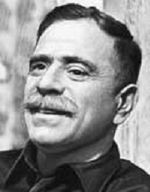
You’re young, talented, fearless, and dedicated to a cause. But in a time of upheaval and war, in the prime of your young life, cruel fate hands you a crushing blow. In the violence of the bitter civil war that followed the Russian revolution, all your hopes, dreams, skills, and talent are shattered by a single rifle shot.
A head wound which might have taken your life has instead, blinded you, forever. A lifetime of darkness and bitter remorse are all that is left, to the once proud 18 year old soldier, Mikhail Vladimirovich Margolin.
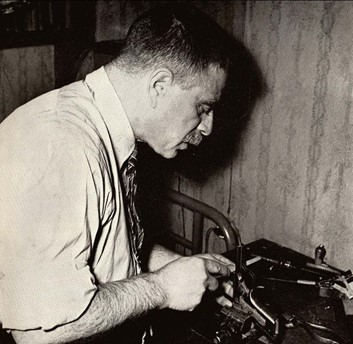
Except Mikhail Margolin was no ordinary fellow. While recovering from his wound, he reflected on all the knowledge of weaponry he had accrued during the Russian Civil War. And then, Margolin got to work. “First came the study of Braille. Friends helped him to study mathematics, mechanics, and strength of materials, all essential subjects for the arms designer.
His wife read aloud to him from textbooks and books on the history of firearms. He collected guns and enlarged his knowledge of various weapons systems. Most important was his splendid memory: within a few years he was a match for any engineer. As for firearms, there was no disputing his superior knowledge. He got acquainted with the latest models of weapons and took them apart dozens of times in order to let his sense of touch give rise in his mind to a mental picture…”
Margolin had a quite a career; before he was through, he would accomplish more than many sighted men. An air raid warden, in World War II, he once led more than a hundred people from a bombed out building; blinded by the smoke, they were helpless, but he was not. For this and other actions, he won the prestigious Medal for the Defense of Moscow.
His contributions as an engineer in the Tula earned him the Medal for the Victory over Germany. At the end of the war, he set his creative and agile mind to the development of sporting firearms.
Dictating to an assistant, making working models from clay aluminum or wood, he crafted several innovative designs, the most remarkable of which was the target pistol which still bears his name.
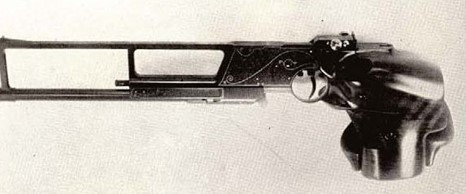
Christened the Margolin MTsU, the pistol featured several innovative ideas. The trigger mechanism was smooth and simple. The recoil spring sat in a guide tube beneath the barrel, while at the muzzle, he fixed a compensator to both add weight to the muzzle and to vent muzzle blast gases upward and rearward to reduce muzzle rise. The barrel, being comparatively lightweight, was equipped with under barrel weights for added steadiness.
Most obvious however, is the elevated sight plane. Margolin’s design feature was intended to increase the accuracy of the pistol. The rear sight is affixed to a bridge attached to the frame, not the slide. The sight is thus never affected by the movement of the slide.
The bridge that made the rear sight stationary combined with the unusually tall sights allows the shooter to hold the pistol lower and thus aligns barrel with the shoulder, reducing recoil yet further, thereby giving the shooter an improvement in control in rapid fire competition. Unseen in target shooting, it is a recognizable feature of the AK-47, and its antecedents, the German StG-43 and 44.
When it was first revealed in international competition, the pistol made a splash, taking home gold medals in the 1948 and 1952 Olympics. More revolutionary ideas were to follow; some being so game changing that they were banned from competition!
You might recognize the pistol from competition. You might recognize the dainty blaster that Princess Leia carried in the very first Star Wars movie. The design features were so radical, so otherworldly, that the moviemakers didn’t have to do much more than put it in the Princess’s hand.
Visionary ideas, from a man who never saw through the sights of his own designs, and never fired a shot in competition.
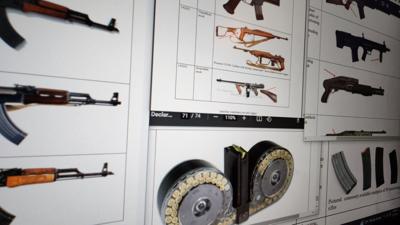
Multiple pages of an exhibit in the state’s response to a legal challenge of Illinois’ gun ban
(The Center Square) – With Illinois’ gun and magazine ban still facing legal hurdles in federal court, a registry created in relation to the ban has been open for a week. A fraction of a percent of gun owners have complied so far.
As part of the Protect Illinois Communities Act that was enacted earlier this year, the registration portal for firearms owners in Illinois that own certain semi-automatic firearms, accessories and ammunition opened Oct. 1. While the law bans more than 170 semi-automatic rifles, shotguns and handguns, it also bans handgun magazines over 15 rounds and rifle magazines over 10 rounds. Magazines do not have to be registered.
Illinois State Police published the first round of statistics Tuesday, and of more than 2.4 million Firearm Owner ID card holders, 1,050 individuals have registered a total of 3,202 firearms, .50 caliber ammunition and accessories.
“You’re at 0.0004%. That’s a rounding error,” gun rights advocate Todd Vandermyde told The Center Square.
Of the 3,202 items disclosed, ISP said there were 2,060 firearms listed at the registry. ISP did not provide a breakdown of what types of firearms were registered. For .50 caliber ammunition registrations, there were 1,125 disclosures. There were only 17 reported accessories being registered in the first week. Vandermyde said that highlights the vagueness of what is an accessory.
“They’ve got a long way to go if they think they’re going to get any real sort of compliance,” Vandermyde said. “I think this is starting off about where we thought it would.”
A vagueness argument against the law is in front of Southern District of Illinois federal Judge Stephen McGlynn Wednesday afternoon. Attorney Thomas Maag, who represents the plaintiffs, said he will advance his arguments that the law violates the Fifth Amendment right against self incrimination if the vagueness charges don’t result in an injunction.
The Seventh Circuit U.S. Court of Appeals has yet to release an opinion in the consolidated case challenging the state’s law on Second Amendment grounds. Appellate judges heard that case on June 29.
Vandermyde advised against registering right away as the law continues to be challenged in federal court, among other reasons.
“State Police still haven’t finalized the rules on this stuff and the advice they’re giving in their rules and vis a vis their website is contradictory to each other and the statute,” he said.
The emergency gun registration rules are before the Joint Committee on Administrative Rules, which meets Oct. 17. The deadline to register firearms the legislation bans is Jan. 1, 2024. Being found out of compliance could bring criminal charges ranging from a Class A Misdemeanor for the first offense to a Class 3 felony for subsequent offenses.
Only firearms owned before Jan. 10, 2023, can be registered, according to Illinois State Police. That does not include any firearms purchased under a temporary restraining order issued for thousands of plaintiffs that have now been vacated or those who purchased firearms during a six-day window that a preliminary injunction against the law was in effect.
State Rep. Amy Elik, R-Alton, has a measure at the statehouse she filed last month that would require Illinois State Police to destroy any such firearm registration records it has received if the law is found unconstitutional.
“My legislation ensures that if certain gun-related provisions are found unconstitutional, the information collected from law-abiding gun owners when registering their firearms is immediately destroyed,” said Elik. “This protects the privacy of law-abiding gun owners, preventing the government from retaining their personal information.”
Sorry but I have to take a break now. It seems that I can’t stop giggling at the Incredibly impressive stupidity of the Powers that be over there! Grumpy
 In June 1859, while attempting to climb a sloping bare rock in southwest Texas, one of the Army’s camels lost its footing and fell, smashing one of the precious water barrels it was carrying. An officer accompanying the expedition quickly cut the lines ensnaring the camel, preventing a bad situation from becoming worse. (Camels in Texas, by Thomas Lovell, courtesy of the Abell-Hanger Foundation and the Permian Basin Petroleum Museum, Library and Hall of Fame of Midland, Texas, where the painting is on permanent display.)
 MAJ Henry C. Wayne, an officer in the Quartermaster Department, was one of the early advocates for the Army’s use of camels. He resigned from the Army on 31 December 1860 and was later commissioned a brigadier general in the Confederate Army. (Library of Congress)
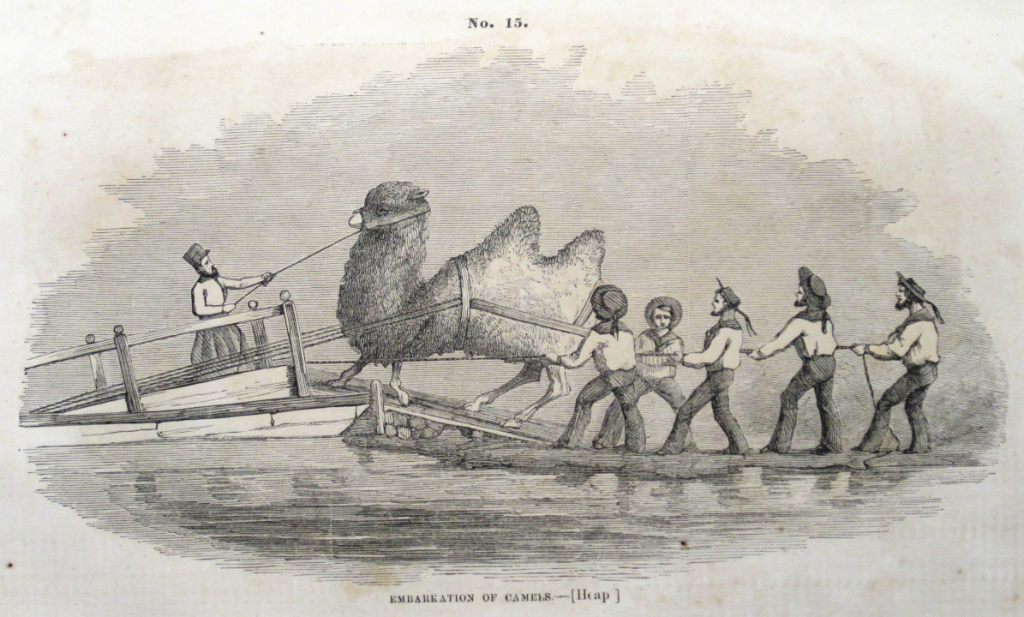 Sailors and an Arab camel herder load a Bactrian camel aboard the USS Supply during one of the two expeditions to procure camels. (National Archives)
 Jefferson Davis first encouraged the Army’s use of camels while serving in the U.S. Senate. In 1855, Secretary of War Davis persuaded a skeptical Congress to appropriate $30,000 for the purchase and importation of camels for the Army. (Jefferson Davis, by Daniel Huntington, Army Art Collection)
 During surveying expeditions of the late 1850s that took place in the harsh climate of the Southwest, camels proved their worth by carrying large amounts of cargo and requiring little water in comparison to horses and mules. (The Search for Water, by Ernest Etienne de Franchville Narjot, The Stephen Decatur House Museum)
 Upon finding water, horses on a surveying expedition eagerly quench their thirst while the accompanying camels show little interest. The Army’s camels proved they could withstand the oppressive climate of the American Southwest and other hardships that could send horses and mules into a panic. (Horses Quenching Their Thirst, Camels Disdaining, by Ernest Etienne de Franchville Narjot, The Stephen Decatur House Museum)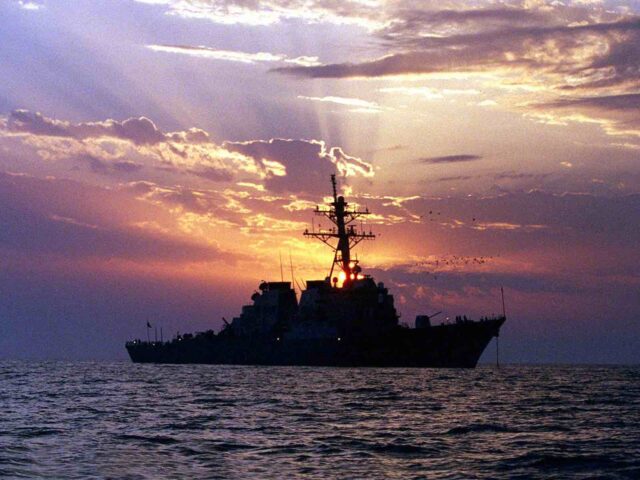




 Sorry but I have to take a break now. It seems that I can’t stop giggling at the Incredibly impressive stupidity of the Powers that be over there! Grumpy