Multiple pages of an exhibit in the state’s response to a legal challenge of Illinois’ gun ban
(The Center Square) – With Illinois’ gun and magazine ban still facing legal hurdles in federal court, a registry created in relation to the ban has been open for a week. A fraction of a percent of gun owners have complied so far.
As part of the Protect Illinois Communities Act that was enacted earlier this year, the registration portal for firearms owners in Illinois that own certain semi-automatic firearms, accessories and ammunition opened Oct. 1. While the law bans more than 170 semi-automatic rifles, shotguns and handguns, it also bans handgun magazines over 15 rounds and rifle magazines over 10 rounds. Magazines do not have to be registered.
Illinois State Police published the first round of statistics Tuesday, and of more than 2.4 million Firearm Owner ID card holders, 1,050 individuals have registered a total of 3,202 firearms, .50 caliber ammunition and accessories.
“You’re at 0.0004%. That’s a rounding error,” gun rights advocate Todd Vandermyde told The Center Square.
Of the 3,202 items disclosed, ISP said there were 2,060 firearms listed at the registry. ISP did not provide a breakdown of what types of firearms were registered. For .50 caliber ammunition registrations, there were 1,125 disclosures. There were only 17 reported accessories being registered in the first week. Vandermyde said that highlights the vagueness of what is an accessory.
“They’ve got a long way to go if they think they’re going to get any real sort of compliance,” Vandermyde said. “I think this is starting off about where we thought it would.”
A vagueness argument against the law is in front of Southern District of Illinois federal Judge Stephen McGlynn Wednesday afternoon. Attorney Thomas Maag, who represents the plaintiffs, said he will advance his arguments that the law violates the Fifth Amendment right against self incrimination if the vagueness charges don’t result in an injunction.
The Seventh Circuit U.S. Court of Appeals has yet to release an opinion in the consolidated case challenging the state’s law on Second Amendment grounds. Appellate judges heard that case on June 29.
Vandermyde advised against registering right away as the law continues to be challenged in federal court, among other reasons.
“State Police still haven’t finalized the rules on this stuff and the advice they’re giving in their rules and vis a vis their website is contradictory to each other and the statute,” he said.
The emergency gun registration rules are before the Joint Committee on Administrative Rules, which meets Oct. 17. The deadline to register firearms the legislation bans is Jan. 1, 2024. Being found out of compliance could bring criminal charges ranging from a Class A Misdemeanor for the first offense to a Class 3 felony for subsequent offenses.
Only firearms owned before Jan. 10, 2023, can be registered, according to Illinois State Police. That does not include any firearms purchased under a temporary restraining order issued for thousands of plaintiffs that have now been vacated or those who purchased firearms during a six-day window that a preliminary injunction against the law was in effect.
State Rep. Amy Elik, R-Alton, has a measure at the statehouse she filed last month that would require Illinois State Police to destroy any such firearm registration records it has received if the law is found unconstitutional.
“My legislation ensures that if certain gun-related provisions are found unconstitutional, the information collected from law-abiding gun owners when registering their firearms is immediately destroyed,” said Elik. “This protects the privacy of law-abiding gun owners, preventing the government from retaining their personal information.”
Sorry but I have to take a break now. It seems that I can’t stop giggling at the Incredibly impressive stupidity of the Powers that be over there! Grumpy
Carjackings have to be terrifying for the victims. You’re sitting there, minding your own business, when all of a sudden an armed individual shows up and steals your car out of nowhere. The sudden, terrifying nature of such an attack has got to rattle you.
Advertisement
However, carjackers aren’t necessarily a particularly bright bunch. After all, it doesn’t take a master criminal to stick a gun in someone’s face and take their car. This isn’t Gone In 60 Seconds we’re talking about here.
No, it’s a violent assault on an individual with the potential for the shedding of innocent blood.
A carjacker died after he accidentally blasted himself in the chest while trying to smash a window with the butt of his shotgun, an inquest has heard.
Officers investigating the death of Reece Ramsey-Johnson said they were satisfied there was ‘no third party involvement’ as they closed the probe into his killing.
Witnesses who saw the 22-year-old dying from gunshot wounds in the street outside a Lloyds bank in Sydenham on Sunday, September 8, said his own gun may have gone off when he used to to hit a car window.
Opening the inquest at Southwark Coroner’s Court on Thursday September 26, Dr Andrew Harris confirmed the police investigation had now ended.
He said: ‘The investigating officer is satisfied there is no third party involvement.
Now, this was a UK carjacker and not the American variety of the breed, but it’s still the feel-good story of the day, that’s for sure.
It also suggests that British gun control laws aren’t nearly as effective as some want to claim them to be. After all, if someone like this snotnosed punk could get a shotgun, they can’t be all that hard to obtain on the black market that I’ve been assured doesn’t really exist in the UK.
Advertisement
To be sure, Ramsey-Johnson got precisely what he deserved, regardless of where he was located. Such criminals should always meet such ends. At least here in the United States, we can arrange for them to meet those ends. In the UK, you have to hope and pray it’s someone of Ramsey-Johnson’s…intellect. That’s what it takes to make sure predatory jackwagons get precisely what they deserve.
Honestly, though, I’m actually a bit baffled at just how stupid you have to be to shoot yourself in the chest while trying to bust a car window. I get that they don’t have the gun culture we do, but it shouldn’t take a rocket scientist to figure out that you don’t point your gun at yourself while you smash the firearm against a window. This is especially true if there’s something like a finger on the trigger.
At this point, Ramsey-Johnson’s death isn’t just a feel-good story, but a prime example of nature adding a little chlorine into the gene pool. My only hope is that this jackwagon hadn’t already reproduced and thus spread his idiocy to a whole new generation.
After 123 years, the immortal Colt-Browning 1911 pistol has finally left U.S. military service. This is after a long history without parallel in the annals of American arms, a history that began well before the Great War.
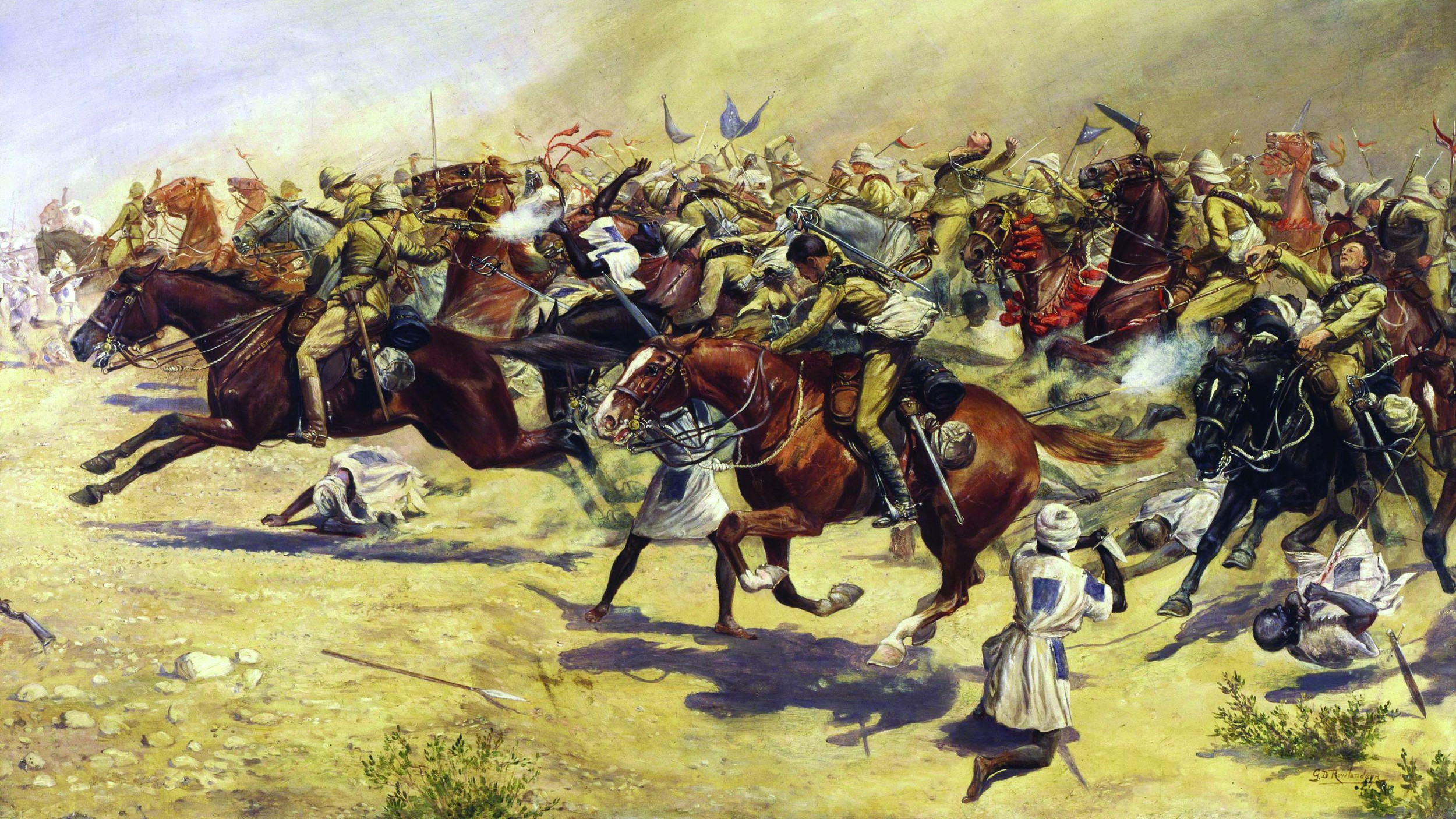
Early in the 20th century, the U.S. Army was looking to upgrade its standard service sidearm. The Army at that time was issuing the Colt M1892 revolver in the rather anemic .38 Long Colt cartridge, and U.S. servicemen found that this piece gave poor results, particularly when employed against rawhide-armored Moro rebels who were hopped up on drugs.
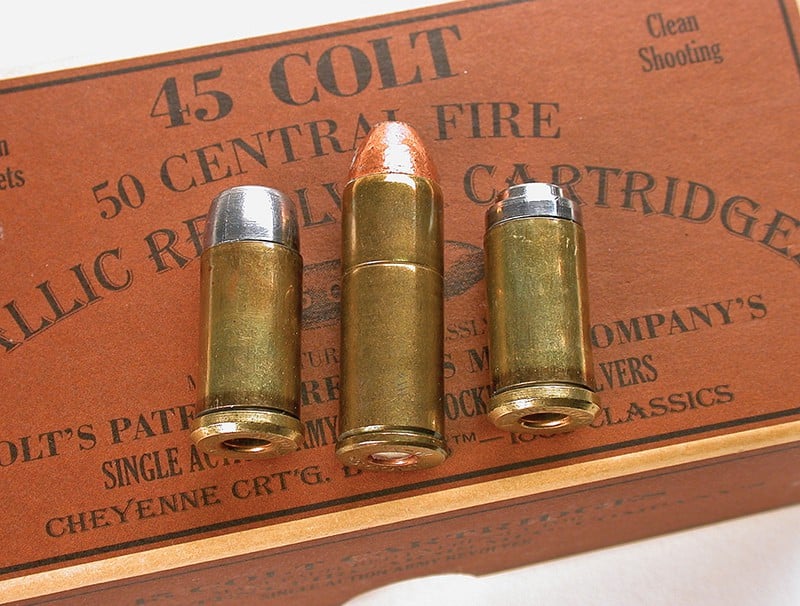
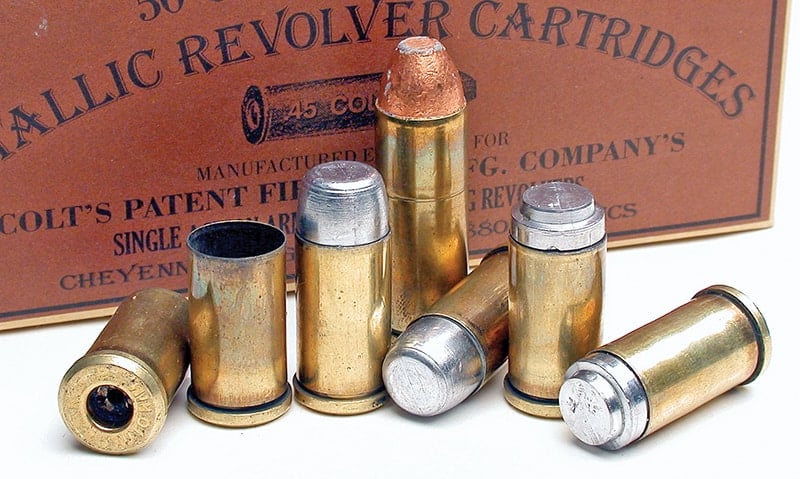
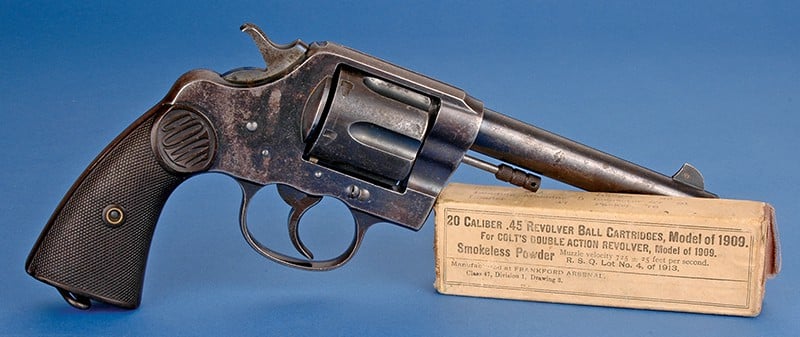
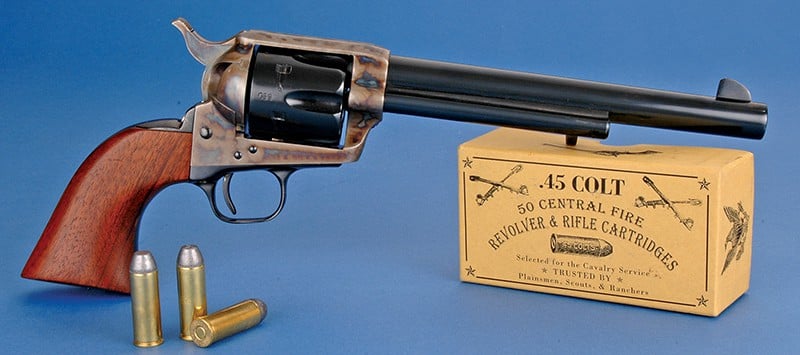
To deal with this, the Army began to re-issue the great old M1873 Colt single action revolvers in .45 Colt, and also purchased a number of big-framed Colt New Service double action revolvers in .45 Colt, dubbing that piece the M1909 Colt. The extra wallop of the .45 round proved much more satisfactory in preventing U.S. servicemen from being pierced by Moro spears, so the Army began to look for a modern, semi-auto sidearm for a .45 caliber cartridge.
Enter John Browning, the Leonardo da Vinci of firearms.
I won’t go into all the ins and outs of that evaluation and adoption process; that would be a story all in itself. A large number of martial sidearms were evaluated, including most notably a .45 ACP version of the Luger, only two of which were made, making this one of the most valuable collector’s items in firearms history. Suffice it to say that the sidearm that was adopted, when all was said and done, was the immortal Colt-Browning 1911, later revised as the 1911A1. Now, after 123 years, the U.S. Marine Corps, the last service still using the 1911, has traded them in.
Marine Corps Systems Command (MARCORSYSCOM) confirmed to The War Zone that the replacement of the M45A1s with new M18s began last year and was completed by October 2022. M45A1s had previously been issued primarily to Marine special operations and reconnaissance units, as well as Special Reaction Teams assigned to the service’s Provost Marshal’s Office.
The service had announced its intention to replace all of its standard-issue sidearms with M18s in 2019. The M18 is the compact variant of the Sig Sauer Modular Handgun System pistol family, or MHS, which the U.S. Army first adopted in 2017 and is now becoming the default sidearm across much of the U.S. military. This includes the U.S. Air Force, where the M18 was also selected to replace the last of that service’s aging .38 caliber M15 revolvers, as well as other more modern pistols.
The last 1911-pattern sidearms had been purchased by the Marine Corps in the early 2000s:
In the early 2000s, the Marine Corps purchased a relatively limited number of new-production .45 caliber pistols based on the M1911 from American gunmaker Kimber Manufacturing. These sidearms were for the new Marine Corps Special Operations Command, Detachment One, the service’s first unit assigned directly to U.S. Special Operations Command (SOCOM). That unit evolved into Marine Forces Special Operations Command (MARSOC).
Those guns, known as the Interim Close Quarters Battle (ICBQ) pistol, featured custom stainless steel barrels, improved recoil system components, and a rail for attaching accessories like lights and aiming lasers on the underside of the front end of the frame. They also came with eight-round magazines. Standard M1911A1 magazines hold seven cartridges.
The immortal 1911 really has no historical equal. It has been the longest-serving sidearm in U.S. military history. Almost every company in the business of manufacturing handguns today makes some variation of the 1911. John Browning used many of the features of the 1911 pistol to produce what many consider his greatest creation in sidearms, the Browning Hi-Power, which is still in use in military forces around the world.
While nothing lasts forever, and while it’s easy to see the logistical advantage in a sidearm that uses the NATO-standard 9x19mm cartridge, it’s a sad day for gun aficionados, especially those of us with a fondness for John Browning’s 1911. When I first joined the U.S. Army in the early Eighties, I was assigned as a Company Aidman and so was issued a 1911A1 pistol; that piece may well have been the same one my father was issued as a bomber navigator in 1944.
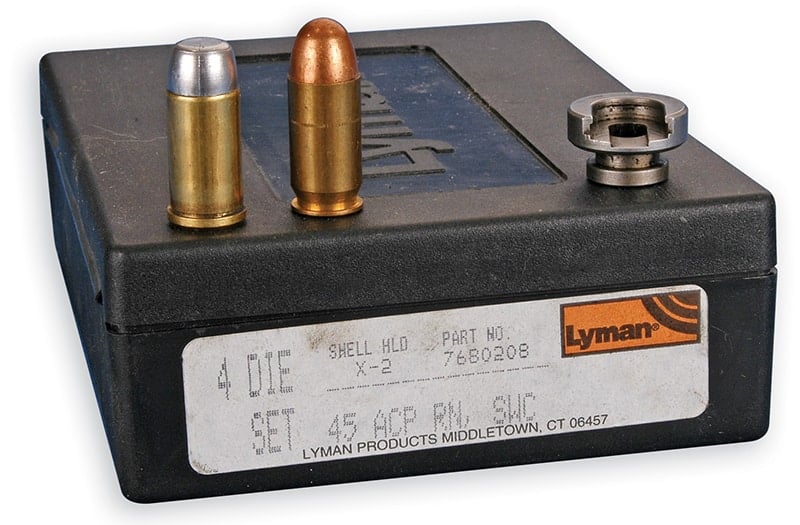
It was old, worn, and loose, but it worked and shot reasonably well. I have a mil-spec 1911 today, one of the clones made by Rock Island Arsenal (pictured above), and while I favor my.45 Colt sixguns for bumming around in the Alaska woods, from time to time I’ll strap on the 1911 instead. With modern loads, the 45ACP round packs a considerable wallop and is more than capable of deterring predators, two or four-legged, if the occasion arises.
Advertisement
The 1911 may no longer be serving with the U.S. military, but it’s a safe bet that a century from now (assuming the peasantry are still allowed to carry sidearms by then) the 1911 will still be in use among American shooters. The 1911 does have its detractors – every design does – but you really can’t argue with well over a century of success.
Elvis Presley sat atop rock and roll’s throne as unofficial “King” for decades, although he was more proficient at handling a firearm than a royal scepter. He owned guns throughout most of his life and, while serving in the U.S. Army, earned sharpshooter badges for his skill behind an M1 rifle and M1911. He collected firearms and kept one by his side for self-defense, although there’s little doubt the highly embellished Smith & Wesson Model 53 revolver he owned—which went for $199,750 during a Rock Island Auction sale on Aug. 26—was not his first choice for carry.
Appraisers assigned the handgun a value of between $60,000 and $90,000 long before bidding began. The historic .22 Mag. was accompanied by paperwork that provides irrefutable proof of its original owner.
Elvis purchased the gun in 1974, only two years before the United States was going to celebrate its bicentennial. In 1976, the “King” shipped the gun back to the Smith & Wesson factory, requesting its artisans make it into a masterpiece befitting freedom’s 200th anniversary.
Master engraver Russell Smith was assigned the honor. He drafted a pair of designs in pencil drawings—clearly labeled as work for Elvis—that were part of the gun’s sale last month. The final design on the receiver features a gold-engraved American Eagle and flag on one side with the words “The Spring of 76” below. A minuteman, also in gold, stands proudly on the other side. The package also includes a matching .22 LR cylinder to complement the look perfectly.
The gun also wears the floral scrollwork Smith is known for, as well ash gold inlaid bands at the muzzle and breech. The rear sight is adjustable and has a gold outline. The front sight is a gold bead, and the kit comes complete in a walnut presentation case. Appraisers estimate more than 99 percent of its original, bright factory-blue finish remains on the gun.
Handwritten notes, job cards and receipts accompanying the gun all list the “King” as the owner. Also included is a Smith & Wesson company newsletter prominently featuring the firearm on the cover as “Elvis Presley’s Bicentennial Model 53 done by Russ Smith.”
The only drawback is the fact that Elvis probably didn’t have much time to shoot it. The revolver was delivered on Nov. 16, 1976. Presley died on Aug. 16, 1977.
My latest “it” incident was the rescue of Nanny Goose, a large Chinese goose that apparently escaped from a nearby farm and was now residing in the neighborhood pond. She was either adopted by a flock of Canadian geese, or she decided to become the “Nanny” of the brood of young goslings. Either way, the large white goose and the Canadian geese lived peacefully together during the spring and summer.
My wife passed the pond daily during her walks, paying close attention to Nanny. As leaves started turning, the Canadians started migrating. Sometimes Nanny Goose had a new flock to keep her company, and sometimes she would be by her lonesome. During the lonely lulls, she would honk, calling out to any nearby passing Canadians. You can see where this is headed.
My wife started worrying about Nanny being lonely. How would she survive the upcoming winter? After all, Nanny was obviously a domestic goose not used to fending for herself. Research on my wife’s part showed domestic geese don’t eat the same things as Canadian Geese, so now another worry surfaced. Naturally, my wife started feeding Nanny.
Help?
My wife summoned the advice of a rescue farm. The owner validated my wife’s concerns and even responded three times to help us rescue her. Dubbed operation Nanny Goose, we tried to corral her with a large blanket. Although domestic geese can’t fly, you’d be amazed at how fast they can run. The first three missions of Operation Nanny Goose were flops.
My daughter was on break from veterinarian school and got involved. Even with her fleet of foot, knowledge, and sheer determination, her numerous attempts were also for naught. We needed a better plan. Thinking about the project, my wife still fed Nanny daily with her Goose Chow from Tractor Supply. Nanny was practically eating from her hand now.
Hula Hoop?
One day it came to me. I needed a throw net of sorts. It needed to be big, as Nanny is a big girl, and fast. The larger size would give me some leeway, too. I figured a hoop 4 feet in diameter would be about perfect. So, 4 feet times 3.14 would be 12.56 feet of ½-inch PVC tubing. I bought 15 feet of tubing with a coupling to connect the ends. Some decorative netting from Amazon for $7 was used to complete my throw net. I laced the two top layers of netting through the PVC tubing and connected the ends.
Feeling confident, my wife and I headed to the pond, loaded for Goose! As she fed Nanny, I tried flanking her so I could throw the net. Nanny dodged the first toss, and the second throw bounced off her. Retreating to the pond, we decided to stop so we wouldn’t scar her too much.
A few days later, we tried again. We were seeing first-hand how the saying “Go on a wild goose chase” came about. This was harder than we thought.
Cast Bullets?
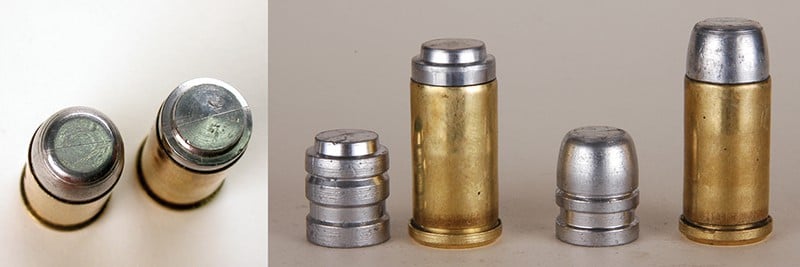
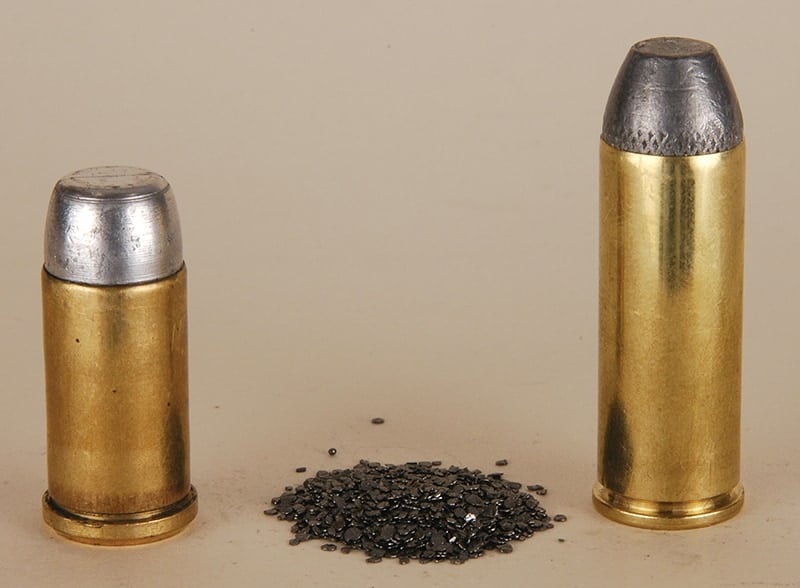
Thinking it over, I decided a heavier net would give me more control when throwing it. What could I use? Yup, the answer was obvious. I had thousands of cast bullets in my basement. I went with some 300 grain .44 Keith bullets. Using 100 slugs, it added over 4 pounds of weight to my net. It also gave a more positive throw.
Nanny, in back of the Tahoe, headed to the farm.
Nanny Goose making friends with Virgil.
Mission Accomplished
It was Sunday evening and conditions were perfect. It was cold, cloudy and Nanny Goose was by her lonesome. She ran to my wife for her daily feeding. After a few gulps of feed, I flanked her again and she didn’t suspect a thing. Doing my best Tom Cruise impersonation, I said,” Talk to me, Goose!”
The release was clean, and Nanny never knew what hit her. The only problem? She could still run. My wife and I gave chase, but Nanny already made it to the pond, her head sticking through the net. She was at risk of drowning now!
My wife, showing total disregard for her own safety, went in. She grabbed the hoop and handed it to me as I re-scooped Nanny fully in the net. I then pulled my wife out of the pond. We transferred Nanny to a crate and drove her to the rescue farm. Nanny is one happy goose. She’s part of a loving family consisting of several geese, ducks, sheep, goats, llamas, alpacas and a host of other critters.
More importantly, my wife is happy. She doesn’t have to worry anymore about Nanny Goose. And I don’t have to wake up at 4 a.m. anymore to my wife asking me if I think Nanny Goose is okay.
So, guys, when your wife ever confronts you with an “it” project, just bite the bullet and do it. It’ll save you a lot of time and worry. And you’ll get the bonus of being a hero until the next project comes down the pike.
Lastly, keep a lot of cast bullets on hand. You’ll never know when they’ll come in handy.
Kathleen Boelyn, the mother of Johnny Hurley, who was killed a year ago during a shooting in Arvada, holds a photo of her son while standing in her Colorado Springs garden on Tuesday, June 14, 2022.
The active shooter was wearing black shorts, a floppy hat and tactical gear, and he had already killed an Arvada police officer. He was shooting out windows in police cars in a busy shopping and restaurant district in Olde Town Arvada during lunch hour one year ago.
Three fellow officers in a nearby substation — in shorts and polo shirts — were worried they weren’t wearing the right gear to safely face him. They instead watched the man with an AR-15 from the window as he walked toward the main square of Olde Town, according to investigative documents.
Johnny Hurley, 40, was shopping at an Army surplus store a block over and peered out the window, spotting the shooter. He ran out of the store and removed his concealed gun at his waist, beneath his shirt.
SPONSOR MESSAGE
Hurley had trained for active shooter situations — not because it was part of his work, but because he wanted to help people and save lives.
Crouching down, he ran across a vacant, shady plaza with umbrellas and tables, gripping his gun as it pointed toward the ground. Hurley knelt down behind a brick wall and carefully watched the shooter. Hurley took aim and fired six rounds from his handgun, five struck the gunman, according to his lawyers.
The entire scene was captured on surveillance camera footage.
“I have to admit it’s kind of exciting to see the way he handled himself,” said his mother, Kathleen Boleyn. “The way he took all the training and practice that he’s had and did the right thing.”
Hurley continued to try to do the right thing — he moved to disarm the gunman, who was still alive and lying on the ground with his AR-15 nearby, according to Boleyn’s attorneys.
Hart Van Denburg/CPR NewsA memorial to Johnny Hurley in the driveway of Hurley’s mother, Kathleen Boelyn, in Colorado Springs on Tuesday, June 14, 2022. Hurley was killed in a shooting last year in Arvada.
Officers saw Hurley from the safety of the substation.
They stayed inside because they worried even the door itself wouldn’t stop a round from an AR-15, according to investigative documents.
Even though Hurley didn’t look anything like the suspect description, they told investigators in an interview later that they couldn’t tell if he was a possibly a second shooter. They had no idea one of their own, Officer Gordon Beesley, had been killed just two minutes earlier.
“That’s the information that Arvada did not want the public to know,” said Siddhartha Rathod, the attorney representing Hurley’s family. “The officers hid while Johnny did what they were trained to do, that the officers refused to go outside. These are three officers with bulletproof vests on, and they refused to open the door and go and engage the shooter.”
For 11 seconds, the officers watched Hurley from behind as he was trying to remove ammunition from the automatic rifle, according to court filings. Without announcing “police” or asking him to drop the weapon, Arvada Officer Kraig Brownlow opened the substation door and took aim at Hurley from behind, hitting him in his back pelvis and killing him.
“If they would’ve simply said, ‘Police,’ Johnny would be here today,” Rathod said.
In an interview in Rathod’s office earlier this month, Hurley’s mother looked at the floor.
“Absolutely,” she said. “That was very much a part of his training. Any announcement, any suggestion to put down your weapon, if they would have said, ‘Police, put down your weapon,’ … he would have dropped it.”
This week is the one-year anniversary of the incident, and Hurley’s family filed a civil rights lawsuit against Brownlow and the Arvada Police Chief Link Strate alleging their actions and the police department’s own policies deprived Hurley of his constitutionally protected rights.
Arvada Mayor Marc Williams said June 21, 2021, was the hardest day of his life as mayor.
“We still mourn the loss of Officer Gordon Beesley and are so thankful for the service of the Arvada Police Department,” he said. “And at the same time we still think about Johnny Hurley. It’s tragic because of the actions of a crazed gunman, we lost two very good men that day.”
Williams said he feels badly for the Hurley family.
“I wish I knew the man,” he said. “He was someone who was willing to step into a very dangerous situation … The tragedy of him picking up the gunman’s rifle will always haunt everyone.”
But Rathod, the family lawyer, said the juxtaposition of Hurley’s actions compared to the officers is stark.
“When Johnny heard the shots, he opened the door and faced the danger,” Rathod said.
The gunman, Ronald Troyke, had a troubled history with the Arvada Police.
After a series of personal problems, he grew increasingly isolated and agitated. And he grew extremely angry at the police, constantly binging on anti-police videos, according to court documents.
Just a couple of weeks before this shooting, he confronted Officer Kraig Brownlow, Sterling Boom and Michael Hall, the three officers who watched him from the substation just days later storm the shopping district with an assault rifle. Troyke called them “terrible people” and “sovereign citizens,” court documents said.
The day of the shooting, Troyke told his sister the police weren’t taking him seriously. His sister called APD and asked for a welfare check. She noted he had a lot of weapons at his disposal. The officer who tried to do that check was Beesley, the officer whom Troyke killed shortly later. Beesley knocked on his door, but Troyke had already taken off for Olde Town.
Mark Wise was the one witness who saw the entire episode as he and a colleague were leaving a restaurant in the town square. When the gunman shot and killed Beesley right in front of Wise, he dove for cover behind parked cars and called 911. He then watched Hurley run toward the gunman, stop, and kill him.
“In that moment when Johnny was running towards me, I didn’t know if he was friend or foe,” Wise said, in a tribute video made by Hurley’s lawyers. “I stayed because something about his presence told me this was going to be OK.”
Hart Van Denburg/CPR NewsKathleen Boelyn, the mother of Johnny Hurley, lights a candle for a photographer to show a small shrine to Hurley in her Colorado Springs home on Tuesday, June 14, 2022.
Boleyn spent a Sunday with Hurley the day before he was killed.
She has weathered a year as a mother living through all of the firsts without her son — the hole at Christmas, a birthday he wasn’t there to celebrate, Mother’s Day.
“When you were having fun with Johnny, there wasn’t anybody else you wanted to be with,” she said. “He just made fun things more fun.”
On what would have been his 41st birthday last August, she went to a horse farm to honor him. Hurley’s sister, Erin, took a group of his friends up camping, an activity the two loved to do together. They brought Hurley’s camping chair and set it up with a photo of him, his floppy camouflage hat and a beer in the cupholder.
“Johnny was a very protective big brother. He always looked out for me, always made sure I was safe, always made sure I felt safe,” she said, in the tribute video. “If I could say one thing to him right now it would be that I love you.”
Hurley was a dilettante who had passions ranging from individual gun rights to cooking to skateboarding to rap music to film. He was a trained chef and picked up catering jobs during the pandemic. He gave away clothes and underwear to homeless people and was known for his gigs drumming in local music establishments. He loved camping. He set up a “hug machine” on the 16th Street Mall in downtown Denver once and doled out “free” hugs to strangers.
Hurley’s mother said if he wanted to learn something about a subject, he dove in. He went to cooking school and learned how to develop his own recipes when he wanted to learn how to cook. When he became interested in mass shootings and how to help people, he took active shooting training classes.
“He had great compassion for people, and this came out in stories that I heard,” Boleyn said, noting one other time he saved someone’s life who was having trouble swimming in a creek.
His friend Douglas Evans said Hurley was “someone you could take to the revolution or take to your mom’s house.”
When Hurley took active-shooting courses, Boleyn said his instructor cautioned him to use his training wisely.
The instructor told Hurley that he had kids, and he wasn’t sure what decision he would make in a critical moment, fearing for his own family.
“And Johnny said, “Well, I’m not married. I don’t have children,’” Boleyn recalled the instructor telling her.
Boleyn was asleep when federal agents knocked on her door late that Monday night a year ago to tell her that Hurley had been killed. They didn’t give her any details, but they assured her he had done nothing wrong, that he had not broken any laws.
Her daughter, Erin Hurley, had already gotten the knock on the door. She said she crumpled to the ground when representatives from the Jefferson County coroner’s office told her about her brother. She immediately got in the car to drive to Colorado Springs, where Boleyn lives, to be with her mother.
That week was a bit of a blur for Boleyn. She remembers victims’ advocates warning her not to talk to the media and not to watch the news. She didn’t know anything about how Hurley had died. She went to Olde Town Arvada where there was a growing memorial to honor both Hurley and Beesley, the officer who was first gunned down by the shooter.
“People were laying flowers and it kept growing and growing, and I wanted people to know I was his mother,” Boleyn said. “I would just tell people that I was his mother and people were so loving and so beautiful.”
Boleyn and Hurley’s sister had a meeting with officers that Friday, four days after he was killed.
Hart Van Denburg/CPR NewsMemorial cards to Johnny Hurley, left, and Arvada Police Officer Gordon Beesley, in the Colorado Springs home of Hurley’s mother, Kathleen Boelyn, on Tuesday, June 14, 2022.
It wasn’t until then she learned police officers killed her son.
“When we learned that it was an officer who shot Johnny, that was confusing and shocking and unbelievable,” Boleyn said. “I was grateful that (Arvada Police) Chief Strate in his public address referred to Johnny as a hero.”
There were discussions between Hurley’s family, their lawyers and the city of Arvada for a year. Ultimately, Rathod said they had to file this suit to get justice for Hurley.
“When you compare the action of the Arvada police to the heroism of Johnny, it is a stark contrast,” he said. “And then when you magnify it with their conscious decision to not announce themselves and to shoot Johnny in the back, when he was unloading the weapon, when he did not match the description of the shooter that they had seen, when he did not pose a threat to anyone, it is just unbelievable. Their conduct is unbelievable.”
Late last year, after reading and analyzing more than 1,000 pages of investigative reports and interviews, Jefferson County District Attorney Alexis King made a decision not to press charges against Officer Brownlow, the officer who killed Hurley.
She determined the shooting was justified and that the officer was acting in self-defense or defense of others.
“Though the acts of John Hurley were nothing short of heroic, the facts must be viewed as they appeared to Officer Brownlow at the time,” wrote King in her decision letter on the case. “Officer Brownlow did not know, and could not have known from his vantage point, of the murder of Officer Beesley or of Hurley’s role in eliminating the threat posed by the man in black.”
Arvada Police told reporters after King’s decision they were going to undergo evaluations about what happened. They did that evaluation, a spokesman, Detective Dave Snelling said.
“Our review of all the facts in this tragic incident reveals no policy or procedural violations were made by any Arvada Police Department member in this unprecedented set of circumstances,” Snelling said.
Brownlow resigned from the agency after the incident. He did not return messages seeking comment.
In her residential Colorado Springs neighborhood, Boleyn had a shrine up in her driveway honoring her son all last summer.
She planted fresh flowers and neighbors stopped to pay tribute. She’s going to plant a garden for him in the front this year. She always has a wreath on the door adorned with a black ribbon.
“There is pride that is mixed with the grief,” she said, her voice weakening. “If you have to lose your child … isn’t this the way? I think when I look at his life in how he was and who he was, this really was him. I was the lucky one who got to be his mom.”
She also recently decided to get a vanity plate on her car. It reads: “HROS MOM.”
Hart Van Denburg/CPR NewsIn the driveway of her Colorado Springs home, Kathleen Boelyn, the mother of Johnny Hurley, touches part of a memorial to her son on Tuesday, June 14, 2022.