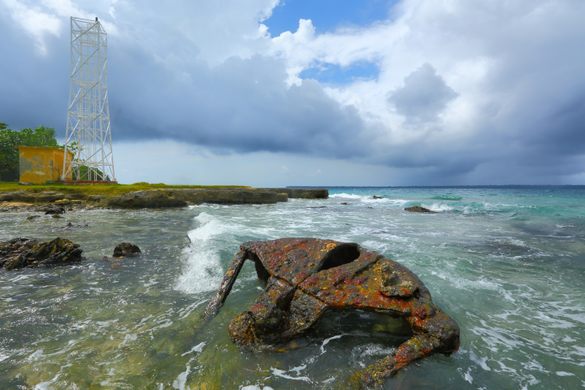
 WHEN THE UNITED STATES MILITARY ABANDONED THE Vanuatuan island of Espiritu Santo after occupying it as a base during World War II, it left behind infrastructure works such as roads, buildings and runways. But its oddest legacy might be the millions of dollars of goods it dumped into the ocean—just so the French and British couldn’t have them.
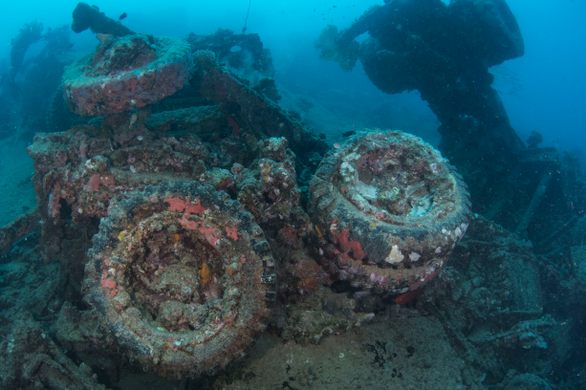
Today, off the shore of what’s been dubbed “Million Dollar Point” in the Pacific Ocean, snorkelers and scuba divers encounter a surprising sight: a fortune’s worth of military tanks, guns and jeeps resting beneath the waves.
Espiritu Santo, an island in the Vanuatu archipelago, was established as a military supply base, naval harbor and airfield after the attack on Pearl Harbor, when the U.S. used it as the launch site for its attack on the Japanese in the Pacific. At the time, parts of Vanuatu were still under British and French colonization.
When America left the military base after the war, the remaining goods—everything from weaponry to bottles of Coca-Cola—were offered to the French and British at a very low price, 6 cents to the dollar. However, the colonizers were going on the assumption that should they refuse to buy the items, the U.S. military would be forced to simply leave them behind for free.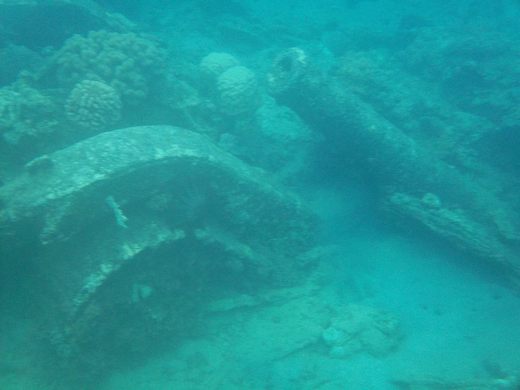
The Americans were having none of this. To spite the British and French, the military made the rash decision to drive all of the vehicles, food, clothing, drinks, and other equipment to a wharf on the southern coast of the island. The army then drove all of the vehicles into the sea, used bulldozers to dump the rest of the supplies over the wharf, before also driving the bulldozers into the sea, ensuring that the European countries would not be able to get their hands on the items at all, free or otherwise.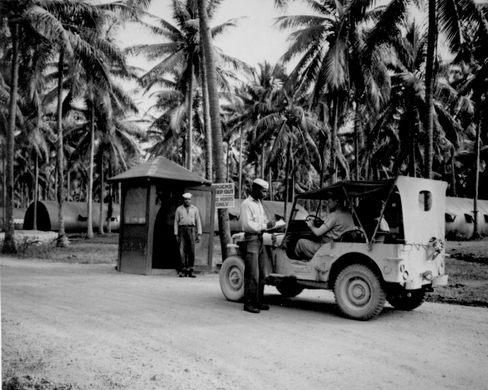
Millions of dollars worth of goods were completely destroyed over the period of those two days, rendered unusable at the bottom of the ocean. As a result of the dumping, the waters were contaminated with fuel, rubber, metal and other waste, leaving the local Vanuatuans shocked at the carnage, though they salvaged what they could once the Americans had finally departed.
Today, you can make your way to Million Dollar Point and take a snorkel or scuba dive through the wreckage, should you desire to swim through this odd memorial to political spite.
———————————————————————————— Or in my humble opinion.
The only aircraft that returned to the States were ones hauling military service members. Otherwise, they were forbidden to return to CONUS. This was the agreement with the manufacturers and metal producers at the start of the war, as they didn’t want to see their markets disappear with all that military gear going to salvage. Which kinda made sense.
Out on the Pacific islands they dug pits and pushed aircraft into them and than ran bulldozers over them to ensure destruction. THAT is why there are virtually no combat historical warbirds here in the US. A few came back for War Bond publicity use.
Aircraft carriers pushed their aircraft over the side to make room for returning vets, in some cases.Which makes sense in a way as the GI’s were on the point of mutiny. Because they wanted to get home and get a job. As they were convinced that anothher Great Depression was on its way. Like the last time after War One.
Here in the states, you could buy military aircraft for the cost of the fuel they contained, pretty much. Its a real pity as a lot of that stuff would of come in mighty handy during the Korean War. Where the Grunts had to use stuff that was worn out or just broken.
Now the Marines were smart and swarmed over a lot of this stuff and sent it very quietly to their base in Barstow Calif.
 The winged lion that stands on the column in St. Mark’s Square in Venice that is an icon of the city