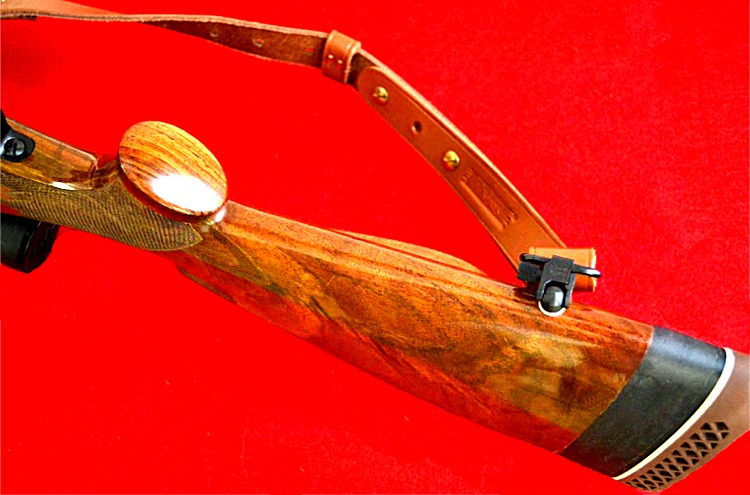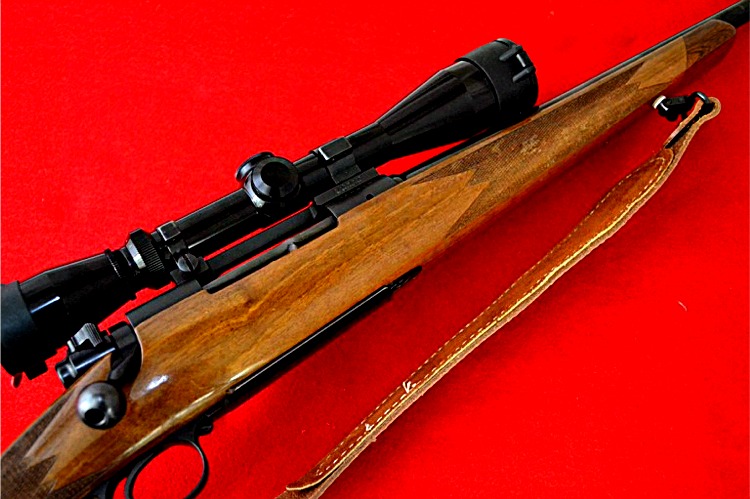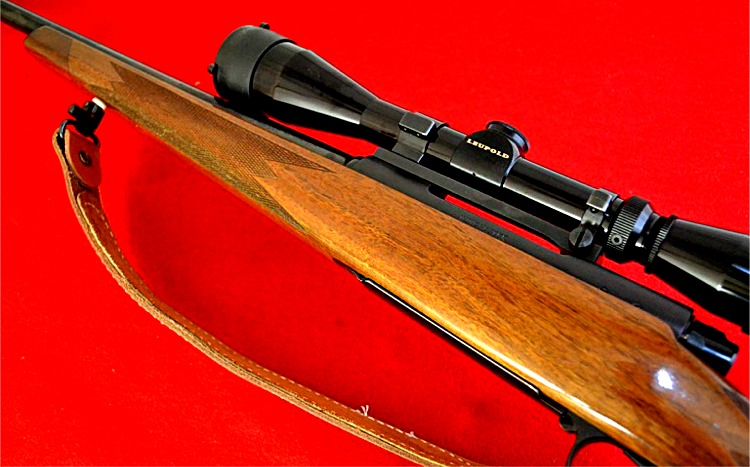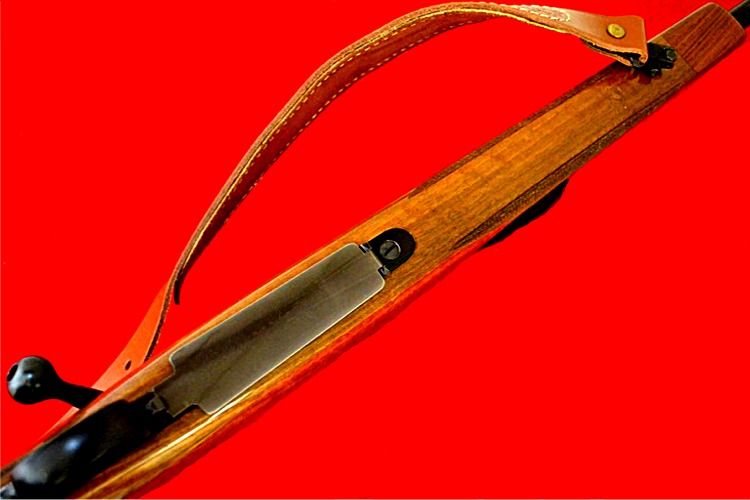
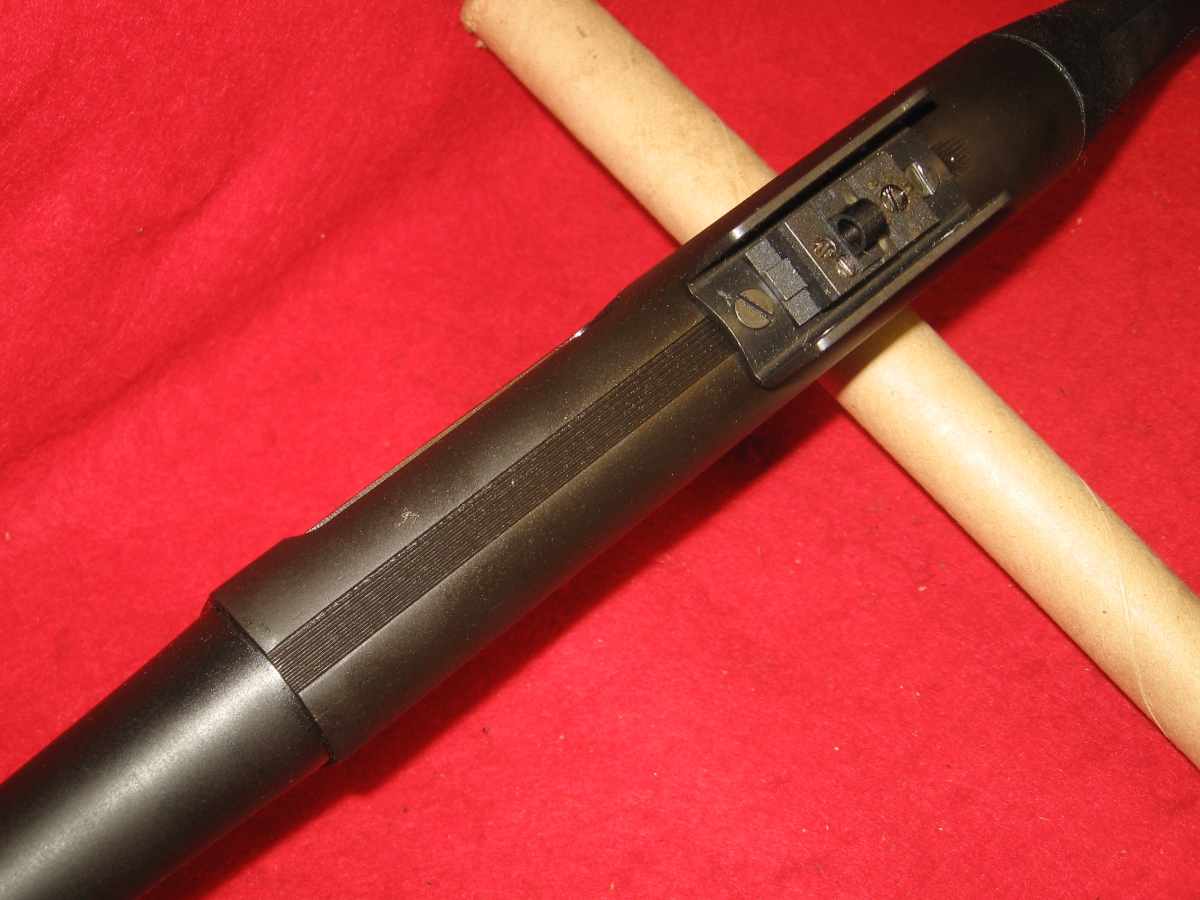
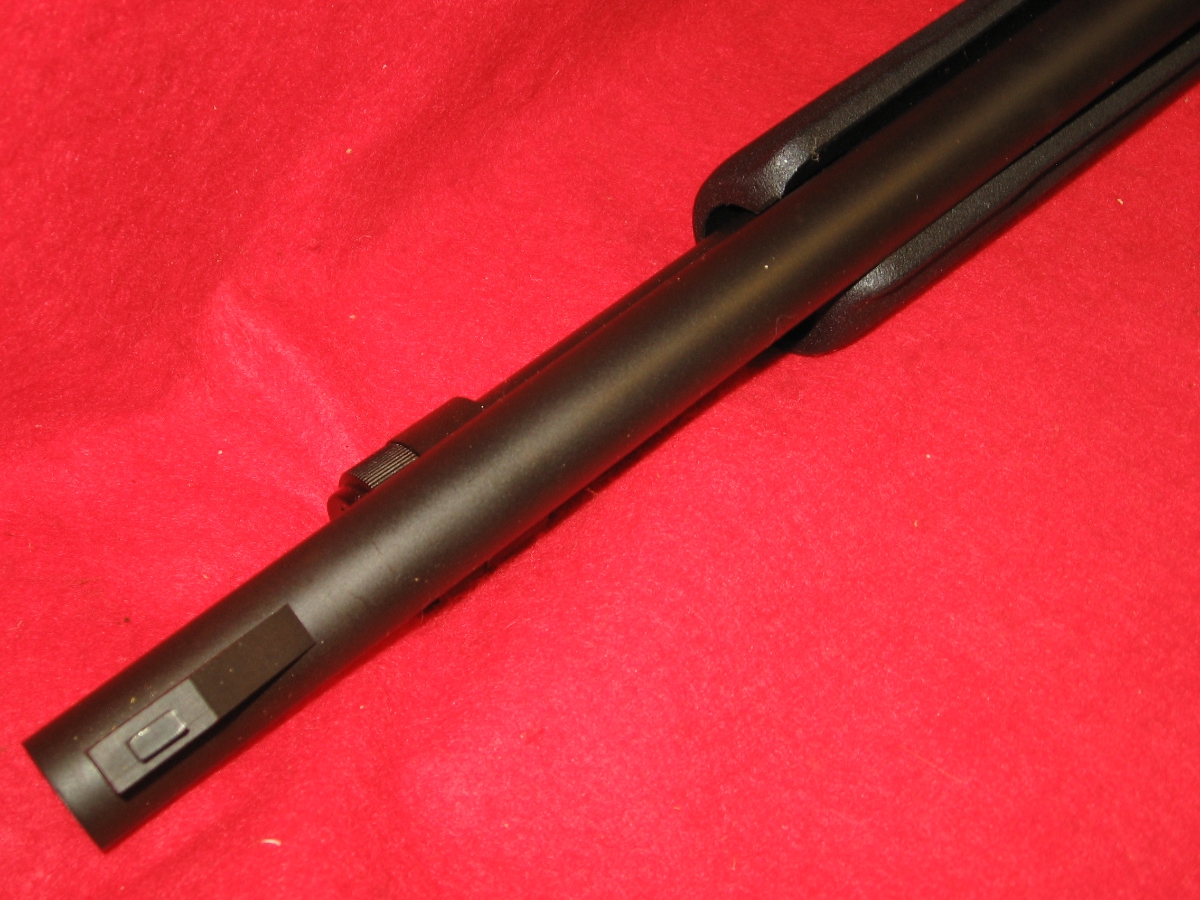
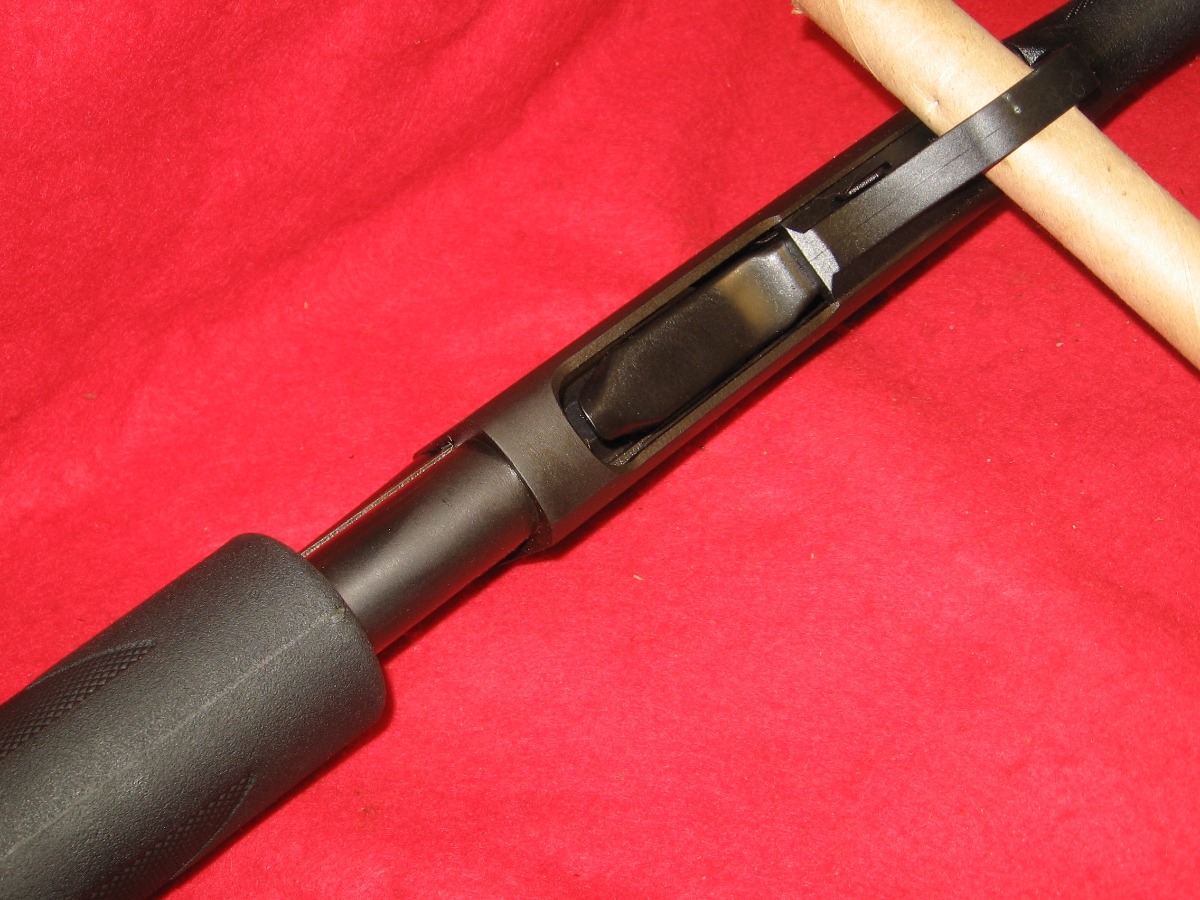

Even experienced shooters like NRA Publications Senior Firearm Inventory Manager Larry Quandahl—a senior whose career includes service in the U.S.M.C., a Double Distinguished competitor rating and numerous NRA instructor credentials—can benefit from aids to marksmanship such as the Skinner Sights Express aperture unit seen here on a vintage Marlin 336 in .30-30 Win.
In his January 2020 article, “The Aging Defender,” then-Managing Editor Kelly Young did an admirable job in chronicling his interview with doctor of physical therapy Joseph Logar—who is also national manager of the NRA’s Adaptive Shooting Program—about the effects of aging on today’s shooters. And while Young’s article should be required reading for every NRA member, I had some issues with it—primarily that it was the article I had wanted to write ever since my personal odometer passed the 65-year mark more than a few birthdays ago.
But Kelly beat me to the draw, editorially speaking, and, to make matters worse, there was the irony of his surname. However, in the spirit of full disclosure, Young readily admitted to being “… a few years shy of 40” at the time. I, on the other hand, have spent more than 40 years (and counting) in a gun-writing career that has taken me from the deserts of Arizona to the jungles of Africa. In the process, I have encountered countless .22 rimfires, muzzleloaders, handguns, rifles and shotguns, from both the hunting and collecting perspectives. Consequently, I feel I am eminently qualified to write about the challenges of being a senior-citizen shooter. So, as an addendum to Young’s article, here are a few other age-related tidbits that I have personally discovered and that will hopefully be of benefit to some of our more “seasoned” NRA members.
One thing I’ve noticed over the years is that as we get older, we become more sensitive to recoil. Not to be confused with flinching, it is simply a matter of our internal framework becoming a bit more fragile, or, as my friend the late radio announcer and “Laugh In” television personality Gary Owens used to say, “I find I’m not healing as fast as I used to.” Gary still shot his nickel-plated Smith & Wesson .41 Mag. for relaxation at the range, but he began doing it with reduced handloads. By that same token, I now primarily stoke my Model 29s with .44 Spl. rather than .44 Mag. ammunition—same gun, but less jarring on the hands and bones. I do, however, still occasionally put a cylinder’s worth of full-house magnums through the Smiths just to remind myself why I don’t do it all the time.
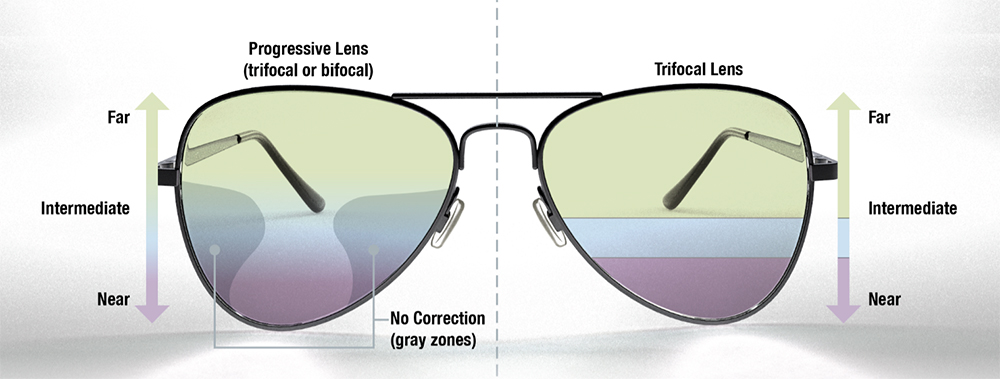
When I learned I had to have cataract surgery in both eyes and discussed the various options for the lens implants with my ophthalmologist (you can get bifocal implants or specific fixed-vision lenses), I opted for the strongest long-distance prescription I could get for both eyes. Being nearsighted and knowing I would still need glasses to correct my intermediate and close-up vision, I chose progressive trifocal glasses. The bottom portion of the lens is for reading, writing, adjusting gun sights, etc., the center portion is for working on my computer and the top portion of the lens is glass with no prescription at all, because my cataract lenses give me excellent distant vision.
And, for Christmas, my wife gave me a folding, pocket-size magnifying glass for gun shows to make up for my lost pre-cataract ability to read serial numbers and to see minute stampings without my glasses. I’ve been using this pocket-size magnifier now more than I care to admit, but in the interim, I carried a pair of reading glasses—the type you can buy at the drug store in magnification ratings that normally run from 1.50 to 3, and that are great for close-up scrutinizing but not for distance. I suspect they would work well for those who are as “close-up vision-impaired” as I am, although the miniature magnifying glass is a lot less intrusive and, for me, easier to carry around.
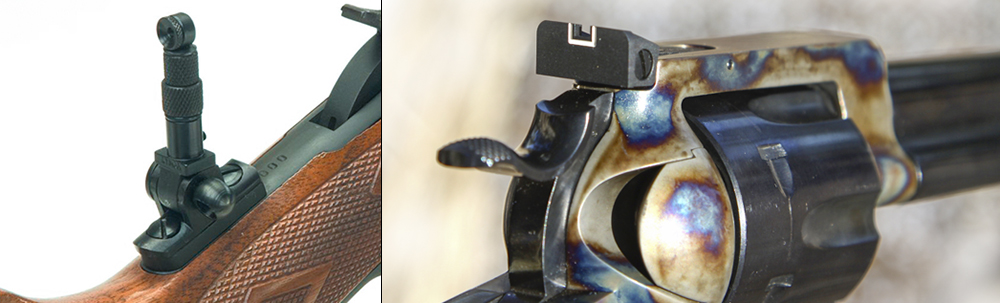
While on the subject of eyesight, the single-action revolvers that I am fond of shooting do not lend themselves to bulky high-visibility aftermarket sights. A good example is my Ruger New Model Blackhawk Bisley. Blackhawks, in general, are notable for their all-black rear sights and their equally all-black front sights, which are incredibly difficult for my aging eyes to properly line up. So, when I had my New Model Blackhawk Bisley customized with Turnbull casehardening (turnbullrestoration.com) and a tuned-up action by Andy Horvath [(440) 458-4369], I also replaced the factory’s micro-click rear sight with Hamilton Bowen’s Ruger Rough Country Rear Sight (bowenclassicarms.com). Although Bowen makes other variations for Ruger and Smith & Wesson revolvers, I found his easy-to-see Rough Country Rear Sight with a square, white-outline notch to be the easiest for me to see. I also had Horvath inlet a brass bar on the front sight ramp for a perfect pairing with the Bowen sight. The only problem is I can’t blame my “frequent fliers” on the gun anymore.
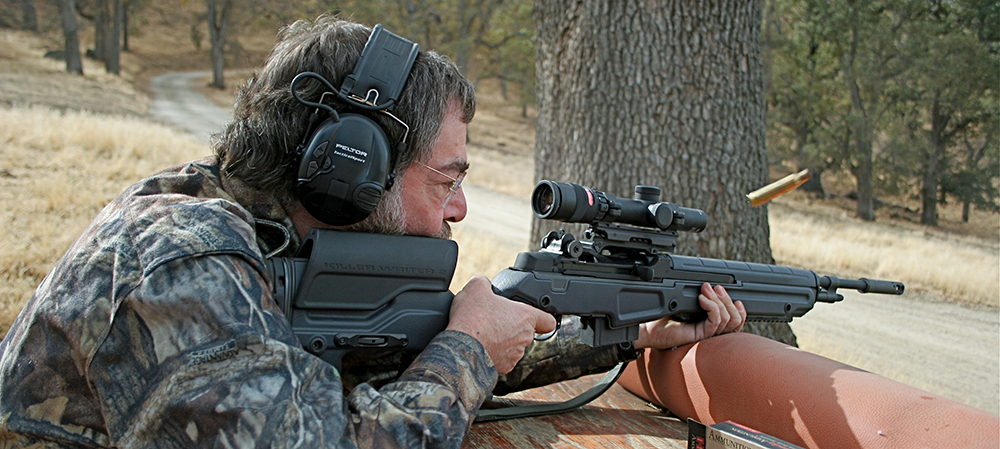
In addition, I have always been partial to open sights on a rifle, but as we get older, those open sights tend to become an exercise in frustration, as that rear sight sometimes blurs into obscurity. That is why you see many vintage Kentucky rifles that have had the original dovetails for their rear sights moved forward—farther from the shooter’s eye—so that the aging shooter could still make out enough of the rear sight notch to properly align it with the front sight. Moreover, until the use of scopes became widespread, peep or aperture sights were the best “quick fix” to accurize a rifle. In his 1961 book, “The Complete Book Of Rifles And Shotguns,” Jack O’Connor wrote, “It has been my experience that a big peep is the fastest of all sights—much faster than the open sight and a bit faster than a low-power scope.” Even in today’s world of electronic reticles and lasers, peep sights retain their century-plus reputation for accuracy. Outfitting a non-collectable rifle with a large peep, or even a ghost-ring rear sight, makes sense. But even some collectable rifles can have their original peep sights adapted by slightly enlarging the rear sight aperture hole so that they are easier for older eyes to peer through. I still hunt with my 1940s-era Winchester Model 71 but always unscrew the factory’s peep sight disk beforehand, leaving a larger hole where the sight screwed into the base; thus, I have an easier-to-see “ghost-ring” through which to sight. Additionally, Lyman (lymanproducts.com) still catalogs its original No. 2 tang sight for Winchester, Marlin and even some Uberti replica lever-actions.
In addition to our eyesight, hearing is also something that begins diminishing as we get older, and most elderly shooters have already lost a fair percentage of their ability to hear. When I began shooting back in the late 1950s and early ’60s, no one was overly concerned about hearing protection, whether it was target shooting on my high school ROTC rifle team or zeroing-in my Winchester 94 carbine at the original Ben Avery Shooting Range outside of Phoenix, Ariz. That ringing in my ears was just an annoying inconvenience, and, besides, it seemed to eventually go away, even though, unknown to me at the time, irreparable damage was being done.
I eventually began stuffing tissue in my ears, but wadded-up Kleenex offers precious little in the way of hearing protection. Nowadays we know better, and muffs or earplugs are de rigueur, no matter how old—or young—the shooter may be. However, for us older folks, earplugs are not enough. In order to protect what little hearing I have left—especially after a rather traumatic middle-ear operation that required a tungsten insert to restore the hearing in my left ear a few years ago—I now use both ear plugs and ear muffs. This not only offers double the protection, but the muffs shield the entire circumference surrounding the ear from magnum-level decibels—something that ear plugs alone can’t do.
This might be a good place to mention that upgrading shooting equipment can be beneficial to us senior shooters who never throw anything away. For example, I had been using my Peltor Sport Tactical 100 Electronic ear muffs ever since 2007, but because of the tremendous advances made in technology during the past few years, I recently upgraded to Peltor’s newer Sport Tactical 500 Electronic model, which offers 26 decibels (dBs) of hearing protection (compared to 20 dBs of my older model) and dramatically enhances audio, while more effectively blocking out high-decibel sounds like gunshots. In fact, with the Tactical 500, I can hear the range master’s commands even more distinctly than I can with my unaided ear. In addition, this model has Bluetooth wireless technology that syncs to mobile devices and can even be used to make and receive phone calls through the headset, a benefit I have yet to fully embrace; I really wanted the Tactical 500 for its higher decibel rating to protect what little hearing I have left. Peltor also makes a Sport Tactical 300 model that delivers 24-dB hearing protection but without Bluetooth capabilities.
As Dr. Logar points out in Young’s article, muscle tone is another aspect that diminishes as we get older. I remember my late friend, singing cowboy star and NRA Life member Roy Rogers, once telling me that his sixguns seemed to be getting heavier each year. Today, in addition to daily walks, I use an adjustable hand-strength exerciser, along with a hand dumbbell on a regular basis to maintain my muscle tone. Admittedly, these are low-impact exercises, but they enable me to still shoulder and shoot a 9-lb., 8-oz., rifle offhand.
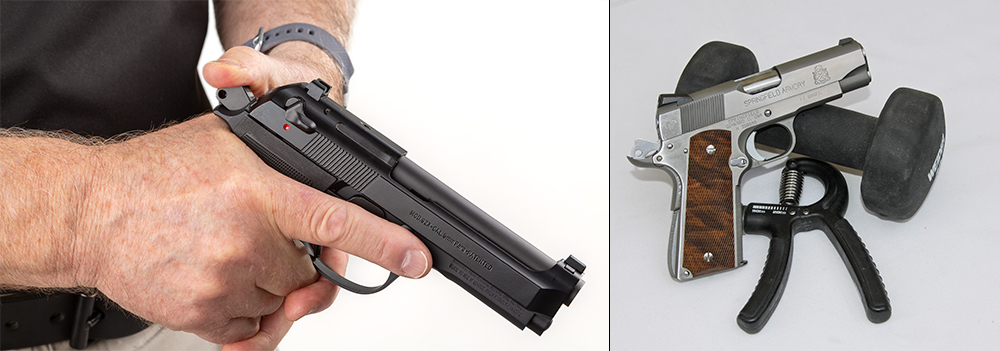
And for those who have trouble racking the slide on a Government Model 1911, I have found that by cocking the hammer first, the slide goes back much easier, as it is not pushing against the hammer’s mainspring. In the same way, my Beretta M9 has a very practical slide design for easier racking, at least for me; those “ears” on either side of the slide make it much easier to grasp and rack. Plus, with most exposed-hammer, DA/SA semi-automatics like the Beretta M9 and 92 variations, you don’t have to struggle to get off that first double-action shot. Keeping your finger off the trigger, cock the hammer first for an easier-to-pull, single-action first shot.
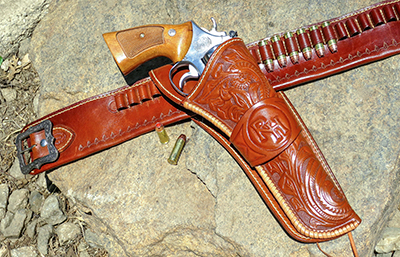
And finally, when I had a pinched nerve in my right shoulder a few years ago, my primary care doctor (who is also an NRA member) suggested that I should consider using a cross-draw holster—as that cross-body motion did not cause my shoulder any pain. Thankfully, my pinched nerve eventually went away, and in the process, I ended up with a couple of new cross-draw holsters—both thanks to my doctor.
To be sure, as we reach that “vintage” stage in life, some of us start requiring a little more maintenance, and yes, perhaps a few new parts, just like the guns we shoot.
U.S.A. -(AmmoLand.com)- “How many mags do you need?” is an often-asked, albeit somewhat pointed, question by wives to their husbands when a gun collection is seemingly growing out of control. And to the non-gun-person, it seems like a straightforward one – but it’s definitely not.
Why? Because the answer is, “it depends” and if you’re already imagining your wife’s furrowed brow, read on. I’ve got the perfect answer, and a rule of thumb to abide by when trying to answer that imponderable question to the most important person of all – yourself.
All of them! OK, no, not all of them, but that often feels like the right answer. But like I said before, the proper response to that question depends on a number of factors as well as the gun itself, the role that gun serves, and the manufacturer and age of the gun. So let’s dive right in.
For those of you reading who have the attention span on a gnat, buy between three and five magazines, and you should be solid. Three magazines means you’ll have enough to shove in a bugout bag without having to worry about having enough ammo on you for a life-or-death scenario, while five ensures that plinking sessions on the range are spent shooting and not loading magazines.
Personally, I’m not happy when I buy a new gun if I don’t at least have three magazines for it. And this is a rule I followed even when I was a poor college kid literally eating instant noodles to save up enough cash to buy ammo and magazines for my favorite guns. And before you tell me that inflation has made this infeasible, I did so in a ban-state, Massachusetts. So I was paying $30 for AR-15 and AKM magazines that the free parts of the country only had to spend 10 bucks on.
But there are vastly more factors to take into account, so read on.
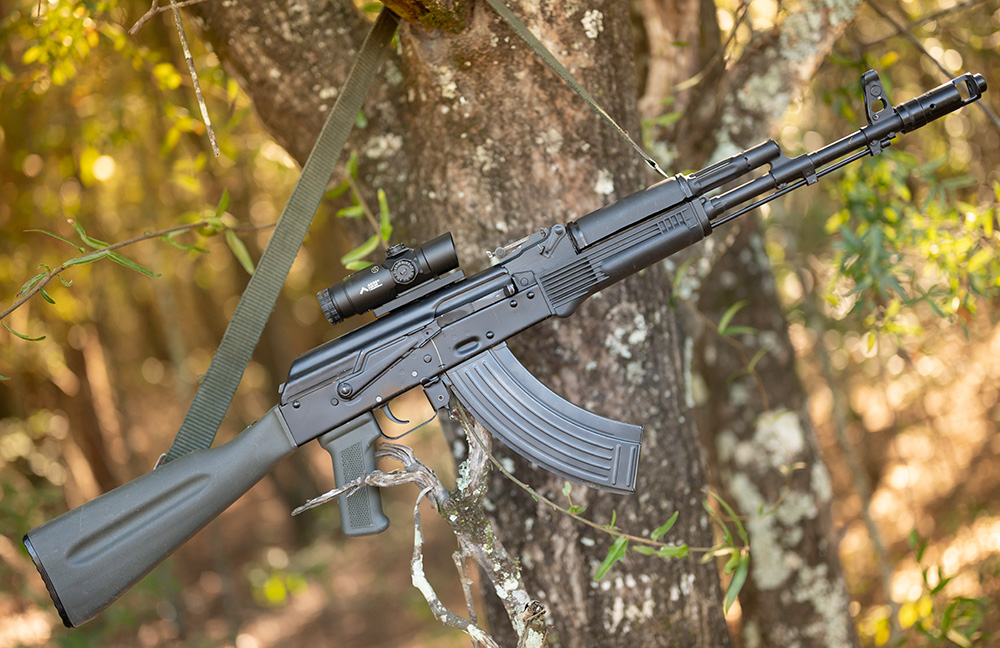
The aforementioned rule isn’t a hard one at all. More of a basic guiding principle. In fact, I normally suggest new shooters go with a minimum of three magazines for magazines that hold more than 15 rounds. This just helps with extending shooting range sessions and preventing them from having to fight sore fingers from loading magazines when learning the basics of shooting.
For guns like the M1911 that only hold between seven and 10 rounds, I recommend a minimum of five magazines. That allows a shooter to load an entire box of pistol ammo in magazines which makes transportation easier with the benefit of not having to constantly load magazines at the range. One exception to this exception (exception inception?) is concealed carry and home defense guns. For these guns, I always recommend a minimum of five mags.
Yes, this can be expensive, but as I mentioned previously, spend your time wisely practicing, not loading magazines. This is doubly so for shooters who don’t have access to a private range or have to drive a long distance to one. After all, do you really want to drive 90 minutes to the range only have enough time to shoot 50 rounds of 9mm before driving another 90 minutes back?
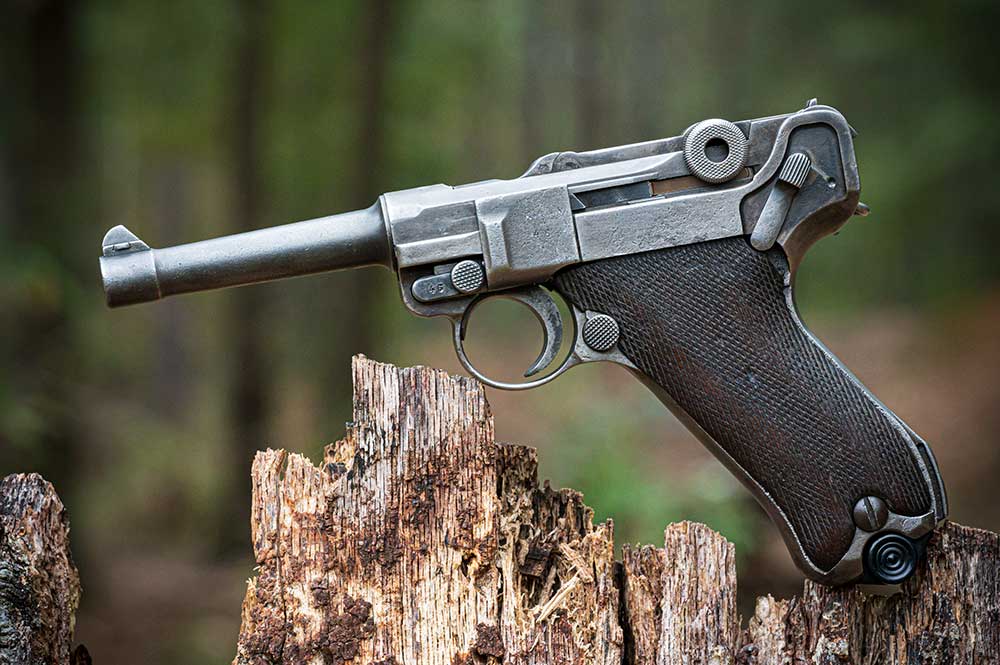
While your favorite gun may have cheap, plentiful magazines available for it right now, who knows what the future may hold? This is why when surplus AKs and accessories were coming in from overseas at very affordable prices, I told friends to buy as many magazines as they could afford because they’ll only become more expensive. Ask guys who bought FALs 20 years ago, or M1 carbines in the 1970’s – ammo and magazines have gone up exponentially in price since then. An older shooter once told me, “Today’s high prices are tomorrow’s deals.” and his advice continues to prove itself true.
So how many magazines should you buy for a gun whose magazines are currently affordable? Ideally, a minimum of 10. But if you see them for an insanely low price, buy more. I own several dozen firearms and hundreds of magazines, and not once have I ever said, “I wish I hadn’t bought so many magazines!”

While I’m sure most of you know this, I feel I would be remiss if I didn’t bring it up. Stay within your budgetary constraints. Don’t prioritize magazines, ammo, or guns (unless things are looking very dire, and you don’t have anything to defend your family and yourself with) over any essentials. Yes, it would be very cool to own a Barret 50 with enough ammo to keep it fed for years, but if doing so results in your family living in rags, it probably wasn’t the right choice.
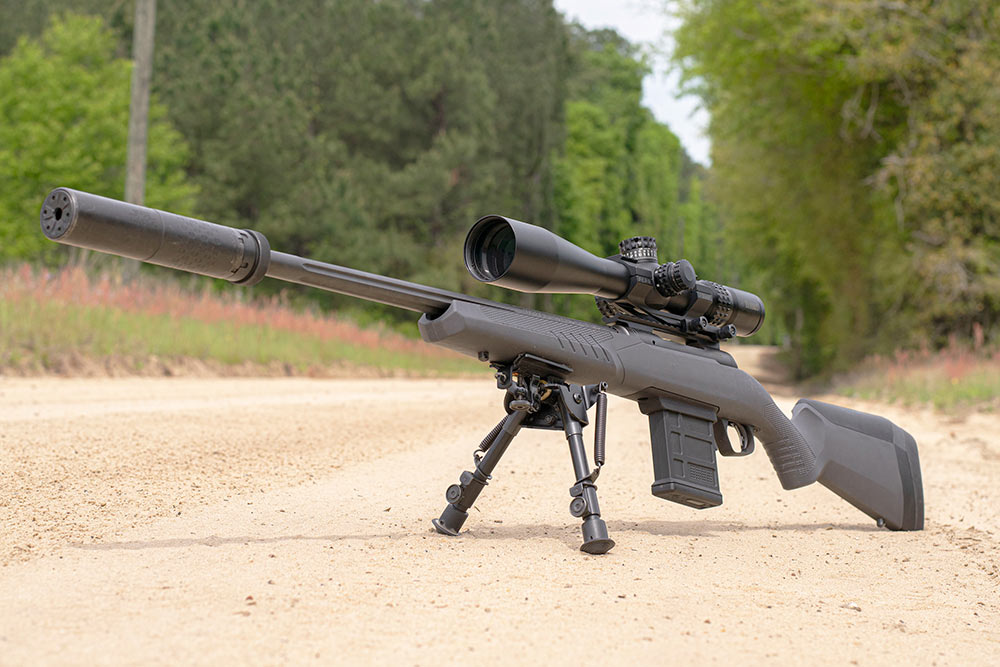
I already touched on this early with the concealed carry guns, but some guns don’t really need many magazines. For example, a PRS rifle probably doesn’t need five magazines, since you’ll be taking your time firing the rifle at long distances, and basically never doing a tactical reload. Another example would be a British SMLE or a SWISS K31 – yes, both of these guns take detachable magazines, but they can just as easily be reloaded with stripper clips, and spare mags for them are prohibitively expensive.
Again, while the exceptions above still apply, if I’m buying a gun for hard, serious, or competitive use, I like to have five magazines. To me, this strikes the balance between efficient use of time at the gun range and minimizing the monetary impact on my bank account. But maybe I’m crazy, and I actually need 50. Tell me how many magazines you think a shooter needs in the comment section below.
About Jim Grant
Jim is one of the elite editors for AmmoLand.com, who in addition to his mastery of prose, can wield a camera with expert finesse. He loves anything and everything guns but holds firearms from the Cold War in a special place in his heart.
When he’s not reviewing guns or shooting for fun and competition, Jim can be found hiking and hunting with his wife Kimberly, and their dog Peanut in the South Carolina low country.


President Joe Biden called on Congress to pass an assault weapons ban after six people, including three children, were killed in a school shooting in Nashville, Tennessee on Monday, the White House said. “We have to do more to stop gun violence. It’s ripping our communities apart,” Biden said at the White House. “I call on Congress again to pass my assault weapons ban.”
The Nashville shooter, a 28-year-old woman fatally shot by officers at the scene, had at least two semi-automatic rifles and a handgun, police said.
Biden, a Democrat, has repeatedly called for a renewed assault weapons ban and stricter rules on gun sales, measures that need to pass Congress.
The House of Representatives is controlled by Republicans; and any new gun safety legislation is unlikely this year, key lawmakers say.
“How many more children have to be murdered before Republicans in Congress will step up and act to pass the assault weapons ban, to close loopholes in our background check system or to require the safe storage of guns?” White House spokesperson Karine Jean-Pierre told reporters before Biden spoke.

For about 100 years, the M1911 pistol was nearly synonymous with the .45 ACP that it was designed to fire. Sure, the .38 Super was trendy in the 1930s and again in the 1980s, but, for most shooters, mention of the M1911 pistol implied .45 ACP. I remember Ken Hackathorn showing off a custom M1911 in 9 mm Luger to a group of shooters about 18 years ago and hearing him say how sweet it was to shoot, but at that time it was basically a custom-only proposition. I found a Springfield Armory 9 mm conversion some time after and tried it on my trusty M1911 with mixed results. Neither accuracy nor reliability met my expectations, but Ken was right; the shooting characteristics were promising.
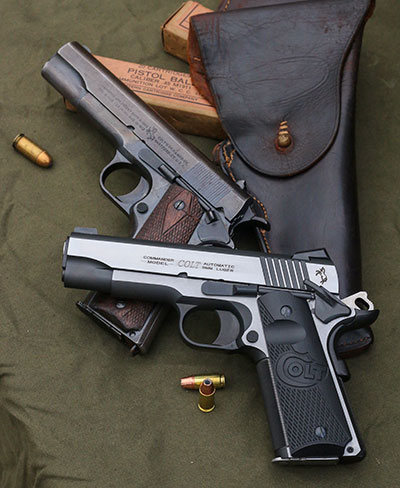
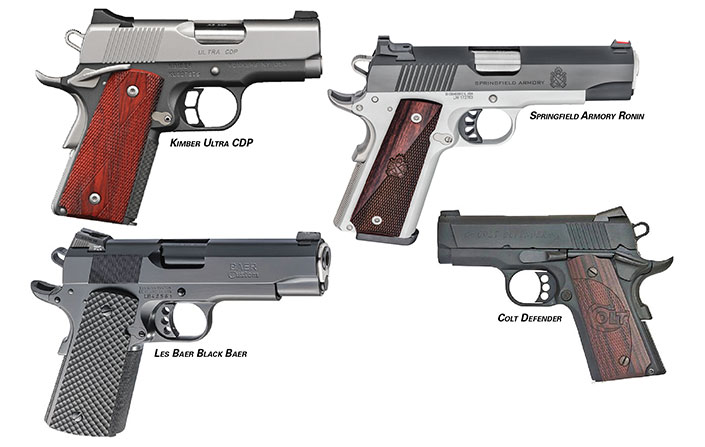
A few years later, custom 9 mm M1911s were popping up with greater frequency, and a few years after that mainstream makers began releasing models. There were a few primary options from big names for a bit, and then the market opened up with a broadness that suggests a genuinely hot trend. As an example, Colt alone has 17 different options in 9 mm Luger M1911s as of this writing. These range from traditionally styled carry models to competition-specific versions to full-featured specials such as the Combat Elite pictured here. It took a century, but a great pairing can’t be kept apart indefinitely.
Generational Pull
I strongly suspect the current trend is fueled in large part by shifting perspectives on the 9 mm Luger cartridge itself from shooters across each generation. There is a sort of generational alignment with each group interested in 9 mm M1911s, although each has its own different reasons.
The silent generation and baby boomers largely drove the M1911’s refinement from either a tired service pistol or specialized bullseye target tool into the refined and customized combat pistol that we envision as today’s M1911. The pistol dominated early IPSC/USPSA competition, and with beavertails, better sights, extended controls and lengthened triggers, filled the holsters of elite military units and the FBI’s Hostage Rescue Team. These shooters, however, primarily viewed the M1911 as a tool specifically for launching the .45 ACP. Even when they did hesitantly embrace the 9 mm Luger cartridge, it was partly to take advantage of the capacity offered in double-stack platforms, such as the Beretta 92 and Glock 17.
With the passage of time, many of these shooters are now at an age where the recoil of even moderate .45 loads can be unpleasant on wrists and finger joints that have been hard at work for 60 to 80-plus years. These shooters have embraced the recent availability of the 9 mm M1911 as a way to keep shooting the platform they know so well and love. The 9 mm Luger chambering allows them to actually enjoy shooting or allows them to shoot a few more magazines of ammunition during a range session.
Another factor for the more seasoned shooters is that no cartridge has received the engineering and research and development attention that the 9 mm has, and modern loads are a far cry from the loads available during the boomers’ early shooting years. Lurid “9 vs. .45!!!” headlines sold a lot of gun magazines for many years, but don’t generate nearly the interest today now that we have decades of successful 9 mm use by law enforcement.
On the other end of the spectrum are the millennials. These shooters grew up in a 9 mm world where the pistols they saw on police gunbelts were Glocks, and the U.S. military was issuing Berettas. Every hero on both big and small screens was using a 9 mm. They often look at the .45 ACP much as my generation may view .45 Colt or .44 Spl.—a pleasant historical curio associated with another era. When the millennials began to dabble in M1911s they naturally wanted pistols in 9 mm Luger, and the market was just beginning to deliver.
It is the convergence of the older and younger generations having an interest in 9 mm M1911s that is fueling the wide availability. Of course, in between there are plenty of Gen X’ers like myself who simply enjoy the high-performance aspect of the legendary M1911 characteristics in a low-ammunition-cost, low-recoil, highly shootable package.
Performance
The 9 mm Luger-chambered M1911 is about as soft-shooting as a platform can be, particularly if the shooter tunes the recoil springs to standard-pressure loads. It is an absolute “ah-ha” moment of wonder that is fun to watch when someone accustomed to a typical 9 mm pistol fires their first few shots through the metric-sized M1911. They are genuinely surprised, and the comments among more experienced shooters typically include the terms “smooth-,” “soft-” and “flat-” shooting, often with immediate statements of intent to get one for themselves.
Aside from the softness, shooters who grew up on striker-fired pistols getting their first taste of a good M1911 trigger suddenly “get it” and are struck by how easy the platform is to shoot well. These shooters often shoot both faster and more accurately than they realized they could with the 9 mm M1911—and are near-instant fans. They may or may not set aside their current carry or defensive pistol, which is likely lighter, may have double the capacity and requires less maintenance, but they enjoy the M1911 in a way that probably surprises them. My father enjoys most semi-automatic pistol designs and shoots them well on his occasional trips out to the range. He shot exceptionally well with a 9 mm M1911, noticeable to the point that he surprised even himself.
In my own hands, I have come to realize that in many shooting scenarios for both speed and accuracy I will approach or set my best possible performance with a 9 mm M1911. During the past four years, I’ve tested six different 9 mm M1911s. Some have been featured here, such as the Rock River Poly and the Springfield Ronin. During this same time there have also been plenty of high-quality double-action/single-action and striker-fired guns that have passed through my hands. I enjoy each type and can use each with equal confidence. However, my personal data shows the 9 mm M1911s holding the top slot in accuracy as well as speed at the moment. A few of the top slots in some drills belong to customized double-action/single-action Berettas, but I am at the point where I often establish a benchmark for “good” with the single-action 9 mm and then see how other models compare.
It may not be the same way for everyone, but oftentimes I can actually outrun a semi-automatic .22 rimfire pistol with a 9 mm M1911, the faster perceived return to battery of the 9 mm compensating for the increase in muzzle rise. Even when the metric M1911 does not outshoot other platforms, it can often feel like it is—high speed or high accuracy just seems to come with a little less effort or more consistently with the single-action .35 cal. Plate racks at 10 yds. are a good example. I can run the plates about 15 to 20 percent faster with the 9 mm M1911 than I can with a tuned, striker-fired pistol, measuring bests with each platform. More importantly perhaps, my “safe” speed with the 9 mm Luger M1911 tends to be nearly the same as my “flat out” speed with favored Glock 17s.
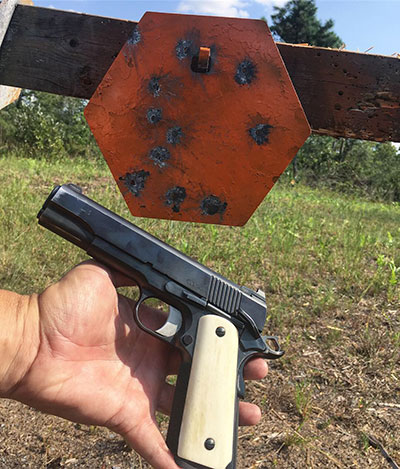
The earliest attempts to adapt the 9 mm Luger cartridge to the M1911 platform were somewhat mixed. The M1911 was designed around the .45 ACP, and the differences between the cartridges required some problem solving. I think the industry has largely moved beyond those initial hurdles, and current pistols seem to be reliable for the most part. One caveat goes for the M1911 as a whole, especially for the generation that “grew up Glock.” It is important to keep in mind that the M1911 thrives on regular lubrication at the locking points and along the contact surfaces. Some M1911s can require a reasonable level of cleanliness to prevent some balkiness, and brushing/wiping off the gunk at 300- to 500-round intervals might be prudent, whereas a Glock would be largely unaffected.
Perhaps the largest issue as a whole with the M1911, whether 9 mm or .45, is its internal extractor, which is essentially a tensioned hook. Although it can be perfectly reliable across many decades—I’ve fired multiple 100-plus-year-old M1911s that are still chugging along fine—some factories seem to set them haphazardly. The resulting unreliable extraction is fixed easily enough by the shooter with the aid of Internet videos and judicious flexing. The final caveat is that some shooters report their 9 mm M1911s as being magazine-sensitive. I haven’t experienced this in the current crop of pistols, but I have seen it in many .45s, so I wouldn’t be overly surprised to find a particular pistol that has preferences. Such considerations are just part of the M1911 landscape that includes its much-admired qualities.
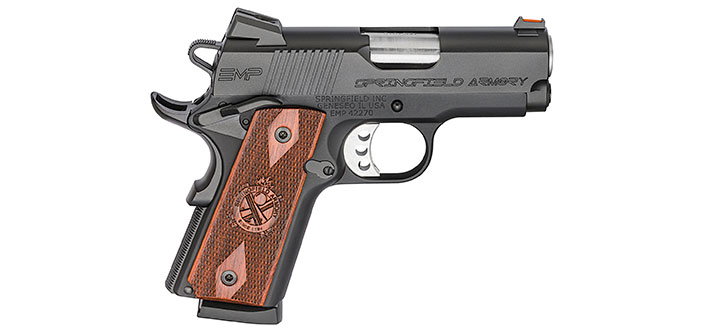
For the past two years, I’ve used a Dan Wesson Valor 9 mm with the high-polish blued finish that, sadly, has been discontinued, as one of my primary training and teaching pistols. I stopped rigorously tracking the round count after about 3,000, but the pistol has chugged along as smoothly and reliably as I could ask for. I give it a casual cleaning at about 1,000-round intervals and put three drops of Wilson Combat Lite oil on after most range trips, and the Valor runs without complaint. I’ve used both Wilson Combat and Metalform 10-round magazines with success other than a couple of the Metalforms that do not always drop completely free.
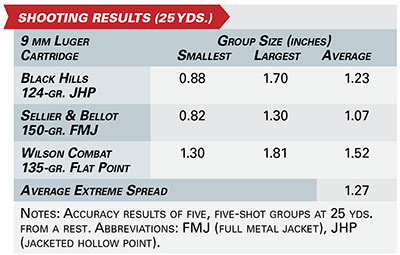
The M1911 is well-known for a great trigger and ergonomics, and the platform itself is often associated with accuracy. Of the 9 mm examples I’ve handled, accuracy has ranged from the better side of average to exceptional, with the median being pretty impressive. My Valor is a great example, with Sellier & Bellot’s new 150-gr. flat points averaging just barely over 1″ at 25 yds. The cumulative average of 18 different loads (three listed below plus others from Federal, Speer, Hornady and handloads) was an impressive 1.45″.
With that kind of precision underneath an M1911 trigger, and launching with relatively low recoil, real magic is possible. Shortly after I first picked up the Valor, I discovered that the regulation of the fixed sights allowed a repeatable hold on my 8″ steel plates out to 70 yds. I soon realized that if I did everything right the Valor would reliably ring that steel. It was a confidence booster that led to attempts on the 70-yd. plate becoming a regular thing during my range trips.
Last spring, I was also working with a vintage National Match M1911, and over a period of weeks progressed through five straight hits, then eight, and even 10 out of 11, but 10 straight hits remained agonizingly just beyond reach. Later in the fall, I had the Valor out and was confirming hold at the 70-yd. plate with Speer 147-gr. Lawman and had that twinkly feeling that the light was perfect (seeing the small plate clearly behind the front sight is a large chunk of the challenge) and each shot was breaking unusually cleanly. I refilled the 10-round magazine and paced back to my 70-yd. spot. Flattening the first eight bullets onto the plate came unusually easy. Prior to the ninth I had to take a few moments to steel my nerves and the ‘Ding!’ had the sound of a hit toward the edge of the plate. I had a great feeling of confidence prior to the 10th shot that the months-long goal was just on the other side of one last press of that crisp M1911 trigger. The steel confirmed my hold, the ringing mixing with the barely suppressed cheers inside of my head. I raised the Valor and added an 11th hit just to fully slay the dragon.
 I look at the 9 mm Luger-chambered M1911 primarily as a skill-building tool, but it is also one of the most enjoyable 9 mm platforms for a casual range day. In fact, when someone is asking my opinion in the “what pistol should I … ” query—and the foremost purpose is simply enjoying range time and not CCW, home defense, etc.—I will often throw the 9 mm M1911 out there as a leading option. The 9 mm version of “Old Slabsides” also tends to give a pride of ownership that appeals to this type of shooter much more than the mainstream polymer/striker-fired pistols. Of course, that is not to suggest that a 9 mm M1911 is not a serious tool; I have several friends who carry pistols similar to the Colt Combat Elite every day. They don’t mind the extra ounces or the single-stack magazine capacity. While I have other primary carry pistols, I have certainly carried the Valor without concern on many occasions.
I wouldn’t be surprised if the 9 mm accounts for a larger percentage of M1911 sales with each of the next few years. I also think that the popularity of the platform and chambering is driving other innovations that attempt to capture M1911 feel and trigger qualities paired with a double-stack magazine. Pistols such as the Wilson Combat EDC X9, Staccato P and Dan Wesson DWX probably owe their market interest in part to the current 9 mm M1911 trend.
It is a small wonder that the cartridge that was associated with and has “Luger” in its name has become so popular in the iconic American pistol, but shooting one confirms that the 9 mm and the M1911 are a perfect pair.