Categories
All About Guns

What I call another good start!

Categories
All About Guns Allies

I Fell in Love with Skeet – The World Skeet Championships 2024

Categories
All About Guns Ammo

The .221 Fireball Cartridge: The Little Round that Can By Steve Gash

The .221 Fireball is a nice, mild, “Goldilocks” cartridge that is “just right” for informal target shooting, hunting varmints, and eliminating pesky garden-raiding rodents.

In 1963 Remington shocked the shooting world by introducing the XP-100 bolt-action pistol. Recall that in those days there weren’t such firearms—except in a few arcane custom guns. The famous Wyoming elk guide Les Bowman introduced the gun to the world in the 18th annual edition of Gun Digest that same year.

While extolling the accuracy of the new pistol, Bowman did not call it a “handgun.” Instead, he termed it a “holster rifle.” Another writer later christened the XP-100 a “hand rifle,” and that name seems to have stuck for guns of this ilk.

Remington’s new gun caused quite a stir. Some of it was due to the shooting public either loving it or hating it. Some of the to-do was about the unique new cartridge that the XP-100 brought forth. It was—and is—called the .221 Fireball.

The .221 Fireball is based on the .222 Remington, predating what would become the .223 Remington by a year. For the Fireball, the .222 Rem. case was shortened by 0.30 inch, but the general body configuration and the 23-degree shoulder angle were retained. It is a cute little case, and handloaders took to it like, well, you know. Despite its moniker, bullet diameter is 0.224 inch. The cartridge is accurate, efficient, and economical. What’s not to like?

Some “pistol” cartridges are of dubious value but make terrific rifle cartridges, and the .221 Fireball is one of the best. Unfortunately, in the early days, there were darn few rifles made for it. The original Kimber of Oregon Model 84 and the CZ Model 527 were chambered for it, and in 2002 Remington produced 3,567 Model 700 Limited Edition Classic rifles chambered for it.

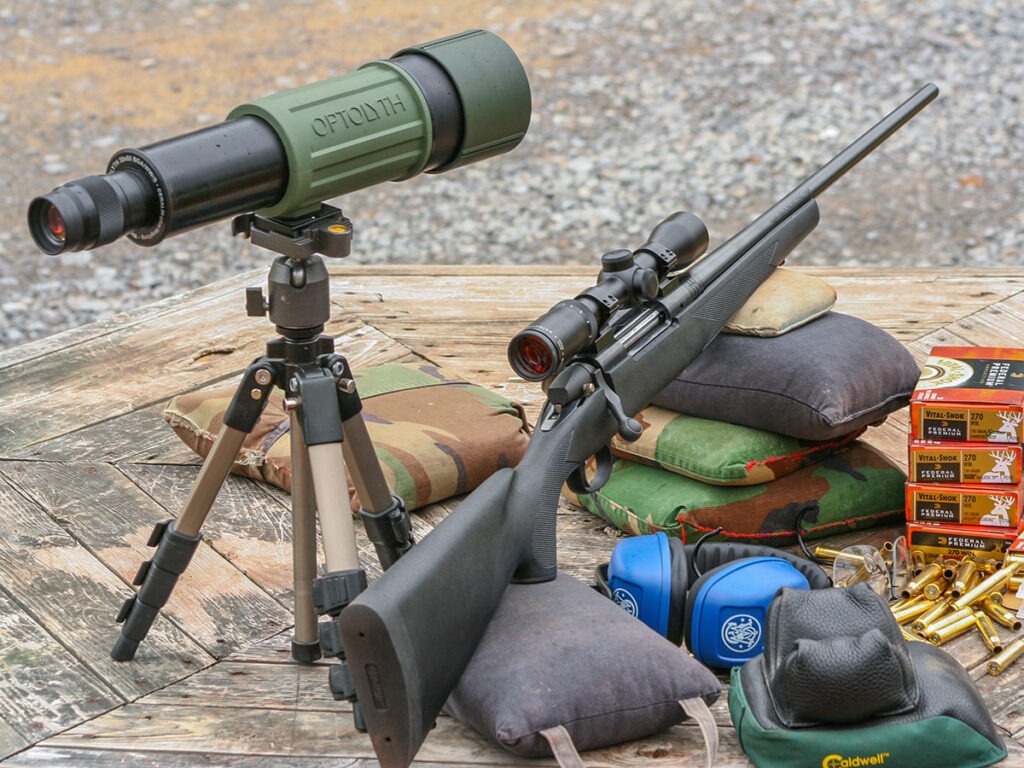
The .221 Remington Fireball is a terrific cartridge out of a sporter rifle. Steve’s rifle is a Remington Model 700 ADL that was re-barreled by Pac-Nor.

I got into the Fireball game almost by accident. In 1993 I was browsing in a very small gunshop when, low and behold!, I saw on a shelf a used set of RCBS .221 Fireball dies. The price was only $10! Of course, I bought them, never mind that I didn’t have a rifle or an XP-100 chambered for it. Heck, I didn’t even know that my life would not be complete without a Fireball gun of my very own.

The scarcity of guns did not deter me. I started with a Remington Model 700 ADL in .222 Rem. and had it re-barreled to .221 Fireball by Pac-Nor. I added a Timney trigger and a Gre-Tan Rifles firing pin assembly, and it blossomed into a wonderful shooter.

The .221 Fireball’s small case results in full-case loading density, which promotes uniform ballistics.

Easy to Load and Economical

Handloading the .221 Fireball is easy, fun, and economical. Load data are available in most of the major reloading manuals, and there are dozens of loads listed on the online Hodgdon Reloading Center for free. All the major manufacturers make reloading dies, and since the rim diameter of 0.378 inch is also retained, the shellholder (RCBS #10) is the same one used for other members of the .222 Rem. family, e.g., .223 Rem., .222 Remington Magnum, 6×45, and many wildcats.

Another plus is there are .22-caliber bullets by the zillions—of all types, shapes, and weights—within the Fireball’s range of capabilities. The .221 Fireball’s standard twist rate is one turn in 14 inches, so (usually) bullets 55 grains or heavier at .221 Fireball velocities aren’t spun fast enough to stabilize and shoot accurately. However, the 1:12 twist in my rifle handles bullets up to 55 grains quite well.

Because the usual targets of a .221 Fireball firearm are LFCs (little furry critters), the typical 1:14 twist is of little consequence, and there are plenty of lighter-weight .22-caliber bullets that spell doom for those LFCs. The pelt hunter can choose bullets with heavier construction or use a monolithic solid for furbearers. Just keep such a solid or tough-jacketed bullet at full throttle so that it will penetrate straight through and not tumble and ruin the pelt.

In addition to being extremely accurate, the .221 Fireball is downright stingy on powder. In fact, most charges are around 17.0 to 17.5 grains, and that means a pound of powder will load at least 400 rounds. There are many suitable powders that can be used in the Fireball.

Recommended

In a nutshell, one should look for what we might call “really slow” pistol powders or “really fast” rifle powders. However, the .221 case is rather small, so you can run out of case volume before you get enough powder in the case for the bullet to reach cruising speed.

The limited case volume means that most loads shown in my chart are compressed. In fact, in many loads, the case is lippin’ full, right up to the mouth. Benchmark, IMR 8208 XBR, and Reloder 7 fall into this category. No problem. Just carefully seat the bullet to the proper cartridge length, and you’re good to go. Faster-burning, fine-grained powders like spherical propellants work well in the Fireball and flow through a drum powder measure very uniformly.

I have tried literally hundreds of load recipes in my rifle, and those shown in the chart are just examples of combinations that “fit” in the case and delivered good ballistics and accuracy in my rifle. The loads that I fired in my rifle averaged 0.77 inch, with most under 1 inch. The mild report and absence of recoil are additional virtues of the .221 Fireball, as they make shooting a delightful pleasure rather than a pounding chore.

I’ve also included several loads in my chart that came from my colleague Lane Pearce. He fired those loads in his 10.75-inch-barreled XP-100. I don’t own an XP-100, so I’m glad he contributed this information.

The careful observer will notice that the bullet weights in the chart include 52-grain and 53-grain bullets, and they shot well in my rifle. One “tough” bullet was included, the Norma 55-grain bonded Oryx. It is short enough to stabilize in my rifle, but if you want to use it, check it out on the range to see if the bullet holes are round and not oblong. A caution: I have tried some longer, 55-grain Spitzer boattails, and most did not shoot well because they are just too long. But as I noted earlier, this is no problem because the delightful little cartridge certainly carries its own weight in the field and on the range. Actually, I think the compromise of using 50-grain to 53-grain bullets is worth the trade-off of velocity for downrange energy, and I use more 50-grain bullets than other weights.

If Steve had to pick just one all-around powder for the Fireball, he’d choose Hodgdon’s Lil’Gun, sparked by Remington No. 7ó primers.

Handloading Hints

Okay, let’s talk specifics of handloading the .221 Fireball. Probably the most important point to keep in mind is that this cartridge is not a magnum and trying to make it into one will end in frustration. The .221 Fireball is a nice, mild, “Goldilocks” cartridge. It’s not too big, not too small, but is “just right” for informal target shooting, hunting varmints, and eliminating pesky garden-raiding rodents.

As I noted earlier, in the early years, only Remington made cases, but these days other firms, such as Lapua, make them. Even with new cases, it is a good idea to full-length size them to make them as uniform as possible.

Then there is the question of primers. It is almost an article of faith that one should use “mild” primers, i.e., the Remington 6½, CCI BR-4, and similar caps. Could be, but at least in my rifle, I had good ballistic uniformity and accuracy with both the Remington 6½ and “hotter” primers, such as the Remington 7½ (referred to as a “Small Rifle Magnum” primer). All I can say is try both types and see what’s best in your rifle.

When it’s all said and done, the .221 Fireball reloader can get by with just a few powders for most loads. A good example is Alliant’s Reloder 7, which works great with 40-, 45-, and 50-grain bullets. It meters uniformly, and it fills the case for good loading density—just be careful moving a charged case from the loading block to the shellholder, as you don’t want to spill any kernels. The Nosler 40-grain Ballistic Tip likes 18.0 grains for a sizzling 2,930 fps. A charge of 17.9 grains with the Hornady 45-grain Hornet bullet clocked 2,746 fps and averaged a hair over a half-inch. And the Hornady 50-grain Spirepoint over 17.8 grains gave a velocity of 2,722 fps with groups averaging 0.68 inch.

Several other propellants work well, too. As shown in the chart, Accurate 1680 and 2015 have their sweet spots, as does IMR 4227. These are a nice fit. Another pair is IMR 4198 and H4198, although they really fill up a case in a hurry and are also a bit bulky for the case.

As for performance in the field, I confess that I have never addressed a prairie dog town with my .221 Fireball rifle, but I have, shall we say, “relocated” several grape-eating raccoons from my vineyard to “the great beyond.” A 50-grain Spitzer works especially well here.

I hate to pick a “best” powder, but Lil’Gun from Hodgdon is a real star in the Fireball and is hard to beat with almost all bullet weights. With the Hornady 35-grain V-Max, a charge of 15.5 grains of this spherical powder gave a velocity of 3,495 fps. Lil’Gun also worked well with the Hornady 53-grain V-Max, with 13.5 grains generating 2,962 fps. I also used Lil’Gun for my “heavy bullet” load with the Norma 55-grain Oryx. A charge of 14.2 grains produced a velocity of 2,828 fps and grouped into an inch. I’m not saying this is a “deer load,” but if one is after a larger, edible critter or a prime pelt, it might be just the ticket—if the gun will stabilize it.

The .221 Fireball is a versatile cartridge, and one can duplicate other ballistic notches, if necessary. The grand, old .22 Hornet launches a 40-grain or 45-grain bullet at around 2,800 fps and 2,650 fps respectively. A charge of 17.0 grains of H4198 gives the Sierra 45-grain Hornet bullet a velocity of 2,665 fps, duplicating the .22 Hornet to a tee.

Another “niche” load is the Speer 52-grain TNT over 16.4 grains of Accurate 1680. The velocity is 1,790 fps—almost exactly the same speed as the .22 Winchester Magnum Rimfire (WMR), which is a perfect turkey rifle cartridge if there ever was one. In states where hunting turkeys with rifles is legal, I have used this load with great effect. At this speed, the TNT bullet doesn’t explode, meat destruction is very minimal, and it’s quiet.

As for bulletseating, accuracy bugs dote on the old axiom of 0.010 inch off the lands, and this can work well. However, depending on the throat/leade length, such seating can limit bullet contact with the case neck and affect bullet pull.

That’s an important accuracy component, so I seat bullets in the .221 case so that the base of the bullet is at the start of the neck for full contact. If this harms accuracy, I haven’t noticed it. In actuality, the .221 Fireball is a forgiving round that seems to shoot just about any appropriate combination of primer, powder, and bullet pretty darn well.

A couple of specialty tools will delight the gadget guys. I should mention that several firms make tools like the ones described here, and these are simply the ones I use.

The .221 Fireball is capable of fine accuracy. This excellent sub-MOA five-shot group was made by the Hornady 50-grain Spirepoint over 17.8 grains of Reloder 7 at an average velocity of 2,722 fps.

The Hornady Lock-N-Load O.A.L. Gauge is a nifty tool for quantifying bullet jump. It’s easy to use, precise, and not expensive. A specially modified .221 case (#A221) is available for it.

Setting the resizing die to reduce wear and tear on cases is important. And, yes, there’s a tool for this, too. It’s the Headspace Comparator, also from Hornady. Use it with a dial caliper to set the sizer to reduce the cone-to-head length by a minimal amount, say 0.002 to 0.003 inch to avoid ammo with excessive headspace. Then there is always the neck-size only die, which works great for bolt guns and eliminates the possibility of setting the case shoulder back too much.

Case length is important, but the mild-mannered .221 case doesn’t seem to grow much, so trimming to a length of 1.393 inches is only occasionally required. Sinclair International makes a unique gauge with which the reloader can measure the actual length of the chamber, knowledge that’s handy for determining proper trim length.

As for load testing, I frequently break a cardinal rule here. I have run side-by-side comparisons of the sizes of three-shot and five-shot groups in my rifle, and there is very little difference. So during load development, I often find it worthwhile to shoot three-shot groups in the interest of barrel life and component availability.

When it’s all said and done, the XP-100 may not have set the world on fire, but Big Green did shooters a big favor in developing the .221 Fireball. It is a delightful rifle cartridge for the walking varminter, small-game and hide hunter, and anyone who appreciates accuracy, adequate power, and terrific economy.


Categories
All About Guns

A 2nd. Generation Colt SAA in the classic caliber of .45 Long Colt

Categories
All About Guns

L.C. Smith 12 Gauge Double Barrel Shotgun

Categories
All About Guns

TTi Benelli M2 | Shooting USA

Categories
All About Guns

Pro Tip: How to Zero Your AR-15 with SSG Robby Johnson | Shooting USA

Categories
All About Guns

Ayoob: Why I Don’t Want a Custom 1911 By Massad Ayoob

When I was 10 years old, I read Jeff Cooper’s articles in Guns & Ammo magazine in which he extolled the 1911 “.45 automatic” as the ultimate gunfighting/self-defense handgun. What he wrote made a great deal of sense to me.

All these years later, it still does.

The basic 1911 .45 has been protecting Americans for over a century without needing fancy upgrades. While a custom one can be exciting, in most cases a plain vanilla one gets the job done just fine.

Slim and flat, among the easiest of full-size “fighting handguns” to discreetly, accessibly carry concealed.

Unarguably adequate in power for its task, all the more so today with improved ammunition. It’s been long-since proven reliable. It has a low bore axis to minimize muzzle rise and contribute to accurate rapid fire, and a straight-back, short, easy-to-control trigger pull enhances rapid-fire hit potential under the highest stress imaginable. And, thanks to the genius of John Moses Browning, it has redundant safety features.

Ayoob’s hands-on experience with 1911 models like the Springfield Armory Mil-Spec confirms what generations of shooters already knew — the basic design delivers when it counts most.

Since 1911 — and really, mostly, since 1960 or so — gunsmiths and master pistoleros found ways to enhance the original pistol. Today we have a broad assortment of calibers to choose from, and higher cartridge capacity versions.

We have target sights, we have optical sights, we have laser sights. Clever gunsmiths came up with accessories which reduced both muzzle rise and rearward recoil impulse, colloquially known as “kick.”

But, you know what? While today’s 1911s may have more flavors than Howard Johnson’s famous ice cream, plain vanilla still works pretty darn well.

The Choice of (1911) Flavors

When I was a kid, it was a big deal that Howard Johnson’s had 28 flavors of ice cream. Heck, there are way more than 28 flavors of 1911 when you factor in calibers, sizes, and manufacturers.

Custom gunsmiths can bevel magazine wells and add countless enhancements to 1911 pistols. But a basic 1911 can certainly perform well without these bells and whistles.

Let’s look at just one manufacturer, Springfield Armory. You can get your 1911 in a double-stack 9mm like the Prodigy holding all the rounds you want. You can get several models already cut for optic sights if you shoot better with those. Want something small and light? Turn the catalog page to the EMP (Enhanced Micro Pistol) series. Fancy? They have those too.

Ayoob’s Springfield Mil-Spec proves that basic 1911 models can shoot accurately and reliably without custom work. Also, their price point makes it accessible while delivering proven performance.

Still and all, for many shooters’ needs a “plain Jane” version will suffice. Your basic 5” barrel all-steel 1911 .45 auto is the gun that earned its rep from the trenches of World War I to the proverbial sands of Iwo Jima to the tunnels of Vietnam, and even found its way into the 21st century’s war on terror.

In its standard configuration it was carried in the holsters of many Texas Rangers and other lawmen, and protected the homes of countless Americans. Pistol-packers discovered early on that its slim profile made it easy, comfortable, and surprisingly concealable in everyday carry.

Features You Need

One thing that drives the purchase of a basic 1911 is economy, simply because additional bells and whistles are expensive for the manufacturer to produce. The exemplar of a plain 1911 that I’ll use here is the Springfield Armory Mil-Spec, which carries a manufacturer’s suggested retail price starting at just $725. Many makers’ top-of-the-line 1911’s will run $3,000 or more. For three grand you can buy three Mil-Specs and have money left over for holsters and ammo.

While skilled gunsmiths have been tricking out 1911 pistols with countless improvements, the basic 1911 has inherent strengths — and is a proven design.

Reliability of function is a non-negotiable baseline for any firearm, particularly so with one intended for self-defense purposes. A lot of the old military surplus 1911 .45 pistols were designed only for round-nose, full metal jacket ball ammunition and might malfunction if fed modern hollow points.

The Springfield Mil-Spec is factory “throated” to feed the desirable-for-defense jacketed hollow point. My sample has been satisfyingly reliable in that respect. [Read Ayoob’s review of the Springfield Armory 1911 Mil-Spec for more information.]

Adequate power is another definite need in a defensive handgun. Certainly, the general consensus of both military and law enforcement today is that with modern ammunition the 9mm is not inadequate. However, in its original chambering of .45 ACP, no one questions that as handguns go — it has a more than adequate power level.

As For Wants…

I for one like adjustable sights. That said, I don’t consider them essential. Our military has never issued adjustable sight service pistols except to pistol teams and, when they had revolvers, USAF police.

Modern police service autos didn’t generally have adjustable sighting until the recent trend to carry optics, and I’ve won IDPA and police PPC Service Pistol matches with fixed sight guns as have a great many others.

To avoid grip tang pinch, feed the 1911 into the firing hand at this angle, with tight contact to web of hand.

The rear fixed sight on a Mil-Spec 1911 sits in a dovetail and can be drifted laterally to adjust for windage. If a fixed-sight 1911 “shoots low,” a little judicious filing of the top of the fixed front sight can bring point of impact up to point of aim.

Weapon-mounted lights? You can pay a little more and have a 1911 with extended dust cover cut for mounting of an “on-board flashlight.”

However, its holster will be necessarily bulkier and harder to conceal. Before WMLs became popular, we all got by learning to mate a pistol in the dominant hand with a flashlight held in the support hand, and those techniques still work. Moreover, us old gun guys who’ve been doing this for a while have accumulated lots of 1911 holsters which fit standard configuration pistols but not those shaped to mount light attachments.

Conclusion

Yes, you can spend a ton of money on a 1911 with all the bells and whistles. You can take a basic gun to a custom shop and have them completely trick it out with every option imaginable. Is that fun? Sure. Is it necessary? That’s a whole separate question.

If you ask me, the plain vanilla 1911 .45 has served to protect very well for well over a century. It can obviously continue to do so. With a pistol like the Springfield Armory Mil-Spec, you have a great gun for a great price that is proven and reliable. Sounds like a winner to me.

Categories
All About Guns

I have always wanted to go here!?

Categories
All About Guns Fieldcraft Hard Nosed Folks Both Good & Bad Manly Stuff Real men Some Red Hot Gospel there!

How to Survive a Gunfight By Steve Tarani

Soon after leaving public office, the 26th President of the United States Theodore Roosevelt (1901-1909) delivered a world-famous speech in France, a part of which later became one of his most often quoted. Referred to as “The Man in the Arena,” it provided insight into the perspective of combatants who perform well under pressure.

Developing skills to respond quickly and decisively is essential for surviving a violent encounter. Proper training builds confidence and effective reactions under stress.

“It is not the critic who counts; not the man who points out how the strong man stumbles, or where the doer of deeds could have done them better.

The credit belongs to the man who is actually in the arena, whose face is marred by dust and sweat and blood; who strives valiantly; who errs, who comes up short again and again, because there is no effort without error and shortcoming; but who does actually strive to do the deeds; who knows great enthusiasms, the great devotions; who spends himself in a worthy cause; who at the best knows in the end the triumph of high achievement, and who at the worst, if he fails, at least fails while daring greatly, so that his place shall never be with those cold and timid souls who neither know victory nor defeat.”

What Roosevelt so eloquently shed light upon was the depth of human will, self-determination, and mental fortitude it takes to perform under extreme duress. What was true at the turn of the 20th century and later proven by the belligerents of both world wars, is true to this very day, that only the strong survive.

Understanding the fundamentals of self-defense is a key component in preparing for unexpected threats. Practice and mental readiness help improve your chances in critical situations.

When Wyatt Earp was asked about winning gunfights, he attributed his success to, “Going into action with the greatest speed which a man’s muscles are capable, but mentally unflustered.” Given the critical importance of staying cool under pressure, it is no secret that the likes of war fighters and law enforcement professionals think clearer and perform better in violent physical altercations.

Back in the day, the term “steely-eyed gunfighter” was attributed to those gunslingers who possessed both the physical skills and mental strength needed to ply their trade. Physical prowess, although certainly a contributing factor, must be preceded by an unyielding and pervasive mental fortitude afforded only to those possessing coolness of mind referred to by legendary gunfighter Wyatt Earp as “mentally unflustered.”

Being able to act with calm determination is vital in any high-stress environment. Consistent training ensures your abilities are reliable when it matters most.

Fast forward to today, what three things can you do to be mentally unflustered should you find yourself needing to win a fight? Let’s begin with competency, consistency, and inoculation.

Competency

Think about going in for critical heart or eye surgery. Odds are that you would want a seasoned doctor that has about a thousand or so of these operations under his belt — preferably performing 20 of these a week for the past 20 years. When it comes to something that serious, you would place your trust in the most experienced physically and mentally competent practitioner. When it comes to surviving extreme physical violence, why wouldn’t you want that same competency to ensure your safety and that of those you care most about?

Training for high-stress encounters can make a critical difference in your ability to respond under pressure. Building both mental and physical preparedness is key to surviving dangerous situations.

“Repetition is the mother of all skill” is a quote attributed to the hard skills masters of antiquity, dating back to ancient Rome. In meaningful training, the key to competency is nothing more than a countless number of precisely executed repetitions.

Practice makes permanent. As poor, or shoddy practice can create training scars, so does perfect practice (technique executed correctly) make permanent. The greater your competency the greater your confidence. The greater your confidence the lower your stress.

Consistency

The learning process is nothing more than differentiating “right” from “wrong.” The only way to truly learn is by making mistakes. Only by doing something wrong can you know its opposite — doing something right. For example, there are a hundred things you can do wrong when shooting that cause you to miss a target.

However, there’s only one way not to miss a target and that is to align the muzzle with the target and break the shot without disturbing that alignment. Sounds simple until you try to do it. Apply even the slightest layer of complexity such as speed, distance, movement, cost for failure et al and you introduce factors that directly impact your consistency.

This image depicts a person drawing a handgun from a seated position in their vehicle, emphasizing the need for realistic self-defense training in diverse environments. The setting reinforces the article’s message about adapting skills to meet the challenges of sudden, close-quarters threats such as carjackings. Safe handling and awareness are evident, reflecting the mental and physical preparation recommended for surviving a gunfight. The scene is designed to illustrate practical considerations for self-protection, including drawing from concealment while restricted by seat belts and vehicle interiors. Consistent, scenario-based practice is suggested for anyone interested in developing the competence needed for personal safety. The action in the photo aligns with the broader themes of mental fortitude and readiness under pressure. The image is suitable for content discussing effective survival tactics in unpredictable situations.
Self-defense scenarios often unfold rapidly and without warning, making regular practice and readiness essential. Confidence in your skills comes from consistency and realistic training.

If you’re not making mistakes, then you’re not training for consistency.

Dirty Harry once said, “A man’s got to know his own limitations”. Do you know where is the very edge of your skills envelope? Do you work a specific technique repeatedly pushing the process until your wheels fall off?

How far can you go physically and mentally before you step outside that skills envelope or involuntarily let up on that mental gas pedal? It takes the combination of both physical and mental consistency to perform well under duress. One will not work without the other.

The expert can get it right, but the professional cannot do it wrong.

Building consistency on a solid foundation of competence exponentially increases your confidence, which in turn further attenuates stress.

Inoculation

Place yourself in as close a situation as possible to real world physical violence by avoiding injury in balancing safety and reality of training. Such training methods as “force on force” employed by the military and law enforcement using dye marker cartridges like Simunitions (that can also introduce a pain element feedback to your training), Airsoft or digital electronic/video simulators (like fighter pilots use) that allow you to safely experience conditions similar to what you may experience in reality.

A woman stands with a firearm extended, aiming at a criminal who poses an immediate threat to her and her children. This photo illustrates the critical importance of being mentally and physically prepared to protect yourself and others in the face of violence. The scene is generic, emphasizing self-defense principles rather than focusing on specific details of the confrontation. Her posture and expression show determination, highlighting the role of confidence and training in surviving dangerous situations. The presence of children in the background reinforces the need for preparedness in family defense scenarios, which is a core topic in many self-defense articles. The overall context of the photo ties back to the article’s points about competency, consistency, and mental resilience. The image supports educational discussions about self-defense, firearm safety, and personal protection.
Protecting yourself and loved ones in a life-threatening situation requires calm focus and practiced skills. Developing these abilities can increase your chances of surviving unexpected violence.

Being mentally inoculated is like hearing the same joke over and over again. The first time you hear a joke it may seem humorous but by the seventh time around it becomes an annoyance. The same applies to your exposure to physical violence via repeatedly placing yourself in similar conditions.

Being prepared to respond to serious threats at home or in public starts with effective training and mental readiness. Prioritizing safety and composure under stress is essential.

Along with any active threat come three conditions which cause the human mind to become flustered. These are a scenario that is new, unfamiliar and threatening. By the sheer number of repetitions in training and having made more mistakes than not, there’s nothing new. Any such newness is displaced by hard-earned competency. Pushing the edge of your skills envelope creates a new and expanded comfort zone of familiar ground where there is no longer anything unfamiliar. Inoculating your mind against threatening situations attenuates the tendency to become flustered.

Conclusion

Replacing new, unfamiliar, and threatening with competency, consistency, and inoculation are what allow you to go into action with the greatest speed which a man’s muscles are capable, but mentally unflustered.