
Category: A Victory!
The first rising-bite Rigby game gun—one of a pair—built in a century. The hallmark “vertical bolt” and stout locking loop are front & center. This action helped build Rigby’s enduring reputation for reliability.
A century on, a new gun meets—and makes—gunmaking history
By Silvio Calabi
Photographs by Terry Allen
It isn’t every day that a shotgun goes into production again after a century’s hiatus, but this happened recently at John Rigby & Company, in London. And in February I got to inspect and shoot the reborn gun: No. 18711, a “best”-grade 12-bore sidelock ejector with 28-inch barrels (arranged as God meant: horizontally) that was made for a former American Cabinet Secretary. Also as the Deity intended, it is one of a matched pair—twinned with Rigby No. 18712. The client has had the guns straight-stocked and balanced on their hinge pins; each weighs 6 pounds 8 ounces, and together they fairly shout, “Take us to a grouse butt!” Or a perdiz stand in Spain, or a pheasant and partridge peg in the Cotswolds. Possibly even a grouse covert in New England or the Upper Midwest.
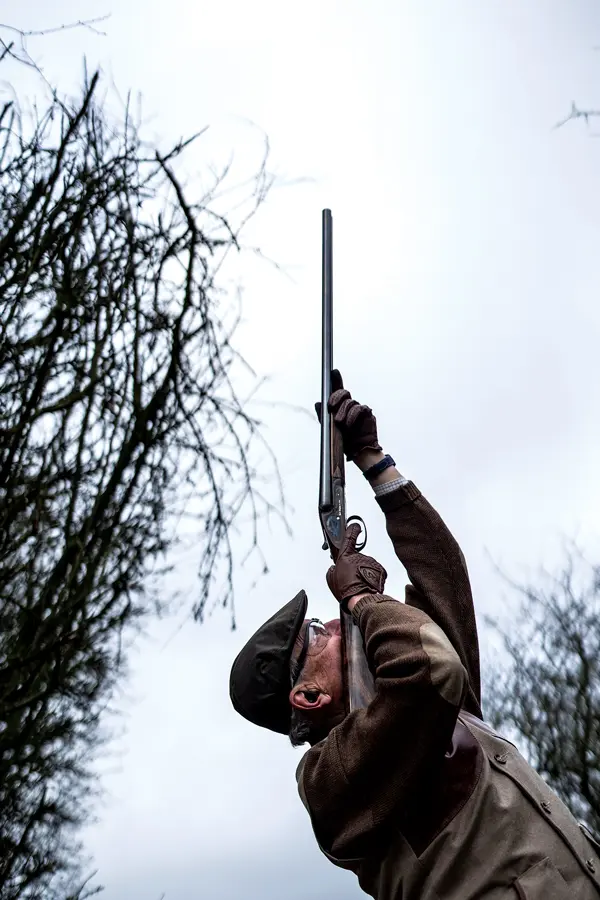
Fine game guns from legendary London houses are nothing new, of course. What sets these guns apart—and what makes them continuation models that leapfrog an entire century—is their actions. Nos. 18711/12 are “rising-bite” guns, made with the unique barrel-locking mechanism that became the signature of Rigby’s most expensive guns and rifles at the turn of the 20th Century. Crank the toplever to the right, and watch the rabbit disappear into its hole, to unlock the barrels and let them drop open—the “rabbit” being the steel pin, or bolt, or bite, that engages the top-rib extension.
Rising-bite is a modern term; it was called the vertical-bolt action when it was patented, in February 1879, by Thomas Bissell and John Rigby. Bissell, described then in The Field as “a well-known and skillful London action-filer and barrel-maker,” did business from the 1850s into the 1890s in the city’s somewhat grimy Southwark Borough before disappearing.
John Rigby was then in the toney West End, and today the firm is the oldest gunmaker extant in the English-speaking world. Through the 1880s, Bissell’s name appears so often in Rigby’s ledgers that he could have been an employee; he was probably an outworker. With his help, Rigby had found a way to latch its break-action guns so that they shouldn’t “shoot loose.”

At the time the British gun trade was in ferment. Spurred by the aristocratic craze for shooting small birds and large mammals, business was booming and gunmakers were developing better-mousetrap versions of everything from forend latches to triggers to lockwork and cartridges, and the great boxlock-versus-sidelock debate was already underway. The hinge that joins barrels to action was a particular target for the tinkerers.
The greatest strain on this joint comes not from cycling it—made and greased properly, a hinge should open and close hundreds of thousands of times with no appreciable wear—but from firing the gun.
Each detonation tries to push the barrels off the wall, or face, of the action, and this momentary expansion and contraction eventually can loosen the hinge. A gun that’s gone “off-face” shows gaps between the breeches and the action. Once begun, it only gets worse; the gaps widen as the barrels slam back and forth ever farther.
Victorian gunmakers sought to counter this tendency by fine-tuning the geometry of their actions, to reduce the leverage of these forces, and by fastening their guns in all sorts of ways.
Eventually Purdey’s double underbolt became the standard and still is used today: an internal bar, linked to the thumblever, that slides forward into notches in the two barrel lumps, to clamp the barrels against the action flats. But this wasn’t enough for some designers, who contrived various versions of a “third bite”—an extra clasp, often at the top of the breeches, where the rib meets the face—to really keep those pesky barrels clamped down: crossbolts, hidden pins, screw-grips, doll’s-heads and more.
To this end, Patent No. 1141 of 1879, for “vertical/horizontal bolting for drop-down guns,” helped build Rigby’s enduring reputation for reliability. The horizontal part was the Purdey-style sliding underbolt; it was the other bit (or bite), the vertical lock, that made the 1879 action exceptional. To this day it is worshipped as the strongest way to fasten a break-action gun—especially a powerful big-game rifle.
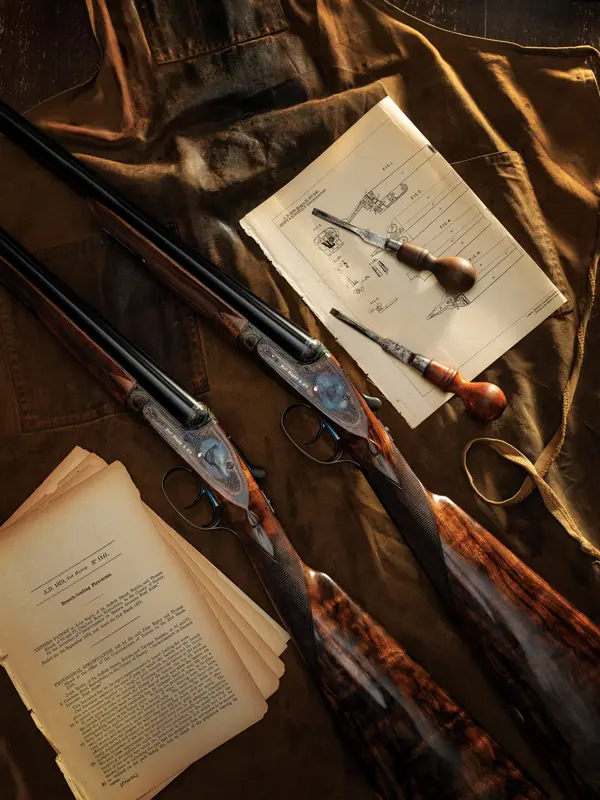
John Rigby (1829-1916) was, like his grandfather John, who founded the company in Dublin, a rifleman—an outstanding one at that. At the age of 29, he took over the business and, in 1865, opened a store in London. (Eventually he moved Rigby’s to London entirely.) For about 30 years John Rigby
was involved in national and international target shooting and won about every significant trophy, often with rifles of his own make.
In 1887, Queen Victoria’s government snatched him away to supervise the Royal Small Arms Factory, at Enfield Lock. There his team worked to perfect the bolt-action .303 Lee military rifle, both the Metford and the Enfield.
He had to retire from civil service when he hit 65, so he went back to Rigby’s and, for double rifles, invented the first smokeless Nitro Express round: the .450 (which ended the reign of the 8-bore blackpowder behemoths). Next, for magazine rifles, he cooked up the .416 Rigby Magnum cartridge, and then he persuaded Mauser to modify its bolt action to accept it.
There’s plenty more—John Rigby might have been the first to apply the word “Magnum” to a cartridge—but . . . well, when he died, an obituary hinted that if he’d been allowed to stay on at Enfield, he’d have come up with an autoloading infantry rifle, something that then had to wait for the next World War.
Sporting rifles made Rigby’s name but, popular as deer stalking and big-game hunting were in Scotland, Canada, India and Africa, the big money was in bird shooting at home. Rigby’s produced at least as many shotguns as it did double rifles. And from 1880 until the Great War (1914-’18), most of the company’s top-shelf doubles, smoothbore and rifled, had vertical-bolt actions.
John Rigby the engineer probably realized that the rising-bite action is strong enough that underbolts aren’t needed, but he wisely kept them. The tinkerer in him must have delighted in the novelty of the new fastener, while the marketer likely rejoiced in something that so clearly set his products apart. The rising-bite became a Rigby hallmark partly because of its merit and partly because it was so tricky and expensive to make.

The rising-bite is a good deal more complicated than other third-fastener actions. As the patent notes, its parts move both vertically and horizontally, and a complex recess has to be cut into the top of the break-off for that stout U-shaped loop.
The loop itself is filled by two steel posts—the front one fixed (part of the recess, really) and supporting the rear one, the “rabbit,” which slides up and down behind it. Open the thumblever: The rear post withdraws from its loop, the underbolts withdraw from their notches and the barrels tip down.
Close the barrels: The underlugs slide home, the rabbit rises back into its hole and the action is bolted shut. Precision is the name of this game. So is strength—the action body contains a lot of steel.
Finally the time was ripe to return to making shotguns too.
How the Victorians made the rising-bite, or vertical-bolt, action is a puzzlement; it’s difficult enough with modern tooling. Patent No. 1141 of 1879 may be the only important action design that was never widely adopted by any other gunmaker, even after the rights expired.
Only Frederick Beesley’s rare and super-costly Shotover guns also had vertical bolts, as did two Boss over/unders (No. 6179, a rifle made around 1913, and No. 8515, a 20-bore shotgun from 1938) and one Powell, a 16-bore hammerless side-by-side, No. 7496, made in 1882. (Today gunmakers Max Ern, in Germany, and Butch Searcy, in California, turn out a handful of rising-bite guns annually. The patent elapsed long ago.)

Company ledgers show that Rigby’s made rising-bite shotguns in popular bore sizes from 8 to 28 and rifles in everything from .256 to .577, with the preponderance in .303 and .450 and .470 Nitro Express.
The first rising-bite Rigby appears to have been an un-numbered gun made by Thomas Bissell in 1880, when the company still had a presence in Ireland. A daybook entry for May 31 reads (with emphasis added): “Mssrs John Rigby of Dublin one 12bore Rigby Bissell patent underlever hammerless dble gun with top rib vertical bolt extension, lockwork on trigger plate intercepting and trigger bolts. Stock screwed and bored for shooting, shot and ready for cleaning & chequering. This is the first underlever experimental gun and goes in with cost of patent.”
Until this past February, the last-known rising-bite Rigby shotgun was No. 17862, a 12-bore turned over on August 15, 1914, to a Mr. A.F. Clarke, Esq. It was made as the No. 3 gun to a composed pair (Nos. 16590 & 16692, sold a year apart, in September 1898 and ’99) but with its own case. It had a “rubber face pad” at a “special price.”
However, the last vertical-bolt order in the books is for a pair of rifles, Nos. 18190/91, completed for the Maharaja of Karauli in 1932, with gold inlays of his royal crest by Harry Kell. The first was a .350 No. 2 (re-bored around 1980 to 9.3x74R); the second was in .405 Winchester. These were special orders, maybe built on remnant actions found in a drawer somewhere.
Otherwise, rising-bites were all but gone by 1913; thereafter Rigby “bests” largely were built on screw-grip actions furnished by Webley & Scott.
We don’t know exactly why Rigby adopted a simpler third fastener, but the cost of building rising-bites may have risen beyond the market, a key craftsman may have retired or the source of the action forgings may have dried up. In 1909 Rigby charged £68/5s for a rising-bite gun; in 1910, when the cheaper screw-grip action came along, the retail price remained £68/5s. (A decade later Beesley was asking £150 for his rising-bite Shotovers, surely one reason so few were made.)
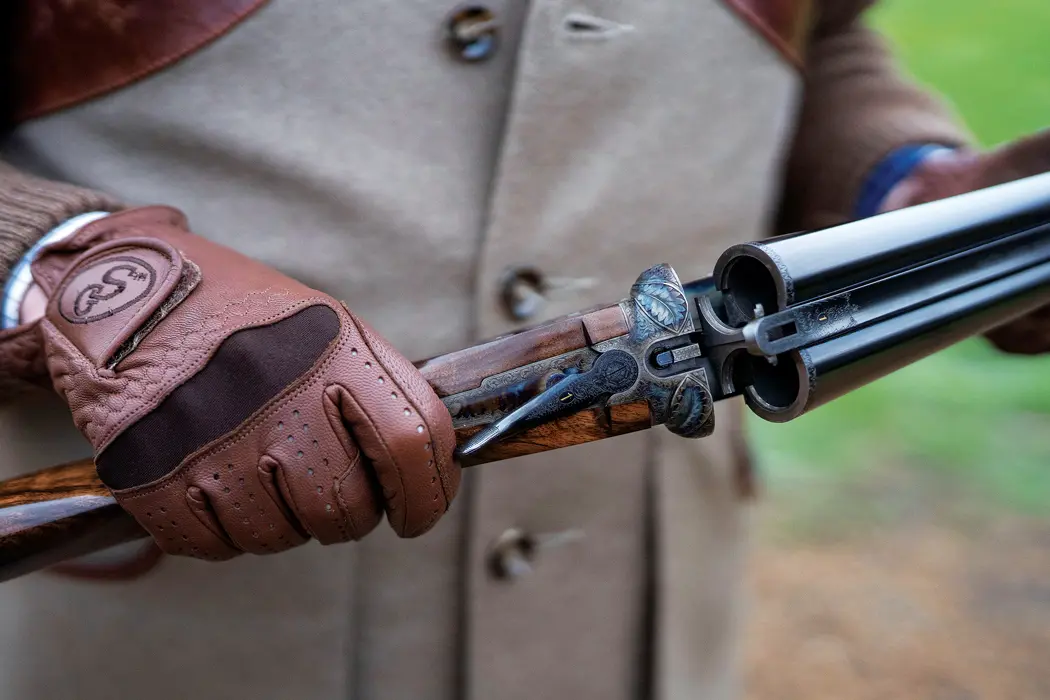
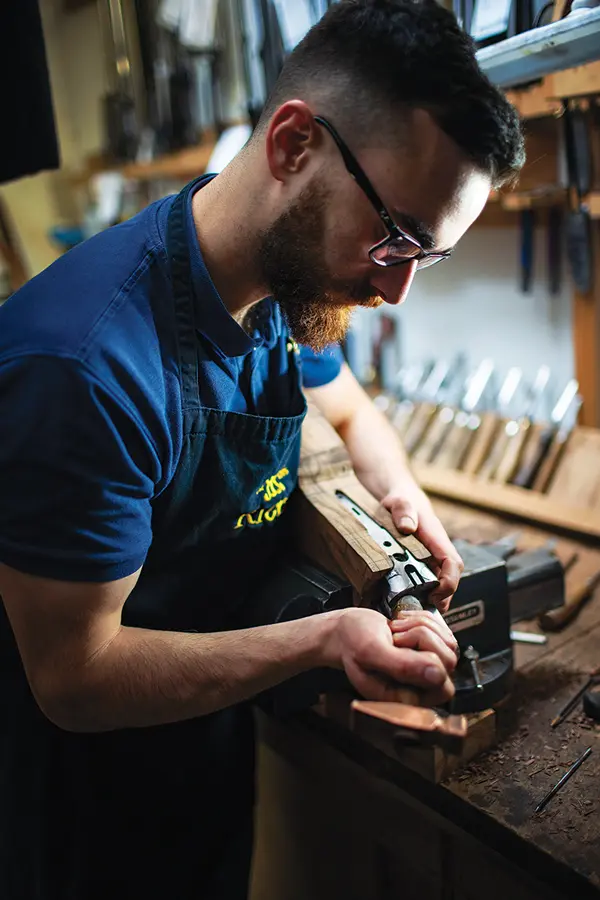
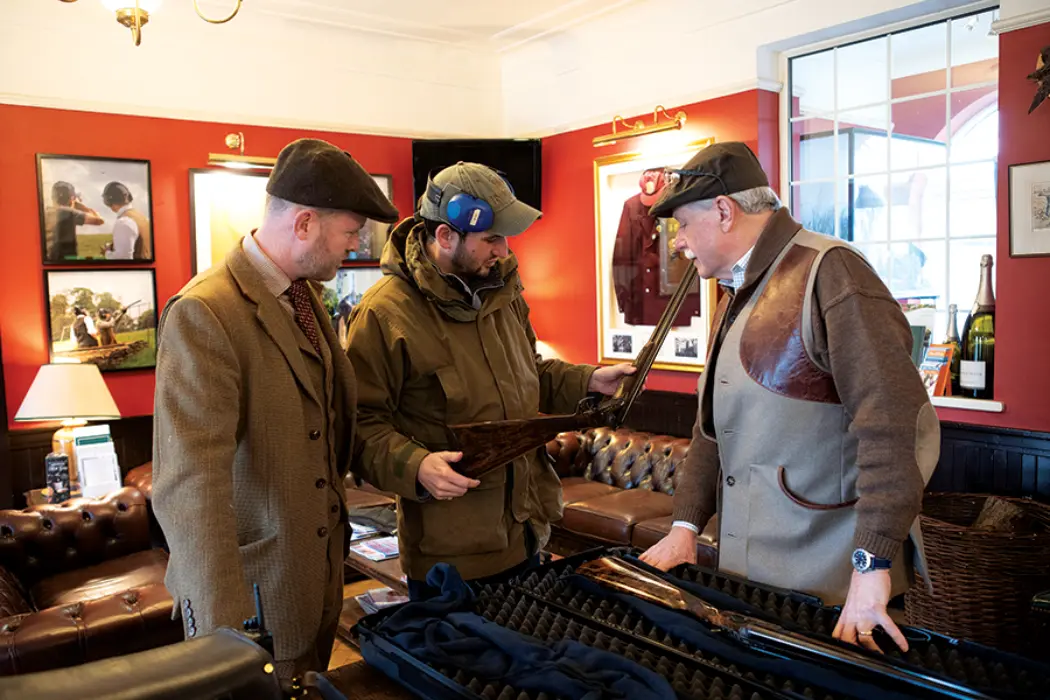
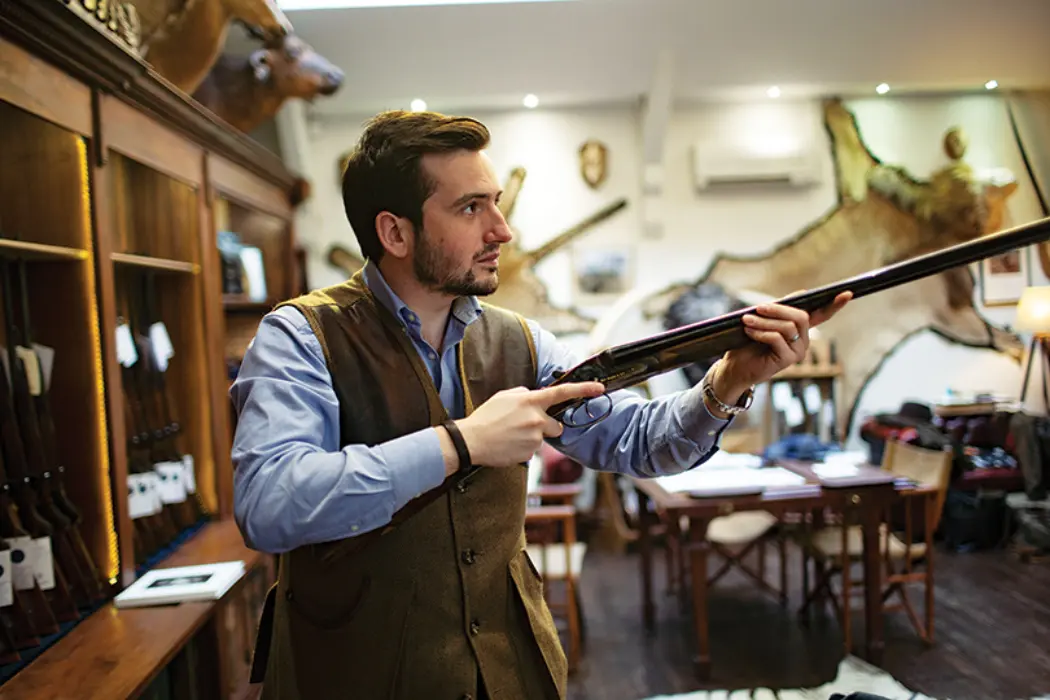
Rigby’s bench is deep in young talent; Diggory Hadoke, Marc Newton and the author admire the new guns; Rigby Managing Director Marc Newton goes through the motions in the firm’s South London showroom.
Based on patent-use numbers, over 50 or so years Rigby produced not quite a thousand rising-bite guns and rifles; today the survivors are prized by shooters and collectors alike. With their distinctive lockplates—the rebated, or dipped, edges are mostly for show—and carved foliate fences in addition to the rabbit in the hole, they are instantly recognizable from across a room or a clearing in the bush.
That was then; Rigby Nos. 18711/12 are now. Five years ago Rigby’s first rising-bite of the modern era, a .470 Nitro Express, went to the London proof house for testing. Steve Helsley and I happened to be there then, and we comforted Managing Director Marc Newton.
Somehow word had gotten around that the rising-bite was an obsolete design, even a relic of the blackpowder days. You’ll see, we told him. It’ll pass. Don’t worry! And so it did. Elated, or relieved, Newton presented each of us with the empty case and flattened bullet from the two proof cartridges. (Mine are on the desk in front of me as I write.)
Rising Details
With Rigby’s new rising-bite shotguns, the sophistication and performance of the 1879-patent “vertical/horizontal bolting” with intercepting sears have been improved upon by modern steels and digital repeatability. In addition, the hand-fitting and -finishing meet or exceed anything Rigby did in the Victorian Era (and the floorplates are no longer pierced).
Rigby rising-bite 12-bore guns start at £79,000, 28-bores at £87,000 and 32- and .410-bores at £89,000. Other gauges are not (yet) available, and custom engraving costs more. (On the guns pictured, the gamebirds were engraved by Geoffrey Lignon and the scrollwork by Steve Kelly.)
Prices do not include the UK’s 20% Value Added Tax, but VAT is not levied on goods exported to the US. Orders may be placed directly through John Rigby & Co. or with Gordy & Sons Outfitters, in Houston. Expect delivery within three years.
What did we know that Rigby’s boss didn’t? This was the culmination of a process that began in 2010, when several American enthusiasts acquired Rigby—with its handwritten ledger books dating back more than two centuries, to 1781—and vowed to build “rifles and shotguns that reflect the style and workmanship of the Golden Age of Gunmaking.”
They hired Helsley, Roger Sanger and me to write a history of the company (Rigby: A Grand Tradition, 2012), and they commissioned Butch Searcy to strip down an original rising-bite rifle and scan the parts for engineering drawings.
But before production could begin, they got an offer they couldn’t refuse and sold Rigby onward, to a couple of Germans who also own (among many other nice things) Mauser. And the first thing they did—after elevating Marc Newton and setting up the new workshop in South London—was to supply Mauser barreled actions to Rigby, just as Paul Mauser had begun doing with John Rigby in 1898.
And, finally, they green-lighted Newton to bring in master machinist Ian Clarke to reverse-engineer a rising-bite double—the same rifle Searcy had pored over—and figure out how to manufacture the action anew.
Since “Proof Day,” November 6, 2014, Rigby has now built at least 20 rising-bite double rifles. (And since opening its new doors, Rigby has turned out some 950 bolt-action rifles—an astonishing figure that equals Rigby-Mauser production in their pre-WWI heyday.) Finally the time was ripe to return to making shotguns too.
Just as on the new double rifles, John Rigby & Co. uses computerized machining (thank you, Ian Clarke) to assist, not replace, its craftsmen; and the critical fitting and finishing of each bit of each gun is done by hand (thank you, rising-bite executive Nick Coggan) by a team of artisans that must be the youngest and most switched-on in the British trade (thank you, Marc Newton—himself just 31). The House of Rigby is rockin’ & rollin’, and the energy and pride are palpable.
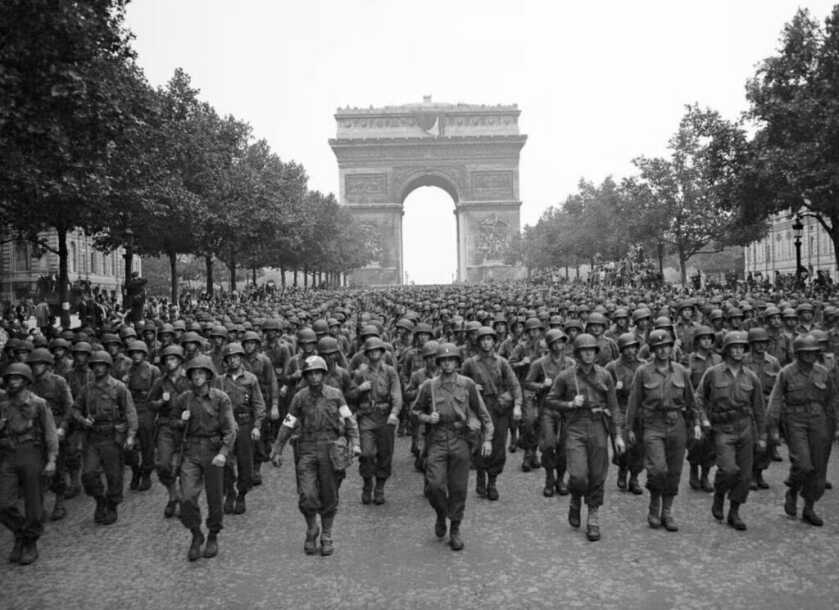
It is difficult to appreciate the scope of World War 2. We modern folk simply have no frame of reference. It was death, tragedy, and destruction on a scale beyond our imagining.
Sixteen million Americans served. More than 400,000 died. Roughly one in every forty American troops who answered the call never came home. One in forty. That’s what it cost to ensure that our world would be free from Nazi death camps, Japanese genocides, and Aryan supermen.
Table of contents
Hidden Treasures In Words
Thanks to Steven Spielberg, Tom Hanks, and Stephen Ambrose, we captured many of those priceless stories before it was too late. Their inspiration drove folks across the country to pin Grandpa down and insist that he tell his stories from the war while he still could. I chased those tales myself at every opportunity. What I discovered was poignant beyond my capacity adequately to describe.
So many of those great old guys were reluctant to revisit that world. However, whenever I saw an old WW2 vet in the clinic I would gently ask. What I got in return for those innocent queries was simply amazing.
One old gentleman ran a local hardware store before he retired. If you saw him in church or walking down the street you wouldn’t give him a passing thought. He looked like everybody’s grandfather—bald and slightly stooped with a shuffling gait. However, back in 1944 this guy was an absolute beast.
The Humanity of Total War
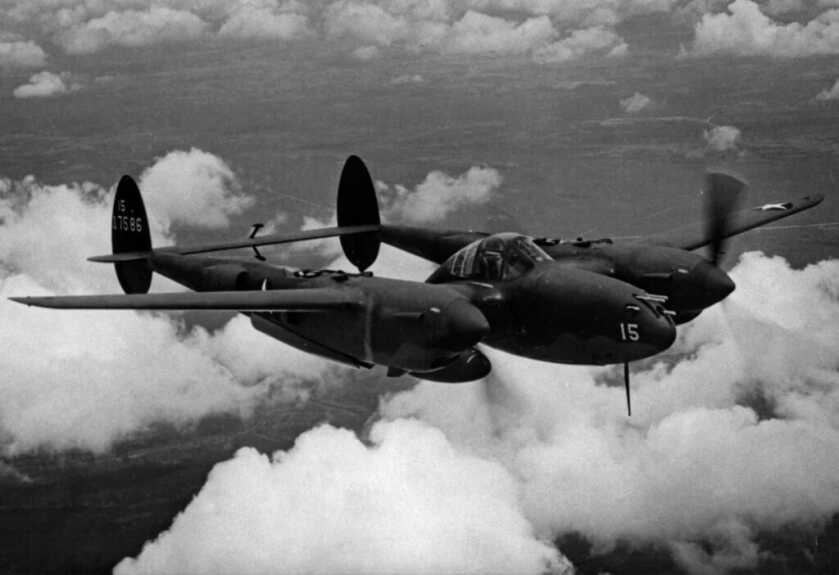
My buddy flew B-17 Flying Fortresses in Europe. He did his twenty-five missions and rotated home. He once mentioned that he had designs on an exceptionally attractive young lady in town before the war. He explained that another boy in his class fancied her, too. The girl chose the other suitor. My buddy then said matter-of-factly, “That other guy became a pilot as well. He flew P-38 Lightnings in the Pacific. He died fighting the Japanese.”
There was no emotion to the statement. It was simply a fact. This kid he went to high school with was blown to pieces in the skies over some forgotten South Pacific island, and he was just gone. That was the world in which he lived.
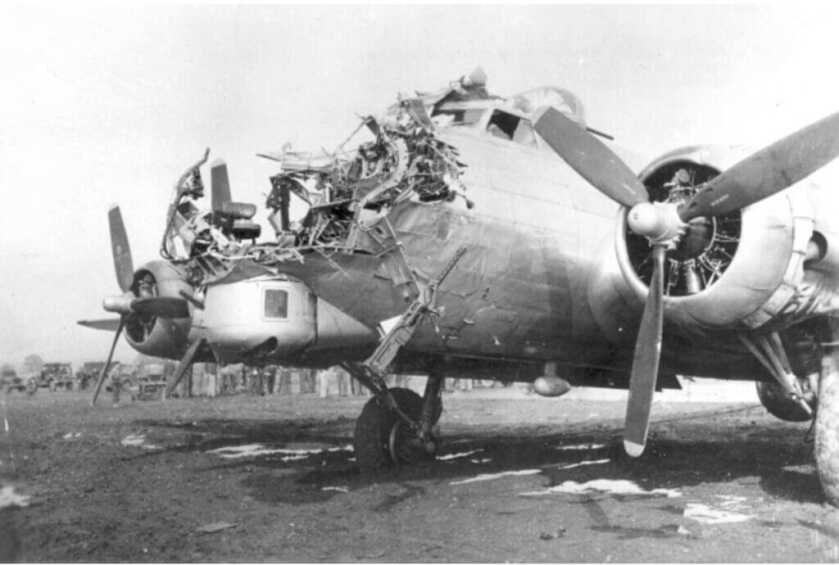
I once asked this man to tell me about his most memorable mission. He said he was in a low formation over Italy when somebody screwed up. The upper bomb group dropped their ordnance, and one errant five hundred pounder struck his Fort just ahead of the cockpit. The bomb did not explode, but it tore the nose off of his airplane, taking his bombardier and nose gunner with it. These were two of his closest friends in the world, and they died horribly five feet in front of his face. He wrestled with the mangled airplane for two interminable hours before landing it safely back at base. He told me this story as though he was describing the weather. There was no bravado or pride. He was simply relating facts.
Connections of Words
I sat mesmerized with him and a dozen or more others, all of whom came to see me for medical care. In my mind’s eye I tried to visualize the scene—the sounds, the smells, and the fear. In each case I’m sure my efforts were woefully inadequate. Some emotions are so intense they just don’t translate well into words.
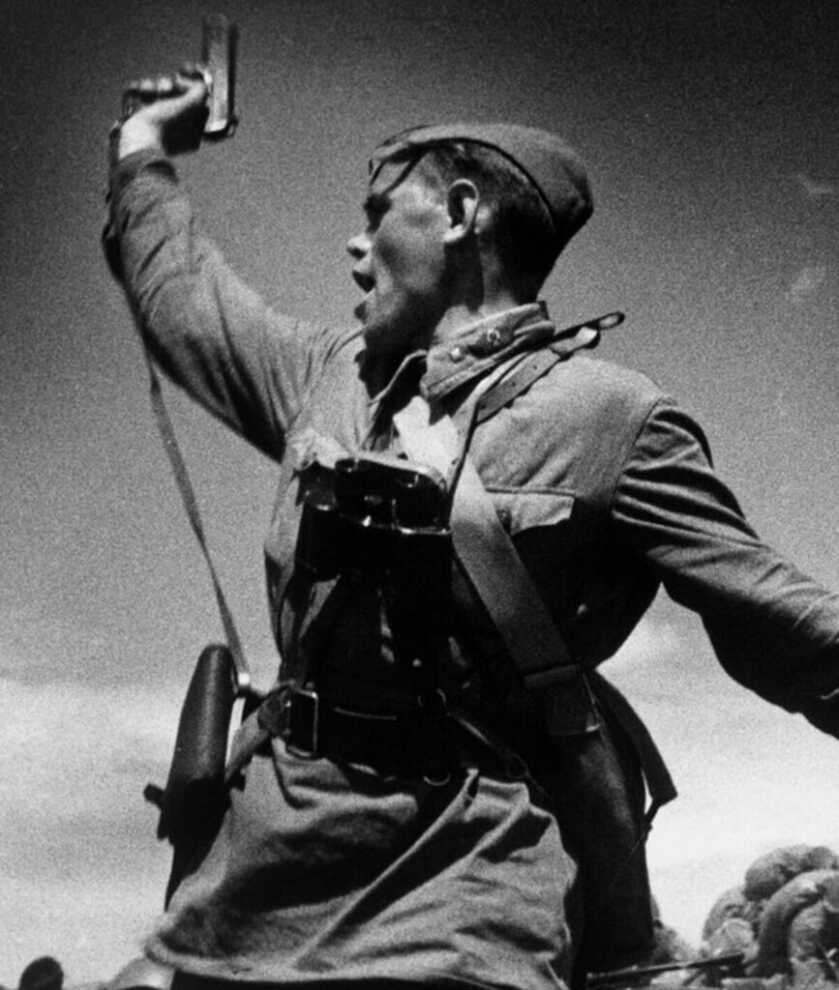
World War 2 was the first of humanity’s countless scraps to be thoroughly documented. All involved knew what they were doing would be studied, dissected, and potentially venerated for generations to come. Cameras were bulky and awkward by modern standards, but they were still available.
Personal Connection
My wife’s grandfather fought in North Africa, Sicily, and Italy. He dropped out of school in ninth grade to feed his family during the Depression, but he was a mechanical savant. He took a nice German camera off of a captured Wehrmacht officer and found undeveloped film in his Battalion S2 Intelligence section. He improvised a darkroom using an Army raincoat and a red lens flashlight and carefully cut the film by hand to fit his liberated camera. He scored a few chemicals and processed his own negatives the same way. After he died we found a shoebox full of little pictures he had taken during the war. They were all intriguing, but he had never been willing to explain the details. Regardless, these images offer some fascinating insights into what his life was really like during those long years of combat in Europe.
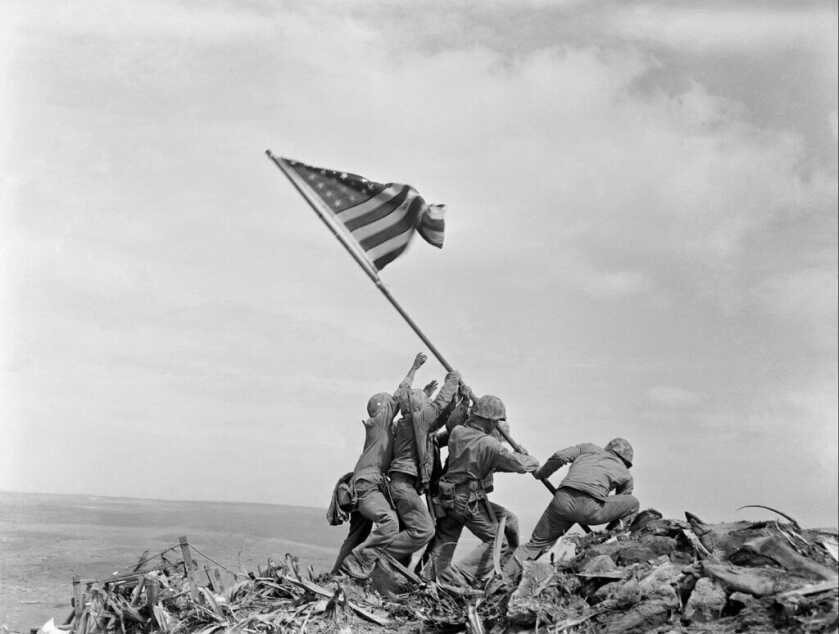
There are literally countless images to have come from WW2. Some were arcane or tedious. Others, like the raising of the flag over Mount Suribachi on Iwo Jima, were quite literally iconic. Each one tells a story. This story that follows was particularly compelling.
The Plane
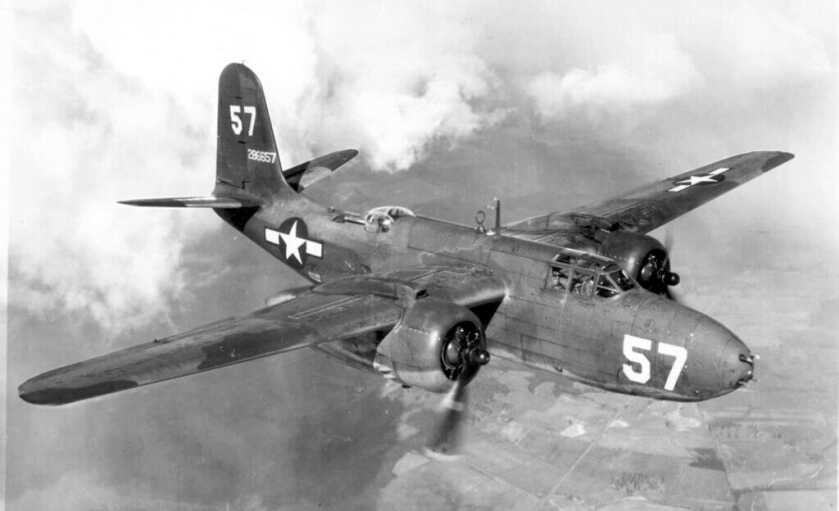
July 22, 1944, was a Friday. 1LT James Knarr and his gunner, SSG Charles Reichley, were up early to preflight their Douglas A-20G-25 Havoc medium bomber. Theirs was one of a dozen Havocs assigned to the 387th Bombardment Squadron of the 312th Bombardment Group. They were slated to attack a sprawling Japanese seaplane station and barge depot on the island of Kokas in the South Pacific. Their aircraft was loaded with 115 kg bombs optimized for attacking small ships in the harbor.
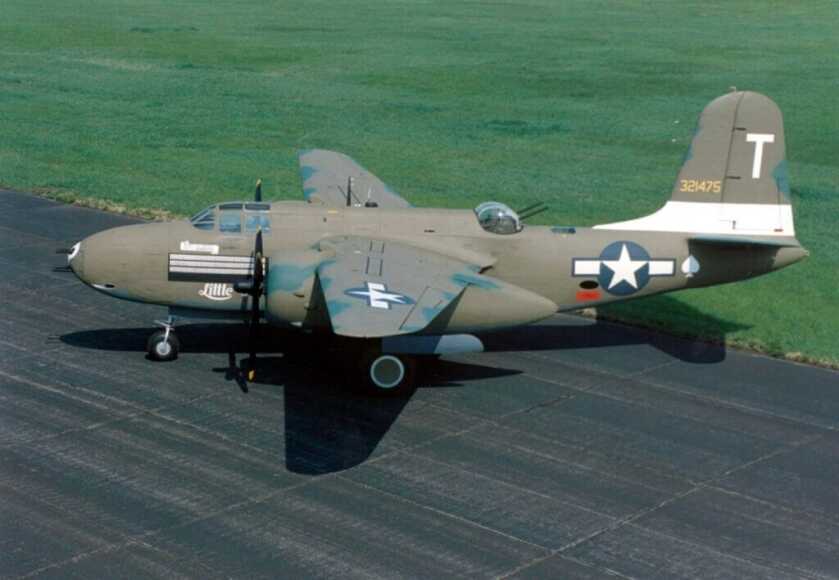
The Douglas A-20 Havoc was not as well-known as were the B-17 Flying Fortresses or B-24 Liberators. It even took a back seat to twin-engine medium bombers like the B-25 Mitchell and B-26 Marauder. However, the A-20 was a potent and effective ground attack platform.
First flown in January of 1939, the A-20 was designed from the outset as an attack plane. It was powered by a pair of 14-cylinder Pratt and Whitney R-2600-7 Twin Cyclone radial engines, each producing 1,700 horsepower. By war’s end some 7,478 airframes had rolled off the lines.
Technical Details
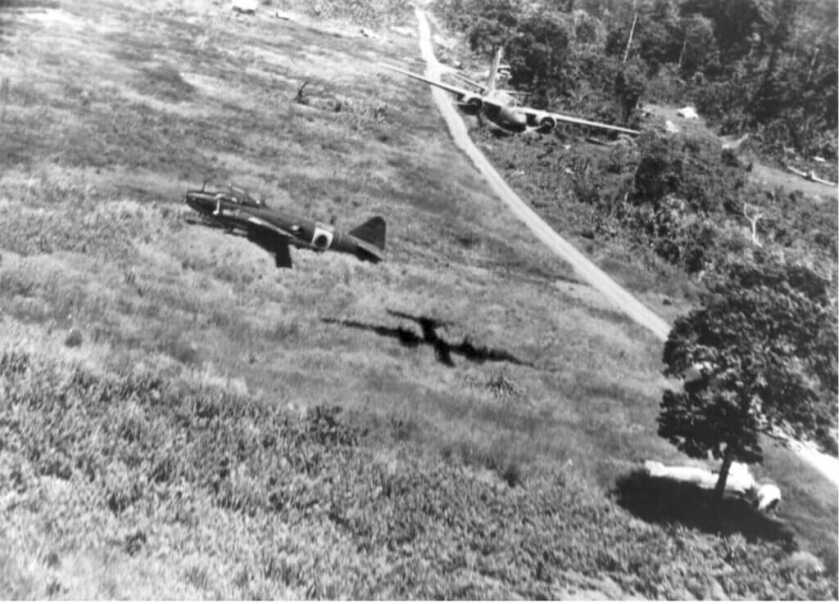
By 1944, the G-model A-20 was being used in the Pacific for low-level attacks against Japanese shipping. Under these conditions the bombardier and his vaunted Norden bomb sight were superfluous. As a result, these Havocs had their noses fared over and the bombardier position replaced with half a dozen Browning .50-caliber machineguns. The typical attack profile involved approaching a target at wavetop level and then skipping bombs into the sides of Japanese ships all the while sleeting the decks with massed machinegun fire. The Havoc was remarkably effective in this role.
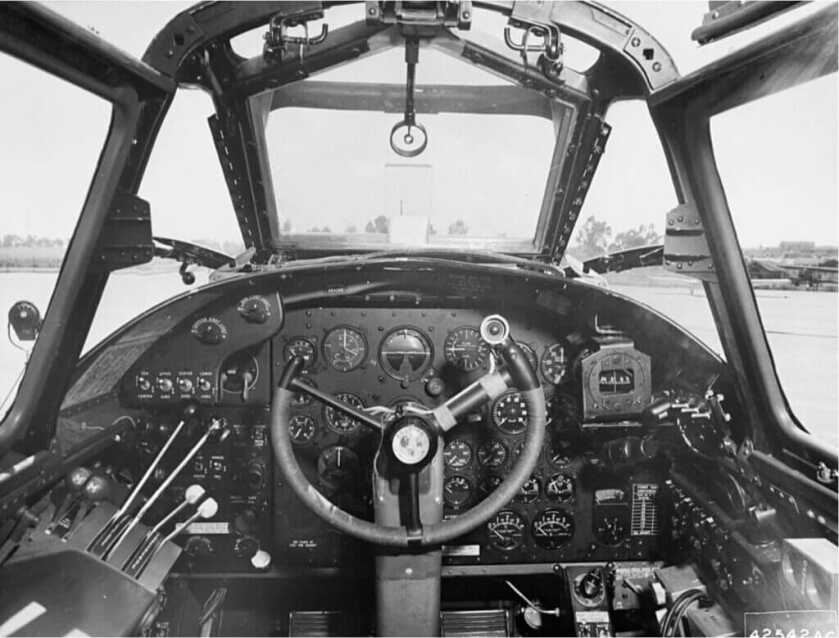
Without the bombardier, the typical crew of the Havoc was just the single pilot and a top turret gunner. With the assistance of their crew chief, 1LT Knarr and SSG Reichley made their mount ready for the day’s mission. Everything about the plane was armed, fueled, and in order.
The Mission
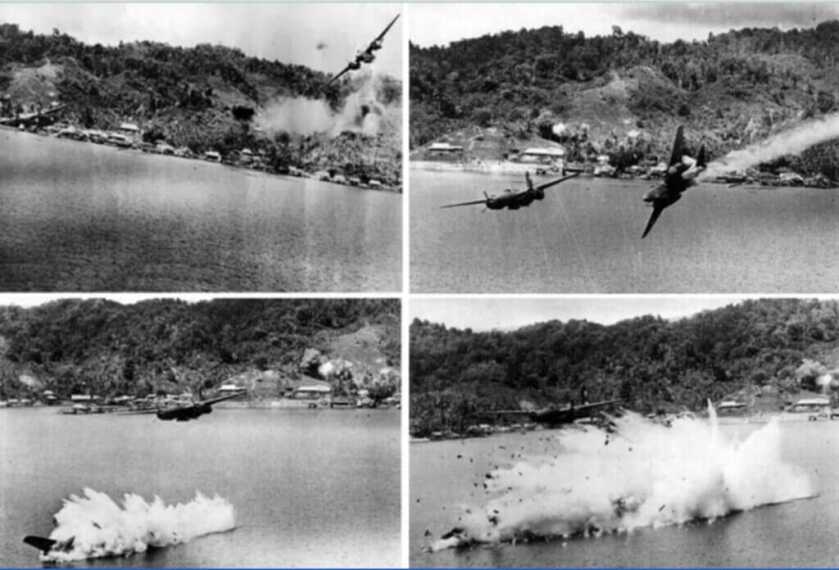
The approach to the target was unremarkable. The weather was perfect, and visibility was unrestricted. The limitless blue of the South Seas skies formed a placid backdrop to the unfettered carnage that was soon to come.
CPT Jack Klein was flight lead. 2LT Melvin Kapson was piloting the second ship. 1LT Knarr’s Havoc, tail number 43-9432, was third. The Havocs delivered their bombs just as they had been trained to do, raining death and destruction down on the Japanese barges and crews held at anchor in the harbor. However, by the time the attack planes turned on their egress the Japanese defenders had found their wits. Before they had a chance to close their bomb bay doors, the Japanese antiaircraft guns were clawing up toward them.
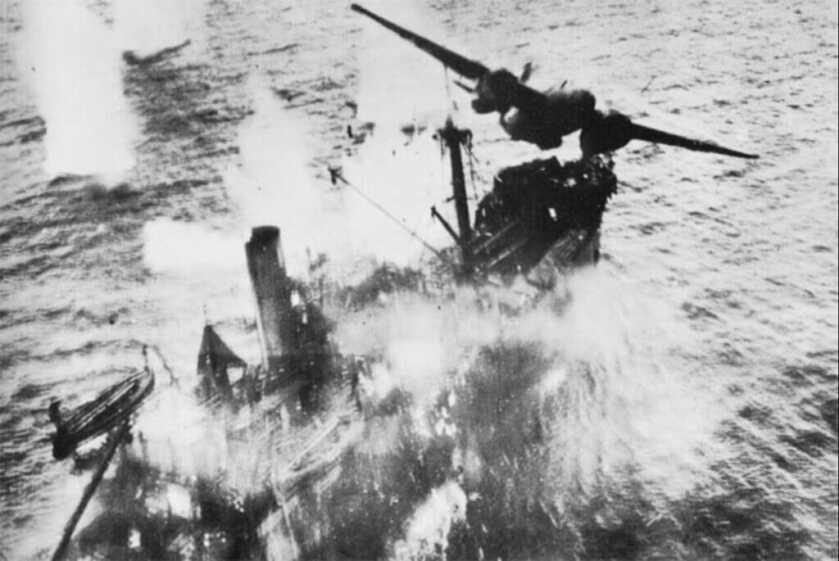
The formation was tight by design. Flying close meant concentrating firepower and shock effect. This also got the attacking aircraft in and out quickly, minimizing their exposure to ground fire. However, it still wasn’t fast enough.
Tragedy
One burst of antiaircraft fire connected with 1LT Knarr’s starboard engine. Both big radials were firewalled during the attack. 1LT Knarr was coaxing every bit of power out of the plants and every scrap of speed out of the plane. Suddenly the number 2 engine sputtered and died streaming oil. The big 11-foot, 3-inch propeller briefly windmilled.
In such close quarters and at such low altitude, there was just no time. 1LT Knarr was unable to get the prop feathered before the big plane began to roll. The ten-ton medium bomber snapped to the right, its wingtip contacting the smooth azure waters of the bay. In a literal instant, what had previously been a state-of-the-art attack plane manned by a pair of American aircrewmen was transformed into 20,000 pounds of debris. And just like that, 1LT Knarr and SSG Reichley were dead, literally pulverized in the impact.
Pictures Are Worth A Thousand Words
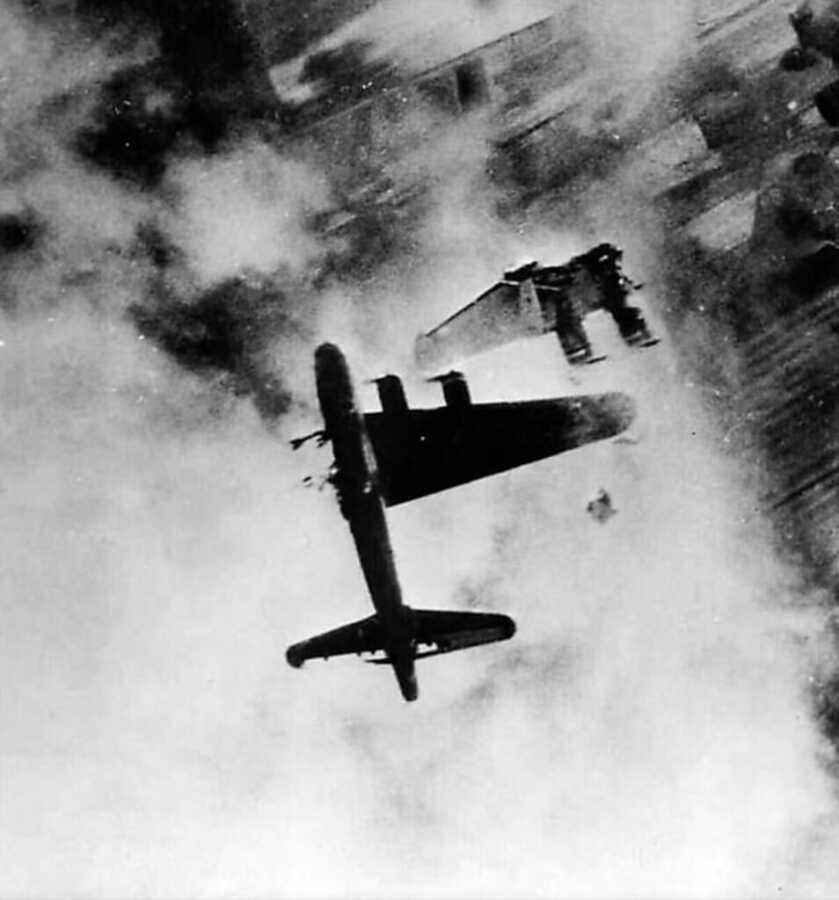
CPT Klein had been taking photos of the mission. His camera was remarkably advanced for the time and was capable of sequential frames. As luck would have it, his images captured the final seconds of 1LT Knarr’s airplane. The sequence became one of the most compelling of the war.
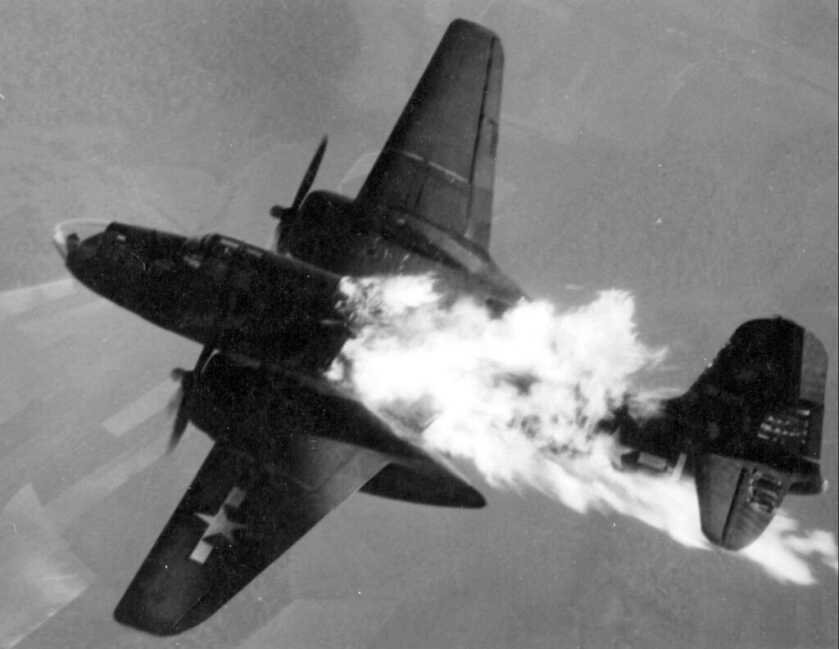
52,173 Americans died in aerial combat in WW2. Many fighter pilots like my friend’s high school classmate perished alone in the rarefied upper atmosphere. Others died as part of a crew with their friends by their sides to the last. The vast majority perished in anonymity, their sacrifice memorialized by nothing more than a heartfelt letter to loved ones from heartbroken friends or overwrought commanders. However, 1LT Knarr and SSG Reichley had their final moments immortalized. Even some eight decades later, those haunting images move me to my core.
|
|
|


Ask any rifleman–no matter their chosen discipline or passion–what the common denominator among us all is, and I have no doubt that the answer will be the .22 Long Rifle. From the competition shooters, to the recreational target folks, to small-game hunters, all the way up to those who prefer to chase the largest, most dangerous game animals on earth, all will tell you they either started with or still train with a gun chambered for .22 Long Rifle.
My first rimfire was a gift from my father, on Christmas 1985. He’d picked out a Ruger 77/22, because it was built like a scaled-down big-game rifle, and it remains my favorite rimfire to date. There are others, including a Mannlicher-stocked Ruger 10/22, but that little bolt gun and I have a whole ton of memories.
The .22 Long Rifle has long been a favorite of hunters and shooters alike, from its release in 1884, as it offers a reasonably flat trajectory with virtually no recoil. Like many of the 19th century designs, the .22 Long Rifle uses a heeled projectile—one where the bullet diameter is the same as the case—with a stem of lesser caliber extending into the case. The .44 Special and .38 S&W are other examples of cartridges which use heeled bullets.

Billions of .22 Long Rifle cartridges are produced each year, and the cartridge is as good as it ever was, but that heeled design does have some shortcomings, including Ballistic Coefficient and the difficulty of manufacturing. Winchester has chosen to give the classic cartridge an update, in the form of the new 21 Sharp cartridge, which is the .22 Long Rifle case, mated with a non-heeled bullet.

Whereas the .22 Long Rifle has a bullet the same diameter as the case, the 21 Sharp uses the conventional method of slipping a bullet into the case, and this has resulted in a projectile measuring .210 inches in diameter. Winchester offers four loads for the 21 Sharp, including the 34-grain jacketed hollowpoint, a 37-grain copper-plated lead bullet, a 42-grain FMJ, and (solving a big problem for those areas which require the use of lead-free ammunition) a 25-grain Copper Matrix monometal copper bullet.
That lead-free bullet should prove a welcome addition, running at a muzzle velocity of 1,750 fps. The lead-based projectiles are loaded to velocities of 1,500 fps for the 34-grain load, 1,335 fps for the 37-grain copper-plated bullet, and 1,330 fps for the 42-grain FMJ.

So, looking at the case design, you’ll find it is identical in every way to the venerable .22 Long Rifle. The same .278-inch rim diameter is carried over, as is the case length of .613 inches. The .22 Long Rifle has a maximum cartridge overall length of an even 1.000 inches, and the 21 Sharp adheres to that number as well; even the Copper Matrix load measures 0.985 inches long.
To visually differentiate the 21 Sharp ammunition from the regular .22 Long Rifle stuff, Winchester has imprinted a bold “21” in the center of the case head. I can even read it without my reading glasses.
Will a 21 Sharp chamber in a .22 Long Rifle firearm? The answer is yes. In fact, the 21 Sharp will fire in a gun chambered for .22 Long Rifle, though assuredly that bullet is barely touching the lands (if at all) and accuracy will be non-existent.
However, if the design of your rifle allows you to easily change the barrel, any .22 Long Rifle gun can be changed out to a 21 Sharp barrel, and there are plenty of rifles announced for production this year, including a number of variants of the Winchester Xpert bolt-action rifle, and four different offerings from Savage.

Looking at the exterior ballistics of the 21 Sharp, you’ll see a trajectory similar to that of the .22 Long Rifle, though the Sharp’s projectiles will offer a better Ballistic Coefficient, and the lighter Copper Matrix load at a higher velocity will surely stand out.
Comparing the 25-grain Copper Matrix to the nearest variant of the .22 Long Rifle—the 32-grain CCI Stinger—you see both cartridges strike within ½-inch at 100 yards. The 25-grain 21 Sharp will drop 3.4 inches and the Stinger 3.8 inches at that distance, so there is no huge difference with the Sharp, other than the lead-free alternative.

I truly believe that the .22 Long Rifle will remain the most popular rimfire cartridge ever produced, and that any attempt to usurp the throne will be futile. But there is room for others in the rimfire market, as the .22 WMR and .17 HMR have proven.
I think the 21 Sharp is a sound design, filling a niche, but I also feel that is the role it will be playing: that of a niche cartridge. It delivers the accuracy rimfire shooters like and has a slight velocity advantage over the .22 Long Rifle, but it’s going to be very difficult to compete with the track record of the .22 Long Rifle, as well as the millions of firearms produced for it.

I’m trying to rename these infernal devices which, for now, have the pleasant name of Flock cameras, like a happy flock of birds flying above you in the blue sky. In reality, they are Outdoor Prison Cameras, or OPCs, for controlling the population in the open-air prison they are turning America into.

Freedom-loving Americans are beginning to fight back. Twitter X link to below:

This American seen below was hassled by the police for merely blocking a Flock spy camera. Remember, these OPCs are privately owned spy cams. Twitter video link:

@LongTimeHistory Twitter link:
Police pull over to arrest Florida man—for blocking Flock camera on public sidewalk.
He sat holding a 12-foot pool skimmer with sign taped on top.
Today all camera saw was sign:
“Down With Flock Cameras.”
A witness offered to help:
“What’s your name? I’ll come bail you out!”
Carl Gunn, age 77, told a local reporter that 2 police cruisers had already stopped by to interrogate him for at least 15 minutes.
“I have a constitutional right to my privacy,” he said.
“I’m a law-abiding citizen, and I don’t need anyone sticking their nose in my business… And if they do, I’m going to chop it off.”
Flock cameras create an interconnected network that logs the movements of nearly every vehicle—without warrants.
Enabling broad surveillance that can be shared across agencies and used far beyond solving specific crimes.
Incident occurred in the Coquina Key neighborhood of St. Pete, Florida.
He doesn’t have an account on this platform—so posting first full length and credited video here to help raise awareness.

We have all seen videos of Flock OPCs being cut down by patriots, and we applaud them and cheer them on. We never voted to live in open air prisons, where our every move is recorded and shared between a network of 100,000 spy cameras, all driven by artificial intelligence to seek out potential “criminals.”

Obviously, the potential for abuse is unlimited, beyond psychologically beating us into a condition of “learned helplessness,” where we give up on the very idea of privacy and personal freedom.
I can’t vouch for the message on the image below, but it certainly seems plausible, given that the Israelis mailed out thousands of exploding pagers, and have an explicit policy of assassinating anyone who stands in their way, from the elderly supreme leader of Iran (and his family and neighbors) to, possibly, even Charlie Kirk. And if the Mossad can hack the traffic cameras in Tehran, any bad actors, government or private, can do the same for any range of bad-intentioned reasons with the Flock OPC system.

Here is a 13-minute YouTube podcast by Western Rifle Shooters on the Flock OPCs.

I know that you’re already aware of the universal spy camera system being installed across America. My goal with this Substack is for patriots to stop calling them by the gentle and melodic name of Flock cameras, and call them what they are: Outdoor Prison Cameras, or OPCs. We never voted for this, these OPCs are a permanent 24/7 invasion of our privacy. They are un-American tools of tyranny, and patriots will resist them at every turn, by any means necessary.

Bracken—Out.

I’m Going to sleep tonight knowing that we can still breed men like this man !!!!!!!!!! Grumpy