50 years since the U.S. ground war began, there’s a push to remember the 134 Canadians killed
Vancouver’s Rob McSorley is one of at least 134 Canadians killed in action fighting for U.S. forces during the Vietnam War. (L Company Ranger 75th Infantry Archives)
At only 17 years old, B.C.’s Rob McSorley knew he wanted to go to war, and it didn’t matter if it wasn’t in a Canadian uniform.
Now, 45 years after his death in the jungles of Vietnam, his sister is finally learning how much he mattered to the American soldiers with whom he served.
June-Ann Davies says in 1968, her brother was tired of school at Templeton Secondary in East Vancouver, and decided joining the military would cure his boredom.
The war in Vietnam was still raging and Canada wasn’t officially participating, but McSorley was determined to be at the heart of it.
“I think he wanted adventure, which he could get out of the U.S. military as opposed to the Canadian military,” said Davies, who now lives in Kamloops, B.C.
McSorley’s parents tried to reason with him: He wasn’t an American, and it was actually illegal for him to fight in a war that didn’t formally involve Canada.
But McSorley was going to Vietnam, with or without their support.
“When they were putting up a bit of a fight, that’s when he said, ‘Well, you either sign the papers, or I’m going anyways and I’ll lie about my age,’ ” Davies recalled.
Canadian Rob McSorley, left, is pictured in March 1970 with two members of his U.S. Army Ranger regiment after a dangerous reconnaissance mission. McSorley was killed in action only weeks after this photo was taken. (L Company Ranger 75th Infantry Archives)
His parents grudgingly signed the forms, and McSorley travelled just across the B.C. border to Blaine, Wash., to enlist in the U.S. army, which was accepting anyone who came through the door.
Two years later, what was supposed to be the adventure of a lifetime ended suddenly. McSorley was shot by North Vietnamese soldiers.
Davies still remembers being in bed when the doorbell rang at their Vancouver home, and a telegram delivered the news about her older brother.
“It was awful. Terrible. Yeah, it was the worst day,” she said.
“He only just started his life when it ended. Because he’d just turned 19 two weeks before.”
McSorley is remembered as a brave soldier within his unit of the L-Company Rangers. (Vietnam Veterans Memorial Fund)
According to Davies, her family felt isolated after her brother’s death. No one they knew in Canada had relatives who had joined the U.S. military, let alone gone to Vietnam.
“Afterwards, my parents didn’t say a lot about it, other than to say that my brother was a hero,” Davies said.
20,000 Canadians enlisted; at least 134 killed
McSorley was certainly not the only young Canadian to fight and die in the conflict.
Canada never officially joined the fight with U.S. forces in Vietnam, and eventually harboured tens of thousands of American draft dodgers and deserters.
But much more quietly, a steady stream of young Canadians was crossing the border in the opposite direction.
An estimated 12,000 Canadians served in combat roles in Vietnam. Pictured in a 1968 CBC News story are three Canadians: Ron Payne of Galt, Ont., Richard Dextraze of Montreal and Arthur Fisher of Niagara Falls, Ont. The men served in the same U.S. marines unit. (CBC)
The Canadian Vietnam Veterans Association estimates that about 20,000 Canadians enlisted, although other historians think that number may have been as high as 40,000.
Canadian Ron Parkes was with one of the first U.S. battalions to join ground operations in the Vietnam War in 1965. (Ron Parkes/CVVA)
The association believes 12,000 Canadians actually served in combat roles in Vietnam.
Some were dual citizens who may have been living or working in the U.S., but many other Canadians volunteered, driven by a conviction to fight communism, or by a love of adrenalin.
By the end of the conflict, it’s believed at least 134 Canadians had died or been declared missing in action.
To put that number in perspective, 158 Canadian soldiers were killed during the mission in Afghanistan.
Many Canadians came home from Vietnam with their lives completely changed.
“I’m proud of my service,” said Canadian Ron Parkes, who enlisted in the U.S. military during the Cuban missile crisis.
The Winnipeg veteran was deployed to Vietnam in the summer of 1965, serving with one of the first American brigades to join the ground war.
Today, Parkes is president of the Canadian Vietnam Veterans Association, which he co-founded in 1986.
Struggle for recognition by the legion
According to Parkes, Canadian Vietnam veterans were ignored or forgotten for years after the war.
“When I came back and brought up the subject, it was always ‘Who cares? We weren’t there. We weren’t in it,’ ” Parkes said.
“When I went down to the Royal Canadian Legion, they wouldn’t accept us, our service. So for many years they just forgot about it.”
The government of Canada has never formally acknowledged the citizens who were killed or declared missing in action in Vietnam, but according to Parkes, in 1994, the Royal Canadian Legion officially recognized Canadian Vietnam veterans for regular membership.
“It’s been a long struggle to get the word out, but we’ve persevered and accomplished quite a few things now,” Parkes said.
Canadian names still being added to memorial
The name of every Canadian who died fighting for the U.S. in the war is listed on the expansive Vietnam Veterans Memorial in Washington, D.C.
Canadian Rob McSorley’s name is on the Vietnam Veterans Memorial in Washington, D.C., alongside the 58,000 U.S. servicemen killed in the controversial war. (Patti Jette/CBC)
Some, like McSorley, are officially on record as being from Canada.
The ‘North Wall’ Canadian Vietnam Veterans Memorial was dedicated in Windsor, Ont., in 1995. (Don Davies)
Other Canadians aren’t remembered that way at all — listed only as being from the American towns or cities where they enlisted.
In 1995, some American veterans took up the cause for their Canadian colleagues and privately funded a memorial that was built in Windsor, Ont.
“The North Wall” Canadian Vietnam Veterans Memorial now lists the names of 138 Canadians who died in the war, but the number still grows today.
It includes 134 Canadians who were killed in action for the U.S. military, and four other Canadians who died in Vietnam while serving with the International Control Commission, the three-country body charged with supervising the 1954 partition into South Vietnam and North Vietnam.
“The main thing is to remember those that made the supreme sacrifice,” Parkes said.
‘Without Rob… I would be gone too.’
American Bruce Bowland says he never thought much about the idea that some men in the U.S. military were actually Canadian volunteers.
Bowland was only 19 years old when he was deployed to join the fight in Vietnam.
American Bruce Bowland, second from left, was 19 when he was deployed to Vietnam. His closest friend, Canadian Rob McSorley, was killed during a mission the two were on in April 1970. (John Burford)
That’s where he met and became fast friends with Sgt. McSorley from Vancouver, who at age 18 was actually younger than Bowland, but had already fought in a number of battles.”Rob told me he was a Canadian and he enlisted in the American army so that he could go to Vietnam,” Bowland told CBC News from his home in Gainesville, Fla.
“And I told him, ‘You’re crazy,’ ” Bowland laughed. “He was a gung-ho guy, man, a great man.”
Colleagues say B.C.’s Rob McSorley was a fearless soldier who died protecting other members of his unit on April 8, 1970. (L Company Ranger 75th Infantry Archives)
McSorley’s U.S. Army Rangers unit was sent into what was known as “Mission Grasshopper” in the A Shau Valley, when they were suddenly caught in a battle with North Vietnamese soldiers.
“[Rob] said ‘Wow, this is really cool. I feel like John Wayne!’ ” Bowland recalled.
“That’s the type of guy he was. He knew his job, he did his job, and you knew he always had your back.”
It was on that same mission on April 8, 1970, that Bowland was planning to “walk point,” leading his team toward the jungle to make sure it was safe.
But he says McSorley wanted to be the leader that day, so he took the spot from Bowland, telling him he was a more experienced soldier.
The young Canadian was checking the bush for signs of the enemy when he stumbled upon a group of North Vietnamese soldiers.
They opened fire on each other, but McSorley’s gun jammed. He was sprayed with bullets and fatally wounded.
Bowland says his life was only spared because the enemy had their sights trained on his Canadian friend.
“Without Rob sacrificing his life for me, I would be gone, too. I wouldn’t be here. I wouldn’t have a son and two daughters. I wouldn’t have a grandson,” Bowland said.
“Rob gave up a lot of things, and I often wonder what his life would have been like if he would have come back and got married and had children. But he sacrificed his whole life for us, and I’ll never, ever, ever forget that.”
June-Ann Davies of Kamloops, B.C., lost McSorley, her brother, in the Vietnam War. Her husband, Don, has thoroughly researched McSorley’s experience in Vietnam, hearing directly from the men who were there when he was killed. (Chris Corday/CBC)
‘He didn’t want to be a bystander’
In Kamloops, McSorley’s sister June-Ann Davies and her husband, Don, have spent many years learning about her brother’s service in Vietnam.
Don Davies has spent many long nights researching the war stories of a brother-in-law he was never able to meet.
“I’ve got heavy into it, finding out about him, and I do find it very emotional. Even though we didn’t meet face-to-face, I feel I know him as a man,” said Davies, holding back tears.
“He did what he thought was the right thing to do, and he didn’t want to be a bystander. And that’s Rob and everything I’ve heard about him.”
Over the last decade, June-Ann and Don Davies have made contact with Bowland and a number of the Rangers who fought alongside McSorley.
June-Ann Davies says their stories about her brother have changed her life.
“Even after all these years, it’s still emotional, but it’s also healing.”
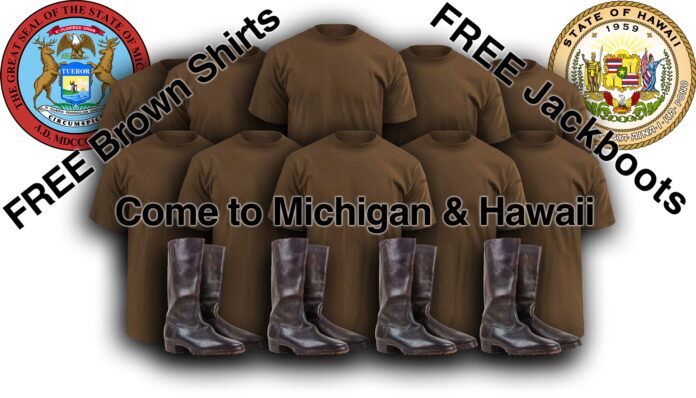
Michigan and Hawaii, both Democrat-led states, have launched taxpayer-funded tip lines for individuals looking to report perceived firearms violations anonymously. While these dumpster fire states claim the lines are aimed at lawbreakers, Second Amendment groups are reasonably skeptical, as they should be, because such a system can easily be abused. Let’s face it, we know that the weaponization of this service against law-abiding gun owners is exactly what they are intended for.
On Thursday, October 10, Hawaii’s Democrat Governor Josh Green announced the state’s Department of Law Enforcement had established a confidential “Gun Tip Line for people to make anonymous reports of illegal gun ownership and gun crimes,” where tipsters can either call, text or drop a dime via the DLE’s website or a downloadable app where they can submit photographs and videos to back up their report.
The governor’s office went even further during the brown shirt recruiting exercise saying, “People reporting tips are encouraged to leave detailed information including the names of those in possession of illegal guns or committing gun crimes, a location where those people may be found and a description of the guns.” Sure, what could go wrong when hiring unpaid, untrained, overzealous, anti-Second Amendment sycophants typically knowing very little about firearms to play the role of a detective, spying on and recording their neighbors?
Meanwhile, Gretchen “Lockdown” Whitmer, known for hosting the most oppressive COVID lockdowns in America while still having more deaths per capita than any neighboring Midwestern states, signed House Bill 5503, a measure passed off as an education funding bill that allocates $1 million in School Aid Funding to support an anonymous tip line for students to report firearms thought to be “improperly stored.”
The bill goes on to mandate that Michigan’s Department of Education develop materials concerning improper storage of firearms, including tip line usage, and distribute those materials to school districts across the state. The Gestapo may not pay you for your work, but you will receive free training, whether you want it or not.
As the NRA-ILA points out, language regarding the tip line was added to the bill as an amendment that was then swiftly passed by the Democrat-controlled legislature.
“The expedited pace and the silencing of opposition when the bill came up for a floor vote underscores the reality that this was a political move and another attack on gun owners,” says the NRA.
These tiplines will ultimately create a situation that will lead to wasted resources, unwarranted confrontations with law enforcement and what could amount to unconstitutional searches of homes, businesses and other private property based on vendettas and other nefarious agendas. Not only does this negatively impact the community’s relationship with authorities, but those who abuse the tip lines will undoubtedly drive wedges within communities as well, drawing lines at a time when we need to be working together to strengthen and solidify those connections.