Categories
All About Guns

A Winchester Model 55 in caliber .30 WCF

Categories
All About Guns COOL!!!!!!!!!!!!!!!!!

18th Century Artisans Show 2024

Categories
All About Guns

M1911A1

Categories
All About Guns

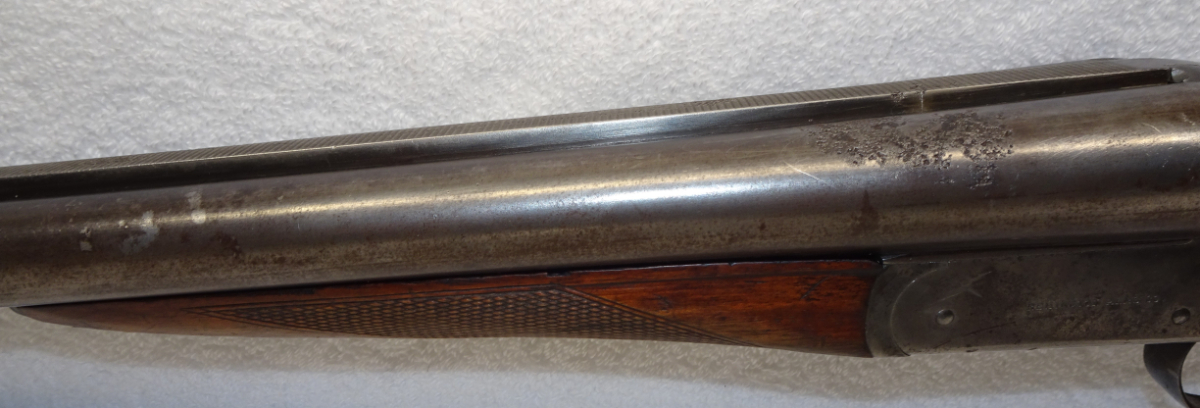
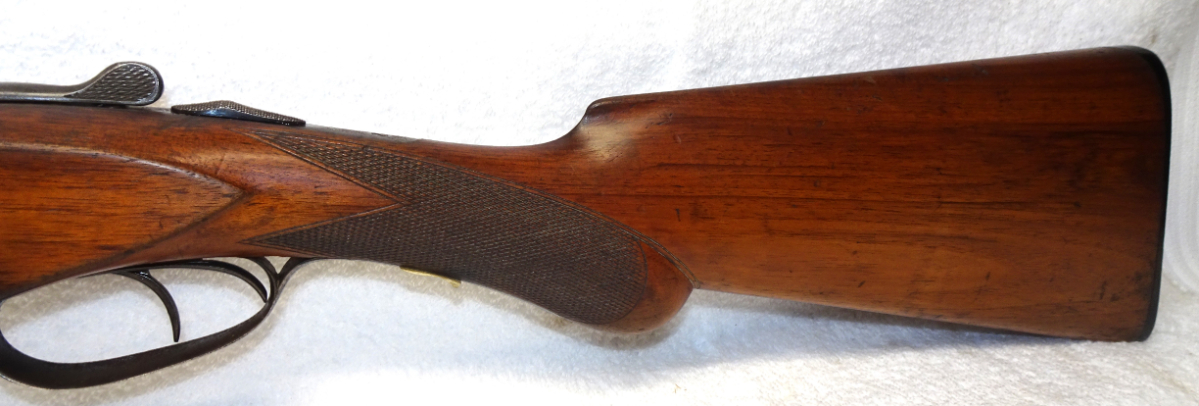
Cimarron Doc Holliday Shotgun

Categories
Uncategorized

.32/.38/.33 WCF CARTRIDGE COMBOS by MIKE “DUKE” VENTURINO

DUKE’S ALL-TIME FAVES

When Duke decided the .32-20 SAAs were great fun, he quickly
added a couple of Cimarron .32-20 Model 1873 lever guns to his collection.


Over many decades of shooting, one is bound to develop favorites. One of mine is a genre of firearms; pistol-cartridge rifles, carbines and revolvers. For this, my all-time favorite cartridges are the .32/.38/.44 Winchester Center Fires (WCF) originated by Winchester in the late 1800s.

Let’s start at .32 WCF (.32-20). Over the last few years, I’ve developed a great fondness for .32-20 as both a carbine and revolver cartridge. They are “soft” shooters for arthritic hands. I landed five nice .32-20 SAAs in the last couple years then bought a couple Cimarron/Uberti Model 1873 replicas. One of my character flaws is never being satisfied with just one of anything!

Two of my .32-20 SAAs have 7 ½” barrels. One was made in 1897 and one in 2010. Both shoot very accurately with little recoil. More recently I acquired a 1905 vintage Winchester Model 1892 saddle ring carbine but as of this writing have not had time to wring it out for the best handload.

Speaking of .32-20 handloads — a fine one I’ve been using is 3.5 grains of Titegroup with 100- to 115-grain RN/FP bullets. This shape is necessary for safe shooting in tubular magazine lever guns. I cast my own, being greatly happy with a 4-cavity mold from MP Molds of Slovenia. It drops 105-grain RN/FP solids or being convertible, 100-grain hollowpoints. Commercial cast bullets are plentiful for non-casters.

From my 7 ½” SAAs velocity runs about 900 fps but add another 200 fps from the 20″ barrel of the carbine. Here’s a word of caution — I got many pierced primers in my .32-20 handloads with small pistol primers. To avoid eroding the SAA’s firing pins, a switch was made to small rifle prim

Duke prefers 7 ½” barrels on his Colt SAAs.

From left to right: .32-20, .38-40 and .44-40.

The .38 WCF


Moving up in caliber is perhaps my all-time favorite pistol cartridge combo — the .38 WCF (.38-40). It’s a well-known fact the .38-40 revolver loads easily duplicate .40 S&W in semi-autos. Since buying my first .38-40 in 1983, I’ve managed to own dozens of such revolvers, lever guns and even a few original Colt Lightning pump-actions.

Once, at a large cowboy action shooting event, I stopped to talk to a vendor with whom I was on friendly terms. Looking over his offerings, I spotted a Winchester Model 1892 SRC and a Colt Lightning in “short rifle” configuration. I asked him why no one had bought either. He said, “They are .38-40s and everyone seems fearful of reloading for them.” My answer was, “I’m not!” and bought both. I still have the Winchester but sold the Lightning in a fit of stupidity when the full-auto bug bit me.

Currently my revolver collection holds .38-40s SAAs with barrel lengths from four to 7 ½”. One is even a Colt New Service double-action. My favorites again are the two with longer barrels. One was made in 1926 and the other in 1996. One thing is for sure: When I take an afternoon away from this word processor and go to my home range for some fun shooting, it’s likely a .38-40 of one sort or another will be with me.

As with .32-20 I prefer to shoot my own cast bullets with RCBS #40-180CM being my top choice. Of commercial cast bullets, I’ve shot many hundreds based on Magma Engineering’s 175-grain bevel base bullet. Note the “40” in the RCBS mold number. This is because .38-40 actually shoots bullets exactly the same diameter as .40 S&W no matter what Winchester named it back in 1879.

If a shooter wishes to duplicate the .40 S&W then 7.0 grains of Unique under 175/180 grain bullets will break 900 fps from a 5 ½” barrel. For light plinking and target loads, 5.5 grains of Trail Boss hits about 750s fps. Again add 200 fps for 20″ carbines.

This is one of Duke’s pistol cartridge combos: the Model 1873 saddle
ring carbine and Colt SAA. Both are .38-40s and both date from the early 1900s.

The .44 WCF


When Yvonne and I were involved in cowboy action shooting, my choice of caliber was mostly .44 WCF (.44-40) because I wanted to shoot in the Black Powder Cartridge class. You get more bang and smoke for your bucks with BP! I have vintage Winchester .44-40 lever guns but the one I’ve fired the most is a Cimarron Model 1873, with a 24″ barrel in the pistol grip configuration. And guess what: I also favor 7 ½” barrels on my Colt Frontier Six-Shooters. One was made in 1913 and another in 2010.

For black powder handloads, RCBS #44-200FN is a true winner. It’s accurate and slides through a lever gun perfectly. For use with BP, the bullets need lubing with SPG or DGL to help keep fouling soft. Modern Winchester brass will hold about 35 grains of Swiss 1 ½ Fg black powder and will give over 900 fps from 7 ½” barrels. Add about 300 fps from 24″ barrels.

Here at home, I seldom use black powder for my fun shooting. I’ve found Trail Boss powder at 6.0 grains pushes 200-grain bullets to about 750 fps from 7 ½” revolver barrels and about 900 fps from 24″ rifle barrels. In a recent project I discovered RCBS 44-200CM and Lyman 427666 bullet molds for 200-grain RN/FP bullets give excellent results. There is no shortage of good .44-40 bullets whether they’re home-cast or commercially made.

Shooting the above guns and loads are usually how I spent my spare time.

Categories
Real men Soldiering War

Abdul Hamid: The Subcontinent’s Audie Murphy by Will Dabbs

Abdul Hamid was an Indian soldier who fought and died in the 1965 Indo-Pakistani War. His battlefield exploits were legendary.

Human beings are tribal, and we live in a big old world. With so many people from so many backgrounds cluttering up the place, we naturally identify more readily with folks who look and sound like we do. Some might misinterpret that as racism. That’s just life. It is simply that it takes a little insight and logic to appreciate the nuances. This deep into the Information Age, both of these commodities can be in fairly short supply.

As a result, I most easily identify with the Audie Murphy sort of hero. Murphy was a skinny little white kid who came up in the most deplorable circumstances. He went on to become the most decorated American soldier in history. I don’t think we have explored his story here before. I’ll have to remedy that. His tale is indeed compelling.

War on the Subcontinent

As an unwashed American redneck, Indian culture seems terribly foreign to me.

By contrast, India is on the other side of the world from where I currently sit comfortably ensconced in my favorite writing chair. The Indian people don’t look or sound much like me. Their customs are foreign as is their history. However, the Indians have a rich military legacy far older than our own.

Even in relatively recent history, the Indians have been engaged in some extraordinary examples of sweeping armed conflict, none of which are taught in the sorts of American schools I attended. When you have war, you will find warriors. Do that long enough and you will inevitably produce heroes.

Unfettered Terror

Take it from me, being downrange from one of these bad boys once it gets tooled up is pretty unsettling.

It is the threat of violent gory death that is humankind’s greatest motivator. Nobody wants to lose their homes, their families, or their wealth. However, what you really, really don’t want is to get ripped to pieces by sleeting clouds of red-hot steel. As a result, we curiously violent humans have invested literally incalculable time, treasure, and talent in contriving machines designed solely to do just that. On the modern battlefield, one of the most compelling is the tank.

I have myself been shot at by a tank before. Make no mistake, I’m no hero nor am I even a combat veteran. I was out of the military and in med school prior to 911. This whole sordid mess stemmed from a most unfortunate misunderstanding. I was someplace I wasn’t supposed to be, and my tanker buddies were blissfully unaware of my presence. In a nutshell, I cowered between the tracks of a derelict bulldozer alongside a friend while a platoon of M1 Abrams tanks shot the old earthmover up with their .50 calibers and coax guns. To paraphrase Winston Churchill, that made for a most exhilarating experience.

Trust me when I tell you, that is a freaking horrifying place to be. When you have 130,000 pounds’ worth of pure unfiltered pain unlimbered in your direction it can be tough to think straight. However, certain remarkable personalities can not only operate in that space, they can thrive. An extraordinary Indian soldier named Abdul Hamid was one of them.

The Guy: Abdul Hamid

Abdul Hamid was an Indian war hero.

Company Quartermaster Abdul Hamid Idrisi was born in the summer of 1933 in a village in the Ghazipur District of Uttar Pradesh in India to Sakina Begum and Mohammad Usman. His dad was a tailor. As a boy, Hamid worked in his father’s clothing business running a sewing machine. Hamid enlisted in the Indian Army’s Grenadiers Regiment in 1954 at the age of 21.

India has been fighting the Chinese and the Pakistanis off and on for decades. Sometimes these conflicts are piddly smoldering things that orbit around minor border disputes. Others are roiling combined arms fights spread out across sweeping battlefields. Abdul Hamid saw a great deal of that.

Hamid first saw the elephant in 1962 during the Sino-Indian War. He participated in the Battle of Namka Chu against the Chinese People’s Liberation Army. During this bloody fight, Hamid’s battalion was surrounded and cut off from support. In desperation, they broke out on foot through Butan and then onto Misamari. Three years later in 1965, Hamid was a seasoned combat veteran.

The Place

This looks like a ghastly place to fight.

I don’t begin to understand the geopolitics of the Indo-Pakistani War of 1965. At that time my people were busy getting ramped up in Southeast Asia. In a nutshell, Wikipedia claims that the Pakistanis were infiltrating the provinces of Jammu and Kashmir to foment a rebellion against Indian rule. The acrimony in this place went way back.

When the British finally called it a day, took their toys, and went home in 1947, they left a mighty vacuum. Nature hates such stuff, so the locals were scrapping in short order. The United Nations mediated a ceasefire in 1949 and established a de facto border, but nobody was happy with it. Despite countless cross-border smackdowns and several proper wars, the place remains a festering wound even today. Back in 1965, things were poised to get seriously kinetic.

The Pakistanis kicked off this party with 30,000 trained guerilla fighters they intended to infiltrate into the area. The Indian Army got wind of this, broke up the insurgent formations, and knocked the dog snot out of their staging bases. In response, the Pakistanis launched a massive conventional military offensive. The Indians naturally responded in kind. Tanks, tactical air, and artillery all did what they did.

Things Get Real For Abdul Hamid

Abdul Hamid used his jeep-mounted recoilless rifle to great effect against Pakistani armor.

Hamid’s Grenadiers arrived onsite around midnight on the evening of 7 September 1965 and began to dig in. The following morning they heard the telltale rumble of approaching Pakistani tanks. As I mentioned earlier, being a dismounted earth pig at the bottom of some shallow hole faced with a coordinated armored assault is a mighty lonely place. Any normal bloke would want to be almost any place but there. Amidst this terribly toxic milieu, Hamid found himself hunkered down behind a 105mm recoilless rifle mounted on a Jonga jeep.

The vanguard of the Pakistani armored assault reached Hamid’s position at 0730 hours. Hamid waited until the lead tank got within thirty feet and pithed it with his recoilless gun. The tank brewed up, and the crews in the following pair of tracks abandoned their vehicles and fled. However, in the aftermath, the Pakistanis pummeled the Indian positions with artillery.

Deftly wielded, the American M48 Patton was a formidable main battle tank in its day.

Early in the afternoon, the Pakistanis tried again. Hamid and his crew killed a second Pakistani tank and caused the supporting crews to beat their feet once more. An Indian engineering company then showed up and defiled the place with a wide variety of anti-tank and anti-personnel mines.

The following morning, Hamid’s position was ruthlessly strafed by Pakistani Sabre jets resulting in extensive casualties. Immediately afterward, the Pakistanis followed up with a series of coordinated assaults. By the end of the second day, Hamid had accounted for a further four Pakistani tanks. Keep in mind, this guy isn’t taking out these tanks from eight klicks distant in an air-conditioned attack helicopter. He’s killing these US-supplied Pakistani M48 Patton tanks with the tactical equivalent of a big honking bazooka.

The Armor Situation

The Centurion was Britain’s most effective WW2-vintage tank. It was widely exported and saw action for decades afterward.

The M48 Pattons used by the Pakistanis represented the state of the art at the time. Opposing them in Indian service were WW2-vintage Shermans and British-made Centurions. The Shermans were withdrawn as they were ineffective against the later-generation Pattons. The Centurions were repositioned to a different part of the battlefield.

Modern combined arms warfare is both fluid and unimaginably lethal. Pakistani commanders explored defenses and exploited weaknesses. In this case, the only thing standing between the Pakistanis and their coveted breakthrough was Hamid’s recoilless rifle and a handful of antitank mines.

The Weapon

A recoilless rifle creates an impressive backblast signature when fired.

A recoilless rifle is a curious thing. Though it looks a bit like a rocket launcher, this is not the case. The recoilless rifle is a fascinating study in physics.

In any dynamic system, mass times velocity in one direction will always equal mass times velocity in the other direction. That’s not just a good idea. That’s the law.

Recoilless rifle ammunition uses a perforated case that allows the exhaust gases to escape out the rear of the weapon.

In the case of a recoilless rifle, the weapon is a giant gun firing fixed ammunition. It is simply that the cartridge case is perforated and full of holes, and the back of the weapon is open to the atmosphere. When the gun is fired the projectile leaves the muzzle as the exhaust gases exit through a venturi in the rear.

The resulting system can throw a lot of ordnance downrange, but it consumes vast quantities of propellant and produces a simply breathtaking backblast. The American M3E1 Multi-Role Anti-Armor Anti-Personnel Weapon System version of the venerable Swedish 84mm Carl Gustav is a modern example currently in use with US troops.

It Gets Worse

Artillery has long been the biggest killer on the battlefield. Redlegs (artillery soldiers) rightfully refer to the field artillery as the King of Battle.

The following morning, another wave of Pakistani tanks assaulted Hamid’s position. By now, Hamid’s jeep was shot to pieces but still drivable though just barely. Hamid killed a tank at a range of 180 meters and then picked off yet another soon thereafter. By now, however, the artillery fire was becoming intolerable. Hamid ordered his gun team to move the raggedy jeep to another position to get clear of some of the shellfire.

Once in their new firing position, Hamid directed his men to seek cover against the sleeting artillery. Now alone behind his gun, Hamid spotted another Pakistani tank. The enemy tank commander identified him at the same time. Hamid exchanged fire with the Patton but was blown to pieces by a high explosive main gun round.

Ruminations On Abdul Hamid

The Indians captured vast quantities of war materiel during the 1965 Indo-Pakistani War.

The Battle of Asal Uttar was a decisive Indian victory. Hamid and his crew destroyed eight Pakistani Patton tanks and damaged a ninth before their gun was knocked out. Abdul Hamid was awarded the Param Vir Chakra, India’s highest combat decoration for valor. Hamid was 32 when he was killed.

Abdul Hamid is rightfully viewed as a hero in India today.

Hamid’s sacrifice was inspirational. His selfless efforts helped spur his battalion on to resist further Pakistani attacks and played a huge part in the ultimate Indian victory. He is venerated in Indian society today.

While the names and places seem terribly foreign to us over on this side of the pond, battlefield bravery is the same the world over. Abdul Hamid, like all real heroes, did not necessarily fight for his government, his country, or even his people. Abdul Hamid fought for his buddies. In the end, he sent his comrades to safety while he remained exposed and in action engaging the threat. He ultimately gave his life to support his friends, because that’s what true heroes do.

Categories
N.S.F.W.

Happy Lee–Jackson Day NSFW

Categories
Hard Nosed Folks Both Good & Bad Real men Soldiering

A Circassian, where they breed some mighty hard men

Categories
Uncategorized

Happy Lee–Jackson Day NSFW

Categories
Real men The Green Machine This great Nation & Its People War

Dr. Dabbs – Ralph Goranson: The Real Captain Miller BY Will Dabbs

Saving Private Ryan was a simply fantastic movie.

The Movie’s Captain Miller

In 1998 Stephen Ambrose, Stephen Spielberg, and Tom Hanks debuted what is arguably the finest war movie ever made. The storyline of Saving Private Ryan was fabricated from whole cloth. While there were several actual heartrending tales of multiple brothers from the same family having been lost in combat during World War 2, the operation to task Captain Miller and his Ranger detachment to retrieve a single young paratrooper amidst the chaos of the D-Day invasion never actually happened.

This is Harrison Richard Young. He logged more than 100 film and TV credits prior to his death in 2005. I found his brief role in Saving Private Ryan to be incredibly powerful.

I’ll level with you guys, when I saw that movie for the first time in the theater I struggled to keep my composure. I had only fairly recently left the military, and I missed the brotherhood and camaraderie terribly. When the old guy at the end asked his family if he had lived a good life that just touched a visceral chord. While this particular story was indeed the product of an imaginative screenwriter, reality was all the more compelling.

Closer to Home

I knew a guy who actually did this.

Mr. Roberson was a patient of mine who was assigned to the 5th Ranger Battalion during World War 2. He hit Omaha Beach in the first wave on the morning of June 6, 1944. He actually did what was depicted in the movie. Here’s his story.

It’s one thing to see extraordinary historical events depicted in movies. It is quite another to talk to someone who was actually there.

Getting to know Mr. Roberson put a human face on the film for me. He was like so many of those great old guys—quiet, humble, and awesome. The only reason I ever found out about his military service was that I inquired about some scars on his forearm. He didn’t write a book, try to monetize his time downrange, or seek attention of any sort. He just did what it took and then came home to raise a family and be a great American.

The guys who won World War 2 and freed the world from tyranny were just cut from stouter stuff than we are today.

Likewise, the real-life inspiration for the characters in the movie was even better than what we saw on the big screen. These men, all of them young and hard, were products of the Great Depression. They left the relative comfort and security of home to travel to foreign lands and, in many cases, suffer and die so that we could enjoy the freedoms we so often take for granted today.

Background

If you haven’t yet seen Saving Private Ryan, and both of you know who you are, you need to go fix that right now.

Spoiler Alert—If you haven’t seen it already, then I’m about to ruin the plot of the movie. However, if you frequent GunsAmerica and you haven’t seen Saving Private Ryan at least twice I’ll be holding onto your man-card for safekeeping until you remedy that. Stop whatever you’re doing, surf on over to Amazon, and knock it out. It’ll take you 2 hours and 49 minutes. You’ll thank me later.

Tom Hanks’ depiction of CPT John Miller captured the essence of a competent and professional combat leader.

One of the central threads in the film orbits around Tom Hanks’ character, Captain John H. Miller. CPT Miller is universally respected by his men, even when they disagree with him. As a commander, he seems to strike the perfect balance between intimacy and aloofness, something that can be tough to do in the real world. There’s really nothing he wouldn’t do for his guys, but there is also no ambiguity regarding who is ultimately in charge. Throughout the first half of the film, there is a pool going to try to guess what CPT Miller’s profession was before the war.

Captain Miller’s mysterious backstory ends up becoming a pivotal part of the narrative.

We eventually find out that John Miller was a teacher. He is married but has no children. Just like all of them, what he really wants to do is get the war over with and go home. This revelation is one of the more poignant moments in a very poignant movie.

In the movie, CPT Miller goes out heroically for a righteous cause.

Captain Miller ultimately gives his life saving Private Ryan. He and most of his men are spent defending a critical bridge that is probably in the middle of some peaceful little French village nowadays. However, that is obviously the point. Were it not for countless Allied soldiers like Mr. Roberson who were willing to fight to the death over such stuff the death camps would still be running today.

Fact is Cooler Than Fiction

This was Ralph Goranson in his early years.
CPT Ralph Goranson exemplified the Ranger ethos.

While CPT Miller is indeed one of the most compelling characters in the film, the real guy who inspired him is all the more extraordinary. Tom Hanks’ character was based on 24-year-old CPT Ralph Goranson. Born, appropriately enough, on the 4th of July, 1919, CPT Goranson was the commander of C Company, 2d Ranger Battalion. Though my friend Mr. Roberson never mentioned him by name, he would have trained alongside CPT Goranson in the leadup to Operation Overlord.

The reality of the D-Day invasion was unimaginably gruesome.

Movie vs. Reality

In the movie, the Rangers landed on the Dog-Green section of Omaha Beach. In reality, this little piece of hell mostly fell to the grunts of the 116th Infantry Regiment, 29th Infantry Division. Charlie Company, 2d Rangers actually landed a few yards west of Dog-Green on a place called Charlie Section.

This is a British LCA. It was a bit more robust than an American Higgins boat but not by much.

C Company consisted of 68 Rangers, and they didn’t actually hit the beach in Higgins Boats. They rode to war aboard British Royal Navy LCA’s (Landing Craft, Attack). These British-designed boats sported a 4-man crew and carried 37 assault troops. Unlike their American counterparts, the LCA’s featured armored bulkheads and hulls along with a modest deck over their troop wells. Of the Royal Navy crews, CPT Goranson later said they, “Beached us on time in the best place, exactly per our instructions.”

It is easy to lose the power of the D-Day narrative by fixating on the big picture.

Overlord was the largest amphibious invasion in human history. However, for all its scope and power, the real story of D-Day resides in the smaller stuff. June 6, 1944, was Ranger Sergeant Walter Geldon’s third wedding anniversary. As they approached the beach, his buddies were singing in his honor to celebrate. An hour later SGT Geldon lay dead on the sand.

LTC James Rudder led the Rangers’ assault on Pointe du Hoc.

The commander of the 2d Ranger Battalion was LTC James Rudder. His guys called themselves “Rudder’s Rangers” as a result. A month before the invasion Rudder told Goranson, “You have the toughest goddamn job on the whole beach.” He wasn’t kidding.

CPT Goranson Goes to War

Like all good combat leaders, CPT Goranson led from the front.

CPT Goranson was naturally in the first British LCA. At around 0645 the defending Germans opened up on Goranson’s boat with artillery, mortars, and small arms. Four high explosive rounds struck the LCA as it landed, killing twelve Rangers outright. Many of the rest were wounded.

The first wave of the D-Day invasion was all chaos and death.

The second LCA was led by Ranger Platoon Leader LT Sidney Salomon. LT Salomon made it off the boat safely amidst a hail of machine gun fire, but the man behind him, SGT Oliver Reed, was riddled. Salomon dragged Reed through waist-deep surf onto the shingle only to be bowled over by a nearby mortar round.

It takes some rare stuff indeed to move forward in a place like this.

Advancing into hostile fire is arguably the most unnatural of all human endeavors. Seeing his Rangers becoming bogged down at the water’s edge, 1SG Steve Golas stood up and shouted, “Get your ass off this beach!” 1SG Golas was gunned down moments later.

These guys were such studs.

Rare Men

A BAR man named T/5 Jesse Runyan was shot through the groin and paralyzed from the waist down trying to cross the 300 yards of killing ground between the water’s edge and the first available cover. Despite his injuries, Runyan dragged himself forward, firing his BAR as he went. This young stud earned the Silver Star for his actions that horrible morning.

The majority of the Rangers fell prior to reaching the top of the ridge overlooking Omaha Beach.

Another nineteen Rangers were hit near the Vierville Draw. With only thirty or so Rangers left unhurt, Captain Goranson directed his men west to a modest cliff face. His guys moved three hundred yards further west to reach the roughly 100-foot cliff face. Using their bayonets as climbing aids, the Rangers scaled the cliff and emplaced a toggle rope.

Once atop the cliff the first few Rangers immediately assaulted the German defensive works. Those first three Rangers, LT Bill Moody, SGT Julius Belcher, and PFC Otto Stephens, were likely the first three Allied troops to reach the high ground overlooking Omaha Beach. LT Moody fell to a sniper soon thereafter, but LT Salomon recovered his wits enough to rejoin the attack.

CPT Goranson led the attack on the defensive positions overlooking his landing beach.

Chaos

What followed was a chaotic back-and-forth engagement ultimately decided by small arms and hand grenades. CPT Goranson led his men along with a handful of 29th ID grunts as they assaulted the defensive works, machinegun nests, and mortar emplacements that had exacted such a horrible toll on his Rangers. For the next several hours the Rangers fought their way through the maze of trenches and prepared emplacements that the Germans had constructed over the previous months.

CPT Ralph Goranson was the archetypal citizen soldier. When his nation was in need, this man answered the call.

By 1400 in the afternoon, CPT Goranson’s Rangers had killed 69 Germans in their defensive works and were ready to move inland. Goranson formed a combat patrol and pressed forward to Pointe-de-la-Percee. Later that afternoon they transitioned to Pointe du Hoc to link up with the surviving Rangers there.

General George Patton was unique in American military history. He’d never make it past Captain today.

According to Mr. Roberson, after pushing through the Bocage country in Normandy his unit subsequently went to work as a reconnaissance element for General Patton’s 3d Army. He met Patton twice himself and told me that the General’s voice had a peculiar high-pitched tone that seemed incongruous. He subsequently fought in both the Hurtgen Forest and the Battle of the Bulge.

One of the first things Ralph Goranson did after returning from World War 2 was get married. He and his wife Ruth remained together until her death in 2002.
This is the face of a true American hero.

Unlike CPT Miller in the movie, CPT Goranson actually survived the war. He later told some of his fellow Rangers, “Here’s one for Ripley. I found nine slugs and bullet holes in my gear and clothing. I didn’t get a scratch, yet so many around us have died.” He came home to Illinois to marry his sweetheart Ruth and enjoy a long, rich life, ultimately dying peacefully on November 14, 2012, at 93 years old. CPT Ralph Goranson was one of the finest Americans ever to salute the flag.