Categories

And don’t forget a still would be nice too! Grumpy
Ex-and-future-felon Richard “Greg” Oliver probably had another use in mind for the sawed-off shotgun stuffed in his pants, but we’re sure most American Handgunner readers will applaud the way he ultimately used it: “Greg prevented a crime in progress and captured a three-time loser — himself.
The police in Martinez, Calif., were already in pursuit of Oliver following a bungled burglary attempt when the fleeing crook leaped to the top of a fence, paused to bid the gendarmes a smug adieu, and fired a single shotgun blast — into his own skivvies.
Oliver was rushed to a nearby hospital with what was, we think, delicately understated as “a severe wound to the groin.” With a horse-choking bundle of past felony convictions, he faces some long, hard time under the state’s new “three strikes and you’re out” law.
No, we don’t know why Richard is called “Greg,” but we bet he’ll have a new nickname in the joint once his, uhm, war story gets around.
And Now For The Sequel
In Connecticut, Bridgeport police rolled in response to a report of a street-corner shooting but just couldn’t believe the prone-and-moaning victim’s story. The 18-year-old male said someone driving by had popped a cap on him.
But officers wondered: If this shot was fired from a car some distance away, why is there a big, smoking, still-smoldering hole in the crotch of this guy’s pants, a single laceration on his penis, severe powder burns down’ his thigh, a sawed-off shotgun stuffed down his trousers, and a giggling girlfriend standing nearby, saying the dummy was “showing off” when he almost blew away his chances for fatherhood?
Okay, so it wasn’t exactly a case for Sherlock Holmes, but answer us this: What movie was it?
What cinematic caper convinced these clowns to experiment with the “Genitalia Gauge” concealed-carry? Or is this the kind of thing that exceptionally stupid people come up with on their own?
Man Versus Machine
He’s still on the loose, but probably not for long. Outside the Bank of Commerce in Del Mar, Calif., a suspect tried to bring armed robbery into the technological age.
After circling the bank in his car several times, our loser-of-the-month finally parked, then gingerly approached the apparently defenseless automatic teller machine.
Suddenly producing a club, he began viciously battering the ATM, not even shouting his demands, just mercilessly clubbing the lonely machine with blow after hammering blow, occasionally pausing to see if this mute fiscal representative had begun leaking money. It had not.
Trembling with rage and frustration, the brute ran to his car and retrieved a revolver. He then strode purposely back to the ATM, coolly brought the muzzle to bear, and fired — then ducked, slipped, flapped and scrambled as his own bullet came whizzing back at him!
The ricochet apparently missed the suspect by only a few inches, prompting a headlong retreat back to his car and an ignominious departure.
And how do we know all this? The entire scenario was captured on remote surveillance videotape.
After viewing the tape, bank chairman Peter Davis commented that aside from being excellent evidence for a criminal prosecution, it might be “… the beginning of a TV comedy show.”
Why You Should Pay Attention During Gun Safety Lectures
For four long, tension-filled days and nights, Missouri lawmen scoured the Show-Me state in one of the most intense manhunts in recent area history. Their quarry: a motiveless, anonymous, nondescript suspect who was wanted for the seemingly cold-blooded random shooting of a 25-year-old Butler County Sheriff’s Deputy. Tony Dow.
Fresh-faced rookies, dreaming of locker-room notoriety, checked every bar and roadhouse while seasoned detectives pumped their snitches for a name, a license plate, that snippet of scoop that would “make their bones” and get ’em back into the captain’s good graces.
After all, it ain’t every day a hometown Missourian gets to slap the shackles on a for-real cop-shooter. Probably one of them long-haired California cocaine cowboys, whattaya bet?
Then Tony rained on the parade. Deputy Dow, faced with the snowballing effects of his subterfuge, finally admitted he had shot himself while foolin’ around, tossing his gun in the air.
It was not immediately known if he had seen the movie “Maverick,” but it was immediately guessed he may soon be considering other career options. Good guess, we guess.
Categories
505 Gibbs

The AR-15 rifle is the most popular long gun in America.
It is built around upper and lower receivers cut from
aircraft-grade aluminum.
Aluminum is a ubiquitous material in modern society. Back in 1956 when Gene Stoner and a few others designed that first AR-15 rifle around aluminum receivers, they literally changed the landscape. In the 1980s, everybody in the combat handgun world was churning out high-capacity, aluminum-framed pistols. Nowadays, we discard or recycle aluminum beverage cans by the zillions.
One of the neat things about aluminum is the way it sort of heals itself. Pure aluminum is highly reactive when exposed to air. However, the resulting aluminum oxide is exceptionally stable. This results in a natural microscopic protective coating on exposed surfaces. In applications like window frames, mechanical trauma from repetitive use results in tiny scratches that instantly oxidize, ensuring a robust material that resists environmental degradation.
Aluminum is relatively soft and easy to both extrude and machine. There are dozens of recognized aluminum alloys. Most AR parts are formed from 6061, which includes trace amounts of silicon, magnesium, copper and chromium. The 7075 alloy includes zinc in place of the silicon.
The 1980s was the decade of the “Wonder Nines.”
These high-capacity 9mm pistols were built
around aluminum frames.
Digging Deeper
Aluminum is indeed fascinating stuff. It has an atomic number of 13 and is roughly one-third of the density of steel. Aluminum is the 12th most common element in the universe and the third-most common element in the Earth’s crust right behind silicon and oxygen. It accounts for 1.59% of the Earth’s mass. The stuff is everywhere.
Despite the fact that aluminum was so common in nature, back in the late 1800s it was actually considered a precious metal. Gram for gram, aluminum once cost more than both gold and silver. Napoleon III reserved his aluminum flatware to impress visiting dignitaries. Lesser visitors got the silver.
In 1884, the Washington Monument was capped with a six-pound piece of aluminum. The total national output of aluminum that same year in the United States was only 112 pounds. Aluminum was revered similarly to platinum. How was it that such an abundant material might have been considered so rare and valuable a short century or so ago? That all depends on how you refine it.
While there are scads of elemental aluminum in the earth’s crust, prior to the late 1800s, it was terribly difficult to access. Most elemental aluminum is found in the form of a natural ore called bauxite. By 19th-century standards, extracting usable aluminum from this ore was nigh impossible.
Nowadays, lots of guns are built out of aluminum. This custom takedown AR short-barreled rifle and this FN SCAR-15P carbine are counted among them.
Find a Need and Fill It
In 1886, a 17-year-old college student named Charles Hall was sitting in a chemistry class when his professor told him about the aluminum quandary. Hall’s professor actually said that if someone could devise a cost-effective method for extracting aluminum from bauxite, he would become the richest man in the world. Intrigued, the teenager went home determined to find a better way.
For the next five years, Charles Hall toiled in a workshop he had erected inside his family’s woodshed. Eventually, his perseverance paid off and he discovered a unique process that would produce aluminum from bauxite using electricity. At age 22, Charles Hall was indeed about to change the world.
Bizarrely, at exactly the same time in France, another 22-year-old, this one named Paul Heroult, discovered the identical technique. The resulting electrolytic extraction of aluminum from bauxite has become known as the Hall-Heroult Process.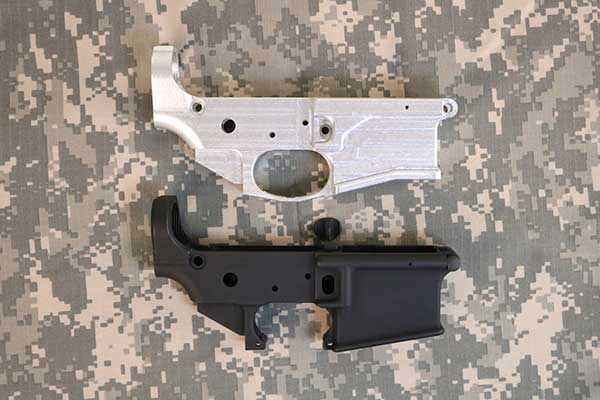
AR-15 receivers are lightweight, ubiquitous and strong.
Changing the World
Because both men discovered the process at the same time, neither established a monopoly. However, there was more than enough sweetness to go around. The young Charles Hall founded Alcoa, short for Aluminum Company of America. In 2023, Alcoa’s total revenue was $10.55 billion.
Extracting usable aluminum is still a terribly energy-dependent undertaking. As a result, most aluminum smelters are located in places where electric power is cheap. Production of one kilo of aluminum requires the equivalent of seven kilos of oil energy. That compares to 1.5 kilos for steel and 2 kilos for plastic. Today, 5% of the electric power produced in the United States goes toward smelting aluminum.
Categories
A Remington Model 1100 in 12GA



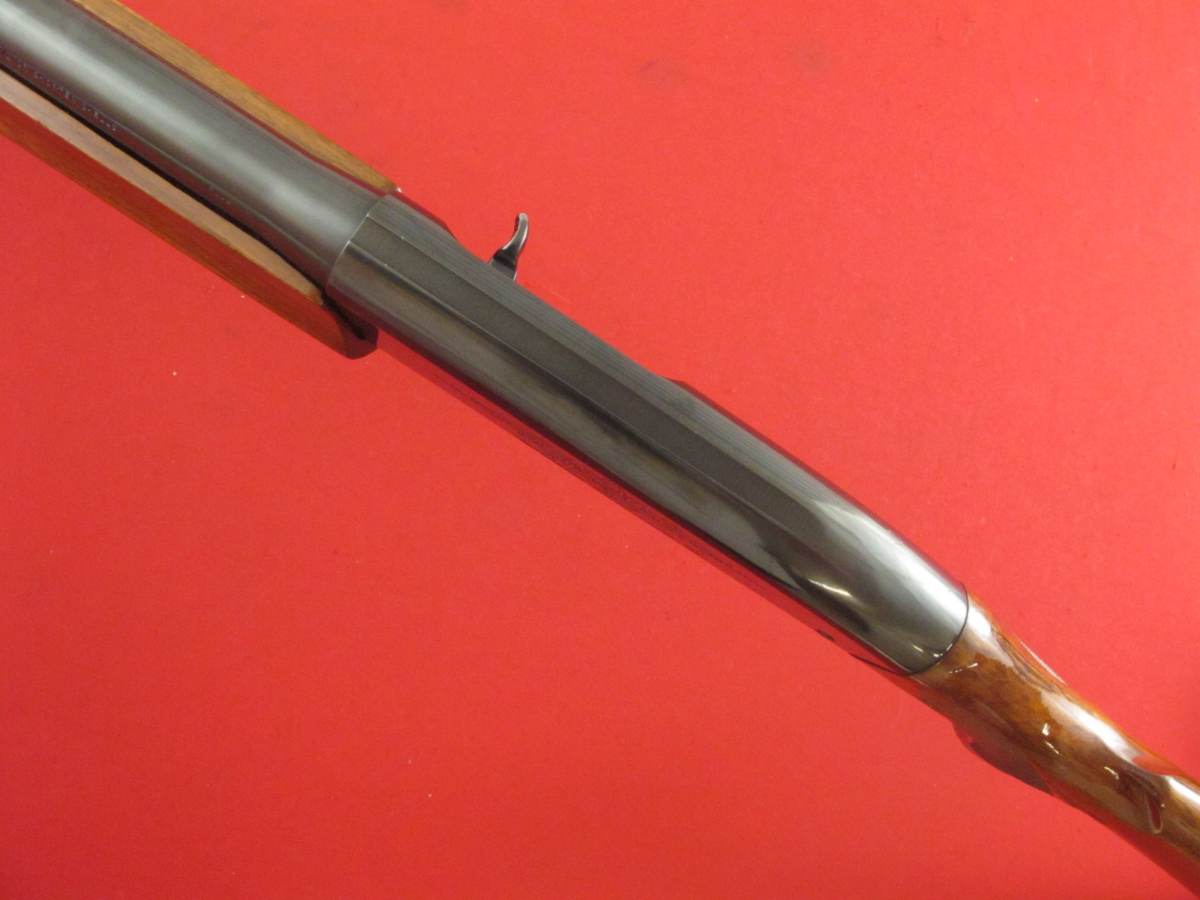
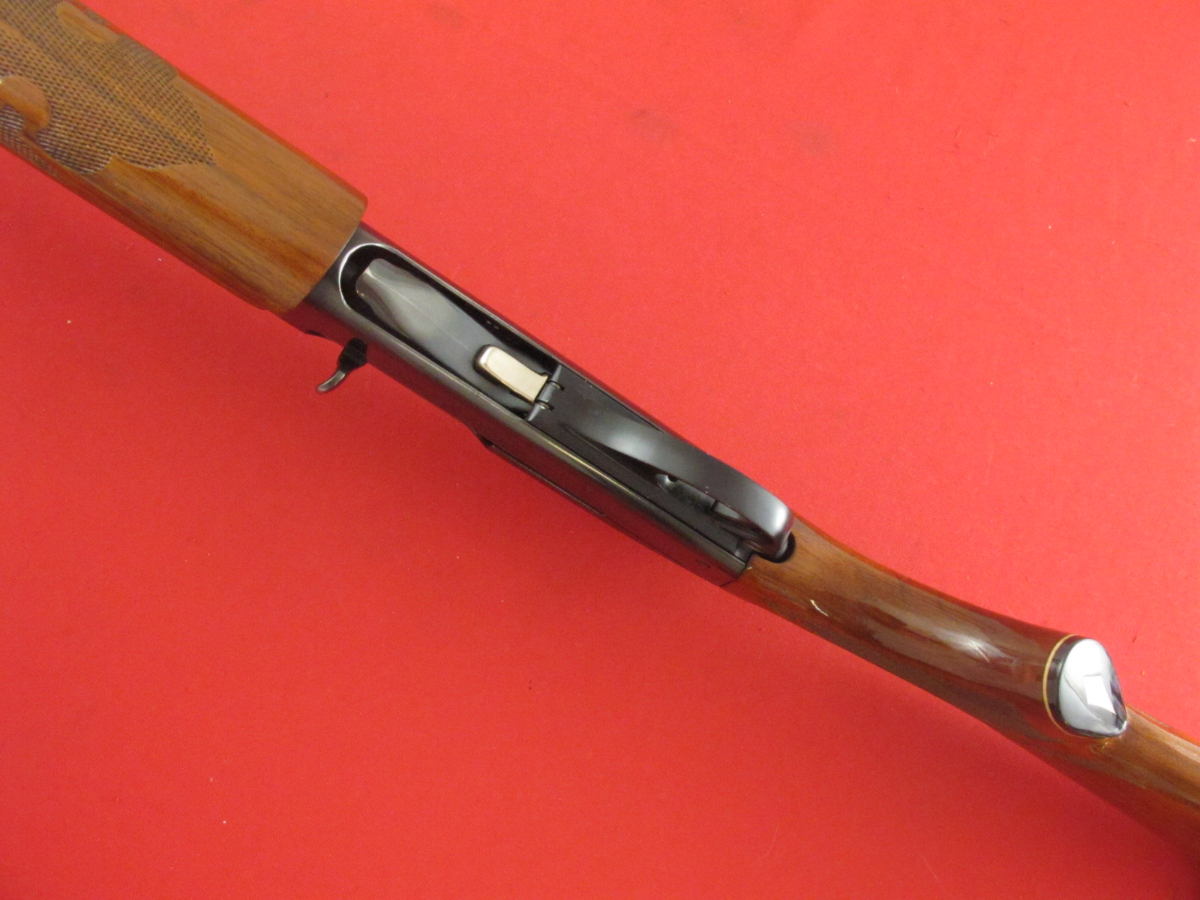
This was the first auto shotguns that I ever shot way back in the late 1960’s. Needless to say I had a blast with it and have never looked back! Grumpy
Categories
Too soon?



Yeah I can be one cynical and sick SOB at times! But I did hear you stiffle a giggle back there! Grumpy