
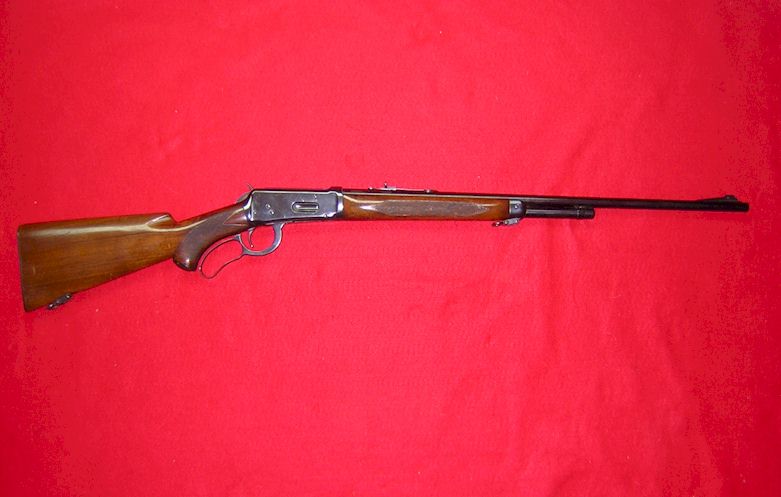
One day I will buy another one of these fine Old School Lever Guns!
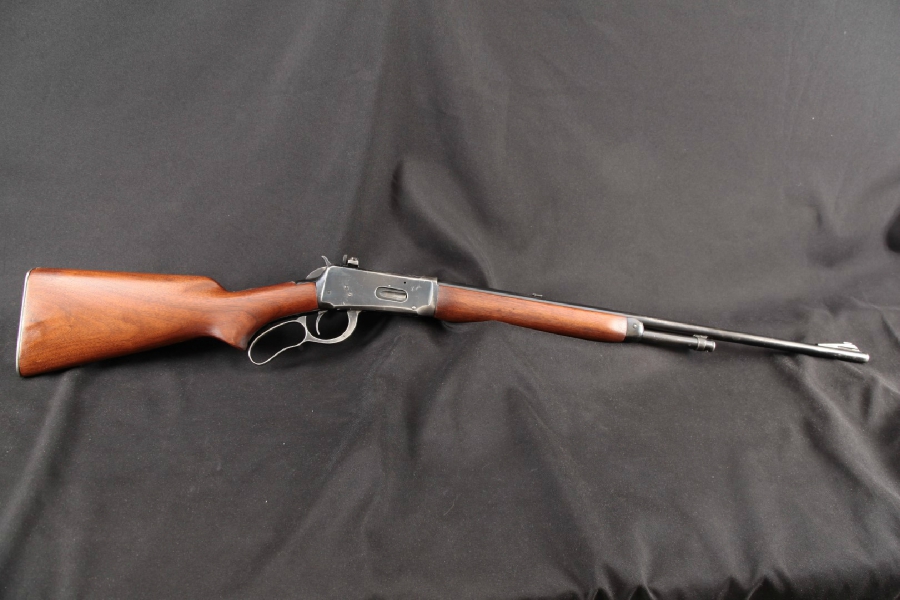

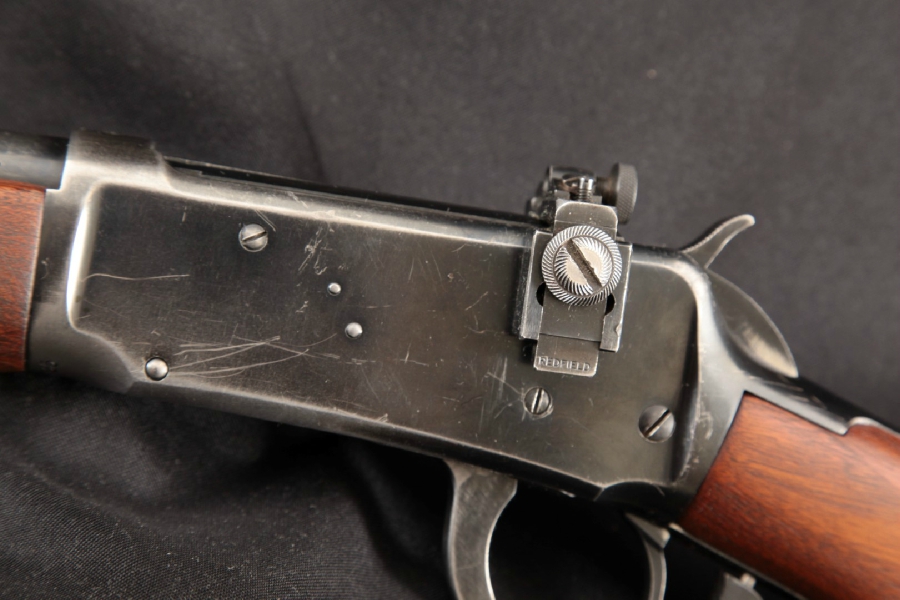
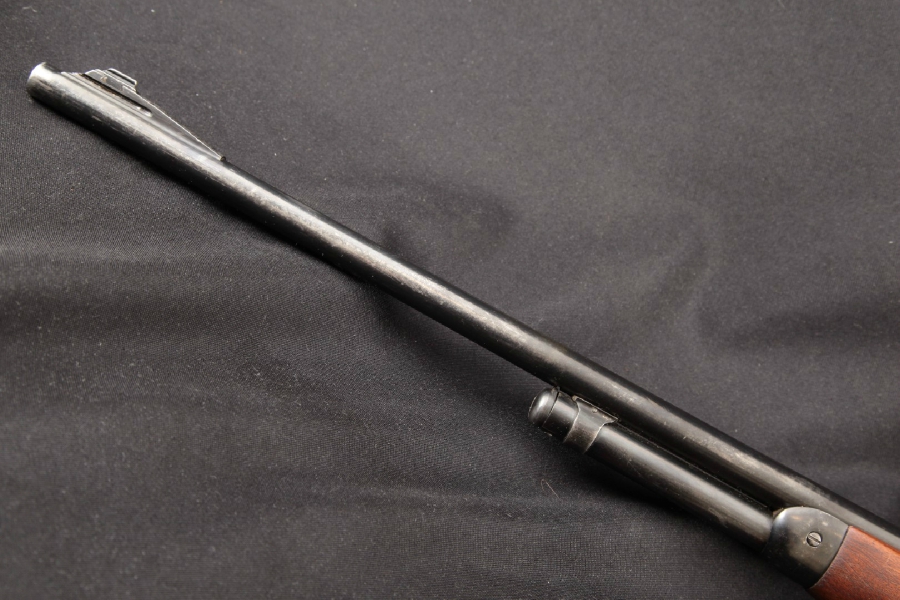
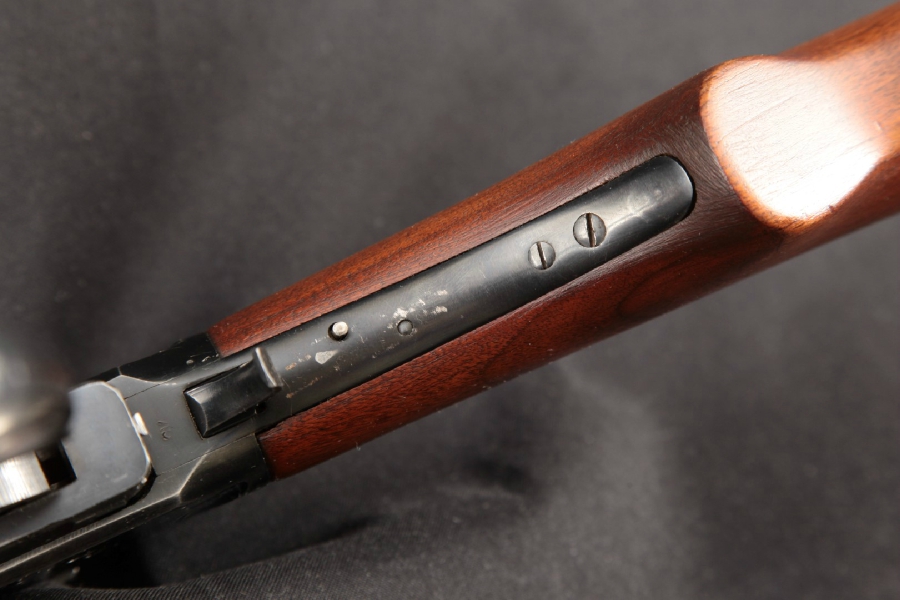
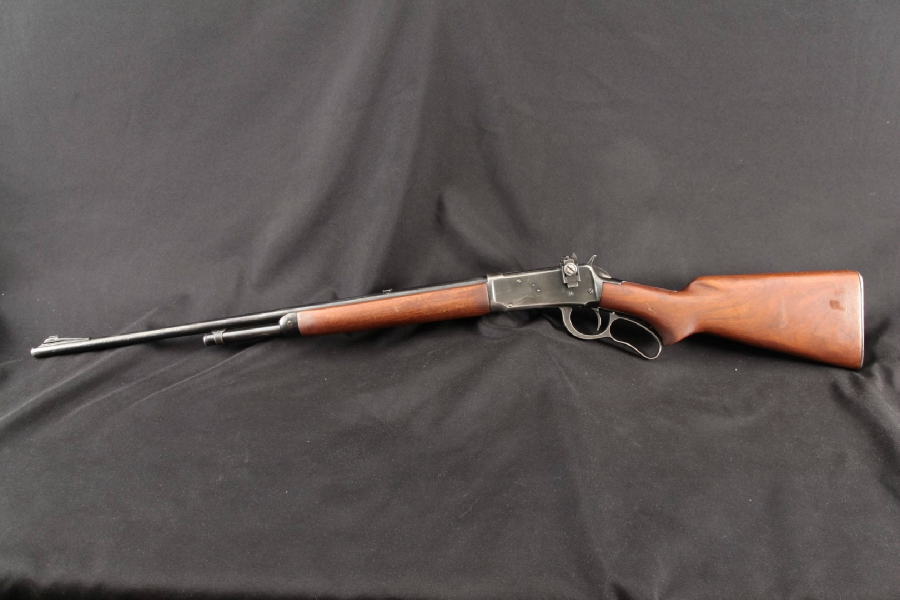
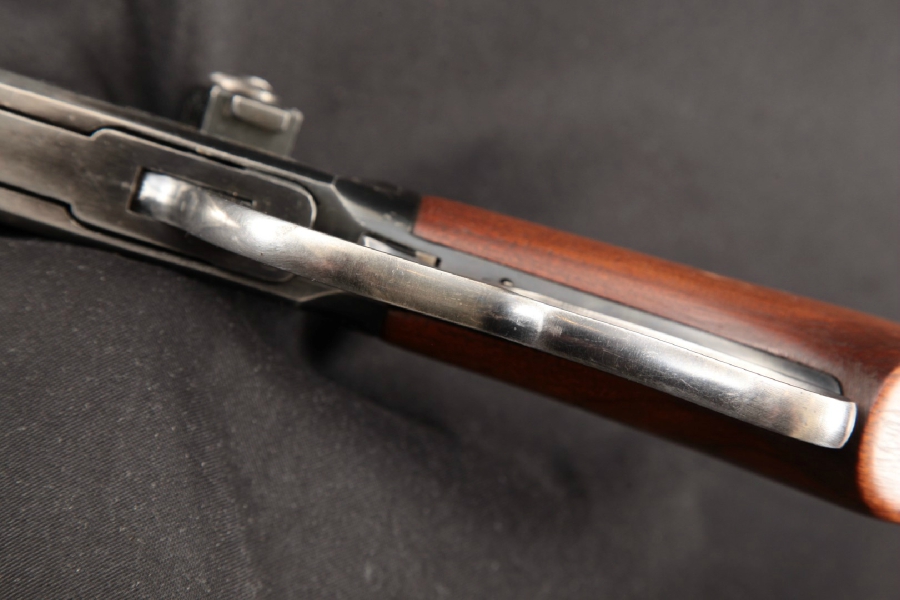
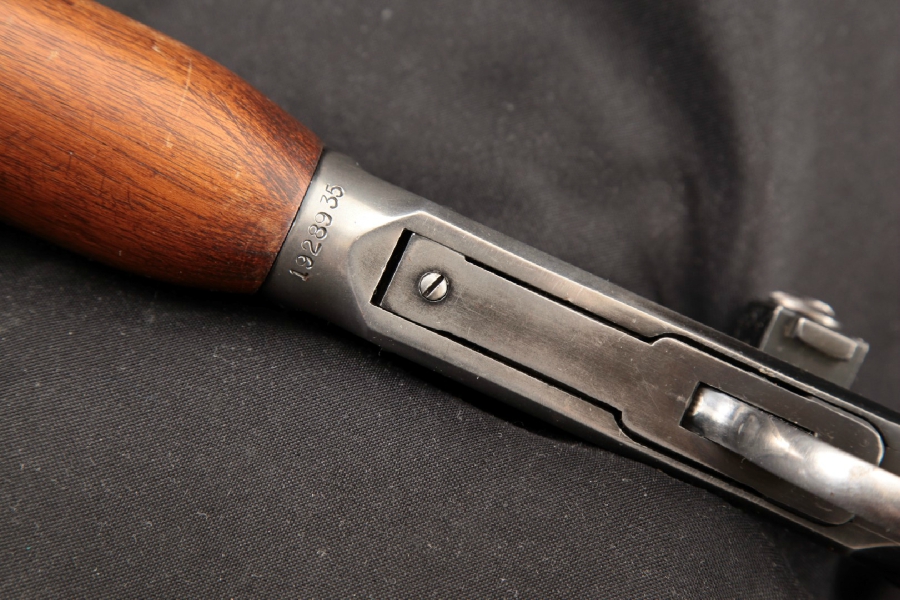
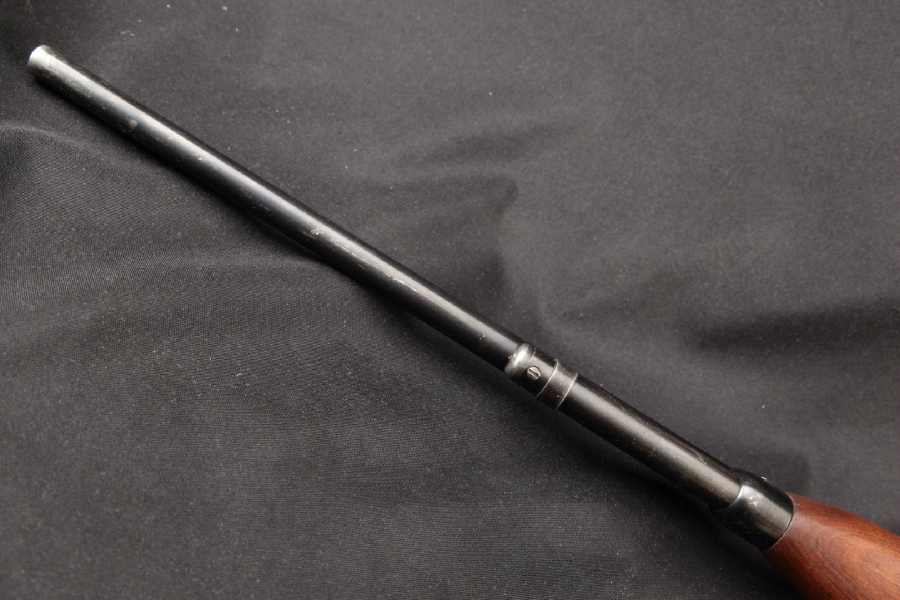
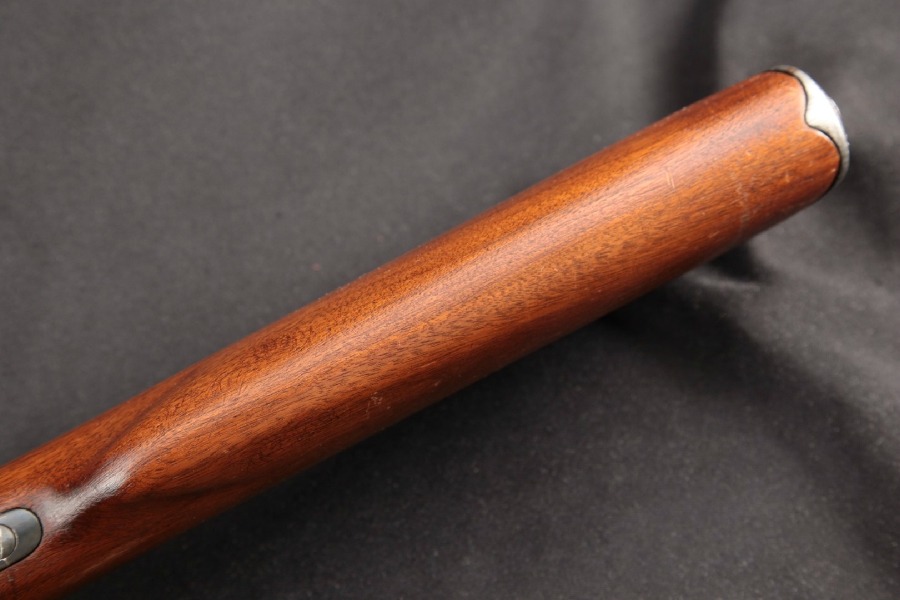
Somebody got smart & put on a proper rear peep sight on this fine gun!
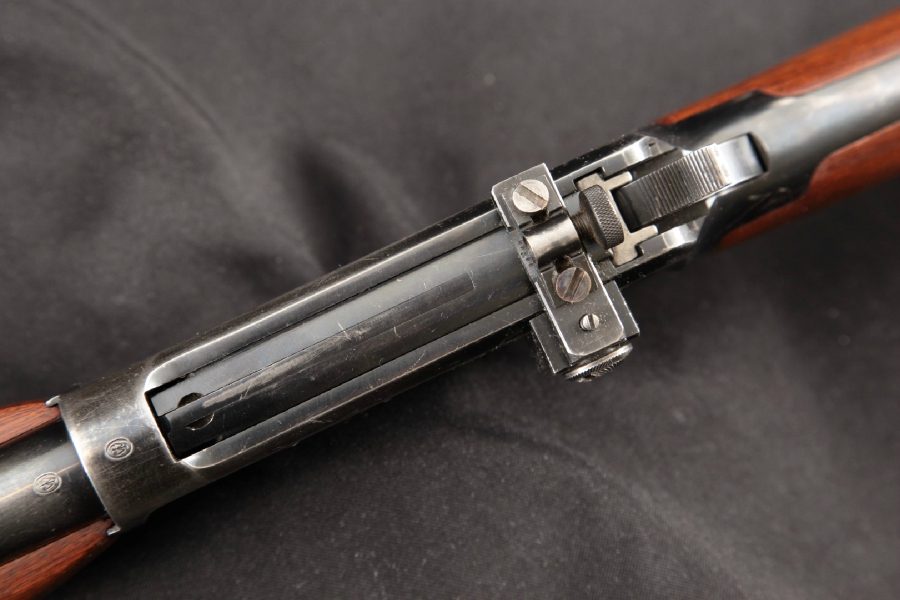
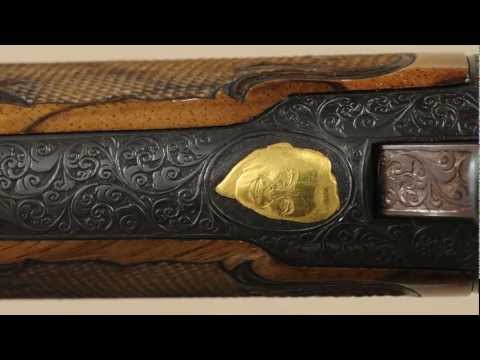

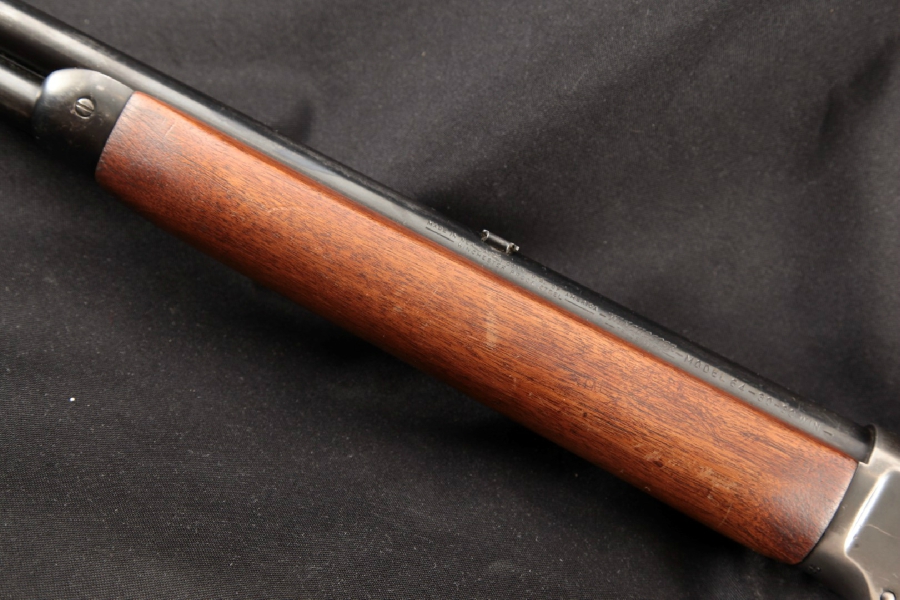
Produced from 1933 through 1957 – and one of many variants of the ’94, the Model 64 is a must for any Winchester Lever Action Collection. It was made with a smooth pistol grip and button magazine, ideal for medium sized game and built true to Winchester’s legacy of strength and quality production – especially during these years.
MilSurp: British Infantry Weapons of World War II: The Tools Tommies Used to Beat Back the Bosche
On the night of June 5th, 1944, a force of 181 men commanded by Major John Howard lifted off from RAF Tarant Rushton aboard six Horsa gliders. Their force consisted of a reinforced company from the Oxford and Bucks Light Infantry along with twenty sappers drawn from the Royal Engineers. Their objective was to seize the bridge over the Caen Canal and subsequently secure the eastern flank of the Allied landings at Sword beach. Theirs was arguably the most critical piece in the entire D-Day invasion.

The Webley revolver was a break-open double action design that fired a relatively anemic .38/200 rimmed cartridge.
Any amphibious operation is tenuous until a lodgment is established. At first the advantage always goes to the defender. No matter the intensity of the pre-operation bombardment, the outcome ultimately turns on the fortitude of the attackers pitted against the fortitude of the defenders. This bridge was the choke point for German armor that might have attempted to reinforce the defenders on the beach.
The invasion, code named Operation Overlord, was indeed an iffy thing. Had the Allies hit the beaches and found them populated with the fully armed tanks of the German 21st Panzer Division then they very likely could have been pushed back into the sea. General Eisenhower, the Supreme Allied Commander, had actually prepared a letter assuming full responsibility for the failure of this operation had this been the case. Thanks to Major Howard and his 181 British Glider-borne soldiers this letter went unused.
Five of the British gliders landed as close as 47 meters to the objective at 16 minutes past midnight. Considering these glider pilots made a silent unpowered approach in utter darkness this represents some of the most remarkable pilotage of the war. These brave British soldiers poured out of their wrecked gliders and took the bridge in short order.

The Short Magazine Lee-Enfield (SMLE) was a superb bolt-action design that served the British well during the First World War.
Lance Corporal Fred Greenhalgh was thrown clear of his glider on impact and knocked unconscious. He landed face first in a shallow pond no more than six inches deep but subsequently drowned. Lieutenant Den Brotheridge stormed the bridge firing his Sten gun and throwing grenades until he was mortally wounded by German machinegun fire. Greenhalgh and Brotheridge were the first Allied soldiers killed on D-Day.

The SMLE also saw extensive service, particularly early on, during the Second.
At around 0200 the lead armored vehicle of German 21st Panzer rounded a corner and drove between two buildings that defined the approach to the bridge. Alerted by the sound of tracks in the darkness, Major Howard had dispatched Sergeant Charles “Wagger” Thornton with the unit’s last operational PIAT launcher and two hollow-charge projectiles. Thornton covered himself in garbage and had been in place around three minutes when the first tank arrived.
There is a dispute as to the type of vehicle involved. It has been reported to be either a Panzerkampfwagen Mark IV or a Marder open-topped self-propelled gun. Regardless, no doubt thoroughly terrified, Sergeant Thornton loosed his PIAT bomb at a range of 27 meters and center-punched the vehicle, igniting its onboard ammunition. The destroyed vehicle subsequently effectively sealed off the approaches to the landing areas from reinforcing German armor. As a result, Sergeant Thornton’s single desperate PIAT shot very probably saved the entire invasion.

The Lewis gun was an American design that was used extensively during WW1. Obsolete by 1940, the Lewis nonetheless soldiered on in second-line applications throughout the war. The most distinguishing characteristics of the Lewis were its bulbous barrel shroud and top-mounted pan magazine.
Weapons
That the British Army survived the evacuation at Dunkirk is a legitimate modern-day miracle. While more than 300,000 troops survived, they arrived in Britain exhausted, demoralized, and bereft of their weapons. Desperate to refit and re-equip in the face of an expected German invasion, the English military leadership initiated a crash program to produce small arms in breathtaking quantities.
It is easy to disparage the quality of British small arms from the comfort of our living rooms. However, the British people rightfully feared imminent invasion. Had Hitler not foolishly launched Operation Barbarossa in an attempt to conquer Russia they would have undoubtedly seen German troops on British soil. As a result, the British endured some shortcuts in both the quality and design of their small arms. That they still fared so well is a testimony to the grit and tenacity of the British fighting man and his leadership.
Handguns
At a time when the entire world was issuing autoloading handguns, the British persisted in issuing revolvers that were state of the art during the previous world war. Given the desperate pressures under which they operated British industry simply continued producing the handguns they were already tooled up to produce. Webley and Enfield revolvers were morphologically similar. Both were break-open designs that incorporated an automatic ejector to remove empty shell casings. While some earlier versions were chambered for a powerful .455 round, most WW2-era versions were .38’s.
Early WW1-era Webley Mk I’s fired the rimmed .455 round. However, many were subsequently converted to fire rimless .45ACP ammunition by having the faces of their cylinders shaved down appropriately. Rimless .45ACP rounds were subsequently managed via moon clips. This conversion allowed the continued issue of .455 Webleys after the supply of .455 rimmed ammunition was exhausted.

The star-shaped ejector on the Webley and Enfield revolvers automatically expelled the empty cases when the gun was broken open for reloading.
The most common WW2-era Webley was the Mk IV chambered for the .38/200 round. This round is 9x20mm and is interchangeable with the .38 S&W cartridge. By comparison the ubiquitous .38 Special is 9×29.5mm and much more powerful. The No2 Mk 1 Enfield fired the same round. However, the hammer was bobbed on the Enfield to affect double action only. This weapon was intended for use in tanks, aircraft, and vehicles for applications that might require that a sidearm be used one-handed.
The 4-1-1 on Handguns During Combat
Handguns of any sort seldom affect the big picture in combat. They serve as badges of rank or security talismans, but the pistol does not win wars. As such, though their revolvers were dated when compared to other autoloading designs, this made little difference in the grand scheme.

The PIAT was a monstrosity of a weapon that used a spring-driven piston to fire shaped-charge antitank warheads.
Rifles
The British began World War 2 with the SMLE (Short Magazine Lee-Enfield). This superb bolt-action design armed British Tommies in the fetid trenches of World War 1. As the SMLE cocked on closing it provided a greater rate of fire than other designs that cocked when the bolt was opened. As the scope of the war and its commensurate logistics demands grew, however, the British Army needed something cheaper and easier to produce.

The British Sten gun was simple, inexpensive, and effective. Sporting a left-sided magazine and remarkably sedate rate of fire, the Sten was found throughout all combat theaters of World War 2.
The No 4 Mk 1 Lee-Enfield was a product-improved version of the SMLE. This rifle retained the 10-round magazine and .303 chambering of the SMLE. And it deleted the SMLE’s magazine cutoff and, ultimately, its complicated adjustable sight. The No 4 was heavier and slightly more robust than the SMLE, but it was much easier and faster to produce.
The rimmed .303 cartridge was obsolete by World War 2. However, like the Lee-Enfield rifle, this was what British industry was tooled up to produce. As a result, both the No 4 Lee-Enfield and its tired round soldiered on through WW2 and well beyond. Once again, the English were forced to make do with what they had.
Submachine Guns
The British had no general-issue submachine gun at the beginning of the war. They made do with expensive, heavy, and obsolete Thompson guns purchased from the United States. In desperate need of something inexpensive and easy to build, English gun designers Major Reginald Shepherd and Harold Turpin set out to contrive the ultimate mass-produced pistol caliber submachine gun. The name Sten is drawn from the first letters of the designers’ names along with Enfield.

The Bren Light Machinegun was arguably the finest LMG of the war. Portable and reliable, the Bren offered dismounted Infantry a mobile base of fire that could accompany troops in the assault.
Sten
The British produced the Sten gun using components produced in tiny shops across the island. There were seven marks and around four million copies rolled off the lines. Unit cost in WW2 was around $10 or $156 today. Most Stens used a simple drawn steel tube as a receiver and fed from the left side via a double column, single feed 32-round magazine. All Stens were selective fire. Most incorporated a rotating magazine housing that could be positioned to seal the ejection port from battlefield grunge.
Mk IIS
The Mk IIS included an integral sound suppressor, a revolutionary feature for the day, as well as a bronze bolt. The Mk III was the simplest of the lot and incorporated a simple welded on magazine housing and a pressed steel receiver. The Sten was not the most reliable gun on the battlefield but it was widely distributed through both British combat formations as well as underground partisans operating in occupied territories.

The sole safety on the Sten was a notch to hold the bolt to the rear.
Machinegun
The Brits used Vickers and Lewis guns at the beginning of the war, some of which served until the armistice. The Vickers was an English adaptation of the same Hiram Stevens Maxim design that drove the German Maxim MG08 guns during WW1. Heavy, water-cooled, and imminently reliable, the Vickers was a superb sustained fire weapon when employed from vehicles or static mountings. It was useless in a mobile ground assault, however.

The Vickers machinegun.
The BREN gun was arguably the finest light machinegun used by any major combatant. A license-produced copy of the Czech ZGB-33, the Bren fired from the open bolt and fed from top-mounted 30-round box magazines. It had a rate of fire of around 500 rounds per minute. The BREN gave the dismounted Infantry squad a portable base of automatic fire that could maneuver with dismounted ground forces. Though heavy by today’s standards, the BREN was rugged and dependable.
The PIAT
The weapon Wagger Thornton used to save D-Day was the Projector, infantry, Anti-Tank. This monstrosity of an anti-tank weapon was actually a handheld spigot mortar. The PIAT incorporated a spring-driven piston that extended into the base of its hollow-charge projectile. It would then ignite a propellant charge. The prodigious recoil of the shot should theoretically recock the heavy spring action. The PIAT weighed 32 pounds and had a maximum effective range of 115 yards. Sergeant Thornton later described the PIAT as “Rubbish, really” in a post-war interview.

The Vickers machinegun was a water-cooled belt-fed behemoth intended to be fired from fixed positions.

The PIAT was a monstrosity of a weapon that used a spring-driven piston to fire shaped-charge antitank warheads.
Gestalt
The British fought and won WW 2 with a hodgepodge of obsolete weapons mass-produced via a disseminated industrial base with their backs literally against the sea. While they lacked a semiautomatic handgun or an autoloading Infantry rifle, their Bren gun was enormously effective. And the PIAT did indeed save D-Day. In the final analysis, it was the men behind the weapons, and not the weapons themselves, that wrested control of mainland Europe from the grip of Nazi tyranny.


Have you ever wanted to own a caliber of gun that is all around useful? If you are anything like me, you are not a man with unlimited funds. This means that when you make an expensive purchase—like a gun—you want it to be as versatile as possible. You need it to be a tool that can provide protection, recreation, and also bring home the game to put on the table. It needs to be both versatile and affordable.
Is it even possible that such a gun exists? Well, I’m happy to let you know that there is.
A Gun For All Uses
Having spent the majority of my life in the woods—a large percentage of it hunting—I have found that if given only one choice for a caliber of gun, it would be a 12 GA pump shotgun. If there ever was a more practical, affordable, and versatile caliber of gun… I can’t think of one. Without any glitz or fanfare, it’s a gun that gets the job done. Whether its protection, hunting, or sport, this caliber of gun covers it all.
Personally, I have owned one for over twenty years and I use it regularly throughout the year. Beginning with turkey hunting in the spring, followed by grouse hunting in the early fall, then deer hunting in the late fall, and rounding it all out with grouse hunting again into early winter… this gun gets a solid workout.
In the time between, it sits in the corner of my bedroom as one of my primary lines of defense, should anyone be foolish enough to break into my house. During the summer months, it also occasionally gets used to bust clay pigeons down at the range.
Some would argue that there are more superior calibers for hunting deer, but in my experience, the areas where I hunt—northern New England—are perfectly suited for this caliber of gun. Its a region filled with very dense woods and swamps where short, quick shots are the norm, not the exception. When hunting in this type of cover, a high-caliber rifle with a scope can end up being a hindrance.
Why The Pump?

Good question! Owning and using both single-shots and semi-automatics for hunting has shown me that when it comes to getting the perfect trifecta of functionality, reliability, and affordability—an all in one gun—the pump wins hands down. It gives you the luxury of shooting a number of shots in quick succession without costing you a premium, nor does it require an abundance of rings and gaskets that can potentially fail. What’s not to like?
Will Any Brand Work?
Yes. There are a few well-known, easily available brands, all with a track record of proven performance: Winchester, Mossberg, and Remington to name a few. All of them are well-made and able to get the job done.
There are also lesser known (and cheaper) brands in the affordable 12 GA pump category. In the interest of saving money, the temptation might be to go with one of them. However, experience has shown me that you get what you pay for. If you only pay $150 for an obscure brand of pump shotgun, you will probably get a cheap gun that doesn’t hold up. Basically a piece of crap that you won’t really end up liking.
All that aside, if I had to pick my favorite brand for an affordable 12 GA shotgun, it would be the Remington 870.
What Sets It Apart?
It all boils down to the following: reliability, availability, and affordability.
RELIABILITY
Through tough conditions, hard use, and a lack of regular cleanings, I have never seen a brand of shotgun perform as well as this make and model. Rain, snow, dirt, grime, heat and cold… it’s a gun that never quits. When I have needed the gun to work, it has never failed. This alone makes it stand out.
Despite twenty years of very hard use, there has only been one small issue with something in the receiver. This was brought on due to my failure to pull the pins and air-hose out the receiver on a regular basis. In other words, negligent maintenance. Despite this issue, the gun continued to do its job without fail.
AVAILABILITY
With over 10 million manufactured since 1951, they are prolific. This will help you when a part needs to be replaced or if you are looking to purchase additions for it. Also, if things get really bad (societal collapse), a brand as abundant as this will be very easy to get any parts for. That is something worth thinking about.
AFFORDABLE
With so many in circulation, the supply is abundant, giving you a versatile gun that can be purchased on the cheap. For less than $300, you can purchase a well-maintained, used one that will last you for the rest of your lifetime. Now that’s receiving good value for your money spent! 
Does It Need To Be Fancy?
No. A used and well-maintained Remington 870 with a smooth bore 18″ barrel and improved choke is all you need. If money is really tight, this configuration will enable you to protect your home, shoot skeet for fun, and hunt any game, large or small. With this configuration, I’ve shot turkey, grouse, snowshoe hare, and even deer. There are also affordable additions you can make to your shotgun that will make it even more efficient for hunting, but that’s a topic for another post.
If you’ve been thinking about buying a gun for the first time and want to get the most for your money—or just want a caliber of gun that covers all bases—the Remington 12 gauge pump is the best bang for your buck. If I could go back in time, it would have been the first gun I ever owned rather than the second. Making this purchase will not leave you disappointed.
Read More: How To Choose, Buy, And Shoot A Shotgun
yeah I have a very soft spot for this type of rifle. Especially since they usually are light years ahead of some of the so called “Rifles” being peddled out there now a days. Grumpy


The Brass was bringing these online just as I was leaving the Army. Anyone out there have any information about these?


I was allowed once to fire one of these fine rifles. What I found that it had one of the smoothest actions this side of the Krag Jorgensen. If you get a chance grab one of them and you will not be sorry!


Categories
It could happen!

Ever wonder where the term Fusiliers came from? Well here is your answer — The Royal Fusiliers. They were a very old (est. 1685) & a very fashionable regiment. Since It was based in the Tower of London & near the throne.
Nonetheless it was a very hard fighting outfit filled with London Cockneys. Here is it’s story.


| 7th Regiment of Foot Royal Fusiliers (City of London Regiment) |
|
|---|---|

Cap badge of the Royal Fusiliers
|
|
| Active | 1685–1968 |
| Country |  Kingdom of England (1685–1707)  Kingdom of Great Britain (1707–1800)  United Kingdom (1801–1968) |
| Branch |  British Army |
| Type | Infantry |
| Role | Line infantry |
| Size | 1–4 Regular battalions Up to 3 Militia and Special Reservebattalions Up to 4 Territorial and Volunteerbat Up to 36 Hostilities-only battalions |
| Garrison/HQ | Tower of London |
| Nickname(s) | The Elegant Extracts |
| Motto(s) | Honi soit qui mal y pense |
| March | The Seventh Royal Fusiliers |
The Royal Fusiliers (City of London Regiment) was a line infantry regiment of the British Army in continuous existence for 283 years. It was known as the 7th Regiment of Foot until the Childers Reforms of 1881.[1]
The Royal Fusiliers Monument, a memorial dedicated to the Royal Fusiliers who died during the First World War, stands on Holborn in the City of London.
Throughout its long existence, the regiment served in many wars and conflicts, including the Second Boer War, the First World War and the Second World War.
In 1968, the regiment was amalgamated with the other regiments of the Fusilier Brigade – the Royal Northumberland Fusiliers, the Royal Warwickshire Fusiliers and the Lancashire Fusiliers – to form a new large regiment, the Royal Regiment of Fusiliers.
Contents
[hide]
History[edit]

George Legge, 1st Baron Dartmouth, founder of the regiment
Formation
It was formed as a fusilier regiment in 1685 by George Legge, 1st Baron Dartmouth, from two companies of the Tower of London guard, and was originally called the Ordnance Regiment.
Most regiments were equipped with matchlockmuskets at the time, but the Ordnance Regiment were armed with flintlock fusils. This was because their task was to be an escort for the artillery, for which matchlocks would have carried the risk of igniting the open-topped barrels of gunpowder.[2] The regiment went to Holland in February 1689 for service in the Nine Years’ War and fought at the Battle of Walcourt in August 1689[3] before returning home in 1690.[4] It embarked for Flanders later that year and fought at the Battle of Steenkerque in August 1692[5] and the Battle of Landen in July 1693[6] and the Siege of Namur in summer 1695 before returning home.[7]
The regiment took part in an expedition which captured the town of Rota in Spain in spring 1702[8] and then saw action at the Battle of Vigo Bay in October 1702 during the War of the Spanish Succession.[9] The regiment became the 7th Regiment of Foot (Royal Fusiliers) in 1751, although a variety of spellings of the word “fusilier” persisted until the 1780s, when the modern spelling was formalised.[10]
American War of Independence[edit]
The Royal Fusiliers were sent to Canada in April 1773.[11] The regiment was broken up into detachments that served at Montreal, Quebec, Fort Chambly and Fort St Johns (Saint-Jean-sur-Richelieu). In the face of the American invasion of Canada in 1775/76, most of the regiment was forced to surrender. The 80 man garrison of Fort Chambly attempted to resist a 400-man Rebel force but ultimately had to surrender. This is where the regiment lost its first set of colours. Captain Owen’s company of the 7th, along with a handful of recruits, assisted with the Battle of Quebec in December 1775.[12]
The men taken prisoner during the defence of Canada were exchanged in British held New York City in late 1776. Here, the regiment was rebuilt and garrisoned New York and New Jersey. In October 1777, the 7th participated in the successful assaults on Fort Clinton and Fort Montgomery.[13] In December 1777, the regiment reinforced the garrison of Philadelphia. During the British evacuation back to New York City, the regiment participated in the Battle of Monmouth in June 1778.[14]The 7th participated in Tryon’s raid in July 1779.[15]
In April 1780, the Royal Fusiliers took part in the capture of Charleston.[16] Once Charleston fell, the regiment helped garrison the city.[2] In January 1781, a contingent of 171 men from the Royal Fusiliers was detached from General Charles Cornwallis‘s army and fought under the command of Lieutenant Colonel Banastre Tarleton at the Battle of Cowpens in January 1781.[17] The Royal Fusiliers was in the first line during the battle: Tarleton was defeated and the regiment’s colours were lost in the heat of the battle.[18] A contingent from the regiment fought through North Carolina participating in the Battle of Guilford Court House in March 1781.[19] There was another detachment, which remained in the South under the command of Lt Col. Alured Clarke: these men remained in garrison in Charleston, until they were transferred to Savannah, Georgia in December 1781.[20] The regiment returned to England in 1783.[21]
Napoleonic Wars[edit]

Lieutenant Colonel Walter Lacy Yea, Commanding Officer of the Royal Fusiliers, receives a signal from his adjutant, Lieutenant J. St. Clair Hobson, Royal Fusiliers, both killed at Sevastopol 18 June 1855
The regiment embarked for Holland and saw action at the Battle of Copenhagenin August 1807 during the Gunboat War.[22] It was then sent to the West Indiesand took part in the capture of Martinique in 1809.[23] It embarked for Portugallater that year for service in the Peninsula War and fought at the Battle of Talaverain July 1809,[24] the Battle of Bussaco in September 1810.[25] and the Battle of Albuera in May 1811.[26][27]
The regiment then took part in the Siege of Ciudad Rodrigo in January 1812,[28]the Siege of Badajoz in spring 1812[29] and the Battle of Salamanca in July 1812[30] as well as the Battle of Vitoria in June 1813.[31] It then pursued the French Army into France and fought at the Battle of the Pyrenees in July 1813,[32]the Battle of Orthez in February 1814[33] and the Battle of Toulouse in April 1814.[34] It returned to England later that year[35] before embarking for Canadaand seeing action at the capture of Fort Bowyer in February 1815 during the War of 1812.[36]
The Victorian era[edit]
The regiment embarked for Scutari for service in the Crimean War in April 1854 and saw action at the Battle of Alma in September 1854, the Battle of Inkerman in November 1854 and the Siege of Sebastopol in winter 1854.[2] The 1st battalion embarked for India in 1858 and took part in the Ambela Campaign in 1863.[2] Meanwhile, the 2nd battalion was deployed to Upper Canada in October 1866 and helped suppress the Fenian raids and then deployed to India and saw action at the Battle of Kandahar in September 1880 during the Second Anglo-Afghan War.[2]
The regiment was not fundamentally affected by the Cardwell Reforms of the 1870s, which gave it a depot at Hounslow Barracks from 1873, or by the Childers reforms of 1881 – as it already possessed two battalions, there was no need for it to amalgamate with another regiment.[37] Under the reforms, the regiment became The Royal Fusiliers (City of London Regiment) on 1 July 1881.[38][39] The 2nd battalion of the regiment took part in the Second Boer War from 1899 to 1902.[40] A 4th regular battalion was formed in February 1900,[41] and received colours from the Prince of Wales (Colonel-in-Chief of the regiment) in July 1902.[42]
In 1908, the Volunteers and Militia were reorganised nationally, with the former becoming the Territorial Force and the latter the Special Reserve;[43] the regiment now had three Reserve and, because they had been transferred into the London Regiment, no Territorial battalions.[44][45]
First World War[edit]

22 August 1914: Men of “A” Company of the 4th Battalion, Royal Fusiliers (City of London Regiment), resting in the town square at Mons.
The Royal Fusiliers served with distinction in the First World War:[46]
Regular Army[edit]
The 1st Battalion landed at Saint-Nazaire as part of the 17th Brigade in the 6th Division in September 1914 for service on the Western Front;[47] major engagements involving the battalion included the Battle of the Somme in autumn 1916 and the Battle of Passchendaele in autumn 1917.[48]
The 2nd Battalion landed at Gallipoli as part of the 86th Brigade in the 29th Division in April 1915; after being evacuated in December 1915, it moved to Egypt in March 1916 and then landed in Marseille in March 1916 for service on the Western Front;[47] major engagements involving the battalion included the Battle of the Somme in autumn 1916 and the Battle of Arras in spring 1917.[48]
The 3rd Battalion landed at Le Havre as part of the 85th Brigade in the 28th Division in January 1915; major engagements involving the battalion included the Second Battle of Ypres in April 1915 and the Battle of Loos in September 1915.[48] The battalion moved to Egypt in October 1915 and then to Salonika in July 1918.[47]
The 4th Battalion landed at Le Havre as part of the 9th Brigade in the 3rd Division in August 1914 for service on the Western Front;[47] major engagements involving the battalion included the Battle of Mons and the Battle of Le Cateau in August 1914, the First Battle of the Marne and the First Battle of the Aisne in September 1914 and the Battle of La Bassée, the Battle of Messines and the First Battle of Ypres in October 1914.[48] Members of the Battalion won the first two Victoria Crosses of the war near Mons in August 1914 (Lieutenant Maurice Dease[49] and Private Sidney Godley).[50]
New Armies[edit]

The Royal Fusiliers marching through the City of London in 1916

Men of the 10th (Service) Battalion, Royal Fusiliers (City of London Regiment) marching to the trenches, St Pol (Saint-Pol-sur-Ternoise), France, November 1916.
The 8th and 9th (Service) Battalions landed in France; they both saw action on the Western Front as part of the 36th Brigade of the 12th (Eastern) Division.[47]The 10th (Service) Battalion, better known as the Stock Exchange Battalion, was formed in August 1914 when 1,600 members of the London Stock Exchangejoined up: 400 were killed on the Western Front. The battalion was originally part of the 54th Brigade of the 18th (Eastern) Division, transferring to the 111th Brigade, 37th Division.[51] The 11th, 12th, 13th and 17th (Service) Battalions landed in France; all four battalions saw action on the Western Front: the 11th Battalion being part of the 54th Brigade, 18th (Eastern) Division, the 12th with the 73rd Brigade, later the 17th Brigade, 24th Division, the 13th with the 111th Brigade, 37th Division and the 17th with the 99th Brigade, 33rd Division, later transferring to the 5th and 6th Brigades of the 2nd Division.[47] The 18th through 21st (Service) Battalions of the regiment were recruited from public schools; all four battalions saw action on the Western Front, all originally serving with the 98th Brigade in the 33rd Division, the 18th and 20th Battalions transferring to the 19th Brigade in the same division.[47] The 22nd (Service) Battalion, which was recruited from the citizens of Kensington, also landed in France and saw action on the Western Front.[47] The 23rd and 24th (Service) Battalion, better known as the Sportsmen’s Battalions, also landed in France and saw action on the Western Front:[47] they were among the Pals battalions and were both part of the 99th Brigade of the 33rd Division, later transferring to command of the 2nd Division, with the 24th Battalion joining the 5th Brigade in the same division.[52] The 25th (Frontiersmen) Battalion, Royal Fusiliers, formed in February 1915, served in East Africa.[47] The 26th (Service) Battalion was recruited from the banking community; it saw action on the Western Front as part of the 124th Brigade of the 41st Division.[47] The 32nd (Service) Battalion, which was recruited from the citizens of East Ham, also landed in France and saw action on the Western Front as part of the 124th Brigade of the 41st Division.[47] The 38th through 42nd Battalions of the regiment served as the Jewish Legion[53]<
/a> in Palestine; many of its members went on to be part of the founding of the State of Israel in 1948.[47]
The Royal Fusiliers War Memorial, stands on High Holborn, near Chancery Lane tube station, surmounted by the lifesize statue of a First World War soldier, and its regimental chapel is at St Sepulchre-without-Newgate.[54]
Second World War[edit]
For most of the Second World War, the 1st Battalion was part of the 17th Indian Infantry Brigade, 8th Indian Infantry Division. It served with them in the Italian Campaign.[55]

Infantrymen of the 1st Battalion, Royal Fusiliers reconstruct a street-fighting scene in a street in Caldari, Italy, 17 December 1943.
The 2nd Battalion was attached to the 12th Infantry Brigade, 4th Infantry Divisionand was sent to France in 1939 after the outbreak of war to join the British Expeditionary Force (BEF). In May 1940, it fought in the Battle of France and was forced to retreat to Dunkirk, where it was then evacuated from France. With the brigade and division, the battalion spent the next two years in the United Kingdom, before being sent overseas to fight in the Tunisia Campaign, part of the final stages of the North African Campaign. Alongside the 1st, 8th and 9th battalions, the 2nd Battalion also saw active service in the Italian Campaign from March 1944, in particular during the Battle of Monte Cassino, fighting later on the Gothic Line before being airlifted to fight in the Greek Civil War.[56]
The 8th and 9th Battalions, the two Territorial Army (TA) units, were part of the 1st London Infantry Brigade, attached to 1st London Infantry Division. These later became the 167th (London) Infantry Brigade and 56th (London) Infantry Division. Both battalions saw service in the final stages of the Tunisia Campaign, where each suffered over 100 casualties in their first battle. In September 1943, both battalions were heavily involved in the landings at Salerno, as part of the Allied invasion of Italy, later crossing the Volturno Line, before, in December, being held up at the Winter Line.[57] Both battalions then fought in the Battle of Monte Cassinoand were sent to the Anzio beachhead in February 1944.[58]
Two other TA battalions, the 11th and 12th, were both raised in 1939 when the Territorial Army was ordered to be doubled in size. Both were assigned to 4th London Infantry Brigade, part of 2nd London Infantry Division, later 140th (London) Infantry Brigade and 47th (London) Infantry Division respectively.[59]