
For example I give you exhibit A
or Exhibit B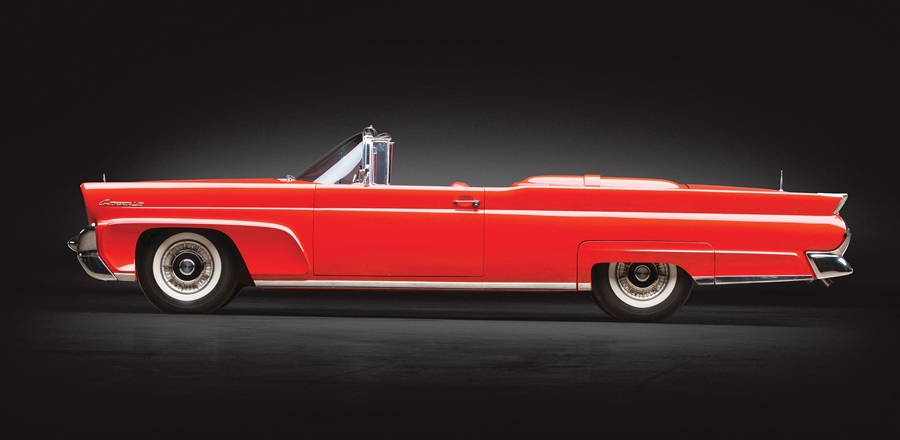
Anyways if the wind could move one of these Land Yachts. Then there would be no way in Hell that I would still be in the area! Grumpy


Marriage

An intact marriage is a powerful preventative for public violence. You already knew that, and from several sources. It confirms your suspicions that the mass murderers in 26 of our 27 deadliest attacks came from fatherless homes. You already knew that most violent criminals are men. You noticed that most violent criminals grew up without a father.
You knew that boys are more sensitive than girls to family breakup. Boys need a nurturing mother AND a disciplinarian father so that the boys grow to become socially attached and psychologically whole.
Boys learn patience and emotional resilience from their father. You knew that boys become frustrated-and-angry outcasts when they fail to learn those lessons.
Fatherless boys and girls are delayed or depressed in dozens of social markers. However, the expression of that failure in the form of public violence is usually seen in boys rather than in girls.
I did not say that unwed moms produce mass murderers. I said that adults who lack self-control predominantly come from homes without a father.
If you want a society where people control their violent impulses, then you should support marriage.
News Media and Celebrity Violence
Our immersion in the media culture has grown enormously over time and at an accelerating rate. Today we carry video media in our pocket. Our media exposure is so pervasive that most children spend more time watching screens than interacting with real people.
Unfortunately, the news and entertainment media work hard to keep our attention. If it bleeds it leads..and the coverage of mass murder lasts for days. Add the fact that some angry and narcissistic young men will do anything for fame.
After the next mass murder, the news media will flood us with the murderer’s face and name as they turn the murderer into a celebrity. That billion dollar media blitz is an advertising campaign, a casting call, searching for the next mass murderer.
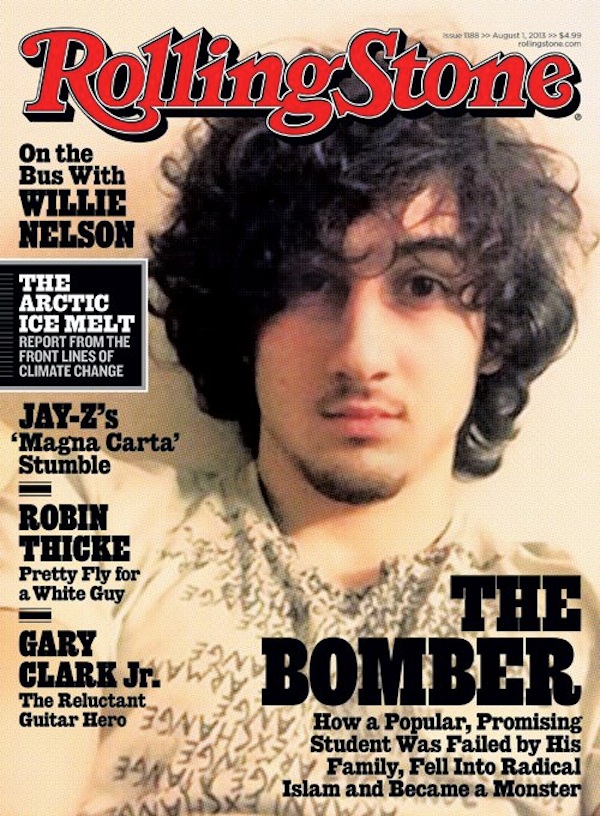
Media analysts and psychologists say we could cut the rate of mass murder by a third to as much as half. All we have to do is stop turning these murderers into celebrities.
There are media guidelines in place that stop news organizations from showing the face and saying the name of the mass murderer. Only a few US media organizations have signed on.
Yes, you can watch the news without becoming a mass murder. The same isn’t true for narcissistic psychopaths and sociopaths. We have to stop rewarding these narcissists if we want to stop mass murders.
Synthetic Violence
Killing our fellow man is unthinkable for most of us. Immersing ourselves in simulated violence makes killing easier. By the time we reach our early 20s, most of us have seen a quarter million violent acts on TV.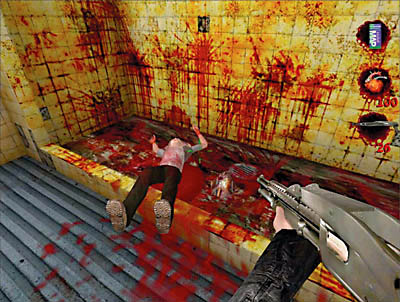
The murderer at Sandy Hook Elementary School who killed 20 children and seven adults immersed himself in video games as he failed in his real relationships. He played 4,901 simulated combat matches over more than 500 hours. He killed 83,496 characters. During that simulated violence, he shot 22,725 characters in the head in order to kill them. He later repeated that exercise in real life at a public school.
I’m glad that you can play video games without becoming a murderer. Some people can’t. If you want to save lives then stop teaching our kids to kill.
Failure of Mental Institutions and Government Institutions
We emptied most of our mental hospitals in the 1960s. Some of the mentally ill were successfully treated in local treatment facilities. Many were not. Our response to dealing with the mentally ill was to make all of society into a low-quality mental institution. That isn’t a sophisticated or targeted solution.
Many mass murderers have a history of violence and mental illness. Politicians tell us to say something if we see something..and we have.
The Federal Bureau of Investigation and the Bureau of Alcohol Tobacco Firearms and Explosives were called many times about the murderer at the Pulse Nightclub in Orlando, Florida. They were called before the murders at Parkland High School in Florida.
The police were called to the Parkland murderer’s home 45 times and no one asked for a mental evaluation to make the murderer prohibited from owning firearms.
Government agencies would rather look the other way than to do their job. If you want to stop mass murderers then we have to hold politicians and bureaucrats accountable for their mistakes.
 Killing Zones

Prevention only takes us so far. Unfortunately, we cannot identify all of the people who will become violent just as we can not tell which people with heart conditions will suffer a heart attack tomorrow. That means we should prepare to deal with heart attacks and with school attacks in order to save lives. We have to plan our response in addition to implementing preventative measures.
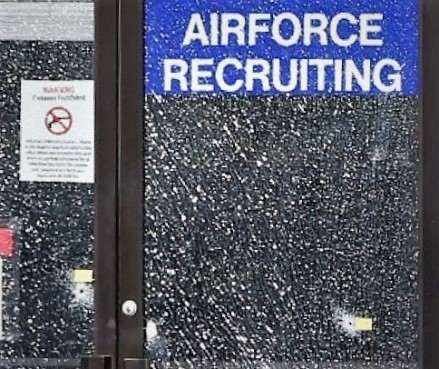
In too many cases, we’ve deliberately prohibited a defensive response to public violence. Mass murderers look for crowds of defenseless victims. We are 30 times more likely to be attacked in a “gun-free” zone. Stop creating hunting grounds for sociopaths by disarming the victims.Summary
Our divorce rate here in the US doubled since the 1930. Reversing that trend and saving your marriage may save your children. Our news and entertainment media is violent and voracious. Stopping “celebrity violence” will clearly save lives.
Stop teaching our kids to kill. Eliminating “gun-free” zones reduces the times and places where mass murderers will strike. All of those solutions are simple and easily achievable compared to making bureaucrats do their job. All are worth it because each one saves lives.
References-
http://thefederalist.com/2015/07/14/guess-which-mass-murderers-came-from-a-fatherless-home/
https://www.patheos.com/blogs/markmeckler/2018/02/27-deadliest-mass-shooters-26-one-thing-common/
https://www.foxnews.com/opinion/the-desperate-cry-of-americas-boys
https://townhall.com/columnists/rachelalexander/2018/03/06/dr-warren-farrell-explains-the-boy-crisis-n2457856
https://www.apa.org/news/press/releases/2016/08/media-contagion.aspx
http://jpfo.org/d.i.e/die-partners.htm
http://pediatrics.aappublications.org/content/124/5/1495
https://onlinelibrary.wiley.com/doi/abs/10.1002/bin.84
https://www.chicagotribune.com/news/opinion/commentary/ct-perspec-mass-shooters-russia-public-shootings-thousand-oaks-mercy-hospital-chicago-1121-story.html?fbclid=IwAR1aeWbewgcl8ihvia8RLmDO6onfFVTm-adSxwW4-2LC02GeJWHnu1JcGcU
https://crimeresearch.org/2018/06/more-misleading-information-from-bloombergs-everytown-for-gun-safety-on-guns-analysis-of-recent-mass-shootings/
~_~_

Editor’s Note: The following is a syndicated article by author Beth Alcazar that first appeared in USCCA’s Concealed Carry Magazine Volume 12, Issue 3, April 2015 under the title, “Like Mother Like Daughter: Teaching My Little Girl to Shoot.”
My palms were sweating, and I felt a little queasy as the metallic door to the indoor firing range at Hoover Tactical Firearms closed behind me. I walked up to the assigned lane — Lane No. 3 — and I set down my equipment. I heard several shots on both sides of me, and my heart started racing. I took a deep breath and willed myself to keep going, not walk out, not call it quits … not when I was this close.
As I prepared my firearms for shooting and stood at the firing line, my mind was reeling, wondering if I’d forgotten something or if I’d done anything wrong. I went over the safety rules in my head, trying to reassure myself that all would be well. I took another deep breath. I quickly glanced around at the other shooters and tried to capture the moment in my brain. After all, it’s not every day that someone takes her very first shot.
From all the anxiety and excitement that was pulsing through my body, you would’ve thought that this was MY first time shooting. But it wasn’t. It was my 12-year-old daughter’s. And I was clearly a pleased, nervous, proud and blessed mom relishing in the opportunity to teach my child about responsible gun ownership and to be right by her side when she took her first shot.
Why Girls Need Guns
When I was growing up, it would have been a bit odd to friends and family if I’d been out at the shooting range with my parents. That just wasn’t the norm, especially for me, growing up in a home without firearms. My mom and dad didn’t own guns or know anything about them, for that matter. I never even held a gun until my senior year in high school, when my boyfriend at the time thought it would be fun for me to learn how to shoot. I didn’t touch a gun again until about seven years later and didn’t get my permit to carry a firearm for almost another 20.
Fortunately, girls and guns aren’t such a rarity these days. Especially here in the South, I see moms and dads taking their daughters outdoors all the time, teaching them how to hunt and fish and how to enjoy and appreciate the outdoors. And in addition to participating in things like martial arts or team sports, more females are adding the still-male-dominated shooting sports to their list of hobbies, interests and accomplishments.
Of course, whether or not a girl participates in shooting competitions or grows up and decides to own a firearm and/or to carry concealed, I firmly believe that every female needs to learn how to shoot, just as much as any guy, if not more so.
Since females are more often the targets of domestic abuse and violent crimes, girls should be taught from a young age how to defend themselves. And they should be taught to be proud of their Second Amendment rights.
When to Teach Children
Of course, teaching young people about firearms can be a touchy subject. The most important aspect is safety for everyone involved. And I believe that all children should learn about guns, starting as soon as possible. This doesn’t mean that children should be handling guns or shooting when they’re little, but they should be exposed to the safety rules, repeatedly, just as if you were teaching them not to touch the hot stove, not to run across the street without looking carefully or not to talk to strangers.
Gun safety needs to be an everyday, normal conversation — for boys and girls — so when young children are old enough, they will be ready to learn and develop their shooting skills and join the growing number of responsibly armed Americans.
The period when a child is actually ready to learn how to shoot is another in-depth conversation. Different children will be ready at very different times based on a variety of factors. What’s right for one might not be right for another. Each family needs to carefully consider their children’s ages, attitudes, physical abilities, aptitudes, interests, maturity levels and cognitive decision-making skills. There’s much more to it than simply saying, “OK, my daughter is 8 years old. She is ready to shoot now.” Don’t be afraid to really ask yourself if she is responsible enough. And don’t be afraid to ask your children their thoughts as well.
Personally, I felt like my daughter was ready when she had matured socially and emotionally, could appreciate and handle instruction with grace, actually showed a genuine interest in firearms and had gotten over some of that tween awkwardness that comes with growth spurts, hormones, body changes and insecurity. All of these happened to come into alignment right around the time of her 12th birthday, so for us, we knew it was a good time to move beyond the basic rules and actually teach her how to shoot.
How to Teach Children
Anyone who has taught others how to safely use firearms knows that this is a big responsibility. Our three children go over the gun safety rules repeatedly in our household. And my husband and I are careful to model responsible gun ownership as well. It’s one thing to say it; it’s another thing to live it, day in and day out, no matter what. Those little ears are listening, and those eyes are watching, even when you think they aren’t.
When we felt our daughter was ready to learn how to shoot, I actually made her sit through one of the USCCA courses I taught. Granted, some of the information was probably beyond her level of comprehension, but I wanted to give her the opportunity to learn about situational awareness and personal safety, along with the basics of how a gun works and how she should properly hold it, aim it and shoot it. We also worked on stance and grip and practiced with unloaded firearms, so she could get the feel down and be comfortable before even setting foot on the range.
When we arrived at our local indoor range for the big day, my husband asked, “So, are you nervous?” I replied, “Yes,” before realizing that he was not addressing me. My daughter chimed in, announcing that she was not nervous, just excited. But I made her say the safety rules again out loud before we headed inside. More than once, I asked her if she had any questions. Too many times, I reminded her what to expect when we got into the range. And repeatedly, I checked her eye and ear protection. Finally, we paused for one quick picture, and then we went inside.
It was an honor to watch my daughter carefully take the .22 revolver in her hands, line up the sights and pull the trigger. I only loaded one round that first time, but you could tell by the look of joy on her face that she wasn’t ready to stop there. Since we’d gone over how to load the gun many times, I watched her do it this second time. She had the odd wobbles and fidgets of a beginner, but she was careful to follow the safety rules with the muzzle pointed toward the target in a safe direction and her finger off the trigger. Again, she gripped the revolver, lined up the sights and shot at that hot-pink target in front of her, smiling as the bullets punched through dotting the paper.
Undoubtedly, being at the range with my eldest daughter was an incredible feeling. But I know that I won’t always be able to be there by her side. I won’t always be around to guide her, help her or protect her. She’ll be on her own one day all too soon. And that’s exactly why I teach my daughter how to be a responsible gun owner and why this won’t be our last trip to the shooting range together.
Categories
Swedish Mauser Model 96
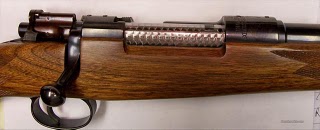
Over the years I have either owned & shot quite a few of this sweet shooting rifles.
For me at least the 6.5×55 Swede Round is a real gem. In that it is easy on the shoulder recoil wise. But it is one hard hitting and very deep penetrating round.
(The Swedes even use it for Moose hunting!)
Swedish Mauser
| Gevär m/96 (Model 1896 Rifle) | |
|---|---|

6,5 mm Gevär m/1896. Pattern, approved 20 March 1896.
|
|
| Type | Bolt-action rifle |
| Place of origin | German Empire Sweden |
| Service history | |
| In service | 1895–1995 |
| Used by | See Users |
| Wars | Winter War, Continuation War |
| Production history | |
| Designer | Paul Mauser |
| Designed | 1893–1896 |
| Manufacturer | Waffenfabrik Mauser AG Carl Gustafs Stads Gevärsfaktori Husqvarna Vapenfabriks AB |
| Produced | 1895 to 1948 |
| No. built | 750,000 of which 127,000 were m/94 carbines, 535,000 m/96 long rifles and 88,000 m/38 short rifles (converted m/38’s not included)[1] |
| Variants | m/38 short rifle, m/41 sniper rifle, m/94 carbine. |
| Specifications | |
| Weight | Rifle: 4 kg (8.8 lb) carbine: 3.4 kg (7.5 lb) |
| Length | m/1896: 1,260 mm (50 in) m/1938: 1,120 mm (44 in) m/1894: 950 mm (37 in) |
| Barrel length | m/1896: 739 mm (29.1 in) m/1938: 610 mm (24 in) m/1894: 450 mm (18 in) |
|
|
|
| Cartridge | 6.5×55mm |
| Action | Bolt action |
| Muzzle velocity | original round nose bullet rifle: 725 m/s (2,380 ft/s) carbine: 655 m/s (2,150 ft/s) |
| Effective firing range | 600 m (656 yd) (m/1938) with iron sights 800 m (875 yd) with telescopic sight |
| Feed system | 5-round stripper clip, internal magazine |
| Sights | Square post front, U notch rear iron sights or telescopic sight |
“Swedish Mausers” are a family of bolt-action rifles based on an improved variant of Mauser‘s earlier Model 1893, but using the 6.5×55mm cartridge, and incorporating unique design elements as requested by Sweden.[2] These are the m/94 (Model 1894) carbine, m/96 (Model 1896) long rifle, m/38 (Model 1938) short rifle and m/41 (Model 1941) sniper rifle.[3] In 1898 production began at Carl Gustafs stads Gevärsfaktori in Eskilstuna, Sweden.
All Swedish Mausers were chambered for the 6.5×55mm cartridge, and all Swedish-made actions were proof-tested with a single 6.5×55mm proof round developing approximately 455 MPa (65,992 psi) piezo pressure (55,000 CUP).[4][5] Swedish Mausers were manufactured by Waffenfabrik Mauser AG in Oberndorf a/N in Germany and in Sweden by Carl Gustafs stads Gevärsfaktori and Husqvarna Vapenfabriks Aktiebolag. All Swedish Mausers, whether built in Germany or Sweden, were fabricated using a Swedish-supplied high grade tool steel alloyed with nickel, copper, and vanadium, a product then noted for its strength and corrosion resistance.
These rifles, like other pre-M 98 system Mauser rifles, lack the third safety locking lug at the rear of the bolt and feature “cock-on-closing” (similar to the contemporary Lee–Enfield

M/1892 Swedish Mauser
Contents
[hide]
m/1892 Rifle and Carbine[edit]
Submitted for Swedish trials were the M/1892 rifle and carbine based on elements of the m/1889 Belgian, m/1890 Turkish, and m/1891 Argentine Mauser rifles. One rifle is chambered in 8×58mmR Danish Krag caliber. One example exists in the Museum at Aberdeen Proving Ground, Aberdeen, Maryland, US.[6]
m/1894 Carbine[edit]

6,5 mm Karbin m/1894 (m/1894-14 with bayonet mount)
The m/1894 carbine was adopted in 1894 with the first 12,000 carbines being manufactured by Waffenfabrik Mauser in Oberndorf am Neckar, Germany. This series of carbines were all manufactured in 1895, and a very few spare receivers dated 1895 were received from Mauser Oberndorf’s manufacturers Ludwig Loewe and DWM. Some of these spare receivers have been found built as complete m/1896 rifles with serial numbers falling into the regular m/1896 rifle ranges. It is speculated that these were replacement receivers that were later given the same serial number as the replaced receivers, though this is not yet confirmed due to the extremely small number discovered so far.
Production in Sweden under license commenced in 1898. (The preparatory production development at Carl Gustafs stads Gevärsfaktori found a place in history by being the event that caused Carl Edvard Johansson to invent gauge blocks.) Swedish production continued sporadically until 1918. Very limited numbers were later produced with receiver dates of 1929 and more so 1932. The highest 1918 serial number noted is 111,002. The m/94 carbines have a unique serial number sequence beginning with 1. The highest number so far noted is 113,150 dated 1932. There have been no carbines noted with receiver dates of 1902, 1905, 1908, 1909, 1910, 1911, 1912 and 1913. It may be surmised that carbines produced from the end of regular production in 1918 until 1932 numbered about 2,150.
Mauser produced 12,000 m/1894 carbines between 1894 and 1896 and Carl Gustafs Stads Gevärsfaktori 115,000 m/1894 carbines between 1895 and 1933, giving a total of 127,000 m/1894 carbines.[7]
Some carbines were lost from regular use by conversion to sub-caliber targeting & practice devices for artillery pieces. Many other carbines have been lost due to conversion to m/63 target rifles.
Sub variants
m/1894-14 carbines have a steel nose piece, not dissimilar to the No.1 Mk3 Lee–Enfield, with a protruding stud under the muzzle for the bayonet ring. There were two bayonets intended for the 94-14 carbine. The most prevalent was the m/1914 long bayonet. The second minor bayonet was the very long bladed m/1915 navy bayonet with the edge facing upwards.
m/1894-67: This was an 1894 carbine modified to accept the m/1867 Yataghan blade saber bayonet. The modification involved a slot machined on the nose cap and a stud sleeve attached to the barrel. Numbers modified are unknown. Possibly only 100 or less. Several have shown up in the United States and one is known in the Netherlands.
Skolskjutningskarbin, (literally “school shooting carbine”): This carbine was manufactured for Swedish civilian schools for student training. All of these school carbines carry the receiver date of 1901. This model deviates from the standard m/1894 carbine in several ways. The serial number is prefixed with S and runs S.1 to S.1161 and possibly a few more. The serial number appears as S.500 on the left side-rail of the receiver. The bolt handle is the same straight handle of the m/1896 rifle. The sling swivels are on the bottom of the stock just as on the m/1896 rifle. There is no bayonet attachment. Many of these carbines have been found rebuilt as standard m/1894-14 carbines and in one case as a Carl Gustaf m/63 target rifle (CG63).
Kammarkarbin: also known as “gallery carbine”. Unique serial numbers prefixed by K. Total number produced is unknown, with the highest reported serial number being K.193 currently in a private collection in the United States. One has been reported in Switzerland. Carbine K.91 is in the Carl Gustaf factory museum in Sweden. Other differences from the standard m/1894 carbine include the stock being dyed black. The rifling rate of twist is about 4 times faster than the m/1894 carbine due to the unique bullet and much slower velocity of the special cartridge intended for this carbine. The only two receiver dates noted so far are 1898 and 1901.
1894/96 Fortress Carbine: Another variant produced in unknown numbers and unknown years of production. This carbine is very similar to the standard m/1894 except in the manner of sling attachment. This carbine uses a sling attachment identical to the skolskjutningskarbin as the sling swivels are on the bottom of the stock instead of the side. The lower sling swivel is placed much further up the buttstock nearer the triggerguard than the m/1896 rifle.
Weapons Officers Carbines: These standard m/1894 carbines were hand-built by weapons officers as part of their training. Instead of having serial numbers, the name of the weapons officer is the identifying “serial” mark. Most of the parts are marked with the two letters of the officer’s name and in some cases with a + sign. These carbines are among the most valuable of collectible m/1894 carbines.
The m/1894 carbine is still used today by the Royal Guards at Stockholm Palace.
m/1896 Long Rifle[edit]

Carl Gustav M96 rifle, bayonet, 2 different bayonet frogs and Swedish Cartridge Belt.
The Model 1896 rifle in 6.5×55mm (6,5 mm Gevär m/96) was adopted in 1896 for infantry use, replacing the Model 1867–1889 Remington rolling block rifle in 8×58mmR Danish Krag. Swedish production (under license) started in 1898 at Carl Gustafs, but additional rifles were produced by Mauser during 1899 and 1900 because of delays in shipping additional production machinery from Germany to Sweden.[8]
Standard production at Carl Gustafs continued until 1925, but approximately 18,000 m/96 rifles were manufactured by Husqvarna Vapenfabriks AB during World War II for civilian marksmanship training.[9]
Mauser produced 40,000 m/1896 long rifles between 1899 and 1900, Carl Gustafs Stads Gevärsfaktori 475,000 m/1896 between 1896 and 1932 and Husqvarna Vapenfabriks AB 20,000 m/1896 between 1942 and 1944. Giving a total of 535,000 m/96 long rifles.[10]
Attachments area

Categories
1885 Winchester
God a beautiful and classic Rifle! John Browning really put his mark on history with this 1st effort of his!
| Winchester ester Model 1885 | |
|---|---|
| Type | Rifle |
| Place of origin | United States |
| Production history | |
| Designer | John Browning |
| Manufacturer | Winchester |
| Produced | 1885–1918 |
| Specifications | |
| Barrel length | 26 inches (66 cm) |
|
|
|
| Action | Falling block |

Winchester Model 1885
The Winchester Model 1885 is a single-shot rifle with a falling-block action. It was principally designed by John Browning. Two models were produced, the Low Wall and the High Wall.
Contents
[hide]
History[edit]
In 1878, the 23-year-old Browning designed a falling-block single-shot rifle, for which he was granted a patent the following year. Browning and his brother commenced making the rifles by hand in their second-floor workshop in Ogden, Utah, with limited success.
In 1883, Thomas G. Bennett, Vice-President and General Manager of the Winchester Repeating Arms Company, traveled to Ogden and negotiated the purchase of the single-shot design, as well as the prototype of what would become the Model 1886 lever-action – the beginning of the fruitful 20-year Winchester–Browning collaboration. Winchester’s engineers made some improvements to Browning’s design, including angling the block at six degrees to create a positive breech seal, and released the rifle as the Model 1885. Two popular models were made, the so-called Low Wall which showed an exposed hammer, firing less powerful cartridges, and the so-called High Wall for stronger cartridges whose steel frame covered most of the firing hammer when viewed from the side; but both were officially marketed by Winchester as the Single Shot Rifle.
It was produced principally to satisfy the demands of the growing sport of long-range “Match Shooting”, which opened at Creedmoor, New York, on June 21, 1872. Target/Match shooting was extremely popular in the US from about 1871 until about 1917, enjoying a status similar to golf today, and the Winchester company, which had built its reputation on repeating firearms, had in 1885 challenged the single-shot giants of Sharps, Remington, Stevens, Maynard, Ballard [1] et al., not only entering the competition, but excelling at it, with Major Ned H. Roberts (inventor of the .257 Robertscartridge) describing the Model 1885 Single Shot as “the most reliable, strongest, and altogether best single shot rifle ever produced.”[2]
Winchester produced nearly 140,000 Single Shot rifles from 1885 to 1920, and it was found that the falling-block Model 1885 had been built with one of the strongest actions known at that time. The falling block action was so strong that the Winchester Company used it to test fire newly created rifle cartridges. To satisfy the needs of the shooting and hunting public, the Model 1885 Single Shot was eventually produced in more calibers than any other Winchester rifle. Winchester also produced a large number of Single Shots in .22 caliber for the US Army as a marksmanship training rifle, the “Winder musket.”
In 2005, Winchester reintroduced their famed 1885 Single Shots, labeled the Limited Series. The 21st-century Winchester Single Shot rifles are built with modern technology and steels, enabling them to fire modern smokeless cartridges; the currently popular cartridges of .17 Remington, .243 Winchester and .30-06 Springfield were offered with standard rubber recoil pads and straight butt plates. However, four of those Limited Series Model 1885 SSs were subtitled Traditional Hunters. Those four rifles, in calibers .38-55 and .405 Winchester, .45-70 Government, and .45-90 BPCR, were built in the style of the 19th century, with crescent steel butt plates and 19th-century style folding tang sights, along with full octagon 28-inch-long barrels. Their rifling, in the case of the .38-55, are the (Winchester) traditional one complete turn within eighteen inches (1-18″) with rifle grooves at .376, and rifle lands measuring .368 of an inch. The .45-70 is by far the most readily available of these four vintage cartridges.
Modern cartridge advantages[edit]
The overall length of a Model 1885 with a 28-inch barrel[3] is the same basic length as a Winchester bolt-action Model 70with a 24-inch barrel. With a longer barrel, bullet velocities can be significantly increased over bolt-action rifles that have the same overall length, provided the proper combination of bullet and propellant is selected.
See also[edit]
- Falling-block
- List of Winchester models
- Single-shot
- Winchester Repeating Arms Company
- Winchester Rifle
References[edit]
- Jump up^ Walter, John (April 28, 2006). Rifles of the World (3rd ed.). KP Books. p. 47. ISBN 978-0896892415. Retrieved July 10,2016.
- Jump up^ Kelver, p. 47
- Jump up^ Winchester Repeating Arms Model 1885 High Wall
- McLerran, Wayne (2014). Browning Model 1885 Black Powder Cartridge Rifle – 3rd Edition: A Reference Manual for the Shooter, Collector & Gunsmith. TexasMac Publishing. ISBN 978-0-9893702-5-7, 418 pages.
Sources[edit]
- Kelver, Gerald O. Major Ned H. Roberts and the Schuetzen Rifle. 1998. Pioneer Press
