

Categories
Well I thought it was funny!

I don't think so pal!

Related image

Categories
Allies The Green Machine War Well I thought it was neat!

I have got to get a copy of this ASAP!

WWII artillery being fired. From Peter Jackson’s restored footage project.
by ininterestingasfuck

Categories
Uncategorized

Shooting the Model 1890 Winchester slide action rifle

Categories
Cops

Must of been one of my former students

Attachments area
Preview YouTube video Robbery Attempt in Houston Texas || ViralHog

Categories
Dear Grumpy Advice on Teaching in Today's Classroom

More Ideas about Classroom Discipline

Related image
Right, Now moving on smartly!
Here are somethings that worked for me & who knows? They might work for you also.
Faces / Masks
Now I am sure that you are thinking “What is the Old Duffer going on about this time?”
As a Teacher or Leader for that matter. Since I most firmly believe that all good teachers have to have Leadership Traits or habits.
One must learn to have a mask to hide behind.  By this I mean the following. That you have to develop a sort of Poker Face when you are in the presence of Students & others.
Where you seem calm and collected even though you are on the verge of blind panic & or rage.
Because of the really dumb things / outrages that one of your so called students have just committed.
“Why did you just crucify the Class Hamster? Uh huh! Okay go to the office and we shall talk about this later. All right class let’s get to work!”
This was one of the hardest things that I had to learn. But if you do not learn it. The kids will run roughshod all over you!
Now I mean the following in the nicest way possible.
But for a lot of our students. They are savages that have no clue on how to behave in civilisation. So it is up to the teachers to show them the way. By our actions, behaviors and examples.
And if you think that they are not watching you very closely. Then brothers & sisters are you in for a surprise!  As they note all your mannerisms, habits, dress, deportment, views, opinions and prejudices.
Plus if you lose your composure / cool, then you have lost face & the respect of your kids. And there a lot of kids & “adults” who just live for that by the way.
So do not kid yourself ! Especially since there is no such thing as privacy or secrets at school. By the by. The biggest bunch of gossips by the way are your fellow teachers.
This is why I avoided the Teachers lounge like the plague when I was still in the game.
That and teachers are some of the most depressing folks to be around at times. Plus some of them are the biggest booze hounds outside of the service.
Also now that we live in the age of the Cell Phone. One has to conduct themselves knowing that that they are under constant surveillance. Which will never go away either!
So try and remember that and conduct yourself accordly. Like from the minute you step out of your home and until you get back to it from work.
As Big Brother is alive & well out there.
God am I ever glad that I am retired!

Categories
Uncategorized

A good article about the AK-47 That I want to share with you.

100% American Made AKs: Century Arms RAS47 & C39V2

I am not generally a fan of the AK-47 family of weapons; I have spent too much time on the receiving end of them. But I am a fan of all things American made, so I was more than happy to review a couple of offerings from Century Arms.  Anything Commies can do, we can do better. And the boys from Vermont have set out to do just that. 

A Little Background

For testing, I received the RAS47, Century’s most popular rifle, as well as the flagship C39V2. Both weapons are completely American made, so at least we can be sure the parts aren’t heat treated in Vodka. I had to look twice at the receivers, they do say made in Georgia. But they mean Georgia, Vermont, a small town upstate. Despite my initial skepticism, both weapons are beautiful. The fit of the parts doesn’t resemble a smooshed turnip, which is also a novel concept in Kalishnokavs. These carbines are not AK-47s because they lack the selector switch and true AK-47 rifles differ from these replicas because their receivers are milled from solid blocks of steel and their furniture is substantially different; they also feature a different pistol grip and gas block.
The RAS in RAS47 stands for Red Army Standard. It is designed to be a copy of the ’50s era AKM at least on the surface; it’s a tip of the hat to Cold-War era Soviet Union. The furniture is a beautiful blonde wood, unlike any other, I have seen. Fingers crossed it is a Vermont native tree and that maple syrup was used to finish it. No one from the factory would confirm that for me though. It’s a gas-operated semiautomatic chambered in 7.62x39mm and the rifle’s receiver is stamped from a 16-gauge 4140 sheet steel treated with a black nitride finish.  The fit of the parts is extraordinary by AK standards. Most of the specimens I have seen were extremely used battlefield examples, but I would still bet money that they didn’t look like this the day they left the factory. The grip is black plastic, with nice diamond texturing and finger grooves. Improvements have been made to the magazine release, it is significantly wider than the original. In place of a bullet tube of questionable origin and rifling, the RAS47 sports a 16.5-inch, 1:10-inch twist Green Mountain Nitride barrel. Also outside of Commie spec, the safety lever features a cut out that acts as a bolt hold open. To help keep costs down, Century opted to make the RAS47 without the traditional bayonet lug, cleaning rod or storage compartment in the stock. History would show this to be inaccurate, however, it does make it a more affordable option for history enthusiasts who want to save a dollar.

Photo Courtesy: Century Arms RAS47


The RAS47 comes standard with a side rail, so optics mounts aren’t out of the question if that is your flavor. Personally, I have about as many spare AK parts laying around the house as I do hubcaps for a  ’72 Pinto. So I opted to test my rifles with iron sights. More on that later. Taking a look inside, we find something else curiously not Mil-Spec. The bolt has what appear to be large lightening cuts. I wasn’t aware this was a modification for AK-47s, but whatever floats your boat. The trigger is a vast improvement over normal AK’s, featuring the RAK 1 trigger. The take up is smooth, and the break crisp. It’s not a 1911, but a night and day difference from the Soviet standard.

SPECS — RAS47

  • Type: Gas-operated, semiautomatic AKMs
  • Cartridge: 7.62x39mm
  • Capacity: 30+1 rds.
  • Weight: 7.55 lbs.
  • Barrel Length: 16.5 in.; 1:10 in. twist;
  • Overall Length: 37.25 in.
  • Trigger: RAK-1 Enhanced Trigger Group
  • Sights:  Standard AKMs adj.
  • MSRP: $700

The C39V2 is the flagship model, and features all of the same goodies as the RAS47, and then some. The most obvious change is that it features a milled receiver, as opposed to the stamped and riveted receiver on the RAS47. It is noticeably heavier, but that actually helps tame recoil a bit. The furniture on my test gun was a darker wood, resembled of a traditional AK. One note to put in your pocket, MAGPUL furniture will fit on this milled receiver. The trigger is supposed to be the same RAK-1 as the RAS47, but I had to look that up to be sure. Granted, my test models are demo guns. It is entirely possible the C39V2 has been used a lot more, and therefore more broken in. The trigger in the RAS47 was great. The one in the C39V2 was unreal. The gauge said there was a 1 pound difference, but it felt like a lot more on the range.

SPECS—C39V2

  • Type: Gas-operated, semiautomatic AKMs
  • Cartridge: 7.62x39mm
  • Capacity: 30+1 rds.
  • Weight: 8.05  lbs.
  • Barrel Length: 16.5 in.; 1:10 in. twist;
  • Overall Length: 37.25 in.
  • Trigger: RAK-1 Enhanced Trigger Group
  • Sights: Standard AKM adj.
  • MSRP: $800

Range Time

For testing, I used Hornady Black 123-grain SST was used. I, for one, am glad to see some high-quality brass cased ammunition hit the market. There will always be a place for spam-can imported junk, but it’s no way to try and accuracy test a rifle. It should also be noted the projectile improvements with the Hornady. Instead of some bimetal or steel-core mil surplus, Hornady offers the proven Super Shock Tip. This polymer tip drives into the lead core like a wedge on impact, forcing rapid expansion. The boat tail profile decreases drag, and improves the aerodynamic profile. And it says Hornady, so you know it is going to be consistent.

Photo Courtesy: Century Arms C39V2


Article Continues Below

For accuracy testing, I didn’t have an optical option, which left us with iron sights. Irons are great, and it’s not my first rodeo. But I am loath to publish accuracy results from just irons. I haven’t won any High Power matches recently, so it may in fact be the shooter, not the gun. I shot my groups at 50 meters for this test, not 100.

The RAS47 turned in a 3.5 inch group as its best, not that far off most AK-47s I have shot. I have seen some better, but a whole lot worse. The C39V2 was significantly better. Its best of the day was 1.5 inches, with a flyer that was most likely shooter. Without the flyer, the group was a 1 inch four-round group, which is probably closer to the capability of the gun.
Both of these guns are fantastic buys, depending on your needs. If you love traditional AKs and are willing to accept the accuracy standard they are famous for, the RAS47 is for you. If you want to spend a little more coin and shrink that down some, the C39V2 is for you.
For more information about Hornady ammunition, click here.
For more information about Century Arms, click here.
To purchase a Century Arms carbine on GunsAmerica, click here.

Categories
All About Guns

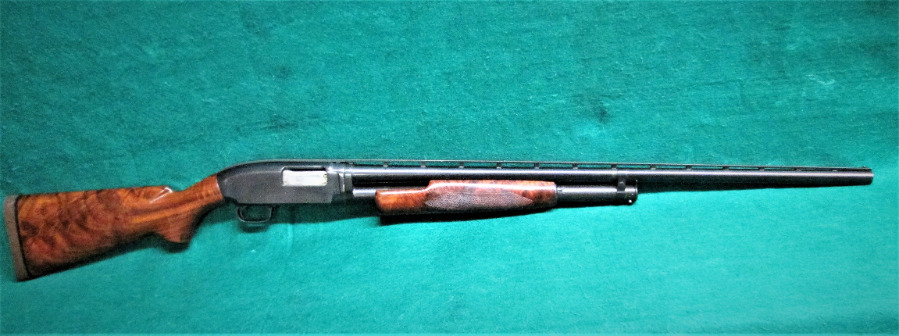
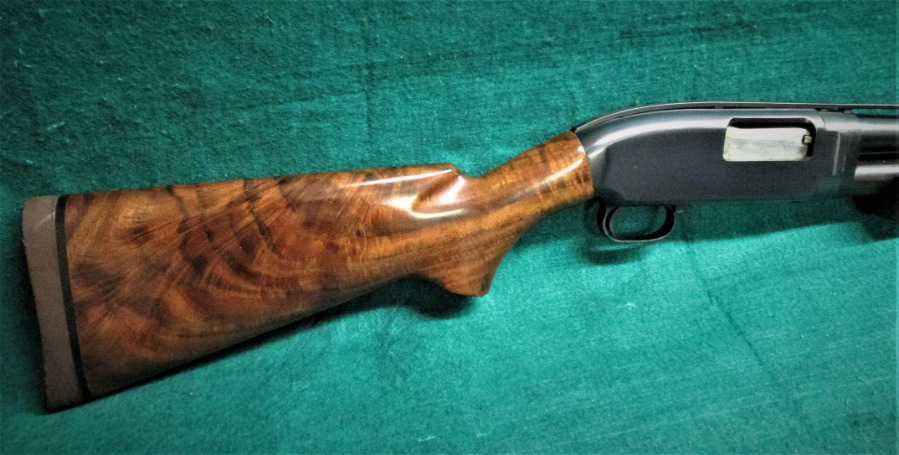
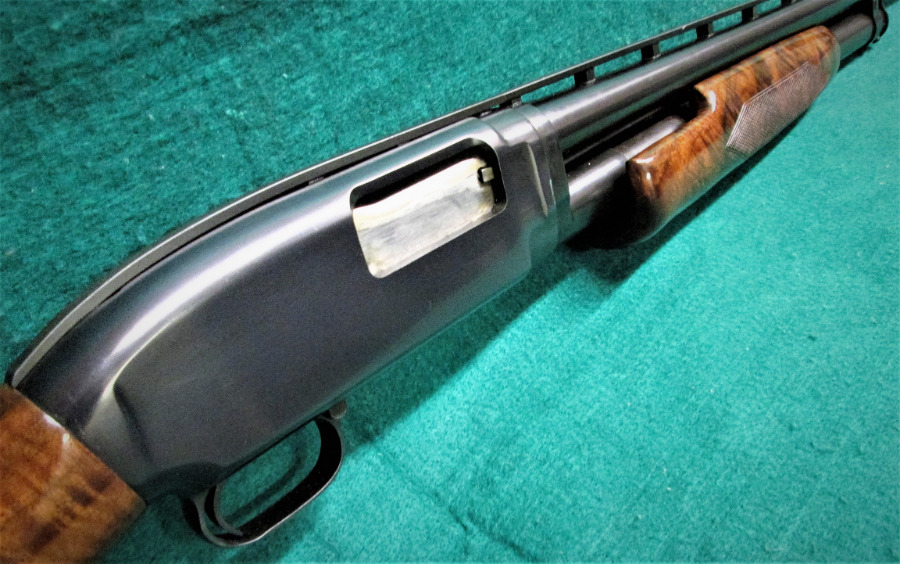
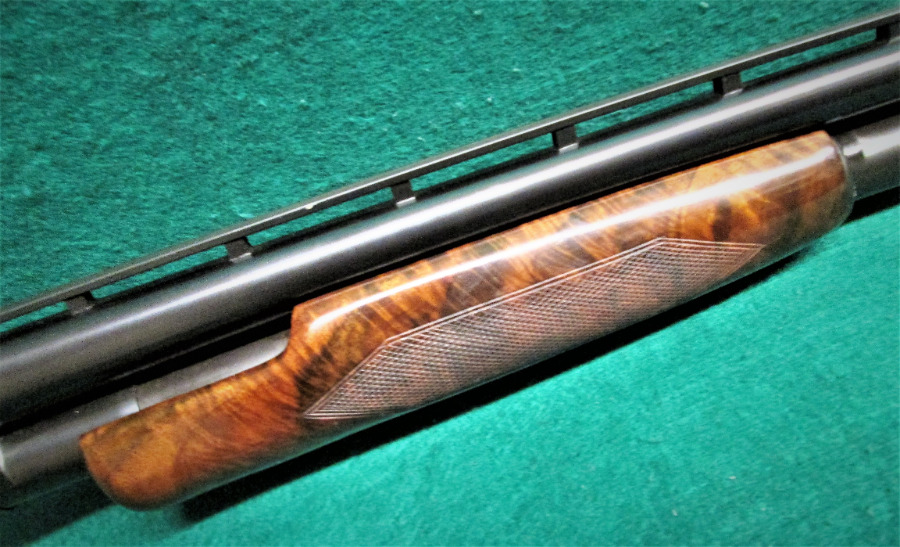
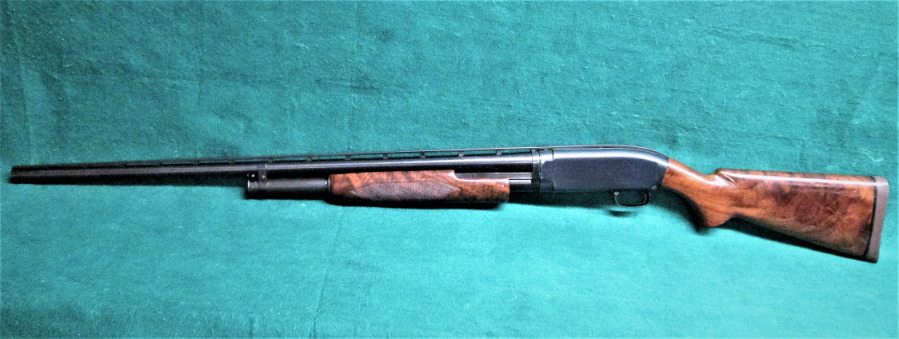
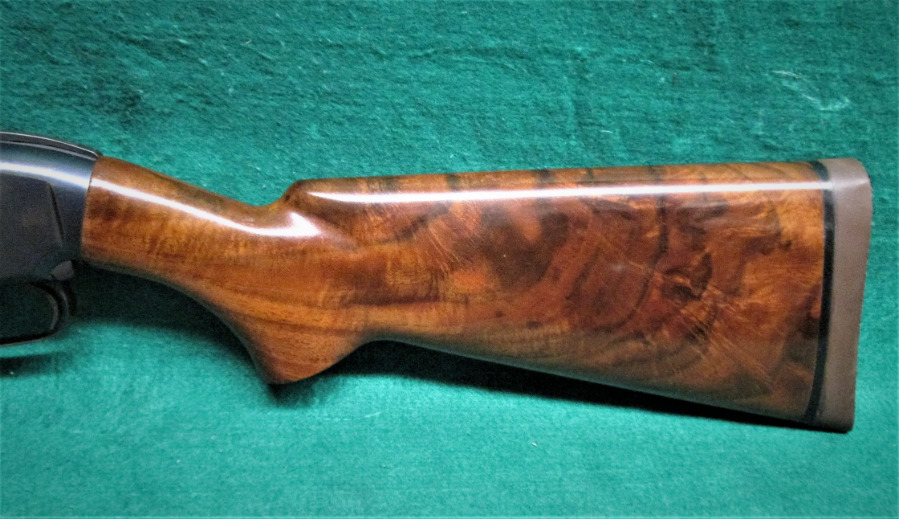
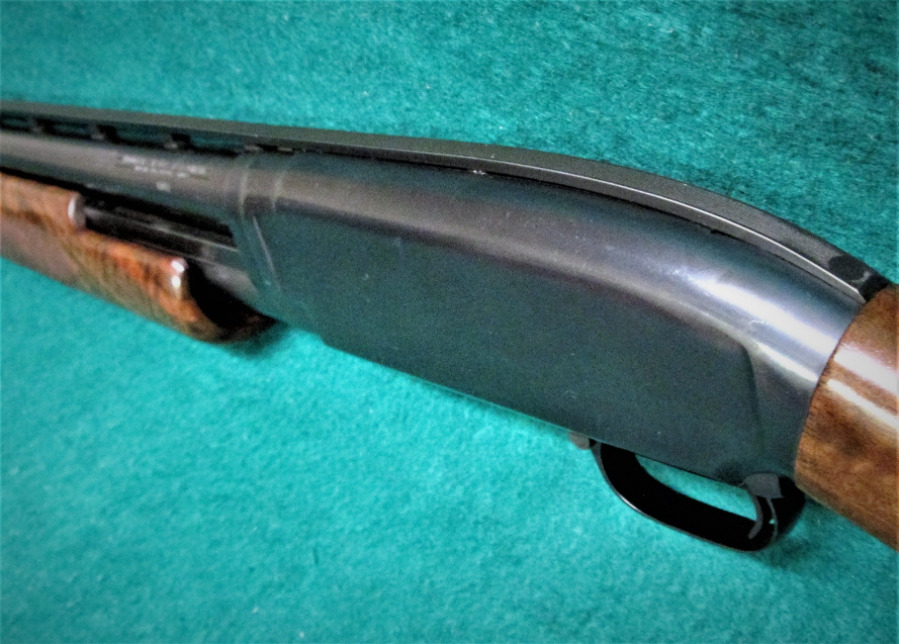
Winchester Repeating Arms Company MODEL 12 CUSTOM TRAP W/30 INCH RIBBED BARREL FULL 12 GA

Winchester Repeating Arms Company - MODEL 12 CUSTOM TRAP W/30 INCH RIBBED BARREL FULL
I just can not believe on how nice the wood is on this piece!
Winchester Repeating Arms Company - MODEL 12 CUSTOM TRAP W/30 INCH RIBBED BARREL FULL - Picture 2
Winchester Repeating Arms Company - MODEL 12 CUSTOM TRAP W/30 INCH RIBBED BARREL FULL - Picture 3
Winchester Repeating Arms Company - MODEL 12 CUSTOM TRAP W/30 INCH RIBBED BARREL FULL - Picture 4
Winchester Repeating Arms Company - MODEL 12 CUSTOM TRAP W/30 INCH RIBBED BARREL FULL - Picture 5
Winchester Repeating Arms Company - MODEL 12 CUSTOM TRAP W/30 INCH RIBBED BARREL FULL - Picture 6
Winchester Repeating Arms Company - MODEL 12 CUSTOM TRAP W/30 INCH RIBBED BARREL FULL - Picture 7
Winchester Repeating Arms Company - MODEL 12 CUSTOM TRAP W/30 INCH RIBBED BARREL FULL - Picture 8
Frankly I think that the Model 12 is the finest pump shotgun out there by American Gunmakers. You could do a whole lot worse to say the least by not buying one of these. Especially since most of them are fairly reasonably priced.
 

Categories
California

Some very strange Brown Sauce we got here!

THE TRANS WOMEN TURNING TO FIREARMS FOR SURVIVAL

On November 7th, a progressive flood at the polls gave some on the political left hope for 2018: Communities across the nation elected trans women, refugees, immigrants, and others who have historically been shut out of the political process.
But not all marginalized communities are hopeful, and even among those who are, survival is still imperative. Some progressive communities have responded to worries about their safety with a tactic that some on the left might find surprising, perhaps even counterproductive: They’re taking up arms.
Trans women are one such community. For some trans guns rights activists, arming trans women is a moral imperative in a society that routinely fails to protect them from systemic violence.
Their work sits at the intersections of a sometimes awkward divide—some are left-leaning, some are on the right, and all of them cherish an individualistic interpretation of gun rights.
This flies in the face of assumptions people may make about the trans community’s political leanings and feelings about the Second Amendment.
Being transgender can be extremely dangerous, and trans people don’t view the social structures ostensibly intended to defend people from harm as safe for them—law enforcement, for example, has a record of abusing trans women and disbelieving trans women when they report crimes.
This is particularly true for trans women of color, who are made doubly vulnerable by society, especially those in the sex industry.
For trans women feeling alone against the world, armed self-defense can start to feel like a very appealing option, though sometimes a frightening one.

I was so traumatized by guns by my 30s that it took three very patient queer gun instructors in a private living room to coach me through my first firearms training,” says Scout Tran-Caffee, a non-binary trans woman and multidisciplinary artist from Northern California.
Whether women are pursuing training and licensure for the purpose of accessing conceal carry permits, or spending time with fellow LGBT people on the range to learn more about gun safety and fire a variety of weapons, gun ownership can also create a sense of solidarity and community.
Kayla Harris, an Oakland-based woman who started out with LGBT gun rights organization Pink Pistols before splitting away to form the Rouge Rifles with a colleague, has been a gun owner for a very long time.
But it wasn’t until the election that she started exploring the possibility of supporting fellow LGBT people who wanted to learn more about guns. “After the [Pulse] shooting and after the election, I knew tons of people who were suddenly interested in guns who never had been before,” Harris says.
Harris carried her interest in firearms through transition, and is a certified firearms instructor—one reason she pursued and maintained her certification was a desire to give back to her community. “Gun owners shouldn’t just default to the white guy who lives in Wisconsin or whatever,” she says. “That’s not the only person who should own guns. For disadvantaged and marginalized people, it equalizes force.”
Harris’ casual interest in guns and enjoyment in shooting shifted as she transitioned and adapted to the Trump era. In an age when the federal government appears to be making war on the trans community, emboldening people on a local level, her fears are rooted in practicality. “There are countless stories of people who failed to be neutralized by a less than lethal weapon,” she says.
That’s her driving desire in educating people about firearms, with a focus on home defense (conceal carry permits are extremely difficult to obtain in the Bay Area). She knows not all trans women agree with her work, but she wants to provide access to trans-inclusive, safe, supportive firearms training for those who are interested.
Often, she loans out her own weapons on the range for training purposes, giving people an opportunity to see if shooting is for them before plunging into buying a gun—and dealing with the demands of storing it safely and in a legally compliant fashion.
Though Harris supports gun education and ownership for trans women who feel it’s a good fit for their needs, she does have a word of caution.
“If I as a trans woman ever shoot a right-wing fascist, the law is almost definitely not going to be on our side,” she comments, noting that law enforcement agencies have a long history of prosecuting marginalized people who fight back. While stand-your-ground laws may be a defense for white cis men, a fatal encounter could go very differently for a trans woman, and Harris has no illusions about the implications.
“When I teach a defense class, the point of the class is to kill someone,” Harris says. “If you’re a trans woman, the person you’re killing is likely to be someone society values more than you.”
Whether the National Rifle Association would step up in defense of a trans woman—especially a trans woman of color—who shoots and kills in self defense is an open question.
When 32-year-old Philando Castile was shot and killed by law enforcement in Minnesota, the NRA failed to condemn the incident, despite the fact that Castile had a conceal carry permit, something critics said may have played a role in his death.
Harris, and Tran-Caffee, hope a test of the NRA’s limits will never come; firing a gun anywhere other than the range or an organized sport shoot isn’t something either woman relishes.
“I dream of how trans peoples’ daily lives could change if all our bullies came to assume that we were all jiu jitsu blackbelts or else had concealed carry licenses,” says Tran-Caffee, who also participates in martial arts training at Oakland’s Four Elements Fitness, where she’s worked to make the gym more LGBT-friendly.
In the face of people who are afraid to leave their homes and be themselves because they fear physical assault that might be difficult to stop with the use of non-lethal means, the fight over gun control gets much more complicated, and perhaps it should. The lack of nuance in conversations about what form gun control should take, and what the founders intended with the Second Amendment, may do a disservice to both sides.

Categories
Well I thought it was funny!

Fine by me as I hate the things myself!

Related image

Categories
All About Guns The Green Machine War

M27 Infantry Automatic Rifle

Here is some more information from Wiki on the Marine Corps newest Toy for Its P.B.I.

(Poor Bloody Infantry)

M27 Infantry Automatic Rifle
USMC-120427-M-SR181-035.jpg

A U.S. Marine armed with an M27 IAR affixed with ACOG Squad Day Optic.
Type Squad automatic weapon
Assault rifle
Designated marksman rifle
Place of origin Germany
Service history
In service 2010–present
Used by United States Marine Corps
Wars Operation Enduring Freedom
Production history
Designer Heckler & Koch
Designed 2008
Manufacturer Heckler & Koch
Unit cost US$3,000[1]
Produced 2010–present
No. built 4,153[2]
Specifications
Weight 7.9 lb (3.6 kg) empty
9.8 lb (4.4 kg) loaded weight with sling[3]
Length 36.9 to 33 in (940 to 840 mm) w/ adjustable stock
Barrel length 16.5 in (420 mm)
Width 3.1 in (79 mm)
Height 9.4 in (240 mm)

Cartridge 5.56×45mm NATO
Action Gas-operated short-stroke pistonrotating bolt
Rate of fire Sustained: 36 rpm
Cyclic: 700 to 900 rpm
Effective firing range 550 m (point target)
700 m (area target)[4]
Maximum firing range 3,938 yd (3,601 m)[4]
Feed system 30-round STANAG magazine
Sights 3.5x Squad Day Optic, flip-up rear rotary diopter sight and front post

The M27 Infantry Automatic Rifle(IAR) is a lightweight, magazine-fed 5.56mmselect-fire weapon based on the Heckler & Koch HK416. It is used by the United States Marine Corpsand is intended to enhance an automatic rifleman’s maneuverability. The U.S. Marine Corps initially planned to purchase 6,500 M27s to replace a portion of the M249 light machine guns employed by automatic riflemen within Infantry and Light Armored Reconnaissance Battalions. Approximately 8,000–10,000 M249s will remain in service with the Marine Corps to be used at the discretion of company commanders. The United States Army does not plan to purchase the IAR.[5][6][7] In December 2017, the Marine Corps revealed a decision to equip every Marine in an infantry squad with the M27.[8]

History[edit]

Background[edit]

In 1985, the U.S. Marine Corps adopted the M249 Squad Automatic Weapon, one year after the U.S. Army. Procurement was a service-level decision because the weapon was adopted by the Army with a contract method the Marines could use. While the belt-fed M249 was portable and had a high volume of fire, its relatively heavy weight meant gunners could have trouble keeping up with riflemen.[9]

IAR[edit]

In 1999, a Universal Need Statement was issued for an Infantry Automatic Rifle (IAR). Around 2000, the 1st Marine Division’s 2nd Battalion, 7th Marines Regiment conducted initial, limited IAR trials which confirmed the desirability of a light automatic rifle. Experiences in Iraq and Afghanistan resulted in formal requests for recommendations. The Universal Need Statement spent six years going through the procurement process before an official program was begun and a list of required capabilities was created in early 2005.[9]
The Infantry Automatic Rifle program began on 14 July 2005, when the Marine Corps sent Requests For Information to arms manufacturers. Characteristics desired in the weapon included: portability and maneuverability; similarity in appearance to other rifles in the squad, reducing the likelihood that the gunner will receive special attention from the enemy; facilitation of the gunner’s participation in counter-insurgency operations and capability of maintaining a high volume of fire. An initial requirement for a magazine with a minimum capacity of 100 rounds was dropped in favor of the 30-round STANAG magazine because, at the start of testing, available 100-round magazines were unreliable. Caliber was specified as 5.56×45mm with non-linked ammunition, so as to achieve commonality with existing service rifles.[9][10]
In 2006, contracts were issued to several manufacturers for sample weapons. Fabrique Nationale d’Herstal submitted an IAR variant of the FN SCAR, Heckler & Koch submitted an HK416 variant, and Colt Defense submitted two designs. Companies that attempted to compete but were not accepted as finalists for testing included the Land Warfare Resources Corporation M6A4 IAR,[11][12] Patriot Ordnance Factory,[6] and General Dynamics Armament and Technical Products with the CIS Ultimax 100 MK5 (marketed as the GDATP IAR).[13]
In December 2009, the Heckler & Koch weapon won the competition and entered into a five-month period of final testing.[14][15] In the summer of 2010, it was designated as the M27 Infantry Automatic Rifle,[16] coincidentally sharing a designation with the 2nd Battalion, 7th Marines, who had been testing fully automatic rifles since 2001.[17]

An M27 IAR displayed at the NDIAJoint Armaments Conference in May 2010.

While Marine Corps Systems Command was optimistic about operational testing, former Commandant of the Marine Corps General James T. Conway remained skeptical because of the reduction in firepower at the fireteam-level that would result if the M27 was adopted.[18] He felt that, while more accurate, it was unlikely that the M27 could provide fire-superiority over the M249, a belt-fed LMG. A magazine-fed rifle, requiring frequent reloading, would not be able to sustain the same rate of fire. In a firefight, squad members carrying extra magazines for the M27 might not always be in position to supply them to the gunner. Further, the SAW was already a battle-proven weapon. It was also significant that the Army had chosen not to pursue the IAR concept.[9]
After the Marine Corps Operational Test and Evaluation Activity conducted further testing at MCAGCC Twentynine PalmsFort McCoy, and Camp Shelby (for dust, cold-weather, and hot-weather conditions, respectively), limited fielding of 458 IARs began to four infantry battalions (one per each Marine Expeditionary Force, one reserve) and one light armored reconnaissance battalion, all of which deployed to Afghanistan in 2011.[19][20]
In May 2011, General James Amos of the U.S. Marine Corps approved the conclusion of the Limited User Evaluation (LUE), and ordered the replacement of the M249 LMG by the M27. Fielding of the approximately 6,500 M27 units was expected to be completed in the summer of 2013, at a cost of $13 million. Each M27 gunner was to be equipped with around twenty-two 30-round magazines of the type currently in use with the M16 and M4 carbineapproximating the combat load of an M249 SAW gunner; although the M27 gunner would not be expected to carry all 22 magazines. The individual combat load would be determined at the unit level and was expected to vary by unit, based on results of evaluations conducted by the four infantry battalions and one light armored reconnaissance battalion that participated in the Limited User Evaluation. Though program officials were aware that switching from the belt-fed M249 would result in a loss of suppressive fire capability, Charles Clark III, of the Marine Corps’ Combat Development and Integration Office, cited the substantially increased accuracy of the M27 as a significant factor in the decision to replace the M249.[21]

Suppressive fire[edit]

A U.S. Marine practices firing an M27 IAR on fully automatic fire in April 2012.

The notion that the M27 represents a reduction in suppressive fire has spawned considerable debate between proponents of the M249 SAW within the infantry and those who advocate that a lighter, more maneuverable, and accurate weapon is sufficient to support offensive operations at the squad level. It is debatable, in fact, that program officials actually concede a loss of suppressive fire capabilities, as the only statements of concern over this concept were made by General Conway.
With a SAW, the doctrine of fire suppression is the sound of continuous fire with rounds landing close to the enemy. While the M249’s volume of fire may be greater, it is less accurate. Experienced troops who have dealt with incoming fire are less likely to take cover from incoming rounds if they are not close enough. With an IAR, the doctrine is that lower volume of fire is needed with better accuracy. Fewer rounds need to be used and automatic riflemen can remain in combat longer and in more situations.[9]
Another benefit of the M27 over the M249 is that in many respects it resembles an M4 rifle as used by the rest of the squad. This makes it harder to identify by enemy troops.[9]

Combat reviews[edit]

The IAR was initially fielded in December 2010.[2] 1st Battalion 3rd Marines were deployed to Afghanistan in April 2011 with 84 IARs. Former SAW gunners initially did not like the M27, but appreciated it as time went on. It weighed 9 lb (4 kg) loaded, compared to 22 lb (10 kg) for an M249, which was a significant difference when on 5-hour long missions. Gunners said it was “two weapons in one,” being able to fire single shots accurately out to 800 meters and have fully automatic fire. It also blended in with standard M16-style service rifles, making it difficult for enemy forces to identify the machine gunner. The battalion leadership also saw the M27 as better at preventing collateral damage, as it is more controllable on fully automatic than the M249. Concern of volume of fire loss was made up for through training courses developed in December 2010. With the M249 SAW, the idea of suppression was volume of fire and the sound of the machine gun. With the M27 IAR, the idea of suppression shifts to engaging with precision fire, as it has rifle accuracy at long range and fully automatic fire at short range. Shooters transitioned from long-range precision fire at 700 meters to short-to-medium suppressive fire at 200 meters, both while in the prone position. Some gunners in combat have been used as designated marksmen. An M27 gunner with one aimed shot has the effect of three or four automatic shots from the SAW, and still has the option of a heavier volume with an accurate grouping.[22]
Marines issued with the M27 enjoy its familiarity with the M4-style weapons in service. It is friendlier to troops due to its cleaner, lightweight system having fewer moving parts and jams. IAR gunners consider the rifle-grade accuracy to be a huge improvement over the SAW, despite the loss of sustained firing. With a shrinking budget, the Marine Corps is looking at ways to implement the IAR as a multipurpose weapon. Suggestions included use as an automatic rifle and as a designated marksman rifle,[23] a role where it replaced the Squad Advanced Marksman Rifle.[24] Additionally, the free-floating barrel offers improved accuracy at approximately 2 MOA compared with 4.5 MOA for M16A4 rifles.[25]

Design[edit]

A U.S. Marine armed with an M27 fitted with a Harris bipod and a 3.5x Squad Day Optic covers his team in Afghanistan in March 2012.

The M27 is based on the Heckler & Koch HK416.[26] It features a gas-operated short-stroke piston action with a rotating bolt and a free-floating barrel. The handguard has four MIL-STD-1913 Picatinny rails for use with accessories and optics. The simpler gas-piston rifle system reduces the amount of time it takes to resolve malfunctions on the IAR compared with the M249.[17] Alternate calibers other than 5.56 mm are being considered for the M27.[9]

Use[edit]

The IAR is distributed one per four-man fireteam, three per squad, 28 per company, 84 per infantry battalion, and 72 per Light Armored Reconnaissance Battalion,[27] with 4,476 total for the Marine Corps. The M249 was not completely replaced by the M27, and six of the machine guns are still issued to rifle companies.[28]
In December 2017, the Marines revealed they would be equipping every Marine in an infantry squad with the M27, which would increase the number of rifles procured by at least 11,000. While not every Marine in a battalion will receive the weapon, others outside of squads are also being considered.[8]

Magazine[edit]

The M27 draws ammunition from a standard 30-round STANAG magazine. The improved STANAG magazine with the tan-colored anti-tilt follower is favored over the previous version with the green follower because it can be inserted more easily and the anti-tilt follower can handle high rates of fully automatic fire with less chance of malfunction. While a rifleman normally carries seven 30-round magazines, an IAR gunner has to carry up to 16, and may carry as many as 21, due to its role and fully automatic rate of fire. The magazine well has a flared opening that aids in magazine insertion, but a PMAG 30 GEN M2 magazine cannot be inserted due to the frontal plastic bevel on the PMAG.[4] Because the M27 cannot be fed from the widely used M2 PMAG magazines that M4s or M16 rifles in the squad could take, the Marines banned the polymer PMAG for issue on November 26, 2012 to prevent interchangeability issues.[29] In response, Magpul began the process of arranging verification and official testing for their improved PMAG 30 GEN M3 magazine, which is compatible with both the M27 and M16-series rifles.[30] After Marine Corps testing of the M855A1 Enhanced Performance Round with the M27 showed reliability problems from feeding issues from standard magazines,[31] the PMAG 30 GEN M3 Window, which had better reliability with the EPR, was approved for use by Marines in December 2016 so that M27 gunners who receive M855A1 rounds do not face such issues.[32] Due to its role, high capacity magazines of between 50 and 100 rounds are being explored.[17]

Accessories[edit]

The M27 is essentially an HK416 with accessories required by the Marine Corps.[33] The standard optic is the Trijicon ACOG Squad Day Optic (SDO), officially designated the Sight Unit, SU-258/PVQ Squad Day Optic. It is a 3.5×35 machine gun optic that has a Ruggedized Miniature Reflex (RMR) sight screwed on top for close-quarters engagements under 100 meters. Created for the SAW, the day optic offers slightly less magnification, but longer eye relief than the ACOG Rifle Combat Optic (RCO) on M16s and M4s. The longer relief helps reduce injury risk from recoil.[4][22] It is issued with the Vickers Combat Applications sling and rail sling mounts, AIM Manta Rail Covers, Harris bipod, KAC backup iron sights, a foregrip, and bayonet lug.[34] The M27 initially had a Grip Pod, which is a foregrip with bipod legs inside, but it was later replaced by a separate foregrip and bipod.[9]
In January 2017, a USMC unit deployed with suppressors mounted to their M27 rifles as part of a concept to suppress every weapon in an infantry battalion. Exercises showed that having all weapons suppressed improved squad communication and surprise during engagements; disadvantages included additional heat and weight, increased maintenance, and the greater cost of equipping so many troops with the attachment.[35]

M38 DMR[edit]

In late 2017, the Marine Corps began fielding the M38 designated marksman rifle. Although certain M27s were employed as marksman rifles since 2016, the M38 version outfits the M27 with a Leupold TS-30A2 Mark 4 MR/T 2.5-8x36mm variable power scope, the same optic fitted on the Mk 12 Special Purpose Rifle. The naming of the M38 followed a similar convention to the M27, being named after the 3rd Battalion, 8th Marines unit that tested the rifle out.[36]