Longtime Friend and Reader James L. sends the following email:
I’m writing for advice for my son-in-law. He already has a Colt 1911 and is considering getting a companion carbine, a High Point 4595TS. I know you had a nice .45 carbine but don’t remember the make.
He is considering this because of California’s (spit) 2018 law making ammo purchase akin to buying a firearm. It will require the whole background check and a permission slip to purchase, and then, only from a FFL licensed dealer, in California (spit). No out of State purchases allowed.
Might you have any words of wisdom on the subject?
I’ll refrain from advising that his s-i-l move out of California altogether, and concentrate on answering the request.
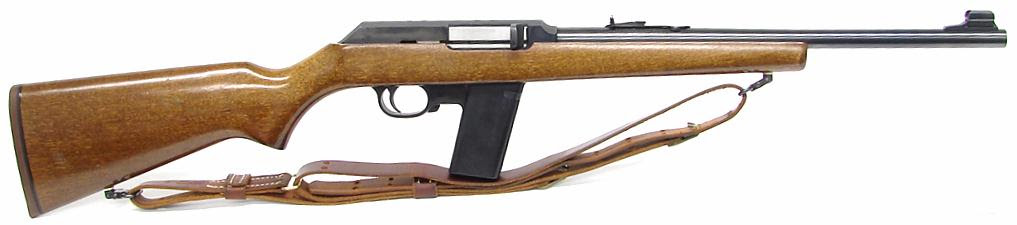
The market for semi-auto carbines in .45 ACP has dried up completely. Only High Point is currently making one, and I’ve heard more bad than good about their offerings in general — if you’re making goods to a low price point, the Iron Law Of Quality Compromise cannot be denied. I used to own a Marlin Camp 45 carbine and loved it because it used 1911 magazines and it was fun to shoot; but Marlin no longer makes it, and in any event, it was not very rugged and certainly not as reliable as today’s pistol-caliber carbines.
Also, the current asking price for a secondhand Camp 45 seems to be well over $1,000, which is risible: you’re buying a curio more than an actual go-to semi-auto carbine.
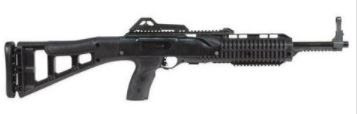
Anyway, what’s left in California-legal .45 carbines? Not much. Here’s the Hi Point, by the way, at $400-odd:
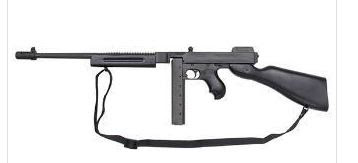
…and after that, the pickings get slim and the prices much fatter. The Auto-Ord Thompson 1927A1 Commando retails just under $1,500:
…and it’s heavy and unwieldy into the bargain.
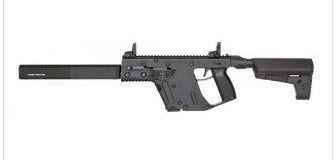
Then there’s the Kriss Vector at just over $1,500 and which looks badass and tacticool:
…and frankly, I’m amazed that California allows so scawwwy-looking a gun inside its borders.
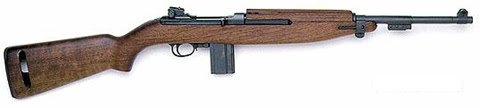
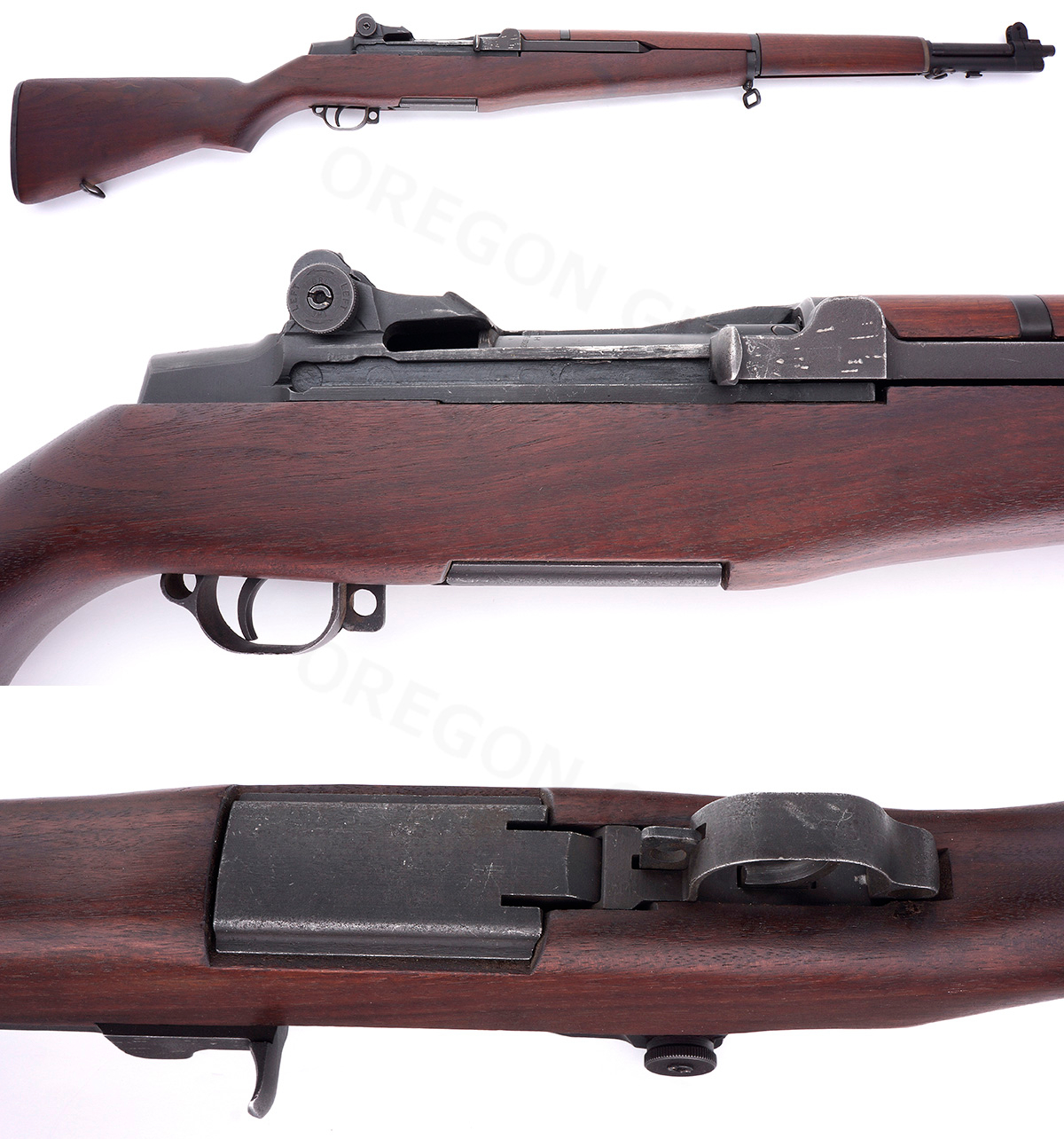
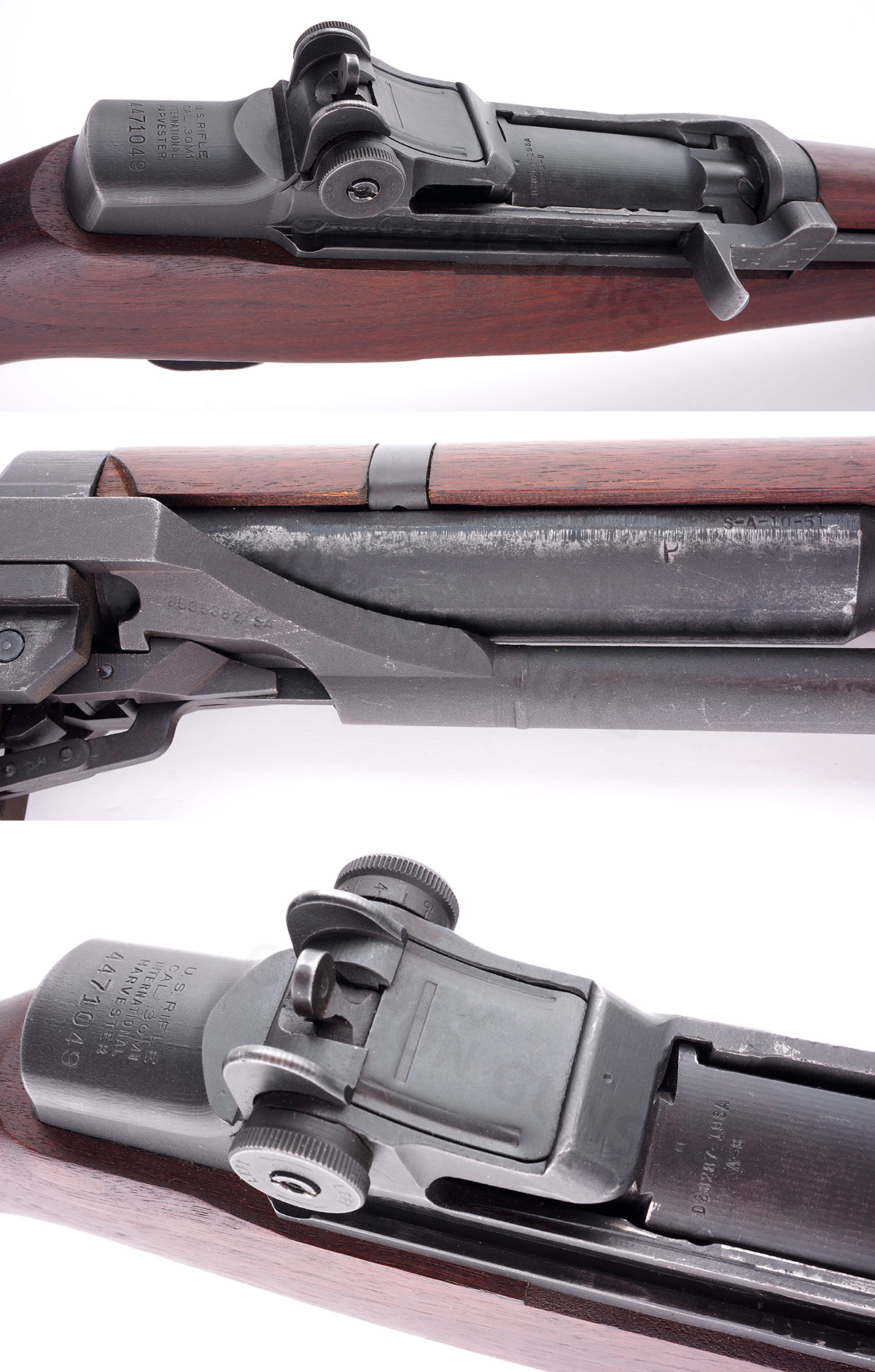
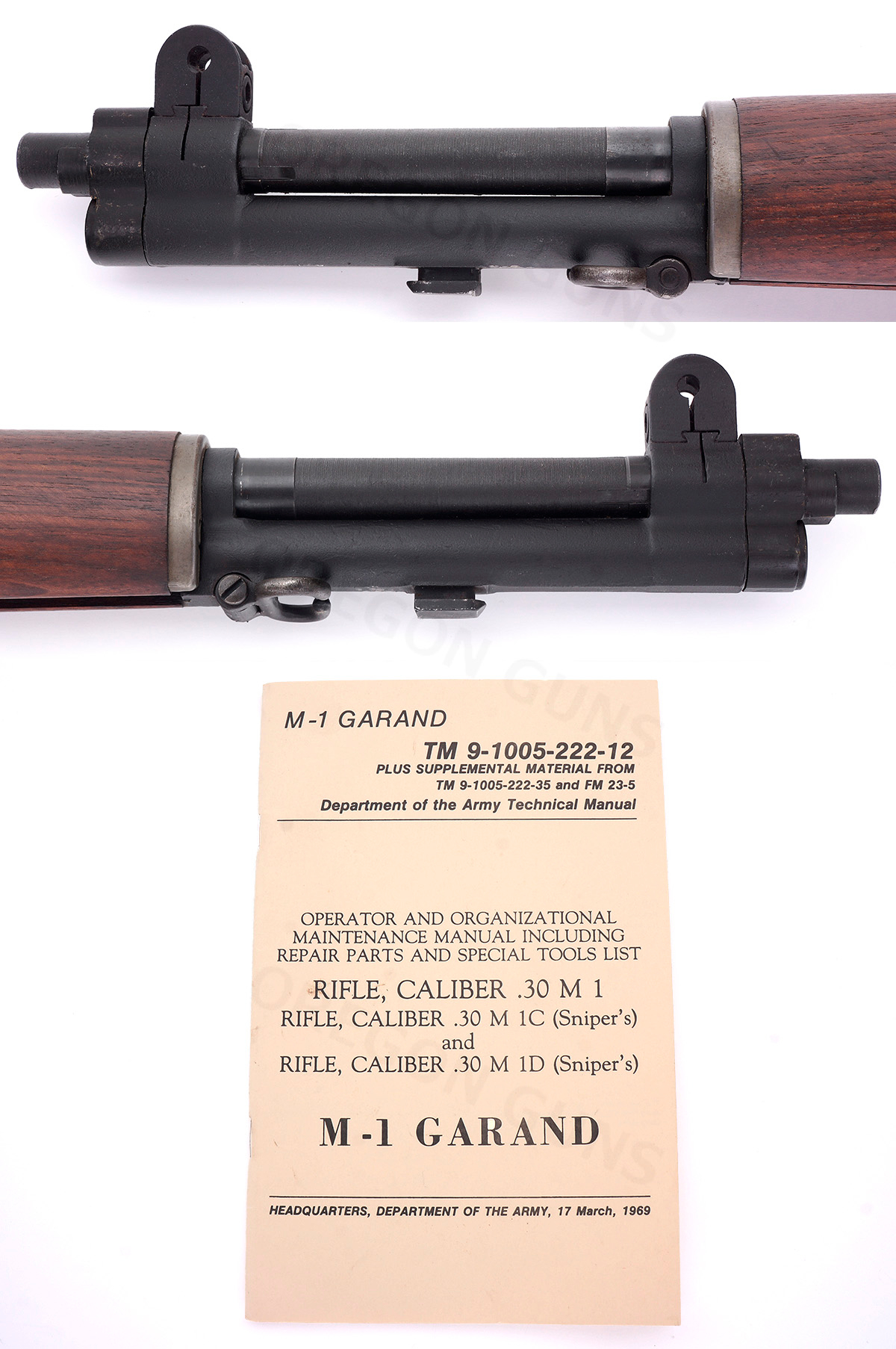
Frankly, I don’t think that any of those options is a decent one. I get the impression that Reader James’s s-i-l can’t afford to drop over a grand on a carbine — if he were, I’d suggest he ignore all the above and get an M1 Carbine in .30 Carbine (which I think is still legal in CA providing that you have only 10-round magazines — the 15-rounders are streng verboten).
I recall seeing a while ago that some company was modifying the Carbine into a .45 ACP gun, but I don’t know any more about that.
Anyway, as the s-i-l in question is looking for a way to escape the stupid and onerous (by intention) California ammo laws, adding a new caliber would of course be counterproductive.
So he might as well get the High Point; or he should move out of California to the actual United States, where such stupid laws and regs are laughed out of the legislature if so proposed.
Bloody California.
For those of you who are fans of the combat Tupperware, the wait is over!
The Glock Gen 5 has arrived. GA team got their hands on the new Glock 19 and Glock 17 Gen 5. Aside from some cosmetic changes and few functional changes, they function just as we come to expect from Glock — flawlessly. Updated Ergonomics
Goodbye to the finger grooves. The Gen 5 gets back to the roots of the original. Considering this is one of the first things requested when customizing, it just made sense. The Gen 5 grips look like a Gen 1 and Gen 4 hybrid. It has the texture of the Gen 4 with grip of the Gen 1.
Although similar to the Gen 4 models, it comes with the modular back straps and beavertail that allows users to swap out from two different sizes of back straps each with or without the beavertail.
A left side slide release makes the Gen 5 models finally fully ambidextrous, as it retains the Gen 4 reversible magazine release. I have only owned one Glock from the pre-finger groove times, so this is relatively new to me.
I don’t feel it is a huge difference, but I like the feel of the new model. The coating is a “nDLC” finish on the barrel and slide. According to Glock, this is more durable and tougher than previous finishes.
It’s currently exclusive to Gen 5 models.
The magazine well has been flared, which is nice for both tactical and competitive shooters. Looks like Glock caught the fever of the SIG P320X5 on this one, but it is a nice touch. Reloads with the Gen 5’s are a snap.
Competitive shooters are going to love this update, and it will pretty much make the purchase of a Gen 5 mandatory. For Production class add on magwells are a no-no. But if your gun happens to come from the factory that way — it’s good to go.
The new Glock Gen 5 magazines feature an orange follower and floor plate that is extended in the front for faster mag changes. These mags are also interchangeable with previous models. Article Continues Below
The biggest upgrade is what Glock calls the new “Marksman barrel.” This change supposedly halves the accuracy of the old Glock standard. Before, the barrels came from the factory with 4 inches at 25 yards as the standard. Now the bar has been raised to 4 inches at 50 yards.
Time will tell if this matters to most shooters, but it is nice to know the possibility is there. When I field tested the guns for accuracy against a Gen 4, the new model did have a slight edge.
It also remains to be seen, if Glock will make the new barrels in Gen 3 for all the poor people stuck in Commie-fornia. An interesting point is the new barrel drops the polygonal rifling in favor of regular rifling.
There have been major changes to the geometry of the safety plunger. This is the part that makes the Glock drop safe. It is now angled, which makes for a better trigger pull out of the box.
The entire trigger group has changed, meaning your 5-gallon bucket of disconnectors and different springs is now a boat anchor. No doubt the aftermarket will be scrambling to catch up. The Gen 5 is still not a custom-tuned single action, but it is an improvement.
The coating on the Gen 5 is a Glock proprietary finish called nDLC. This, we are told, is the toughest wearing finish every applied by Glock. I suppose it will take a few thousand draws from the holster to tell, in my experience the Glock finish was already among the best.
The internals got a bit of a facelift as well, with the return to a two pin rather than 3 pin frame. Glock says the Gen 5 will only be available in 9mm, and much of the old pin design was directly related to the 40 Cal.
As a believer in 40 S&W, this is a bit of bad news to me. The takedown lever has been fully redesigned, switching from a leaf spring to a coil spring. The striker has changed, along with the firing pin hole. It is now tear-drop shaped, to allow more tolerance for foreign objects in the firing pin channel.
This is supposed to offer a substantial decrease in the odds of a light strike due to grime. We were told that the Gen 5 Glock has set a new record in testing for mean stoppages between rounds at 11,000.
The Gen 5 comes with the Glock standard plastics sights, but also now offer Ameriglo tritiums as an option. I used these sights at the Glock Operators Course earlier in the month, and they are a great set up. If you plan on using your Gen 5 as a duty or carry gun, I recommend them highly.
Glock Operators Course
Earlier in the summer, I had the opportunity to run an abbreviated Glock Operators Course with the new Gen 5. The Glock Operators Course (GOC) teaches you to drive or “operate” a Glock. And at least the chief architect of the course can lay some claim to the word, my friend Joseph Parent.
Parent is an old hand from 2nd Force Recon, a former SOTG instructor, and a 3 Division USPSA Master class shooter. Parent can sling a pistol, as can all of his assistant instructors. He has assembled an all star cast of other gunfighters.
I really liked that his crew had a mix of U.S. military, police, and SWAT members. No one organization has a monopoly on the best training or ideas. Every one involved in GOC is a consummate professional, bringing years of experience to the venue. Or in the case of his instructor named “Gen1” four decades.
I hesitate to call the GOC a basic course because no one likes a basic course. The market demands a Level 54 Paladin with ninja stars and SWAT rolls course. A better description would be a course with something for shooters at all levels. It is not for new shooters that is certain. To even get in the door, you must be active Military, Police, an NRA instructor or a Glock Shooting Sports Foundation (GSSF) member. Much like my preferred teaching style, the course begins with a rapid overview of the basics. This is very important. You can’t build a foundation on sand. The overview is designed to offer tweaks to existing skills or identify missing parts. You would be amazed how many experienced shooters have chunk of knowledge missing. Every skill is both explained and demonstrated, then done at speed live fire.
The course involved lots of work from the draw, and we utilized BladeTech holsters. Every skill imaginable with a pistol is covered, from draws to one handed shooting, to shooting on the move. Our course was compressed from two days into one, so the pace was kept high.
There is enough here to challenge anyone, and if you carry a Glock, it is worth checking out.
For more information about the Glock Gen 5, click here.
To purchase a Glock pistol on GunsAmerica, click here.
Approved Gun Safe Requirements for Transporting Firearms in California
“How do I legally carry firearms in my car, truck or motor home in the state of California?”
Under California law a concealed handgun can legally be transported with a motor vehicle without a permit only by carrying it:
Unloaded
Locked in the vehicle’s trunk or in a separate locked container other than the utility or glove compartment
If the vehicle does not have a trunk, it must be carried in a “locked container” separate from the utility or glove compartment.
Penal Code Section 12026.1 defines “locked container” as a secure container that is fully enclosed and locked by a padlock, key lock, combination lock, or similar locking device. Locked container does not include the glove compartment or utility compartment.
Ammunition cannot be attached to the handgun in any manner. Under most circumstances, a firearm is considered loaded when there is a live round of ammunition “…in, or attached in any manner to, the firearm, including, but not limited to: in the firing chamber, magazine or clip thereof attached to the firearm…” For example, a semi-automatic handgun with an empty firing chamber and a loaded magazine inserted in the magazine well is considered loaded. There is no prohibition in the state codes against also carrying ammunition within the same motor vehicle or compartment in the vehicle, as long as the firearms are not loaded and ammunition is not attached in any manner to the firearm. – Penal Code Sections 12025, 12026, 12031.
“Utility compartment” is not defined in the Penal Code. A handgun should not be transported in the center console (even if locked) or in the storage area present behind the rear seat in most hatchback type automobiles. Because of the uncertainty in current California law, it is inadvisable to use the various storage compartments found in sport utility vehicles.
While it is legal in California to carry an unloaded handgun in plain sight in the passenger compartment, it is not advised. It can lead to unfavorable attention and an encounter with the police. If the gun slips between the seats or otherwise out of sight, it is no longer “in plain sight” and therefore illegal.
Penal Code Section 12026.2 states that carrying a handgun in your car even in a locked container is only for the purpose of transporting from one specific location to another (going to the range, going hunting, etc.). It is illegal to carry a firearm without a permit, even in a locked container in your car, for general purposes such as self-defense.
These requirements for handguns also apply to the transportation of “assault weapons” and .50 BMG rifles.
When driving a motor home, it is treated as a motor vehicle and all requirements listed above apply.
This information was obtained from the California Rifle and Pistol Association’s Summary of California Gun Laws and Basic Safety Rules, 38th Revision – 2010, and from Attorney Bruce Colodny, GunLaw.com. Be prepared with transporting a firearm in California. It’s serious business, and misunderstanding or not knowing the laws can land you in a spot you’d rather not be.