















I found these & I thought you might like to see these Real Soldiers of Yesteryears!


Charles Young (March 12, 1864 – January 8, 1922) was the third African-American graduate of West Point, the first black U.S. national park superintendent, first black military attaché,\.
Also the first black man to achieve the rank of colonel, and highest-ranking black officer in the Regular Army until his death in 1922.
Charles Young was born in 1864 into slavery to Gabriel Young and Arminta Bruen in Mays Lick, Kentucky, a small village near Maysville.[1]
However, his father escaped from slavery early in 1865, crossing the Ohio River to Ripley, Ohio, and enlisting in the Fifth Regiment of Colored Artillery (Heavy) near the end of the American Civil War.[1]
His service earned Gabriel and his wife their freedom, which was guaranteed by the 13th Amendment after the war. Arminta was already literate, which suggests she may have worked as a house slave before her freedom.
The Young family settled in Ripley when Gabriel was discharged in 1866, deciding that opportunities there in Ohio were probably better there than in postwar Kentucky. Gabriel Young received a bonus by continuing to serve in the Army after the war, and he had enough to buy land and build a house.
Charles Young attended the all-white high school in Ripley, the only one there who was African-American. He graduated in 1880 at the top of his class. He then taught for several years in the new black high school opened in Ripley.[1]
In 1883, Young took the competitive examination for appointment as a cadet at United States Military Academy at West Point.
He had the second highest score in his district, but the top candidate decided not to go and Young reported to West Point in 1884.
There was then one other black cadet, John Hanks Alexander, who had entered in 1883 and graduated in 1887. Young and Alexander shared a room for three years at West Point.
Although regularly discriminated against, Young did make several lifelong friends among his later classmates, but none among his initial class.[2]
He had to repeat his first year when he failed mathematics. He later failed an engineering class, but he passed it the second time when he was tutored during the summer by George Washington Goethals, the Army engineer who later directed construction of the Panama Canal and who as an assistant professor took an interest in Young.
(It was not unusual for cadets to need tutoring in some subjects. Young’s strength was in languages, and he learned to speak several.)[1]
As one of the very first African-Americans to attend and graduate from West Point, Charles Young faced challenges far beyond his white peers. He experienced extreme racial discrimination from classmates, faculty and upperclassmen.
Hazing was not an unusual practice at the male dominated military academies. Charles Young, however, was subjected to a disproportionate amount of abuse because of his color.[3]
There are many stories about Young’s struggles at West Point. Upon arrival to West Point, Young was welcomed in as “The Load of Coal”.[4]
Once, in the mess hall, a white cadet proclaimed that he would not take food from a platter that Young had already taken from. Young passed the white cadet the plate first, allowing him to take from it, then he himself took from the plate.[5]
Upperclassmen targeted and demerited Young 140 times, which would have been considered unusually high.[6] Whereas Young’s peers were referred to by their last names, Young was called “Mr. Young” as a kind of feigned deference.[4]
One of Young’s greatest struggles at West Point was loneliness.[7] A white classmate of Young’s, Major General Charles D. Rhodes, later reported that it was a practice of Young to converse with some of the servants at West Point in German to maintain some human interaction.[8]
Towards the end of his five-year stay at West Point, the merciless discrimination and taunts decreased.[9]
Because of his perseverance, some of Young’s classmates began to see past the color of his skin. Despite this and by his own admission, Charles Young’s time at West Point was fraught with difficulty.[10]
Young graduated in 1889 with his commission as a second lieutenant, the third black man to do so at the time (after Henry Ossian Flipper and John Hanks Alexander, and the last one until Benjamin O. Davis, Jr. in 1936).
He was first assigned to the Tenth U.S. Cavalry Regiment. Through a reassignment, he served first with the Ninth U.S. Cavalry Regiment, starting in Nebraska.
His subsequent service of 28 years was chiefly with black troops—the Ninth U.S. Cavalry and the Tenth U.S. Cavalry, black troops nicknamed the “Buffalo Soldiers” since the Indian Wars.
The armed services were racially segregated until 1948, when President Harry S. Truman initiated integration by executive order, which took some years to complete.[11]
After getting established in his career, Young married Ada Mills on February 18, 1904 in Oakland, California.
They had two children: Charles Noel, born in 1906 in Ohio, and Marie Aurelia, born in 1909 when Young and his family were stationed in the Philippines.[12]

Young began his service with the Ninth Cavalry in the American West: from 1889-1890 he served at Fort Robinson, Nebraska, and from 1890-1894 at Fort Duchesne, Utah.
In 1894, Lieutenant Young was assigned to Wilberforce College in Ohio, an historically black college (HBCU), to lead the new military sciences department, established under a special federal grant.[13]
A professor for four years, he was one of several outstanding men on staff, including W.E.B. Du Bois, who became his close friend.[1]
When the Spanish–American War broke out, Young was promoted to the temporary rank of major of Volunteers on May 14, 1898.
He commanded the 9th Ohio Infantry Regiment which was, in the terminology of the day, a “colored” (i.e. African-American) unit.
Despite its name, the 9th Ohio was only battalion sized with four companies. The short war ended before Young and his men could be sent overseas.
Young’s command of this unit is significant because it was probably the first time in history an African-American commanded a sizable unit of the United States Army and one of the very few instances prior to the late 20th Century.
He was mustered out of the volunteers on January 28, 1899, and reverted to his regular army rank of first lieutenant. He was promoted to captain in the 9th Cavalry Regiment on February 2, 1901.[14]
In 1903, Young served as captain of a black company at the Presidio of San Francisco. He was then appointed acting superintendent of Sequoia and General Grant national parks, becoming the first black superintendent of a national park.
(At the time the military supervised all national parks.)
Because of limited funding, however, the Army assigned its soldiers for short-term assignments during the summers, which made it difficult for the officers to accomplish longer term goals. Young supervised payroll accounts and directed the activities of rangers.
Young’s greatest impact on the park was managing road construction, which helped improve the underdeveloped park and allow more visitors to enjoy it.
Young’s men accomplished more that summer than had been done under the three officers assigned to the park during the previous three summers.
Captain Young’s troops completed a wagon road to the Giant Forest, home of the world’s largest trees, and a road to the base of the famous Moro Rock. By mid-August, the wagons of visitors could enter the mountaintop forest for the first time.[15]
With the end of the brief summer construction season, Young was transferred on November 2, 1903, and reassigned as the troop commander of the Tenth Cavalry at the Presidio.
In his final report on Sequoia Park to the Secretary of the Interior, he recommended the government acquire privately held lands there, to secure more park area for future generations. This recommendation was noted in legislation to that purpose introduced in the United States House of Representatives.

Charles Young cartoon by Charles Alston, 1943
With the Army’s founding of the Military Intelligence Department, in 1904 it assigned Young as one of the first military attachés, serving in Port-au-Prince, Haiti.
He was to collect intelligence on different groups in Haiti, to help identify forces that might destabilize the government. He served there for three years.
In 1908 Young was sent to the Philippines to join his Ninth Regiment and command a squadron of two troops. It was his second tour there. After his return to the United States, he served for two years at Fort D.A. Russell, Wyoming.
In 1912 Young was assigned as military attaché to Liberia, the first African-American to hold that post.
For three years, he served as an expert adviser to the Liberian government and also took a direct role in supervising construction of the country’s infrastructure.
For his achievements, in 1916 the National Association for the Advancement of Colored People (NAACP) awarded Young the Spingarn Medal, given annually to the African American demonstrating the highest achievement and contributions.[16]
In 1912 Young published The Military Morale of Nations and Races, a remarkably prescient study of the cultural sources of military power.
He argued against the prevailing theories of the fixity of racial character, using history and social science to demonstrate that even supposedly servile or un-military races (such as Negroes and Jews) displayed martial virtues when fighting for democratic societies.
Thus the key to raising an effective mass army from among a polyglot American people was to link patriotic service with fulfillment of the democratic promise of equal rights and fair play for all. Young’s book was dedicated to Theodore Roosevelt, and invoked the principles of Roosevelt’s “New Nationalism”.[17]
During the 1916 Punitive Expedition by the United States into Mexico, then-Major Young commanded the 2nd squadron of the 10th United States Cavalry. While leading a cavalry pistol charge against Pancho Villa‘s forces at Agua Caliente (1 April 1916), he routed the opposing forces without losing a single man.[18]
Because of his exceptional leadership of the 10th Cavalry in the Mexican theater of war, Young was promoted to Lieutenant Colonel in September 1916.
He was assigned as commander of Fort Huachuca, the base in Arizona of the Tenth Cavalry, nicknamed the “Buffalo Soldiers”, until mid 1917.[16] He was the first African American to achieve the rank of colonel in the US Army.[19]
With the United States about to enter World War I, Young stood a good chance of being promoted to brigadier general.
However, there was widespread resistance among white officers, especially those from the segregated South, who did not want to be outranked by an African American.
A lieutenant who served under Young complained to the War Department, and Secretary of War Newton Baker replied that he should “either do his duty or resign.” John Sharp Williams, senator from Mississippi, complained on the lieutenant’s behalf to President Woodrow Wilson.
The President overruled Baker’s decision and had the lieutenant transferred. (In 1913, Southern-born Wilson had segregated federal offices and established discrimination in other ways.) Other white officers in the 10th Cavalry became encouraged to apply for transfers as well.
Baker considered sending Young to Fort Des Moines, an officer training camp for African Americans. However, Baker realized that if Young were allowed to fight in Europe with black troops under his command, he would be eligible for promotion to brigadier general, and it would be impossible not to have white officers serving under him.
The War Department instead removed Young from active duty, claiming it was due to his high blood pressure.[20] Young was placed temporarily on the inactive list (with the rank of colonel) on June 22, 1917.
In May 1917 Young appealed to Theodore Roosevelt for support of his application for reinstatement. Roosevelt was then in the midst of his campaign to form a “volunteer division” for early service in France in World War I.
Roosevelt appears to have planned to recruit at least one and perhaps two black regiments for the division, something he had not told President Wilson or Secretary of War Baker.
He immediately wrote to Young offering him command of one of the prospective regiments, saying “there is not another man [besides yourself] who would be better fitted to command such a regiment.” Roosevelt also promised Young carte blanche in appointing staff and line officers for the unit. However, Wilson refused Roosevelt permission to organize his volunteer division.[21]
Young returned to Wilberforce University, where he was a professor of military science through most of 1918.
On November 6, 1918, after he had traveled by horseback from Wilberforce, Ohio, to Washington, D.C. to prove his physical fitness, he was reinstated on active duty as a colonel.[15] Baker did not rescind his order that Young be forcibly retired.[20]In 1919, Young was reassigned as military attaché to Liberia.
Young died January 8, 1922, of a kidney infection while on a reconnaissance mission in Nigeria.
His body was returned to the United States, where he was given a full military funeral and was buried at Arlington National Cemetery across the Potomac River from Washington, DC.
He had become a public and respected figure because of his unique achievements in the Army, and his obituary was carried in the New York Times.[22]

Young’s house near Wilberforce, Ohio
Young was entitled to the following medals:
Notes
Sources
Further reading
 |
Wikimedia Commons has media related to Charles Young (United States Army). |
Now this company has been around on & off now for a very long time. Their early shotguns were of the highest quality. Now they have brought forth this fine looking rifle.
THE NEW ITHACA RIFLE

Ithaca Rifle in Tiger Maple
| Built on Ithaca’s reputation for manufacturing high quality American-Made firearms, we are pleased to introduce our series of precision long range rifles to the Ithaca product line.Developed in conjunction with a world record holding marksman, this rifle is crafted for the shooter who wants the pinnacle of what is available in long range precision. |
Each Rifle consists of a 4340 chromoly steel billet receiver, a 4140 single piece billet nonwelded bolt, and a competition grade barrel and trigger.Every action is produced in-house by Ithaca Precision utilizing the state-of-the-art CNC machining equipment with the receiver bolt raceway wire EDM’d for ultimate precision. |
Each competition barrel is mated to the action by experienced craftsmen committed to excellence. The result of this attention to detail produces ½ MOA accuracy or better. The Guardian is Ithaca Precision’s short action platform. The Protector is Ithaca Precision’s long action platform. |
The Savior is Ithaca Precision’s .338 Lapua. It is exclusively tactical, and not a hunting rifle. All of these rifles are completely customizable with countless variations based on which of our many options you choose. Why take your rifle to a gunsmith for customization when you can get the gun you want straight from our factory? Call 419-294-4113 for details. |
All I want to know is this. When is Santa bringing me one?


Let me start off by being absolutely clear about where I stand: I love guns. I love their smell. I love their sound. I love the smooth slide of a well-lubricated bolt-action rifle. I love the meditative perfection of feeling my round hit its target, before there’s any rational way that I could possibly know it hit, and yet I do know. When body, mind, sight, and weapon all line up in sync, I know.
Furthermore, I love the Second Amendment of the United States Constitution. Without the Right to Bear Arms, Freedom of Speech is an empty abstraction. It is the moral duty of every Christian to be prepared to defend the innocent with proportionate force, up to and including lethal force. All who can own a gun should own a gun, it is our duty to be vigilant for threats against ourselves and others. The words of our Lord and Savior state: “He that hath no sword, let him sell his garment, and buy one.”
Gun control is a false promise, pushed by cowards and conniving elites: security without responsibility. It is a lie believed by fools and those who blind their eyes to the truth that evil exists in the world, and that good men must be prepared to combat it.
But with this established, let us not fall into the same intellectual trap as the gun grabbers: mistaking the object for the intent. The root cause of mass shootings is never a gun. The gun is only the means. Similarly, with every righteous use of a firearm, the firearm is incidental to the heroic intent.
The gun is an excellent tool, but before you master it, you must learn to master yourself.

During my seven years in the army, my primary weapon was the C7A1 Service Rifle; an AR-15 variant, nearly identical to the M16A1 model then used by the American military. It is notorious for being one of the more difficult battle rifles to operate. Unlike the AK-47, which can be left buried in the mud for five years, tossed into the hands of an illiterate 15-year-old peasant, and then employed effectively, the AR-15 is prone to jamming if it isn’t maintained correctly.
And yet, if you give me a week and a truck full of ammo, I can give you a squad of well-trained marksman who’ll be able to implement the weapon in a variety of climates and conditions. The rifle might be complex, but it’s not that complex.
What I can’t give you is a squad of soldiers. They’ll still be a group of young idiots with chips on their shoulders. It takes a lot longer to train young men to the point where they’re battle-ready, than it takes to train them in the usage of a particular weapon. The core values of discipline, courage, and restraint require more than a week-long course.

The 1984 film Karate Kid follows the life of a teenager named Daniel LaRusso. He’s the son of a single mother who’s being bullied at school. He approaches his neighbor Mr Miyagi, a wise old Karate Sensei, and asks that he teaches him how to fight. Rather than granting his request, Miyagi puts him through a series of chores to prove his worth. It is only after mastering these chores that LaRusso learns he was studying Karate the entire time. The motions behind “Wax On, Wax Off” are the same skills he needs to block another man’s punch.
More to the point, he was learning discipline and commitment. Like all young men, he was full of piss and vinegar, and he had an intuitive sense that an injustice was occurring. What he lacked was the restraint to respond appropriately and proportionately to his situation. Learning to fight was the outward manifestation of his spiritual growth, but it was the internal transformation which made him into a warrior.
The great thing about the gun is that it’s just as dangerous in the hands of Bruno the Bodybuilder as it is in the hands of Beatrice the Church Lady. The problem with it is that it can be mistaken for a short-cut to developing the warrior spirit.
Teaching young soldiers how to use guns – even a relatively complex one like the AR-15 – is the easy part of Basic Training. Teaching them how to discipline themselves and restrain their heroic impulses is the hard part.
There are no short cuts in developing yourself as a man. Mental ruggedness, fortitude, restraint, and guts are all qualities that have to be earned, and buying a piece of hardware won’t bestow them upon you. While it’s your responsibility to own a gun if possible, it’s also your responsibility to be mentally prepared. I’ll take an unarmed, grizzled vet over three young punks with pistols any day, because the vet understands that that the knives and guns are just tools; he is the weapon.
Until you’ve developed that same nature inside of yourself, you should be extremely cautious when handling your firearm. Without proper mental care, the gun will provide an unwarranted boost to your ego, turning you into a loose cannon, rolling about the deck and injuring your allies. Once you have developed that nature, you’ll realize the gun isn’t truly necessary. It’s just an implement – what matters is your intent and will.
The gun can be used to implement your best qualities, or it can be a catalyst which brings out your worst. Always be mindful that you stay in the driver’s seat. Young men have incredible potential to do great good, or great evil. Make sure you become an embodiment of the first.
The true warrior understands that it’s almost never the right time to fight; that fighting is deadly, and that all victories come at a great cost. He fights not for the sake of anger, but for love; not with ego, but with humbleness. From a place of confidence, not braggadocio.
He must seek his life in a spirit of furious indifference to it; he must desire life like water and yet drink death like wine.
~G.K. Chesterton


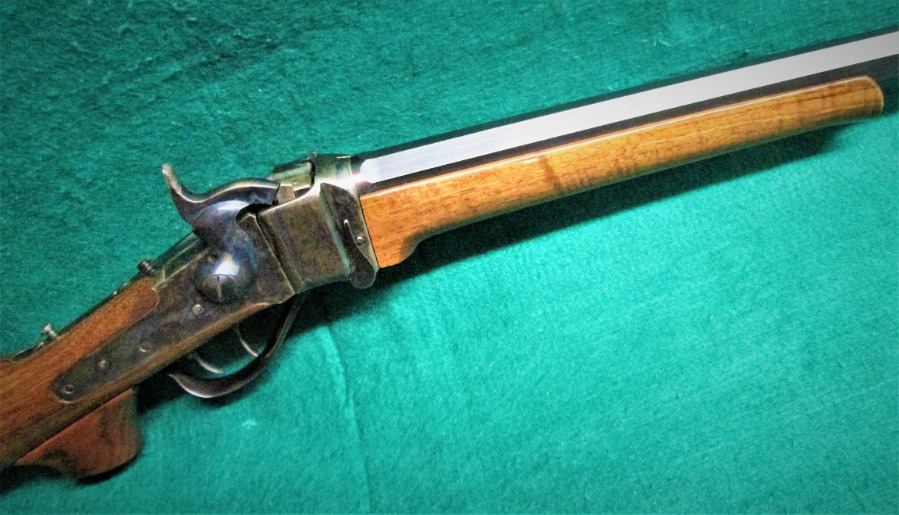
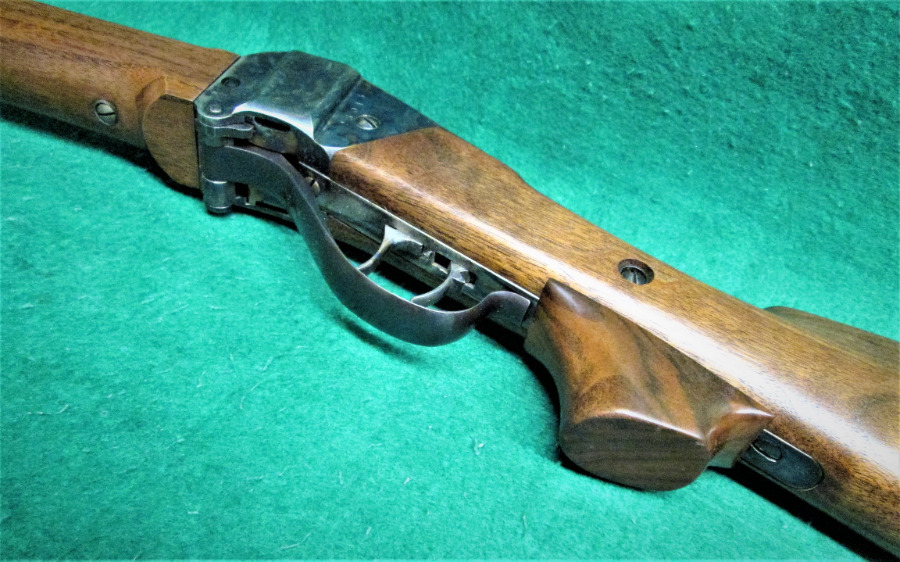
I had one of these and found out that they kick like a mule when fed the 300 Savage. Needless to say I traded it off. As I do not like getting (literally) a Bloody Nose from shooting it!



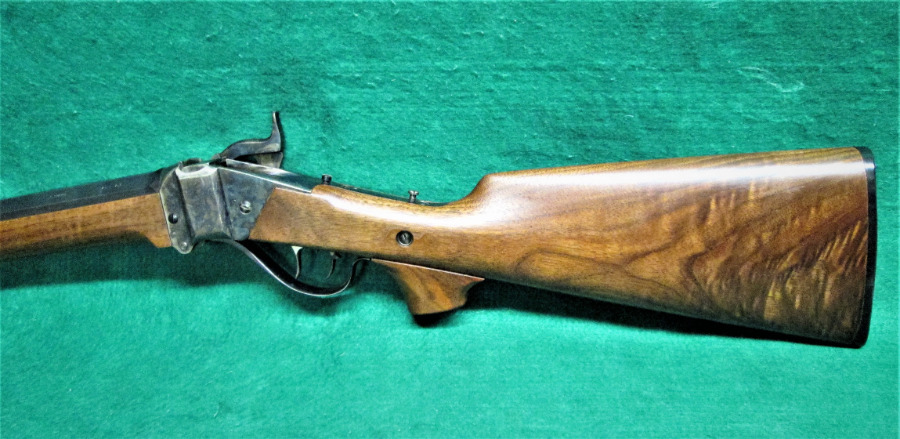
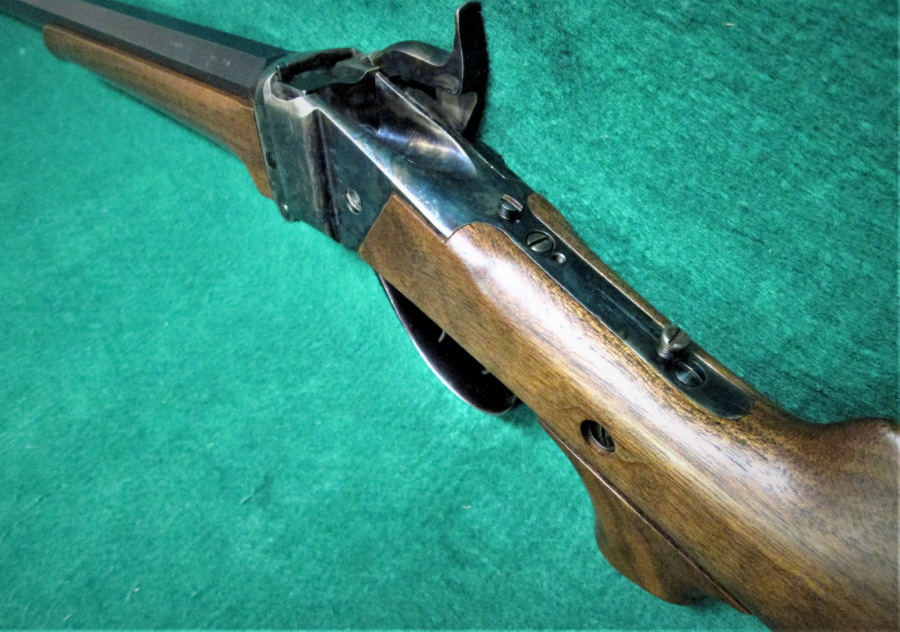
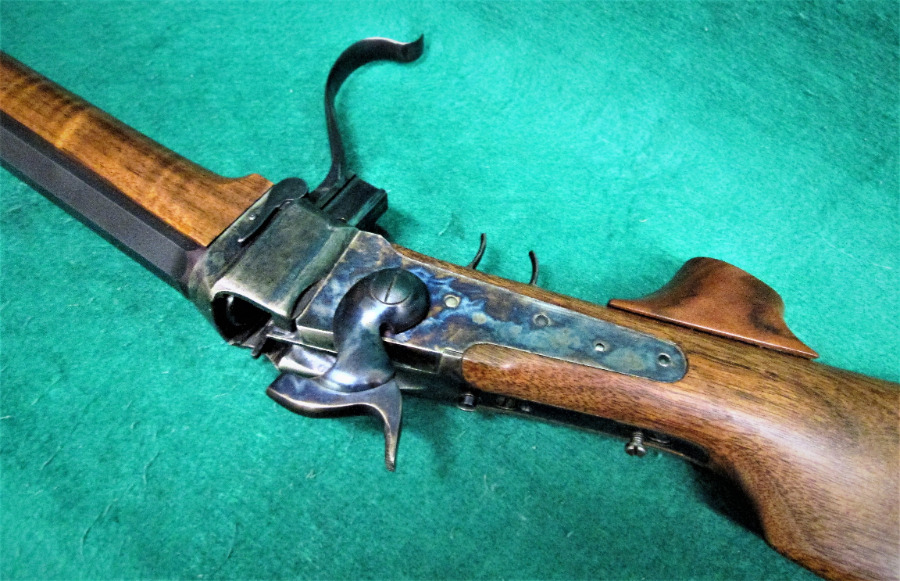
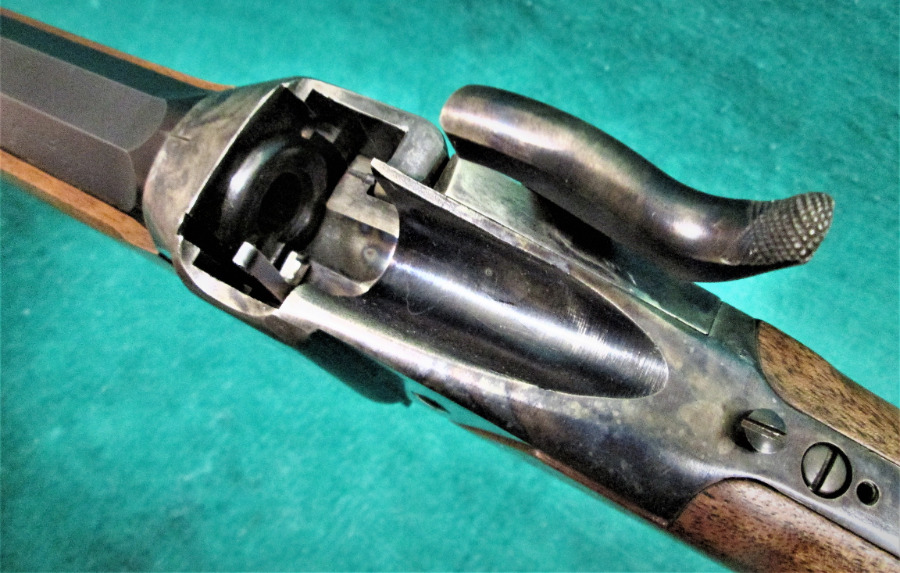
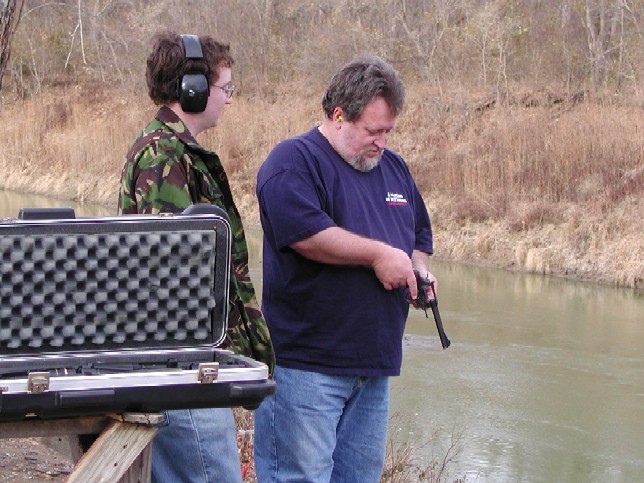
This was from a Guy that was born & raised in South Africa before coming to Texas. So I think that he may know what he is talking about.
Let Africa Sink
By Kim du Toit

When it comes to any analysis of the problems facing Africa, Western society, and particularly people from the United States, encounter a logical disconnect that makes clear analysis impossible.
That disconnect is the way life is regarded in the West (it’s precious, must be protected at all costs etc.), compared to the way life, and death, are regarded in Africa. Let me try to quantify this statement.
In Africa, life is cheap. There are so many ways to die in Africa that death is far more commonplace than in the West. You can die from so many things: snakebite, insect bite, wild animal attack, disease, starvation, food poisoning… the list goes on and on.
At one time, crocodiles accounted for more deaths in sub-Saharan Africa than gunfire, for example.
Now add the usual human tragedy (murder, assault, warfare and the rest), and you can begin to understand why the life expectancy for an African is low — in fact, horrifyingly low, if you remove White Africans from the statistics (they tend to be more urbanized, and more Western in behavior and outlook).
Finally, if you add the horrifying spread of AIDS into the equation, anyone born in sub-Saharan Africa this century will be lucky to reach age forty.
I lived in Africa for over thirty years. Growing up there, I was infused with several African traits — traits which are not common in Western civilization. The almost-casual attitude towards death was one. (Another is a morbid fear of snakes.)
So because of my African background, I am seldom moved at the sight of death, unless it’s accidental, or it affects someone close to me. (Death which strikes at total strangers, of course, is mostly ignored.)
Of my circle of about eighteen or so friends with whom I grew up, and whom I would consider “close”, only about eight survive today — and not one of the survivors is over the age of fifty.
Two friends died from stepping on landmines while on Army duty in Namibia. Three died in horrific car accidents (and lest one thinks that this is not confined to Africa, one was caused by a kudu flying through a windshield and impaling the guy through the chest with its hoof — not your everyday traffic accident in, say, Florida).
One was bitten by a snake, and died from heart failure. Another two also died of heart failure, but they were hopeless drunkards.
Two were shot by muggers. The last went out on his surfboard one day and was never seen again (did I mention that sharks are plentiful off the African coasts and in the major rivers?).
My experience is not uncommon in South Africa — and north of the Limpopo River (the border with Zimbabwe), I suspect that others would show worse statistics.
The death toll wasn’t just confined to my friends.
When I was still living in Johannesburg, the newspaper carried daily stories of people mauled by lions, or attacked by rival tribesmen, or dying from some unspeakable disease (and this was pre-AIDS Africa too) and in general, succumbing to some of Africa’s many answers to the population explosion.
Add to that the normal death toll from rampant crime, illness, poverty, flood, famine, traffic, and the police, and you’ll begin to get the idea.
My favorite African story actually happened after I left the country. An American executive took a job over there, and on his very first day, the newspaper headlines read:
“Three Headless Bodies Found”.
The next day: “Three Heads Found”.
The third day: “Heads Don’t Match Bodies”.
You can’t make this stuff up.
As a result of all this, death is treated more casually by Africans than by Westerners. I, and I suspect most Africans, am completely inured to reports of African suffering, for whatever cause.
Drought causes crops to fail, thousands face starvation? Yup, that happened many times while I was growing up.
Inter-tribal rivalry and warfare causes wholesale slaughter? Yep, been happening there for millennia, long before Whitey got there.
Governments becoming rich and corrupt while their populations starved? Not more than nine or ten of those.
In my lifetime, the following tragedies have occurred, causing untold millions of deaths: famine in Biafra, genocide in Rwanda, civil war in Angola, floods in South Africa, famine in Somalia, civil war in Sudan, famine in Ethiopia, floods in Mozambique, wholesale slaughter in Uganda, and tribal warfare in every single country.
There are others, but you get the point.
Yes, all this was also true in Europe — maybe a thousand years ago. But not any more. And Europe doesn’t teem with crocodiles, ultra-venomous snakes and so on.
The Dutch controlled the floods. All of Europe controls famine — it’s non-existent now.
Apart from a couple of examples of massive, state-sponsored slaughter (Nazi Germany, Communist Russia), Europe since 1700 doesn’t even begin to compare to Africa today.
Casual slaughter is another thing altogether — rare in Europe, common in Africa.
More to the point, the West has evolved into a society with a stable system of government, which follows the rule of law, and has respect for the rights and life of the individual — none of which is true in Africa.
Among old Africa hands, we have a saying, usually accompanied by a shrug: “Africa wins again.” This is usually said after an incident such as:
The prognosis is bleak, because none of this mayhem shows any sign of ending.
The conclusions are equally bleak, because, quite frankly, there is no answer to Africa’s problems, no solution that hasn’t been tried before, and failed.
Just go to the CIA World Fact Book, pick any of the African countries (Kenya, Tanzania, Zambia, Malawi etc.), and compare the statistics to any Western country (eg. Portugal, Italy, Spain, Ireland).
The disparities are appalling — and it’s going to get worse, not better. It has certainly got worse since 1960, when most African countries achieved independence.
We, and by this I mean the West, have tried many ways to help Africa. All such attempts have failed.
Charity is no answer. Money simply gets appropriated by the first, or second, or third person to touch it (17 countries saw a decline in real per capita GNP between 1970 and 1999, despite receiving well over $100 billion in World Bank assistance).
Food isn’t distributed. This happens either because there is no transportation infrastructure (bad), or the local leader deliberately withholds the supplies to starve people into submission (worse).
Materiel is broken, stolen or sold off for a fraction of its worth. The result of decades of “foreign aid” has resulted in a continental infrastructure which, if one excludes South Africa, couldn’t support Pittsburgh.
Add to this, as I mentioned above, the endless cycle of Nature’s little bag of tricks — persistent drought followed by violent flooding, a plethora of animals, reptiles and insects so dangerous that life is already cheap before Man starts playing his little reindeer games with his fellow Man.
What you are left with is: catastrophe.
The inescapable conclusion is simply one of resignation. This goes against the grain of our humanity — we are accustomed to ridding the world of this or that problem (smallpox, polio, whatever), and accepting failure is anathema to us.
But, to give a classic African scenario, a polio vaccine won’t work if the kids are prevented from getting the vaccine by a venal overlord, or a frightened chieftain, or a lack of roads, or by criminals who steal the vaccine and sell it to someone else.
If a cure for AIDS was found tomorrow, and offered to every African nation free of charge, the growth of the disease would scarcely be checked, let alone reversed.
Basically, you’d have to try to inoculate as many two-year old children as possible, and write off the two older generations.
So that leaves only one response, and it’s a brutal one: accept that we are powerless to change Africa, and leave them to sink or swim, by themselves.
It sounds dreadful to say it, but if the entire African continent dissolves into a seething maelstrom of disease, famine and brutality, that’s just too damn bad.
We have better things to do — sometimes, you just have to say, “Can’t do anything about it.”
The viciousness, the cruelty, the corruption, the duplicity, the savagery, and the incompetence is endemic to the entire continent, and is so much of an anathema to any right-thinking person that the civilized imagination simply stalls when faced with its ubiquity, and with the enormity of trying to fix it.
The Western media shouldn’t even bother reporting on it. All that does is arouse our feelings of horror, and the instinctive need to do something, anything — but everything has been tried before, and failed. Everything, of course, except self-reliance.
All we should do is make sure that none of Africa gets transplanted over to the U.S., because the danger to our society is dire if it does.
I note that several U.S. churches are attempting to bring groups of African refugees over to the United States, European churches the same for Europe. Mistake.
Mark my words, this misplaced charity will turn around and bite us, big time.
Even worse would be to think that the simplicity of Africa holds some kind of answers for Western society: remember Mrs. Clinton’s little book, “It Takes A Village”?
Trust me on this: there is not one thing that Africa can give the West which hasn’t been tried before and failed, not one thing that isn’t a step backwards, and not one thing which is worse than, or that contradicts, what we have already.
So here’s my (tongue-in-cheek) solution for the African fiasco: a high wall around the whole continent, all the guns and bombs in the world for everyone inside, and at the end, the last one alive should do us all a favor and kill himself.
Inevitably, some Kissingerian realpolitiker is going to argue in favor of intervention, because in the vacuum of Western aid, perhaps the Communist Chinese would step in and increase their influence in the area.
There are two reasons why this isn’t going to happen.
Firstly, the PRC doesn’t have that kind of money to throw around; and secondly, the result of any communist assistance will be precisely the same as if it were Western assistance.
For the record, Mozambique and Angola are both communist countries — and both are economic disaster areas. The prognosis for both countries is disastrous — and would be the same for any other African country.
The West can’t help Africa. Nor should we. The record speaks for itself.

