Categories
All About Guns

Remington XP-100

Image result for Remington XP-100
Amazingly enough, I am old enough to remember. When this gun came out and saw one at a Gun Shop in Pasadena back in the late 60’s.Image result for Remington XP-100 ammo
I also remember that I thought that it was & still is. One of the strangest gun that I have ever seen.Image result for Remington XP-100 ammo
Little did I know that this was the start of the Bullpup system and the rise of plastic in the world of guns.
I have also been told reliably that it’s a very accurate piece. Which in turn allowed the growth of large game hunting.Image result for Remington XP-100 ammo
 
Image result for Remington XP-100 hunting
 
Here is some more information about this pistol.
Image result for Remington XP-100 ammo


I also found this very strange video at 46 min. you judge  also
 
https://youtu.be/qr4vgHsmNEk?t=24
 
 
The Remington XP-100 (from experimental Pistol number 100) is a bolt-action pistol produced by Remington Arms from 1963 to 1998. The XP-100 was one of the first handguns designed for long-range shooting, and introduced the .221 Remington Fireball (often called .221 Fireball). The XP-100 was noted for its accuracy and is still competitive today in the sport of handgun varminting, which it helped create.[1]

Overview[edit]

The XP-100 was based on Remington’s short action bolt action carbine, the Remington Model 40X, which influenced the later Remington Model 600 rifle.[2] The XP-100 was initially introduced with a 10¾” barrel set into a nylon stock with an unusual center-mounted grip. Chambered in .222 Remington in early prototypes, the short barrel produced significant noise and muzzle flash. Subsequently the case was shortened to reduce powder capacity to a volume more suited to the shorter barrel of a pistol. The resulting cartridge, the .221 Fireball, produced factory loaded velocities of over 825 m/s (2,700 ft/s) from the short barrel, and accuracy rivaling the parent .222 Remington, one of the most accurate cartridges made.[1]
All but the XP-100R model were single-shot designs, while the XP-100R had a small internal magazine (holding four rounds), similar to most bolt-action rifles. The R model – for “repeater” – was made 1991-1997 in .223 Rem., .250 Savage7mm-08 Rem..308 Win..35 Rem., and 350 Rem. Mag. It was reintroduced in 1998, this time without sights, in .223 Rem., .22-250 Rem..260 Rem., and .35 Rem.[2]

Model history[edit]

The XP-100 went through a number of changes during its production run, and many variations were only available through the Remington Custom shop. The most significant changes in the later versions were to barrel length, which went to 14½”, and the grip location, which was moved to the rear of the stock. The calibers changed; with the elimination of the original 10¾” barrel, the reduced powder capacity was no longer such a requirement, and the chamberings switched to standard commercial rifle cartridges. By the time the XP-100 was discontinued, it faced stiff competition from other bolt-action pistols such as the Savage Striker as well as the versatile Thompson Center Arms break-action Contender.[2]

Model production by year[edit]

  • XP-100 (1963–1985)
  • XP-100 Varmint Special (1986–1992)
  • XP-100 Silhouette (1980–1997)
  • XP-100 Hunter (1993–1994)
  • XP-100 Custom (1986–1997)[3]
  • XP-100R (1998)[4]
  • XR-100 (2005–Present)[5]

Caliber production by year[edit]

Current production[edit]

The XP-100 action was used as the basis for a new single-shot rifle from Remington called the XR-100 Rangemaster.[5]
While the XP-100 has disappeared from Remington’s lineup (Remington is primarily a maker of rifles and shotguns), the .221 Fireball remains in production. The Model 700 rifle has been available since 2002 in a .221 Fireball chambering; while it lacks the velocity attainable with the vastly more popular .223 Remington, the short .221 Fireball delivers most of the performance with far less noise and flash.[6]

Factory recall[edit]

XP-100 pistols and Remington Model 600 rifles were recalled in 1979 because of a safety issue. The bolt was fully locked when the safety was on, making it impossible to unload the gun. Remington made a free modification available that allowed the bolt to open while the gun was on safe, allowing it to be unloaded.[1]

Categories
Anti Civil Rights ideas & "Friends" War

He is right for once

Categories
All About Guns

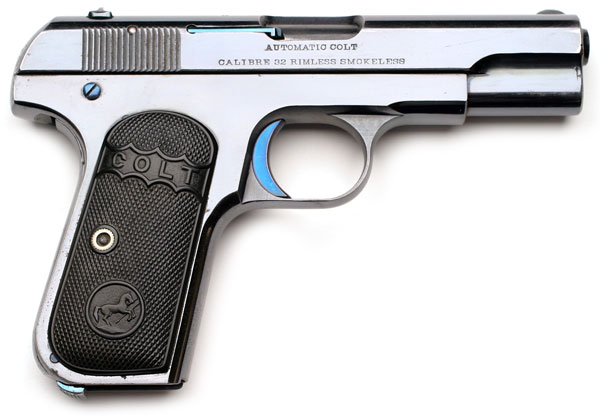
Colt Model 1903 Pocket Hammerless

Image result for Colt Model 1903 Pocket Hammerless

Colt Pocket Hammerless
Colt Model 1903 Pocket Hammerless

Pocket Hammerless in .32 ACP caliber. Its serial number dates manufacture to 1935.
Type Semi-automatic pistol
Place of origin United States
Production history
Designer John Browning
Manufacturer Colt Patent Firearms Manufacturing Company of Hartford, Connecticut
Produced 1903–45
No. built ~570,000
Variants M1903, M1908 (Types 1-5)
Specifications
Weight 24 oz (680 g)
Length 7 in (180 mm) (Type I)
6.75 in (171 mm) (Types 2 – 5)
Barrel length 4 in (100 mm) (Type I)
3.75 in (95 mm) (Types 2 – 5)

Cartridge .32 ACP (M1903)
.380 ACP (M1908)
Action single-action Blowback
Feed system 8-round detachable box magazine(M1903)
7-round detachable box magazine (M1908)
Sights fixed front, rear drift-adjustable for windage

The Colt Model 1903 Pocket Hammerless (not to be confused with the Colt Model 1903 Pocket Hammer) is a .32 ACP caliber, self-loading, semi-automatic pistol designed by John Browning and built by ColtPatent Firearms Manufacturing Company of Hartford, Connecticut. The Colt Model 1908 Pocket Hammerless is a variant introduced five years later in .380 ACP caliber. Despite the title “hammerless”, the Model 1903 does have a hammer. It is covered and hidden from view under the rear of the slide. This allows the pistol to be carried in, and withdrawn from a pocket quickly and smoothly without snagging.

History[edit]

Approximately 570,000 Colt Pocket Hammerless pistols were produced from 1903 to 1945, in five different types. Some were issued to US Army and US Air Force general officers from World War II through the 1970s; these were replaced in 1972 with the RIAColt M15 general officer’s model, a compact version of the M1911A1. The Shanghai Municipal Police issued the M1908 to its officers in the 1920s and 1930s and it was a popular model with police in the United States such as the New York City Police Department. In addition to lawful owners, many gangsters of the pre-World War II era favored the Model 1903 and Model 1908 because they were relatively small and easily concealed. It is said that Al Capone kept one in his coat pocket and Bonnie Parker used one to break Clyde Barrow out of jail after smuggling it into the jail by taping it to her thigh. Bank robber John Dillinger was carrying this model of pistol when he was shot by FBIagents outside the Biograph theater on July 22, 1934, and another famous bank robber, Willie Sutton, had one when he was captured by police in Brooklyn on February 18, 1952.[1]
Note: There was also a Colt Model 1903 Pocket Hammer pistol in .38 ACP, but this design is unrelated. The FN Model 1903 pistol design is related to the Colt Pocket Hammerless, but it is physically larger due to its chambering in the 9×20mm SR Browning Long cartridge.

General officer models[edit]

General officer models were often engraved with the officer’s name. Recipients include generals EisenhowerBradleyMarshall, and Patton. Patton’s Model 1908 was embellished with three (later four) stars on the grip panels to denote his rank. They were issued with a fine-grade leather holster, leather pistol belt with gold-metal clasp, rope pistol lanyard with gold-metal fittings, and leather two-pocket ammunition pouch with gold-metal fasteners. They came in russet or black leather (depending on service and regulations) and were made by Atchison Leather Products or Hickock. A cleaning rod and two spare magazines were also included.[2] Generals were issued the Model M in .380 ACP, until 1950, when supplies ran out. At that point, they were substituted with .32 models until their replacement in 1972. The Pocket Hammerless was replaced by the M15 pistol made by Rock Island Arsenal in .45 ACP. Today, the Pocket Hammerless is manufactured by U.S. Armament, and is licensed by Colt.[3]

Design[edit]

Colt Model 1908 Pocket Hammerless .380 ACP. Its serial number dates manufacture to 1919.

This pistol is actually fired by action of a hammer striking and driving a firing pin into a center-fire cartridge’s primer. The hammer is covered by the rear of the slide. The “hammerless” designation was merely an advertising designation pointing out the pistol’s particular suitability for concealed carry. Special features include a serrated slide to prevent slippage during manual cycling of the slide and two safety mechanisms (a grip safety and a manual safety). The grip safety is a spring-loaded piece making up the back strap of the pistol. The grip safety, though not solely restricted to them, was a typical feature of Colt automatic pistols. A magazine safety was added on later models; this feature prevents the pistol from being fired with a round in the chamber and the magazine removed.[2]
In 1908, a .380 ACP version of this gun was introduced. Called the Model 1908, it is nearly identical to the Model 1903 except for the bore diameter and the magazine, which hold seven rounds (one less than the Model 1903).[2]
Grip panels are black checked hard rubber, checked walnut, or special order materials (ivory, mother of pearl, inset medallion).[2]
Sights are fixed, although the rear sight is drift-adjustable for windage.[2]
Metal finish is blued or nickel, and some special-order finishes such as engraved, silver- or gold-plated.[2]

Variants[edit]

  • Type I: Integral barrel bushing, four-inch barrel, no magazine safety, serial numbers 1 through 71,999[2]
  • Type II: 32 cal separate barrel bushing, 3​34-inch barrel; 1908–1910, SN 72,000 through 105,050[2]
  • Type II: 380 cal separate barrel bushing, 3​34-inch barrel; 1908–1910, SN 001 through 6250 [2]
  • Type III: integrated barrel bushing, 3​34-inch barrel; 1910–1926, SN 105,051 through 468,789[2]
  • Type IV: integrated barrel bushing, 3​34-inch barrel, magazine safety[2]
  • Type V: integrated barrel bushing, 3​34-inch barrel, military sights, magazine safety on both commercial and “U.S. property” variations. SN 468,097 through 554,446.[2]

There was an M1903 version with a military Parkerized finish, which is otherwise the same as the Model IV, SN 554,447 through 572,214.

Categories
Well I thought it was funny!

From the Vulgar Curmudgeon, How To Spot An Urban Survivalist

survivalist

Categories
All About Guns

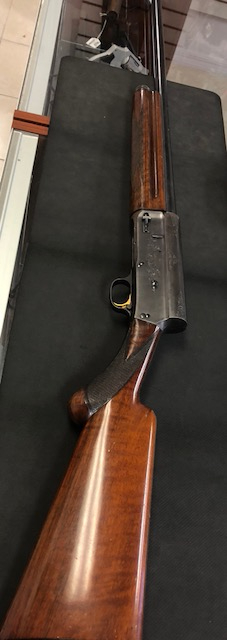
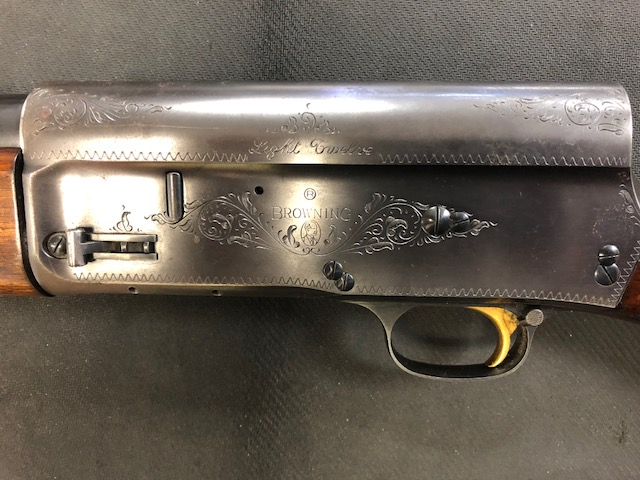
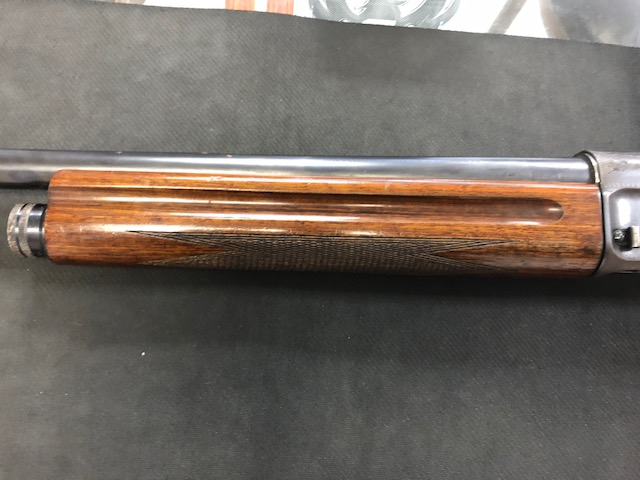
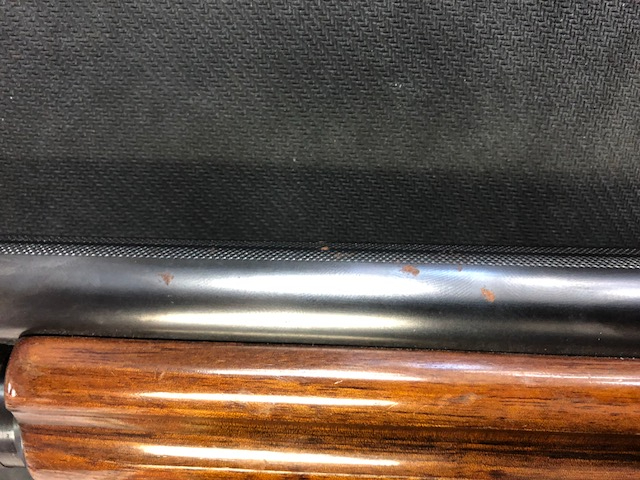
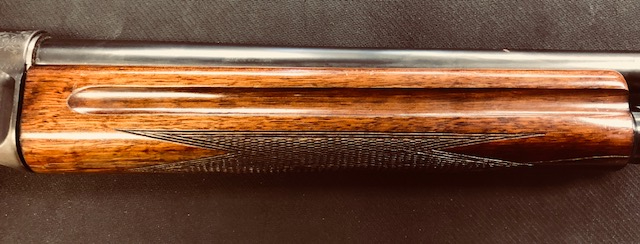
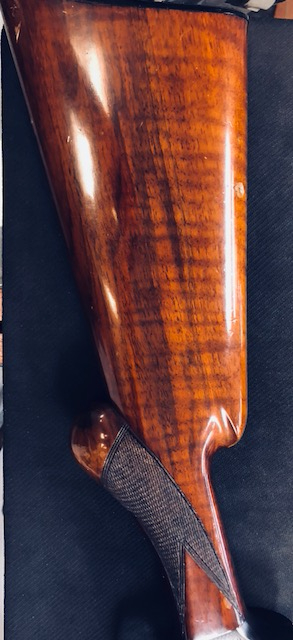
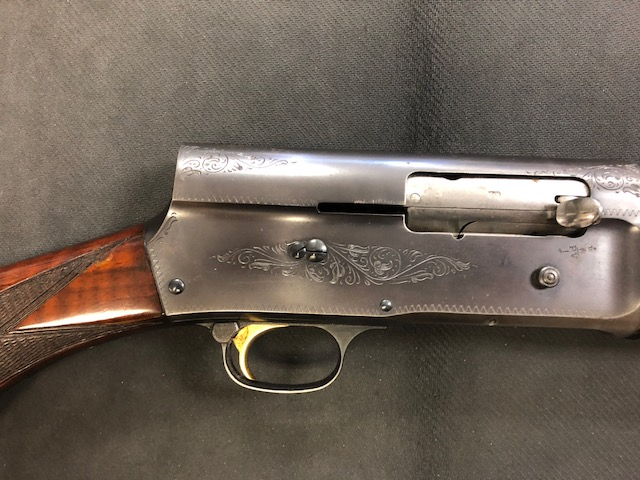
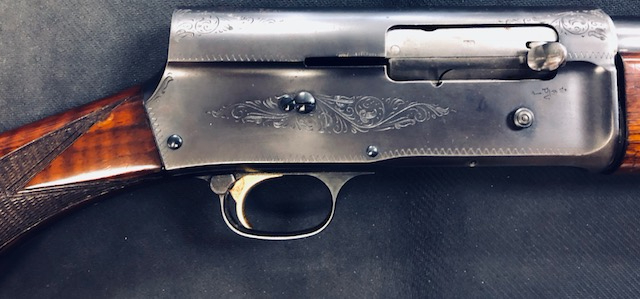
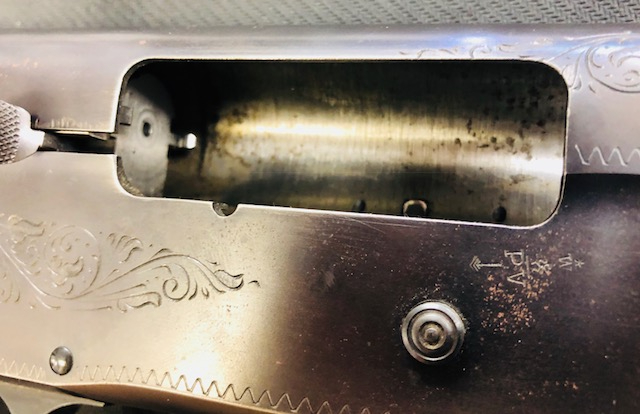
Browning (Fn) A5 Light Twelve 12 GA

Just look at that wood!

 Browning (FN) - A5 LIGHT TWELVE - Picture 1

Browning (FN) - A5 LIGHT TWELVE - Picture 2
Browning (FN) - A5 LIGHT TWELVE - Picture 3
Browning (FN) - A5 LIGHT TWELVE - Picture 4
Browning (FN) - A5 LIGHT TWELVE - Picture 5
Browning (FN) - A5 LIGHT TWELVE - Picture 6
Browning (FN) - A5 LIGHT TWELVE - Picture 7
Browning (FN) - A5 LIGHT TWELVE - Picture 8
Browning (FN) - A5 LIGHT TWELVE - Picture 9
Browning (FN) - A5 LIGHT TWELVE - Picture 10


Categories
All About Guns

B.S.A. CO SPORTER .243 WIN CALIBER RIFLE. HERTERS DELUXE SPORTER BUILT ON BSA ACTION.


Categories
The Green Machine Well I thought it was funny!

Why do I think that this could of happened?

Duffel Blog
 img

Private comes out of the box at at NTC with necklace of Donovian ears

FORT IRWIN, Calif. — Pfc. Amanda Richards surprised peers and superiors alike when she emerged from six weeks “in the box” at the National Training Center with an eerie hollowness in her eyes and a necklace of Donovian ears, sources confirmed today.

“Here at the National Training Center, we provide America’s soldiers with the highest quality, most realistic training available,” said Brig. Gen. Geoffrey Broadway, NTC Commander. “As they use the newest technologies to face the intense challenges of the profession of arms, they emerge as better fighters, better teams, and better prepared for complex…what the fuck? She did what? God almighty. How did she even do that? God help us all.”
National Training Center Rotations are designed to place soldiers in austere environment where they can develop new techniques, tactics, and procedures, while honing strengths and identifying weaknesses. Soldiers assigned to play opposing forces, or OPFOR, use tactics of notional countries such as Atropia or Donovia.
In the case of Pfc. Richards, who previously expressed little interest in basic soldier skills, the NTC experiment revealed she had always been three weeks of intensity away from being an elite killing machine, and six weeks of intensity away from being a war criminal, according to defense officials.
“We encourage the most realistic scenarios possible at the National Training Center,” Broadway added. “But not like that. Fuck me. Those men had families. The more you sweat in peace the less you bleed in war, but, for the love of God, we don’t mean real blood.”
Richards, a dental hygienist assigned to Charlie Company, 3834th Combat Hospital, was nervous about “time in the box,” but came to thrive in the intense environment.
“On day one at the RUBA, Amanda couldn’t shut up about not having her cell phone,” said Spc. Kelsey Appleton, Richards’ former roommate. “She’d been texting a guy who had a car and we were all pretty upset about the timing. But by day six, she was really getting into it, yelling at us when we went to the wag bag without our MILES gear on. By week two, she’d pulled all the aces out of a deck of cards ‘for her kills,’ By week four she walked out of the battalion fighting position shirtless with nothing but a DAGR and a dagger, challenging anyone to quench her thirst for blood and vengeance.”
Richards, after a thorough after-action report, will return to her duties as the records clerk at the Raymond Bliss Dental clinic until such time as an investigating board can determine if she is, as she states, the surviving embodiment of Tiger Force.
“I blame myself. When I put that bumper sticker on my Ram that said, ‘kill ‘em all, let God sort ‘em out,’ a couple of the PC types asked me if I was setting a good example for my soldiers,” said Sgt. 1st Class Kenneth Rainier, Richards’ platoon sergeant.
“I said, ‘we’re all POGs, I don’t think anyone is taking this seriously. But then…sweet Jesus. Amanda just had to exact vengeance after the first harassing small arms fire. Men. Women. Some of those men weren’t even Donovian. I think they were OCs. Sometimes, as I drift off to sleep, I still hear them choking on their own blood as they futilely yell ‘ENDEX.’”
Categories
Well I thought it was funny!

Well I liked them!

Related image
Image result for go ahead make my dayFather of the A Bomb
Related image
Image result for One does not simplyImage result for tyrion lannister memes
Related image
Related image
Related image
Image result for funny  meme
Image result for tyrion lannister memes
Related image
Image result for clint eastwood memes
King Abdullah of Jordan
Related image
Related image
Image result for clint eastwood gran torino
Related image
 

Categories
All About Guns

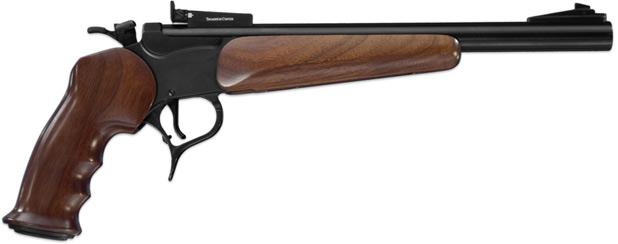
The Versatile Thompson Contender

Image result for Thompson Contender
What other commercially made gun can be made into a pistol, a rifle or a shotgun all by its lonesome?
Image result for Thompson Contender
Besides the T/C Gun. None that I can think of. That & frankly I think that the whole thing is a stroke of pure genius. Right up there with the Ruger Number One Rifle.
I had one for several years until I traded it for Colt Cobra. Now the only problems that I had with it were the following.
Every man, woman and child at the range wanted to shoot it.
The sheer variety of calibers is mind boggling.
There are also a lot of the various popular caliber barrels are hard to find. Image result for Thompson Contender various calibers shownTherefore also very expensive to boot.

Nonetheless, If I get a chance to buy another one. Just do not get in my way!

Grumpy


Here is some more information about this interesting Gun!

Thompson/Center Contender

From Wikipedia, the free encyclopedia
Thompson/Center Contender
TC-Contender.JPG

Thompson/Center Contender pistol
Type Break-action
Place of origin United States
Production history
Designed 1967
Manufacturer Thompson/Center
Specifications
Caliber Various
Action Single-action
Feed system Single-shot
Sights Various

The Thompson/Center Contender is a break-action single-shotpistol or rifle that was introduced in 1967 by Thompson/Center Arms. It can be chambered in calibers from .22 Long Rifle to .45-70 Government.

History[edit]

Warren Center, working in his basement shop in the 1960s, developed a unique, break-action, single-shot pistol. In 1965, Center joined the K.W. Thompson Tool Company and they introduced this design as the Thompson-Center Contender in 1967. Although they cost more than some hunting revolvers, the flexibility of being able to shoot multiple calibers by simply changing the barrel and sights and its higher accuracy made it popular with handgun hunters.[1] As K.W. Thompson Tool began marketing Center’s Contender pistol, the company name was changed to Thompson/Center Arms Company.[2]
Originally the chamberings were on the low end of the recoil spectrum such as .22 LR.22 WMR.22 Hornet.38 Special, and .22 Remington Jet, but as Magnum calibers took off in the 1970s, the Contender quickly became very popular with shooting enthusiasts.[2]

Design[edit]

The most unusual feature of the Contender is how the barrel is attached to the frame. By removing the fore-end, a large hinge pin is exposed; by pushing this hinge pin out, the barrel can be removed. Since the sights and extractor remain attached to the barrel in the Contender design, the frame itself contains no cartridge-specific features. A barrel of another caliber or length can be installed and pinned in place, the fore-end replaced, and the pistol is ready to shoot with a different barrel and pre-aligned sights. This allowed easy changes of calibers, sights, and barrel lengths, with only a flat screwdriver being required for this change.[2]
The Contender frame has two firing pins, and a selector on the exposed hammer, to allow the shooter to choose between rimfire or centerfire firing pins, or to select a safety position from which neither firing pin can strike a primer. The initial baseline design of the Contender had no central safe position on the hammer, having only centerfire and rimfire firing pin positions, each being selectable through using a screwdriver.
Three variants of the original Contender design were later developed, distinguished easily by the hammer design. The first variant has a push button selector on the hammer for choosing rimfire vs. centerfire, the second variant has a left-center-right toggle switch for selecting center fire-safe-rimfire firing pins, and the third variant has a horizontal bolt selection for choosing center fire-safe-rimfire firing pin positions. All three of these Contender variants have a cougar etched on the sides of the receiver, thereby easily distinguishing them from the later G2 Contender which has a smooth-sided receiver without an etched cougar. Some of the very earliest Contenders, those requiring a screwdriver to switch the firing pin between rimfire and centerfire, had smooth sides, without the cougar etched on the sides.[3]
The original Contender designs have an adjustable trigger, allowing the shooter to change both take-up and overtravel, permitting user selection of a range of trigger pulls ranging from a fairly heavy trigger pull suitable for carrying the pistol while hunting to a “hair trigger” suitable for long range target shooting (see accurize).[4]
Unlike the later G2 Contender, the original Contender may be safely dry-fired (provided the hammer is not drawn back from the second notch) to allow a shooter to become familiar with the trigger pull. The break-action only has to be cycled, while leaving the hammer in the second notch position, to practice dry-firing. G2’s with switchable firing pins (centerfire or rimfire) can be safely dry-fired with the hammer only in the safety (center) position.[5]

Barrels[edit]

Barrels have been made in lengths of 6, 8 3/4, 10, 12, 14, 16, and 21 inches (530 mm). Heavier recoiling cartridge barrels have been made with integral muzzle brakes. Barrels for the original Contender may be used on the later-released G2 Contender and G2 barrels may be used on original Contender frames with a serial number greater than 195000.[5]
The earliest barrels, from early 1967 to late 1967, were all octagonal with a flat bottom lug, and were available in only 10 and 8 3/4 inch lengths. The next group of barrels, from late 1967 to 1972, were available in 6, 8 3/4, and 10 inch lengths. Later, round barrels were added in a wider variety of lengths, including 10″, 12″, and 14″. Likewise, round barrels in heavier (bull) barrel configurations, known as Super 14 pistol and Super 16 pistol barrels, respectively, were added. Carbine barrels in 16 and 21 inches were added for the Contenders.[6]
Sights on all the pistol barrels have varied, ranging from low sights, only, in the earlier years to a choice of either low or high sights, as well as no sights, for those pistol barrels intended for use with a scope. Various barrels have sometimes included ejectors as well as extractors, or extractors, only, as well as containing either a flat bottom lug, a stepped bottom lug, or split bottom lugs. Barrels have been made available in either blued or stainless configurations, to match the finish available on Contender receivers.[7]
Unlike most other firearm actions, the break-action design does not require the barrels to be specially fitted to an individual action. Any barrel, with the exception of a Herrett barrel, that is made for a Contender will fit onto any frame, allowing the shooter to purchase additional barrels in different calibers for a fraction of the cost of a complete firearm. Since the sights are mounted on the barrel, they remain sighted-in and zeroed between barrel changes.[8]

Stocks[edit]

Pistol grips, butt stocks and fore-ends have been made available in stained walnut, or in recoil reducing composite materials. Different pistol fore-ends are required for the octagonal versus the round versus the bull barrels. The fore-ends have had an assortment of either one or two screw attachment points, used for attaching the fore-ends to the barrel with its matching one or two attachment points. Universally, the fore-ends, in addition to attaching to the barrel, cover the single hinge pin that connects the barrel to the receiver.
The wood stocks and forend are made specifically for Thompson Center by a sawmill in Kansas.[2]

Calibers[edit]

Calibers available for the Contender were initially limited, stopping just short of the .308 Winchester-class rifle cartridges. However, almost any cartridge from .22 Long Rifle through .30-30 Winchester is acceptable, as long as a peak pressure of 48,000 CUP is not exceeded. This flexibility prompted a boom in the development of wildcat cartridges suitable for the Contender, such as the 7-30 Waters and .357 Herrett and the various TCU cartridges, most of which were commonly based on either the widely available .30-30 Winchester or .223 Remington cases. The largest factory caliber offered for the Contender was the .45-70, which, although a much larger case than the .308, is still feasible because of the relatively low cartridge pressures of the original black-powder round relative to the limits of the bolt face of the Contender receiver. Custom gunmakers have added to the selection, such as the J. D. Jones line of JDJ cartridges based on the .225 Winchester and .444 Marlin. Other barrel makers pushed beyond the limits the factory set, and chambered Contender barrels in lighter .308-class cartridges like the .243 Winchester. The Contender can fire .410 bore shotgun shells, either through the .45 Colt/.410 barrel or through a special 21-inch (530 mm) smoothbore shotgun barrel. A ported, rifled, .44 Magnum barrel was made available for use with shotshell cartridges in a removable-choke .44 Magnum barrel, with the choke being used to unspin the shot from the barrel rifling, or, by removing the choke, for use with standard .44 Magnum cartridges. The degree of flexibility provided by the Contender design is unique for experimenting with new cartridges, handloads, barrel lengths, and shotshells.[2]

G2[edit]

The original Contender is now known as the generation one (G1) Contender and was replaced by the G2 Contender in 1998. The new design is dimensionally the same as the original Contender, but uses an Encore-style trigger group. Due to the changes in the trigger mechanism, and to differences in the angle of the grip relative to the boreline of the gun, the buttstocks and pistol grips are different between the G1 and G2 Contenders and will not interchange. The G2 uses essentially the same barrels and fore-ends as the original Contender and barrels will interchange, with the only two exceptions being the G2 muzzleloading barrels, which will only fit the G2 frame, and the Herrett barrels/fore-ends, which are specific for use only on a G1 frame.[9]

See also[edit]


Categories
Born again Cynic! Dear Grumpy Advice on Teaching in Today's Classroom

Here is a contest for Earth day that i am glad the US did not win!

A Shocking study

Y reveals 90% of global plastic waste comes from just TEN rivers in Asia and Africa

  • Study reveals 90 per cent of plastic waste comes from rivers in Asia and Africa
  • Researchers suggest the best way of reducing plastic is by targeting these
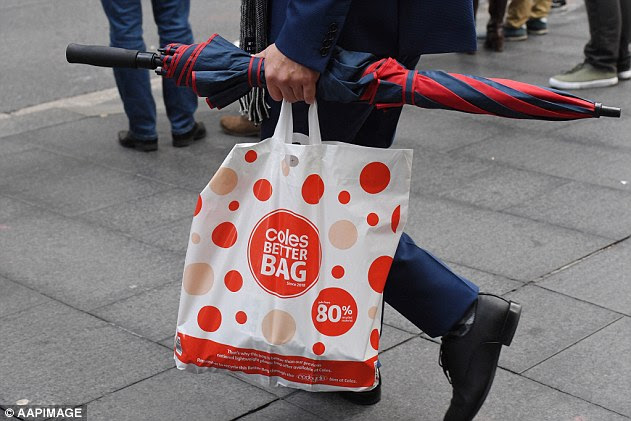
  • Bag ban skeptics meanwhile claim that shopping bags mostly end up in landfill
  • University of Sydney professor calls the bag ban a ‘low-hanging fruit’ issue 

A shocking study has revealed 90 per cent of the world’s plastic waste comes from just 10 rivers in Asia and Africa.

As governments around the world rush to address the global problem of plastic pollution in the oceans, researchers have now pinpointed the river systems that carry the majority of it out to sea.

About five trillion pounds is floating in the sea, and targeting the major sources – such as the Yangtze and the Ganges – could almost halve it, scientists claim.

Scroll down for video

China's Yangtze River was the worst polluter, and ferries some 1.5 million tonnes of plastic into the Yellow Sea every year, the study found. Pictured, workers clear rubbish in Taicang reach of Yangtze River on December 23, 2016 in Taicang, Jiangsu Province of China.

China’s Yangtze River was the worst polluter, and ferries some 1.5 million tonnes of plastic into the Yellow Sea every year, the study found. Pictured, workers clear rubbish in Taicang reach of Yangtze River on December 23, 2016 in Taicang, Jiangsu Province of China.

THE 10 MOST POLLUTING RIVERS

Yangtze East China Sea Asia

Indus Arabian Sea Asia

Yellow River Yellow Sea Asia

Hai He Yellow Sea Asia

Nile Mediterranean Africa

Ganges Bay of Bengal Asia

Pearl River South China Sea Asia

Amur Sea of Okhotsk Asia

Niger Gulf of Guinea Africa

Mekong South China Sea Asia

ADVERTISING

Carried out by Germany‘s Helmholtz Centre for Environmental Research, it suggests that the most effective way of reducing the amount of plastic in the world’s oceans is by addressing the sources of pollution along such waterways as these.

The researchers, who first released their paper in 2017, issued a chilling warning for the future.

‘One thing is certain: this situation cannot continue,’ Dr. Christian Schmidt, a hydrogeologist at the Germany‘s Helmholtz Centre for Environmental Researchsaid when the study was first published.

‘But as it is impossible to clean up the plastic debris that is already in the oceans, we must take precautions and reduce the input of plastic quickly and efficiently.’

His team analysed data on debris from 79 sampling sites along 57 rivers – both microplastic particles measuring less than 5 mm and macroplastic above this size.

China’s Yangtze River was the worst polluter, and ferries some 1.5 million tonnes of plastic into the Yellow Sea every year, the study found.

They said microplastics in particular can damage the health of marine life but cleaning it all up would be impossible.