
I vividly remember doing this in Elementary School back in the 1960’s. With one of my wimpy classmates yelling “We’re all going to die!”. Good times huh?
If I can only win the Lottery!
Top Five Plains Game Rifles
The sun was blistering that early November day, as it drove the temperature up over 100˚F, and the resulting unpredictable winds began to play their awful game. We’d nearly called the hunt for the morning when we spotted him – a magnificent kudu bull with horns spiraling toward the heavens. He was at the back of the herd, keeping his harem of cows ahead of him, and on the downward arc of his huge loping gallop, one bullet from my .300 Winchester Magnum put him in the salt.

The author used a Legendary Arms Works Professional in .300 Winchester Magnum to put this 55-inch kudu bull in the salt. Legendary’s rifles are built for any weather, including this day in South Africa where temps were well over 100 degrees Fahrenheit.
The Big Five, or Dangerous Seven, or whatever you prefer to call the collective of African game animals that can easily end your life certainly gets the lion’s share (pun fully intended) of the spotlight, but the plains game, or more properly put, the antelope species, are much more abundant and affordable. Much has been written about the proper guns and cartridges for African hunting, but it seems there is still considerable confusion about what is needed to effectively hunt the lighter African game.
“Bring your deer rifle!” has been written often, but that may not exactly be the case anymore. More hunters are making the switch to .22 centerfires and 6mm cartridges, and while they work fine for deer for some hunters, they aren’t exactly optimal for Africa. Likewise, a definite increase in the number of deer hunters using MSRs to harvest venison has been seen, and they are illegal for African hunting, irrespective of caliber. So, let’s take a look at some good choices for an African light rifle, and see whether or not you need a new rifle should the Dark Continent be on your bucket list.
Let’s get the caliber thing right out of the way, as it’s a brief and sort of common-sense topic, but should be addressed. In the opinion of this author, based on personal experiences and those of people near and dear to me, for a general caliber choice to hunt the majority of the African antelope, things begin at 6.5mm and go upwards to the .375 H&H Magnum, and the lower end of the scale will depend on which of the species are on your menu. A good 6.5mm, .270, 7mm or .30 will handle most of the species, but for eland — which can hit the 2,000-pound mark — I think a heavy 7mm bullet is the lightest a smart hunter should go. And, because so many of the antelope species inhabit the same dangerous game blocks that the hippo, Cape buffalo and elephant do, the larger calibers engender a whole bunch of confidence, should you be caught in a jam. As far as cartridge choice goes, I prefer a minimum muzzle velocity of 2,300 to 2,400 feet per second (fps) with the heaviest bullets for that caliber. Personally, I like the 7×57 Mauser, .30-’06 Springfield, and .300 Winchester Magnum on the lighter side of things, and also find the .375 Holland & Holland so damned useful it can and will suffice as the one-gun do-all. If you are looking for a dedicated light rifle, look for a cartridge that will pair well with your dangerous game cartridge. There are some classic combinations, like the 7×57 Mauser and .375 H&H; the .30-’06 and .404 Jeffery; the .300 Winchester and .416 Rigby; the .338 Winchester Magnum and .458 Winchester Magnum, so on and so forth.
Action Types

The Winchester Model 70 is an excellent plains game rifle. This Featherweight Model in 7×57 Mauser is a classic African combination.
But what about the rifle? Well, that can be as much a personal choice as it is practical. I don’t know of any African country that allows the use of semi-automatics, so those are immediately off the plate. Lever guns are generally welcome, and I don’t know of regulations prohibiting pump rifles, though to be honest I’ve never seen one in Africa. Undoubtedly, the most popular action type used for hunting African plains game is the bolt action rifle, followed by the single-shots and, more rarely, the double rifle. Firepower is generally not an issue, as almost all the animals will be hunted via tracking or spot-and-stalk, but it’s sure nice to have a quick follow-up shot should your first shot go awry. The bolt guns outnumber the single shots, and I’d feel comfortable saying the singles outnumber the doubles, especially in plains game calibers.

The bolt of the M704 action used in Legendary Arms Works rifles. It’s a controlled round feed action, without the Mauser-style sideband. The large extractor makes for solid performance, and Legendary even uses Cerakote on the firing pin.
Styling
As with any hunting situation, your African light rifle must fit you well and balance nicely. You’ll be carrying this rifle an awful lot while trekking across the vast areas of Africa, and the heavy bull-barreled rifles can be a bit awkward after a couple of days. If you take a look at some of the classic safari photos, the rifles of yesteryear were designed for proper balance; while the riflescope certainly wasn’t anywhere near as popular as it is today — and a huge scope will definitely affect the balance of any gun – we can still set up our rifle with that consideration in mind. I much prefer the open pistol grip design over the more perpendicular, target style grips, as it handles better in the field, especially when shooting off the three-legged sticks that are so popular across Africa.
Wooden stocks pose no issue in African hunting unless you’re hunting the rain forests of Cameroon and Central African Republic. I’ve never had a walnut stock swell on me in Africa, though several of my rifles proudly bear the scars of the day-in-and-day-out routine of getting your rifle on and off the cruiser while looking for the tracks of your particular species. Synthetic stocks are equally useful and pose no real problem, but as moisture is rarely an issue on safari (it’s usually a lack of moisture that is the bigger problem to hunters), they offer no real advantage either. I’ve used both styles, and will absolutely use both again.
Optics
You don’t really need a ton of magnification; as a matter of fact, too much can actually be a hindrance. I like 1.5-5X, 2-7X, 3-9X, and probably a maximum of 4-12X, as field of view is important. Consider the fact that most of the shots in Africa are inside of 200 yards, and you can confidently make those shots with lower magnification. A scope that is mounted low to the bore allows for proper cheek weld, and less felt recoil.
Some Favorites
I’d like to give some examples of rifles I feel are well-suited for general plains game hunting, with the following caveat: this is by no means a definitive list, but a guide to help you make a good choice.

The Winchester Model 70 Stainless Classic is equally at home in the States as it is in Africa. Chambered in .300 Winchester Magnum, this makes for a very versatile combination.
The Rifleman’s Rifle. A good Winchester Model 70, chambered in a sensible cartridge will serve anyone well in Africa. My own particular favorite is a Stainless Classic chambered to .300 Winchester Magnum, topped with a Leupold VX-6 2-12×42 scope. It’s not exactly a pretty rifle, but it most certainly does the job. The stainless barrel and action are not so shiny as to spook game, and the synthetic stock saves me from worrying about any dings or scratches. My pal Marty Groppi has a Model 70 that would also make a perfect African light rifle; it’s one of the older push-feed models, in the Featherweight configuration – replete with uber-cool Schnabel forend – chambered in 7×57 Mauser. Neither rifle is cumbersome, both have good triggers, and I’d happily use either on safari.

The Ruger No. 1 is a wonderful choice for a plains game rifle, as it is compact and very effective. This 1V, in .300 Winchester Magnum, is a versatile choice should you be hunting the more open terrain where shots could get longer.
The Ruger No. 1. If the single shot is how you roll, I can’t think of a better choice than the Ruger No. 1. Tracing its roots firmly back to the Farquharson action, the simple elegance of the No. 1 is the attraction; due to a lack of a receiver the overall length of the rifle will be shorter, and the choice of chambering among new and used rifles is wide enough to please nearly anyone. Using a falling block action, the Ruger No. 1 is plenty strong enough to handle even the largest magnums. They balance and carry very well, and can be reloaded much faster than one would think, especially in the hands of a shooter well-versed in the ways of the single shots. A handy No. 1, chambered in say .308 Winchester or .280 Remington would make a great choice for plains game. Being truly ambidextrous with a tang mounted safety, the No. 1 also makes a great choice for the southpaws.

Savage rifles, long famous for their affordability and accuracy, will do just fine on the Dark Continent. This is the author’s Model 116, chambered in 6.5-284 Norma; perfect for longer shots in the Kalahari or Karoo.
Savage Model 16/116. Offering an excellent blend of affordability and features, the Savage rifles are an underrated choice for traveling sportsman. Their AccuTrigger makes for precise shot placement, and it’s very difficult to argue with the Savage barrels. My own Savage Model 116 – chambered in 6.5-284 Norma – makes a good choice for every species but eland. Pushing a 156-grain Norma Oryx bullet to 2,750 fps, the high Sectional Density bullet will deliver the goods, and the Savage platform is one that is equally affordable and dependable. I like the tang safety – ambidextrous and conveniently located — and Savage’s floating bolt head addresses many accuracy issues. My own rifle has a barrel on the heavier side, but would make an excellent choice for a hunter headed to the Karoo or Kalahari for distant springbok and gemsbok. As a side note, I had Savage put their Bear Hunter stock — with the hinged floorplate – on my rifle, to avoid the detachable magazine. I lose things easily, and with the amount of ground you’ll cover on a plains game hunt, finding something you drop can be a terrible chore.

A good Remington 700 will serve well on an African safari. Shown here is Dave deMoulpied’s Model 700 Classic in .350 Remington Magnum, a hard-hitting cartridge that will handle even the largest antelope species.
The Remington Model 700. Remington’s pride and joy is equally at home on the African plains as it is here at home. The Remington 700 design, with its push feed action and an extractor on the small side of the scale, may not make the optimum Dangerous Game rifle, but in common medium calibers it is a solid choice. Simple, effective and plentiful, the Model 700 can be obtained without breaking the bank. I personally prefer a three-position safety – considering the amount of loading and unloading you’ll do during the duration of a safari – but the track record of the 700 speaks for itself. Some of those super-shiny BDL Models can be a little bright in the African sun, but it’s not the end of the world if that’s the rifle you shoot best. My good buddy Dave deMoulpied uses a 700 Classic chambered in .350 Remington, and that stubby little gem will handle and antelope ever put on the African continent.

An ancient warthog taken by Suzanne Massaro with a Legendary Arms Works Big Five rifle. On a mixed bag hunt, there’s nothing wrong with hunting plains game with the .375
Legendary Arms Works. This little company from Pennsylvania is making some great rifles, if they are a little pricier than the others I’ve mentioned. That kudu bull I spoke of earlier fell to a Legendary Arms Works (LAW) Professionalin .300 Winchester Magnum, and my wife uses a LAW Big Five rifle, in .375 H&H Magnum as her general hunting rifle, with the lighter bullets working perfectly on any and all plains game species. Both models from Legendary use the Ed Brown Model 704 action, a sort of hybrid between a push-feed and controlled round-feed. It lacks the Mauser-style sideband and claw extractor, but picks the cartridge rim up right out of the magazine, and offers a large extractor. Stocked in hand-laid fiberglass, the Legendary Arms Works rifles are also completely covered in Cerakote – right down to the firing pin. I love that feature, as my Sicilian acidity, when combined with the African heat and excitement of safari, can put the best bluing to the test. Between the wife and me, we’ve used both models on a number of game species, including sable, kudu, waterbuck, impala and warthog. They are as dependable in Africa as they are in the nastiest climate North America can throw at them. With a factory installed and tuned Timney trigger on board, a good barrel, and that solid M704 action, the Legendary line represents a worthy investment to the traveling hunter.

The Legendary Arms Works M704 bolt face has a slot for fixed blade ejector and large ejector.
Lasting Impressions
I hope this helps to illustrate the idea of a good plains game rifle. In my opinion, simple equates to better; the bush is no place for things to go wrong. I don’t necessarily feel the plains game rifle needs to be furnished with iron-sights – the way a dangerous game rifle does – but your choice of action, mounts – I am completely enamored with Talley rings and bases, for their reliability – and optics should be optimized for the African climate: harsh, rugged and unforgiving. While the examples were given only represent a small cross-section of suitable rifles for a plains game hunt, the characteristics of those rifles should provide a guideline for the prospective hunter. Make the time, spend the money, and enjoy the African veldt!
To purchase a Remington Model 700 rifle on GunsAmerica, click here.
To purchase a Ruger No.1 Rifle on GunsAmerica, click here.
To purchase a Winchester Model 70 on GunsAmerica, click here.
To purchase a Savage Model 16/116 on GunsAmerica, click here.
To purchase a Legendary Arms Works rifle on GunsAmerica, click here.
Inland Announces New .30 Carbine Caliber Motor Patrol Pistol

Meet the Motor Patrol Pistol from Inland Manufacturing. (Photo: Inland)
Need a new truck gun? Look no further than Inland Manufacturing’s new Motor Patrol Pistol
The M30-IMP (Inland Motor Patrol pistol) is a compact version of the company’s full-size .30 carbine caliber firearms.
So you get all the fun of its big brother but in a more carry-friendly configuration.
Specs:
- Barrel: 71/2- inch threaded muzzle (½-inch x 28 tpi) with protector
- Chassis: Inland/Sage MIL-SPEC black anodized aluminum chassis.
- Caliber: .30 Carbine
- Sight: M1 Carbine style, with adjustable ghost ring aperture rear sight.
- Overall length: 16-inches
- Weight: 41/2 pounds
- Capacity: One 10-round magazine with each pistol.
- MSRP: $1,399
The M30-IMP is outfitted with an Ergo Sure pistol grip and AR-style pistol buffer tube. This means users can attach any ATF-approved stabilizing brace with ease to round out the package.
Purchasers will receive one 10-round magazine. Inland notes that it can accept larger capacity military and civilian mags. Just make sure you live in a free state (not New York or California) if you’re going to go that route.
SEE ALSO: Inland Teasing Micro-EBR M1-Based .30 Carbine Pistol
“These new features combine to make the Inland M30-IMP Motor Patrol Pistol a fun, efficient, compact, robust, intimidating looking and accurate handgun suited for personal defense,” said Charles Brown, MKS Supply, LLC, president, in a press release.
“The Inland M30-IMP is legally defined as a handgun making it an excellent choice for carry in a vehicle,” he added.
The MSRP is $1,399. It should be available “soon.” Visit Inland’s website for more information.
Shop for an Inland M1 Carbine on GunsAmerica.
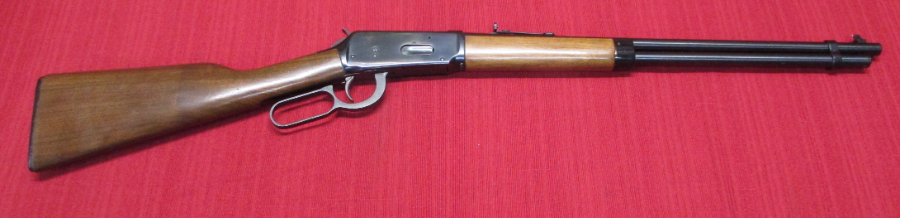
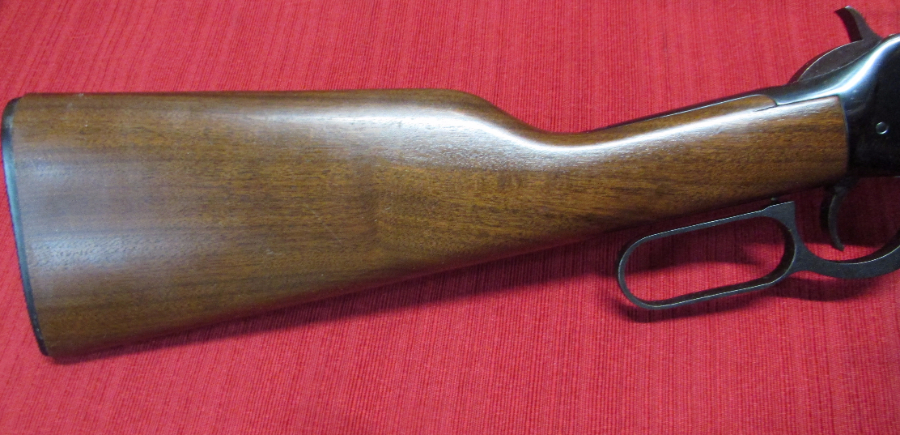
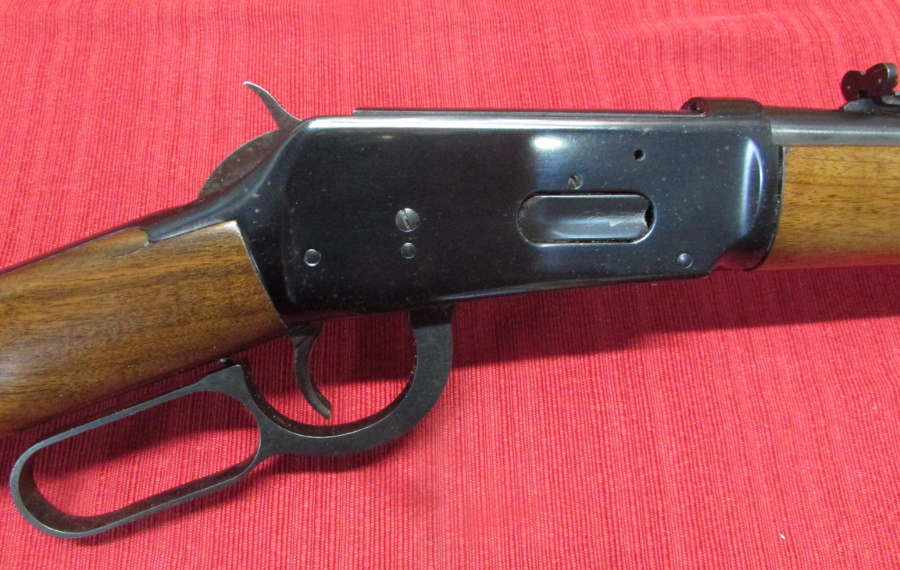
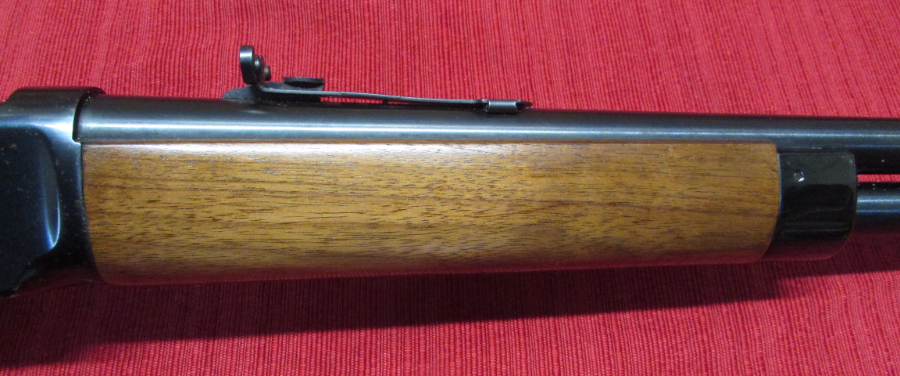
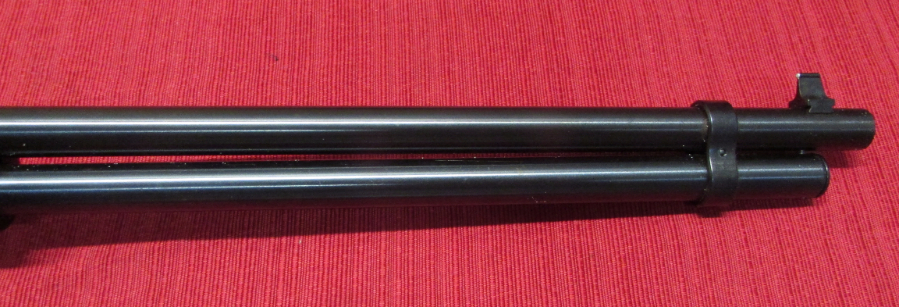
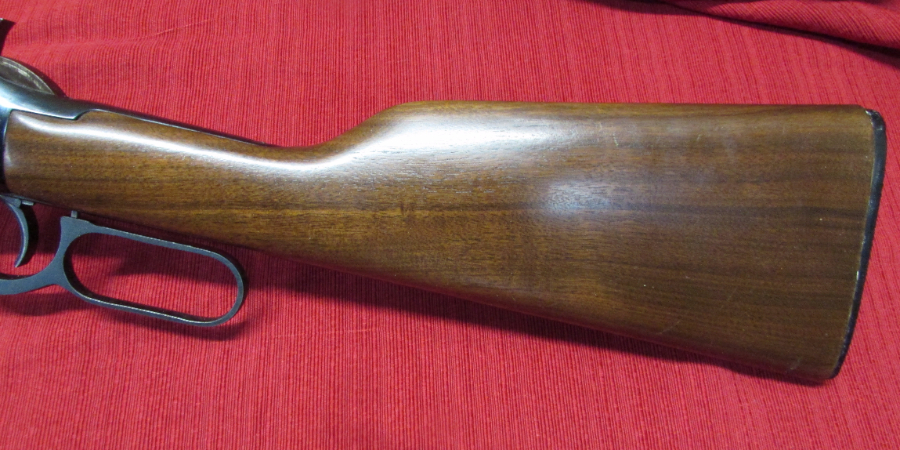
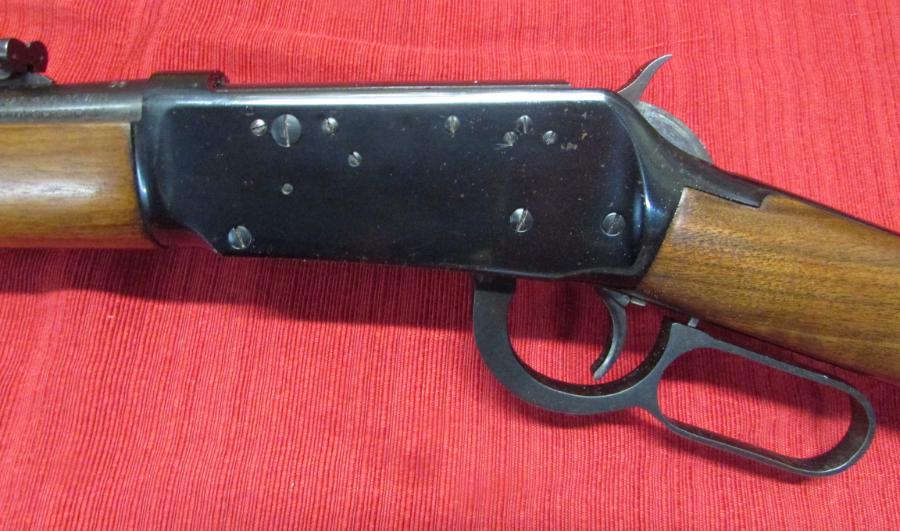
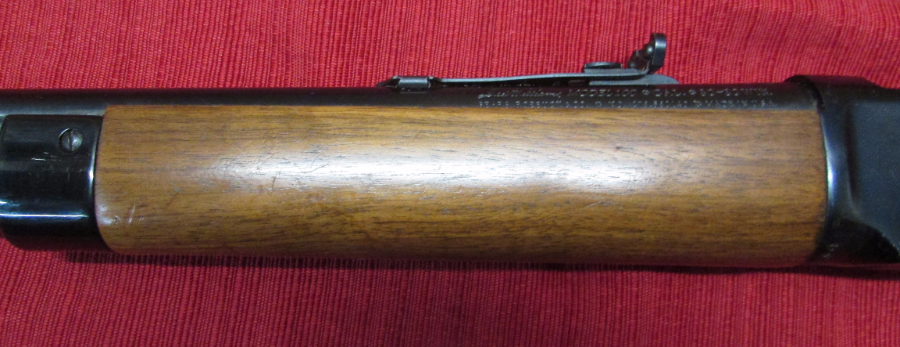
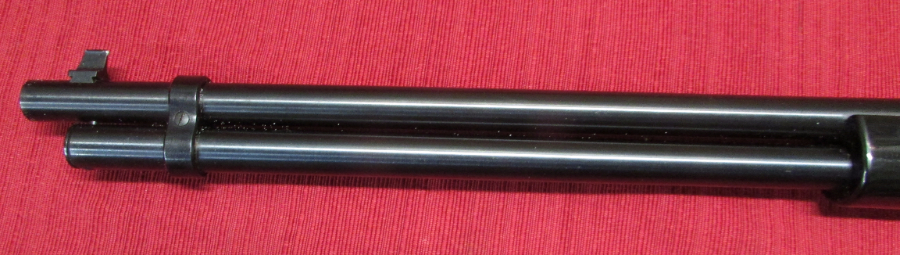
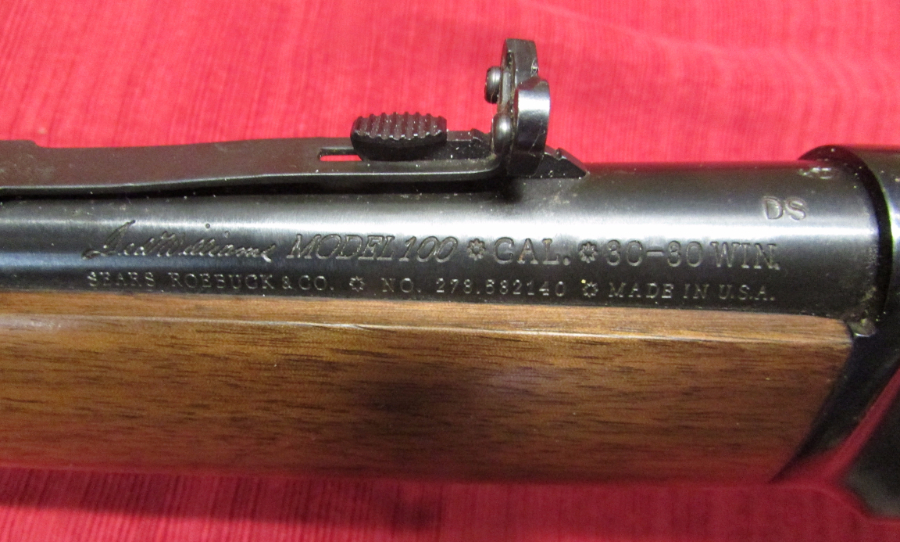
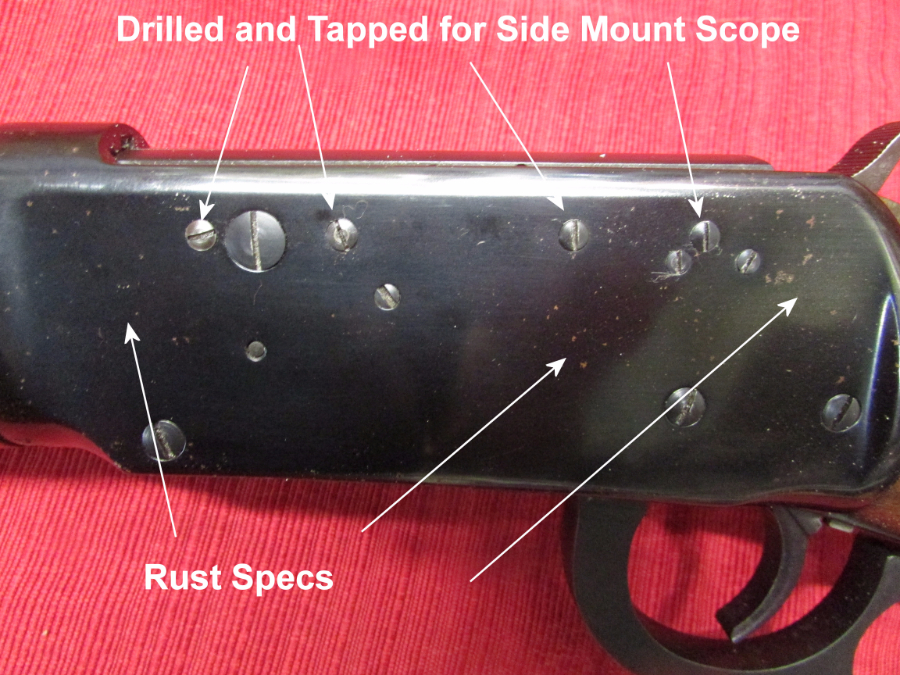
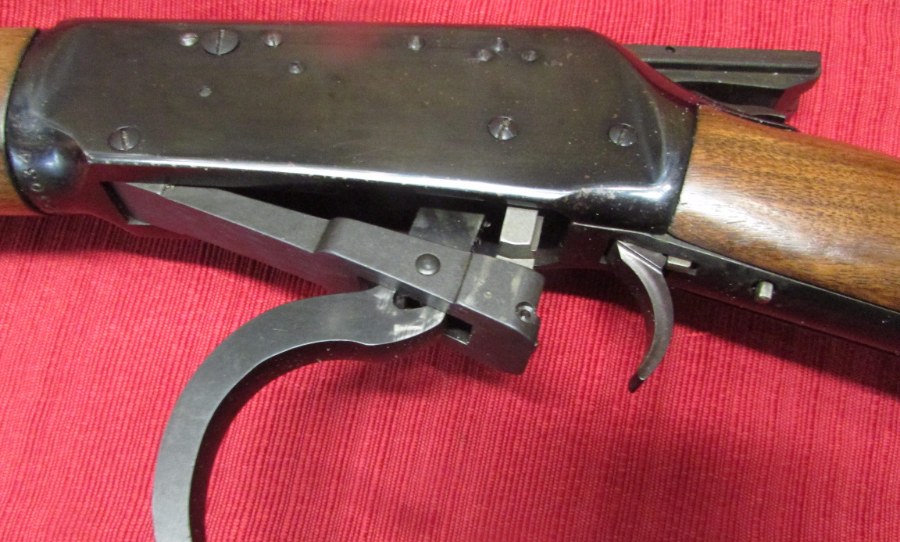


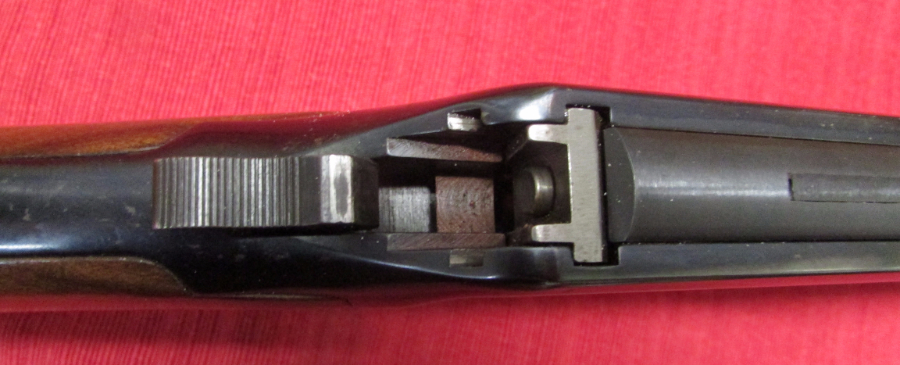
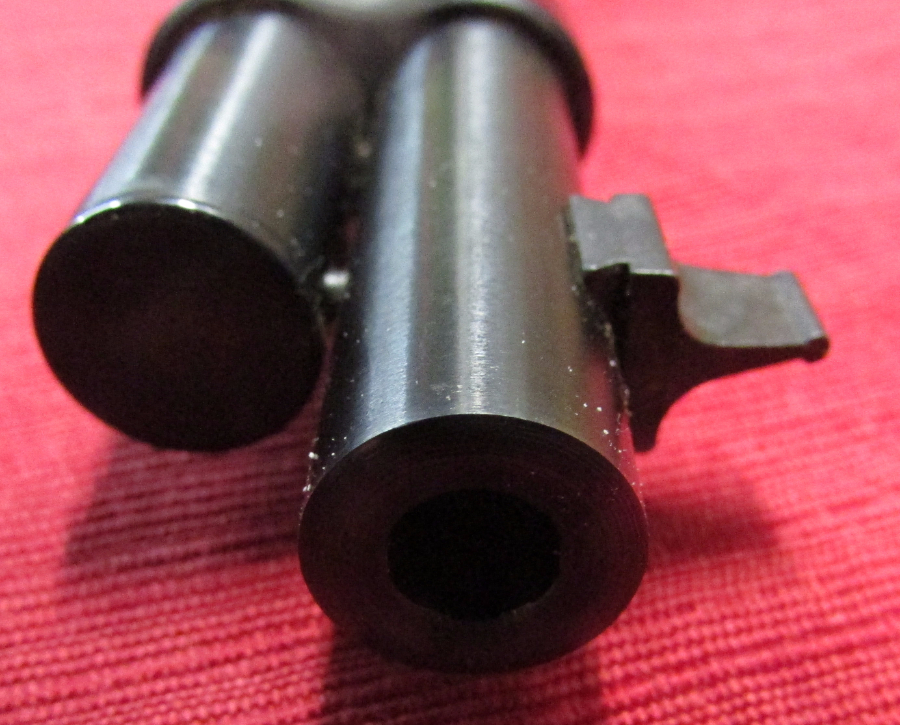
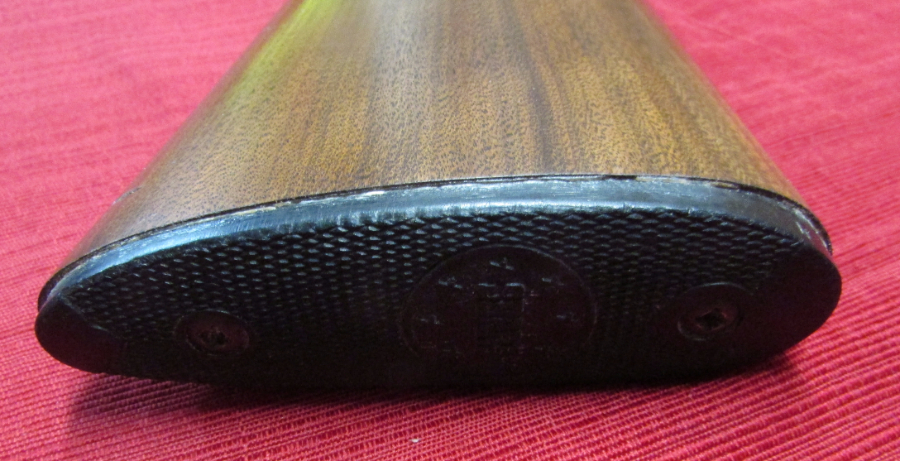
A Ted Williams/Sears Roebuck Model 100 chambered in 30-30 Winchester. This rifle is a Winchester Model 94 made under contract with Sears.
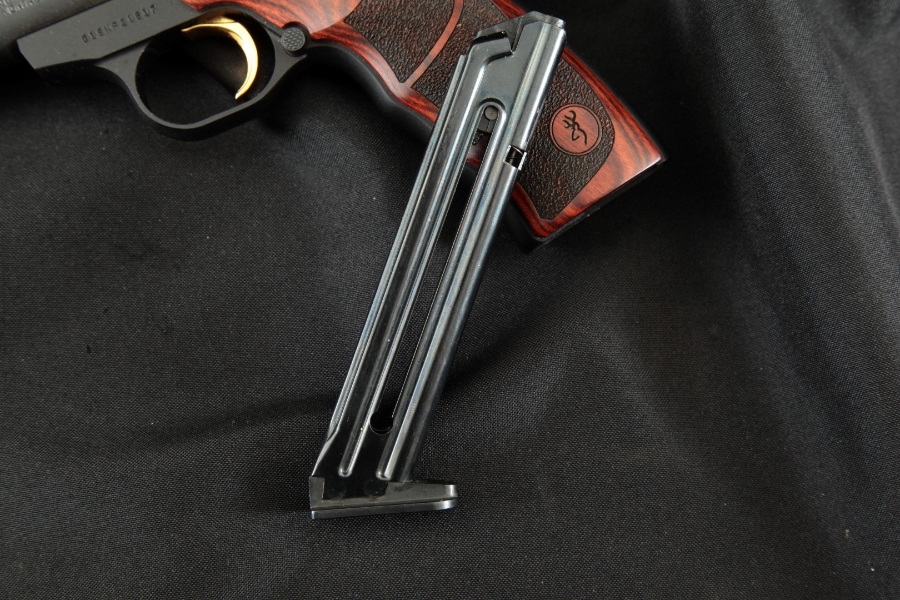
I found these & I thought you might like to see these Real Soldiers of Yesteryears!


Categories
My Idea of a Guard Dog


Charles Young (March 12, 1864 – January 8, 1922) was the third African-American graduate of West Point, the first black U.S. national park superintendent, first black military attaché,\.
Also the first black man to achieve the rank of colonel, and highest-ranking black officer in the Regular Army until his death in 1922.
Contents
Early life and education
Charles Young was born in 1864 into slavery to Gabriel Young and Arminta Bruen in Mays Lick, Kentucky, a small village near Maysville.[1]
However, his father escaped from slavery early in 1865, crossing the Ohio River to Ripley, Ohio, and enlisting in the Fifth Regiment of Colored Artillery (Heavy) near the end of the American Civil War.[1]
His service earned Gabriel and his wife their freedom, which was guaranteed by the 13th Amendment after the war. Arminta was already literate, which suggests she may have worked as a house slave before her freedom.
The Young family settled in Ripley when Gabriel was discharged in 1866, deciding that opportunities there in Ohio were probably better there than in postwar Kentucky. Gabriel Young received a bonus by continuing to serve in the Army after the war, and he had enough to buy land and build a house.
Charles Young attended the all-white high school in Ripley, the only one there who was African-American. He graduated in 1880 at the top of his class. He then taught for several years in the new black high school opened in Ripley.[1]
West Point
In 1883, Young took the competitive examination for appointment as a cadet at United States Military Academy at West Point.
He had the second highest score in his district, but the top candidate decided not to go and Young reported to West Point in 1884.
There was then one other black cadet, John Hanks Alexander, who had entered in 1883 and graduated in 1887. Young and Alexander shared a room for three years at West Point.
Although regularly discriminated against, Young did make several lifelong friends among his later classmates, but none among his initial class.[2]
He had to repeat his first year when he failed mathematics. He later failed an engineering class, but he passed it the second time when he was tutored during the summer by George Washington Goethals, the Army engineer who later directed construction of the Panama Canal and who as an assistant professor took an interest in Young.
(It was not unusual for cadets to need tutoring in some subjects. Young’s strength was in languages, and he learned to speak several.)[1]
As one of the very first African-Americans to attend and graduate from West Point, Charles Young faced challenges far beyond his white peers. He experienced extreme racial discrimination from classmates, faculty and upperclassmen.
Hazing was not an unusual practice at the male dominated military academies. Charles Young, however, was subjected to a disproportionate amount of abuse because of his color.[3]
There are many stories about Young’s struggles at West Point. Upon arrival to West Point, Young was welcomed in as “The Load of Coal”.[4]
Once, in the mess hall, a white cadet proclaimed that he would not take food from a platter that Young had already taken from. Young passed the white cadet the plate first, allowing him to take from it, then he himself took from the plate.[5]
Upperclassmen targeted and demerited Young 140 times, which would have been considered unusually high.[6] Whereas Young’s peers were referred to by their last names, Young was called “Mr. Young” as a kind of feigned deference.[4]
One of Young’s greatest struggles at West Point was loneliness.[7] A white classmate of Young’s, Major General Charles D. Rhodes, later reported that it was a practice of Young to converse with some of the servants at West Point in German to maintain some human interaction.[8]
Towards the end of his five-year stay at West Point, the merciless discrimination and taunts decreased.[9]
Because of his perseverance, some of Young’s classmates began to see past the color of his skin. Despite this and by his own admission, Charles Young’s time at West Point was fraught with difficulty.[10]
Career
Young graduated in 1889 with his commission as a second lieutenant, the third black man to do so at the time (after Henry Ossian Flipper and John Hanks Alexander, and the last one until Benjamin O. Davis, Jr. in 1936).
He was first assigned to the Tenth U.S. Cavalry Regiment. Through a reassignment, he served first with the Ninth U.S. Cavalry Regiment, starting in Nebraska.
His subsequent service of 28 years was chiefly with black troops—the Ninth U.S. Cavalry and the Tenth U.S. Cavalry, black troops nicknamed the “Buffalo Soldiers” since the Indian Wars.
The armed services were racially segregated until 1948, when President Harry S. Truman initiated integration by executive order, which took some years to complete.[11]
Marriage and family
After getting established in his career, Young married Ada Mills on February 18, 1904 in Oakland, California.
They had two children: Charles Noel, born in 1906 in Ohio, and Marie Aurelia, born in 1909 when Young and his family were stationed in the Philippines.[12]
Military service

Captain Charles Young in 1903
Young began his service with the Ninth Cavalry in the American West: from 1889-1890 he served at Fort Robinson, Nebraska, and from 1890-1894 at Fort Duchesne, Utah.
In 1894, Lieutenant Young was assigned to Wilberforce College in Ohio, an historically black college (HBCU), to lead the new military sciences department, established under a special federal grant.[13]
A professor for four years, he was one of several outstanding men on staff, including W.E.B. Du Bois, who became his close friend.[1]
When the Spanish–American War broke out, Young was promoted to the temporary rank of major of Volunteers on May 14, 1898.
He commanded the 9th Ohio Infantry Regiment which was, in the terminology of the day, a “colored” (i.e. African-American) unit.
Despite its name, the 9th Ohio was only battalion sized with four companies. The short war ended before Young and his men could be sent overseas.
Young’s command of this unit is significant because it was probably the first time in history an African-American commanded a sizable unit of the United States Army and one of the very few instances prior to the late 20th Century.
He was mustered out of the volunteers on January 28, 1899, and reverted to his regular army rank of first lieutenant. He was promoted to captain in the 9th Cavalry Regiment on February 2, 1901.[14]
National Park assignments
In 1903, Young served as captain of a black company at the Presidio of San Francisco. He was then appointed acting superintendent of Sequoia and General Grant national parks, becoming the first black superintendent of a national park.
(At the time the military supervised all national parks.)
Because of limited funding, however, the Army assigned its soldiers for short-term assignments during the summers, which made it difficult for the officers to accomplish longer term goals. Young supervised payroll accounts and directed the activities of rangers.
Young’s greatest impact on the park was managing road construction, which helped improve the underdeveloped park and allow more visitors to enjoy it.
Young’s men accomplished more that summer than had been done under the three officers assigned to the park during the previous three summers.
Captain Young’s troops completed a wagon road to the Giant Forest, home of the world’s largest trees, and a road to the base of the famous Moro Rock. By mid-August, the wagons of visitors could enter the mountaintop forest for the first time.[15]
With the end of the brief summer construction season, Young was transferred on November 2, 1903, and reassigned as the troop commander of the Tenth Cavalry at the Presidio.
In his final report on Sequoia Park to the Secretary of the Interior, he recommended the government acquire privately held lands there, to secure more park area for future generations. This recommendation was noted in legislation to that purpose introduced in the United States House of Representatives.
Other military assignments

Charles Young cartoon by Charles Alston, 1943
With the Army’s founding of the Military Intelligence Department, in 1904 it assigned Young as one of the first military attachés, serving in Port-au-Prince, Haiti.
He was to collect intelligence on different groups in Haiti, to help identify forces that might destabilize the government. He served there for three years.
In 1908 Young was sent to the Philippines to join his Ninth Regiment and command a squadron of two troops. It was his second tour there. After his return to the United States, he served for two years at Fort D.A. Russell, Wyoming.
In 1912 Young was assigned as military attaché to Liberia, the first African-American to hold that post.
For three years, he served as an expert adviser to the Liberian government and also took a direct role in supervising construction of the country’s infrastructure.
For his achievements, in 1916 the National Association for the Advancement of Colored People (NAACP) awarded Young the Spingarn Medal, given annually to the African American demonstrating the highest achievement and contributions.[16]
In 1912 Young published The Military Morale of Nations and Races, a remarkably prescient study of the cultural sources of military power.
He argued against the prevailing theories of the fixity of racial character, using history and social science to demonstrate that even supposedly servile or un-military races (such as Negroes and Jews) displayed martial virtues when fighting for democratic societies.
Thus the key to raising an effective mass army from among a polyglot American people was to link patriotic service with fulfillment of the democratic promise of equal rights and fair play for all. Young’s book was dedicated to Theodore Roosevelt, and invoked the principles of Roosevelt’s “New Nationalism”.[17]
During the 1916 Punitive Expedition by the United States into Mexico, then-Major Young commanded the 2nd squadron of the 10th United States Cavalry. While leading a cavalry pistol charge against Pancho Villa‘s forces at Agua Caliente (1 April 1916), he routed the opposing forces without losing a single man.[18]
Because of his exceptional leadership of the 10th Cavalry in the Mexican theater of war, Young was promoted to Lieutenant Colonel in September 1916.
He was assigned as commander of Fort Huachuca, the base in Arizona of the Tenth Cavalry, nicknamed the “Buffalo Soldiers”, until mid 1917.[16] He was the first African American to achieve the rank of colonel in the US Army.[19]
Forced retirement
With the United States about to enter World War I, Young stood a good chance of being promoted to brigadier general.
However, there was widespread resistance among white officers, especially those from the segregated South, who did not want to be outranked by an African American.
A lieutenant who served under Young complained to the War Department, and Secretary of War Newton Baker replied that he should “either do his duty or resign.” John Sharp Williams, senator from Mississippi, complained on the lieutenant’s behalf to President Woodrow Wilson.
The President overruled Baker’s decision and had the lieutenant transferred. (In 1913, Southern-born Wilson had segregated federal offices and established discrimination in other ways.) Other white officers in the 10th Cavalry became encouraged to apply for transfers as well.
Baker considered sending Young to Fort Des Moines, an officer training camp for African Americans. However, Baker realized that if Young were allowed to fight in Europe with black troops under his command, he would be eligible for promotion to brigadier general, and it would be impossible not to have white officers serving under him.
The War Department instead removed Young from active duty, claiming it was due to his high blood pressure.[20] Young was placed temporarily on the inactive list (with the rank of colonel) on June 22, 1917.
In May 1917 Young appealed to Theodore Roosevelt for support of his application for reinstatement. Roosevelt was then in the midst of his campaign to form a “volunteer division” for early service in France in World War I.
Roosevelt appears to have planned to recruit at least one and perhaps two black regiments for the division, something he had not told President Wilson or Secretary of War Baker.
He immediately wrote to Young offering him command of one of the prospective regiments, saying “there is not another man [besides yourself] who would be better fitted to command such a regiment.” Roosevelt also promised Young carte blanche in appointing staff and line officers for the unit. However, Wilson refused Roosevelt permission to organize his volunteer division.[21]
Young returned to Wilberforce University, where he was a professor of military science through most of 1918.
On November 6, 1918, after he had traveled by horseback from Wilberforce, Ohio, to Washington, D.C. to prove his physical fitness, he was reinstated on active duty as a colonel.[15] Baker did not rescind his order that Young be forcibly retired.[20]In 1919, Young was reassigned as military attaché to Liberia.
Young died January 8, 1922, of a kidney infection while on a reconnaissance mission in Nigeria.
His body was returned to the United States, where he was given a full military funeral and was buried at Arlington National Cemetery across the Potomac River from Washington, DC.
He had become a public and respected figure because of his unique achievements in the Army, and his obituary was carried in the New York Times.[22]
Honors and legacy

Young’s house near Wilberforce, Ohio
- 1903 – The Visalia, California, Board of Trade presented Young with a citation in appreciation of his performance as Acting Superintendent of Sequoia National Park.
- 1916 – The NAACP awarded him the Spingarn Medal for his achievements in Liberia and the US Army.
- He was elected an honorary member of the Omega Psi Phi fraternity.
- 1922 – Young’s obituary appeared in the New York Times, demonstrating his national reputation.
- 1922 – His funeral was one of few held at the Memorial Amphitheater at Arlington National Cemetery, where he was buried in Section 3.[22]
- Charles E. Young Elementary School, named in his honor, was built in Washington, D.C. The first elementary school in Northeast D.C., it was built to improve education in the city’s black neighborhoods. It was one of several schools closed in 2008, but the building now houses Two Rivers Public Charter School.
- 1974 – The house where Young lived when teaching at Wilberforce University was designated a National Historic Landmark, in recognition of his historic importance.[16]
- 2001 – Senator Mike DeWine introduced Senate Resolution 97, to recognize the contributions of the Buffalo Soldiers of the Ninth and Tenth Cavalry, and Colonel Charles D. Young.[23]
- 2013 – President Barack Obama used the Antiquities Act to designate Young’s house as the 401st unit of the National Park System, the Charles Young Buffalo Soldiers National Monument.[24]
Military medals
Young was entitled to the following medals:
- Indian Campaign Medal
- Spanish War Service Medal
- Philippine Campaign Medal
- Mexican Service Medal
- World War I Victory Medal
Dates of rank
- Cadet, United States Military Academy – 15 June 1884
- 2nd Lieutenant, 10th Cavalry – 31 August 1889 (transferred to 9th Cavalry 31 October 1889)
- 1st Lieutenant, 7th Cavalry – 22 December 1896 (transferred to 9th Cavalry 1 October 1897)
- Major (Volunteers), 9th Ohio Colored Infantry – 14 May 1898
- Mustered out of Volunteers – 28 January 1899
- Captain, 9th Cavalry – 2 February 1901
- Major, 9th Cavalry – 28 August 1912 (transferred to 10th Cavalry 19 October 1915)
- Lieutenant Colonel – 1 July 1916
- Retired as Colonel – 22 June 1917[25]
See also


References
Notes
- ^ Jump up to:a b c d e Brian Shellum, Black Cadet in a White Bastion: Charles Young at West Point, Lincoln, NE: University of Nebraska, 2007, pp. 6–13, accessed 8 Jun 2010
- Jump up^ Shellum, Brian (2006). Black Cadet in a White Bastion: Charles Young at West Point. U of Nebraska Press. p. 132.
- Jump up^ Shellum, Brian G. (2006). Black cadet in a white bastion : Charles Young at West Point. Lincoln [u.a.]: Univ. of Nebraska Press. ISBN 978-0803293151.
- ^ Jump up to:a b “Charles Young”. The Crisis. The Crisis Publishing Company, Inc.: 104 1 July 1923.
- Jump up^ “Charles Young”. The Crisis. The Crisis Publishing Company, Inc.: 155 1 February 1922.
- Jump up^ Heinl, Nancy G. (1 May 1977). “Col. Charles Young: Pointman”. The Crisis. The Crisis Publishing Company, Inc.: 173.
- Jump up^ Heinl, Nancy G. (1 May 1977). “Col. Charles Young: Pointman”. The Crisis. The Crisis Publishing Company, Inc.: 174.
- Jump up^ Kilroy, David P. (2003-01-01). For Race and Country: The Life and Career of Colonel Charles Young. Greenwood Publishing Group. ISBN 9780275980054.
- Jump up^ Heinl, Nancy G. (1 May 1977). “Col. Charles Young: Pointman”. The Crisis. The Crisis Publishing Company, Inc.: 173–174.
- Jump up^ Kilroy, David P. (2003). For race and country : the life and career of Colonel Charles Young. Westport, Conn. [u.a.]: Praeger. ISBN 9780275980054.
- Jump up^ “Chapter 12: The President Intervenes”. Center of Military History. US Army. Retrieved 2010-04-06.
- Jump up^ Brian G. Shellum, Black Officer in a Buffalo Soldier Regiment: The Military Career of Charles Young, Lincoln, NE: University of Nebraska, 2010, p. xx, accessed 9 Jun 2010
- Jump up^ James T. Campbell, Songs of Zion, New York: Oxford University Press, 1995, p. 262, accessed 13 Jan 2009
- Jump up^ Historical Register and Dictionary of the United States Army, 1789-1903. Francis B. Heitman. Vol. 1. pg. 1066.
- ^ Jump up to:a b “Sequoia National Park”
- ^ Jump up to:a b c “Colonel Charles Young”. Buffalo Soldier. Davis, Stanford L. 2000. Retrieved 2010-01-18.
- Jump up^ “Lost Battalions: The Great War and the Crisis of American Nationality” (2005), pp. 41–42; Military Morale of Races and Nations, by Charles Young (1912).
- Jump up^ “Pursuing Pancho Villa”. Presidio of San Francisco. National Park Service. 6 December 2012. Retrieved 7 December 2012.
- Jump up^ “Col. Charles Young Dies in Nigeria; Noted U.S. Cavalry Commander Was the Only Negro to Reach Rank of Colonel”. New York Times. January 13, 1922. Retrieved 2008-08-08.
- ^ Jump up to:a b Rawn James, Jr. (22 January 2013). The Double V: How Wars, Protest, and Harry Truman Desegregated America’s Military. Bloomsbury Publishing. pp. 49–51. ISBN 978-1-60819-617-3. Retrieved 16 May 2013.
- Jump up^ The correspondence among Roosevelt, Young and F. S. Stover (who was raising money for the regiment) is in the John Motley Collection, Tredegar Museum. A fuller account is in Richard Slotkin, Lost Battalions: The Great War and the Crisis of American Nationality, (2005), pp. 41–42.
- ^ Jump up to:a b “Charles D. Young”, Arlington National Cemetery, accessed 9 Jun 2010
- Jump up^ Charles Davis, “Colonel Charles Young”, Buffalosoldier.net, accessed 9 Jun 2010
- Jump up^ [1], accessed 7 April 2013
- Jump up^ Official Register of Commissioned Officers of the United States Army. December 1, 1918. pg. 1009.
Sources
- This article is based in part on a document created by the National Park Service, which is part of the U.S. government. As such, it is presumed to be in the public domain.
Further reading
- Chew, Abraham. A Biography of Colonel Charles Young, Washington, D.C.: R. L. Pendelton, 1923
- Greene, Robert E. Colonel Charles Young: Soldier and Diplomat, 1985
- Kilroy, David P. For Race and Country: The Life and Career of Charles Young, 2003
- Shellum, Brian G., Black Cadet in a White Bastion: Charles Young at West Point, Lincoln, NE: Bison Books, 2006.
- Shellum, Brian G., Black Officer in a Buffalo Soldier Regiment, The Military Career of Charles Young, Lincoln, NE: University of Nebraska Press, 2010.
- Stovall, TaRessa. The Buffalo Soldier, Philadelphia: Chelsea House Publishers, 1997
- Stewart, T. G. Buffalo Soldiers: The Colored Regulars in the United States Army, Amherst, NY: Humanity Books, 2003
- Sweeney, W. Allison (1919), History of the American Negro in the Great World War – infobox photograph
External links[edit]
 |
Wikimedia Commons has media related to Charles Young (United States Army). |
- “Charles Young”, National Park Service
Categories
THE NEW ITHACA RIFLE
Now this company has been around on & off now for a very long time. Their early shotguns were of the highest quality. Now they have brought forth this fine looking rifle.
THE NEW ITHACA RIFLE
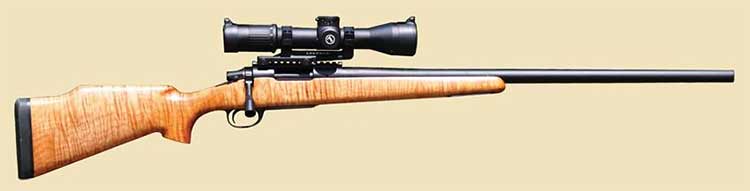
Ithaca Rifle in Tiger Maple
| Built on Ithaca’s reputation for manufacturing high quality American-Made firearms, we are pleased to introduce our series of precision long range rifles to the Ithaca product line.Developed in conjunction with a world record holding marksman, this rifle is crafted for the shooter who wants the pinnacle of what is available in long range precision. |
Each Rifle consists of a 4340 chromoly steel billet receiver, a 4140 single piece billet nonwelded bolt, and a competition grade barrel and trigger.Every action is produced in-house by Ithaca Precision utilizing the state-of-the-art CNC machining equipment with the receiver bolt raceway wire EDM’d for ultimate precision. |
Each competition barrel is mated to the action by experienced craftsmen committed to excellence. The result of this attention to detail produces ½ MOA accuracy or better. The Guardian is Ithaca Precision’s short action platform. The Protector is Ithaca Precision’s long action platform. |
The Savior is Ithaca Precision’s .338 Lapua. It is exclusively tactical, and not a hunting rifle. All of these rifles are completely customizable with countless variations based on which of our many options you choose. Why take your rifle to a gunsmith for customization when you can get the gun you want straight from our factory? Call 419-294-4113 for details. |
All I want to know is this. When is Santa bringing me one?