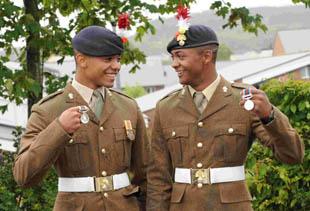
For several Regiments of the British Army. Today is a day of Celebration and feasting. They also put roses in their covers (hats) to symbolise the Victory that their Forefathers won on this day.
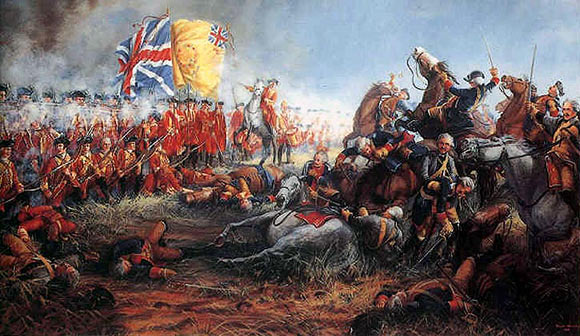
Here is their story. Minden Day is a regimental anniversary celebrated on 1 August by certain units of the British Army. It commemorates the participation of the forerunners of the regiments in the Battle of Minden during the Seven Years’ War on that date in 1759.
The celebration of the day involves the wearing of “Minden Roses” on the regimental head dress, and, in the case of the infantry regiments, the decoration of the regimental colours with garlands of roses. This recalls that the regiments wore wild roses at the battle that they had plucked from the hedgerows as they advanced to engage the enemy.
Minden Day is celebrated by:
The colours of roses varies: red is used by most of the units, but white is favoured by the Light Infantry and red and yellow by the Royal Anglians. In some cases this reflects parts of the regimental recruiting areas: the Light Infantry is associated with part of Yorkshire (represented by a white rose), the Fusiliers with part of historic Lancashire and the Princess of Wales’s area includes Hampshire (both counties having red roses as insignia).
In 1975, August 1 was adopted as Yorkshire Day, partly to reflect the presence of Yorkshire soldiers at the battle.
Minden Day is commemorated in the English folk song Lowlands of Holland, which dates to the time of the Seven Years’ War. Like most English folk songs, the song has numerous variants. One version, which is prevalent in Suffolk, home of 12th Regiment of Foot (1st Battalion Royal Anglian Regiment), contains the verse:
“My love across the ocean Wears a scarlet coat so fair, With a musket at his shoulder And roses in his hair”.
The Battle of Minden—or Tho(r)nhausen—was a decisive engagement during the Seven Years’ War, fought on 1 August 1759. An Anglo-German army under the overall command of Field MarshalFerdinand of Brunswick defeated a French army commanded by Marshal of France, Marquis de Contades. Two years previously, the French had launched a successful invasion of Hanover and attempted to impose an unpopular treaty of peace upon the allied nations of Britain, Hanover and Prussia. After a Prussian victory at Rossbach, and under pressure from Frederick the Great and William Pitt, King George II disavowed the treaty. In 1758, the Allies launched a counter-offensive against the French forces and drove them back across the Rhine.
After failing to defeat the French before reinforcements swelled their retreating army, the French launched a fresh offensive, capturing the fortress of Minden on 10 July. Believing Ferdinand’s forces to be over-extended, Contades abandoned his strong positions around the Weser and advanced to meet the Allied forces in battle. The decisive action of the battle came when six regiments of British and two of Hanoverian infantry, in line formation, repelled repeated French cavalry attacks; contrary to all fears that the regiments would be broken. The Allied line advanced in the wake of the failed cavalry attack, sending the French army reeling from the field, ending all French designs upon Hanover for the remainder of the year.
In Britain, the victory was considered to constitute the Annus Mirabilis of 1759.
The western German-speaking states of Europe had been a major theatre of the Seven Years’ War since 1757, when the French had launched an invasion of Hanover. This culminated in a decisive victory for the French at the Battle of Hastenbeck and the attempted imposition of the Convention of Klosterzeven upon the defeated allies: Hanover, Prussia and Britain.[3] Prussia and Britain refused to ratify the convention and, in 1758, a counter-offensive commanded by Ferdinand saw French forces first driven back across the Rhine, and then beaten at the Battle of Krefeld. The Prussian port of Emden was also recaptured, securing supply from Britain. In fact, the British government, which had previously been opposed to any direct involvement on the continent, took the opportunity of the 1758–59 winter break in fighting to send nine thousand British troops to reinforce Ferdinand.[4] The French crown also sent a reinforcing army, under Contades, hoping this would help to secure a decisive victory, swiftly concluding the costly war, and forcing the Allies to accept the peace terms France was seeking.
In an attempt to defeat the French before their reinforcements arrived, Ferdinand decided to launch a fresh counter-offensive, and quit his winter quarters early. In April, however, Victor-François, Duke de Broglie and the French withstood Ferdinand’s attack at the Battle of Bergen, and de Broglie was promoted to Marshal of France. Ferdinand was forced to retreat northwards in the face of the now reinforced French army. Contades, senior of the two French marshals, resumed the advance, occupying a number of towns and cities including the strategic fortress at Minden, which fell to the French on 10 July.[5] Ferdinand was criticised for his failure to check the French offensive. His celebrated brother-in-law, Frederick the Great, is reported as having suggested that, since his loss at Bergen, Ferdinand had come to believe the French to be invincible.[6] Irrespective of any presumed crisis of confidence, however, Ferdinand did ultimately decide to confront the French, near Minden.
Contades had taken up a strong defensive position along the Weser around Minden, where he had paused to regroup before he continued his advance. He initially resisted the opportunity to abandon this strong position to attack Ferdinand. Ferdinand instead formulated a plan that involved splitting his force into several groups to threaten Contades’ lines of supply. Perceiving Ferdinand’s forces to be over-extended, Contades thought he saw a chance for the desired decisive victory. He ordered his men to abandon their defensive encampments and advance into positions on the plain west of Minden during the night of 31 July and early morning of 1 August.[7]
In 1759, the fortified city of Minden, now the Innenstadt (inner city) of modern Minden, was situated at the confluence of the Weser, which flows from south to north, and the Bastau, a marshy tributary rivulette. The Bastau drains into the Weser from west to east, roughly parallel with, and south of, the western arm of modern Germany’s Midland Canal, where it crosses the Weser at Minden, north of the Innenstadt via the second largest water bridge in Europe). The Battle of Minden took place on the plain immediately in front of the city and its fortifications, to its northwest, with the Weser and Bastau lying behind the city to its east and south respectively.
On the 31st, the French troops under Contades’ direct command had their positions west of the Weser and south of the Bastau, crossing to the north over five pontoons during the night and early morning of the 1st. The French under the junior marshal, de Broglie, were stationed astride the Weser. Some were occupying Minden on the 31st, while the remainder, stationed east of the Weser, crossed over to join them during the night.
In an exception to the norm for the era, Contades placed his artillery in the centre protected only by the cavalry, with his infantry on either flank. The battle began on the French right flank, where Marshal de Broglie, who commanded the reserve, began an artillery duel against the allied left.
The decisive action of the battle took place in the centre, famously due to a misunderstanding of orders. Friedrich von Spörcken‘s division, composed of the infantry of the British contingent of the allied army (two brigades under Earl Waldegrave and William Kingsley) and supported by the Hanoverian Guards, actually advanced to attack the French cavalry. It is reported that they had been ordered “to advance [up-]on the beating of drums” (i.e., advance when the signal drums begin to beat,) misunderstanding this as “to advance to the beating of drums” (i.e., advance immediately while beating drums.) Since the French cavalry was still in its ranks and the famous ‘hollow square‘ had not yet been developed, it was assumed by all that the six leading British regiments were doomed. Despite being under constant artillery fire, the six regiments (soon supported by two Hanoverian battalions), by maintaining fierce discipline and closed ranks, drove off repeated cavalry charges with musket fire and inflicted serious casualties on the French. Contades reportedly said bitterly, “I have seen what I never thought to be possible—a single line of infantry break through three lines of cavalry, ranked in order of battle, and tumble them to ruin!”[8]
Supported by the well-served British and Hanoverian artillery, the entire allied line eventually advanced against the French army and sent it fleeing from the field. The only French troops capable of mounting any significant resistance were those of de Broglie, who formed a fighting rear guard.
Prince Ferdinand’s army suffered nearly 2,800 men killed and wounded; the French lost about 7,000 men.[2] In the wake of the battle the French retreated southwards to Kassel. The defeat ended the French threat to Hanover for the remainder of that year.
Ferdinand’s cavalry commander, Lieutenant General Lord George Sackville, was accused of ignoring repeated orders to bring up his troopers and charge the enemy until it was too late to make any difference. In order to clear his name he requested a court martial, but the evidence against him was substantial and the court martial declared him “…unfit to serve His Majesty in any capacity whatsoever.” [9] Sackville would later reappear as Lord George Germain and bear a major portion of the blame for the outcome of the American Revolution while Secretary of State for the Colonies.
In Britain the result at Minden was widely celebrated and was seen as part of Britain’s Annus Mirabilis of 1759 also known as the “Year of Victories”, although there was some criticism of Ferdinand for not following up his victory more aggressively. When George II of Great Britain learned of the victory, he awarded Ferdinand £20,000 and the Order of the Garter.[10] Minden further boosted British support for the war on the continent, and the following year a “glorious reinforcement” was sent, swelling the size of the British contingent in Ferdinand’s army.[11]
In France the reaction to the result was severe. The Duc de Choiseul, the French Chief Minister, wrote “I blush when I speak of our army. I simply cannot get it into my head, much less into my heart, that a pack of Hanoverians could defeat the army of the King”. To discover how the defeat had occurred and to establish the general condition of the army, Marshal d’Estrées was sent on a tour of inspection. Marshal de Contades was subsequently relieved of his command and replaced by the Duc de Broglie.[12] Michel Louis Christophe Roch Gilbert Paulette du Motier, Marquis de La Fayette and colonel aux Grenadiers de France, was killed when he was hit by a cannonball in this battle.[13] La Fayette’s son, Gilbert du Motier, marquis de Lafayette, was not even two years old at that time. Jean Thurel, the 59-year-old French fusilier, was severely wounded, receiving seven sword slashes, six of them to the head.[14]
The descendents of these units are still known as “the Minden Regiments.”
When the British infantry and artillery were first advancing to battle they passed through some German gardens and the soldiers picked roses and stuck them in their coats. In memory of this, each of the Minden regiments marks 1 August as Minden Day. On that day the men of all ranks wear roses in their caps. Royal Anglians, The Royal Regiment of Fusiliers and the PWRR wear red and yellow roses; the SCOTS wear red; RIFLES wear Yorkshire white roses. From this tradition, and to mark the heroism of the Yorkshiremen who fought, 1 August has been adopted as Yorkshire Day. The R WELSH do not wear roses on Minden Day as the Minden Rose was incorporated into the roundel of the cap badge of the Royal Welch Fusiliers and so is worn every day of the year. Retired members of the Regiment do sport roses in the lapels on Minden Day. Artillery regiments with Minden associations (see below) wear red roses.
This British victory was also recalled in the British Army’s Queen’s Division which maintained the “Minden Band” until its 2006 amalgamation with the “Normandy Band” to form the Band of the Queen’s Division.
Two Batteries from the Royal Regiment of Artillery carry the Minden battle honour. Soldiers from both 12 (Minden) Batteryand 32 (Minden) Battery traditionally wear a red rose in their headdress on 1 August every year, both batteries celebrate Minden Day every year. A proud tradition exists: ‘Once a Minden Man, always a Minden Man.’
Every year from 1967 to 2015, six red roses have been anonymously delivered to the British consulate in Chicago on 1 August. Until they were closed, roses were also delivered to consulates in Kansas City, Minneapolis and St. Louis, starting as early as 1958 in Kansas City. A note that comes with the roses lists the six regiments and says, “They advanced through rose gardens to the battleground and decorated their tricorne hats and grenadier caps with the emblem of England. These regiments celebrate Minden Day still, and all wear roses in their caps on this anniversary in memory of their ancestors.” The Embassy has asked for the name of the sender (on numerous occasions) so that they may thank the individual in person, but the identity of the donor remains a mystery.
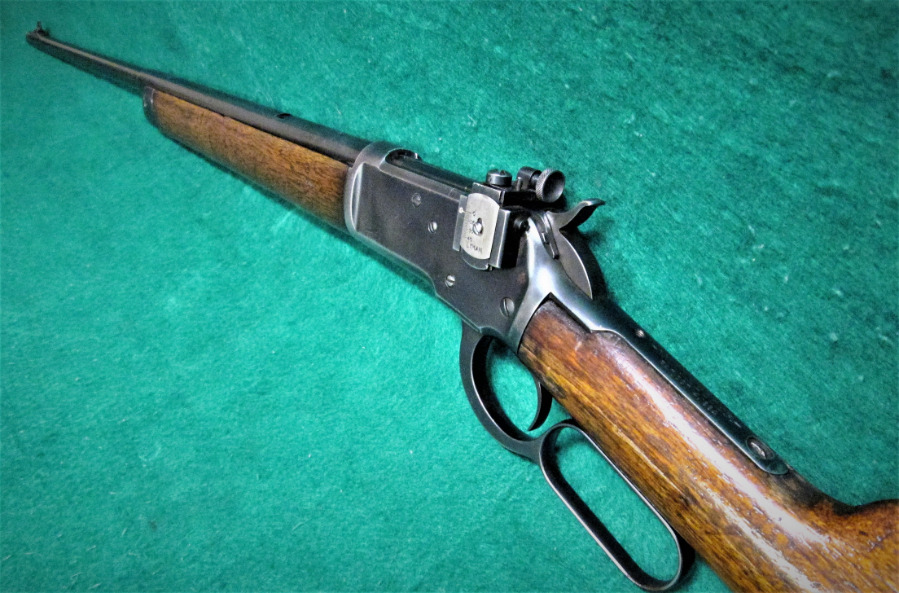
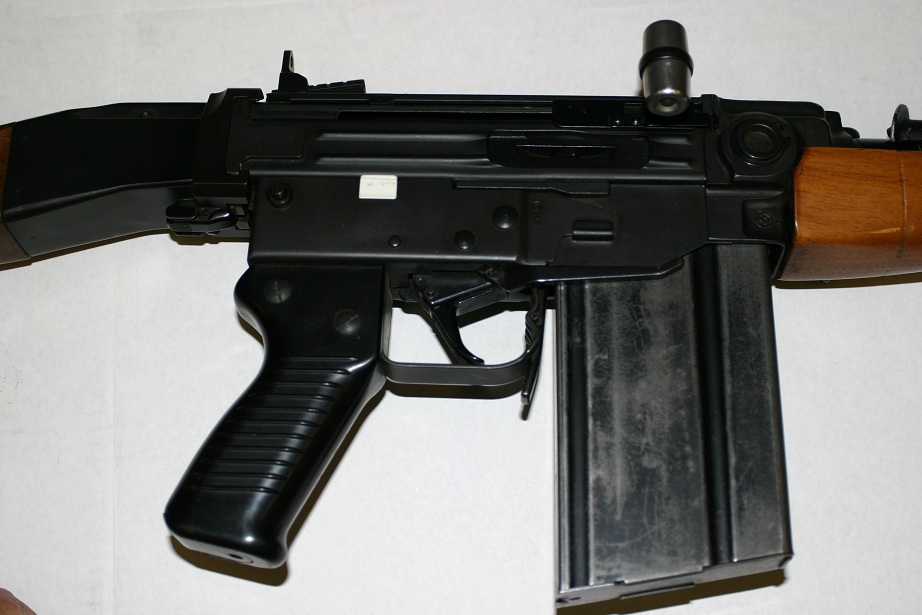
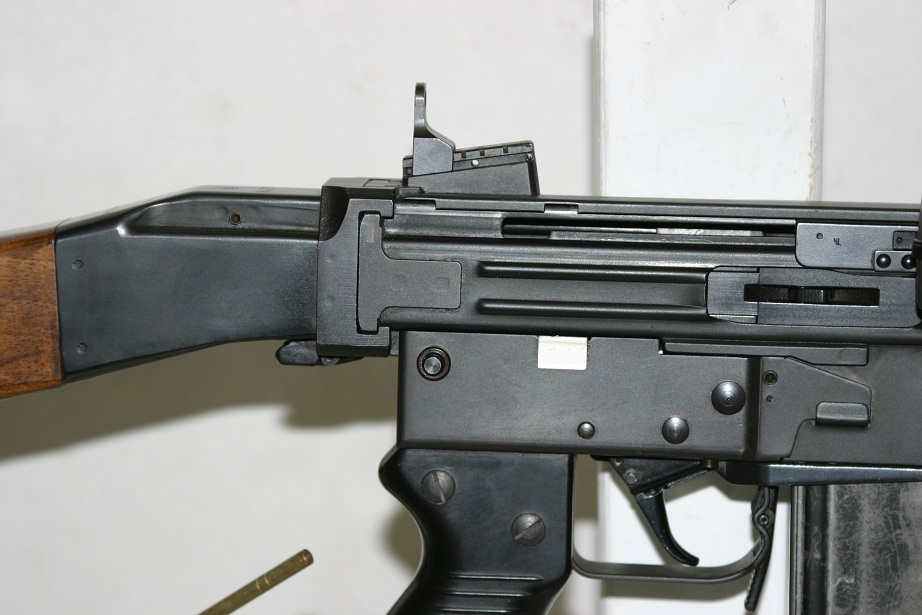
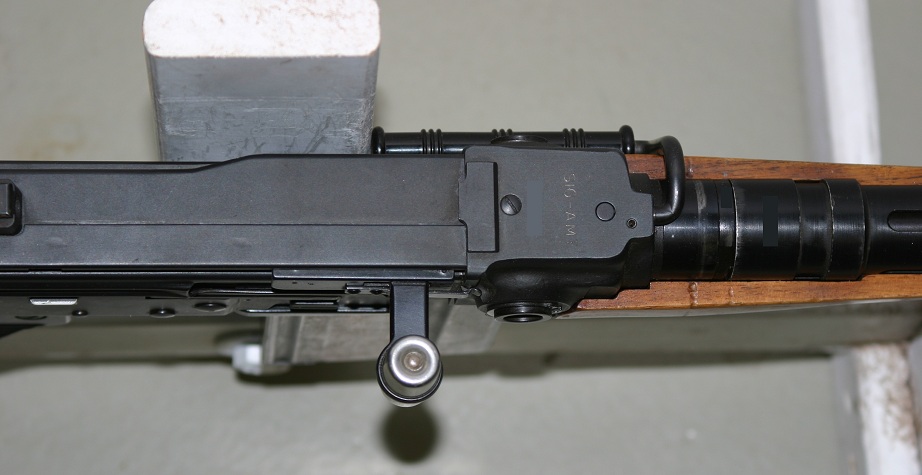
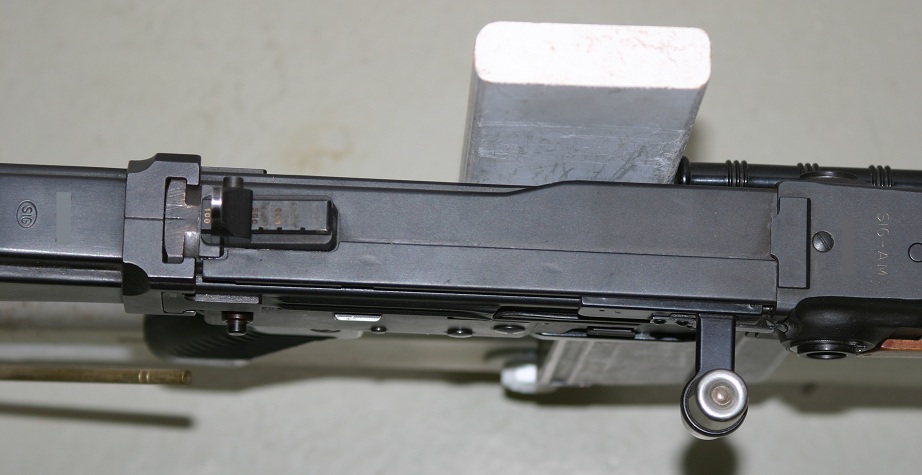
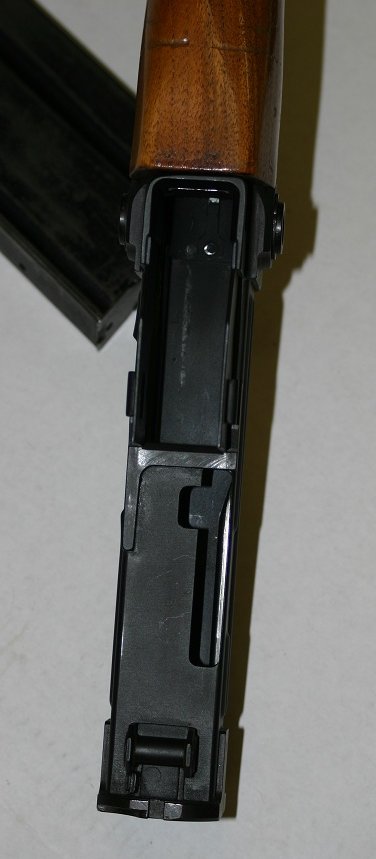
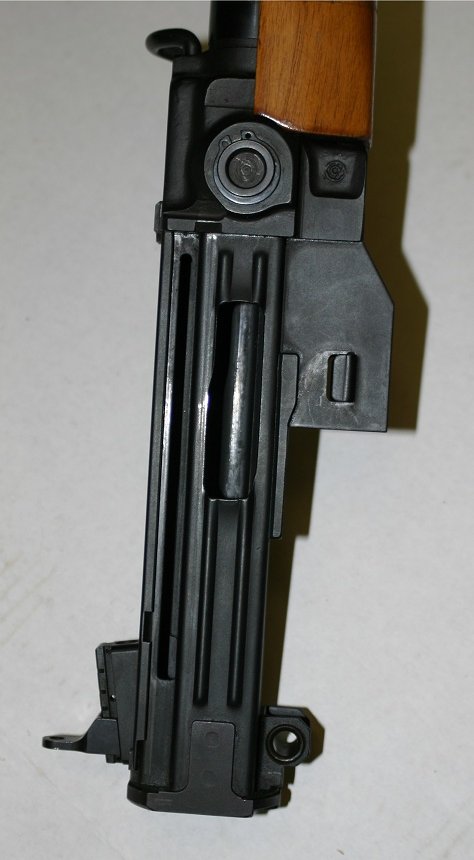
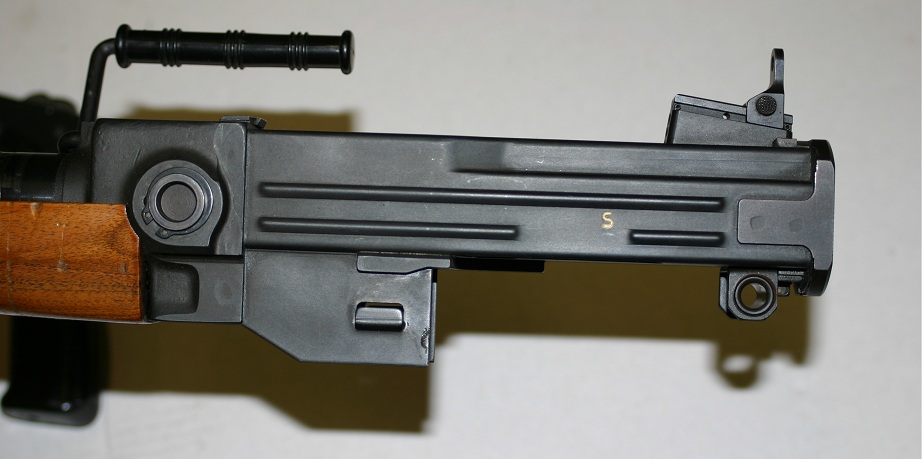
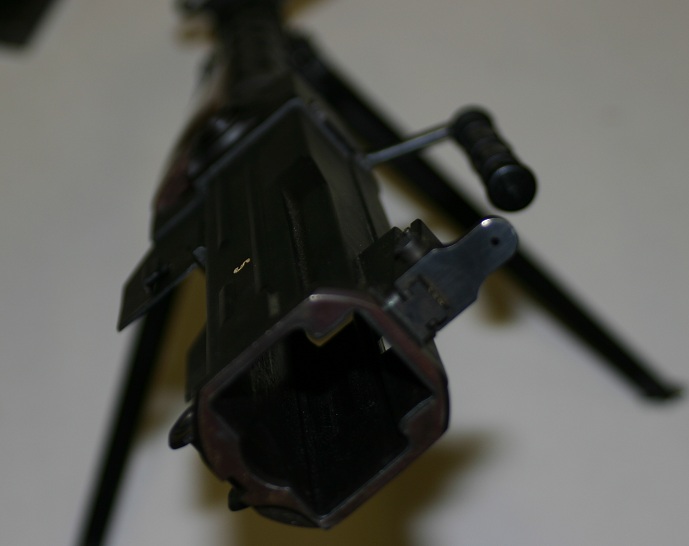
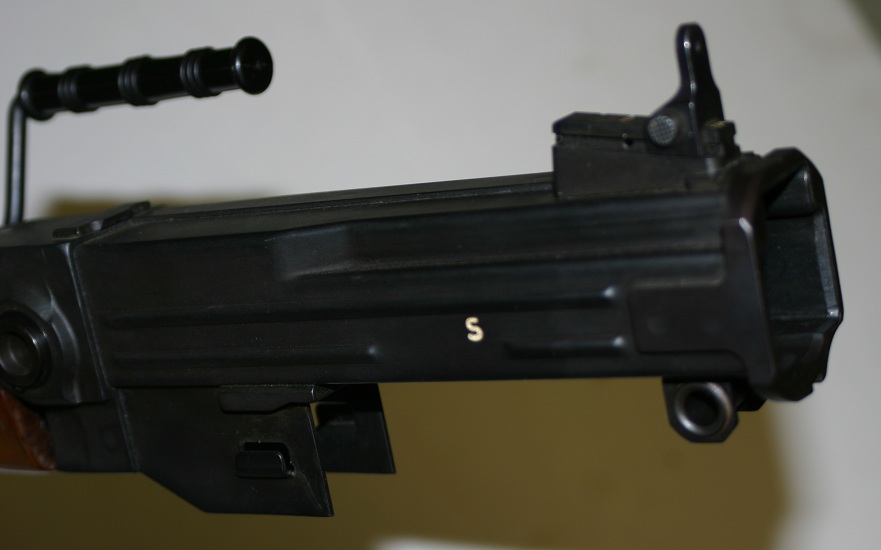
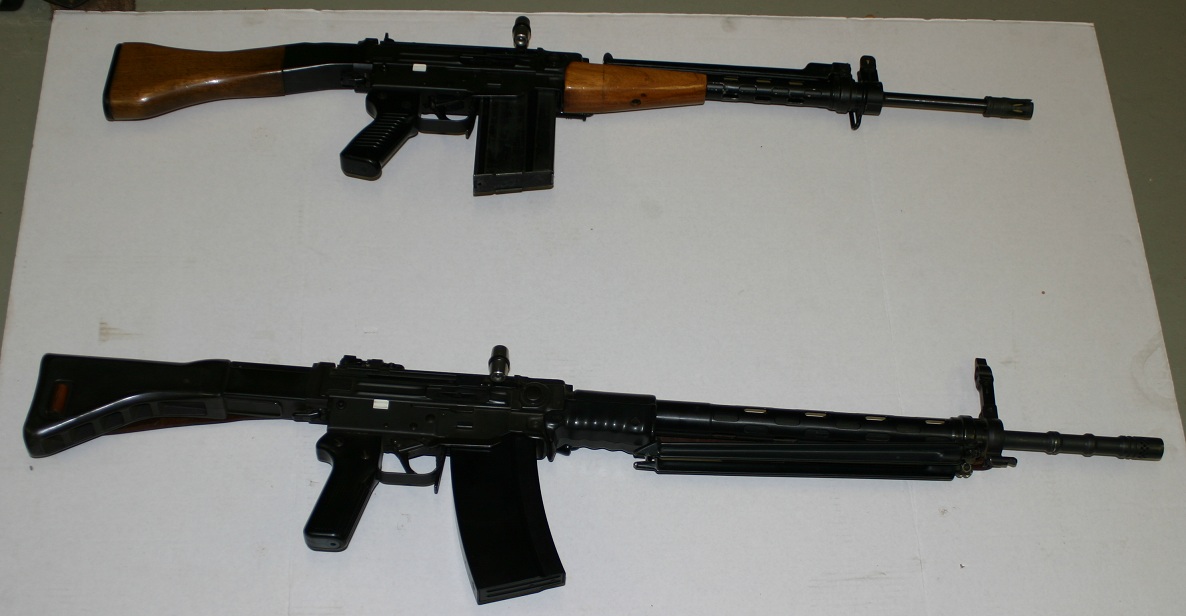
Now just imagine this! Almost every house in the Cantons of Switzerland has one of these with a crate of ammo to boot. As almost every male citizen has served in the Swiss Army and is liable for recall to the colours in a time of National Emergency.
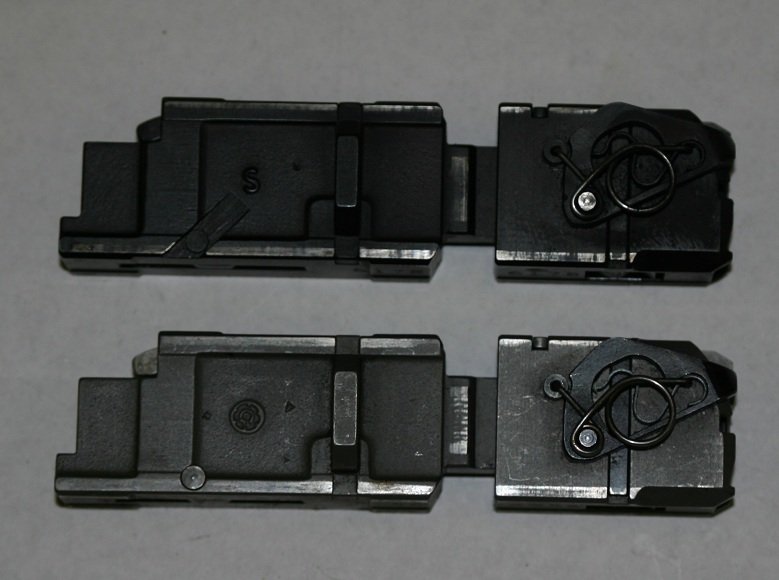
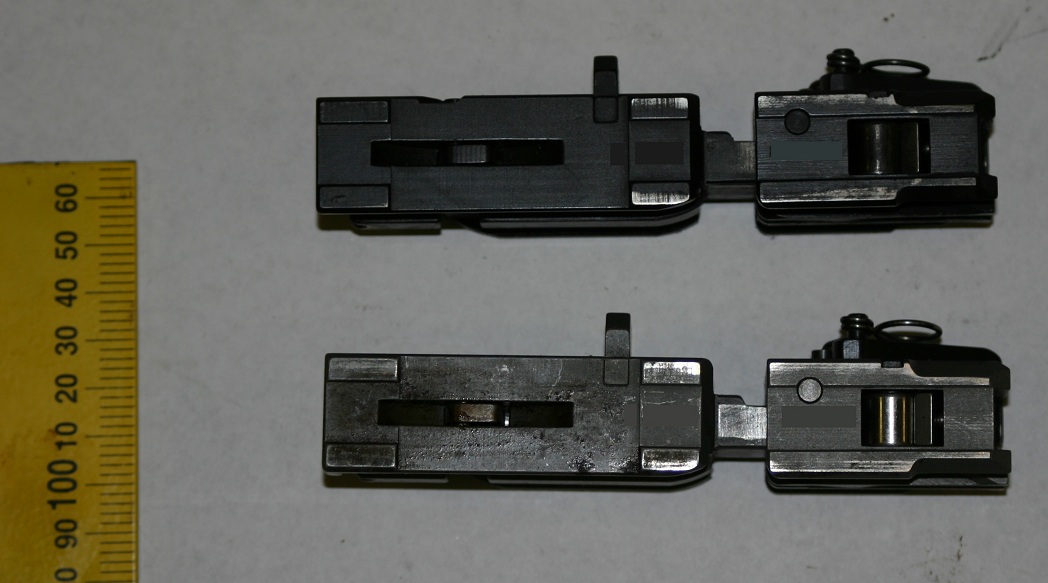
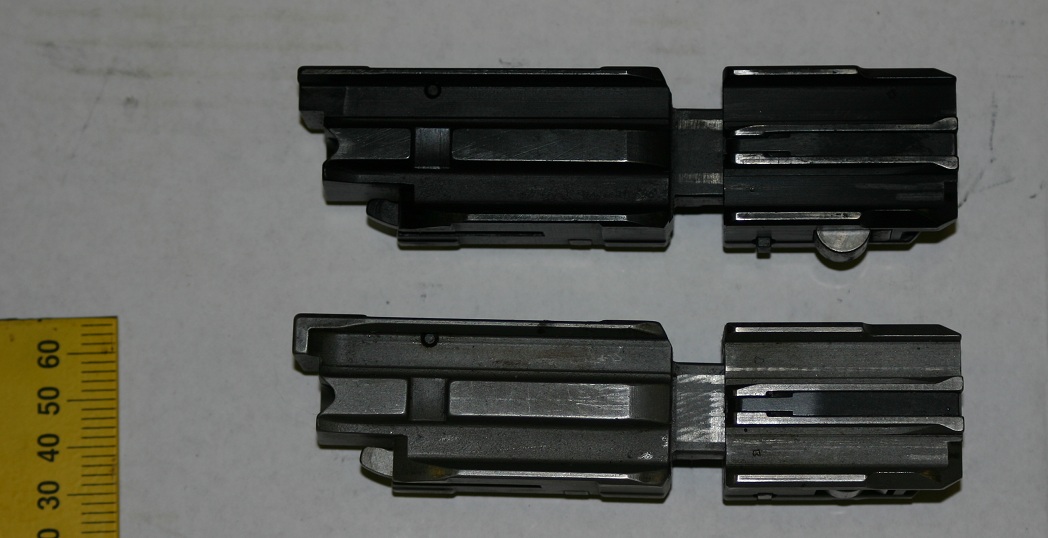
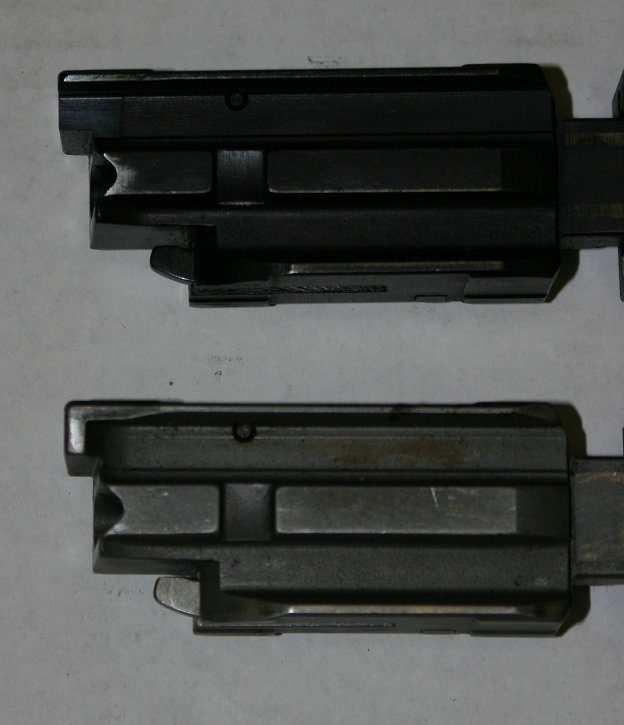
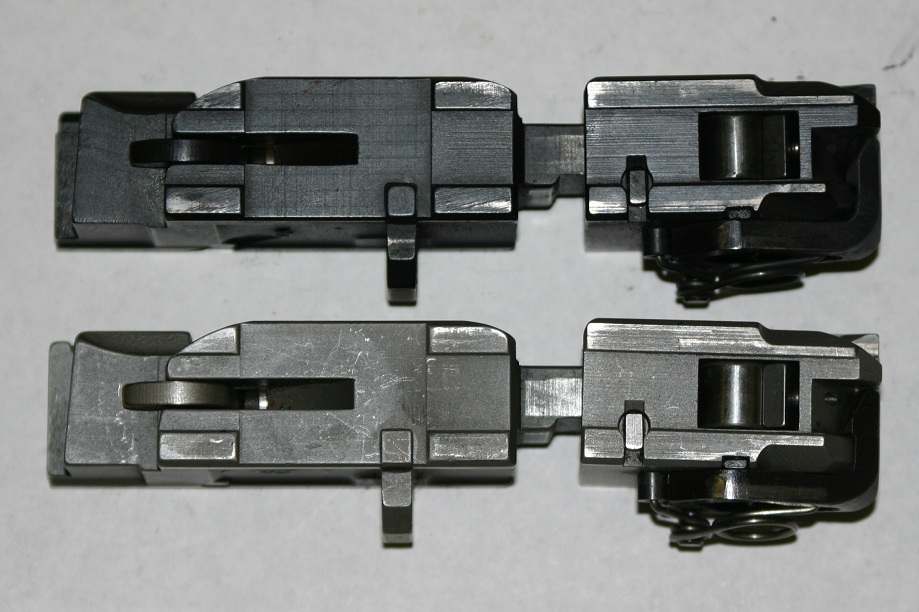
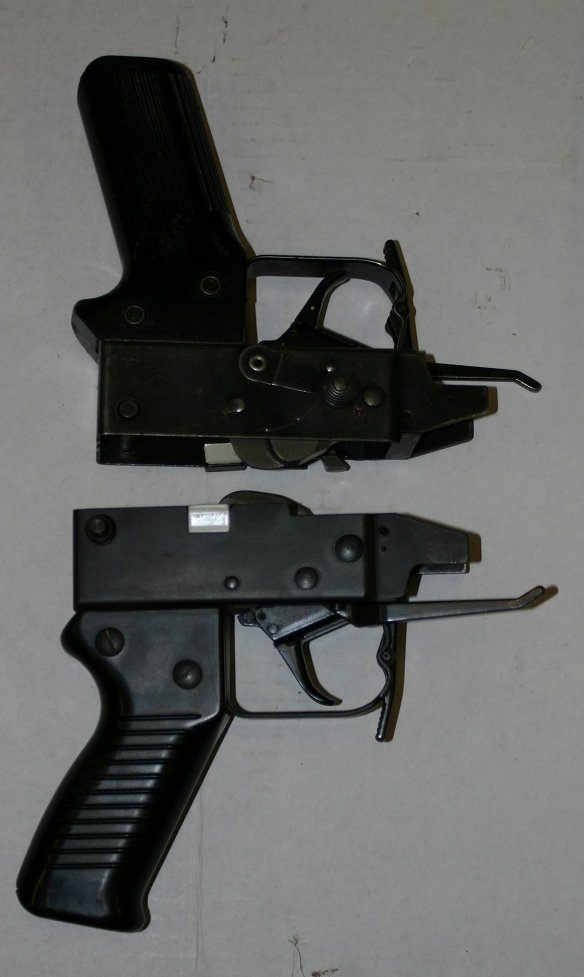
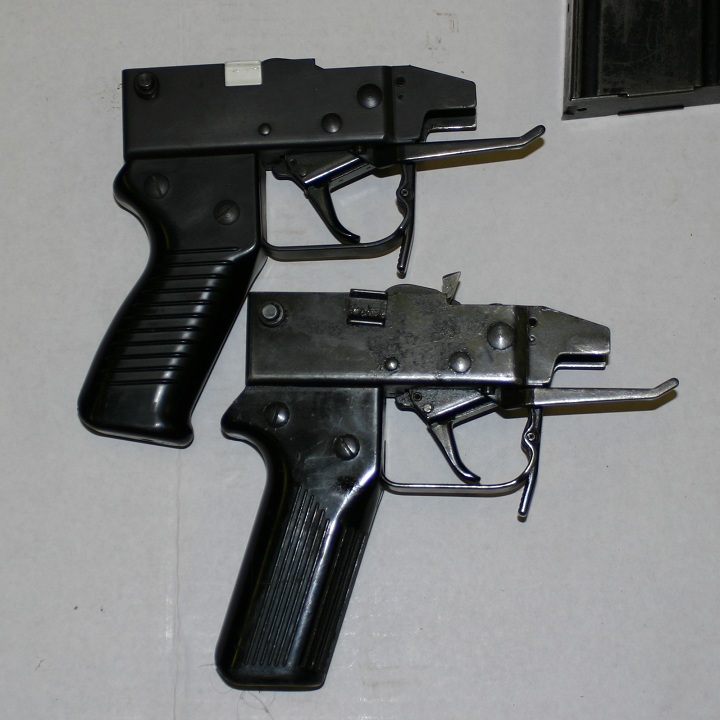
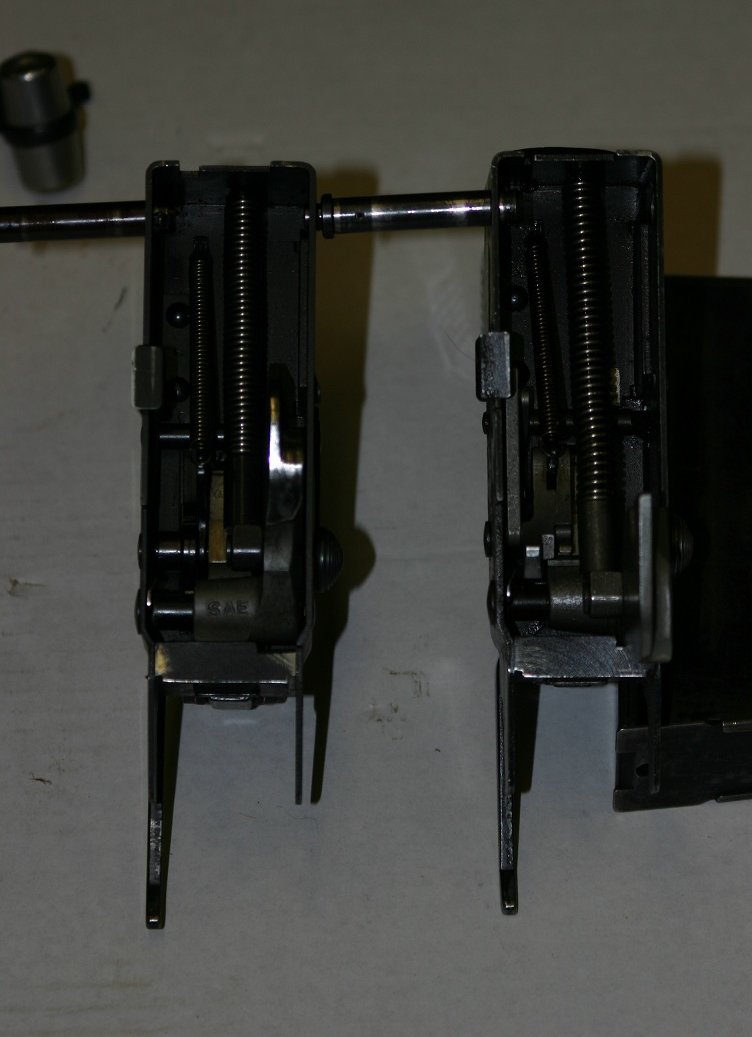
Here is some more information about this fine rifle below.
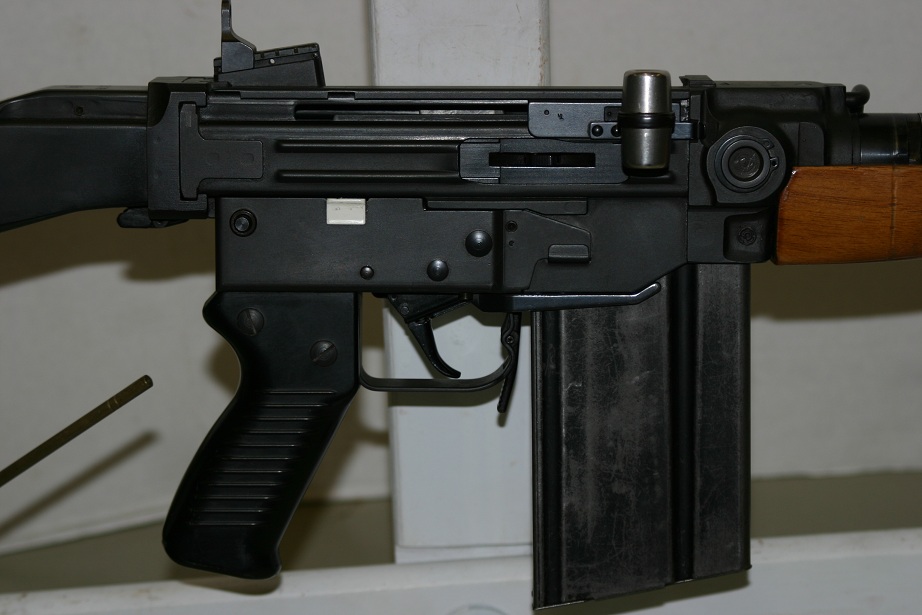
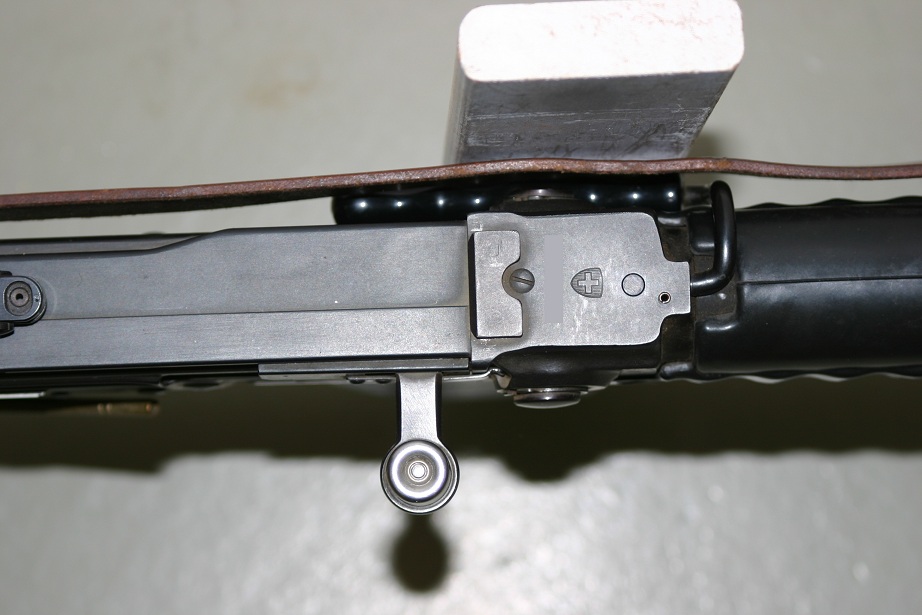
SIG Stgw 57
The Stgw 57 was Switzerland’s first standard-issue selfloading service rifle. The Swiss experimented with designs for ten or twelve years (including the AK52) before adapting the model 57 in, appropriately, 1957. The design is based on the German roller-locking system, and uses a delayed blowback system like the StG45 rather than a truly locked mechanism.
The Swiss originally developed the rifle for the 7.5×55 GP11 cartridge, and designated the rifle Stgw57 for military use and SIG 510 for export sales. These rifles used a curved 24-round box magazine. Several other variants were also made for export, primarily the SIG 510-4 and AMT (American Match Target). Both of these was chambered for 7.62 NATO and used 20-round straight magazines. The American rifles were semi-auto only, and some were imported in the original 7.5 Swiss caliber (these were designated PE-57). Only about 4000 AMTs were imported into the US, and they remain a rare rifle in the country.
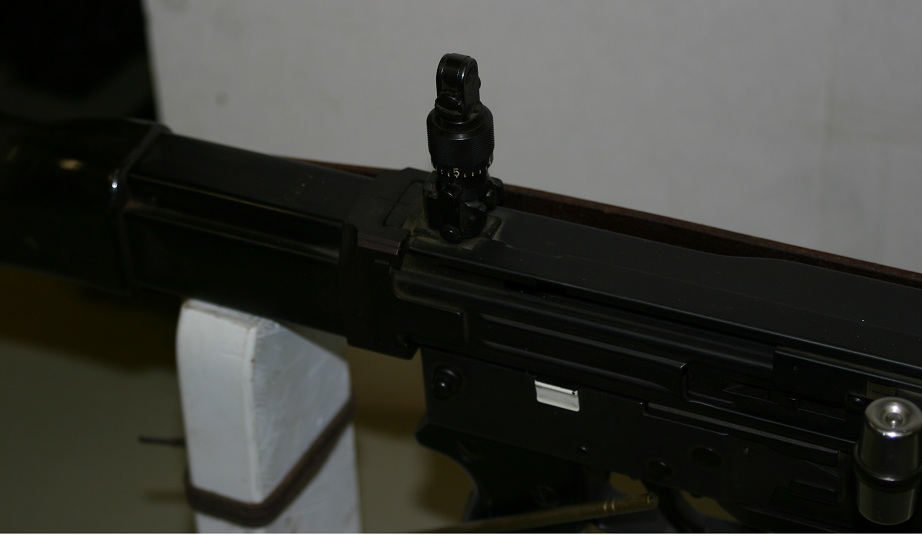
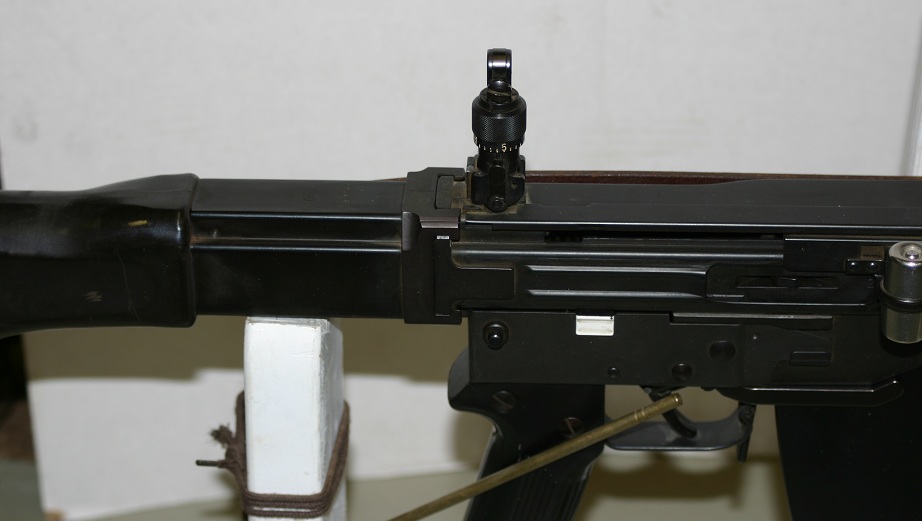
The Stgw57 is a very finely machined rifle, and includes several notable features. As with all roller-delayed designs, the roller recesses in the receiver will eventually wear down, and begin to increase the cartridge headspace. The German rifles (HK91 etc) accept this as the functional service life of the rifle, but the SIG has interchangeable locking recesses, so they can be replaced when worn. The sights on the export guns are a basic sliding aperture, but the Swiss issue guns use a micrometer type folding rear sight very reminiscent of the German FG42.
The Stgw57 was the primary Swiss infantry rifle until the 1980s, when the SIG 550 was adopted to replace it. The Stgw57 was also adopted by the Bolivian and Chilean armies. A version in 7.62x39mm (the 510-3) was developed for trials in Finland, but ultimately not put into production. Videos
Right now, Britain is like the Wild West of Europe, and it’s been said our police have lost control of our streets. I asked serving members of the British Police what it is like to be a police officer in the U.K. today. Their truths will make you weep.
This is Dave’s story:
“In 1999 I was suspended from the police over an allegation of assault against an Asian male who had beaten his girlfriend in the street.
“It was a night shift and I was crewed with a female probationer. Without backup or assistance, I needed to use CS spray and my baton to control the situation and arrest the man.
“My accuser is a 6ft 4” kick-boxing expert, an alleged enforcer for a local drugs baron. He’s suspected of one murder and has been convicted for various violent offences, including firearms. I am 5ft 6” and weigh 12 stone in all my kit.
“He made a complaint of racially aggravated assault and I was charged and suspended.
“I was told by my division commander, off the record, that the only reason I was being charged was because the police didn’t want to deal with the publicity of acknowledging I acted within the rules for the use of force. In fact, the force paid him £12k in compensation before the case even got to court, during which time my accuser was shot in a drugs feud and I was listed as a suspect. He survived.
“After a four-day trial at Crown Court, it took just 20 minutes for me to be found not guilty. Unanimously.
“I returned to duty broken. I lost my first marriage from the stress of it all.
“When I returned to work I was put on a race and diversity course, implying I had acted with prejudice despite the not-guilty verdict. I was also given a written warning over my conduct during the investigation.”
Now ask yourself why anyone would want to be a police officer in the UK today.
Why would anyone want to join when this is how we treat the people tasked to protect us? When crime has reached all-time highs and public trust is at an all-time low?
Machete gangs on mopeds race through London’s streets threatening to kill for a watch or phone, with no fear of recrimination. Shootings, stabbings and acid attacks are so commonplace they barely raise an eyebrow in the news. The Metropolitan Police Force has been accused of losing control of London.
And yet it has managed to assert a vice-like grip over its own employees, preventing them from speaking out about the impossible position they are in and the lack of support they receive from their seniors.
When I ask serving police officers to share their stories, they all begin the same way:
“Don’t use my name. I’ll be sacked for bringing the service into disrepute.”
I assure them I will use pseudonyms and keep their trust.
Sarah says:
“I am ashamed, as are all my colleagues. Serving officers are working in a PC environment with their hands tied behind their back, scared to actually make decisions. The police service has been destroyed and men and women who’ve given blood, sweat and tears over years have been badly let down.”
One thing is clear. Serving police officers want to get on with the job of policing and catching criminals. But they are prevented by a new breed of highly politicised police managers without practical policing experience.
A senior officer tells me:
“For many their only dealings with crime are seeing police tape on while on a stroll to get their first Frappuccino of the day. They find it hard to envision a 13-year-old armed with a machine gun and in possession of over £1,000 and quantities of drugs. They believe the screaming man they see being cuffed on the floor could be spoken to rationally or in a more friendly manner, even though that man has been off his meds for two weeks and has just been on a 72-hour crack binge.”
This new breed of police manager knows that being politically correct and putting minorities first is the path to promotion and pension:
“The new management class is obsessed with social media and political correctness instead of getting in criminals’ faces. They pander to the whims of local minorities and in many ways treat them more favourably.
“Problems are dealt with only when they get in the press. They chase after ‘victims’ who are themselves criminals and the subject of some feud, rather than deal with real victims who deserve our time.”
I am sent a photo by a serving officer in the Yorkshire Police, sick of the endless courses on Islam or Trans Acceptance he is obliged to attend, another day of policing wasted to placate his PC masters.
READNew Year’s Address by Katie Hopkins
Andy shares his experiences from a football match at Crystal Palace:
“We were recently sent to assist with the policing of the Brighton v. Crystal Palace football game. In the briefing our sergeant told us we must be VERY proactive in dealing with any abusive homophobic chants. If a Crystal Palace fan was heard singing anything that could be deemed homophobic, we were to take immediate and decisive action.
“During the game a man drove by chatting loudly on a mobile phone. I said to my sergeant, ‘Aren’t we going to do anything about that?’ He replied: ‘We aren’t here for that but your enthusiasm has been noted.’
“So someone singing an immature chant in a pub is a priority but a driver on his mobile phone who could run over a child is not. That’s modern policing for you. It’s all about appearance and virtue-signalling.”
Many former officers have used their extensive experience to report crime, only to be ignored:
“I spent 30 years in the force. I once rang in to report scooter thieves heading into the West End. When I eventually got through and gave a full explanation of my experience and reasons for ringing, I was met with indifference. I no longer ring. The police have given the streets up to feral, dangerous youths. London is slowly declining into the sort of third-world city we have been warned to avoid when travelling.”
Officers working in specialist units dealing with child abuse and paedophilia have watched their jobs and status deteriorate as ‘new priorities’ around diversity and sensitivity to Muslim communities take precedence:
“I am a serving Metropolitan Police officer and have worked in some of the most rewarding units in the Met, from the Vice Unit that looked after Soho (CO14) and the Paedophile Unit based at Empress State Building (ESB) in West Brompton (SCD9). These forces have been decimated by new spending priorities.
“We were a specialist unit that was 100% focused on dealing with child abuse. Now? Forget it, they are made to feel worthless. It was a detective-level role because it was serious. Now it’s staffed with PCs. It’s a disgrace. I’m in regular contact with my old friends in the paedophile unit and they all want to leave. When diversity and minorities are the priority, child abuse goes to the back of the queue.”
Many officers say they cannot wait to get out of the force, sick of seeing the job they loved so diminished. Or new recruits accepted to tick the diversity box, who would never have made it through recruitment just five years ago. White males were not even invited to a day on how to succeed at selection. Only minority, LGBT, Muslim or non-whites were free to attend.
But my inbox is also full of stories from officers who were forced out against their will, after complaints against them from those they have apprehended – like Dave, whose story we began with:
“I was a front-line officer in Telford for 12 years. I was eventually hounded out of the job for using ‘excessive’ force to save a nine-month-old child’s life.”
(A force too excessive to save a baby’s life? Now there’s a contradiction in terms.)
The lack of support from those high up the chain of command has made policing an impossible task. Police officers make split-second decisions in real time. The law judges them slowly in the comfort of the court. Barristers are paid to ‘prove’ them guilty. And then they face time inside for doing their job.
Even senior officers acknowledge that they operate in constant fear of being seen to ‘victim shame’ offenders, or to be deemed confrontational and insensitive to an offender’s needs, vulnerabilities or minority status.
“These fears have been imposed upon us by people who feel that corruption, racism, brutality and incompetence are all prevalent within the day-to-day policing of the city. This is simply not true.”
The result is officers on the street who are expected to tiptoe around these sensitivities instead of policing from a position of strength, and criminals who are perfectly aware how shackled our officers are and who know they have the right to complain on racial or minority lines.
Which is why the crime stats rise, criminals are the new victims, and, in far too many cases, the good guys wind up in the dock.
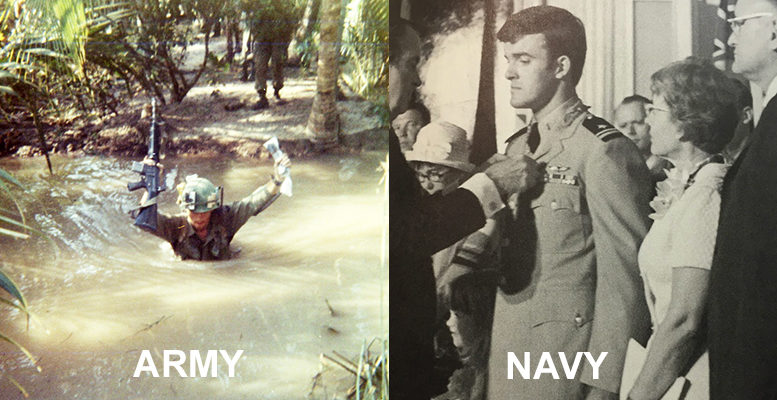
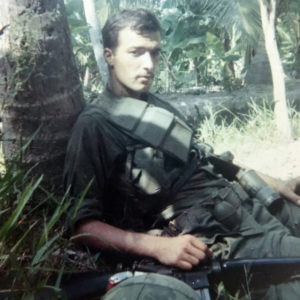
(left) SGT Ed Eaton, U.S. Army, in the Mekong Delta, Vietnam, (right) LTJG Bob Kerrey, USN, at the White House receiving the Medal of Honor from President Richard Nixon
The NAVY man slaughters a village and three weeks later, purportedly drops his own grenade and nearly blew his right leg off. The ARMY man, on the ground at approximately the same time, but in another location, single-handedly fends off 30+ Vietcong guerrillas to save one man.
Which one do you think received the Medal-of-Honor from President Richard Nixon, the Army guy or the Navy guy?
The two men we refer to are LTJG Joseph Robert (Bob) Kerrey, and SGT Ed Eaton. Both men are Americans, and both men served in the Vietnam War. But, that’s pretty much were the similarity ends. Aside from obvious differences, is the fact that Kerrey received the Medal of Honor for his dubious actions in Vietnam, and Eaton has thus far been denied the Medal of Honor for an act of heroism that defies description.
Ed Eaton’s commanding officer Captain Mike Perkins detailed what occurred from his hospital bed and submitted a formal recommendation for Ed to receive the Medal of Honor, but someone in the Army dropped the ball. Army headquarters claimed they never received Capt. Perkins’ recommendation.
We ask our readers to compare and contrast for themselves which one of these men should have been awarded the Medal of Honor. We believe that President Nixon bestowed the Medal of Honor on the wrong guy.
CASE #1
LTJG JOSEPH ROBERT (BOB) KERREY, USN
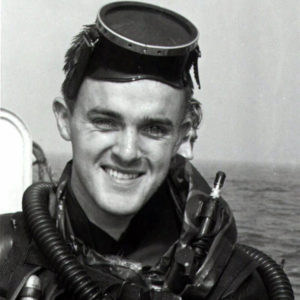
Bob Kerrey
Kerrey was an officer and Navy Seal, and Eaton was enlisted Army sniper. Kerrey deployed to the Republic of Vietnam as assistant platoon commander with Delta Platoon, SEAL Team ONE in January 1969.
Bob Kerrey was wounded and lost the lower part of his right leg on Hon Tre Island near Nha Trang Bay on March 14, 1969. It’s said that his injuries were self-inflicted when he accidentally dropped a grenade that exploded severely damaging his right leg. This is based on information from people who were on the ground in Vietnam at the time.
His Medal of Honor citation reads, “utilizing his radioman, LTJG Kerrey called in the second element’s fire support which caught the confused Vietcong in a devastating cross fire. After successfully suppressing the enemy’s fire, and although immobilized by his multiple wounds, he continued to maintain calm, superlative control as he ordered his team to secure and defend an extraction site.”
Of course the MOH citation failed to mention that Kerrey almost blew himself to kingdom-come by accidentally dropping his own grenade. As a result of his injuries, Kerrey received a medical discharge from the Navy.
A little over a year later, on May 14, 1970, President Richard Nixon awarded LTJG Bob Kerrey the Medal of Honor during a ceremony at the White House. From there, Bob Kerrey went on to become the Governor of Nebraska, then U.S. Senator from Nebraska, politically milking his Medal of Honor for all it was worth.
In September 1991, Kerrey announced his candidacy for the 1992 Democrat nomination for President. In a small field of five second-tier candidates devoid of an early front-runner, Kerrey was seen as the early favorite. However, his performance on the campaign trail sometimes seemed lackluster, especially in comparison to that of the slick Governor of Arkansas, Bill Clinton.
Kerrey finished third in the New Hampshire primary in February 1992, despite spending heavily on TV advertising. He briefly rebounded after winning the South Dakota primary but soon dropped out of the race after finishing fourth in the Colorado primary. Kerrey was on Clinton’s “short list” of vice presidential candidates, but decided to pick Tennessee Senator Al Gore instead. Clinton’s selection may have been just political strategy, or his selection of Gore over Kerrey could have been motivated by seeing something in Kerrey that he just didn’t like. KERRY’s RAID ON THANH PHONG VILLAGE
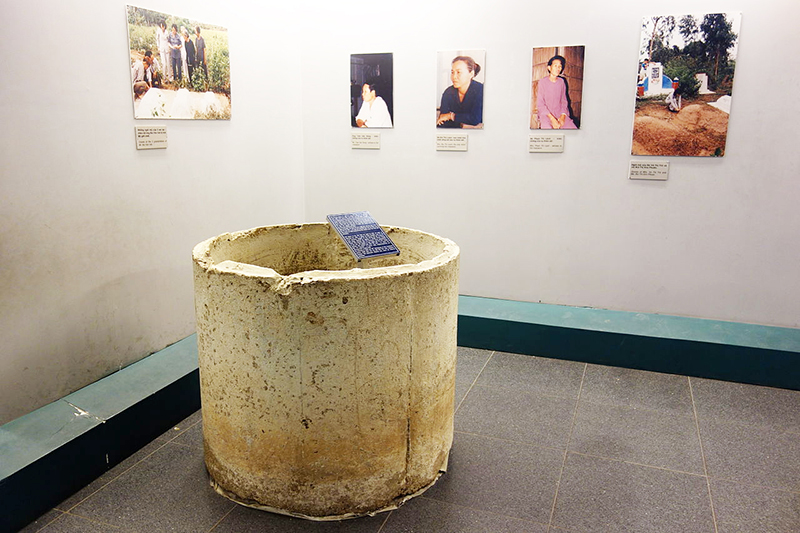
The Thanh Phong sewer pipe in which three children allegedly hid before being killed is on display at the War Remnants Museum in Ho Chi Minh City
About two weeks before the fire-fight on Hon Tre Island that ultimately resulted in severe leg injuries to Kerrey’s right leg and his Medal of Honor, there was another attack. On 25 FEB 1969, LTJG Kerrey led a Swift Boat raid on the isolated peasant village of Thanh Phong, targeting a Vietcong leader whom intelligence suggested would likely be present.
Kerrey’s SEAL team first encountered a villager’s house. Later, according to Kerrey, the team was shot at from the village and returned fire, only to find after the battle that some of the deceased appeared to be children, clustered together in the center of the village. “The thing that I will remember until the day I die is walking in and finding, I don’t know, 14 or so, I don’t even know what the number was, women and children who were dead”, Kerrey said in 1998. “I was expecting to find Vietcong soldiers with weapons, dead. Instead I found women and children.”
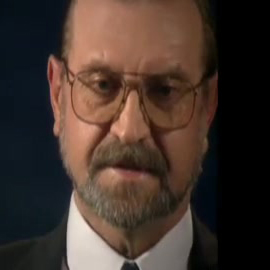
Gerhard Klann, a member of Kerrey’s SEAL team that night, gave a much different version independently supported by a separate interview with a Vietnamese woman named, Pham Tri Lanh. According to Klann, the team rounded up the women and children from hooches (shelters) and decided to “kill them and get out of there”, for fear that they would alert enemy soldiers.
Gerhard Klann
If Kerrey’s Seal Team did not round up the women and children and commit wholesale murder, then his response would have been clear and concise, something like, ‘Fuck NO! We did no such thing.’
Kerry’s typical hair-splitting political response of, “it’s not my memory of it” and his attack on Gerhard Klann, indicated to many who viewed the 60-Minutes interview, that Kerrey was probably dancing the Potomac two-step. Gerhard Klann’s account of what happened in Thanh Phong is probably true.
After the story broke on CBS 60-Minutes about the slaughter at Thanh Phong, the other members of Kerrey’s SEAL team met secretly with Bob Kerrey. They all gathered to either get their stories straight, or to decide to forever remain quiet about what happened in Than Phong, Vietnam.
After the secret meeting adjourned, the Navy Seals involved in the raid on Thanh Phong decided to “wholeheartedly” deny Gerhard Klann’s account. It was easier to call Gerhard a liar, than to admit to participating in a heinous act of genocide.
Kerrey expressed guilt over the incident, saying: “You can never, can never get away from it. It darkens your day. I thought dying for your country was the worst thing that could happen to you, and I don’t think it is. I think killing for your country can be a lot worse. Because that’s the memory that haunts.”
RIGHT HERE – IS WHERE WE PART COMPANY WITH BOB KERREY
The wholesale slaughter of women and children seemed to only darkened his day! WTF!
It’s clear from the quotes above that Kerrey is terribly confused. Killing enemy “combatants” for your country to achieve victory is actually a good thing. It’s the killing women, children and seniors that’s a bad thing. War is horrible and images from war can “haunt” those who experienced it. It’s important to note here that not all women and children were innocent. There were many instances in Vietnam where a women or child would “innocently” run up to one of our brave lads and pull the pin on a grenade. When anyone, regardless of their age or gender picks up a weapon, they become a potential combatant.
Unless you are a sociopath, memories of atrocities that rise to the level of heinous war crimes are more likely to create vivid memories which can “haunt” someone their entire life. Maybe that’s what Kerrey meant when he used the word “haunt.”
Amazingly, Bob Kerrey was actually awarded a Bronze Star by the United States Navy for the deaths of women and children at Thanh Phong. Whether the deaths were accidental or intentional, the people who caused it should have been disciplined, not given an award for heroism. Whether intentional or accidental, THERE WAS NOTHING HEROIC ABOUT IT. The citation for Kerrey’s Bronze Star medal reads, “The net result of his patrol was 21 Vietcong killed, two hooches destroyed and two enemy weapons captured.”
There was no mention of the dead women, children and seniors in the citation for some reason. And the memories that were allegedly “haunting” Kerrey didn’t seem to bother him when the Navy pinned a Bronze Star on his chest that represented what he and others had done in Thanh Phong. A veteran newsman who actually covered Bob Kerrey later on in his life believed him to be a complete sociopath. A sociopath is a person with a psychopathic personality whose behavior is antisocial, often criminal, and who lacks a sense of moral responsibility or social conscience. THE BACK STORY
The real reason Kerrey received his MOH may not have been for any action of his, but more because President Nixon desperately needed a distraction from negative political issues that were piling up on him.
President Nixon found himself mired down with several issues that were politically detrimental long before the Watergate scandal broke. And, to create a needed distraction, it’s said that he ordered one of his minions in the White House to find someone he could give a Medal of Honor to.
So, acting on the President’s direction, the military combed through the after-action reports and discovered a young Navy Seal who was wounded in battle at Hon Tre Island. He was from the heartland in Nebraska and for all intents and purposes, the All American Boy.
It was just what the “doctor” ordered. But, what President Nixon most likely did not know at the time, was that Kerrey and his Seal team were responsible for the killing of about 14 women and children at Thanh Phong only a couple-three weeks prior.
CASE #2
ARMY SERGEANT ED EATON
IS A DIFFERENT STORY ALTOGETHER
SGT Eaton was based on a ship in the Mobile Riverine Force. On approximately 03 APR 1969, a little more than a month after Bob Kerrey paid a visit on Thanh Phong Village, 19-year-old Ed Eaton and nine others boarded a helicopter for a night raid on what was believed to be a Vietcong stronghold. Once they realized the overwhelming strength of the enemy force, they decided to vacate the area and fight another day.
During the scramble to evacuate, one of the two helicopters was hit by enemy fire as it took off and went down hard. The other came back to pick up survivors. What happened then is better explained in the video below. The video is a reenactment of the event was aired on the History Channel. It’s appropriately entitled “AN ARMY OF ONE.”
In 2009, forty years after Captain Mike Perkins submitted his recommendation for Eaton to receive the Medal of Honor, they both discovered the recommendation never arrived at Army Headquarters for some unknown reason. It’s speculated that because their unit had been moved all around hither and yon, the recommendation could have wound up in a box and there is sits to this day.
SGT Ed Eaton on the Mekong Delta, Vietnam
On a trip back to Vietnam in an effort to give warriors on both sides a sense of peace, the Vietnamese Army general who was in-charge of all enemy forces in the Mekong Delta told Ed Eaton, that he had fought many different armies throughout his military career, and the one thing that he appreciated about most of his American adversaries was the fact they left the Vietnamese women and children alone. Not only were they left alone, but many times American forces would provide food and medicine before leaving the area.
It’s clear by the general’s statement to Ed Eaton, that most American military units ARE NOT cold-blooded murders like Lt. William Calley at the My Lai Massacre, or LTJG Kerrey’s Seal Team at Thanh Phong. By and large, the American military in Vietnam and in battles around the world, continues to demonstrate that it’s there to provide a intimidating deterrence, and if necessary utterly destroy enemy combatants. but leave non-combatants alone.
Many times American military units have placed themselves at extreme risk, and actually lost their own lives protecting women, children and seniors who frequently disclosed their location to enemy combatants. It’s rare that an American military unit will slaughter women and children to avoid being detected as Bob Kerrey’s team purportedly did at Thanh Phong. Adding insult to injury, the Navy decided to call what Kerrey did in Thanh Phong an act of bravery and awarded him a Bronze Star. WHAT THE HELL REALLY HAPPENED?
All members of the raid that night received an Army Commendation Medal (ACM) which is almost standard operating procedure (SOP) for an engagement against the enemy where a helicopter is shot down, forcing men to scramble for their lives. Ed Eaton and several others ended up with a box full of ACMs for various other engagements with the enemy. Captain Mike Perkins and SGT Ed Eaton eventually parted ways and Perkins always thought the Army surely gave recognized Eaton for his bravery that night.
It wasn’t until the late 1990s when the two men once again connected, that Perkins realized Eaton had received no recognition from the Army for his gallant action saving his life. Perkins felt that ignoring Eaton’s act of valor was a terrible injustice and decided to take action to correct it. Perkins strategically thought that if he drafted up a recommendation for the Silver Star, the Army would at least investigate what happened. The hope was that once the Army discovered the details of Eaton’s actions that night, they would realize his act of heroism rated much more than a Silver Star. Eaton’s courage and skill was actually deserving of America’s highest award, the Medal of Honor.
A frustrated Mike Perkins may have offended someone on the military’s Awards Board and the whole matter was discarded because of someone with bruised feelings. It’s very hard from a seasoned combat warrior to deal with a pencil neck who has no clue as to what real combat is all about. Sadly, the reason that Ed Eaton did not receive the Medal of Honor could simply be due to a crazy set of circumstances resulting in hurt feelings by a Washington bureaucrat. A MESSAGE TO THE UNITED STATES ARMY
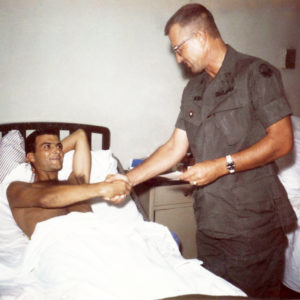
SGT Ed Eaton being congratulated Brigadier General Gunn while laying in his hospital bed at a field hospital in Saigon
ARMY, it’s still not too late to do the right thing and recognize SGT Ed Eaton for his courage and bravery as he fought off 30 or more attackers to protect his commanding officer.
Whether the failure to recommend SGT Ed Eaton for the Medal of Honor was a simple screw up, or an intentional act by someone offended on the Military Awards Board; all of that doesn’t matter now.
There can be no question that Eaton is most deserving of our country’s highest honor. Time does not erase his selfless act of valor in the thick of the fight. The facts bear that out. Do the right thing Army. Give Ed Eaton your highest recommendation for the Congressional Medal of Honor.
Whether Bob Kerrey should have received his Medal of Honor for his actions at Hon Tre Island, or a Bronze Star for his involvement at Thanh Phong, is a matter for history to decide.
But, everyone familiar with SGT Ed Eaton’s selfless act of bravery and courage knows, without a doubt, the United States Army should immediately recommend him for our nation’s highest award.