


The family of .300 magnums grew at the turn of the 21st century, with the 1999 release of the .300 Remington Ultra Magnum and the release of the .300 Winchester Short Magnum in 2001, both based on the classic and underrated .404 Jeffery case.
The former was assuredly a speed demon, requiring a magnum action and driving a .30-caliber bullet to speeds only rivaled by the voluminous .30-378 Weatherby Magnum, but the latter was equally revolutionary and slightly reminiscent of the 6.5 and .350 Remington Magnums of the 1960s.

Where those Remington Magnums were both based on the belted .375 H&H case, shortened to fit in the short-action (.308 Winchester-length) receivers, the new .300 Winchester Short Magnum (WSM) was not belted, relying instead on its 35-degree shoulder for headspacing. The concept of the short, fat cartridge—with a more compact powder column—wasn’t exactly new, as the .308 Winchester and its family had shown in the 1950s.
The history of the .300 WSM is a sordid one, involving lawsuits and court cases; Rick Jamison had a huge part in the development of the design, yet without raking the muck, isn’t always credited for that work (the original name of the .300 WSM was to be the .300 JRW, standing for Jamison, Ruger and Winchester). Nonetheless, the cartridge is a unique design, intended to duplicate the ballistics of the venerated .300 Winchester Magnum, released in 1963.

That cartridge in turn mimicked (actually bettered) the performance of the classic .300 H&H Magnum, but in a long-action receiver instead of the magnum receiver required by the .300 H&H, and now in turn, Winchester offered the same velocity from a short-action rifle. The advantages of the shorter receiver are commonly thought to be enhanced rigidity (a rigid action can help in the accuracy department), reduced weight and a faster follow-up shot due to the shorter bolt throw.
The .300 WSM uses a case which measures 2.100 inches, just .085 inches longer than the .308 Winchester, yet a cartridge overall length of 2.860 inches, compared to the .308’s 2.800-inch overall length. The only way to give a case this short the powder capacity to achieve magnum velocities is to make the case wider, and that’s exactly what the .300 WSM does. Using the base diameter of the common H&H belted case (presumably for ease of manufacturing) instead of that of the slightly larger Jeffery parent case, the .300 WSM has a slightly rebated rim. The case body has very little taper, measuring 0.555 inches and the base, and 0.538 inches at the datum line (where the case body transitions to the shoulder), to provide as much volume as possible.
The velocities of the .300 WSM can supersede those of the .300 Winchester Magnum in factory cartridges. For example, the standard 180-grain load of the .300 Winchester Magnum is 2960 fps, while many of the .300 WSM loads with the same bullet weight will run at 3000 fps or better. While there are few game animals which could ever tell the difference between the two, many shooters appreciate the higher velocity figures. The common factory loads run between 150 grains and 200 grains, though the .300 WSM can handle the full range of .30-caliber bullets. And like the .30-06 Springfield, .308 Winchester and .300 Winchester Magnum, the .300 WSM has a wide selection of factory ammo, from simple cup-and-core bullet choices up through the premium bonded-core and monometal bullet choices.

Like the other .300 magnums, the .300 WSM is fully capable of taking the full range of North American big game—though I personally feel there are better tools for the brown bear and bison—and any African plains game species at all, as well as being just about perfect for leopard, and will handle lion in a pinch.
There are factory loads specifically designed for taking deer—Hornady’s American Whitetail load drives a 165-grain InterLock cup-and-core bullet to 3130 fps—but like the .300 Winchester, the magnum velocity can make a mess of things, leaving a bunch of blood-shot meat. Think about the distances at which you shoot and adjust your bullet choice accordingly; if you want to use your .300 WSM in the Northeast where shots are close, choose a premium bullet to avoid an excessive mess.
The .300 WSM design does have its issues, not the least of which is a steep shoulder which can often lead to feeding issues. I have shot quite a few different .300 WSM rifles, and unless it was a custom rifle where special attention was paid to the magazine follower and feed ramp, I have had quite a few feeding problems with this cartridge. Driving a large 35-degree shoulder into the feed ramp can obviously pose an issue, and this warrants a bit of concern.
Handloading for the .300 WSM isn’t exactly difficult, but I have found the cartridge to be a bit more finicky than the .300 Winchester. Look to powders in the H414/Reloder 22/IMR 4350 range for all-around choices, keeping in mind that case capacity is at a premium, and that a good many loads will be compressed. Ball powders like Hodgdon’s H414 and Alliant’s Power Pro 4000-MR will generate the velocities you’re looking for without compromising case capacity; you’ll definitely want a large rifle magnum primer to spark the heavy powder charges.

There are those who feel the WSM family is an example of the law of diminishing returns, and that the shooter/hunter may be better off with a more traditional cartridge. I do feel that the smaller siblings of the .300 WSM—namely the .223, .243 and .25 WSSM cartridges—suffer from a lack of attention from the ammunition manufacturers, as both ammo and component brass cases are quite often unattainable, and they probably won’t be with us for very long. I also feel the .300 WSM is the best design of the lot, and that includes the .270 WSM, 7mm WSM and .325 WSM.
The .300 WSM has proven to be wonderfully accurate in a well-tuned rifle, and when things are built properly it truly is the equal of the .300 Winchester Magnum; it just requires more attention to make sure the cartridge feeds properly. Will it push the belted .300 Winchester Magnum out of the limelight? I don’t think so. There is, however, room for both.
Looking for previous installments of our “Behind the Bullet” series? We’ve got you covered.
• 28 Nosler
• 6.5 PRC
• .22 WMR
• .458 Winchester Magnum
• .204 Ruger
• .22 Hornet
• .280 Ackley Improved
• .240 Weatherby Magnum
• .458 Lott
• .264 Winchester Magnum
• .348 Winchester
• .33 Nosler
• .260 Remington
• .30-30 Winchester
• .416 Rigby
• .358 Norma Magnum
• .22 LR
• 7mm-08 Remington
• 8mm Remington Magnum
• .338 Federal
• .224 Valkyrie
• .338-06 A-Square
• 9.3x62mm Mauser
• .257 Weatherby Magnum
• .45-70 Government
• .300 H&H Magnum
• .25-06 Remington
• .30-06 Springfield
• 6.5 Creedmoor
• .300 Remington Ultra Magnum
• 7mm Remington Magnum
• .470 Nitro Express
• .280 Remington
• .300 Winchester Magnum
• .270 Winchester
• .222 Remington
• .45 ACP
• .404 Jeffery
• .44 Remington Magnum
• .41 Remington Magnum
• .243 Winchester
• .338 Winchester Magnum
• .357 S&W Magnum
• 6.5-284 Norma
• 8×57 Mauser
• .38 Smith & Wesson Special
• 7x57mm Mauser
• 9 mm Luger
• .35 Whelen
• .454 Casull
• .375 H&H Magnum
• .45 Colt
• .22-250 Remington
• 10mm Auto
• .308 Winchester
———————————————————–Let me see now. You have a round that nobody wanted really. Plus you lose one round capacity in your magazine. That and you will have one hell of a time finding it either in the city. Or God help you, If you try and find a box or two out in the field. As I doubt Jimmy Bob’s Gas Station in the back of beyond. will carry a box of it. But a box or two of 223, 30-06, 270 Win or 243? Oh Hell yeah, This is America Bubba!
Other than that its a brilliant solution to a problem that did NOT exist!! Grumpy
 BILL BUCKLEY
My love affair with lever guns started with a plastic Winchester M94—my first toy gun—and was cemented by my first real rifle, a Winchester 9422 Magnum that was a graduation present. Like me, countless other hunters have fallen under the lever-gun spell. But as we know, fine accuracy isn’t the forte of the platform. That said, there are ways to improve groups and increase the range of your beloved .30/30.
Lever-action rifles are unique in a couple of ways. They use a tubular magazine below the barrel that feeds cartridges into the chamber, which gives them a large ammunition capacity while maintaining their slim lines. However, this system can compromise accuracy.
The magazine tube and fore-end on lever actions are tightly fitted to the barrel and receiver. This does not allow the barrel to vibrate freely and puts pressure on the barrel as it heats up, causing a loss of accuracy and a shifting point of impact.
Lever rifles are also unusually stocked. The buttstock is attached to the rear of the receiver and the fore-end to the front of the receiver. Thus, the receiver forms the backbone of the rifle instead of the stock, as is the case with bolt actions. Excessive or inconsistent pressure on the stock of a lever gun will also degrade accuracy.
Before modifying your lever gun, consider its vintage and condition. A rifle that is in good shape and was manufactured anywhere near the beginning of the last century should be treated very carefully, lest you destroy its value. With a rifle like that, I recommend sticking to just loosening screws and not permanently modifying parts. A later-model rifle—say, from the 1950s on—could warrant more aggressive alterations.
Tuning a lever action amounts to creating a small amount of movement between the magazine and the fore-end relative to the barrel. Loosen the screw at the front of the magazine tube and the screw on the barrel band on the fore-end (for a carbine) or the two screws on the fore-end cap on a rifle. Put a drop of blue thread locker on these screws and leave the screws a little loose. This allows the magazine tube a small amount of movement relative to the barrel. I wouldn’t do more than this with a valuable vintage rifle.
With a newer rifle, in addition to loosening the screws, you can also shorten the magazine tube by taking .010 inch to .015 inch off the end that inserts into the receiver. You’ll also want to remove a small amount of wood from the fore-end with a few strokes of a file or sandpaper. Do this along the barrel channel and where it fits into the receiver as well. You want the fore-end to slip into the recess in the receiver with minimal resistance. This prevents binding on the barrel as it heats up. These adjustments will improve the accuracy and consistency of the point of impact as the barrel gets hot.
As a side note, these modifications were incorporated into Marlin’s XLR series of rifles to improve their accuracy and take maximum advantage of the LeverEvolution line of ammunition, which I helped develop. Tests done by editors at Outdoor Life and other publications in 2006 demonstrated the accuracy gains of these alterations.

Lever rifles have had buckhorn sights since the first 1860 Henry rifle. These sights work well for shooters with good eyesight and at modest ranges. Of course, the most effective sight for any rifle is an optical sight—a red-dot or scope. But if you want to maintain a lever gun’s elegant lines and handling qualities, the best option is a peep sight. Among the benefits of a peep sight are the increased sight radius—the distance between the front and rear sights— which improves accuracy, and the fact that they give a clearer view of the target than buckhorns.
There are two types of peep sights available for lever rifles: receiver-mounted or tang-mounted. Williams Sight Company and Lyman offer different types of receiver sights, while Lyman and Marbles make tang sights for most lever-gun models.
If a lever rifle is shot off bags underneath the fore-end and buttstock while the shooter presses his cheek on the stock, the rifle will flex and the point of impact will shift. My suggestion is to not use a rear bag at all. Instead, just pull the rifle in to your shoulder, as you would if you were in the field, while supporting the fore-end on a rest.
For bench shooting, fire only three-shot groups and let the gun cool for five minutes between strings. This prevents the gun from getting excessively hot and the point of impact from moving.

Hornady LeverEvolution ammunition, which allows you to use spitzer-style bullets in tubular magazines, and the Marlin XLR rifles dramatically improved the performance of lever guns right out of the box. Because LeverEvolution ammunition shoots much flatter than traditional lever-gun ammo, you’ll need to put a taller front sight on the rifle.
Read Next: The Top 10 Lever-Action Rifles of All Time

To tighten up the groups on a lever gun, the answer lies, ironically, in loosening some of the screws and relieving pressure on tight-fitting spots where the stock joins the receiver. All of these modifications are done in order to minimize the external influences on the barrel. The closer we can get to allowing the barrel to free-float, the better.
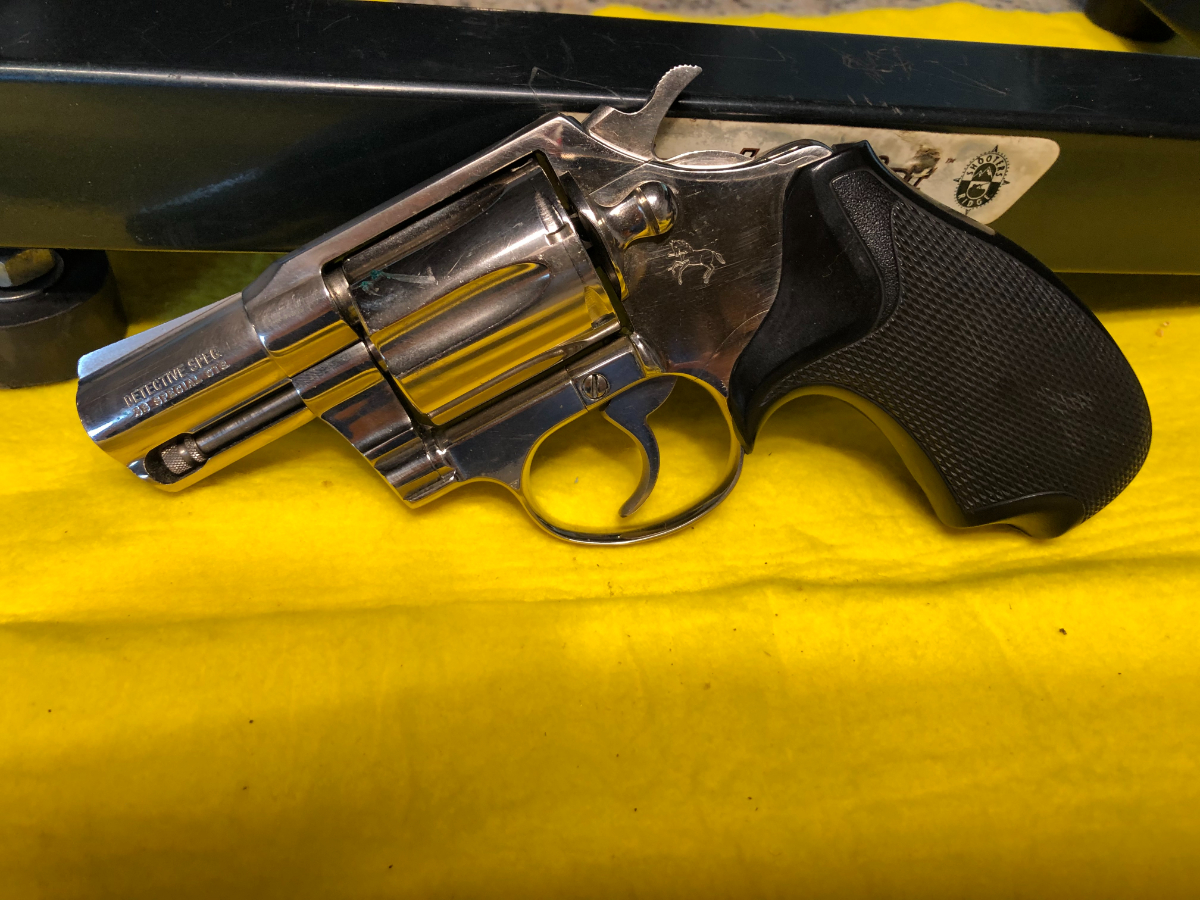
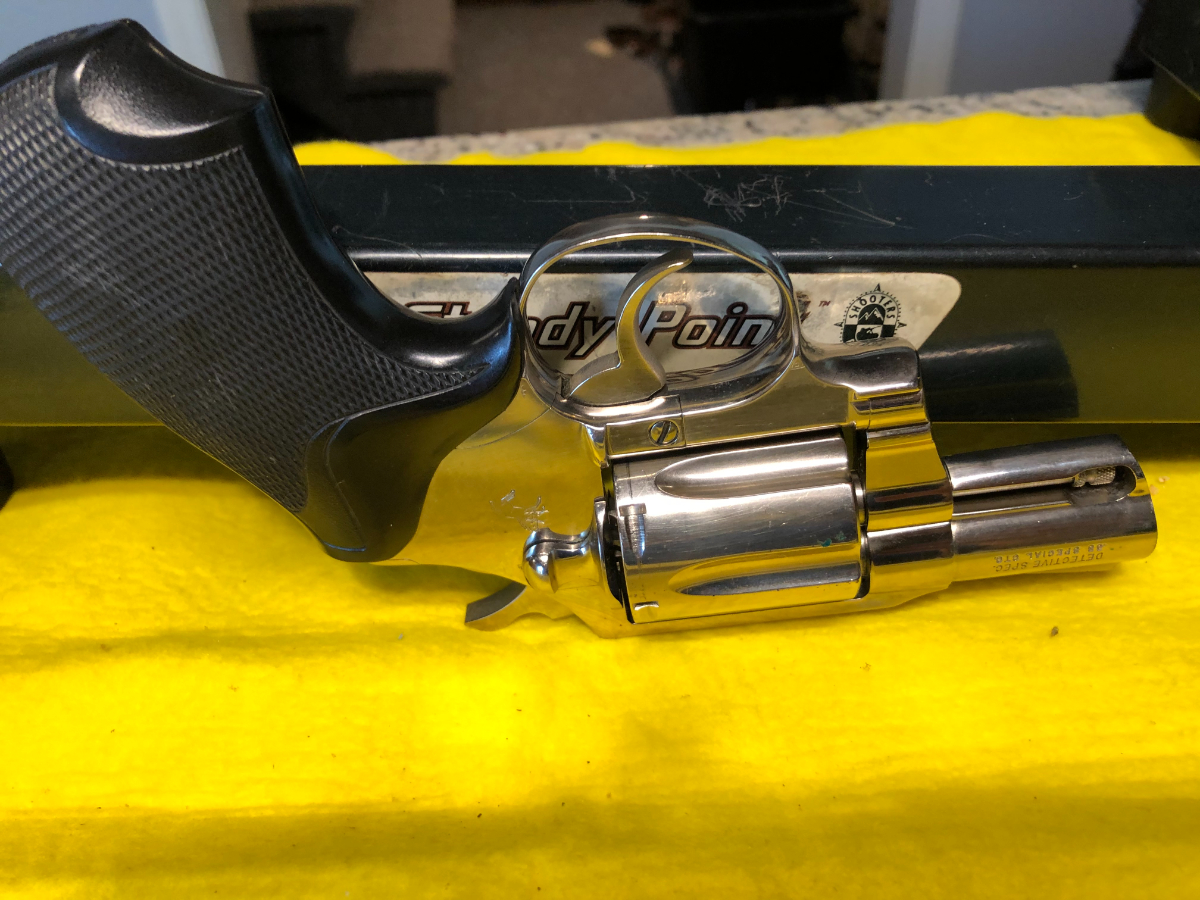
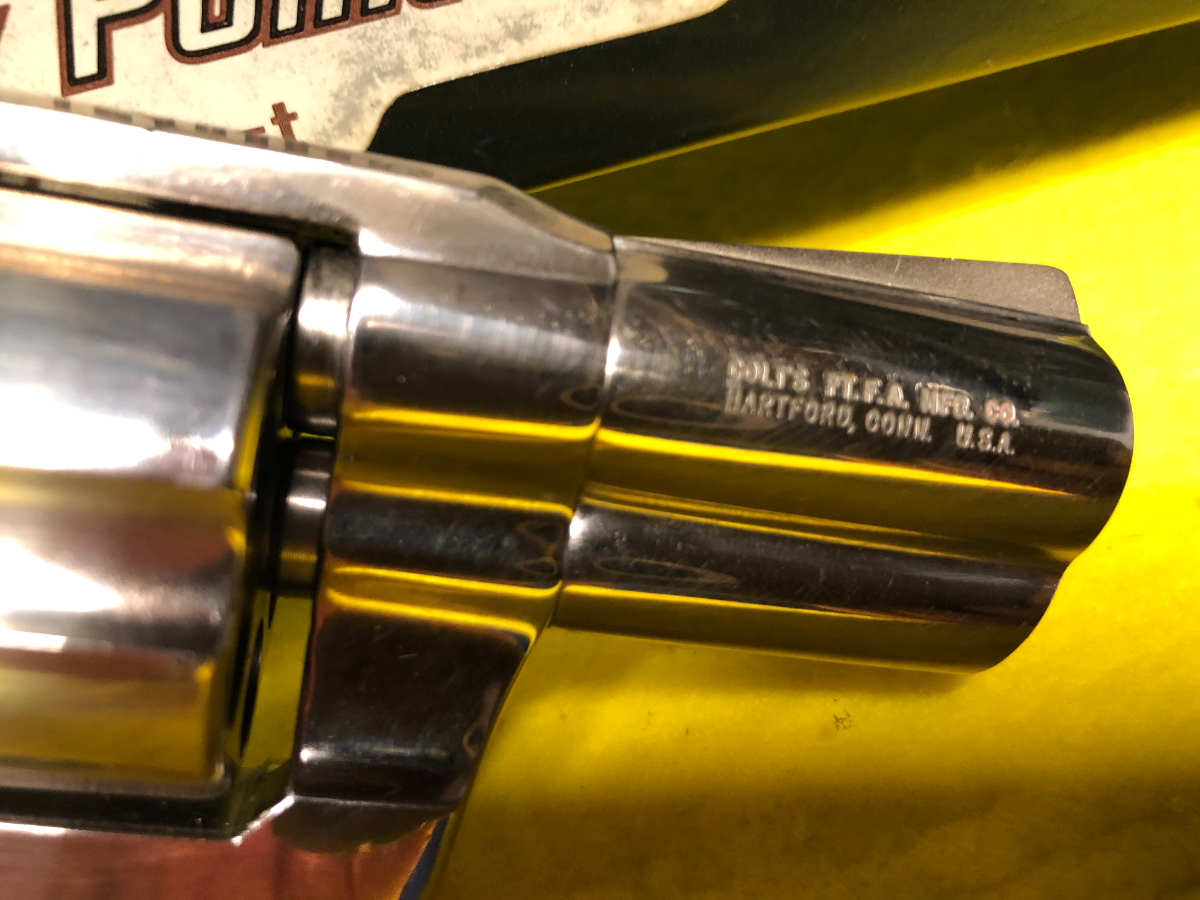

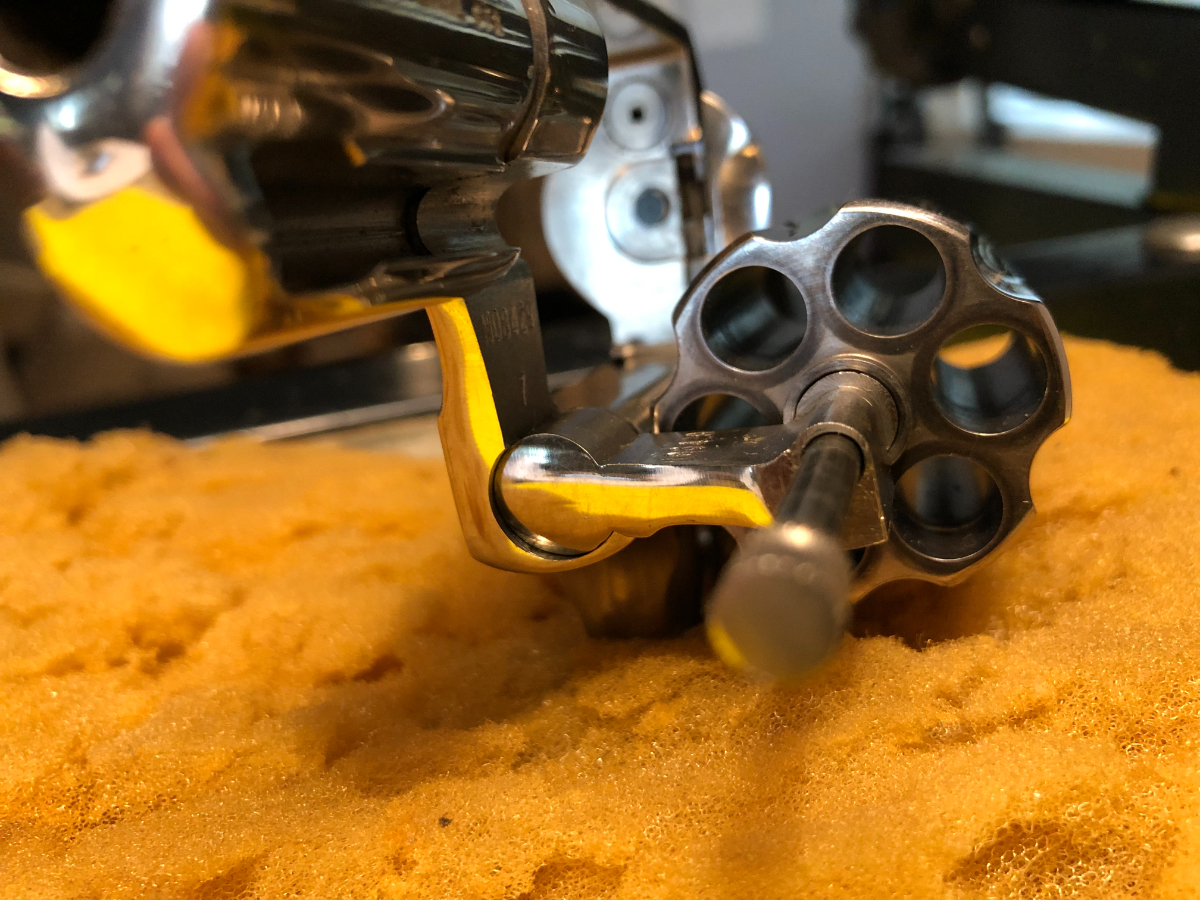

It’s tempting to think that the “revolution” of high-tech micro pistols is a new thing, but it’s not really accurate.
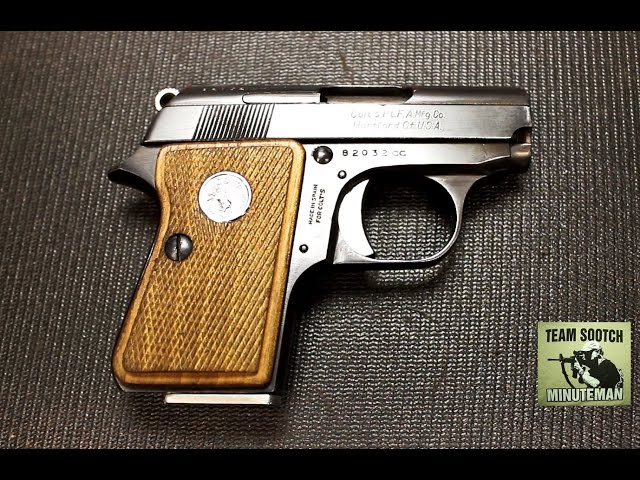
Small guns like this Colt Junior have been pushing the limits on size for decades, and they did it well before fancy new polymers changed the game. Most shooters would consider this little .25 ACP pistol to be more of a novelty in the age of micro 9mm handguns, but it certainly found its way into a few pockets over the years.

The Colt Junior we pulled from the Guns.com Vault is in .25 ACP, but they did make the guns for calibers as low as .22 Short. This one was manufactured in 1973, but guns such as the “Baby Browning” have been pushing the limits of size for semi-auto pistols for more than a century.

More than that, this gun has some interesting little tricks that helped it stay small and slim. First, you’ll notice the absence of the slide stop on the left side of the otherwise pretty classic Colt profile. Instead, the gun features a safety/slide lock to assist in the disassembly process. The safety levers forward to lock the slide and make the removal of the barrel easier.

Speaking of the barrel, it also serves as the takedown for the slide itself. You’ll notice the small groves on the tip of the barrel above. You can lock the slide back and rotate the barrel at the tip to release the lugs and remove the slide. That partially explains the care taken to add the fluting on the tip of the barrel. The maximum use of space is just another great example of how brilliant pistol engineers have been making tiny guns well before the polymer lines were even conceived.
The guns are very low recoiling because of the fairly anemic .25 ACP round and the overall weight of the all-metal pistol coming in at nearly a pound. But this little shooter is also an interesting storyteller about America’s shifting gun laws. The gun was originally made under a Colt license in Spain by Astra to cut down on the price.


Colt had some of the later models, like this one, assembled in Florida to get around the 1968 Gun Control Act that effectively ended the importation of the Spanish-made Juniors.
The gun is a simple blow-back design with a single-stack magazine. Because it does not have a slide stop, it won’t hold open after the last round. That trait is forgivable if we remember that this is a mouse-sized, vest-pocket gun. Overall, it’s a small package filled with a lot of fun history.