
Categories

For a while at least our Gun Rights are a bit safer! Grumpy

Safari. The mere mention of the word obtains my undivided attention. it is the concept of a hunting adventure in the wild places of Africa.
It’s undoubtedly my happy thought. The word safari is taken from the KiSwahili dialect of East Africa. It simply means ‘journey.’
It represents the challenge of shooting a big-bore rifle. It also represents being in an environment where there are animals large enough to take your life with ease. The CZ 550 American Safari rifle is, in and of itself, a journey.
It has its roots in the Czechoslovakian Brno ZKK 602 rifle, and has come a long way to get to the current inception. That ZKK 602 is still revered among those who enjoy the big bore bolt-action rifles. The action is considered as rock-solid and reliable as a Mauser 98.
The action itself is very strong, making a perfect platform for the popular rimless safari cartridges: like the .375 Holland & Holland Belted Magnum, the .416 Rigby and Remington Magnum, and the .458 Winchester and .458 Lott.
Today’s CZ 550 is a worthy descendant of the ZKK 602. Because it is a true controlled round feed action, it has the same large magazine capacity as the 602, and offers the reliability needed for those who are among dangerous game on a daily basis.
In the last century, bolt-action rifles become the consummate blend of reliability and affordability when it comes to dangerous game rifles.
Yes, I am a fan of the double rifle and all of its baggage, including the logistic and romantic virtues. However, if I need a rifle capable of handling the world’s game and I need it on a budget, the bolt rifle will get the nod every time.
The Mauser 98 action, developed at the end of the 19th century, remains to this day a staple among bolt rifle designs.
There’s a good reason for this. Its design is simple, strong, and fully functional at the worst of moments. Mauser 98 clones are still the basis for fine dangerous game rifles. And the CZ 550 action is a proud descendant of that honored German design.
The 550 is a controlled-round-feed action. This means the bolt face uses a claw to grasp the cartridge rim directly out of the magazine and will control that cartridge all the way into the chamber.
While having been debated for decades, this feature is usually a universal requirement among the Professional Hunters who use a bolt-action rifle.
I personally insist on it – though I know those who do not and have lives to tell the tale – for my own dangerous game guns, and the CZ 550 action is properly equipped with this feature, again a carryover from the Mauser 98 design.
The 550 also uses a blade ejector, one of the strongest and most reliable designs on the market. Those two features alone should warrant the choice of a CZ 550 as a safari gun, but there’s much more offered that adds to the list of benefits of this rifle.
If you prefer iron sights for dangerous game work, and that’s a perfectly viable sighting system, the CZ 550 is well equipped. Express sights, built around a fixed rear sight for 100 yards and undershooting, features a wide V and a vertical white line in the classic safari tradition. Additional leaves, marked for 200 and 300 yards, flip up to extend the range of the rifle.
All these possibilities mate up with a fine barrel-band front sight bead, hooded for protection. The hood has a nice little window cut in the top to allow the natural light to flow to the front bead.
The sights align very naturally, and though that small bead can be a bit tricky on a dark background, it allows for precise shot placement.


The CZ 550 differs from the Mauser design in its safety, which is a two-position affair. Flip it forward to fire. It’s located on the right rear portion of the receiver. The forward position puts the rifle into battery, and allows the operator to work the bolt.
The rearward position blocks the sear and the bolt together. To remove the bolt from the action, a small spring-loaded tab is depressed on the rear left side of the receiver, and the bolt pulls out of the action.
The CZ 550 also has a handy maroon colored cocking indicator at the rear of the bolt. I like these little visual reminders of the status of a rifle, especially when I’m after dangerous game.
A hinged floorplate with its release located on the muzzle side of the trigger guard is a smart idea. It releases the cartridges in the magazine for unloading.
That magazine is another of the positive features of the CZ 550. My test rifle was chambered in .375 Holland & Holland Belted Magnum. It held five cartridges in the magazine and one in the chamber. That is a very reassuring number.

The CZ 550 American Safari Magnum uses a 25-inch hammer forged barrel in .375 H&H. The barrel is of a rather heavy contour, keeping the weight forward.
The rifle’s trigger is a proprietary CZ design and is a single set trigger. In the standard mode of operation, the trigger breaks at 2 pounds, 4 ounces. When the trigger is pushed forward, you get the ‘set’ mode, where it will break at a mere 11.5 ounces.
A good trigger will make or break a rifle, and the CZ 550 has a good trigger, for certain. Coupled with the capabilities of the .375 H&H cartridge, this makes for a solid setup.
The CZ 550 American Safari Magnum is designated as such due to the configuration of its stock. The CZ550 Safari Magnum – what I would call the European counterpart – has a significant drop at the heel in comparison to the American Safari Magnum, which is stocked with a straight comb, perfect for use with a scope.
The stock is Turkish walnut, with two crossbolts to combat the effects of recoil. CZ has opted to go with a sling stud on the forend of the stock, rather than the traditional barrel band location.
This could pose an issue with a hard-recoiling caliber like the .458 Lott, but I found it to pose no problem with the lighter recoiling .375 H&H.
A pliable, 1-inch black recoil pad helps to take the sting out of the big safari cartridges.
My test rifle had a length of pull measuring 14 ¼ inches, which just so happens to fit me perfectly.
For reasons I cannot firmly ascertain, rifles of European design tend to run longer than do our American rifles. I’ve found they fit me better, especially in serious cartridges.
If I had to file a complaint about the CZ 550 American, it would be in the size of the stock. Simply put, it’s huge.
Now, when it comes to a hard-recoiling rifle, I’d certainly want a stock that’s too thick than one that is under-built and would risk a break or crack at the most inopportune time, but I firmly believe the CZ 550 would balance and carry much better if the stock were put on a diet.
It feels, well, swollen, for lack of a better term. It feels a bit thick through the wrist and pistol grip, and is certainly bigger than any of the other safari guns I’ve spent time with.
Again, mechanically this poses no problem. I usually like things over designed, but in comparison to other stock designs, it’s definitely shopping in the plus-sized department.
I suspect the stocks for the whole line are cut to the same dimensions, so on a .375 H&H it would feel large. That said, the overall shape of the stock, if chunky, is good, and helps to keep recoil to a minimum.

The CZ 550 action uses an integral scope base cut into the receiver. This is good, as less moving parts equals less opportunity for something to shoot loose or for a screw to be sheared off.
For my dangerous game guns, I like Talley rings. They have tight tolerances, and when they machine apart, they machine it right.
I’ve yet to need to lap their rings. The detachable models, as I installed on the CZ 550, return to zero each and every time.
I’ve used them on rifles as big as the .500 Jeffery and .505 Gibbs and they’ve yet to fail in any aspect. In those Talley rings, I mounted a Riton 1-5x24mm riflescope, with a 30mm tube and an illuminated reticle.
Now Riton isn’t exactly a household name, but I’ve seen their scopes around.
I was as eager to test their glass. I’m usually not much of an illuminated reticle guy, but considering the caliber and the possible uses of this firearm – Cape buffalo, which are a black target in the shadows, or perhaps a leopard at last light, or even black bear – I thought it’d be fitting.

The .375 H&H Magnum has the reputation it does for very good reasons. It is, in the opinion of this author, the single most useful cartridge ever developed.
It was designed to use bullets weighing between 235 grains and 300 grains, all at respectable velocities. With a good spitzer bullet, the .375 H&H will mimic the trajectory curve of the .30-’06 out to any sane hunting range.
It will do so with considerably more horsepower. Modern bullet developments have done nothing but augment the capabilities of the cartridge, including monometal designs, and commercial heavyweight offerings up to 350 grains.
I grabbed a pretty diverse selection of factory ammunition for testing, wired up the ol’ Oehler 35P, and headed to work.
For testing, I chose the Nosler Custom with 260-grain AccuBonds, the Federal Cape Shok Premium Safari with 300-grain Trophy Bonded Bear Claws, Norma American PH with the 300-grain Oryx bullets, and the Norma African PH ammunition with 350-grain Woodleigh soft points and full metal jacket bullets.
This covers a pretty broad spectrum of hunting situations, from plains game, elk or moose out to 300 yards. It could go even more with the 260s, general hunting with a .375 with the 300 grainers. The pair of Woodleighs would be absolutely perfect for hippo, buffalo and elephant. Well, it turns out this CZ 550 is a shooter.
First, all the ammunition both fed and extracted perfectly, a very important point for a dangerous game rifle.
Even unfired ammunition cycled out of the rifle without issue, which is something all hunters should check in their rifle, should you have a misfire that needs to be cleared quickly.
Recoil was more than manageable, and I’ll attribute that to a rifle on the heavier side of average and a well-proportioned stock.


This picture to me at lest, provides just another couple of reasons.
On why I do not own a cell Phone & that why I am so grateful to be Retired from Teaching! Grumpy
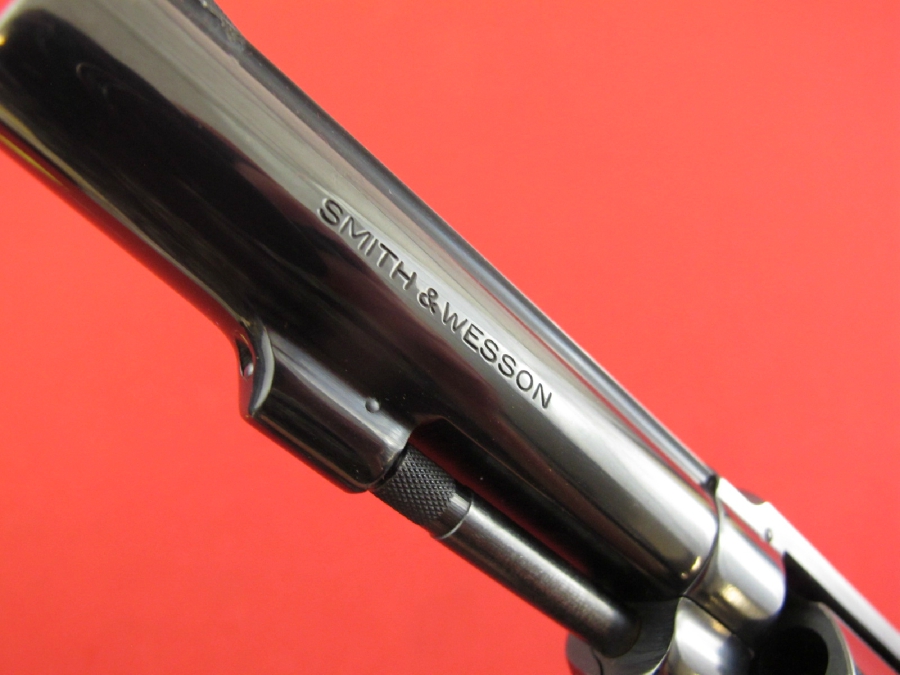
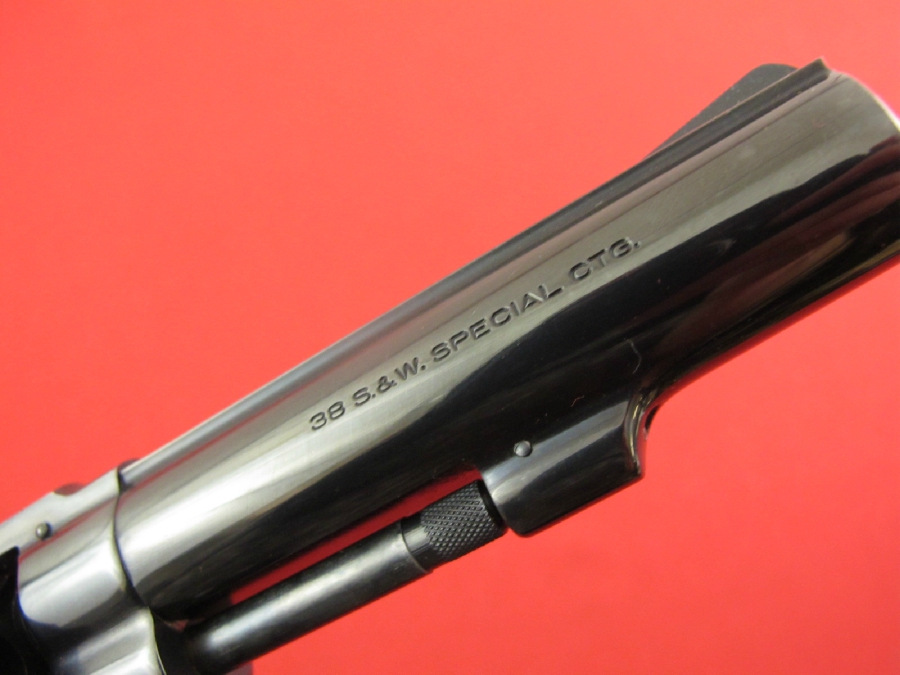
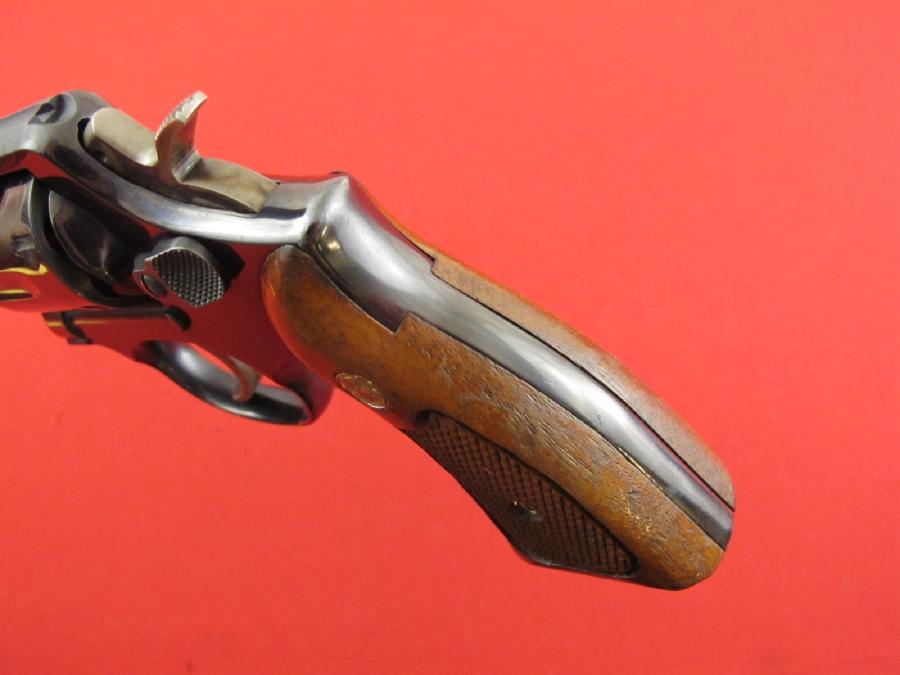
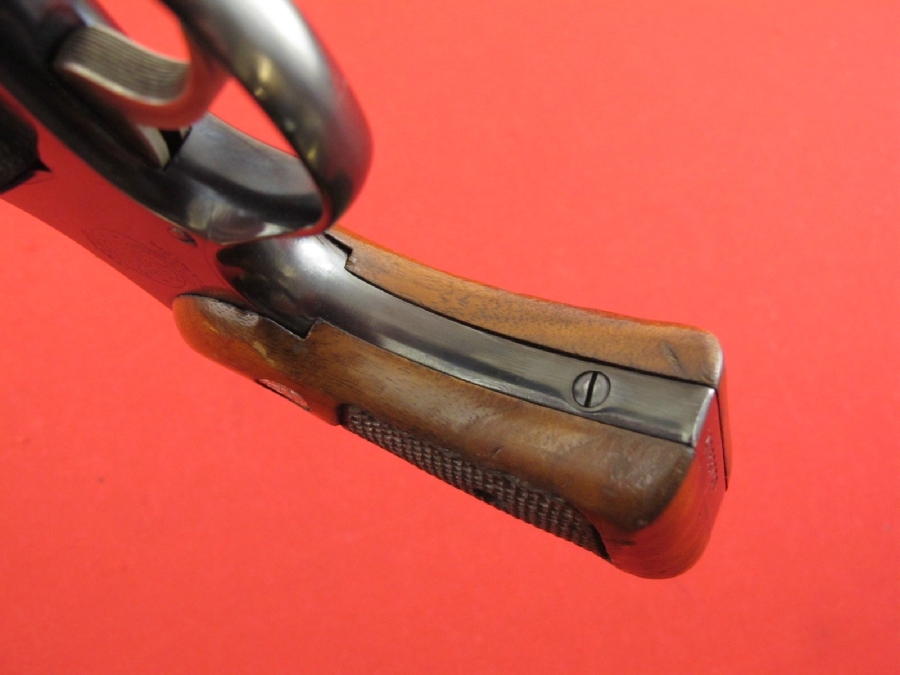


The rosy-tipped dawn of the modern varmint cartridge broke in the early 1930s with the debut of the .22 Hornet, a smokeless version of the old blackpowder .22 Winchester Center Fire. With its little 45-grain jacketed bullet scooting along at 2500 fps, the Hornet proved that the high-performance varmint cartridge was a marketable proposition, and before long it faced a fusillade of competition.
One of these competitors, the .219 Zipper, persisted fitfully from 1938 to 1962 in that purgatory reserved for cartridges that look good on paper but somehow never quite measure up in real life. At this late date, it’s difficult to determine exactly how the .219 Zipper ended up on the compost heap of shooting history.
Some sources say the Zipper first saw the light of day in 1936; others say the Winchester 64, the first rifle chambered for it, didn’t arrive until 1938. We can speculate, however, that the sad story of the .219 Zipper really began with an even earlier cartridge, the .22 Savage High Power.
Introduced way back in 1912, the .22 Savage High Power was based on a necked-down .25-35 WCF case topped off with a 70-grain softpoint bullet that clearly marked it as a crossover varmint/deer load. Chambered in Savage’s time-tested, field-proven Model 1899 lever-action rifle, there was every reason to think that the High Power would succeed.
Despite impressive ballistics and aggressive marketing by Savage, however, the High Power gave consistently inconsistent performance on deer-sized game, and poisonous word-of-mouth resulted. Instead of loading the High Power with a lighter bullet and repackaging it as a varmint cartridge, Savage shrugged, said aw nuts, and dropped the .22 High Power in the early ‘30s. For a while it seemed as though the concept of a smallbore lever-action varminter was a dead letter.
But it wasn’t − not if Winchester Repeating Arms Co., Inc. had anything to say about it. By 1935, Winchester had become a true believer in the high-velocity varmint cartridge, having already developed the fiery .220 Swift for their Models 54 and 70 bolt-actions.

Watching the rise and fall of the .22 High Power from behind their curtains in New Haven, Winchester decided that a pure varmint cartridge similar to the defunct Savage .22 might succeed in a lever-action.
After all, to many contemporary shooters, a rifle wasn’t really a rifle unless it had a lever hanging off it. And since bolt-action enthusiasts were showing some interest in the .220 Swift, perhaps lever-action fans would appreciate their own special varmint package.
So, taking hammer and tongs to everyone’s favorite guinea pig, the .25-35, Winchester’s engineers emerged in 1936 with a new .22 varminter designed specifically for a lever-action.
Whereas the obsolete High Power had featured a long .228” bullet requiring a fast 1:12” rifling twist, however, the new Winchester cartridge incorporated a 46- or 56-grain .224” bullet tailored to a gentler 1:16” twist. Playing fast and loose with their vernier calipers, Winchester named their hot new number the .219 Zipper.
So far, so good. With an advertised muzzle velocity of around 3100 fps with the 56-gr. jacketed bullet, the Zipper approximated the performance of the much-later .222 Remington, one of the best-balanced varminters of all time. Although the .219 couldn’t compare with the Swift − the H-Bomb of .22’s − it represented a huge theoretical improvement over the Hornet, which suddenly became yesterday’s news.

Unwilling to chamber the brand-new Zipper in the dated Model 1894 design, Winchester assigned it to a special variant of the 94, the sporty Model 64. The five-shot 64/Zipper featured a 26-inch round barrel to wring every last drop of velocity out of the .219 and also had a rather racy look to it, if such a thing can be said of a lever-action.