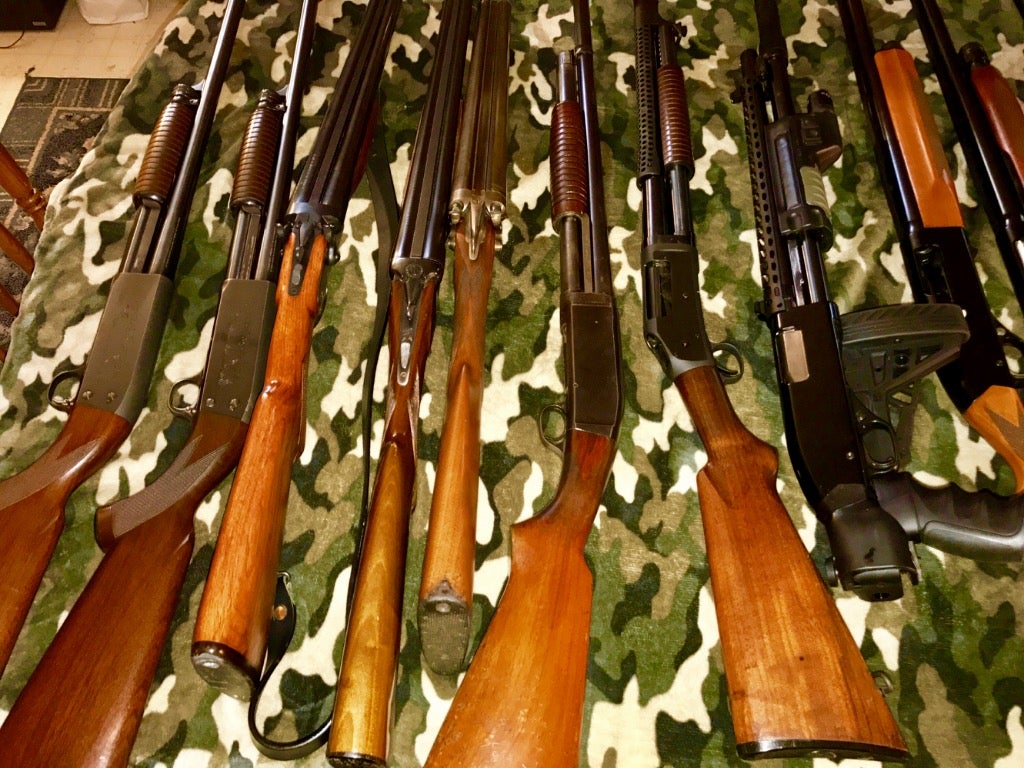
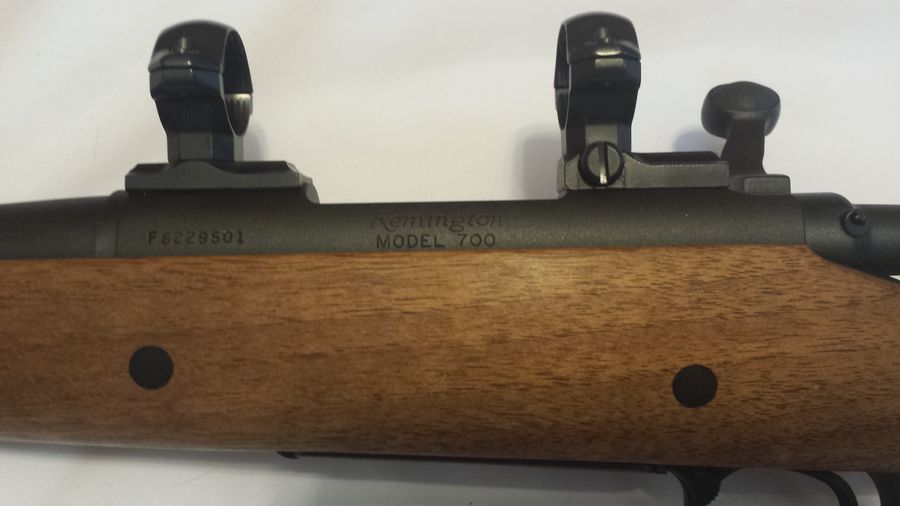
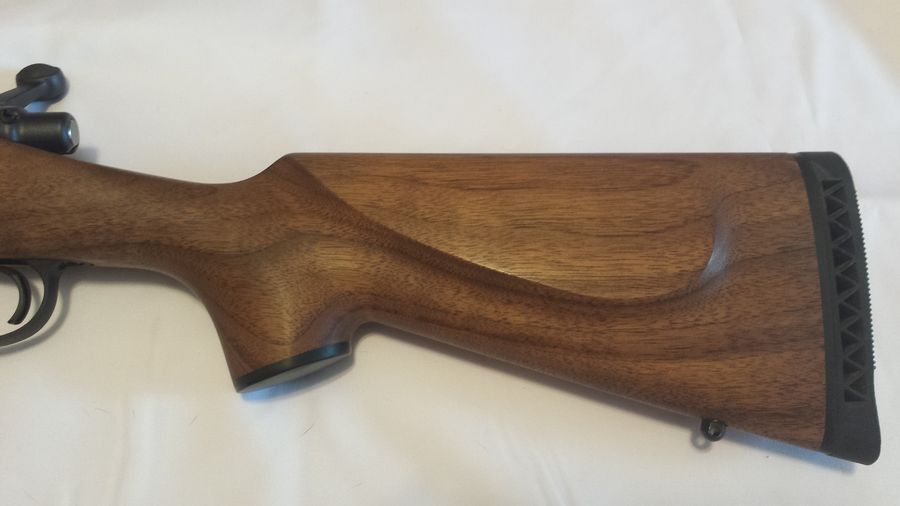
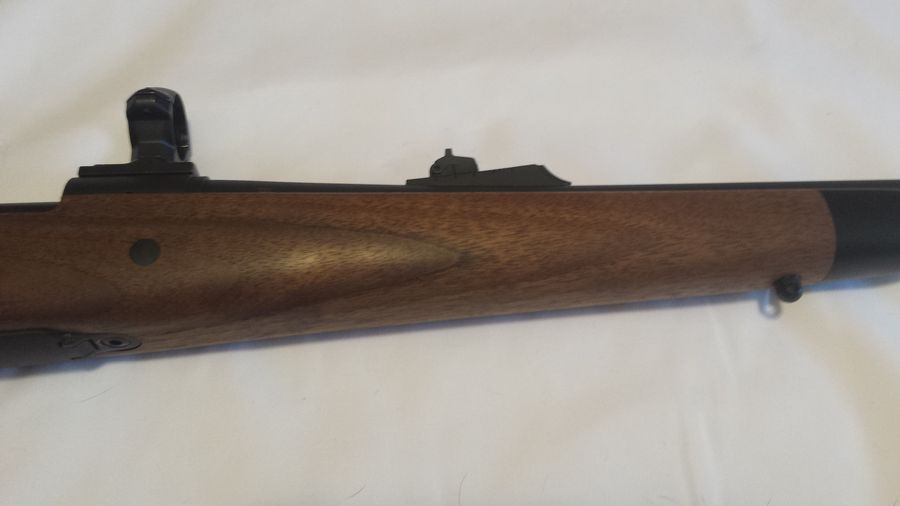
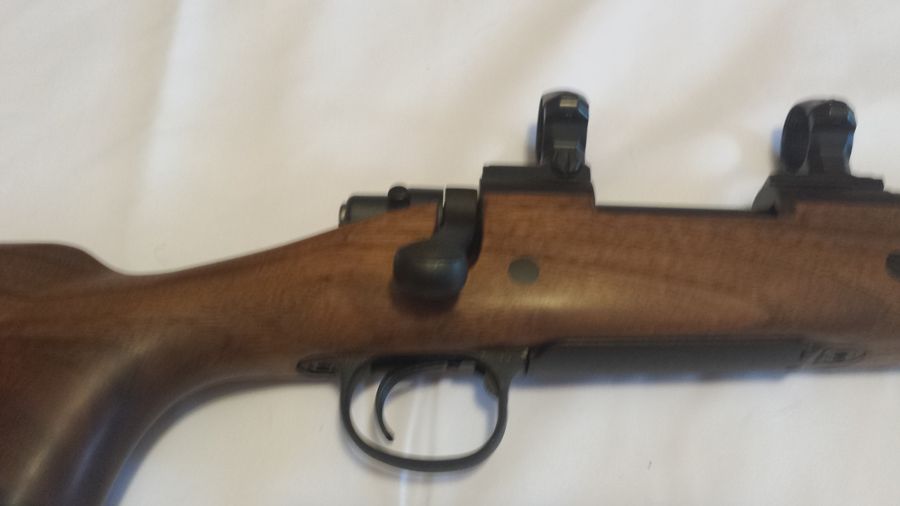
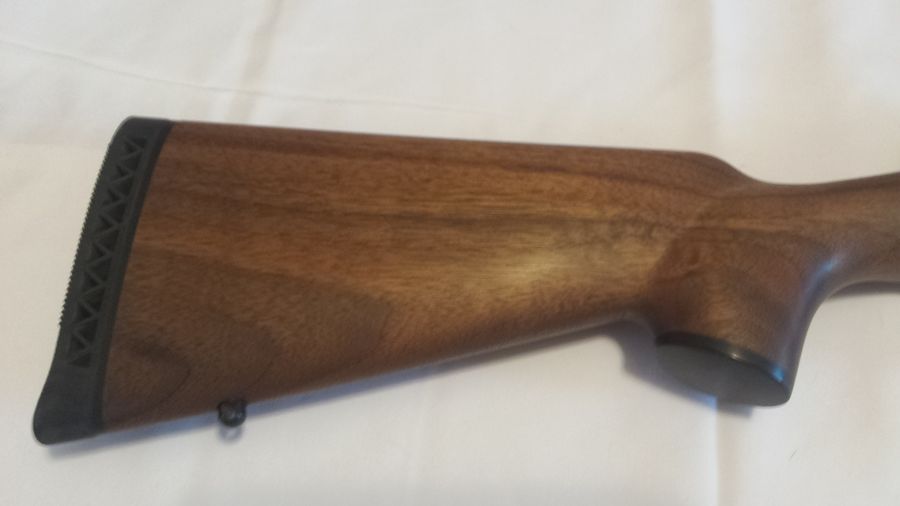
Shotgun collection, do you have one? I happen to have one that some would call a collection and some would call a small start. I have 17 total shotguns at the time of this article. I do plan on buying more over the years also to increase the collection.
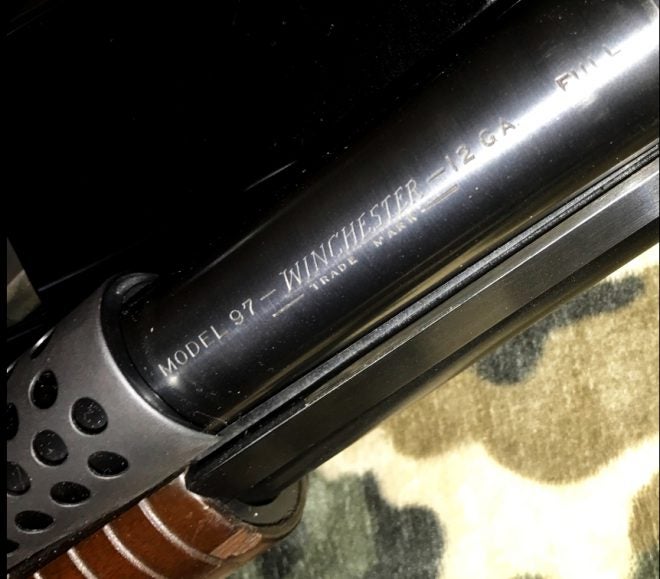
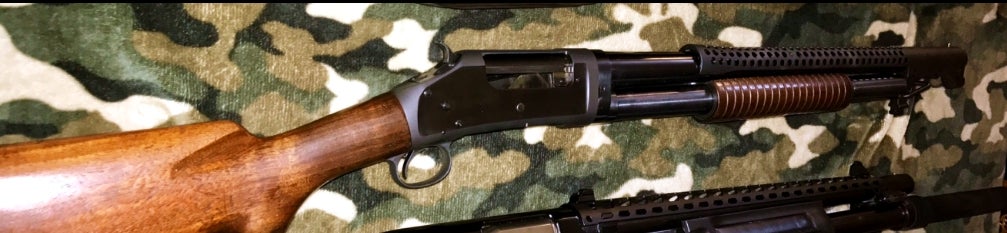
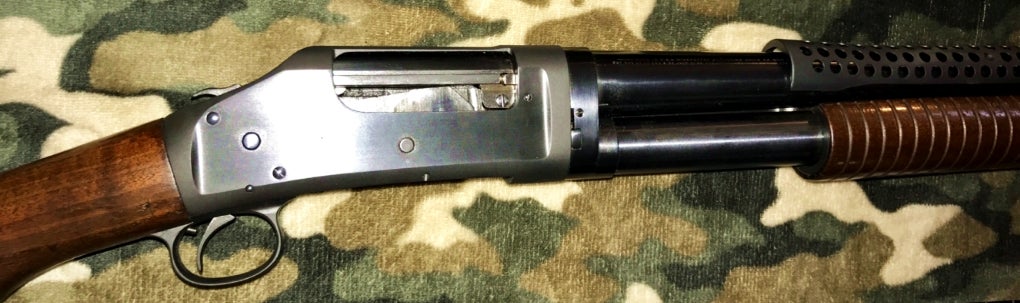
I started out with Winchesters. I am a fan of Winchester shotguns and rifles, and also old magazine ads from the 40’s and 50’s of their shotguns, rifles and ammo. The ads I frame and hang in the “man cave and reloading room”. My favorite Winchester is a model 1897 hammer model that was built in 1937. I wish the guy I got this from would have left it be, but he had all the metal re-blued. Of course, it is a beautiful job on the bluing, I will say that.
So now I have to refinish the wood stock on it. It’s not bad at all, just need refinishing. No cracks or any broken chunks or anything. So this is my favorite in the collection. I also have a 1930 Winchester model 12 that I also care a lot about. Along with a few Winchester 1300’s and a 1400 also in the collection.
Then there are three side by sides, one O/U and a Remington model 10 from I believe 1950. There are a couple Ithaca model 37 Featherlights one 1952 and one from 1964 in the collection also. But my point is collection of shotguns is something that you should think about doing.
I like going around to garage sales and pawn shops looking for shotguns for the collection. Its fun looking at all of them on the wall and picking out ones you are interested in. Then there is the fun of the price haggling with the guy at the pawn shop of the person behind the table at the garage sale. It’s what I like to call, “Part of the dance!”
Part of my collection
Shotguns are fun to work on, shoot, and collect, and sometimes you find a diamond in the rough and get a great price on one that is worth a lot more than you bought it for. So if you are looking for a great hobby and a way to spend a few afternoons working on the older ones to bring them back up to snuff, I highly recommend shotgun collecting.
Stay safe and hope to see you out there!
Gunner
Since first detailing my adventures in searching for the ideal carry revolver in 2015, I have gotten a lot of questions about the 3-inch S&W Model 66-6 I eventually chose.
Unfortunately, the 3-inch versions of this gun are pretty scarce, so it’s not something I’ve been able to recommend as an easy off-the-shelf option for other wheel gun aficionados.
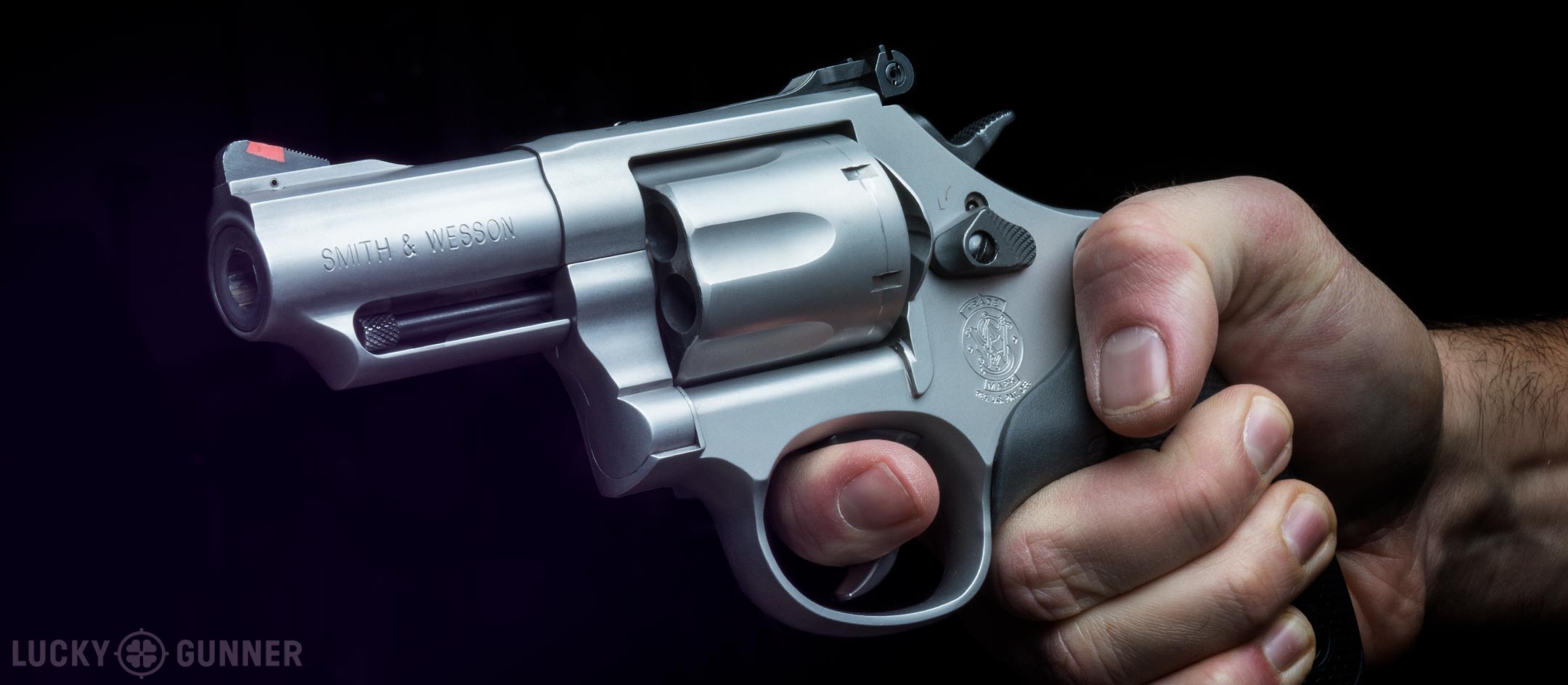
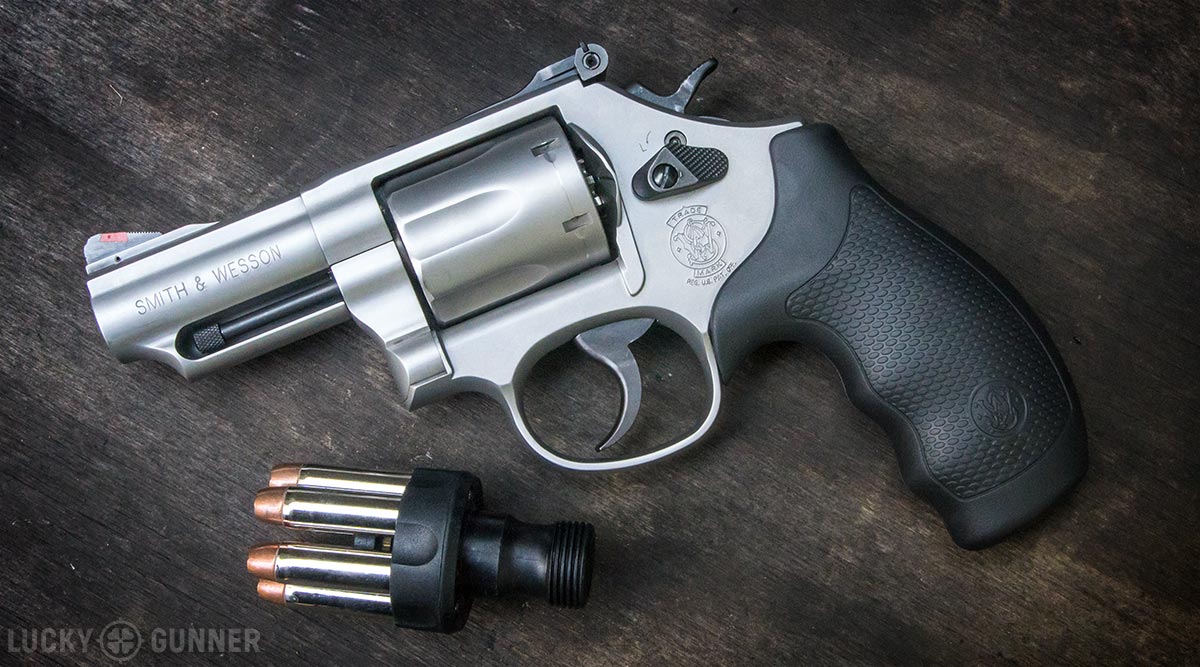
At SHOT Show this year, I got to take a quick look at what would seem to be the next best thing: Smith & Wesson’s new 2.75-inch version of the Model 66.
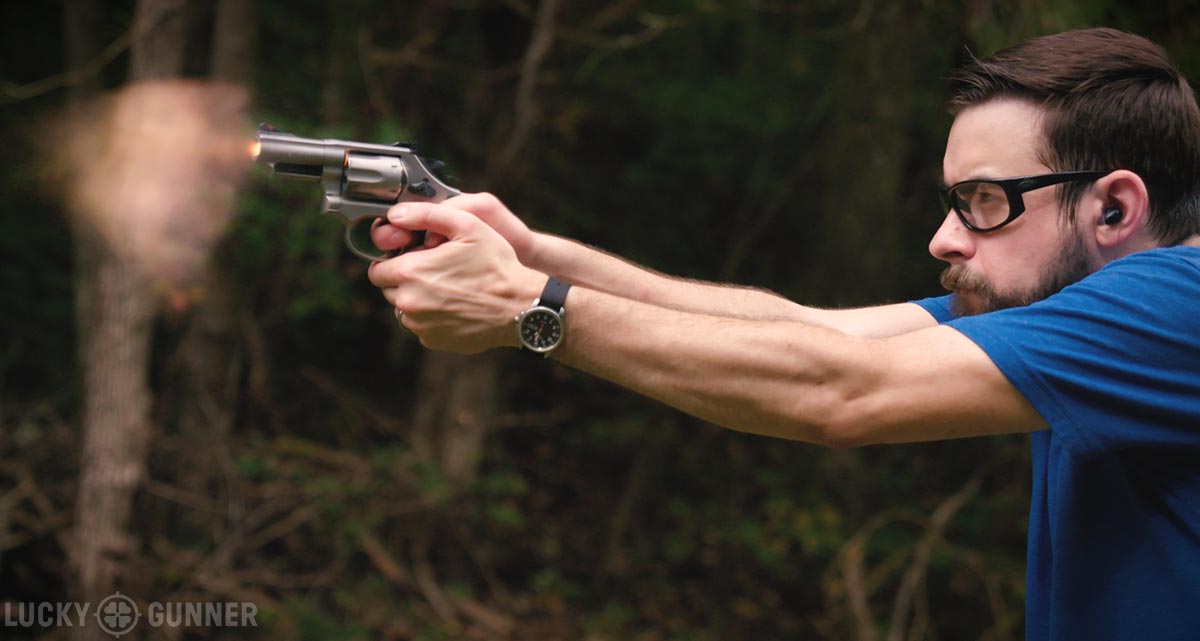
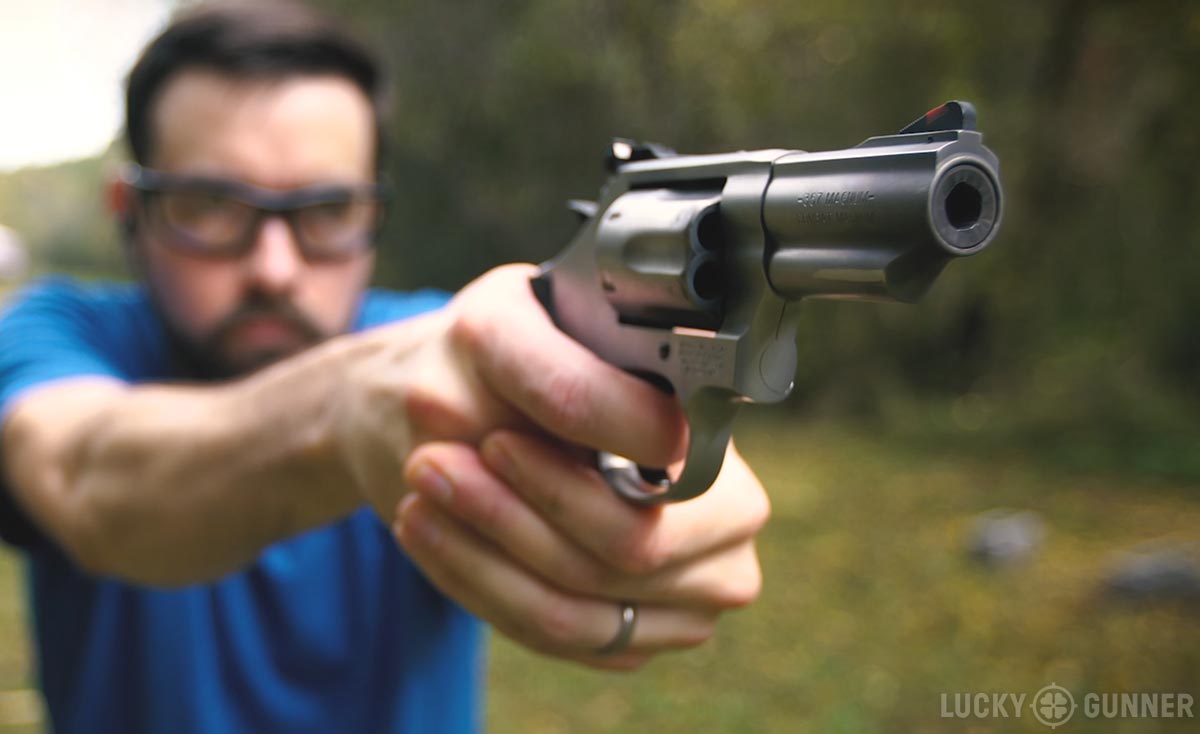
I finally got my hands on one of these six-shooters a few months ago, and I have a some thoughts about S&W’s latest attempt at the mid-size magnum. The full review is in the video below, or you can scroll down and read the transcript.
The Smith & Wesson Model 66 Combat Magnum is one of my favorite revolvers ever, but they were tough to find for a while once production ended in 2005.
Two years ago, Smith & Wesson re-launched the Combat Magnum with the slightly redesigned 4-inch Model 66-8.
This year they added a 2.75-inch version that’s a little more friendly for concealed carry, and that’s the model we’re looking at today.
Every version of the Model 66 is a stainless 6-shot .357 magnum with adjustable sights built on the medium Smith & Wesson K-frame. It was first introduced in 1970 as a stainless steel alternative to the original blued-steel Combat Magnum, the Model 19.
Both were extremely popular police sidearms through the last few decades of the 20th century. Like most revolvers at the time, the Model 66 was usually found with a 4-inch barrel although 6-inch and 2 ½-inch models were in regular production as well.
There were also some limited runs of a 3-inch model offered sporadically over the years, and that’s my favorite version of the 66.
Some of you might have seen the video I did on my modified 3-inch Model 66-6 a couple of years ago with the somewhat tongue-in-cheek title, “The Best Revolver in the World”.
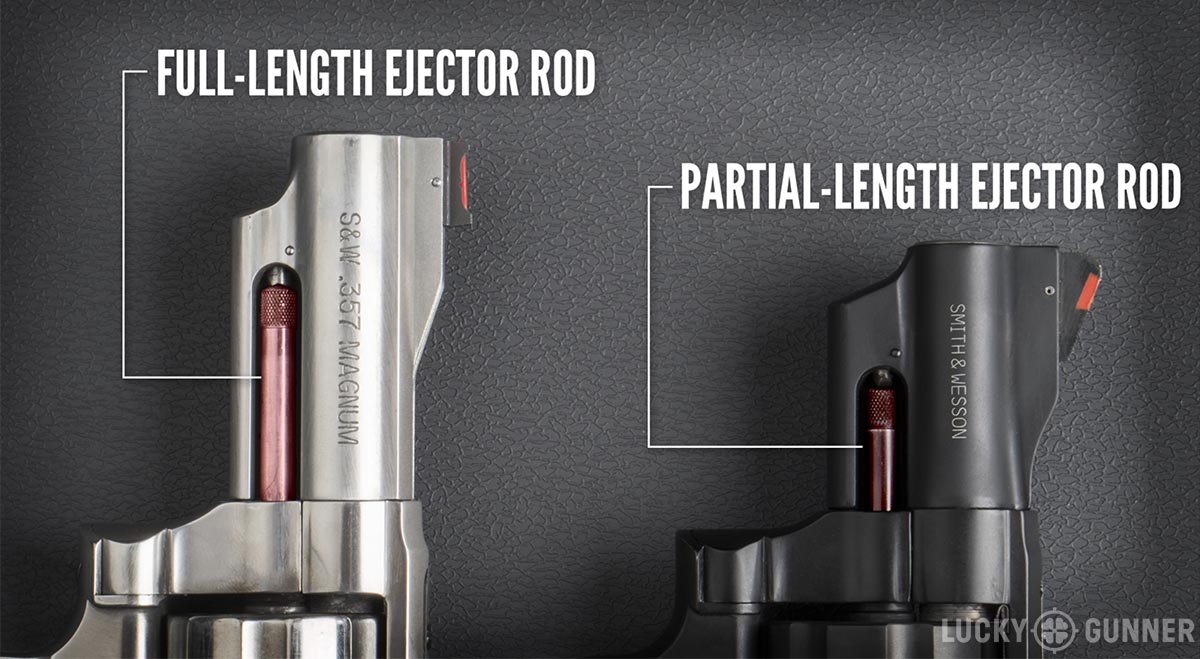
I like the 3-inch barrel partly because it’s more concealable than the 4-inch, but still long enough to allow room for a full-length ejector rod. The old 2.5-inch models have a short ejector rod, which doesn’t eject all the empty casings quite as reliably when you’re reloading.
The new Model 66-8 also has a full-length ejector rod, even though the barrel is only 2.75 inches long, which is made possible by the new lock-up design.
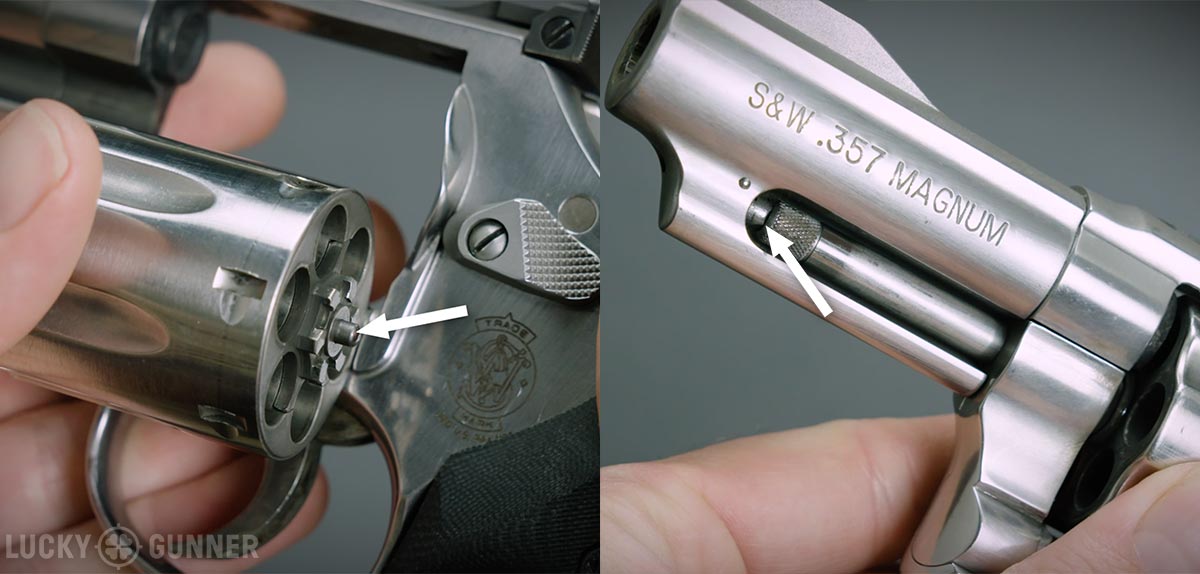
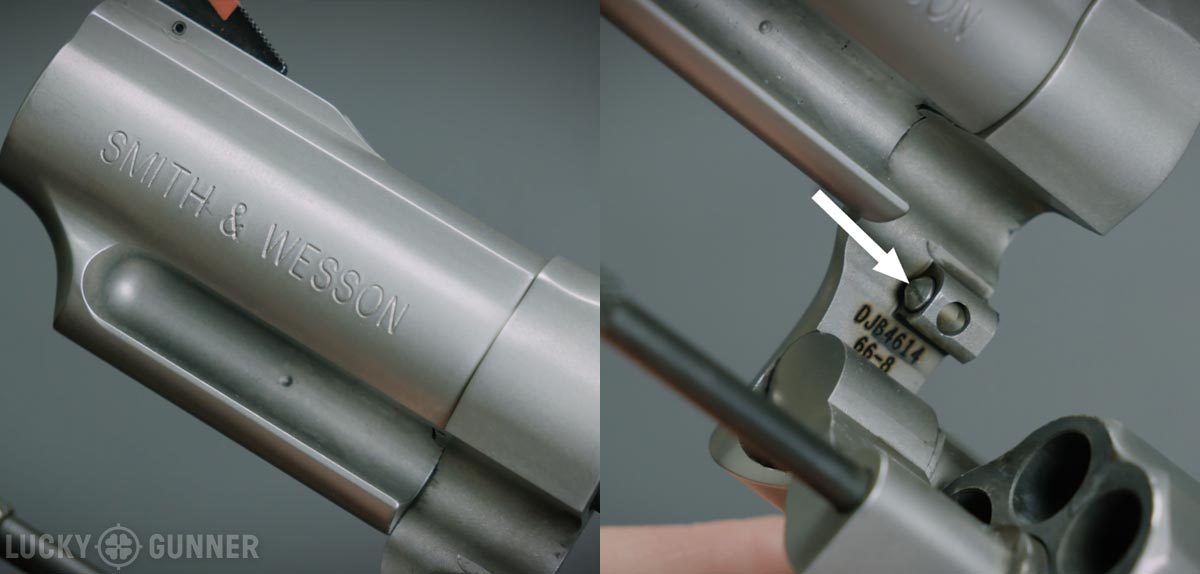
On the old models, the cylinder locks into the frame between a pin found in the center of extractor star and a second pin (called the “locking bolt”) below the barrel that locks into the tip of the ejector rod. So the barrel has to be at least as long as the ejector rod plus the spring-loaded locking bolt.
Old style lockup: Previous K-frame cylinders locked into the frame via pins in the extractor star (left) and a locking bolt in the barrel shroud (right).
But check out the same spot on the new 66. There’s no locking bolt, and that’s because it’s been replaced by a ball detent on the frame that locks into the yoke.
This is supposedly a more secure locking point, it allows the barrel to be a little shorter, and it also solves the occasional problem of the ejector rod backing out under recoil and locking the cylinder closed.
The new lockup for the S&W 66-8 omits the locking bolt in the barrel shroud (left) in favor of a ball detent on the frame that locks into the crane/yoke (right).
Just above that area, you can find a second design improvement.
On the old K-frames, the forcing cone was flat at the bottom, and that was a weak point that would occasionally crack, usually after firing a lot of high-velocity magnum loads. The new forcing cone is thicker which should eliminate that weakness in the design.
S&W Model 66-8 Technical Specs
caliber
.357 Magnum
capacity
6
weight
33.5 ounces
barrel length
2.75 inches
sights
red ramp front sight, adjustable rear
action
double action
MSRP
$849
Unfortunately, while Smith & Wesson may have made some durability improvements, there is a lot about this gun I am not real excited about.
Of course, it’s got the internal lock where the revolver’s soul leaks out. I’m not really a fan, but that’s old news. There are plenty of other issues to talk about.
Let’s start with the way it is configured. Traditionally, short barreled K-frames have been valued for handling and shooting like full-size revolvers, but in a smaller package that’s practical for concealed carry.
But neither of these advantages are easy to see in this latest version of the Combat Magnum. The rubber stocks are large and cling to clothing, which compromises concealability. And the small rear sight notch and unreasonably heavy 15-pound trigger make the gun tough to shoot well.
The challenge of shooting the Model 66-8 was apparent when I ran it through our nine-stage Lucky Gunner practical handgun test that we have been using for all our reviews this year.
My best score out of three runs with this gun was 47.87. That is the worst score out of all of the handguns I have tested so far, including a few small-frame snubbies and pocket pistols. Compared to my modified 66-6, I only dropped a couple of additional points in target penalties with the new revolver, but thanks to the smaller sights and the heavy, uneven trigger, I had to slow way down to get those hits, and my raw time was almost 10 seconds slower.
[Note: A more detailed look at how the S&W 66-8 compares to the other handguns I’ve run through the test can be found on the Handgun Scoreboard.]
Mechanical accuracy testing was a little more encouraging. From a 25-yard bench rest, I fired two 5-round groups with each of 6 different loads in .38 Special and .357 magnum. The average group size was right around 2 to 3 inches for all but one of those loads, which is not bad at all.
My criticisms about how this gun is set up are mostly subjective, but there are also some quality control issues
I feel obligated to point out. Smith & Wesson was kind enough to loan us this revolver to review, and this is actually the second one they sent. I had to send back the first one.
Something was not fitted properly and a part of the yoke was rubbing against the frame, which made the cylinder really hard to open and close and even started to make the action feel a little sluggish.
When I told Smith & Wesson about it they apologized and quickly sent me this one. It has worked fine, but it’s also not exactly a perfect sample.
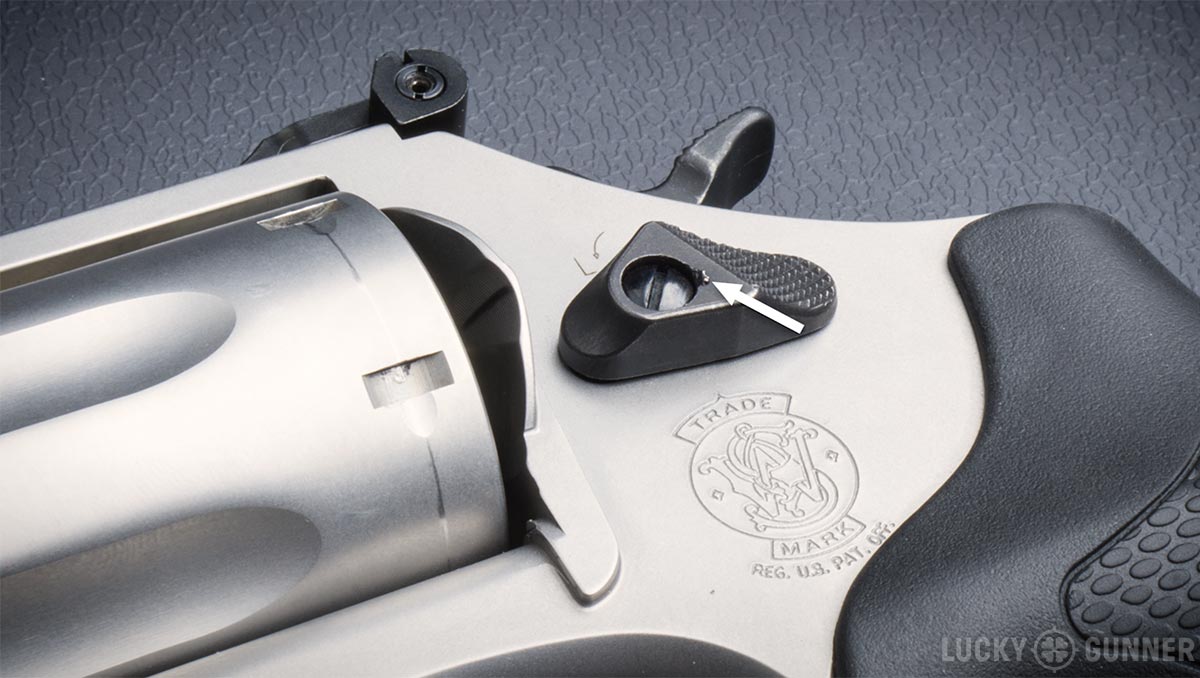
There is a large burr on the cylinder release latch. Even though it’s just a cosmetic issue, this is the kind of sloppiness you don’t expect to see on a gun with an $850 MSRP.
With all of these complaints, you’d probably assume that I’m not recommending this gun. But really, it depends on what you’re looking for.
If you want a new mid-size revolver that’s going to be ready to go right out of the box, I would not buy this one. You’d probably be better off with something like the 3-inch Wiley Clapp edition of the Ruger GP100. It’s a bit larger than the 66, but it’s an overall better execution of the mid-size carry revolver concept.
However, if you’re like me, and you just really prefer the size and the handling characteristics of the short barreled K-frames, the new model 66 might not be a bad starting point. My 66-6 is one of my favorite guns.
But when I first got it, it wasn’t much different from this new one. It left the factory in 2004 — so it’s not exactly a shining example of Old World Craftsmanship.
It has evidence of the same modern automation and cost-cutting shortcuts that Smith & Wesson revolvers have been criticized over for years.
Even so, it’s still a fantastic shooter, I just I had to spend a little extra time and money on it. I think this new 66 has the same potential.
To turn this into a decent carry revolver, at minimum, I personally would make the following changes:
I’d replace the oversized rubber stocks with something more concealable like Altamont wood boot grips.
I’d replace the mainspring with a Wolff Standard Weight Powerib spring to even out the double action trigger. There are better ways to improve the action, but the Wolff spring is a cheap fix that’s still a huge improvement.
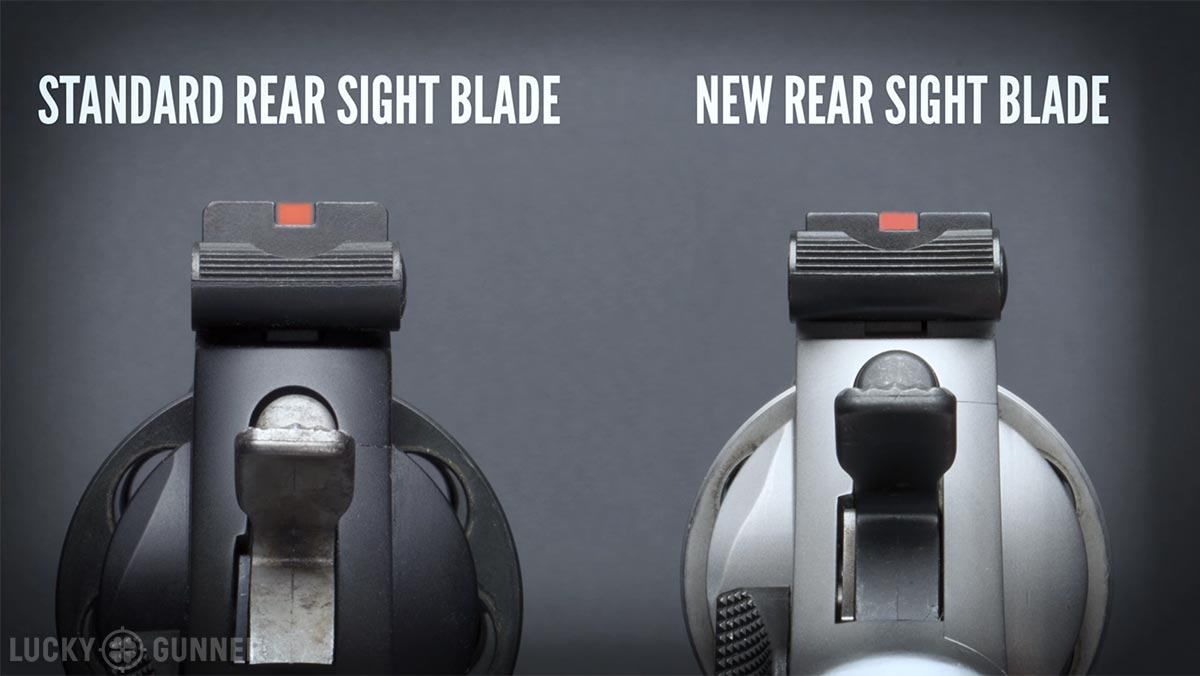
On the new 66, Smith & Wesson has switched to using a shorter rear sight blade. So the notch is shallower and it’s harder to pick up the front sight. I’d swap that out for a standard height rear sight blade.
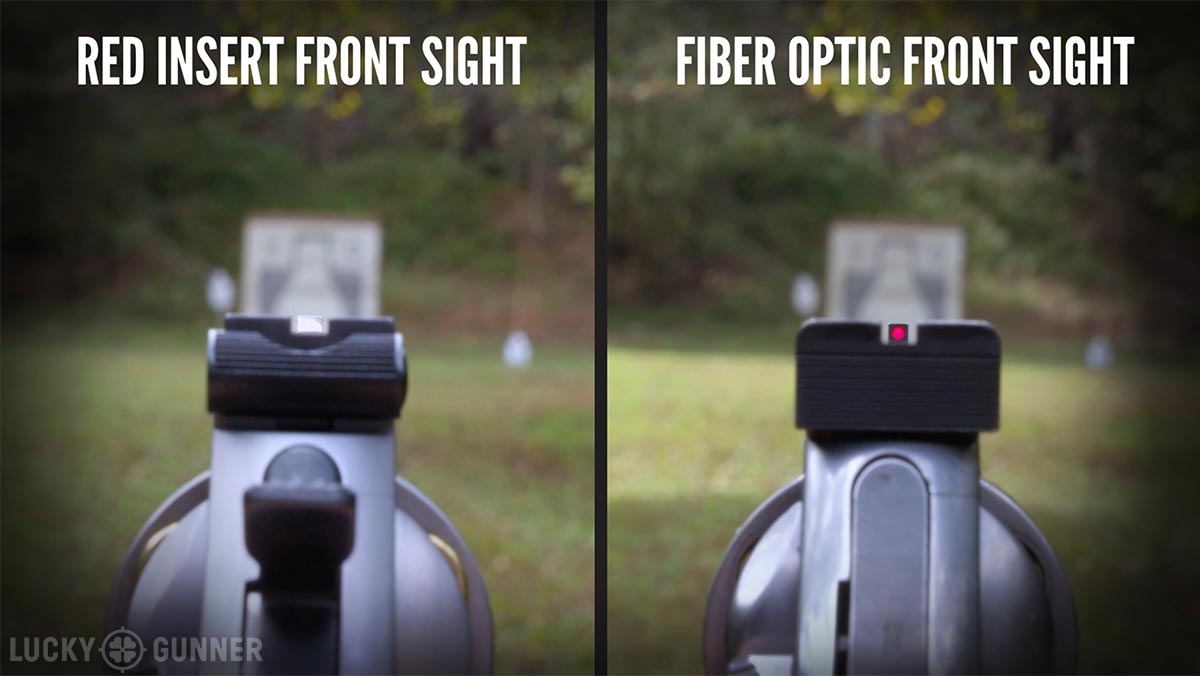
And the front sight with the plastic red insert also has to go. They wash out really easily in a lot of lighting conditions and can be tough to see. An affordable upgrade would be a red fiber optic sight from Dawson Precision.
That’s a little over $100 worth of modifications on top of a gun that’s currently retailing for somewhere between about $700-775. Is that worth it for a modern S&W revolver? Again, it depends on your priorities. With an older pre-lock 66, you get something that looks and feels more refined and comes with pride of ownership. But you’ll need to plan to spend least $1000 if you want the 3-inch version with the full-length ejector rod, and you still might want to change the grips or the sights. With a new 66, you’ll save some money even after you fix it up, you’ll have better spare parts availability, and it might be a little more durable. So for fans of the K-frames, for the time being, you’re stuck choosing between the benefits of yesterday’s craftsmanship or today’s technology. It’s going to be really tough to get both.
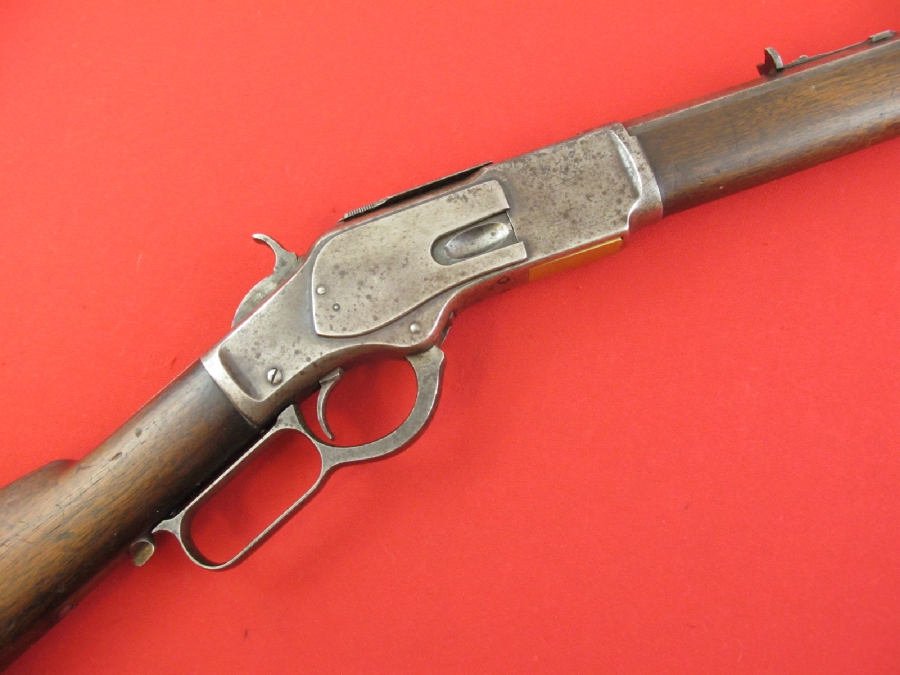
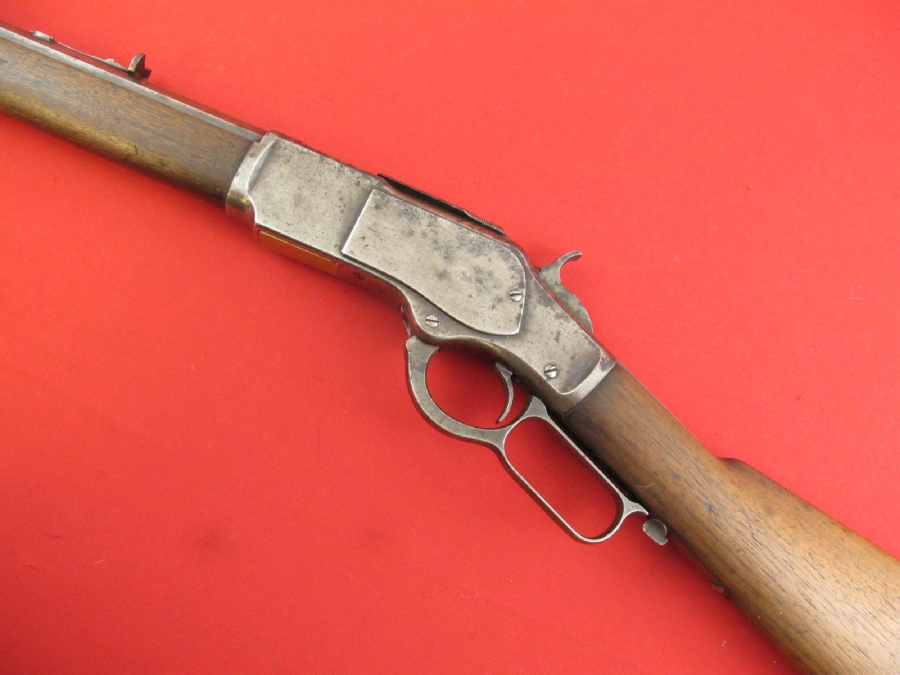
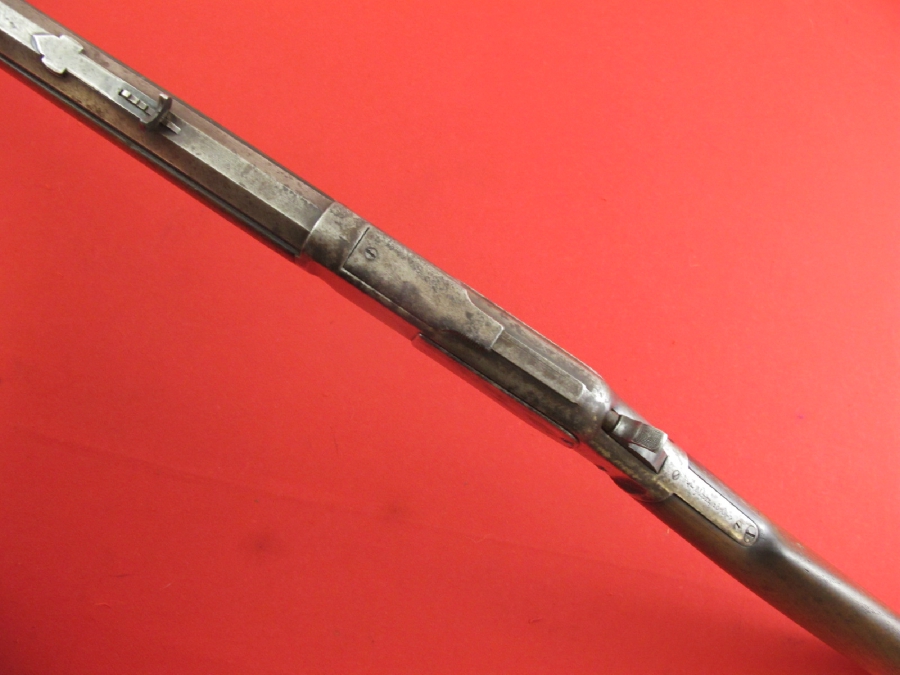
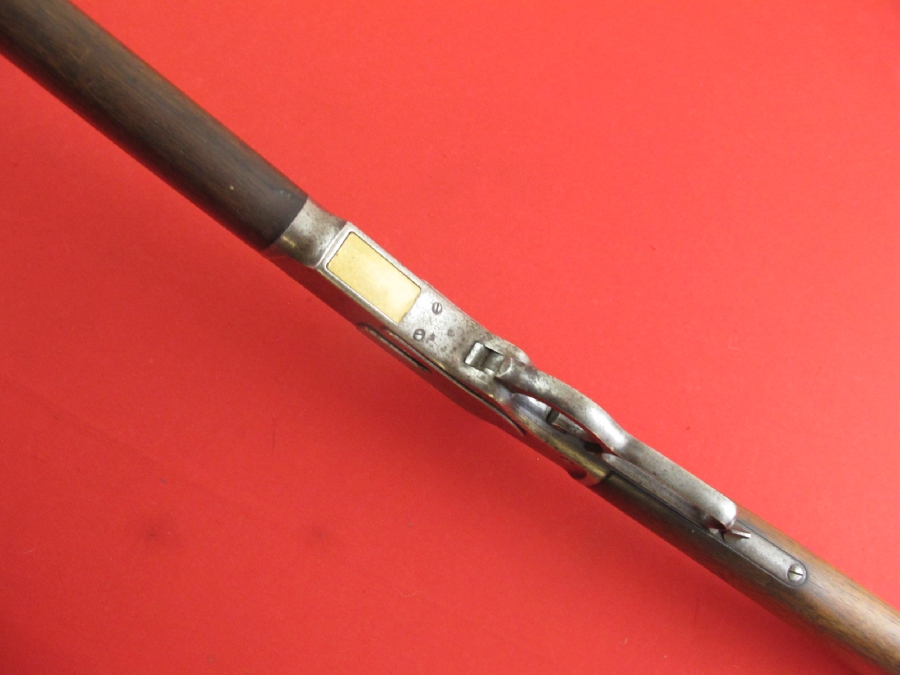
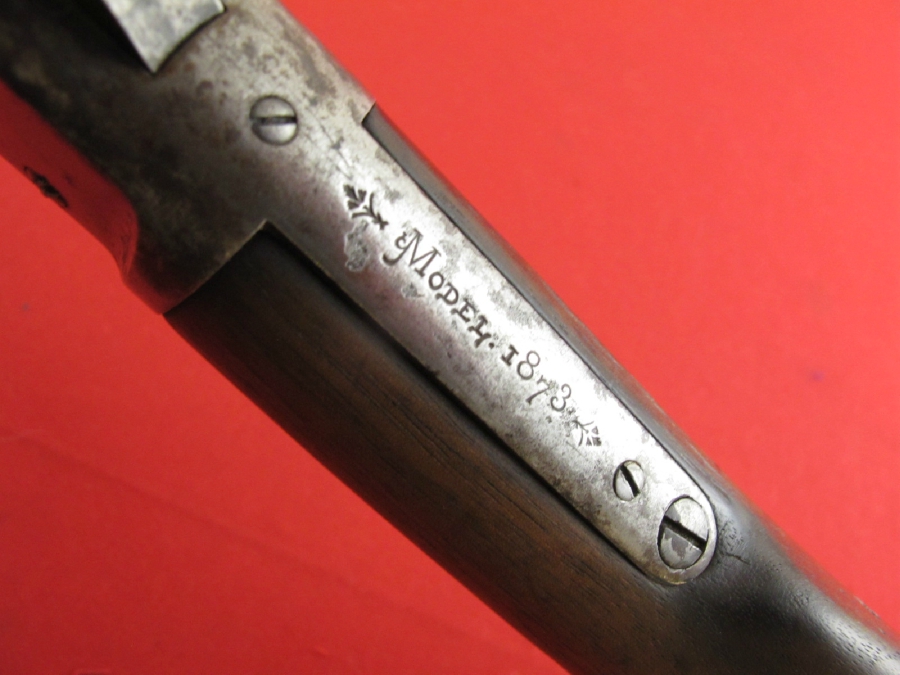
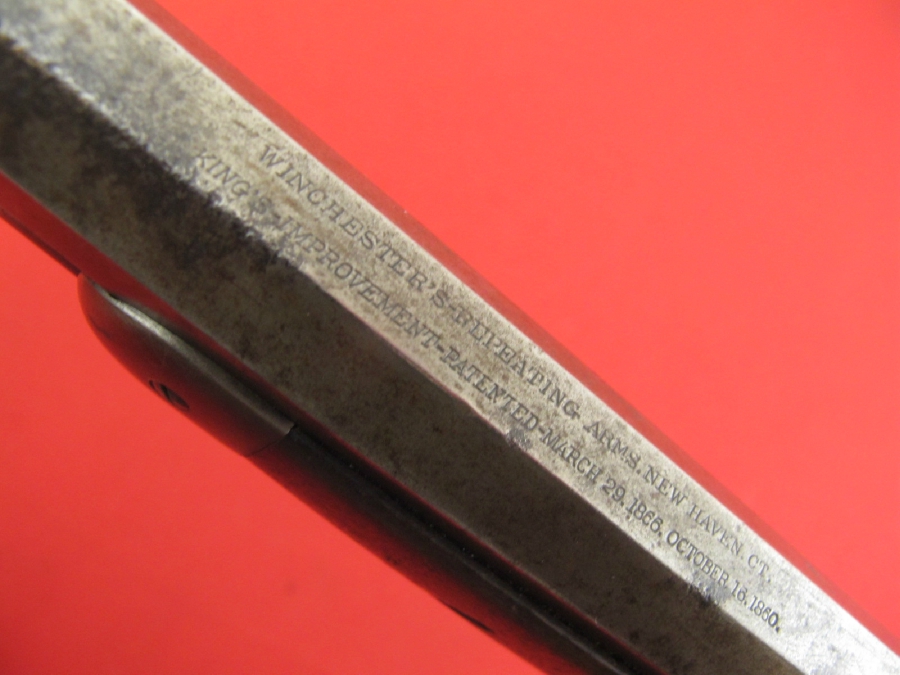
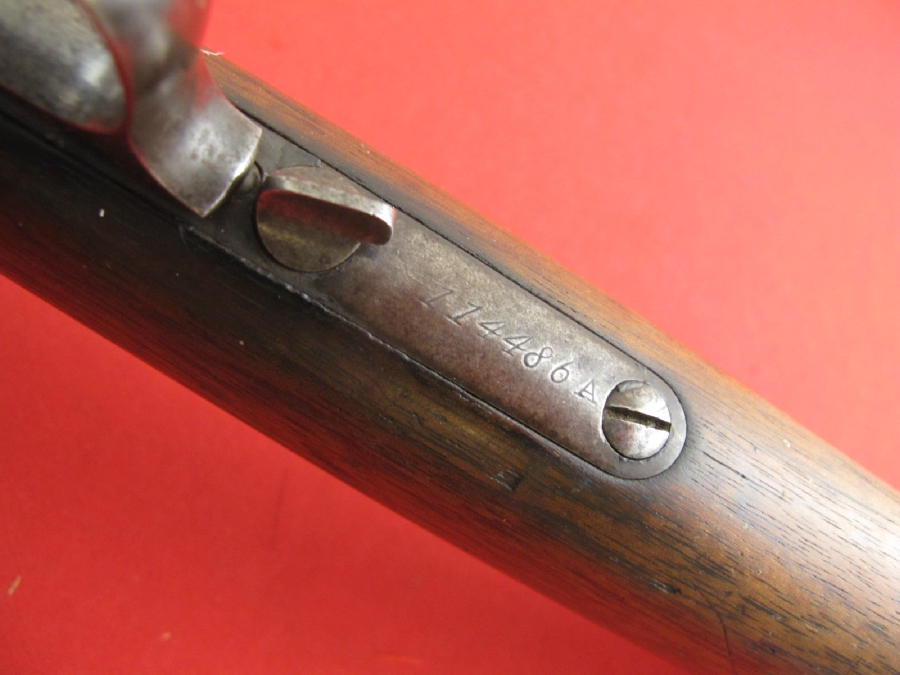
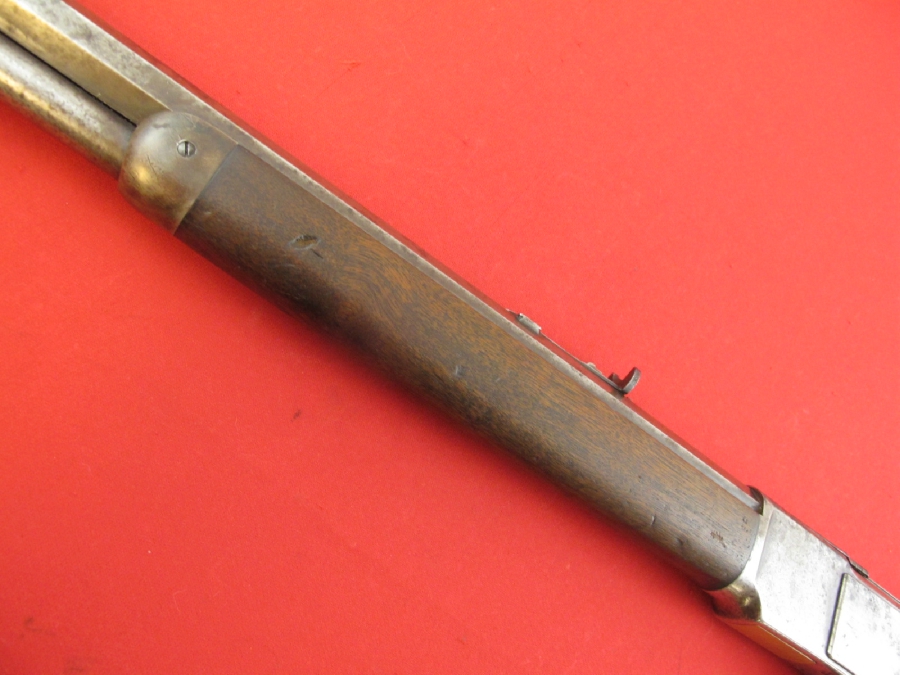
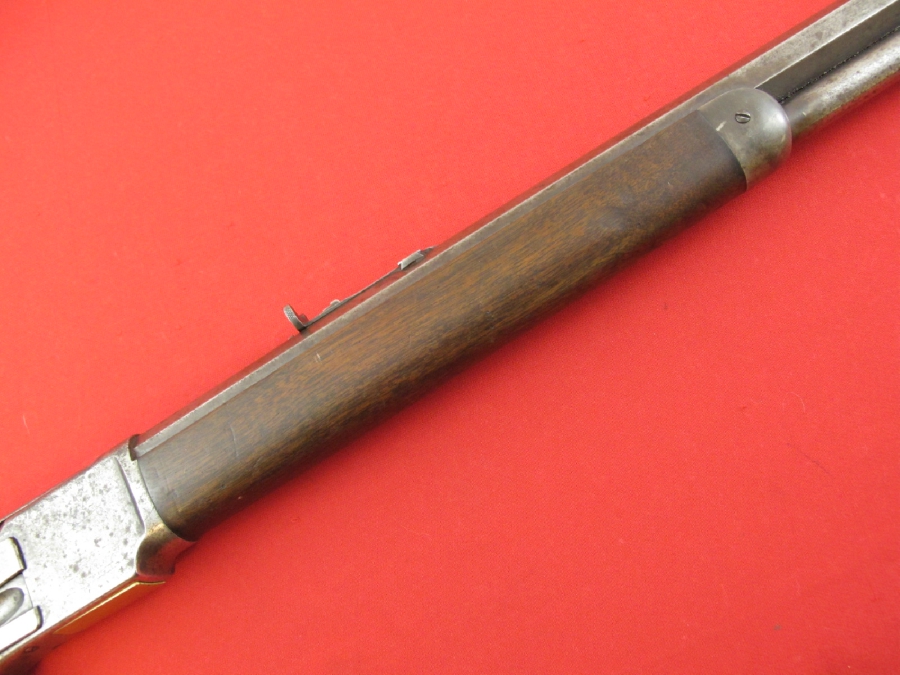
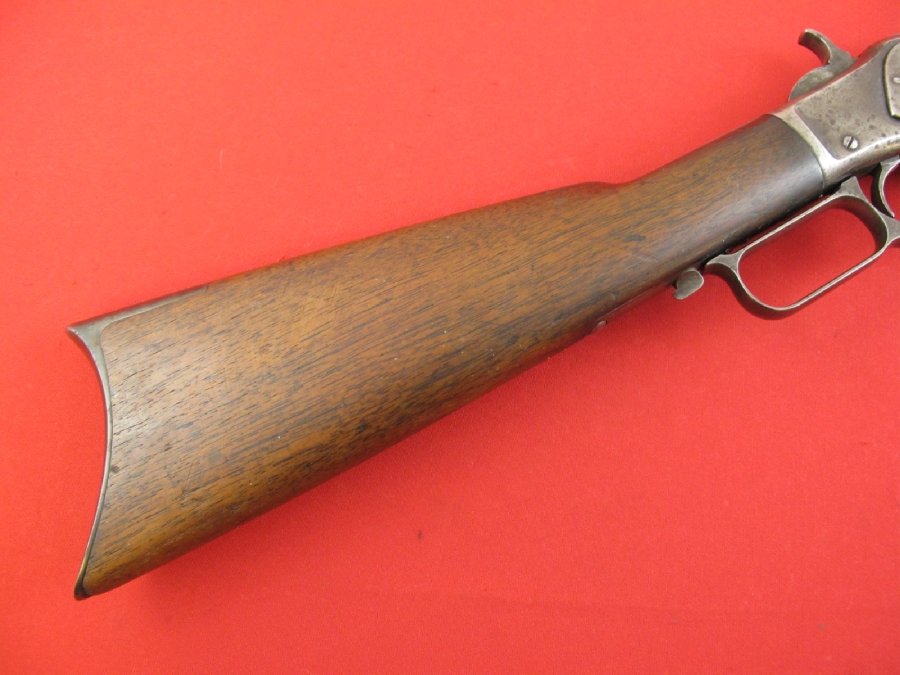
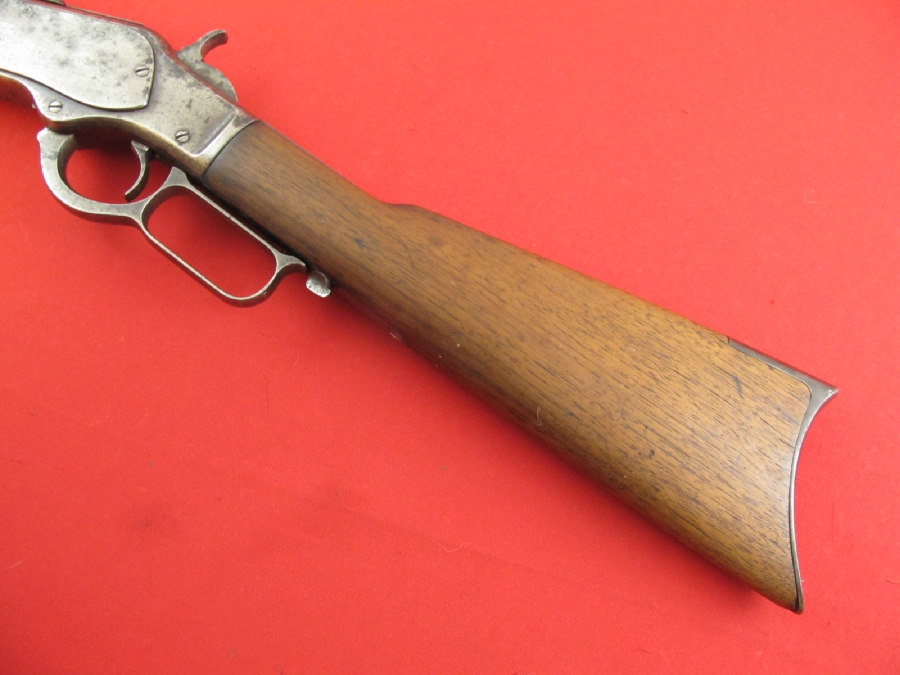
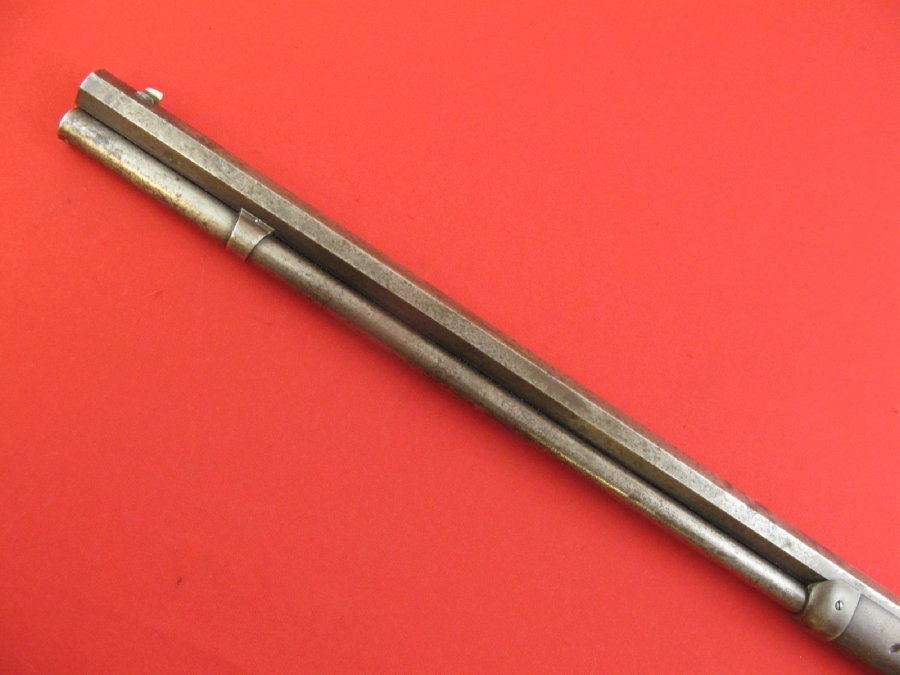
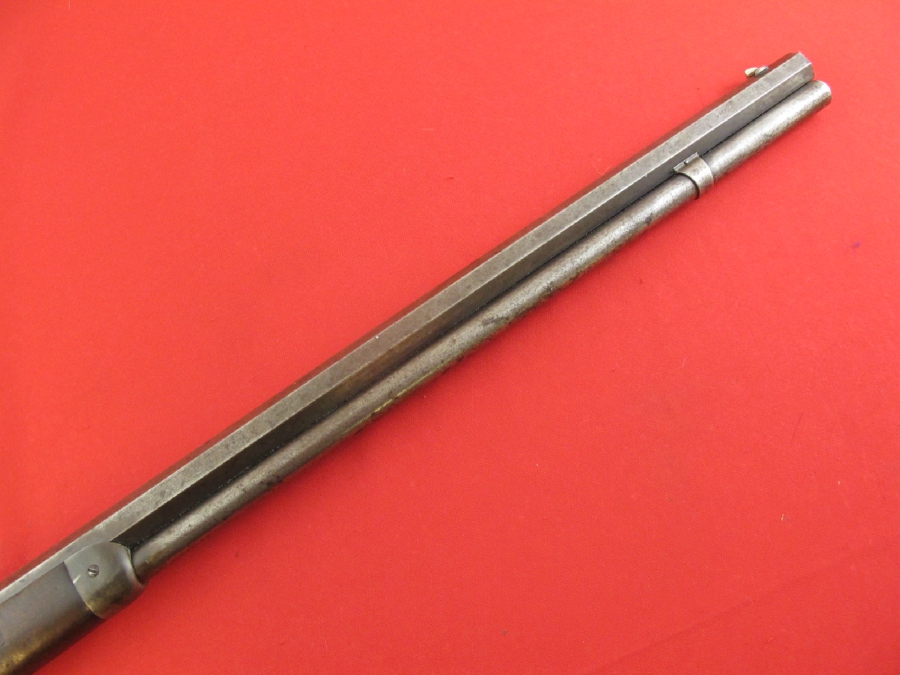
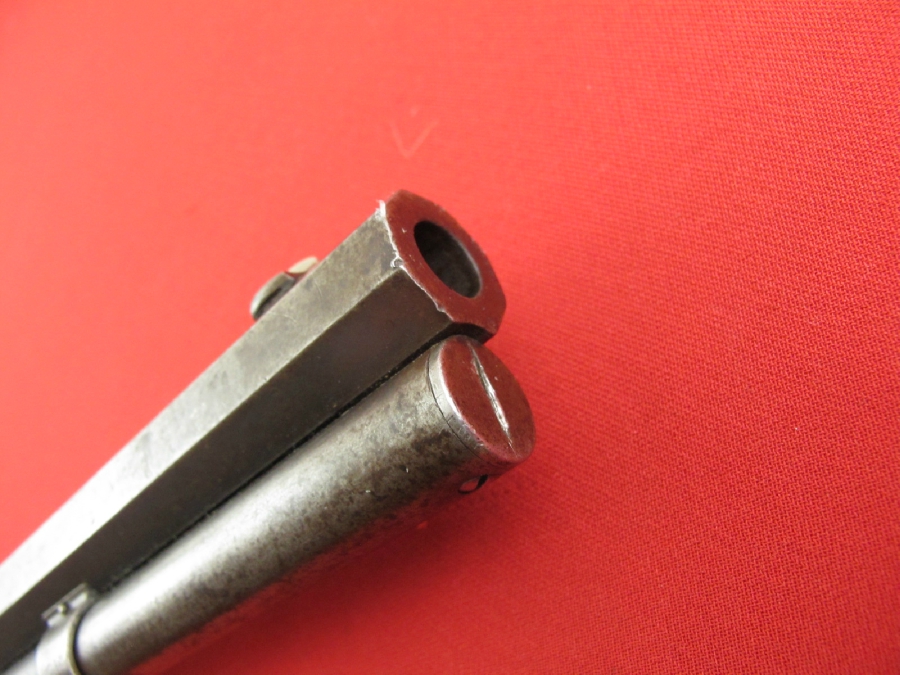
Now just consider this little nugget of gun lore. As just ten years before this rifle was made in Connecticut.
Both the Yankee & Confederate Armies were basically considered the best armed Armies of the world. And both of these hard fighting outfits.
Who were issued for the most part with muzzle loading muskets. That a good man could on a good day. Could maybe crank off 3 aimed rounds a minute.
Now with one of these rifles. A good man could easily crank off say ten to fifteen rounds a minute. So in a way, this rifle was the AK-47 of the late Victorian Era!
By the way, I just bought an Italian copy of this rifle. Hopefully I can get it to the range and tell you what happened! Grumpy
Okay I know that he defended Slavery. But overall he is one of the towering Giants of the Oval office! Here is why.
He said that he would serve only one term.
Reduced tariff (Taxes)
Settle the Oregon Border with the British Empire
Conquered (Stole by Force of Arms) Over 1/2 of Mexico territory
Then Kept his word and retired & died soon after. Not bad huh? Grumpy
In 1824, Polk married Sarah Childress (1803-91), a well-educated Tennessean and devout Presbyterian from a wealthy family.
The couple never had children, and Sarah Polk became her husband’s close adviser throughout his political career. As first lady, she was a charming and popular hostess, although she banned hard liquor from the White House and eschewed dancing, the theater and horse races.
The Tennessee Politician
In 1825, Tennessee voters elected James Polk to the U.S. House of Representatives, where he would serve seven terms and act as speaker of the House from 1935 to 1939.
In Congress, Polk was a protégé of America’s seventh president, Andrew Jackson (1767-1845), a fellow Democrat and Tennessean who was in the White House from 1829 to 1837. Polk favored states’ rights and supported Jackson’s plan to dismantle the Bank of the United States and replace it with a decentralized government banking system.
Polk later earned the nickname “Young Hickory,” a reference to his mentor Jackson, who was dubbed “Old Hickory” for his toughness.
Polk left Congress in 1839 to become governor of Tennessee. He ran for reelection in 1841 and lost; another run for the governorship in 1843 also ended in defeat
The Dark Horse Candidate
In 1844, James Polk unexpectedly became the Democrats’ nominee for president. He emerged as a compromise candidate after the more likely choice, former president Martin Van Buren (1782-1862), who had lost his reelection bid in 1840, failed to secure the party’s nomination.
Polk thus became America’s first dark horse presidential candidate. George Dallas (1792-1864), a U.S. senator from Pennsylvania, was chosen as Polk’s running mate.
In the general election, Polk ran against U.S. Senator Henry Clay (1777-1852), a Kentuckian and a founder of the Whig Party. The Whigs used the campaign slogan “Who is James K. Polk?”–an allusion to the fact that Polk was not well known outside the world of politics.
However, Polk’s expansionist platform favoring the annexation of Texas appealed to voters. He narrowly won the presidency with 49.5 percent of the popular vote and an electoral margin of 170-105.
James Polk as President
At age 49, James Polk was younger than any previous president when he entered the White House.
A workaholic, America’s new chief executive set an ambitious agenda with four major goals: cut tariffs, reestablish an independent U.S. Treasury, secure the Oregon Territory and acquire the territories of California and New Mexico from Mexico.
Polk eventually achieved all his goals. He was a champion of manifest destiny–the belief that the United States was fated to expand across the North American continent–and by the end of his four years in office, the nation extended, for the first time, from the Atlantic Ocean to the Pacific Ocean.
In 1845, the United States completed its annexation of Texas, which became the 28th state on December 29. This move led to a breakdown in diplomatic relations with Mexico (from which Texas had revolted in 1836).
After the United States sent troops to a disputed border region around the Rio Grande River, the Mexican-American War (1846-48) broke out.
The United States won the two-year battle, and as a result, Mexico relinquished its claims to Texas. It also recognized the Rio Grande as America’s southern border and, in exchange for $15 million, ceded the land that makes up all or parts of present-day California, Arizona, Colorado, Nevada, New Mexico, Utah and Wyoming.
(Despite the U.S. victory, the war proved controversial and reignited the slavery extension debate that would ultimately result in the American Civil Warin the 1860s.)
With the Oregon Treaty of 1846, Polk managed another significant land acquisition–this time without going to war–when his administration diplomatically settled a border dispute with the British and gained full control of the present-day states of Washington, Oregon and Idaho, as well as parts of Montana and Wyoming.
On the domestic front, Polk reduced tariffs in an effort to stimulate trade and created an independent U.S. Treasury. (Federal funds had previously been deposited in private or state banks.)
Also during this time, the U.S. Naval Academy, Smithsonian Institution and Department of Interior were each established, and in addition to Texas, two more states–Iowa (1846) and Wisconsin (1848)–joined the Union.
James Polk: Later Years
James Polk kept his campaign promise to serve just one term and did not seek reelection in 1848. He was succeeded by Zachary Taylor (1784-1850), a military leader who earned acclaim during the Mexican-American War and ran for the presidency on the Whig ticket.
Polk left the White House in March 1849 and returned to his home, Polk Place, in Nashville. The stress of the presidency had left him in poor health, and he died that summer, on June 15, at age 53. He was buried at Polk Place. In 1893, his remains, along with those of his wife, who outlived him by more than 40 years, were moved to the Tennessee Capitol in Nashville