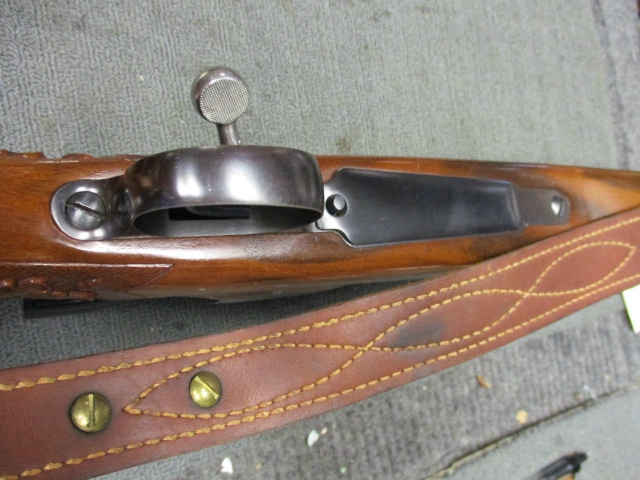
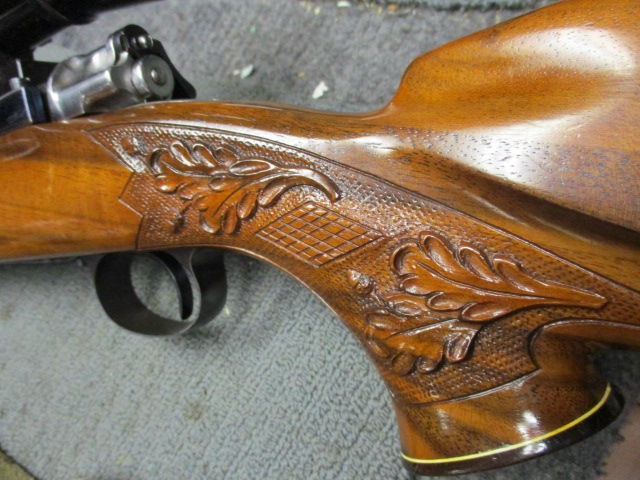

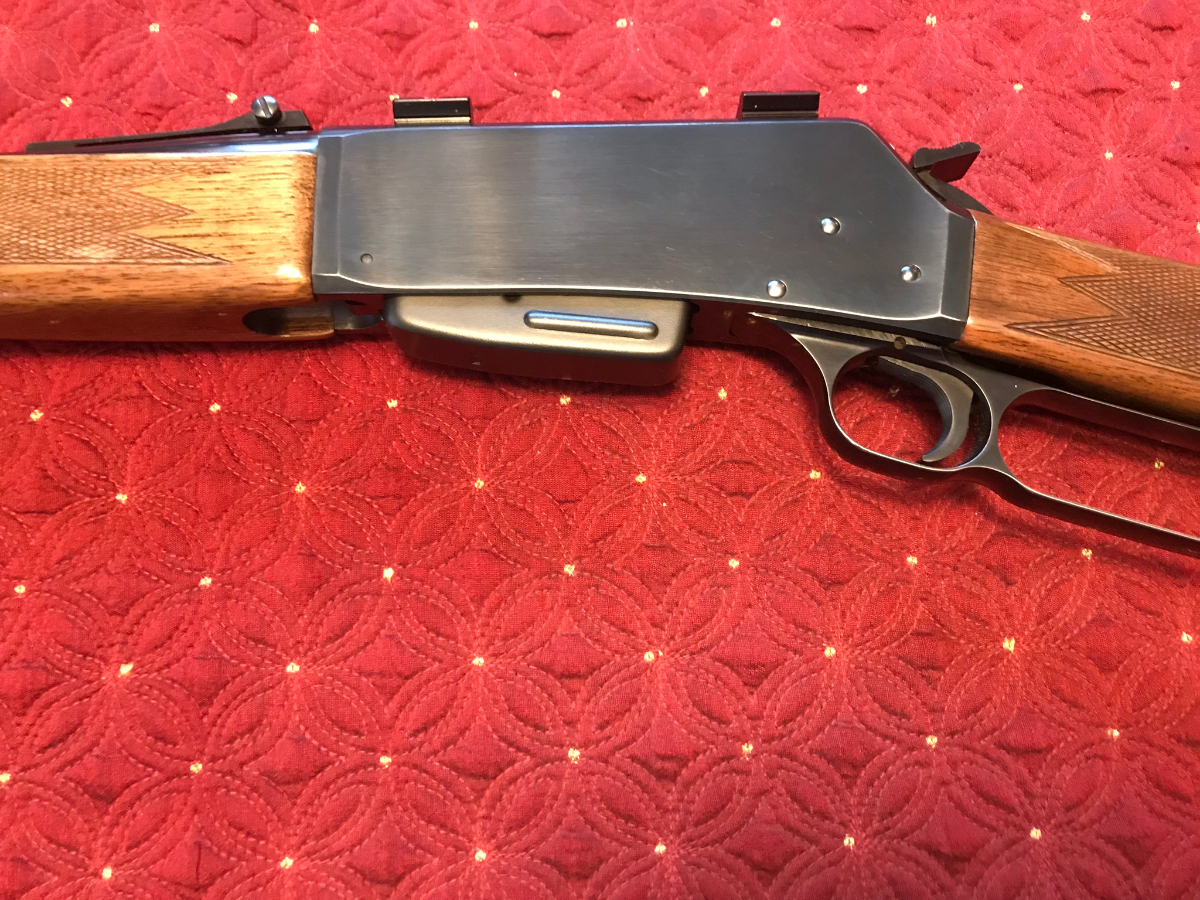
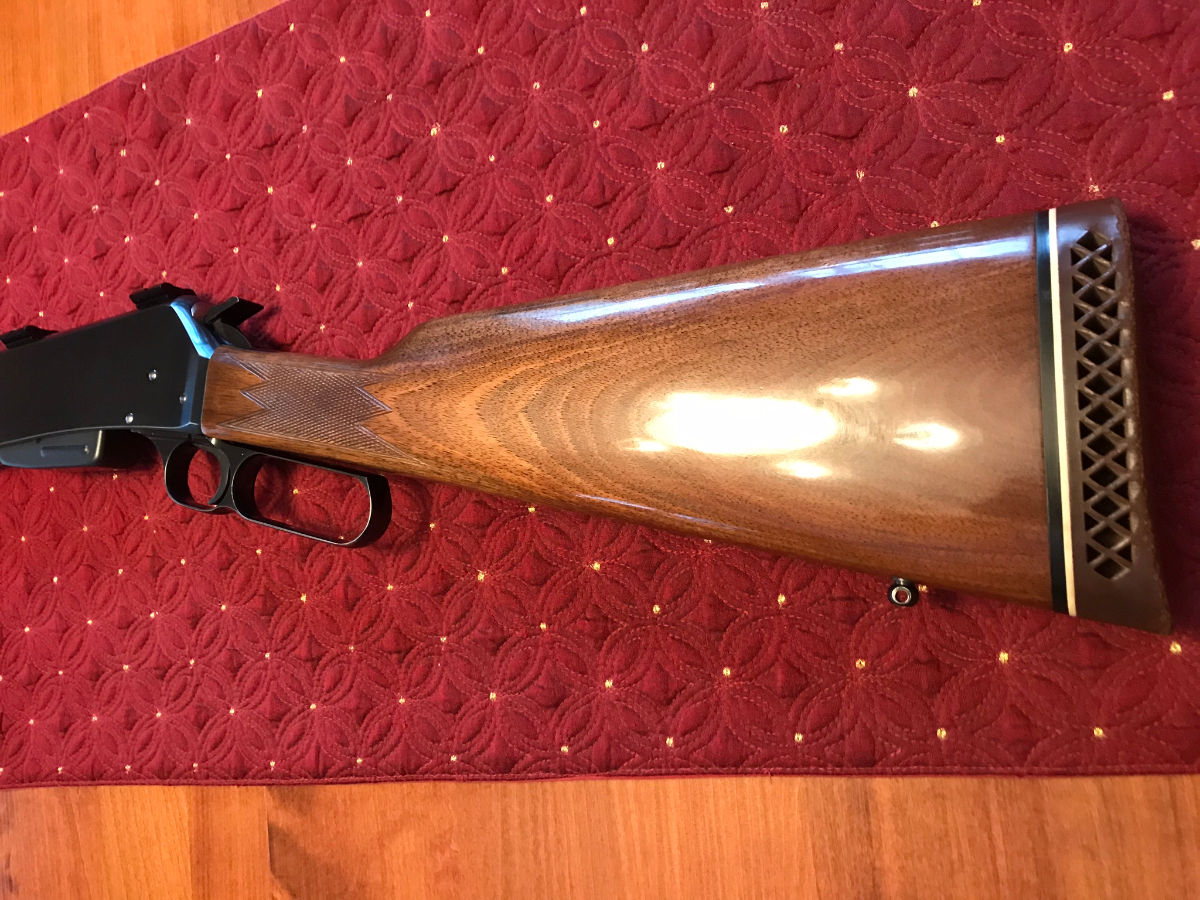
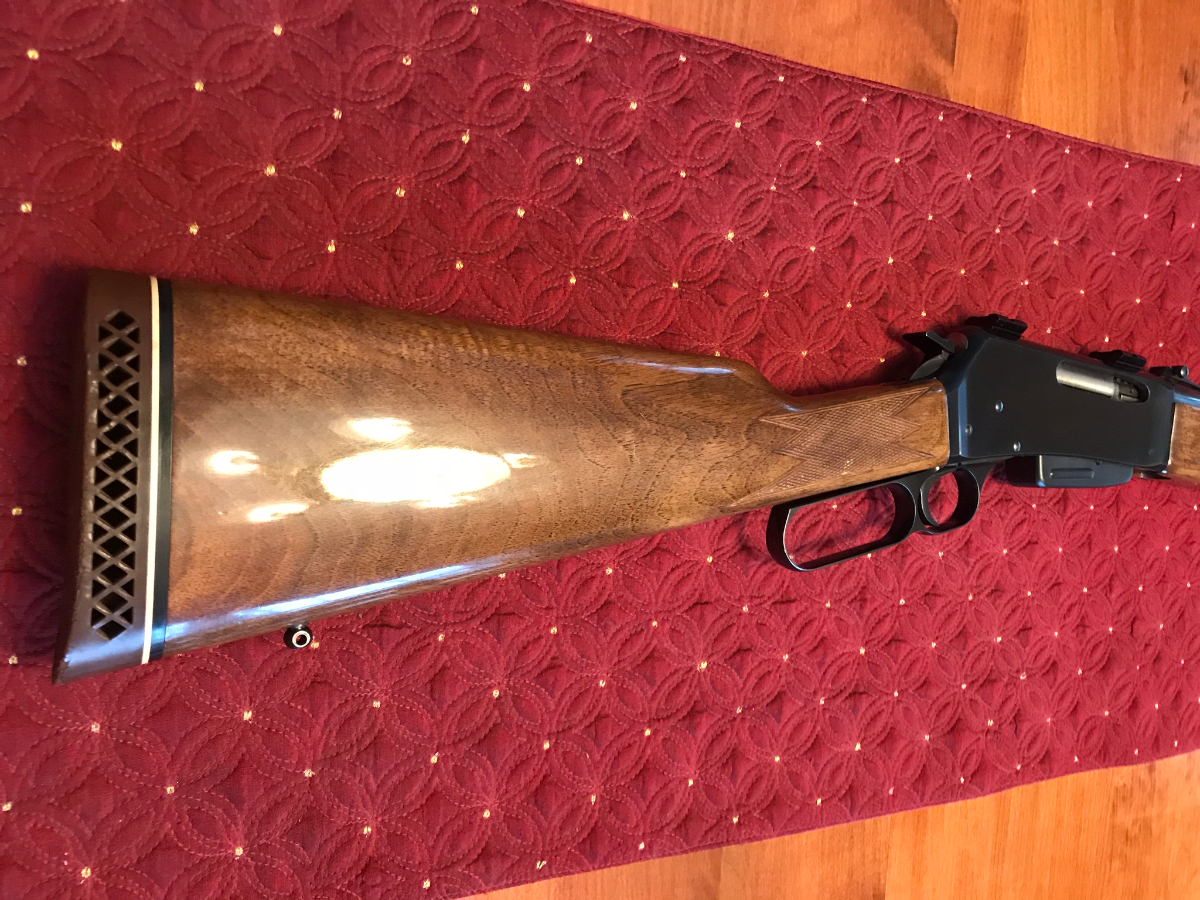
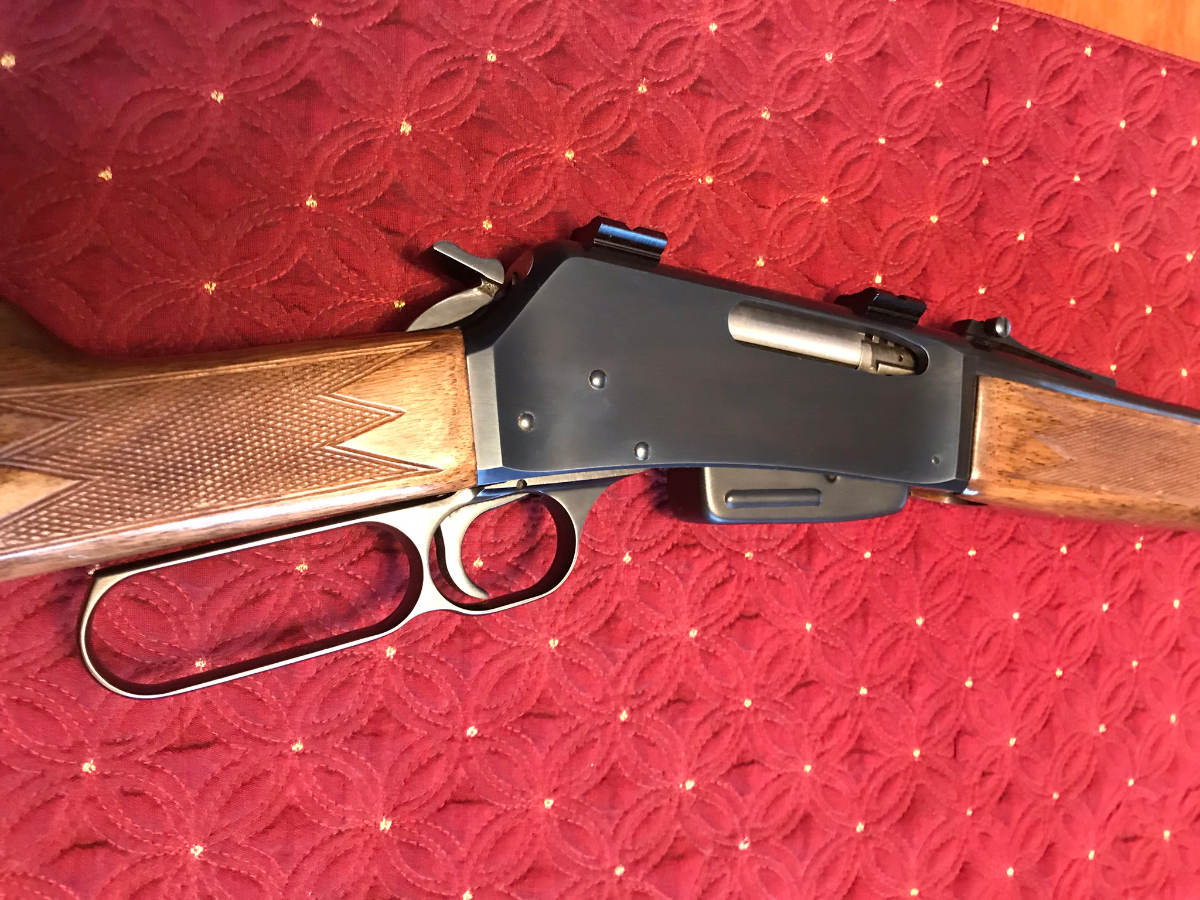
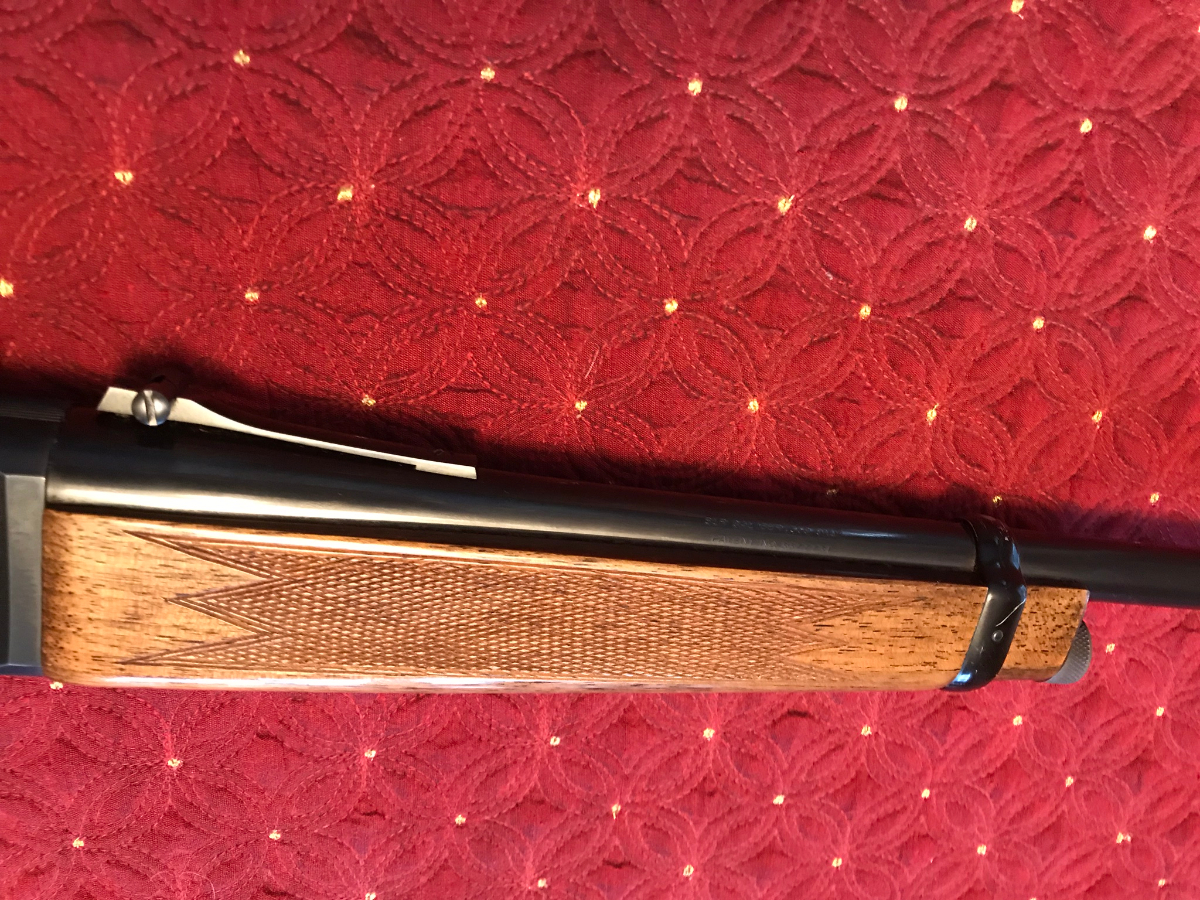
One of the Best Modern Lever Actions out there right now!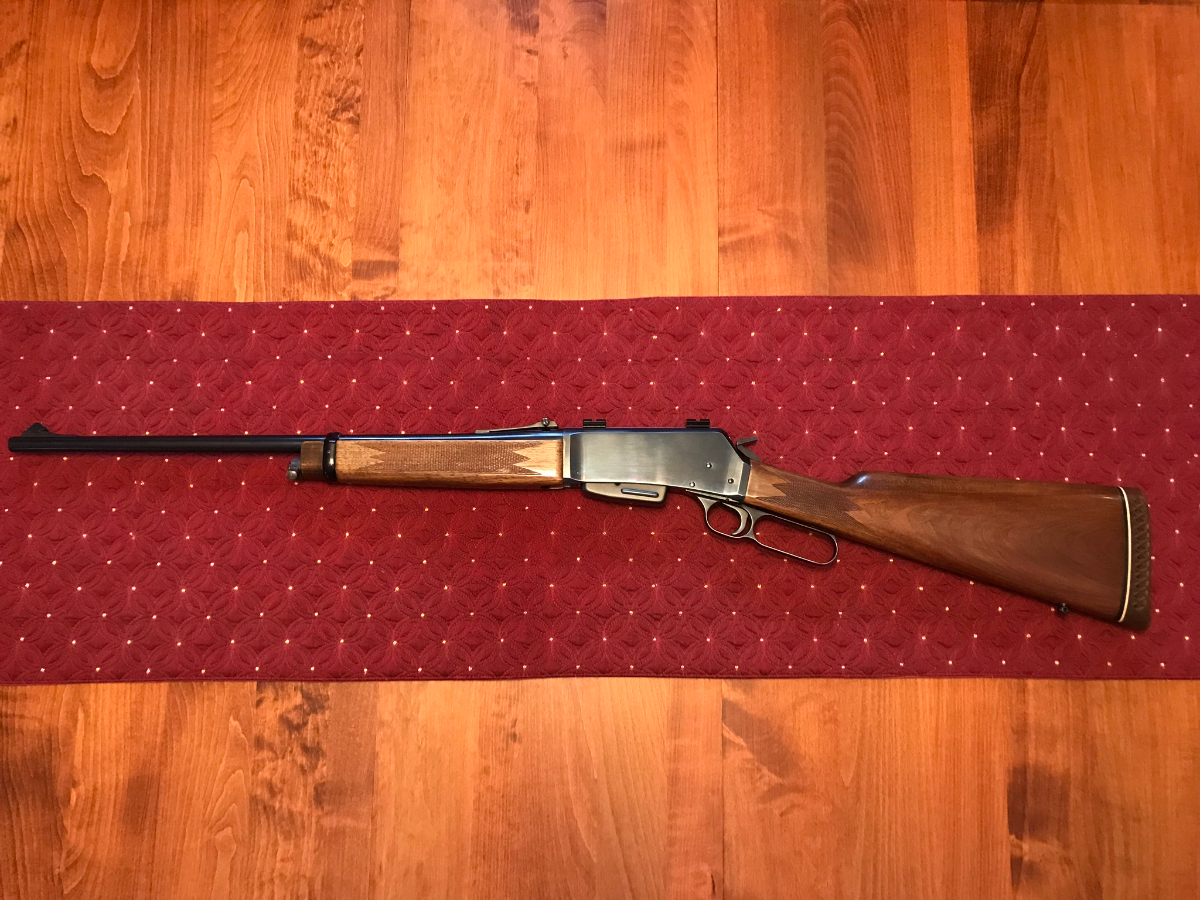

|
The 1899/1900 FN Browning by Ed Buffaloe Historical Perspective Guncotton, or nitrocellulose, made by dipping cotton in a mixture of nitric and sulfuric acids, was patented in 1846 by a Swiss chemist by the name of Christian Friedrich Schönbein, based on earlier work by French chemists Henry Braconnot and Théophile-Jules Pelouze.
Browning’s first pistol patent was filed on 14 September 1895 and was followed just over a year later by three pistol patents filed on 31 October 1896. All four U.S. patents were granted on 20 April 1897 and given successive numbers:
Browning was granted U.S. patent 621,747 on 21 March 1899, covering the final design for the 1899/1900 FN Browning.
The Model of 1899
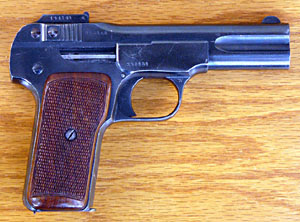
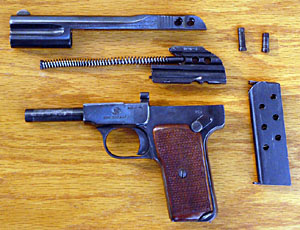
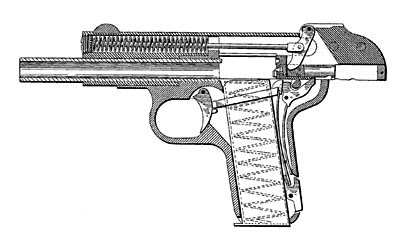
The original FN Browning pistol was simply known as le Pistolet Browning, or the Browning Pistol. When the Model 1900 appeared, the 1899 version was referred to by FN as the modèle de pré-série, or pre- series model. When the 1910 FN Browning appeared, the Models 1899/1900 were often referred to as the “old model Browning.” Only much later, as John M. Browning produced more and more designs, did year model designations become commonplace. According to Vanderlinden, the Model 1899 has an overall length of 158mm (6.2 inches) and a barrel length of 100mm (3.9 inches). It’s height is approximately 112mm (4.4 inches). The magazine holds seven rounds.The Model 1899 is a striker-fired weapon which consists of a frame with a barrel screwed into it, a slide, and a separate breech block. It was the first pistol ever to have a reciprocating slide as opposed to a reciprocating breech block or bolt. The slide fits onto the frame from the front, while the breech block is inserted from the rear; the two are joined by two large screws. The lower front portion of the slide completely surrounds the barrel, behind which is the attached breech block, slotted into the rear of the frame. The upper portion of the slide consists of a tunnel enclosing the recoil spring, which does double duty as the striker spring. There is an ejection port on the right side of the frame. The extractor is a piece of spring steel with a hook on the end.
By today’s standards the spring-above-the-barrel design is unusual. However, the gun was the first truly successful commercial self-loading pistol, and as such its design was widely emulated in its day (e.g., the Pieper Bayard, the Clement, the Frommer Stop, the 1911 Melior, the Langenhan, the Owa, the 1908 Steyr Pieper, the Helfricht, the 1913 Smith & Wesson .35, and much later the .22 caliber Smith & Wesson Escort). The ejector and ejection port were also widely copied. John Browning already had simpler designs in his head, but he clearly wanted someone to make this one, probably because it worked so well.In 1899 the Belgian army was looking for a self-loading pistol. They tested all the pistols of the era: the Mauser, the Bergmann, the Roth (I presume this was a prototype Roth-Steyr), the Mannlicher, the Borchardt, and the Borchardt-Luger. Probably immediately after the first Belgian army pistol trials FN decided to make a larger version of the M1899. I’m guessing the little pistol looked positively diminutive next to the other guns in the trials, and FN thought it might be better received if it were larger. The larger version had an extended grip, frame, and slide. According to Vanderlinden, its overall length was 184mm (7 .25 inches), its barrel length was 122mm (4.8 inches), and it held 8 rounds instead of 7. Only a very small number of these large models were made. Gangarosa incorrectly gives the measurements and capacity of the large test model in place of those for the Model 1899. The large gun was entered into subsequent Belgian military trials toward the middle of 1899. The standard model and the large model were both entered in the British military trials in December of 1900, but were rejected due to the inadequate power of the 7.65mm Browning cartridge.
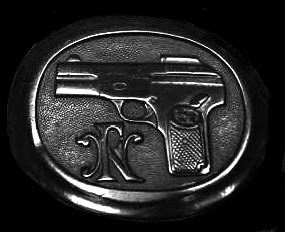
The smaller Browning was ultimately chosen as the standard pistol for the Belgian military. However, a number of changes were requested for the military contract. When these changes were incorporated the new gun became what we call today the Model 1900 FN Browning. Initially FN thought they would continue to produce the Model 1899 for commercial sale, making the Model 1900 for military use only, and indeed virtually all of the first year’s production of the Model 1900 went toward fulfilling the military contract. But FN quickly realized it was much more efficient to produce a single model, so the Model 1899 was phased out before the end of 1901. Over 14,400 Model 1899 pistols are estimated to have been produced between 1899 and 1901. They are rarely seen in the U.S.One of the distinctive features of these pistols is the reinforced area of the frame above the trigger guard, which is made of thicker steel than the rest of the frame. On the Model 1899, this area extends just beyond the middle of the trigger guard (to the top front of the trigger itself), and the rear line of this reinforced area slants toward the front of the gun. This reinforced area of the frame is marked on the left side Breveté S.G.D.G. (indicating the gun is patented), and is stamped with an oval cartouche featuring an image of the gun with a small FN monogram beneath it. Some early safety levers have a round grip area with three concentric circles, while others are checkered. There are no markings to indicate which position is ‘Fire’ and which is ‘Safe.’
The Belgian Military requested that their gun have its frame more heavily reinforced than the Model 1899, be provided with larger, thicker grip plates, and have a lanyard at the base of the grip. They also insisted that the safety positions be marked ‘Sur’ and ‘Feu’ (On and Fire). Markings in German and English were available by special order for sale in other countries. A cocking indicator was added by extending the top of the cocking lever so that it blocks the sight picture when the gun is not cocked. Hence, it is possible to determine visually, or by feel, if the gun is cocked. According to Vanderlinden, the Model 1900 is 164mm in length (though I measure mine at 162mm), and the barrel is 102mm long (though I measure mine at 100mm). The frames were hand ground by machinists, and so may vary slightly in shape and length. The reinforced portion of the frame above the trigger guard extends all the way to the rear of the trigger guard, and all the way to the ejection port on the right side; this area was also made several thousandths of an inch thicker on the Model 1899. The rear line of the reinforced area is at right angles to the top of the frame. The shape of the grip tang is slightly altered, as is the top of the breech block that forms the rear sight. The circular grip area on the safety lever is checkered. The safety lever also serves to lock the slide open if engaged when the slide is all the way to the rear.The grip plates are thicker than those on the M1899 and extend almost to the edges of the grip frame. Some early military contract guns were delivered with plain checkered grip plates that did not feature the oval cartouche at the top–these are quite scarce today. Many of these grips were later replaced by plain checkered wooden grips, which are also quite scarce today. The commercial grip plates continued to have the oval cartouche at the top with a picture of the gun and the FN monogram until 1905. The left grip plate has a cutout on one corner where it abuts the lanyard. At around serial number 200,000 the grip design was changed–the grips were slightly smaller (leaving a couple of millimeters of grip frame showing around their edges) and the oval cartouche contained only the large FN monogram. The grip plates are retained by a rectangular backplate that fits across the grip frame behind them, and are held in place by a screw..
For details on serial numbers, please refer to Anthony Vanderlinden’s book. He states that: “Production of the first commercial pistols was erratic and large gaps exist in the early serial number ranges.” Serial numbers began at 1, but many early pistols failed proof testing and were never completed. A total of approximately 724,550 M1900 pistols were manufactured. Production ended at the beginning of World War I in 1914, though sales had been considerably reduced by the introduction of the Model 1910, which went into production in 1912. The success of the M1899/1900 may have forced the Colt’s company to begin the manufacture of the first Colt Automatic Pistol in 1900.
I call this section “Disassembly” rather than “Field Stripping” because the M1899 and M1900 require a screwdriver to disassemble, so the procedure is not normally done in the field. Nevertheless, it is relatively simple.
When reinserting the breech block into the frame, pull the trigger to lower the sear. * Berg resigned from FN on 28 April 1898, not long after his trip to Utah. He later worked for Flint & Company in Europe and also served as the business agent for the Wright brothers. According to Vanderlinden, he was still alive and living in Paris after World War II. |
|||||||||||||||||||||||||||||||||||||||||||||||||||||||||||||||||||||||||||||||||||||||||||||||||||||||||||||||||||||||||||||||||
|
Copyright 2009 by Ed Buffaloe. All rights reserved. |
|||||||||||||||||||||||||||||||||||||||||||||||||||||||||||||||||||||||||||||||||||||||||||||||||||||||||||||||||||||||||||||||||
 There’s a lot of confusion even among longtime shooters between what a rifle is capable of doing off the bench on a nice controlled square range and what’s actually practical for a serviceable combat weapon.
A good way to put this into context is to think of the average shot a deer hunter will make in a given area. Around here, between thick Carolina conifer and hardwood stands, shotguns do just fine for 99% of putting meat in the freezer.
Rifles are nice for shooting across cutovers or fire breaks- those open areas requiring a little more range I just warned you about.
And how accurate is that Remington 770 or 742 with meat ammo versus a heavyweight barreled Remington 700 5R and precision handloads?
Mechanically it wouldn’t make much difference in the woods over relatively short distances. But the weight sure as heck will, regardless of whether you’re a twenty something stud out shootin’ n’ lootin’ or a mid 50s patriarch looking to protect his home.
Doesn’t mean that any of these are my personal choice for anything other than hunting game, but the concept is basically the same. Which bring my next point.
2. What is your Weight Threshold?
I knew a guy a while back who had a uber-high end semi-auto AR-10, decked out to the nines, with every cool guy thing you can imagine and a giant NightForce 56mm celestial telescope on top.
Beautiful rifle, crisp glass. Weighed 18lbs empty and carried like a 4×4 in the hands. And there’s nothing wrong with that, if you want a high end benchrest-type gun.
But that’s a ridiculous and unnecessary amount of weight for a general purpose weapon. For him, making tiny groups at a given distance was a lot of fun. But when it came time to carry it, you’d see him ditch that for his handy WASR-10 that weighs half as much loaded and accomplishes the same task within 100m.
The point is that what feels heavy but tolerable in your hands at the gunstore becomes a boat anchor after carrying it over distances with supporting equipment.
Common knowledge usually dictates weight equates superior accuracy, but too much becomes self-defeating. That lightweight AR-15 with a pencil barrel can get heavy too.
After a four day cave clearing mission in Afghanistan my M4 felt like a cinderblock. And aside from a PEQ-15, it wasn’t too far removed from the AR-type carbine pictured above.
Granted, I was carrying a lot of other equipment including a SMAW-D and several days worth of 5590 batteries (which is like toting around bricks), but the point is that a carbine I intend to fight with needs to remain lightweight to keep me unencumbered.
There’s a reason the broad shouldered bubbas get picked to hump the M-240B; it’s big and heavy, and the small guys can’t handle and effectively employ it over long distances.
Even the meat eaters get tired though, and shaving a few ounces here and there makes a world of difference when you’re gassed.
3. Remaining Combat Effective- Remember BRAS
The reality of fighting in armed groups is that it is nothing like sitting at a range plinking targets. That’s nice for basic rifle marksmanship, and it’s really important to work on fundamentals.
It’s purpose is to confirm zero & dope (Data Of Previous Engagement- a record of ballistic data for that weapon and specific ammo load) and make sure you can hit a target at a given specific distance, hence why most square ranges are referred to as Known-Distance or KD ranges.
Square range time is critical, and should be at least a monthly training event for you and your group. But understand it is not the end-all-be-all; its just a foundation for Basic Rifle Marksmanship consisting of BRAS- Breathe, Relax, Aim, Squeeze. For creating and maintaining proficiency this is the proper cadence for trigger control.
It’s easy to get right when relaxed and very easy to get wrong any other time. Only training on a 100m square range is a dangerously false sense of security.
Only shooting from a bench and calling it good is preparing you for nothing except shooting off a bench. Getting out and humping that safe queen through the woods for a bit is critically more important than making tiny groups from the bench or even shooting fast at stationary targets in the 3-gun stall.
You learn the ins and outs of that weapon on a patrol and get to make it better.
You may very well learn that what you can do with a 12lb rifle you can also do with an 8lb rifle, and that 4lb weight saving could make a big difference.
If I’m running a .5 MOA rifle but it’s a beast to carry with that 20in bull barrel, I may end up being so exhausted after a movement or a quick react to contact that I can’t hit anything with it because I can’t settle down behind the gun. Under duress this will happen to you.
If you’re out of shape this will be you. And at that point the rifle’s accuracy is irrelevant. Shooting a half inch at 100m now becomes not even being able to acquire a target in that 14x zoom lens, because you’re spent and can’t think through your situation. Believe me, it will happen to you.
4. “If you can’t do it with irons, don’t bother with optics”
I was talking recently with an old-hand Sniper Instructor who told me this. It may come as a shock to some of you but I agree wholeheartedly for making new riflemen.
The optics themselves make life easy, especially today in the world of precision machining and glass manufacturing that makes even lesser-expensive options fairly high quality. And it can produce marksmen in a shorter amount of time because the process of sight-aquire-fire now becomes streamlined.
But- and this is a big objection- without the fundamentals of proper marksmanship, an optic of any type does you little good and in some cases might make you worse.
If I’m running way more glass than necessary, such as putting a 16×50 on an M4 because it helps me shoot tiny groups off a bench or in the prone, I’m not effective anywhere but in that one scenario.
I may very well lose my target if something throws me off kilter as usually happens in a dynamic environment and I may also have trouble getting on target with any amount of speed.
If I back the zoom off but have a second focal plane scope, now my reticle is worthless for any sort of bullet drop or ranging measurements.
His logic is that if I can do it with iron sights, then I have zero problem with optics. The fundamentals are there, along with my confidence.
The foundation is laid. Optics of any type are a tool to enhance one’s capability, not a shortcut in training. If Joe knows he can ring steel with irons on his weapon at an average engagement distance, then an optic of any type enhances his capability.
He now has confidence in himself and his weapon. And confidence is the difference maker above any piece of kit. So with that said, anyone getting started in rifle marksmanship should begin with iron sights and graduate to implementing optics down the road. Simplicity equals success.
Keep in mind this is for basic training purposes; a standard for those new or inexperienced. Additionally, for those simply thinking optics always equate accuracy, buying airsoft-grade trash or even decent glass but a skimpy or improper mounting solution is a recipe for problems in the long run.
If it’s worth doing, it’s worth doing right. If you genuinely don’t know, swallow that pride and get some instruction- I promise, it will be worth it.
Mechanical vs. Practical

Mechanical accuracy definitely plays a large role in practical accuracy, but if your fundamentals are trash nothing is going to make you a good shooter.
While you’ve read up until now that pinpoint accuracy is not a central requirement in a primary fighting carbine or rifle, good mechanical accuracy is definitely a desirable asset.
If my weapon shoots 2 MOA, or a 2 inch group at 100 yards, that means on an average man-sized target at any given distance I have some margin of error to still make solid hits, all things being equal. Anything up to 4 MOA for a general purpose carbine then becomes perfectly acceptable.
Even out to 600m this gives us, in theory at least, 24 inches of spread but still perfectly capable of a solid hit if you do your part. But you have to know how to do your part, and that only comes from solid training.
But will you need to shoot that far? Probably not in most cases- and only your own situation can determine this. Most often our expectations should be half that distance at the most, but if everyone in your group can make those kinds of shots, then they’ll have no problems engaging closer than that.
Practical accuracy comes from the individual rifleman; riflemen are only produced and maintained through quality training. The tactics of the Team of Riflemen are the real difference maker. You should be seeking out training outside the square range on a regular basis.
My friend JC Dodge has an upcoming class which will go beyond the typical comfort zone of most, pushing both the student and his equipment.
In addition, I’m available for those seeking private instruction on both making the shot and proper field techniques, along with other small units skills such as off-grid communications, Recon & Surveillance, and Combat Casualty Care.
We’re not the only ones who can teach this stuff; there’s many others. But I highly implore the reader to get that training along with all the other skills to give you the tactical edge in setting up a secure retreat, even if you think you’re the ‘expert’. And with that, I’ll leave you with a quote from the late, great Peter Kokalis:
To train others in the art of war, you must both know war from the trenches and undergo constant training from others, both to keep the sharp edge and be exposed to the ever-evolving tactical concepts of combat at the down and dirty level.
Several have asked why an “expert” (God how I loathe that word) like me would need to participate in training at a firearms school. The answer is simple: for the same reason tennis and golf pros constantly train under other tennis and golf pros.
You cannot observe yourself while shooting, but the professional firearms instructors under whom I train can constantly detect slight nuances of incorrect movement that need to be reprogrammed.
-From Weapon Tests and Evaluations, The Best of Soldier of Fortune


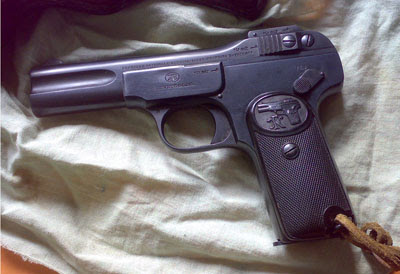
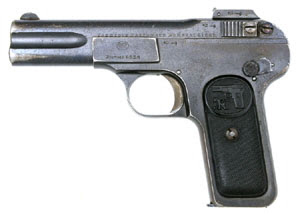
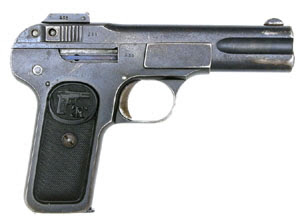
 Slide legends are roll stamped on the left side. There are two legends found: