
Categories
War Well I thought it was funny!

Why it is a good thing to owe somebody money in the Army!

Image result for lives of a bengal lancer by francis yeats-brown

Categories
All About Guns

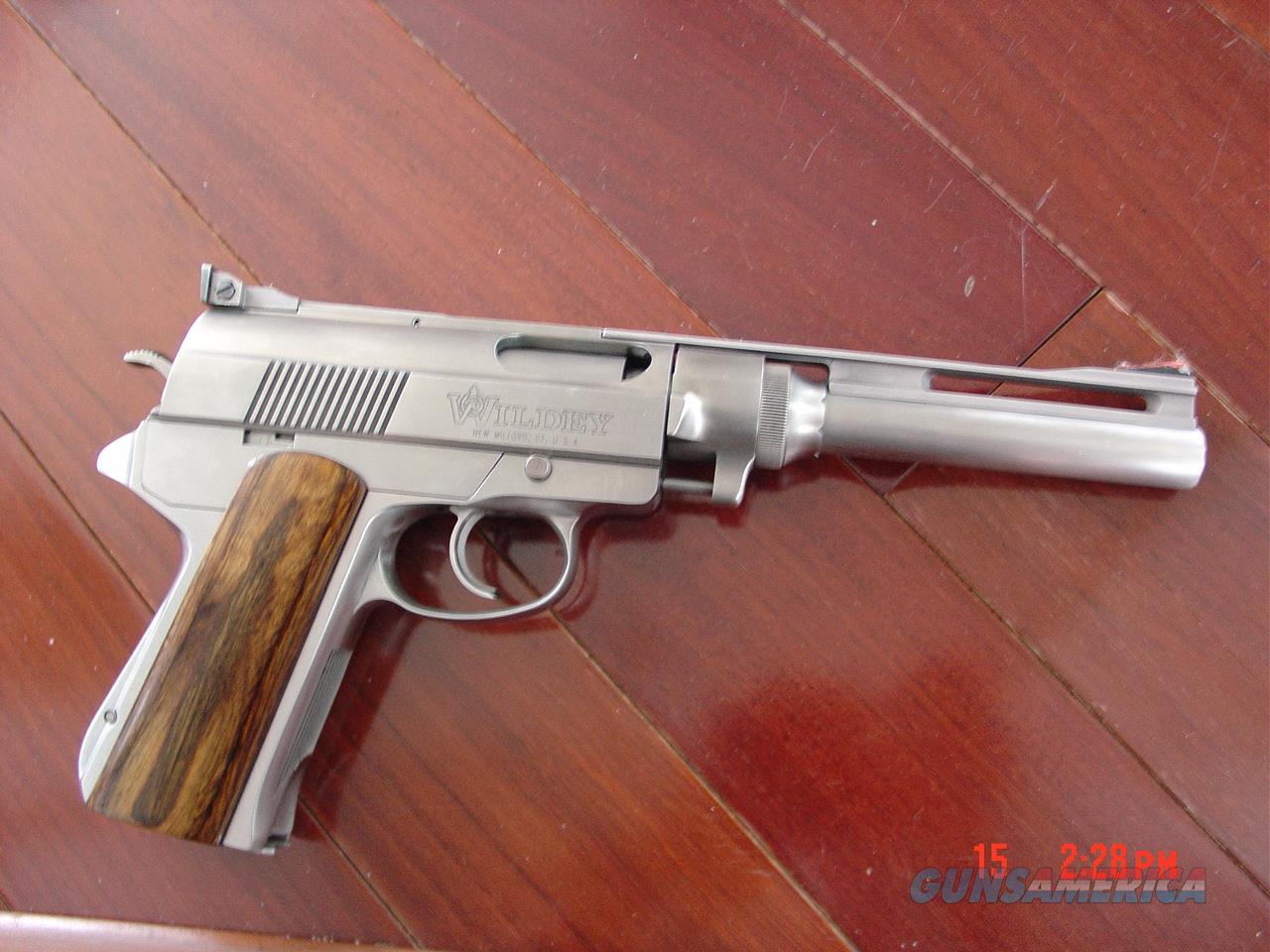
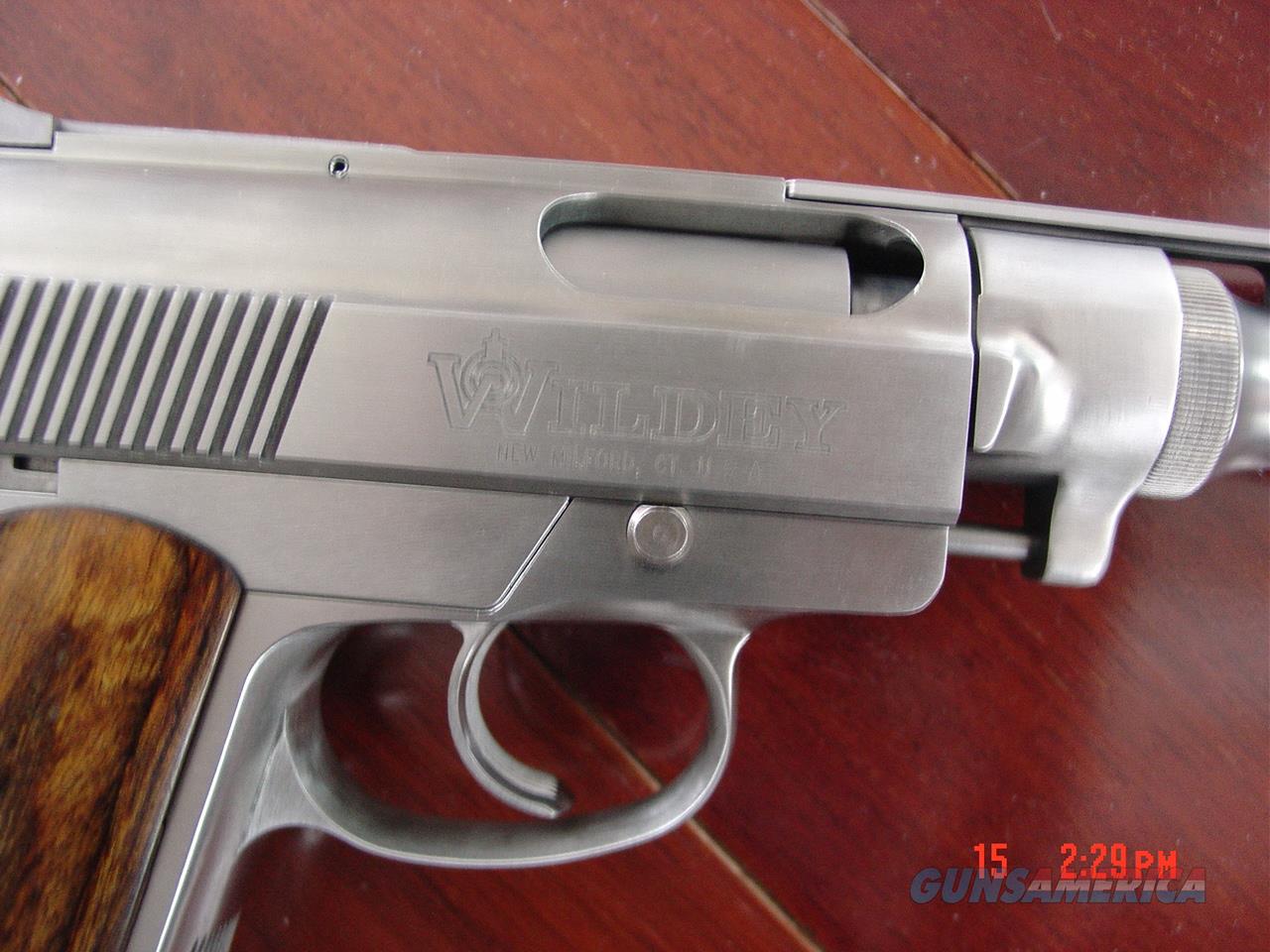
Wildey Survivor 8" vented rib hand cannon 45 Win Magnum


Image result for Wildey Survivor 8" vented rib hand cannon 45 Win Magnum
11866108.jpgImage result for Wildey Survivor 8" vented rib hand cannon 45 Win Magnum
11866109.jpg
11866110.jpg
11866111.jpg
11866112.jpg
11866113.jpg
11866114.jpg
11866115.jpg
11866116.jpg
11866117.jpg
11866118.jpg
11866119.jpg
11866120.jpg
11866121.jpg
Categories
All About Guns

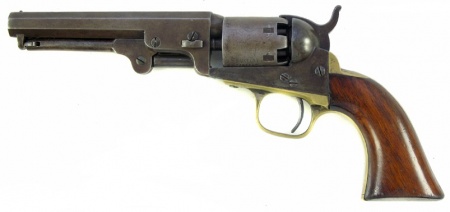
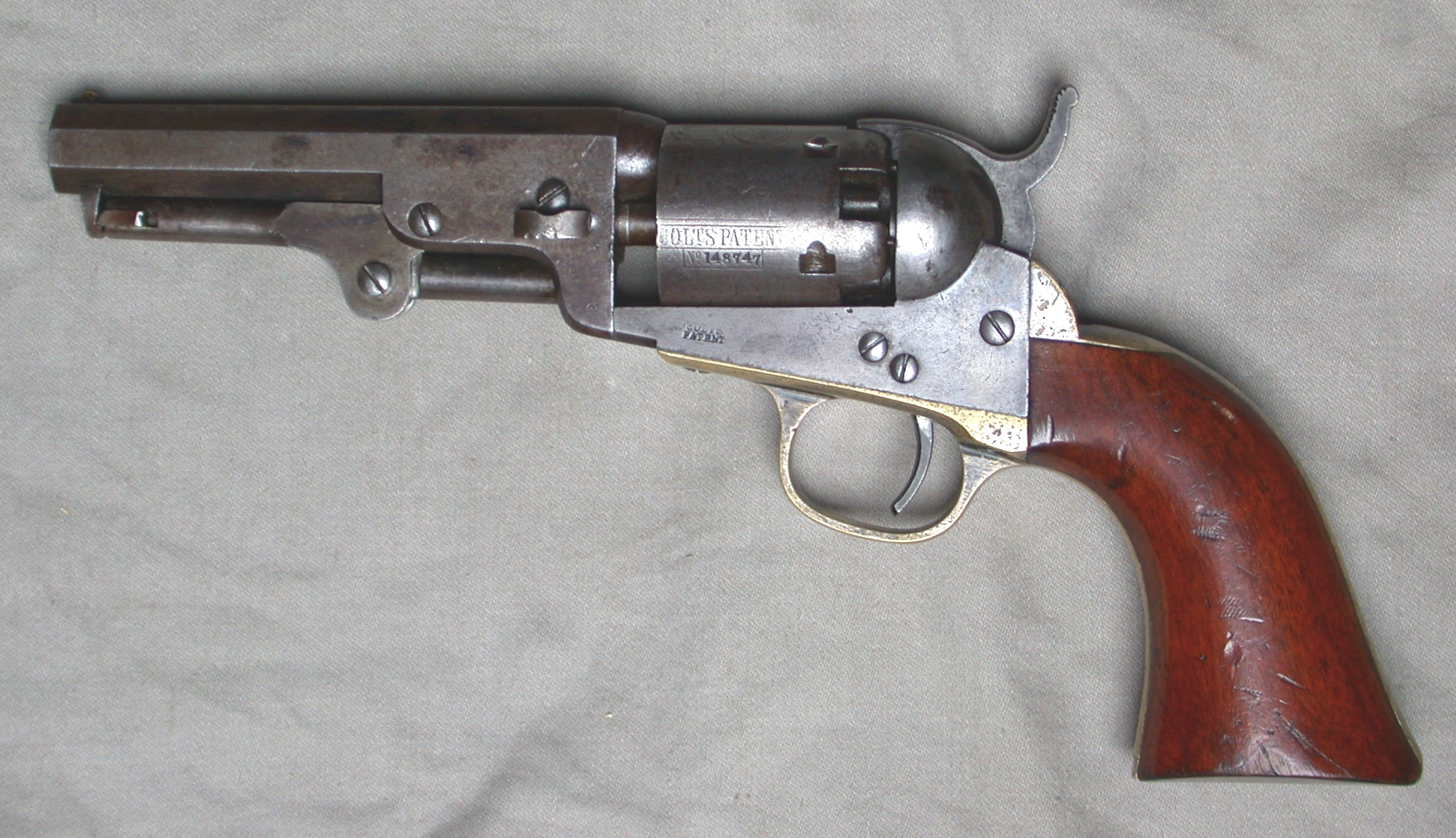
Sam Colt 1849 Colt Pocket Model Pistol Revolver 31cal

Image result for Colt 1849 Colt Pocket
 Image result for Colt 1849 Colt Pocket
Image result for Colt 1849 Colt Pocket
 Image result for Colt 1849 Colt Pocket
Inline image 1

Colt Pocket Percussion Revolvers

From Wikipedia, the free encyclopedia
Colt Pocket Models
Pocketmodold.JPG

Original Pocket Police (above) and Pocket Model of 1849
Type Single-action revolver
Place of origin United States
Production history
Designer Samuel Colt
Designed Baby Dragoon: 1847
Pocket Model of 1849: 1850
Pocket Navy and Pocket Police: 1861
Manufacturer Colt Firearms
Produced c. 1847–1873
No. built 325,000 .31 Pocket Models. 19,000 .36 Pocket Navy, 20,000 Pocket Police
Specifications
Weight 26 oz (with 4-inch barrel without loading lever)
Length 8.75 inches with 4-inch barrel
Barrel length about 3- to 6-inches

Caliber .31 ball/conical bullet, ( 50-71-grain .320 in., dia.) (later .36 caliber)
Action single-action
Muzzle velocity 700–800 feet per second (average, depends on powder charge)
Effective firing range 25 yards (accurate defense)
Feed system 5-round cylinder
Sights blade or conical pin front sight, hammer notch rear sight

The family of Colt Pocket Percussion Revolvers evolved from the earlier commercial revolvers marketed by the Patent Arms Manufacturing Company of Paterson, N.J. The smaller versions of Colt’s first revolvers are also called “Baby Patersons” by collectors and were produced first in .24 to .31 caliber, and later in .36 caliber, by means of rebating the frame and adding a “step” to the cylinder to increase diameter. The .31 caliber carried over into Samuel Colt‘s second venture in the arms trade in the form of the “Baby Dragoon“-a small revolver developed in 1847–48. The “Baby Dragoon” was in parallel development with Colt’s other revolvers and, by 1850, it had evolved into the “Colt’s Revolving Pocket Pistol” that collectors now name “The Pocket Model of 1849”. It is a smaller brother of the more famous “Colt’s Revolving Belt Pistol of Naval Caliber” introduced the same year and commonly designated by collectors as the “1851 Navy Model” (and which was a basically a larger, .36 caliber of the Pocket Model, “belt pistol” referring to a weapon sized to fit into a belt holster, as opposed to the saddle holsters generally called for by Colt’s larger cavalry combat models).[1] In 1855 Colt introduced another pocket percussion revolver, the Colt 1855 “Sidehammer”, designed alongside engineer Elisha K. Root.

Description and history[edit]

The Pocket Model revolvers all have a traditional “Colt-style” frame, generally with brass grip straps and trigger guard, and a case-hardened steel frame. In appearance, the frames are almost identical to the larger 1851 Navy and .44 caliber 1860 Army Models, with the exception of being smaller, and so having a proportionately larger trigger guard. Since they appear so similar to the larger weapons, without an object nearby to give them scale, the Pocket Revolvers tend to give an impression of being larger than they actually are; it is difficult to fit all four fingers onto the slender grip, even for a person with average-sized hands. Except for by noting the relative size of the trigger guard to the frame, it is easy for a casual observer to mistake a .31 caliber Model 1849 for an 1851 Navy (un-rebated frame, slab-sided webbing around a regular pivoting loading lever, octagonal barrel, unfluted cylinder); indeed, the Model 1851 Navy was basically no more than a scaled -up 1849 Pocket Model. Likewise, the larger .36 caliber Pocket Police Models are virtually identical to the 1860 Army Model, with rebated frame and stepped cylinder (to accommodate a size up from .31 to .36, instead of .36 to .44 as with the Army Model), a graceful, flowing webbing surrounding a new style “creeping” loading lever, and a round barrel. The most obvious difference is that the Pocket Police had a fluted 5-shot cylinder, while most Army Models were unfluted, and held six shots. The reason for this close similarity is that all four guns were closely related, and followed similar paths of development; the original .31 caliber Model 1849 was scaled up to create the .36 caliber 1851 Navy Model. Later, the Navy Model was increased in bore size by rebating the frame and enlarging the cylinder, and became the 1860 Army Model. With the success of this project, the .31 caliber of the 1849 Model was similarly increased to .36, using the same method, creating the Pocket Police and Pocket Navy models.
The Pocket Model came with and without attached loading levers and with barrel lengths from 3-6 inches; those without loading levers were loaded either with some handy dowel or equivalent tool, or by removing the cylinder from the frame and using the fixed cylinder pin (or “arbor”) as a rammer). Those without loading levers are frequently called the “Wells Fargo Model” although Wells Fargo records show no .31 caliber revolvers ever purchased by that company. All variations included, it was the single largest selling of the Colt revolvers until well into the 20th century (ibid Wilson.) Civilian demand for the original .31 caliber revolver remained substantial even after introduction of the larger-bored .36 caliber Pocket Navy and Police Models, even right up until metallic cartridge revolvers entered production in the early 1870s (notably by Smith & Wesson).[2]
In 1860, the .36 caliber Police Pocket model was created, after lessons were learned from experimentation aimed at reducing the size of the .44 Colt Holster Pistols (i.e. large cavalry weapons), Colt took advantage of stronger mass-produced steel by rebating the frame of the Navy revolver to hold a larger-diameter 44/100-inch chambered cylinder, basically fitting the power of a large cavalry saddle holster-gun and fitting it into the .36 caliber Navy Model, a gun that could be carried in a belt holster. Previously, it wasn’t thought that the smaller frame could handle the power of the .44 round, but the introduction of stronger metals made it possible. Learning the lessons from this, the Colt factory applied the same technology to the .31 caliber Model 1849 Pocket revolvers, using high-strength (for the time) steel for the frame, which allowed them to remove enough material to fit a larger-diameter .36 caliber cylinder which still had five shots (the alternative was to simply retain the original cylinder diameter, and create a 4-shot .36 caliber version. The stronger steels made this sacrifice unnecessary. Other changes including lightweight fluted cylinders, and a round barrel, to offset the added weight, and a “creeping” loading lever as used in the 1861 Army Model; the result was the “Police Pocket Model of 1862”. The Pocket Navy was a version similarly up-sized to .36 caliber, but which retained the octagonal barrel and traditional loading lever of the earlier pocket mode. Between 1862 and 1873, Colt records document production of 19,000 of the Pocket Navies and over 20,000 Pocket Police revolvers. Relative to the .31 Pocket Revolvers, the period of manufacture was short and overall numbers were further limited by a fire at the Colt Factory in 1862 and War production concerns.[3]

Period use[edit]

One legend has it that the pocket models were popular with Civil War officers who did not rely on them as combat arms but as defense against battlefield surgeons bent on amputating a limb; a more likely reason is that officers weren’t expected to directly engage in combat, except in self-defense, and the small size and light weight of the Pocket models made carrying them around more attractive than larger, heavier models (especially once the .36 caliber models came out). Richard Francis Burton was a devotee of Colt Revolvers and carried a selection of them on his mid-eastern journeys including the trip to Somalia and Ethiopia in 1855. A Pocket model receives prominent mention:

My revolvers excited abundant attention, though none would be persuaded to touch them. The largest, which fitted with a stock became an excellent carbine, was at once named Abu Sittah (the Father of Six) and the Shaytan or Devil: the pocket pistol became the Malunah or Accursed, and the distance to which it carried ball made every man wonder.[4]

Other anecdotal accounts indicate that Bloody Bill Anderson, the Civil War raider, preferred the Pocket Police model.

Shooting characteristics[edit]

The Pocket Revolvers, both original and Replica, are somewhat more challenging to shoot at moderate range than the larger Colt-type revolvers. The small size makes for a small and slender grip, and even average-sized hands will have trouble fitting the pinkie finger. The thinness and round cross-section of the grip make it easy for the gun to shift in the shooter’s grasp, and the sights are very small and difficult to see, compared to modern weapons. Point of impact is generally a foot or more above point of aim at 25 yards, but is consistent. Nevertheless, by holding Kentucky windage or installing a taller front sight, the shooter may expect to make telling hits on a man-sized silhouette target at that range and very effective sustained fire at shorter distances. In the gun’s intended purpose (short-range shooting at man-sized targets) this creates little problem. A shooter need only point the weapon at the center of the torso (the easiest point of aim), and fire, and the ball will hit somewhere in the chest region, which is far more ideal for both parties than an abdominal wound. All in all, for a weapon designed mostly as a relatively close-range defensive weapon, it was quite suitable for its era.[citation needed]

Categories
Born again Cynic!

The Politically Correct Christmas Card that I will not be using this year!


DEAR ______ : Please accept with no implied or implicit obligation on your part, my best wishes for an environmentally conscious, socially responsible, low-stress, non-addictive, gender-neutral celebration of the winter solstice holiday, practiced within the most enjoyable traditions of the religious persuasion of your choice, or secular practices of your choice, with respect for the religious/secular persuasion and/or traditions of others, or their choice not to practice religious or secular traditions at all.
I also wish you a fiscally successful, personally fulfilling and medically uncomplicated recognition of the generally accepted in the calendar year 2011, but not without due respect for the calendars of choice of other cultures whose contributions to society have helped make America great.
Not to imply that America is necessarily greater than any other country or is the only America in the Western Hemisphere and without regard to the race, creed, color, age, physical ability, religious faith or sexual preference of the wishes.
By accepting these greetings you are accepting these terms. This greeting is subject to clarification or withdrawal. It is freely transferable with no alteration to the original greeting. It implies no promise by the wisher to actually implement any of the wishes for herself or himself or others and is void where prohibited by law and is revocable at the sole discretion of the wisher.
This wish is warranted to perform as expected within the usual application of good tidings for a period of one year or until the issuance of a subsequent holiday greeting, whichever comes first, and warranty is limited to replacement of this wish or issuance of a new wish at the sole discretion of the wisher.

Categories
All About Guns

Old TV Commercials 8 – Toy Guns – It was a whole different world from now. Pity!

Categories
All About Guns

Yummy!

Categories
Well I thought it was funny! Well I thought it was neat!

Well I liked it!

Categories
All About Guns

I WANT ONE!!! The FG42 Rifle Review (Smith Machine Group Reproduction)

https://youtu.be/4a0F1oudCAo
Image result for FG42 Rifle Review (Smith Machine Group Reproduction)
If you are lucky enough to have one of these, You Sir are the coolest Dude on the Firing Line Bar NONE!
Grumpy the Envious


Categories
All About Guns

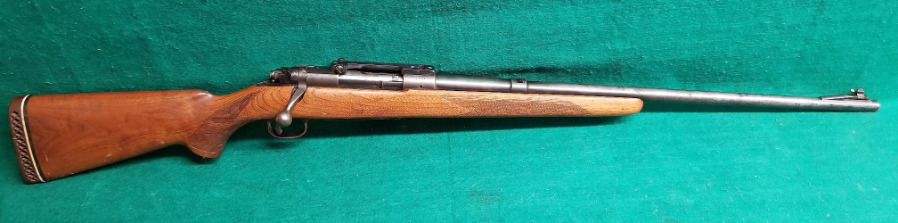
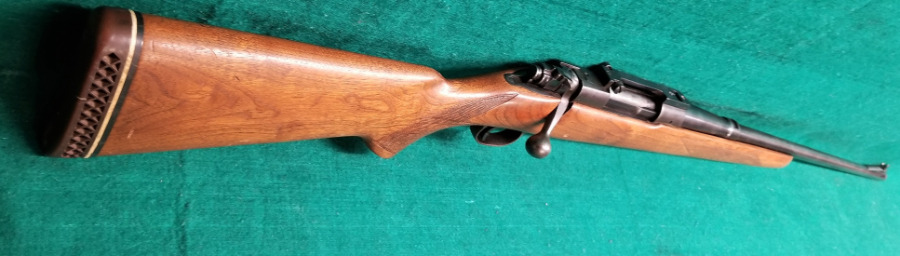
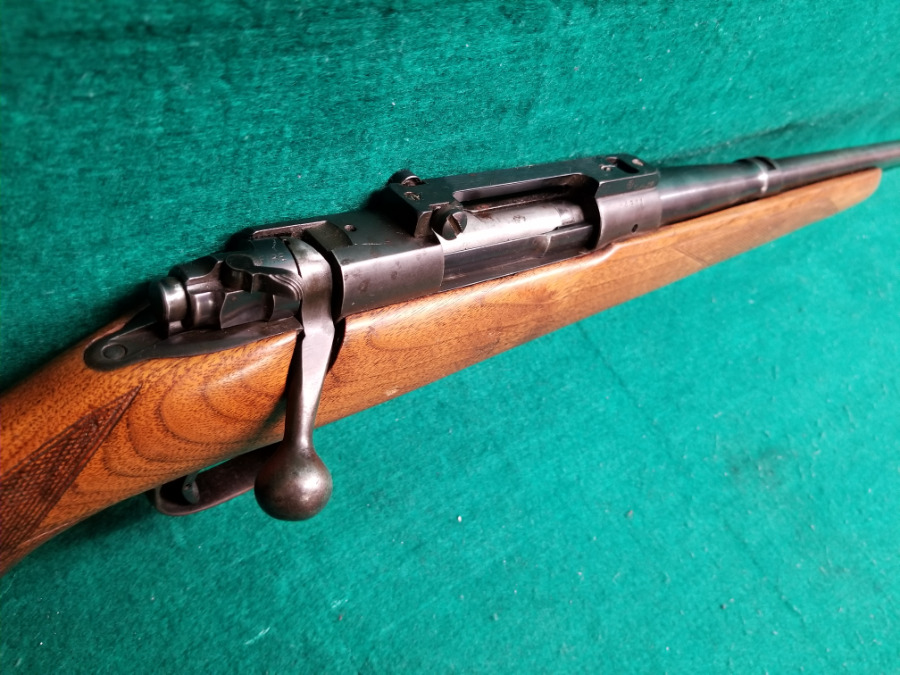
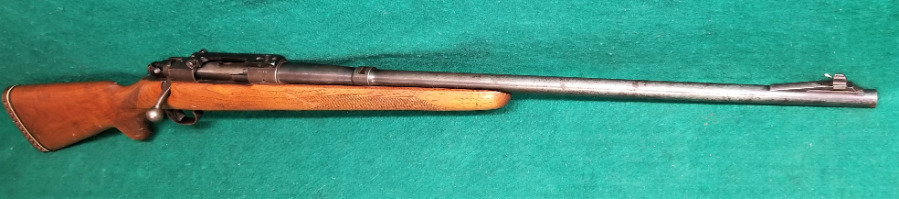
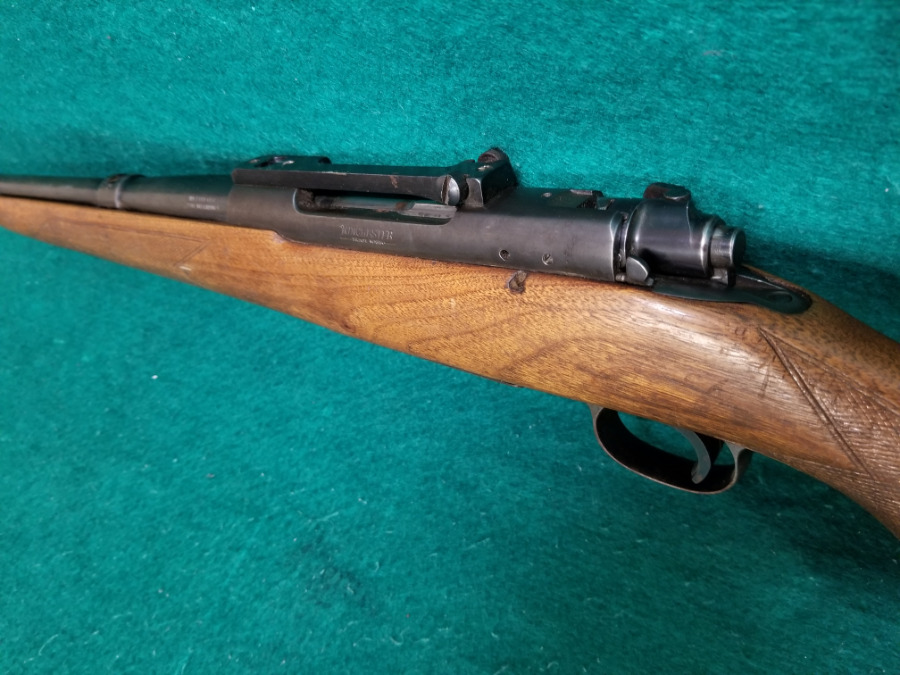
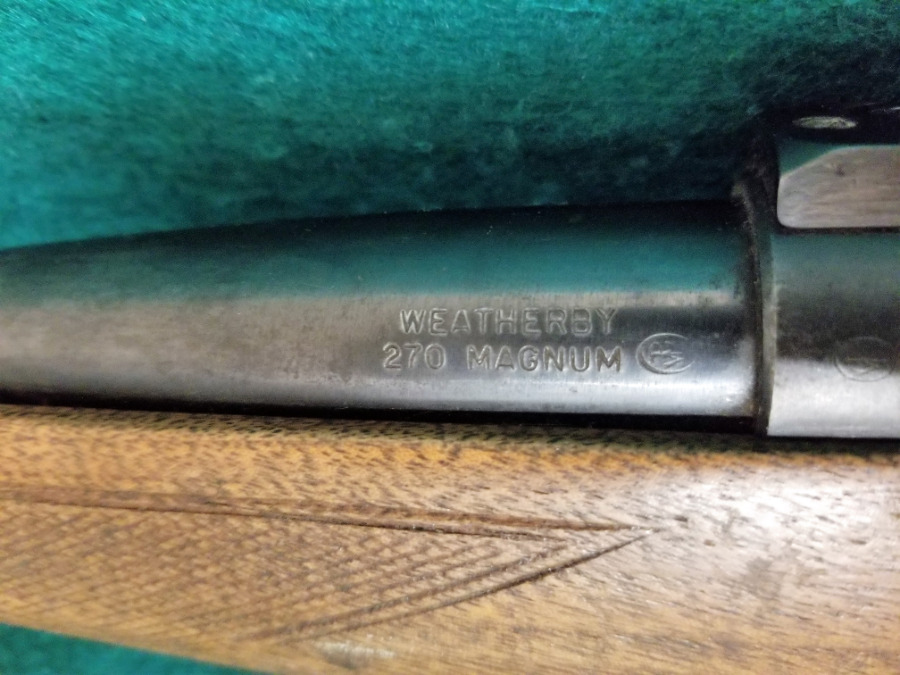
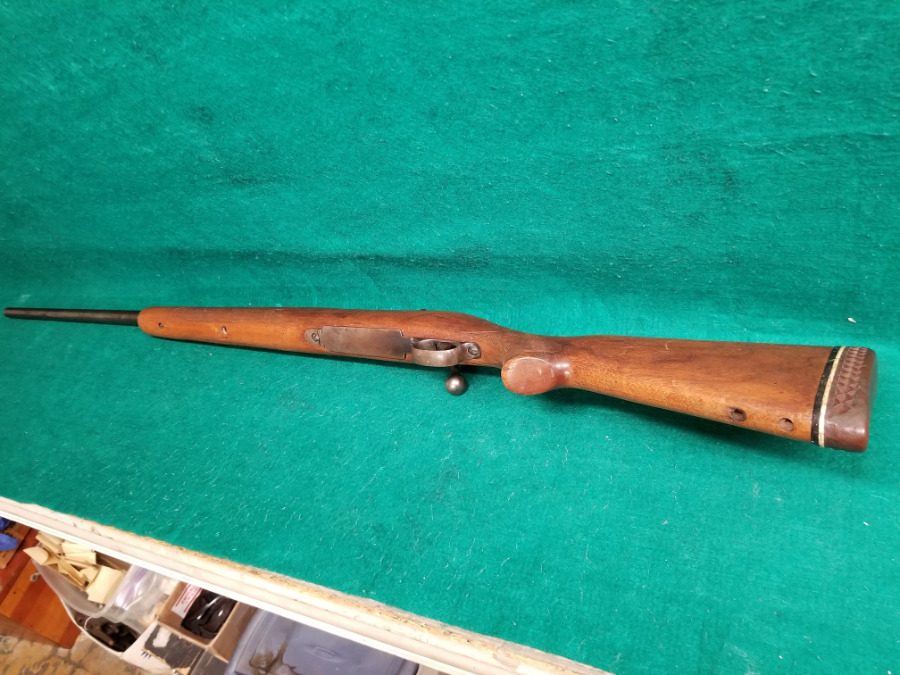
Winchester Repeating Arms Company Mod. 70 24 Inch Barrel Pre 64 .270 Wby. Mag.

Winchester Repeating Arms Company - MOD. 70 24 INCH BARREL PRE 64 - Picture 1
 

Winchester Repeating Arms Company - MOD. 70 24 INCH BARREL PRE 64 - Picture 2
Winchester Repeating Arms Company - MOD. 70 24 INCH BARREL PRE 64 - Picture 3
Winchester Repeating Arms Company - MOD. 70 24 INCH BARREL PRE 64 - Picture 4
Winchester Repeating Arms Company - MOD. 70 24 INCH BARREL PRE 64 - Picture 5
Winchester Repeating Arms Company - MOD. 70 24 INCH BARREL PRE 64 - Picture 7
Winchester Repeating Arms Company - MOD. 70 24 INCH BARREL PRE 64 - Picture 8
Winchester Repeating Arms Company - MOD. 70 24 INCH BARREL PRE 64 - Picture 9


Categories
Born again Cynic! The Green Machine

We have the knack of not winning wars but we will have some new uniforms!

Soldiers to Get New Greens Uniform in 2020 After Army Finalizes Design

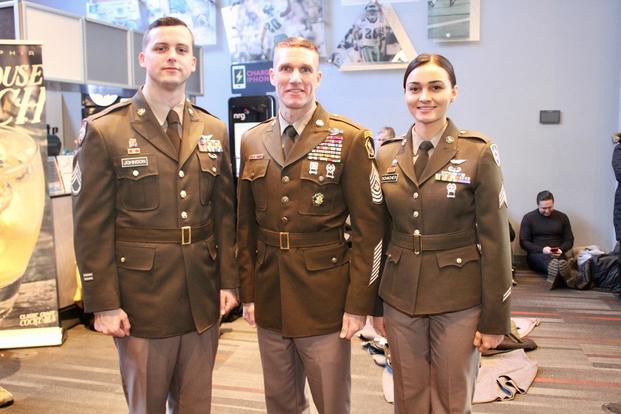
Sergeant Major of the Army Dan Dailey stands with Soldier models wearing the proposed Pink & Green daily service uniform at the Army-Navy game in Philadelphia, Pennsylvania December 9, 2017. (US Army photo by Ron Lee)
The Army plans to begin issuing its newly announced Army Greens to new soldiers beginning in summer 2020, the service’s senior enlisted leader said Monday.
Army Secretary Mark Esper approved the Nov. 11 adoption of the much-discussed Army Greens, which all soldiers must wear by 2028. The new uniform, recently renamed by service brass, is a version of the iconic pinks-and-greens uniform Army officers wore during World War II.

“This uniform is still in the minds of many Americans. This nation came together during World War II and fought and won a great war,” Sergeant Major of the Army Daniel Dailey said in a briefing with reporters at the Pentagon. “That’s what the secretary and [Chief of Staff of the Army Gen. Mark Milley] wanted to do, is capitalize on the greatest generation because there is another great generation that is serving today, and that is the soldiers serving in the United States Army.”
Soldiers currently serving in the active duty, National Guard and Reserves will be able to purchase the new uniform in summer 2020, but they do not have to buy it until 2028, Army officials have said. The current blue Army Service Uniform (ASU) will become the service’s optional dress uniform.
“I know it seems like a long time,” Dailey said, explaining that the extended phase-in period is designed to give enlisted soldiers time to save up their annual clothing allowance to pay for the new uniform. “We’ve got to give the soldier ample time to be paid for those uniform items prior to it being required for them to wear it.”
He said it would be “premature” to release the estimated cost of the new uniform.
“We have an estimated cost,” he said. “We are not done with any contracting at this point, so it would be premature to give you any of those costs. What we do know is that, because of the measures we are taking, it is going to be cost neutral to the taxpayer and the soldier in the long run.”
Dailey justified the cost of the new, more-expensive Army Greens uniform by saying it will last longer than the current-issue ASU.
“The estimated cost of the new [Army] Greens uniform is higher than that of the current service blue uniform … because it is a higher-quality uniform,” he said. “We could easily make it the same cost, but that’s not the intent here. The intent here is to increase the quality of the uniform, and that is why we extended the life of the uniform.”
The new Greens jacket will be made of a 55-percent/45-percent “poly-wool elastique.” The pants will feature a gabardine weave made of a 55/45 poly-wool combination as well. The shirt will be made of a 75-percent/25-percent cotton-poly blend, said Army officials, explaining that service life of the Army Greens is six years compared to the ASU’s four years.
“We went for a higher-quality fabric. The uniform costs more as a result … but we intended to do that because one of the chief of staff of the Army’s directives to us was build a higher-quality uniform, which inherently costs more,” Dailey said. “And the way you offset that is you capitalize on the life of that uniform based upon its higher quality.”
Despite the recent adoption announcement, the Army Greens design is not yet finalized.
“There were some design changes all the way up until the week before the secretary made the decision,” Dailey said.
The uniform prototype Dailey wore recently at the Association of the United States Army’s annual meeting in October featured a jacket belt with a gold buckle, he said, adding that the final design will be more subdued.
“The chief of staff has made a slight change on the length of the collar on the male jacket,” Dailey said. “From a design perspective, it’s the right decision the chief made.”
The jacket buttons will also feature an antique finish instead of a brass color, Army officials said.
“The next set of photographs we want to get out to the media, we want them to be accurate” to show the final design, Dailey said.
Before the Army starts issuing the redesigned uniform to the force, the service intends to field 200 sets of Army Greens for a final evaluation.
“We are in the process of being able to produce about 200 uniforms that we want to issue out to designated forward-facing units … and when I say ‘forward-facing units,’ I’m really talking recruiters,” said Col. Stephen Thomas, head of Project Manager Soldier Protection & Individual Equipment. “Then, what we will do is get feedback from those soldiers on how to better refine the uniform so that when we go to final production … we have a comprehensive uniform design that soldiers like.”
Officials from Program Executive Office Soldier said the process should be complete by next summer.
“This is a great day to be a solder,” Dailey said. “As I go around and have talked to soldiers in the last few days … they are very excited about it, and the overwhelming majority are just truly excited about the new uniform.”
— Matthew Cox can be reached at matthew.cox@military.com.