General Delivery
Horsethief, NM
(Sunday Night)
Alex Bartimo, Editor
Shooting Times
Box 1790
Peoria IL 61656
Dear Bart:
This isn’t actually from Horsethief. I’m camped in the big timber about halfway up the side of San Miguel mountain. Saint Mike, we call it. You may not be able to read my poor handwriting because of the the watermarks on the paper. I know I should be weeping about missing the deadline on this month’s gun review, but I’m sorry to say these splotches weren’t made by tears.
Rain and snow did that.
I’m trapped here, and it’s my own fault. Down at the house in Horsethief, I contracted cabin fever. No pals had visited in more than a month. I don’t take a newspaper (you can get bad news anywhere). I’d read every book on the place at least twice, and Horsethief has no library or newsstand. We get one television station from Albuquerque via a repeater in the mountains, and it runs Bozo the Clown, As The World Flips, intriguing situation comedies about the family problems of New York taxi drivers, and wilderness stories about mountain men who feed themselves and their pet mountain lions with mushrooms and rosehips gathered in the dew.
My set is still like new-it never gets turned on.
The fact of the matter is, I was bored stiff when I got this foreign .380 you wanted shot and decided to make it my excuse to come up to this big stretch of forest belonging to a friend of mine. I was going to stay a couple of days, shoot, and drowse in the sunshine.
Didn’t work out that way.
I like to carry extras, so I packed my old pickup with sleeping bag and big tarp, groceries for two or three days-including canned corned beef hash, chili con carne, coffee, bacon, eggs, and a sack of fresh biscuits. And one jug of Henry McKenna redeye to ward off the weeps around the evening fire. Luckily, I also brought a Coleman camp stove and lantern because I planned on cooking on an open fire.
I stowed the camera equipment, figuring on getting pictures of .380 on tree stump and (using a selftimer) heroic poses of my classic profile looking off into the horizon.
The trip up was nice. Plenty of sunshine. Few melting snowbanks left from winter. Jeep road a little tough on pickup, but made it to campsite okay. Strung lariat rope between two trees and wired end of tarp to it. Made lean-to. Took rocks from clear, cold stream and built fireplace. Gathered enough dead wood to last two days. Unrolled sleeping bag, laid holstered Ruger .44 beside it. Was home.
Built fire, had hash and biscuits, raunchy coffee. Took tot of McKenna while looking at stars. Wondered what city folks were doing. Turned in early.
Up before first light. Drizzling rain. Get GI poncho from truck’s toolbox. Trouble getting fire going with wet wood. Pour on Coleman fuel. Burn fingers…..Biscuits, bacon and coffee.
Sitting in lean-to, I examine new .380. Most unusual. Called the Mama Mia. Made in Costa Rica by Hijos de Basura, S.A. and imported by Larson E. Rippoff Inc. Homossa Springs, Florida. Price: $469.98. About five inches long. Ten-shot staggered magazine extends one-half inch below butt. Double action with pull of approximately 20 pounds; single-action pull about 25 pounds.
Shiny plastic grips. Shiny plastic trigger guard (combat style). Shiny plastic sight rib and sights. Rear sight adjustable for windage. One click equals 12 inches at 25 yards.
Extra 48-shot magazine is curved. Might not do much for feeding but looks jazzy, making pistol five inches long and 1 ¼ feet deep. Optional flash hider and grenade launcher supplied with my review gun. Extras cost only $189.98.
Many cast parts in pistol. Nothing wrong with well-cast parts, but these of somewhat lesser quality than lead soldiers I made as a boy.
Can’t shoot, must wait out rain. Wait all day. Except for small supply under tarp, wood is soaked. Crank up Coleman stove. Chili and biscuits. Wish had brought tortillas and refried beans. Hit sack early. Sleeping bag feels damp.
Third day now. Raining harder. Decide to go home. Dismantle camp, pack truck. Trouble starting engine. Drive 10 feet from camp on muddy trail, skid, nose into boulder. Rear wheels spin. No four-wheel drive. No tire chains. Stuck. Rebuild camp. All wood wet. Hunker around Coleman stove. Things have to get better. Feast on bacon, eggs, soggy biscuits. Long pull at Henry McKenna, then dream in wet sleeping bag. Fourth day. Bear sign around truck. Glad I hadn’t woke up. Might have made mistake and shot bear with .380. Wish I was in Horsethief, watching taxi driver program. Still no interest in mountain man and lion.
Go to stream for coffee water and wash. Bank full, running fast, water chocolate brown. Wash in muddy water and get gallon jug of emergency water from truck. Use sparingly. Going nuts.
Sun peeps through in afternoon. Rain stops, but pickup still stuck. Grab opportunity to shoot the Mama Mia. Staple dry targets from toolbox to big conifer pine. Have W.W. R-P, and Federal factory loads. Load 10 round magazine. Brace against tree now. Squeeze off first round at target. Low/left in 7 ring. Empty case smokestacks. Feed next round into chamber manually. Not on paper. Now shooting low/right 6s. Go through 20 shots, all hand operated. Group is high, right, low, left, 16 inches (diameter of tree).
Forty-eight-round magazine loaded and put in place. Will not feed first round. Note for first time that loading ramp is very steep-about 45 degree-and narrow. Get screwdriver kit from toolbox and dismantle pistol.
Many tool marks inside shiny exterior. Horseshoe rasp, maybe. Springs all piano wire type. Apparently from very small piano. After some difficulty, reassemble and try 48-round magazine again. No dice. Big magazine apparently meant to be handy place to carry ammunition.
Shoot single shot for a while. Groups don’t improve. Curious square holes cut by bullets. Perhaps due to quadrangular rifling in bore. Try all brands of ammunition. Results the same.
See squirrel munching acorn in nearby tree. Very fat. Squirrel out of season, but I get an evil idea. Rations low. Squirrel rolled in biscuit crumbs and fried in bacon drippings would be great morale builder.
Sight seven inches high and left on squirrel with Mama Mia. And miss. Squirrel munches acorn. Hold upper right quadrant or rodent. Does not disturb dining squirrel. Working slide by hand, fire five quick shots. Squirrel looks on with interest. Think of going for .44 Magnum, but don’t believe squirrel tail and ears would make good supper.
Fifth day. Grub low. Biscuits turning green. Hunting squirrels, porcupines, and even bears with .44 Magnum. Mighty hunter in magazine articles; dripping dud in wet forest.
Sixth day. Definitely in deep trouble. Old bones won’t stand up to 40-mile walkout. Wife home from Flower Arrangers Convention in Santa Fe by now. Will find me gone and cats unfed. Will be mildly irritated. Probably throw things. But she will call friends in State Police and Forest Service. They will check out jails, hospitals, then Kelly Canyon, Desert Saloon, El Paso. Then they will settle down to look for me. Shouldn’t be longer than one more day….
Down to dregs of coffee by seventh morning. Broken clouds. Mama Mia WD-fortied and put away. Reading labels on empty hash cans. Stomach growling.
Suddenly hear chopper working way up canyon. Use Coleman fuel. Make smoky fire. Helicopter hovers, lands in mud near pickup. Pilot is Dick Shaw, a State Police friend.
Embarrassing situation. Shaw disgusted. Dismounts from machine, walks toward pot of weak coffee, gets dirty cup, and drinks. Sees I’m cold, wet. Gives me a cigarette.
“How’d you get yourself in this fix, Skeeter?”
Mutter something about big job I had to do-caught by weather. Shaw not at all sympathetic. Says he will radio for four-wheeler with chains and winch to come get me. Will probably cost at least $100. I say okay.
Shaw blasts off. I start breaking camp again. Must go home and face music. Will mail this letter tomorrow.
Might be just as well if this was one gun review that didn’t get printed.
Su amigo,
Skeeter


Theodore Roosevelt was particularly fond of retelling the story of his pursuit and capture of the boat thieves in the badlands. He put the story on paper in his 1888 book Ranch Life and the Hunting Trail.
In early spring of 1886, just as the ice was beginning to break up on the Little Missouri River, three thieves cut Roosevelt’s boat from its mooring at the Elkhorn Ranch and took it downriver. Roosevelt, out of personal pride and duty as a Billings County Deputy Sheriff, chased after them with his ranch hands Bill Sewall and Wilmot Dow.
As you read the story, imagine the thrill of the entire event for Roosevelt. A spring flood is no trivial matter, and navigating a river jammed with ice and powerful currents is treacherous work. The weather was viciously cold.
The men he was chasing were armed and dangerous. How might you have reacted to the theft of a replaceable boat when capturing the thieves was so time-consuming and dangerous? The story begins with the ice breaking up on the Little Missouri River at the Elkhorn Ranch in March, 1886: Ice jam on the Little Missouri River
“It moved slowly, its front forming a high, crumbling wall, and creaming over like an immense breaker on the seashore; we could hear the dull roaring and crunching as it ploughed down the river-bed long before it came in sight round the bend above us.
The ice kept piling and tossing up in the middle, and not only heaped itself above the level of the banks, but also in many places spread out on each side beyond them, grinding against the cottonwood-trees in front of the ranch veranda….”
“At night the snowy, glittering masses, tossed up and heaped into fantastic forms, shone like crystal in the moonlight; but they soon lost their beauty, becoming fouled and blackened, and at the same time melted and settled down until it was possible to clamber out across the slippery hummocks.”
“We had brought out a clinker-built boat especially to ferry ourselves over the river when it was high, and were keeping our ponies on the opposite side….
This boat had already proved very useful and now came in handier than ever, as without it we could take no care of our horses.
We kept it on the bank, tied to a tree, and every day would carry it or slide it across the hither ice bank, usually with not a little tumbling and scrambling on our part, lower it gently into the swift current, pole it across to the ice on the farther bank, and then drag it over that…”
On the other side, Roosevelt discovered evidence of mountain lions hunting deer among the bluffs. He followed the trail, but, after losing the trail, he headed back, determined to hunt the mountain lions the next day.
“But we never carried out our intentions, for next morning one of my men, who was out before breakfast, came back to the house with the startling news that our boat was gone – stolen, for he brought with him the end of the rope with which it had been tied, evidently cut off with a sharp knife; and also a red woollen mitten with a leather palm, which he had picked up on the ice. ”
“We had no doubt as to who had stolen it; for whoever had done so had certainly gone down the river in it, and the only other thing in the shape of a boat on the Little Missouri was a small flat-bottomed scow in the possession of three hard characters who lived in a shack, or hut, some twenty miles above us, and whom we had shrewdly suspected for some time of wishing to get out of the country, as certain of the cattlemen had begun openly to threaten to lynch them.
They belonged to a class that always holds sway during the raw youth of a frontier community, and the putting down of which is the first step toward decent government….”
“The three men we suspected had long been accused – justly or unjustly – of being implicated both in cattle-killing and in that worst of frontier crimes, horse-stealing; it was only by an accident that they had escaped the clutches of the vigilantes the preceding fall.
Their leader was a well-built fellow named Finnigan, who had long red hair reaching to his shoulders, and always wore a broad hat and a fringed buckskin shirt.
He was rather a hard case, and had been chief actor in a number of shooting scrapes. The other two were a half-breed, a stout, muscular man, and an old German, whose viciousness was of the weak and shiftless type….We had little doubt that it was they who had taken our boat…”
“Accordingly we at once set to work in our turn to build a flat-bottomed scow wherein to follow them….In any wild country where the power of law is little felt or heeded, and where every one has to rely upon himself for protection, men soon get to feel that it is in the highest degree unwise to submit to any wrong…no matter what cost of risk or trouble.
To submit tamely and meekly to theft or to any other injury is to invite almost certain repetition of the offense, in a place where self-reliant hardihood and the ability to hold one’s own under all circumstances rank as the first of virtues.”
“Two of my cowboys, Sewall and Dow…set to work with a will, and, as by good luck there were plenty of boards, in two or three days they had turned out a first-class flat-bottom, which was roomy, drew very little water, and was dry as a bone; and though, of course, not a handy craft, was easily enough managed in going downstream. Into this we packed flour, coffee, and bacon enough to last us a fortnight or so, plenty of warm bedding, and the mess-kit; and early one cold March morning slid it into the icy current, took our seats, and shoved off down the river.”
Roosevelt had also brought along a copy of Tolstoy’s Anna Karenina, and a camera to document the capture.
“There could have been no better men for a trip of this kind than my two companions, Sewall and Dow. They were tough, hardy, resolute fellows, quick as cats, strong as bears, and able to travel like bull moose.”
“For three days, the three men navigated the icy, winding river among the colorful clay buttes hoping to take the thieves captive without a fight. A shootout was a concern, for Roosevelt noted that “the extraordinary formation of the Bad Lands, with the ground cut up into cullies, serried walls, and battlemented hilltops, makes it the country of all others for hiding-places and ambuscades.”
However, Roosevelt was certain that the thieves would not suspect that he was in pursuit, for they had stolen virtually the only boat on the river. Roosevelt, Sewall, and Dow battled against the elements, too, enduring temperatures down to zero degrees Fahrenheit. Along the way, they “passed a group of tepees,” the “deserted winter camp of some Gros-ventre Indians, which some of my men had visited a few months previously on a trading expedition.”
Through numbing cold, they continued their pursuit.
“Finally our watchfulness was rewarded, for in the middle of the afternoon of this, the third day we had been gone, as we came around a bend, we saw in front of us the lost boat, together with a scow, moored against the bank, while from among the bushes some little way back the smoke of a camp-fire curled up through the frosty air. We had come on the camp of the thieves.
As I glanced at the faces of my two followers I was struck by the grim, eager look in their eyes. Our overcoats were off in a second, and after exchanging a few muttered words, the boat was hastily and silently shoved toward the bank.
As soon as it touched the shore ice I leaped out and ran up behind a clump of bushes, so as to cover the landing of the other, who had to make the boat fast. For a moment we felt a thrill of keen excitement and our veins tingled as we crept cautiously toward the fire, for it seemed likely that there would be a brush…”
“The men we were after knew they had taken with them the only craft there was on the river, and so felt perfectly secure; accordingly , we took them absolutely by surprise.
The only one in camp was the German, whose weapons were on the ground, and who, of course, gave up at once, his two companions being off hunting. We made him safe, delegating one of our number to look after him particularly and see that he made no noise, and then sat down and waited for the others.
The camp was under the lee of a cut bank, behind which we crouched, and, after waiting an hour or over, the men we were after came in. We heard them a long way off and made ready, watching them for some minutes as they walked toward us, their rifles on their shoulders and the sunlight glinting on the steel barrels.
When they were within twenty yards or so we straightened up from behind the bank, covering them with our cocked rifles, while I shouted to them to hold up their hands – an order that in such a case, in the West, a man is not apt to disregard if he thinks the giver is in earnest.
The half-breed obeyed at once, his knees trembling for a second, his eyes fairly wolfish; then, as I walked up within a few paces, covering the centre of his chest so as to avoid overshooting, and repeating the command, he saw that he had no show, and, with an oath, let his rifle drop and held his hands up beside his head.”
Roosevelt kept watch over the captives as Sewall and Dow chopped firewood. “I kept guard over the three prisoners, who were huddled into a sullen group some twenty yards off, just the right distance for the buckshot in the double-barrel.”
Unable to tie up their captives, for doing so meant, “in all likelihood, freezing both hands and feet off during the night,” the captives were made to remove their boots, “as it was a cactus country, in which a man could travel barefoot only at the risk of almost certainly laming himself for life.”
“By this time they were pretty well cowed, as they found out very quickly that they would be well treated so long as they remained quiet, but would receive some rough handling if they attempted any disturbance.”
“By this time they were pretty well cowed, as they found out very quickly that they would be well treated so long as they remained quiet, but would receive some rough handling if they attempted any disturbance.”
“Next morning we started downstream, having a well-laden flotilla, for the men we had caught had a good deal of plunder in their boots, including some saddles….
Finnigan, who was the ringleader, and the man I was especially after, I kept by my side in our boat, the other two being put in their own scow, heavily laden and rather leaky, and with only one paddle.
We kept them just in front of us, a few yards distant, the river being so broad that we knew…any attempt to escape to be perfectly hopeless.”
Upon reaching an impassable ice jam in the river, Roosevelt, Sewall, and Dow debated how to proceed. Unwilling to abandon their supplies, they chose to wait for the icy river began to flow again.

Harvard College Library Theodore Roosevelt Collection
“The next eight days were as irksome and monotonous as any I ever spent: there is very little amusement in combining the functions of a sheriff with those of an arctic explorer. The weather kept as cold as ever.”
“We had to be additionally cautious on account of being in the Indian country, having worked down past Killdeer Mountains, where some of my cowboys had run across a band of Sioux – said to be Tetons – the year before.
Very probably the Indians would not have harmed us anyhow, but as we were hampered by the prisoners, we preferred not meeting them; nor did we, though we saw plenty of fresh signs, and found, to our sorrow, that they had just made a grand hunt all down the river, and had killed or driven off almost every head of game in the country through which we were passing.”
“…If the time was tedious to us, it must have seemed never-ending to our prisoners, who had nothing to do but to lie still and read, or chew the bitter cud of their reflections…. They had quite a stock of books, some of a rather unexpected kind. Dime novels and the inevitable ‘History of the James Brothers’… As for me, I had brought with me ‘Anna Karénina,’ and my surroundings were quite grey enough to harmonize well with Tolstoï.”
Low on supplies by the time they reached the C Diamond ranch, Roosevelt, Sewall and Dow decided to split up; Sewall and Dow would continue downriver and Roosevelt would march the prisoners overland to Dickinson.
Before Sewall and Dow proceeded downriver, Roosevelt borrowed a pony and rode to the nearest ranch, where he hired the settler to drive his prairie schooner with “two bronco mares.” The settler “could hardly understand why I took so much bother with the thieves instead of hanging them offhand.” Roosevelt “soon found the safest plan was to put the prisoners in the wagon and myself walk behind with the inevitable Winchester.”
“Accordingly I trudged steadily the whole time behind the wagon through the ankle-deep mud. It was a gloomy walk. Hour after hour went by always the same, while I plodded along through the dreary landscape – hunger, cold, and fatigue struggling with a sense of dogged, weary resolution….”
“So, after thirty-six hours’ sleeplessness, I was most heartily glad when we at last jolted into the long, straggling main street of Dickinson, and I was able to give my unwilling companions into the hands of the sheriff. Under the laws of Dakota I received my fees as a deputy sheriff for making the three arrests, and also mileage for the three hundred odd miles gone over – a total of some fifty dollars.”
That Roosevelt went to such lengths to bring these three criminals to justice was uncommon in his time and place. Such magnanimity was not overlooked by the captives. Writing to Roosevelt from prison some time later, Mike Finnigan closed a letter, “P.S. Should you stop over at Bismarck this fall make a call to the Prison. I should be glad to meet you.”
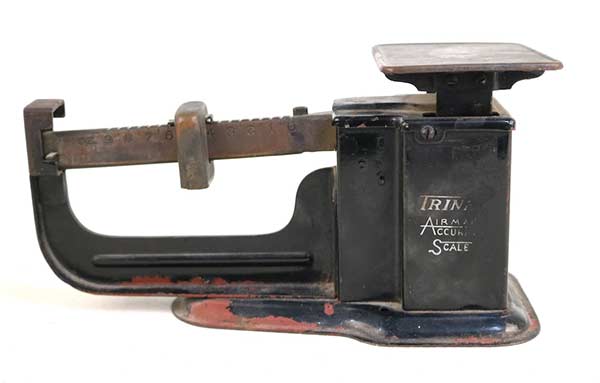
This is my grandfather’s postal scale from his days as postmaster at Camp Shelby, Mississippi, during World War II.
Today, I’m going to heap some modest invective upon the U.S. Postal Service. However, a disclaimer is in order. All of the USPS workers I know personally are hardworking, committed professionals. I don’t want to inadvertently incur the ire of some powerful letter carriers and never again see another gun magazine delivered to my home.
“Neither snow nor rain nor heat nor gloom of night stays these couriers from the swift completion of their appointed rounds.” That’s not actually the motto of the U.S. Postal Service.
The Greek historian Herodotus penned that catchy spot of prose some 2,500 years ago in reference to couriers who ran messages during the sundry wars between the Persians and the Greeks. Modern postmen have just sort of adopted it.
The Problem
One should really never complain about something unless you have a better suggestion. In this case, I just don’t. Some 525,469 people work for the U.S. Postal Service.
They are the second-largest federal employer, right behind the Department of Defense. Total revenue for the USPS in 2024 was just under $80 billion. And yet, it still takes forever to get my mail, if it arrives at all. I have no idea how to fix that. The solution is obviously not people or money.
One part of the problem seems to be Amazon. Nobody goes to stores anymore. Nowadays, if you want something, you just scheme it out a few days in advance and order it online. Amazon Prime offers free shipping with a few exceptions, so there’s no disincentive. That simple observation has increased the USPS workload astronomically.
My letter carrier is an exceptionally nice guy named Joe. We live way out in the hinterlands, so Joe delivers the mail in his private vehicle, an antiquated beater Oldsmobuick. Around Christmas time, there is this tiny Joe-shaped void inside his modest sedan.
Every cubic inch of that thing, to include the front dashboard, is covered with packages. He tells me that as he leaves the post office, it is like driving a tank. He just has a little vision slit that he can still see through. Joe will not be disappointed to see Christmas in his rearview mirror, presuming he can someday see his rearview mirror.

The Old Days
My maternal grandfather spent a career with the U.S. Postal Service. He was postmaster at Camp Shelby, Mississippi, during World War II. One of his letter carriers was caught throwing sales circulars in the trash rather than delivering them. Back then, the letter carrier made his rounds on foot with a big honking mailbag over his shoulder. That thing was heavy. Covertly binning all that vapid newsprint at the beginning of the run made the rest of the day much more palatable.
Folks do stupid stuff like that all the time nowadays. We’re lazier now than was once the case. Back then, however, throwing away junk mail was a really big deal. I forget the details, but I’m pretty sure Pappy said they had the poor guy ritually disemboweled or broken on the wheel or something similar.
Forward to the Present…
I have had four mailed checks evaporate into the ether over the past four years. One of them was astronomical — sufficient to buy me a new machine gun. In each case, these letters just disappeared. I eventually had to stop payment and send replacements.
They never did show up. I guess they fell down a storm drain or something. Who knows?
I mailed a check to Pennsylvania for a new gun four weeks ago. I opted to send the letter with tracking, just in case. It spent the first 10 days in postal purgatory in the Memphis distribution center. Then, it went to Denver, where it remained for several days. As I type these words, its voyage of discovery has finally taken it to Philadelphia. I have no idea why all that is.
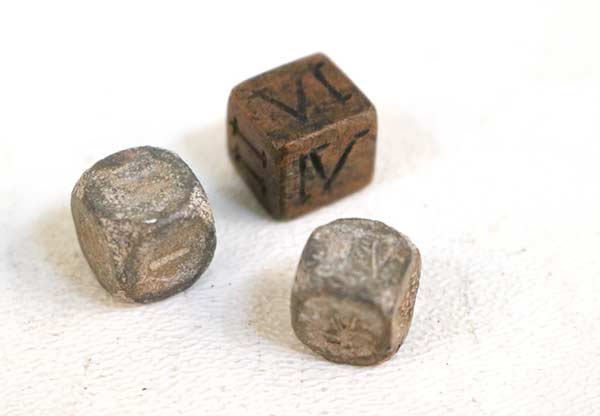
These three Roman dice followed a most curious path
between the United Kingdom and my front door.
War Story
You can find absolutely anything on eBay. I once bought a pair of 1,800-year-old lead Roman dice from the United Kingdom. There was no point. Given the Roman numerals, I just thought they looked cool. I followed the tracking data online as my prize left England.
My dice made the uneventful trek across the Atlantic Ocean in five days. Once trapped in the Memphis distribution center, however, they just languished. I imagine that place looking something like the gigantic warehouse at the end of the first Indiana Jones movie.
A month passed, and then another. I sent an email query and eventually got a note back from somebody who might not have been a machine. They said they were searching diligently for my package.
After six months, I got a note of apology saying they just couldn’t find it. As my dice were not insured, the email explained that I was simply out of luck. In frustration, I went online and found a replacement. It duly arrived from the UK in nine days. The very next day, the original package showed up unexpectedly. Now, I have Roman dice running out of my ears.
The Solution
It costs a bit south of $11 to get a tracking number on a standard letter. You have to go to the post office to purchase that. Despite the fact that our local post office has three checkout stations, there is never more than one working at a time, even if the line stretches through the door and down the street. I guess that’s some kind of post office rule.
As I said, I have no idea what the solution is. I do know that I would actively avoid taking responsibility for fixing it. I’d sooner develop some ghastly intractable skin rash.
The U.S. Postal Service is more complicated than the human female. Trying to streamline that place would be like trying to organize a battalion’s worth of hungry, sleep-deprived toddlers. Rank madness would invariably ensue.
If you haven’t seen this yet, you can go to the USPS website and sign up for Informed Delivery for free. Once your account is active, the postal service will send you an email every day with a digital photograph of every mail piece you have incoming. That service lets me know whether or not I need to make the long trek up the hill to check my mail every day. That’s actually pretty cool.
I’ve always harbored a fondness for both the post office and our letter carriers. The post office always has a distinctively pleasant odor — a symbiotic melding of cardboard and glue paste. Our letter carriers are invariably friendly and personable. For now, however, I am just thankful that the letter I mailed from Mississippi to Pennsylvania finally somehow made it out of Denver.