I am willing to bet that with that half moon steel butt plate. That the recoil from this rifle will leave a strong memory!
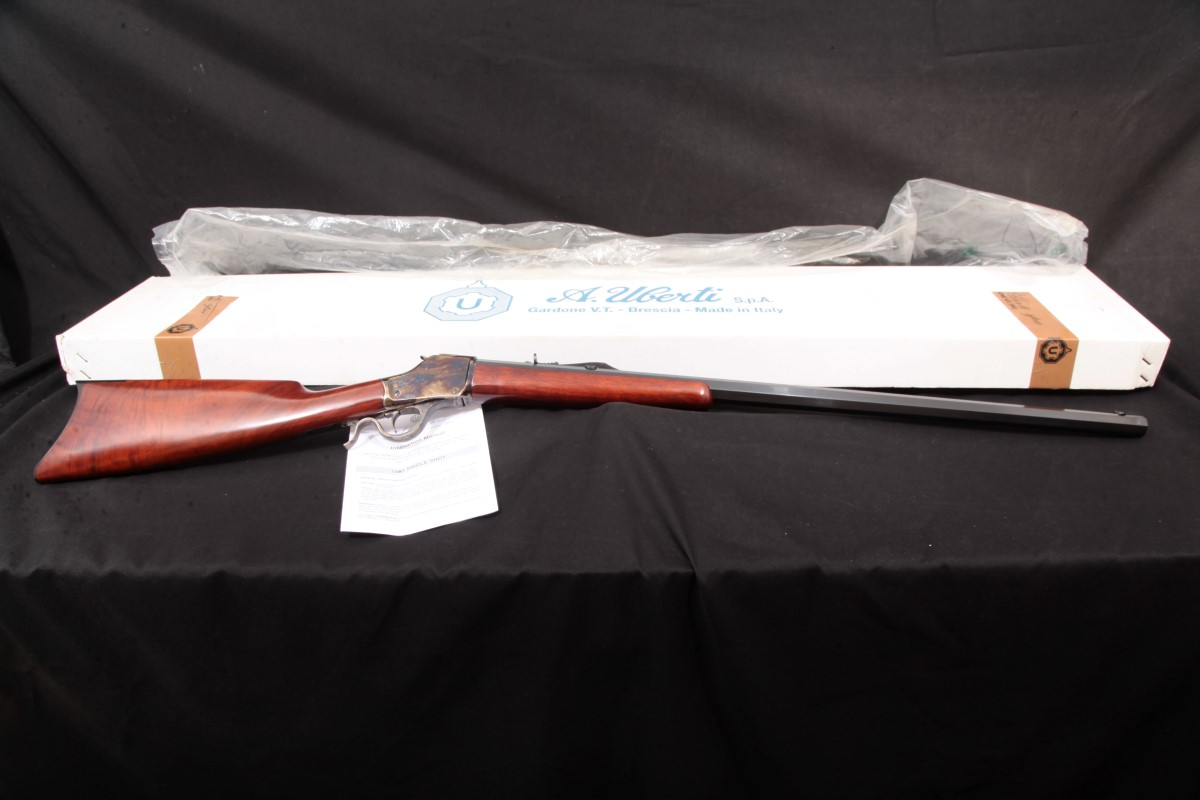
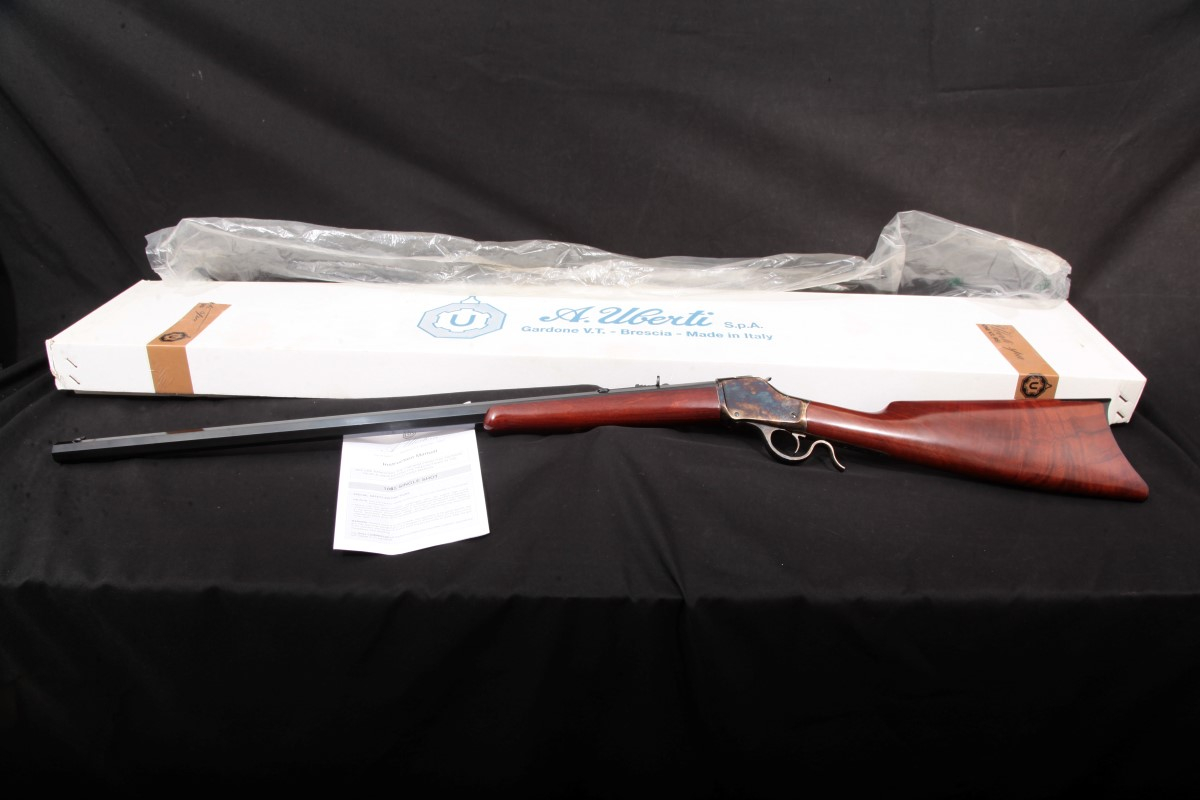
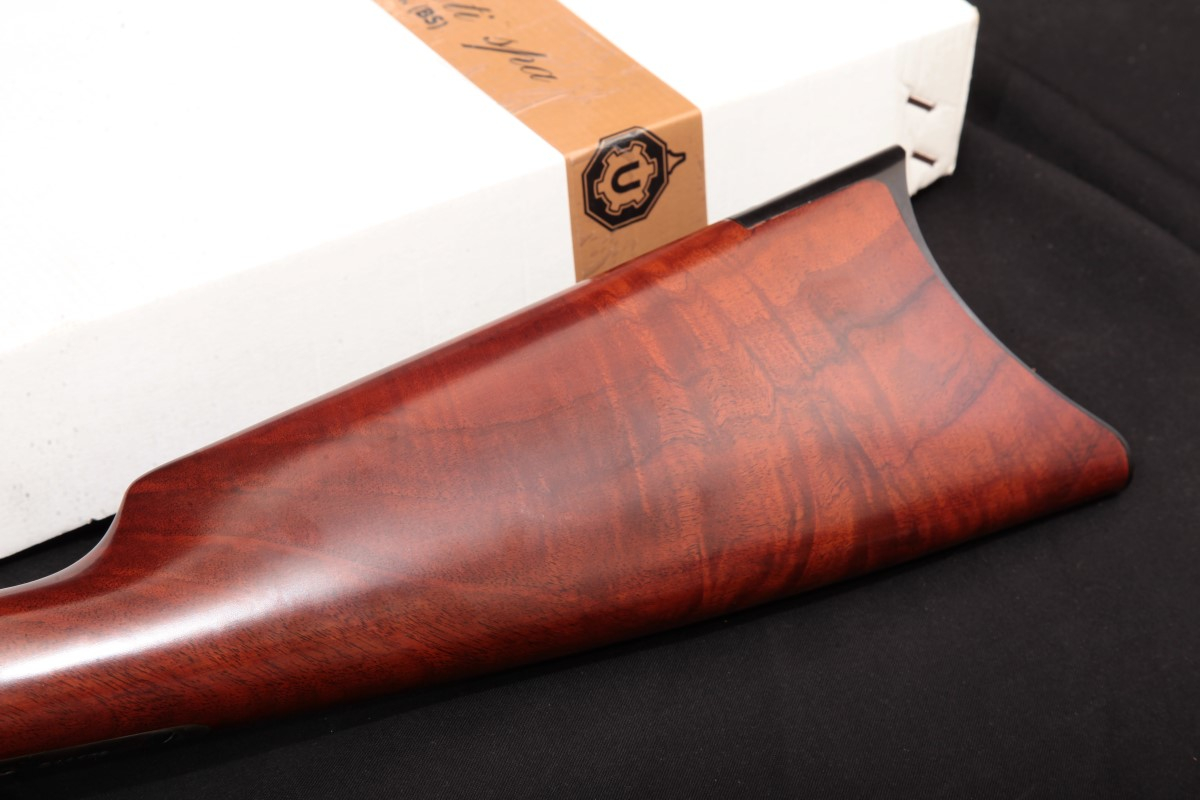
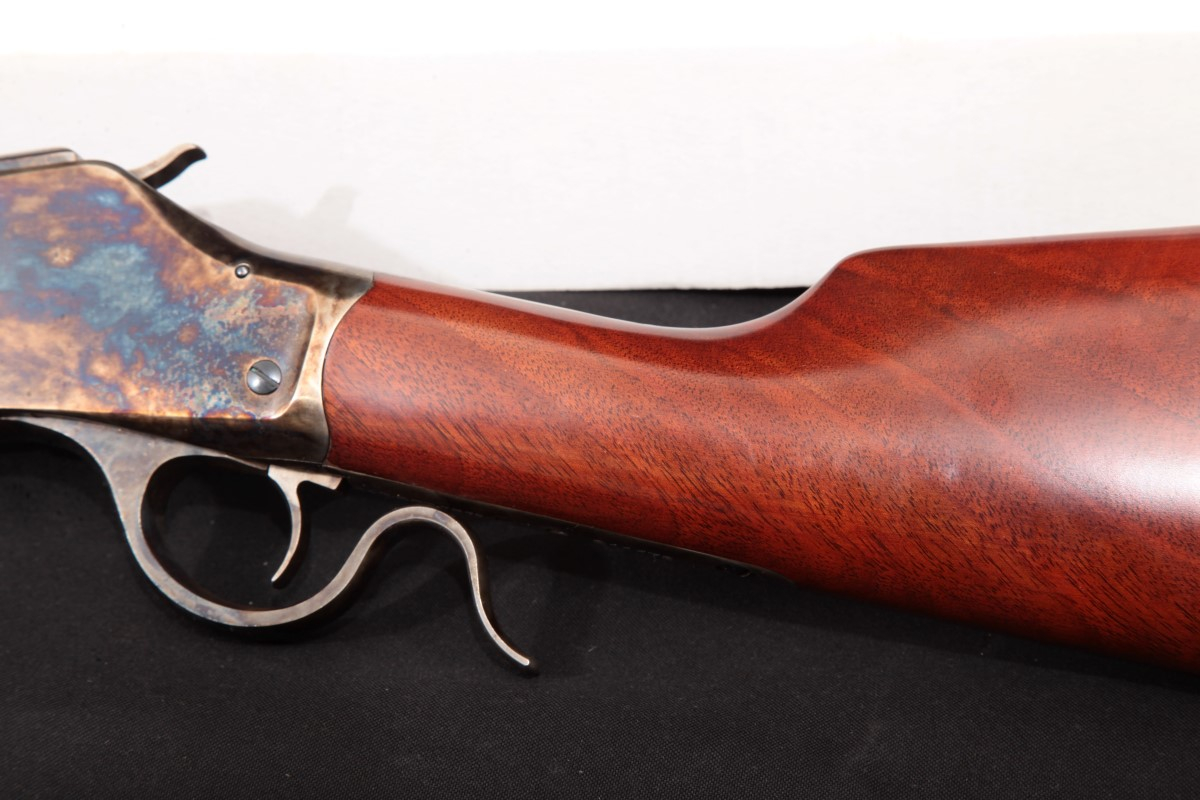
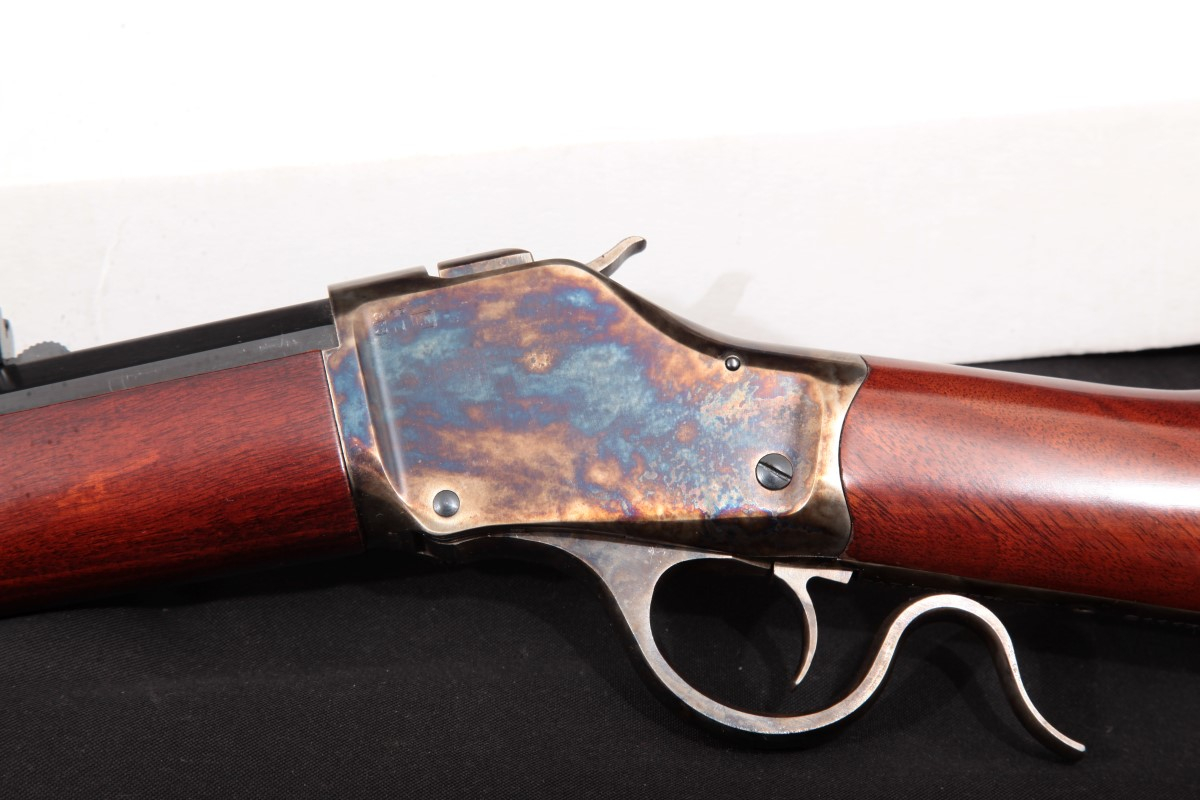
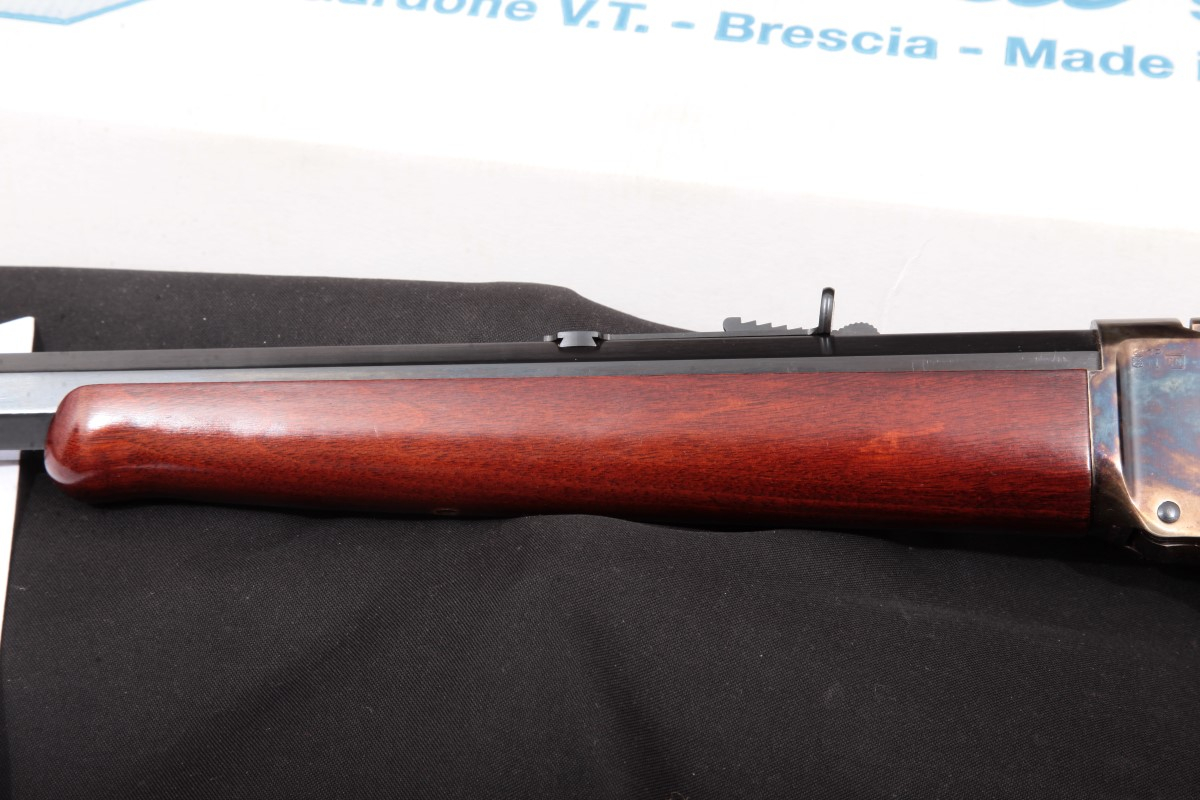
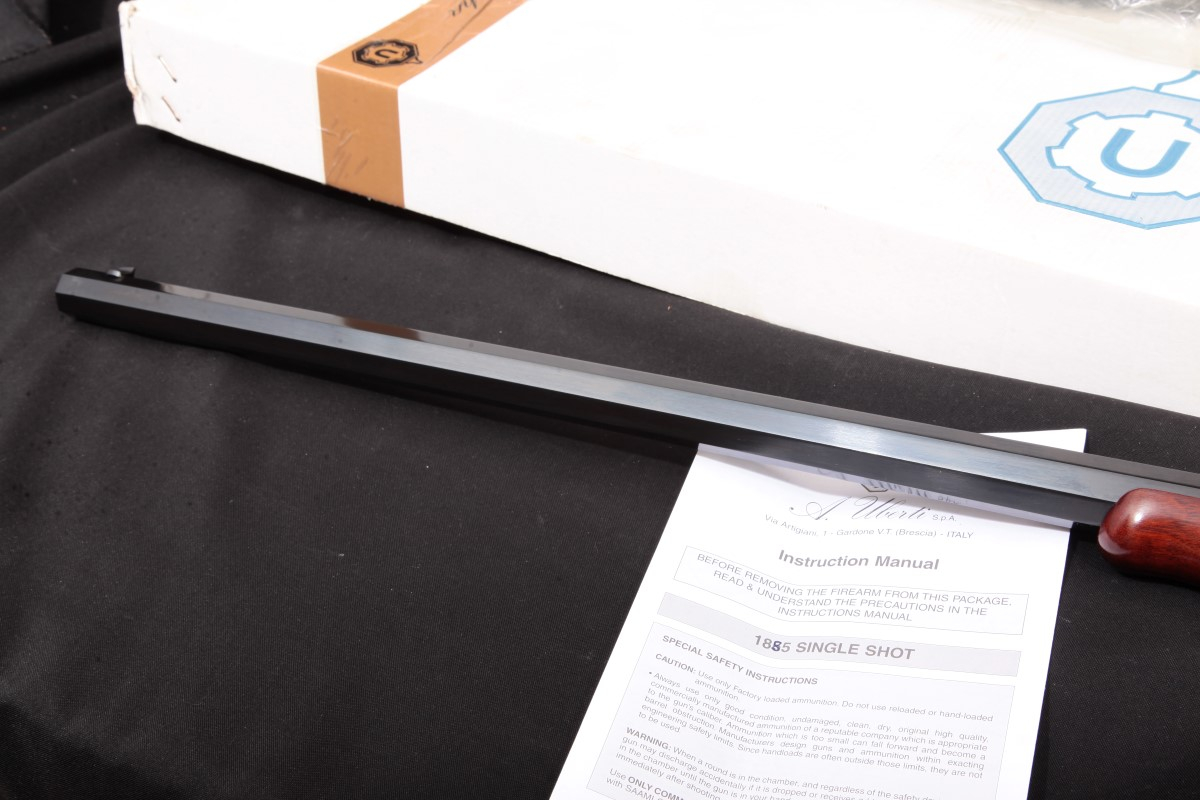
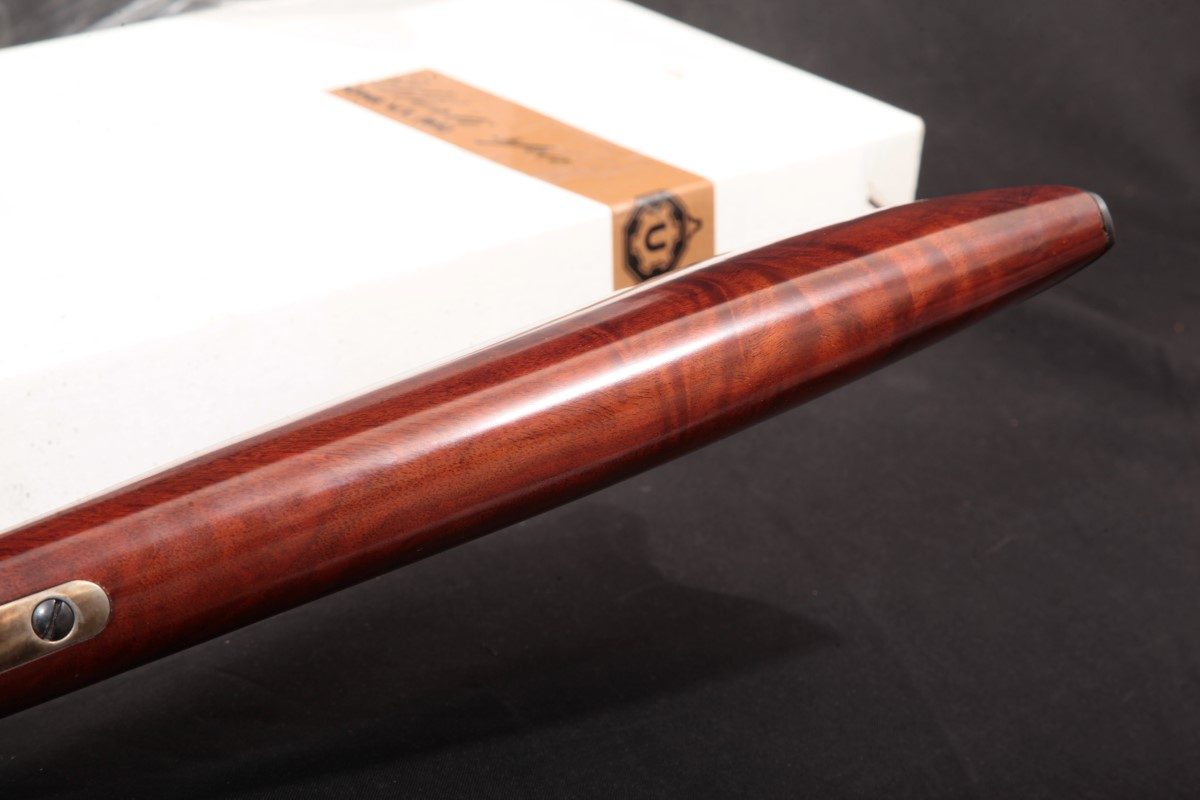
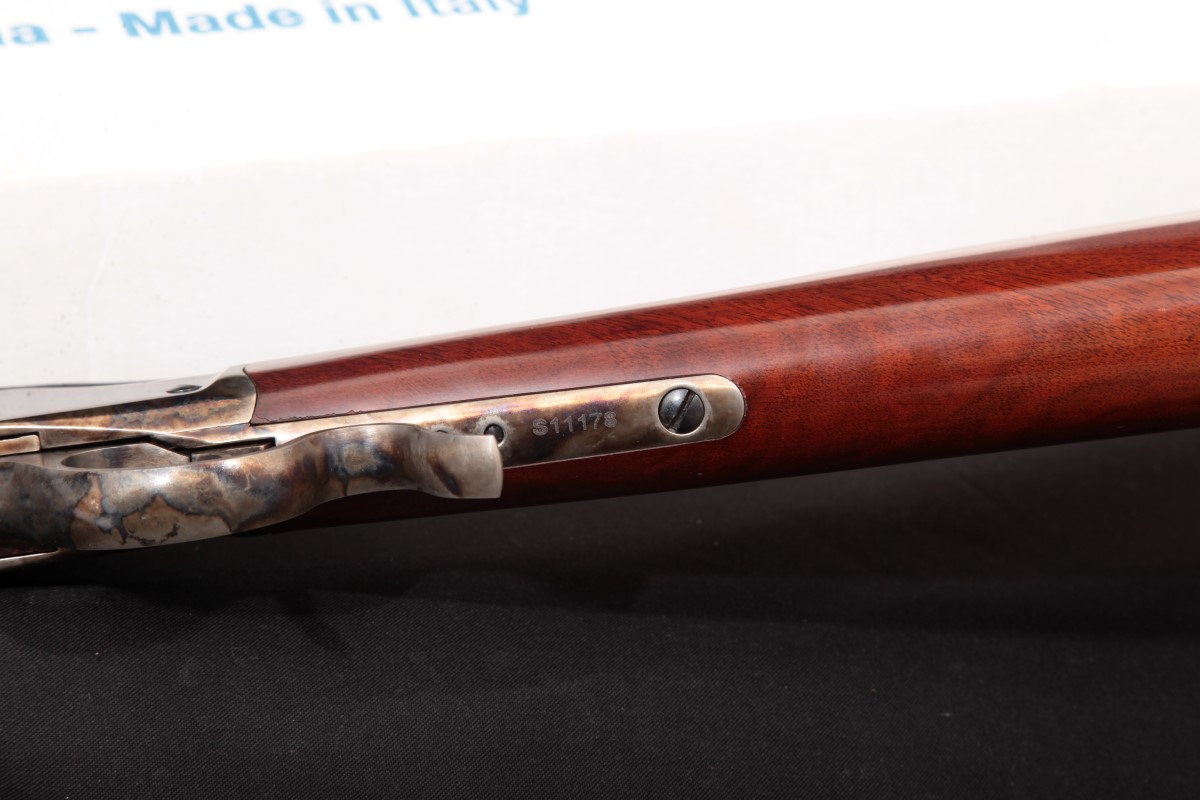
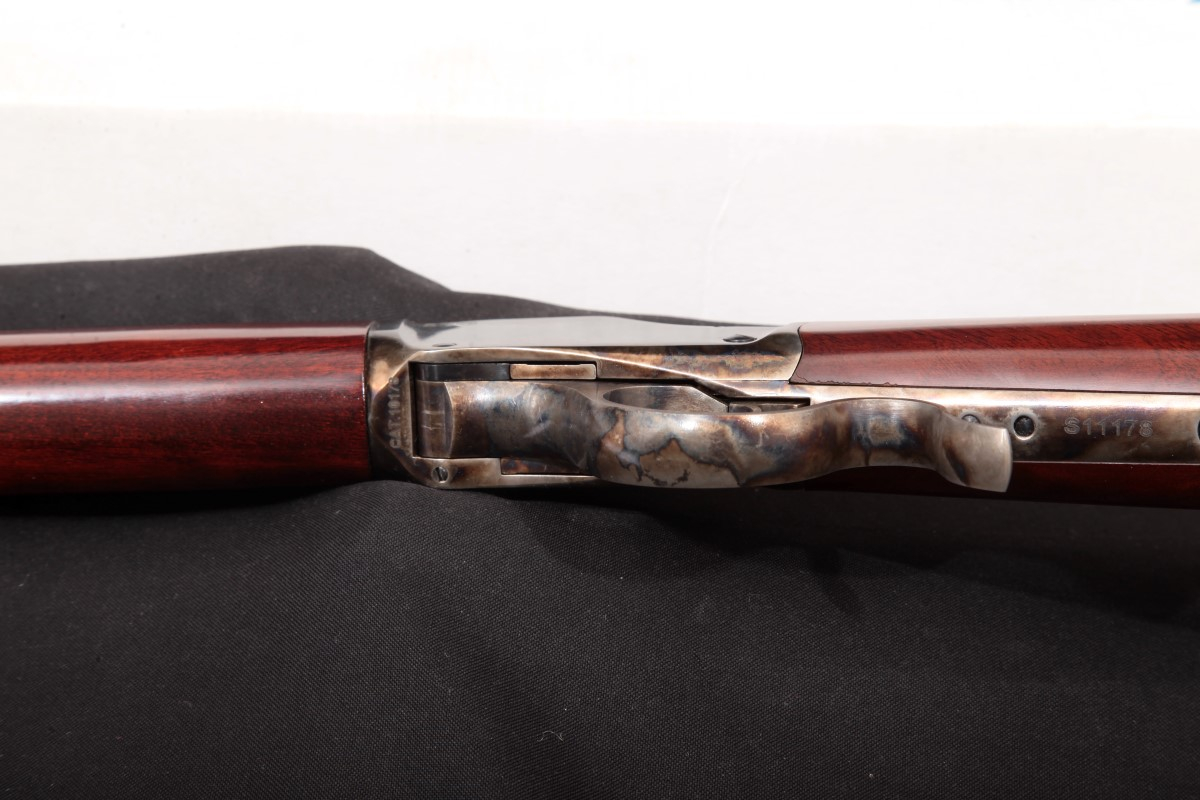
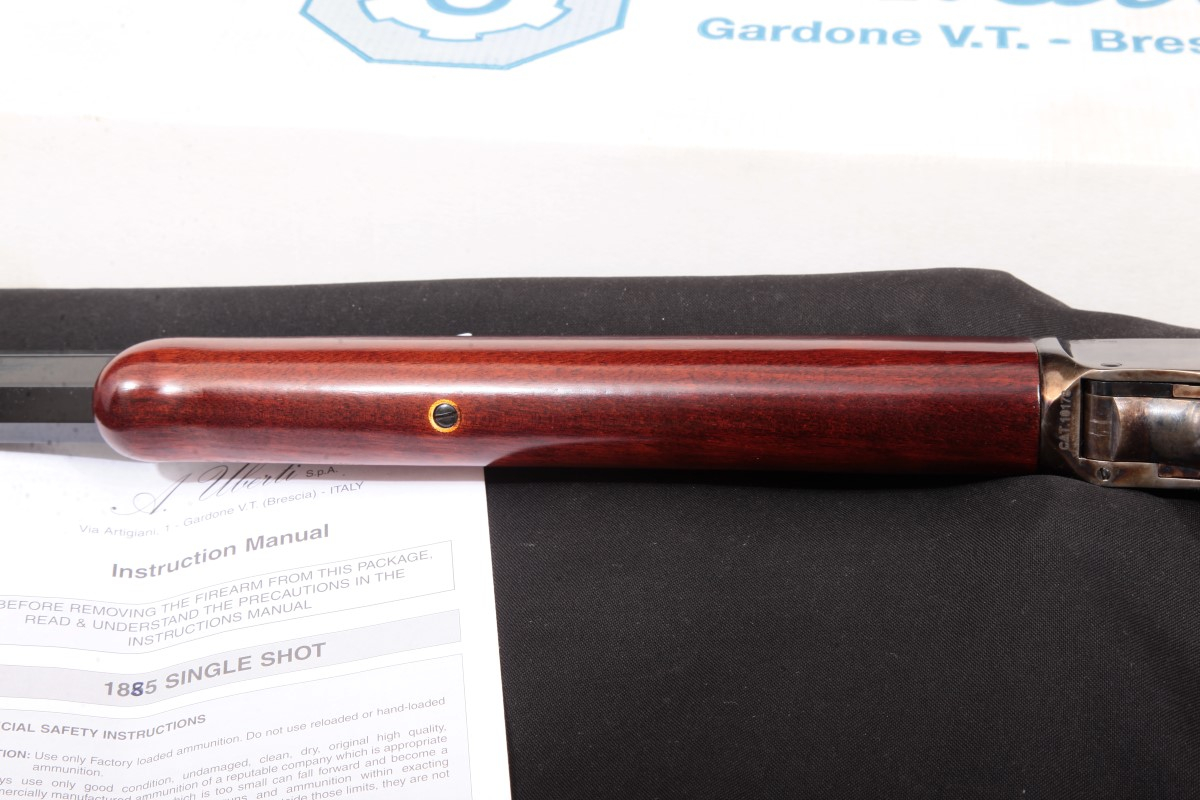
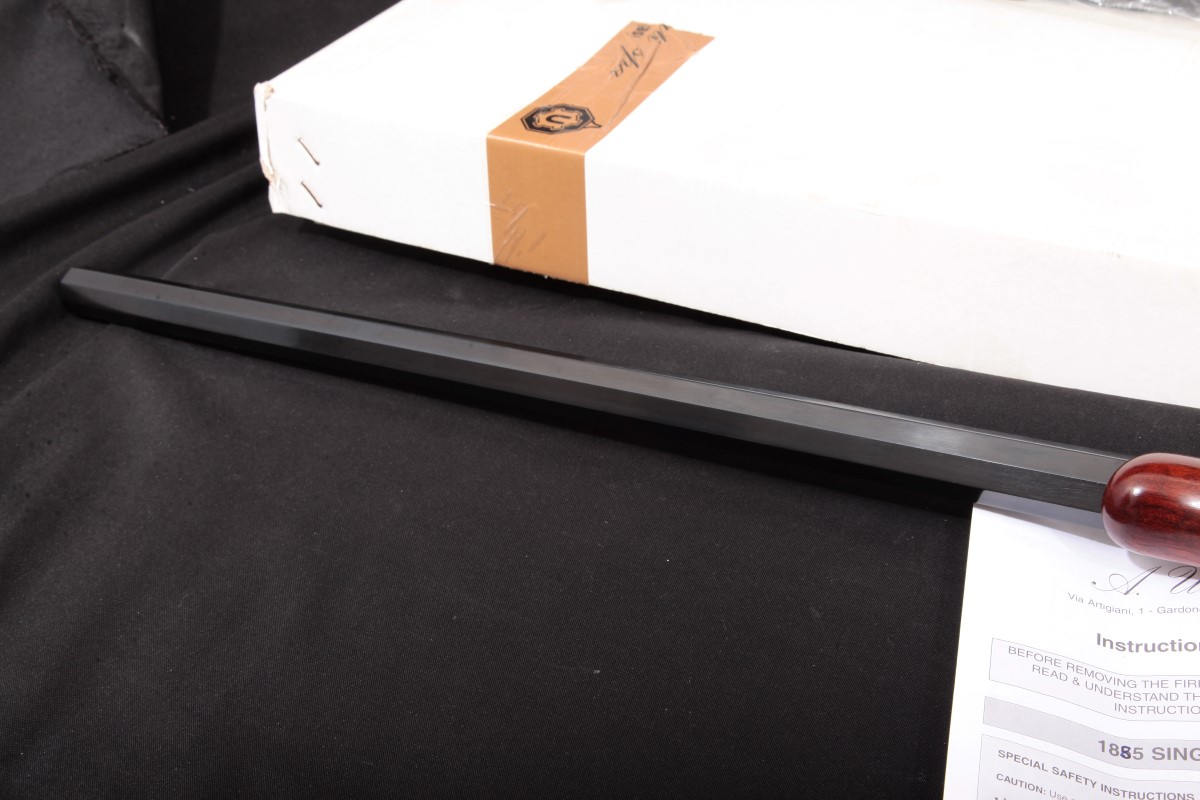
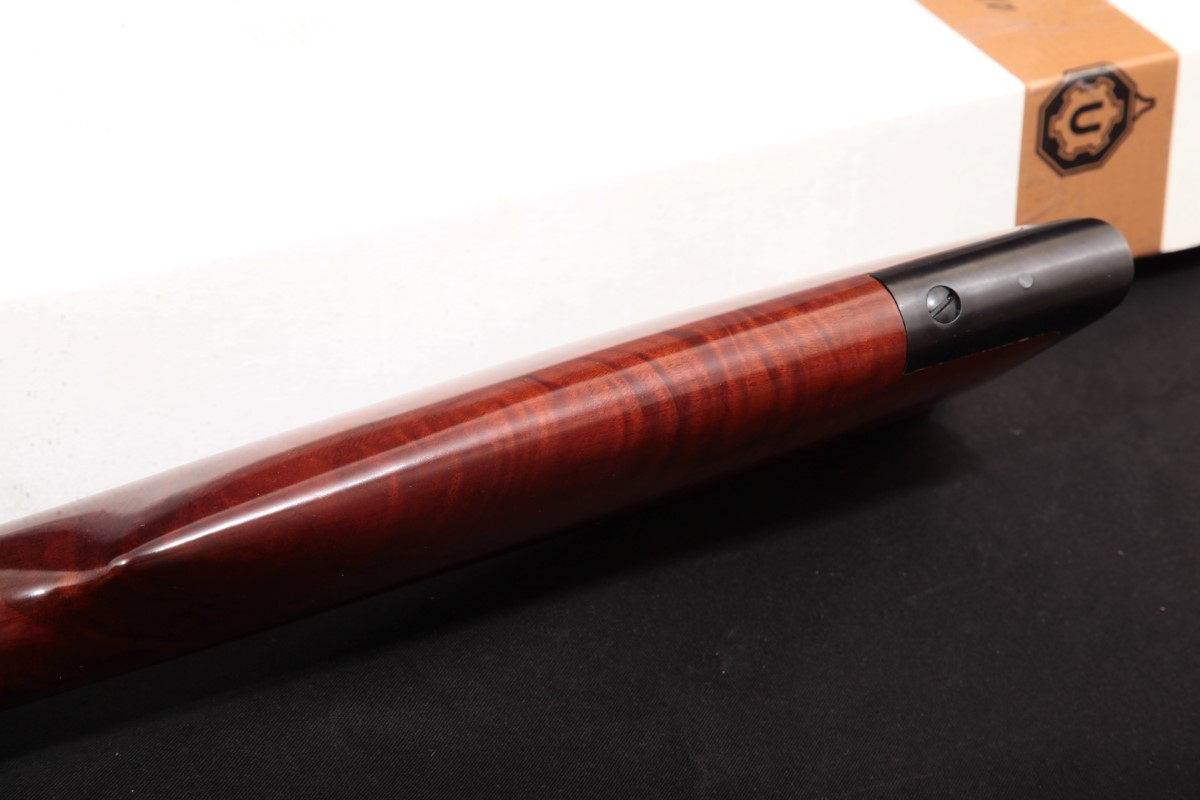
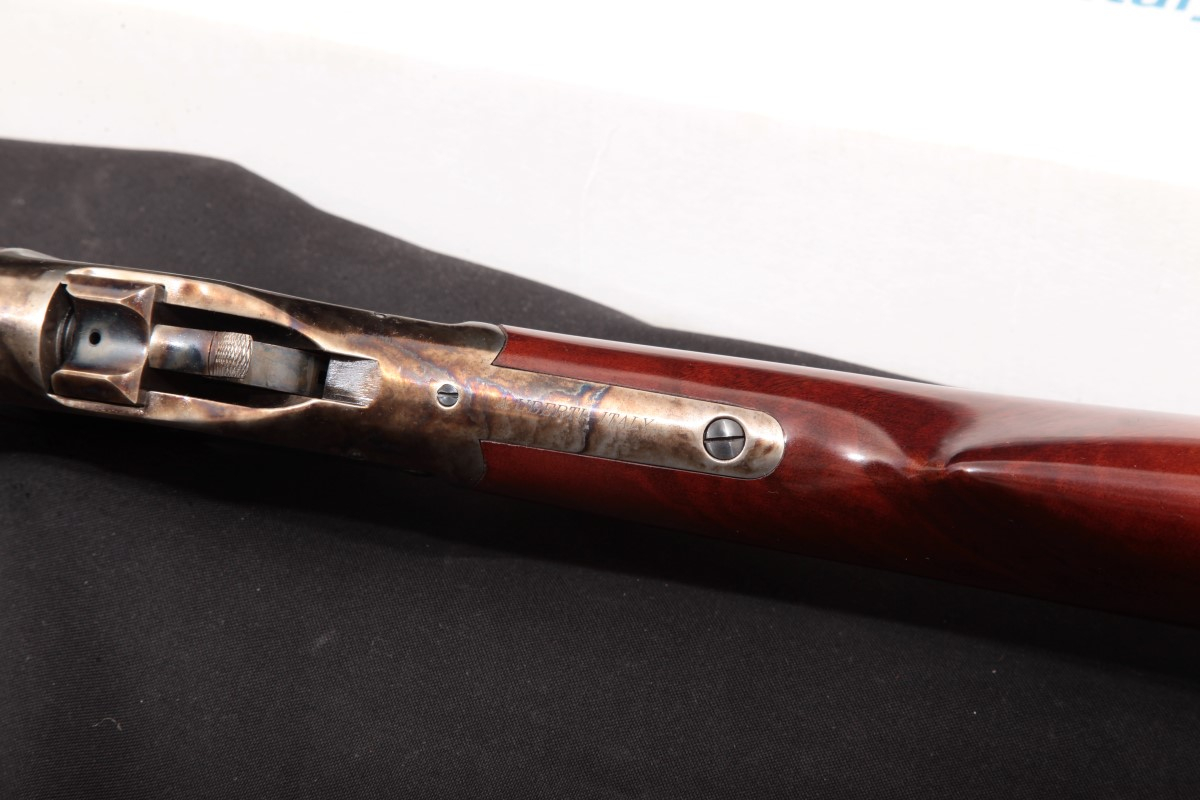
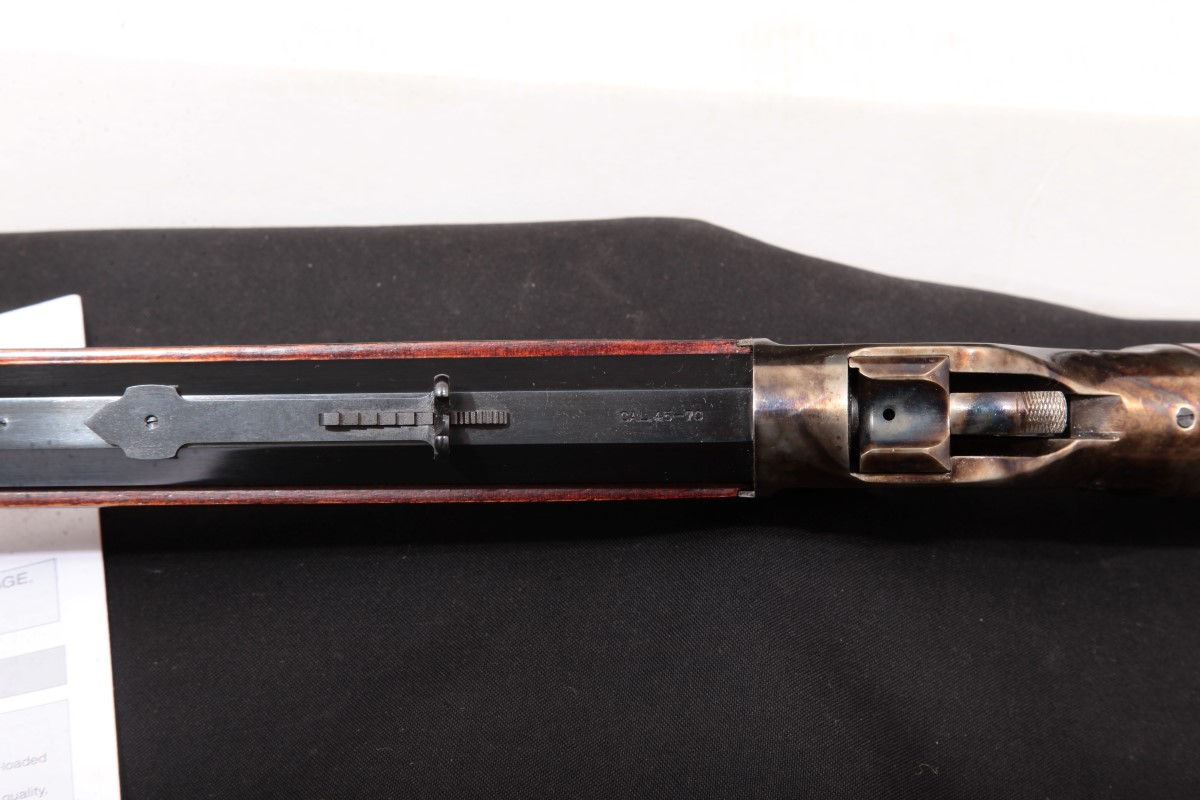
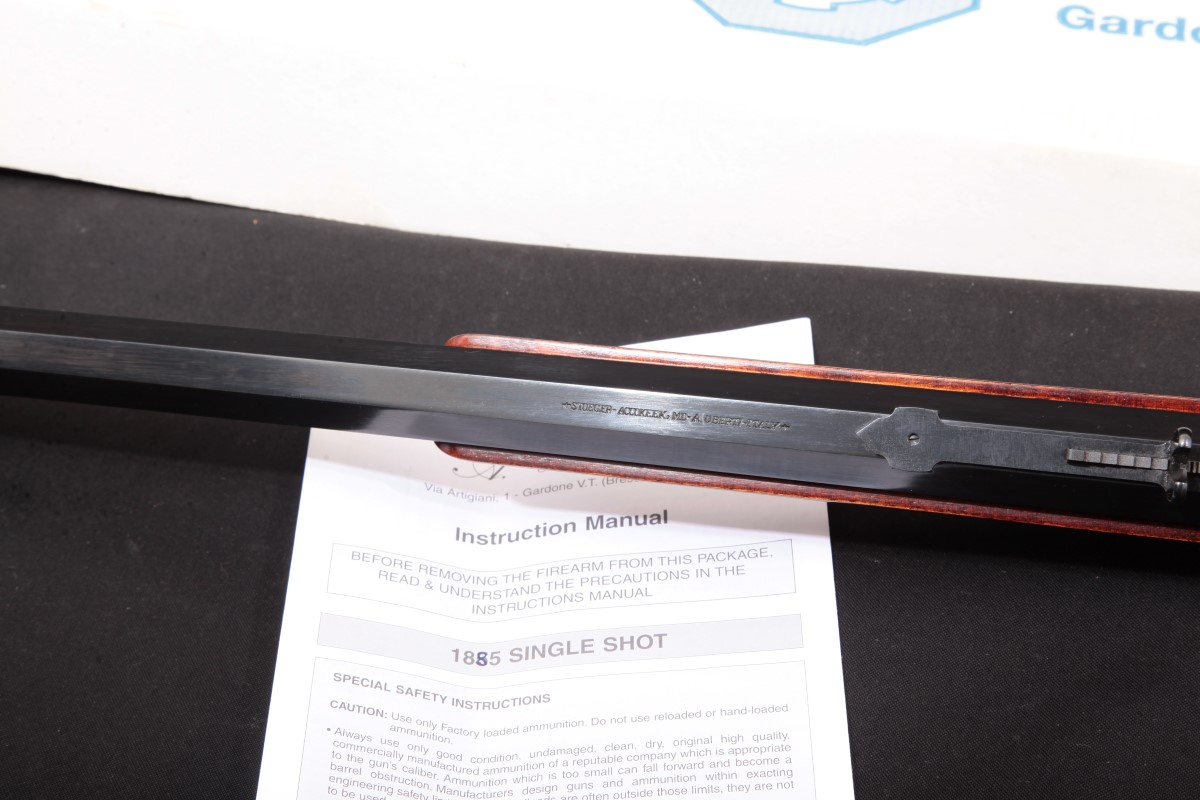
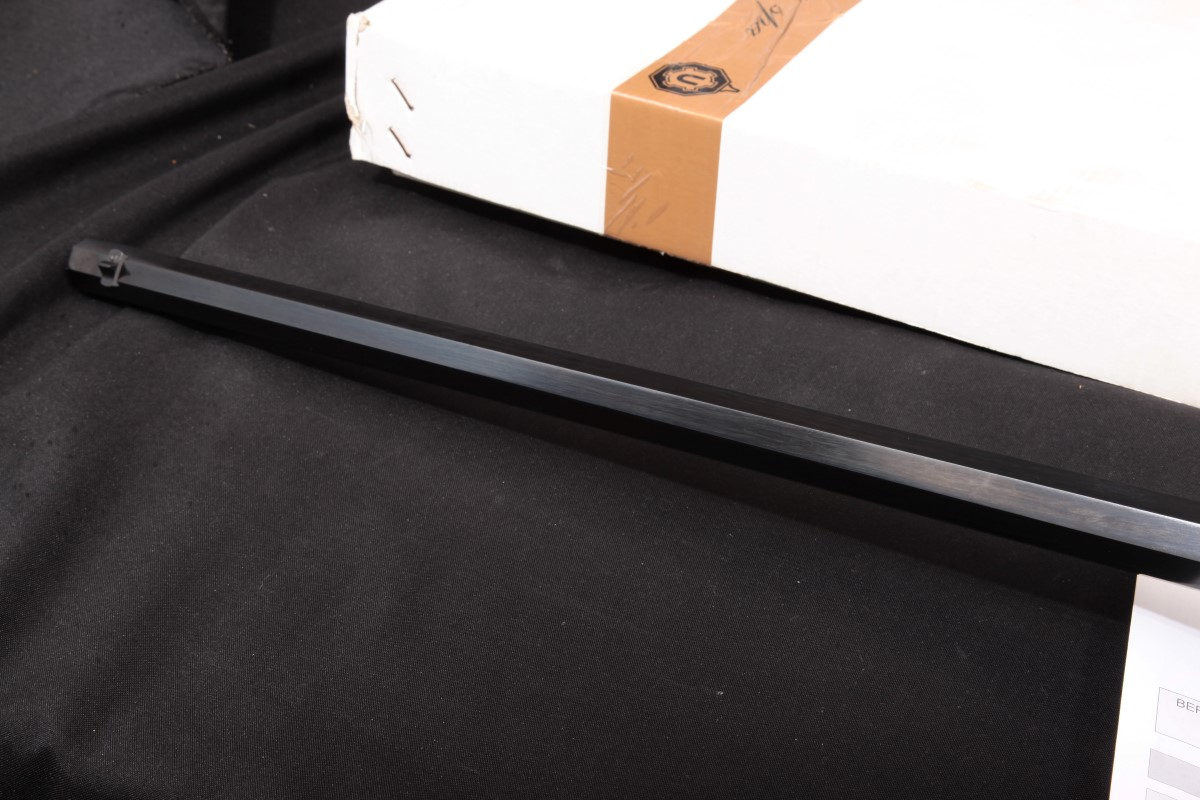
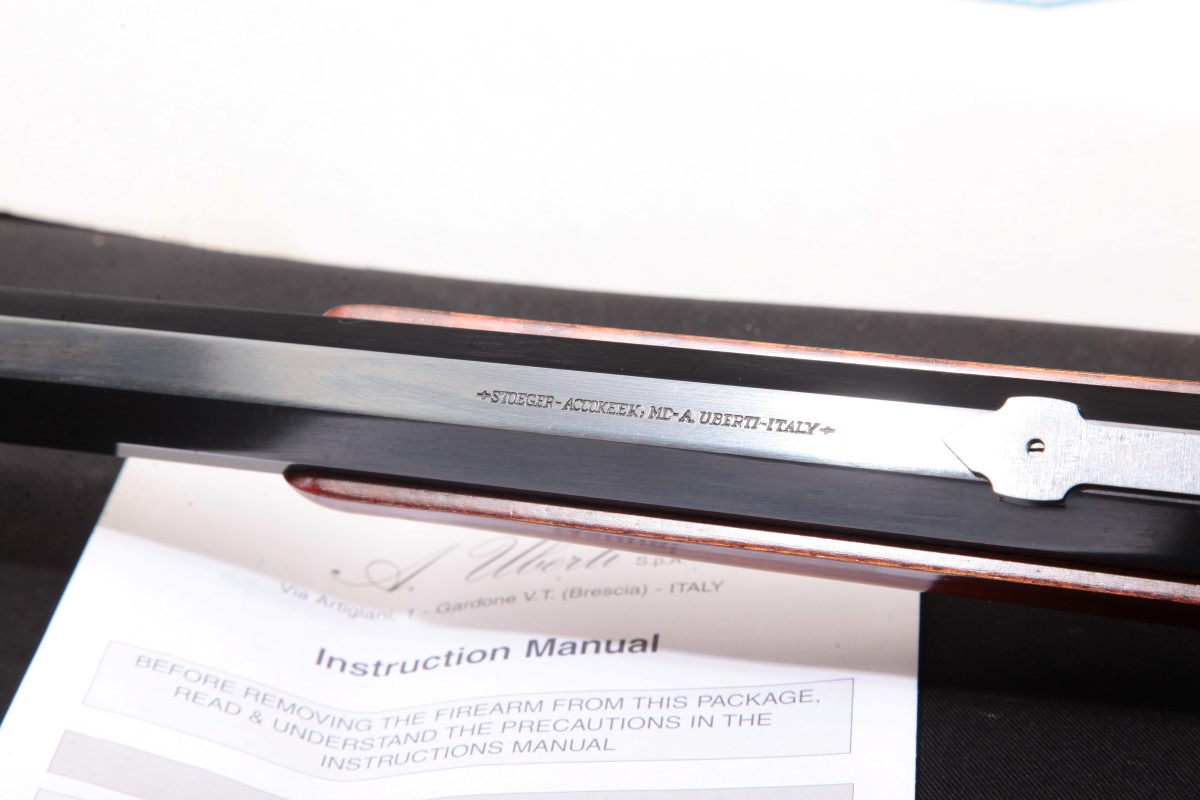
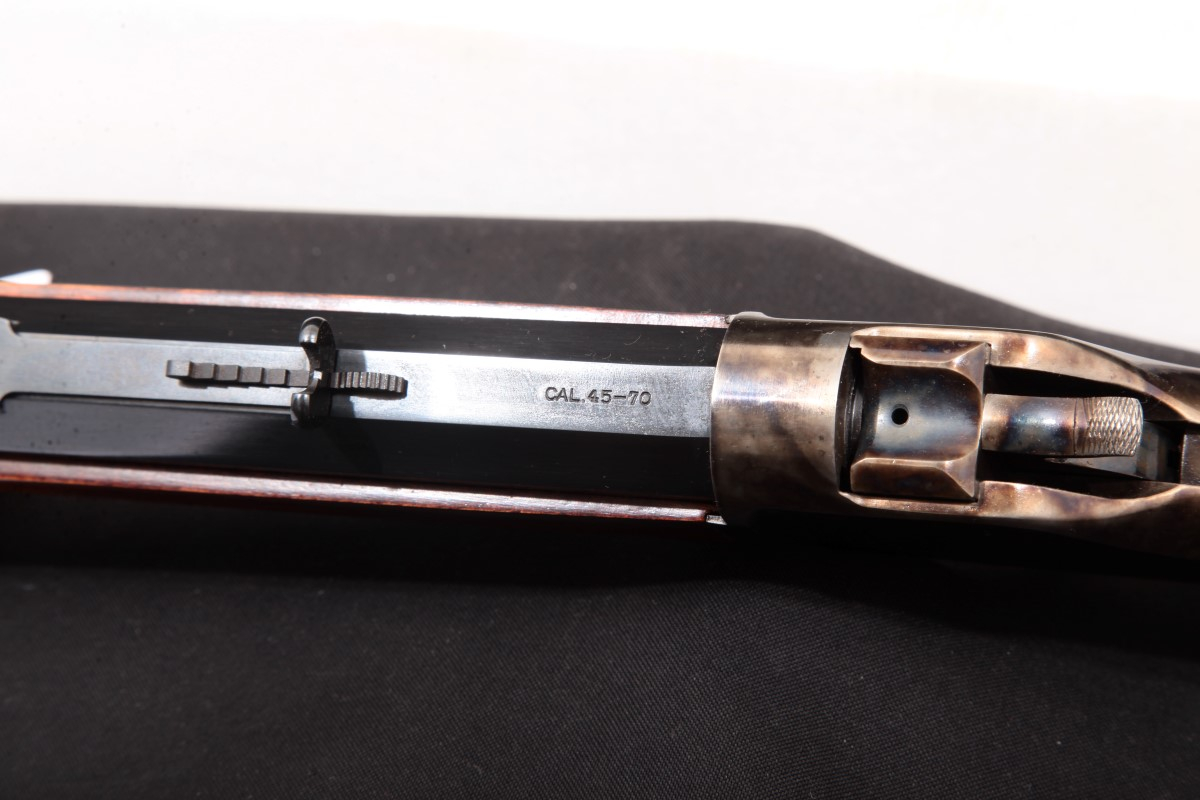
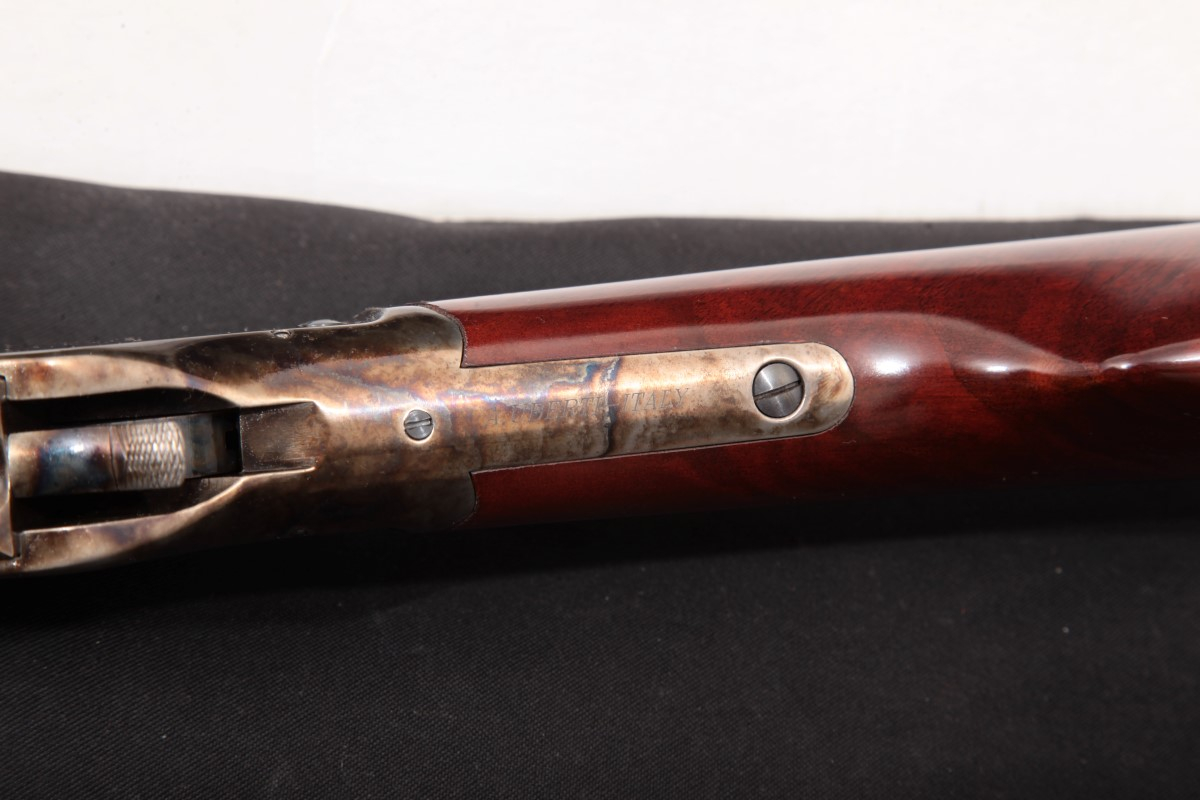
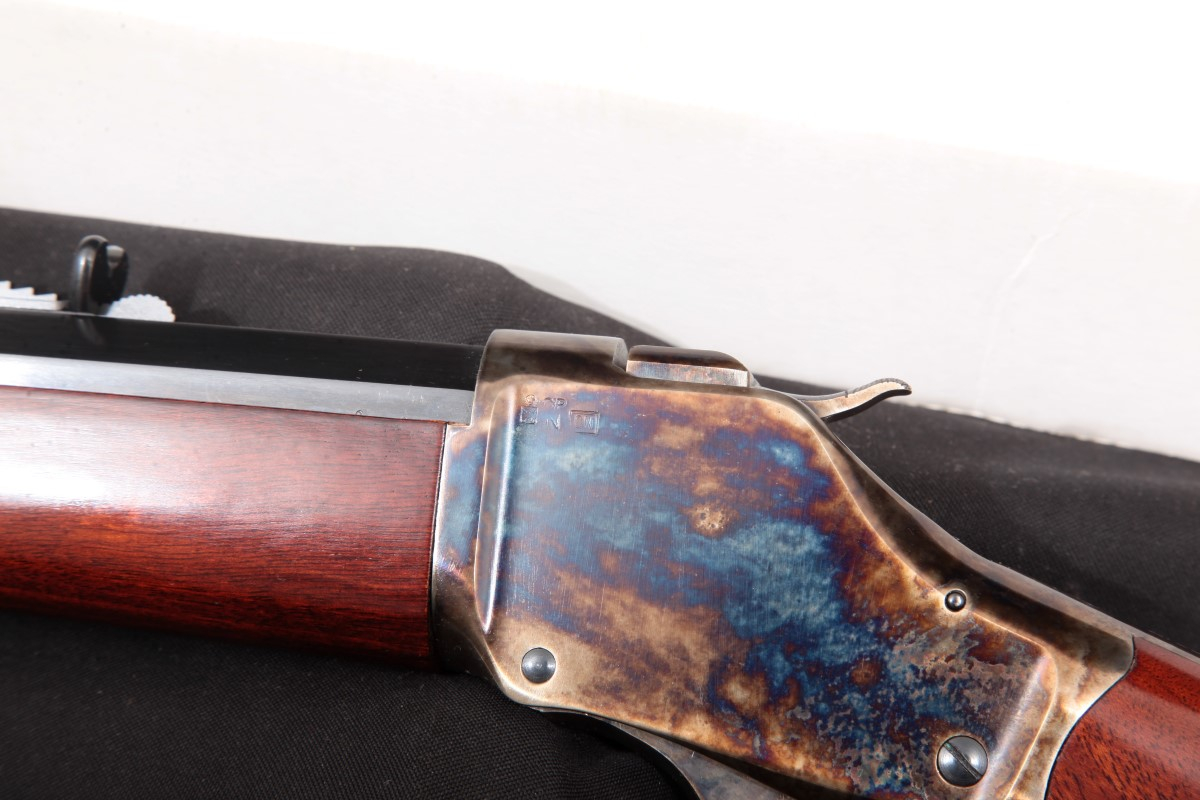
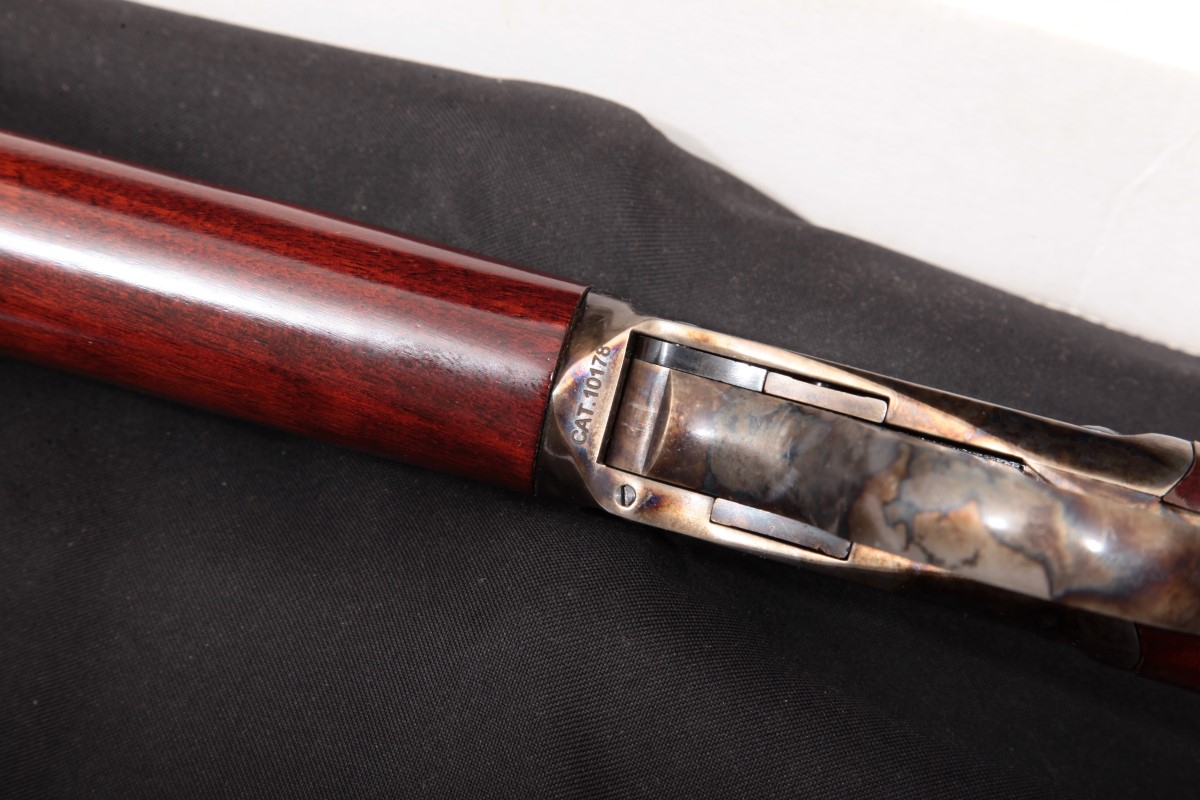
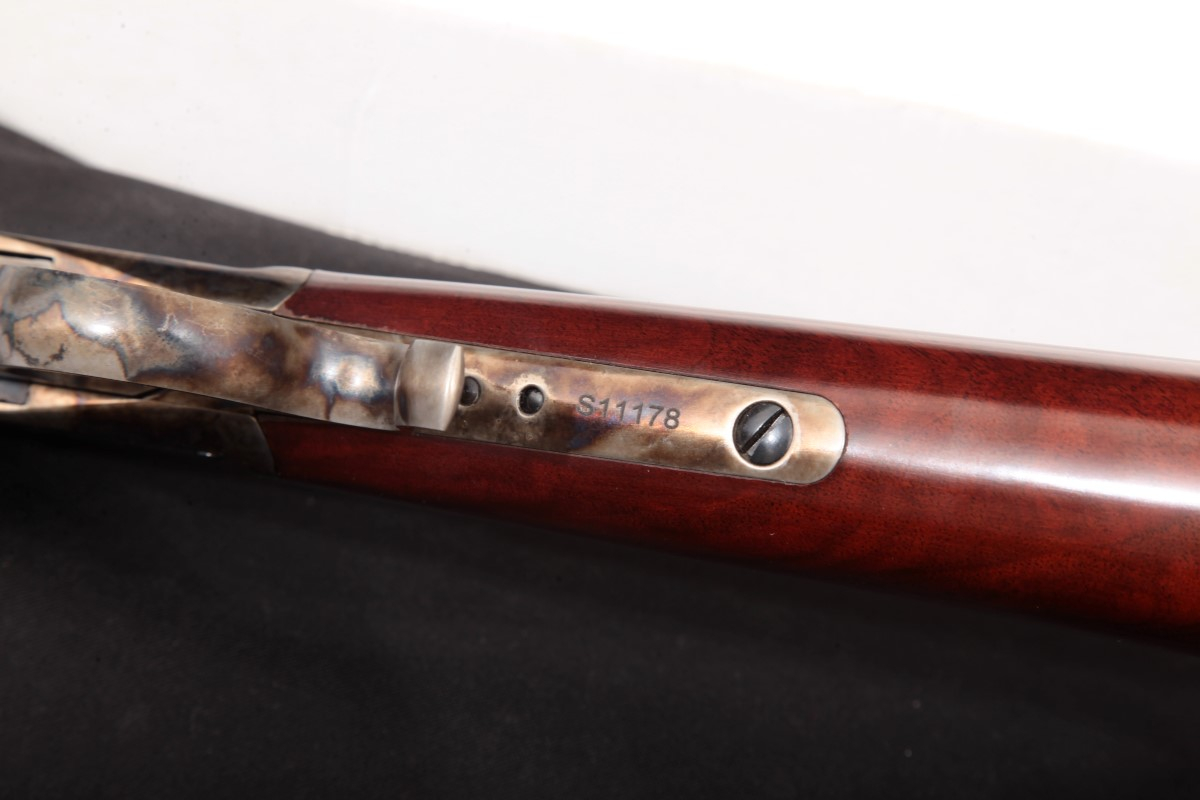
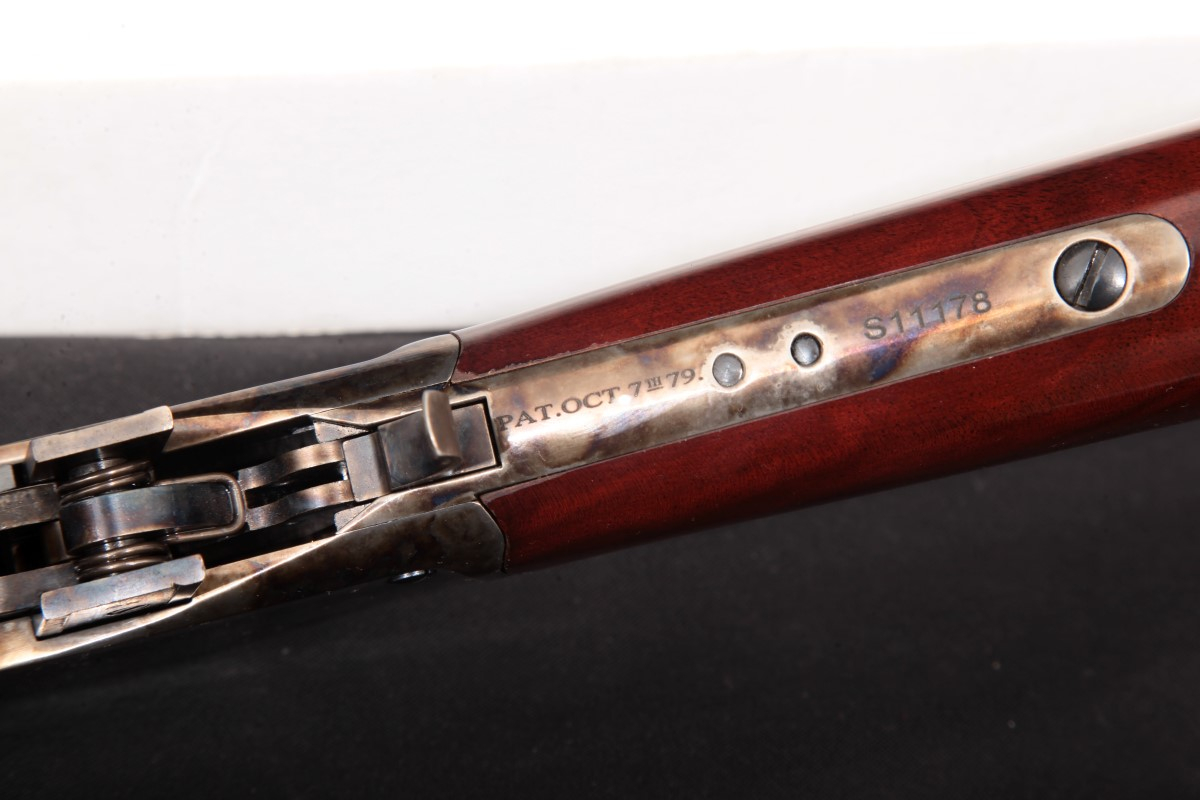
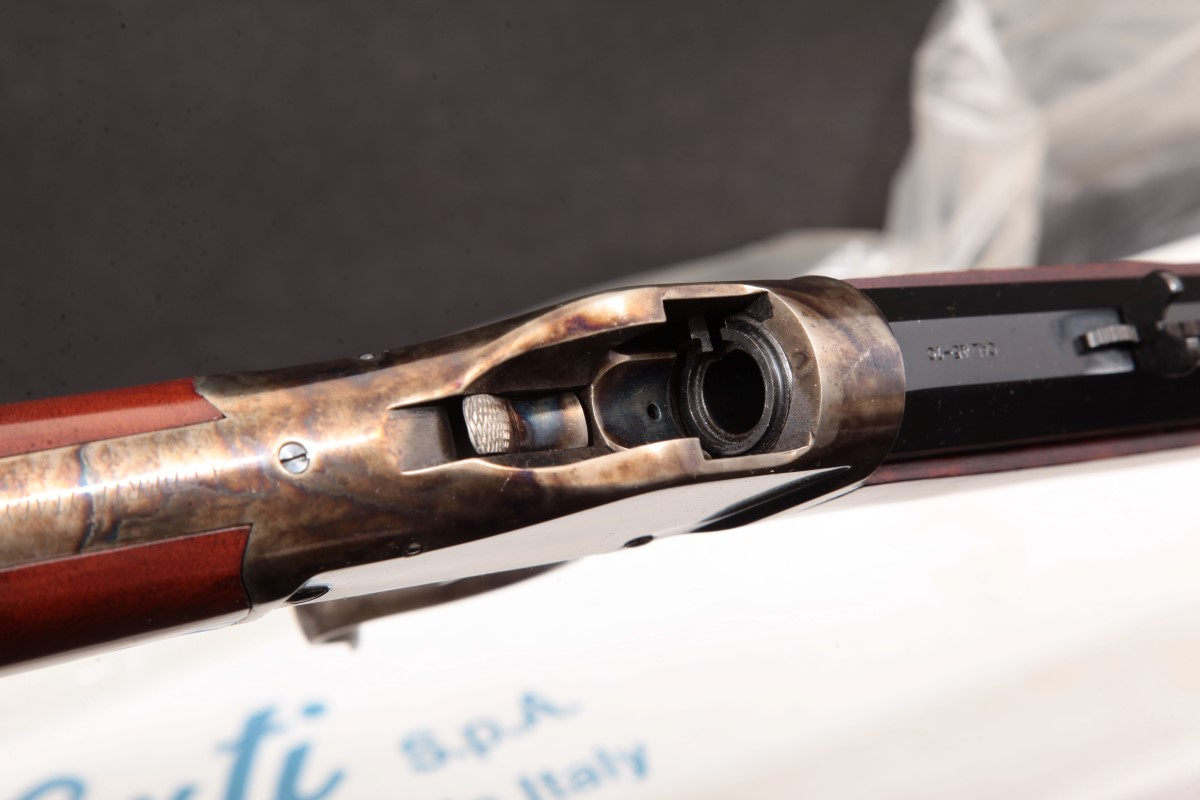
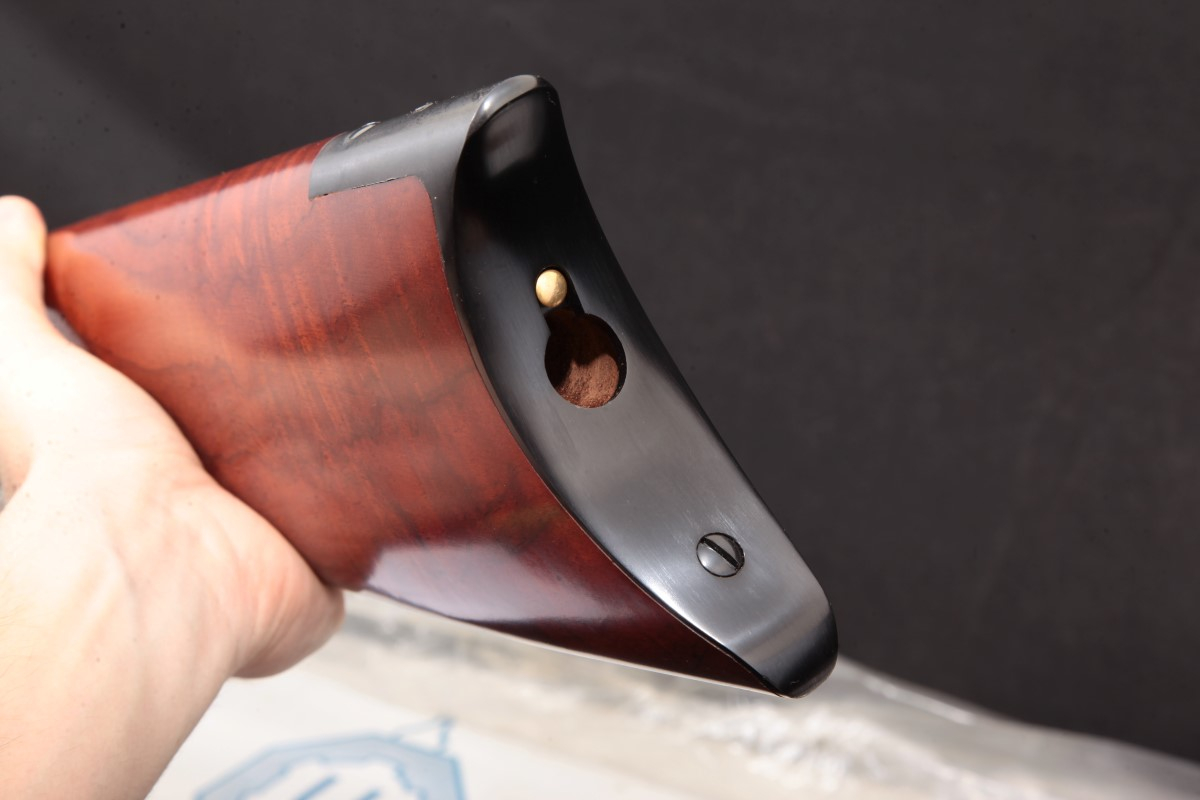
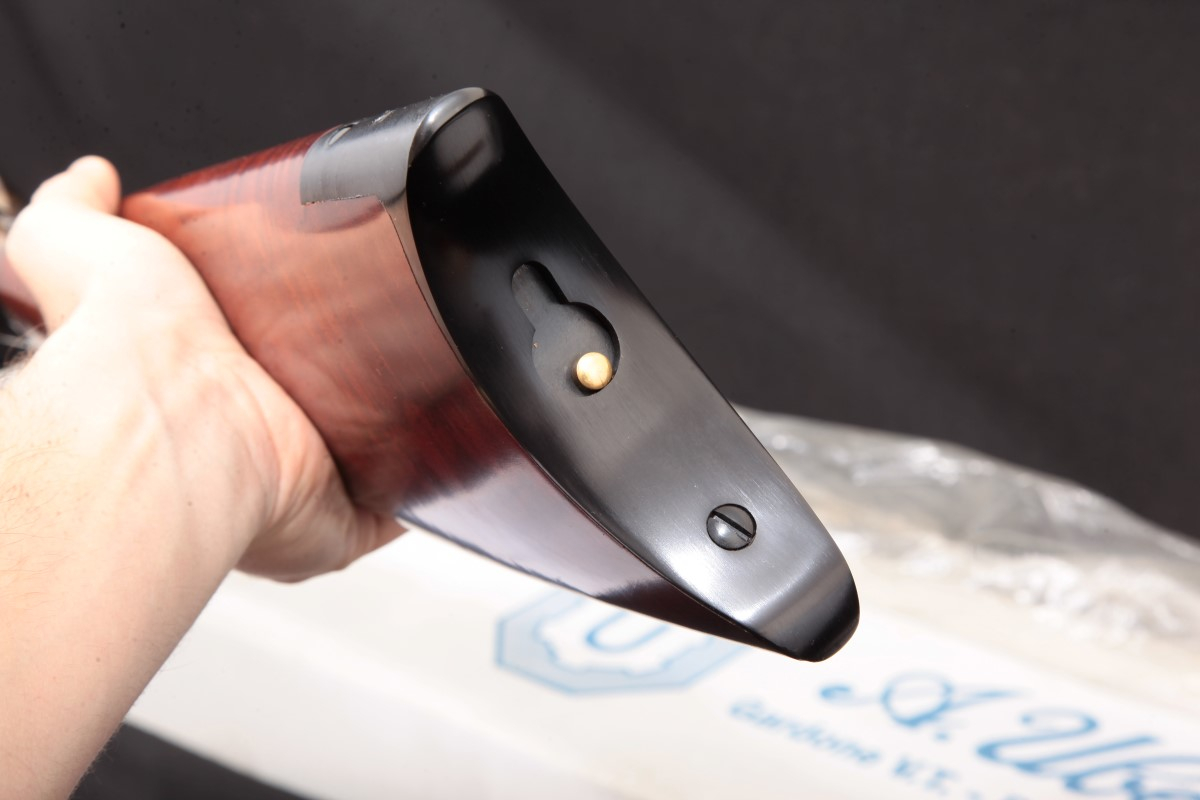
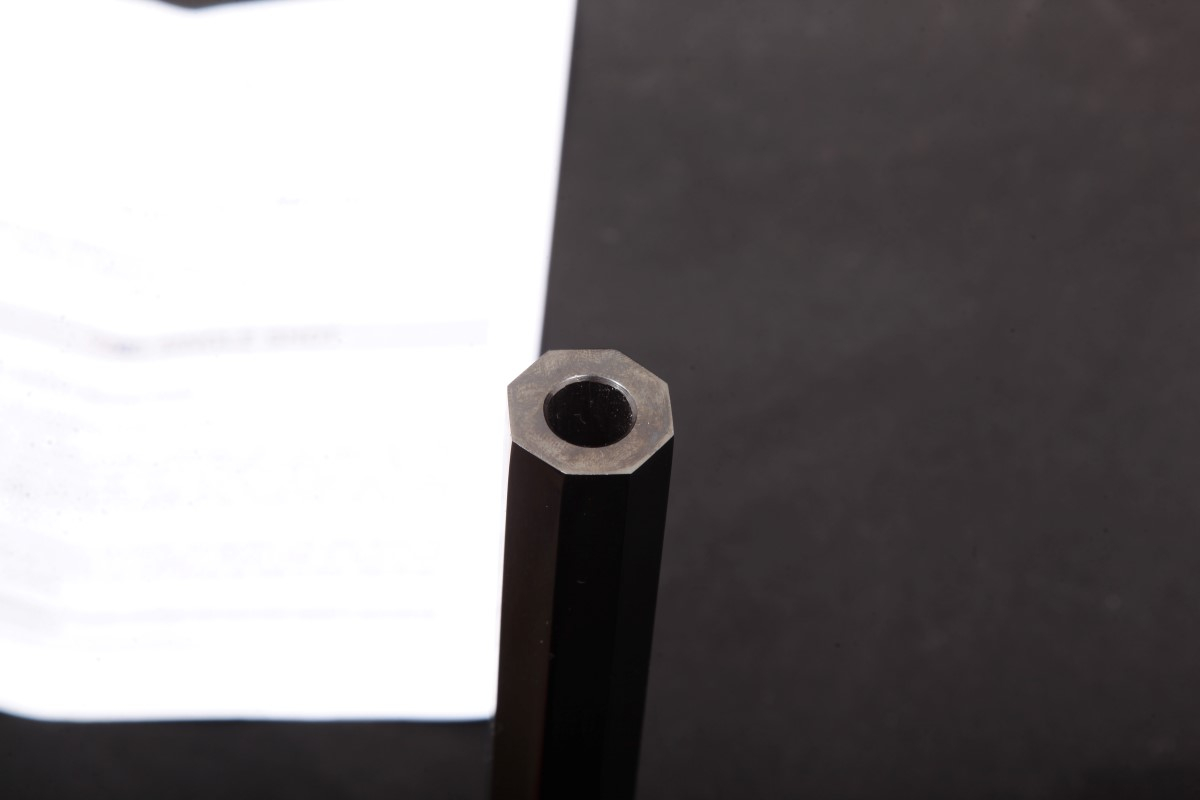
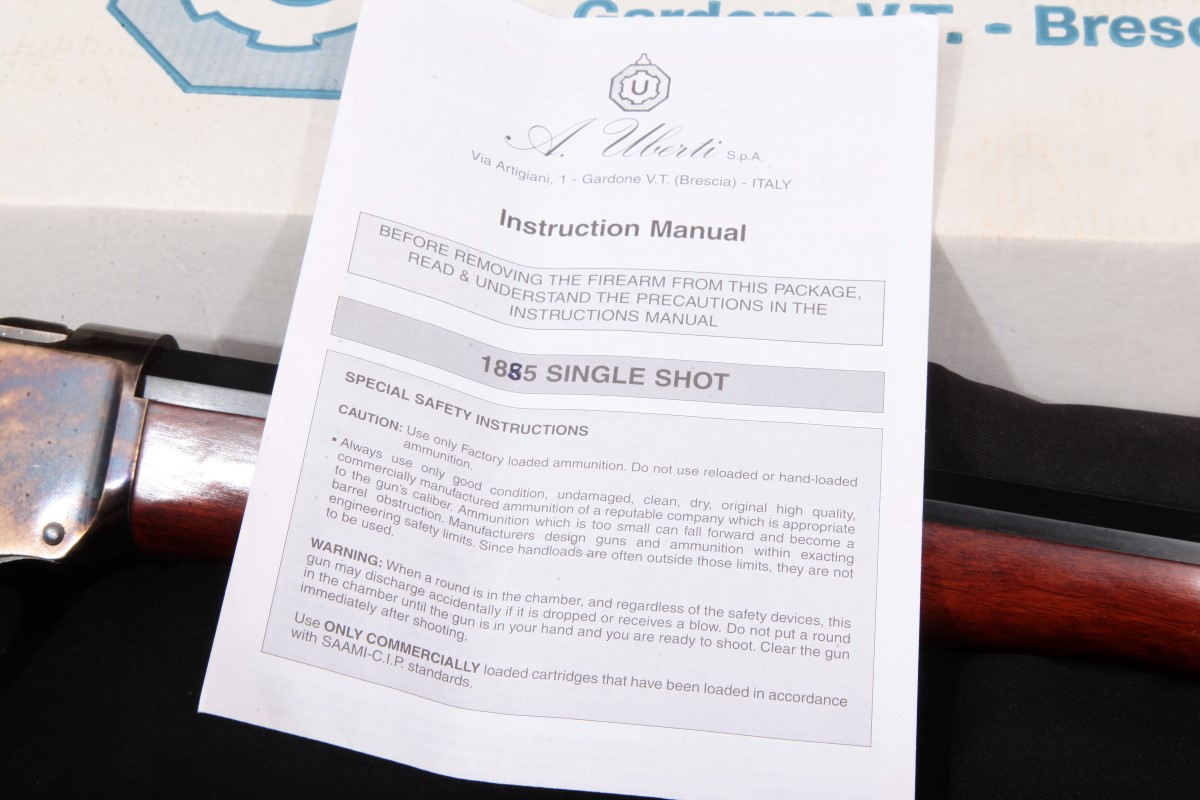
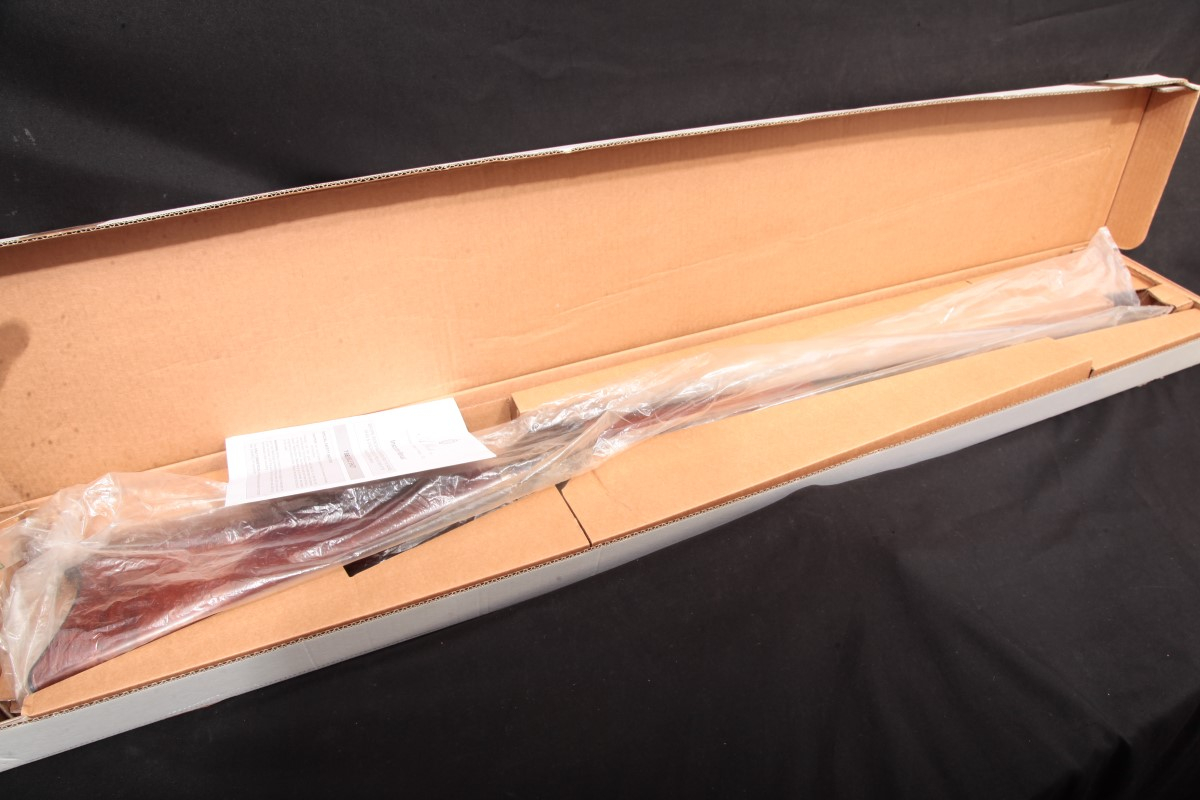
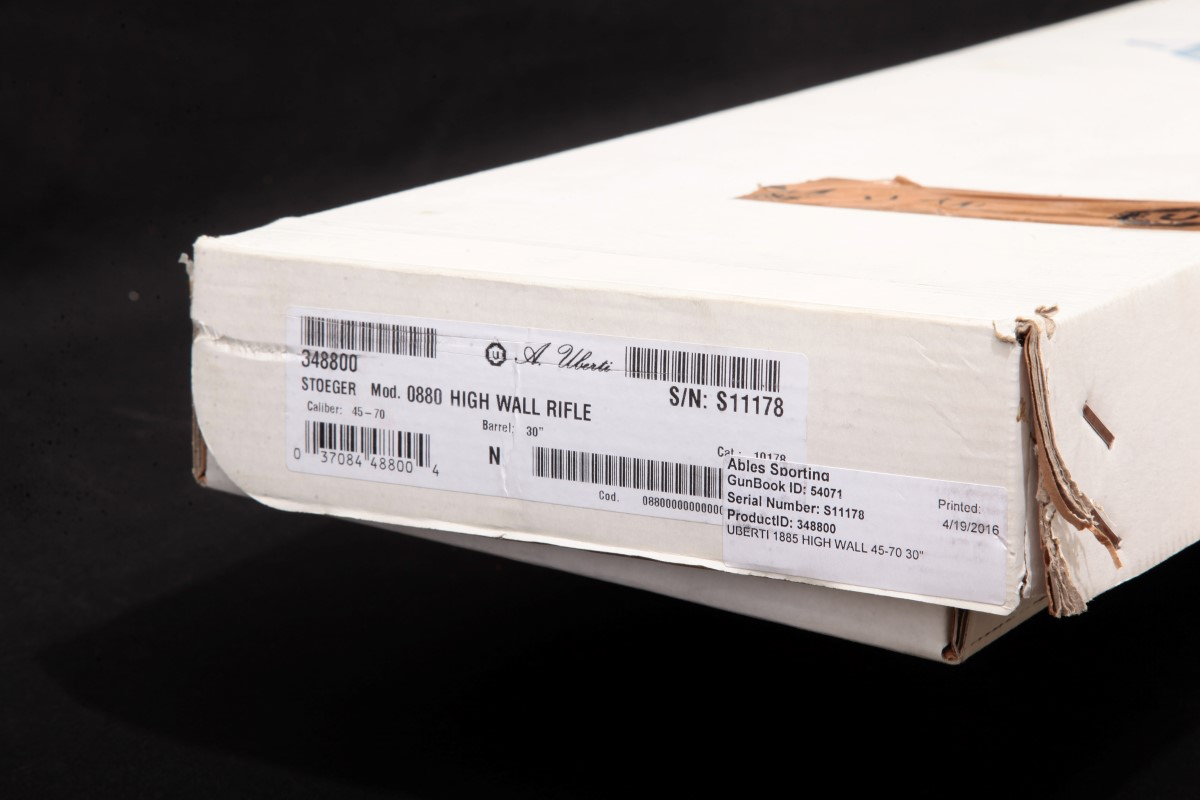
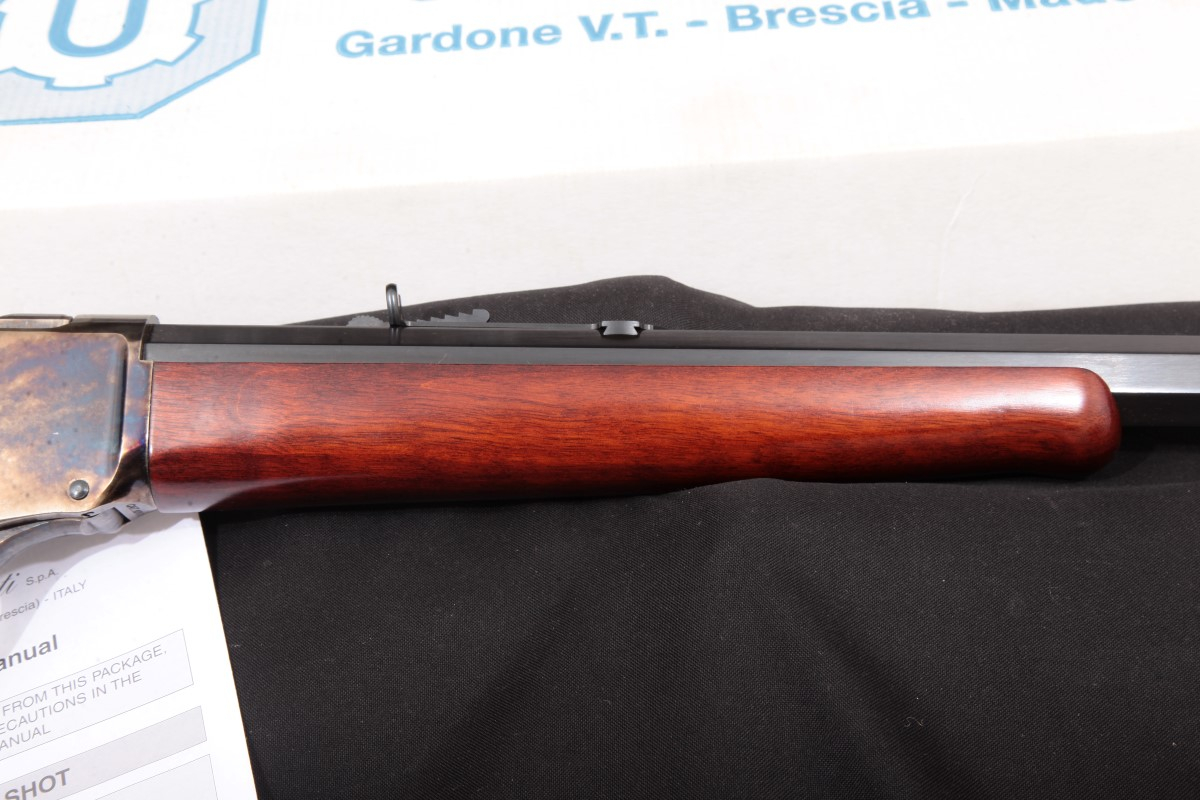
I am willing to bet that with that half moon steel butt plate. That the recoil from this rifle will leave a strong memory!
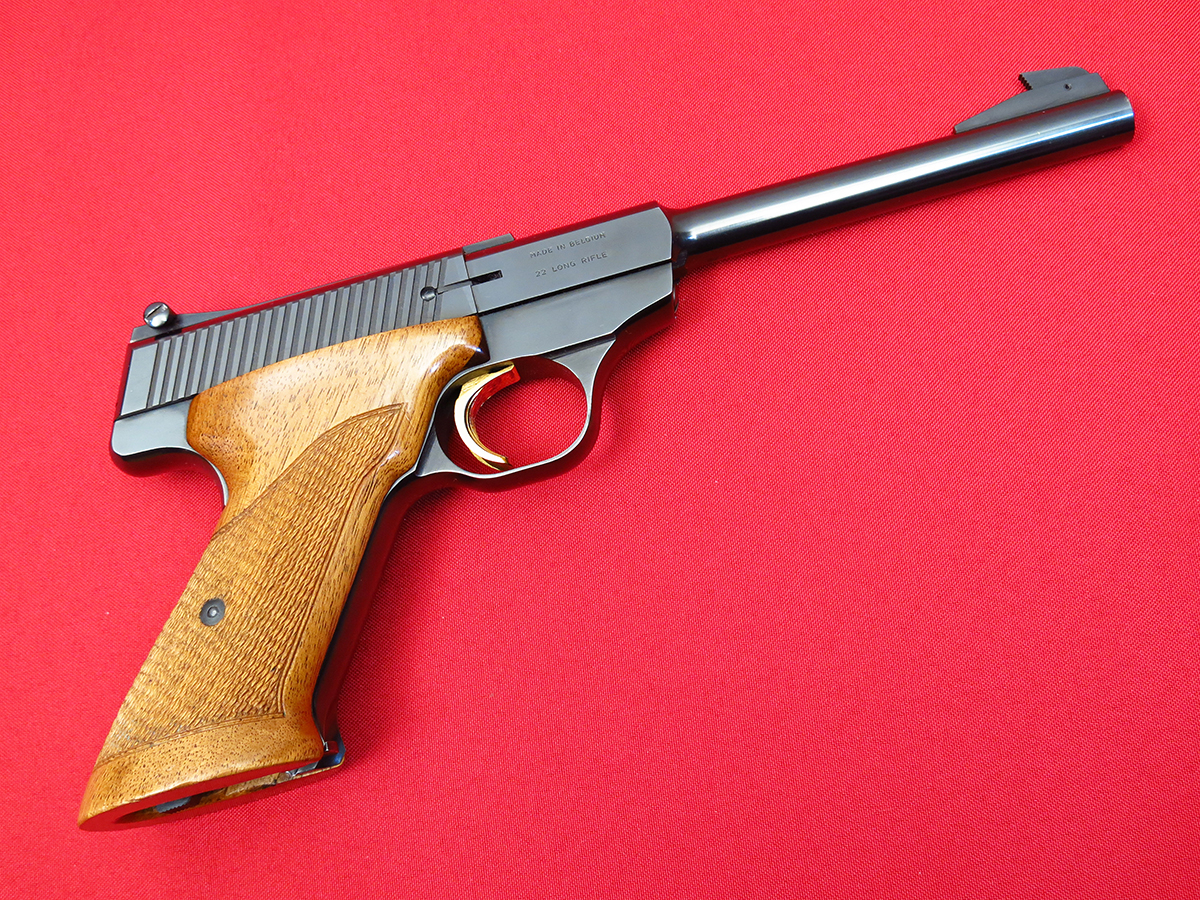
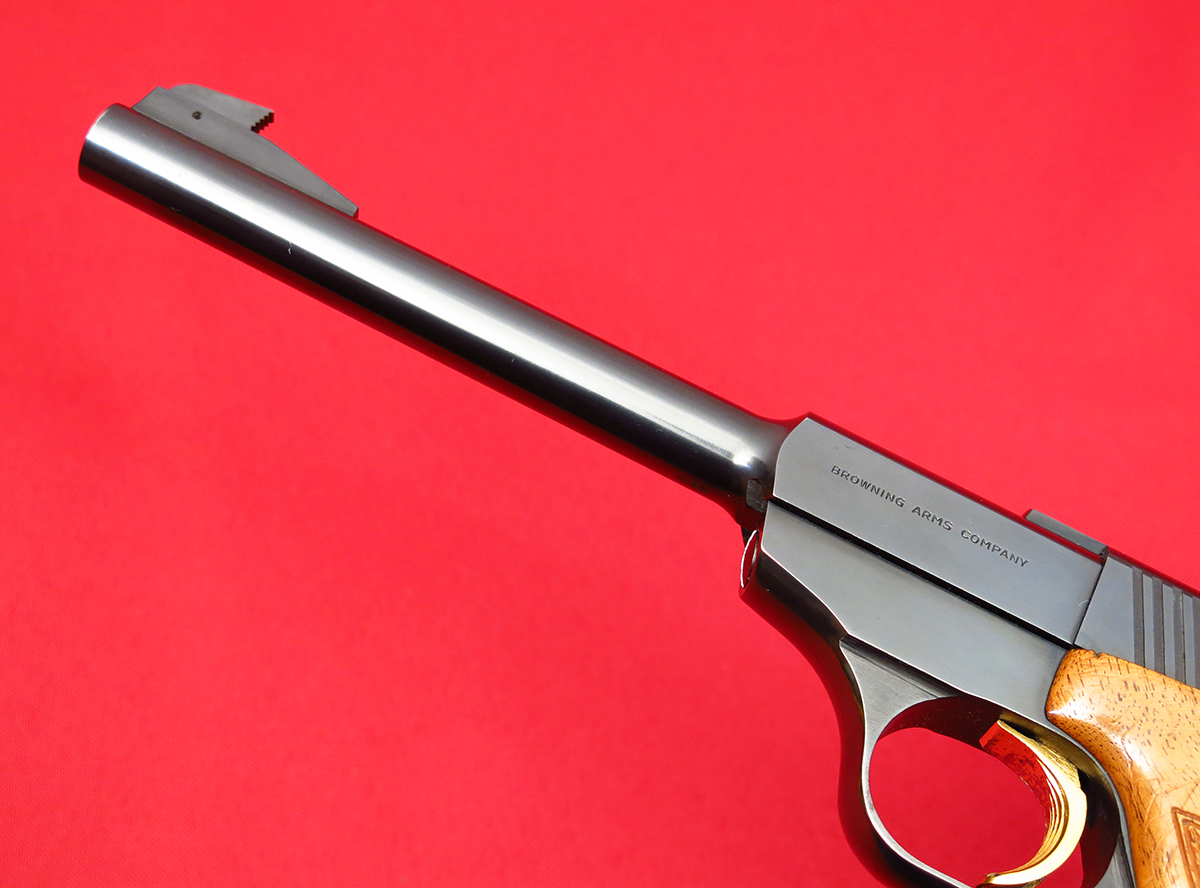
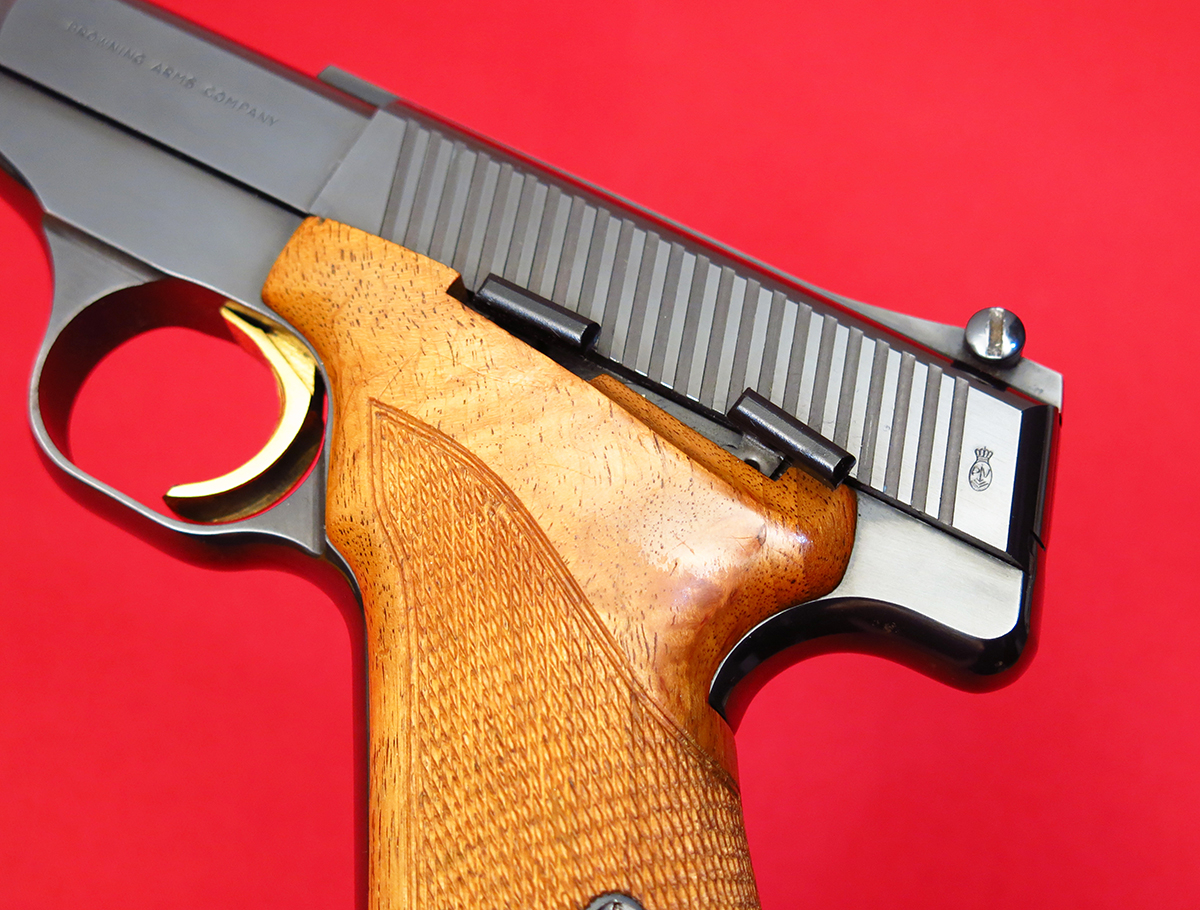

Here is a .375 Ruger (left) compared to a .375 H&H (right). – Big Game Hunting Blog

Cartridges like the .270 Winchester, .30-06 Springfield, and the .375 H&H (among many others) are all well regarded in the hunting community. However, there are many underrated rifle cartridges that perform well in the field, but don’t have reputations that match their capabilities.
Sometimes a cartridge performs very well but doesn’t get much publicity and fails to really catch on with the general hunting and shooting public. Sometimes a cartridge gets pushed out of the limelight by a newer cartridge that has a slight edge in performance. Either way, all of the cartridges on this list are solid performers but are not nearly as popular as some of the other choices out there.
ontinue reading to see our choices for the most underrated rifle cartridges for hunting, whether it’s big game, small game, or anything in between.

When it was first introduced in the late 1950s, the .264 Winchester Magnum was considered state of the art and quickly became extremely popular. Developed using the .375 H&H Magnum as a parent case, the .264 Winchester was significantly more powerful than the .270 Winchester rifle cartridges, yet would still fit in a standard-length rifle. There are many things to like about the .264 Winchester: it’s flat-shooting, accurate and it has surprisingly little recoil. This made it very popular among varmint and deer hunters out west where long-range shots were more common.
However, the introduction of the 7mm Remington Magnum in the early 1960s was the beginning of the end for the .264 Winchester. While the 7mm Remington Magnum doesn’t shoot quite as flat, it does use a little more bullet weight and didn’t have a reputation for excess barrel wear like the .264 Winchester did.
Even though it isn’t nearly as popular or common as it was when first introduced, rifles chambered in .264 Winchester Magnum and factory ammunition can still be found if you look hard enough. It’s an underrated rifle cartridge these days to be sure, but it’s still a great choice for an elk, mule deeror pronghorn hunt out west.

The 7x57mm Mauser (also known as the 7mm Mauser) was a major leap forward in the evolution of rifle cartridges when it came onto the scene in the 1890s. The smokeless 7mm Mauser was originally developed as a military cartridge, and it was very successful in this regard. However, it was also very popular in the hunting community. The fact that it had mild recoil, a relatively flat trajectory, and could fire bullets with a very high sectional density that penetrated very well made it an instant hit among big-game hunters.
It’s an excellent cartridge for hunting plains game, but it can be used to hunt much larger animals, too. The famous hunter “Karamojo” Bell killed hundreds of elephants with brain shots from a 7mm Mauser (known as the .275 Rigby by the British). While I don’t recommend using the 7mm Mauser on thick-skinned, dangerous game like buffalo and elephants (and doing so is illegal in many countries), Bell’s feats with the cartridge do a good job of demonstrating the capabilities of the cartridge in the right hands.
Many modern cartridges surpass the ballistics of the 7mm Mauser, and the cartridge has declined in popularity over the years. However, even though the 7mm Mauser is one of the most underrated rifle cartridges, there is absolutely nothing wrong with it. Many hunters all over the world, but particularly in Europe, still use the 7x57mm Mauser for hunting deer, bear and moose.

Designed in the early 1900s along with Remington’s new Auto-Loading Rifle, the .35 Remington was marketed as a competitor to the venerable .30-30 Winchester. Even though the cartridge was ballistically superior to the .30-30 Winchester and did catch on with the hunting community, it never quite achieved the popularity of the .30-30 Winchester.
Unfortunately, even though it’s a capable cartridge for hunting medium and even large game at close range, the cartridge has slowly declined in popularity over the last century. Hunters wanting a flat-shooting cartridge for longer-range hunting have turned to more modern cartridges. Similarly, many hunters looking for a good woods gun have remained faithful to the .30-30 Winchester.
That being said, even though the .35 Remington is still a very underrated rifle cartridge, it’s maintained a loyal following. It’s also perfectly suitable for hunting game like feral hogs, whitetail deer, black bear and moose.
Factory ammunition is still readily available and many great rifles, like the Marlin 336, are still manufactured in .35 Remington.

While it is relatively popular in Europe, the 9.3x62mm Mauser is one of the most underrated rifle cartridges in North America. This is a shame because the 9.3x62mm Mauser is one of the best all-around hunting cartridges in the world. It delivers about 90 percent of the power of the .375 H&H Magnum with less recoil and fits in a standard length (instead of a magnum length) rifle action. This makes it an extremely versatile rifle cartridge.
Shooting appropriate bullets, a rifle chambered in 9.3x62mm Mauser is suitable for hunting everything from the smallest of the Tiny 10 species of antelope all the way up to the biggest eland. It will also certainly work on large, thick-skinned dangerous game and hunters armed with the 9.3x62mm Mauser have killed thousands of buffalo and elephant over the last century. That being said, the 9.3x62mm Mauser is a little on the light side for extremely large species of dangerous game and has a smaller margin of error than more powerful cartridges like that .375 H&H Magnum.
Even though it is one of the most underrated rifle cartridges in the United States, factory loaded 9.3x62mm Mauser ammunition is fortunately readily available (though not exactly plentiful). The same thing goes for rifles chambered in the cartridge. So, if you want a great all-around hunting rifle and you don’t like being in the mainstream, then the 9.3x62mm Mauser is the perfect choice for you.

The .375 H&H Magnum is the standard by which most dangerous game cartridges are measured. The fact that it has been around for over 100 years and is still considered one of the best all-around big game hunting cartridges around really says something. However, the .375 Ruger may be the most serious competitor to the crown worn by the venerable .375 H&H for the last century. In fact, though the jury is still out, the .375 Ruger might even be better than the .375 H&H.
The goal of the designers of the .375 Ruger was to match the performance of the .375 H&H while using a standard length (instead of a magnum length) case. Since it has a straight walled case with no taper, the .375 Ruger actually has a larger powder capacity than the .375 H&H even though it is 7mm shorter. Because of this, the .375 Ruger has a slight velocity edge when shooting the same size bullets at the .375 H&H.
Not only will it meet or even exceed the performance of the .375 H&H, but because the case will fit in a standard length action, rifles chambered in .375 Ruger are shorter, lighter, and handier than comparable rifles chambered in .375 H&H. The .375 Ruger is also building up a solid performance record afield and hunters have taken a tremendous amount of game with it over the past few years.
The biggest strikes against the .375 Ruger are that it is a relative newcomer to the hunting community and that it is directly competing with one of the most popular hunting cartridges of all time in the .375 H&H. However, it is unique on this list of underrated rifle cartridges in that its popularity is actually increasing. Only time will tell what will become of the .375 Ruger, but it certainly has a bright future.

After its commercial release in 1956, the .458 Winchester Magnum was an instant hit among big game hunters who wanted a hard-hitting cartridge that could fit in a standard-length, bolt-action rifle. The development of the cartridge coincided with an increasing number of American hunters journeying to Africa on safari and the cartridge quickly became one of the most popular dangerous-game cartridges on the continent.
Unfortunately, problems began to surface regarding the performance of the .458 Winchester in the years following its release. Reports of “squib” loads started trickling in from the field. When that happened, the bullets penetrated poorly, or in some extreme cases, even bounced off animals! This is obviously not something you want to have happen when hunting dangerous game, and these incidents resulted in the deaths of several hunters and many more sustained serious injuries. Among those injured was Jack Lott, a well-known professional hunter and writer. Lott found himself on the wrong end of a scuffle with a Cape Buffalo after his .458 Winchester failed to do the job.
Not surprisingly, the reputation of the .458 Winchester took a major hit. Several other cartridges, like the .458 Lott (designed by Jack Lott after his bad experience with the .458 Winchester), were created as improvements to the .458 Winchester.
So, what was the problem with the cartridge?
Meant to duplicate the performance of the extremely effective (and popular) .450 and .470 Nitro Express cartridges, Winchester intended the .458 Winchester to shoot a 500-grain bullet at 2,150fps from a 26-inch barrel. Since the .458 Winchester was developed from a .375 H&H case shortened to 2.5 inches in order to fit in a standard-length action, there wasn’t quite enough space in the case to fit the powder necessary to achieve those ballistics without compressing it. These compressed loads eventually resulted in clumped powder charges, which often ignited erratically and failed to generate anything close to desired velocities.
Winchester quickly corrected the problem by revising their performance standards downward to a 500-grain bullet at 2,040 fps, which no longer necessitated a compressed load of powder. This was still a very potent load and was quite effective on thick-skinned dangerous game. However, the damage had already been done. Just like when dealing with a cheating lover, hunters found it difficult to trust the .458 Winchester again after it burned so many people.
Slowly but surely, though, the reputation of the .458 Winchester is improving. Modern advances in powder technology allow manufacturers and handloaders to safely produce loads matching, or even slightly exceeding the original performance standard for the .458 Winchester. But now, they use a shorter 24-inch barrel don’t need to compress the powder. A 500-grain bullet at 2,150 fps is strong medicine for even the biggest buffalo and elephant. However, the cartridge still hasn’t quite shaken the stigma it earned many years ago, thus earning a spot on this list of underrated rifle cartridges.
As it use to be that you could go down to the bank and trade a Silver Certificate Dollar Bill for a Silver Dollar!

No kidding! I use to do it with my Dad back in the early 1960’s!
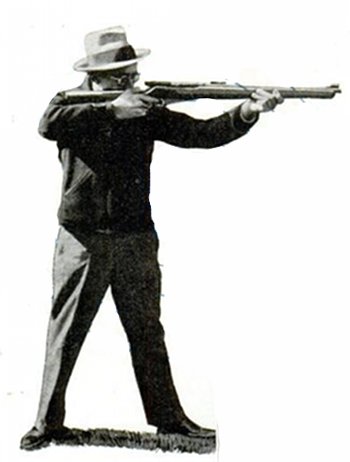
From some men, learning how to properly and safely fire a rifle is a skill they picked up when they were just knee high to a grasshopper. These guys probably got a .22 for their 12th birthday and spent summers in the woods plinking tin cans and squirrels and autumns hunting deer with their dads and grandpas.
Me? I wasn’t one of those guys.
But lately I’ve been wanting to learn how to fire a variety of firearms. I’m sure there are other men out there who, like me, went their entire life not ever shooting a rifle, but now have the desire to learn. It might be because he wants to take up hunting. Maybe he’s interested in home protection. Or perhaps he’s just interested in marksmanship as a hobby in and of itself. Whatever your reasons are for wanting to learn how to fire a rifle, you need to know how to do it safely and correctly.
A few months ago we did a post on firing a handgun safely and correctly. This time we’ll focus on how to shoot a rifle. So I headed back over to the U.S. Shooting Academy here in Tulsa, OK to talk to Mike Seeklander, Director of Training at the Academy. He explained the very basics of firing a rifle and today I’ll share what I learned with you.
Just as he did when we talked about firing a handgun, the very first thing Mike brought up were four rules, that if followed strictly, will keep you and others safe so you can have a good time firing off a few rounds.
1. Always treat every firearm as if it were loaded. No ifs, ands, or buts. Even if you know the gun is unloaded, still handle it as if it were loaded.
2. Always keep the firearm pointed in a safe direction, a direction where a negligent discharge would cause minimum property damage and zero physical injury. The safest direction to point a gun is always downrange (as long as there aren’t any people downrange!).
3. Always keep your trigger finger off the trigger and outside the trigger guard until you have made a conscious decision to shoot.
4. Always be sure of your target, backstop, and beyond. You want to be aware of what’s in your line of fire. This isn’t usually a concern if you go to a professional gun range. They make sure that people and property stay out of the path of the guns firing downrange. Where this becomes a concern is when you go shoot with your buddy out on his property. This is especially important when firing high powered rifles as their bullets travel further than bullets fired from a handgun.
Listen to Mike: “Ask your friend what exactly is beyond the target and backstop you’re shooting at, especially when you’re shooting into a wooded area. Don’t just settle for, ‘Oh, don’t worry. There’s nothing back there.’ Ask specifically if there are any houses, property, etc beyond your backstop. Err on the side of being overly cautious.”
Rifles are high powered firearms typically used to hit targets at long distances. Rifles are designed to be fired from the shoulder. Grooves, called rifling (hence the name rifle), are cut into the barrel of a rifle. Rifling makes the bullet spin as it leaves the muzzle, making the bullet much more accurate and stable in flight.
There are a variety of rifles out on the market that serve different purposes. Here’s a quick rundown of the most common.
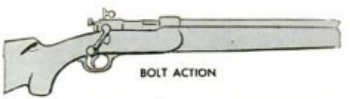
Bolt action rifles. Hunters often use a bolt action rifle like the Winchester Model 70 which requires the shooter to manually open and close the breech of the gun to eject a spent casing and load a new one.
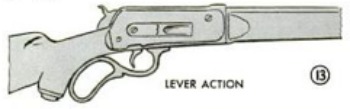
Lever-action rifles. If you’re a fan of Westerns, you probably noticed the cowboys in the films firing lever-action rifles. Lever-action rifles use a lever located around the trigger guard area to load fresh cartridges into the chamber of the barrel when the lever is worked. The most famous lever-action rifle of the Wild West was undoubtedly the Winchester rifle, a favorite firearm of badasses like Bass Reeves.

Semi-automatic rifles. A semi-automatic rifle fires a single bullet each time the trigger is pulled, automatically ejects the spent cartridge, and automatically chambers a new cartridge from a magazine. Most modern semi-automatic rifles are made from lightweight synthetic materials that make them easy to hold and carry. The most popular semi-automatic rifle is the AR-15. Here in the United States, there are no federal restriction on civilians owning AR-15s, though some states, like California, do place restrictions on ownership. Other states, such as Texas, have no restrictions and even allow semi-automatic rifles for hunting. The rifle Mike used in our photos was a JP-15.
There are two common stances when firing a rifle: bladed-off and a squared, “athletic stance.”
Bladed-off stance. A bladed stance is when your weak-side shoulder is facing the target. So if you’re right handed, your left shoulder is facing the target; if you’re left handed, your right shoulder faces the target. It sort of looks like how a baseball batter would stand in the batter’s box. Here’s Mike, showing a bladed stance:
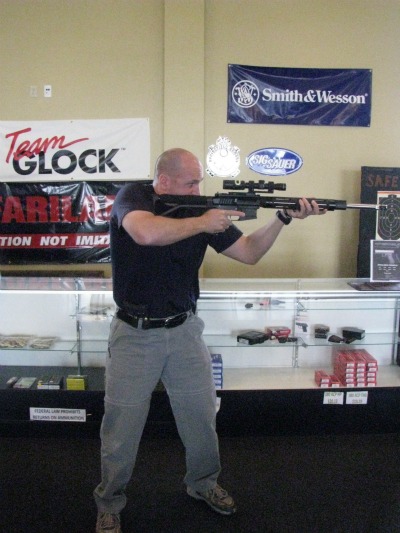
Bladed-off Stance
Many first-time shooters stand in a bladed-off stance when firing a rifle. They probably saw their favorite cowboys or action heroes in movies take this stance, so they assume it’s the best way to stand. Mike says that while a bladed stance is good for competition shooters who need precision in their aim, it’s not a great stance for shooters in more tactical situations that require rapid shots with minimal muzzle rise.
Squared or athletic stance. Mike and the folks at the U.S. Shooting Academy teach their students to assume an athletic stance when firing a rifle. Square your shoulders up with the target. Stand with your feet shoulder-width apart on a straight line. Stagger your strong side foot about six inches behind your weak side foot.
Place the buttstock of the rifle near the centerline of the body and high up on the chest. Keep your elbows down.
Here’s Mike now showing the athletic stance:
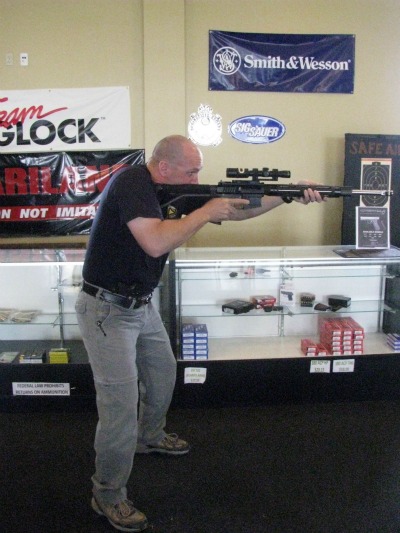
Athletic rifle stance
The biggest advantage of the athletic stance over the bladed stance is that it helps in reducing the effects of recoil when firing a rifle. Think about it. If you’re a lineman in football and you want to resist the other guy pushing you backwards, what stance would give you more balance? Being squared up with the other guy or standing sideways with just one of your shoulders towards him? Squared up, of course.
Another advantage the athletic stance has over the bladed stance is that the athletic stance allows you to track a moving target better. A bladed stance limits how much you can twist your body. An athletic stance allows you to swivel right or left much more easily.
Mike recommends an athletic rifle stance for most shooting situations.
Trigger Hand Grip
Rifle with pistol grip. If your rifle has a pistol grip, like the AR-15 or JP-15, center the grip in the “V” at the junction of the thumb and index finger of your trigger hand. Grip the gun high on the back strap (the back strap is the back of the grip on the gun). Like so:
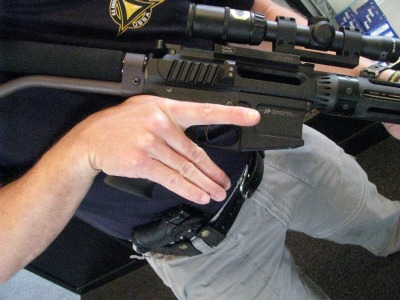
Rifle without a pistol grip. Most bolt action or lever action rifles don’t have a pistol grip like the AR-15. What they typically have instead is a crook between the stock and the trigger guard. Like so:
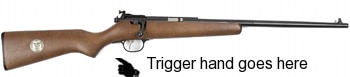
With these sorts of rifles, center the nook in the “V” at the junction of the thumb and index finger of your trigger hand. Grip the gun high on the nook.
Support Hand Grip
The support hand should grip the forestock (or handguards if you’re shooting an AR-15) of the rifle roughly midway down the length of the rifle. Here’s Mike demonstrating for us:
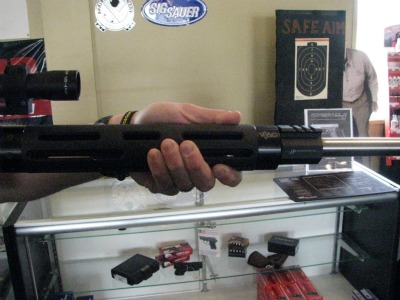
Putting your support hand further forward on the forestock will give you finer control over the muzzle when aiming, which you want when precision is key. The disadvantage of putting your support so far out on the forestock is that it’s a little less stable.
Bring the rifle to your head and press your cheek firmly into the stock. Keeping your head up, bring the rifle to your head. Place the buttstock of the rifle near the centerline of the body and high up on the chest. Press your cheek firmly to the side of the stock of the gun, like so:
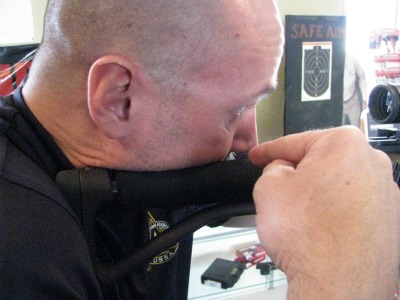
Mike demonstrating proper cheek lock.
You’re now ready to aim and fire your rifle.
Rifles can have different kinds of sighting systems depending on what you’re using your rifle for. What sighting system a rifle has also depends a lot on the preference of the shooter. Three common sighting systems you’ll see on a rifle are: open sights, aperture sights, and scope sights.
Aiming a Rifle with Open Sights
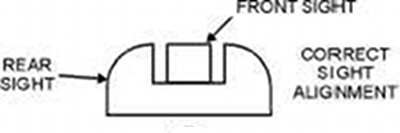
Open sights use a notch of some sort as the rear sight. They come standard with most rifles. We talked about how to aim with open sights in our post about firing a handgun. The same principles apply here. I won’t repeat what I wrote, so refer back to that post for tips on aiming a rifle with open sights.
Aiming a Rifle with Aperture Sights
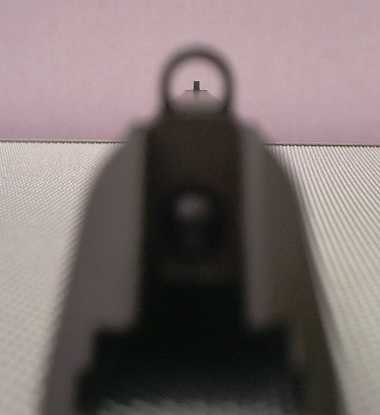
Aperture sight
Aperture sight (or peep sight) rifles have a similar front sight to open sight rifles. The difference is the rear sight. Instead of an open notch, the rear sight is a small ring mounted close to the shooter’s eye. There are different kinds of aperture sights, the most common being the ghost ring sight.
Aperture sights allow you to acquire your aim more quickly and more accurately than when using open sights. One of the problems with open sights is that it forces the eye to focus on three objects at the same time: the rear sight, the front sight, and the target. This is impossible to do, so one of the points of focus will be blurry. Aiming an open sight gun requires the shooter to know which object needs to be blurry and which objects need to be in focus. Focusing on the correct points can take precious time.
Aperture sights speed-up getting a correct sight picture by removing one of the objects in the shooter’s line of sight, specifically the rear sight. Looking through the rear ring causes your eye to automatically center on the front sight at the muzzle of the gun, thus providing you with a more accurate aim, acquired more quickly compared to using an open sight.
To aim with an aperture sight, simply look through the rear ring sight, attempting to only focus on the front sight and the target. The ring will blur until it is almost invisible (hence the name, ghost ring sight).
The front sight should be centered in the rear ring. The greater the distance to the target, the more perfectly you need to center the front sight in the rear ring. A closer sight requires less sight precision. Aim your front sight right underneath the point you want the bullet to hit. Before firing, shift all your focus to the front sight.
How to Aim a Rifle With a Scope
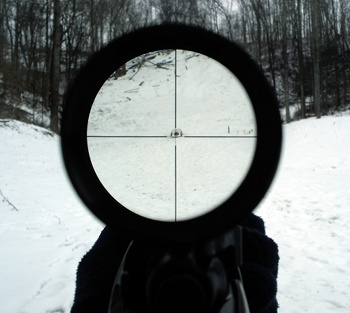 Scopes provide the most accurate and easy sighting on a rifle. They allow the shooter to magnify their target for better target definition at long ranges. A scope’s most useful attribute is that everything in the shooter’s field of view is in the same optical plane. Translation: there’s no need for your eye to balance focusing on multiple objects like you do with open sights and aperture sights. You can keep both the crosshairs and the target in focus. Just aim your cross hairs at your target and shoot.
Well, I wish it were that easy. A novice shooter might notice that despite a steady hand, all their shots end up nowhere near the crosshairs of the scope. For maximum accuracy with a scope, you have to “zero” it. Zeroing a rifle is a somewhat technical process for a beginner shooter and warrants its own article explaining how to do it. I’ll do a follow-up article on how to zero a scope in the future.
To fire a gun, we often use the popular phrase “pull the trigger.” However, to fire a gun properly, you don’t actually want to pull the trigger, but rather press it in a controlled fashion so you don’t disrupt your sights. Managing the trigger on a rifle is similar to doing so on a handgun, so here’s a review of the basics we covered last time:
1. Press, don’t pull. Instead of pulling the trigger, press (or like my dad likes to say “squeeze”) the trigger straight to the rear. Apply constant, increasing reward pressure on the trigger until the weapon fires. Ensure that you’re only applying pressure to the front of the trigger and not the sides.
2. Take the slack out of the trigger. Squeeze the trigger to the point you start feeling resistance.
3. Surprise yourself. Keep pressing the trigger straight to the rear until the gun fires. Don’t anticipate when the gun will fire. You sort of want to surprise yourself as to when the gun actually discharges.
Have any other tips for the first time rifle shooter? Share them with us in the comments!
Editor’s note: This article is about how to fire a rifle safely and correctly. It is not a debate about gun rights or whether guns are stupid or awesome. Keep it on topic or be deleted.
_____________________________________________________________________________
Special thanks goes out to Mike and the crew at U.S. Shooting Academy for their help on this article. Mike along with the U.S. Shooting Academy Handgun Manual were the sources for this article. If you’re ever in the Tulsa area, stop by their facility. It’s top notch and the staff and trainers are friendly, knowledgeable, and super badass.

I’ve always had a soft spot for Savage rifles. Savage Arms was one of the very few gun manufacturers that produced left-handed bolt rifles as a standard item when I was a young shooter — for us lefties, we are grateful. Prices on Savage bolt guns, 110 series, are also very affordable. Some thought the rifles were ugly, but for me, the beauty that mattered was the size of the groups it produced. Others besides me must have thought highly of them because several million Savage 110s have been manufactured. In those early days of production, the buyer had a choice ranging from economy to expensive, with the standard-grade rifles having decent walnut and some cut checkering. You got a lot for your money with a Savage.
Savage still makes the same bolt rifle that over time has evolved into a very accurate shooting machine. For more than five decades, Savage has built an enviable reputation for crafting some of the most accurate barrels in the business. They’ve also upgraded fit and finish along the way, making the newer Savages more appealing.
Related Videos: Power & Precision: New Savage 110 Wolverine in 450 Bushmaster

In 2002 Savage fixed the lawyer-mandated heavy trigger issue with a safe, user-friendly adjustable trigger design. No more trips to the local gunsmith for a “trigger job” or having to buy an expensive replacement. Called the “Accutrigger”, the Savage unit offers the shooter a two-stage pull that is totally safe, creep-free and adjustable for weight of pull by the user. The trigger weight can be easily set by the owner for anywhere between 1.5 lbs. to 6 lbs. When I got in the new Storm chambered in .270, I set my Accutrigger weight for just under 3 lbs. I’ve shot all kinds of rifles with adjustable triggers and I have to say the Accutrigger is the best factory-produced adjustable trigger available today. Yes, it’s that good.
The safety that Savage uses in conjunction with the Accutrigger is a 3-position top-tang design that is comfortable, accessible and ambidextrous. Fully forward is fire, middle position is on-safe/bolt operable (used for loading/unloading) and fully to the rear is on-safe, bolt locked. It works smoothly and silently when pushed forward to the fire position. A tang safety is another Savage feature that isn’t seen on most other bolt guns but makes total sense on a hunting rifle.

The most striking feature of the new Storm is the stock. It incorporates the “AccuStock” bedding system, Savage’s attempt at factory-bedding their barreled actions into the stock snugly and efficiently. Basically, it’s a rigid chassis that locks the barreled action into the stock, not allowing any movement during firing. The chassis runs the full length of the action and forend, contributing to the stiffness of the entire unit. A great idea and another step forward in the evolution of the Savage bolt rifle.

The problem before the introduction of the Storm (and the Accustock) was the stock itself — it was flimsy, cheap-looking and not really a good stock for an accurate rifle. Savage factory synthetic stocks were usually replaced or extensively modified after purchase. Many owners then covered the stock with some interesting spray paint color schemes in an attempt to help the appearance. A good aftermarket fiberglass stock would have worked better, but that takes the Savage bolt rifle out of the best-buy realm. The synthetic stocks from a few years ago turned off a lot of potential Savage customers.
Savage got it right with the new stock. It’s rigid from the tang to the end of the forend due to the chassis the barreled action rides in. No more flimsy, thin forends rubbing the barrel on one side or the other. The barrel channel is floated without a huge gap on either side. The stock itself has a “modern” look to it (along with a square trigger guard) that isn’t too jarring for a traditionalist like me. It’s also adjustable for length of pull and comb height — for the perfect fit. It looks great and feels super solid.’
Related Videos: VIDEO: New Savage Arms AccuFit Stock Introduced for 2018
Savage calls this synthetic stock an “Accufit” — for good reason — It sets the bar high for what I would call semi-custom fit. The Savage Storm is one of 13 rifles getting revamped in 2018 with the new stock, which is easily adjustable by the user. All that’s needed is a Phillips-head screwdriver and a few minutes. Packed inside the box along with the rifle are 4 comb-risers that adjust the height in 1/8″ increments and 3 extra inserts that adjust the pull length in ¼” increments. You end up with a rifle that fits you perfectly and takes into account your neck, scope height and eye relief. The recoil pad is thick, well fitted and soft. It works well in reducing the felt recoil of a lightweight hunting rifle.

Over the course of a month, four range sessions and 120-plus rounds I got to know the Savage Storm rifle well. Along with the usual accuracy stuff at 100 yards, I was able to do some chronograph/velocity comparisons, using a LabRader Doppler chronograph.
I mounted an older, proven Zeiss Conquest 3-9X on top, in Warne quick detachable (QD) steel rings. Savage thoughtfully supplies Weaver-style bases with the Storm, already installed, so adding a scope of your choice is an easy 20-minute job. The Warne QD rings went on without a hitch. I’m warming to the idea of QD rings on a well-traveled rifle. Having 2 pre-zeroed scopes in QD rings along on an expensive hunt isn’t a bad idea. I like Warne rings and have used them on several other rifles. They’re rugged, beautifully machined and nicely finished. And they hold zero after being removed and replaced.
Related Videos: SootchZone Installation: Remington 700 Extended Bolt Handle Mod
I didn’t do a barrel break-in — I shot the rifle and then cleaned it after each range session, which has been a routine of mine since my Army Marksmanship Unit days. What I’ve noticed in many light-barreled rifles is a change in the point of impact of a clean barrel versus a fouled one. First shot from the clean cold barrel of the Savage was usually about an inch high. Not bad, but noticeable. The best advice I can give is to confirm your zero before the hunt, then leave your barrel “dirty” throughout the season. A zero check mid-season isn’t a bad idea, also. This should keep point of impact surprises to a minimum.
Nothing unusual occurred during my range sessions with the Savage — it grouped like I thought it would. I was really impressed with the performance of the Federal “Non-Typical Whitetail” ammo, though. Best group of all was with the 150-grain “Whitetail” softpoints; one 3-shot string grouped into ½”. It was also the most consistent from shot group to shot group. The Fed Premium 130-grain Partitions took follow-up honors. That’s amazing accuracy from a light hunting rifle and factory ammo. No loads went over 2″, with the majority of the groups staying within 1.5″. I started each day with a clean, cold barrel, shot 3 round groups exclusively and let the barrel cool for several minutes between each group.
The most interesting part of preparing this article was working with the LabRadar chronograph and finally getting accurate feedback on the velocity of the loads I used. Prior to this I relied on other shooters with a Chrono or called the factory engineers at the various ammo companies and asked them what their best guesses were. Due to the shorter barrel lengths, I was working with (most companies use 24″ to 28″ test barrels), the “educated guesses” I got from the ammo companies were just that — guesses. There are other factors that go into accurate velocity readouts besides rifle barrel length like the smoothness of the bore and barrel wear, outside temperature, different ammunition lots, etc. Without a chronograph, I was literally “flying blind” when I wanted to know what the actual velocity was.

The chronograph that LabRadar sent me ended all that speculation. Velocities obtained via this Doppler radar chronograph are, according to the manufacturer, the most accurate readings you can get. It’s easy to set up and take down and isn’t affected by wind or light conditions. Just put your LabRadar next to the rifle (within 18″), “aim” the chrono at the target and you’re set. And it also works with arrows and pellets.
After I completed bench testing, I had some fun shooting 3 and 4-shot strings at a small steel plate 200 yards away. I shot from sitting and offhand, using a hasty sling in the sitting position. It was easy whacking the plate consistently, staging the Accutrigger while snugged up in a Montana sling. I had the Zeiss set at 4 power. This little exercise confirmed the rifle functioned flawlessly after zeroing. Feeding and chambering was smooth; a touch of heavy grease on the receiver rails helped slick up the new stainless action. It’s always a good idea to shoot your rifle away from the bench after you’ve gotten your zero. Rifle zeros can change, sometimes quite noticeably, from bench to field. And a few strings will confirm that your rifle actually functions as intended. Basic stuff, but many shooters never leave the bench nor get away from single-loading their hunting rifle during pre-season range practice.
Related Stories: 14 Awesome Rifles And Shotguns That are Great For Youth Shooters
All groups were 3 shots, fired from 100 yards using a heavy bag and a smaller toe bag. A minimum of 4 groups was fired with each load. Temperatures ranged from the mid 60’s to the low 80’s, sunny with negligible wind and low humidity. All shooting was done with Federal factory ammo.
Federal Premium 130-grain Nosler “Partition” – Smallest: ¾” Largest: 1.2″
Federal Premium 130-grain Barnes “Triple Shock” – Smallest: 1.5” Largest: 2.0″
Federal 130-grain softpoint (blue box #270AC) – Smallest: 1.5” Largest: 1.8″
Federal “Non-Typical Whitetail” 130-grain softpoint – Smallest: 1.0″ Largest: 1.4″
Federal “Non-Typical Whitetail” 150-grain softpoint – Smallest: ½” (best group overall) Largest: 1″
Federal “Fusion” 130-grain softpoint – Smallest: 1.4” Largest: 2.0″

Related Videos: SootchZone Rifle Review: James River Armory Forged Receiver M-14
I got my chronographed velocities from an average of three-shot groups. Some of the velocities recorded were eye-openers — especially the “blue box” Federal 130-grain, which was faster than the manufacturer’s stated velocity. All the averages were very close to the published factory velocity of each load. Looks like you’re not losing too much speed with a shorter, 22″ barrel. “Actual” is the chronographed readings I got from the LabRadar unit.
Fed Premium 130-grain “Partition” – Actual: 3,027 fps Published: 3,060 fps
Fed Premium 130-grain “Triple Shock” – Actual: 3,049 fps Published: 3,060 fps
Fed 130-grain softpoint “blue box” – Actual: 3,065 fps Published: 3060 fps
Fed “Non-typical Whitetail” 130-grain softpoint – Actual: 2,936 fps Published: 3060 fps
Fed “Non-typical Whitetail” 150-grain softpoint – Actual: 2802 fps Published: 2,830 fps
Fed “Fusion” 130-grain softpoint – Actual: 2,920 fps Published: 3,050 fps
I like this rifle a lot — it functioned reliably and shot superbly “out of the box”. It’s light, quick handling and looks pretty good, too. After almost 60 years of production, Savage knows how to build an accurate, functional, user-friendly rifle. And it’s made in a lefty version, too. Despite the revisions and upgrades, Savage Arms is still making the same bolt rifle that American shooters want, at a price that shooters can afford.
Weaver-style bases for scope mounting, factory-installed. New “Accufit” stock is easily adjusted for length of pull and comb height by the user, with only a Phillips head screwdriver.
Related Videos: SootchZone: Primary Arms 1-6x KISS Reticle Scope
For more information:
Savage Arms Co: www.savagearms.com
Federal Ammunition: www.federalpremium.com
Warne Scope Rings: www.warnescopemounts.com
Montana Rifle Slings: www.montanagunslings.com
LabRadar Chronograph: www.mylabradar.com
Targets: www.PrecisionPlusTargets.com

Just kidding Guys and I hope that you have made your Old Teacher Proud!