
 God how I miss that Old Man! Grumpy
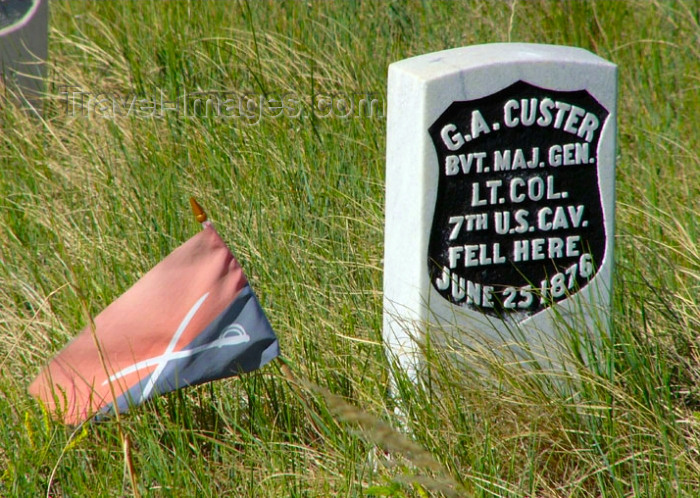
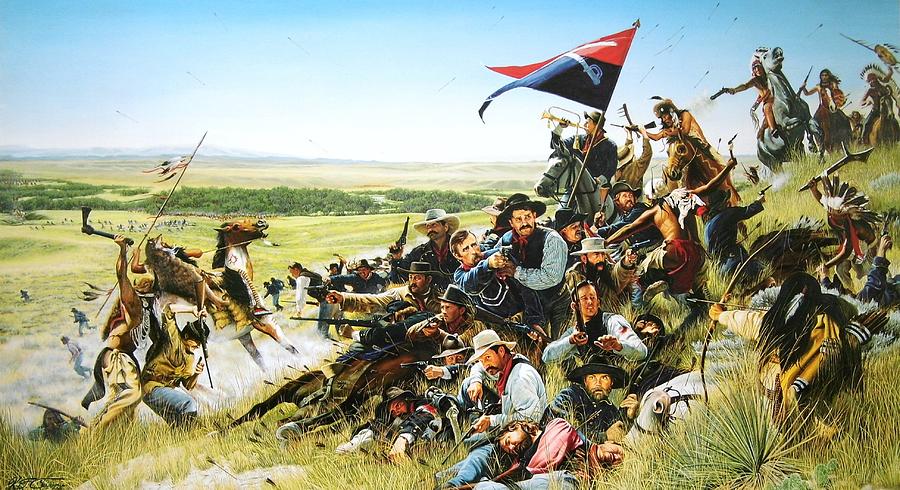

The Boy’s of ’76Seventh Cavalry Letters and Recollections
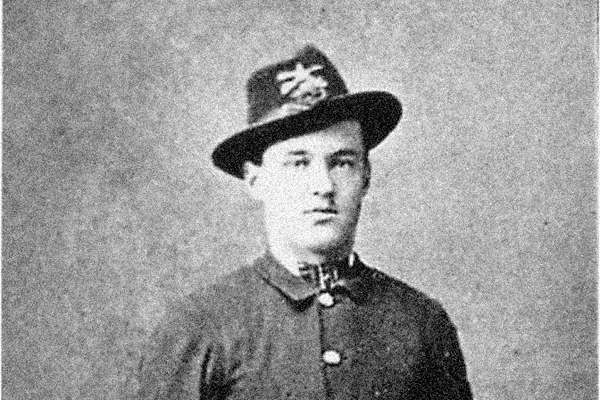 The men who served in the Seventh Cavalry in 1876 came from all walks of life. Some used the army for their own means; men who were one step ahead of the law. Others yearned for the excitement and adventure that the frontier army could provide.
Forty-two percent of the Seventh Cavalry ranks were foreign-born, with Irish and Germans predominating. Ironically, many western Europeans fled to the United States to escape military conscription. The army offered hope and a unique opportunity to learn English, to read and write, and learn the customs of their newly adopted country. The isolated life of a soldier could best be described as glittering misery. The caste between officers and enlistedmen was strictly adhered to. Here then, is part of the remarkable and poignant story of the 1876 Sioux War, told in their own words.
Fort A. Lincoln
Mar. 5, 1876
Dear Sister:
. . . we expect to leave here any day now . . . The boys are all making blanket shirts. I had a green blanket and so I made [a shirt]. . . I am going to bring it home when my time is out. We expect to go out after Sitting Bull and his cut throats, and if old Custer gets after him he will give him the fits for all the boys are spoiling for a fight. I only hope they will put it off until about the first of May and then we will not run the risk of freezing to death for its cold weather here now and I had rather be in quarters than out on the prairies in tents. Tell Irwin to write . . . I wish he were out here for awhile I would let him ride Dan Tucker. He is fat as a pig and feels so good he ran away with me yesterday and ran two miles before I could stop him . . . will say goodbye.
Henry
Henry Allen Bailey, a Blacksmith in Company I, was and killed with the Custer Battalion 25 June 1876 during the Battle of the Little Big Horn. Born in Foster, Rhode Island, his previous occupation was blacksmith. He enlisted on October 24, 1872 at the age of 22 in Springfield, Massachusetts. He had gray eyes, fair complexion, brown hair, and was 5’7 1/4” tall.
Ft. Totten, D.T.
March 5th, 1876
Dear Sister:
I take the preseant [sic] oppertunity [sic] of letting you no [sic] that I will soon be on the move again. We are to start the 10th of this month for the Big Horn country. The Indians are getting bad again. I think that we will have some hard times this summer. The old chief Sitting Bull says he will not make peace with the whites as long as he has a man to fight. The weather very cold hear [sic] at preasent [sic] and very likely to stay so for two months yet.Ella, you need not rite [sic] me again until you hear from me again. Give my love to Sister & Brother Jonny. Remember me to your husband. As soon as I got back of the campaign I will write you. That is if I do not get my hair lifted by some Indian. Well I will close, so no more at preasant [sic],
From your loving brother,
T.P. Eagan
P.S.
If you hear from Hubert tell him not to write until he hears from me.
Thomas P. Eagan was a Corporal in Company E and killed with the Custer Battalion during the Battle of the Little Big Horn June 25, 1876. His previous occupation was laborer. He enlisted on September 12, 1873, at the age of 25 at St. Louis Barracks, Missouri. He had gray eyes, light complexion, and was 5’5 1/2” tall.
William C. Slaper shared an interesting and humorous account of his experience as a young cavalry recruit enroute from Jefferson Barracks Missouri to Ft. Abraham Lincoln, Dakota Territory aboard a Northern Pacific Railroad car:
Jamestown, D.T.
March 25th, 1876
Ft. A. Lincoln. D.T.
April 20th 1876
“While stopping for coffee and something to eat at Fargo, Dakota, we had about two hours to wait. An Irish sergeant in charge of our car—seemingly an old veteran—instructed a bunch of recruits to go to a certain saloon not far from the station, take their canteens and guns, and pawn or trade the weapons for liquor, and to bring the liquor back in their canteens. On our return with the whiskey, he then took a squad of recruits, armed them as guards, and marched them over to the saloon. Here he threatened the proprietor for buying government arms and immediately confiscated the pawned weapons!. . . from Fargo to Bismarck that night, the sergeant’s car contained a bunch of noisy and hilarious troopers.”
William C. Slaper was a private in Company M and took part in the valley fight and subsequent two day battle on Reno Hill, and survived the Battle of the Little Big Horn. He was born in Cincinnati, Ohio and enlisted on September 10, 1875 in Cincinnati. His previous occupation was safemaker. He had blue eyes, brown hair, fair complexion, and was 5’8 1/2” tall. After the battle he was appointed corporal and received an honorable discharge on expiration of service on September 9, 1880 at Ft. Meade, D.T. as a corporal of good character. He died November 13, 1931.
The following is a vivid twentieth-century account by German immigrant Charles A. Windolph describing the departure of the Dakota Column from Ft. Abraham Lincoln, May 17, 1876:
“The wagon train was headed west, the wheels of the heavy outfits making big ruts in the rain soaked ground. General Terry suggested that Custer parade to the fort so that the worried women and children there could see for themselves what a strong fighting force it was. The band on white horses led off and we paraded around the inner area. Then married men and officers were allowed to leave their troops and say good-by to their families. In a few minutes ‘Boots and Saddles’ was sounded, and the troopers returned to their companions. Then the regiment, its guidons snapping in the morning breeze, marched off, while the band played over and over again ‘The Girl I Left Behind Me’ . . . You felt like you were somebody when you were on a good horse, with a carbine dangling from its small leather ring socket on your McClelland [sic] saddle, and a Colt army revolver strapped on your hip; and a hundred rounds of ammunition in your web belt and in your saddle pockets. You were a cavalryman of the Seventh regiment. You were a part of a proud outfit that had a fighting reputation, and you were ready for a fight or a frolic.”
Charles A. Windolph, aka Charles Wrangel, a German immigrant, was a private in Company H, and a recipient of the Medal of Honor at the Battle of the Little Big Horn with the citation: “With three comrades, during the entire engagement, courageously held a position that secured water for the command.” He was promoted to corporal on September 1, 1876. He had brown eyes, brown hair, dark complexion, and was 5’ 6” tall. He was the last surviving Seventh Cavalryman from the battle when he died at the age of 98 on March 11, 1950 in Lead, South Dakota.
Camp Powder River
June 8, 1876
My Dear Wife,
I received your letter today and was glad to hear from you and them little children. I was a great deal troubled about it, that I didn’t get no letter from you. I am all right if I only know that you and them children are all well. We are 250 miles from Lincoln on the Powder River but we don’t see a sign of an Indian but we expecting every day to meet with them. We had terrible bad weather and a terrible snow storm the first and second June.
The Command is stopping here on Powder River and resting two days. We are going to leave here in the morning 5 o’clock for the Yellowstone. The ration [sic] are running out very near, and so we have to hurry to get to the Yellowstone. Myself and Hageman and Weis got some antelopes[sic] meat from them Indian Scouts, but had to pay $2 for a quarter of it. I spended [sic] already $8 for eating. General Tarry [sic] said if we get Sitting Bull and his tribe soon, then we are going home, but if we don’t, we will stay three months and hunt for him. I wish for mine part we would meet him tomorrow. Serg Botzer and me came to the conclusion, it is better anyhow to be home and baking flapjacks, when we get home we will pay up for this and bake flapjacks all the time.
Dear Lizze I cannot forget Harry. I don’t know how it is but he is in my min [sic] all the time, and sometime I worry a great deal about him. The best thing for you to do is to go to the carpenter and get him to make a fraling fenz rows (German) and don’t forget to send for that tombstone, for we don’t know [sic] if we got any time to spare after we get back again.
Take good care of yourself and Hetty and Charly and don’t forget Your Husband And wrighth [sic] to me when [sic] ever you get a change, [sic] for I am lonely her [sic] to hear from You.
Serg Botzer, Hagemann, Weis, Serg Fortny, others and very near the hole [sic] Camp Send their best regards to You and Hetty and Charly. I for myself send my love And a Kiss to You and one to Hetty and Charly. My best Regards to Mrs. Hughes And her Children and to Klein and Mrs Klein and Mrs James and to Serg Loyd, Lawler and Luther.
I remain Your True and Loving Husband.
Henry C. Dose
Trumpeter Troop G 7 Cavalry.
Henry C. Dose, a Trumpeter in Company G, was killed with the Custer Battalion June 25, 1876 during the Battle of the Little Big Horn. Born in Holstein, Germany, his previous occupation was artificer. He enlisted for the second time on February 1, 1875 at age 25 in Shreveport, LA. He had gray eyes, brown hair, fair complexion, and was 5’6” tall. He left a widow Elizabeth, and his two children Hattie and Charles.
No Date: probably early July 1876, Mouth of the Big Horn River.
“When the Red devils got Custer they cut the heart out of this Regiment. It is not often a soldier wastes tears over an Officer But I saw maney [sic] an old hand wipe his blouse sleeve (we had no handerchiefs) [sic] The day we bureyed [sic] Custer. “
D.E.Dawsey
Troop D 7th Cav.
Custer’s last letter to Libbie:
June 22, 1876
Camp at Junction of Yellowstone and Rosebud Rivers
My Darling – I have but a few moments to write as we start at twelve, and I have my hands full of preparations for the scout. Do not be anxious about me. You would be pleased how closely I obey your instructions about keeping with the column. I hope to have a good report to send you by the next mail. A success will start us all toward Lincoln.
I send you an extract from Genl, Terry’s official order, knowing how keenly you appreciate words of commendation and confidence in your dear Bo: “It is of course impossible to give you any definite instructions in regard to this movement, and, were it not impossible to do so, the Department Commander places too much confidence in your zeal, energy and ability to impose on you precise orders which might hamper your action when nearly in contact with the enemy.”
Your devoted boy Autie.
This was the last letter written by Lt. Col. George Armstrong Custer to his wife Elizabeth in his “A” tent from the Seventh Cavalry Headquarters bivouac just below the mouth of Rosebud Creek, on the Yellowstone River. Shortly after he finished the letter, Autie, dressed in his familiar buckskins, dark blue shirt, high topped cavalry boots, canvas cartridge belt, holstered pair of Webley R.I.C. white handled revolvers and his familiar white wide brimmed low crowned hat, rode into history and legend at the head of his regiment, marching up Rosebud Creek to the Little Big Horn. Mrs. Custer received the letter after she heard the news of her husbands fate back at Ft. Lincoln. She kept it sealed until she finally gained the courage to read his last words to her.
This last personal recollection is by William O. Taylor who vividly recalled the Seventh Cavalry’s last camp on Rosebud Creek on Saturday June 24, 1876:
Orange Mass.
May 29th 1910
“Our Last Camp on the Rosebud”
It was about sundown on the 24th of June and we had marched nearly Thirty miles along the river following a trail that seemed to grow larger and fresher as we advanced. Emerging from a heavy growth of timber into an opening the command went into camp in one of the most beautiful spots that we had yet seen. On our right rose a high and for a short distance almost perpendicular Bluff. Between that and the river some two or three hundred [sic] away, were great masses of Wild Rose bushes in full bloom, with here and there a tree to add to the park like effect. It was easy to see how the river came by its name, Rosebud, fringed as it was with fragrent [sic] Rose bushes and low willows; it was just such a place for a camp that Custer was in the habit of selecting, when possible, a spot of great beauty, It has ever seemed to me most fitting that what was to be the last camp for so many should be such a beautiful place.
The horses having been fed and rubbed down the men prepared their frugal supper, a cup of hot coffee and a few hardtack, the fires were then put out and most of the men spreading down their piece of Shelter tent and Blanket a few yards in rear of their horses, lay down as they supposed for a nights rest. My troop was quite near to Custer’s Headquarters which consisted of a single A tent close up to the high bluff and facing the river. Before the tent he sat for a long time alone, and apparently in deep thought. I was lying on my side a short distance away, facing him. Was it my fancy, or the gathering twglight, [sic] that made me think that he looked very sad, an expression I had never seen on his face before, were his thoughts far away, back to Fort Lincoln where he had left a most beloved wife, and was he feeling a premonition of what was to happen the morrow.”
William Othneil Taylor was a private in Company A and survived the Battle of the Little Big Horn. Born in Canandaigua, New York his previous occupation was cutler. He enlisted on January 17, 1872 at age 21 in Troy, New York. He had hazel eyes, brown hair, fair complexion, and was 5’5 3/4” tall. Discharged upon expiration of service on January 17, 1877 at Ft. Rice, D.T. as a soldier of poor character.
The “Boy’s of ‘76” left a lasting legacy on the history of America’s westward expansion helping to shape the American experience. Little appreciated by their fellow countrymen—underpaid, under-trained, and often ill equipped—they proudly followed the guidon, enforcing the policies of the United States, and soon faded into history. Today, 125 years later, they continue to capture our imagination. They will forever ride into both history and legend behind their colorful commander, Lt. Col. George Armstrong Custer; onward to the Little Big Horn in Garry Owen and glory.
JOHN A. DOERNER is chief historian at the Little Big Horn Battlefield National Monument.
Photo Gallery

– Author’s Collection –

– Author’s Collection –

– Author’s Collection –

– Author’s Collection –

– Author’s Collection –
Categories
Range time Photo
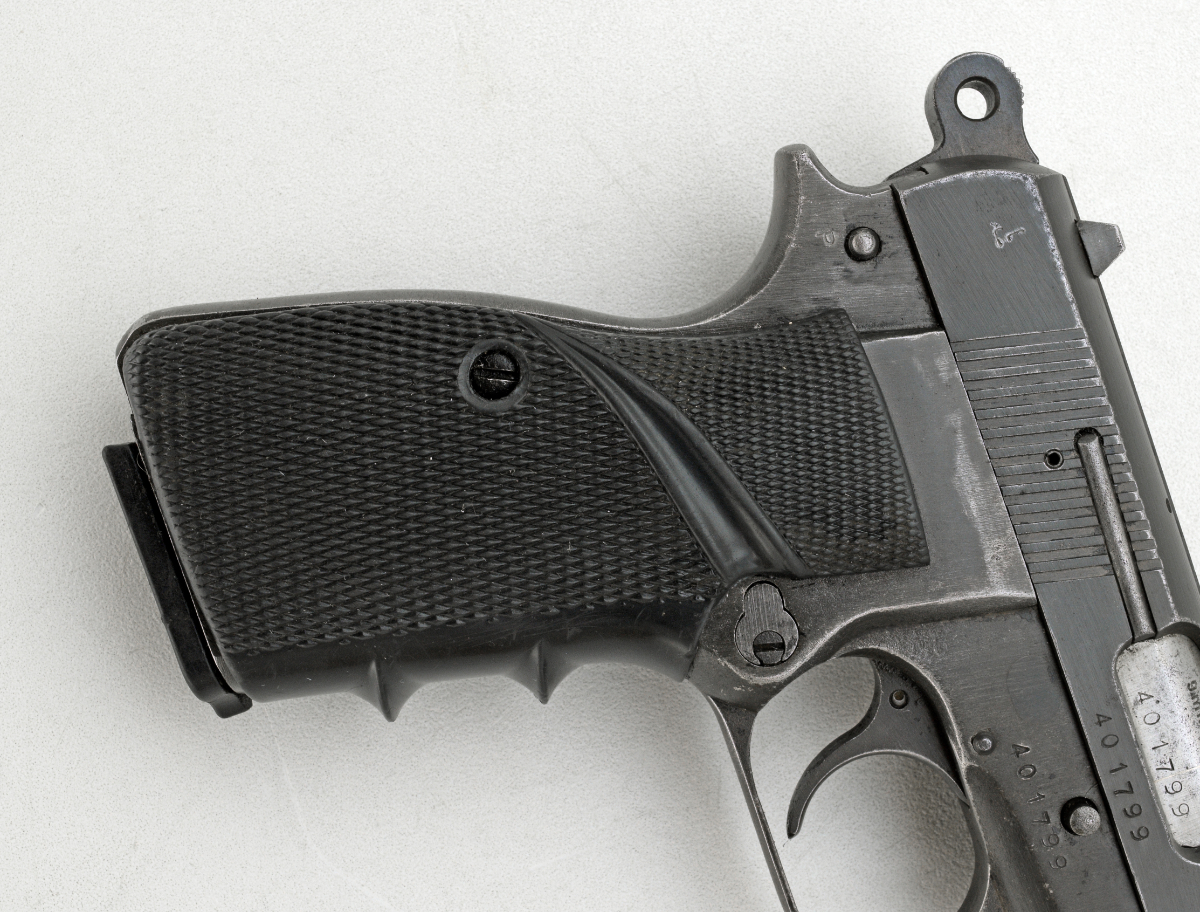
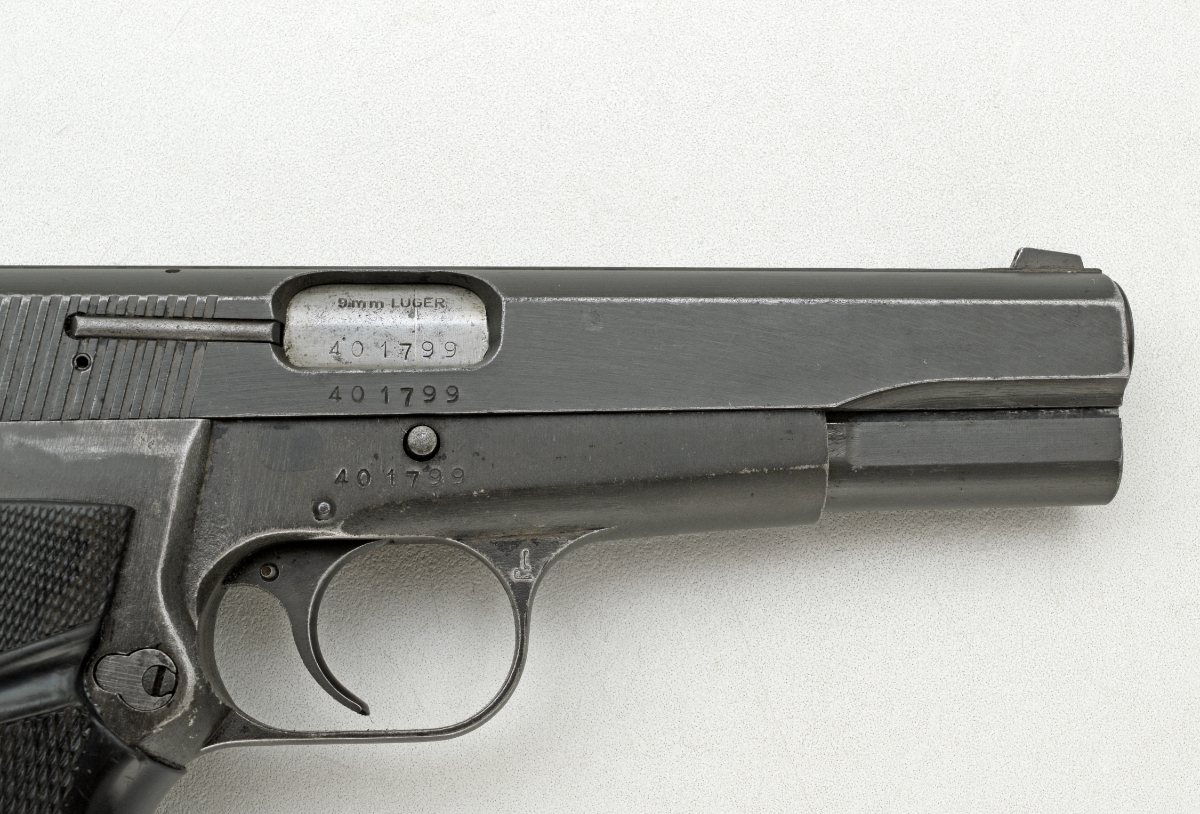
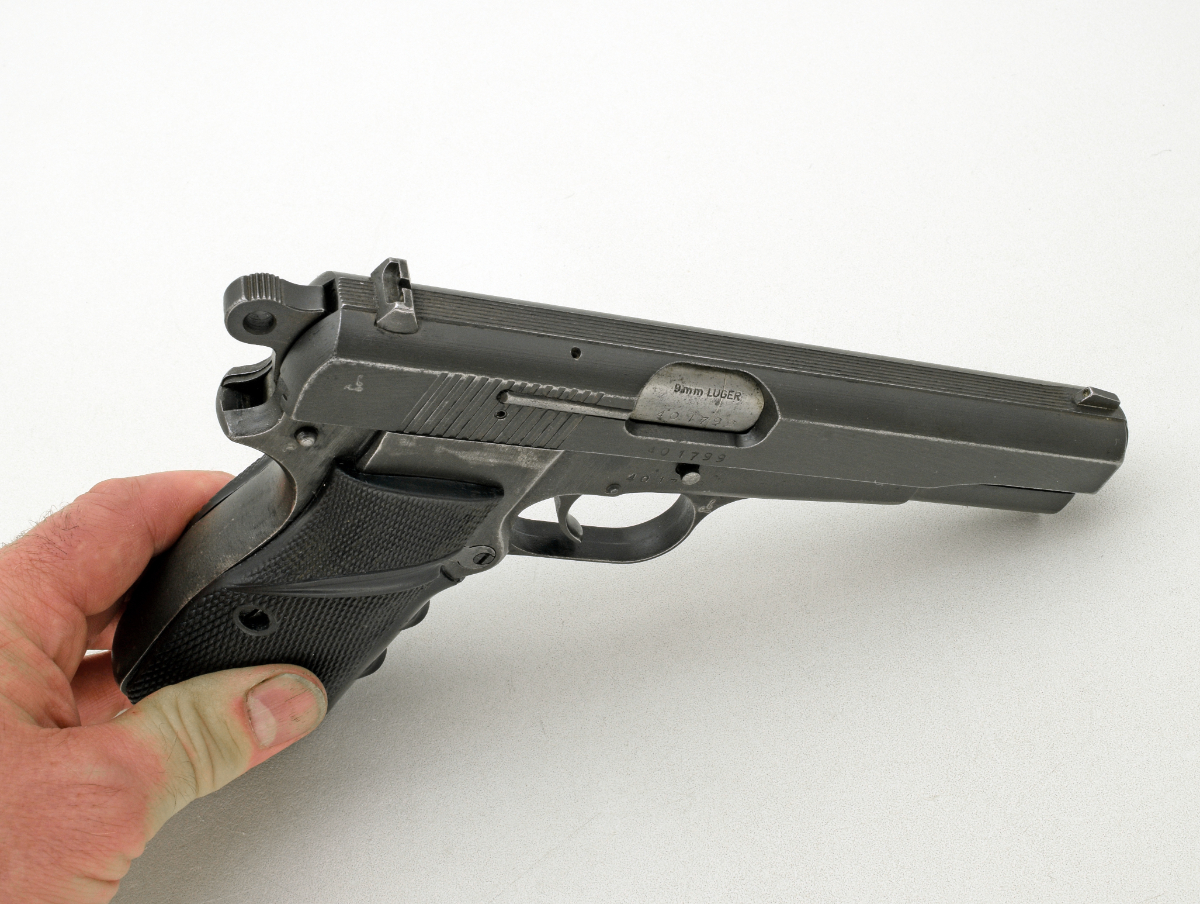
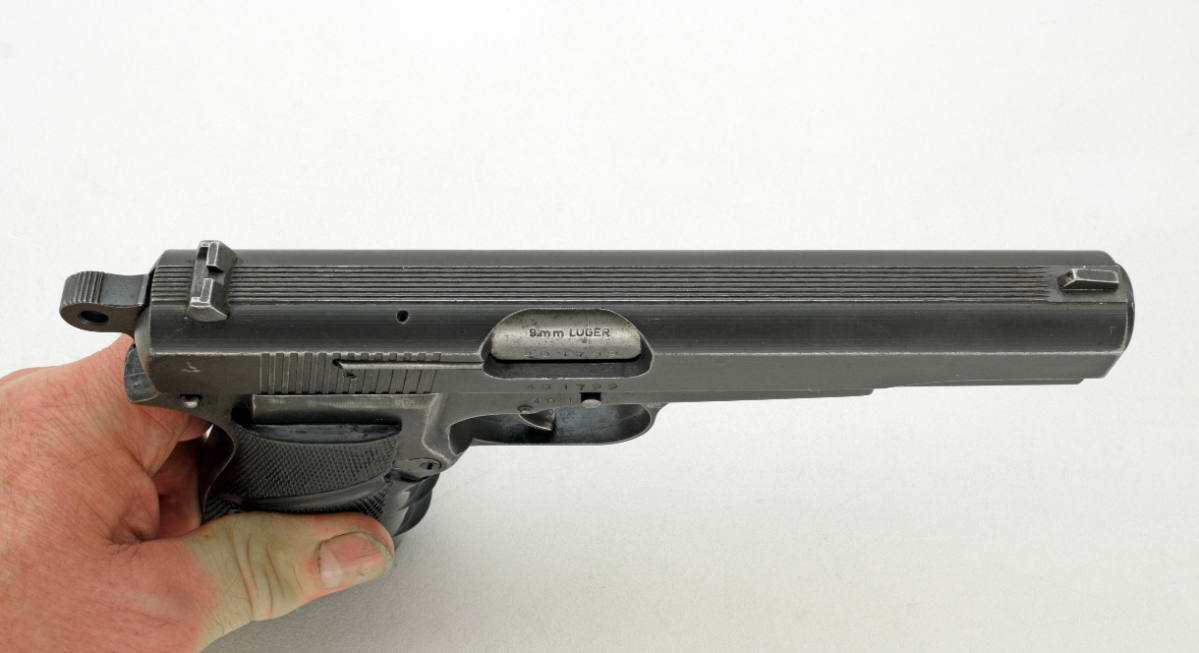
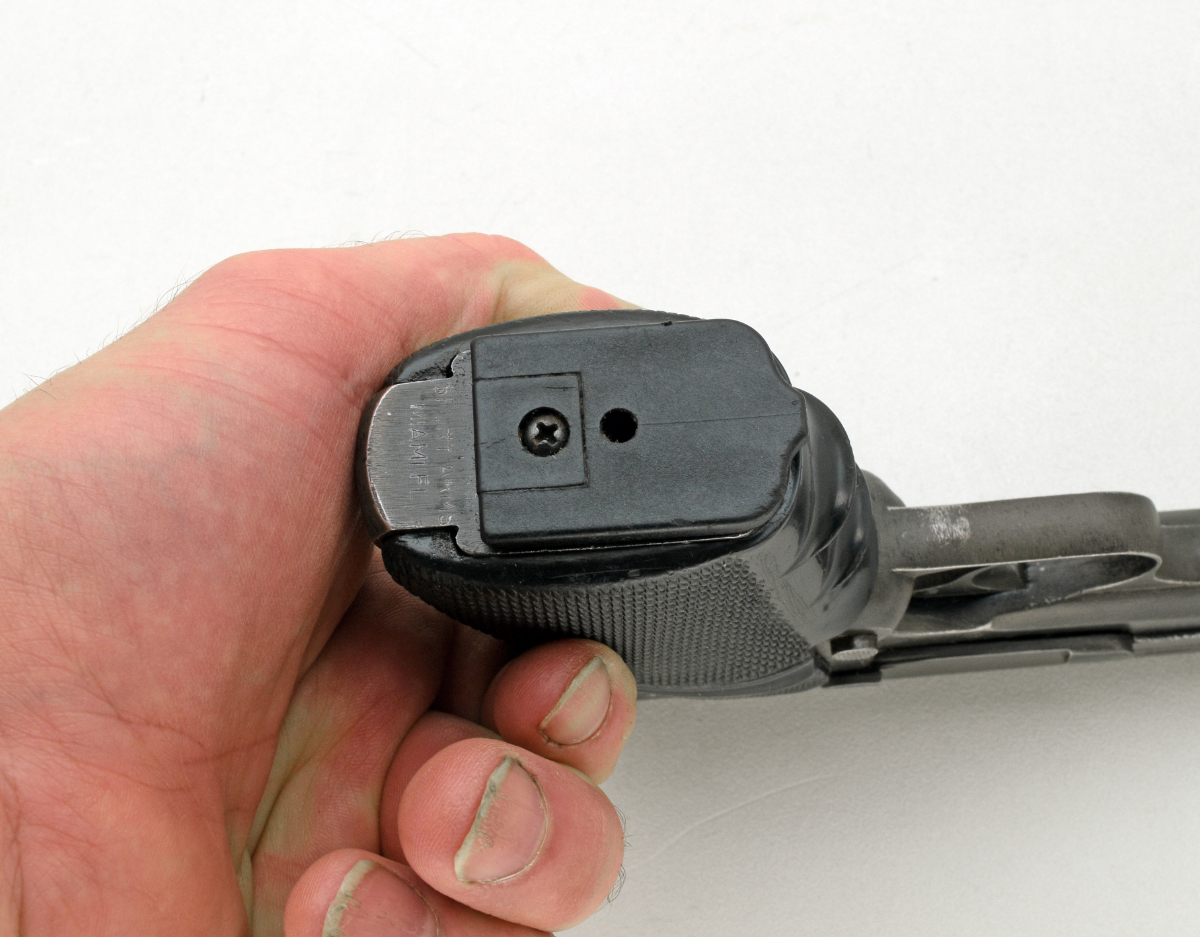
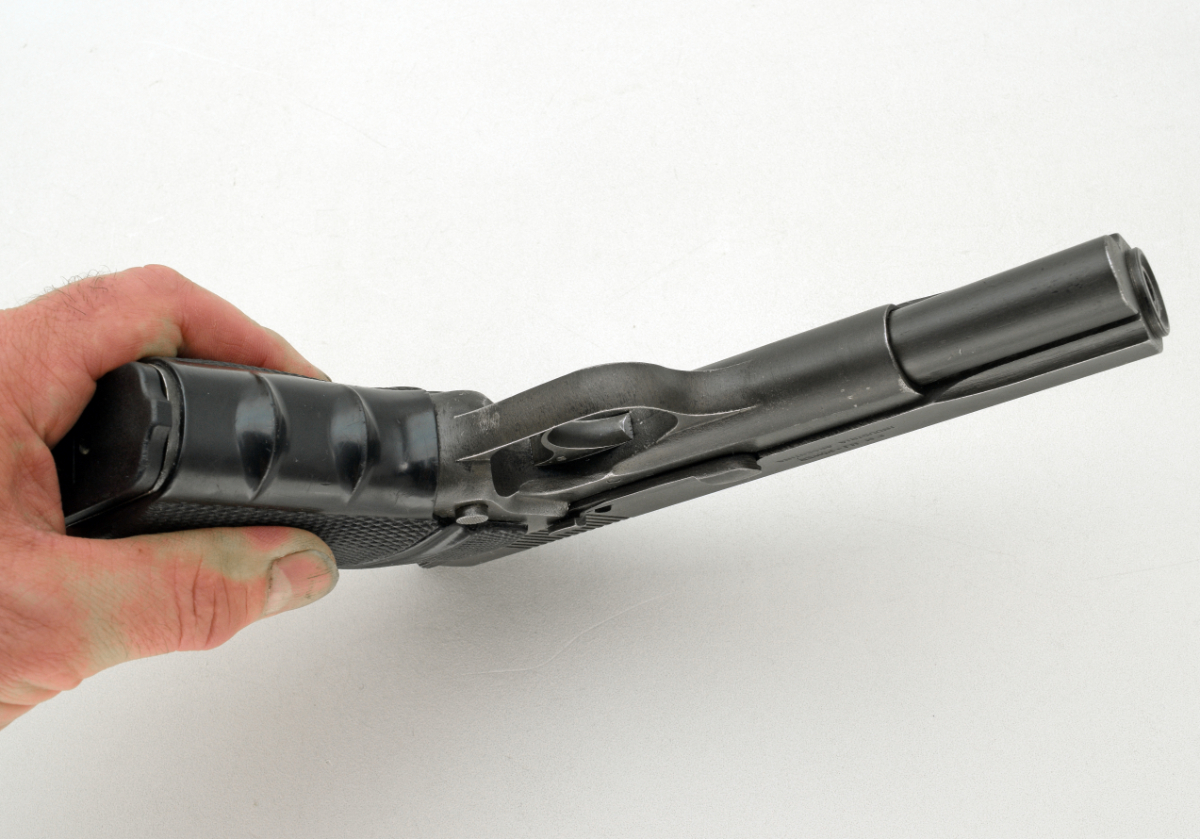
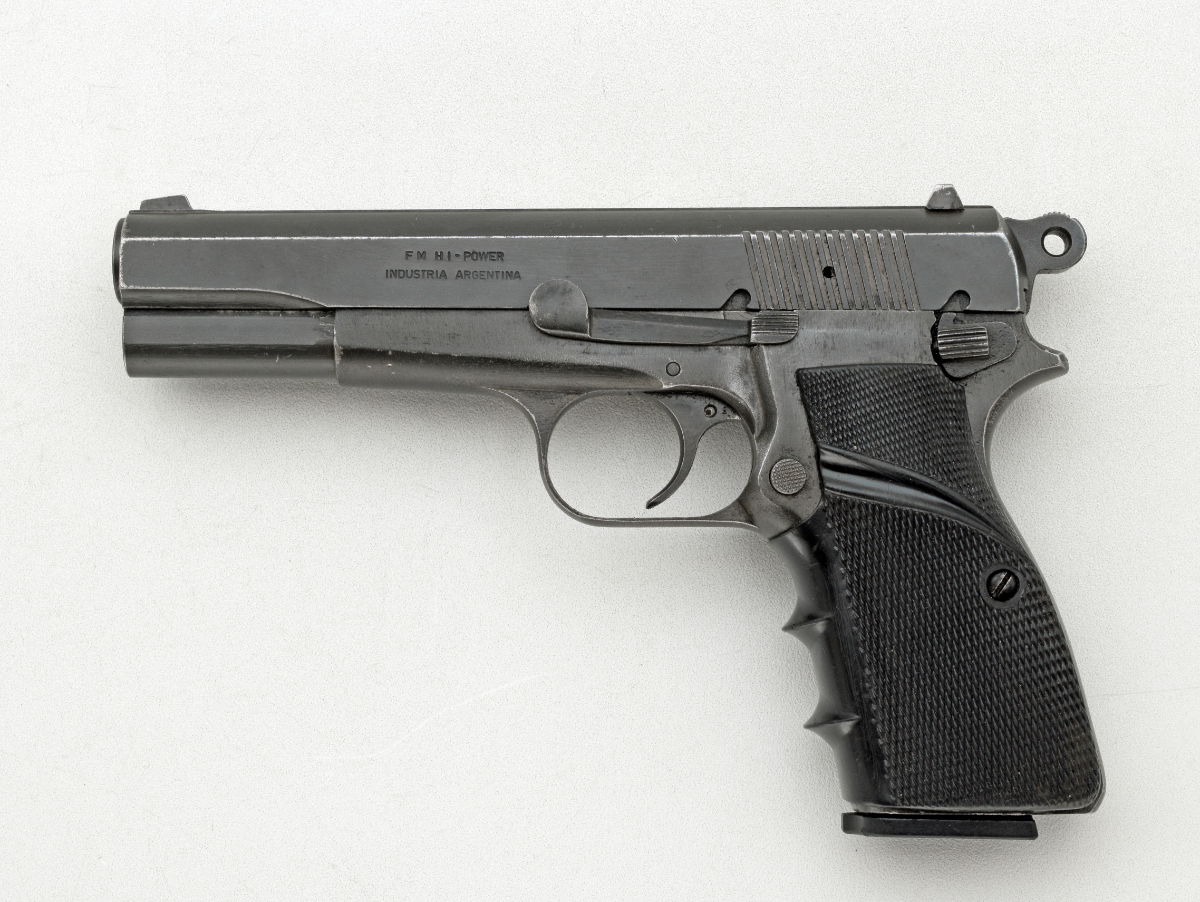
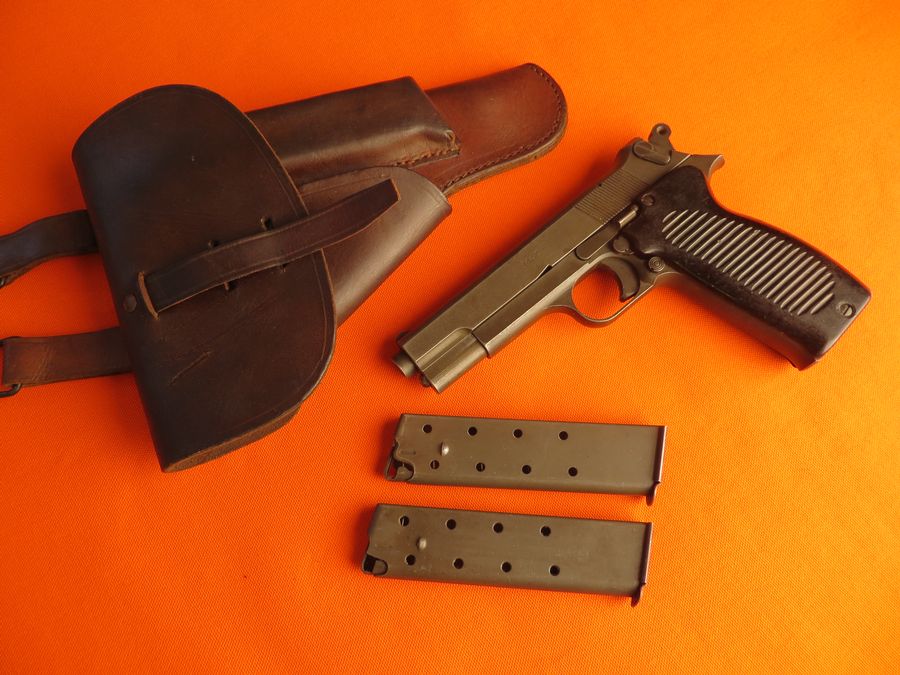
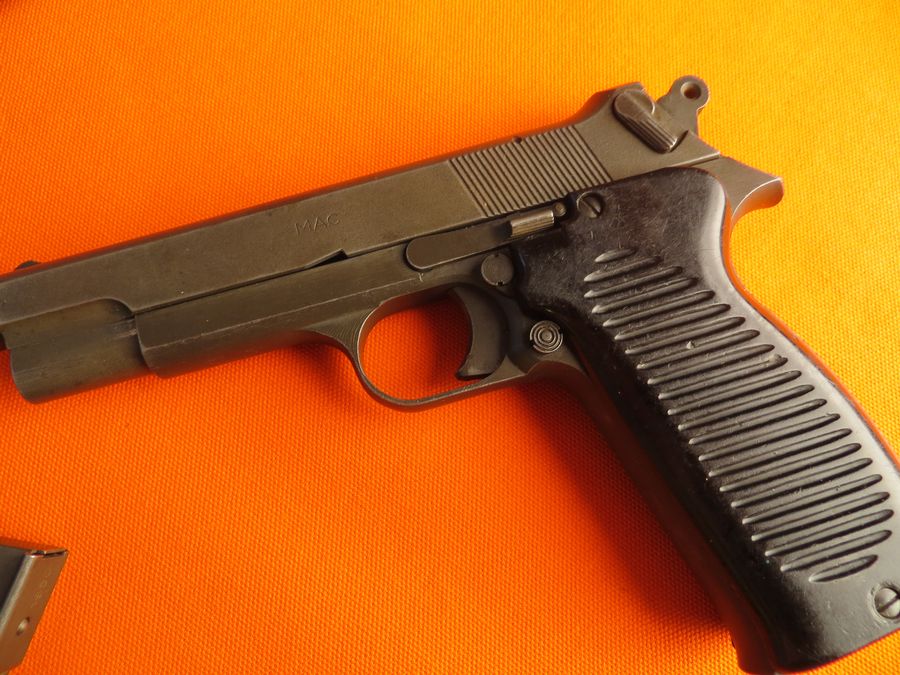
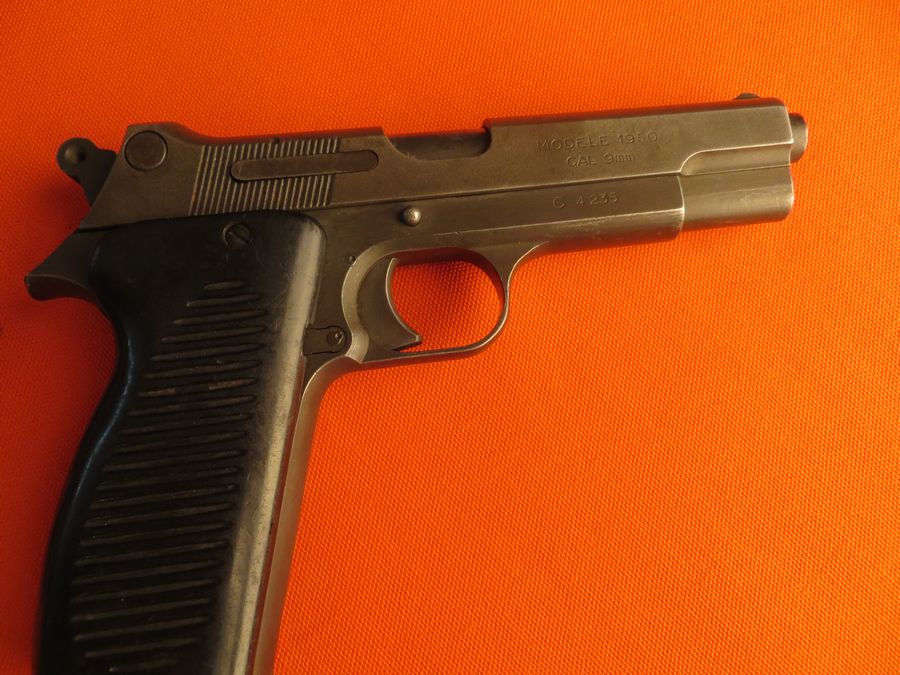
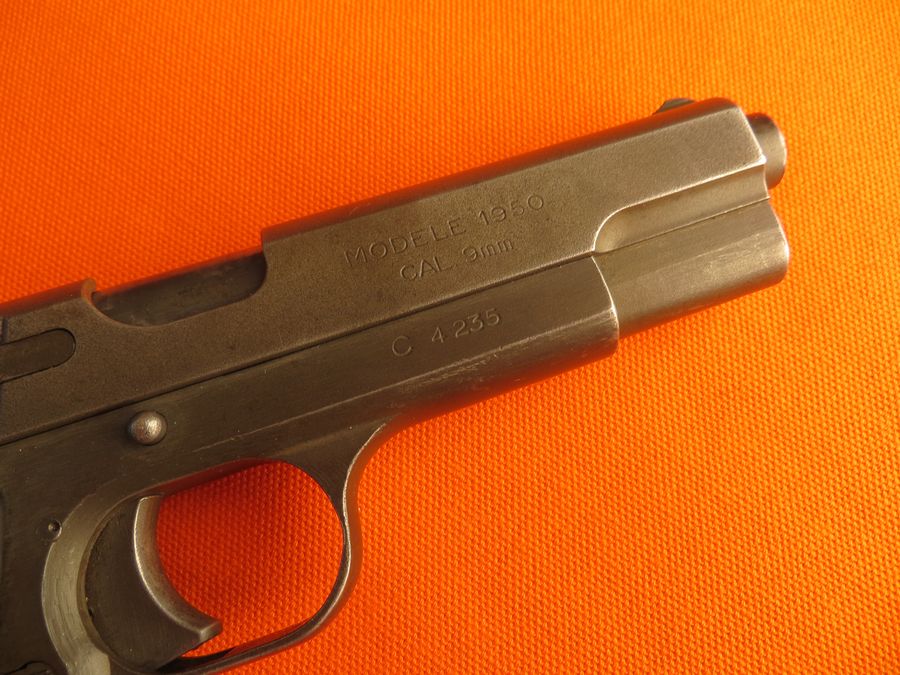
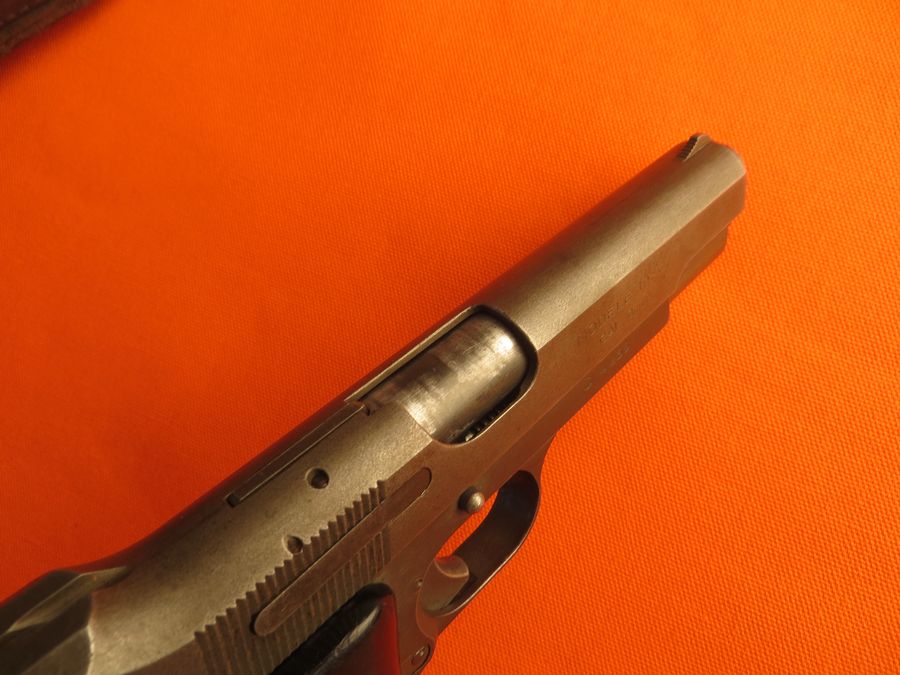
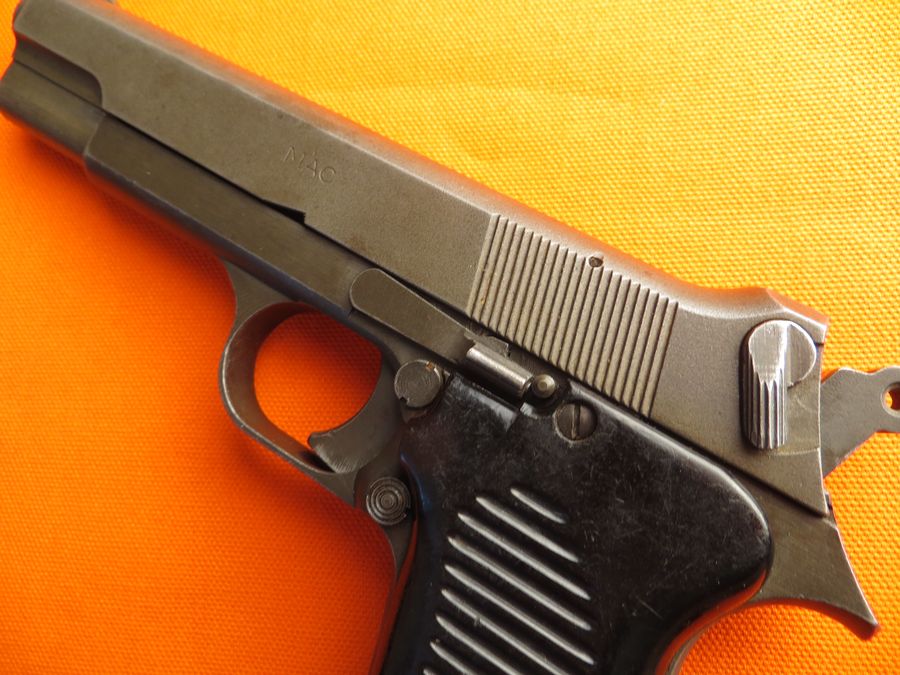
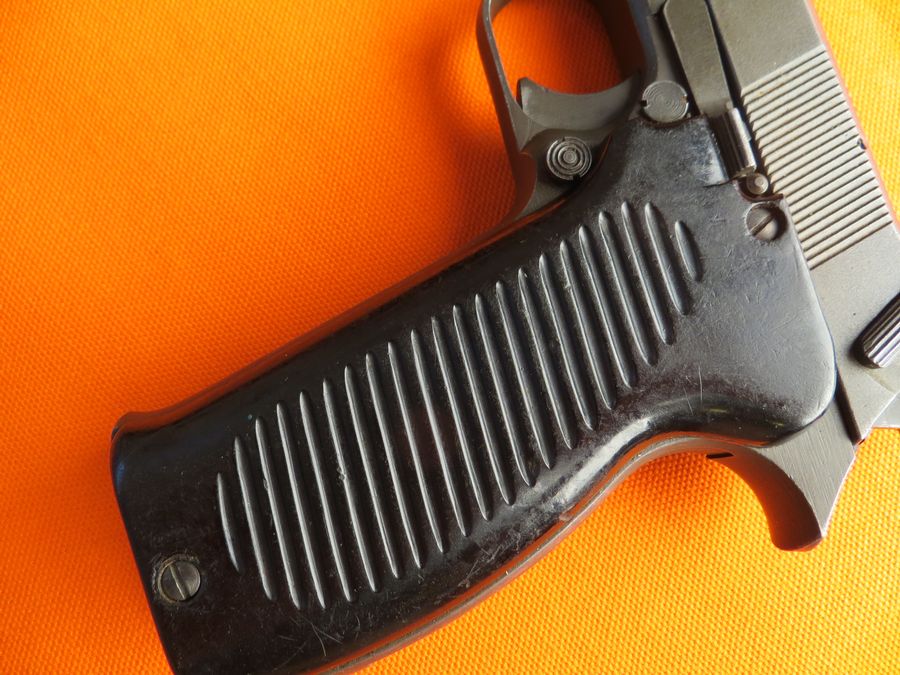
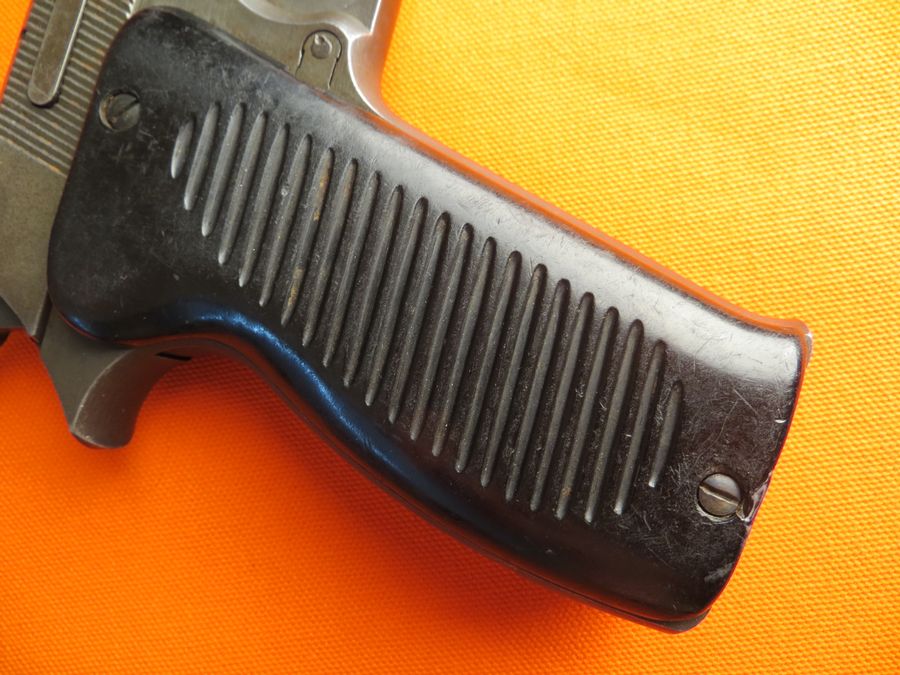
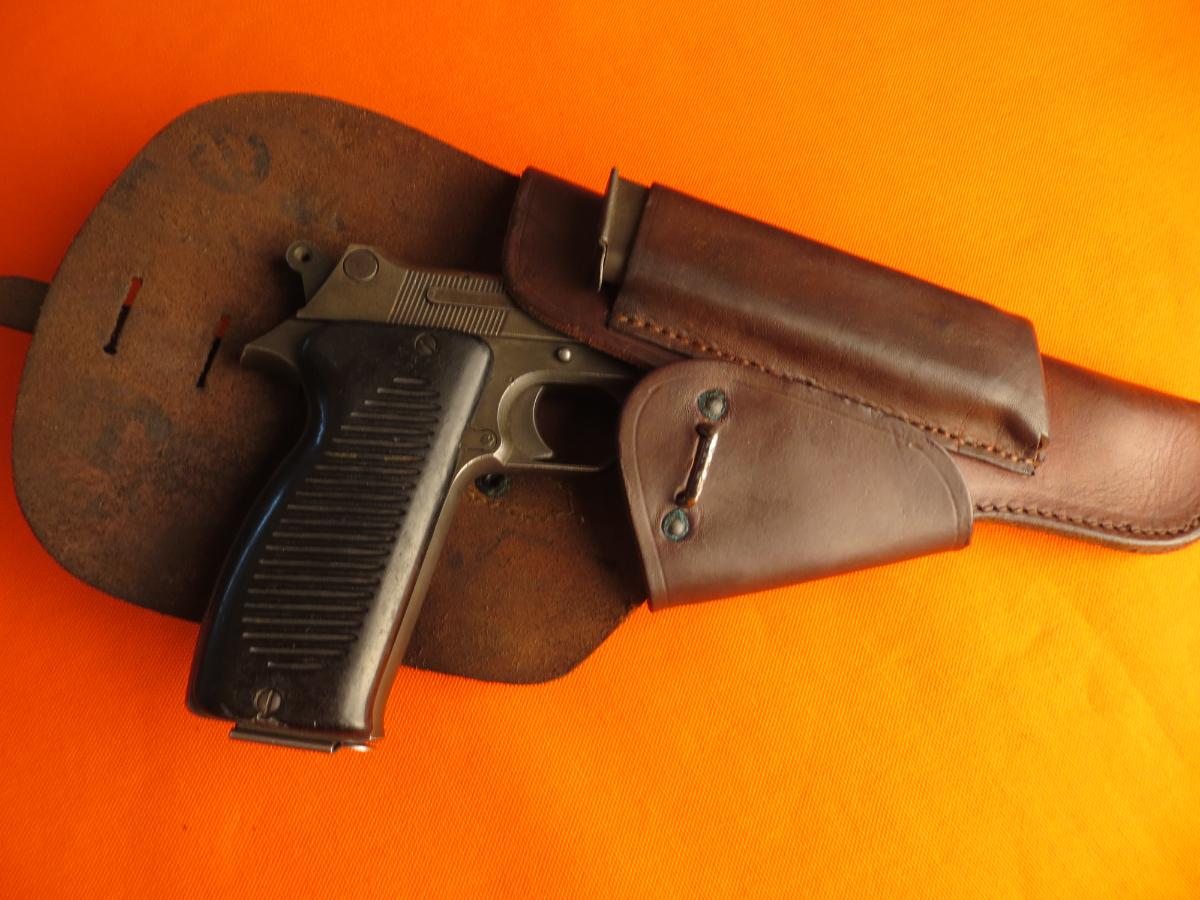
This looks like a great combat pistol to these tired old eyes of mine! Grumpy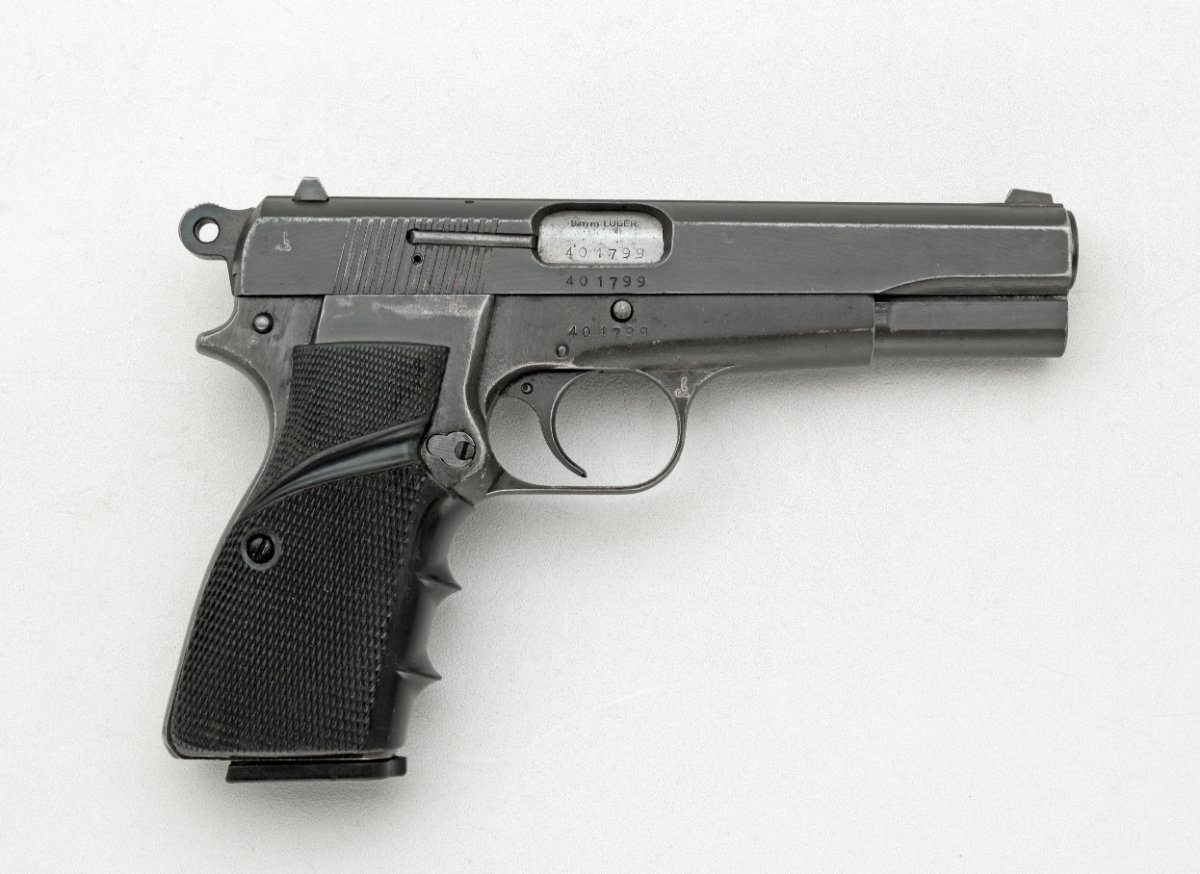


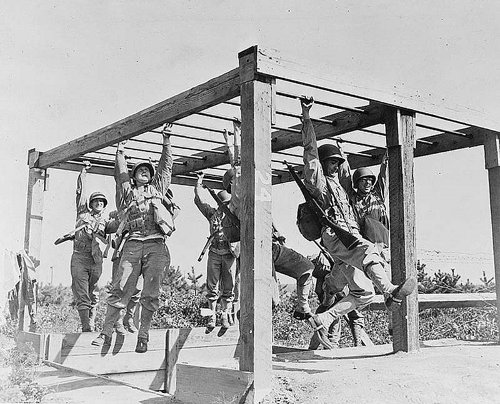
Have men these days “gone soft?” Is our generation less manly than past generations? Are we less tough than our grandfathers?
I see guys debate these kinds of questions all the time. Of course it’s hard to quantify “toughness.” But there is one area where we can definitively say we’ve slipped–the Army fitness test isn’t as hard as it used to be.
The Army first introduced a formal fitness test to the troops in 1942. Millions of men were being called up to fight in World War II, and not all of them were prepared for the rigors of combat. To get the men in fighting shape, the Army implemented a systematic physical development program as part of the Combat Basic Training course. And the Army Ground Forces Test was designed to assess whether the program was having its desired effect. The test included squat jumps, sit-ups, pull-ups, push-ups, and a 300 yard run. The emphasis was on functional fitness and giving American GI’s the strength, mobility, and endurance they would need to tackle real tasks on the battlefield.
In 1946, a Physical Training School was created at Fort Bragg with the mission of exploring how to take the goal of functional fitness farther. The training program developed at the school and the fitness test were codified in the 1946 edition of FM 21-20, the Army’s physical training manual.
Basically, Grandpa was doing Cross-Fit before it was cool.
In 1953, the Physical Training School closed, and its focus on combat readiness was lost; in the ensuing decades, the military began to concentrate more on general fitness, focusing on aerobic over anaerobic exercises. The fitness test was revised several times during the 60s and 70s, and standards began to be assessed on a sliding scale based on age and gender.
In 1984, the Army Physical Readiness Test was introduced, and it continues to be used today. It has only three elements: sit-ups, push-ups, and a two mile run. In 1987, General Schwarzkopf became concerned that only 5% of soldiers were able to achieve the highest score on the test, and so the standards were eased and more provisions were made for age and gender.
Also, whereas soldiers who failed the test used to be discharged, this rule has been greatly relaxed.
For the past couple of decades, many critics have said that the physical fitness standards for the troops are too easy, and more importantly, don’t assess the kind of skills soldiers actually need in our current conflicts. In a time of new equipment like body armor, men are humping large loads for long periods, and are much more likely to be sprinting and crouching than running for miles at a time.
When Dr. Edward Thomas, an instructor at the Army Physical Fitness School, re-discovered the WWII fitness test and administered it to soldiers in the 1990s, he was surprised at the result: soberingly low scores. While the numbers of required repetitions for things like push-ups are higher in the modern test than the WWII version, the standard for the precision with which the repetitions must be completed has been relaxed. Consequently, when Thomas tested the modern soldiers, they could only do a fraction of the repetitions required of WWII GIs.
In the last several years, the Army has been changing its physical training program to concentrate more on functional fitness and is currently developing a new fitness test which will be rolled out in the future and incorporate things like a shuttle run and long jump.
_______________________________
Well all that interesting history aside, I thought AoM readers, civilians and soldiers alike, would enjoy seeing how they stacked up against their grandfathers by taking the WWII fitness test. Why take the test? Well as the introduction to the original test itself says, “Tests motivate the men to improve their physical condition. Frequently men do not realize what poor condition they are in. When the tests reveal their deficiencies, they are much more receptive to an intensive physical training program in order to remedy their shortcomings.”
So maybe taking the test will inspire you to get in shape (or inspire you to feel awesome about how in shape you already are).
If you’re a coach, it might be fun to have your guys take the test–seems like it would be a great team-building exercise for your own little band of brothers.
Before we get to the test, let’s go over a couple of guidelines:

I see guys debate these kinds of questions all the time. Of course it’s hard to quantify “toughness.” But there is one area where we can definitively say we’ve slipped–the Army fitness test isn’t as hard as it used to be.
The Army first introduced a formal fitness test to the troops in 1942. Millions of men were being called up to fight in World War II, and not all of them were prepared for the rigors of combat. To get the men in fighting shape, the Army implemented a systematic physical development program as part of the Combat Basic Training course. And the Army Ground Forces Test was designed to assess whether the program was having its desired effect. The test included squat jumps, sit-ups, pull-ups, push-ups, and a 300 yard run. The emphasis was on functional fitness and giving American GI’s the strength, mobility, and endurance they would need to tackle real tasks on the battlefield.
In 1946, a Physical Training School was created at Fort Bragg with the mission of exploring how to take the goal of functional fitness farther. The training program developed at the school and the fitness test were codified in the 1946 edition of FM 21-20, the Army’s physical training manual.
Basically, Grandpa was doing Cross-Fit before it was cool.
In 1953, the Physical Training School closed, and its focus on combat readiness was lost; in the ensuing decades, the military began to concentrate more on general fitness, focusing on aerobic over anaerobic exercises. The fitness test was revised several times during the 60s and 70s, and standards began to be assessed on a sliding scale based on age and gender.
In 1984, the Army Physical Readiness Test was introduced, and it continues to be used today. It has only three elements: sit-ups, push-ups, and a two mile run. In 1987, General Schwarzkopf became concerned that only 5% of soldiers were able to achieve the highest score on the test, and so the standards were eased and more provisions were made for age and gender.
Also, whereas soldiers who failed the test used to be discharged, this rule has been greatly relaxed.
For the past couple of decades, many critics have said that the physical fitness standards for the troops are too easy, and more importantly, don’t assess the kind of skills soldiers actually need in our current conflicts. In a time of new equipment like body armor, men are humping large loads for long periods, and are much more likely to be sprinting and crouching than running for miles at a time.
When Dr. Edward Thomas, an instructor at the Army Physical Fitness School, re-discovered the WWII fitness test and administered it to soldiers in the 1990s, he was surprised at the result: soberingly low scores. While the numbers of required repetitions for things like push-ups are higher in the modern test than the WWII version, the standard for the precision with which the repetitions must be completed has been relaxed. Consequently, when Thomas tested the modern soldiers, they could only do a fraction of the repetitions required of WWII GIs.
In the last several years, the Army has been changing its physical training program to concentrate more on functional fitness and is currently developing a new fitness test which will be rolled out in the future and incorporate things like a shuttle run and long jump.
_______________________________
Well all that interesting history aside, I thought AoM readers, civilians and soldiers alike, would enjoy seeing how they stacked up against their grandfathers by taking the WWII fitness test. Why take the test? Well as the introduction to the original test itself says, “Tests motivate the men to improve their physical condition. Frequently men do not realize what poor condition they are in. When the tests reveal their deficiencies, they are much more receptive to an intensive physical training program in order to remedy their shortcomings.”
So maybe taking the test will inspire you to get in shape (or inspire you to feel awesome about how in shape you already are).
If you’re a coach, it might be fun to have your guys take the test–seems like it would be a great team-building exercise for your own little band of brothers.
Before we get to the test, let’s go over a couple of guidelines:
- As mentioned above, the WWII test requires that the exercises be done with strict precision. To get an accurate assessment of how you did, don’t sacrifice quality for quantity!
- In the chart below, you will see two batteries of tests–one for doing outdoors, one for doing indoors. Pick one of the other–not both. The fifth test in the indoor battery includes two variations–choose one or the other.
The WWII Fitness Test
| OUTDOOR TESTS | INDOOR TESTS |
| 1. Pullups | 1. Pullups |
| 2. Squat Jumps | 2. Squat Jumps |
| 3. Pushups | 3. Pushups |
| 4. Situps | 4. Situps |
| 5. 300-yard Run | 5A. Indoor Shuttle Run |
| 5A(1). 60-Second Squat Thrusts |
TEST 1: PULLUPS
This event requires a horizontal bar. This may be made of a pipe or gymnasium horizontal bar, or other rigid horizontal support which is not over 1½ inches in diameter. The bar should be high enough to permit the performer to hang at full length without touching the ground. A height of 7 feet, 9 inches to 8 feet is recommended.
Starting Position. Hanging at full length from the bar with arms straight. The forward grasp is used with the palms turned away from the face.
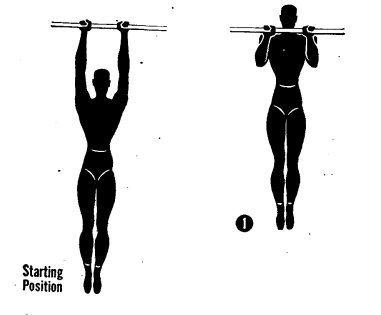 Movement. Pull up until the chin is above the level of the bar. Then lower the body until elbows are completely straight. Continue for as many repetitions as possible.
Instructions. The men should be told that it is permissible to raise the legs and flex the hips when pulling up but not to kick or execute a jerking motion with trunk or legs. The body must be kept from swinging. The chin must be raised above the bar. The arms must be completely straight at the bottom of the movement.
Administration and Scoring. Each time the performer pulls his chin above the bar in correct form, he is given credit for one pullup. He is not credited with a pullup if he fails to raise his chin above the level of the bar or if he stops to rest. If the performer does not straighten his arms at the bottom of a movement, if he kicks or jerks, only half a pullup will be counted. If there are four half-pullups, the performer should be stopped and retested later. If the performer starts to swing, the judge should stop the swinging with his hands. Some such aid as a resin-bag or a cake of magnesium carbonate should be available to prevent the hands from slipping.
TEST 2: SQUAT JUMPS
Starting Position. Squatting on right heel with fingers laced on top of head, palms down. The feet are 4 to 6 inches apart with the heel of the left foot on a line with the toes of the right foot.
Movement. Spring upward until both knees are straight and both feet clear the ground. Jump just enough to permit straightening the knees without touching the ground. Do not jump any higher than necessary to accomplish this purpose. Keep the upper body erect. While off the ground, reverse the position of the feet bringing the right foot in front. Then drop to a squat on the left heel. Keep the knees pointing forward. Spring up again and continue for as many repetitions as possible.
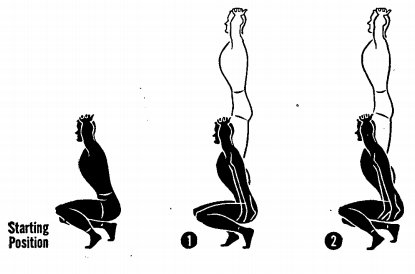 Instructions. The men should be told that the most common errors are: getting the feet too far apart, forward and backward, and failing to squat down on the rear heel. The correct position should be demonstrated clearly, and the men should be given sufficient practice to master it. The action must be continuous throughout. Before beginning the event, the men should be told that it requires courage almost to the same extent as it requires strength and endurance and that they should not give up until they cannot make another movement.
Administration and Scoring. The performer is credited with one squat jump each time he springs up from the squat to the erect position and returns. The movement is not scored if he fails to descend to a complete squat, if he does not straighten his legs completely and reverse his feet while he is in the air, if he removes his hand from his head, or if he discontinues the movement and comes to a stop. If he loses his balance and removes a hand from his head momentarily, or falls but immediately recovers and continues, he shall not be penalized. If the performer gets his feet too far apart but comes to a squat on the rear foot, there is no penalty. Some men cannot squat all the way down on the heel. If they go down as far as possible they should not be penalized.
TEST 3: PUSHUPS
Starting Position. The performer assumes the front leaning rest position with the body straight from head to heels. His palms are directly underneath the shoulders and elbows are straight. Fingers pointed forward. The judge sits on the ground beside the performer, with one palm down on the ground underneath the lowest part of the performer’s chest.
Movement. Lower body until chest touches the ground (in informal practice), or touches the hand of the judge (in formal testing). Elbows must point directly to the rear. Return to the original position by straightening elbows. Keep the entire body in a straight line throughout. Repeat as many times as possible.
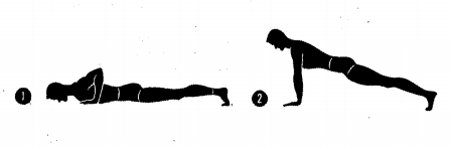 Instructions. The performer is told: that the arms must be straight at the start and completion of the movement; that the chest must touch the judge’s hand; and that the stomach, thighs, or legs must not touch the floor. Hands and feet must not move from their positions. He is also told that the whole body must be kept straight as he pushes the shoulders upward; that is, the shoulders should not be raised first, and then the hips or vice versa. The judge uses his free hand to guide the man in case he is raising his hips too much or raising his shoulders first. In the first instance, he taps the man on the top of the hips to straighten them out; in the second case he taps underneath the abdomen to make him raise his abdomen with the same speed as his shoulders.
Administration and Scoring. The performer is credited with one pushup each time his arms are completely straightened and the exercise is performed in acceptable form. There is no penalty for the hips being slightly out of line if the whole body is moving upward at about the same speed. The men may proceed but may not stop to rest. If a man violates any of the instructions given above, he is credited with a half-pushup. If and when the performer is no longer able to hold a correct front leaning rest, the test is terminated.
NEVER MISS AN UPDATE
Subscribe to the AoM Newsletter
TEST 4: SITUPS
Starting Position. Performer lies on his back with knees straight, feet approximately 18 inches apart and fingers laced behind head and elbows on the ground. The scorer kneels on the ground at the performer’s feet and presses the performer’s ankles firmly down against the ground.
Movement. Raise upper body rotating it somewhat to the left, and then forward far enough to touch the right elbow to the left knee. The knees may bend slightly when sitting up. Lower the body until the back and elbows again touches the ground. Again sit up, but this time rotate the trunk to the right and touch left elbow to the right knee. Again lower the body until the back touches the ground. Perform as many situps as possible in two minutes. Rest pauses are permitted during the test but count toward the 2-minute period.
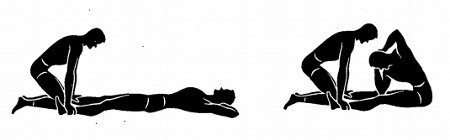 Instructions. The performer should be warned that he must keep his knees straight until he starts to sit up; that he must touch his knee with the opposite elbow; and that he may not push up from the ground with his elbow.
Administration and Scoring. Performer is given credit for each situp completed within the 2-minute period. No score is given if he unclasps his hand from his head, if he pushes up from his elbow, or if he keeps his knees bent while lying back on the ground. He is not penalized if the elbow misses the knee slightly. He must, however, sit up far enough so that the elbow almost touches the knee. Time should be announced every 20 seconds. At the end of 2 minutes, the timer calls: STOP and the judge counts the full number of situps completed before the stop command.
TEST 5: 300-YARD RUN
A course 60 yards long is laid out on flat level ground with lanes 4 feet wide for for each runner. Both ends of the course have cross-marks at right angles to the lanes. The cross-mark at one end serves as a starting line; the one at the other end, as a finish line. In the middle of the cross mark at either end of each lane is a stake which is at least 1½ feet high. If possible the lanes should be marked out in lime. If there are no lanes, it is recommended that the stakes be numbered or painted different colors. Each performer must run around his stake without grasping it.
Starting Position. Standing behind the starting mark in the lane with rear foot braced by another man’s foot placed crossways behind it.
Movement. At the starting signal, run to the stake at the farther end of the lane. Run around the stake at the finish line. Then return and run around the stake at the starting line. Continue until five lengths of the course, or 300 yards have been run. Make each turn from right to left. The run will finish at the opposite end of the course from which it started.
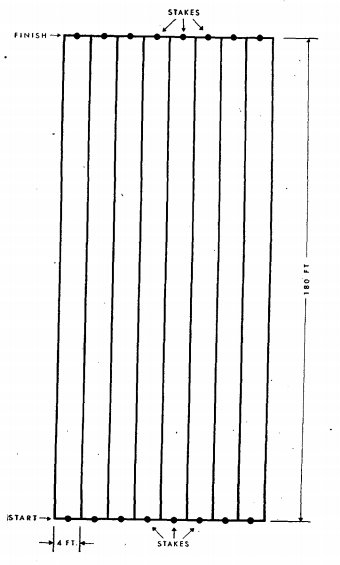 Instructions. The men should be told to run about 9/10ths full speed, to run straight down the lane, to turn around the far stake from right to left without touching it, and to return running around the stakes one after another until they have traveled five full lengths. The men should also be instructed to walk around slowly for 3 or 4 minutes after completing the run. Recovery will be much more rapid if they walk than if they lie down.
Administration and Scoring. Each runner has one inspector, or judge, who stands at the finish line. The judge watches his runner to see that he makes the turns properly and observes all the rules. This inspector also holds the man’s card and records his performance. A timekeeper stands on one of the lines in the middle of the course, 20 feet away from the finish line. The men are started by the starter with ordinary signals of: “Get on your mark; get set; go.” Since the timer starts his watch by the “go”, the starter should also use a hand signal.
When the first runner is about 30 yards away from the finish line, the timer begins to count the seconds aloud using “hup” for the half-seconds. For example, he counts “44, hup, 45, hup, 46, hup, 47, hup, 48, hup …… etc.” The judge for each man listens to the count and at the same time watches his runner. He then records the last full second or half-second, which was counted before the man reached the finish line. After the inspector records the time on the man’s scorecard he returns the card to him.
TEST 5A: INDOOR SHUTTLE RUN
A course 25 yards long is laid out on the gymnasium floor with a lane 4 feet wide for each runner. The lanes should be marked on the floor with water-solvent coloring, chalk, paint or adhesive tape. Turning boards are placed at both ends of the course. Each turning board is placed at a 45º angle, facing inside the lane and toward the runner. The turning boards must be firmly braced and made of heavy material. They should be from 12 to 16 inches in width. The lower edges of the turning boards are flush with the end of the lines of the running area. The number of each lane will be painted on the face of its board.
Starting Position. Ready for a sprint start, with one foot braced against a turning board and the other foot and the hands extended into the lane.
Movement. On the starting signal, run to the turning board at the other end of the lane. Touch board with foot or feet. Turn and continue running until completing ten shuttle trips or laps (for a total of 250 yards). Touch the turning board at the end of each lap, except the final one. At the end of the final lap, the runner will continue across the turning board. Any footwork may be used in making the turn provided the foot or feet touch the turning board each time.
Instructions. Each runner must stay in his own lane. Any method may be used in making the turn, although it is recommended that the forward foot touch the block on the turn. In the event a runner falls or is hindered by another participant entering his lane during the progress of the run, he may be permitted to repeat the run later in the same period.
Administration and Scoring. This event is administered and scored as the 300-yard run. The time of the run is taken as the runner’s body passes beyond the turning board on the final lap.
TEST 5A(l): 60 SECOND SQUAT THRUST
When it is not possible to employ the indoor shuttle run as a substitute for the 300-yard run the 60-second squat thrust should be used.
Starting Position. Attention.
Movement. Bend at knees and hips and, squatting down, place hands on ground shoulder width apart. Keep the elbows inside the knees. Thrust feet and legs backward to a front leaning rest position. Keep body straight from head to heels. Support weight on hands and toes. Recover to the squatting position. Then recover to starting position.
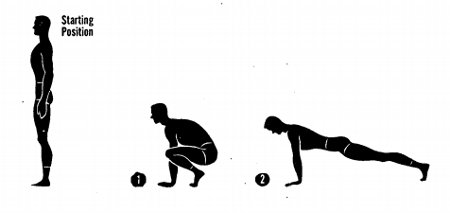 Instructions. The men should be told that in executing this movement for speed the shoulders should be well ahead of the hands when the legs are thrust backwards. Extending the legs too far backward, so that the shoulders are behind the hands, makes it difficult to return to the original position with speed. On the preliminary practice, the performer is told he will score better if he does not make a full knee-bend, but bends his knees only to about a right angle; and that he should keep his arms straight. It is not a failure if he bends his arms but the performer will not be able to score as well.
Administration and Scoring. A score is given for the successful performance of each complete squat thrust. No score is given if: the feet start backward before the hands are placed on the ground; the hips are raised above the shoulder-heel line when the feet are back; or the performer does not fully recover to the erect position on the fourth count. The judge should not count aloud as this is apt to confuse other nearby judges. If the man is performing the event incorrectly, the judge should coach him, or stop him and have him repeat the test after more coaching.
How Did You Do? Check the Score Sheet.
___________________________________
Sources:
Future of the APFT
TSAC Report
FM 21-20
ihpra.org
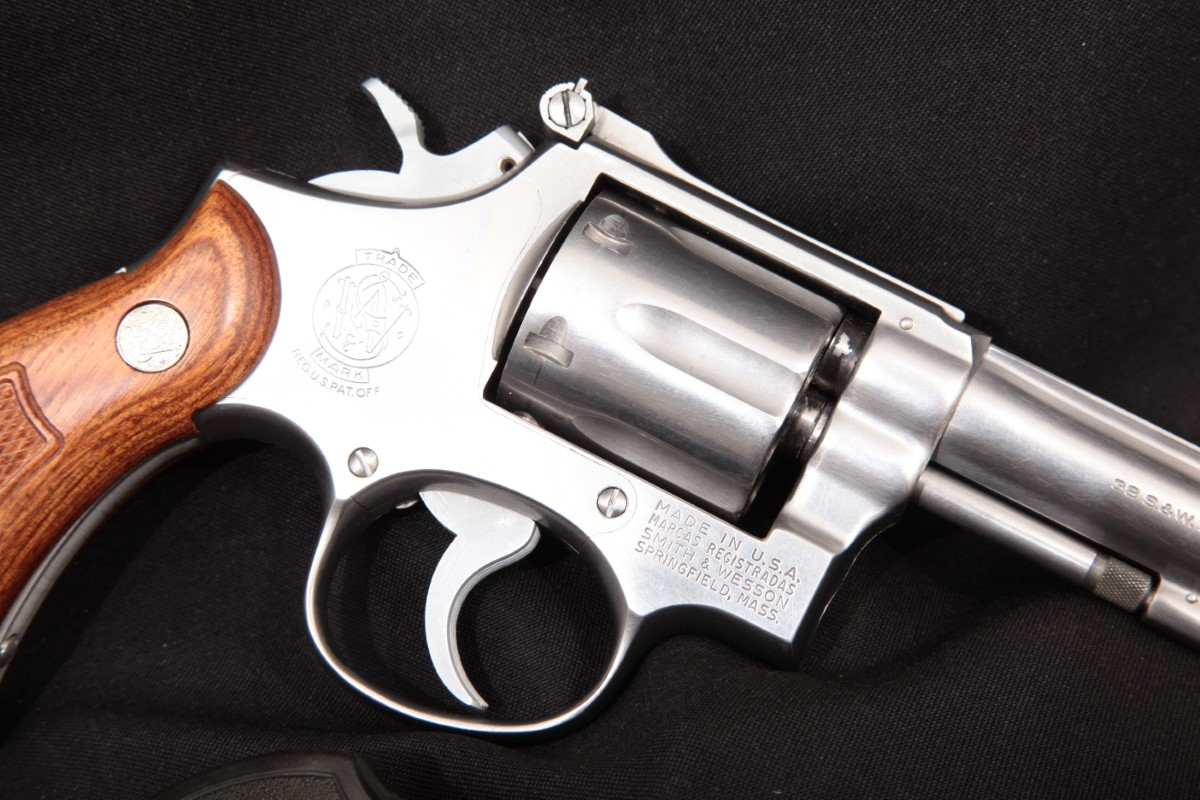
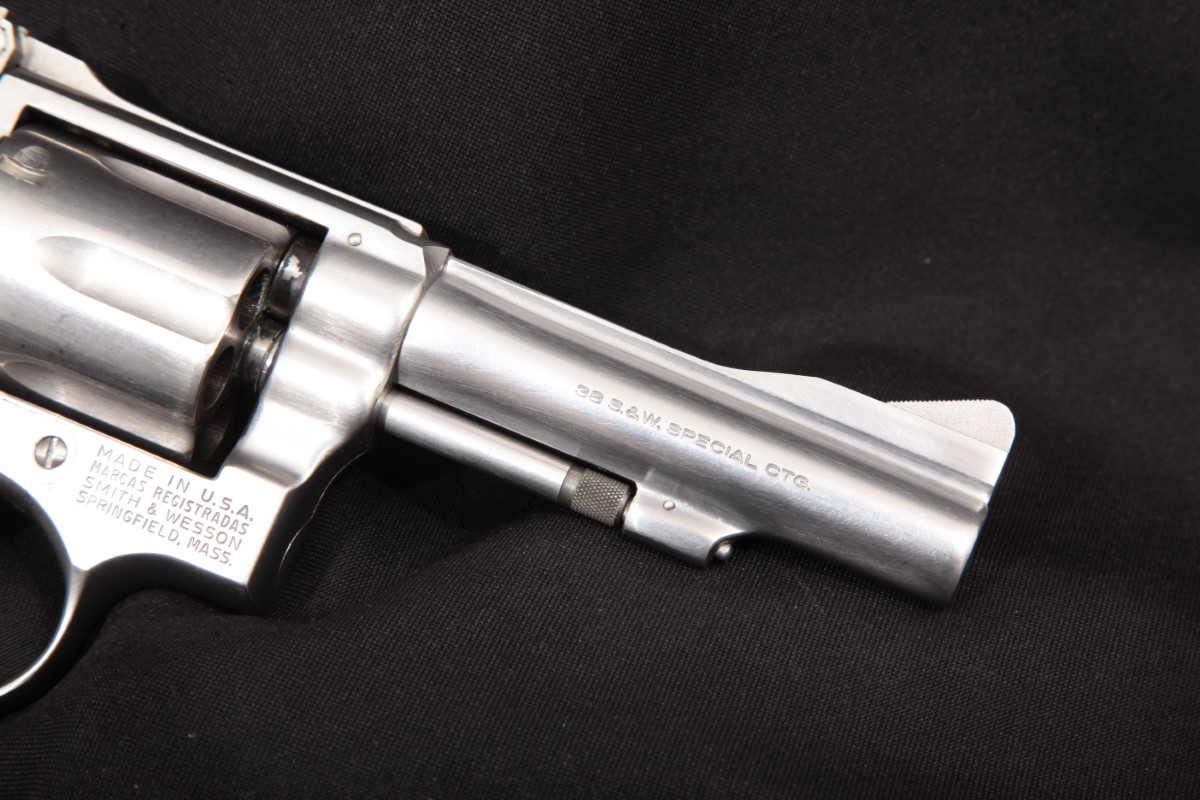
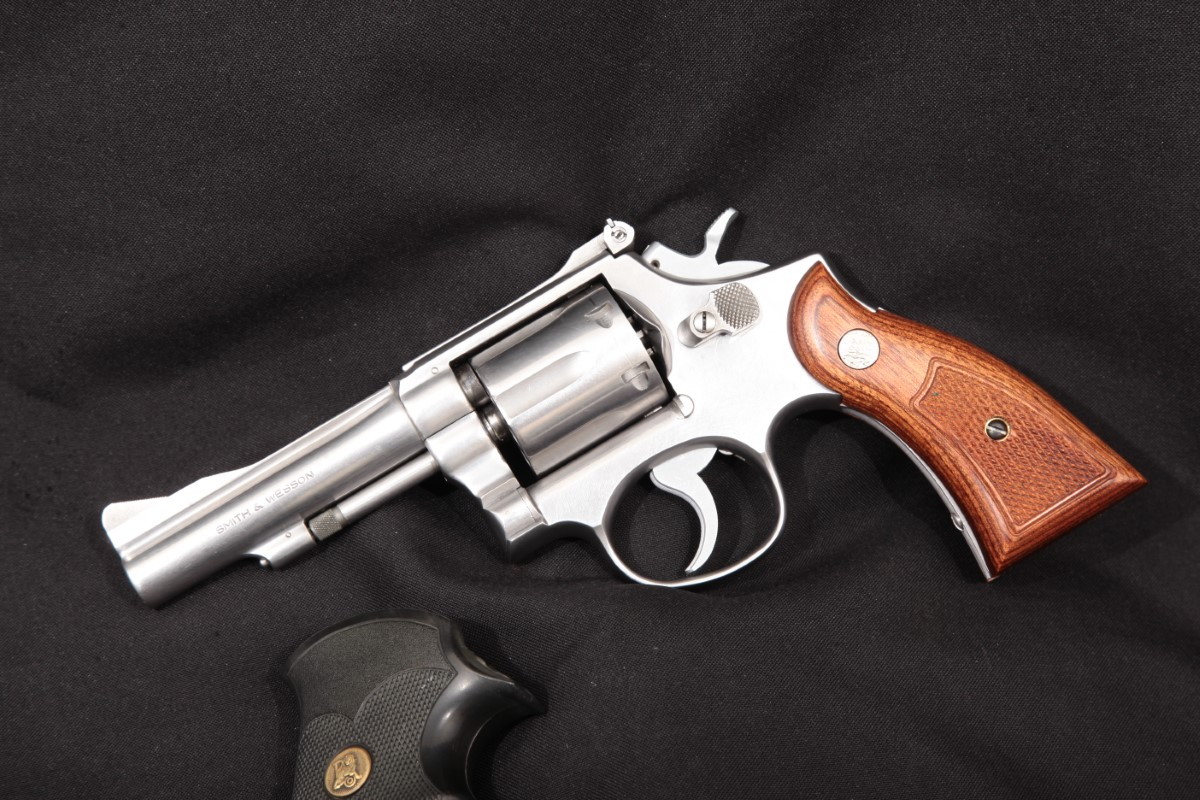
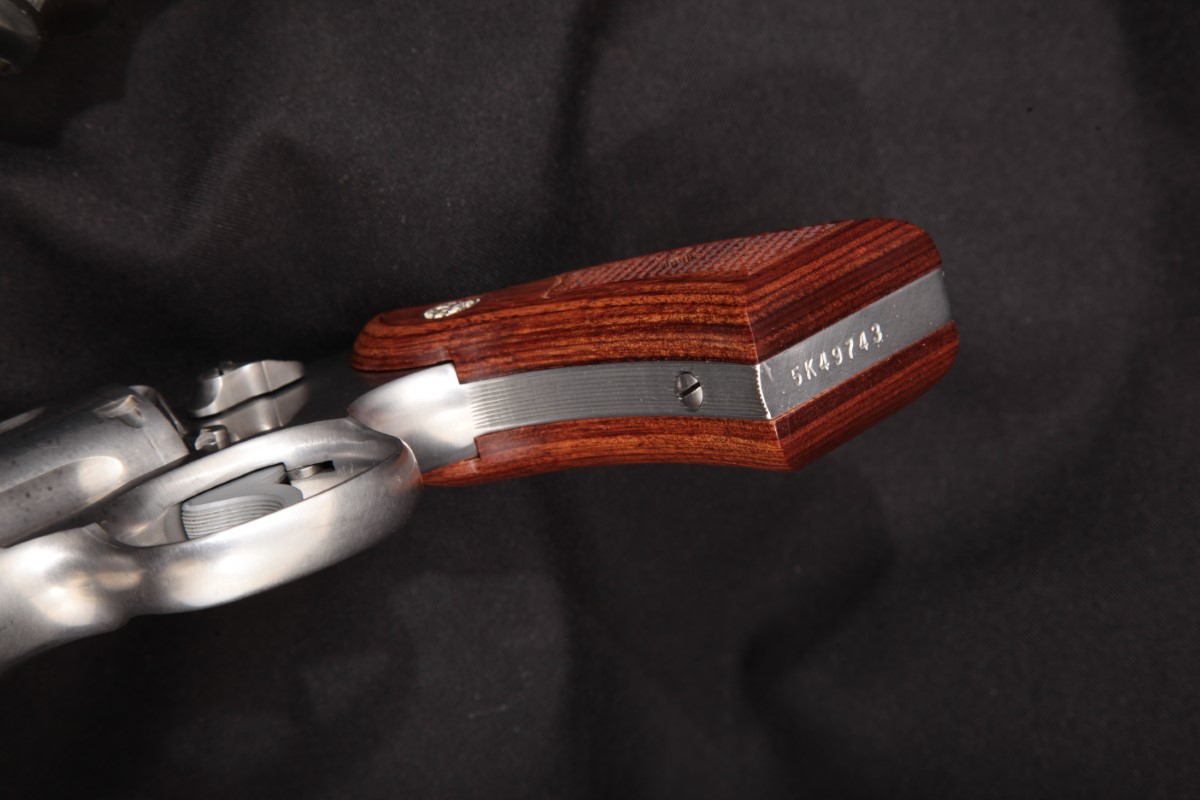
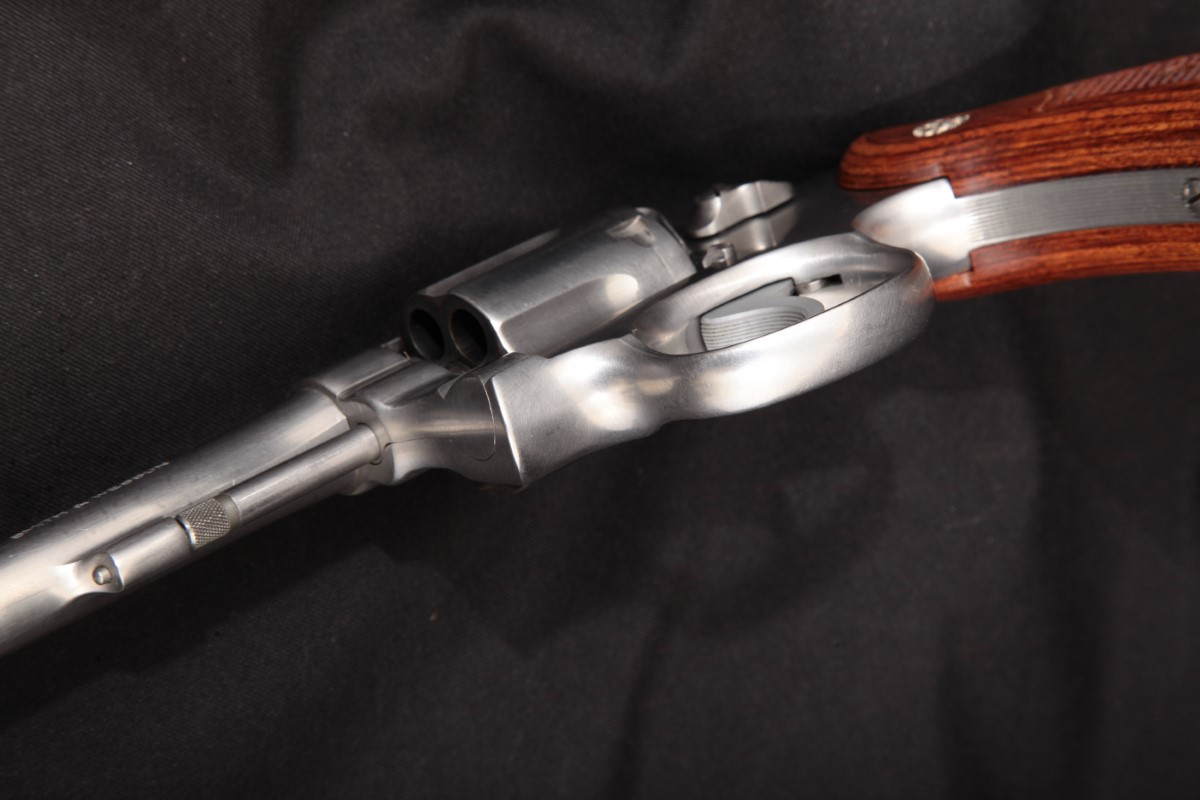
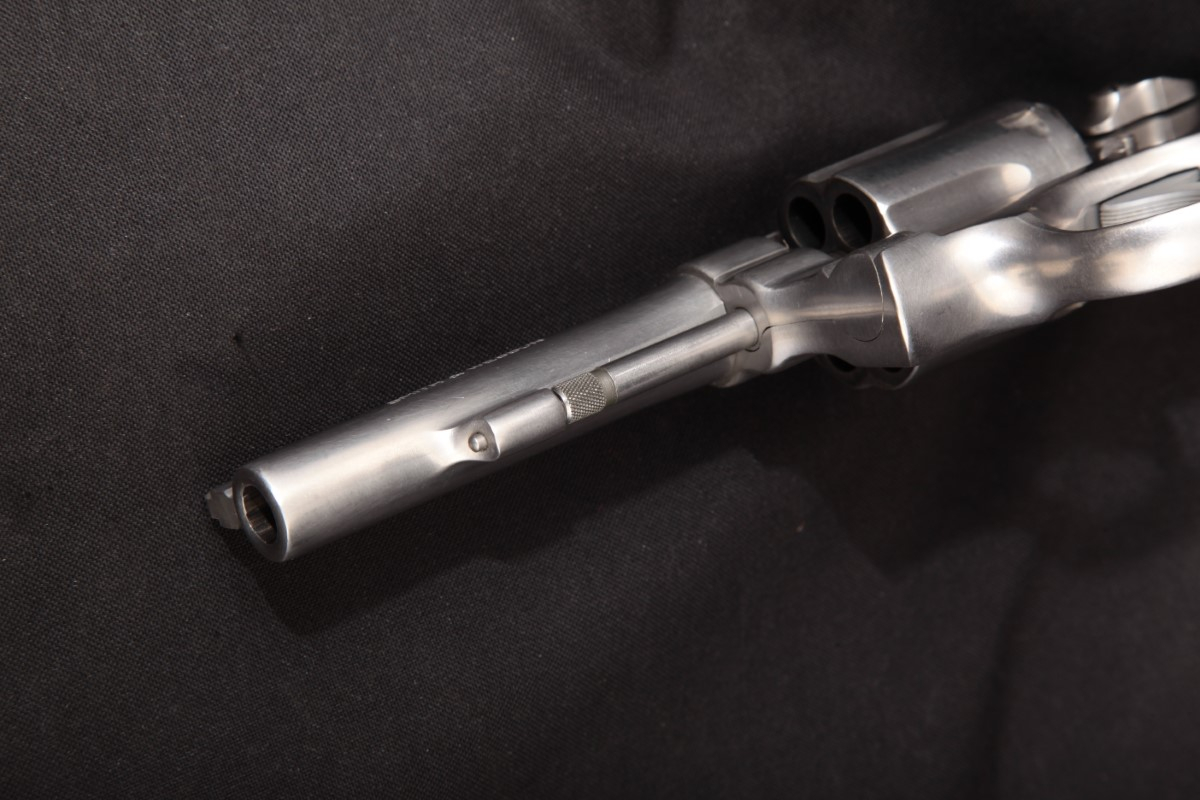
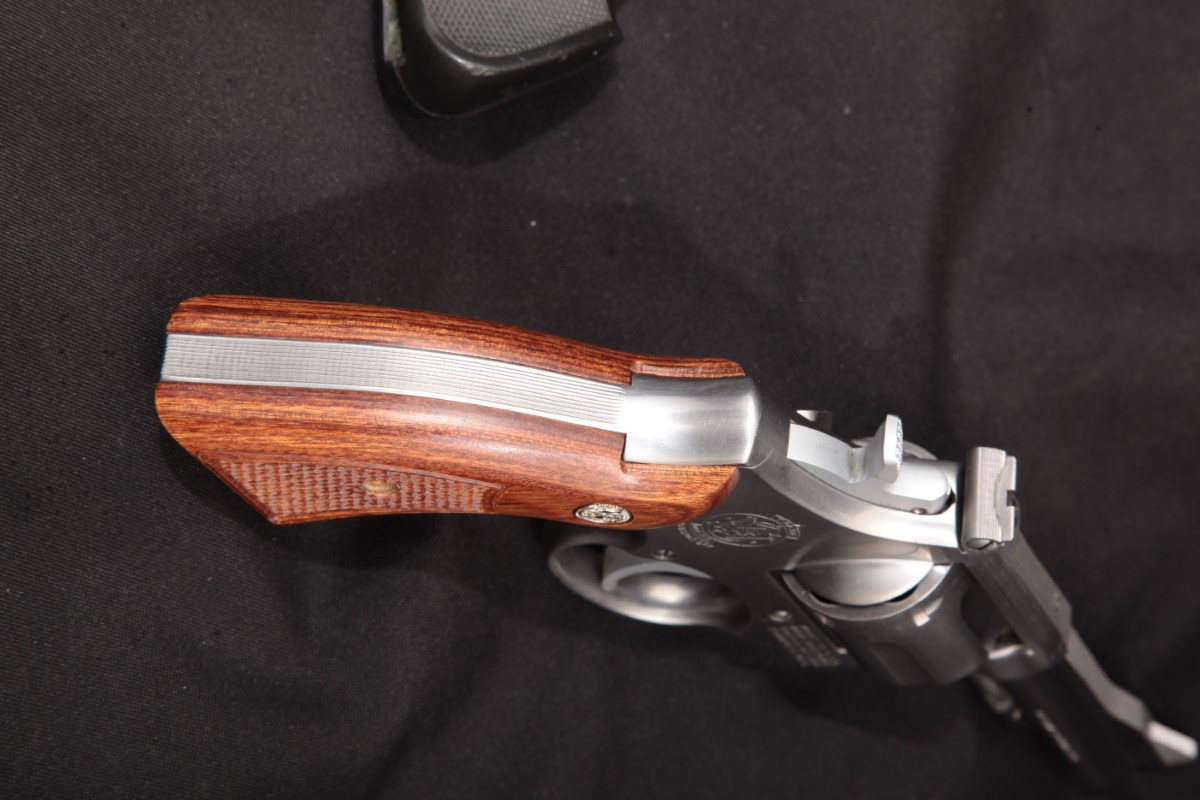
If one was to want a good sidearm to carry. That does not weight a couple hundred pounds at the end of the day. But can still put some steel on target. Then you might want to ponder upon getting one of this fine revolver! Grumpy
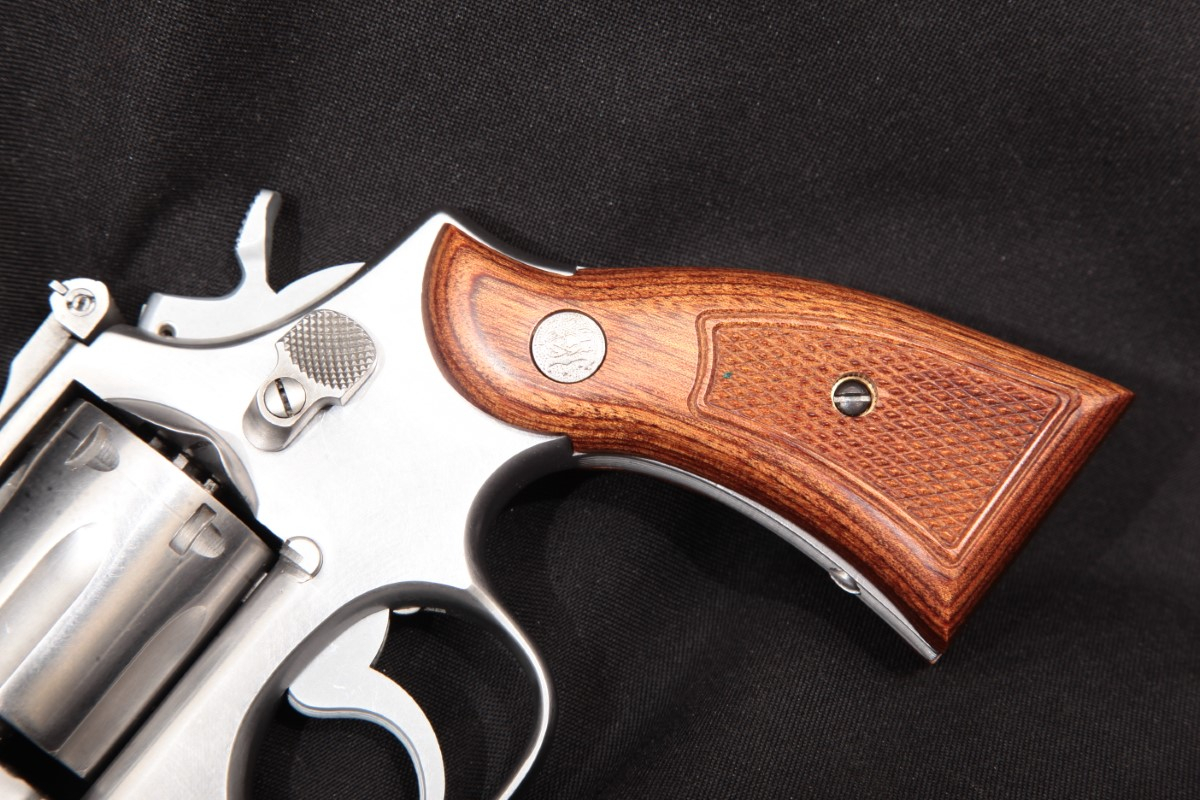
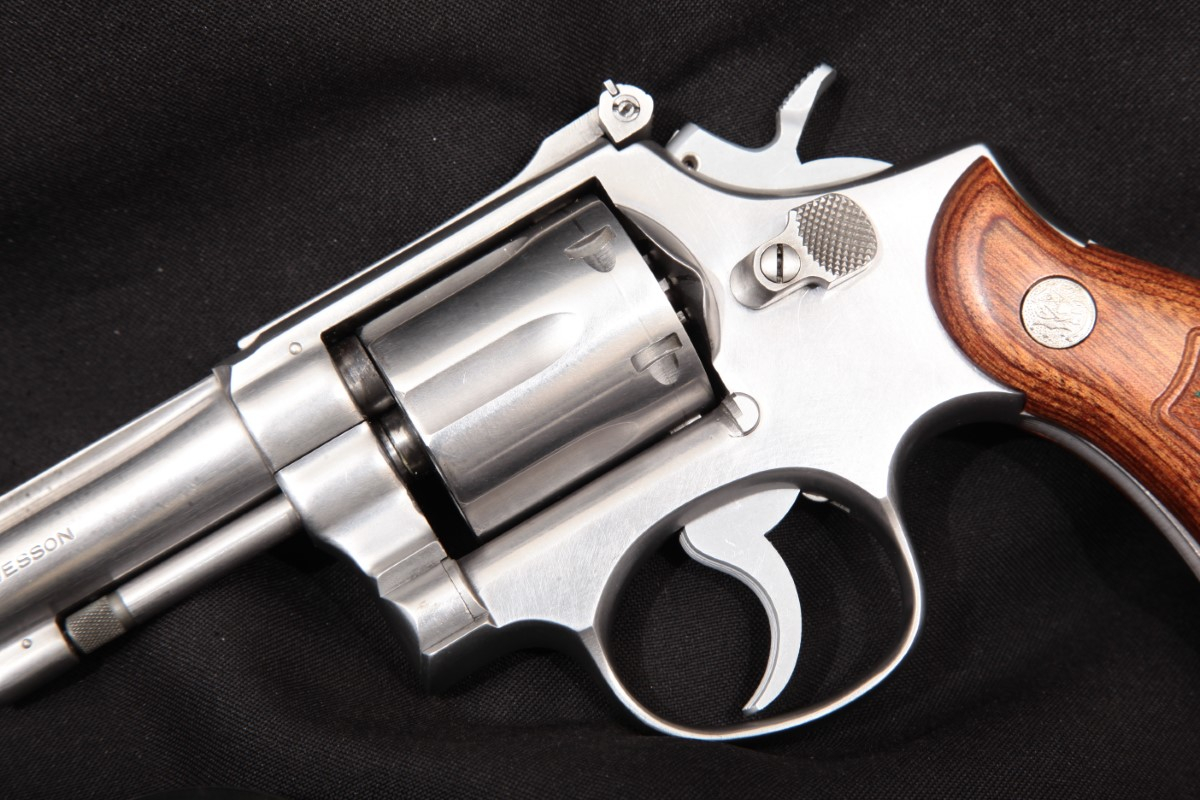
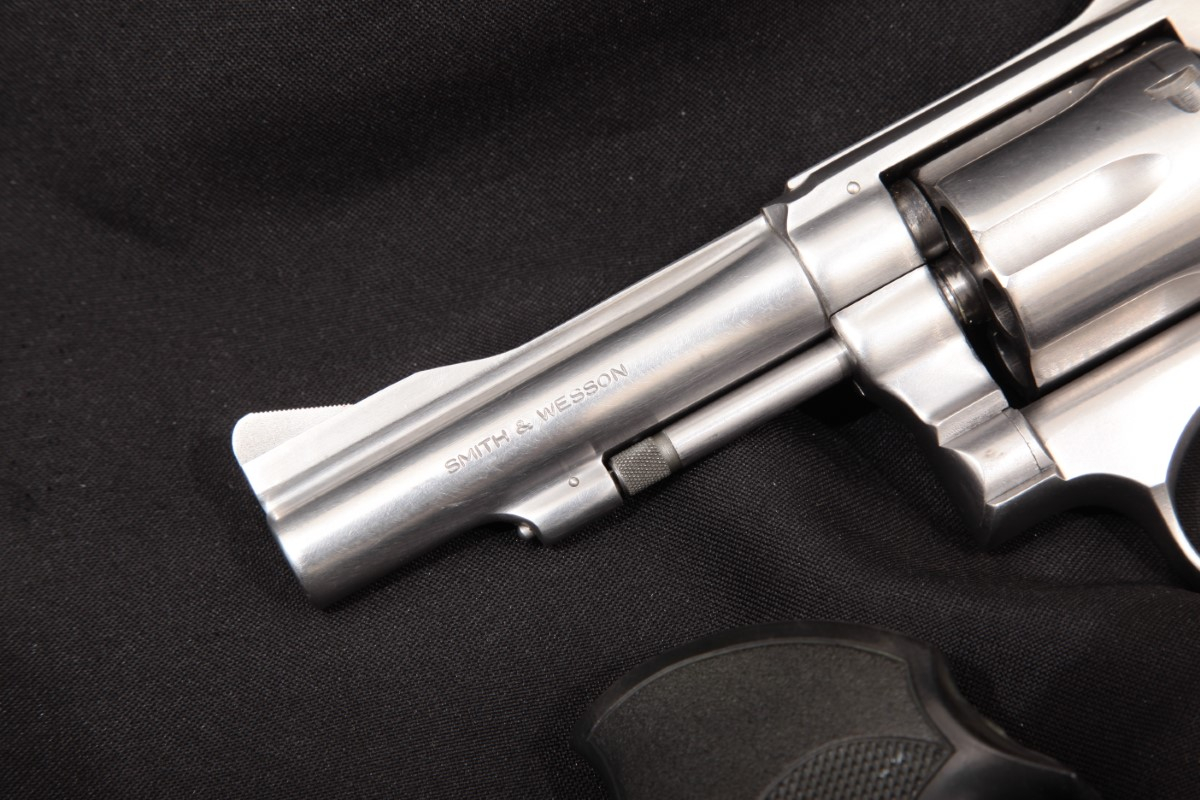
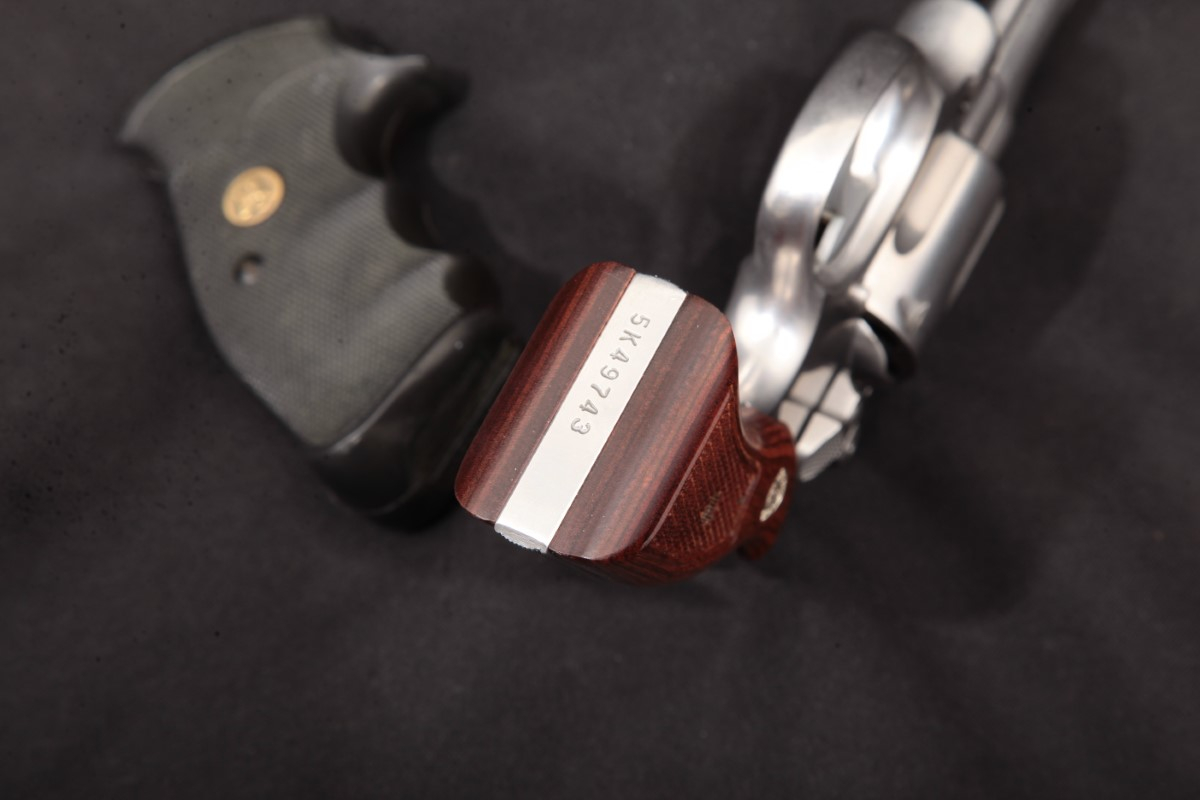
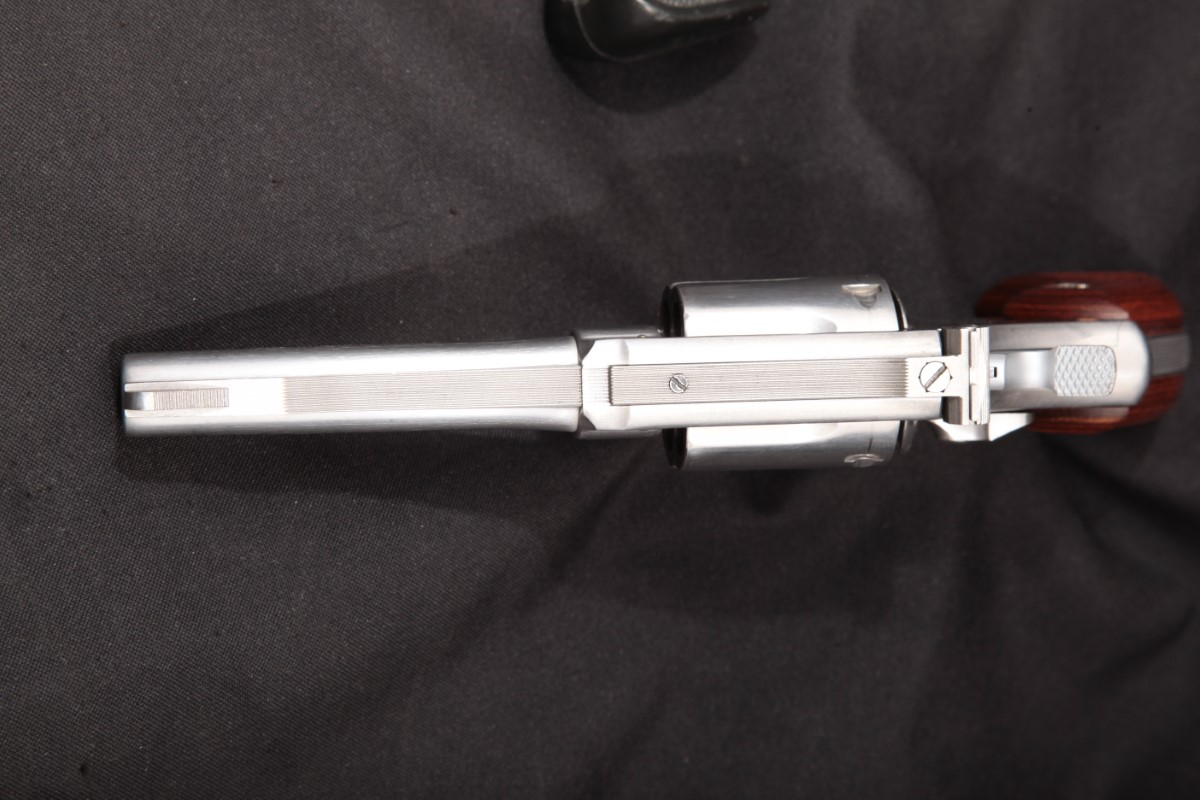
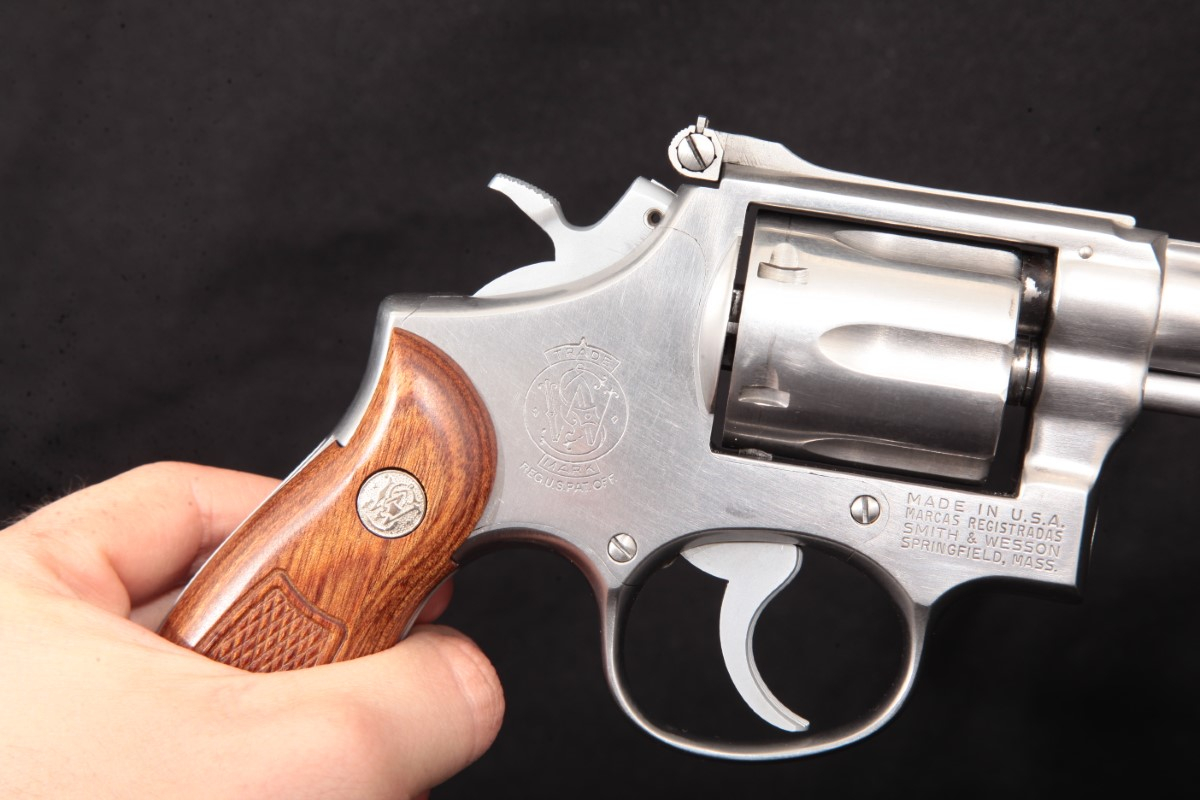
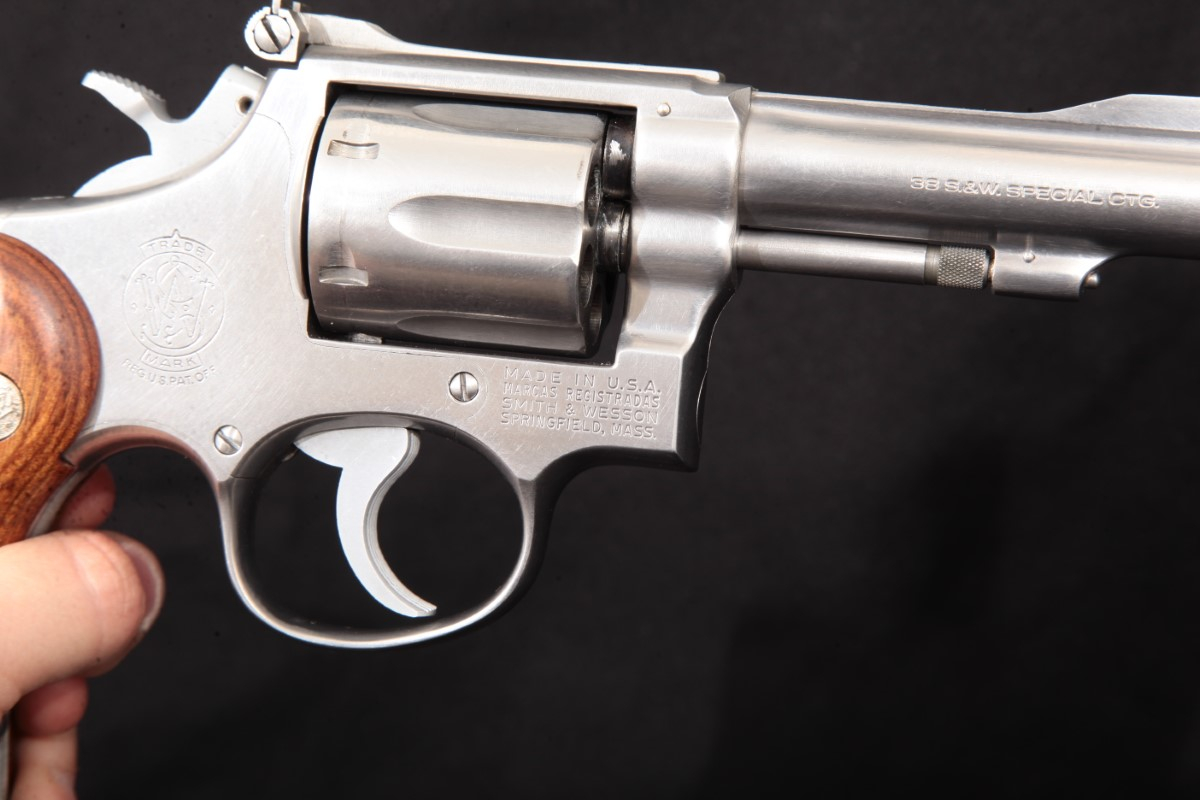
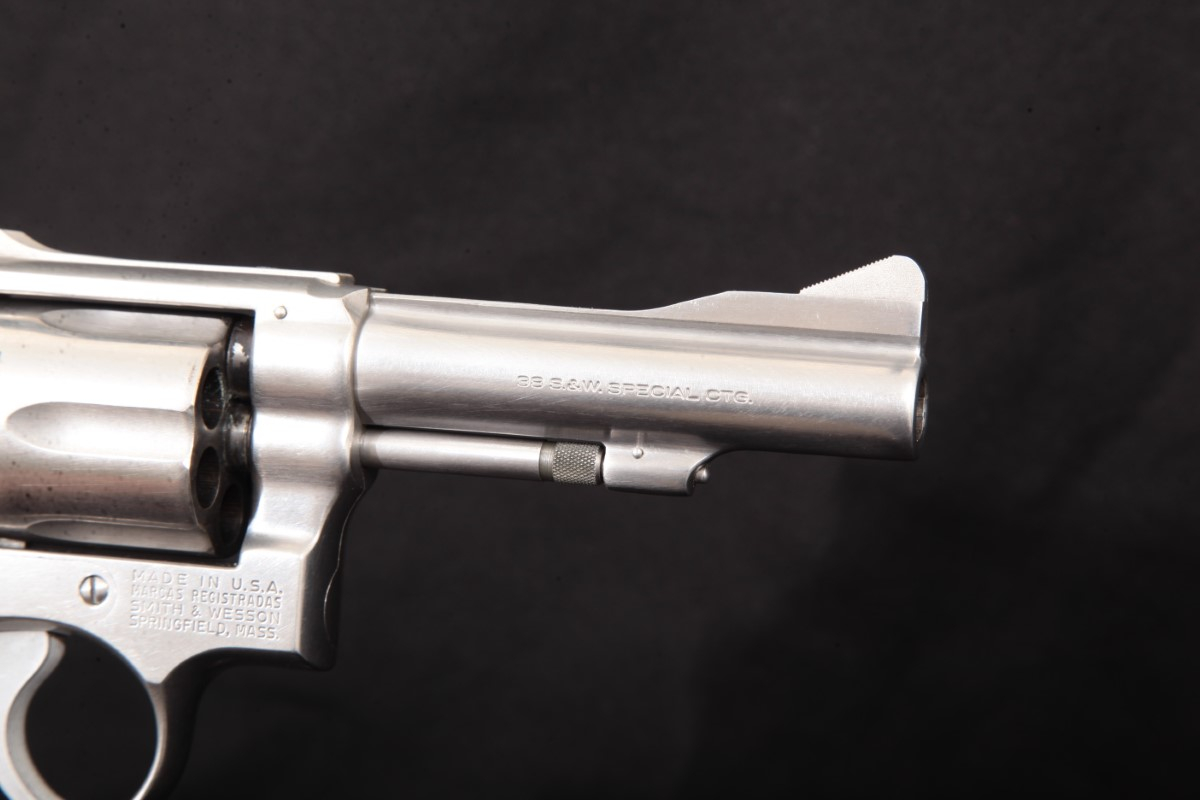
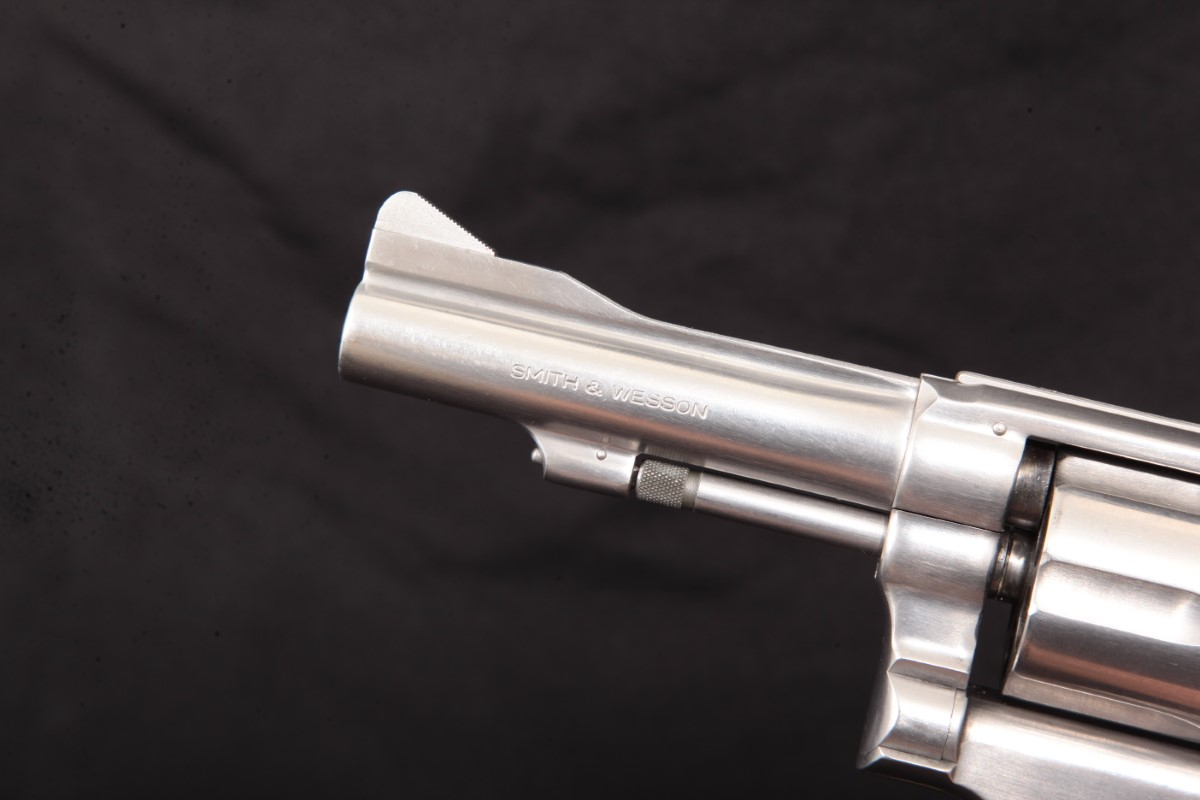
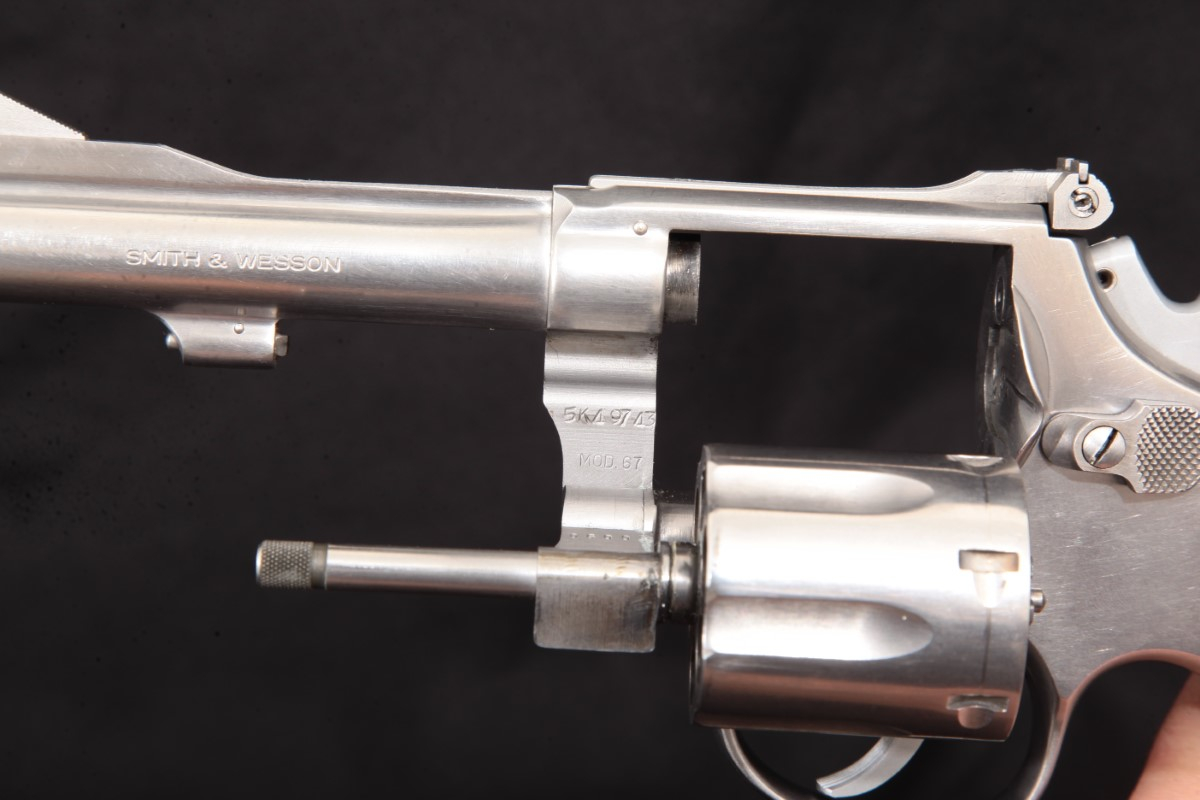
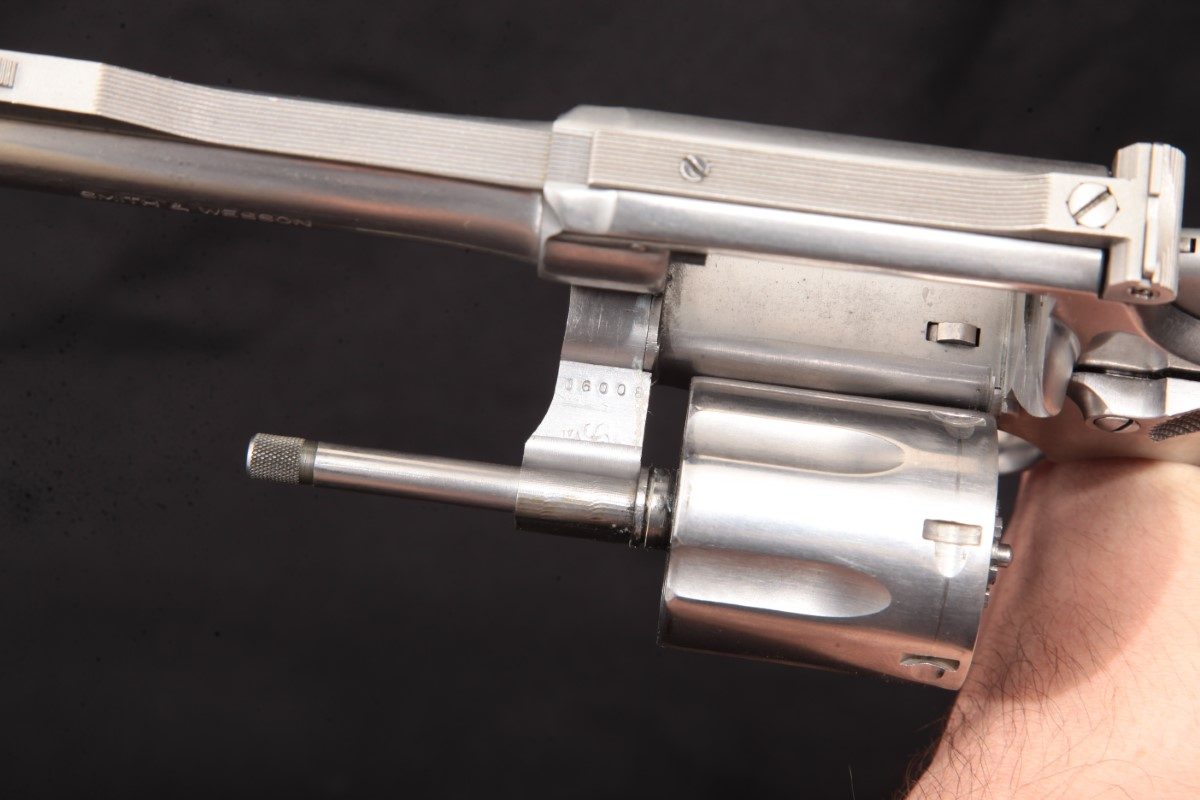
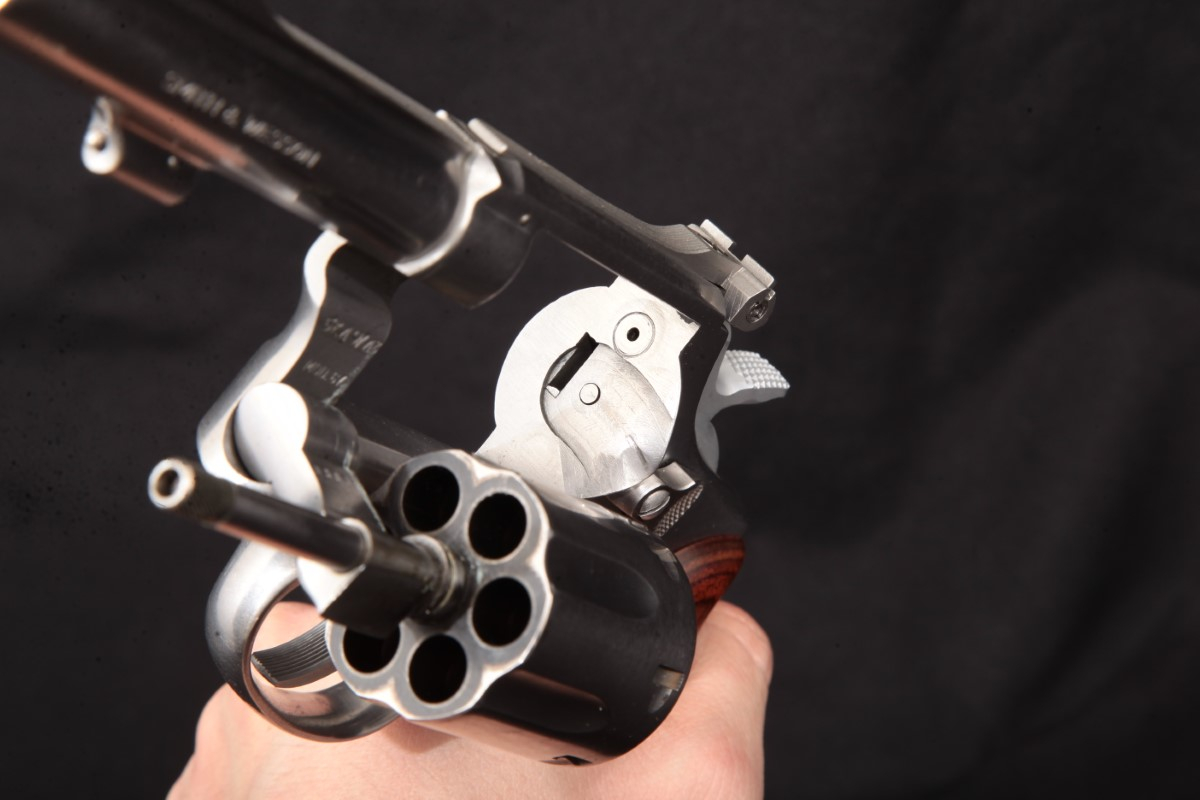
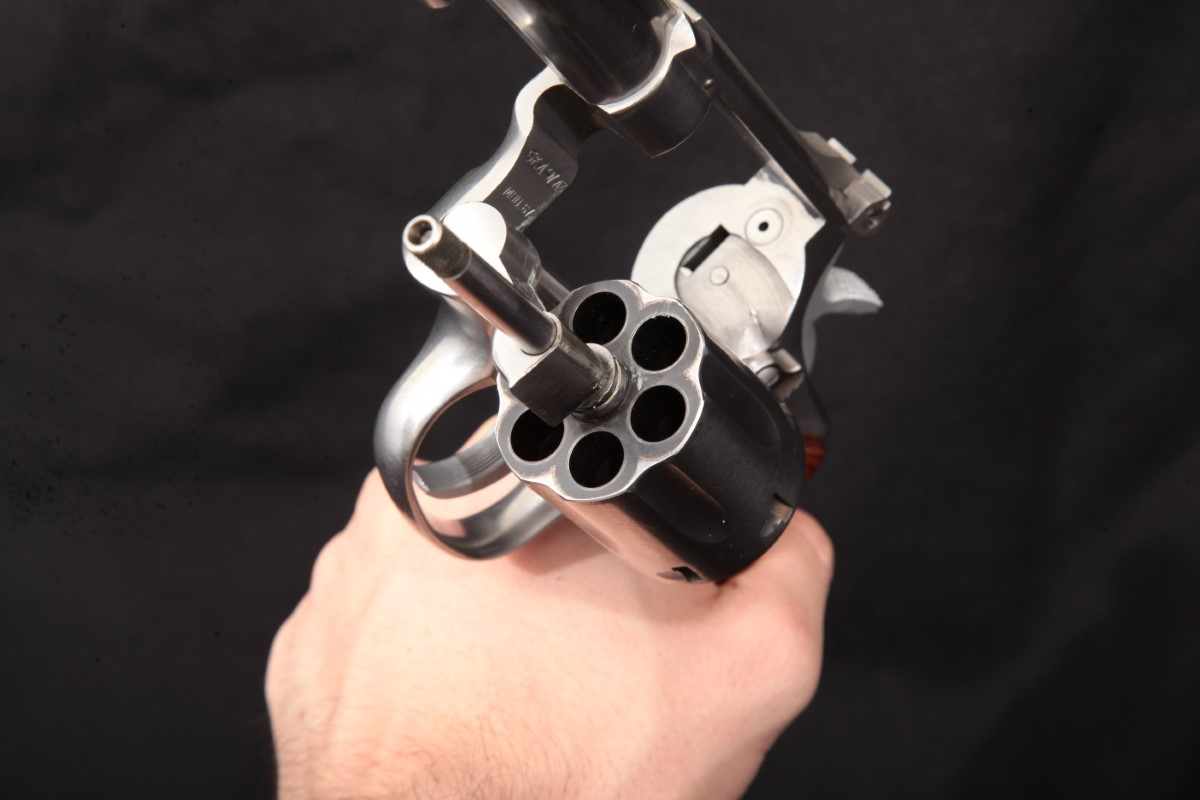
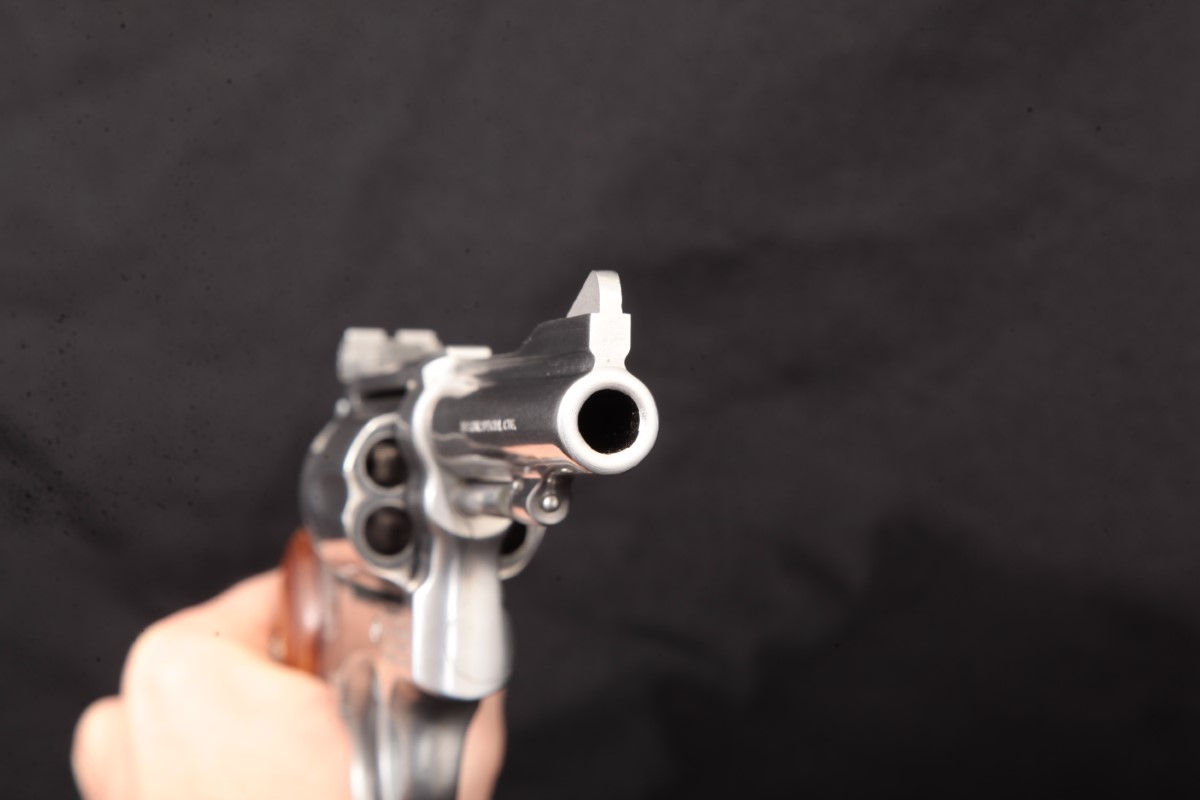
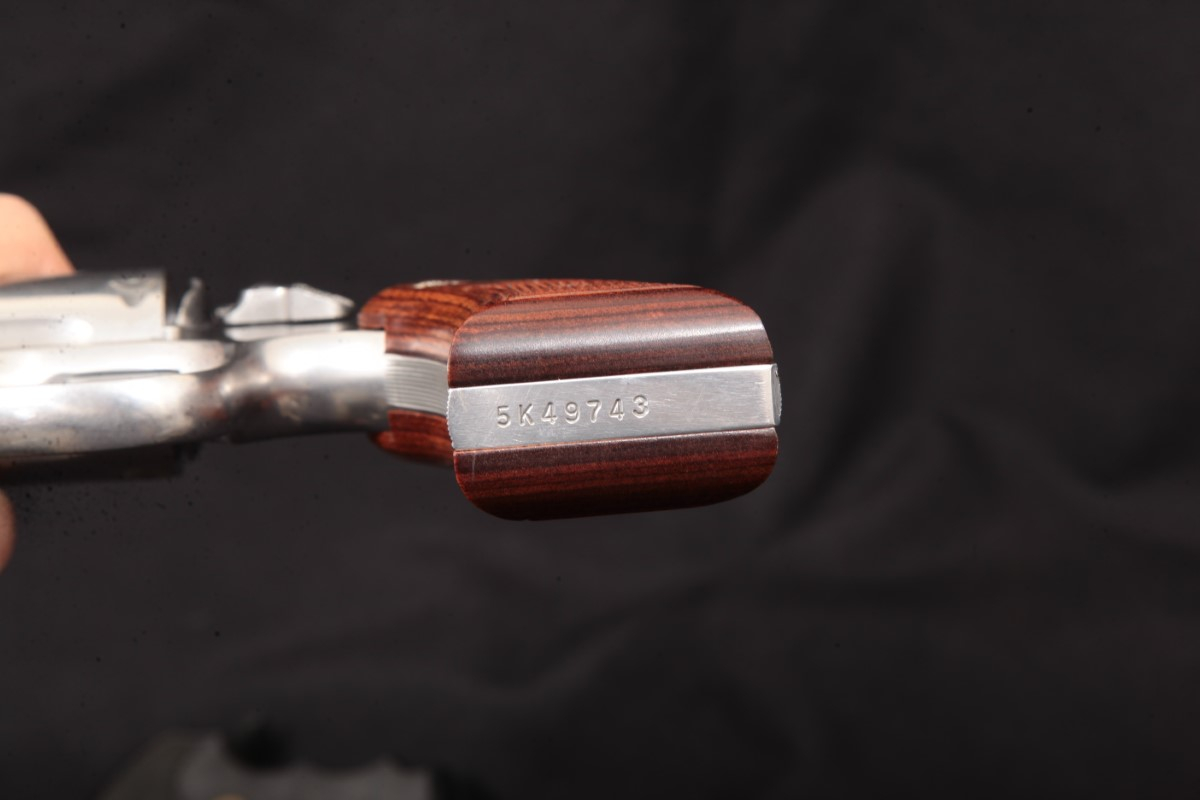
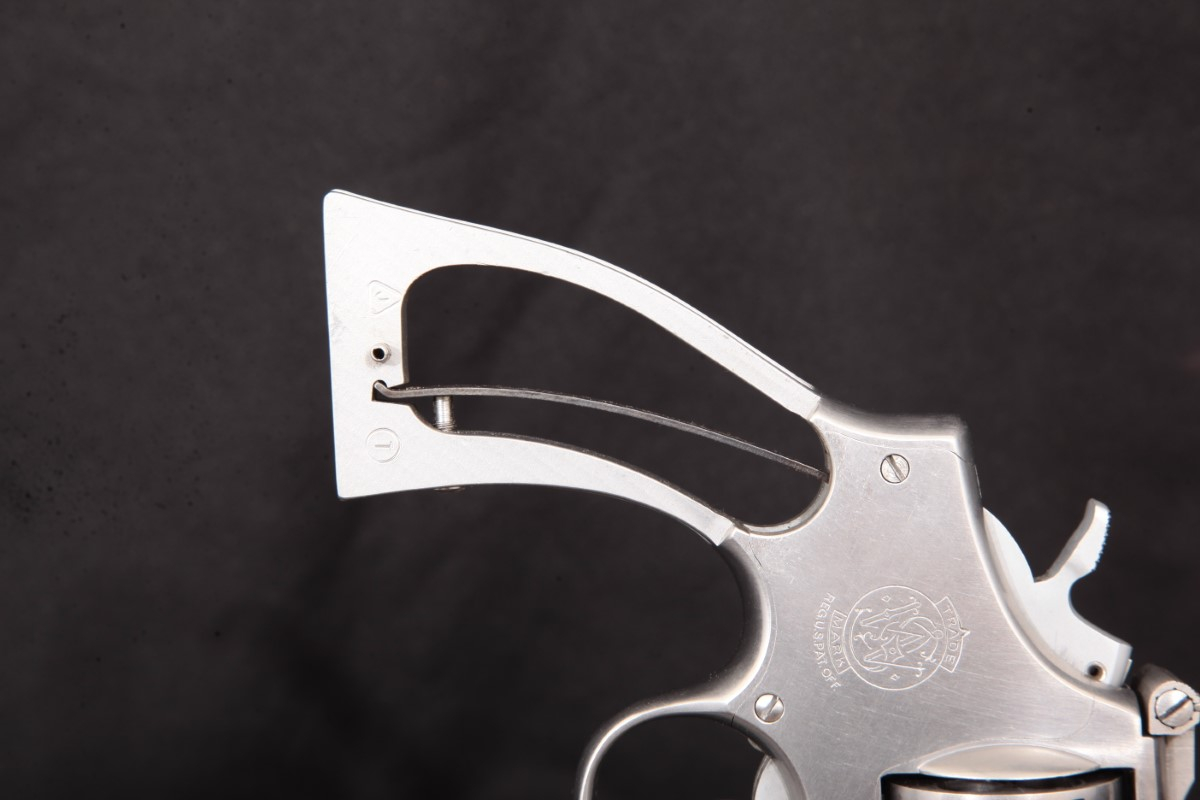
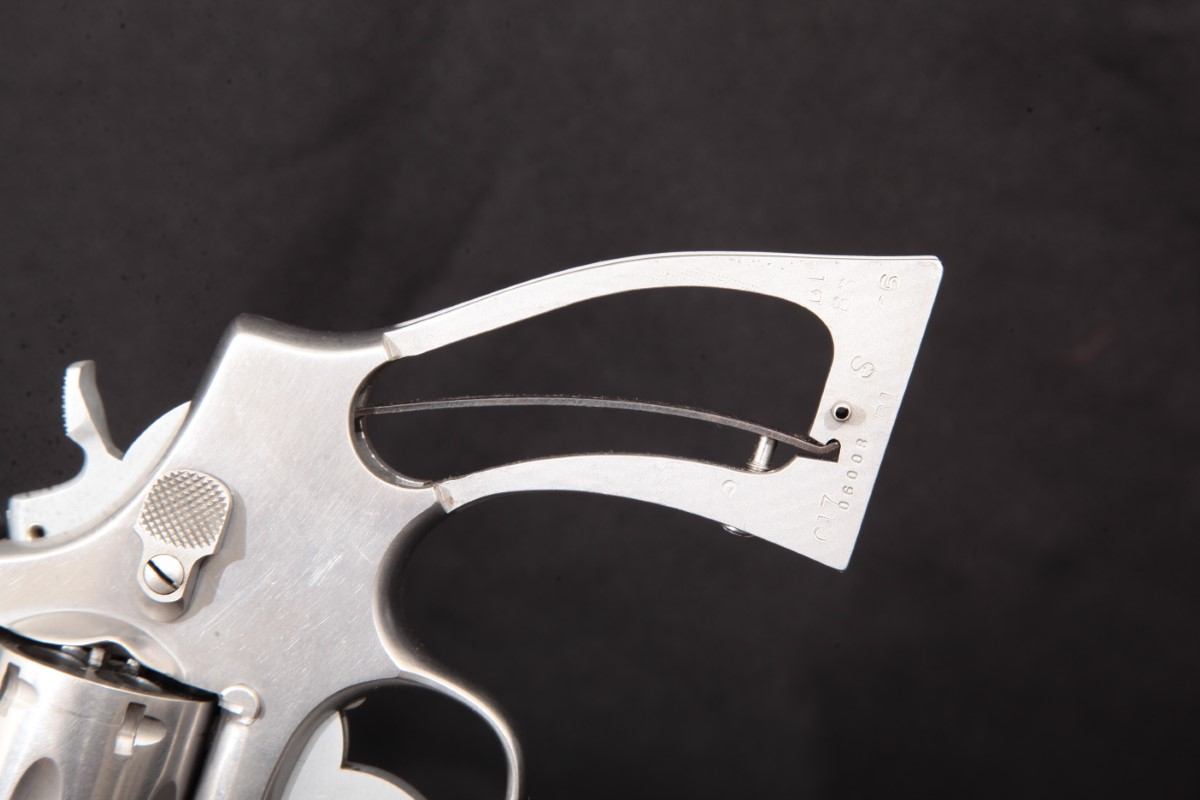
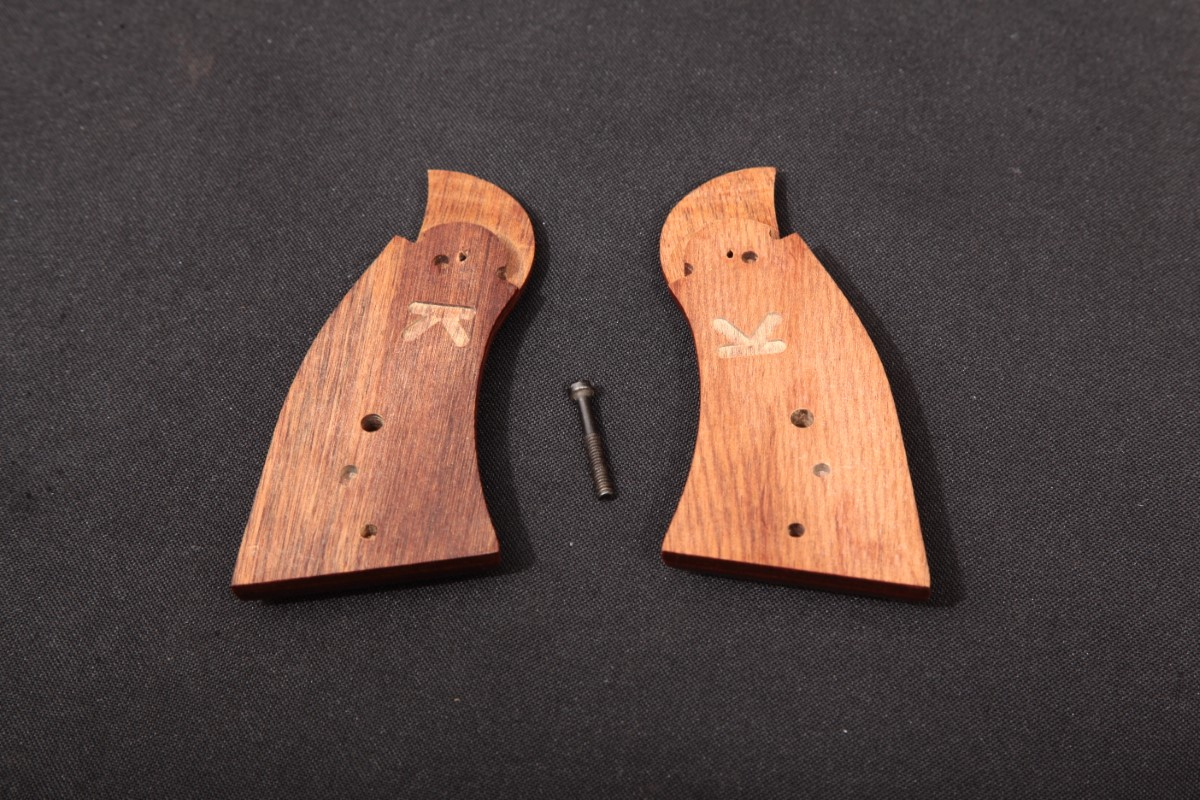
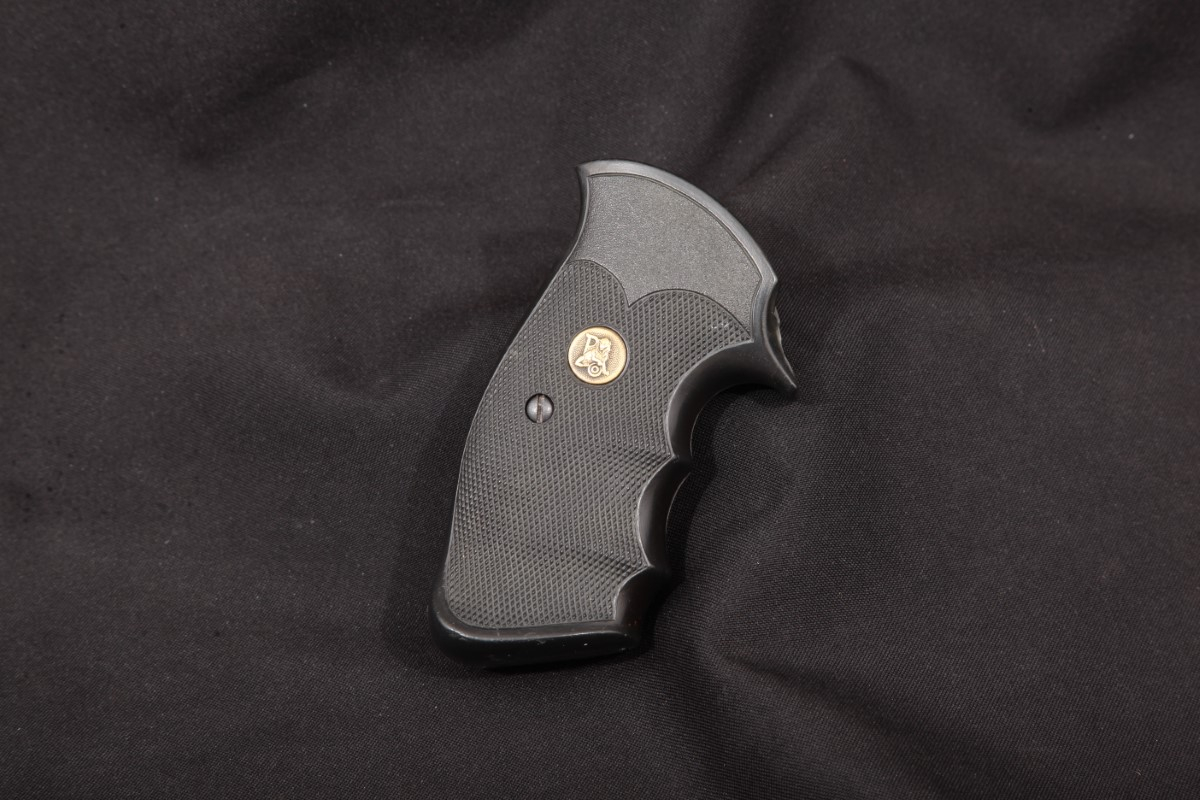
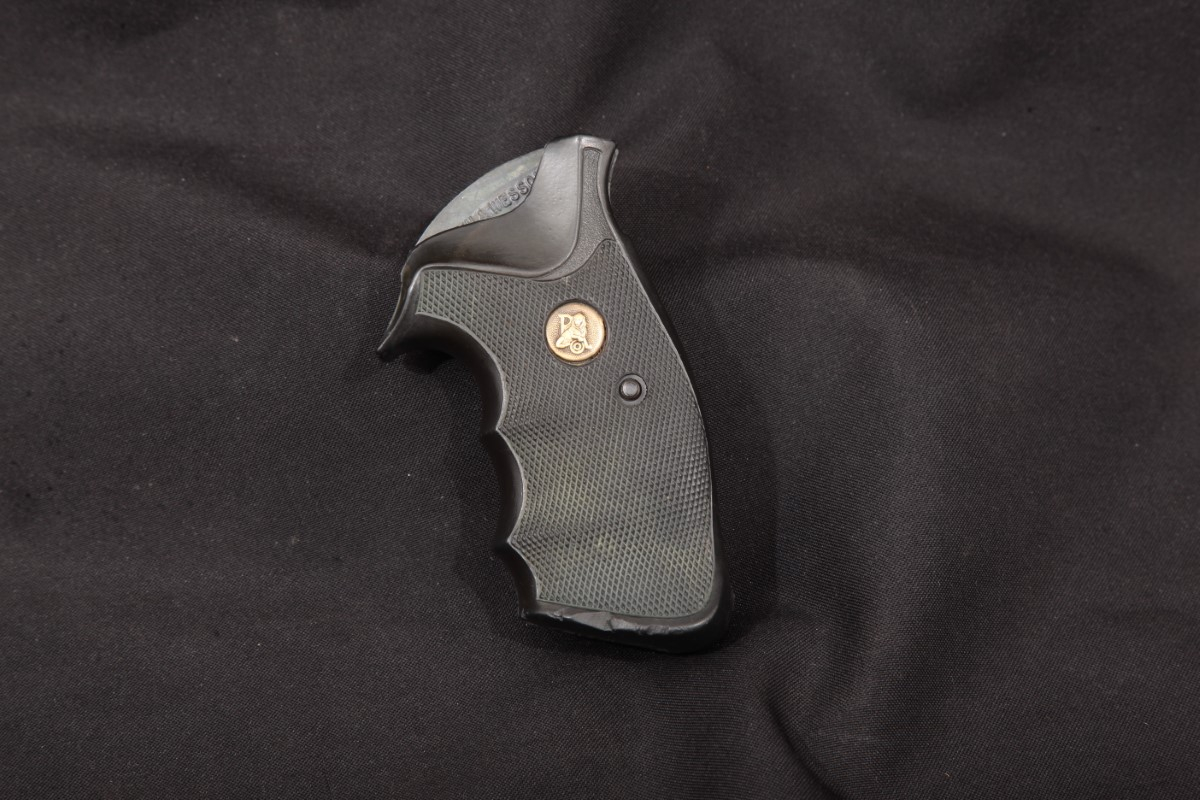
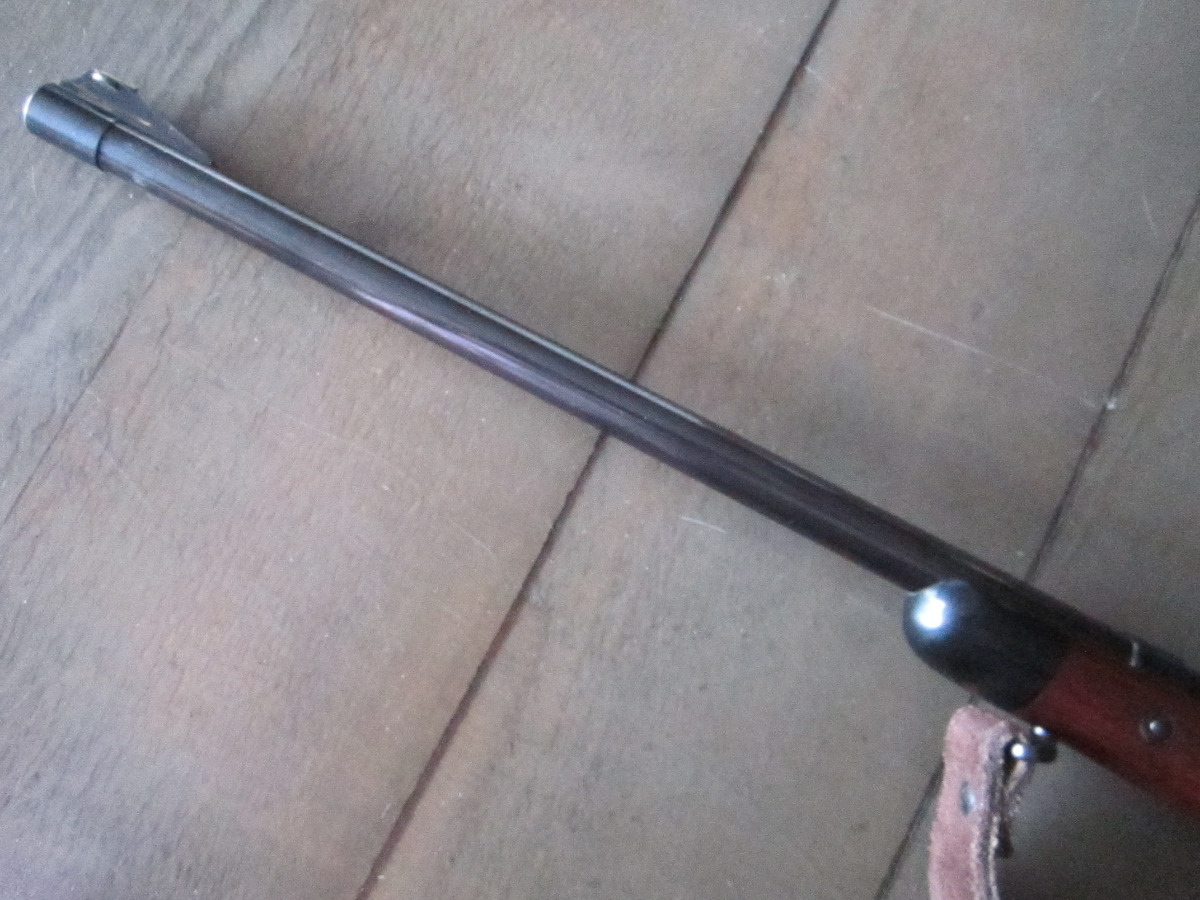
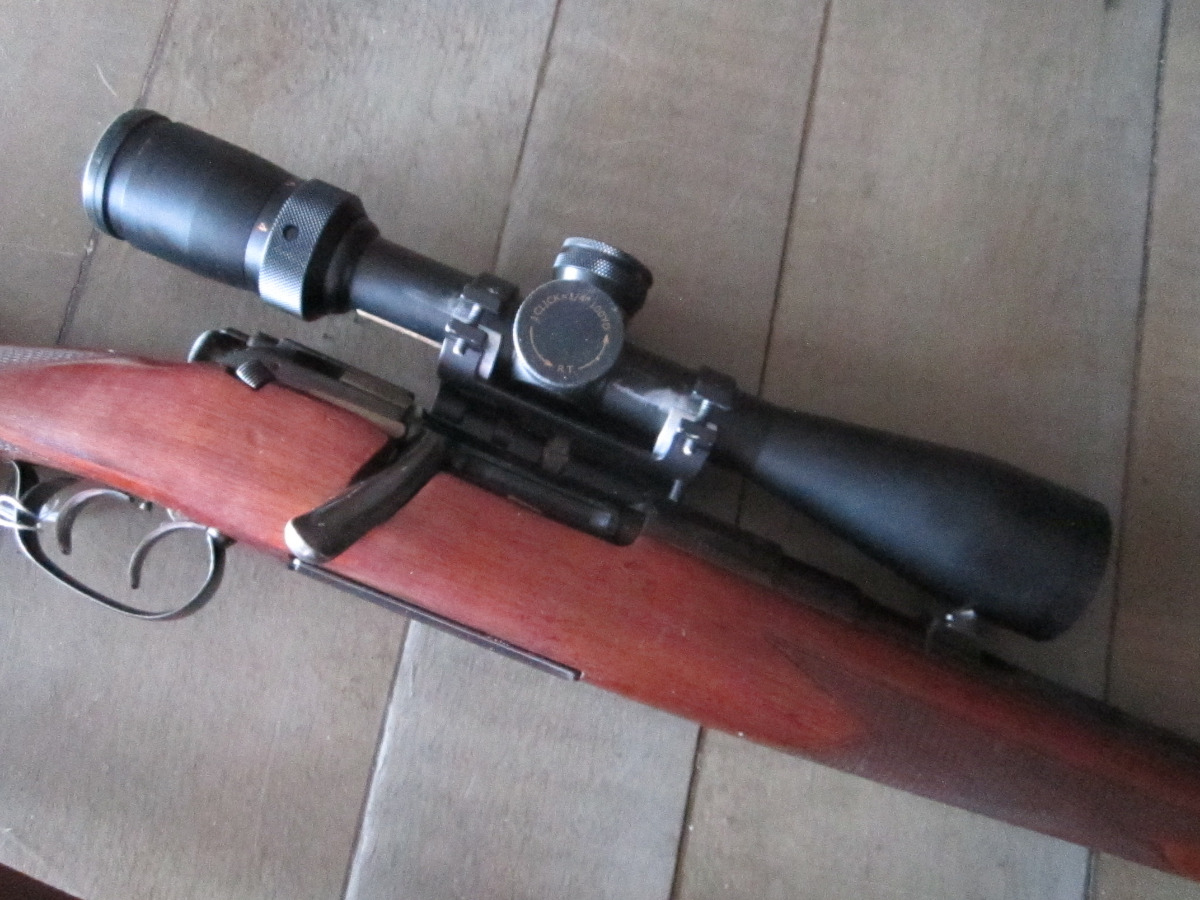
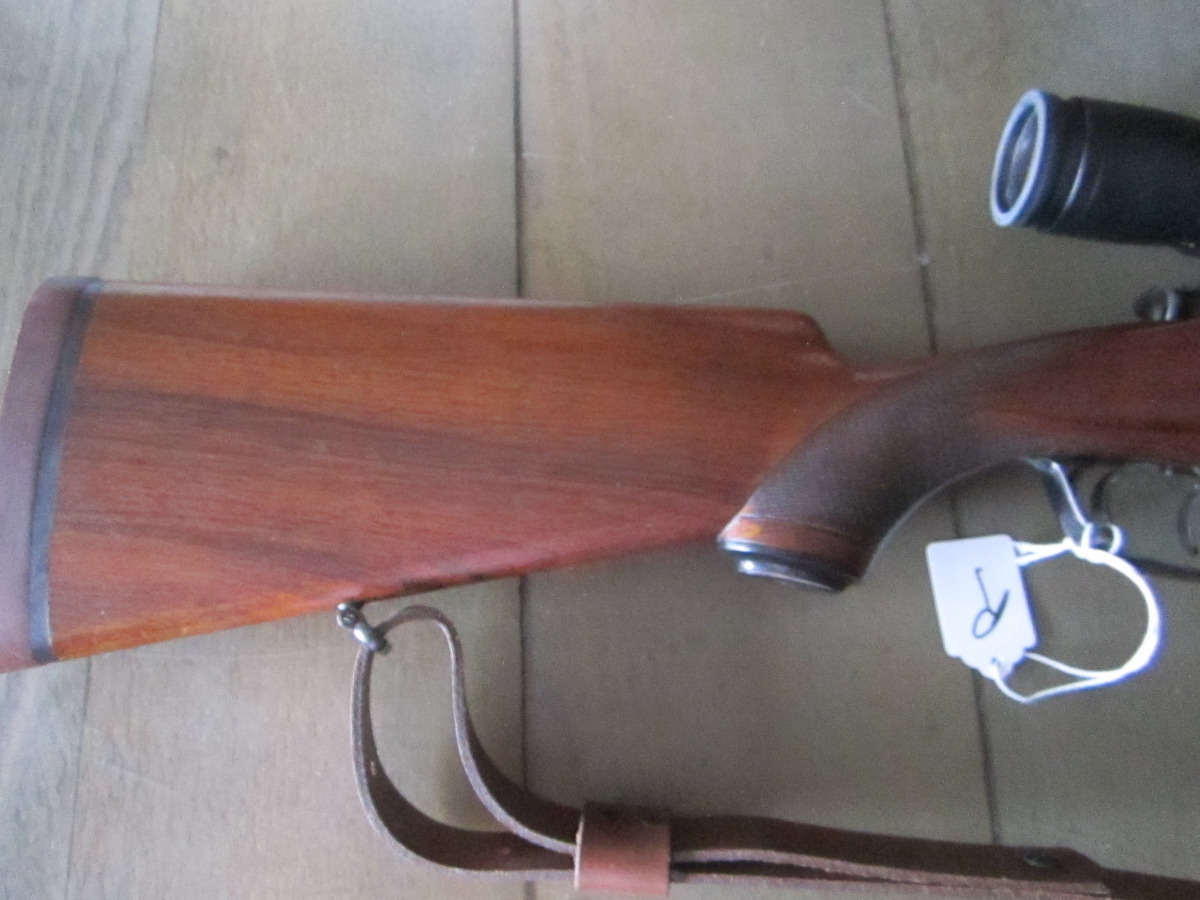
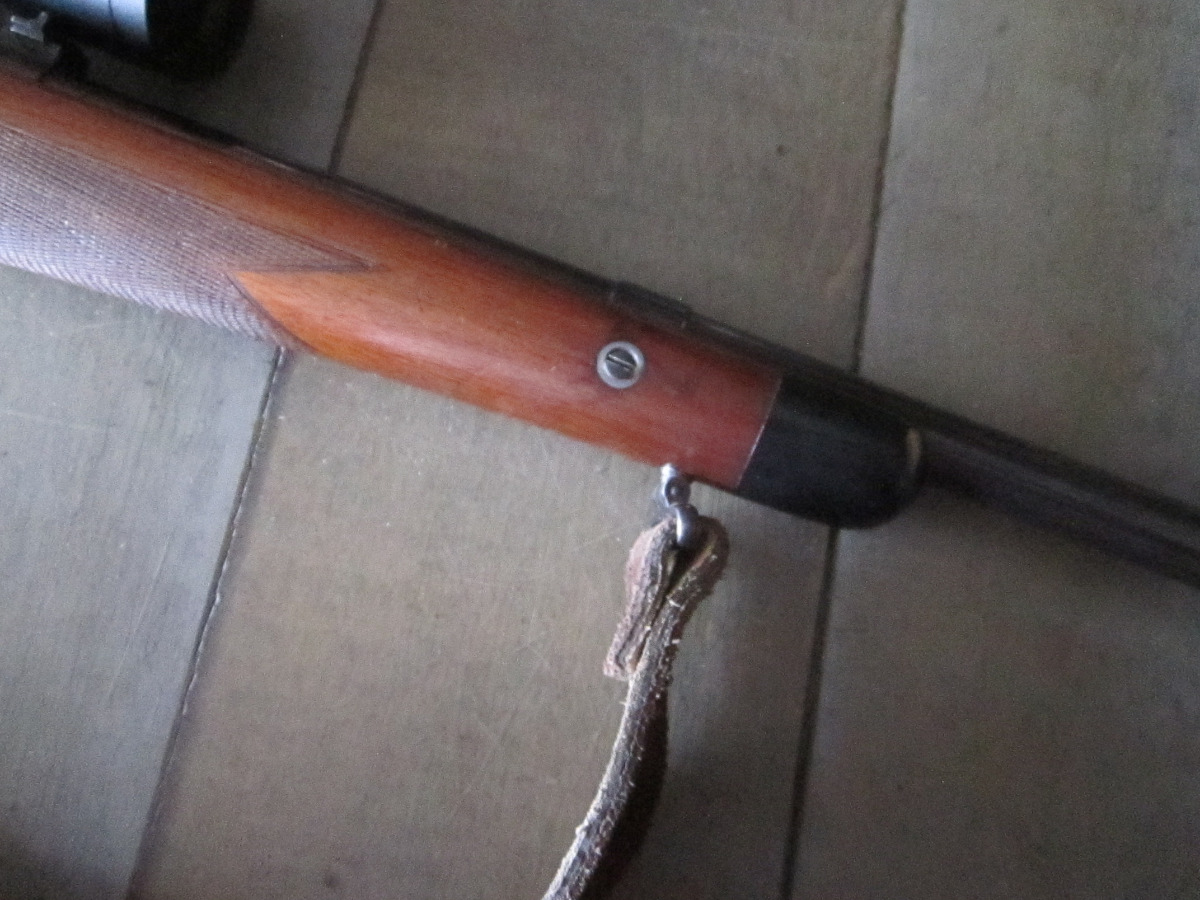
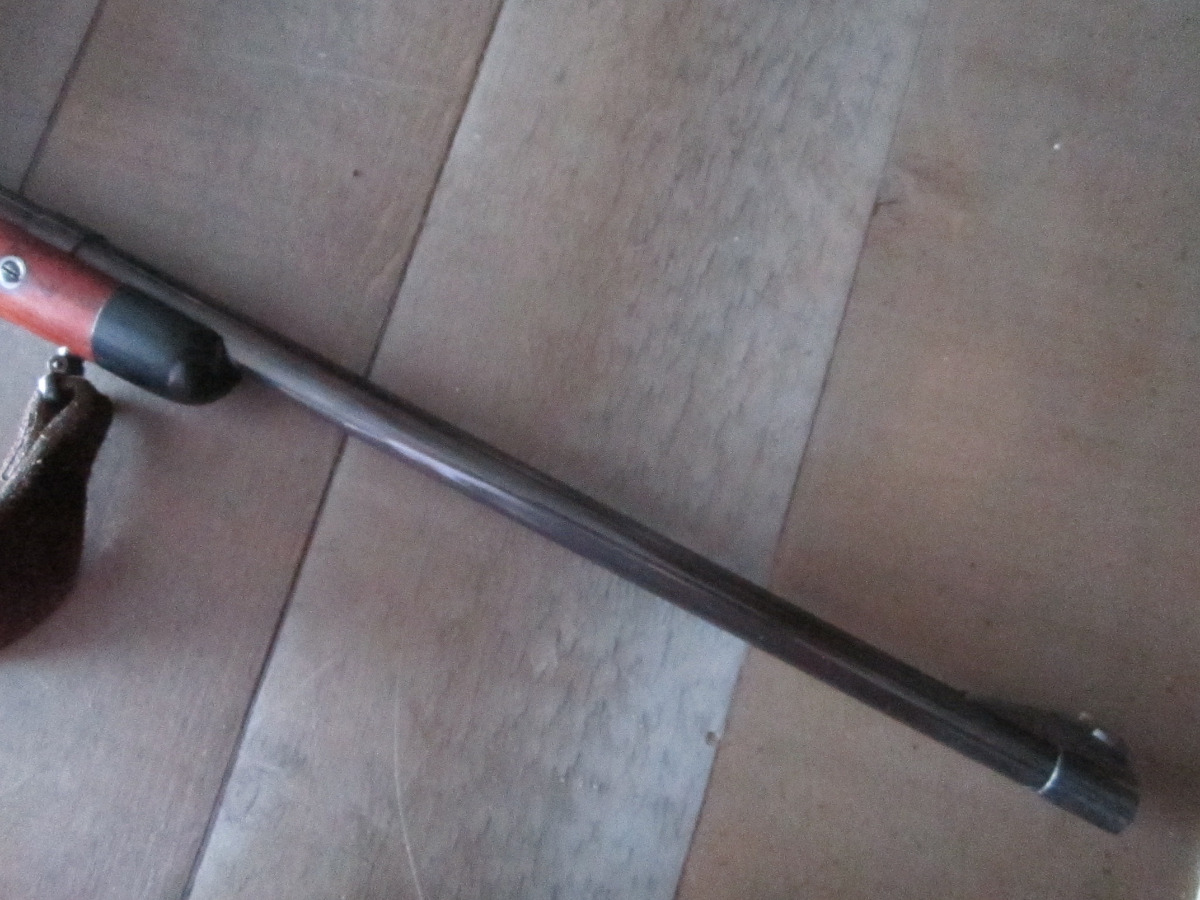
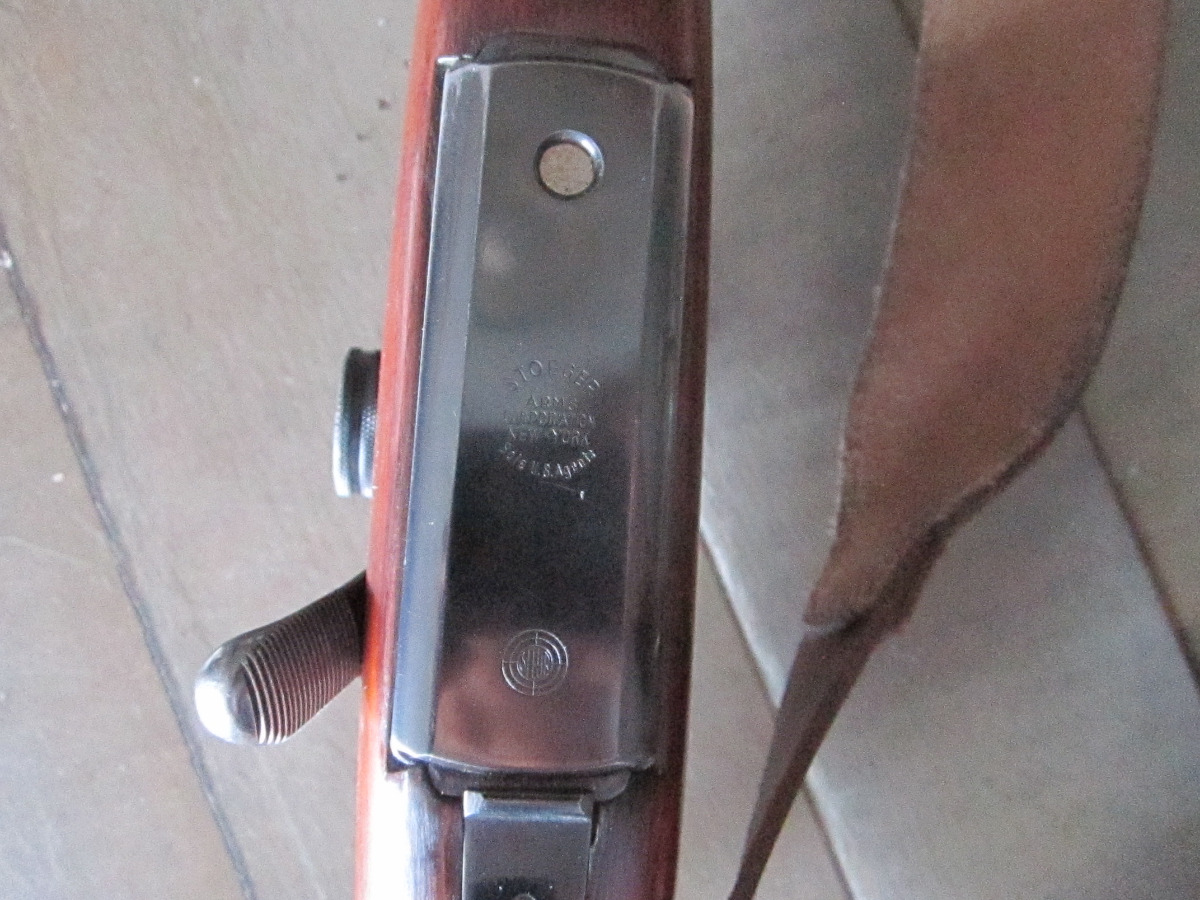
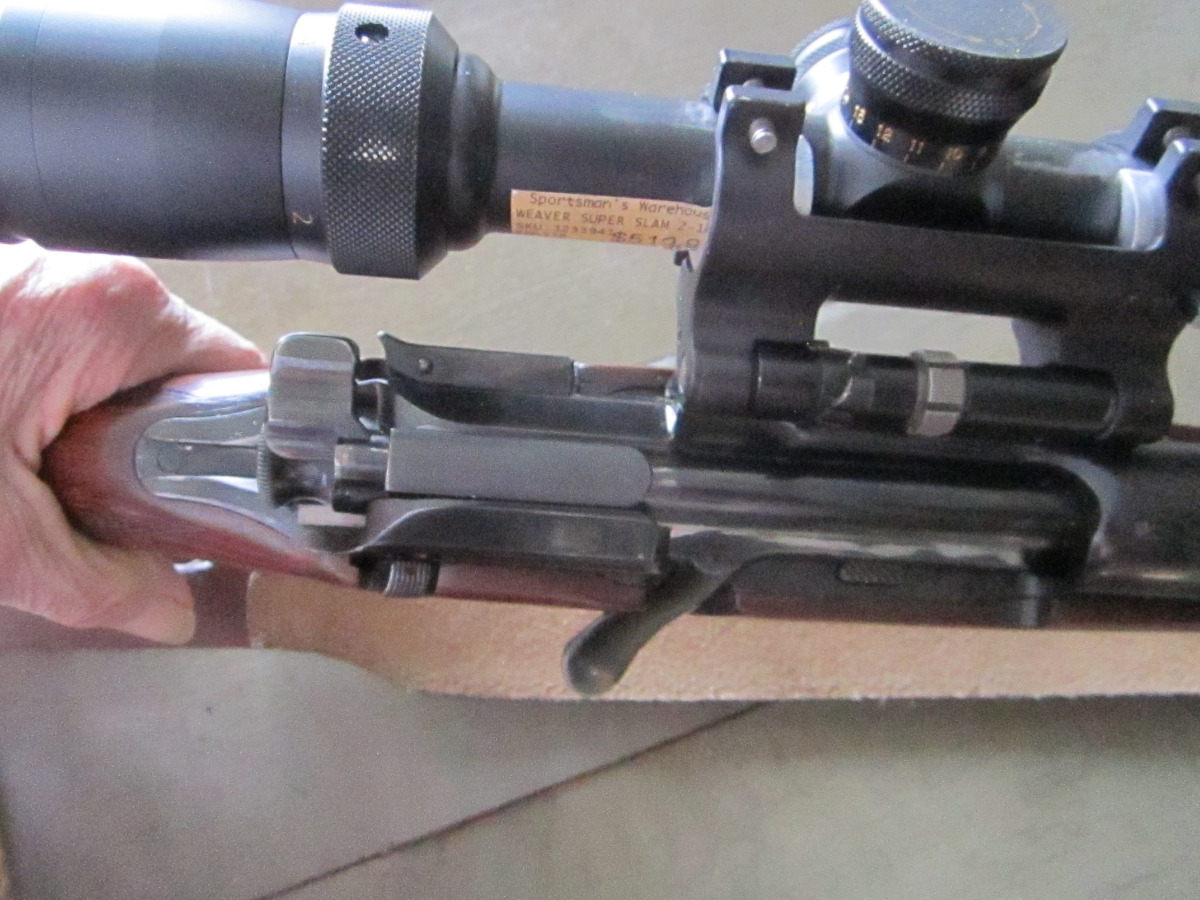
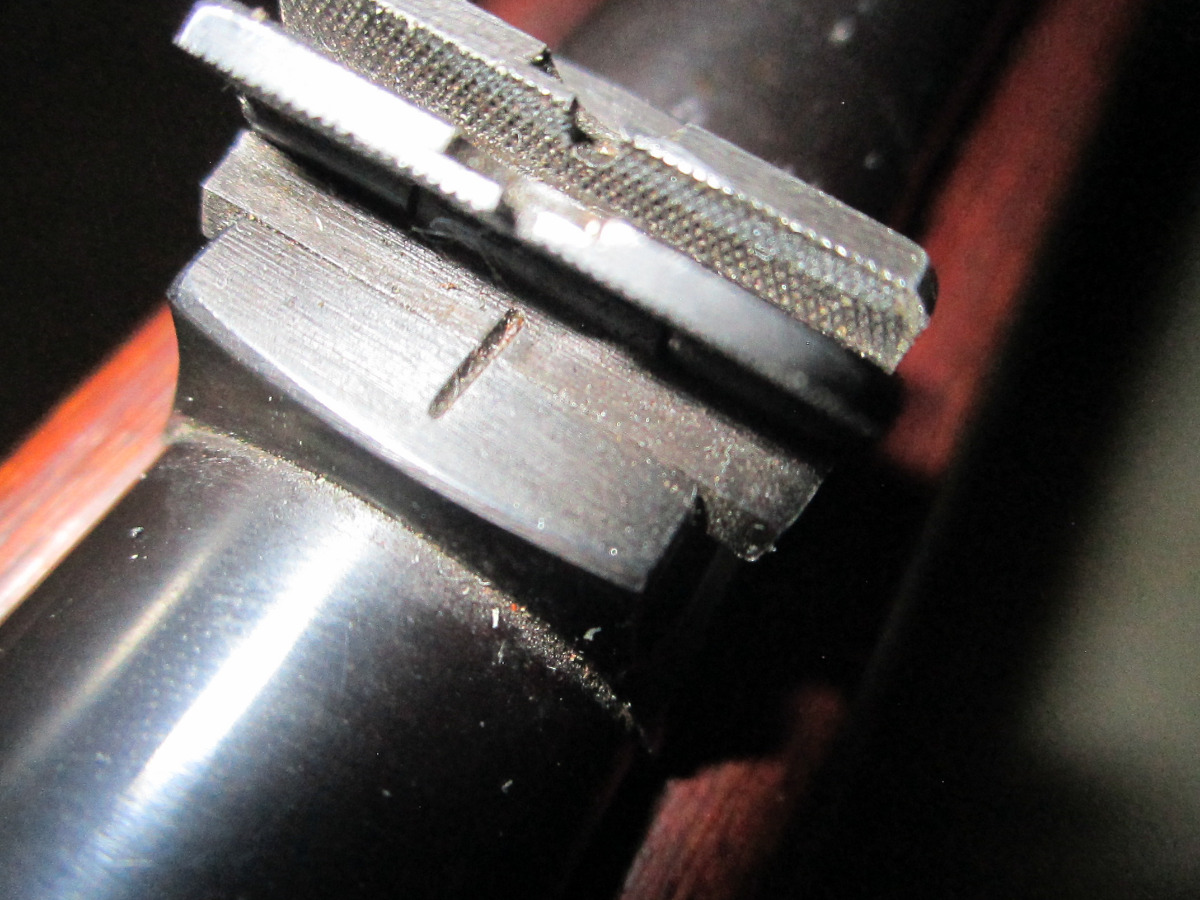
Just imagine the stories that this Old Timer could tell. That & it would make for a great addition to ones Mauser Collection. Grumpy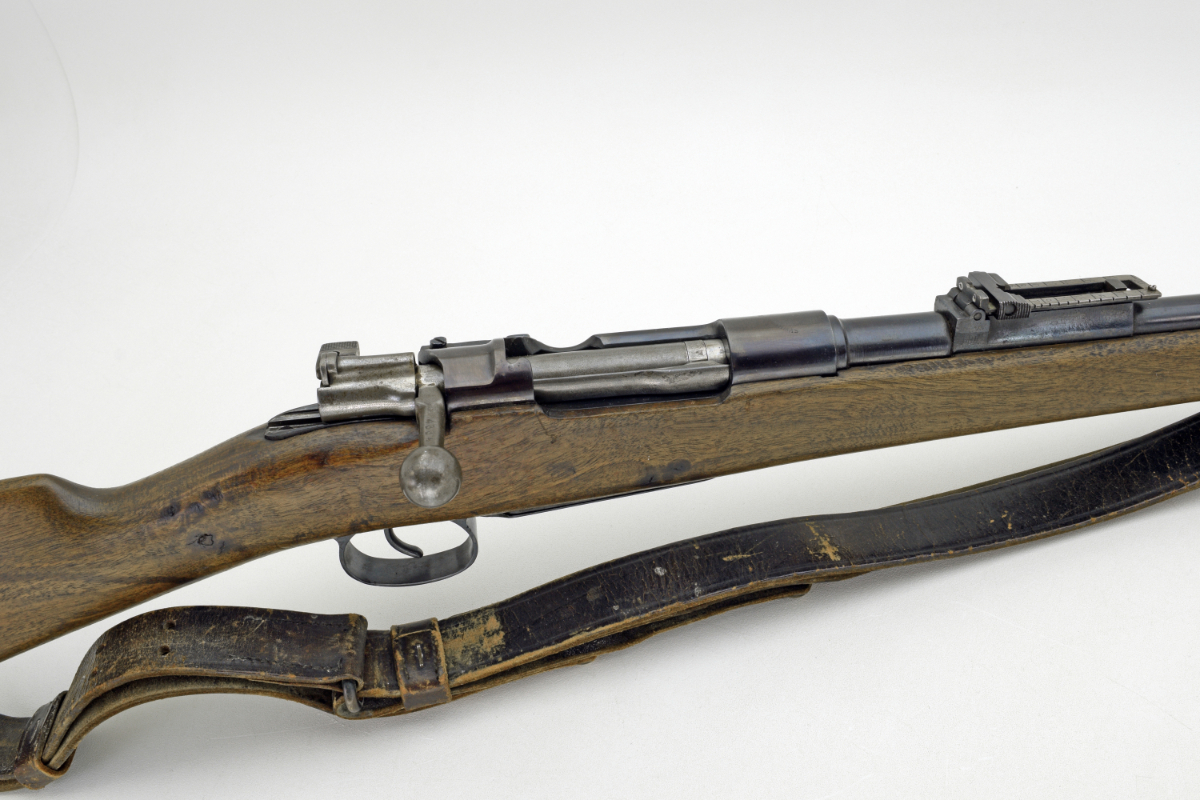
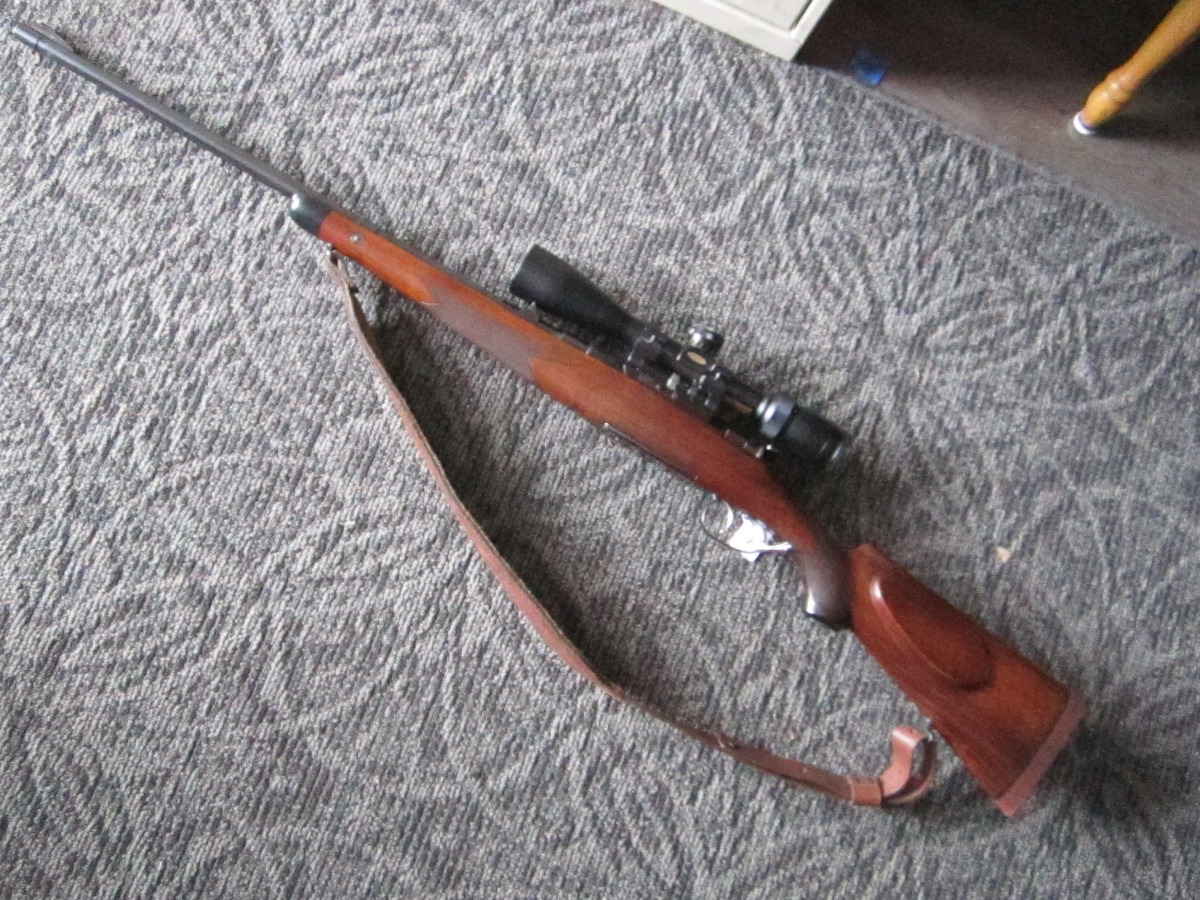
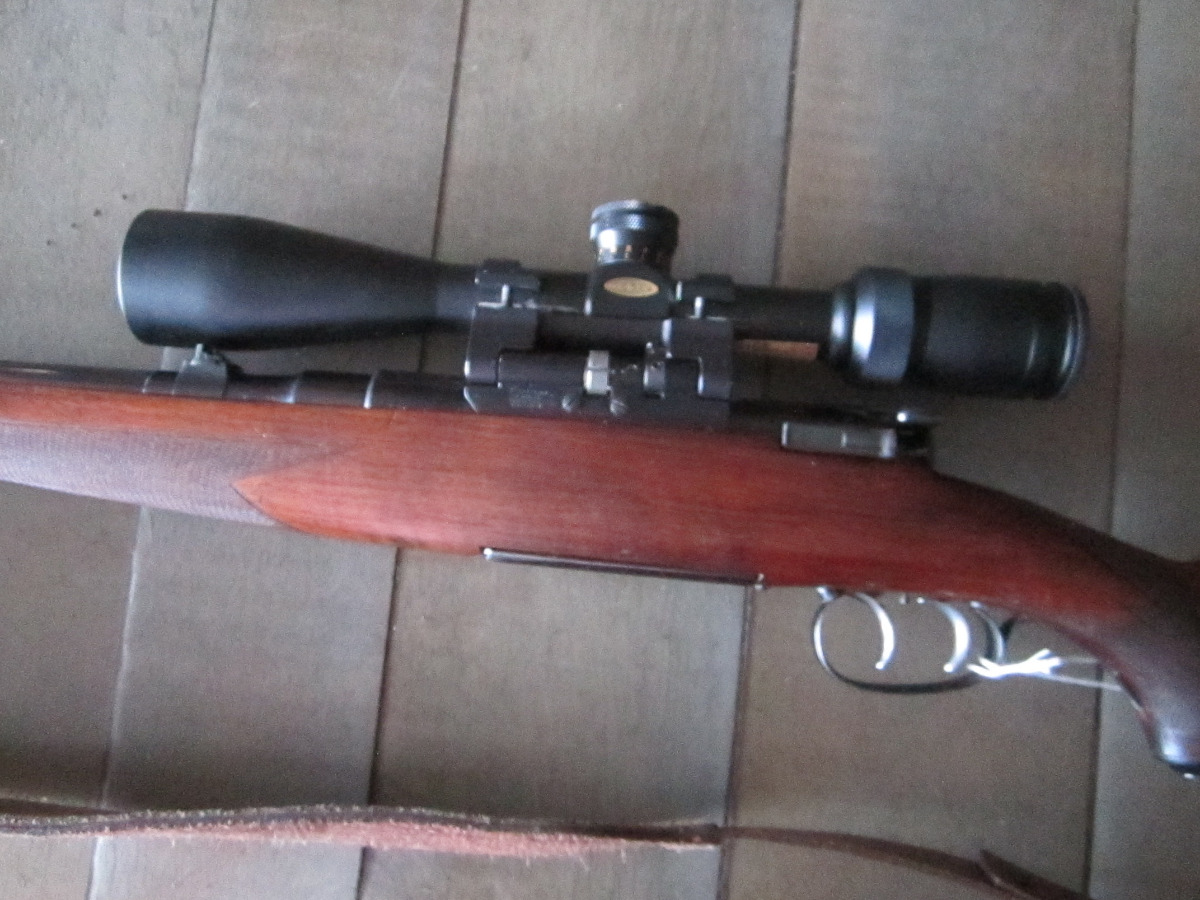
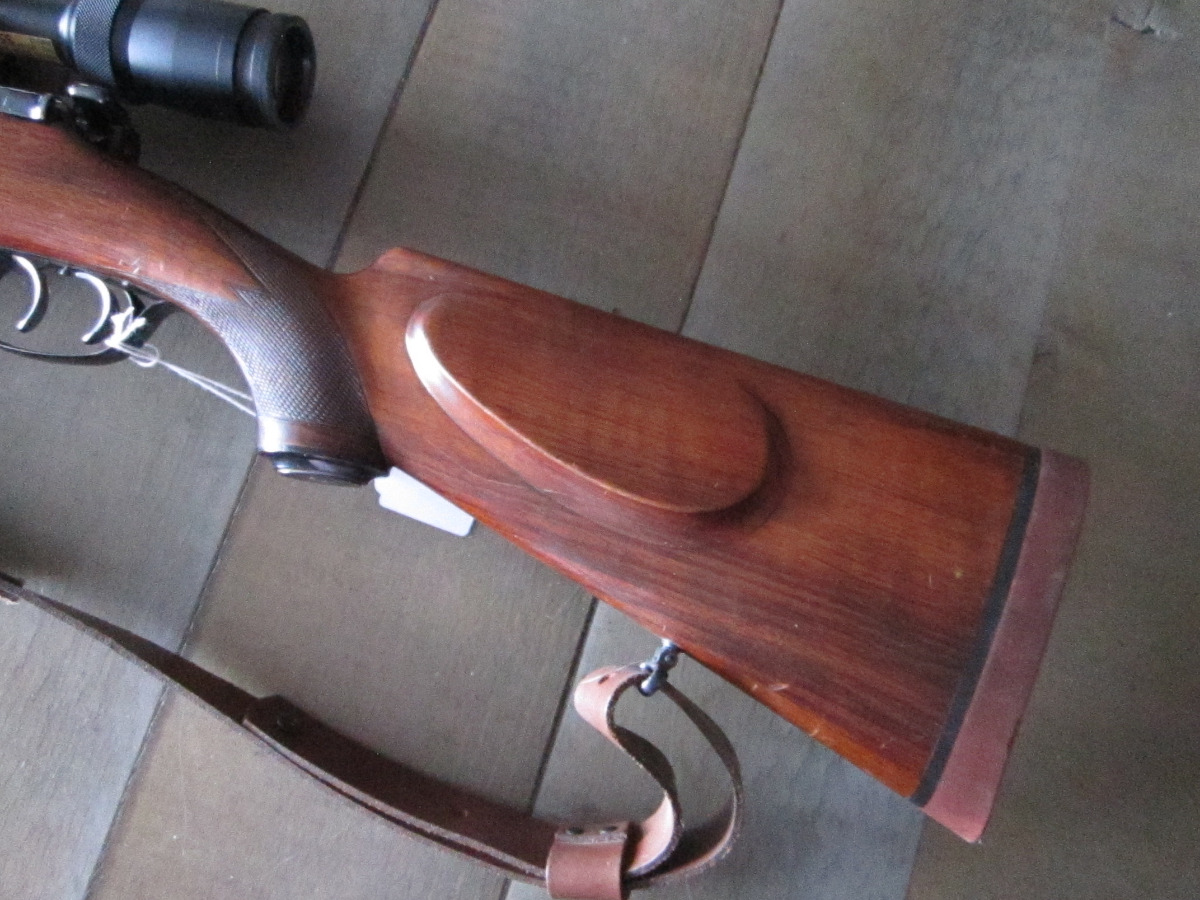
You really can not go too wrong with a 30-06, when you are at the firing line! Grumpy

Categories
Some very fancy Gun Porn