Categories
All About Guns Ammo

Big-Bore AR Cartridges by Bryce M. Towsley

Big-Bore AR Cartridges

When it comes to dispatching game with authority—and a single shot—nothing gets the job done quite like the big, heavy bullets available in chamberings such as these three, which all fit in a standard AR-15-size platform.

I have a simple test when considering cartridges for hunting big game with an AR-15-style rifle. It simply requires honestly answering the question: If you were shopping for a non-AR rifle to hunt deer, bear or hogs would you pick one chambered for the cartridge you are willing to use in an AR-15? In other words, would you choose a bolt-action deer rifle chambered for .300 Blackout over say a .308 Win. or a .30-’06 Sprg.? The answer, of course, is no. Otherwise gunmakers would be flocking to build .300 Blackout bolt-action rifles. Why aren’t they? Because there just isn’t much of a market. As an example, Remington did introduce a bolt-action in 6.8 mm SPC, but has since dropped it due to poor sales.

The .223 Rem. is a good seller in a bolt-action hunting rifle, but not for big game. The vast majority of .223 Rem. bolt-action rifles are purchased for hunting varmints. The few .300 Blackout bolt-action rifles I have seen are designed for tactical use and to be used suppressed—not for deer hunting.

Big-game hunters use the .300 Blackout, 6.8 mm SPC or .223 Rem. in AR-15s because of the platform, not the ballistics. Sure, they can all kill game, but I’d argue that they make shot placement even more critical than more powerful cartridges traditionally used to hunt deer, bear or hogs.

The trouble with the AR-15 platform is the limitations it puts on cartridge length. It’s hard to make the gun work with a cartridge much longer than 2.26″. Of course, you can move up to the larger AR-L (AR-10) platform that is based on the .308 Win.-size cartridges, but the guns are bigger, heavier and more expensive.

Oddly enough, back in the early days of self-contained metallic cartridges, new cartridge designers faced a similar dilemma, but for very different reasons. The combination of blackpowder and early bullet construction limited velocity to around 1,500 f.p.s., give or take. So, to increase power, the cartridge designers made the bullets heavier and bigger in diameter. That’s why the military’s rifle cartridges were .45-caliber in the 1870s rather than the .22 caliber used today.

Big-bore AR chamberings such as the .50 Beowulf (l.) offer terminal ballistics far in excess of the platform’s typical small-bore .223 Rem. loads (r.). Both cartridges are about the same length, but there is a tremendous difference in their projectiles’ frontal area and weight.


Today’s hard-hitting hunting cartridges for the AR-15 use the same concept. If you can’t make the cartridge longer, then make it larger in diameter and add some bullet weight.

Just as the hunters using the old blackpowder cartridges understood, a big-diameter, heavy bullet at moderate velocity is deadly on big game.

The lineup of big-bores is not huge for the AR-15 platform. In fact, from mainstream gunmakers there are only three cartridges. But that’s enough, as each member of this trio brings something impressive to the table.

.450 Bushmaster
This is the smallest of the thumpers, with a bullet diameter of .452″. It uses a rebated rim cartridge case based on the .284 Win. case.

The concept behind what would become the .450 Bushmaster was initially put forth by Col. Jeff Cooper. Cooper is best known for creating the “Modern Technique” of handgun shooting and for his admiration of the M1911 pistol. But Cooper was also an avid hunter and loved to roam wild places in a “come what may” sort of way. He was a man of great experience, having hunted all over the world, and he recognized that a big bullet is a good thing when shooting big game. He thought that the perfect rifle for most “general” big-game hunting would be a semi-automatic of larger than .44 caliber that was capable of taking big game out to 250 yds. He called this the “Thumper” concept.

From the 16” barrel of the author’s Bushmaster AR, factory .450 Bushmaster loads produced between 2,455 and 2,686 ft.-lbs. of energy—more than enough for most big game applications.

Tim LeGendre of LeMag Firearms developed his version of the cartridge, and called it the .45 Professional. He licensed the concept to Bushmaster Firearms Int’l for production and distribution, while Hornady developed the ammunition. Hornady modified the case a little so it would work better with its SST Flextip bullet. The name was then changed to .450 Bushmaster, with the blessing of LeGendre, and the cartridge was introduced in 2007.

Hornady’s current load for the .450 Bushmaster drives the company’s 250-gr. FTX bullet to a factory-advertised muzzle velocity of 2200 f.p.s. from a 20″ barrel, which would result in 2,686 ft.-lbs. of muzzle energy.

The current Hornady .450 Bushmaster load uses a 250-gr. FTX bullet with a factory advertised muzzle velocity of 2,200 f.p.s. from a 20″ barrel for 2,686 ft.-lbs. of energy. On my chronograph this load has a velocity of 2,090 f.p.s. fifteen feet from the muzzle when fired from my Bushmaster rifle with a 16″ barrel. This produces 2,425 ft.-lbs. of energy at the muzzle.

The Remington Outdoor Group owns Bushmaster, so it makes sense that Remington would start making ammunition in that chambering. Big Green currently offers a 260-gr. Premier Accutip load with an advertised muzzle velocity of 2,180 f.p.s. Muzzle energy is 2,744 ft.-lbs. This ammunition produces 2,062 f.p.s. and 2,455 ft.-lbs. of energy from my rifle’s shorter barrel.

I shot a bunch of hogs using some pre-production ammunition from Remington that was loaded with 275-gr. Barnes XPB Bullets. From my rifle, the velocity is 2,009 f.p.s. and the energy is 2,465 ft.-lbs. They have decided not to introduce the load, but it is easy to handload using the Barnes bullet, listed in that company’s catalog as being for the .460 S&W.

I also shot an Asian water buffalo that weighed more than three-quarters of a ton with that load. I was very impressed with all of the results. I will admit, this cartridge is probably a bit on the light side for hunting animals of that size, but it’s the gun I had with me when opportunity knocked, which is exactly the concept that Cooper envisioned.

As with other “thumper” loads for the AR platform, the .458 SOCOM feeds from the conventional AR magazine as if it were a single-stack.

.458 SOCOM
The .458 SOCOM was developed for military applications after the fighting in Mogadishu, Somalia, in 1993. That battle left a lot of participants disappointed in the performance of the 5.56×45 mm NATO cartridge, and they wanted some serious, .45-70 Gov’t-class thumping power for the M16 and M4 rifles. It’s worth considering that if the guys in the fight don’t think the .223 is enough gun, perhaps we should re-evaluate its use for hunting such animals as hogs, bear, moose and elk—game that often runs bigger and tougher than the average man.

The .458 SOCOM cartridge came out in 2002, and while it didn’t gain widespread acceptance as a military round, it has proven to be a great hunting cartridge. It uses a lengthened .50 AE case with a rebated rim and is necked down for a .458″ bullet. One big advantage with that .458 diameter is there is a wide selection of rifle bullets on the market. This is reflected in the multiple factory load options, and it opens a lot of doors for handloaders. One of the best bullets is the 300-gr. TTSX that Barnes developed specifically for this cartridge.

Factory-loaded ammunition is currently offered from three companies that I can find: Wilson Combat, Southern Ballistics Research (SBR) and Cor-Bon. Rifles are available from Rock River Armory, Wilson Combat and, in custom form, from SBR. My test rifle is a Rock River with a 16″ barrel.

SBR loads the .458 SOCOM with a Barnes Tipped Triple-Shock X bullet weighing 300 grs. When driven at 1894 f.p.s. from the author’s 16″-barreled Rock River AR, it produced a muzzle energy of 2,389 ft.-lbs.

Cor-Bon has a load using the Barnes TTSX 300-gr. bullet at an advertised muzzle velocity of 1,825 f.p.s. It also offers a 300-gr. HP at 1,900 f.p.s. From my 16″ barreled test gun, muzzle velocity for the 300-gr. Barnes load was 1,894 f.p.s., which is slightly higher than advertised. The Wilson Combat 300-gr. Barnes TTSX load produced 1,834 f.p.s. and 2,241 ft.-lbs. of muzzle energy from the Rock River.

SBR offers 16 different loads for the .458 SOCOM with bullets ranging from 140 to 500 grs. I tested the 300-gr. JHP load and got 1,831 f.p.s. and 2,234 ft.-lbs. of energy.

After testing two different Rock River .458 SOCOM carbines, the CAR A-4 and the new X-1, I have been very impressed with the accuracy. Both shot right around the 1 minute-of-angle mark with just about any ammunition I tried.

It might have a military background, but the .458 SOCOM is a big-game cartridge capable of taking anything that walks in North America.

Compared to the .223 Rem., the Alexander Arms .50 Beowulf cartridge provides a tremendous increase in bullet weight, bullet diameter and short-range kinetic energy.

.50 Beowulf
As you have probably figured out by now, I am not a fan of small cartridges for hunting. I have hunted with most of the popular cartridges of all sizes over the years and continue to today, as I think experience is the best way to gain knowledge. But I have come to believe that each category of game has a list of specific cartridges that are appropriate for use. I tend to gravitate toward the upper 50 percent of that list in size and power. I like cartridges that hit hard and remove the doubt. The .50 Beowulf epitomizes that concept. With a 334-gr., 1/2″ diameter bullet at nearly 2,000 f.p.s., there is never any doubt when you hit something.

Bill Alexander of Alexander Arms was one of the pioneers of big-game hunting cartridges in AR-15 style rifles. He developed this cartridge and named it after Beowulf, a legendary warrior of Old English literature who slayed the undefeatable Grendel by ripping his arm off. The day after that battle, Beowulf battled the horrible monster that was Grendel’s mother. He killed her by cutting off her head with a mighty sword from her own armory. A sword of which it was said, “no other man could have hefted in battle.” Years later, in his doddering old age when he was worn out and feeble, Beowulf fought and killed a dragon.

In short, Beowulf was big and bad and backed down from no fight; the perfect namesake for this cartridge. When it was introduced in 2001 the .50 Beowulf was the first of the AR-15-specific, ultra-big-bore cartridges to be offered by an AR manufacturer. It is based on a lengthened .50 AE case with a severely rebated rim so that it fits a bolt head designed for the 7.62×39 mm cartridge. This bolt face size works well with an AR-15 style rifle.

Bill Alexander’s .50 Beowulf cartridge features a rebated rim and straight walls. From the author’s 16.5″-barreled rifle, the Alexander Arms loads, featuring 325-gr. and 400-gr. bullets, left the muzzle at 1950 and 1800 f.p.s., respectively.

From a 24″ barrel, the .50 Beowulf pushes a 334-gr. bullet to 1,980 f.p.s. and 2,908 ft.-lbs. of energy at the muzzle. The 400-gr. load has a muzzle velocity of 1,875 f.p.s. and 3,123 ft.-lbs. The bullet is 1/2″ in diameter and can expand to more than 1″. Compare that to a 55-gr. .223 Rem. at less than half the diameter. The 334-gr. Beowulf has 507 percent more bullet weight and an unexpanded diameter that is larger than a .223’s fully expanded bullet. Once they both have expanded, the Beowulf bullet has a 123 percent larger frontal area than the .223 (based on two times expansion). Not to mention that the Beowulf has almost three times more energy than the .223 Rem. This is a serious step up in power for the AR-15 platform.

Even from the stubby 16.5″ barrel on my rifle, the .50 Beowulf loads are moving at 1,938 f.p.s. for the 334-gr. bullet, and 1,800 f.p.s. for the 400-gr. That is 2,786 ft.-lbs. of muzzle energy for the 334-gr. and 2,878 ft.-lbs. for the 400-gr. load. Considering the 7.5″ difference in barrel length, the velocity loss is minimal. Clearly this is a cartridge that is well-suited to the shorter barrels often used on the AR-15.

I have used the .50 Beowulf on multiple hogs and a few deer, always with very good results. With the right bullets it hits hard, penetrates well and leaves a very large hole in its wake. Just as Sir Samuel Baker said about his 2-bore rifle, “Baby,” I can honestly say that I have never lost a single animal hit with this cartridge! I don’t even need to rely on exploding bullets for that result as he did.

Obviously these cartridges are not designed for long range. But, all the recent “sniper” hype aside, the truth is that most big game is shot at well under 200 yds. anyway. If you don’t like to track game after the shot, these cartridges will get the job done on any big game in North America.

So to answer my own question, “Would I buy a non-AR-15 rifle for hunting if it were chambered in one of these cartridges?” I would welcome any of these cartridges in any rifle. A short-action bolt gun would be very interesting, and I think they would be great in a lever-action. In fact, I have hunted for years with cartridges with similar ballistic performance, such as the .444 Marlin, .45-70 Gov’t and .450 Marlin. So the answer is pretty much, “been there, done that,” only now I get to use an AR.  

Categories
All About Guns

Winchester XPR Sporter in caliber 350 Legend

guns 027.JPG guns 029.JPG guns 030.JPG guns 031.JPG guns 032.JPG guns 033.JPG guns 034.JPG guns 035.JPG guns 036.JPG guns 037.JPG guns 038.JPG guns 039.JPG guns 040.JPG guns 041.JPG guns 042.JPG guns 043.JPG guns 044.JPG guns 045.JPG guns 046.JPG guns 047.JPG guns 048.JPG guns 051.JPG

Categories
All About Guns Art

Johnny Cash – Devil’s Right Hand

Categories
All About Guns Ammo

Big Bore Comparison – Big Horn Armory

Categories
All About Guns

A Bill Davis Custom Smith & Wesson Model: Custom 14-3, The K-38 Masterpiece

Is that RUST I see Private!?!


Categories
All About Guns

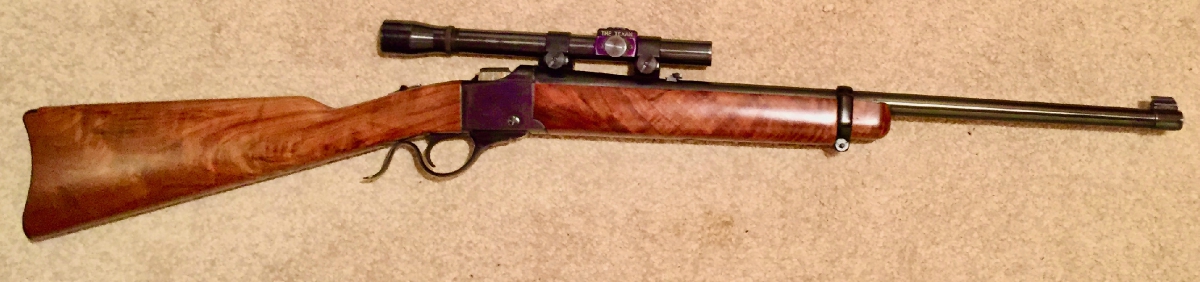
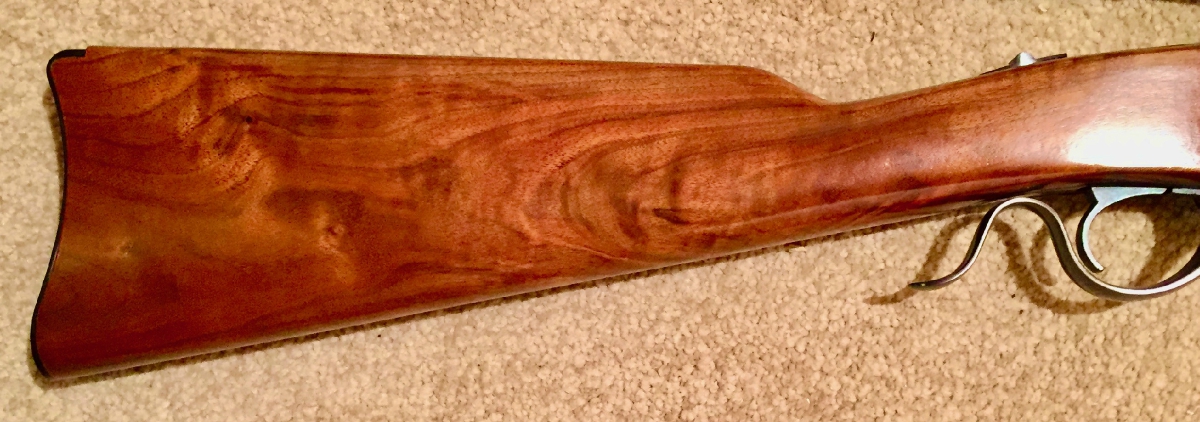
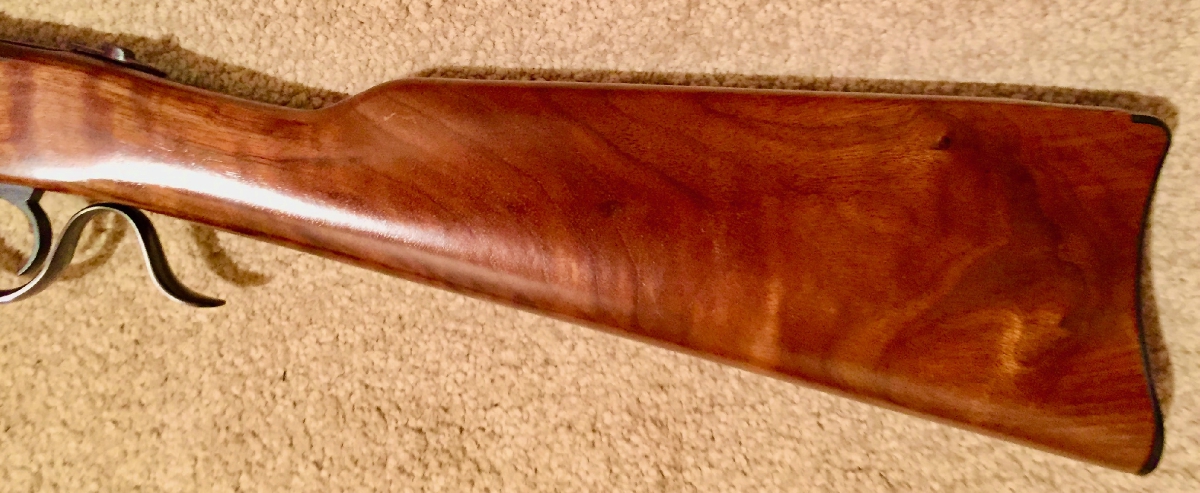
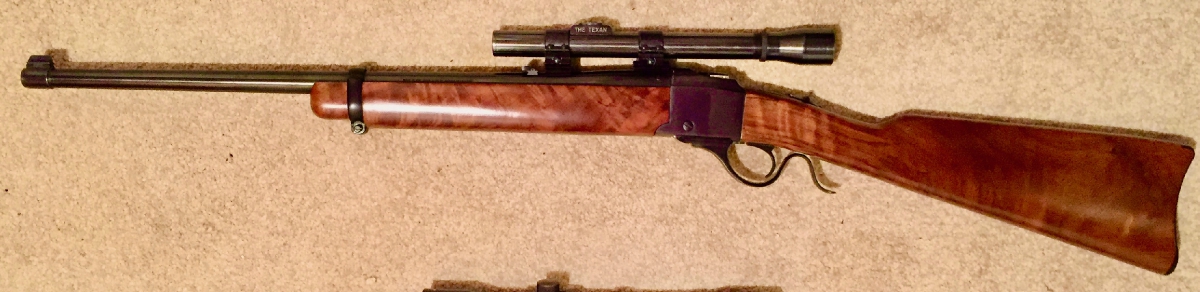
A Ruger No. 3 in the stout and manly caliber of 45-70 Goverment


Ruger No. 3 45-70 Employee rifle, Fancy Wood, Norm Ford 2.5X Post & CH scope .45-70 Govt. - Picture 1

Ruger No. 3 45-70 Employee rifle, Fancy Wood, Norm Ford 2.5X Post & CH scope .45-70 Govt. - Picture 2
Ruger No. 3 45-70 Employee rifle, Fancy Wood, Norm Ford 2.5X Post & CH scope .45-70 Govt. - Picture 4
Ruger No. 3 45-70 Employee rifle, Fancy Wood, Norm Ford 2.5X Post & CH scope .45-70 Govt. - Picture 5


Categories
Well I thought it was funny!

A good question

Categories
The Green Machine The Horror! This great Nation & Its People

Here is another reason on why I am so glad that I joined the US Army!

USS Cowpens rolling in heavy seas in Typhoon Cobra in the Pacific Ocean, 18 December 1944.

And this was a Light Aircraft carrier! Imagine the poor Bastards in say a small Destroyer! Poor Adm. Halsey, he really screwed the pooch on that one. But overall he was one of the Last Real Fighting Admirals that the USN had. Grumpy

Categories
Ammo Anti Civil Rights ideas & "Friends"

Ammunition Background Check Bill Flying Under The Radar By John Petrolino

AP Photo/Rich Pedroncelli, File
You know the drill. A high profile shooting happens. Anti-gun groups make statements based on emotions. Then more “we’re doing something” legislation gets introduced. If I had to guess, if I saw the playbook of say Mom’s Demand Action, they might say something specifically that tells their freedom stifling “advocates” to ignore the facts and statistics, and focus strictly on emotion. That’s just a “guess” if I had such an opportunity. On April 20, 2021, “Jamie’s Law” was reintroduced in congress. The bills are S. 1237 and H.R. 2715.

If you take the time to sift through the gobbledygook of the text of the bill, you might get lost quickly. When these bills get introduced, well for starters, they don’t post the bill text right away. This is a problem that was highlighted by one of my colleagues, Dave Workman, at AmmoLand in a recent article. More often than not those looking for proposed bill text must sift through press releases by whomever introduced the bill in order to actually see what law changes are on the table. Another interesting fact is the “summary” of the bills does not come for some time as well. The summaries are important, as they try to put in plain English what the bill intends on changing. This bill is no different. The side bar conversation is that in 2021 there is zero excuse for the bill text and summary to not be posted the day they are introduced. I get it, the Library of Congress has a lot going on. But, we have the internet. If our NICS system, which is electronic in nature is instant and good enough for guns, an instant system should be good enough for the the bills introduced by the gun grabbers.

Jamie’s Law is a bill that has not seen a lot of press or coverage, despite it was introduced in the past. From a press release by Representative Debbie Wasserman Schultz (FL-23) we have some information though:

…Jaime’s Law, a commonsense bicameral piece of legislation that would require instant background checks to prevent criminals from illegally purchasing ammunition.

Jaime’s Law is named in honor of Jaime Guttenberg, one of 17 victims in the mass shooting at Marjory Stoneman Douglas High School in 2018.

I have yet to meet a person of any political affiliation or group that has celebrated the shooting at Marjory Stoneman Douglas High School. What happened was a tragic domestic terroristic event and occurred because of the failures of many people, systems, and law enforcement agencies. This is another piece of proposed legislation that would not have made a difference in the outcome of what occurred that day.

What would the bill aim to do? Require every person to submit to a background check prior to purchasing ammunition. More on the bill:

“To impose background checks on purchases of ammunition is really the epitome of common sense. It’s the reason why six states, including Connecticut, have imposed such life-saving background checks,” said Senator Blumenthal. “There is no infringement on the Second Amendment, and there’s no inconvenience involved. The purchase of ammunition is seamless and quick for people who are law abiding. The point is to keep ammunition, as well as guns, out of the hands of people who are dangerous to themselves or others. We are inspired to work to pass Jaime’s Law and to make it the law of the land.”

They further expand on the states that already have these “common sense” laws on the books:

Many states – including Connecticut, Illinois, New Jersey, California, and New York – have led the way in requiring a background check to obtain a license to purchase or possess ammunition. However, it is clear that gun safety measures save far more lives when they are enacted nationwide, and don’t allow purchasers to evade background checks by crossing state lines, or shopping for lax state regulations.

And to save you the time of deciphering the bill text, the press release is capped off with:

Jamie’s Law would close this loophole by requiring all buyers of ammunition to undergo an instant background check using the FBI National Instant Background Check System (NICS), the same quick and easy process that applies to the purchase of firearms. Participants will discuss these and related issues.

Here’s the issue. Taking Connecticut, Illinois, New Jersey, California, and New York, and using them as an example of the way things should be done is daft. All the states listed house some very dangerous cities and areas. Chicago, is that a bastion of safety when it comes to crime and murder committed with a firearm? This past weekend says no. Illinois has also completely jumped the shark when it comes to the use, abuse, of the NICS system, as they run a background check on every single firearm licenses holder daily. Does that really make Illinois safer? No.

Let’s consider what New Jersey brings to the table concerning ammunition and background checks. Yes, if an individual wants to buy pistol ammunition on the Garden State, they must furnish the dealer with a firearms identification document, pistol purchaser’s permits, or permit to carry. Yes, an individual must pass several background checks in order to get those documents. No, a NICS is not required to buy ammunition in New Jersey. That is for pistol ammunition. The press release and introduction of the bill leaned heavily on the shooting at Marjory Stoneman Douglas High School in order to trump up support for the bill. Well, that event was committed with the use of a rifle. The inconvenient thing that the press release fails to mention is that in New Jersey, you know one of the states that is being applauded for their great laws, a person does not need any special identification to purchase rifle or shotgun ammunition. A valid driver’s license showing the individual is over the age of 18 is all that is needed.

Another fun fact about New Jersey, they don’t use the federal NICS system, but their own, imposing a $15.00 fee for each check. How much sense is it going to make to charge $15.00 for a $5.00 box of .22 caliber ammunition?

Like most freedom limiting measures that are being branded in the interest of public safety, if this were law, there would be zero effect on crime. The fact that in New Jersey one can purchase rifle ammunition without a background check, while both applauding NJ’s laws, and saying we need this because of the Stoneman shooting is just false advertising. Unfortunately the uninitiated public at large that may have little familiarity with the nuance of gun control laws gets exploited, leaning on those emotional arguments. Forget the facts, lean on the emotions. Honestly, how many background checks are enough for the anti freedom caucus?


Categories
All About Guns Anti Civil Rights ideas & "Friends"

Soros gun-ban group has key role in Biden ‘crime’ plan by Paul Bedard, Washington Secrets Columnist


President Joe Biden is teaming with anti-gun advocate George Soros and several other liberal groups in his bid to reduce violent crime by focusing on guns and legal gun sellers.

Included in his plan is hosting meetings over the next 18 months in 15 high-crime cities where Soros’s Open Society Foundation and 12 other pro-gun-control groups will spell out “best practices” to help city leaders with the explosion of violence in their cities.

A scan of the policies of those 13 groups shows that all are anti-gun and, like Biden, blame firearms for violence plaguing some cities.

The list does not include any gun industry groups, notably the National Shooting Sports Foundation, which has several programs to cut crime and stop guns from getting into the wrong hands through straw or other illegal purchases.

The groups Biden chose are proponents of gun registration and bans.

Open Society, for example, has called for a new 1994-style ban on popular semi-automatic sporting rifles.

In describing its teaming with the groups, a White House fact sheet read, “A group of philanthropies that have been leaders on this issue will support this collaborative learning network by deploying [community violence intervention] experts to provide training and technical assistance, identify best practices, integrate proven and innovative public-health approaches, and help local community-based organizations scale CVI efforts this summer and beyond.”

The move comes as Biden is trying to install an anti-gun advocate from the Giffords organization as the head of the Bureau of Alcohol, Tobacco, Firearms and Explosives.

Second Amendment advocates predicted that the groups Biden planned to team with would be proponents of gun control and not have any industry representatives.

Soros is a well-known funder of anti-gun groups. Over one 10-year period, for example, he spent nearly $7 million funding them. He has funded at least one other gun control group being tapped by Biden, the Joyce Foundation.