




Categories
All About Guns

Romanian Guns of WW1

Categories
N.S.F.W.

Something to take your mind off of the Worlds Problems for a second or two! NSFW


Categories
All About Guns Anti Civil Rights ideas & "Friends"

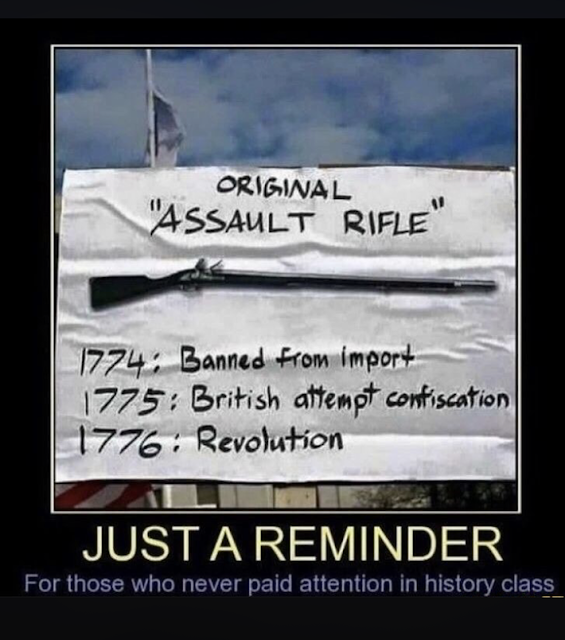
The Brown Bess

Categories
All About Guns

Kinda like my desk

Categories
Ammo

4 Reasons to Hate the 6.5 Creedmoor by Philip Massaro

4 Reasons to Hate the 6.5 Creedmoor

Oh, the 6.5 Creedmoor! Some people break out in hives at the mere mention of the cartridge, some people are head-over-heels in love with it and—somewhat surprisingly—it’s been around long enough that there are shooters who know only the Creedmoor; they’ve never tried anything else.

It’s only a cartridge, a vessel for holding primer, powder and bullet, but if you bring it up in conversation, you will find some people foaming at the mouth, with bloodshot eyes and a rising heart rate. Let’s look at four reasons to hate the 6.5 Creedmoor.

1. It’s certainly not the only target cartridge in existence. Long before anyone heard the word Creedmoor—it is actually the name of a farm on Long Island, NY where the NRA shooting matches were held—people were shooting 1,000-yard targets. Hell, before there was smokeless powder there were 1,000-yard international competitions held at the Creedmoor facility. The .30-06 Springfield was a favorite for 1,000-yard shooting, the .300 Holland & Holland won the Wimbledon Cup in 1935, the .308 Winchester was the darling of the target community, the .300 Winchester Magnum surely does the job and the .260 Remington and 6.5-284 Norma certainly represented the 6.5mm bore. There’s much more out there than just the Creedmoor.

2. It’s not old enough to be your grandfather’s cartridge. Anything the 6.5 Creedmoor can do, the 6.5×55 Swedish has been doing since the end of the 19th century. The .260 Remington is based on the .308 Winchester from 1952, and the .264 Winchester Magnum is based on the .375 Holland & Holland from 1912. The 6.5-284 Norma is based on the .284 Winchester, and at least that is over a half-century old. Based on the .30 T/C—a cartridge that nobody cared about in the first place—the 6.5 Creedmoor is way too young to be considered a viable cartridge for anything, let alone to be considered one of the best long-range cartridges ever.

3. It’s going to take over the hunting industry. The 6.5 Creedmoor is the new .30-06 Springfield. The Creedmoor is the one cartridge you should buy your kid. The Creedmoor is the new all-around North American cartridge. The Creedmoor is all any rifleman needs. Sell all your other rifles and buy a Creedmoor. No, that’s not the way it works folks. It doesn’t replace the .30-06 in the hunting fields and it never will. It’s a great choice for deer, antelope, and even coyotes and hogs. It’s most definitely on the light side for elk and moose, and while it works well on lighter African plains game, it does have its limits, especially on species like zebra, wildebeest and eland. A .30-06 will handle all of those species, with no qualms whatsoever. Is there room for the Creedmoor and other cartridges? There most certainly is; like any .25 or 6.5mm cartridge, it makes an excellent deer gun, and the 140-grain bullets can handle black bears, but there are better choices for larger game.

4. It works. There are those people who root against the Yankees, and revel in their losses, just as there are those people who find joy being mean to children and kittens. These same people love to hate the 6.5 Creedmoor. Look, the Creedmoor is an excellent target cartridge; it’s accurate, resists wind deflection, is easy on both shoulders and barrels, and is affordable. It has brought a huge number of new shooters to the range, and has been nothing but a boon for competition shooters. The Creedmoor makes hitting a 1,000-yard target much, much easier than using a .308 Winchester, and if nothing more, it’s been a wonderful shot-in-the-arm for the 6.5mm bore. Hornady, for all their excellent products over the years, have most certainly pushed the envelope of cartridge development, as well as the bullets needed to serve those cartridges. The new A-Tip, loaded in the Creedmoor, was a definite eye-opener at the Leupold Optics Academy, where the cartridge showed its virtues at 1,500 yards in terrible eastern Oregon winds. It’s also good for medium-sized game, no argument here. A well-built 140-grain bullet at 2750 fps, put in the vital organs of an animal, will always get the job done, providing it will reach those vitals. Common sense should prevail, as it always should, when choosing a cartridge to properly handle a particular game animal.

If you want to hate the 6.5 Creedmoor, so be it, but to deny the fact that it’s a good target and hunting cartridge (for its intended applications) is unfounded. It is the equal—yet not superior—of the .260 Remington as a hunting cartridge, as the target advantages of the Creedmoor won’t show up until out past 500 yards, and that’s probably too far to be shooting at unwounded game. The Creedmoor works better in the confines of a short-action magazine, as the case is short enough to handle the longer ogive bullets, where the .260 Remington has trouble with the seating depth.

Is the 6.5 Creedmoor the be-all-and-end-all cartridge? No, no it isn’t. Is it a good choice for the target shooter who wants long barrel life, superb accuracy and the ability to hit targets out to 1,500 yards and beyond? Absolutely, and it will continue be so for decades to come.

Categories
All About Guns

Hotchkiss Universal on the PCC Course of Fire

Categories
Anti Civil Rights ideas & "Friends"

And now the Fight advances now to a higher level!

OCTOBER 1, 2021

WHY GUN BUYERS SHOULD BE CONCERNED ABOUT IRS PROPOSAL TO MONITOR PURCHASES ABOVE $600


By Larry Keane

The Biden administration’s plan to fund a multitrillion-dollar spending plan includes having the IRS snoop into every American’s bank account to examine transactions that are $600 or greater. This alarming proposal has implications far beyond the government looking to extract tax money. It is also a potential way for the Biden administration to track who is purchasing firearms.

Treasury Sec. Janet Yellin was on Capitol Hill defending the Biden administration’s proposal.

“I think it’s important to recognize that we have a tax gap that’s estimated at $7 trillion over the next decade,” Sec. Yellen said, according to a Fox Business report. “That is taxes that are due and are not being paid to the government that deprive us of the resources that we need to do critical investments to make America more productive and competitive.”

Not Just Taxes, But Purchases

The Biden administration proposes that banks and credit unions report every transaction at the $600 threshold to counter tax cheats. That’s got privacy advocates howling. It is especially concerning for the firearm industry and its customers that the government would collect information that could potentially include firearm purchases. While many firearms sold might not meet that $600 reporting requirement, a significant number would. It threatens to become a back-door gun registry.

Sec. Yellen balked at the notion the government is intruding on financial privacy, explaining the IRS already has “a wealth of information about individuals,” citing examples such as the W-2 form filed for a person’s job, but said the IRS needs more information on “higher-income individuals who have opaque sources of income … not low-income people.”

U.S. Sen. Cynthia Lummis (R-Wyo.) grilled Sec. Yellin over the proposal in a Senate hearing.

“There are obvious privacy concerns for all Americans here and this represents a dramatic new regulatory burden for community banks and credit unions in Wyoming and elsewhere,” Sen. Lummis said. “Do you distrust the American people so much that you need to know when they bought a couch? Or a cow?”

Or a gun.

Trust the IRS?

The proposal is being met with fierce resistance, as it should. The IRS has already proven to be untrustworthy of personal information. The agency has been weaponized for political overreach before. The Department of Justice (DOJ) settled a lawsuit in 2017 brought by dozens of conservative groups after the IRS unfairly scrutinized the tax exempt status of organizations based on political leanings under the Obama administration, while President Joe Biden was vice president. That was the 2013 scandal in which then-Acting Director of Exempt Organizations at IRS, Lois Lerner remained defiant when called before Congress.

It’s also ironic that the Biden administration is prying into Americans’ private expenditures when it just surfaced that President Biden avoided paying $500,000 from earnings on speaking tours and book sales prior to his White House election.

Congressional Opposition

The attempt to track Americans’ spending on items $600 or more, which would include firearm purchases, isn’t sitting well with banks or lawmakers. The American Bankers Association wrote to both the U.S. House of Representatives and Senate that the proposal, “…implicates customer privacy and data security on a massive scale…” The letter added that the IRS already collects massive amounts of data it is unable to manage.

Sen. John Boozman (R-Ark.), a member of the Senate Financial Services and General Government Appropriations Subcommittee, published a column in The Hill, ripping the proposed reporting requirements as reckless and ripe for abuse.

“Given the IRS’s track record on data security, including a 2015 data breach, tasking the agency to secure additional taxpayer information from nearly every American is a complicated and hazardous gamble, and one the federal government isn’t historically capable of winning.”

Sen. Mike Crapo (R-Idaho) and Rep. Kevin Brady (R-Texas) introduced the Tax Gap Reform and Internal Revenue Service (IRS) Enforcement Act in both chambers as S. 2721 and H.R. 5206. Rep. Brady said in addition to getting a true assessment of the IRS so-called tax gap, “This bill also protects taxpayers from IRS targeting based on their political or religious beliefs and closes loopholes that risk leaking private taxpayer returns.”

Sen. Crapo added, “This legislation places important guardrails around IRS funding to protect taxpayers’ rights and privacy.”

Sen. Tommy Tuberville (R-Ala.) introduced S. 2857, the Banking Secrecy Act, to prohibit any Federal agency from requiring financial institutions to report on the financial transactions of their customers. Sen. Tuberville told media he wants Americans to pay their fair share of taxes, “But I don’t want the federal government, ‘big brother,’ to be harassing private citizens.”

The prospect of a government agency monitoring every $600 expense is deeply concerning. When that prospect is also being brought by an administration bent on enacting gun control by any means and proposed for an agency with a poor track record of securing taxpayer privacy, it is a recipe for disaster. The IRS has no place delving into Americans’ wallets, especially when it is a means to access what is in their gun safe.


Categories
All About Guns

Top 10 .357 Magnum Revolvers

Categories
All About Guns

Italian Pistols of World War 1

Categories
Allies California Cops

Wyatt Earp: Legend of the Wild West