
Categories
Mud in the bore? Not good

Categories
Surplus Settled the West!

Up until 2018, deep blue Vermont was a model for sensible gun laws – meaning they had few and politicians on both sides of the aisle understood the tranquil state didn’t need any. Vermont was the original Constitutional Carry state, as the Right-to-Carry without a permit was affirmed in a 1903 state supreme court case. In 2017 Vermont ranked 49th in violent crime – ahead of only Maine.
Then in 2018, Vermont lawmakers rejected the state’s independent tradition to become just another New York satrapy. That year politicians enacted a ban on commonly-owned firearm magazines and criminalized the private transfer of firearms (sometimes inaccurately termed “universal” background checks). The legislature also instituted “Red Flag” gun confiscation orders that deprive a person of their Second Amendment rights without due process.
This year, the Empire State’s Green Mountain Colony enacted a 72-hour waiting period on firearm purchases. The move provides gun owners with further evidence that gun control advocates intend to build ever more restrictions on top of any private transfer restriction scheme.
According to CDC fatal injury data, the total number and crude rate of “violence-related firearm deaths” (which includes suicides) increased from 2017 to 2021. Both the total number and crude rate of “violence-related firearm deaths” fell during the same period in neighboring New Hampshire. In Vermont, from 2017 to 2021 “violence-related firearm deaths” among kids ages 0-26 increased 40 percent.
According to FBI data, the violent crime rate increased in Vermont from 2017 to 2020. From 2017 to the first full year of Vermont’s 2018 gun control measures (2019) the violent crime rate rose by nearly 20 percent. Over the same period, New Hampshire’s violent crime rate fell by 19 percent. Maine’s violent crime rate also fell over this period. For 2021, Vermont slipped to 48th in violent crime, with New Hampshire taking the 49th slot and Maine taking 50.
So, do Vermont’s ridiculous gun control laws make the state less safe? To the extent these laws inhibit the ability of law-abiding individuals to defend themselves, yes. Is the data presented above strong evidence that gun control is making Vermont, in general, less safe? No. At best it’s mildly indicative of what common sense would dictate – that Vermont’s gun control measures had no salutary impact whatsoever in the already peaceful jurisdiction.
The point of laying out this information is to draw attention to how political advocates and the media can manipulate data to construct whatever preexisting narrative they want. While in this case accurate statistical information was used to concoct a pro-gun narrative, gun control advocates and their media lapdogs employ the same tactics to argue the reverse.
Above is an example of bivariate analysis, where only two variables are compared. In this case, years pre- and post-gun control are compared with firearm injury and violent crime data. Such analysis doesn’t consider the myriad other variables that could be having an impact on firearm injury and violent crime. Some might include criminal justice and law enforcement practices or changes in economic circumstances.
Further, starting and ending points for statistical analysis and what variables to highlight can be cherrypicked. This is particularly problematic in smaller or more peaceful jurisdictions, as when the small total number of firearm-related incidents vary by year, the percent increase or decrease in total and the rate of such incidents per 100,000 population will vary wildly.
However, this doesn’t mean that the more sophisticated statistical modeling that comes out of the academy is of any use either. More sophisticated models offer further opportunities for cherry-picking and other manipulation.
Concocting sophisticated statistical models presents a nearly endless array of choices, and each decision leads to other different choices. This concept is sometimes presented as the “garden of forking paths.” In practice, this means that different researchers presented with the same exact data will come to wildly different conclusions.
A 2022 study published in the Proceedings of the National Academy of Sciences titled, “Observing many researchers using the same data and hypothesis reveals a hidden universe of uncertainty,” illustrated this point.
To construct their experiment, the authors assembled 161 researchers in 73 teams and provided them with the same data and hypothesis to be tested.
Explaining the results of the experiment, the authors reported,
Results from our controlled research design in a large-scale crowdsourced research effort involving 73 teams demonstrate that analyzing the same hypothesis with the same data can lead to substantial differences in statistical estimates and substantive conclusions. In fact, no two teams arrived at the same set of numerical results or took the same major decisions during data analysis.
In other words: Much of social science is of dubious value, even before trying to account for political bias. Of course, when it comes to guns the academy favors more control.
In 2022, Reason magazine did an excellent job of exposing almost all “gun violence” social science for the junk science it is by producing an accessible video explainer on the topic.
Drawing on the expertise of statistician and New York University and University of California at San Diego instructor Aaron Brown and a 2020 analysis by the RAND Corporation, the video explained that the vast majority of gun violence research is not conducted in a manner sufficient to offer meaningful conclusions. An article accompanying the video, written by Brown and Reason Producer Justin Monticello, noted,
A 2020 analysis by the RAND Corporation, a nonprofit research organization, parsed the results of 27,900 research publications on the effectiveness of gun control laws. From this vast body of work, the RAND authors found only 123 studies, or 0.4 percent, that tested the effects rigorously.
Reason and Brown examined the remaining 123 studies from the RAND analysis and offered the following,
We took a look at the significance of the 123 rigorous empirical studies and what they actually say about the efficacy of gun control laws.
The answer: nothing. The 123 studies that met RAND’s criteria may have been the best of the 27,900 that were analyzed, but they still had serious statistical defects, such as a lack of controls, too many parameters or hypotheses for the data, undisclosed data, erroneous data, misspecified models, and other problems.
The gun issue aside, the problems inherent in the type of modeling presented here, the academy’s obvious political bias, and the replication crisis have led to increasing doubts about whether large swathes of the social sciences have any value at all.
So how is a normal gun owner supposed to wade through this statistical and social science “sea of trash?” Meet any data presented by gun control advocates and their servants in the academy and media with the utmost skepticism. Moreover, recognize that law-abiding Americans have a right to keep and bear arms protected by the Second Amendment of the U.S. Constitution that is independent of the professed benefits of any gun control measure.
According to a poll published by co/efficient, most Tennesseans would prefer that dangerous people are removed from society rather than removing guns from the hands of potentially dangerous people.
“In the poll, Tennessee voters dramatically retreat from their soft support of proposed Red Flag Laws and do not see this as the solution to their safety concerns when informed that Red Flag Laws merely take guns away from dangerous individuals but do nothing to prevent them from causing harm by some other means.
Red Flag Law support erodes even further when informed that there are existing laws to take threatening individuals out of the community right now,” the poll said. “Tennesseans largely support recently passed legislation that puts police officers in schools and believe enforcing the current laws on the books is an effective solution to keeping their families, communities, and state safe.”
Co/efficient surveyed 1,770 likely general election voters in Tennessee. The was conducted between May 30 through June 1 via text message and landline phone calls.
According to the poll, 84 percent of voters say a dangerous individual should be removed from the community rather than taking their guns and leaving the individual in the community.
“Support for Red Flag Laws drops 21% when voters are informed this leaves threatening individuals in the community, failing to prevent harm by some other means,” the summary of the poll says. “Two-thirds of voters say current laws should be enforced to take dangerous people out of the community rather than passing new ones that would leave them in the neighborhood.”
The report also notes that 77 percent of Tennesseeans support a new law to beef up armed security at schools.
In the wake of a mass shooting at The Covenant School in Nashville, Gov. Bill Lee (R) has called for the passage of red flag laws during a special session of the Tennessee General Assembly in August.
“We all agree that dangerous unstable individuals who intend to harm themselves or others, should not have access to weapons,” Lee said in a video posted on Twitter in April, “and that should be done in a way that requires due process, a high burden of proof, supports law enforcement, punishes false reporting, enhances mental health support and preserves the Second Amendment for law abiding citizens.
Throughout the last couple of weeks, I’ve worked with members of the General Assembly, constitutionally-minded, Second Amendment-protecting members to craft legislation for an improved Order of Protection law that’ll strengthen safety and preserve the rights of Tennesseans.”
For its part, the Republican-led Tennessee House GOP said red flag laws are a “non-starter.”
“Any red flag law is a non-starter for House Republicans,” the House majority party said in response to Lee’s proposal. “Our caucus is focused on finding solutions that prevent dangerous individuals from harming the public and preserve the Second Amendment rights of law-abiding citizens. We have always been open to working with Governor Lee on measures that fit within that framework.”
State Senate Majority Leader Jack Johnson (R-Franklin) echoed the sentiment of his House colleagues in a statement to The Tennessee Star.
“I have reviewed the governor’s proposal,” he told The Star. “It’s a red flag law and I have always opposed red flag laws. I do not support it.”

Ostensibly aimed at curbing workplace violence — a nice way of saying “criminals who come in to steal stuff and create the conditions for violence” — California Retailers Association chief Rachel Michelin described the bill in harsh terms. “It says no employee can approach someone who is shoplifting. So even if someone is trained on how to deter someone from doing that, now they’re not allowed to approach someone. So, what does that mean?”
“We are opening up the door to allow people to walk into stores, steal and walk out,” she said.
Cortese, a Democrat, says that “We don’t want rank-and-file employees to be forced to place themselves in harm’s way,” something that Michelin says employers aren’t doing anyway.
What SB 553 looks like to me is more virtue signaling, enshrined into law, that California now turns a blind eye to shoplifting. That’s certainly the way criminals will read it.
Meanwhile, over at the San Francisco Standard, they’re all a flutter over when the new downtown Ikea will finally open. There are signs of life at the construction site, “potentially signaling the company’s commitment to opening its Market Street store this year.” The bright blue and yellow store sign is posted and lit, and there are bare shelves in place, waiting to be stocked.
But maybe the question that San Francisco shoppers should ask isn’t when the new Ikea will open, but how long before corporate is forced to close it.
Downtown San Francisco has some of the priciest real estate in the world but empty office buildings, rampant shoplifting, and other so-called “lifestyle crimes” have forced big-name retailers to abandon the area. A massive Whole Foods closed in April after just a year of being open, with employees having to call the police an average of 10 times every week. Two city Nordstrom locations will close this summer after the company decided not to renew their leases on Market Street and at the Westfield Mall. Saks Off Fifth is closing, as are H&M and Uniqlo. Walgreens has closed several locations around the city.
And that’s just in San Francisco, just in the last few months.
Democrats like to portray their soft stance on shoplifting as a reasonable measure: “You wouldn’t prosecute a starving man for stealing a loaf of bread, would you?”
But in San Francisco, for example, most of the shoplifting is done by well-organized theft rings operating out of neighboring Oakland. Criminals know the police won’t do anything because the district attorney won’t do anything. Now, if Senate Bill 553 passes the Assembly and earns Gov. Gavin Newsom’s slimy signature, not even store security staff will be allowed to do anything.
High-end retailers will continue to flee, and the grocery and convenience stores remaining will quickly move to a Soviet model of retailing. Customers will not be allowed past a heavily protected cash register. After they pay, a clerk will retrieve their goods for them and then pass them through the opening in a prison-like cage.
Remember when suburban and rural folks used to make special trips to the city just to do some shopping?
Good times, fading fast.
—————————————————————————– Now call me silly or worse. But it seems to me that the State Legislature of California has a “few” other minor issues that could be looked at. Instead of pandering to the criminal class.
Like oh let us say, Tax Reform, Term Limits, Water issues, Homeless / Bums, Infrasturcture, Housing, Over crowding, Gun issues, Mental health, Traffic, Over regulation of everything, Anti business enviroment, locking up bad folks and throwing away the key. Or let say also fighting illegal immigation instead of incouraging it. But whom am I ? I am just a taxpayer who helps foot the bills. Grumpy
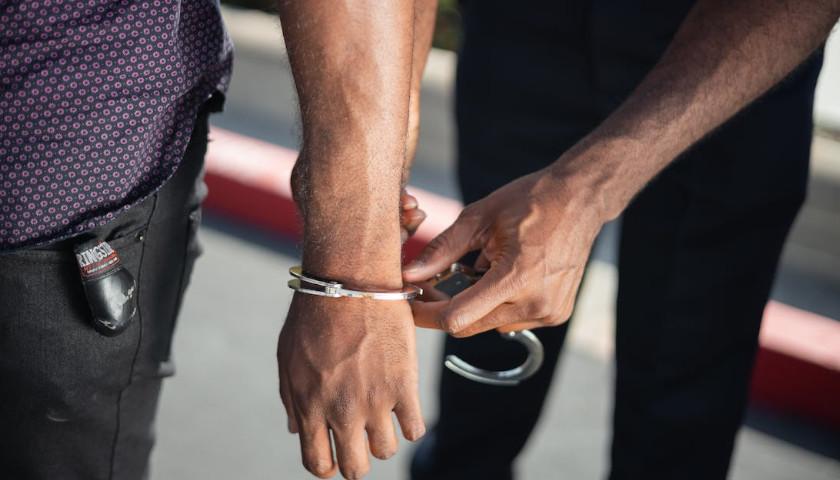
RENO, Nev. (KRNV) – There’s a new push to change Nevada law to stop the alleged abuse of power by civil forfeiture. This sparked more interest in the wake of a high-profile case where Nevada troopers confiscated a man’s life savings.
One year ago, Stephen Lara was driving behind a semi truck he wanted to pass. He was driving the speed limit, east of Sparks along Interstate 80. Dash camera from a Nevada State Police showed the trooper, in the fast lane, following Lara for several miles. Lara said he didn’t feel safe cutting in front of the trooper to pass the semi, so he trailed behind the truck. After several miles the trooper pulled him over for tailgating.
“We’re seeing a bunch of crashes out here, I’m just trying to educate people,” the trooper said. “You got your driver’s license with you?”
That’s when he started peppering Lara with questions. The trooper learned that Lara is a retired Marine who was traveling from Texas to Portola, California, to see his daughters. The trooper asks if he has any drugs, guns or large amounts of cash in the car.
“Officer: Okay. How much money you got in there?
Lara: A lot.
Officer: Okay.
Lara: [unintelligible] So-
Officer: Fair enough. Fair enough. Um, would you give me permission to search your vehicle today?
Lara: Sure.”
The trooper found nearly $87,000 in cash in Lara’s car. He also had a stack of receipts proving the money was withdrawn from the bank over time. Lara said it was his life savings. He said he doesn’t trust banks, doesn’t have a credit card and it’s his way of living within his means, without carrying debt.
“Officer: Why do you transport bulk currency like that?
Lara: Well there’s nothing illegal about it.
Officer: No.”
More than an hour later, troopers confiscated the cash, suspecting it may be drug money.
“I knew at the time he didn’t have probable cause to search my vehicle but at the same time I was like, ‘You know I have nothing to hide, I’ll just be totally transparent and then just be on my way,'” Lara later told KRNV.
Lara was left with just a few dollars in his pocket and a desperate desire to make some changes.
Will a lawsuit force a change?
Lawyers from the non-profit group Institute for Justice took on Lara’s case and filed a federal and state lawsuit. The group fights what it calls abuse of power through its lawyers on staff.
Six months after a national media group reported on this case, the feds gave Lara his money back.
Most innocent people will never see redemption like Lara did. About half of forfeitures involves less than $1,000. It would cost more money to hire an attorney than the amount lost.
Lara’s federal court case was dropped after he got his money back. The case in the Second Judicial District Court in Washoe County is still pending.
“The real problem here is that the highway patrol officials didn’t forfeit the money under Nevada law, they used a federal program called Equitable Sharing to get around the protections of Nevada law and the Nevada constitution,” said Ben Field, attorney with Institute for Justice.
The Institute for Justice said this is a form of theft – highway robbery. Field said the abuse happens when officers don’t even have to charge somebody with a crime and confiscate their money. He added that they put the burden on that person to prove they are innocent.
There’s big financial gains for agencies to do forfeitures.
“When you have highway patrol officers like this pulling Steven over and forfeiting his money through the federal government, they get to take up to 80% of the back which they can use for their own salary for their own equipment. So they have a personal financial stake in forfeiting money,” Field said.
Forfeitures and seizures bring in big bucks for Nevada agencies
Agencies report their seizures and forfeitures to the Nevada Attorney General. In the last fiscal year from July 1, 2020–June 30, 2021, Nevada agencies took in more than $9 million.
- Reno Police Dept.: $269,299.56
- Sparks Police Dept.: $74,620.12
- Washoe County Sheriff’s Office: $198,890.35
- Dept. of Public Safety: $415,316.19
Reno and Sparks Police as well as the Washoe County Sheriff’s Office didn’t provide a comment for this story. The Department of Public Safety that oversees State Police previously told KRNV it won’t comment on pending litigation.
Law enforcement have been vocal about the benefits of asset forfeitures.
“They say openly, ‘Hey, if you take away this tool that we have, you’ll probably need to raise taxes because we’re so reliant on this,'” said Robert Fellner with the Nevada Policy Research Institute.
Lawmakers continue to push for a change
Nevada lawmakers have introduced many bills to reform this law. All fell flat.
In 2019, AB420 was supported by all democrats and half the republicans in the Assembly. But Senate Majority Leader Nicole Cannizzaro killed it. She is a Clark County Deputy District Attorney and has strong law enforcement backing.
“I don’t think I’ve ever seen an issue with such widespread support and you listen to all that testimony and the only constituency on the other side of the lawn enforcement community,” Fellner said. “They have an unbelievably strong voice.”
Republican Assemblyman Jim Wheeler backed AB420 in 2019.
“I think but the civil forfeiture is important, don’t get me wrong. It’s a good law enforcement tool but there needs to be some checks and balances in there,” Wheeler said.
Wheeler said he’d like to talk to law enforcement agencies and police unions to to see if there could be some kind of adjudication before taking someone’s property or money.
“The constitution says nobody’s property should be taken without adjudication,” Wheeler said. “What I’d like to see is maybe a special master available for the police to call in to say should we or shouldn’t we.”
All proponents to change the law admit it’s going to be a hard push to pass a reform bill in the legislature. It’s failed too many times in the past, and it’s likely Senator Cannizzaro will kill it again.
It also brings in a lot of money for agencies. Without the forfeitures, law enforcement has said taxes would have to go up to make up the money in the budget.
Below is what each Nevada agency reported in seizures and forfeitures to the Attorney General’s Office from July 1, 2020–June 30, 2021.