Categories
Categories
Its all up to you now!

Categories
Welcome to the Party!
.JPG)

Texas Ranger Joaquin Jackson died this past June 15. He was 80 years old. For almost 30 years he served the state as a Texas Ranger and you can read about is life in the two great books that he wrote, “One Ranger” and “One Ranger Returns.” Following his retirement, Joaquin ran an investigation & security company and also served for many years as a director of the NRA.
Ranger Jackson and I became friends back in the 1970’s when a North Texas car theft investigation took me to Jackson’s area of South Texas. After I moved to Southwest Texas and was elected a county sheriff, Jackson and I worked a number of cases together, including a manhunt in the canyons along the Pecos river for a man who had brutally murdered his girlfriend. Having spent a good deal of time with Joaquin Jackson, I can safely say that he married the only person that he was ever afraid of.
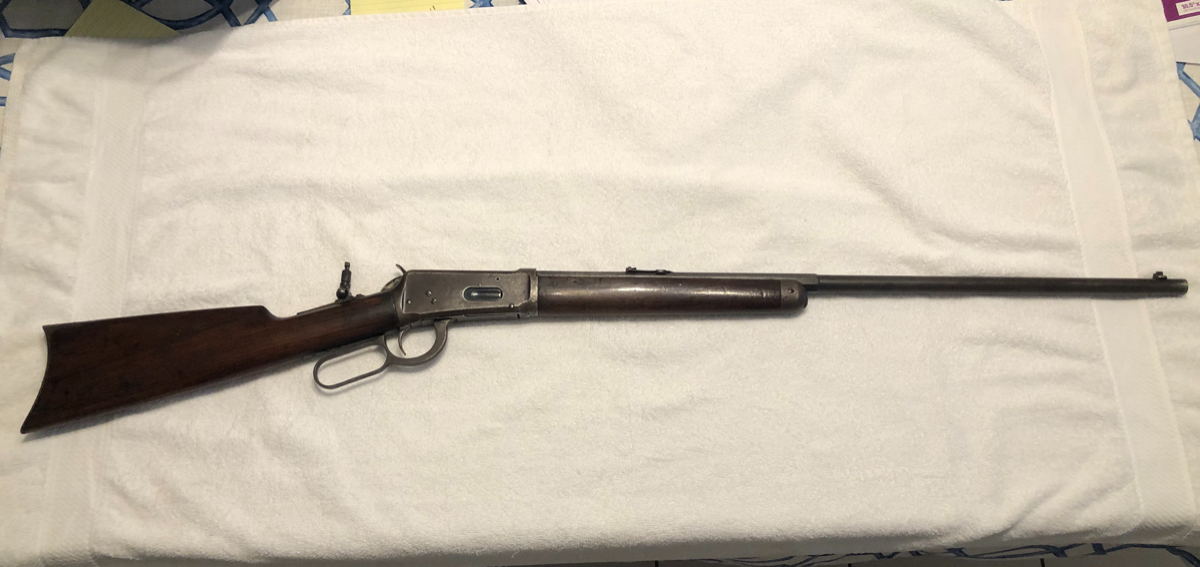
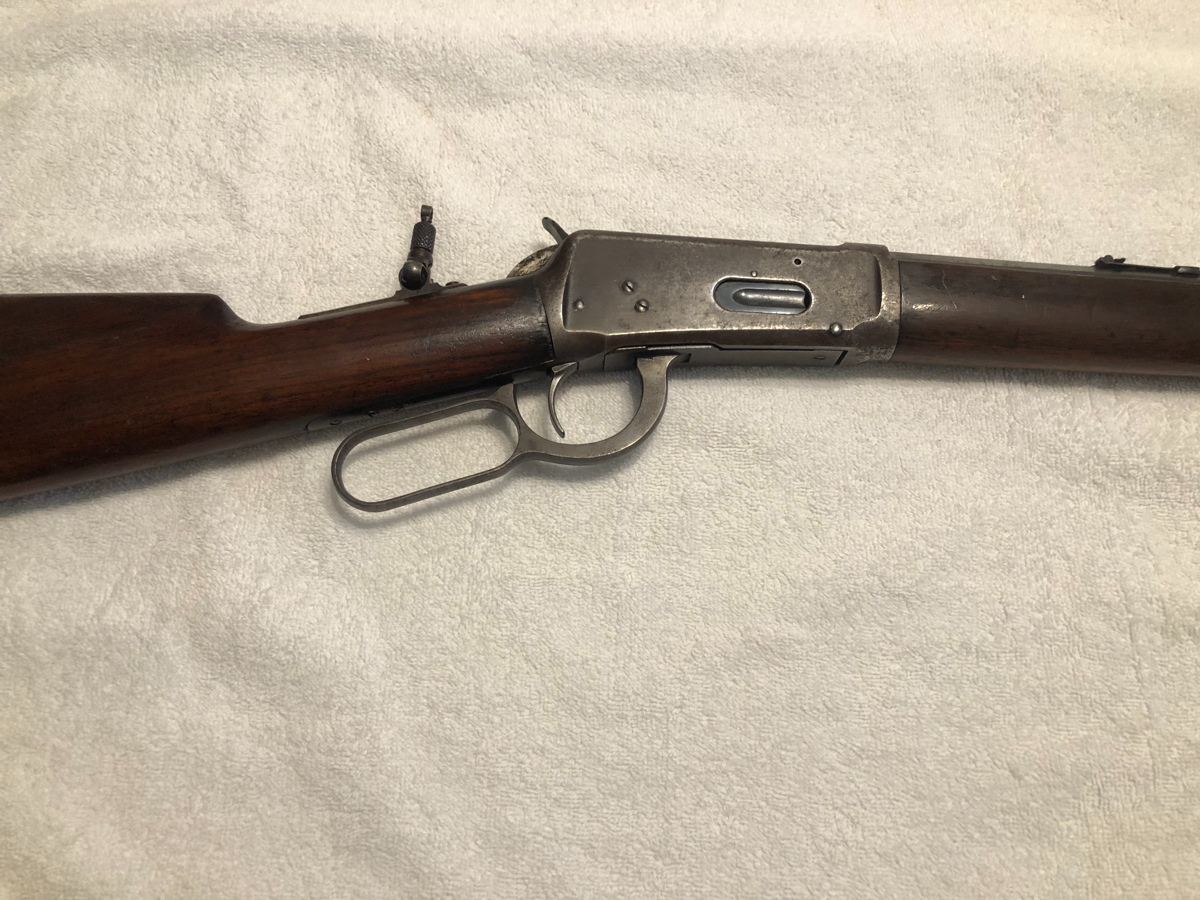
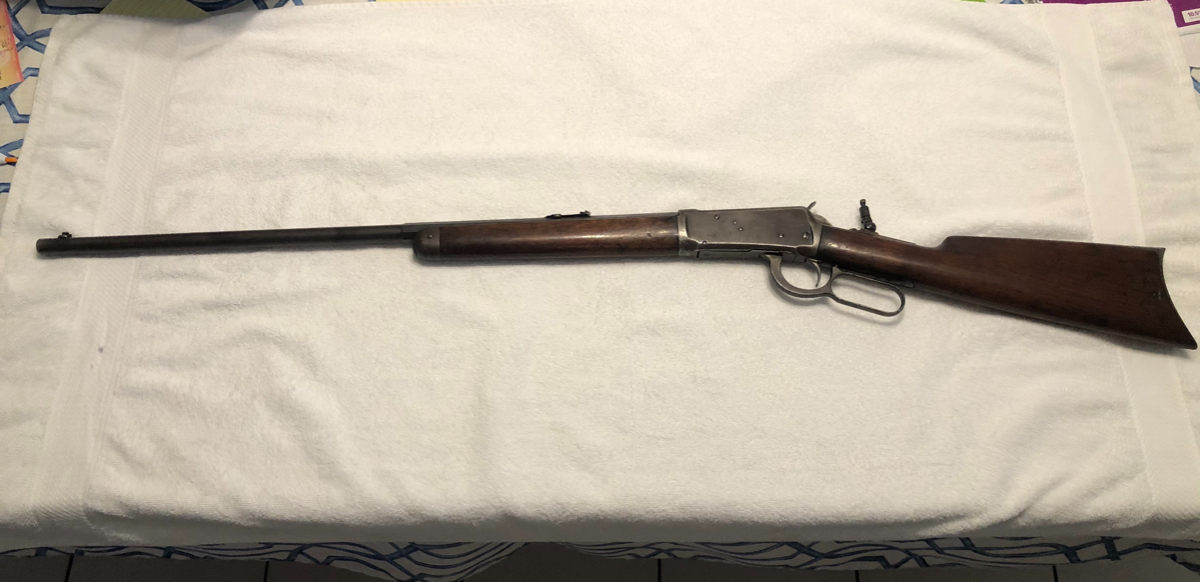
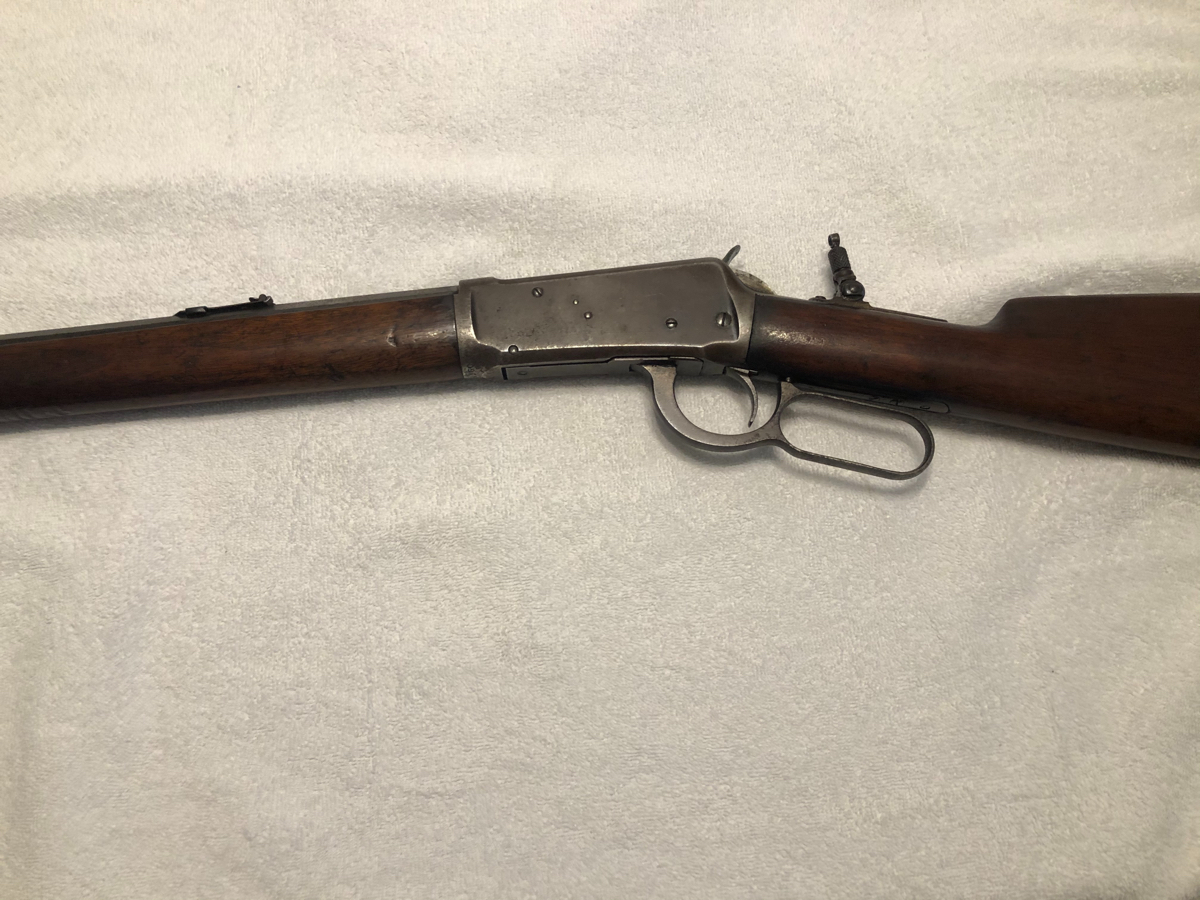
Like a lot of us, Ranger Jackson favored the 1911 pistol in .45 ACP caliber. His constant companion was a Colt Lightweight Commander with Mexican silver & gold stocks on it. In addition to that, he always had a Winchester Model 94 carbine, with an 18-inch barrel, close at hand. If things got really bad, Joaquin also had a Remington semi-automatic shotgun and a selective-fire M-14 in the trunk of his car.
What I really enjoyed about Joaquin Jackson was the fact that, for all of his adventures and dealings with criminals, he never lost his sense of humor. He loved life and you just naturally laughed a lot when you were around him.
He was also a very strong supporter of a citizen’s right to own firearms. We worked in an area that had, and still has, quite a number of gun owners. That never bothered Joaquin. He knew that those same gun owners were there to help us and all we ever had to do was to call on them. Later in life, he was led down the primrose path by a reporter and was hornswaggled into making statements that sounded like he didn’t think that citizens ought to own an AR-15. I can assure you that he did not truly feel that way and he learned a valuable lesson about talking to the press.
Joaquin Jackson was a friend, a family man, and a Texas Ranger. Above all, he was a Texas Ranger, the kind that the folks in our state are so proud of. Finally, he was my friend and I miss him.
LJ Bonham is a semi-subsistence hunter, hunting magazine editor, and firearms enthusiast who lives in the Rocky Mountains.

Learn all about the best .38, .357, and .44 caliber snub-nosed revolvers.
Creative Commons License_No Attribution_Free to Use
The Best Snub-Nosed Revolvers
What are the best .38, .357, and .44 caliber snub-nosed revolvers—ever? Tough question, there are and have been so many good ones. However, which are the true greats?
Regardless the brand, snub-nosed revolvers have one definitive characteristic: barrels three inches or shorter. Between two and two and a half inches is most common, though. Why do snubbies exist, anyway? Short barrels make them easier to conceal than their long-barreled brethren.
A secondary benefit is a shorter barrel clears a holster’s mouth quicker on the draw than a longer weapon. This reduces time to target, and in gun fights, milliseconds often separate the living from the dead.
Snubbies have been around since handguns were first developed. Small, concealable wheel lock, flint lock, and percussion cap muzzle loaded pistols were quite popular in their day. They were also favored as last ditch problem solvers by well-heeled gentlemen, women, lawmen, gamblers, and general riff-raff alike.
When Samuel Colt introduced the world’s first viable mass produced revolver in the 1830s, it didn’t take long before he, and many other gun makers who followed, developed short barreled versions. By the late 19th century, snubbies (the British called them “Bulldogs”) evolved with the then new double-action revolver into the form we recognize today.
Snub nosed revolvers have been produced in almost every handgun caliber ever invented. Today, snubbies are, in the main, offered in just a few: .38 Special, .357 Magnum, and either .44 Special or .44 Magnum. There is some overlap when you consider the magnums can fire their special counterparts (but not vis-a-versa).
Here, then, are the best snub nose revolvers—ever—in each caliber.

19th century British Webley “Bulldog.”
Wiki Commons_Commander Zulu
The Best .38 Caliber Snub Nose
Most snub nose revolvers on the market today are .38s. They are, as a rule, built on a gun maker’s smallest revolver platform so they are the most concealable snubbies available. The good news is there are so many to choose from, the bad news is it’s difficult to tell the exceptional ones.
The runners up in this segment are the Ruger LCR, the classic Colt Detective Special, the new Colt Cobra, various Taurus models, some from Rock Island Arsenal, and Rossi, to name a few. These are all fine revolvers. The Ruger brought innovative polymer frame technology to the revolver world. The tried and true Detective Special and a Rock Island model offer six shot cylinder capacity as opposed to the segment’s normal five.
As good as these guns are, there is one snubbie which still dominates and looks poised to maintain the lead for a long time. It is Smith and Wesson’s ubiquitous J-frame. The diminutive J-frame evolved from the company’s I-frame in 1950. Dubbed the “Chief’s Special,” the original Model 36 offered a carbon steel frame and cylinder, a two-inch barrel, a strong two lug locking mechanism, and a five shot cylinder.
J-frames have been produced in many variations: shrouded hammer; DAO concealed hammer; aluminum frames; even lighter Scandium frames and cylinders; stainless steel frames and cylinders; and many grip options.
I once owned a blue steel Model 36. The gun did have some short comings—which lead me to sell it. J-frames are so small, even the heavier all steel guns are a bit snappy to shoot with standard pressure .38s. I also felt the gun weighed too much to justify the .38’s reduced punch when fired from so short a barrel.
Things have changed, though. It took a while, but Smith got the formula right when they debuted the alloy-framed, steel cylinder Model 642 in the 1990s. The 642 is the old Airweight Centennial (1952) but without the questionable grip safety. The 642 is near perfect. The hammer shroud’s fluid design means it won’t snag when drawn. Plus, you can fire it from inside a coat pocket in an emergency! The concealed hammer can’t get caught on anything. The 642 is also rated for +P ammunition so it gives a bit more thump at the business end than my old Model 36—with increased recoil, though. Its light weight means you stash it just about anywhere on your person as either a primary or backup gun.
Some complain the factory trigger is a bit heavy, but if you carry it in a pocket or handbag, you’ll appreciate the extra safety margin this provides. In my experience, the triggers lighten up a bit as they are used, and some basic practice will let you master what is still a smooth, even, pull.

Smith and Wesson Model 642. The ultimate snub nose .38 in author’s opinion.
Creative Commons License_Gte893m
The Best .357 Magnum Snub Nose
In a bygone era (the mid to late 20th century) a person had just a few choices when it came to snubbies chambered for the fabled .357 Magnum. For the most part, you picked either a K-frame Smith & Wesson, such as the Model 19, or Colt’s magnificent Python. Since these guns were just short barrel service-sized revolvers with steel frames, they were on the large and heavy side compared to a J-frame.
As a former S&W Model 19 owner, I can attest a 2-1/2-inch barreled .357 Magnum is a challenge to shoot. Think enough muzzle blast to induce a migraine, muzzle flash akin to a flamethrower, and ballpeen hammer recoil. The undersized ejector rod wouldn’t always free stubborn spent cases, either. Yeah, I sold it. If I ever go this route again, I’ll get a Model 65 with a three-inch barrel and its attendant full-length ejector.
In 1988, Bill Ruger stood the snub nosed .357 world on its head when his eponymous company introduced the SP-101. No one had ever seen anything quite like it. The SP-101 had a five shot cylinder which made it thinner by a significant margin than the six-shooter Smiths and Colts. It weighed less, too. Even with the optional, easier to shoot three-inch barrel it still took up less room in a waistband than its rivals. Over-engineered, all stainless steel construction meant you could carry it next to sweat soaked skin and it wouldn’t corrode. It could digest the stoutest .357 loads as a steady diet and not shoot itself loose like some medium framed guns will.
Today, there even more choices. Ruger’s newer LCR comes in .357 as do several S&W J-frames, and Kimber’s new K6s offers the smoothest trigger in the segment. Still, these other guns don’t offer the SP-101’s wonderful balance between size, weight, power, and price. The trigger is pretty good, to boot.

Ruger SP-101. Author’s pick for best .357 Magnum snub nose.
Public Domain
The Best .44 Caliber Snub Nose
.44 caliber snub nose revolvers lay moribund for decades after World War Two. Once a popular bore size, and epitomized by the .44 Special, it fell on hard times until the .44 Remington Magnum hit the scene. The major motion picture, Dirty Harry, catapulted it back into the mainstream in 1971. However, despite the .44 Mag.’s celebrity, the market offered few snubbies.
You could get S&W’s large N-frame with a three-inch barrel, but this gun proved big and quite heavy. Not the best to cart around tucked into a waistband when you’re in summer attire. The other option lay in Charter Arms’ .44 Special Bulldog model. A good enough gun, but not the Smith’s equal in overall quality. Plus, use by infamous “Son of Sam” serial killer, David Berkowitz, in the 1970s cast a pall over the Bulldog in many people’s minds.
In the past decade the .44 Special has risen from the ashes. Some people want a big bore carry gun and the market has responded. Ruger offers the Super Redhawk .44 Magnum with a two-inch barrel and their GP-100 in .44 Special. Smith and Wesson have their ubiquitous N-frame available with three or even one-inch tubes and now the Model 69, a five-shot L-frame, both in .44 Magnum. Taurus has several .44s suitable for carry, in particular the Tracker and M445. Charter Arms is still around and has improved the Bulldog. There are other, less well known gun makers with .44 snubbies as well.
The .44 snub noses present unique challenges for designers and shooters both. It is difficult to balance size with power due to a .44 cartridge’s diameter. Lighter, more compact guns, such as the Bulldog and M445, ramp up the .44 Special’s recoil and they intimidate some shooters. This can be said about all the .44 Magnum snubbies, the Tracker and S&W’s scandium offerings in particular. The large frame guns are less than comfortable to carry concealed all day, but they offer the best shooting dynamics when stuffed with .44 Specials.
I’ve shot a custom three-inch barrel S&W Model 57 in .41 Magnum. It’s not as bad as you might imagine. My guess is a similar size and weight .44 Mag. would prove just as manageable as the .41 if stuffed with moderate 185 or 200 grain loads.
The best .44 snub nose revolvers offer a balance between bulk and power. Based on this metric, the S&W Model 69 is the best in the lot. Its medium frame and five-shot cylinder allow it to carry as well as a big bore can, yet it has enough heft to dampen recoil. The fact it can shoot either specials or magnums gives it a versatility which the dedicated .44 Special guns do not possess.
Its just a pity that we did not adopt this round back then instead of playing politics with our Allies! But now we have adopted the 6.8 round. Which is a sorta, kinda version. Oh well better late than never!
Grumpy
Categories
Surprising Things That Are War Crimes

I’m A Retro-Guy
In light of all the “retro-this” and “retro-that” it suddenly dawned on me I was a “retro” myself. And, as a matter of fact, so are most of the people I know.
With today’s on-going diatribe about “feelings,” and “feng-shui” (whatever that is) and all the other bewildering definitions of people’s, shall we say, “leanings,” I figured it was time to clear the air a bit. As a general rule, gun-people are usually fairly easy to define as reliable, law-abiding, family folks with fairly clear definitions regarding their roles in life. Moms are, well moms and dads are, well, dads. Kids are kids and moms and dads take care of the kids. At least that’s how it was in my house.
Now not to disparage those of you who have elected to take another track in life, I would like to nonetheless point out some obvious facts regarding most of us who enjoy shooting. I’m not saying if you don’t do these sorts of things, you’re not a good American; just that you don’t fit the basic mold. And that’s not a bad thing — usually. Frankly, I’m happy to see anyone out enjoying shooting, hunting, collecting and otherwise messing about with guns and stuff.
I felt it might be nice to sorta’ define what a “Retro-Guy” might be. It would make it easier to simply point at this and say something like: “Ah, here, this is the kinda’ stuff I do.” Feel free to keep a copy in your wallet to help you over those sometimes awkward moments trying to answer the question: “Why do you do that?”
The Retro-Guy Code
• A Retro-Guy, no matter what the women insists, pays for the date.
• A Retro-Guy DEALS with IT — be it a flat tire, a burglar, or a natural disaster, you DEAL WITH IT.
• A Retro-Guy not only eats red meat, he often kills it himself.
• A Retro-Guy should know how to properly kill stuff (or people) if need be. This falls under the “DEALING WITH IT” portion of The Code.
• A Retro-Guy is allowed to seek professional help for major mental stress such as drug/alcohol addiction, death of your entire family in a freak tree chipper accident, favorite bird dog expiring, etc. You are NOT allowed to see a shrink because Daddy didn’t pay enough attention to you. Daddy was busy DEALING WITH IT.
• A Retro-Guy should have at least one good wound he can brag about.
• A Retro-Guy knows that owning a gun is NOT a sign you’re riddled with fear. Guns are TOOLS: See “DEALING WITH IT.”
• When a Retro-Guy is on a crowded bus and ANY woman gets on, that Retro-Guy stands up and offers his seat to that woman, then looks around at the other so-called men still in their seats with a disgusted look on his face.
• A Retro-Guy will also give up his seat to any elderly person or person in military dress, except officers above second lieutenant.(NOTE: The person in military dress may turn down the offer but the Retro- Guy will ALWAYS make the offer to them and thank them for serving their country.)
• A Retro-Guy knows how to say the Pledge properly, and the words to the Star Spangled Banner.
• A Retro-Guy sharpens his own knives and knows how to use tools.
• A Retro-Guy owns tools, usually lots of ‘em.
• A Retro-Guy doesn’t need a contract — a handshake is good enough.
• A Retro-Guy will take care of his neighbor’s yard when said neighbor is deployed overseas on military duty.
• A Retro-Guy doesn’t immediately look to sue someone when he does something stupid and hurts himself. We understand sometimes — in the process of doing things — we get hurt and just DEAL WITH IT.