
May 4, 1970, was a Monday. The Vietnam War was ripping Southeast Asia apart, while an altogether different war raged across and throughout the American heartland. On the campus of Kent State University in Kent, Ohio, forces representing the Establishment were arrayed against a motley mob of some 2,000 students, hippies, stoners, bikers, and sundry anti-war protestors.
Fertile Ground for Chaos
 Student-led protests against the Vietnam War arose on college campuses across the country.
Richard Nixon was two years into a term brought about by his promises to end American involvement in Vietnam. The My Lai Massacre in November of 1969 put an exceptionally ugly face on the conflict, while the pressure of a national draft kept the war personal for American young people. By 1970, student protests at colleges across the country were becoming overtly violent.
 Jerry Rubin led the Yippie movement. I listened to a couple of his period interviews. This guy was a massive turd.
On April 10, Jerry Rubin, the leader of the Youth International Party, announced, “The first part of the Yippie program is to kill your parents. They are the first oppressors.”
On April 30, President Nixon announced the invasion of Cambodia, a move widely seen as an unwelcome expansion of the conflict in Vietnam. By the first of May, demonstrations were being held both formally and otherwise across the country.

On Friday, May 1 in Kent, Ohio, protesters began vandalizing the downtown area by breaking windows and pelting police cars with beer bottles. Kent Mayor LeRoy Satrom declared a state of emergency and reached out to Ohio Governor Jim Rhodes for support. Governor Rhodes authorized the deployment of two Infantry companies and an Armored Cavalry troop. On the evening of Saturday, May 2, protesters burned the Kent State ROTC building to the ground.

For much of that weekend, chaos reigned across the Kent State campus. Law Enforcement, firefighters, National Guardsmen, and anyone else viewed as being an authority figure were pelted with rocks and bottles. The Guardsmen responded with tear gas. Protesters were commanded to disperse at the point of the bayonet. Though there were a few minor injuries most of the damage was thus far confined to property.
Unleashing Hell

By noon there were violent running encounters between the roughly 2,000 protesters and some 77 National Guard troops armed predominantly with M1 rifles. Windy conditions minimized the effectiveness of tear gas, and protesting students lobbed volleys of rocks at the Guardsmen. The crowds of protesters dispersed and then coalesced fairly randomly in response to the movements of the National Guard troops. Some protesters departed the area, but a great many pursued the main body of troops verbally taunting them and throwing stones.

The soldiers moved back toward the campus Commons area. The main body of protesters followed them shouting and throwing rocks. Some of the Guardsmen then stopped, knelt, and trained their rifles on the rowdy mob. Sergeant Myron Pryor then purportedly drew his M1911A1 .45ACP pistol and fired at the crowd. There followed a ragged volley of rifle fire lasting 13 seconds.
The Forensics of the Tragedy

When SGT Pryor first fired his weapon the nearest student to the National Guard formation was 71 feet away. 29 of the 77 Ohio National Guard soldiers later reported having discharged their weapons. Over the course of thirteen seconds, they fired a total of 67 rounds.

Four students were killed and another nine injured. Two of the students, Jeffrey Miller and Allison Krause, were participants in the protest. The other two, William Schroeder and Sandra Scheuer, were walking between classes and not actively involved. Schroeder was actually a member of the Kent State ROTC unit.

Scheuer was shot through the neck at 120 meters. Schroeder was shot in the chest from a range of 116 meters. Krause was hit in the chest from 105 meters, and Miller was shot in the head at 81 meters.

Of the nine protesters who were injured, all were male. Distances ranged from 22 to 230 meters. Dean Kahler was left permanently paralyzed with a spinal cord injury. James Russell was struck in the forehead with birdshot.
 This photo was taken immediately after the Guardsmen stopped firing.
There were allegations that the exchange was precipitated by gunfire against the Guardsmen. The Ohio National Guard commander, General Robert Canterbury, had personally given the order to lock and load rifles prior to the push to disperse the crowds.
The Weapons

SGT Pryor’s M1911A1 was an evolutionary development of John Moses Browning’s extraordinary M1911. Developed around the beginning of the 20th century, the M1911 was a radically advanced sidearm for its day.
The M1911 saw active service with American forces during WW1. In 1924 the basic design was slightly tweaked into the definitive model that carried US forces through WW2, Korea, and Vietnam. These changes included a longer grip safety spur, simplified grips, a shorter trigger, frame cutouts behind the trigger, an arched mainspring housing, and a handful of lesser adjustments. The resulting pistol was and is reliable, relatively accurate, and undeniably powerful.
The M1 rifle entered service in 1936 and soldiered on as the standard Infantry rifle for the US Army until it was supplanted by the M14 in 1958. A semiautomatic gas-operated design, the M1 was an integral part of the Allied victory during WW2. The weapon obviously remained in service with Army Reserve and National Guard units until the 1970s.
Though bulky and heavy by modern standards, the M1 was a generation more advanced when compared to the bolt-action weapons used by every other major combatant during the Second World War. Given the weapon’s length and rugged construction, it also made for a proper close-quarter tool when equipped with a bayonet. The M1 is rightfully revered by military history enthusiasts as well as those who carried the weapon operationally.
At least one of the Guardsmen involved in the Kent State shooting was carrying a pump-action 12-gauge shotgun. I’ve pored over the period pictures and cannot definitively pick out a shotgun. However, the US Army has used a wide variety of scatterguns operationally over the years. The Remington 870 was in common use at the time. The Winchester 1897 Trench Gun saw service all the way from WW1 up to the 1991 Gulf War.
The Ohio National Guardsmen used M79 grenade launchers to throw tear gas canisters. In use from 1961 to the present, the M79 has been variously known as the “Thumper,” the “Bloop Tube,” the “Elephant Gun,” and “Big Ed” by the American troops who wielded it. Australians referred to this beloved weapon as the “Wombat Gun.”
 The M79 is exceptionally accurate in experienced hands.
The M79 utilizes the High-Low Propulsion System that minimizes recoil from its 40x46mm grenades. The Mk19 automatic grenade launcher fires 40x53mm grenades that are not interchangeable with those for the M79.
 The HK M320 is gradually replacing both the M79 and M203 grenade launchers in US service. I realize this in an effective weapon, but that thing is just bug ugly.
The M79 was largely replaced by the under-barrel M203 which has itself been largely supplanted in US service by the HK M320.
Aftermath

More than anything else a single photograph was taken by John Filo defined the horror of the Kent State shootings. Filo was a photojournalism student at the time and snapped the picture spontaneously. He won the Pulitzer Prize for the image.

The young lady in the photo is a 14-year-old runaway named Mary Ann Vechio. Vechio was an Italian immigrant who left her home and Westview Junior High School in Opa-Locka, Florida, to illicitly visit the Kent State campus. In the aftermath of the shooting and the photo, Vechio traded her story to a local reporter for a bus ticket to California. Police apprehended her before she could get on the bus and returned the girl to her family. She later sued T-shirt companies for 40% of the profits from shirts featuring her likeness.

As is the case with all such chaotic public events, controversy swirls to this day over the details. Terry Norman was a junior at Kent State at the time of the shootings and was surveilling students and demonstrators at the behest of the campus police and the FBI. He was equipped with a gas mask and was carrying a concealed .38 revolver at the time. Though the details are certainly murky, it has been alleged that Norman discharged his handgun as many as four times some 70 seconds prior to the Guardsmen opening fire with their rifles.

Eyewitness accounts have been conflicting as has been forensic analysis of the scant audio tapes available from the event. However, had Norman actually discharged his weapon in self-defense as has been alleged it would lend credence to the National Guard version of events that they fired in response to gunfire they perceived to be directed at them. The moment was certainly violent and chaotic enough to have been confusing.

The Kent State shootings ultimately helped catalyze the US withdrawal from Vietnam as well as the downfall of President Richard Nixon. This event also transformed crowd control tactics, tools, and techniques around the world. However, as I researched this sordid event I was inexorably drawn back to a single timeless truth. No matter the righteousness of your cause, whether you are on a college campus, an energized public square, or the Gaza strip, it is seldom wise to throw rocks at guys with guns.
 The Kent State shootings resulted in massive student protests across the country that ultimately helped end US involvement in Vietnam.




Categories
Winchester Model 70 Pre-War
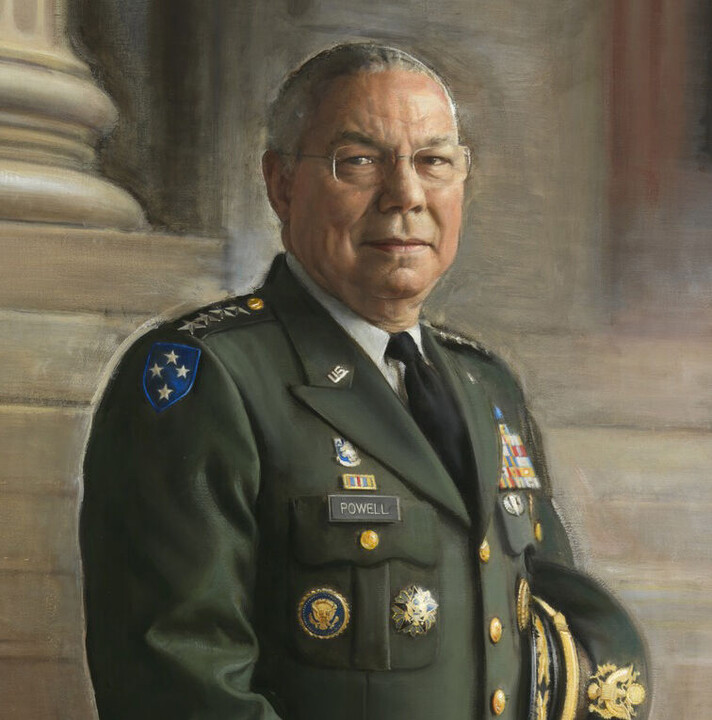
“Leadership is the art of accomplishing more than the science of management says is possible.”
This is one of many quotes attributed to legendary public statesman and former Secretary of State Colin Powell.
Since his retirement from public office in 2004, Powell has spent much of his time sharing his leadership knowledge with the business community. In his 2012 book, It Worked For Me, Powell attributes his success to hard work, straight talk, respect for others, and thoughtful analysis.
At the heart of the book are Powell’s “13 Rules” — ideas that he gathered over the years that formed the basis of his leadership principals.
Powell’s 13 Rules are listed below. They are full of emotional intelligence and wisdom for any leader.
1. It Ain’t as Bad as You Think! It Will Look Better in the Morning. Leaving the office at night with a winning attitude affects more than you alone; it conveys that attitude to your followers.
2. Get Mad Then Get Over It. Instead of letting anger destroy you, use it to make constructive change.
3. Avoid Having Your Ego so Close to your Position that When Your Position Falls, Your Ego Goes With It. Keep your ego in check, and know that you can lead from wherever you are.
4. It Can be Done. Leaders make things happen. If one approach doesn’t work, find another.
5. Be Careful What You Choose. You May Get It. Your team will have to live with your choices, so don’t rush.
6. Don’t Let Adverse Facts Stand in the Way of a Good Decision. Superb leadership is often a matter of superb instinct. When faced with a tough decision, use the time available to gather information that will inform your instinct.
7. You Can’t Make Someone Else’s Choices. You Shouldn’t Let Someone Else Make Yours. While good leaders listen and consider all perspectives, they ultimately make their own decisions. Accept your good decisions. Learn from your mistakes.
8. Check Small Things. Followers live in the world of small things. Find ways to get visibility into that world.
9. Share Credit. People need recognition and a sense of worth as much as they need food and water.
10. Remain calm. Be kind. Few people make sound or sustainable decisions in an atmosphere of chaos. Establish a calm zone while maintaining a sense of urgency.
11. Have a Vision. Be Demanding. Followers need to know where their leaders are taking them and for what purpose. To achieve the purpose, set demanding standards and make sure they are met.
12. Don’t take counsel of your fears or naysayers. Successful organizations are not built by cowards or cynics.
13. Perpetual optimism is a force multiplier. If you believe and have prepared your followers, your followers will believe.

Colin Powell’s rules are short but powerful. Use them as a reminder to manage your emotions, model the behavior you want from others, and lead your team through adversity.
Rest in Eternal Peace, General!
Thank you for your service to the United States, the world, and Mankind.

The world is a better place for you having been in it for 84 years.
Godspeed!
How and why does the Florida Man phenomenon exist? Florida Man by Mike Baron.
Intro: Who is Florida Man?
In April of 2023, Patrick Vandermeyden-Miller stole a $540 electric scooter from a Target in Flagler County, Florida. Minutes later, when the Flagler County police arrived, they found Vandermeyden-Miller in front of the store assembling his getaway vehicle—the scooter he had just stolen. News coverage of the thief’s half-witted escape quickly emerged on r/FloridaMan, a subreddit with over 773k followers “dedicated to the world’s worst superhero, Florida Man.”

In October of 2019, a Florida human named Cody Meader was arrested for removing a doll off store shelves at a St. Petersburg Target and “dry humping” the toy. Meader was taken into custody and admitted to doing “stupid stuff.” The toy was removed from the store, and Meader’s antics were chronicled by local news outlets and eventually disseminated on r/FloridaMan, Twitter, and other social media platforms.

Over the past decade, Florida Man has ascended from obscure internet schtick to mainstream meme, highlighting eccentric news headlines concerning the outlandish criminal exploits of Florida residents. To give readers a sense of what Florida Man is about, I took a sample of posts from the r/FloridaMan subreddit and visualized the words most commonly used in these headlines.

You’ll notice:
- Florida Man is always getting arrested, in constant conflict with law enforcement. He is a rogue vigilante, but instead of pursuing justice, Florida Man commits absurd crimes.
- Florida Man often wields a gun, alcohol, drugs, or some combination of the three.
- A significant portion of Florida Man tales involve alligators or sexually-charged situations.
Memes don’t transpire in a vacuum. Their spread is rapid, but their recognition and proliferation are often powered by long-standing cultural representations (or misrepresentations). So today, we’ll explore Florida Man’s rise, the mechanics driving the meme’s growth, and the unexpected circumstances surrounding its appeal.
Florida Man’s Origin Story
Florida Man’s roots can be traced to an unlikely origin—government transparency. Passed in 1967, Florida’s Sunshine Laws mandate that all government records, including arrest reports, be made accessible to the public, ensuring transparency in the state’s operations. As a result, all Florida arrest records are posted online, providing digital spectators with an abundance of eccentric crime reports—a gold mine of Florida Man source material.
Citizens of the internet took notice of this ready-made comedic content, spurring a rise in new stories and social media posts documenting Florida’s quirky crimes. Slowly, the meme took shape.
- In 2005, the popular internet message board FARK, a Reddit predecessor, created a “Florida” tag for its high volume of Florida-centric stories.
- On January 26, 2013, the Twitter account @_FloridaMan was created to share bizarre news headlines featuring the words “Florida Man.”
- Five days later, the subreddit r/FloridaMan was created to fulfill a similar purpose.
Over the next few years, Florida Man remained a niche internet gag, an inside joke circulating within smaller web communities, until two watershed events propelled the meme to mainstream popularity.
A March 2018 episode of FX’s Atlanta referenced the phenomenon, portraying Florida Man as a mythical alt-right psychopath perpetrating random acts of chaos. The episode was even named “Florida Man.”
Atlanta elevated Florida Man to a well-known comedic punchline, but it was 2019’s “Florida Man challenge” that would propel the meme into the zeitgeist. On March 19, 2019, Twitter user @g_pratimaaa urged followers to Google “Florida Man” in tandem with their birthday and to share their first search result.

The tweet garnered over 101,000 likes and 23,800 retweets within 48 hours. Word of the challenge quickly spread across the interwebs, its virality rivaling that of The Ice Bucket Challenge, Planking, Fidget Spinners, and Gangnam Style. When we look at r/FloridaMan subreddit membership, we see a spike in subscribership in March of 2018 following the Atlanta episode and an escalation of this trend with March 2019’s Florida Man challenge.

The growth of r/FloridaMan traces the arc and timeline of the meme’s ascension but understates the challenge’s ubiquity in early 2019. Examining Google data, we find a dramatic spike in queries in March of that year, with “Florida Man” surpassing search traffic for societal ills like “diabetes” and “climate change.”

Florida Man traffic quickly receded from its March 2019 highs following the end of the internet challenge. Yet the phenomenon would have long-standing implications for Florida’s media landscape and cultural identity. Florida Man, a digital tapestry of the state’s most misguided citizens, would change how everyday Floridians lived their lives.
Need Help with a Data Project?
Enjoying the article thus far and want to chat about data and statistics? Need help with a data or research project? Well, you’re in luck because Stat Significant offers data science and data journalism consulting services. Reach out if you’d like to learn more.
Email daniel@statsignificant.com
The Surprising Mechanics of the Florida Man Meme
Media publications compete in a marketplace for attention. News suppliers guess what readers want to see, and consumers reward these attempts with a few minutes of attention. Florida Man stories are the product of three distinct populations: news outlets producing articles fit for Florida Man syndication, people reading and sharing these articles, and the criminals that inspire this content.
I always assumed progressives developed and disseminated the meme to subvert Florida for its politics and perceived otherness. I presumed that the Florida Man phenomenon emerged from sociopolitical tensions in the U.S., with left-leaning media stereotyping an entire state as a form of retribution. While such beliefs might contribute to the meme’s consumption, they aren’t the main force behind its production.
When we look at stories mentioning “Florida Man,” we find the term most heavily utilized by Florida-native publications.

Initially, I found this rather confusing. Usually, regional papers don’t mention their state’s name when talking about locals. The New Hampshire Union Ledger does not refer to subjects as “New Hampshire Man,” and the Omaha World News does not chronicle “Nebraska Man.” Still, there is a chance these publications may have been referring to a “South Florida Man,” using the phrase with some sort of qualifier.
To mitigate this confounding variable, we can look at “Florida Man” mentions over time. If this term is used for typical reporting reasons, its prevalence would be consistent. When we look at Florida’s three largest newspapers, we see a sustained spike in “Florida Man” mentions around 2018 and 2019, mirroring the term’s ascension into the mainstream, followed by elevated usage in the aftermath of the internet challenge.

Said differently, these publications may have tweaked their reporting to promote sensational stories worthy of virality, adding the words “Florida Man” for search discovery purposes. Let’s say you search “Florida Man October 9.”

You see a few goofy stories published by Florida-based publications (highlighted by “Naked Florida man tries to start fight club at Chick-fil-A”) and click on one of these articles. Perhaps you stay on this page for a minute or two, reading about this mysterious Chick-fil-A fight club, enough time so that this website collects advertising revenue. Believe it or not, this frivolous search query that was inspired by a viral internet challenge just made someone money.
Florida-based news outlets may view the Florida Man phenomenon as a valuable mechanism for traffic acquisition. Some publications, like the West Palm Beach-based The Messenger, even post their stories directly on r/FloridaMan, circumventing the notion of organic virality altogether.

These publications document the humiliations of their populace for the enjoyment of readers in other states—or at least that was my initial assumption. As is a common theme with pretty much this entire analysis, my initial assumption was quite wrong. My self-righteousness was misplaced (maybe I’m out of touch).
Believe it or not, the biggest consumer of Florida Man content is, in fact, Florida. Surprisingly, Google searches for “Florida Man” and “Florida Man Meme” are highest in the Sunshine State.

At first pass, I found this extremely counterintuitive. Apparently, Florida Man spotlights bizarre news stories about Floridians produced by Florida-based media publications, and quite surprisingly, these stories are heavily consumed by Florida residents. How is this possible?
These results were perplexing. But then I remembered the first time I learned of Florida Man. I was at a Thanksgiving dinner when a Floridian at the table began explaining the meme to family and friends. She described Florida Man’s premise with great excitement and recounted some of her all-time favorite headlines. At one point, I asked her why she liked the joke if it mocked her home state. She shrugged and said, “Because it’s funny.” This was something I never considered.
People derive humor and belonging through shared identity. Embracing the Florida Man meme likely provides Floridians a sense of cultural identity, uniting the state’s residents in a shared experience of Florida’s weirdness. Perhaps Florida Man is a badge of honor—a way to celebrate all that makes the state strange and lively.
Final Thoughts: The Maryland Man Challenge

The U.S. has a handful of states whose very mention implies certain sociopolitical values. This logic often condenses America’s largest regions to negative stereotypes: Californians are out-of-touch progressives, Floridians perpetrate bizarre crimes, and Texans like talking about Texas and things being bigger in Texas.
The pandemic further calcified these state-centric cultural delineations. The media fixated on state-level data, correlating COVID case fluctuations with regional policies and political posturing from that state’s governor. It was popular to say things like “Illinois is not doing well right now” or “Can you believe Mississippi right now?” This framing—of humans as cultural extensions of arbitrary state lines—is silly. I do not walk around thinking I am a Maryland Man living with my California Girl wife and two California Cats.
That said, regional identities provide individuals with a feeling of belonging and connection, especially in a country as vast and diverse as the United States. I grew up in Maryland, a state known for crabs, Old Bay seasoning, a beer colloquially referred to as “Natty Bo,” and a memorable line of dialogue from the movie Wedding Crashers (“crabcakes and football, that’s what Maryland does”).

I often feel little connection to my home state because it’s less memorable than Texas, Florida, or California. But then I’ll see Old Bay seasoning or a shirt featuring Old Bay seasoning, and I’ll feel an inexplicable wave of joy.
America’s culture wars tend to reduce states to stereotypes, fixate on otherness, and frame these differences in adversarial terms. My initial understanding of Florida Man was born out of cynicism. I assumed there was no way Floridians would celebrate the meme and that this was yet another way for people to subvert something they didn’t agree with. I was wrong. Florida Man is not a mascot designed to humiliate Florida; it’s a mascot celebrating Florida’s quirkiness.
If someone came up with a Maryland Man meme, I’d probably find it funny. I’d read the goofy news stories and participate in the Maryland Man challenge. I’d likely joke about the meme with other Marylanders and feel more connected to my community in the process.