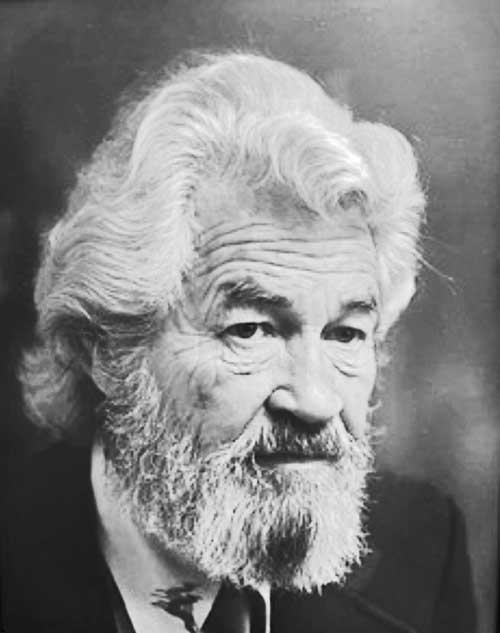
Uncle Bob was a wild man. He was also a patriot and a truly great American.
Everybody needs an Uncle Bob. In a family rife with characters, he stood out from the rest. Uncle Bob just had no filter. Born the 13th of 14 children, Uncle Bob always looked a bit disheveled. Alcoholics are like that. However, to us kids, Uncle Bob was fun, enigmatic — and cool.
Once we were at a big throwdown at my great aunt’s place. She was a wealthy lady with a live-in housekeeper and cook named Papita. Papita cooked artistically, fixing color-coordinated dishes using exotic vegetables. The kids despised her food but were commanded to eat it cheerfully on pain of death. This particular day there were perhaps a dozen of us total. Uncle Bob just happened to drop by.
Papita served dinner with a flourish. The squash casseroles, steamed beets and sundry quiches elicited oohs and ahhs from the accumulated womenfolk. I began inwardly counting the minutes until breakfast myself. Uncle Bob surveyed the massive spread and said matter-of-factly, “I’m ordering pizza. Anybody with me?”
To the utter horror of the ladies present, he then glided into the living room trailing a battalion of gleeful children. He was like the Pied Piper of Pizza.
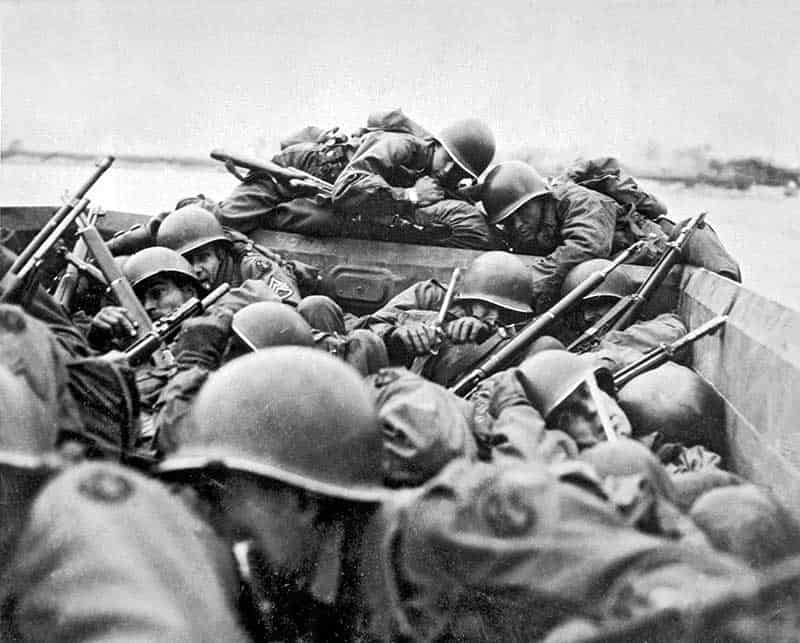
Operation Plunder was the overarching Allied initiative to breach the Rhine River into Germany. The Germans did not take it lightly.
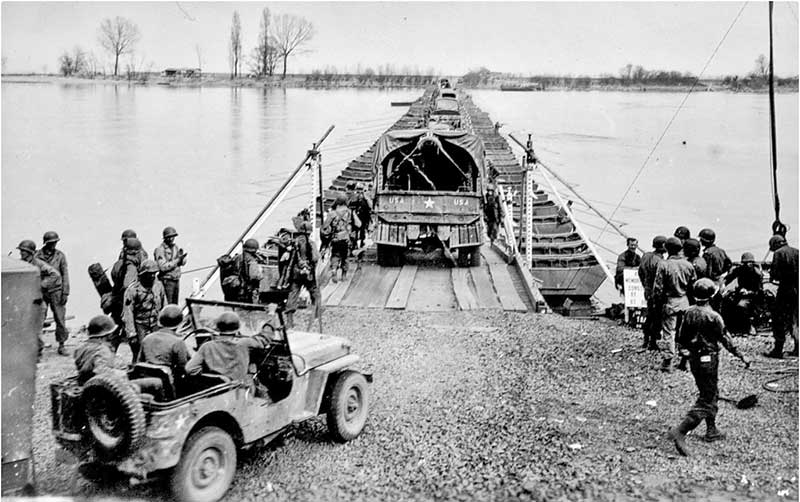
Uncle Bob’s bridge at Oppenheim, Germany, got Patton
and his tanks across the Rhine River.
The Teller Of Tall Tales
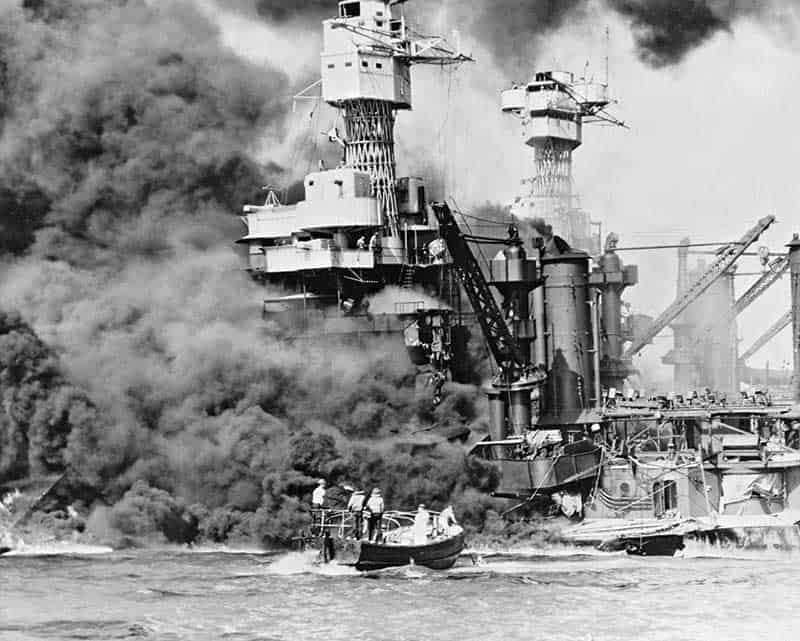
We always assumed Uncle Bob was just a liar. He oft-related a story about shooting down a Zero at Pearl Harbor with an M1 rifle. Uncle Bob was a combat engineer in the Army, not the Navy, so we always figured he had hallucinated this yarn. He also told of building a pontoon bridge across the Rhine River. He claimed General Patton called down to him and said, “Soldier, will that bridge hold my tanks?”
Uncle Bob said he answered, “C’mon General, it’ll hold your tanks.”
General Patton then walked to the middle of the bridge, unbuttoned his fly and urinated into the Rhine River. The revered general said he had wanted to do that for four years. His soldiers then joined in the celebration, collectively urinating into the Rhine.
We had always enjoyed Uncle Bob’s stories but took them with a serious grain of salt. I found out only years after he passed the Army did indeed pull combat engineers from the Pacific to Europe in support of the fight against the Nazis. Imagine my surprise when I read Citizen Soldiers by Stephen Ambrose and found Uncle Bob’s story about building Patton a bridge across the Rhine related exactly as he had always told it to us. Apparently Uncle Bob’s stories were true.
Patton relieved himself off of Uncle Bob’s pontoon bridge at Oppenheim, Germany, on March 23, 1945. He had planned to keep the event a secret just to see how deep into Germany he could push before the Nazis pushed back. Once he heard Montgomery was nearing the Rhine himself, Patton cabled Omar Bradley and asked him to shout it from the heavens. The evening of his crossing Patton sent the following cable to General Eisenhower, “Dear SHAEF [Supreme Headquarters Allied Expeditionary Force], I have just pissed into the Rhine River. For God’s sake, send some gasoline.”
Uncle Bob’s bridge at Oppenheim, Germany, got Patton
and his tanks across the Rhine River.
Ruminations
Uncle Bob weighed 130 lbs. when he went off to war. He earned a football scholarship to Louisiana Tech at the same size. You’ve all heard the old adage, “It’s not the size of the dog in the fight but rather the size of the fight in the dog.” They wrote it about Uncle Bob.
Today’s generation doesn’t make people like Uncle Bob anymore. They honestly don’t deserve them, either. Had George Patton served in today’s politically enlightened woke Army he never would have made Captain. Uncle Bob would likely have been rejected outright as underweight.
Uncle Bob never was quite right after the war. He killed a fifth of liquor every afternoon and went to bed when the bottle was dry. He married late in life and died without children.
Though I was too young to know him well, I heard his stories passed around the family back during a time when such stories were commonplace in American families. He spoke obliquely of the carnage at Pearl but would seldom elaborate. With the benefit of age, maturity, hindsight and a little time in uniform myself, I now understand why.
Though Uncle Bob survived the war, in reality he nonetheless still gave his life for his country. The nightmares and the brokenness drove him toward drink and away from healthy human relationships. He also had quite a lot of company in that regard. Across the country young men who had seen and assimilated too much too soon tried and failed to exorcise their demons at a time when the world didn’t recognize the problem. We owe all those awesome old guys a debt we can never hope to repay.
Categories
Yes indeed! N.S.F.W.




Categories
The APS Stechkin Machine Pistol
And a dissenting voice

Commanding Battery A, 4th United States artillery in Major General Winfield S. Hancock’s Second Corps, First Lieutenant Alonzo H. Cushing stared down the mighty Army of Northern Virginia’s final fury at the Battle of Gettysburg on Friday, July 3, 1863.
As nearly 13,000 rebel soldiers streamed forward across open fields with the dream of breaking the center of the Union line on Cemetery Ridge and achieving a war-winning victory for the Confederacy, the steely-eyed 22 year old Wisconsinite gave every ounce of his devotion to the defense of the threatened Federal position.
Struck by a searing hot piece of shrapnel during the Confederate artillery barrage that preceded the assault, both Cushing’s thighs and his stomach were ripped open. With all of his officers dead and only two of his guns still operational, the first lieutenant did not waver, holding his belly to keep his entrails from spilling out and continuing to perform his duty. As other artillery units withdrew from the ridge, Cushing ordered his remaining guns moved up to the stone wall at “the Angle” to meet the enemy onslaught head-on.
Despite pleas from his subordinates urging him to go to the rear for medical treatment, Cushing remained firm: “No, I stay right here and fight it out or die in the attempt.” With the Confederates less than 100 yards away, he grasped the lanyard that fired his gun and shouted, “I will give them one more shot!” As his weapon roared one last time, the young artilleryman was shot in the head and fell dead beside his gun.
Alonzo Cushing gave the last full measure of devotion in defense of the Union center and played an unforgettable role in the resistance that broke the back of the Army of Northern Virginia on July 3, 1863. One hundred fifty-one year after his heroism at Gettysburg, Cushing was posthumously awarded the United States military’s highest decoration for valor under fire, the Medal of Honor.
Read the full story of the epic Battle of Gettysburg in this three part series: Day One – The Armies Collide, Day Two – A Time for Heroes, and Day Three – Triumph and Tragedy.
Sources
American Battlefield Trust: Alonzo H. Cushing.
Battle Cry of Freedom: The Civil War Era by James M. McPherson.
Hallowed Ground: A Walk at Gettysburg by James M. McPherson.
National Park Service: Lt. Alonzo Cushing at Gettysburg.
.gif)