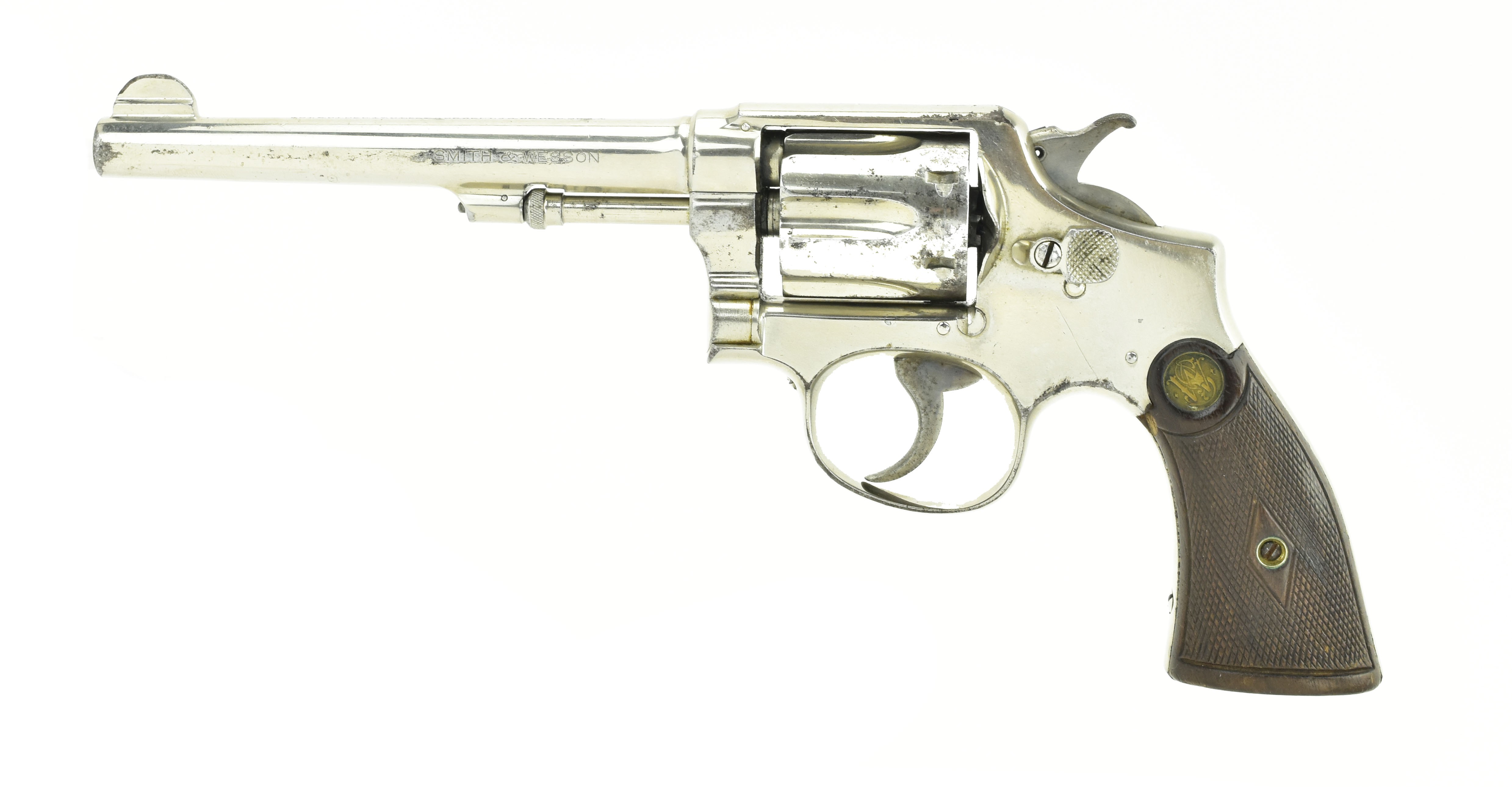
Smith & Wesson’s series of subcompact five-shot revolvers has been carried in pockets and on ankles for decades. Is it an anachronism today, or still a viable defensive arm?
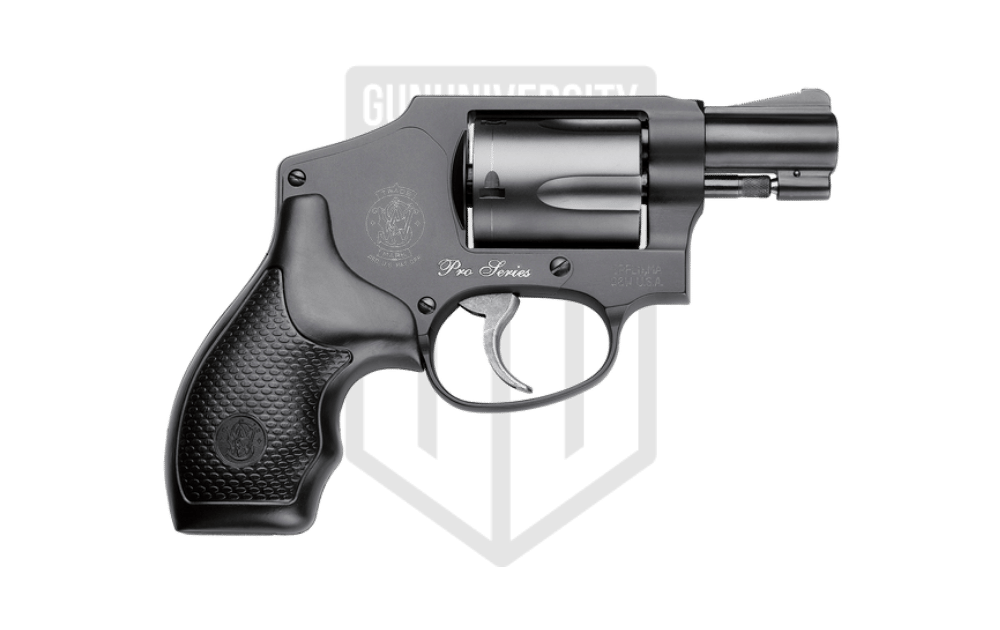
S&W 442 SPECS
- Caliber.38 Special
- Capacity5
- Barrel Length1.875″
- HammerInternal, Double Action Only
S&W 442 Background
Before semi-automatics became the standard handgun, revolvers were dominant. They tamed the Wild West, fought in the trenches in World War 1, and were only recently phased out in some police departments. Compact versions quickly followed the introduction of full size models for those needing concealable firepower. While the full-frame models have fallen by the wayside, there remains an active market for concealable revolvers.
There is no debate which models are the industry standard: the S&W J-frame subcompact revolver family is the one to beat. Versions have been produced with evocative names like Chief’s Special and Ladysmith, or out of exotic materials like Scandium. But the bread-and-butter variants are aluminum-framed, 1 ⅞” barrel, 5-shot .38 Specials. They are light enough to carry all day but are not fragile.
So, why does the Model 442 (and its ilk) still have a following? It generally boils down to concealability, and ease of use. Revolvers do not have manual safeties. The heavy trigger pull is generally enough to prevent accidental discharges. There is no slide to rack prior to firing. It can be fired from a coat pocket without jamming because there is no reciprocating slide. And, critically, a dud round does not require an immediate action drill to correct. You simply pull the trigger again.
This is not to say a revolver is the ultimate handgun. There are many trade-offs inherent to revolvers (e.g. low capacity, slow reloads, a heavy trigger, the risk of a bullet jumping the crimp of a cartridge case and jamming the cylinder). But if a wheel gun makes sense for your use case, the S&W 442 is worth consideration.
S&W 442 Features
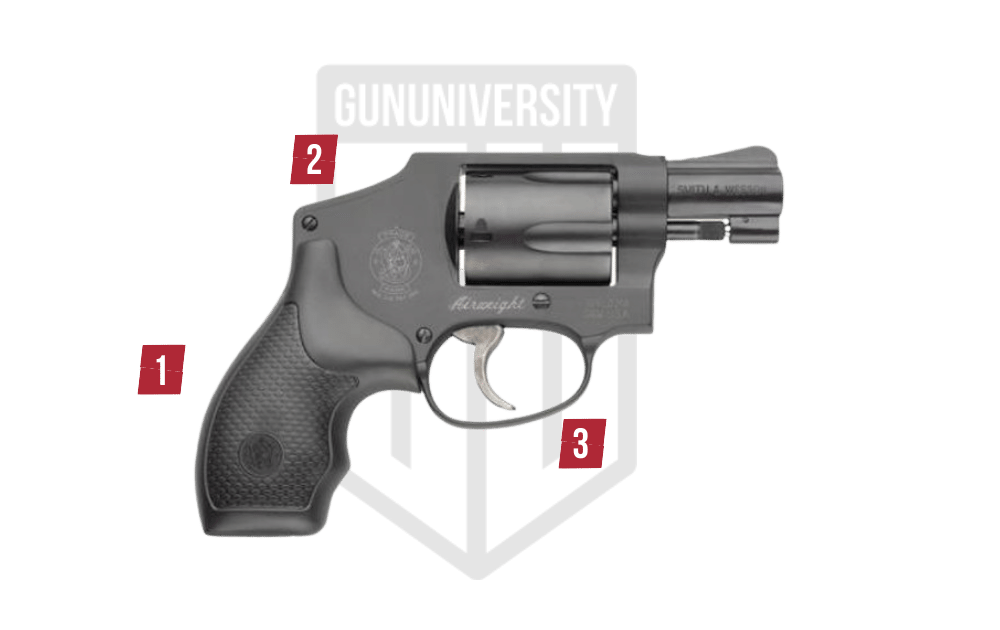
1EXCELS IN DEEP CONCEALMENT
2ENCLOSED HAMMER AVOIDS SNAGGING
3DOUBLE ACTION ONLY TRIGGER
S&W 442 MODELS OR COLORS
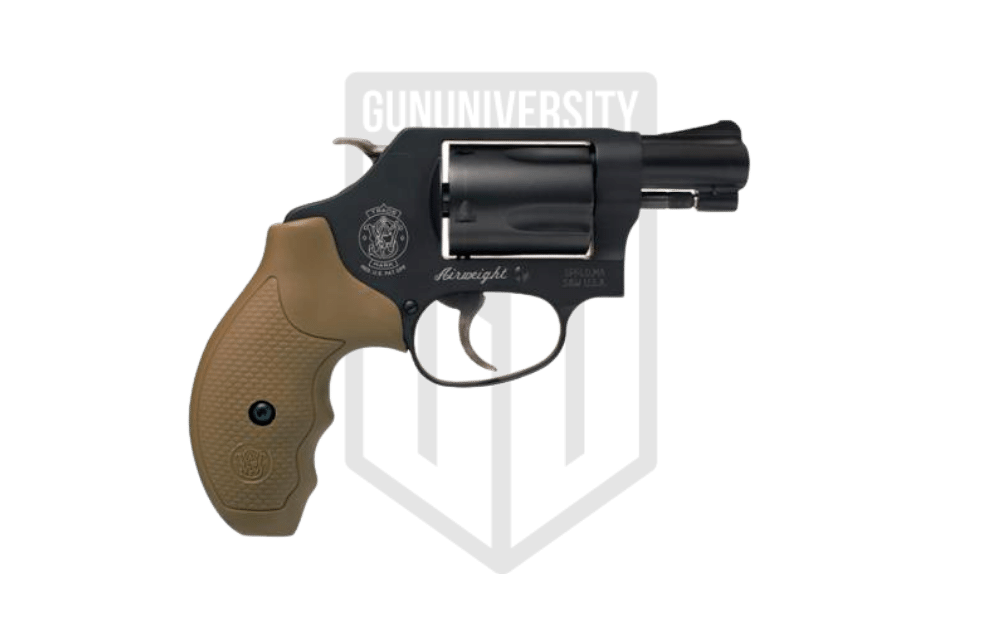

This article specifically details the Model 442, which has an internal hammer, double action only trigger, and black finish. Very similar models are also produced with a standard spur hammer (the Model 437) or a shrouded hammer (the Model 438). Those models can be fired single-action or double-action. Identical models are also available with a silver finish (the Model 642, 637, and 638, respectively). These six models are all part of the Airweight family.
There are numerous variants outside the Airweight family, including the Airlight models with Scandium frame. Current caliber options include .22 LR and .357 Magnum. Models were also produced in 9mm and .327 Federal.
SMITH & WESSON 442 – OUR TAKE
Guns that are easy to carry are not generally guns that are easy to shoot. The 442, and similar models, are wonderful to carry. But they are not wonderful to shoot. Unlike semi automatics, which have a recoil spring to slow down the recoil impulse of firing, revolvers dump all of the energy straight into the web of your hand. This is especially true of the 442 with its split grips that place the frame against the web of the hand with no padding.

Felt recoil is not helped by the weight of the 442. Light guns kick more than heavy guns when using the same ammunition. Physics simply cannot be avoided. But a lightweight gun, especially when carried in unconventional manners, also puts less strain on the carrier than a heavy gun.
The double action trigger pull of the 442 and similar models is generally in the 12-14 pound range. That is a massive pull weight. The rightly-mocked advice of gun counter workers that all women should carry revolvers, because they are not strong enough to rack a slide, makes little sense when considering the strength that is required to pull the trigger on a DAO revolver. These heavy trigger pulls are also difficult to master, and even experienced shooters can struggle to keep their shots on paper at distances beyond 10 or 15 yards. Good technique can overcome this difficulty, but it will exacerbate any existing flaws.

The ballistics of the .38 Special from a barrel less than two inches are not incredible, but are probably adequate in its intended role. Ammunition selection is very important. Thankfully, there are many good hollow point loadings on the market that make the most of the short barrel.
J-frames are not known for excellent sights. The 442 is equipped with a simple black front sight and a groove in the frame for a rear sight. Needless to say, they are not adjustable. The short barrel and small frame result in a rather short sight radius of about 3.75 inches. The sights, combined with a long, heavy trigger pull, a small grip, make for a gun that is not terribly accurate. Mechanically, the gun is capable of shooting usable groups. But in the hands of a real person the results are often poor.
The model 442 has an MSRP of $532, which is not unreasonable. Revolvers are more complex to manufacture than a polymer pistol. However, Airweight models are generally the least-expensive U.S.-made revolvers in the display case. Their longevity means there are thousands and thousands of them in circulation. That prevalence means they are easy to find on the used market at prices lower than retail.

Revolvers are known for reliability because they do not depend on the force of a fired round to operate the action. The rotation of the cylinder and cocking of the hammer are performed entirely by the work of the trigger finger. This means that ammunition-induced malfunctions are more rare with revolvers than pistols. However, low quality ammunition can still cause issued in a revolver. The recoil force can cause improperly-crimped bullets to work their way forward out of the brass case. In severe cases, this can result in a cartridge long enough to jam the cylinder in place and prevent its movement. This is a rare occurrence with quality ammunition, though. I have not experienced that type of malfunction on any of the J-frames I have carried.
Reloading an empty revolver is more involved than reloading a semi auto, and reloading the model 442 is more complicated than some revolvers. Speed loaders, which hold 5 cartridges in line with the chambers and drop them all with the turn of a knob, do not work well on the 442. A much more reliable option are Speed Strips, which hold the cartridges in a line. They are then peeled off directly into the cylinder. It is my practice to always carry a speed strip or two when I have a J-frame.
Smith & Wesson 442 Pros And Cons
- Conceals like a dream
- Very reliable
- Low capacity
- Sharp recoil
- Not easy to shoot
The hard-hitting .35 Whelen centerfire rifle cartridge, born a century ago as medicine for big game up to and including Alaskan-Yukon moose and brown bears, continues to deliver.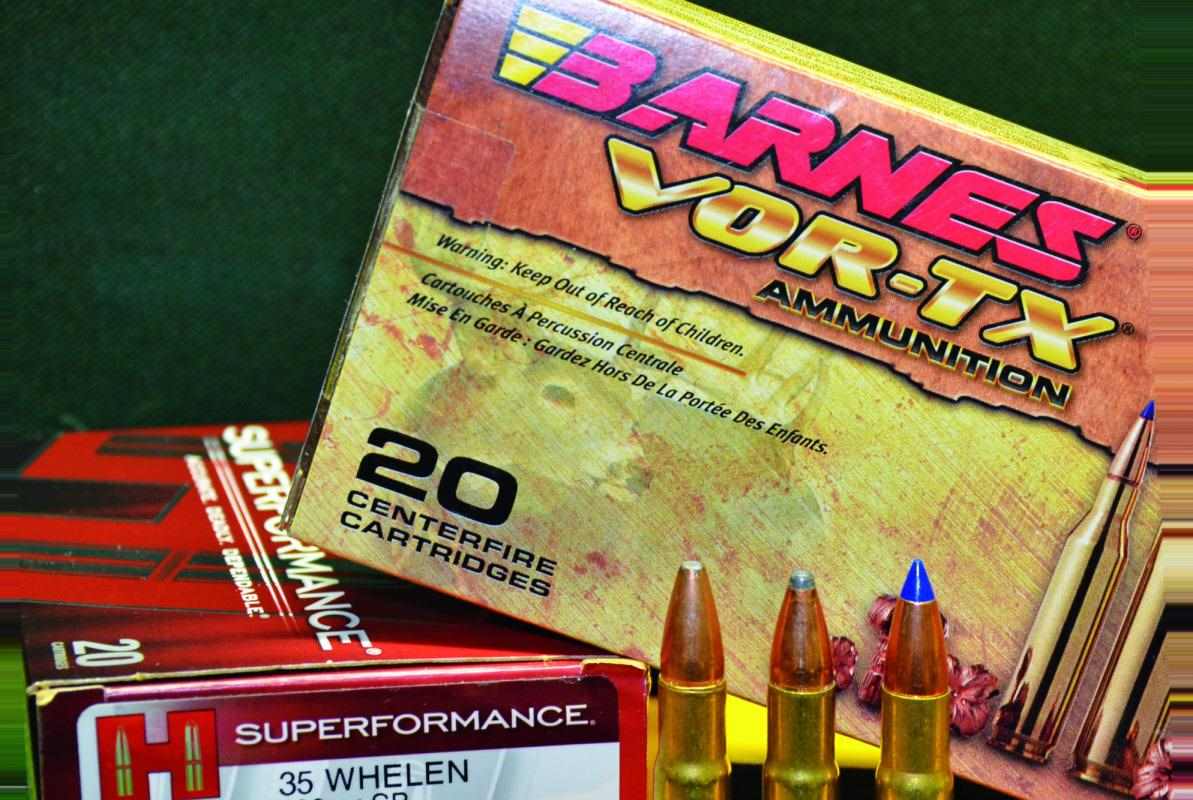 Through the decades, numerous centerfire rifle cartridges have been here today, gone tomorrow flashes in the pan. The fact that the .35 Whelen has proven to possess an abundance of lasting power is a bit of a mystery considering it does not shoot as flat as a banjo string, pulverize large boulders at 1,000 yards, place bullets inside a quarter inch, or leap tall buildings in a single bound. What the .35 Whelen does do is reliably drop game ranging in size from whitetail deer to Alaska-Yukon moose at a level of recoil tolerated by the majority of hunters. I am never surprised to see rifles chambered for the old cartridge in hunting camps all across America and in a few other countries as well.
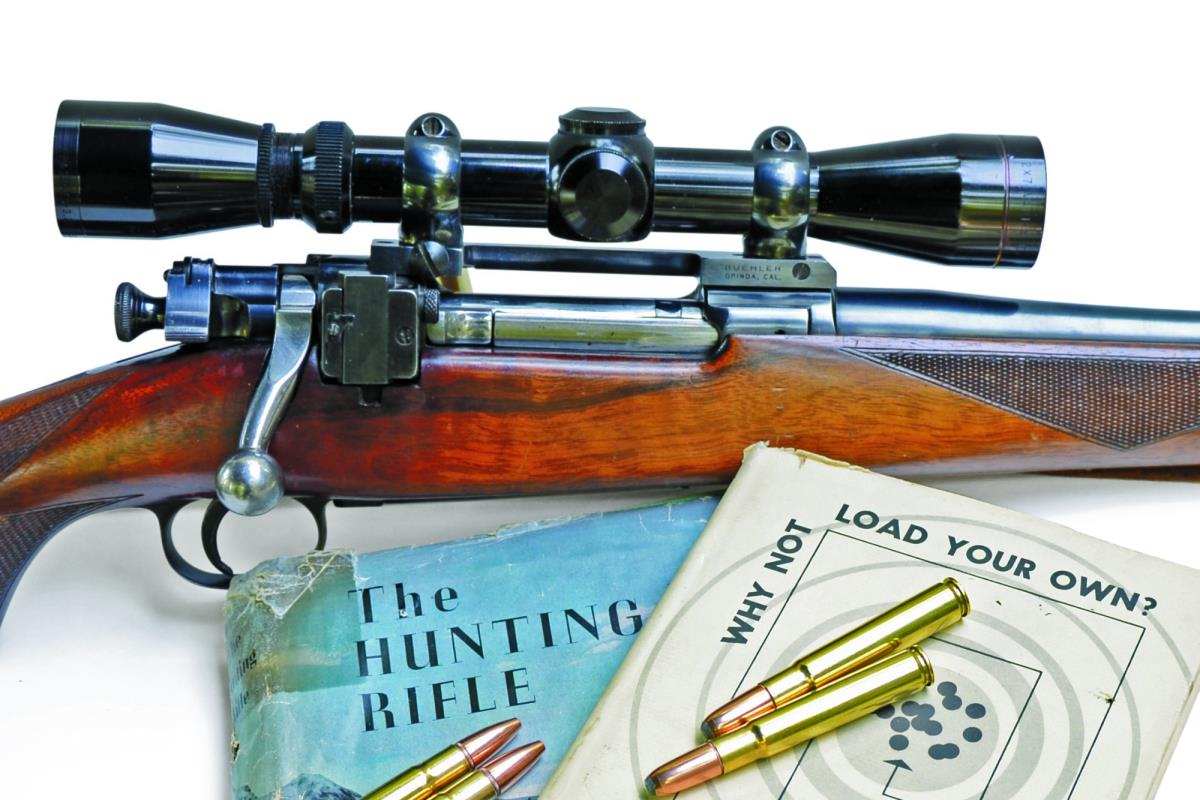
Then
Townsend Whelen mentioned the development of the cartridge in a couple of his books. On page 185 of a reloading manual titled Why Not Load Your Own? (1957) he states, “This cartridge was developed by James V. Howe in 1922 and named for the writer.” Among the loads included was the Hornady 270-grain roundnose (no longer available) pushed to 2,375 fps by a maximum charge of IMR 4350. There was also a 300-grain roundnose bullet made by Fred Barnes at 2,350 fps.
To quote Whelen in another of his books, The Hunting Rifle, which was published during the early 1940s, “In 1922 Mr. James V. Howe and the writer developed the .400 Whelen cartridge. This cartridge was constructed by taking the .30-06 case before it had been necked at all and necking it down to .40 caliber. About the time we completed development of this cartridge, I went on a long hunting trip in the Northwest, and when I returned, Mr. Howe showed me another cartridge that he had developed. The .30-06 case was necked to .35 caliber to use existing .35-caliber bullets.
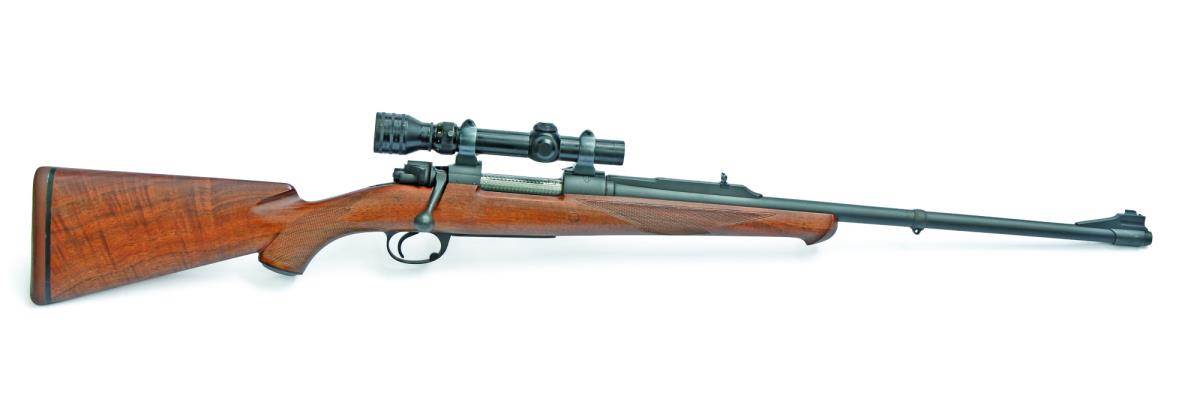
Mr. Howe asked my permission to call this cartridge the .35 Whelen, but he alone deserves credit for its development.”
At the time, Colonel Whelen was commanding officer of Frankford Arsenal in Philadelphia where Howe was in charge of the machine shop tool room. An accomplished gunsmith and stockmaker, Howe left Frankford in 1923 and joined with Seymour Griffin to form Griffin & Howe, a shop that became widely known for building fine custom rifles, many on the 1903 Springfield action.
Whelen did play an important role in the creation of the cartridge. Among his many friends was Leslie Simpson, an American who was considered to be an authority on hunting the African continent. During one of their conversations, Simpson voiced his disappointment with the performance of his Winchester Model 95 lever action in .35 Winchester on lion and opined that a cartridge of the same caliber with a velocity of 2,500 to 2,600 fps in a bolt-action rifle would be ideal. Whelen mentioned this to Howe, and the rest is history.
John Eddy may have been the first hunter to use a rifle in .35 Whelen on dangerous game. In his book Hunting the Alaska Brown Bear (1930), he writes about taking three of the big animals during the 1920s. His rifle, built on a 1903 Springfield action and wearing a Lyman 48 receiver sight, was one of the first in .35 Whelen produced by Griffin & Howe. His ammunition was loaded with 250-grain bullets, but no mention is made of their maker.
Through the decades, Remington has tamed more wildcats than any other company, and the .35 Whelen was added to the list in 1987 with the introduction of ammunition loaded with 200-grain Pointed Core-Lokt and 250-grain roundnose Core-Lokt bullets at respective velocities of 2,675 fps and 2,400 fps.
The limited-edition Model 700 Classic with a 24-inch barrel (produced only during 1987) and the standard-production Model 7600 slide action with a 22-inch barrel were the first rifles chambered for it. The Model 7400 and Model 750 autoloaders in .35 Whelen came later. Another bolt-action rifle in .35 Whelen that springs to mind is the Ruger Model 77. Also included are the single-shot Ruger No. 1, the single-shot Thompson/Center Encore, the single-shot H&R Handi Rifle, the single-shot CVA Scout, and the single-shot Traditions Outfitter. There have been many factory rifles chambered in .35 Whelen over the decades.
Should a search for a .35 Whelen rifle prove unsuccessful, any good bolt-action rifle in .30-06 or other member of its cartridge family is a candidate for rebarreling. Reboring and rechambering the barrel to .35 Whelen is an option offered by JES Rifle Reboring in Cottage Grove, Oregon. In addition to bolt-action rifles, they perform the work on the Remington 760/7600 pump guns and 742/7400 autoloaders in .30-06 and .270 Winchester. I have seen a Browning BLR lever action and a Browning reproduction of the Winchester 1895 single shot so converted, but I do not know who did the work.
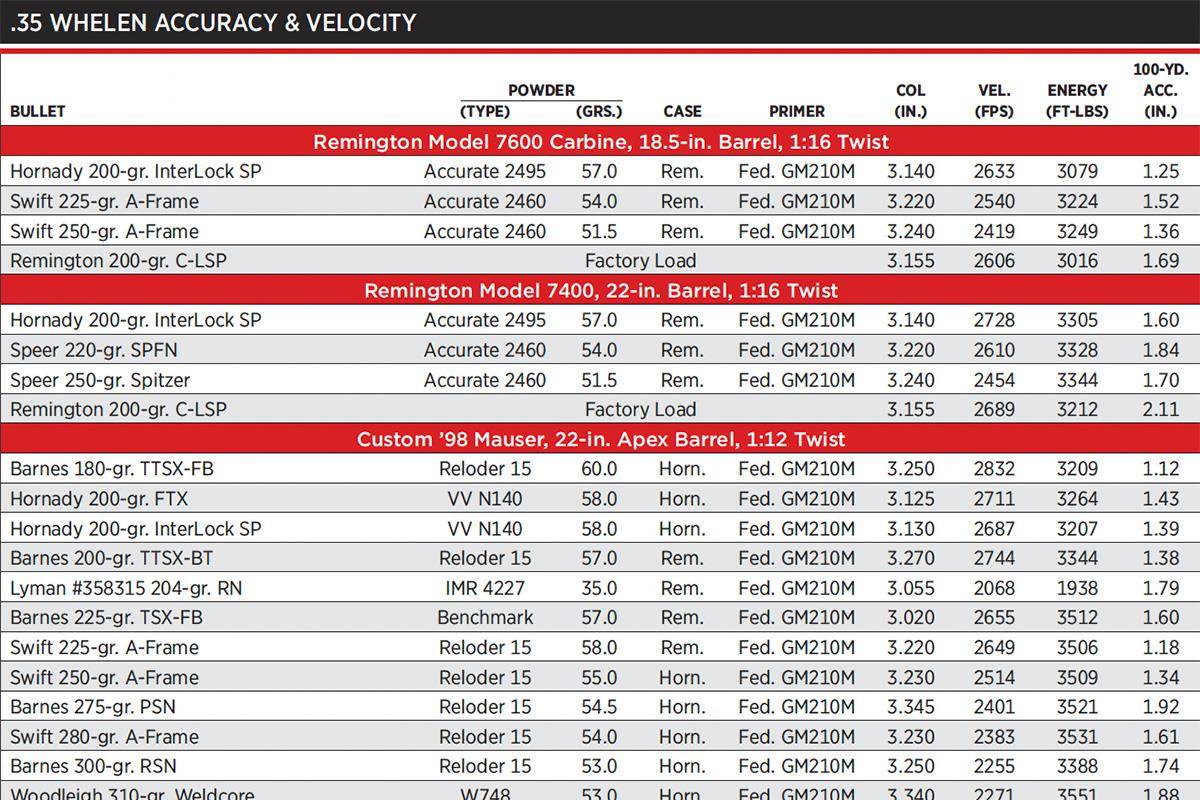
Through the years, I have hunted with several different rifles in .35 Whelen. One of the more accurate was a Remington Model 700 Classic that, among other things, accounted for a good elk. My handload for it pushed the Swift 225-grain A-Frame bullet along at 2,650 fps. Remington built a few Model 7600 carbines with 18.5-inch barrels, and I have used one of those along with Remington 200-grain factory ammo to take several feral pigs and a medium-size black bear.
However, the .35 Whelen rifle I have taken to the field most was custom-built about 35 years ago by Butch Searcy. He began by modifying a square-bridge ’98 Mauser action to accept quick-detachable rings made at the time by Kimber of Oregon.
A quarter rib machined for the 22-inch Apex barrel has a folding adjustable sight, and the front sight, on a banded ramp, has a fairly large bead. To make sure 275-grain and 300-grain bullets made by Barnes in those days would stabilize, I requested a 1:12 rifling twist rate. Searcy also modified the bolt shroud for a Model 70-style safety and attached the front quick-detach sling-swivel receptacle out on the barrel. The barreled action then made its way to the custom shop of E.C. Bishop & Son of Warsaw, Missouri, for a niece piece of handcheckered walnut. A steel cross bolt just behind the recoil lug of the receiver reinforces the stock. A Redfield 1-4X scope in the Kimber rings took hunt-ready weight to 8.5 pounds, and on its very first outing, the rifle dropped a very good Alaska-Yukon moose and one of the best black bears I have ever spotted. Each fell to a single Swift 250-grain A-Frame leaving the muzzle at 2,475 fps.
Now
The ammunition is presently cataloged by Barnes, Remington, Nosler, Federal, Hornady, Buffalo Bore, HSM, DoubleTap, and Choice Ammunition. Among those loaded with 200-grain bullets, Hornady Superformance tops them all in velocity by a considerable margin. Rated at 2,920 fps, it clocked an amazing 2,962 fps from the 22-inch barrel of my custom Mauser. That load should be quite deadly on deer, but for use on moose, elk, and big bears, more strongly constructed bullets are needed. For hunting those big-game animals, Federal ammunition loaded with the 225-grain Trophy Bonded Bear Claw and Barnes ammunition loaded with the 200-grain TTSX are a couple of the better choices.
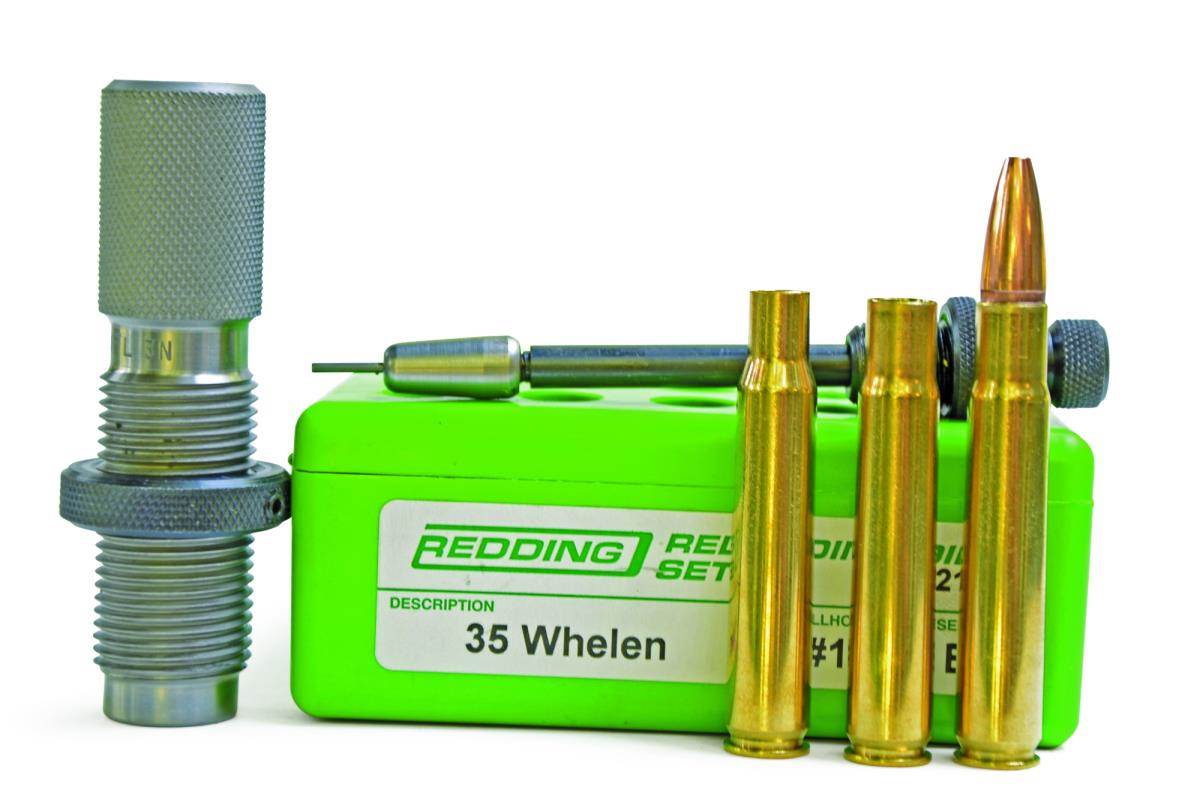
The .35 Whelen is an excellent candidate for handloading. Unprimed cases are available from several sources, or you can do as we all did when the cartridge was a wildcat and run .30-06 cases through a .35 Whelen full-length resizing die with a tapered expander button. In the old days, I used unfired match .30-06 brass available on the military surplus market, and its quality was excellent.
A number of powders are suitable for use in the .35 Whelen, and there was a time when I mostly used IMR 4064. It is still a good choice, but I have since burned more Reloder 15 than anything else. Accuracy is usually quite good, and shot-to-shot velocity variation is minimal. But as illustrated in various reloading manuals, many other propellants, including Varget, W748, Accurate 2460, and VihtaVuori N140, work quite well. Standard-force primers, such as the Federal 210 and CCI 200, deliver enough spark to ignite most powders, but the Federal 215 and CCI 250 sometimes deliver more uniform velocities with the various spherical propellants. This especially holds true when the ammunition is subjected to frigid temperatures during a wintertime hunt.
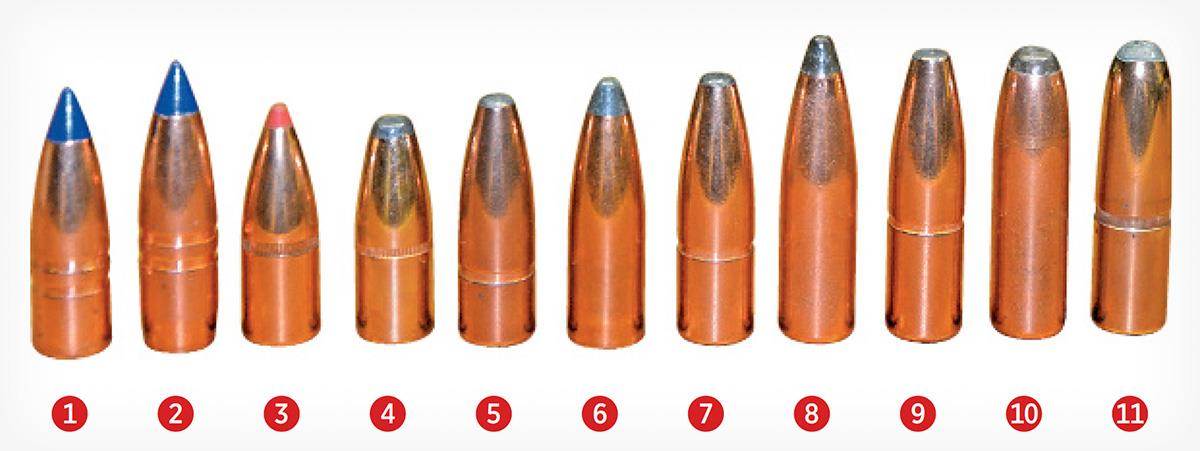
When handloading for deer and other game similar in size, fairly soft bullets like the 200-grain pointed InterLock from Hornady and the 220-grain SPFN from Speer should be excellent choices. The Hornady 200-grain FTX can be used, but since it is constructed to expand at slower .35 Remington impact velocities, damage to the eating part of a deer might be a bit much.
Moving to the opposite extreme, if I were to take on a brown bear in the alder thickets of Alaska, my ammo would be loaded with the 250-grain or 280-grain A-Frame from Swift. Due to a thin jacket and a soft lead core, the 310-grain Woodleigh expands to such a large frontal diameter that it does not penetrate as deeply as the Swift bullets. And then we have bullets constructed to drive deep on moose and elk with a bit less recoil. They include the Barnes 200-grain TSX and 200-grain TTSX-BT and the Swift 225-grain A-Frame.
For a friendly practice load, cast the 204-grain Lyman #358315 from scrap wheel weights and drive it to a velocity of 1,900 fps or so with IMR 4227.
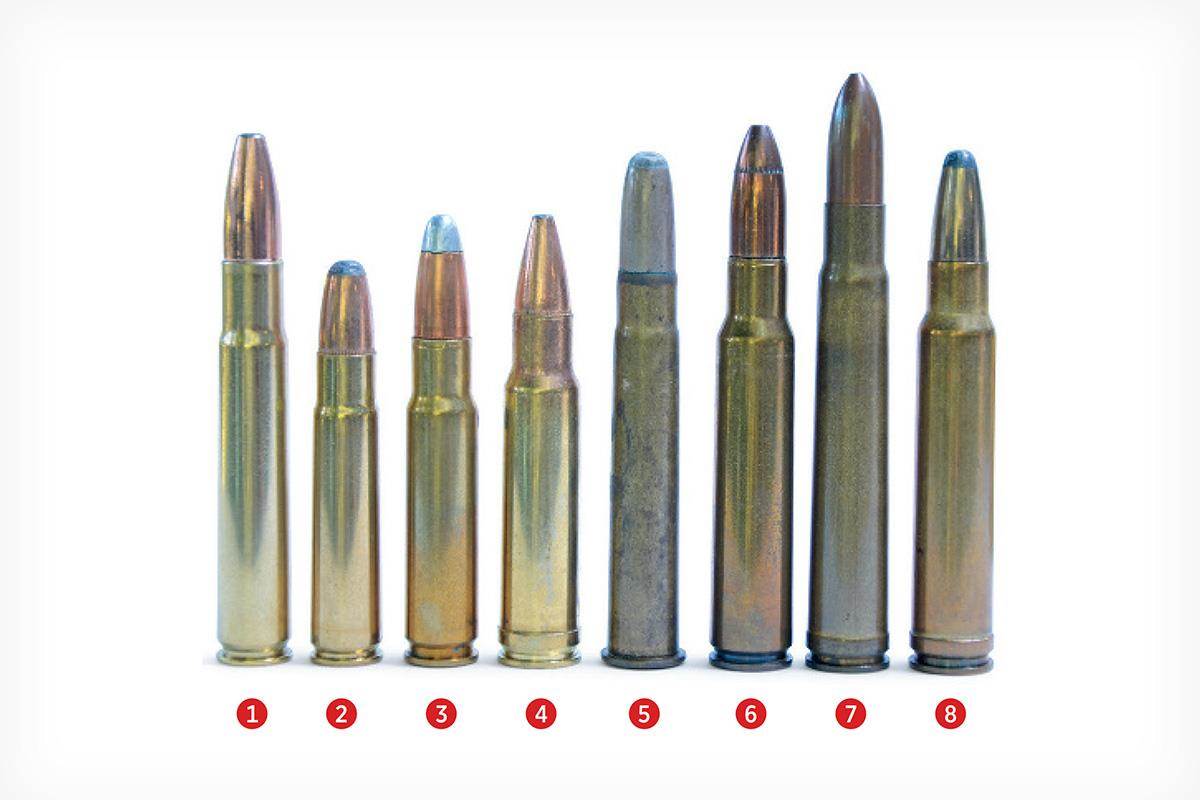
The 9.3x62mm Mauser is the .35 Whelen’s biggest competition among factory-loaded cartridges of its powder capacity, and worldwide, it is far more popular. I also have a rifle chambered for that one, have taken game with it, and am quite fond of it as well. But I have yet to meet a big-game animal that could tell which of the two cartridges sent the bullet it was shot with.
Categories
458 LOTT: History and Relevance

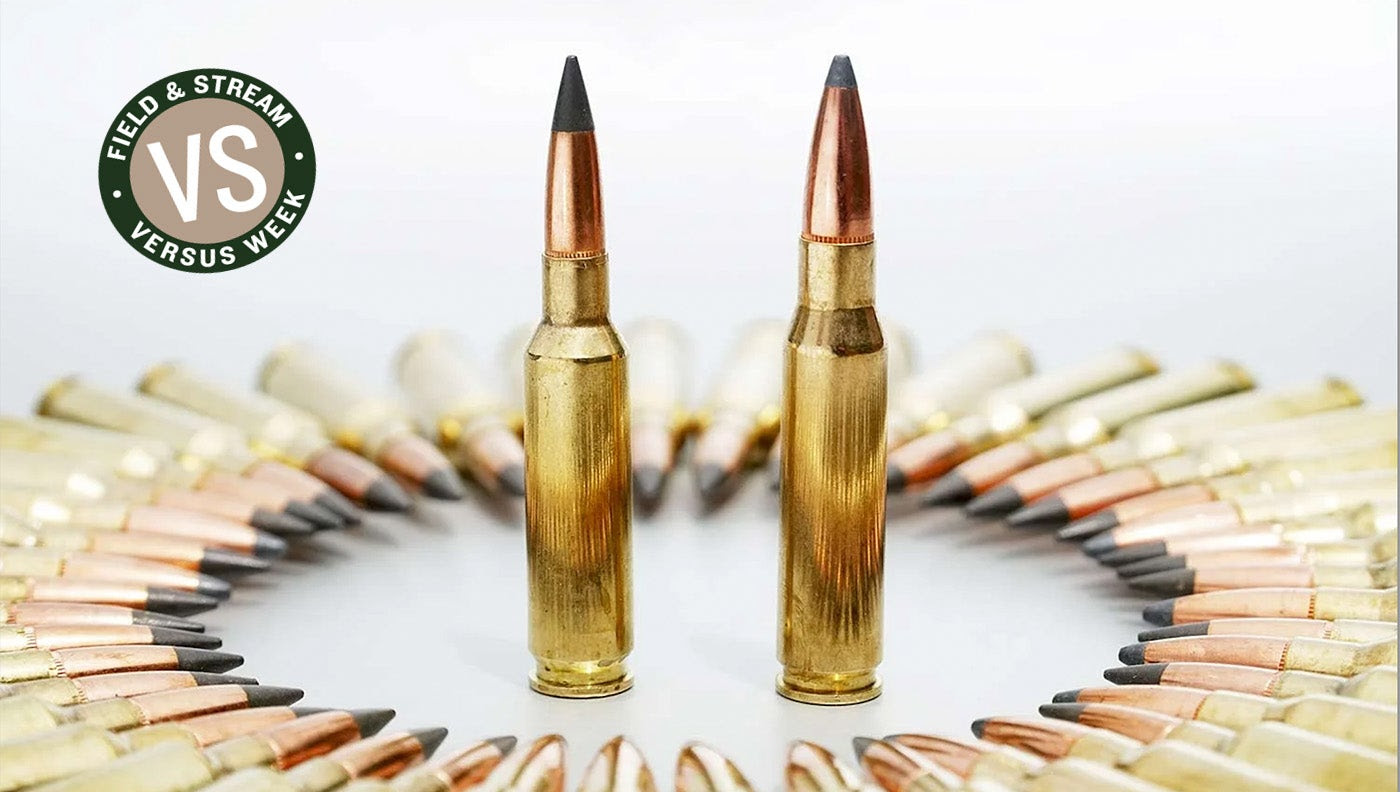
The 6.5 Creedmoor and the .308 Winchester are two of the very best big-game cartridges, and both are more than capable at long range. But only one can win this showdown
We may earn revenue from the products available on this page and participate in affiliate programs. Learn more ›
Because it is impossible to write enough about the 6.5 Creedmoor these days, my editors have asked me to compare it to the tried-and-true .308 Winchester, and I’ve agreed. Comparisons are not always odious. Gun writers depend on fees from cartridge comparisons to pay the mortgage and bribe officials at state agricultural and mining schools to take their kids. Some comparisons are fraudulent, for example, the .270 versus the .280. On paper, the latter has a slight edge. In real life, you could shoot every beast that has walked the planet Earth since the late Jurassic and not see a difference.
Some comparisons are both interesting and valid, on the other hand, and the .308 versus the 6.5 Creedmoor is one.
The .308 was worked up by U.S. Army Ordnance in the early 1950s for shooting people, and it has excelled at that and every other use to which it has been put. It was an immediate commercial success and perpetually rides near the top of the best-selling-cartridge lists.
The 6.5 Creedmoor was designed by Hornady for long-range target shooting, reached the market in 2007, and spent its first few years in comparative obscurity. It was made for a bullet diameter that American shooters had previously treated with massive indifference, and named for a long-vanished rifle range that hardly anyone remembers, or spells correctly.
But it was the right round at the right time. It arrived when long-range madness had arrived in its full fury, and it was very, very good at long range. Then the hunters caught on, and today there is hardly a bolt-action rifle that’s not chambered for the 6.5 Creedmoor.
Both the Creedmoor and the .308 are extremely accurate. Both are low-recoiling, “mild” rounds. Both are fine as wine in the summertime for hunting. Both are hugely popular. Is one better than the other? Let us compare.
The .308 Winchester
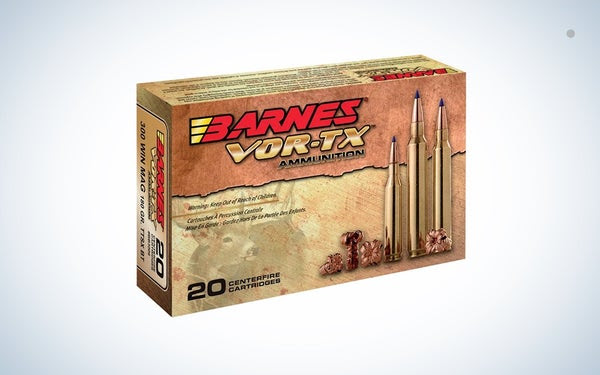
The .308 Winchester (or 7.62×51 NATO) was developed to replace the longer, bulkier .30/06. It’s one of the most successful military rifle cartridges of all time.
The .308 will shoot about as accurately as anything you can buy. It remains one of the rounds of choice in military-style competition, and in F-Class Tactical Rifle.
But it is hunters who likely account for the .308′s perpetual popularity. It was a hit from the first. There is .308 hunting ammo in such profusion and prolixity that just thinking about it gives you a nosebleed. You can shoot prairie dogs with a .308 (although it spoils a lot of meat), and African ivory poachers used to kill elephants with FN-FAL rifles loaded with 7.62 military ammo.
The most popular game loadings in the .308 today come with 125-, 150-, 165-, and 180-grain bullets, and of these, the 150s and 165s probably outsell everything else. In factory loads, the 150s depart at 2,800 fps; the 165s at 2,650.
Traditionally, the most popular competition bullet weight has been 168 grains, but I doubt that’s the case any longer. The new slug is either the 175-grain Sierra Matchking Boattail Hollow Point or the 175-grain Berger VLD Target. The 168s develop 2,650; the 175s in the real world about 2,550.
This reflects what cerebral trigger-pullers have known for some time: that the way to go for more range is through heavier bullets and higher ballistic coefficients, not more velocity.
The 6.5 Creedmoor
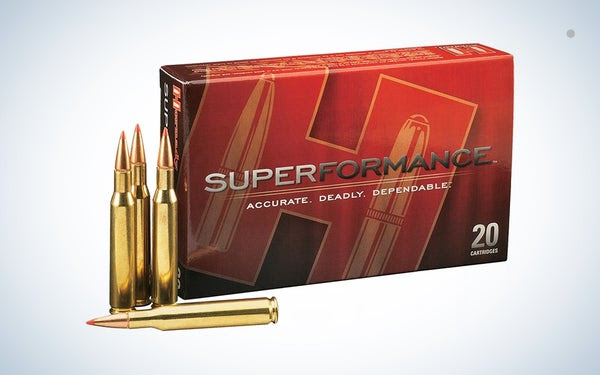
Hornady’s rationale behind designing the 6.5 Creedmoor was that there are far fewer target shooters than hunters, but that target shooters burn up far more ammo, so he who comes up with a truly superior target cartridge will need a truck to cart his profits to the bank.
And that is what Hornady did. They wanted a round that had very little recoil, fired bullets of very high BC, was cheap and unfussy to reload, did not cost a fortune, was capable of extreme accuracy, could work through a short rifle action, and offered good barrel life. They got all of it.
How good is the 6.5 Creedmoor at long range? Permit me to quote from the Wikipedia entry on the subject:
“In October 2017, U.S. Special Operations Command tested the performance of the 7.62×51 NATO, .260 Remington, and 6.5 CM cartridges out of SR25, M110A1, and Mk20 sniper rifles. SOCOM determined that the 6.5CM performed the best, doubling hit probability at 1,000 meters (italics mine) increasing effective range by nearly half, reducing wind drift by a third and having less recoil than the 7.62 NATO rounds…”
Like the .308, the 6.5 Creedmoor is loaded in a migraine-inducing variety of ammo. However, its range of bullet weights is more limited, breaking down into two groups. The lighter weights run from 127 grains to 135; the heavier group goes from 140 to 147 grains. If you made a count, you’d probably find that 140 grains is the most popular weight.
The 6.5 Creedmoor is a round of modest velocity. With the lighter-weight bullets you get roughly 2,900 fps; with the heavier ones, 2,700. This is deceptive. The 6.5 Creedmoor, with 140-grain bullets, duplicates the trajectory of the far more powerful .300 Winchester Magnum out to 1,000 yards and beyond.
And so, let’s get to the comparisons.
Which is Better? 6.5 Creedmoor vs. .308 Winchester
6.5 Creedmoor Recoil vs. .308 Recoil
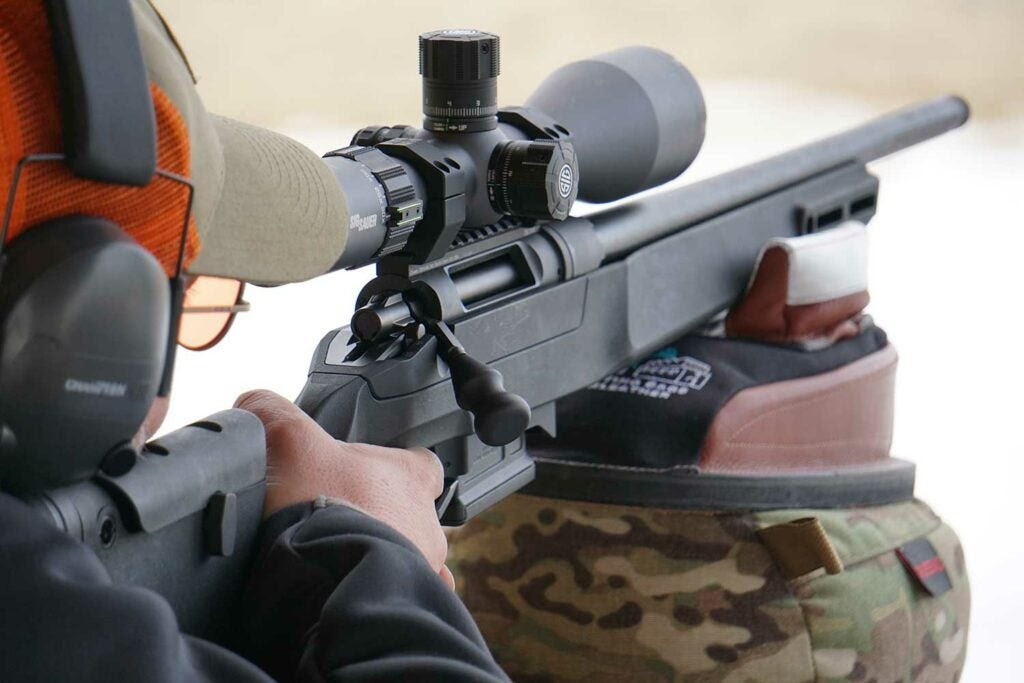 For most shooters, less recoil means better accuracy. Natalie Krebs
The less recoil you catch, the better you shoot; it’s as simple as that. A 7-pound 6.5 Creedmoor firing a 140-grain bullet at 2,700 fps imparts just under 15 ft. lbs. of kick. The same weight .308 rifle shooting 165 grains at 2,650 fps turns up 19 ft. lbs. You can go up and down in bullet weights, and the results are going to be parallel between the two cartridges.
Winner: The 6.5 Creedmoor.
6.5 Creedmoor Accuracy vs. .308 Accuracy
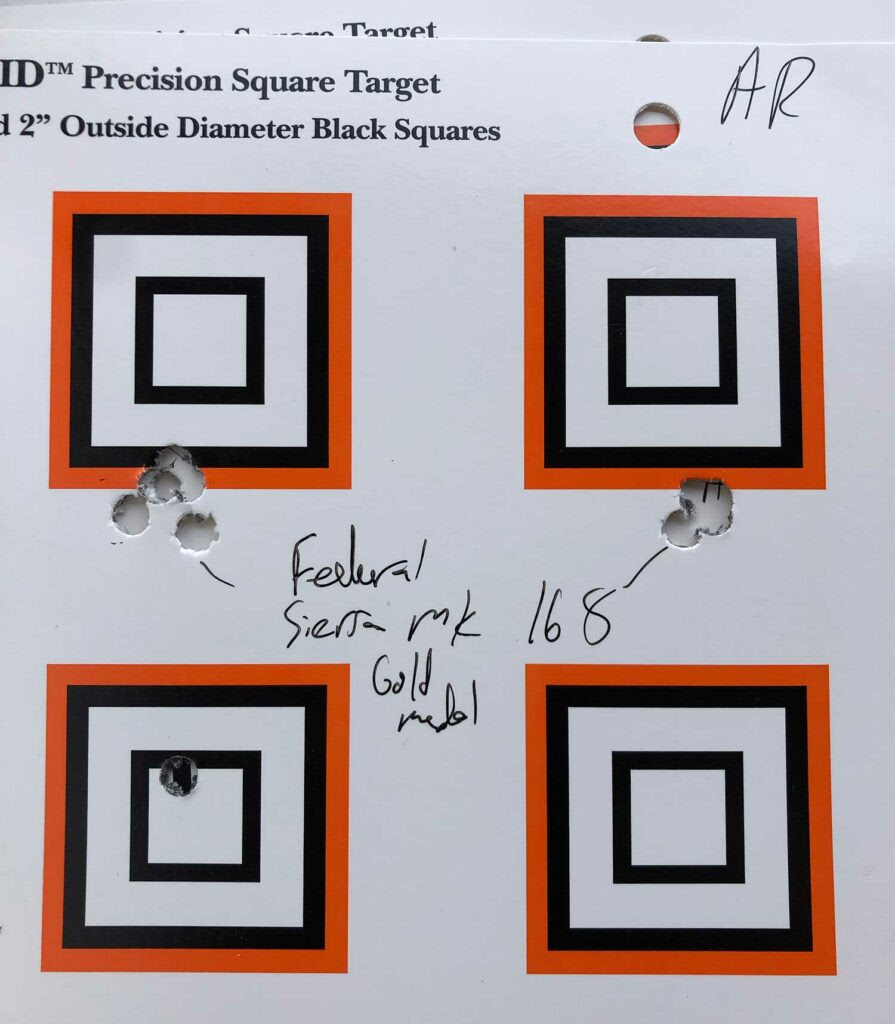 Two nice groups produced by a .308 rifle shooting Federal Gold Medal with 168 grain, Sierra Match Kings. Natalie Krebs
They are two of the most accurate rounds in existence. At extreme long range, you could give the edge to the 6.5 Creedmoor.
Winner: The 6.5 Creedmoor.
6.5 Creedmoor vs. 308 in Price, Variety, and Availability of Ammo
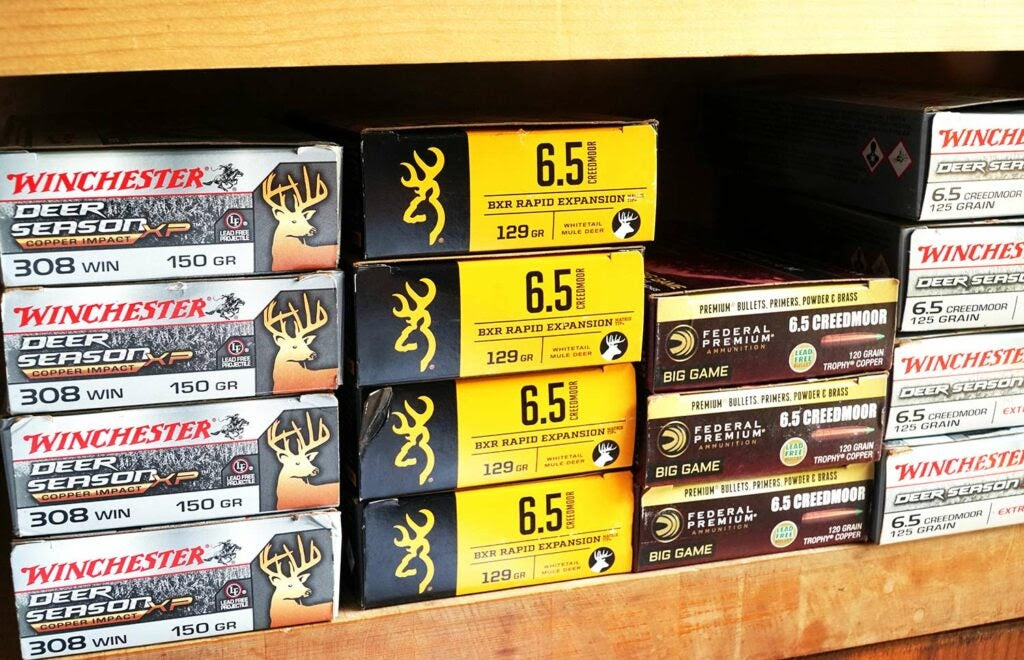 While .308 has always been more plentiful and cheaper, the 6.5 CM is dropping in price and gaining in popularity. Dave Hurteau
The 6.5 Creedmoor rates high. On the other hand, the .308 probably has more ammo, of all varieties, prices, and types, loaded for it than anything but the .30/06 or the .223.
Winner: The .308.
6.5 Creedmoor vs. .308 for Effectiveness on Game
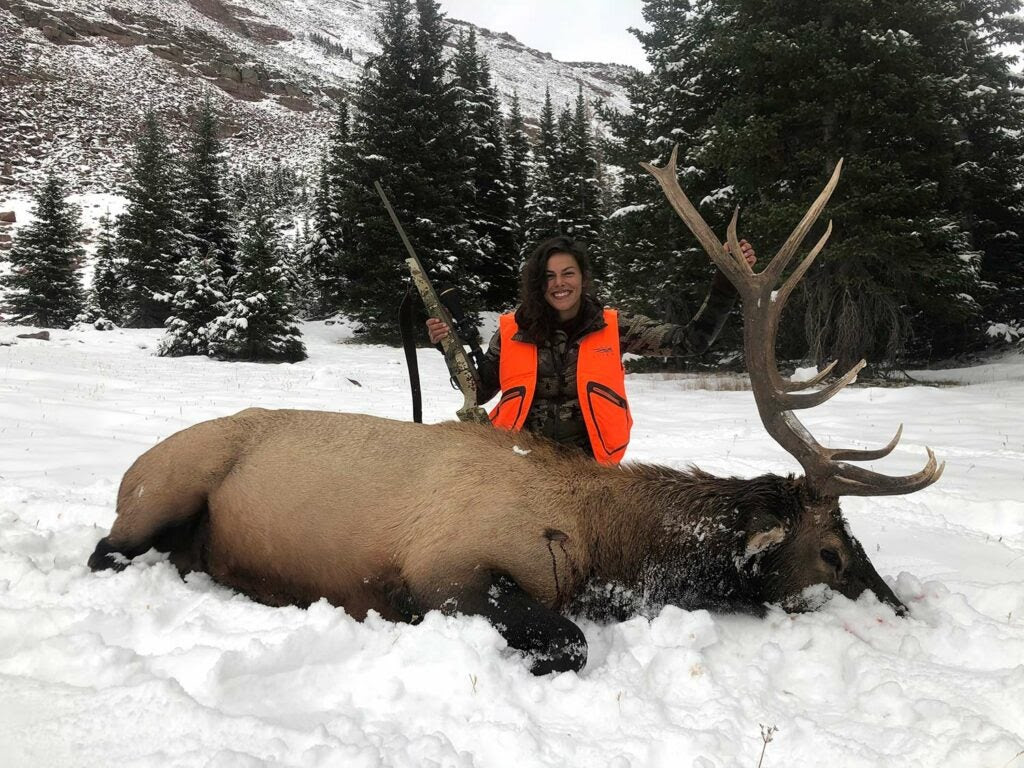 This bull elk was shot with a 143 gr. Hornady ELD-X Precision Hunter 6.5 Creedmoor. It ran about 50 yards and dropped. Aram von Benedikt
On paper, the .308 might get the nod because it can use heavier bullets. In the real world, since there’s hardly any difference in killing power between cartridges, that goes by the boards.
Winner: A dead heat.
6.5 Creedmoor vs. .308 for Barrel Life
If you’re strictly a hunter, this is a minor factor. If you shoot a lot, or in competition, it’s important. The best estimate for a .308 is 3,000 rounds. For a 6.5 CM, it’s 2,000 to 2,500 rounds. This is first-class, competition-type accuracy.
Winner: The .308 by a nose, although it’s close enough that you can consider it a tie for all practical purposes.
Sign up for Field & Stream’s newsletter to receive the latest and greatest gear reviews and expert hunting and fishing advice.
6.5 Creedmoor vs. .308 for Ease of Handloading
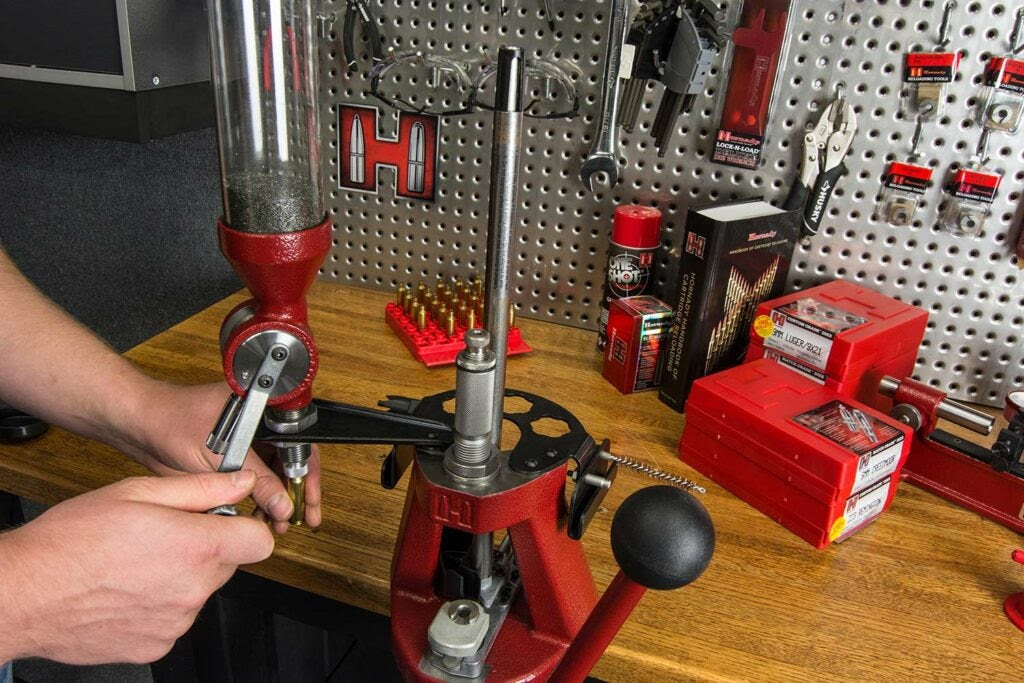 Both cartridges are great choices for hand loaders. Hornady
Neither cartridge has any tricks of the trade, quirks, peculiarities, or hidden pitfalls. The 6.5 Creedmoor has an advantage in that it will accommodate very long bullets without their intruding into the powder space.
Winner: The 6.5 Creedmoor.
Read Next: 6.5 Creedmoor, The New King of Ammo
6.5 Creedmoor vs. .308 for Performance At Long Range
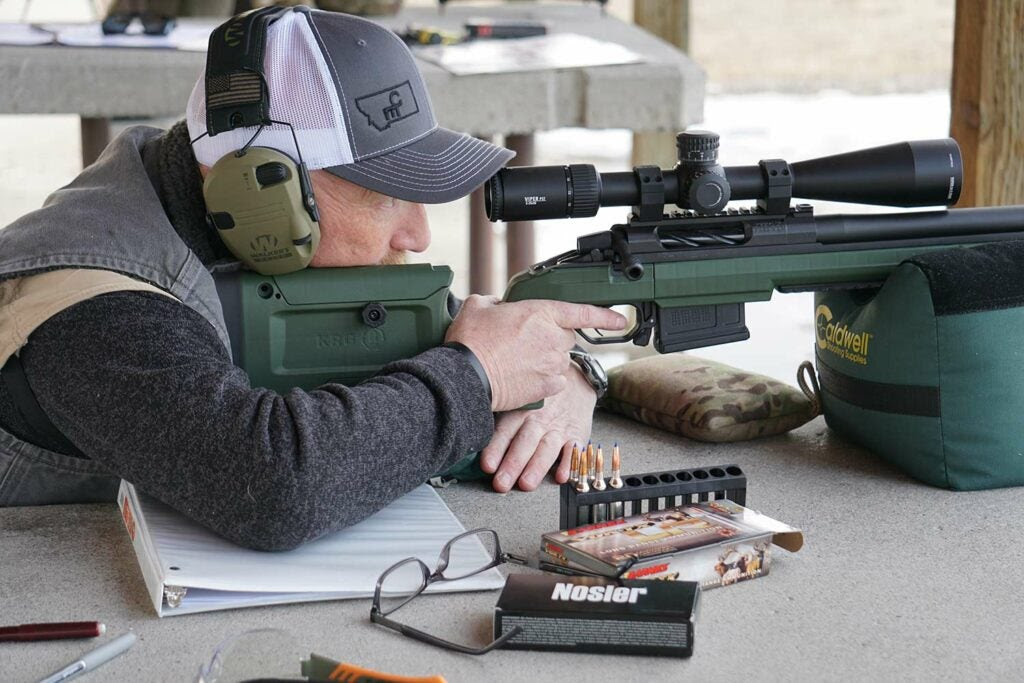 With its high ballistic coefficient, the 6.5 Creedmoor is hard to beat at long range. Natalie Krebs
My definition of long range is the same as the NRA’s—800 to 1,200 yards.
Using the excellent Berger Bullets Ballistics Calculator, let us compare a 140-grain Berger VLD bullet (MV 2,650 fps, G7 BC, .304) from a 6.5 Creedmoor, at 1,000 yards, with a .308.
Long-Range 6.5 Creedmoor Ballistics
- Velocity: 1,370 fps
- Bullet drop: 348.59″
- Wind drift, 5 mph from 9 o’clock: 39.18″
Long-Range .308 Ballistics (175-grain Long Range BT, G7 BC, .262, MV 2,650 fps):
- Velocity: 1,203 fps
- Bullet drop: 386″
- Wind drift, 5 mph from 9 o’clock: 48.53
Winner: The 6.5 Creedmoor.
6.5 Creedmoor vs. .308 Performance at Mid-Range
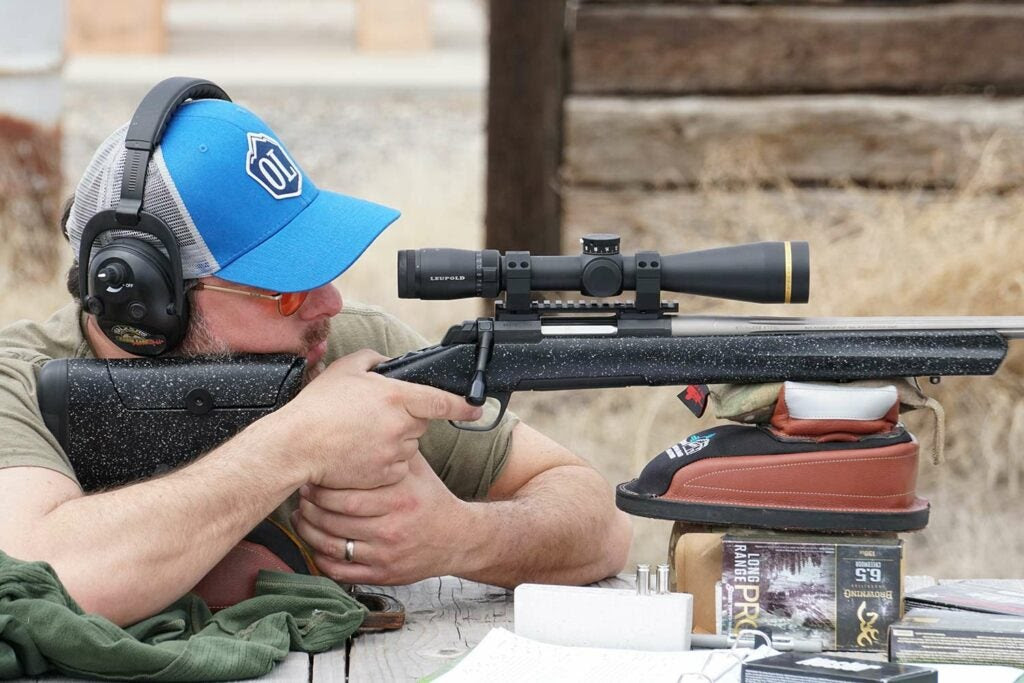 Any hunting rifle chambered for 6.5 Creedmoor or .308 Winchester should perform well at mid-range. Natalie Krebs
Let’s dial back to a sane distance, say, 500 yards, and switch from target bullets to hunting bullets.
Mid-Range 6.5 Creedmoor Berger Classic Hunter Ammo Ballistics (135-grain Hunter Hybrid bullet, 2,696 MV, G7 BC .303 at 500 yards):
- Velocity: 1,954 fps
- Bullet drop: 56.88 inches
- Wind drift: 5 mph from 9 o’clock, 8.34
Mid-Range .308 Berger Classic Hunter ammo Ballistics (168-grain Hunter Hybrid bullet, 2,675 fps MV, G7 BC .251, at 500 yards):
- Velocity: 1, 824 fps
- Bullet drop: 60.53″
- Wind drift: 5 mph from 9 o’clock, 10.41″
Winner: The 6.5 Creedmoor.
And the Winner Is…
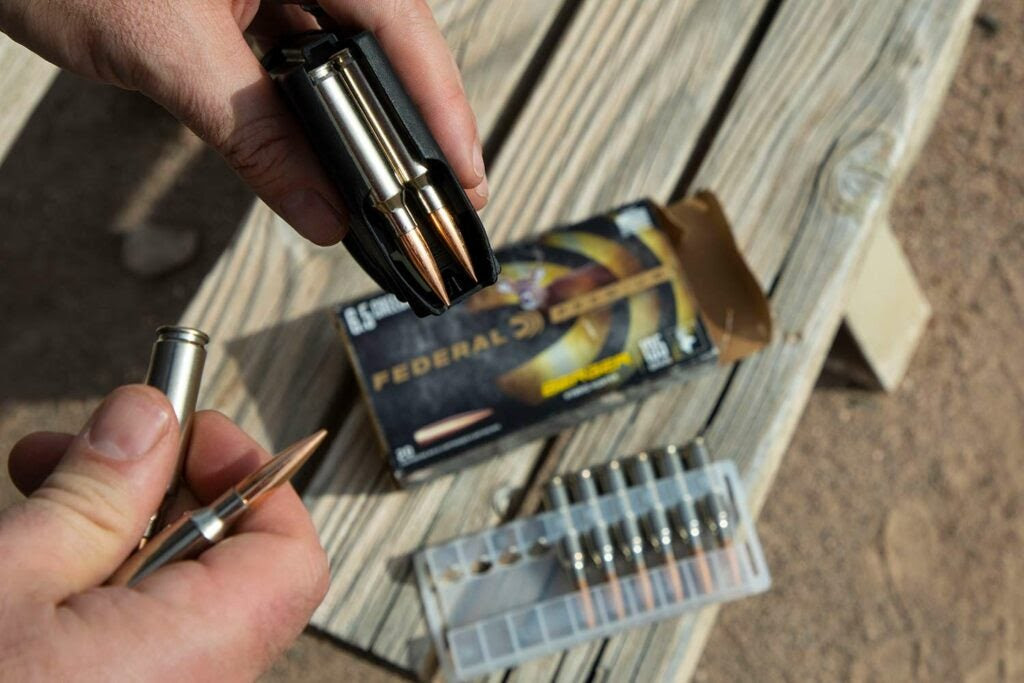 Topping off a magazine with 6.5 Creedmoor Federal Premium ammunition. Federal Ammunition
Read Next: Why the 6.5 Creedmoor Might Be the Best Factory Rifle Cartridge Ever
So, who wins? It looks like the Creedmoor. But if you take away the target shooting, or the 500- to 1,000-yard element, it’s a tossup. Currently, I own zero rifles chambered in 6.5 Creedmoor. I have six .308s in varying configurations and am not about to swap them for Creedmoors. Over the years I’ve probably owned 10 .308s, and when I wore a green suit and got free ammo provided by the Government (not to mention $85 per month), I carried a 7.62 NATO.
Does this mean I’m prejudiced? Yep. The 6.5 Creedmoor is every bit as good as they say it is, but I’ve had 50-plus years of shooting with the .308, and it’s never failed to get the job—any kind of job—done.
But my eyes are fixed on the past, and yours, presumably, are on the future, so you decide. Or buy one of each.