Thanks Guys!
Norinco (North Industries Group Corporation) is one of the largest arms manufacturers and exporters in the world, with annual sales of about $80 billion. Norinco specializes in land-based systems for the Chinese military as well as a growing list of export customers.
While some high-tech components are reserved for Chinese military versions, export customers can get anything else and even receive equipment modified so that specific non-Chinese components can be installed. Norinco will do just about anything to get a sale or please a customer. Norinco doesn’t sell much to Western countries, except for commercial grade hunting and police weapons and accessories.
In this market Norinco quality is competitive and their prices even more so. All this has enabled Norinco to become one of the top ten arms manufacturers in the world and the first Chinese firm to join a list dominated by American and Western multinational firms.
Norinco is often the supplier of high-tech weapons to nations that are first-time users of these systems. Such was the case with Nigeria, which purchased some Norinco VT-4 tanks. This is a popular export item based on the Russian T-72 design and a very capable system costing about $5 million per vehicle. In 2022 Norinco received user dissatisfaction reports about VT4 tanks sold to Nigeria. The Nigerian tank crews reported that in combat it took them 30 minutes to load and fire a 125mm shell. The problem turned out to be lack of training and poor maintenance. These two items have long been a problem for complex exports like tanks, artillery and warplanes. Some VT4 (also known as MBT3000) users reported problems that did not involve poor maintenance or poorly trained crews. China said it would take care of any problems, even training and maintenance. The recent discovery of a major design flaw in all T-72 type tanks was another matter.
Norinco export tanks are often less capable (and cheaper) versions of the ones China builds for its own forces. In some cases, the export models lack new features China considers secret and not for export. In most cases export models simply get less advanced and cheaper tech. Such was the case with the VT series of tanks. These are exported and not used by Chinese forces. The VT4 (also known as MBT2000) was the export version of the Chinese Type 90 tank. Actually, the Type 90 was not accepted by the Chinese army, which instead went with the 54-ton Type 99, a superior T-72 variant that entered service in 2001, underwent a major upgrade (the 58-ton Type 99A) in 2011 and is still in production with over 1,200 in service so far. The Chinese have over 6,000 tanks, with 2,500 of them modern designs. The rest of them are based on the Russian T-54/55. China developed many variations on this 1950s design and built them under license as the Type 59. In addition to the Type 99 there are 1,500 of the earlier Type 96, which began as the Type 88 in the 1980s as China began to develop and build variations of the Russian T-72. The Type 96 and 99 are, like most current Russian tanks, further upgrades of the successful T-72 design.
By adding better engines and other mechanical and electronic components, improved armored protection and 125mm main guns, the Chinese have managed to create a force of modern tanks superior to what the Russians have. China now has more modern tanks in service than Russia, which has had to put a lot of its most modern tanks in storage because it cannot afford to maintain and operate them.
Unknown to the Chinese was the fact that T-72-type tanks have a fatal flaw that was only discovered during combat with a foe equipped with Western anti-tank weapons. This was the case recently in Ukraine. The fatal design flaw was due to the use of an autoloader for the 125mm gun. This led to the total destruction of Russian tanks hit by a top-attack ATGM (Anti-Tank-Guided Missile). None of the Russian ATGMs used top-attack because of the additional cost and the fact that Western tanks did not use autoloaders, were not automatically destroyed by top-attack ATGMs, and were often equipped with features that defeated top-attack.
Most Chinese tanks use an autoloader. Only the older T-54/55 clones don’t. The fix for this is a new turret that includes the design features found in Western tanks and require an additional crew member to load the shells. A new turret would store the 125mm ammunition in an armored area behind the main gun. That storage area would have blow-out panels. This means that if the ammo storage area is penetrated by a shell or top attack ATGM, the crew would survive because the force of the explosion would be outwards, away from the crew because the armor between the storage area and the crew is much sturdier. The new turrets would cost more but how much more depended on whether the auto-loader was retained or the turret had the more conventional (and safer) manual loader and four man crew. Most Western tanks retained the four-man crew and installed more safety features in the turrets and their tanks in general. One of the few exceptions is the French Le Clerc, which uses an autoloader that is less vulnerable to the top-attack vulnerability.
China has always tried to keep the price of its tanks cheap, for its own troops as well as export customers. China would have built more Type 99s were the tank not so expensive ($3-4 million each). That is why so many of the cheaper (less than $2 million each) 43-ton Type 96 tanks remain in service. In addition to being cheaper, the Type 99 and the Type 96 are considered adequate for most potential battlefield opponents. Western tanks tend to cost about 40 percent more ($7 million each) and continue to defeat T-72 type tanks regularly.
The top-attack problem was a surprise to the Russians and turned out to be a fatal and largely unknown flaw in Russian tank designs. It presented a major problem to most users of T-72 -type tanks. There are many variants of the T-72 design and what makes them different is the quality of the components used. The T-72 was the most successful Russian post-World War II tank design and the basic model was, in theory, pretty solid and reliable. The T-72 also proved to be a good platform for variants that added new (or more) armor, better electronics and improved engines. This resulted in some impressive tank models. The most outstanding of these has been the Russian 46-ton T-72B3. As proof, consider that most of the “new” tanks the Russian army has received since 2000 have been refurbished and much upgraded T-72B3s.
At the end of 2021 the Russian Army had about 2,600 tanks in service and most (65 percent) were T-72B3s, which you hear little about. The new breakthrough design, the T-14, never worked properly, never entered production and probably never will because of design flaws and a need for new tech that has not been perfected yet. The T-14 is mostly about publicity. The T-90 has been produced in large quantities, but not for Russia. The T-90 was a 1980s project that was to incorporate T-80 features into many upgrades of the T-72. Originally it was designated the T-72BU but when Russia finally began production in 1993 it was renamed the T-90. That succeeded in making the tank an export success and most (84 percent) of those produced were for export. In fact, India and Algeria each have more T-90s in service than Russia. Worse, Russia has quietly put over a third of its nearly 550 built T-90s into a reserve. While the T-90s were loudly proclaimed to be the next big thing, the Russian army preferred the refurbished T-72s in the form of the T-72B3. These proved to be more reliable, something that got little publicity. While all the upgrades (new engine, gun, fire control and protection) made it nearly as expensive as the T-90, it was preferred by the troops and the older officers quietly agreed that it was a better tank than the new T-90/T-72BUs.
The best Chinese T-72 mod is the Type 99, which is 25 percent heavier than the T-72B3 and even more expensive to build. That’s because the Type 99 has better armor protection and electronics. The Chinese can afford this while the Russians cannot, it’s as simple as that. Chinese manufacturing capabilities are, on average, superior to what the Russians had when the Cold War ended and this makes a big difference for tank design and production. India and Pakistan have not been able to match Russian or Chinese production standards or development capabilities, which is largely due to corruption and government regulations that make it difficult to innovate and excel. Most of the best South Asian (India and Pakistan) design and production talent moves to the West. A glance at the design and development stars in the West, especially the United States, shows a lot of these South Asians playing leading roles. China managed to keep more of this talent at home and even attract some that had settled in the West to return. In the end high-tech, like everything else, is about the people creating it. Because of this Norinco can modify a VT4 to eliminate the autoloader and add a Western style 12omm smooth-bore tank gun in a VT4. Brazil asked for this and Norinco said they could do it. It’s unclear if Norinco is doing something similar for the Chinese army tanks.
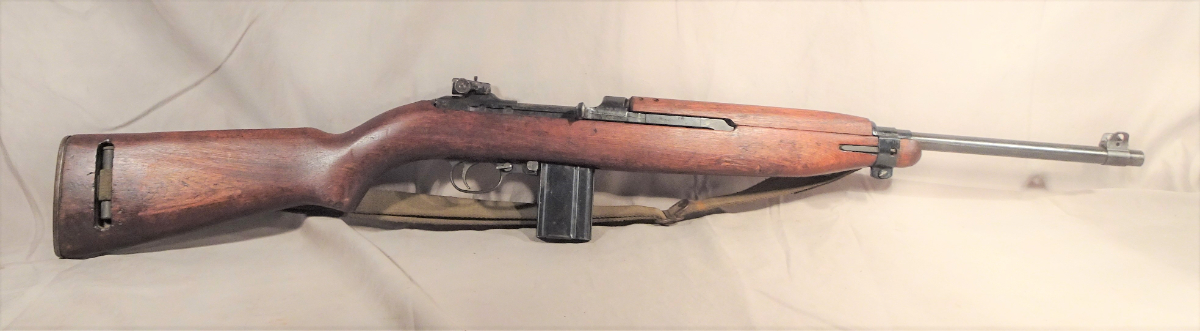
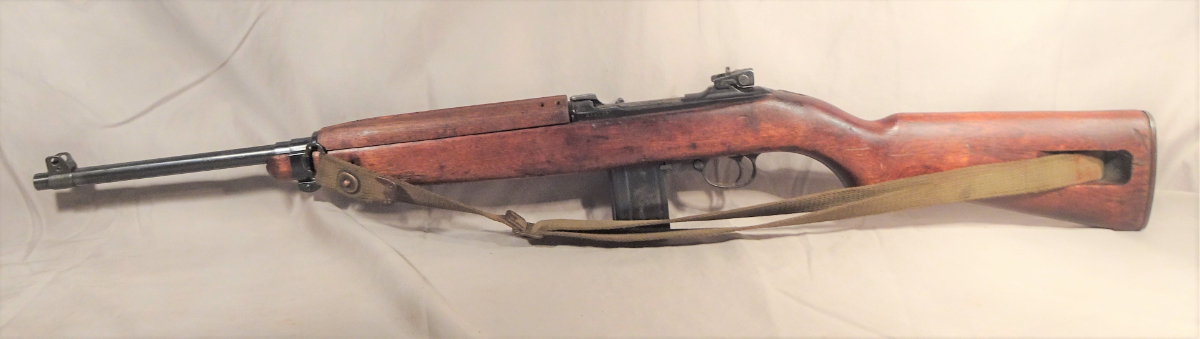
Top 5 WWII Rifles


As many of the country’s police departments grapple with dips in funding, reputational crises, lack of morale and a struggle to keep numbers in most departments at approved levels—all as violent crime surges—many businesses and citizens are opting to hire their own private police forces of sorts: armed guards.
According to the Security Industry Association, there are around double the number of security guards employed across the country than there was two decades ago. As of 2021, there are two police officers for every one thousand civilians—and 3.1 guards for that same amount.
While “private policing” is hardly a new concept, it has gained significant traction across the United States since the 2020 riots. In and around 2020, more than 20 major cities slashed their police budgets, even as lawlessness swelled. Further, Left-leaning cities in recent years have introduced an abundance of criminal-friendly policies, such as “bail reform” and early prisoner releases.
With more criminals on the streets, those who can afford more security tap into the billion-dollar private security arena; meanwhile, the middle and lower classes—especially in cities mandated by gun control activism and anti-Second Amendment legislation—are left in even more desperate situations as law-enforcement resources are stretched thin and as these same officials also do all they can to prevent average citizens from obtaining the means to defend themselves.
Perhaps there is no more significant example than Beverly Hills, Calif. This uber-affluent, ultra-anti-gun enclave has reacted to rising crime by hiring even more private security. One private security firm was even hired to provide armed safety personnel at public schools in the city—schools frequented by the children of the rich and famous.
An ad on Jooble even reads: “Urgent! Armed security jobs in Beverly Hills, CA.”
Beverly Hills also contracted several other firms to patrol the area in cars and on foot to help the police safeguard the “luxury capital of the world.”
Meanwhile, well-off residents and business associations in upper-class communities spanning San Francisco and New York to Chicago, Portland and Seattle—all pockets saddled with hostile and restrictive private gun ownership laws—have also turned to independent companies to deter criminal activity.
Even in Washington, D.C., the national beacon for propelling an anti-firearm disposition, [what entity?] has turned to contract security officers out of concern for declining personnel numbers in the strained police resources. And next door in Maryland, the Downtown Annapolis Partnership has begrudgingly admitted they now need to use taxpayer funds to retain private guards to protect prominent areas—guards they cleverly call “safety ambassadors.”
In other words, the unspoken motto from most Left-leaning enclaves is, “We have the money to hire protection, but guns are bad, and if you aren’t rich like us, you are on your own.”
Moreover, wealthy sectors are already at an advantage, as these cities can generally entice more police officers because they have higher tax earnings, which generally means they can offer better wages and benefits.
Thus, if holding down crime is such a struggle for them, imagine the reality most of urban America now has to confront.
What is a better solution? How about enabling all Americans, regardless of social status or wealth, to have the same fighting chance to protect themselves and those they love?
The same political leaders who are quick to espouse “equality” and, in the next breath, champion hefty gun control legislation are the same ones hiring armed private guards. America is supposed to be a land of opportunity and equal rights, not a land where the elites are protected while the average citizens struggle to remain safe.
Just plain cool!


California outsources its toxic waste

California likes to pat itself on the back for being a leader in protecting the environment.
Every year, California workers dig up hundreds of thousands of tons of soil contaminated with things like lead, petroleum hydrocarbons and chemicals like DDT. The waste is so toxic, California considers it to be hazardous and requires that it be disposed of at a facility specially designed to handle such dangerous material.
Or, at least, that would be the requirement if the waste stayed in California. It often doesn’t.
A CalMatters investigation found that, for decades, California businesses and government agencies have taken hazardous waste over the border and dumped it at regular landfills in states with weaker environmental regulations.
Among the findings:
- Much of the waste is going to landfills in Arizona and Utah with fewer safeguards and less oversight than permitted hazardous waste disposal facilities.
- Two of the most popular destinations are next to Native American reservations. One of those landfills has a spotty environmental history, Arizona records show.
- One of the biggest out-of-state dumpers is the state’s own Department of Toxic Substances Control which, since 2018, took more than 105,000 tons of lead-contaminated soil from the area around the Exide cleanup in Los Angeles County and disposed of it in Arizona. Most went to a landfill that Arizona regulators labeled in 2021 an “imminent and substantial threat.”
CalMatters reporter Robert Lewis and photo editor Miguel Gutierrez traveled to Arizona and Utah, documenting where much of the Golden State’s toxic waste ends up. The Department of Toxic Substances Control said its decision to take the waste to Arizona is driven by cost and acknowledged the agency doesn’t really know how the out-of-state landfills are managed. Gov. Gavin Newsom’s office wouldn’t comment.
David Harper, a member of the Colorado River Indian Tribes, questioned why the Golden State would dump its toxic waste so close to the reservation, which straddles the border between California and Arizona.
- Harper: “If it was not a problem, why didn’t they keep it themselves? Why does it have to come here? Why isn’t it in California?”
Talk about getting into your opponents mind before the fun starts!