Categories
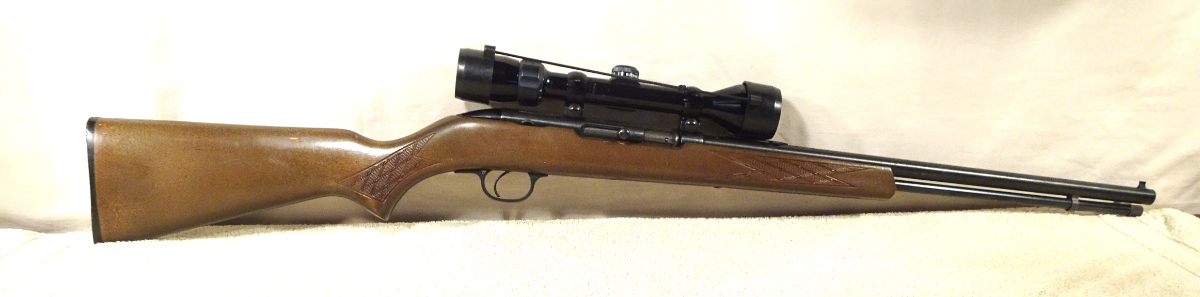
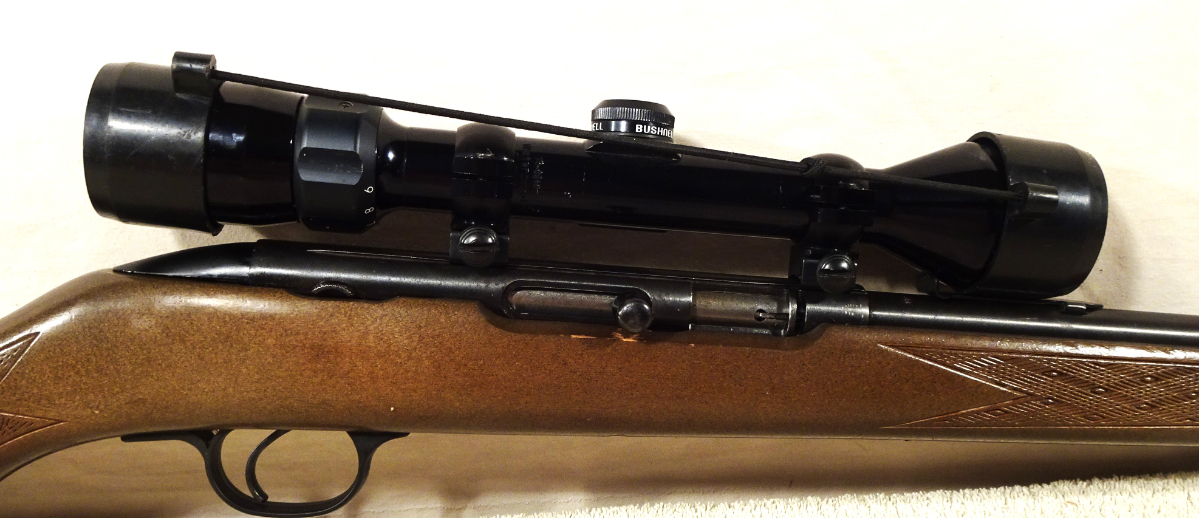
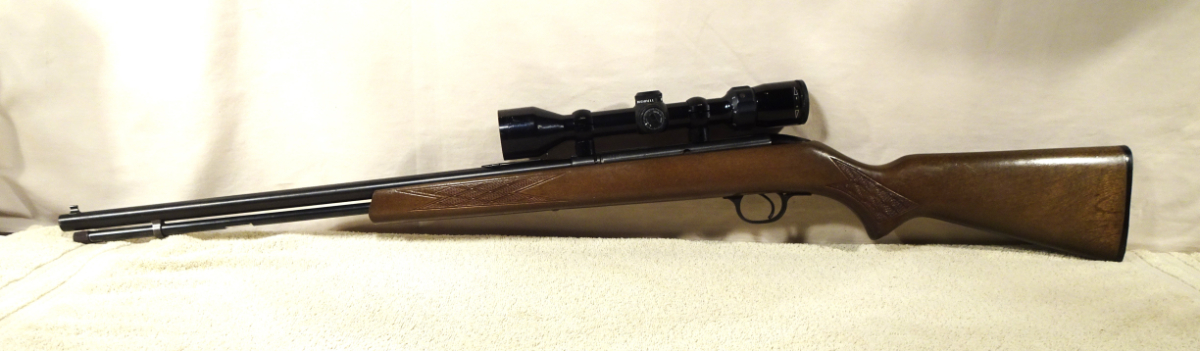
The Westernfield 740 30-30
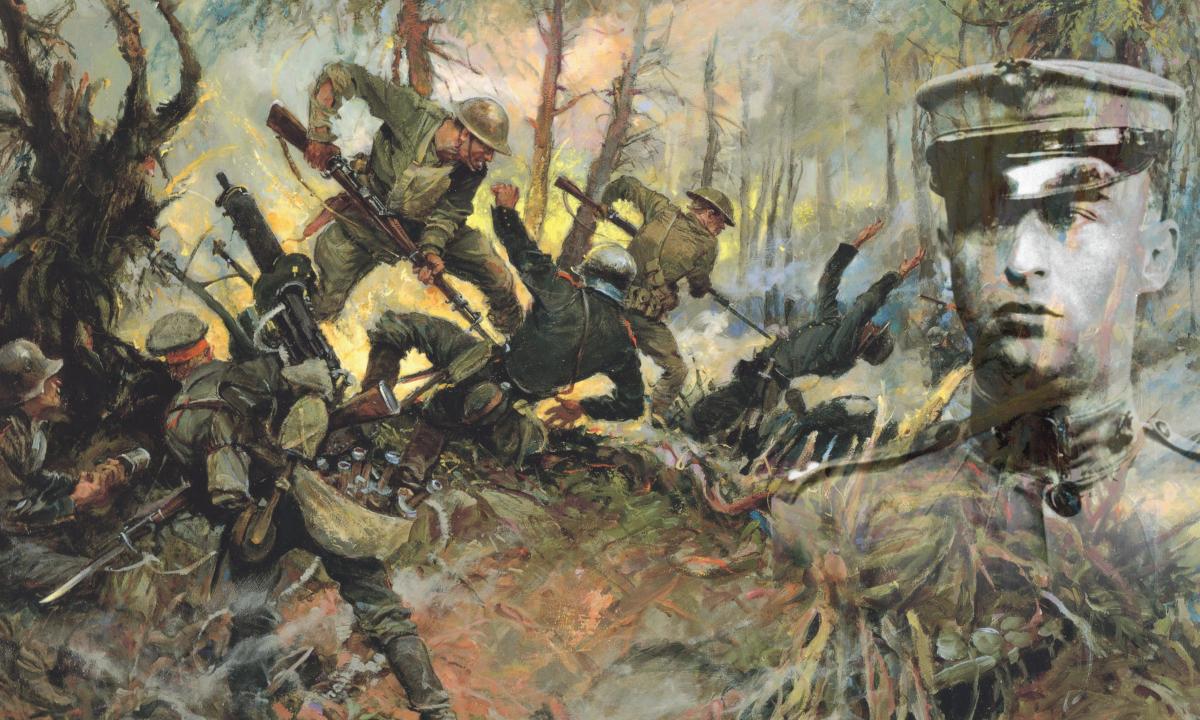
Even though John Arthur Hughes, a legendary Marine of the Old Corps, achieved low marks for interpersonal skills, his heroism earned him the Medal of Honor.
Most Marines are aware that only one Leatherneck officer has ever earned a second Medal of Honor. Smedley Darlington Butler earned his awards of the nation’s highest decoration for heroism at Veracruz in 1914 and in Haiti a year later. But had a second recommendation been sent forward correctly at the time, another Leatherneck officer might have claimed that distinction. And ironically, the two off-beat Marines served together and came to loggerheads in an encounter that characterized the colorful nature of the Old Corps during the era of the Banana Wars.
Born on 2 November 1880 in Brooklyn, John Arthur Hughes was the son of William H. T. Hughes, the director of the Ward Steamship Line, and his wife, Olive. His parents sent him to the prestigious Berkeley School (where Colonel John A. Lejeune sent his daughters in 1910), and he graduated in 1900. Although he secured a congressional nomination to the U.S. Military Academy, Hughes failed the entrance examination. By then, his father had died, and apparently higher education at a civilian college or university appeared out of the question.
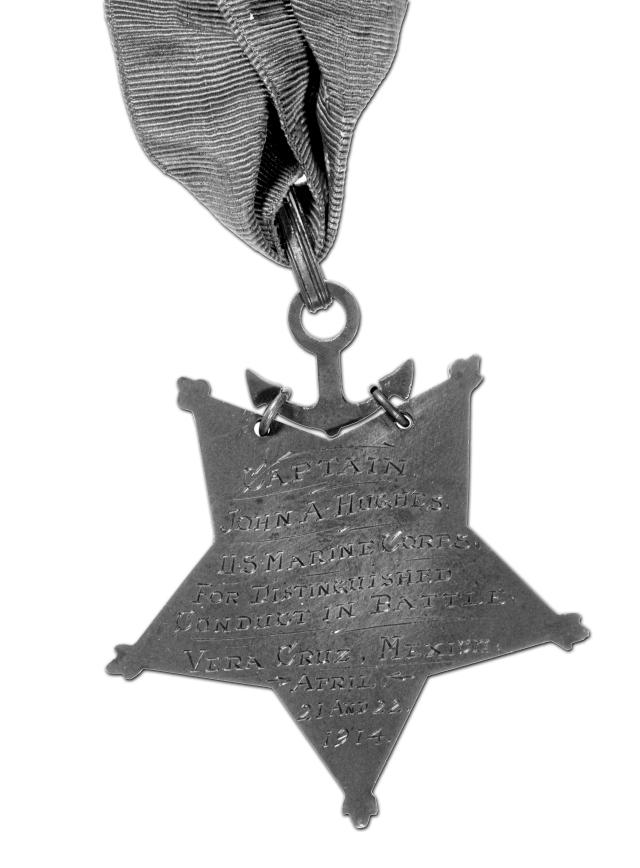
Still seduced by the notion of a military career, Hughes enlisted in the Marine Corps on 7 November 1900. The determined young man stood 5 feet 10¾ inches tall and weighed less than 136 pounds, but the slender frame concealed a resolute demeanor. While most enlistees of his era amassed checkered records containing numerous offenses of drunkenness, absences without leave (AWOL), and generally obstreperous behavior, Hughes’ file reveals a consistent compilation of 5.0 for conduct and proficiency. Barely 14 months after enlisting, he sewed on the stripes of a corporal; after 18 months, he earned a promotion to sergeant.
The turn-of-the-century Marine Corps offered ample opportunities for the intelligent and gifted among the ranks to obtain a commission. Although the smaller of the naval services had obtained all of its new officers from among the graduates of the U. S. Naval Academy since 1883, the demands of an expanding Navy required that all of the products of Annapolis migrate to the Fleet after 1897.
A year later, Colonel Commandant Charles Heywood asked Secretary of the Navy John D. Long for permission to commission qualified applicants directly from civil life. A proviso existed to allow the commissioning of noncommissioned officers who had obtained their stripes because of meritorious service. With a sizeable expansion of the Marine Corps in 1900, 18 vacancies existed for new second lieutenants. Congress mandated that only eight of the openings be filled by civilian applicants; the remaining slots had to be offered to either graduates of the Naval Academy or the enlisted ranks. When all graduates of the class of 1900 went into the Navy, the commandant turned to his other option.
Johnny Becomes an Officer
On 21 December 1901, former Sergeant Hughes took his oath as a second lieutenant along with three meritorious corporals; included in that number was Earl H. “Pete” Ellis (another colorful Marine who went on to earn the Navy Cross). After rudimentary training at the barracks in Boston, Hughes and the new officers joined a replacement battalion bound for the Philippines. Arriving at Cavite in 1902, they received postings to the regiment stationed at the old Spanish naval arsenal; Olongapo, at the head of Subic Bay, contained a second regiment of Leathernecks, and the brigade headquarters flew its flag in Manila.
Hughes took over a platoon of infantry in a battalion commanded by Major Constantine M. Perkins; Lieutenant Colonel Mancell C. Goodrell commanded the regiment. Neither Perkins, a Naval Academy graduate, nor Goodrell, a venerable campaigner of the Old Corps, found satisfaction with the mercurial Hughes. During that troublesome tour in the Philippines, Hughes’ nickname of “Johnny the Hard” took root.
Hughes’ nom de guerre might just as easily been “Johnny the prankster.” Initially, the inconstant new officer raised the ire of his battalion commander for a series of untoward and sometimes humorous incidents. Twice in November 1902, Hughes was suspended from duty. The first offense occurred through a simple violation of a standing order from his regimental commander concerning the rifle-range detail. Later that month, he spent ten days under arrest for drunken behavior and using abusive language to his Marines. A few months after that, Hughes’ superiors again learned of his unruly deportment; this time, an irate major reported that Hughes and two other junior officers, obviously in their cups, had awakened him at 0300 with their boisterous shenanigans.
Expressing his disapproval of Hughes’ behavior, Major Perkins wrote fitness reports with “not good” and “good” for marks, hardly harbingers of professional achievement. The remarks section of Hughes’ first fitness report written at Cavite provides a candid, albeit uncomplimentary, portrait of a man who would emerge later as one of the most highly decorated Marines of his era:
I regard him as an officer whose intelligence, initiative, and control of men are above average, and possessing to a large degree snap and vim—a driver—but somewhat reckless and careless in matters other than of a military character, and with a disposition towards boisterousness not to my entire approval. If he overcomes this tendency, I think he would make a particularly efficient officer.
Climbing the Promotion Ladder
Despite the series of negative fitness reports Hughes earned as a second lieutenant, a board of examination convened in September 1903 sent his name forward with a positive recommendation for promotion to first lieutenant. Ironically, Major Perkins sat on that board. Earlier, in response to the block on the fitness report asking if he would desire the services of Hughes in time of war, Perkins wrote:
Not in time of war [no objection] as he is a good soldier, but I do not approve of his disposition toward boisterous behavior in barracks. [He] is a good drill officer and controls his men well, but his discipline is inspired rather by fear than by tact or example. He is somewhat too impulsive and lacks self-restraint.
By then, Hughes had become known throughout the Marine brigade in the Philippines as Johnny the Hard for his predilection for solving minor disciplinary problems with his Marines by employing the language of the barracks, or even using his fists. And he was not hesitant to demonstrate his angst to other junior officers in the same fashion.
Detached in November 1904, Hughes reported a month later to Marine Barracks, Boston, where he served as the assistant quartermaster and acting commissary officer for the next two years. On 26 March 1906, the Major General Commandant, George F. Elliott, posted him to the cruiser USS Minneapolis, but her Marine guard deployed ashore to Cuba that fall when Leatherneck detachments from throughout the Fleet assembled to form a naval constabulary in response to unrest in Spain’s former colony. On 14 November, the commandant detached him from the Minneapolis, and Johnny the Hard served with the 1st Provisional Regiment in Cuba.
On 14 May 1908, another board of examination—paying no heed to a continuing record of untoward instances in his records of fitness—recommended Hughes for promotion, and he pinned on his captain’s bars. In January 1909, Hughes signed in at the barracks in New York, but in April he reported to the battalion embarked on the USS Hancock. Steaming south to Guantanamo Bay, the aged troop transport transferred Hughes and his fellow Leathernecks to the former auxiliary cruiser Buffalo, and the force deployed ashore in the Panama Canal Zone on 23 March 1910. Just a month later, continuing difficulties in Nicaragua prompted the dispatch of the ready battalion north. And during this short deployment, Hughes’ colorful behavior came to the attention of no less a personage than Secretary of the Navy George von Lengerke Myer; in addition, it involved a contemporary with powerful political connections.
Raising His Superiors’ Hackles
In June, Hughes earned a punishment of five days’ suspension from duty for “assumption of authority and insubordination.” The nature of the alleged offense has been lost to history, except as noted on his next fitness report. Less than a month later, the mercurial Leatherneck absented himself from duty without authority and in September received another suspension from duty for five days because of “unwarranted evasion of orders.” Besides noting that he had been suspended from duty, Hughes’ reporting senior added that “he knows his profession thoroughly, but he is excitable and not always loyal, in his attention to duty, manner, and bearing, to his commanding officer.” But the incident that really raised the hackles of his superiors occurred in April 1912, when Hughes was confined to his quarters as a result of a fistfight with a brother officer.
Johnny the Hard’s commanding officer, Major Smedley D. Butler, determined that another marginal fitness report or even transferring the seemingly troublesome Hughes out of his battalion was less punishment than deserved. On 24 May 1912, Butler cabled Major General Commandant William P. Biddle: “Consider Captain Hughes menace to welfare command. Request return to arrest or immediate detachment.” When the commandant rebuffed Butler’s request to transfer Hughes, not only out of Nicaragua but to the Philippines to begin anew the customary overseas posting of 2 to 2½ years, the major turned to an influential connection. Butler’s father, Congressman Thomas S. Butler, served on the powerful House Naval Affairs Committee as its senior Republican member.
The appeal to transfer Hughes passed quickly from Capitol Hill to Secretary Myer. But he denied the unusual and punitive request, leaving the younger Butler to deal with the obstreperous Johnny the Hard. Secretary Myer realized that the indefatigable Butler had attempted to embellish the original charge against Hughes. First, he added an incident of drunkenness that occurred two months prior to the assault on the junior officer; then Butler cited Hughes’ abusive language to him in an incident that took place a year before that.
No further incidents appeared on subsequent fitness reports prepared in Nicaragua, but two instances of Johnny the Hard as AWOL were noted while he served in Cuba; after the second occurrence, his battalion commander placed him on restriction. Hughes stood detached at the end of 1912 for duty at the barracks in Portsmouth, Rhode Island. Less than a year later, Headquarters Marine Corps ordered all of the barracks on the East Coast to provide the personnel to man the two regiments of the Advance Base Force in the forthcoming Fleet maneuvers.
Hughes reported to the 2nd Advance Base Regiment, forming up at the Philadelphia Navy Yard and scheduled for deployment to the Caribbean in the transport Prairie. As a captain, he led a company of infantry, one of four in a regiment (the “mobile regiment”) commanded by Lieutenant Colonel John A. Lejeune that also included a company of machine guns and a 3-inch naval gun battery.
On 27 November 1913, the Prairie stood to and steamed for New Orleans in anticipation of participating in Fleet maneuvers and the first test of the advance base concept, or quite possibly deploying to Mexico as relations with America’s southern neighbor worsened. The Hancock, containing the 1st Advance Base Regiment (the fixed regiment with large naval guns, search lights, and mining equipment) and the brigade headquarters followed on 3 January 1914.
Four days later, the two ships rendezvoused at sea off the Puerto Rican island of Culebra and dropped anchor. For the next two weeks, the Marines fortified the tiny island in earnest. When the opposing “Black Fleet” arrived, the chief umpire declared the island secure and a victory for the defenders. After training ashore, the force deployed to New Orleans on 9 February. But on 5 March, the ships embarking the Advance Base Force weighed anchor and steamed south for Mexico.
Into Veracruz
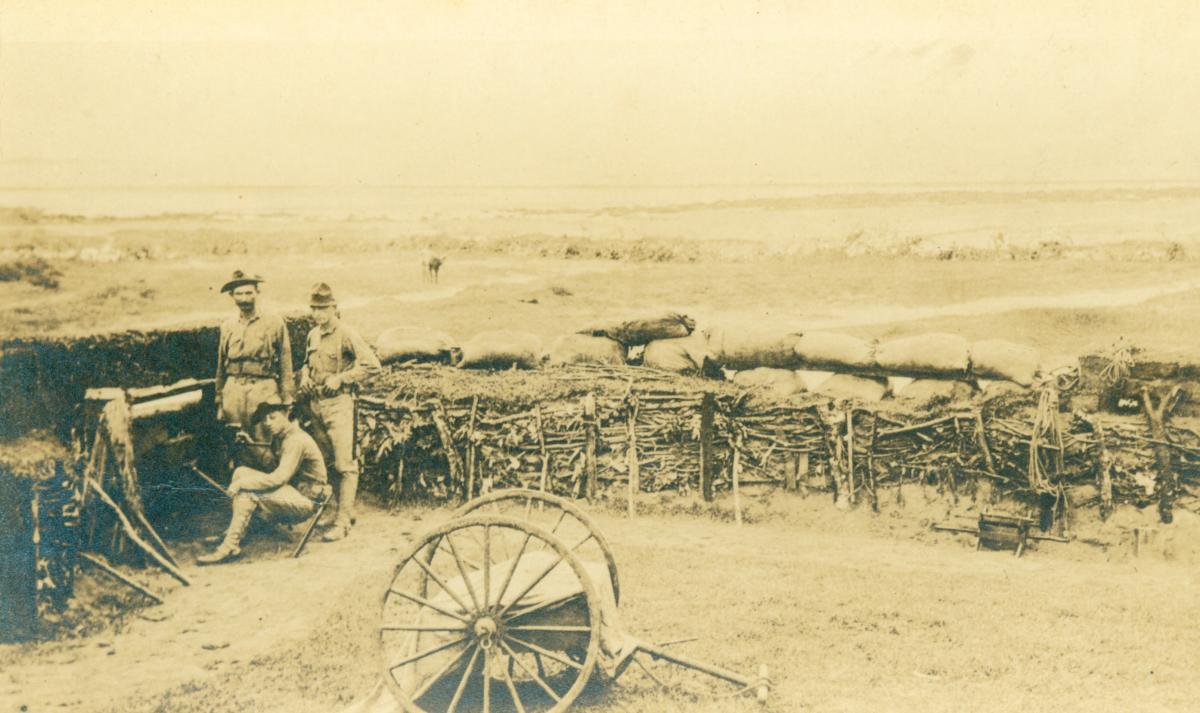
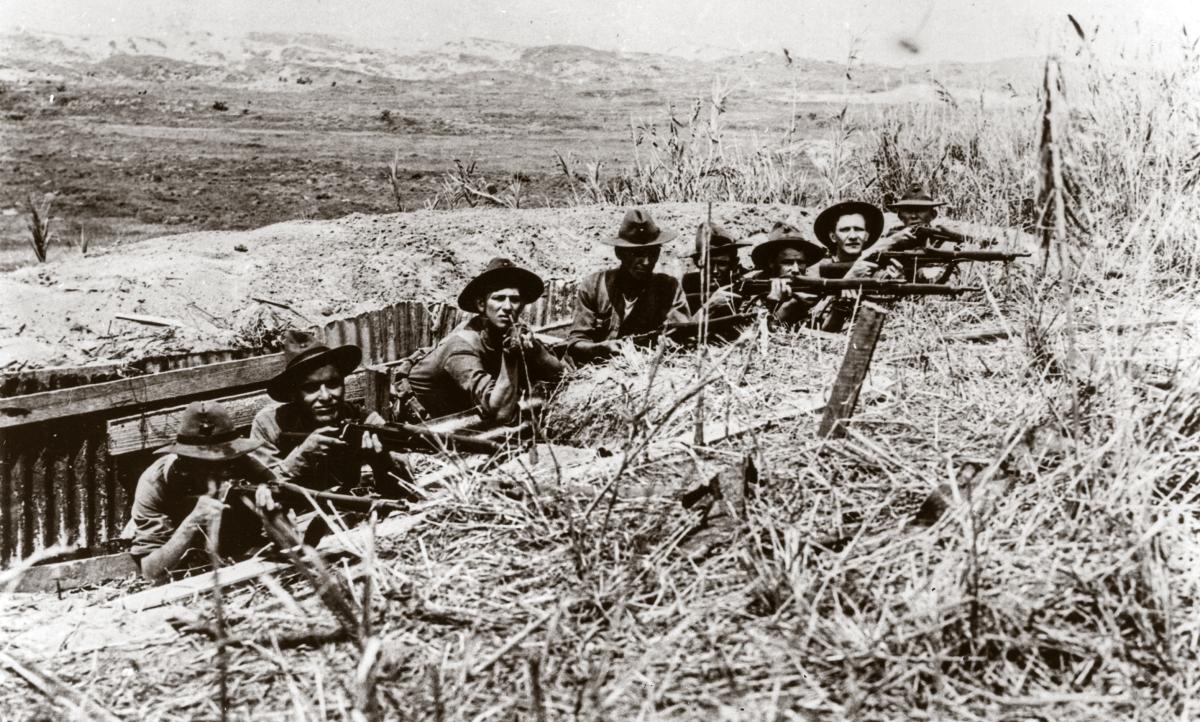
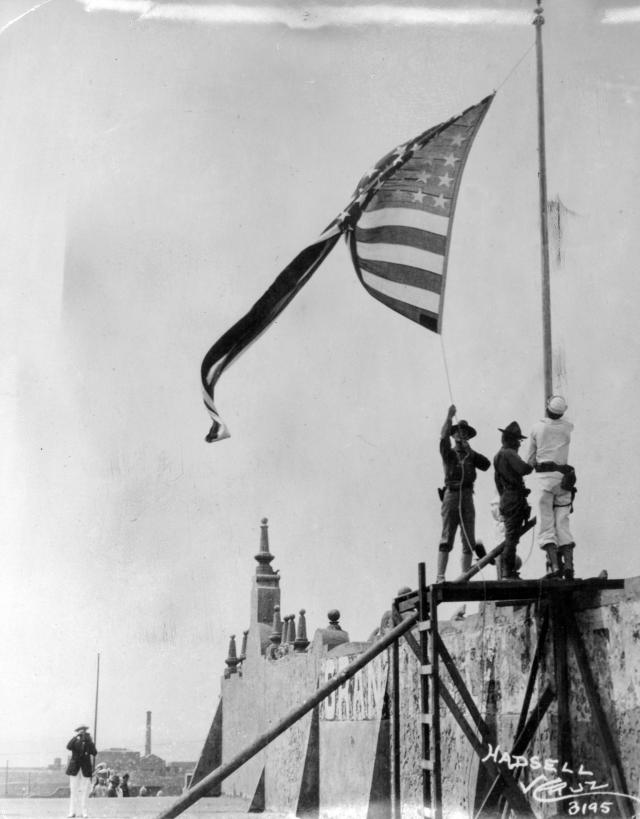
President Woodrow Wilson ordered the infantry components of the sizeable naval force into Veracruz, and Hughes deployed ashore with the 15th Company, 2d Provisional Regiment, on 21 April. For his conduct during the next two days, Hughes earned the Medal of Honor. Although heretofore awards of the nation’s highest decoration had been earned by both Army officers and enlisted personnel, the legislation provided only for the award to be presented to Sailors and enlisted Marines. After the incursion into Mexico, Congress amended the legislation for the Medal of Honor to include naval officers. The Department of the Navy took the opportunity to shower the Medal of Honor on selected participants at Veracruz. Of the Navy contingent deployed, 28 officers and 18 enlisted men earned the award; nine Marine Corps officers but none of the enlisted Leathernecks received the medal.
Butler pleaded with his superiors to have the award withdrawn, arguing that nothing in his citation warranted such recognition at that level. Waiving his protestations aside, the Department of the Navy ordered Butler to wear the award and cease his carping. How Hughes felt about the award is a footnote that has long slipped into the dustbin of history. Butler’s discomfit over his decoration must have intensified on learning that a fellow recipient of the nation’s highest decoration was an officer whom he despised.
When the brigade steamed north, Hughes received orders detaching him to the barracks in Portsmouth, and he joined his new command on 9 December 1914. In his final fitness report covering the landing at Veracruz, prepared by Major Randolph C. Berkeley—who also earned the Medal of Honor in Mexico—Hughes’ battalion commander wrote that “I cannot recommend this officer for the duties of a post commander, on account of his irritable temperament, which causes him to be needlessly harsh in handling the men under his command.”
Apparently, Johnny the Hard kept his nose fairly clean for the next 18 months. But in April 1916, the barracks commander at Portsmouth suspended him from duty for ten days for participating in a hoax in which Hughes had sent false telegrams to officers regarding orders for duty. A month later, Major General Commandant George Barnett ordered him to command the Marine Detachment in the battleship Delaware. After Hughes and his Marines deployed ashore in response to civil unrest and banditry in the Dominican Republic in 1916, President Wilson ordered the U.S. incursion a semi-permanent one on 26 October of that year.
Meanwhile, Hughes came up for what should have been a routine promotion to major based on a total of 15 years’ service and within the promotion zone established by strict lineal precedence. How Secretary of the Navy Josephus Daniels came to concern himself with the promotion of a Marine Corps captain to major is unclear. Most likely, the indefatigable and irrepressible Butler had a hand in alerting the pompous and egalitarian Daniels to the possibility that a junior officer of such unmilitary demeanor was about to become a field-grade officer. Barnett pleaded Hughes’ case, but to no avail. Besides his fitness reports and medical record, the case file contained two letters reporting Hughes’ suspension from duty and three letters of reprimand. But it also held a citation for the Medal of Honor.
Gunshot Wound to the Leg
Just then, however, a telegram arrived from Santo Domingo with the news that Johnny the Hard had suffered a gunshot wound to the left leg, fracturing his femur and inflicting severe damage to tissue and nerves. Barnett simply waved the telegram in Daniels’ face and forced the portentous secretary of the Navy to back down. Earlier, Daniels had demonstrated a fondness for exclaiming that his policy was to “reward those who have been at the cannon’s mouth,” or otherwise reward those members of the naval services with powder burns and tropical sweat stains on their uniforms.
Hughes’ promotion became effective 16 March 1917, and it arrived with a strongly worded letter of caution over the signature of the secretary of the Navy: “You are informed, however, that the Department [of the Navy] fully expects you to show your appreciation of the leniency thus exercised in your case by so conducting yourself in the future as to obviate the possibility of ever again being charged with drunkenness or harshness towards the men under your command.”
After Hughes recovered from his wound, he served at the headquarters of the Advance Base Force at Philadelphia. When the United States declared war on Germany in April 1917, he received orders transferring him to Quantico in anticipation of Marine forces assembling for service in France. Shortly after the United States entered the war, John Lejeune, then a brigadier general, wrote excitedly to his friend in Haiti, Butler, with the news that Barnett had offered a brigade of Marines to join the American Expeditionary Forces (AEF) bound for the Western Front. Assuming that he would command the brigade, Lejeune assured Butler—then only a major but holding the temporary rank of major general in the Gendarmerie d’Haiti—that he could promise him the command of a battalion of infantry.
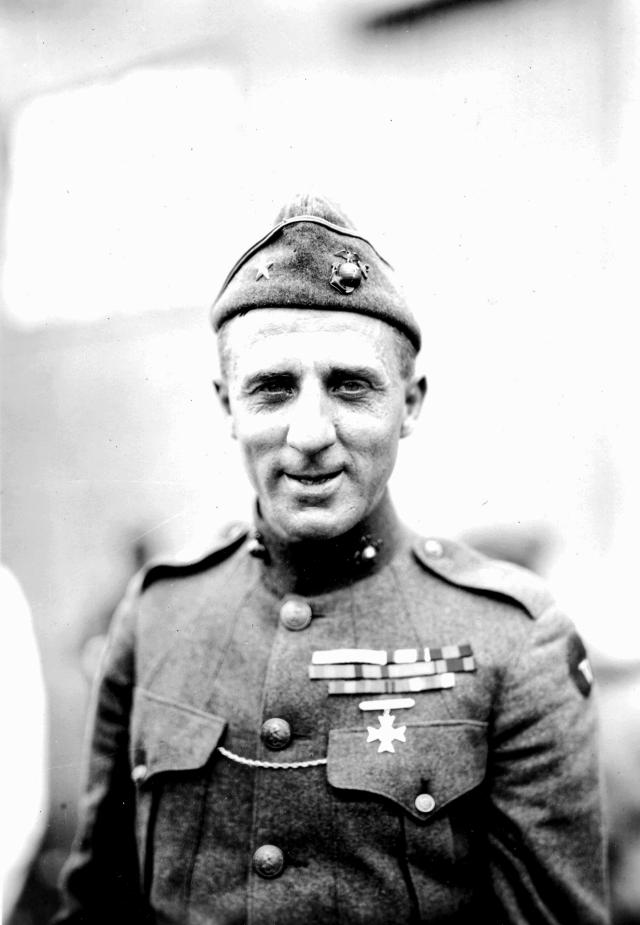
Subsequently, when the initial deployment was reduced to only a regiment, a disconsolate Lejeune informed Butler that a colonel would command the regiment and he had no say in personnel matters. But Lejeune was being less than candid with his old friend. By then, the indefatigable Butler had already bombarded Headquarters Marine Corps with requests for relief of duties in Haiti and orders to France. Unmoved, Barnett ignored the entreaties by proclaiming Butler’s position simply too important to the success of the naval mission to Haiti. Privately, however, he snarled that Butler had used all of his political leverage to gain the coveted post to command the Gendarmerie d’ Haiti and he could just remain there. Meanwhile, Barnett turned to Lejeune for recommendations on just which officers should command the battalions and regiments that would ultimately constitute the 4th Brigade (Marine), AEF. The assistant to the commandant recommended Hughes to command one of the infantry battalions.
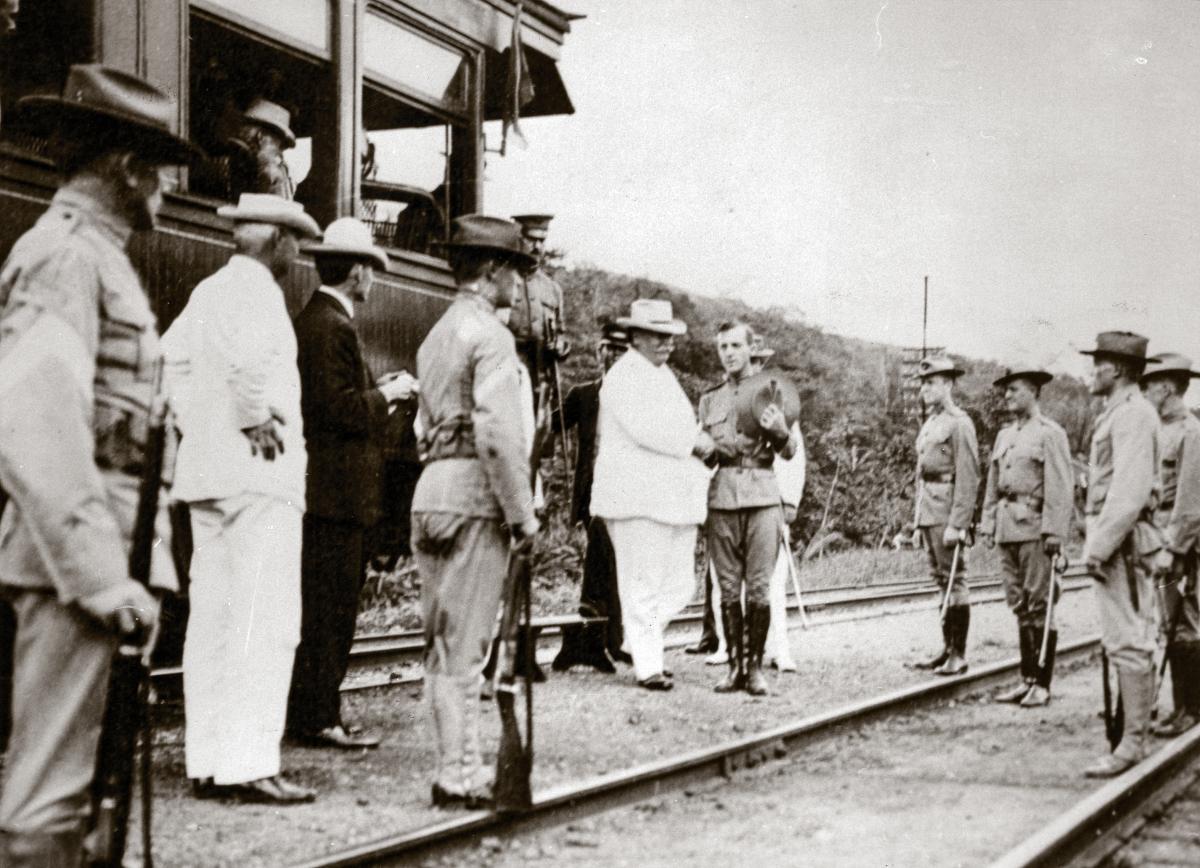
Off to the Western Front
Between July and August 1917, the 6th Marines assembled at Quantico. Colonel Albertus W. Catlin led the regiment. Hughes took command of 1/6, Thomas Holcomb 2/6, and Berton W. Sibley 3/6. On 16 September, Johnny the Hard and 1/6 departed Quantico by train for the Philadelphia Navy Yard for embarkation. Finally, on 23 September, the Henderson weighed anchor in the harbor of New York, steamed for France, and deposited Hughes’ battalion at St. Nazaire. In response to a request from AEF headquarters, Hughes and 12 of his fellow officers were detached for duty under instruction at the I Corps school at Gondrecourt from 19 October to 20 November. Apparently because of his stellar performance, Army superiors asked to keep Johnny the Hard there as an instructor. After teaching at the Army school from 31 December until 13 February 1918, Hughes requested a return to his battalion. Rebuffed by his Army superiors, he simply packed up and returned without orders. Presumably, someone in the chain of command from the 6th Marines to 4th Brigade (Marine) to 2d Division to I Corps sorted out the affair, because no mention of it appears in Johnny the Hard’s record. Subsequently, Hughes commanded 1/6 in one of the most ferocious and costly encounters of bloodletting in the history of the Marine Corps.
On 27 May 1918, Germany launched the third of its spring counteroffensives in hopes of bringing the war to a close before the full weight of America’s military might arrived on the Western Front. Within four days, the gray-clad feldgrau had reached the Marne River at Château-Thierry and threatened Paris 35 miles to the southwest. Although the United States had consistently refused the entreaties of its allies to enter the newly arrived American force into the lines until an entire army could be formed, the gravity of the situation caused that ukase to be set aside. Three American divisions rushed to stem the tide, including the 2d Division, AEF, which included the 4th Brigade (Marine).
The 6th Marines took up positions along the Paris-Metz highway, just south of a small forest called Belleau Wood, with orders to dig in and hold at all costs. Once their withering fire stalled the German advance, the Marines received orders to expel the enemy from Belleau Wood. Between then and when commanders declared the contested terrain secured on 23 June, the brigade suffered a horrendous casualty rate of more than 50 percent. For his conduct on 10-13 June 1918, Johnny the Hard earned both a Navy Cross and a Silver Star “for leading his men superbly under the most trying conditions against the most distinguished elements of the German Army, administering . . . their first defeat.” In the process, the gallant Marine suffered another combat wound, this time from poison gas that seared his lungs. More than half of 1/6 suffered wounds or died during those hellish days at Belleau Wood.
Not deterred by the licking inflicted on its forces by the fresh American troops and newly revitalized French soldiers, the German high command ordered the highway cut between Soissons and Château-Thierry. The Marine Brigade deployed south of Soissons on 18 July. In two days of bitter fighting, the Marines suffered almost 2,000 casualties. Most of the dead and wounded were among the ranks of the 6th Marines. Included in that number was Johnny A. Hughes, banged up badly when an enemy shell struck his command bunker.
Another Silver Star and Two Croix de Guerre
By then, his old gunshot wound from Santo Domingo had reopened and made even simple movement difficult and painful. Hughes’ gas-seared lungs sapped his strength. Determining that Johnny the Hard had reached the limit of endurance, his superiors effected his relief and ordered him home. An observer recalled that Hughes took a nasty fall as the bunker collapsed: “Johnny the Hard swore, then asked, ‘Any of you birds got a pair of wire cutters?’ He then cut off a shard of bone protruding from his leg.”
His promotion to lieutenant colonel, effective 28 August, finally caught up with him. Besides another Silver Star earned at Soissons, Hughes earned two Croix de Guerre. No less an icon than Colonel Hiram I. “Hikin’ Hiram” Bearss (a Medal of Honor recipient for his heroism on the Philippine island of Samar in 1901) thought Johnny the Hard deserved more. Writing from the Philadelphia Navy Yard a year later, where both colorful officers served with the Advance Base Force, Bearss sent his recommendation for the Medal of Honor directly to Commandant Barnett:
During the engagement to the east of Vierzy, on the 19th of July 1918, Lieut. Col. Hughes (then major) conducted his battalion across open fields swept by violent machine-gun and artillery fire. His entire commissioned and non-commissioned staff were either killed or wounded. Though suffering the severest pain from an old wound, he led his battalion forward and by his dauntless courage, [and] bulldog tenacity of purpose, set an example to his command that enabled [it] to hold [its] position against the enemy throughout the day [and] night, though without food or water and with very little ammunition. Major Hughes’ battalion had been reduced to about 200 men, but due to this magnificent example of gallantry and intrepidity this remnant of a battalion held a front of over 1,200 yards. As a battalion commander, he risked his life beyond the call of duty.
Just as resolutely, the commandant returned the recommendation, noting that it should have been submitted through the chain of command to Headquarters, AEF. By then, of course, too much time had elapsed. In any event, no officer serving in the 4th Brigade (Marine) earned the Medal of Honor in World War I.
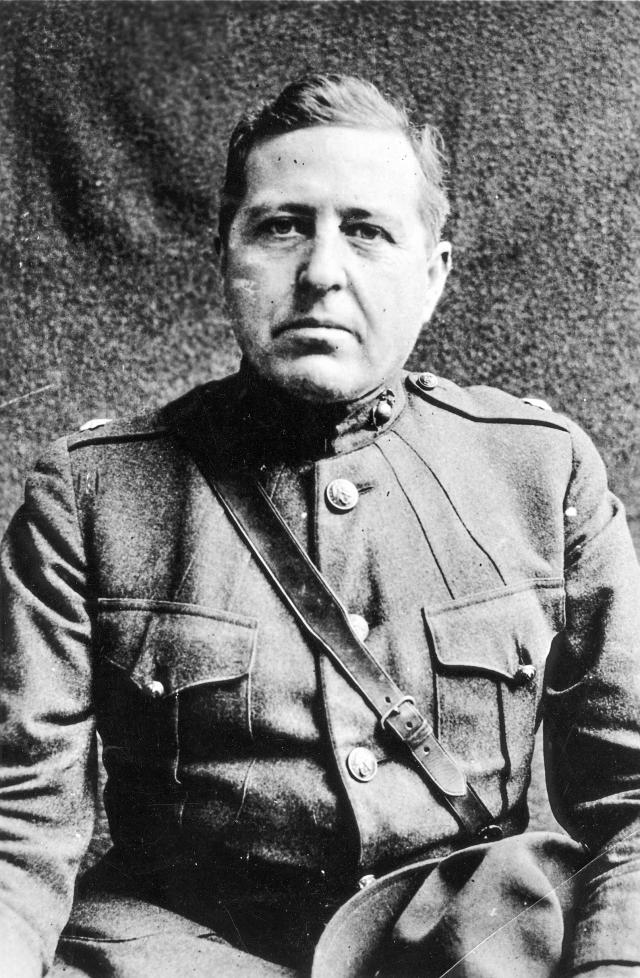
Butler Makes It to France
At about the time Johnny the Hard fought his last combat, his old nemesis, Smedley Butler, finally made it to France. Congressman Butler simply side-stepped the commandant and went to Secretary Daniels, and the latter ordered Barnett to assign the younger Butler to an outfit slated for embarkation to the Western Front. All too quickly, Butler jumped from major to lieutenant colonel, and then to colonel in command of the 13th Marines. But throughout the summer of 1918, senior Army officers and Secretary of War Newton Baker balked at accepting another brigade of Marines in France. Butler finally embarked with his regiment on 15 September and arrived in France two weeks later.
To his bitter disappointment, AEF headquarters ordered the 5th Brigade of Marines broken up for replacements and to perform duties along the lines of communication. Newly promoted to brigadier general, Butler dejectedly took command of a depot division at the AEF processing center at Pontanezen. For his wartime service, the indefatigable campaigner earned both the Army and the Navy Distinguished Service Medals and the French Order of the Black Star, a decoration designed to recognize the service of noncombatants. To his parents, Butler complained that “for over twenty years, I worked hard to fit myself to take part in this war which has just closed, and now when the supreme test came my country did not want me.”
Detached from a hospital in France in December 1918, Hughes embarked on the Mercy for the journey home. After two months in the naval hospital in Philadelphia, he attempted active service with the Advance Base Force at the navy yard but to no avail. Johnny the Hard had led his last charge; combat wounds resulted in a transfer to the disability retired list on 3 July 1919.
In retirement, Hughes joined his brothers in a commercial enterprise in Manhattan, the Hughes Trading Company. In a footnote to history, he provided the cover story for Marine Lieutenant Colonel Earl H. “Pete” Ellis’ ill-fated spy mission to the Central Pacific in 1923. (Ellis took the identity of a salesman for the Hughes company as a cover for the bizarre escapade.) Two years later, Hughes left New York to take up a position as a salesman for Mack Trucking in Cleveland and then became the first director of the Ohio Liquor Control Department in 1933-34. In 1936, the square-jawed, tough Marine became the safety director at the Great Lakes Exposition. Ill health from his combat wounds and tropical soldiering forced Hughes to retire again in 1937, and he moved to Florida. The gallant Marine slipped away on 25 May 1942 after a long stay in a veterans’ hospital. A generation of Leathernecks remembered the resolute Marine, known by all who admired or feared or despised him, as Johnny the Hard.
Note on sources: Hughes’ service files are found in enlisted records, Entry 75, records of the U. S. Marine Corps, Record Group (RG) 127, National Archives and Records Administration (NARA), and Entry 62, Records of Marine Corps Examining Boards, RG 120, NARA; he left no personal papers. Butler’s personal papers are found at the Marine Corps Research Center, Quantico and those of John A. Lejeune in the Manuscripts Division, Library of Congress (MD, LC). Congressman Butler’s papers were destroyed after his death, but the voluminous collection of correspondence from and to Secretary Daniels is at the MD, LC.
Unreliable, poorly designed, and downright dangerous, these are some of the worst guns to ever hit the woods
We may earn revenue from the products available on this page and participate in affiliate programs.
Father Flanagan, who founded Boy’s Town, famously said that there’s no such thing as a bad boy. I, who have not founded anything, say there’s no such thing as a completely bad rifle. There are some awful dogs out there, but if you look hard enough, you can usually find a smidgen of merit. The following five fit that description perfectly. They were chosen by myself, and my friend and gunsmith John Blauvelt of Milford, Pennsylvania, who has had the misfortune to work on some of them.
1) Winchester Model 100

This semi-auto made its debut in 1961 when the company was hitting its nadir in quality control. Worn-out machinery and simmering labor troubles doomed anything with a big red W on it. The Model 100 was not spared. It was a handsome rifle, sleek and streamlined, but there were problems.
First on the list was the trigger. It was awful, and there was no way to improve it. Second was accuracy, lack of. There were great slabs of wood gouged out of the stock in order to accommodate the barreled action, and therefore no way to bed the rifle solidly. I’ve seen one Model 100 that would shoot well, and read of others, but no one ever gives a group size, which I find highly suspicious.
As the rifle wore, you had to keep the rear bedding screw torqued down within an inch of its life (for reasons too complex to go into here), or the bolt would jam when it was nearly closed. In 1990, Winchester announced a recall of Model 100s. It seemed that the firing pins would wear down over time, and could jam and protrude from the firing pin hole, producing slam-fires with the bolt not fully locked. (If this happens, the subsequent seconds are very, very exciting.) The recall lasted, I believe, at least a couple of decades. And, finally, all the Model 100s I know about are very fussy about which ammunition will function through them. The Model 100 was produced until 1973, when it was allowed to die an unmourned death.
2) Winslow Rifles
 A Crown Grade Winslow Rifle in 7mm Rem Mag. Rock Island Auction Company
From 1963 until 1996, Winslow bolt-actions were produced first in Florida, then in South Carolina. The company used all sorts of actions, but I suspect mostly commercial FN Mausers. Winslows all had blind magazines, Douglas Premium barrels, and came in three stock styles and six grades. Winslows are the flashiest firearms I’ve ever seen. Their bluing, which incorporated a special cyanide hardening bath, made Colt Royal Blue look like Parkerizing. It was a bottomless, brilliant true black. Their basic stock, the Bushmaster, resembled a scaled-down Weatherby Mark V, but the Plainsmaster, the most extreme, looked like a prop from an old Buck Rogers movie.
Winslow employed a gifted woodworker named Nils O. Hultgren, who did elaborate basketweave carving in lieu of checkering, and superb ivory-on-ebony inlay work. There was also excellent gold-inlay and engraving to be had. An Emperor Grade Winslow, the top of the line, was mesmerizing. Abercrombie & Fitch, on its legendary 7th (gun) floor, used to keep a few full fancy Winslows on display, and they seemed to emit an inner light.
Winslows are fine rifles. They are the best work of some very talented people. They make this list because they’re too heavy, too oddly shaped, too shiny (On the Ungava Peninsula, years ago, I saw a rifle shining from what turned out to be miles away. A caribou could have seen it from much farther.) and now, too valuable. I don’t know of anyone who does this kind of work anymore. They were rather like the last of the Kentucky Rifles—too gaudy to be usable.
3) Ruger Model 44 Deerstalker

The Deerstalker was the idea of Bill Ruger, and debuted in 1961 at just about the time that he was recognized as a designing and marketing genius, a man with an uncanny sense of what the public would buy. And the Deerstalker made a lot of sense. It was a gas-operated semi-auto carbine chambered for the .44 magnum cartridge. It was short, reasonably light, handy, and just about perfect for whitetail hunters.
In 1961, the Deerstalker cost $108, which is pretty close to $1,000 today. If you got 3-inch groups at 100 yards, that was about as well as it was going to shoot, but for a 100-yard-and-under carbine, this was not a problem. But problems there were. First, Ithaca notified Ruger that it already made a slug gun called the Deerstalker, and to drop the name or else. This was probably an omen.
Worse was to come. If you shot lead bullets in a Deerstalker, the lead would shave in the barrel and block the gas ports. In fact, if you shot anything but jacketed, full-power .44 magnum ammo, the gun would not cycle. Grease from the ammo could accumulate in the tubular magazine (which could not be disassembled and was difficult to clean) and keep it from feeding. And most serious, the trigger group was contained in an aluminum housing which would inevitably crack and could not be repaired.
The Deerstalker remained in production until 1985. It still has fans, however, and if you need parts, you can get them from sources other than Ruger. You can even rebuild one in a tactical version, which would cause Bill Ruger to have a seizure.
4) Savage Model 340

This bolt action causes me to seethe with conflicting emotions. It was the first centerfire rifle I ever bought (in 1961) and it did very well for me. In fact, many 340s shot just fine and functioned OK. I came to my rifle because during my blithe college days I did more hunting for woodchucks than I did studying, and I yearned for a centerfire with which to persecute the pasture poodles. I was steered to a Theta Chi who had a lot of guns, among which was a 340 in .222 Remington, and which had a Weaver 4X rimfire scope already on board. And I could afford what he was asking.
The great virtue of the Model 340 was its price. In 1960, a new one, which came in .22 Hornet, .222, or .30/30, sold for $59.95. This was not a rifle that was ashamed of being cheap. Its cheapness shone in every part. Everything was stamped, riveted, unpolished, and assembled with indifference. The rifles were not even serially numbered until 1969. This probably saved a few cents. The 340 practically shrieked “I am cost-cutting run amok.”
The trigger was a horror. The barreled action was held in place only by a barrel band. The receiver was split on the top, and required a side mount (which you hardly ever see anymore). If you weren’t careful when removing the barreled action from the stock, the ejector and its spring would fall out. The detachable magazines were thin-walled and made of pot metal. The extractors were weak and only worked properly on the .30/30s. And on, and on.
The Model 340 was made until 1985, and the odd thing is, it has now become a pretty desirable firearm. You can, with very little trouble, find one going for $500 online, and if you really have a head full of owls, you can spend close to $1,000. Why? I have no idea.
5) Sporterized WWII Arisaka
 Many Arisaka Type 99s (top) and Type 38s (bottom) were sporterized after WWII. Rock Island Auction Company
You really have to be old to remember this one. During World War II, Japan issued two bolt-action rifles as their primary infantry arms. One was the Arisaka Type 38 (first issued in 1906) which was a 6.5mm, and its replacement, which was first issued in 1940, was a 7.7mm designated the Type 99. A great many of these rifles, and their carbine versions, came to the United States as war trophies, and eventually, their owners took them down from over the mantle and went hunting with them.
Both rifles had a number of things in common. They were Mauser derivatives, very simple, very unrefined, but reliable to a fault and nearly indestructible. In fact, the Type 38 and the 99 are probably much stronger than anything made today. How strong? In the early 1960s, a gunsmith, wildcatter of note, and writer named P.O. Ackley ran a series of tests on the bolt-actions that were used in World War II, including a Type 38. These tests were to destruction; Ackley kept raising the pressures until the actions failed. He was able to blow up everything except the Type 38. As a last resort, he pounded a steel rod down the barrel, welded it in place, and set off a round. The pressure blew the barrel out of the action, but the action was fine. At this point, Ackley gave up.
stocks sporterized, while others have had a lot of work done. Many of these guns are sound enough, but there are problems. First, all of them are pretty crude for sporting rifles, and remain so no matter what was done to them. Then there is the odd rotating-knob safety at the rear of the bolt. In use, you push it in and give it a quarter-turn clockwise; to release you do the reverse. However, if they’re worn, some of these safeties will cause the rifle to fire when you release them.
And then there are the “last-ditch” Arisakas. These are all Type 99s that were manufactured in the last days of World War II. They were little more than handles for bayonets, and shortcuts were taken in their production that make them unsafe to fire. Be advised, as they say in the military.
