(North Korean troops march with WWII PPSh–41 submachine guns in 2016.)
In North Korea’s formative years (1945-1949) it’s army’s weapons were entirely WWII vintage; a mixture of Japanese, Chinese, and Soviet types. During the Korean War, the same was true, and in the immediate aftermath very obsolete Soviet guns and the ex-Japanese weaponry was discarded, but the others remained.
This is a look at WWII weapons in North Korean use after the Korean War and following the mass emergency rearmament the USSR and China undertook in the mid-1950s. It is not an exhaustive list, but rather some of the main types of WWII weapons that remained in use in the 1960s, 1970s, 1980s, and even beyond; in some cases to the present time.
(North Korean T-34-85 tank filmed during 2012.)
North Korea (formally Democratic People’s Republic of Korea or DPRK) has, depending on how one counts reserve and paramilitary forces, the fourth- or fifth-largest army on Earth as of 2017. In terms of artillery, it has the most barrels (all combined calibers) of any army on Earth. North Korea’s military is totally disproportionate to it’s population, economy, or technological level.

(The battle standard of the DPRK army, here the gold-fringed dress variant.)
One of the reasons some of these WWII weapons have lingered on so long is just the sheer size of the army. It took about 30 years to make or import enough select-fire assault rifles to equip all active infantry units, for example.
North Korea follows a policy called Songun which places the military ahead of everything else in the country. Naturally this allows the country to pursue expensive projects like ballistic missiles which would otherwise be out-of-reach financially, but also lessens the pressure to discard obsolete equipment.
1953 rearmament
North Korea’s material losses during the Korean War were staggering. Immediately after the 1953 armistice which halted the war, the USSR and China undertook a massive emergency rearmament, nearly wholly with WWII-surplus gear.

(North Korean arms losses during the 1950-1953 war were appalling. This bounty was captured in just one 1951 battle by the South Korean army’s Capital Cavalry unit. Seen are four Soviet 82-BM-37 mortars, three M1910 machine guns, several Japanese Type 89 knee mortars, a huge row of Soviet PPSh-41 submachine guns, and a row of Soviet DP light machine guns. In the rear is a forest of Soviet Mosin-Nagants and Japanese Arisakas. Everything in this Korean War photo was a WWII weapon.)
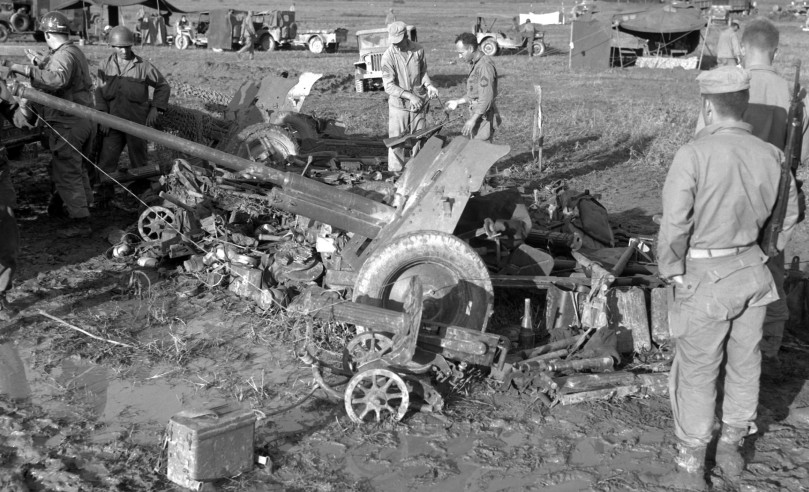
(Not every WWII-era weapon lost during the Korean War was a high-priority replacement in 1953. In this heap of weapons captured by the US Army, are two WWII-veteran Soviet 19-K 45mm field guns and several M1910 water-cooled machine guns, both now obsolete. The USSR provided North Korea with limited numbers of replacement 19-Ks and M1910s in 1953, but they were withdrawn in the 1960s.)
By the 1980s, frontline, first-tier divisions had largely moved on to more modern equipment but a lot of this 1953 acquisition gear remained in use.
Worker-Peasant Red Guards Militia
This second-rate militia is parallel to, but in theory separate from, the DPRK army and it’s reserves. By the 21st century, most remaining WWII-era weapons in North Korea are limited to this militia. It’s nominal strength, which varies somewhat by the source quoted, is 3,500,000 members. Membership is mandatory for several years for men immediately after their draft tour with the regular army; it is optional for older men and for women of any age.

(This North Korean press photo shows the conclusion of a 2013 Worker-Peasant Red Guard exercise. Mixed in with the Cold War-era AK-47s and RPG-7s are a Mosin-Nagant M91/30, numerous PPSh-41s, a Mosin-Nagant M44, and in the front a DP machine gun – all WWII guns.)
As a rule, the militia gets whatever cast-off equipment is being retired by the regular army. It wasn’t until the 1980s that AK-47s were introduced. Because the militia’s size grows incrementally with the country’s overall population, there is still a “requirement slope” for gear one or even two generations behind whatever is next in the pipeline.
the T-34
Deliveries of the WWII-legendary T-34 to North Korea started in the mid-to-late 1940s, both the early T-34-76 model with small turret and 76mm gun, and the much more common T-34-85. North Korea had 120 of the latter and a smaller number of the former in inventory when the Korean War started in 1950. 100% of the original deliveries were destroyed during the war, replenished sporadically throughout by China and the USSR, many of these themselves quickly destroyed.

(General Douglas MacArthur inspects a destroyed T-34-85 during the Korean War.)
After the 1953 armistice a mass re-arming of the North Korean army was done and by the mid-1950s, the country had many more T-34s than it had started the Korean War with.
The “early” version weighed 31 tons and was armed with a F-34 76mm gun with 100 rounds of ammo. The secondary weapons were a coaxial and a hull DT machine gun (7.62mm). The armor varied between ¾” to 2¾” and the top speed was 33mph. It had a 4-man crew. When introduced to combat on the eastern front of WWII it was a success, but did have problems. The transmission was of very low quality and many WWII Soviet photos show T-34-76s with an entire spare transmission being carried as cargo.

(Shared on Chinese internet boards in the early 2000s, this image was said to be from a DPRK army propaganda video of the 1960s, and quite remarkably, showing the T-34-76 version still in North Korean service at that late of a date. This is certainly possible as this T-34-76 shows features of post-WWII modernized T-34-85s such as the side saddle tanks and starfish roadwheels. The T-34-76 had long since gone extinct everywhere else by the 1960s.)
The more famous “later” T-34-85 was vastly improved. One ton heavier, it’s larger and better-protected turret carried a ZiS-S-53 85mm anti-tank gun with 60 rounds of ammo, plus the two DT machine guns. It was powered by a Kharkiv V-2-34 12-cylinder diesel and had a top speed of 33mph. It was equipped with a TSCh-16 4x-magnification viewscope. The T-34-85 could carry side-saddle auxiliary fuel drums, and two MDSh smoke-screen generator canisters on the rear. The glacis armor was 2¼” thick but sloped at 30°, effectively making it 3½” to incoming shells. The gun mantlet was over 3½” thick while the rest of the turret was 3″ with a ¾” roof. This was the most-produced Soviet fighting vehicle of WWII and was quite possibly the best all-around tank of WWII. All in all, even in the 1960s, this was still a respectable tank.
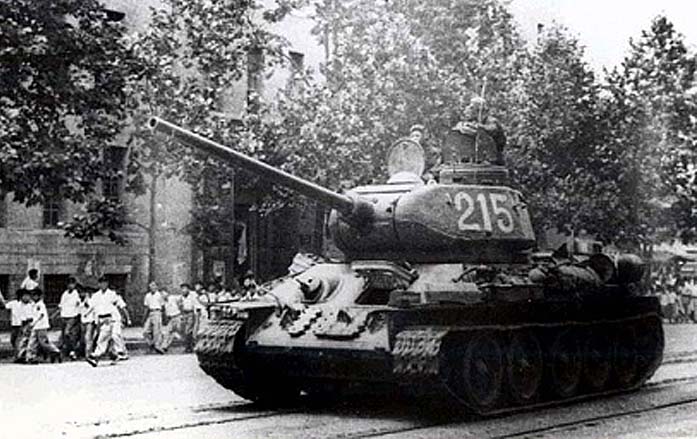
(North Korean T-34-85 during the brief occupation of South Korea’s capital, Seoul, during the Korean War.)
DPRK issuance varied but typically was a WWII Soviet-style organization of 25-33 tanks per armored battalion (Jon-cha Dae-dae, in Korean), assigned one per infantry or motor rifle division. Tank regiments had three T-34 battalions, and the lone (pre-1973) dedicated armored corps had a regiment plus an extra battalion.

(North Korean T-34s were usually sparsely marked, often only with a three-digit number. The first digit usually (but not always) was which company the tank belonged to.) (artwork by Clavework Graphics)
Following the end of the Korean War through the 1960s, the T-34 was North Korea’s only main battle tank. At the decade’s end, deliveries of Soviet T-54/55s and it’s Chinese knock-off, the Type 59 began. None the less, declining numbers of T-34-85s remained operational throughout the 1970s.
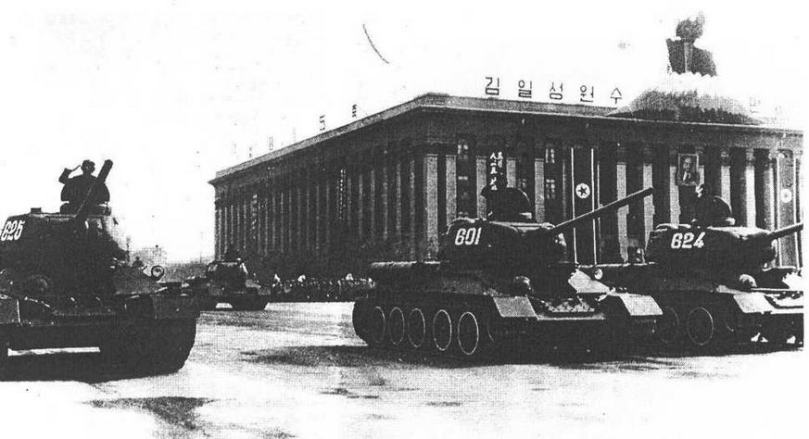
(North Korean T-34-85 tanks on parade in Pyongyang during the 1960s.)
In 1972, North Korea started a massive military expansion with many new tank battalions being activated, T-54/55s, Type 59s, and later T-62s plus North Korea’s own homemade tank designs. Despite the rapid influx of modern tanks, the old T-34-85s were not retired, but simply reclassified as second-tier assets due to the army’s increased overall size.
In 1985, there were still about ten battalion’s worth (approx. 330) of T-34s in North Korean service. By 1990, this had fallen to 200, a figure more or less held until the turn of the millennium.

(This image is from a US Marine Corps late-1990s guide to North Korean armor. The engine compartment is outlined and the shaded areas represent optimal shot placement.)
In the 1990s, each North Korean infantry division had one T-34 RTVR in service, while every motor rifle brigade had seven. These were standard T-34-85s with the turret removed and the open hole plated over. Not really true armored recovery vehicles (ARVs), these were basically useful only for towing or unditching armored personnel carriers. Independent tank battalions also had one, regardless of the type of tank the battalion used.

(In addition to specialist models built for the purpose in the USSR, Czechoslovakia, and elsewhere; almost every army which fielded the T-34 had turret-less tow conversions, often damaged or worn-out regular tanks. Shown here is a Soviet example. North Korea’s rarely-seen T-34 RTVR is similar but has a little armored observation cupola.)
After 2000, T-34s were rarely seen in North Korean use. Other than individual tanks presented as historical novelties, the last parade appearance was in 2009.
In 2012, one lone T-34-85 was discretely filmed participating in some sort of exercise. The film was not widely disseminated in the west until 2013. A banner shown elsewhere in the film said “urban combat exercise” but the nature of the training, or why this aged tank was used, is unknown.

(The North Korean T-34-85 filmed in 2012, here in a still from a 2013 South Korean news report.)
As of 2017, it’s not thought that any T-34s remain in North Korean use. Any remaining examples of this WWII legend, if there are still any in inventory, would certainly be consigned to long-term storage units.
SU-76
Deliveries of this Soviet WWII vehicle started at the same time as the T-34 tanks in the late 1940s. Like the T-34, it was used heavily during the Korean War, and likewise a huge number were destroyed or captured; so many in fact that the South Korean army briefly fielded a unit of captured SU-76s.
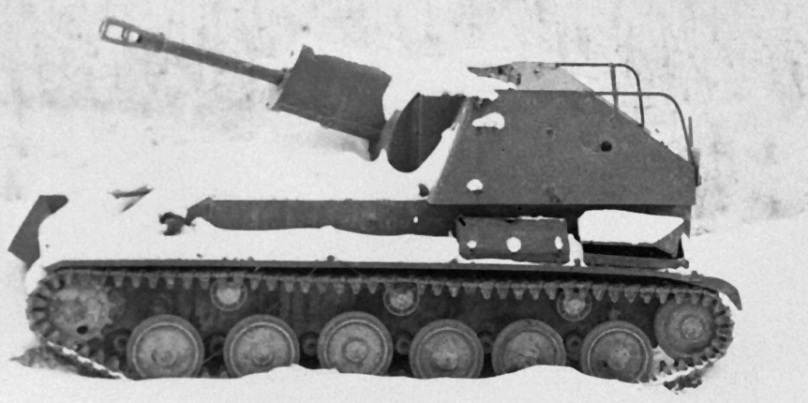
(Abandoned North Korean SU-76 during the Korean War.)
In Soviet tactics, the SU-76 mixed the duties of tank destroyers and self-propelled artillery. On the attack they would support infantry by eliminating enemy strongpoints and providing light artillery. On the defense they served as mobile anti-tank guns. The 11½ ton SU-76 had a 4-man crew and was armed with a 76mm gun with a range of 8,600 yards against vehicles or 6 miles in indirect bombardment. The armor was 1½” thick on the vehicle’s front but much thinner elsewhere, and it was open-topped. It had twin GAZ-203 gasoline engines, torsion bar suspension, and a top speed of 28mph.
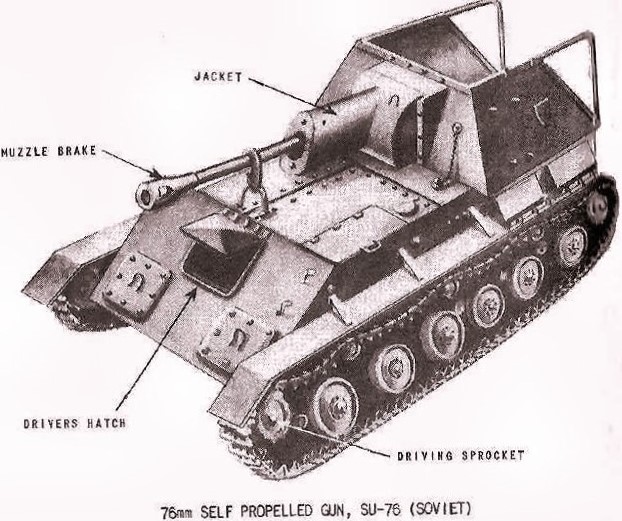
(Sketch from a 1951 US Army “Enemy Forces Equipment” handbook.)

(Breech assembly of a SU-76’s 76mm gun. Workmanship of these vehicles was very crude, as they were built under the stress of WWII.)
After the 1953 armistice, replacement SU-76s were provided by the USSR. However it was never again a major vehicle in the DPRK’s inventory. The armor was far too thin for the first generation of post-WWII American tanks like the M46 Patton and the gun was no longer competitive.
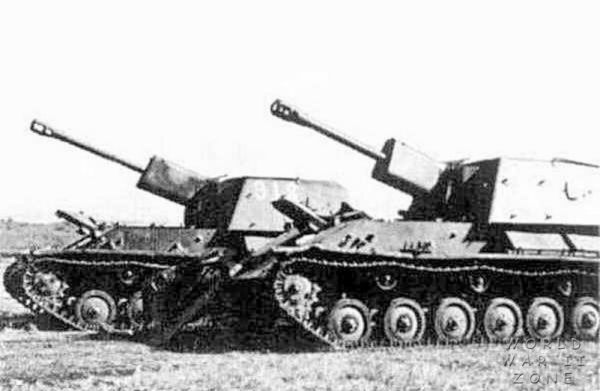
(North Korean SU-76s training in the mid-1950s.)
About 100 SU-76s remained in use through the 1960s. After the 1972 modernization started, they were relegated to second-tier divisions or reserve, and all were out of use completely by 1978.
BA-64
This Soviet armored car of WWII was used heavily by the North Koreans during the 1950-1953 Korean War. After the armistice, some replacements for war losses were provided. By this time the BA-64 was already wholly obsolete.

The BA-64 had a 2-man crew, the driver and the commander who also operated the DT 7.62mm machine gun. The gasoline-powered vehicle weighed 2½ tons and had a top speed of 40mph.

(North Korean army BA-64s in the 1950s. These vehicles are untouched from WWII production, note the single headlight which was a Soviet step to speed up production at the height of the German invasion.)
In the mid-1950s the Soviet army, and it’s Warsaw Pact satellites, completely shifted away from armored cars to a doctrine of using light scout vehicles and heavier APCs which could also transport troops. It was assumed that North Korea would follow suit, however it’s BA-64s remained in use through the 1960s.
(Still from a mid-1950s North Korean propaganda film showing a BA-64 in use.)
During the 1970s enlargement of the DPRK army, the remaining BA-64s received refurbishments and in 1980, there were still 140 in use. By then, North Korea was only one of two countries (the other being Mongolia) still using the BA-64. The final North Korean examples (and the last in use anywhere), about four or five dozen, were retired between 1985-1989.
Li-2 “Cab”
Often described as a Soviet military clone of the WWII C-47 Skytrain, the Li-2 was actually a copy of the C-47’s famous civilian brother, the Douglas DC-3 airliner. Generally identical in most respects; there were some changes. The Li-2 was powered by two Shvetsov ASh-62 piston engines instead of Wright Cyclones. It also had a Soviet-designed cargo door, provision to install a domed machine gun turret in the roof, and bomb racks under the plane.
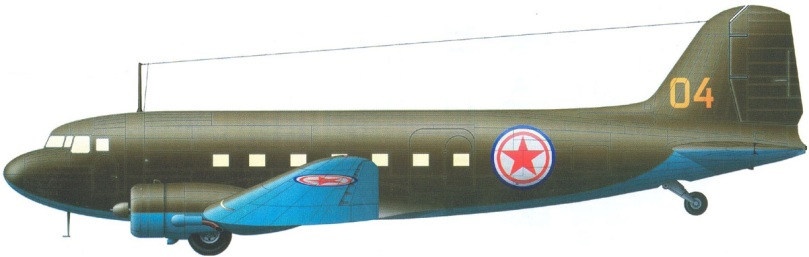
(artwork via Wings Palatte website)
The effort was lead by Boris P. Lisunov, who’s name was then attached to the final product. (“Cab” was the NATO reporting name during the Cold War.) They were physically built by various state-owned factories. Even though Douglas sold many blueprints to the USSR, Lisunov had his work cut out for him. One of the most challenging aspects was converting thousands of Douglas specs from inches to millimeters, and pounds to kilograms. The end result was a superb transport plane which gave the communist world good service during and after WWII.
Twelve well-used WWII examples were delivered to North Korea from an unknown source, probably China, in the late 1960s or early 1970s. Two went to Air Koryo, the DPRK’s only airline, and ten to the DPRK air force. During the mid-1970s, one was painted in bogus US Air Force markings for use in propaganda movies.

Several made a fly-by during a 1983 military function. During the mid-1990s, six were spotted by satellite at a DPRK-AF airbase, including the two Air Koryo planes and one which had been repainted in low-visibility grey for reconnaissance use. None have been seen for years now and all are almost certainly out of service.
ML-20
This big (152mm) howitzer served the Soviet army throughout WWII, usually assigned as a 24-gun special regiment controlled at the corps level. It was 26’10” long with a 13’11” rifled barrel, and weighed 8½ tons. It fired a 98 lbs shell out to 10½ miles.

Deliveries of this big gun started in the mid-1950s. In the DPRK army, they usually formed special battalions of twelve or so guns. Each North Korean division had at least one of these battalions; some had two. During the late 1960s, a North Korean clone of the Cold War-era Soviet D-20 152mm howitzer began to replace them, a process which accelerated in the 1980s when a self-propelled version of this clone became operational.
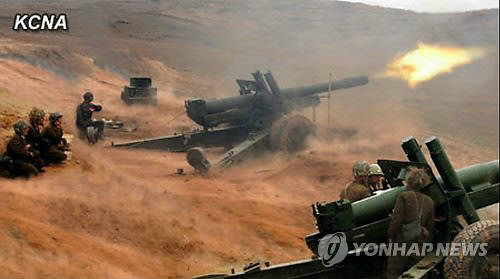
(North Korean ML-20s during a late-1990s exercise.) (photo via Yonhap News)
None the less, some of these WWII monsters still remain in the DPRK inventory as of 2017. North Korea has modernized them with a package originally designed by communist-era Poland, with pneumatic tires replacing the twin rubberized discs of WWII and the tow speed increased to 26mph.
M-30
Sometimes also called the M-1938, a name confusingly shared with a WWII Soviet 120mm heavy mortar (which North Korea also uses), the M-30 was a divisional-level artillery piece of the Soviet army during WWII. After the war ended, it remained in Soviet use and production continued for export, mainly to the middle east but also to North Korea.
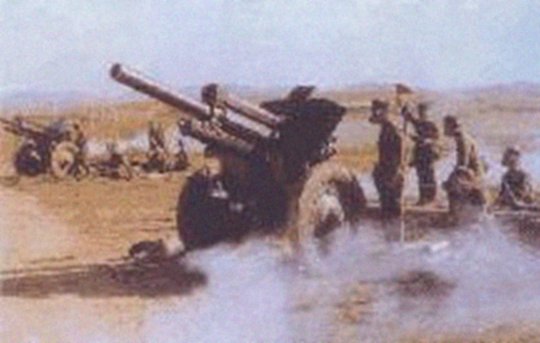
The M-30 weighs 3½ tons, is 6′ tall, and has an 8-man crew. It fires shells around 45 lbs, and was designed to be backwards-compatible with 122mm ammunition all the way to the czarist era, and “future-proofed” to accept then-yet undeveloped shells. High explosive, anti-personnel, and smoke rounds are available as is a HEAT round for direct use against tanks. The maximum range is 7¼ miles.
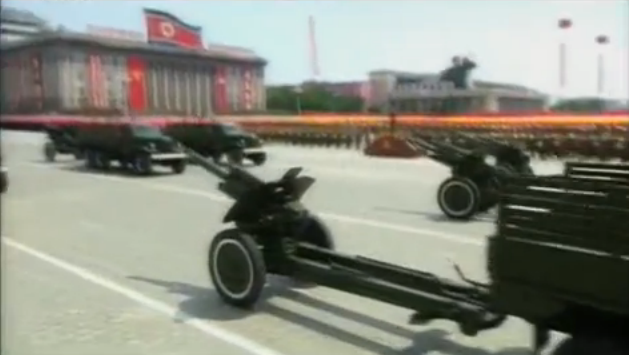
(M-30 howitzers during a 2014 military parade in Pyongyang.)
North Korea began using the M-30 in the 1950s and as of 2017, many of these aged guns (no doubt refurbished several times) still remain in use. Of possible concern, during WWII a chemical weapons round (the H-462) was developed by the Soviets but never used. It’s doubtful any were given to North Korea but it would not take a lot of effort to reverse-engineer a similar shell, given that the DPRK has all of the gun’s ballistics data, and it’s own chemical weapons.
M-1938
This heavy mortar was very successful in the Soviet army during WWII. Weighing 618 lbs, it fires a 35 lbs anti-personnel round (890fps muzzle velocity) out to a maximum range of 3½ miles.

(North Korean M-1938s during an exercise. The uniform style dates the photo to the late 1960s or 1970s.)
The M-1938 was especially popular with the North Koreans. For motorized towing, the barrel flips backwards onto it’s carriage and the set-up time is minimal. It can also be pulled by it’s crew as shown, and finally it can be broken down into several components for transport by a light truck.
During the 1980s and 1990s a new crop of tactical battlefield rockets supplanted it somewhat, but as of 2017 limited numbers remain in the DPRK inventory.
ZiS-3
One of the USSR’s main towed anti-tank guns during WWII, the ZiS-3 weighed 1¼ tons. It fired a 76.2x385mm(R) cartridge (2,297fps muzzle velocity). The theoretical maximum range was 8 miles however in a line-of-sight anti-tank role, a mile or two was more common. At a 1 mile range, it’s ammunition could still penetrate 1½” of armor, even at on oblique strike.

Much like the T-34 tank, North Korea used the ZiS-3 before, during, and after the Korean War.
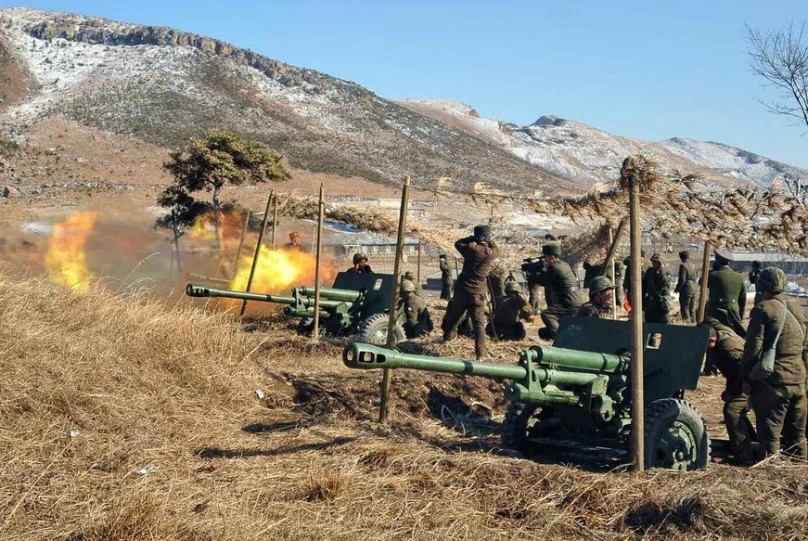
(Late-1990s / early 2000s exercise of the Worker-Peasant Red Guard Militia, using WWII-era ZiS-3 anti-tank guns.)
By the 1990s it was laughable in the anti-tank role but surprisingly in the early 2000s some were seen in an exercise of second-line units. A small number still are in Militia use.
61-K
Sometimes called M-1939, this Soviet towed anti-aircraft gun entered service shortly before WWII and served throughout, then served with both the Chinese and North Korean armies during the Korean War. It fired the 37x250mm(R) OR-167 cartridge (2,887fps muzzle velocity, 21,000′ altitude ceiling) from a 5-round semi-external clip-loaded magazine. The complete mount weighed 2½ tons.
The 61-K was entirely manual. Aiming was visual, and both elevation and traverse were by handwheels. Another limitation is that the Soviets (nor the North Koreans) never developed a proximity fuze, so each shot was either a direct hit or a complete miss.

(WWII-veteran 61-K AA gun during an early-2000s military exercise in North Korea.)
Already in the Korean War’s final year, the dominance of jets had shown that AA weapons originally designed to fight biplanes had run their course. None the less, North Korean observations of North Vietnam’s success with obsolete AA guns like this in certain situations, led the DPRK army to retain them through the 1960s, 1970s, and 1980s.
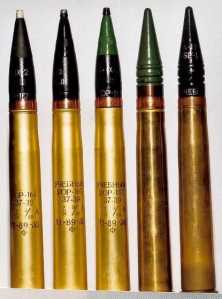
(37mm ammunition for this gun; these are Russian-made while North Korea also manufactures it.) (photo by Harry Galloway)
Beginning in the 1990s, a mass effort to expand the SAM (surface-to-air missile) force was started and by the turn of the millennium, everything, even common cargo trucks, have a mount for a short-range SAM. None the less, the 61-K remains in limited DPRK use as of 2017. Many are now in semi-permanent AA locations (Dae Kong-go Jin-jee in Korean) with pre-planned firing arcs.
DP
The Degtyaryov DP was a common Soviet light machine gun of WWII. It was 4’2″ long and weighed 25 lbs, firing the 7.62x54mm(R) cartridge (2,838fps muzzle velocity) from a 47-round overhead pan magazine at 550rpm.

(WWII-vintage DP machine gun with it’s characteristic pan magazine during a 2013 training session of the Worker-Peasant Red Guard Militia. Another is further down the lineup. The rest of the machine guns are all Cold War designs.)
Already the standard North Korean light machine gun during the Korean War, more DPs were delivered from the USSR in the mid-1950s. In the late 1950s and early 1960s, the PRC delivered some of it’s Chinese clone, the Type 58, and in the mid-1960s North Korea began limited production of it’s own copy of the latter; basically a clone of a clone. All three types were in service together.

(In this photo taken during a 2013 exercise, the soldier speaking perhaps needs remedial efforts for her ghillie suit, but in any case a DP machine gun is visible at the second position in the lineup. Further down way to the back, just in front of the two RPG-7s, is a soldier with a PPSh-41 submachine gun, also of WWII.)
By the 1990s, newer light machine guns had replaced the DP in first-tier divisions but in the 21st century, significant numbers remain in Militia service.
Mosin-Nagant
The majority of Mosin-Nagants which the DPRK army fielded during the Korean War were lost in the fighting. During the Soviet/Chinese emergency re-arming of the army after the 1953 armistice, the Soviet Union provided some SKSs, and later in the decade China offered it’s Type 58 clone of the SKS. At the same time in the late 1950s, deliveries of Soviet AK-47s started to trickle in. In 1958, North Korea began domestic production of it’s own AK-47 clone, the Type 58.
None the less, back in 1953, there weren’t enough SKSs in the USSR’s export pool to fully rearm North Korea so thousands of WWII-surplus Mosin-Nagants were dumped off on the country.

(North Korean soldiers with Mosin-Nagant M91/30s during an early 1960s parade in Pyongyang.)
The bolt-action Mosin-Nagant came in a variety of styles, the most common in DPRK use being the M91/30 and the shorter M44 carbine version. Both had identical actions, firing the 7.62x54mm(R) cartridge (2,838fps muzzle velocity; slightly less in the M44) from an internal 5-round stripper-loaded magazine. The graduated rear sight was marked out to 2,000 meters and generally speaking, the M91/30 was accurate to 550 yards.

(North Korean troops with Mosin-Nagant rifles.)
Even with the influx of full-auto assault rifles in the 1960s and beyond, the sheer size of the DPRK army meant that active-duty units were still using bolt-action Mosin-Nagants as late as 1979. The 1970s expansion of the military exacerbated the issue, and in the 1990s, it was still not unheard of to see Mosin-Nagants in intelligence photos. After the turn of the millennium, they were largely relegated to the Militia, where some remain in use (especially in North Korea’s “low-threat” VI and VIII military regions along the Yalu River and the short border with the Russian Federation).
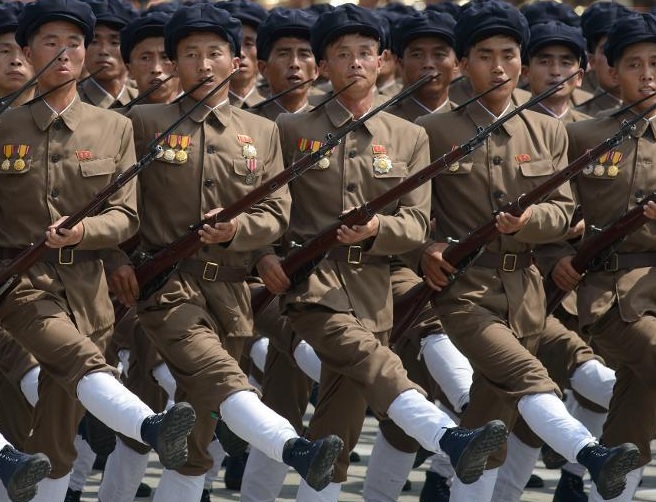
(Mosin-Nagant rifles on parade in Pyongyang in 2012.)
In 2012, a military parade was held in Pyongyang to mark the 100th anniversary of Kim Il-sung’s birth. Besides the Militia units with their Mosin-Nagants, some frontline divisions paraded in past North Korean uniform styles, including Mosin-Nagants. These were not handfuls of re-enactors but rather entire battalions marching in unit strength with the bolt-action rifles. This may indicate that significant numbers of Mosin-Nagants remain in storage in North Korea.

(DPRK troops with Mosin-Nagants in Pyongyang during a 2016 parade.)
Until the mid-1970s, the DPRK army’s sole squad marksman weapon was the M91/30 with the old Soviet PU scope. (Note this scope is actually 3½x magnification; the description in the photo below is a bit generous.) Throughout the 1980s and after, Dragunovs (both the original Soviet and the Chinese Type 79 knockoff) replaced it in first tier-units, but some remain in use.

The photo shown is from a now-declassified US Marine Corps intelligence publication of May 2009. Not all of these may still retain the old Soviet scope. North Korea’s military maintains many sham front corporations around the world, both to launder the country’s exports into hard currencies like the Euro or US Dollar, and also to evade weapons importation sanctions. One of the items they have illicitly imported is high-end civilian rifle optics from Europe and China, and some of these have already been seen on other firearms.
PPSh-41
An iconic WWII submachine gun, the North Korean army used the Soviet PPSh-41 throughout the Korean War. It is 2’10” long and weighs 8 lbs empty. It fires the 7.62x25mm Tokarev cartridge (1,601fps muzzle velocity) at 900rpm from either a 35-round box magazine or a 71-round drum. It has open iron sights and is only accurate out to roughly 180 – 200 yards.
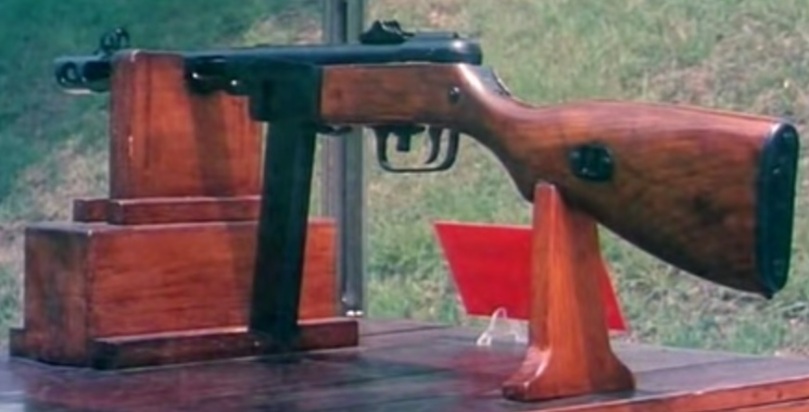
(Supposedly this particular preserved PPSh-41 fought the Japanese in WWII and then the Americans during the Korean War.)
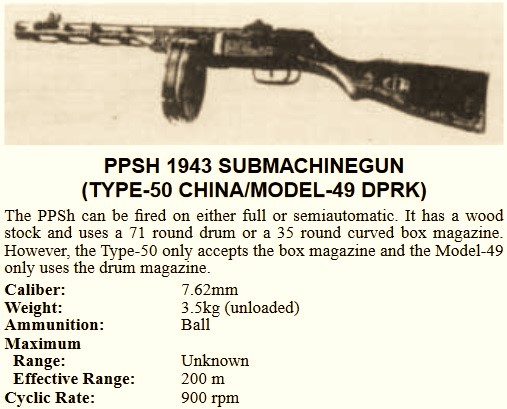
(Photo from a May 1997 US Marine Corps guide to North Korean firearms.)
For whatever reason, the PPSh-41 was originally briefly designated M-1943 by North Korea, perhaps in the immediate post-WWII era the first examples imported were proofmarked to that year. It is universally referred to as “Papa-sha” by DPRK soldiers, in whatever version.

(The DPRK soldiers flanking the guidon during this 1960s military parade carry PPSh-41s.)
Huge numbers of PPSh-41s came from the USSR in the 1953 rearmament package. Alongside them came the slightly-modified Type 50 from China. Called the “burp gun” by American soldiers, this version is generally similar but only accepts 35-round box magazines.

(China’s Type 50 clone aka the “burp gun”.) (drawing from ppsh41.com website)
In 1949-1950, and then again 1952-1957, North Korea manufactured a PPSh copy called the Type 49. In contrast to the Chinese Type 50 copy, the North Korean Type 49 clone only accepts the drum magazine.

(North Korean proofmark on a 1949-manufactured Type 49.)
Production of all submachine guns terminated in 1958 to support AK-47 production. None the less, tens of thousands of “Papa-sha”s remained in DPRK use throughout the Cold War and beyond. As late as the 1970s, PPSh-41s were as common as Kalishnikovs and more common than SKSs.

(North Korean sailors with PPSh-41s in 2012. The North Korean navy has the lowest priority of the nation’s armed forces.)

(North Korea also manufactures 7.62mm ammunition for this gun. There are two DPRK headstamps: the communist star as shown and an upside-down version of the Norinco (China) triangle; of course on a circular view it depends on the observer to decide what side is “up” and makes it hard to determine if ammo is Chinese or North Korean. Considering the arms embargo against the DPRK, maybe that is the goal.)
The DPRK views this gun as perfect for it’s needs: reliable, easy to train conscripts on, and simple to maintain (it field-strips to only five parts). The DPRK army issues PPSh-41s for roles filled by handguns in other armies – in a twist, during the 1970s and 1980s North Korean handgun production was so limited and expensive, that it was cheaper to reissue PPSh-41s withdrawn from infantry rearmed with AK-47s. Until recently, when sufficient quantities of folding-stock assault rifles became available, PPSh-41s were issued to tank crews as their dismounted defense weapon.

(North Korean troops parade with PPSh-41s in 2012.)
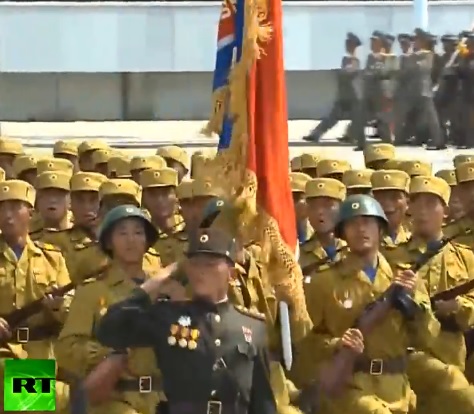
(North Korean infantry with PPSh-41 submachine guns march in Pyongyang in 2013.) (photo via RT News)
As of 2017, Kalishnikov-platform assault rifles have replaced submachine guns in all first-tier divisions and even in some secondary roles, but many thousands of these guns are still in everyday service and are likely to remain so for some time. For Militia units, it is a de facto service standard weapon alongside the AK-47.
PPS-43
This submachine gun was developed by the USSR during WWII as a co-production partner to the PPSh-41, being cheaper, using less raw materials, and capable of faster production by unskilled workers. Two million were made during WWII. The PPS-43 was largely of stamped steel construction. Only 13 lbs of raw materials were needed to make one; the finished gun itself weighing 6¾ lbs. It fired the same ammunition as the PPSh-41, but from a simple 35-round banana magazine. Rate of fire was 600rpm and accuracy was low, only out to about 100 yards. A defining feature is the rolled-over flap of steel afore the barrel, which acts as a very crude muzzle brake.
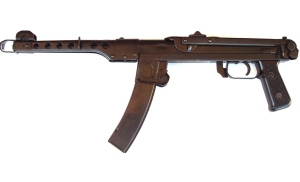
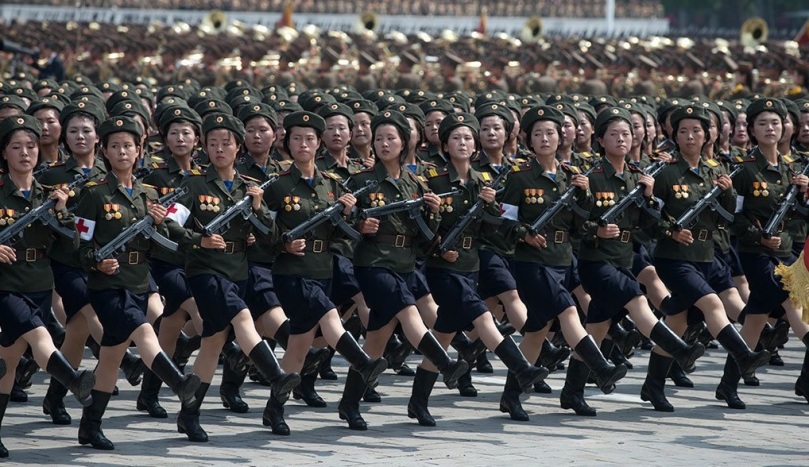
(North Korean combat medics with PPS-43 submachine guns in 2013.)
By the 1950s, the USSR was already withdrawing the PPS-43 from frontline service and doling it out to allied armies. A large quantity was received by North Korea in the mid-1950s. In 1954, China began production of a licensed copy, some of which were then also imported by North Korea.

(Illustration from a late 1990s / early 2000s American military guide for forces stationed in South Korea.)
The PPS-43 was never as popular as the PPSh-41 in DPRK army use. North Korea never attempted to reverse-engineer it. None the less, it remained in use throughout the Cold War era and some remain in service in 2017, mainly with Militia units, due to the ammunition commonality with the PPSh-41.
TT-33
The Tokarev TT-33 was a recoil-action semi-automatic handgun of the Soviet army during WWII. It fired the 7.62x25mm Tokarev cartridge (1,575fps muzzle velocity) from a 8-round box magazine.
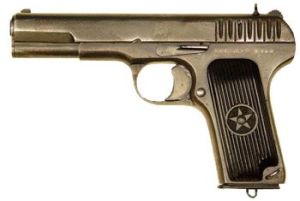
As part of the 1953 rearmament of North Korea, significant numbers of this gun were shipped by the USSR to replace Nagant M1895 revolvers and ex-Japanese Nambus lost between 1950-1953.
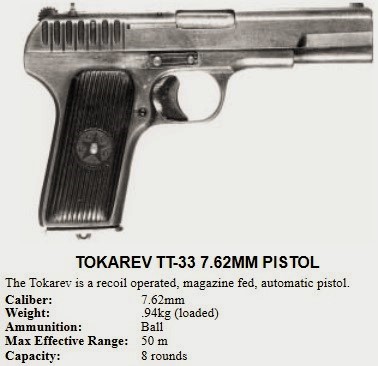
In the 1960s, North Korea began production of a clone. These are indistinguishable from the Soviet original, less the Korean markings on the slide. Although newer handguns have since entered DPRK service, the TT-33 remains very much a frontline service sidearm as of 2017. The photo shown is from a 2009 US Marine Corps intelligence guide.
the broomhandle in North Korea
North Korea fielded some of the many varieties of Chinese-made c/96 knockoffs during the Korean War, with many being lost. Some of these were replaced by China in 1953. Along with these came a big influx of regular Mauser c/96 broomhandles from the USSR. Their story is interesting.
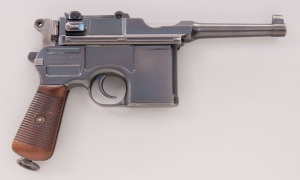
In the aftermath of WWI, the new Soviet Union placed an order with Wiemar Germany for the gun. Designated M1920 in the Soviet system, these were of the so-called “bolo” variety of the c/96, with 100mm (a little under 4″) barrels but otherwise similar to the WWI German standard, firing 7.63x25mm Mauser rounds (1,394fps muzzle velocity) from a 10-round internal magazine.
These were joined by c/96s captured from the Polish army during the USSR’s brief 1920 war with that country, then the 1939 attack. There were also some scattered c/96s that the czarist army had captured in WWI. All of these were lumped into the M1920 classification, regardless of barrel length or other differences.
As a non-standard gun, the Soviet army consolidated the M1920 to it’s Pacific coast regions. By the end of WWII, they were in an emergency defensive reserve stockpile. The USSR’s brief fighting against Japan in August 1945 was entirely offensive so there was no need to dip into this stockpile.

(A broomhandle is featured in this 2015 propaganda poster.)
In 1953, with North Korea desperate for weapons to rearm, nearly the whole lot was dumped off there. It was not an entirely one-sided deal, as significant pools of 7.63 Mauser rounds were still floating around China where it had been a popular caliber for half a century. These would presumably be available for North Korea.
The DPRK really didn’t want these guns, and during the 1960s many were donated to North Vietnam as an indirect way for North Korea to harm the USA. They popped up from time to time in US Army lists of Viet Cong captures into the early 1970s.
ROKS-3
The USSR used this flamethrower late in WWII, replacing the earlier ROKS-2. The ROKS-3 has a range of about 30 yards and six seconds of flame time (it is intended to be fired in very short bursts). The wand has a dummy wooden Mosin-Nagant stock to make the weapon less identifiable on the battlefield.
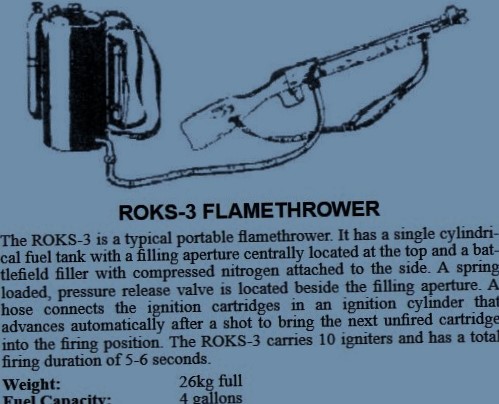
Most of the world’s armies have long since moved away from tank & wand-style flamethrowers to projected incindiary-type weapons. In the 1990s some modern RPO-A Shmel units were imported from the Russian Federation. However geriatric ROKS-3s still remain in North Korean use. The photo shown is from a late-2000s American guide to North Korean weaponry.
RG-42
Like the TMD-B mine, the RG-42 was a product of the USSR’s duress in WWII at the height of the German invasion. A very basic hand grenade, Stalin originally intended that it be made in civilian food canneries. WWII-production RG-42s were used by the DPRK throughout the Korean War, and in the 1953 rearmament a huge tranche was transferred from the USSR which was already moving on to newer grenades.
At some point in the late 1950s North Korea reverse-engineered the RG-42 and began producing a clone. The exact quantity made and production years are uncertain, but the numbers were substantial. Some were exported to North Vietnam during the Vietnam War.
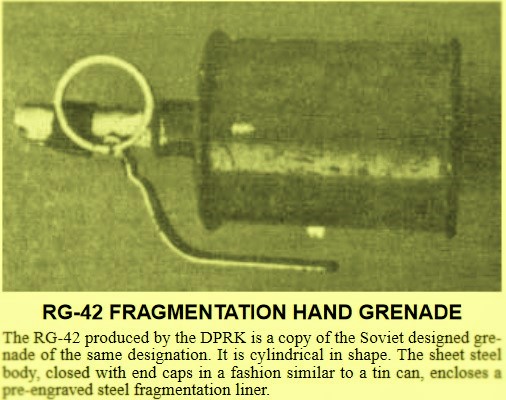
In the early 1980s, the Soviet army issued an advisory to it’s Warsaw Pact allies to immediately discard warehoused WWII-production RG-42s. The 7oz charge chemically deteriorated with time and these grenades could blow up simply sitting on the shelf. It’s unknown if early North Korean-made examples similarly suffered this issue. In any case, many RG-42 clones remain in DPRK use as of 2017. The photo shown is from a 21st-century US Defense Department guide to current North Korean weaponry.
TMD-B
This Soviet anti-vehicle mine came about under the worst duress of WWII. It is ultra-crude and could be manufactured quickly, cheaply, and in large numbers at the height of the German invasion.

The TMD-B weighs about 17 lbs and is basically a wooden box. Inside is a 12 lbs chunk of TNT and MD-2 detonator, with a MV-5 pressure fuze. Atop the mine are three raised planks. The left and right are attached on both ends, while the middle is loose on one end. The planks have a groove cut in the end, into which a much thinner tongue of wood goes. In storage or transit, the tongue sits in the groove across all three planks, as seen above. For use, the tongue is jammed underneath the bottom of the middle plank as shown below. By this, the middle plank rests a few millimeters above the top of the fuze.

When a tire or tracks drive over the buried mine, the center plank breaks down onto the fuze. The weight required to detonate the TMD-B varies with the wood type, it’s rot after being laid, and random luck; but is no less than 400 lbs.
This mine was used heavily during the Korean War. Despite the urgency of WWII being gone, the Soviet Union continued production until at least 1952, maybe longer, because it was dirt-cheap. In 1953 North Korea itself began manufacturing the TMD-B. Untold numbers remain laid in the DMZ and in secondary defensive minefields inside North Korea itself. The North Korean version later used glue instead of nails to hold it together, meaning the only metal for a mine detector to sense is the small fuze.
The bottom photo is from a 1990s guide to North Korean weaponry issued to American troops in South Korea, so presumably it was still in inventory at that time.
“sort-of” a WWII weapon
This North Korean handgun, the Type 64, is included here because of it’s bizarre background. This weapon came into existence only for the most silly reasons.

(photo via Small Arms Defense Journal)
The Type 64 entered production in 1964. It is nearly an exact copy of the turn-of-the-century FN M1900, a John Browning design manufactured in Belgium. Firing the .32ACP cartridge, it was the first mass-produced combat handgun in the world with a slide, predating the USA’s M1911 by a few years. In the USA, it is best known as Teddy Roosevelt’s everyday pocket carry, including when he was President.
Before WWI and then in the interwar years, this pistol was popular with police departments around the orient, and was made without license in China during WWII. It was also the final sidearm of the old Korean gendarmerie before Japan disbanded it in 1905 and directly annexed the peninsula as a province. For all these reasons, mainly the last, it is familiar to average Koreans, north and south, as a symbol of resistance against the old Japanese empire.
Kim Il-sung directed most of his rants against the USA and South Korea, but had spurts of railing against Japan as well, mainly to gin up patriotism in North Korea. During one such period in the early 1960s, he instructed his gunsmiths to reverse-engineer the FN M1900 and have it become the new standard sidearm of the DPRK army, as a sentimental link to the past. Massive production was envisioned.
The Type 64 is nearly identical to it’s Belgian counterpart of a half-century earlier. With a 7-round magazine, it is chambered to the original .32ACP, which North Korea designates 7.65x17mm(SR).

(photo via Small Arms Defense Journal)
It beggars belief that an idea this bad made it to frontline service, but indeed in 1964 deliveries began. Nowhere anything near enough were produced to replace the TT-33, but some units did receive Type 64s. Issue was first to crack infantry and motor rifle battalions, then abruptly switched to high-ranking staff officers who presumably had the least need for new sidearms. There was also a SpecOps version (above) with a threaded barrel extension that accepted a bulky Maxim-type suppressor, which awkwardly hangs beneath the gun’s centreline when it’s bore is aligned with the barrel.

(Photo from a May 1997 US Marine Corps intelligence guide to North Korean weapons.)
By 1968 the foolishness of this project was already being felt and design began on a modern semi-auto handgun, the Type 70, which entered service two years later at which point Type 64 production ended. The whole episode retarded North Korean handgun development by a decade. None the less, some of these pistols still remain in DPRK use today.
“not” WWII weapons
These are not WWII-era arms, but listed here as they are often erroneously characterized as such.
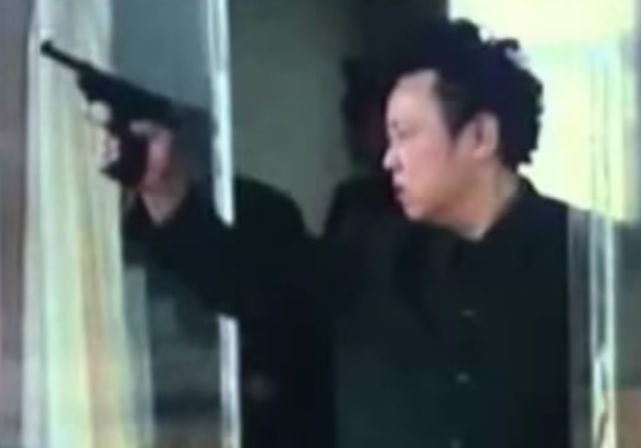
This gun is sometimes captioned as a Luger P.08 or a Nambu. It is actually a Mount Paektusan Pistol, a designation confusingly also used for North Korea’s clone of the mid-1970s Czechoslovak CZ-75. Chambered in 9mm Parabellum, this semi-auto handgun is actually of late 1970s / early 1980s vintage and considered a failure. It was mainly issued to communist party apparatchiks (as seen above) and senior generals.

This bizarre machine gun is the North Korean Type 73 of mid-1970s vintage. When first observed by American intelligence, it was briefly code-named “NORK-BREN” under the mistaken thought it might be a modification of that British WWII machine gun. In fact it has nothing to do with the Bren, nor is it related to the WWII-era Soviet DP, Czechoslovak vz.26, or Japanese Type 99 as sometimes suggested. It is a gas-action weapon roughly centered on the Cold War-era Soviet RPD, but with archaic features such as an overhead magazine and wooden furniture. For unknown reasons it is chambered for the old Soviet 7.62x54mm(R) cartridge, as in the Mosin-Nagant rifle. Why the North Koreans developed such a gun with these antiquated features is anybody’s guess. It has been exported to Iran, and the intelligence agencies of South Korea, the USA, China, and Japan have also gotten their hands on examples. It’s considered to be a poor weapon.
postscript
The continued presence of WWII-era weaponry in North Korea is often lazily applied as a blanket generalization, that the country’s military is laughable or hopelessly outmatched. In fact, the declining numbers of remaining WWII arms, and early Cold War weaponry, are dwarfed by the gargantuan numbers of more modern arms the country possesses.
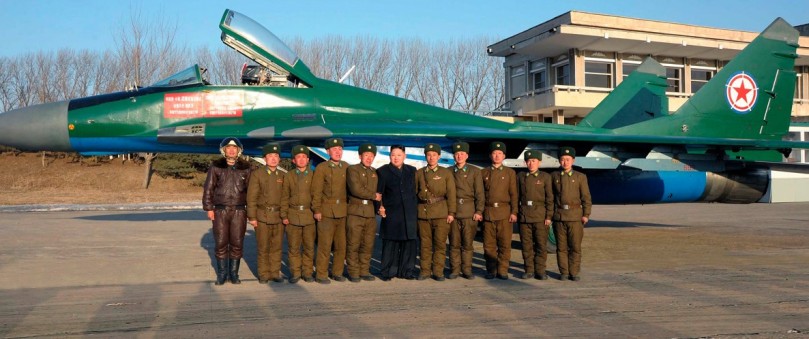
(Current leader Kim Jong-un with a modern MiG-29 “Fulcrum” jet fighter.)
North Korea has the largest artillery arm in the world, thousands of battlefield rockets, a modern surface-to-air missile network, and hundreds of modern tanks alongside thousands of older ones. The national air defense radar network covers the whole country. North Korea is perhaps the most “bunkerized” place on Earth, with everything from headquarters to fuel caches to aircraft bunkers being underground in hardened concrete.
Finally of course, the country has medium-range ballistic missiles, and an estimated (as of 2017) 25 to 30 nuclear warheads.