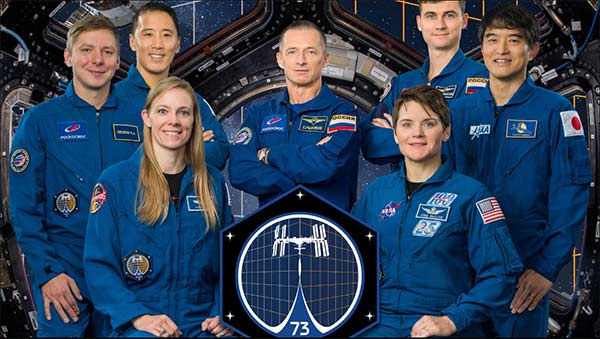
I once harbored personal aspirations concerning the astronaut program myself. Fortunately, wiser heads prevailed. NASA photo.
Human beings are social creatures. We are designed by our Creator to crave the company of fellow humans. To be deprived of this mystical stuff is invariably deleterious to the normal psyche.
Our drive for companionship falls along a spectrum. Some folks cannot maintain their sanity if they aren’t among a crowd. Others are happiest with a good book and solitude…for a time. However, true social isolation will, legit, drive a guy crazy.
You can see this in prisons. Even if your mates are all hardened maniacal criminals, everybody despises solitary confinement. A little solitude can be cathartic. A lot is invariably hellish.
Next Level Stuff
Unless you are ridiculously wealthy, you probably will not get to ride into space. Astronaut selection is unimaginably arduous. Curiously, I once aspired to that myself. I applied for the astronaut program right out of flight school and got closer than I had expected.
Had I not cashed in my flight suit in favor of being a husband and father, I might have actually pulled that off eventually. Or not. That’s one of life’s many imponderables.
In retrospect, everything worked out fine. There is arguably no more high-effort/high-payoff profession than serving as an astronaut. However, that’s a pretty tough life.
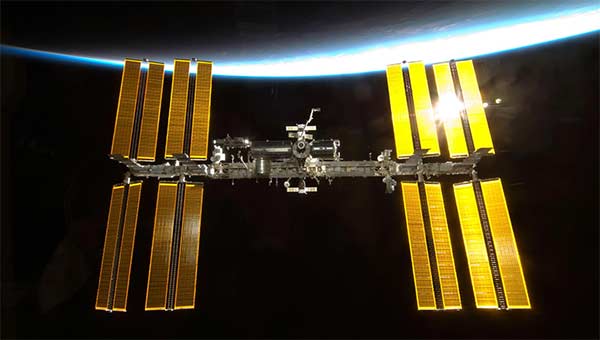
Mankind has maintained a constant presence in space for decades now. Life in the limitless void brings its own unique challenges. NASA photo.
Recent Examples
Astronauts Barry Wilmore and Sunny Williams launched up to the International Space Station aboard the new Boeing Starliner back in June of 2024 on what was supposed to be an eight-day mission. Then everything about the Starliner went pear-shaped, and they had to bring the ship back empty. Finally, some 286 days later, a SpaceX Dragon capsule fetched them home. Wilmore and Williams seemed fairly introspective about the experience.
Throughout their time in orbit, Wilmore and Williams were stranded but not forgotten. They could rest easy knowing that the economic and engineering juggernaut that is the United States of Freaking America was going to eventually bring them home. But what if that was not the case?
The Castaway
Sergei Konstantinovich Krikalev was born in Leningrad in 1958. His hobbies included skiing, cycling, swimming, aerobatic flying, and amateur radio. He studied Mechanical Engineering and joined NPO Energa in 1981. This was the agency responsible for manned spaceflight in the old Soviet Union.
Over the next several years, he paid his dues. Krikalev played a significant support role in docking with and repairing the out-of-control Salyut 7 space station in 1985. Then, on 26 November 1988, he headed up to the Mir space station for a protracted stay alongside another Russian cosmonaut and a French counterpart. He safely returned to Earth in April of the following year.
Cosmonauts don’t just fall off the turnip truck, and the Soviets wanted to get their money’s worth. On 19 May 1991, Krikalev launched for Mir yet again, this time with a fellow Russian and Brit named Helen Sharman. Sharman came home after a week.
Krikalev and his counterpart, Anatoly Artsebarsky, stuck around per the original mission parameters. When Artsebarsky rotated home, Krikalev volunteered to remain in orbit as Mir’s flight engineer. Then, on 26 December 1991, the Soviet Union imploded under its own weight. The nation that had fired Sergei Konstantinovich Krikalev into space no longer existed. He was stuck.
Like most things, a little bit of space is probably pretty cool. Too much, however, is another thing entirely. NASA photo.
When Life Gives You Lemons, Flirt with a Girl…
Krikalev made the best of things. He did scads of EVA (Extra-Vehicular Activity- aka space walks) and spoke to folks all around the globe via ham radio. One of his radio buddies was Margaret Iaquinto.
Sergei and Margaret spoke daily for more than a year total. They discussed personal issues, politics, and technical stuff. Iaquinto established a digital bulletin board that the Mir crew could use to get unfiltered news about the death of the Soviet Union.
The Baikonur Cosmodrome and the mission landing area were both located in newly independent Kazakhstan. Folks on the ground seemed a bit preoccupied with their own problems to fret about one dude who had already been in space for a long, long time.
After a great deal of chaos, Krikalev finally came home on 25 March. Because of his unique circumstances, he has been rightfully described as the last citizen of the Soviet Union.
The Rest of the Story
That guy just couldn’t get enough. Once the dust settled on the USSR, Sergei Krikalev volunteered to fly on the US space shuttle. On 3 February 1994, Krikalev blasted off yet again, this time as a crewmember on shuttle flight STS-60.
He returned to Earth aboard the space shuttle Discovery eight days later. In December of 1998, he returned to space as part of STS-88 aboard Endeavor to assist in the assembly of the International Space Station. He returned to the station two more times after that.
Sergei Konstantinovich Krikalev went to space a total of six times. He spent an aggregate of 803 days, 9 hours, and 39 minutes in orbit. He conducted eight EVAs for a total of 41 hours and 8 minutes floating about in the void. He is number four on the list of space travelers based on total time spent off-planet. The other three are also all cosmonauts.
Thanks to the curious phenomenon of time dilation, Krikalev is 0.02 seconds younger than someone else born at exactly the same time who remained on Earth. He was awarded both the Hero of Russia and the Hero of the Soviet Union for his extensive work in the heavens. Krikalev closed out his extraordinary career in command of the Yuri Gagarin Cosmonaut Training Center.
Not half bad for a guy who was shipwrecked in space when his country fell to pieces.

 The original “golden spike”, on display at the Cantor Arts Museum at