Category: War
Duffel Blog obtains top secret Russian military files
Russia’s military is apparently as leaky as SCOTUS
 |
By Task Force Football Bat
Duffel Blog’s team of investigative journalists has obtained a trove of sensitive Russian military documents that contain everything from Russian battle plans to LOL emojis shared between now-deceased generals. These documents shed light on inside conversations at the highest levels of leadership in the country’s military over the course of the past few months.
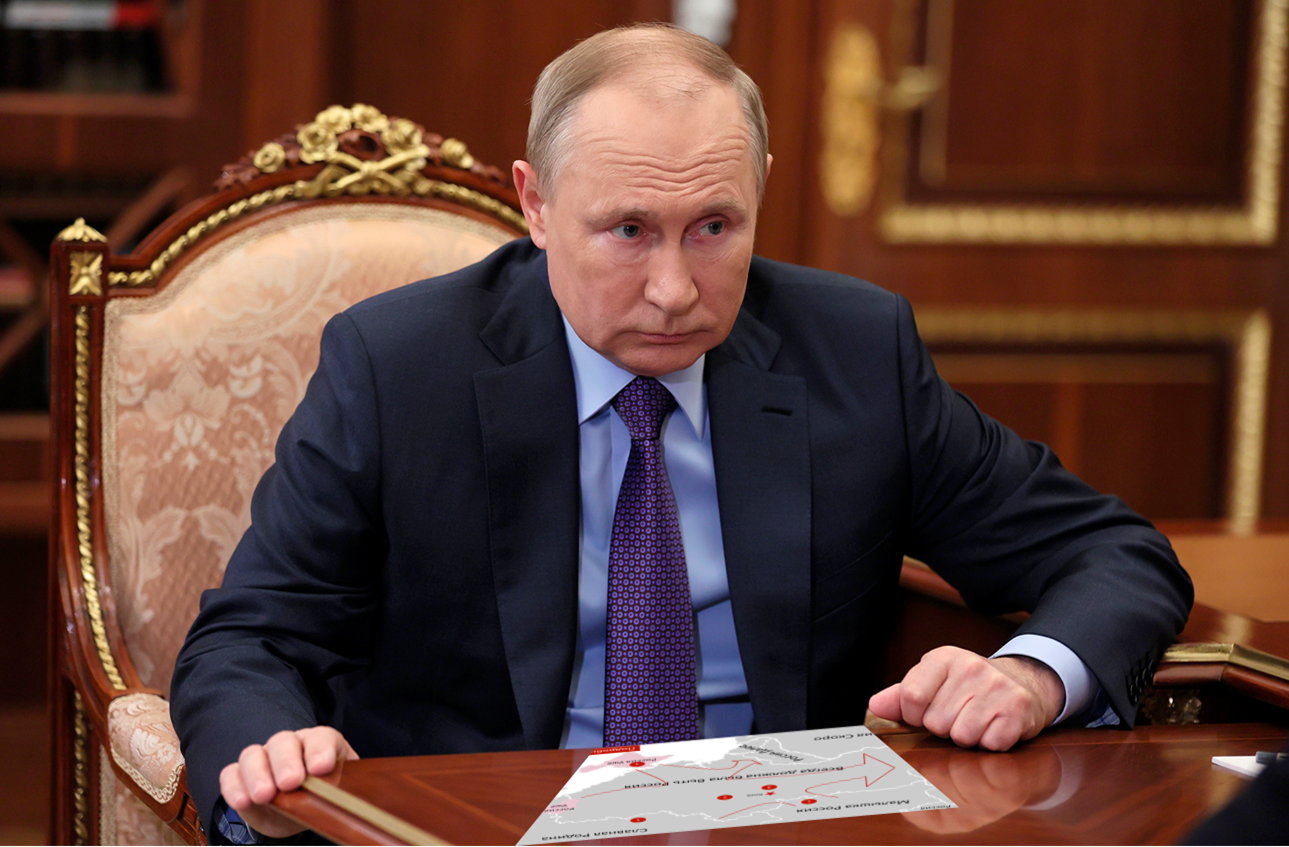
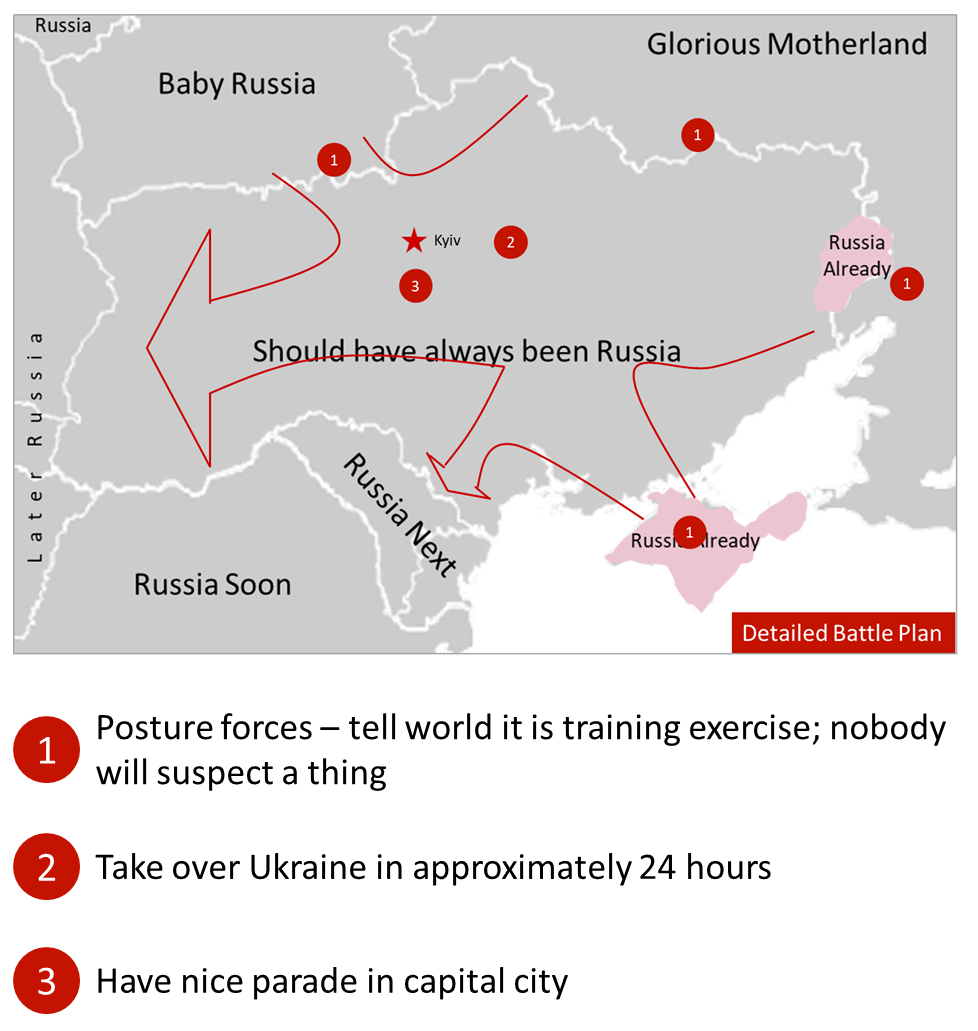
Our team of translators has analyzed what appears to be the Russian military’s detailed pre-invasion battle plan — briefed to President Putin as he clung for life to a table. Both the original and our translation are below.
 |
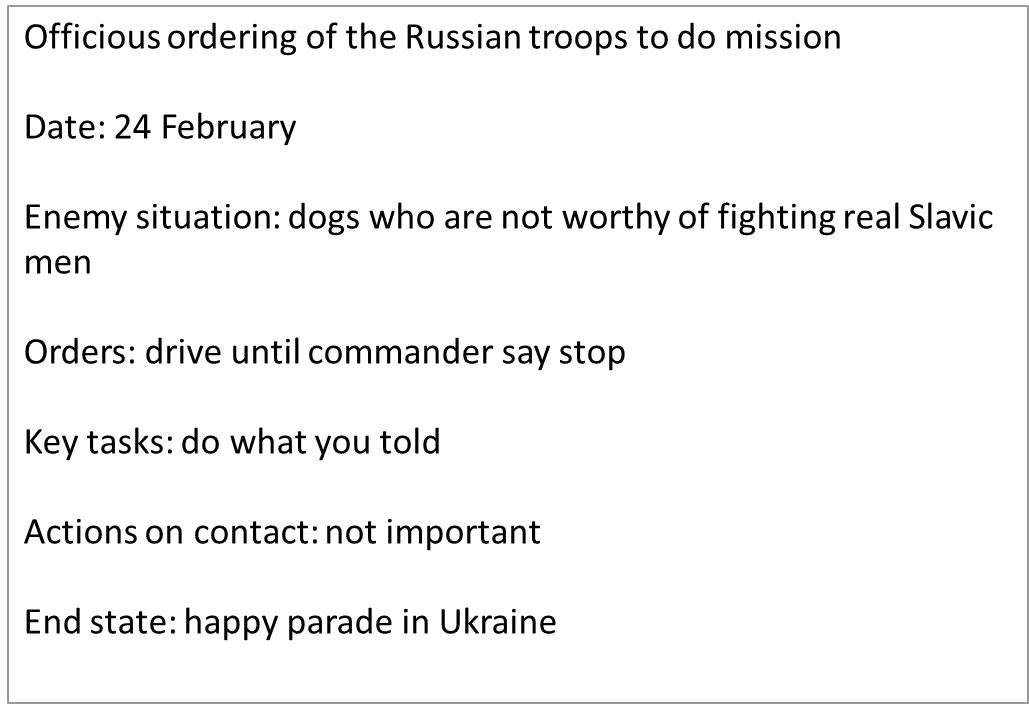
Our team also obtained more granular orders, apparently issued at the outset of the country’s latest incursion into a sovereign neighbor. One such order, translated below, gives insight into the Russians’ tactical prowess, which the world has feared for decades.
 |
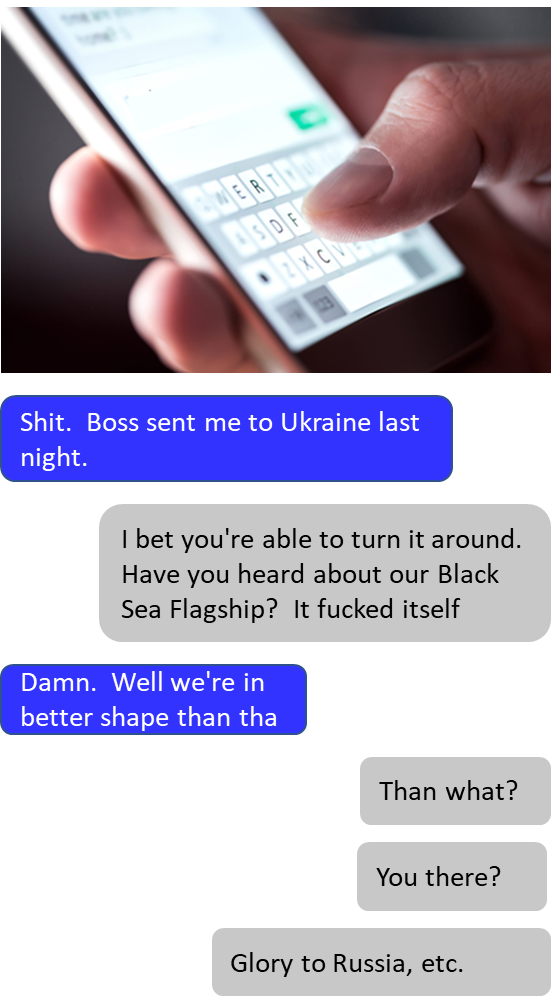
Of course, these early plans did not materialize as successfully as Putin and his team of generals had envisioned. Leaked text messages from a few days into the full-scale invasion begin to tell the tale, while also giving an idea of the deep empathy Russian officers have for the troops they lead.
 |
Messages from the same chat roughly six weeks later give a sense of how the conflict has evolved.
 |
With the conflict persisting longer than hoped, Putin and his team are turning to the country’s robust information operations capability, looking to highlight what they see as key threats in Ukraine to both justify their actions and call on the West to halt its support of the Ukrainians as they defend themselves.
An undated press release cuts to the chase in classic Russian fashion.
 |
Duffel Blog is continuing to analyze and giggle at the large number of documents obtained.

Sorry guys but as a track guy, I would not wish this on anybody. As burns are the gift that keeps on giving! Grumpy
By W.E. Linde
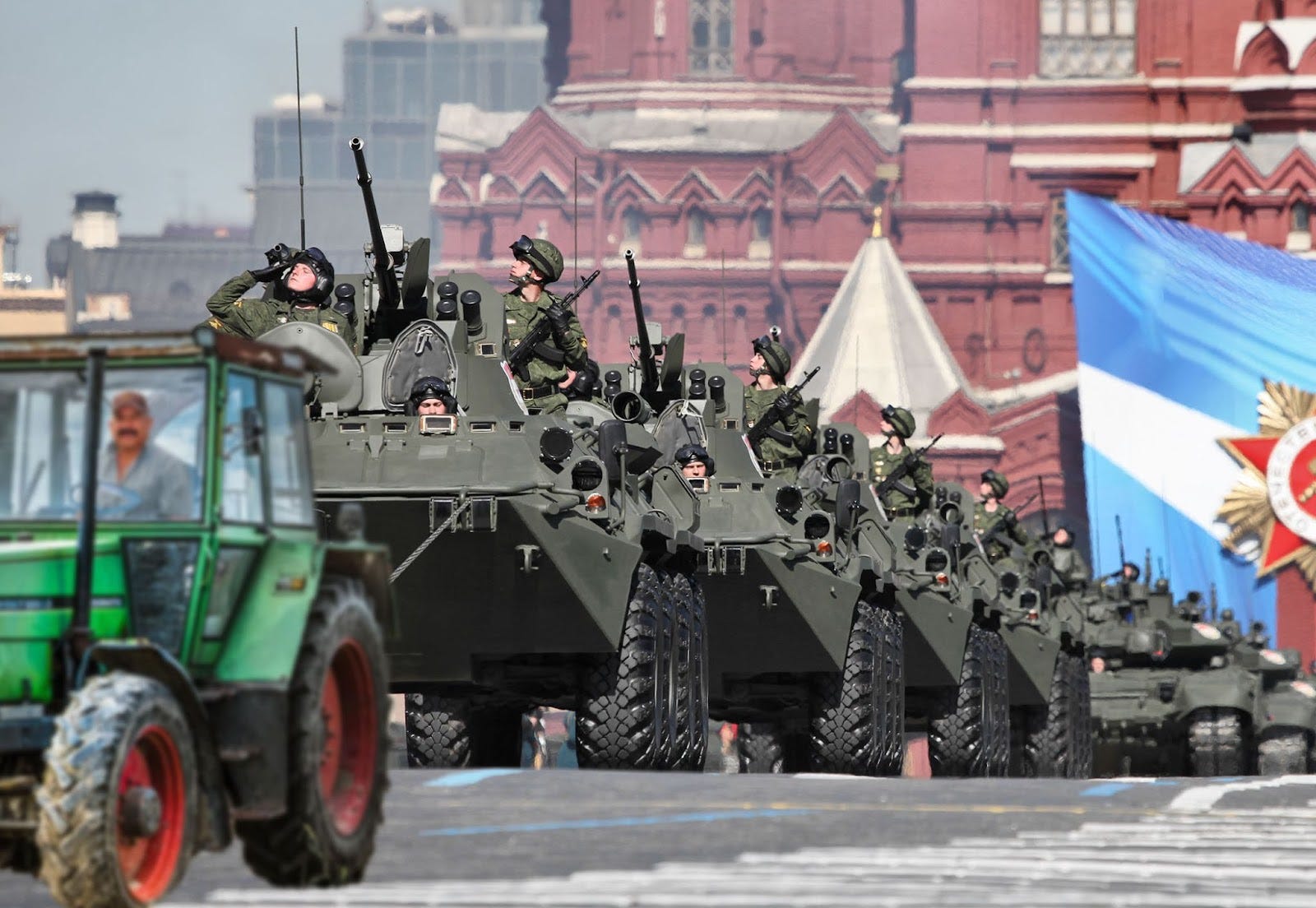
MOSCOW — In the latest of a string of high-profile humiliations for the Russian military, a Ukrainian farmer was able to connect every single military vehicle participating in the country’s venerable Victory Day parade to his tractor and drag them back to Ukraine.
Petro Bonderenko, 53, a wheat and barley farmer from the village of Grushevka, appeared shortly after the parade began at 10 a.m., and somehow tied a chain that linked the approximately 200 military vehicles participating in this year’s event to his 210 horsepower John Deere tractor. Within 30 minutes, a confused silence had settled on Red Square, which was then completely devoid of any military armor or weapons.
“How did he even get there?” asked a visibly flummoxed Gen. Valery Gerasimov, Chief of the Russian General Staff. “I was standing there in the reviewing stand saluting and suddenly saw some grizzled civilian in a crappy little tractor was in front of the procession, waving at me and President Putin.”
The “battlefield acquisition” became obvious to most when Bondarenko’s tractor made a sharp U-turn in front of Red Square, pulling the entire parade along behind him.
Sources indicate that although Putin was upset at the humiliating spectacle and initially demanded to know what was happening, his senior intelligence officials assured him that the parade was proceeding according to plan. Sufficiently reassured, Putin saluted Bonderenko as the farmer returned a one-finger salute.
David McSally, an analyst at Center for Strategic and International Studies, was not surprised that Bonderenko’s mission was successful.
“The Russians don’t trust their lower echelon troops, and so command and control is highly concentrated with senior leadership,” he explained. “So when no orders came down to stop this farmer, the troops in the vehicles just stayed along for the ride.”
“There’s also the likelihood that a lot of them were happy to go,” McSally added.
With the vehicle heist complete, talk has started about whether there will be consequences in the General Staff for letting Bonderenko get away.
“I don’t think President Putin is too mad,” Gerasimov said, sweating like he had just finished leveling an entire Ukrainian village by himself. “After all, he’s invited me to discuss this over tea later this afternoon.” He then fell to the ground, sobbing.
W.E. Linde (aka Major Crunch) writes a lot. Former military intelligence officer, amateur historian, blogger/writer at DamperThree.com. Strives to be a satirist, but probably just sarcastic. Twitter @welinde


“The Americans at Château-Thierry” by N.C. Wyeth
The U.S. military has been actively working to remove references to the Confederacy and Confederate leaders in recent years, but that hasn’t always been the case. Just over 50 years after the end of the Civil War, parts of the United States still embraced that troubled past.
By the time the United States entered World War I, veterans from both sides of the Civil War were largely elderly. An 18-year-old who enlisted in 1861 would be 74 years old in 1917, the year the U.S. entered the Great War.
Even so, the U.S. Army wanted to bring something uniquely American to the trenches of Europe. The commander of a particular southern Army unit wanted his men to use the Confederate Rebel Yell to “instill terror in the hearts of the enemy.” And they needed the help of Confederate Civil War veterans to do it.

Fort Gordon near Atlanta, Georgia, (named for a Confederate general) was known as Camp Gordon during the build up to World War I. It was used as a training camp for many of the 2.8 million men who were drafted to serve in the war.
It was first opened in July 1917 and became the training ground for the 82nd Division, later known as the 82nd Airborne Division, when troopers could actually become airborne. The camp operated from 1917 until 1919 and trained many of the conscripts from Georgia.
The man installed to oversee the training of the 82nd Division at Camp Gordon was Gen. Eben Swift, a veteran of the Spanish-American War and the Pancho Villa Expedition and a former director of the Army War College.
Swift wanted to give the Germans a special surprise when the U.S. Army arrived and began fighting in the trenches. He wanted to teach the 82nd Division the “Rebel Yell,” a battle cry used by Confederate soldiers as they charged Union lines during the Civil War.

He met with federal judge William T. Newman of Atlanta, a former Confederate soldier who was still in contact with a company of his fellow veterans in Georgia, to teach the battle cry to new soldiers of the 82nd.
“I want my men taught the Rebel Yell for their use in France,” Swift told the Times-Dispatch, a Richmond, Virginia, newspaper in 1917. “I met Judge Newman and suggested the Rebel Yell would not sound badly when we meet the Germans. Our boys will use it when they go over the top.”
Although there aren’t any recordings of the yell in use during the Civil War era, there are recordings of Confederate veterans performing the cry at reunions years later. The video below is from Smithsonian Magazine:
According to the article, Newman did everything he could to assemble the elderly veterans at Camp Gordon to teach the troops the “blood-stirring” battle cry. Union veterans have remarked that the Rebel Yell was effective on the battlefield, saying “if you claim you heard it and weren’t scared, that means you never heard it.”
Swift expected the use of the Rebel Yell to catch on in the Army once the 82nd began using it, and that the service would adopt the Confederate tradition for the foreseeable future. Instead, it died out with the last of the Confederacy’s remaining veterans.
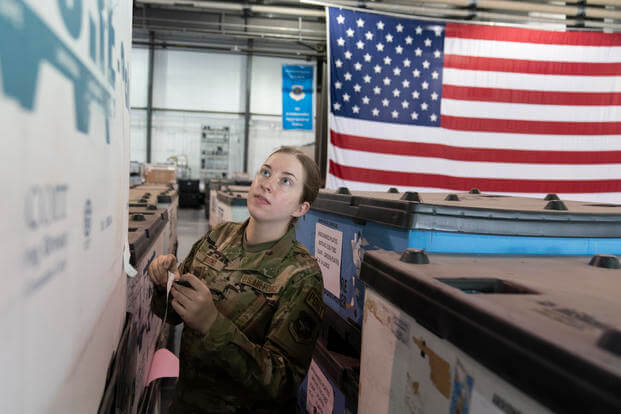
U.S. Air Force Airman Megan Konsmo, from Tacoma, Wash., checks pallets of equipment ultimately bound for Ukraine in the Super Port of the 436th Aerial Port Squadron, Friday, April 29, 2022, at Dover Air Force Base, Del. (AP Photo/Alex Brandon)
WASHINGTON — The planes take off almost daily from Dover Air Force Base in Delaware — hulking C-17s loaded up with Javelins, Stingers, howitzers and other material being hustled to Eastern Europe to resupply Ukraine’s military in its fight against Russia.
The game-changing impact of those arms is exactly what President Joe Biden hopes to spotlight as he visits a Lockheed Martin plant in Alabama on Tuesday that builds the portable Javelin anti-tank weapons that have played a crucial role in Ukraine.
But Biden’s visit is also drawing attention to a growing concern as the war drags on: Can the U.S. sustain the cadence of shipping vast amounts of arms to Ukraine while maintaining the healthy stockpile it may need if a new conflict erupts with North Korea, Iran or elsewhere?
The U.S. already has provided about 7,000 Javelins, including some that were delivered during the Trump administration, about one-third of its stockpile, to Ukraine, according to an analysis by Mark Cancian, a senior adviser with the Center for Strategic and International Studies international security program. The Biden administration says it has given about 5,500 to Ukraine since the Russian invasion more than two months ago.
Analysts also estimate that the United States has sent about one-quarter of its stockpile of shoulder-fired Stinger missiles to Ukraine. Raytheon Technologies CEO Greg Hayes told investors last week during a quarterly call that his company, which makes the weapons system, wouldn’t be able to ramp up production until next year due to parts shortages.
“Could this be a problem? The short answer is, ‘Probably, yes,’” said Cancian, a retired Marine colonel and former government specialist on Pentagon budget strategy, war funding and procurement.
He said that Stingers and Javelins were where “we’re seeing the most significant inventory issues,” and production of both weapons systems has been limited in recent years.
The Russian invasion offers the U.S. and European defense industry a big opportunity to bolster profits as lawmakers from Washington to Warsaw are primed to increase defense spending in response to Russian aggression. Defense contractors, however, face the same supply chain and labor shortage challenges that other manufacturers are facing, along with some others that are specific to the industry.
Military spending by the U.S. and around the world was rising even before Russia’s Feb. 24 invasion. Biden’s proposed 2023 budget sought $773 billion for the Pentagon, an annual increase of about 4%.
Globally, total military spending rose 0.7% to more than $2 trillion for the first time in 2021, according to an April report from the Stockholm International Peace Research Institute. Russia ranked fifth, as its spending on weapons increased ahead of its invasion of Ukraine.
The war will mean increased sales for some defense contractors, including Raytheon, which makes the Stinger missiles Ukrainian troops have used to knock out Russian aircraft. The company is also part of a joint venture with Lockheed Martin that makes the Javelins.
Biden will visit Lockheed Martin’s facility in Troy, Ala., which has the capacity to manufacture about 2,100 Javelins per year. The trip comes as he presses Congress to quickly approve his request for an additional $33 billion in security and economic assistance for Kyiv.
The president is expected to use his remarks to highlight the importance of the Javelins and other U.S. weaponry in helping Ukraine’s military put up a vigorous fight as he makes the case to keep security and economic assistance flowing.
A White House official, who was not authorized to comment publicly and requested anonymity, said the Pentagon is working with defense contractors “to evaluate the health of weapons systems’ production lines and examine bottlenecks in every component and step of the manufacturing process.” The administration is also considering a range of options, if needed, to boost production of both Javelin and Stingers, the official said.
White House press secretary Jen Psaki said Monday that defense officials have determined that the weapons transfers have not impacted military readiness. Still, the administration has included funding in the Ukraine supplemental bill Biden introduced last week to replenish U.S. inventories of depleted weapon stockpiles.
Psaki added that Biden would also use the visit to the Javelin plant to press Congress to pass an innovation and competition bill to boost the semiconductor industry.
“Each Javelin missile requires more than 200 semiconductors to make, and boosting domestic chip manufacturing isn’t just critical to making more in America or lowering prices, it’s also a vital component of our national security,” Psaki said.
Cancian, the former government specialist on defense budget strategy, said the fact that Stingers and Javelins were not included in the most recent tranche of weapons the Biden administration announced it was sending to Ukraine could be a sign that Pentagon officials are mindful about inventory as they conduct contingency planning for other possible conflicts.
“There’s no question that whatever war plan they’re looking at there is risk associated with the depleting levels of Stingers and Javelins, and I’m sure that they’re having that discussion at the Pentagon,” he said.
The U.S. military effort to move weaponry to Eastern Europe for Ukraine’s fight has been Herculean. From Dover Air Base in Delaware, U.S. airmen have carried out nearly 70 missions to deliver some 7 million pounds of Javelins, Stingers, 155mm howitzers, helmets and other essentials to Eastern Europe since February. Col. Matt Husemann, commander of the 436th Airlift Wing, described the mission as a “whole of government approach that’s delivering hope.”
“It is awesome,” said Husemann, after providing AP with a recent tour of the airlift operation.
The lightweight but lethal Javelin has helped the Ukrainians inflict major damage on Russia’s larger and better-equipped military. As a result, the weapon has gained almost mythic regard, celebrated with a Javelin song and images of Mary Magdalene carrying a Javelin becoming a meme in Ukraine.
Lockheed Martin CEO James Taiclet said in a recent CNBC interview that demand for the Javelin and other weapon systems would increase broadly over time because of the Russian invasion. He said the company was working “to get our supply chain ramped up.”
“We have the ability to meet current production demands, are investing in increased capacity and are exploring ways to further increase production as needed,” Lockheed Martin said in a statement.
Pentagon officials recently sat down with some of the leading defense contractors, including Lockheed Martin, Raytheon, Boeing, General Dynamics, BAE Systems and Northrop Grumman to discuss efforts to ramp up production.
The big defense contractors face some serious challenges.
Raytheon, for example, can’t simply crank out Stingers to replace the 1,400 that the U.S. sent to Ukraine. Hayes, the Raytheon CEO, said in a recent conference call with analysts that the company has only limited supplies of components to make the missile. Only one undisclosed country has been buying them in recent years, and the Pentagon hasn’t bought any new ones in nearly 20 years.
Sanctions further complicate the picture. Companies must find new sources of important raw materials such as titanium, a crucial component in aerospace manufacturing that is produced in Russia.
Concerns about the Stinger stockpile have been raised by House Armed Services Committee chairman Rep. Adam Smith, D-Wash., and the top Republican on the committee, Rep. Mike Rogers of Alabama. The two in March wrote to Defense Secretary Lloyd Austin and Chairman of the Joint Chiefs of Staff Mark Milley, describing the stockpile issue as one of “urgency.”
Rogers said he remains concerned that the matter hasn’t been properly addressed.
“I’ve been asking the DoD for almost two months for a plan to replenish our Stinger stockpile as well as our Javelin launch units,” Rogers said. “I worry that without a readily available replacement or fully active production lines, we could leave Ukraine and our NATO allies in a vulnerable position.”
With about 600 employees and contract workers, the nearly 30-year-old Alabama plant Biden will visit is one of the largest employers in Pike County, home to Troy University and the birthplace of the late Rep. John Lewis of Georgia.
The factory began attracting attention soon after Russia’s invasion because of images shared on social media that showed Javelin missile tubes emblazoned with “TROY, AL” stockpiled for use by Ukrainian forces.
“We want the last thing Putin ever reads to be ‘Made in Alabama,’” Gov. Kay Ivey’s office said in a message shared on social media.

Russian tanks, trucks, and MLRS on trains being transported to the frontlines (CIT/Twitter)
As Russian President Vladimir Putin’s 3-day plan to subdue Ukraine runs into its 63rd day, Russia and the rest of the world continue to be shocked by the stalwart resistance of Ukraine. Unbeknownst to the world, there is a small group of Belarusian Saboteurs who are helping the Ukrainians fight off the Russians.
There are two generally accepted reasons why the Ukrainians have been able to hold out for this long. First is the unexpected capability and morale of Ukrainian fighters, who were more prepared to fight than most would have predicted. Second is the poor performance of the Russian army in Ukraine who the experts grossly overrated.
A covert network of Belarusian hackers, rail workers, and security force defectors have been working behind the scenes in their home country to cut off the Russian invasion force from much-needed supplies during the first phase of the war when the Russians were trying to invade Kyiv. Particularly, the group was also part of the reason why the 40-mile Russian convoy had stalled just outside of Kyiv.
SOFREP previously reported on the Ukrainian Special Forces, which used claymores to destroy the convoy, and the elite drone unit Aerorozvidka, which attacked the 40-mile Russian convoy with drones while they were freezing and starving to death.

These saboteurs attacked a series of railway links in Belarus that connect Russia to Ukraine. The group targeted control panels which were essential in running the rail systems. The attacks proved to be simple but effective, resulting in a deadlock that lasted for several days in the train system. This forced the Russian troops to redirect their supply lines by the road.
The network has been at work since the first days of the invasion. Although it is difficult to quantify their contributions, disrupting the signaling systems will often force trains to slow down to a crawl and restrict the number of cars in operation.
“Given the Russian reliance on trains, I’m sure it contributed to some of the problems they had in the north. It would have slowed down their ability to move,” a research fellow at the U.K.-based Royal United Services Institute, Emily Ferris, said. “They couldn’t push further into Ukrainian territory and snarled their supply lines because they had to rely on trucks.”
The disruptions also bought the Ukrainian fighters time to evaluate the Russian invasion and adopt an appropriate strategy for its defense.
“I can’t say we were the most important factor, but we were an important brick in the wall,” Belarusian activist and trade unionist Yury Ravavoi said.
The effects of the attacks were mostly felt in the Kyiv region, which is on the northern side of Ukraine. Disrupted supply lines are, in large part, one of the contributing factors that stopped the Russian army from ever occupying the Ukrainian capital. According to the Pentagon, Russian troops stationed in Belarus are now being deployed to the eastern front as part of Moscow’s strategy shift.
“We believe the fact that the Russians gave up on taking Kyiv is a result of our work because the Russians didn’t feel as safe in Belarus as they had expected,” Franak Viacorka said. He is the spokesperson for Belarusian opposition leader Svetlana Tikhanovskaya.
“Thousands of Russian troops didn’t receive food, they didn’t receive fuel, and they didn’t receive equipment on time,” he added.
Head of the Ukrainian Railway Company, Oleksandr Kamyshin, hinted in an interview that the actions of Belarusian “partisans” caused a halt in railway shipments of Russian supplies for some time.
“I will not specify the details, but I am grateful to Belarusian railway workers for what they are doing,” Kamyshin said. “They are brave and honest people who have helped us.”
Lessons from History
According to sources, the saboteurs drew inspiration from World War II Belarusian history, specifically during the time the country was resisting Nazi occupation. The Rail Wars, as they called it, saw Belarusian partisan units attack German-built railways and train stations to disrupt the Nazi war machine. This story is a glorified part of Belarusian history and is being taught in schools.

Read Next: Ukraine-Russia Peace Talks End Without Breakthrough, 2nd Round To Be Scheduled
Decades later, the Belarusians are once again rising up against an authoritarian force, this time in the form of Putin’s Russia. The deployment of thousands of Russian troops through Belarus has caused widespread displeasure toward Russians and the Belarus government for being the staging area for the northern attack route to Kyiv, which ultimately led these saboteurs to do their work in the background.
Former security official Lt. Col Alexander Azarov said that there are three primary factions involved in the sabotage: IT specialists, railway workers, and former security force members. Rail workers leak information on Russian deployment and the location of key equipment. Another group picks up the intel and formulates an attack.
“Our movement is not centralized,” Azarov said. “It’s not like there’s a leader of the resistance. It’s horizontal, with dozens of groups working on the ground.”
Unlike their World War II predecessors, today’s Belarusian saboteurs intend to limit the casualties of their attacks to equipment, not people.
“We didn’t want to kill any Russian army or Belarusian train drivers. We used a peaceful way to stop them,” Ravovoi said, who refrained from giving further details on how the attacks were being coordinated for the safety of the saboteurs.
Belarusian Saboteurs and a Potential Price to Pay
Launching attacks on the Russian supply line comes with risk. Belarusian authorities have launched an effort to stop attacks on the railways and track down the saboteurs. They have also released a decree which brands such attacks as terrorism, which may lead to 20 years in prison.
Early in April, four men were arrested under suspicion of trying to sabotage the railway. Released video footage shows the men bloodied and bruised. The men were shot with live ammunition because they allegedly resisted arrest.
“The regime now shoots with live ammunition at people who attempt to stop and sabotage railways. Lukashenko would rather kill his own citizens than stop helping Russia in its war,” Belarusian journalist Hanna Liubakova wrote in a tweet with a video of the arrested men.