Category: War
1 of 17
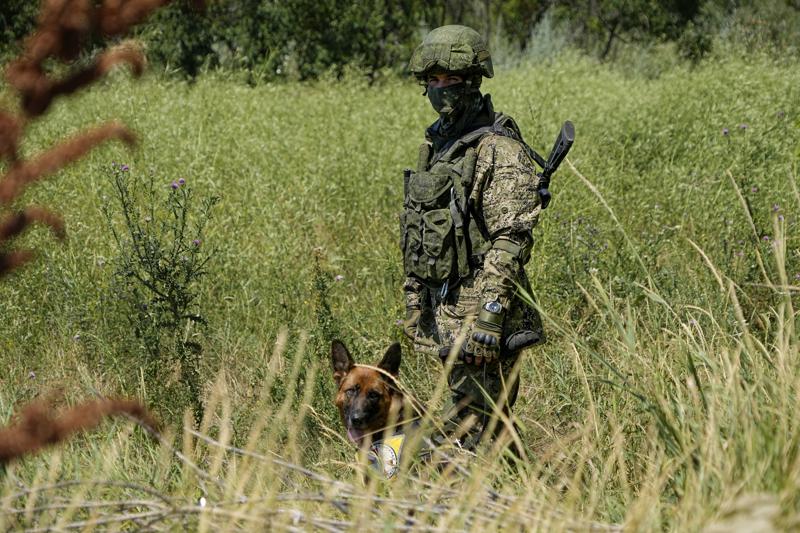
The prisoners at the penal colony in St. Petersburg were expecting a visit by officials, thinking it would be some sort of inspection. Instead, men in uniform arrived and offered them amnesty — if they agreed to fight alongside the Russian army in Ukraine.
Over the following days, about a dozen or so left the prison, according to a woman whose boyfriend is serving a sentence there. Speaking on condition of anonymity because she feared reprisals, she said her boyfriend wasn’t among the volunteers, although with years left on his sentence, he “couldn’t not think about it.”
As Russia continues to suffer losses in its invasion of Ukraine, now nearing its sixth month, the Kremlin has refused to announce a full-blown mobilization — a move that could be very unpopular for President Vladimir Putin. That has led instead to a covert recruitment effort that includes using prisoners to make up the manpower shortage.
This also is happening amid reports that hundreds of Russian soldiers are refusing to fight and trying to quit the military.
“We’re seeing a huge outflow of people who want to leave the war zone — those who have been serving for a long time and those who have signed a contract just recently,” said Alexei Tabalov, a lawyer who runs the Conscript’s School legal aid group.
The group has seen an influx of requests from men who want to terminate their contracts, “and I personally get the impression that everyone who can is ready to run away,” Tabalov said in an interview with The Associated Press. “And the Defense Ministry is digging deep to find those it can persuade to serve.”
Although the Defense Ministry denies that any “mobilization activities” are taking place, authorities seem to be pulling out all the stops to bolster enlistment. Billboards and public transit ads in various regions proclaim, “This is The Job,” urging men to join the professional army. Authorities have set up mobile recruiting centers in some cities, including one at the site of a half marathon in Siberia in May.
Regional administrations are forming “volunteer battalions” that are promoted on state television. The business daily Kommersant counted at least 40 such entities in 20 regions, with officials promising volunteers monthly salaries ranging from the equivalent of $2,150 to nearly $5,500, plus bonuses.
The AP saw thousands of openings on job search websites for various military specialists.
The British military said this week that Russia had formed a major new ground force called the 3rd Army Corps from “volunteer battalions,” seeking men up to age 50 and requiring only a middle-school education, while offering “lucrative cash bonuses” once they are deployed to Ukraine.
But complaints also are surfacing in the media that some aren’t getting their promised payments, although those reports can’t be independently verified.
In early August, Tabalov said he began receiving multiple requests for legal help from reservists who have been ordered to take part in a two-month training in areas near the border with Ukraine.
The recruitment of prisoners has been going on in recent weeks in as many as seven regions, said Vladimir Osechkin, founder of the Gulagu.net prisoner rights group, citing inmates and their relatives that his group had contacted.
It’s not the first time that authorities have used such a tactic, with the Soviet Union employing “prisoner battalions” during World War II.
Nor is Russia alone. Early in the war, Ukrainian President Volodymyr Zelenskyy promised amnesty to military veterans behind bars if they volunteered to fight, although it remains unclear if anything came out of it.
In the current circumstances, Osechkin said, it isn’t the Defense Ministry that’s recruiting prisoners — instead, it was Russia’s shadowy private military force, the Wagner Group.
Yevgeny Prigozhin, an entrepreneur known as “Putin’s chef” because of his catering contracts with the Kremlin and reportedly Wagner’s manager and financier, brushed aside reports that he personally visited prisons to recruit convicts, in a written statement released by his representatives this month. Prigozhin, in fact, denies he has any ties to Wagner, which reportedly has sent military contractors to places like Syria and sub-Saharan Africa.
According to Osechkin, prisoners with military or law enforcement experience were initially offered to go to Ukraine, but that later was extended to inmates with varying backgrounds. He estimated that as of late July, about 1,500 might have applied, lured by promises of big salaries and eventual pardons.
Now, he added, many of those volunteers — or their families — are contacting him and seeking to get out of their commitments, telling him: “I really don’t want to go.”
According to the woman whose boyfriend is serving his sentence at the penal colony in St. Petersburg, the offers to leave the prison are “a glimmer of hope” for freedom. But she said he told her that of 11 volunteers, eight died in Ukraine. She added that one of the volunteers expressed regret for his decision and doesn’t believe he will return alive.
Her account couldn’t be independently verified, but was in line with multiple reports by independent Russian media and human rights groups.
According to those groups and military lawyers, some soldiers and law enforcement officers have refused deployment to Ukraine or are trying to return home after a few weeks or months of fighting.
Media reports about some troops refusing to fight in Ukraine started surfacing in the spring, but rights groups and lawyers only began talking about the number of refusals reaching the hundreds last month.
In mid-July, the Free Buryatia Foundation reported that about 150 men were able to terminate their contracts with the Defense Ministry and returned from Ukraine to Buryatia, a region in eastern Siberia that borders Mongolia.
Some of the servicemen are facing repercussions. Tabalov, the legal aid lawyer, said about 80 other soldiers who sought to nullify their contracts were detained in the Russian-controlled town of Bryanka in the Luhansk region of eastern Ukraine, according to their relatives. Last week, he said that the Bryanka detention center was shut down because of the media attention.
But the parent of one officer who was detained after trying to get out of his contract told the AP this week that some are still being detained elsewhere in the region. The parent asked not to be identified out of safety concerns.
Tabalov said a serviceman can terminate his contract for a compelling reason — normally not difficult — although the decision is usually up to his commander. But he added: “In the conditions of hostilities, not a single commander would acknowledge anything like that, because where would they find people to fight?”
Alexandra Garmazhapova, head of the Free Buryatia Foundation, told the AP that soldiers and their relatives complain of commanders tearing up termination notices and threatening “refuseniks” with prosecution. As of late July, the foundation said it had received hundreds of requests from soldiers seeking to end their contracts.
“I’m getting messages every day,” Garmazhapova said.
Tabalov said some soldiers complain that they were deceived about where they were going and didn’t expect to end up in a war zone, while others are exhausted from fighting and unable to continue.
Rarely, if at all, did they appear motivated by antiwar convictions, the lawyer said.
Russia will continue to face problems with soldiers refusing to fight, military analyst Michael Kofman said, but one shouldn’t underestimate Russia’s ability to “muddle through … with half-measures.”
“They’re going to have a lot of people who are quitting or have people who basically don’t want to deploy,” said Kofman, director of the Virginia-based Russia Studies Program at the Center for Naval Analyses, on a recent podcast. “And they’ve employed a lot of measures to try to keep people in line. But ultimately, there’s not that much that they can do.”
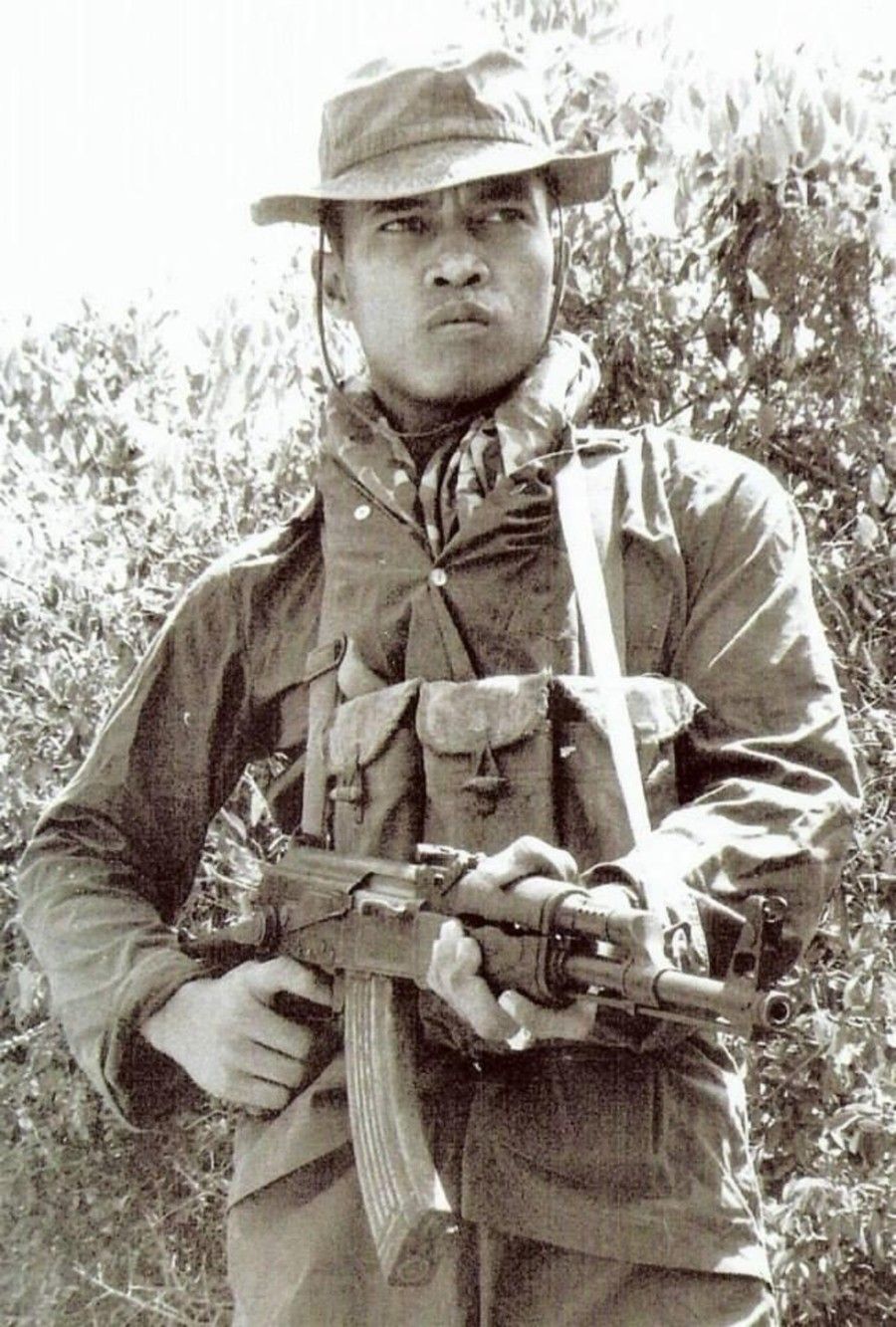
A 30-year Army veteran who was the longest continuously serving Ranger in Vietnam and one of the war’s most decorated enlisted soldiers died. Patrick Gavin Tadina served in Vietnam for over five years straight between 1965 and 1970, leading long-range reconnaissance patrols deep into enemy territory – often dressed in black pajamas and sandals and carrying an AK-47.
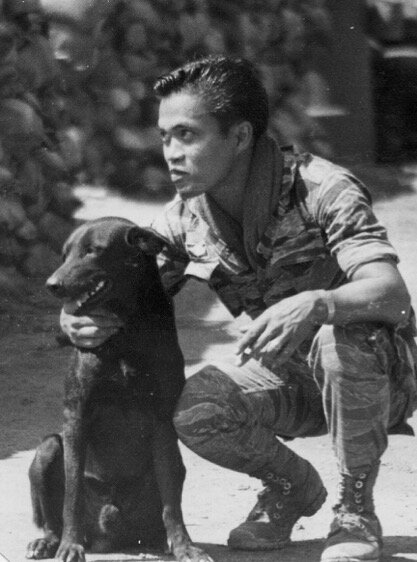
The retired Command Sergeant Major Patrick Gavin Tadina died May 29, 2020, in North Carolina. He was 77.
“Early this morning, my Dad … took his last breaths and went to be with all the Rangers before him,” his daughter Catherine Poeschl said on Facebook. “I know they are all there waiting for him.”
He is survived by his wife, two sisters, two daughters, four sons, six grandchildren, and two great-grandchildren, the family, said in a brief online obituary. A funeral had not yet been scheduled.
A native of Hawaii, Tadina earned two Silver Stars, 10 Bronze Stars – seven with valor – three Vietnamese Crosses of Gallantry, four Army Commendation Medals, including two for valor, and three Purple Hearts.
After the second Rambo movie release, Patrick Gavin Tadina was profiled in Stars and Stripes, where he was contrasted with Sylvester Stallone‘s beefy – often shirtless – portrayal of a Vietnam combat veteran.
Patrick Gavin Tadina in the Vietnam War
“The real thing comes in a smaller, less glossy package,” wrote reporter Don Tate in December 1985. “Tadina stands just over 5-feet-5and swells all the way up to 130 pounds after a big meal.” His small stature and dark complexion helped him pass for a Viet Cong soldier on patrols deep into the Central Highlands, during which he preferred to be in the point position. His citations describe him walking to within feet of enemies he knew to be lying in wait for him and leading a pursuing enemy patrol into an ambush set by his team.
In Vietnam, he served with the 173rd Airborne Brigade Long Range Reconnaissance Patrol, 74th Infantry Detachment Long Range Patrol, and Company N (Ranger), 75th Infantry.
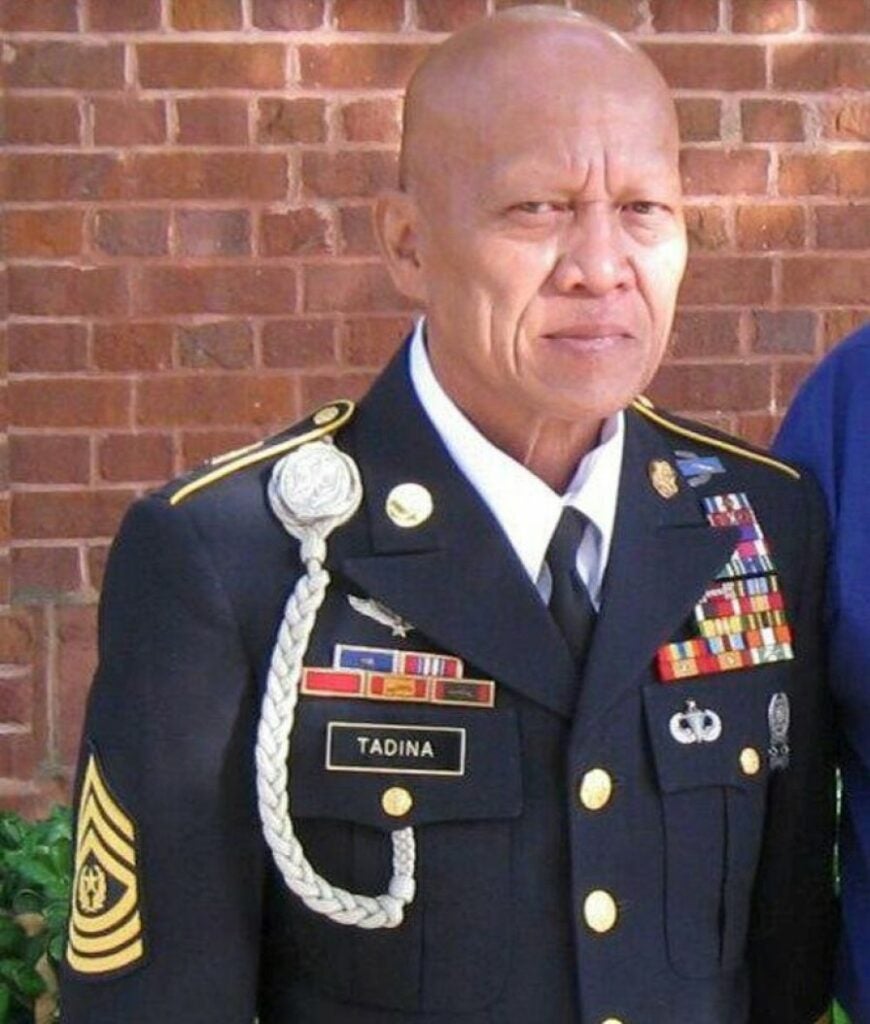
Tadina joined the Army in 1962 and served in the Dominican Republic before going to Southeast Asia. He also served with the 82nd Airborne Division in Grenada during Operation Urgent Fury in 1983 and with the 1st Infantry Division during Operation Desert Storm in 1991.
A 1995 inductee into the Ranger Hall of Fame, he served with “extreme valor,” never losing a man during his years as a team leader in Vietnam, a hall of fame profile at Fort Benning said.
Some 200 men had served under him without “so much as a scratch,” said a newspaper clipping his daughter shared, published while Tadina was serving at Landing Zone English in Vietnam’s Binh Dinh province, likely in 1969.
Tadina himself was shot three times, and his only brother was also killed in combat in Vietnam, Stars and Stripes later reported.
The last time he was shot was during an enemy ambush in which he earned his second Silver Star, and the wounds nearly forced him to be evacuated from the country, the LZ English story said.
As the point man, Tadina was already inside the kill zone when he sensed something was wrong, but the enemy did not fire on him, apparently confused about who he was, the article stated. After spotting the enemy, Tadina opened fire and called out the ambush to his teammates before falling to the ground and being shot in both calves.
He refused medical aid and continued to command until the enemy retreated, stated another clipping, quoting from his Silver Star citation.
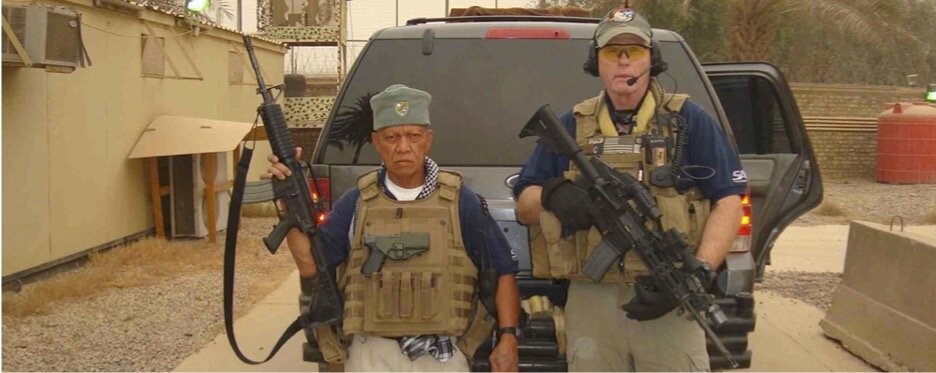
“When you’re out there in the deep stuff, there’s an unspoken understanding,” he told Tate in 1985. “It’s caring about troops.”
He was not one to boast of his experiences, his daughter said in a phone interview Monday.
After retiring from the Army in 1992, he continued working security jobs until 2013, Poeschl said, including stints in Iraq, Afghanistan, and Pakistan.
In recent years, he’d been struggling with dementia and other ailments, she said, and he often believed he was back in the Army with his buddies.
He always seemed most at home with his “Ranger family,” his daughter said. She was trying to get word of his death to as many as she could.
“He was my dad, but he belonged to so many other people,” she said.
By Magyar Hirlap of Remix News
Barely a month since their delivery, the first German armored self-propelled guns have already ceased service in Ukraine, according to a report by German newspaper Der Spiegel.
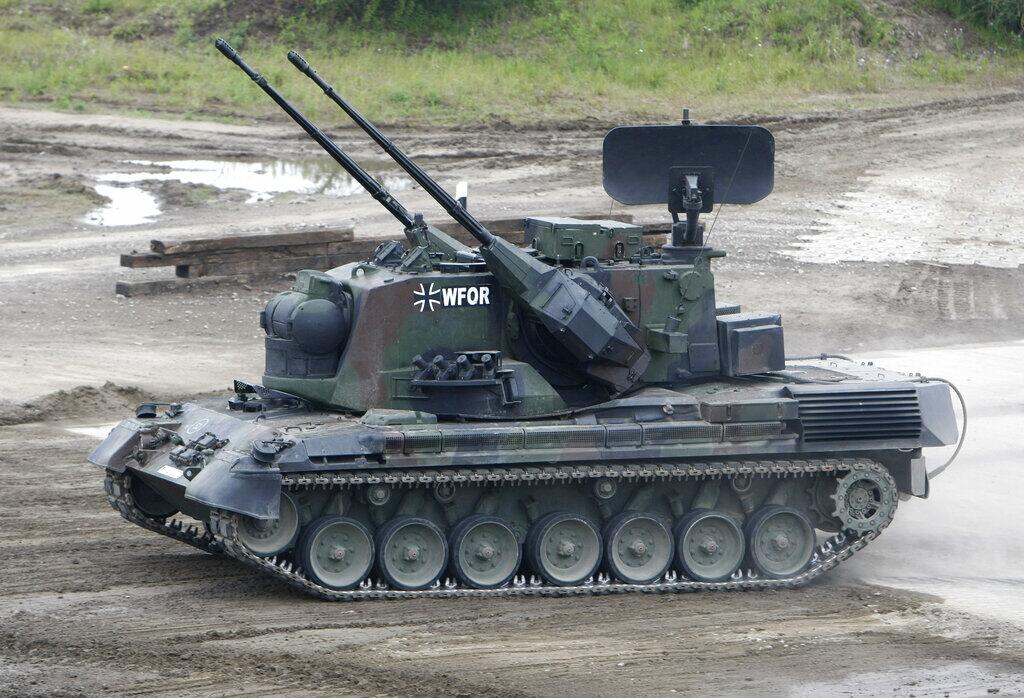
The German Ministry of Defense was informed by Kyiv last week that an error message appeared on the cannons and that several of them needed to be repaired. According to the Bundeswehr, the reason behind the malfunction may be that the Ukrainians are firing the guns more intensively than the technology is capable of.
This means that the stress on the loading systems may be too high. Another problem could be that the soldiers reportedly fire the units from too far away with the special ammunition; the smart grenades used by these cannons were meant for shorter-range, precision hits.
The Bundeswehr explained that misuse of the weapons could have contributed to a more accelerated wear and tear. Despite the problems, however, they agreed to supply Ukraine with additional weapons packages.
At the same time, the arming of Ukraine by the West raises several problems. The unlimited flow of weapons can see arms easily end up on the black market or lost. Several European countries have already warned that weapons have on occasion been redirected to other nations. The authorities in Sweden, for example, revealed that anti-tank weapons have already appeared in the circles of criminal gangs in Sweden.
Meanwhile, security policy expert Robert C. Castel drew attention to the fact that Western weapon systems — the Javelin anti-tank missile and the Stinger anti-aircraft missile — can be used against civilian and industrial targets as well as military ones. According to him, it is only a matter of time before these weapons deliveries have unintended consequences. These weapons could still be lurking somewhere in Europe for many decades, as the modern equivalent of mines and air bombs left over from the World Wars, he added.
Categories