Categories
All About Guns War

Attrition: Barrel Wear Eliminates Remaining Russian Tanks

February 2, 2023: Russia reported that they had 2,600 tanks available at the time of February 2022 invasion of Ukraine. There was visible evidence that nearly 1,600 were lost during the first few months of the invasion. While 924 were destroyed, another 664 were damaged and abandoned. Most of these tanks were undamaged and captured intact after their crews abandoned them. These were repainted to identify them as Ukrainian and used against the Russians. Many of these tanks eventually became unusable because Ukraine did not have replacement parts for them. Ukraine used similar tanks but not all of the replacement parts for Ukrainian tanks were suitable for the captured Russian ones.

Russia had a similar problem with the thousand tanks that survived the invasion and over a thousand more that were brought in as replacements. The replacement parts problem was even more acute for the Russians because they changed their tank tactics in the face of the numerous Western top-attack ATGMs (Anti-Tank Guided Missiles) that quickly destroy Russian tanks because of the way these tanks use their autoloaders, which puts many exposed shells and their propellant charges in the turret. If the turret is hit by a top attack ATGM, all those propellant charges explode, killing the three-man crew and often blowing the turret off the tank.

Russia responded to this by using their remaining tanks only for direct-fire artillery support for Russian troops. This meant using HE (high-explosive) shells that explode when they hit something, usually the ground, and create many high-speed metal fragments that will wound or kill troops and damage structures and unarmored vehicles. These shells are effective if they hit something but they are not accurate and often just hit the ground, where most of the fragments go into the ground or fly harmlessly into the air.

In Ukraine Russian tanks have used more HE shells than ever before. Russia used them occasionally in Afghanistan, and during the Chechen wars of the 1990s. In both these wars Russia had air superiority and could use helicopters and ground attack aircraft as well as conventional artillery. In Ukraine Russia has lost the tank war as well as the artillery war. Using 125mm HE shells fired by tanks seemed to be a practical solution. It was, but there were unwanted side-effects.

Firing HE is less accurate the farther away the target is. That means a 125mm HE shell fired at a maximum range will land up to sixty meters from where it was aimed. The 125mm accuracy problem was confirmed in 2018. That was when the Russian army conducted tests to measure the effectiveness of HE shells fired from the smooth bore 125mm guns tanks are equipped with. The test results recommend against tanks using HE shells. The ones on hand were not discarded but no new ones were manufactured.

Russian tanks in Ukraine appear to have used about 100,000 of these shells and in doing so discovered another problem. These shells caused barrel wear on the 125mm tank gun liners. These liners are common in tank guns and tube artillery. It’s cheaper to replace a worn-out liner than to replace the entire barrel and attached loading mechanism. Tube artillery barrel liners are good for 5,000 to 6,000 shells fired. On Russian tanks the liner wears out after about a thousand shells are fired. Most of the Russian tanks in Ukraine used for firing HE shells found that their barrels already had a lot of wear on them and heavy use of HE increased liner wear to the point where all shells (anti-tank or HE) were much less accurate.

Russian tanks can have their liners replaced but it happens so infrequently that the process is not simple. It involves removing the turret from the tank to replace the liner. This can only be done in one special facility and that means putting the entire tank on a train flat car and shipping it to the facility and then shipping it back. This meant that most of the Russian tanks with worn barrel liners were useless except as machine gun-armed vehicles. That’s hardly worth the fuel and other spare parts (like the tracks) required. This is apparently why Ukrainian troops have seen few or no Russian tanks in the last few months. This means less shell fire at Ukrainian troops and Ukrainian artillery can concentrate on other targets, like Russian infantry and supply stockpiles.

The Ukrainians want Western tanks, particularly American M1s and German Leopard 2’s because they are both considered the best designed and effective tanks available. The M1 has extensive combat experience against Russian tanks and has never, so to speak, been defeated by Russian T-90, T-72 or T-55 tanks. Like the Leopard, the M1 has multiple layers of armor protections including an APS (Active Protection System) and safer storage of tank shells and propellant inside the turret. An effective fire extinguishing system can quickly deal with any type of fire. The fire control system is one of the best available, allowing the M1 to accurately fire on the move and hit an enemy tank several thousand meters distant. The United States and Germany can supply all the spare parts needed to Ukrainian users. Worn barrels on the Western tanks are easier to replace.

Categories
All About Guns War

Hobart’s Funnies: D-Day’s Weird and Wonderful Tanks

Categories
Our Great Kids The Green Machine War

Why America’s “Future Soldier” is Better Than You Think

Categories
Real men Soldiering War Well I thought it was neat!

Yang Kyoungjong: The Reluctant Soldier by WILL DABBS

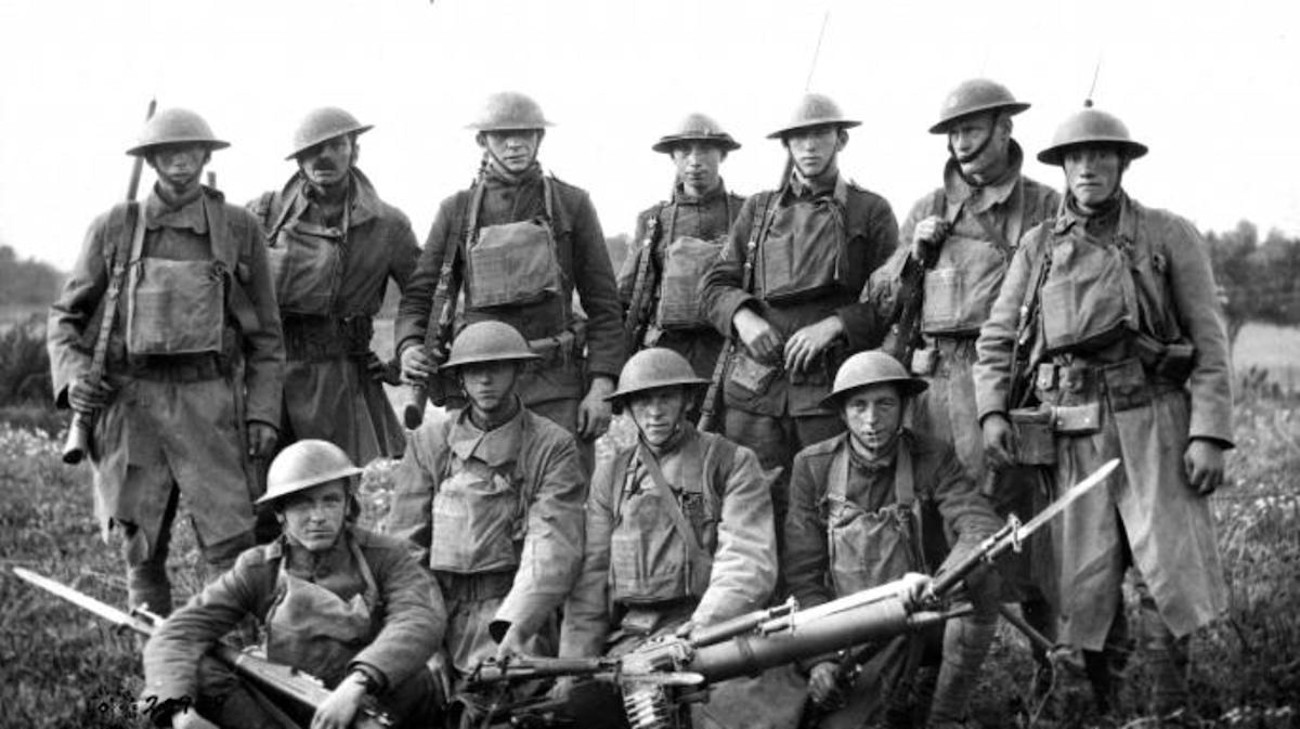
This may or may not be Yang Kyoungjong. Yang’s was one of the more bizarre stories to come out of World War 2.

Some people are just born cursed. While there are those whose lives seem inexplicably blessed with prosperity, comfort, and peace, others can be destined for squalor, chaos, and pain. Call it karma, luck, providence, or fate, it is tough to comprehend from our limited perspective why life is the way it is.

Sometimes the thugs can seem indestructible. Mind that trigger finger, stud.

Why do some reprehensible people die in their late 80’s after a long life of debauchery and self-abuse while some saint succumbs in their teens to cancer? In medicine, you sometimes get fatalistic about it. The sweet little grandmother strikes her head and strokes out, while the unkillable thug catches half a dozen rounds in a drug deal gone bad and leaves the hospital under his own steam the next day. Someday God will explain such stuff to me face-to-face in a way I will understand. Until then, I haven’t a clue.

A Most Unusual Tale

The German military was quite the heterogeneous mob by the end of the war.

In the peculiarly tragic life of Yang Kyoungjong, we see the curious power of fate at work. According to an interview by the esteemed historian Stephen Ambrose, there were at least four ethnic Asians captured by American forces in the opening days of the D-Day invasion. These troops purportedly did not speak German and were wearing Wehrmacht uniforms. One of these men has been identified as a Korean named Yang Kyoungjong.

Yang Kyoungjong’s story has been immortalized in film.

Before we proceed, appreciate that there is controversy surrounding this story. It was related as fact for years and was even used in an online advertisement for a real estate company in St. John’s, Newfoundland. In 2011 Yang’s story formed the basis for a South Korean movie titled My Way. However, documentary filmmakers in Korea have researched the story and subsequently cast some doubt on its veracity. Regardless, the narrative is nonetheless both compelling and plausible. Try to just enjoy the ride.

Yang Kyoungjong was first forced to serve in the Japanese Kwantung Army.

Born in Korea on March 3, 1920, Yang was a conscript in the Kwantung Army in Manchuria. Operating between 1919 and 1945, the Kwantung Army was the most prestigious command in the IJA (Imperial Japanese Army). While the Kwantung Army saw a great many battlefield successes, they were also responsible for some of the war’s most egregious atrocities. Among these was the infamous Unit 731 which performed biological warfare experiments on both captured civilians and prisoners of war.

World War 2 was a brute force battle of meat. For the Axis in particular there was always a shortage of manpower.

Manpower was always a critical component of any WW2 military campaign. The United States enjoyed vast resources of both men and raw materials for military production. The British drew from across the Commonwealth. The Germans, Japanese, and Russians harvested meat wherever it could be found and threw a uniform on it. This resulted in some peculiar loyalties.

Life in a Russian gulag was ghastly.

Yang Kyoungjong was first press-ganged into service in 1938 at age 18. The following year he was captured by Red Army troops during the Battle of Khalkhin-Gol and remanded to a forced labor camp. By 1942 the Soviet Union was in dire straits and faced the very real probability of national extinction at the hands of the Nazis. This drove Russian commanders to some desperate places.

For Yang Kyoungjong, combat seemed preferable to life in a Russian POW camp.

When you’re packed into a prison camp alongside several thousand of your mates subsisting on sawdust bread and whatever rats you can catch, most anything seems like an improvement. When the desperate Russians came looking for cannon fodder, Yang either volunteered or didn’t resist unduly. Either way, he soon found himself in a Soviet greatcoat fighting under the red banner for Mother Russia and Marxism.

Yang was captured by the Germans during the Third Battle of Kharkov.

In 1943, Yang found himself in Ukraine at the Battle of Kharkov. The Battle of Kharkov was actually four distinct battles spanning nearly two years. The first began in October of 1941 when the Germans captured the city. The last took place in late summer 1943 when the Soviets finally won it back for good. It was the Third Battle of Kharkov in February of 1943 that saw Yang captured by the Germans.

By the end of the war, the Germans were using troops from all over their conquered territories.

By now the tide was turning against the Nazis, and they were beginning to sense the mess they had gotten themselves into. With war raging on three fronts, the German High Command began harvesting the dregs for manpower. Where previously service in the Wehrmacht and Waffen SS might have been a prestigious thing that was both selective and competitive, by this point in the war if you could stand and hold a rifle you met the entrance standards. As a result, Yang Kyoungjong found himself wearing field gray in an Ost-Bataillone.

Most Osttruppen were not intended to be used in front-line applications.

These scratch units went by several titles. Osttruppen, Osteinheiten, and Ostlegionen all meant similar things. With piles of bored and starving Soviet conscripts languishing in prison camps, the Germans enlisted those they felt might be ideologically malleable into these ad hoc support units. Results were predictably mixed.

Absolute Power Corrupts Absolutely

Josef Stalin was one of history’s most prominent psychopaths.

Josef Stalin was a turd. He was a relatively small man at 5 foot 5 inches tall. He was also ugly. A severe bout with smallpox as a child left him badly scarred. Stalin was directly responsible for the deaths of between 20 and 40 million people. This makes Josef Stalin one of the most prolific mass murderers in human history.

Stalin looked like an amiable grandfather. He wasn’t.

Stalin ruthlessly enforced a weird sense of justice. To be captured by the enemy in battle was frequently viewed as being tantamount to cowardice or even treason. A great many captured Soviet soldiers faced harsh imprisonment or execution upon repatriation. As a result, while most soldiers like Yang had little use for Naziism, they did find service in an Ost-bataillone preferable to the alternative.

The Germans used the Osttruppen to flesh out their ranks so reliable soldiers were available for combat roles.

Ost-Bataillones were battalion-sized units comprised of a mixture of volunteers and conscripts who were most typically posted in support roles away from the front-line fighting. This allowed the Germans to use their own troops for more serious work. The Ostlegionen were larger formations that were usually ethnically similar and comprised of multiple battalions. One of the roles for which the Germans used these foreign units was as defensive troops in fixed fortifications in fairly quiet places. In early June 1944, that is what brought Yang Kyoungjong to the placid beaches of Normandy, France.

Capture

It’s tough to get your head around just how massive the D-Day invasion was.

Operation Overlord was the most extensive amphibious invasion in human history. Given advances in intelligence, logistics, and military technology it is highly unlikely that this performance will ever be repeated on such a grandiose scale. One of the more revolutionary aspects of the invasion was the widespread use of airborne forces.

German Fallschirmjägers introduced the world to the capabilities of airborne forces in battle.

The Germans really pioneered the widespread use of paratroops. The airborne assault on Crete in 1941 was ultimately successful but only at a fearsome cost. Hitler refused to authorize any further large-scale use of parachute forces in their intended role as a result. German fallschirmjagers were subsequently used as elite light infantry for the rest of the war. The Allies, however, aggressively developed the concept of airborne vertical envelopment.

These hard young studs made life miserable for the Germans in Normandy.

Most of the 13,000 Allied paratroopers dropped on D-Day did not accomplish their specific assigned tactical objectives. Intense ground fire and chaos among the lift aircraft ensured that units were spread randomly and piecemeal across the Norman countryside. However, once these aggressive, highly-trained airborne warriors touched down they proceeded to sow chaos among German combat and support units wherever they found them.

American paratroopers captured large numbers of prisoners in the days immediately following the invasion.

One of these American paratroopers was LT Robert Brewer of the 506th Parachute Infantry Regiment, 101st Airborne Division. According to the Stephen Ambrose interview, Yang was one of four Asians in Wehrmacht uniforms LT Brewer and his men captured in the immediate aftermath of the D-Day invasion. At the time it was presumed that the four were Japanese. It was later determined that Yang’s three companions were from Turkestan. Yang was processed and sent across the channel to a POW camp in Britain. From there he was further removed to a camp in the US.

The American Dream

My kids and I used to play on the site of this old WW2 POW camp outside Clinton, Mississippi.

The American South was dotted with such camps during and immediately after the war. My family and I lived in Clinton, Mississippi, while I was in medical school. The POW camp outside Clinton had long since been transformed into a sweeping grassy park, but it still retained fields of daffodils planted and cultivated by the 3,000 German and Italian POWs who were held there during the war. Most of the Clinton prisoners were members of the Afrika Korps captured in North Africa early in the war. There is a small contingent of graves in the Jackson, Mississippi, cemetery occupied by German troops who perished in captivity.

Shockingly large numbers of Axis prisoners were held in American POW camps.

Yang Kyoungjong was finally released from captivity in 1947. After such a violent and circuitous trek across all those Asian and European battlefields, Yang was purportedly none too keen to return to the nation of his birth. By the time of his release, he had already been away from home for nearly a decade.

Yang Kyoungjong was inclined to remain in the US after having such a horrible experience fighting in WW2.

Yang purportedly opted to remain in the United States after his release. He is said to have settled in Evanston, Illinois. He died there in April of 1992 at the age of 72.

Ruminations

It is in the lot of the private soldier that we find the true pathos of war.

It is easy to lose the trees for the forest when it comes to the study of war. I have a rabid addiction to military history books myself. My home sags under the weight of such. This is where I find much of the inspiration for our efforts here. My perennial challenge is finding tales of the individual soldier.

It seems to me that Yang Kyoungjong did his time as a soldier. I hope that the rest of his life was peaceful.

Book shops are dirty with tomes about Generals and campaigns. Memoirs about the movement of armies have occupied many a retired General officer in his waning years. However, what fascinates me are the tales of the regular private soldier. The humble dogface is the single entity who does most of the suffering and, in so doing, wins the wars his political leaders craft for him. In the curious tale of Yang Kyoungjong, we find the story of a normal guy caught up in some decidedly abnormal circumstances. I for one hope hope his life was ultimately warm and fulfilling.

Categories
All About Guns War

Machine Gun Terminology – LMG, MMG, SAW, LSW, HMG, GPMG

Categories
Soldiering This great Nation & Its People War

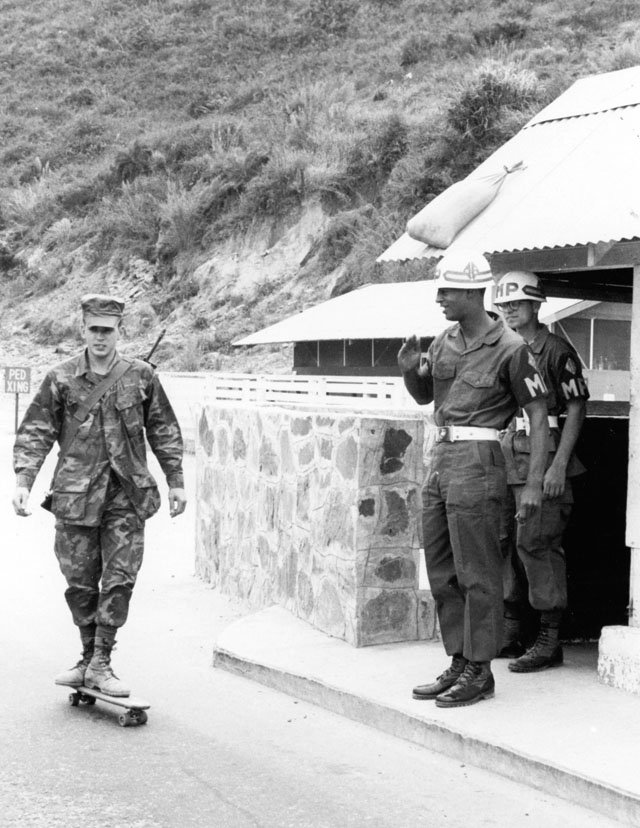
EASY LIVING IN A HARD WAR: BEHIND THE LINES IN VIETNAM At least three-quarters of U.S. troops in Vietnam served in the rear, many of them surrounded by luxury and leisure By MEREDITH H. LAIR

Thanks to movies like Platoon, Americans today think of the typical U.S. soldier in Vietnam as an infantryman on jungle patrol facing death and terror daily. But the reality was somewhat different. (U.S. Army)

IN AUGUST 1970, the Army Reporter newspaper profiled some fun-loving clerks of the 25th Infantry Division in Vietnam. Working far from the fighting, these men would never earn a medal for valor, so they created their own: the Silver Paper Clip. In a ceremony brimming with irony, they bestowed the honor on one of their brethren, along with this citation:

Specialist Howard distinguished himself with conspicuous gallantry and intrepidity at the risk of his life when he single-handedly answered over 200 telephone calls and processed in fifteen new men, exposing himself to a hail of questions. He moved from the relative safety of his desk to the P.X. where he repeatedly bought cases of soda. He organized and led his section as they swept out their hootch. Ignoring the personnel NCO, he cleaned his typewriter, picked up the mail, petted four dogs, ran off three stencils and took his malaria pill.

THANKS TO MOVIES like Platoon, Americans today think of the typical U.S. soldier in Vietnam as an infantryman on jungle patrol facing death and terror daily. But the reality is that most troops were more like Specialist Howard than Oliver Stone’s Chris Taylor. The high-tech nature of America’s war in Southeast Asia and its sophisticated logistics effort meant that some 75 percent of the 2.5 million soldiers who served there worked in supporting roles, out of danger and in relative comfort.

‘Basically there are two different wars here in Vietnam. While we are out in the field living like animals, the guy in the rear’s biggest problem is that he can receive only one television station’

Modern armies have always required mammoth support operations. But Vietnam was different. For the first time, the U.S. military turned its rearward bases into replicas of home, with many of the luxuries and consumer goods that post–World War II prosperity had lavished on America. The abundance had an unintended side effect: The uneven distribution of discomfort and danger stoked combat soldiers’ resentment of support troops, who were derided as “rear echelon motherfuckers.” REMFs and grunts may have served on the same side, but they did not serve in the same war.

AS FIGHTING in Vietnam intensified in the mid-1960s, the American war machine required enormous resources not only to subdue the enemy but also to sustain its fighting men. A legion of butchers, bakers, and ice cream makers fed the troops. Librarians shelved books in base libraries, entertainment specialists planned morale-boosting field trips and talent shows, craft-shop attendants minded the kilns and darkrooms, and lifeguards kept watch at the pools. Military-run retail outlets and bars employed even more personnel to stock the shelves, pour the drinks, book the bands, and count the slugs in the slot machines. On rear bases, an army of plumbers, electricians, and refrigerator repairmen kept the water running, the lights on, and the drinks ice cold.

Identifying REMFs on base was easy. Infantrymen returning from the field were lean and grizzled, their uniforms and boots bleached white from scuffs and sun. REMFs, meanwhile, wore fatigues that were often green and crisp with boots that retained a shine. Rich mess-hall fare and sedentary duty meant that more than a few uniforms stretched tight over paunches. Some newly arrived soldiers felt so self-conscious that they tried to distress their uniforms, especially the boots.

Most support troops worked on rear bases, many of which resembled big American cities. The largest was Long Binh Post, about 20 miles north of Saigon. Built over time for more than $130 million, Long Binh eventually had 3,500 buildings and 180 miles of road covering an area bigger than Cleveland. One colonel joked, “If we ever really got attacked, the V.C. would have to use the scheduled bus service to get around the base.”

Home to the army’s Vietnam headquarters, Long Binh was, in the words of one resident soldier, “a virtual REMF citadel.” The shooting war was far away, and soldiers stationed at the post had plenty of time on their hands. To keep them busy, military authorities provided a full slate of recreational opportunities. As of July 1971, the post boasted 81 basketball courts, 64 volleyball courts, 12 swimming pools, 8 multipurpose courts, 8 softball fields, 6 tennis courts, 5 craft shops, 3 football fields, 3 weight rooms, 3 libraries, 3 service clubs, 2 miniature golf courses, 2 handball-court complexes, a running track, an archery range, a golf driving range, a skeet range, a party area, and an amphitheater for movies and live shows.

By 1972, Long Binh Post even had a go-cart track, complete with a starting stand, a public-address system, and a pit for on-the-spot repairs.

Open mess clubs, which served food and alcohol and often featured live entertainment, abounded throughout South Vietnam. At its peak in 1969, Long Binh’s club system had 40 bars with a net worth of $1.2 million, including $270,000 in cash on hand. If soldiers didn’t like club life, Long Binh’s retail stores stocked food and alcohol to host private parties at the pools, barracks, or barbecue pits. An unofficial brothel, a “male beauty bar” with salon services, and outdoor movies rounded out Long Binh’s offerings.

Construction of new recreational facilities on Long Binh Post continued until the end of the war. As late as 1970, more than a year into troop withdrawals from Vietnam, the U.S. Army was still planning to build two 474-seat movie theaters, additional handball courts, two in-ground swimming pools with bathhouses, and a recreational lake. The military scrapped the more expensive construction projects in response to public outrage, but the post’s amenities were still expanding right through the summer of 1971.

Long Binh and other posts had retail stores that would have rivaled today’s big box outlets for their selection, if not their size. Just one of Long Binh’s P.X.s was ringing up more than $800,000 in monthly sales in late 1971, and it was not even the largest in Vietnam. These stores offered a selection of products that, in pre-Walmart days, was unlike anything most Americans had ever seen. As a reporter for a division newspaper raved about the P.X. at Camp Radcliff in the Central Highlands of Vietnam: “There are a lot of shopping centers—in fact, whole towns—back in the world where you couldn’t find snuff, anchovies, baby oil, dice, flash bulbs, radios, and steak sauce in the same store, or even in the same general area. But at Camp Radcliff you can buy almost anything you want.”

SUCH ABUNDANCE combined with the relative safety of duty in the rear to make the war itself seem like a distant concern. Writing about Da Nang Air Base in his memoir, Vietnam: The Other War, military policeman Charles Anderson reflects on this sense of isolation: “All of these comforts and services made the world of the rear a warm, insulated, womb-capsule into which the sweaty, grimy, screaming, bleeding, writhing-in-the-hot-dust thing that was the war rarely intruded.” William Upton, who served near the R&R center at Vung Tàu, told his mother upon returning home, “Most of the time you didn’t know you were in a war.”

Combat troops frequently passed through rear bases on their way to and from the States, R&R, or the hospital. These encounters left them bewildered by commanders who gave the most to those who risked the least, and resentful of noncombat troops who enjoyed relative comfort and safety.

Though U.S. Army officials denied friction between combat and support troops, front-line soldiers bristled at how their peers lived. In his memoir Nam Sense: Surviving Vietnam with the 101st Airborne, Arthur Wiknik Jr.—an infantry squad leader and veteran of the bloody assault on Hamburger Hill—seethes: “As near as I could tell, the only danger a REMF faced was from catching gonorrhea or being run down by a drunken truck driver. And the biggest hardship a REMF contended with was when a generator broke down and [his] beer got warm or there was no movie that night.”

In April 1969, 30 members of a combat infantry unit aired their grievances publicly. Writing to President Richard M. Nixon, they argued that “basically there are two different wars here in Vietnam. While we are out in the field living like animals, putting our lives on the line twenty-four hours a day, seven days a week, the guy in the rear’s biggest problem is that he can receive only one television station. There is no comparison between the two….The man in the rear doesn’t know what it is like to burn a leech off his body with a cigarette; to go unbathed for months at a time…or to wake up to the sound of incoming mortar rounds and the cry of your buddy screaming, ‘Medic!’”

A year later, retired officer John H. Funston wrote to the New York Times arguing that the army should reward riflemen with extra pay for the hazards they face in the field. The idea of combat pay, he argued, had been trivialized because every soldier received it, “regardless of his rank or whether he is a rifleman being shot at or a lifeguard at a rest area swimming pool.”

SOLDIERS IN THE REAR, meanwhile, regarded combat troops with deep admiration. On his way to an overseas R&R, clerk-typist Dean Muehlberg encountered a company of infantrymen on stand-down at the out-processing center at Da Nang. “We were in awe of the Marines,” he gushed. “We didn’t speak to them or get in their way. We didn’t know their language. You sensed that after the constant threat of death, of terrible harm, nothing else scared them.”

Muehlberg wrote a memoir, REMF “War Stories,” in which he pokes fun at himself, the boring work, and the very idea that he was fighting a war. The quotation marks in the title are deliberate; his 1969 tour was so far removed from combat that his rifle actually grew mold while it sat in its rack.

Muehlberg worked in the Awards and Decorations section, where he processed recommendations for medals and decided what commendation was appropriate. “For the first month it seemed a dirty job,” he writes. “I did not feel worthy! I was sitting in relative security reading grisly, awe-inspiring accounts of the courage of my not so fortunate brothers who were out in the thick of it. And then sitting in judgment on the ‘degree’ of their courage, their deed.”

After the war, enmity between grunts and REMFs persisted in personal memoirs and, later, websites. But in some cases, grunts’ bitterness lost its edge as veterans closed ranks to face a common enemy upon returning home: public and government indifference. Those who joined protests as part of the G.I. movement to end the war and claim federal veterans benefits buried their bad feelings in order to increase their numbers and present a unified front. Thousands of REMFs marched alongside combat veterans. Antiwar veteran groups scarcely acknowledged that the divisions ever existed. To the public, all the returning soldiers were simply “Vietnam veterans.” Only the vets knew that they had served on the same side in different wars.

Adapted from Armed With Abundance: Consumerism and Soldiering in the Vietnam War, by Meredith H. Lair, assistant professor of history at George Mason University in Virginia. © 2011 by The University of North Carolina Press.

Categories
All About Guns Allies War

British Naval Small Arms of WW1 – with C&Rsenal

Categories
Paint me surprised by this War

The Wolf Truce

Fact Checker: Was There a Ceasefire During WWI to Hunt Wolves?

Myths, lies and old wives’ tales loom large in the outdoor pursuits. Here at MeatEater, we’re dedicated to separating facts from bullsh*t, so we created this series to examine suspect yarns. If there’s a belief, rumor or long-held assumption you’d like us to fact check, drop us a note at factchecker@themeateater.com.

Claim During World War I, German and Russian forces declared a temporary ceasefire and banded together to hunt wolves. The voracious animals were attracted to the prolific and gruesome scavenging available in the warzone, attacking soldiers and civilians alike.

Origin Multiple newspapers in 1917 reported on this story, including the El Paso Herald, Oklahoma City Times, and New York Times. Since then, it’s become a favorite bit of bar room banter among amateur historians, like the powerful Joe Rogan.

Facts In February of 1917, a dispatch from Berlin noted large packs of wolves moving into populated areas of the German Empire from the forests of Lithuania and Volhynia. Locals hypothesized that war efforts displaced the wolves, so the canines started seeking out new hunting grounds.

The hungry wolves infiltrated rural villages, attacking calves, sheep, goats, and in two cases, children. They also showed up on the front lines, feeding on the fallen and sometimes taking advantage of incapacitated fighters.

“Parties of Russian and German scouts met recently and were hotly engaged in a skirmish when a large pack of wolves dashed on the scene and attacked the wounded,” reported a 1917 Oklahoma City Times article. “Hostilities were at once suspended and Germans and Russians instinctively attacked the pack, killing about 50 wolves.”

The Russian and German soldiers temporarily stopped being enemies once they found a common foe. Both sides agreed to a cease fire if the wolves interrupted another battle.

“Poison, rifle fire, hand grenades, and even machine guns were successively tried in attempts to eradicate the nuisance,” according to a 1917 New York Times article. “But all to no avail. The wolves—nowhere to be found quite so large and powerful as in Russia—were desperate in their hunger and regardless of danger.

“As a last resort, the two adversaries, with the consent of their commanders, entered into negotiations for an armistice and joined forces to overcome the wolf plague.”

Takeaway Though seemingly far-fetched, it turns out these claims are mostly accurate. Historians estimate that soldiers killed hundreds of wolves during the war, and that the surviving wolves fled to escape a “carnage the like of which they had never encountered.”

For a brief moment, a kind of peace spread across the battlefield, even though gunshots and grenade explosions continued to ring out.

Categories
Hard Nosed Folks Both Good & Bad I am so grateful!! Leadership of the highest kind Manly Stuff Our Great Kids The Green Machine This great Nation & Its People War

The Greatest Hero America Never Knew The true story of Waco’s Col. Robert Howard. By David Feherty

Image
photography courtesy of the Howard family

The name was always spoken with reverence, but I had no idea who he was. Then an Army Ranger I’ll call Leroy (because that’s his name) told me he couldn’t go on my T1F Taliban Pheasant Hunt in South Dakota last year because he had a chance to meet Bob Howard, who was on his deathbed in Waco. Leroy’s decision really piqued my interest. Nobody turns down the Taliban Pheasant Hunt—and, perhaps more telling, nobody goes to Waco without a really good reason. It was then that I decided I had to find out who Howard was.

A-googling I went. And it turned out that Robert Lewis Howard was a Green Beret and a TCU grad. He had appeared in two John Wayne movies, making a parachute jump in The Longest Day and playing an airborne instructor in The Green Berets—not exactly a stretch for him. Howard was the only soldier in the history of the United States to be nominated three times for the Medal of Honor, our country’s highest military decoration, which is awarded to members of the armed forces who distinguish themselves “conspicuously by gallantry and intrepidity at the risk of his life above and beyond the call of duty while engaged in an action against an enemy of the United States.” The men who fought with Howard all agreed that he should have received a Medal of Honor for each one of his three citations—which explains why he was awarded two Distinguished Service Crosses (the second-highest honor, given in the Army). No matter. He had plenty of other gongs and ribbons. He had a Silver Star, several Bronze Stars, and eight Purple Hearts (though he was wounded 14 times). Then there was all the stuff awarded to him by the armed forces of other grateful nations.

For the life of me, I couldn’t understand why neither I nor anyone else outside of the Army had heard of this extraordinary American. I had theories. First, many of Howard’s actions in theater were still classified. We know he was in Laos and Cambodia before we knew we were in Laos and Cambodia, but we just don’t know what he was up to, apart from getting nominated for the Medal of Honor every few months or so. This was back in the days when a clandestine operation could be run without having to broadcast it on C-SPAN first.

Then there was the rest of the Vietnam war, the part we knew about. Howard received his Medal of Honor from Nixon in 1971, with his sweet little first-grade daughter Missy looking on from the front row. None of the TV networks covered the event. Though Audie Murphy and Alvin York both received a Medal of Honor for their actions in World War II and the Great War respectively, and got the ticker-tape parades, fame, and fortune they both deserved, Howard got nothing, because he fought in the war that the Flower Power generation, led by Jane Fonda and her ilk, who exercised the very rights that the men and women who served in Vietnam fought to protect, demonstrated against by (among other things) spitting in the faces of returning soldiers. You can probably guess how I feel about this issue.

So after reading up on Howard, I decided to follow my friend Leroy’s lead and head down to Waco to meet the man myself. But before I could get down there, on Wednesday, December 23, 2009, Col. Robert Howard died at the age of 70. The next day, the Associated Press ran a 10-sentence obituary. The New York Times and Washington Post followed with slightly longer obits. I couldn’t believe the man’s passing had generated so little notice.

I went to Waco anyway.

Driving down I-35 toward Waco to visit Missy, the second daughter of Col. Robert Howard, I noticed for the first time that this stretch of the interstate is known as The Purple Heart Trail. I was still thinking about the coincidence when I sat down in Missy’s living room to watch a video that few people have ever seen. The video was given to Howard by the Medal of Honor Foundation.

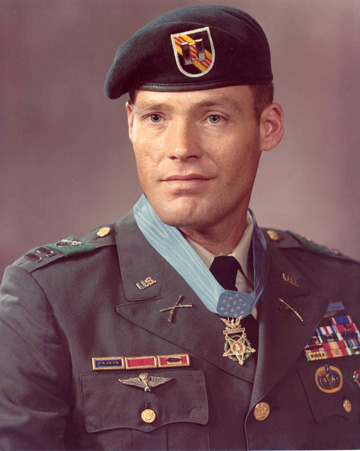
It is Missy’s daddy at 64 years old, with a short, pale blue ribbon and small gold medal covering the knot in his tie, his jaw square and strong, his face still scarred, angular, and violently handsome. He is talking about the day he received his Medal of Honor from President Nixon, of whom he says, “He had nice hands. They were, you know, decent.”

Missy tells me that when her daddy came home to San Antonio, which wasn’t that often, he was a gardener, a gentle man with massive hands and a velvet voice who worked on his roses and never once spoke of what he did in the war. “He could make anything grow,” Missy says.

Now the Colonel’s ocean-blue eyes are focused on some far-away hellhole jungle clearing. Howard says the Hueys took ground fire on the way down to the landing zone, and his platoon suffered casualties even before it landed. But there was no peeling off for this group. Silver wings upon their chests, these are men, America’s best. (No longer do these words remind me of Bill Murray in a greenskeeper’s shed.)

“We finally got in on the ground, and I got with [the] lieutenant,” Howard says. “He says, ‘Bob, we need to secure this LZ [landing zone], and I want you to get a couple of men and secure the exterior of the LZ.’ And I got three men behind me, and I can remember being fired at. I fell backward and they killed three men behind me, and I’m firing and killing the North Vietnamese that’s trying to kill us. So I made my way back to the lieutenant and told him that the LZ was completely surrounded. By that time, one of the helicopters had been shot down.”

This is the only personal account on record of the events for which he received the Medal of Honor. To begin with, Howard seems uncomfortable talking about it. But this is not the most difficult thing he has done. He pauses and draws a breath, then begins to explain dispassionately what happened when the men resumed their operation and a grenade explosion knocked him unconscious.

“When I come to, I was blown up in a crump on the ground, and my weapon was blown out of my hand. I can remember seeing red and saying a prayer, hoping I wasn’t blind. I couldn’t see. And I knew I was in a lot of pain and my hands were hurting. I couldn’t get up, and I really didn’t want to get up anyway because I couldn’t see. And then I finally starting getting the vision back and it was like blood was in my eyes, and I started feeling, but my hands were all blown up.

“And then it was like there was a big flame and there was smoke and there were people screaming and hollering. It in fact was an enemy soldier that was burning the people that would have been ambushed with a flamethrower. And the guy walked up to me and was getting ready to burn me, and he looked at me and he didn’t burn the lieutenant. The lieutenant was about 5 feet away from me, and he’s laying face forward, and he was hollering and he was screaming. I knew he was hurt. And the guy looked at me with the flamethrower, and then I looked at him. I guess I looked so bad and pitiful, he decided not to burn me up. He just turned and walked off.”

Now Howard was unarmed, and his hands had been blown apart. He was peppered with shrapnel. He couldn’t walk. So he grabbed the lieutenant’s shirt and starting dragging him—a big man, maybe 6-foot-4 and 200 pounds—toward safety as an estimated two enemy companies fired on them.
The great man’s face changes as he talks. His jaw stiffens, and his eyes, though narrowing, seem to take on an even more penetrating blueness. I am mesmerized as he relives these moments.

“So I’m pulling him back down the hill, and there was a sergeant that was laying down behind a log with a weapon that hadn’t been wounded that had seen this. But he was crying and not using his weapon. Here I am, begging him to help me because I can’t walk and drag the lieutenant back down.
“I said, ‘Well, give me your weapon,’ and he wouldn’t give me his weapon, but he did give me a .45. Just as he gave me the .45, and I’m trying to tell him to give me a couple more magazines of rounds for it, a bunch of enemy soldiers come running toward us. So here I am trying to fire the handgun, and I can remember shooting this enemy soldier that was fixing to stick me with a bayonet. He was running toward me. In fact, he fell across the lieutenant that I was dragging, and so just as he fell across there was another one behind him. They were trying to get us alive is what they were trying to do.”

The sergeant finally began to fire his weapon, and Howard got hit again. A bullet smashed into a magazine in his ammo belt for his rifle, setting off the rounds he was carrying. Howard estimates he was hit with 15 or 20 rounds of exploding ammunition.

“Here I am thinking, I’m blowing up again,” he says. “And there were other soldiers back behind him that hadn’t been hurt at all that had been watching us being almost executed by the enemy and not doing anything, not even firing their weapons.”

Howard eventually got the lieutenant to a medic. His platoon was trapped under heavy fire and had now suffered too many casualties to fight the enemy on their terms. The medic propped Howard up, and he told his brothers, “We are going to establish a perimeter right here, and you’re going to fight or die.” Then Howard did the unthinkable. He got a radio and called in an air strike on his own position. He ordered the men to make a triangle with three strobe lights around their position to keep from getting hit.

“They brought the fire into our position,” Howard says. “In fact, I remember fire landing right between my feet and, you know, ricochet hitting me in the face. You know, that’s how intense it was.”

Eventually, helicopters were able to extract the men. Out of 37 soldiers who were ambushed that day, six survived, largely due to Howard’s heroics and quick thinking. He acted in a similarly heroic manner and endured similar injuries, saving the lives of many others on two other separate occasions for which he was nominated for the Medal of Honor.

Ten lines. That’s what the Associated Press gave Col. Robert Howard.

Back among the living in Waco, I notice that Missy has inherited her father’s looks. She is slender and beautiful. Her husband Frank Gentsch is athletic and carries his badge and handgun in the comfortable, easy manner one might expect of Waco’s chief of detectives. Frank says that before his first date with Missy, the colonel showed him how he’d kill a man with his bare hands. That must have been a little unsettling, but Frank still has a bullet in his back, so you know the old man was proud of him. On Missy’s lap sits their adopted 3-year-old daughter, Isabella, with a snubby little nose and the cutest fuzzy fro held back with a pink headband. Howard adored her­—as he did his other children and grandchildren.

The life of a soldier, especially a Special Forces one, is complicated. There are top-secret stories that can’t be told and endless questions. “When is Daddy coming home?” Or worse: “Will Daddy come home?” Howard was married three times and remained close only to those who “got him.” Like so many of our fighting men and women, he felt tremendous guilt over the many times he was forced to choose between his country and his family.

After his discharge when he was 53 years old, Howard spent 13 years processing claims for the Department of Veterans Affairs and spent most of the last three years of his life in Iraq and Afghanistan, visiting troops, giving talks, and boosting morale. For a soldier, meeting Bob Howard was like a religious experience. Shaking his hand was an honor never to be forgotten. You see, they knew who he was. They got him.

We American civilians can say what we like about the morality of any war, but we should support the American soldiers and their allies whom we have sent to wage it. I’ve visited military hospitals, psych wards, and VAs in Dallas and around this country, and I’ve seen them. Mostly from Korea and Vietnam. Old, unkempt men, the military bearing and pride they once had now gone. Sometimes the only evidence it ever existed is on a battered regimental or naval ball cap. They rock back and forth, mumbling into full jungle beards, with rheumy, blast-zone-empty eyes. Or they sit in pairs, often holding hands, together and alone with horror-story memories that play over and over in their heads. Some sit with their imaginary long-dead friends, whose body parts still lie in the killing fields upon which they once so bravely fought. To America’s eternal shame, for many of them home is a sterile corner of the Cuckoo’s Nest, freezing and drunk under a highway bridge, or, if they are lucky, a spare room in the house of a worn-out son or daughter.

At least Bob Howard was spared that fate. Pancreatic cancer finally stopped him. As the disease spread to his lungs and lymph nodes, his expiry date drew closer, and he was visited by more and more soldiers, most of them old friends. But there were a few lucky youngsters, too, of whom Leroy was one of the last.

And there was always Missy, there with him every day with Isabella. Sometimes his granddaughter Holley, the starting catcher for the Texas Tech softball team, would visit. Or Tori, whom the colonel always called “Victoria.” Tori was always heartbroken when she had to leave her grandpa’s bedside and was a constant comfort to both the colonel and Missy at the end. Howard’s eldest son, Robert, is at Fort Bragg, going through Special Forces school.

As a soldier, Robert had already seen how his father acted around other military men. But for Missy and the other children, their father’s illness, and the parade of visitors it occasioned, showed them something new about their father. When Missy and the grandchildren were around, Howard was the gentle old gardener, the same man they had always known. But when a soldier entered his hospice room, he would stiffen. His voice changed to gravel, and any sign of vulnerability evaporated. He would laugh and bellow orders until the soldier was gone, and then there he’d be again: the gardener with the sparkling blue eyes, smothered in children whom he’d caress with rough, scarred hands.

By all accounts, Howard was a spectacularly bad patient. He was a nightmare for his nurses, refusing to take the painkillers, often swilling them around, then spitting them out after the nurse had left. He was going to be clearheaded until the end.

After yet another astonishing fight, during which the family was told on several occasions that Howard had only hours left, the head of the world’s most dangerous gardener finally fell sideways onto his beloved Missy’s shoulder, and America lost what was arguably her greatest warrior ever.

The name Robert Lewis Howard belongs beside George Washington, John Paul Jones, Chesty Puller, Alvin York, and Audie Murphy, to name a few of the greatest. By the time anyone reads this, Howard will have been lain to rest at Arlington the day before I became an American citizen. I would have given anything to have been with Missy, Frank, and the rest of the family on that day, but I know the colonel would have barked at me to get my worthless foreign ass to my swearing-in ceremony.

Col. Robert Howard’s funeral cortege should have started at the foot of the Jefferson Memorial. His flag-draped casket should have passed through streets lined with thousands of grateful, flag-waving Americans to Arlington, where, in preparation for his final resting place, some politician had been dug up and tossed into the Potomac. But that didn’t happen.

Ten lines. A couple of longer obits here and there. That’s all he got.

On the drive back to Dallas from Waco, I got to thinking. We should rename that stretch of I-35 after him. The Col. Robert Howard Highway. People would shorten it, of course: the Howard.

His life deserves more. But it’s a start.

David Feherty is a golf analyst for CBS Sports.

Categories
Gear & Stuff War

The Vietnam Stopgap: A Look at the short lived US M1967 Modernized Load Carrying Equipment